Last Updated: November 16, 2026

Expiring Drug Patents Cheat Sheet
We analyse the patents covering drugs in 134 countries and quickly give you the likely loss-of-exclusivity/generic entry date

➤ Get the Full List

Argentina: These 28 Drugs Face Patent Expirations and Generic Entry From 2026 - 2027

The content of this page is licensed under a Creative Commons Attribution 4.0 International License. Creative Commons License

Preferred citation:
Friedman, Yali, "Argentina: These 28 Drugs Face Patent Expirations and Generic Entry From 2026 - 2027" DrugPatentWatch.com thinkBiotech, 2026 www.drugpatentwatch.com/p/expiring-drug-patents-generic-entry/.
Media collateral
These estimated drug patent expiration dates and generic entry opportunity dates are calculated from analysis of known patents covering drugs. Many factors can influence early or late generic entry. This information is provided as a rough estimate of generic entry potential and should not be used as an independent source. The methodology is described in this blog post.
When can AVANDAMET (metformin hydrochloride; rosiglitazone maleate) generic drug versions launch in Argentina?

Generic name: metformin hydrochloride; rosiglitazone maleate
DrugPatentWatch® Estimated Key Patent Expiration / Generic Entry Date: December 05, 2026
Generic Entry Controlled by: Argentina Patent 57,970
Patent Title: COMPOSICIONES FARMACEUTICAS PARA EL TRATAMIENTO DE LA DIABETES MELLITUS Y CONDICIONES ASOCIADAS CON LA DIABETES MELLITUS Y PROCEDIMIENTOS PARA PREPRAR DICHAS COMPOSICIONES

AVANDAMET is a drug marketed by Sb Pharmco. There has been litigation on patents covering AVANDAMET

The generic ingredient in AVANDAMET is metformin hydrochloride; rosiglitazone maleate. Additional details are available on the metformin hydrochloride; rosiglitazone maleate profile page.

When can SIRTURO (bedaquiline fumarate) generic drug versions launch in Argentina?

Generic name: bedaquiline fumarate
DrugPatentWatch® Estimated Key Patent Expiration / Generic Entry Date: December 05, 2026
Generic Entry Controlled by: Argentina Patent 64,149

SIRTURO is a drug marketed by Janssen Therap. There are two patents protecting this drug.

See drug price trends for SIRTURO.

The generic ingredient in SIRTURO is bedaquiline fumarate. Additional details are available on the bedaquiline fumarate profile page.

When can EPZICOM (abacavir sulfate; lamivudine) generic drug versions launch in Argentina?

Generic name: abacavir sulfate; lamivudine
DrugPatentWatch® Estimated Key Patent Expiration / Generic Entry Date: January 02, 2027
Generic Entry Controlled by: Argentina Patent 59,120
Patent Title: SAL DE DICARBOXILATO DEL (1S,4R) -4- (2-AMINO-6- (CICLOPROPILAMINO ) -9H- PURIN-9-IL)-2- CICLOPENTEN -1- METANOL Y PROCEDIMIENTO PARA SU PREPARACION

EPZICOM is a drug marketed by Viiv Hlthcare. Five tentatively approved generics are ready to enter the market. There has been litigation on patents covering EPZICOM

See drug price trends for EPZICOM.

The generic ingredient in EPZICOM is abacavir sulfate; lamivudine. Additional details are available on the abacavir sulfate; lamivudine profile page.

When can TRIZIVIR (abacavir sulfate; lamivudine; zidovudine) generic drug versions launch in Argentina?

Generic name: abacavir sulfate; lamivudine; zidovudine
DrugPatentWatch® Estimated Key Patent Expiration / Generic Entry Date: January 02, 2027
Generic Entry Controlled by: Argentina Patent 59,120
Patent Title: SAL DE DICARBOXILATO DEL (1S,4R) -4- (2-AMINO-6- (CICLOPROPILAMINO ) -9H- PURIN-9-IL)-2- CICLOPENTEN -1- METANOL Y PROCEDIMIENTO PARA SU PREPARACION

TRIZIVIR is a drug marketed by Viiv Hlthcare. One tentatively approved generic is ready to enter the market. There has been litigation on patents covering TRIZIVIR

See drug price trends for TRIZIVIR.

The generic ingredient in TRIZIVIR is abacavir sulfate; lamivudine; zidovudine. Additional details are available on the abacavir sulfate; lamivudine; zidovudine profile page.

When can AKEEGA (abiraterone acetate; niraparib tosylate) generic drug versions launch in Argentina?

Generic name: abiraterone acetate; niraparib tosylate
DrugPatentWatch® Estimated Key Patent Expiration / Generic Entry Date: January 10, 2027
Generic Entry Controlled by: Argentina Patent 64,777

AKEEGA is a drug marketed by Janssen Biotech. There are fourteen patents protecting this drug. There has been litigation on patents covering AKEEGA

See drug price trends for AKEEGA.

The generic ingredient in AKEEGA is abiraterone acetate; niraparib tosylate. Additional details are available on the abiraterone acetate; niraparib tosylate profile page.

When can ZEJULA (niraparib tosylate) generic drug versions launch in Argentina?

Generic name: niraparib tosylate
DrugPatentWatch® Estimated Key Patent Expiration / Generic Entry Date: January 10, 2027
Generic Entry Controlled by: Argentina Patent 64,777

ZEJULA is a drug marketed by Glaxosmithkline. There are eight patents protecting this drug. There has been litigation on patents covering ZEJULA

See drug price trends for ZEJULA.

The generic ingredient in ZEJULA is niraparib tosylate. Additional details are available on the niraparib tosylate profile page.

When can PANCREAZE (pancrelipase (amylase;lipase;protease)) generic drug versions launch in Argentina?

Generic name: pancrelipase (amylase;lipase;protease)
DrugPatentWatch® Estimated Key Patent Expiration / Generic Entry Date: February 20, 2027
Generic Entry Controlled by: Argentina Patent 65,405

PANCREAZE is a drug marketed by

See drug price trends for PANCREAZE.

The generic ingredient in PANCREAZE is pancrelipase (amylase;lipase;protease). Additional details are available on the pancrelipase (amylase;lipase;protease) profile page.

When can VIMOVO (esomeprazole magnesium; naproxen) generic drug versions launch in Argentina?

Generic name: esomeprazole magnesium; naproxen
DrugPatentWatch® Estimated Key Patent Expiration / Generic Entry Date: February 20, 2027
Generic Entry Controlled by: Argentina Patent 59,589
Patent Title: PROCESO PARA LA PREPARACION DE SAL DE MAGNESIO DE TRIHIDRATO DE S-OMEPRAZOL, SAL DE POTASIO DE S-OMEPRAZOL INTERMEDIARIA Y PROCESO PARA PREPARARLA

VIMOVO is a drug marketed by Horizon. One tentatively approved generic is ready to enter the market. There has been litigation on patents covering VIMOVO

See drug price trends for VIMOVO.

The generic ingredient in VIMOVO is esomeprazole magnesium; naproxen. Additional details are available on the esomeprazole magnesium; naproxen profile page.

When can ZENPEP (pancrelipase (amylase;lipase;protease)) generic drug versions launch in Argentina?

Generic name: pancrelipase (amylase;lipase;protease)
DrugPatentWatch® Estimated Key Patent Expiration / Generic Entry Date: February 20, 2027
Generic Entry Controlled by: Argentina Patent 65,405

ZENPEP is a drug marketed by

See drug price trends for ZENPEP.

The generic ingredient in ZENPEP is pancrelipase (amylase;lipase;protease). Additional details are available on the pancrelipase (amylase;lipase;protease) profile page.

When can VARUBI (rolapitant hydrochloride) generic drug versions launch in Argentina?

Generic name: rolapitant hydrochloride
DrugPatentWatch® Estimated Key Patent Expiration / Generic Entry Date: March 22, 2027
Generic Entry Controlled by: Argentina Patent 65,802
Patent Title: FORMULACIONES DE COMPRIMIDOS QUE CONTIENEN SALES DE 8- [( 1- ( 3,5- BIS- (TRIFLUOROMETIL) FENIL) -ETOXI ) - METIL) -8- FENIL -1, 7- DIAZA- SPIRO [ 4,5] DECAN -2- ONA Y COMPRIMIDOS ELABORADOS A PARTIR DE ESTAS

VARUBI is a drug marketed by Tersera. There are eight patents protecting this drug.

The generic ingredient in VARUBI is rolapitant hydrochloride. Additional details are available on the rolapitant hydrochloride profile page.

When can SELZENTRY (maraviroc) generic drug versions launch in Argentina?

Generic name: maraviroc
DrugPatentWatch® Estimated Key Patent Expiration / Generic Entry Date: March 27, 2027
Generic Entry Controlled by: Argentina Patent 60,159
Patent Title: COMBINACIONES DE COMPUESTOS DERIVADOS DE TROPANO UTILES EN TERAPIA
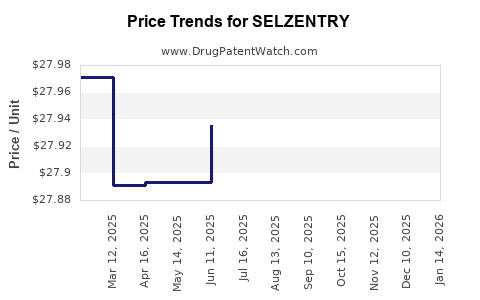
Drug Price Trends for SELZENTRY
SELZENTRY is a drug marketed by Viiv Hlthcare. One tentatively approved generic is ready to enter the market.

See drug price trends for SELZENTRY.

The generic ingredient in SELZENTRY is maraviroc. Additional details are available on the maraviroc profile page.

When can EDARBI (azilsartan kamedoxomil) generic drug versions launch in Argentina?

Generic name: azilsartan kamedoxomil
DrugPatentWatch® Estimated Key Patent Expiration / Generic Entry Date: March 28, 2027
Generic Entry Controlled by: Argentina Patent 65,850
Patent Title: COMPOSICION FARMACEUTICA SOLIDA QUE COMPRENDE UN DERIVADO DE BENZIMIDAZOL-7-CARBOXILATO Y UN AGENTE DE CONTROL DE PH
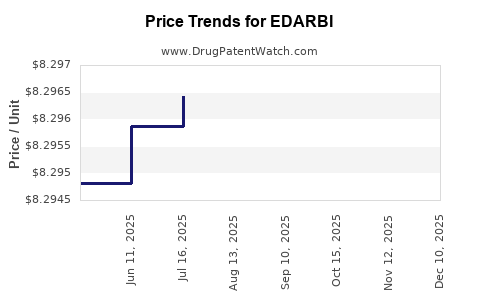
Drug Price Trends for EDARBI
EDARBI is a drug marketed by Azurity. There is one patent protecting this drug. There has been litigation on patents covering EDARBI

See drug price trends for EDARBI.

The generic ingredient in EDARBI is azilsartan kamedoxomil. Additional details are available on the azilsartan kamedoxomil profile page.

When can INLYTA (axitinib) generic drug versions launch in Argentina?

Generic name: axitinib
DrugPatentWatch® Estimated Key Patent Expiration / Generic Entry Date: April 05, 2027
Generic Entry Controlled by: Argentina Patent 65,931

INLYTA is a drug marketed by Pf Prism Cv. There are four patents protecting this drug and one Paragraph IV challenge. Two tentatively approved generics are ready to enter the market. There has been litigation on patents covering INLYTA

See drug price trends for INLYTA.

The generic ingredient in INLYTA is axitinib. Additional details are available on the axitinib profile page.

When can PROMACTA (eltrombopag olamine) generic drug versions launch in Argentina?

Generic name: eltrombopag olamine
DrugPatentWatch® Estimated Key Patent Expiration / Generic Entry Date: May 03, 2027
Generic Entry Controlled by: Argentina Patent 59,656

PROMACTA is a drug marketed by Novartis. There is one patent protecting this drug and two Paragraph IV challenges. There has been litigation on patents covering PROMACTA

See drug price trends for PROMACTA.

The generic ingredient in PROMACTA is eltrombopag olamine. Additional details are available on the eltrombopag olamine profile page.

When can SIGNIFOR LAR (pasireotide pamoate) generic drug versions launch in Argentina?

Generic name: pasireotide pamoate
DrugPatentWatch® Estimated Key Patent Expiration / Generic Entry Date: May 24, 2027
Generic Entry Controlled by: Argentina Patent 66,677

SIGNIFOR LAR is a drug marketed by Recordati Rare. There are three patents protecting this drug.

See drug price trends for SIGNIFOR LAR.

The generic ingredient in SIGNIFOR LAR is pasireotide pamoate. Additional details are available on the pasireotide pamoate profile page.

When can CONTRAVE (bupropion hydrochloride; naltrexone hydrochloride) generic drug versions launch in Argentina?

Generic name: bupropion hydrochloride; naltrexone hydrochloride
DrugPatentWatch® Estimated Key Patent Expiration / Generic Entry Date: June 05, 2027
Generic Entry Controlled by: Argentina Patent 61,233
Patent Title: FORMULACION DE LIBERACION PROLONGADA DE NALTREXONA

CONTRAVE is a drug marketed by Azurity. There are eighteen patents protecting this drug and one Paragraph IV challenge. There has been litigation on patents covering CONTRAVE

See drug price trends for CONTRAVE.

The generic ingredient in CONTRAVE is bupropion hydrochloride; naltrexone hydrochloride. Additional details are available on the bupropion hydrochloride; naltrexone hydrochloride profile page.

When can KYBELLA (deoxycholic acid) generic drug versions launch in Argentina?

Generic name: deoxycholic acid
DrugPatentWatch® Estimated Key Patent Expiration / Generic Entry Date: June 19, 2027
Generic Entry Controlled by: Argentina Patent 67,440
Patent Title: ÁCIDO BILIAR SINTETICO, UNA COMPOSICION QUE LO COMPRENDE, UN METODO PARA SU PREPARACION, COMPUESTOS INTERMEDIARIOS DE SíNTESIS Y SU EMPLEO EN LA ELIMINACION DE LOS DEPoSITOS DE GRASA CORPORAL

KYBELLA is a drug marketed by Abbvie. There are fourteen patents protecting this drug and one Paragraph IV challenge. There has been litigation on patents covering KYBELLA

The generic ingredient in KYBELLA is deoxycholic acid. Additional details are available on the deoxycholic acid profile page.

When can KYBELLA (deoxycholic acid) generic drug versions launch in Argentina?

Generic name: deoxycholic acid
DrugPatentWatch® Estimated Key Patent Expiration / Generic Entry Date: June 19, 2027
Generic Entry Controlled by: Argentina Patent 112,325
Patent Title: MÉTODO DE PREPARACIÓN DEL ÁCIDO BILIAR SINTÉTICO

KYBELLA is a drug marketed by Abbvie. There are fourteen patents protecting this drug and one Paragraph IV challenge. There has been litigation on patents covering KYBELLA

The generic ingredient in KYBELLA is deoxycholic acid. Additional details are available on the deoxycholic acid profile page.

When can TEPMETKO (tepotinib hydrochloride) generic drug versions launch in Argentina?

Generic name: tepotinib hydrochloride
DrugPatentWatch® Estimated Key Patent Expiration / Generic Entry Date: July 12, 2027
Generic Entry Controlled by: Argentina Patent 66,543
Patent Title: DERIVADOS DE PIRIDAZINONA

TEPMETKO is a drug marketed by Emd Serono Inc. There are eight patents protecting this drug. There has been litigation on patents covering TEPMETKO

See drug price trends for TEPMETKO.

The generic ingredient in TEPMETKO is tepotinib hydrochloride. Additional details are available on the tepotinib hydrochloride profile page.

When can WINLEVI (clascoterone) generic drug versions launch in Argentina?

Generic name: clascoterone
DrugPatentWatch® Estimated Key Patent Expiration / Generic Entry Date: August 03, 2027
Generic Entry Controlled by: Argentina Patent 72,235
Patent Title: PROCESO ENZIMATICO PARA OBTENER 17-ALFA MONOESTERES DE CORTEXOLONA Y/O SUS 9,11-DEHIDRO DERIVADOS
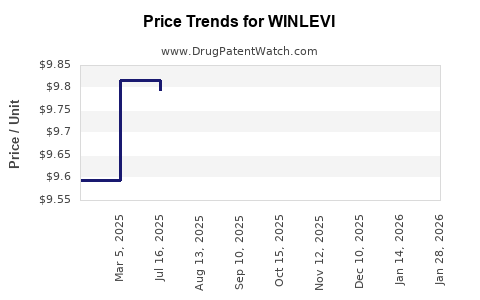
Drug Price Trends for WINLEVI
WINLEVI is a drug marketed by Sun Pharm. There are seven patents protecting this drug. There has been litigation on patents covering WINLEVI

See drug price trends for WINLEVI.

The generic ingredient in WINLEVI is clascoterone. Additional details are available on the clascoterone profile page.

When can DAKLINZA (daclatasvir dihydrochloride) generic drug versions launch in Argentina?

Generic name: daclatasvir dihydrochloride
DrugPatentWatch® Estimated Key Patent Expiration / Generic Entry Date: August 09, 2027
Generic Entry Controlled by: Argentina Patent 63,684
Patent Title: DERIVADOS DE 4, 4´-BIFENILDIILBIS(1H-IMIDAZOL-5, 2-DIIL) COMO INHIBIDORES DEL VIRUS DE LA HEPATITIS C, COMPOSICION QUE LOS COMPRENDE Y SU USO PARA TRATAR UNA INFECCION CON VHC.

Drug Price Trends for DAKLINZA
DAKLINZA is a drug marketed by Bristol-myers Squibb. There are five patents protecting this drug. There has been litigation on patents covering DAKLINZA

See drug price trends for DAKLINZA.

The generic ingredient in DAKLINZA is daclatasvir dihydrochloride. Additional details are available on the daclatasvir dihydrochloride profile page.

When can INTRAROSA (prasterone) generic drug versions launch in Argentina?

Generic name: prasterone
DrugPatentWatch® Estimated Key Patent Expiration / Generic Entry Date: August 10, 2027
Generic Entry Controlled by: Argentina Patent 104,577
Patent Title: MÉTODOS PARA TRATAR O REDUCIR LA PROBABILIDAD DE ADQUIRIR SÍNTOMAS O ENFERMEDADES DEBIDAS A LA MENOPAUSIA
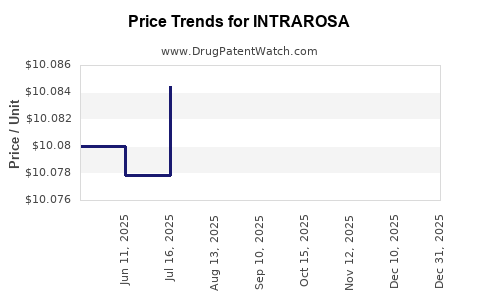
Drug Price Trends for INTRAROSA
INTRAROSA is a drug marketed by Millicent. There are three patents protecting this drug. There has been litigation on patents covering INTRAROSA

See drug price trends for INTRAROSA.

The generic ingredient in INTRAROSA is prasterone. Additional details are available on the prasterone profile page.

When can BRILINTA (ticagrelor) generic drug versions launch in Argentina?

Generic name: ticagrelor
DrugPatentWatch® Estimated Key Patent Expiration / Generic Entry Date: August 15, 2027
Generic Entry Controlled by: Argentina Patent 62,451
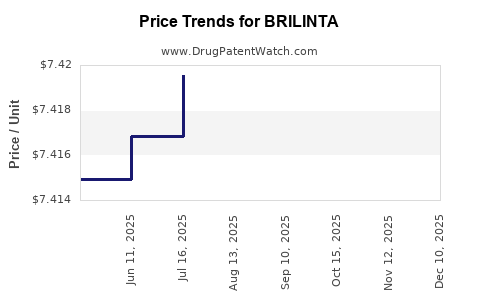
Drug Price Trends for BRILINTA
BRILINTA is a drug marketed by Astrazeneca. There are two patents protecting this drug and two Paragraph IV challenges. One tentatively approved generic is ready to enter the market. There has been litigation on patents covering BRILINTA

See drug price trends for BRILINTA.

The generic ingredient in BRILINTA is ticagrelor. Additional details are available on the ticagrelor profile page.

When can VELPHORO (sucroferric oxyhydroxide) generic drug versions launch in Argentina?

Generic name: sucroferric oxyhydroxide
DrugPatentWatch® Estimated Key Patent Expiration / Generic Entry Date: November 16, 2027
Generic Entry Controlled by: Argentina Patent 69,312
Patent Title: COMPOSICION FARMACEUTICA QUE COMPRENDE BETA OXIHIDROXIDO DE HIERRO EN ALTA CARGA EN FORMA ADECUADA PARA ADMINISTARCION ORAL Y QUE CONTIENE AL MENOS UN HIDRATO DE CARBONO Y/O ACIDO HUMICO Y SU USO EN EL TRATAMIENTO DE PACIENTES CON HIPERFOSFATEMIA Y CON INSUFICIENCIA RENAL CRONICA , Y PROCEDIMENTO PA
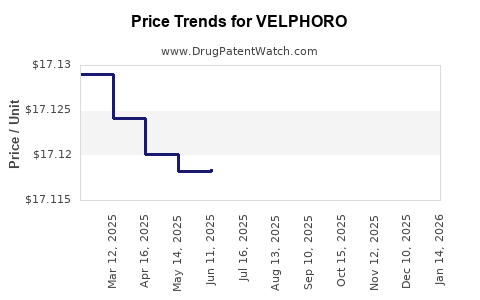
Drug Price Trends for VELPHORO
VELPHORO is a drug marketed by Vifor Fresenius. There are eleven patents protecting this drug. There has been litigation on patents covering VELPHORO

See drug price trends for VELPHORO.

The generic ingredient in VELPHORO is sucroferric oxyhydroxide. Additional details are available on the sucroferric oxyhydroxide profile page.

When can DUZALLO (allopurinol; lesinurad) generic drug versions launch in Argentina?

Generic name: allopurinol; lesinurad
DrugPatentWatch® Estimated Key Patent Expiration / Generic Entry Date: November 27, 2027
Generic Entry Controlled by: Argentina Patent 69,753

Drug Price Trends for DUZALLO
DUZALLO is a drug marketed by Ironwood Pharms Inc. There are eight patents protecting this drug. There has been litigation on patents covering DUZALLO

See drug price trends for DUZALLO.

The generic ingredient in DUZALLO is allopurinol; lesinurad. Additional details are available on the allopurinol; lesinurad profile page.

When can ZURAMPIC (lesinurad) generic drug versions launch in Argentina?

Generic name: lesinurad
DrugPatentWatch® Estimated Key Patent Expiration / Generic Entry Date: November 27, 2027
Generic Entry Controlled by: Argentina Patent 69,753

ZURAMPIC is a drug marketed by Ironwood Pharms Inc. There are eight patents protecting this drug. There has been litigation on patents covering ZURAMPIC

See drug price trends for ZURAMPIC.

The generic ingredient in ZURAMPIC is lesinurad. Additional details are available on the lesinurad profile page.

When can ALIQOPA (copanlisib dihydrochloride) generic drug versions launch in Argentina?

Generic name: copanlisib dihydrochloride
DrugPatentWatch® Estimated Key Patent Expiration / Generic Entry Date: December 03, 2027
Generic Entry Controlled by: Argentina Patent 64,106
Patent Title: DERIVADOS DE 2,3-DIHIDROIMIDAZO [1,2-C] QUINAZOLINA SUSTITUIDA UTILES PARA EL TRATAMIENTO DE ENFERMEDADES Y TRASTORNOS HIPER-PROLIFERATIVOS ASOCIADOS CON LA ANGIOGENESIS

ALIQOPA is a drug marketed by Bayer Healthcare. There are three patents protecting this drug.

See drug price trends for ALIQOPA.

The generic ingredient in ALIQOPA is copanlisib dihydrochloride. Additional details are available on the copanlisib dihydrochloride profile page.

When can ZYKADIA (ceritinib) generic drug versions launch in Argentina?

Generic name: ceritinib
DrugPatentWatch® Estimated Key Patent Expiration / Generic Entry Date: December 07, 2027
Generic Entry Controlled by: Argentina Patent 64,197

ZYKADIA is a drug marketed by Novartis. There are eight patents protecting this drug.

See drug price trends for ZYKADIA.

The generic ingredient in ZYKADIA is ceritinib. Additional details are available on the ceritinib profile page.

When can XERMELO (telotristat etiprate) generic drug versions launch in Argentina?

Generic name: telotristat etiprate
DrugPatentWatch® Estimated Key Patent Expiration / Generic Entry Date: December 11, 2027
Generic Entry Controlled by: Argentina Patent 64,279

XERMELO is a drug marketed by Tersera. There are five patents protecting this drug.

See drug price trends for XERMELO.

The generic ingredient in XERMELO is telotristat etiprate. Additional details are available on the telotristat etiprate profile page.

Argentina Branded and Generic Drug Market Assessment: Regulation, Patents, Market Access and Commercial Opportunities

Last updated: October 20, 2026

Argentina is a large, technically capable but economically volatile pharmaceutical market. Branded medicines remain strong in chronic, specialty and hospital segments, while generic-name prescribing and local laboratories support substantial competition in off-patent products. The principal opportunities are local manufacturing, biosimilars, complex generics, contract development, public tenders and licensing. The principal risks are inflation, currency controls, reimbursement instability, import restrictions, weak patent-linkage mechanisms and delayed payment by public and social-security buyers.

How large is Argentina’s branded and generic drug market?

Argentina has one of Latin America’s more developed pharmaceutical sectors, supported by domestic formulation capacity, a large network of pharmacies and a high level of physician and patient familiarity with prescription medicines. The market is divided among:

Segment Main characteristics Commercial implications
Private retail Pharmacy sales, private insurance and direct patient payments Strong demand for chronic therapies, but high price sensitivity
Social-security market Obras sociales and union-linked health funds Large volume potential; payment delays and tender discounts are material
Public sector National, provincial and municipal procurement Access depends on tenders, registration and supply reliability
Hospital and specialty Oncology, immunology, plasma products and complex injectables Higher technical barriers and greater reliance on institutional purchasing
OTC and self-medication Analgesics, gastrointestinal products, vitamins and cold remedies Brand recognition and distribution are more important than patent protection

Argentina does not maintain a single official market classification that cleanly separates "branded" and "generic" products by commercial revenue. In practice, the market contains originator brands, branded generics, multisource products sold under international nonproprietary names, and local brands with strong physician recognition.

Generic-name prescribing is required under Argentina’s pharmaceutical framework, and pharmacies generally must offer alternatives containing the same active ingredient. Law 25.649 established the use of the generic name in prescriptions and increased the formal role of generic substitution (Congreso de la Nación Argentina, 2002).

Price competition is strongest in mature molecules with multiple local manufacturers. It is weaker in biologics, injectable products, controlled-release formulations, sterile products and therapies that depend on physician confidence or specialist procurement.

What are the leading commercial characteristics of Argentina’s branded drug market?

Originator brands retain an advantage in therapeutic areas where clinical differentiation, specialist prescribing, delivery technology or reimbursement access matters. The strongest branded segments generally include:

  • Oncology and hematology
  • Immunology and autoimmune disease
  • Diabetes and metabolic disease
  • Cardiovascular and central nervous system treatments
  • Vaccines and plasma-derived products
  • Hospital injectables
  • Long-acting and controlled-release formulations
  • Rare-disease and high-cost therapies

Brand value is less durable after patent expiry than in markets with automatic substitution rules tied to reference pricing. Physicians and patients may continue to use a recognized brand, but pharmacies, insurers and public buyers exert pressure toward lower-cost alternatives.

Originators also face a local commercial challenge: a product can lose economic exclusivity without a direct generic launch if local firms already sell competing products under established brands. This can produce an extended period of price erosion rather than a single post-expiry event.

How competitive is Argentina’s generic drug market?

Argentina has a broad domestic laboratory base. Major local and regional companies compete with multinational manufacturers through branded generics, hospital products, OTC medicines, and contract manufacturing.

The generic market is attractive where:

  1. The active ingredient has high prescription volume.
  2. The product is technically simple to manufacture.
  3. Multiple suppliers can obtain imported or locally sourced active pharmaceutical ingredients.
  4. Reimbursement institutions accept substitution.
  5. The product does not require a large clinical development package.
  6. The company can maintain supply during currency and import disruptions.

Generic entry is more difficult for sterile injectables, inhaled products, modified-release dosage forms, biosimilars, peptides and products with device components. These categories require process validation, specialized manufacturing and stronger regulatory evidence.

Argentina’s generic market is not equivalent to a fully commoditized market. Local brand reputation, pharmacy availability, medical promotion and institutional contracting influence demand. A low-cost product can fail commercially if it lacks reliable supply or if physicians associate the reference brand with superior quality.

What is Argentina’s regulatory framework for branded and generic drugs?

ANMAT, the Administración Nacional de Medicamentos, Alimentos y Tecnología Médica, is the primary national regulator for medicines, medical devices, food and related products. The central legal framework for pharmaceutical registration and commercialization includes Decree 150/1992 and subsequent ANMAT regulations (Poder Ejecutivo Nacional, 1992; ANMAT, n.d.-a).

A company generally needs to address:

Regulatory area Principal requirement
Product registration Approval by ANMAT before commercialization
Manufacturing Compliance with good manufacturing practices
Imported products Foreign manufacturing authorization, technical documentation and import controls
Generic approval Demonstration of pharmaceutical equivalence and, where required, bioequivalence
New chemical entities Quality, safety and efficacy data
Pharmacovigilance Post-market reporting and risk management obligations
Advertising Compliance with restrictions for prescription and OTC medicines
Serialization and traceability Applicable products must comply with national traceability rules
Promotion and labeling Spanish-language labeling and approved indications

ANMAT has developed accelerated and special pathways for certain products, including high-priority therapies and products intended for public-health programs. The practical value of an accelerated pathway depends on the product category, evidence package and agency capacity at the time of filing.

The regulatory opportunity for international companies is greatest when the product already has a robust approval history in a stringent reference jurisdiction and the Argentine dossier can be adapted efficiently to local requirements.

What regulatory opportunities exist for pharmaceutical companies in Argentina?

Local manufacturing and technology transfer

Domestic production can reduce exposure to import delays, customs restrictions and currency-conversion risk. Companies can use local partners for:

  • Secondary manufacturing
  • Packaging and labeling
  • Sterile fill-finish
  • API incorporation
  • Quality-control testing
  • Distribution and pharmacovigilance
  • Public tender supply

A local manufacturing arrangement may also improve eligibility for public procurement and support political or industrial-policy objectives favoring national production.

Biosimilars and complex generics

Biosimilars have strong commercial potential because Argentina has high demand for oncology, immunology and endocrine biologics. ANMAT has issued requirements addressing biological products and biosimilar development, with the level of evidence depending on the molecule and the reference product (ANMAT, n.d.-b).

The opportunity is strongest for products with:

  • Expensive reference biologics
  • Established hospital use
  • Large social-security expenditure
  • Available analytical comparators
  • Manufacturing processes that can be transferred to a local facility

The main barriers are comparability studies, process consistency, pharmacovigilance, interchangeability expectations and payer acceptance. A biosimilar approval does not automatically guarantee substitution across all procurement channels.

Public procurement and institutional supply

Government programs and public hospitals create demand for oncology medicines, antiretrovirals, vaccines, insulin, tuberculosis products and other priority therapies. Tender participation can generate large volumes, but margins may be thin and payment risk can be high.

Companies with reliable local supply, regulatory compliance and government-affairs capabilities are better positioned than firms relying exclusively on spot imports.

Licensing and co-commercialization

Licensing opportunities are common in products that require local distribution, registration ownership or manufacturing capacity. Typical structures include:

  • Exclusive or nonexclusive commercialization licenses
  • Local registration-holder agreements
  • Technology-transfer contracts
  • Contract manufacturing
  • Co-promotion of specialty products
  • In-licensing of branded generics and biosimilars
  • Regional manufacturing for Southern Cone markets

The key diligence points are registration ownership, control of pharmacovigilance, minimum purchase commitments, pricing authority, foreign-exchange provisions, termination rights and responsibility for product liability. Currency-indexed royalties and supply-price adjustment clauses are important because inflation can materially reduce the value of fixed-peso arrangements.

What patent protection applies to medicines in Argentina?

Argentina grants pharmaceutical patents under Law 24.481, as amended. Patent protection generally lasts 20 years from the filing date, subject to the applicable statutory framework and procedural rules (Congreso de la Nación Argentina, 1995; World Intellectual Property Organization, n.d.).

Argentina does not operate a U.S.-style Orange Book system. ANMAT does not provide a comprehensive public patent listing that automatically links each approved medicine to enforceable patents. Patent status must be assessed through the Argentine Patent Office, INPI, company filings, court records and product-specific diligence.

Relevant patent categories include:

  • Compound patents
  • Salt, polymorph and crystal-form patents
  • Formulation patents
  • Controlled-release and delivery-system patents
  • Dosage-regimen patents
  • Combination patents
  • Manufacturing-process patents
  • Diagnostic or treatment-related claims, subject to Argentine patentability standards

Argentina’s patentability standards for pharmaceutical inventions can be restrictive. Examination practice and examination guidelines have limited the scope of certain secondary pharmaceutical claims, particularly where claims are considered insufficiently inventive or directed to subject matter that does not meet local standards. The practical result is that a global patent estate may have narrower Argentine coverage than U.S. or European coverage.

When do branded drugs lose exclusivity in Argentina?

A medicine loses patent exclusivity when all enforceable Argentine patents covering the relevant commercial product expire, are invalidated or become otherwise unenforceable. Regulatory approval does not itself create a fixed period of small-molecule data exclusivity comparable to the U.S. Hatch-Waxman system.

Argentina protects undisclosed test data against unfair commercial use under Law 24.766, but it does not generally provide a broad, automatic regulatory exclusivity period that prevents approval of a competing product based on an approved reference product (Congreso de la Nación Argentina, 1996).

A practical exclusivity timeline is therefore:

Event Commercial effect
Patent filing Starts the 20-year patent term
Patent grant Creates enforceable rights, subject to validity and scope
ANMAT approval Permits commercialization but does not create Orange Book-style linkage
Patent expiry Opens the principal generic-entry pathway
Regulatory approval of generic Permits launch if no enforceable injunction or other legal barrier applies
Post-expiry competition Usually produces price erosion and volume migration

Process patents can remain relevant after compound-patent expiry if the generic manufacturer uses the patented process. They are less effective when the generic can use a noninfringing process or obtain the active ingredient from an alternative supplier.

How do generic companies challenge branded medicines in Argentina?

Argentina does not have a U.S.-style Paragraph IV certification system. A generic company typically challenges patent barriers through one or more of the following approaches:

  1. Filing for a product that does not infringe the relevant patent.
  2. Challenging patent validity in court.
  3. Arguing that the patent does not cover the proposed product or process.
  4. Waiting for patent expiry before launch.
  5. Seeking a license or settlement.
  6. Launching at risk if the company accepts potential damages or injunctive exposure.

Because there is no automatic patent-linkage mechanism between ANMAT approval and patent status, regulatory approval and patent clearance are separate workstreams. A company can obtain regulatory approval while still facing patent litigation risk.

Paragraph IV-style early litigation is therefore replaced by private freedom-to-operate analysis, patent challenges and court proceedings. The absence of automatic linkage can accelerate generic approval but can also increase uncertainty around launch timing.

What patent litigation and settlement risks affect pharmaceutical companies?

Pharmaceutical disputes may involve:

  • Preliminary injunctions
  • Patent invalidity claims
  • Noninfringement actions
  • Process-patent disputes
  • Customs or import measures
  • Trade-secret claims
  • Unfair competition allegations
  • Contractual disputes over licenses and distribution
  • Product liability and regulatory compliance

Patent litigation is generally handled through the Argentine federal court system. The commercial value of an injunction depends on the court, the evidence of infringement, the patent’s apparent validity and the public-health implications of the product.

Settlement agreements can include delayed launch dates, licenses, supply arrangements, geographic restrictions and manufacturing rights. Unlike the United States, Argentina does not have a standardized statutory framework requiring routine public disclosure and regulatory review of pharmaceutical patent settlements.

Companies should not assume that a settlement reached in the United States or Europe resolves Argentine rights. Local patent scope, local validity, local registration ownership and local distribution contracts must be reviewed separately.

What is the FDA and ANMAT regulatory status of medicines in Argentina?

The U.S. Food and Drug Administration does not approve medicines for sale in Argentina. ANMAT is the relevant Argentine authority. FDA, European Medicines Agency or other reference-agency approval can support the Argentine dossier but does not replace ANMAT registration.

ANMAT approval establishes the authorized product, manufacturer, indication, dosage form and labeling. It does not determine:

  • Patent validity
  • Patent infringement
  • Reimbursement
  • Pharmacy substitution
  • Tender eligibility
  • Commercial price
  • Automatic interchangeability for biologics

Companies must therefore manage regulatory, intellectual-property and market-access strategies as separate but coordinated processes.

What are the main commercial and regulatory challenges?

Inflation and currency controls

High inflation complicates price setting, inventory planning, royalties and transfer pricing. Currency controls can delay payment of imports, dividends, technical-service fees and intercompany balances. Companies with imported APIs or finished products face direct margin exposure.

Reimbursement and payment risk

Public bodies, social-security institutions and private insurers can apply discounts, reimbursement limits and delayed payment schedules. A product can obtain regulatory approval yet remain commercially constrained by formulary exclusion or unaffordable patient co-payments.

Import and supply-chain restrictions

Import licensing and foreign-exchange access have changed over time. Regulatory approval does not guarantee uninterrupted importation. Local production, multiple API suppliers and inventory buffers reduce operational risk.

Administrative burden

ANMAT filings, manufacturing inspections, pharmacovigilance, serialization and post-approval variations require local regulatory expertise. Changes in agency workload can affect review timing.

Weak predictability of pricing

Argentina has used both market-based and negotiated approaches to pharmaceutical pricing. Policy can shift with inflation, public-health priorities and changes in government. A long-term forecast based only on current reimbursement conditions is unreliable.

Patent uncertainty

The lack of a comprehensive Orange Book and automatic patent linkage means that companies must conduct independent freedom-to-operate reviews. Secondary patent claims may face validity risk, while process patents can create less visible exposure.

How does Argentina compare with Brazil and Mexico?

Factor Argentina Brazil Mexico
Regulatory authority ANMAT ANVISA COFEPRIS
Generic-name framework Strong formal role for generic prescribing Strong generic and reference-product framework Generic substitution and public procurement are important
Patent term Generally 20 years from filing Generally 20 years from filing Generally 20 years from filing
Orange Book equivalent No comprehensive system No direct U.S.-style equivalent No direct U.S.-style equivalent
Local manufacturing Well-developed, but affected by macroeconomic volatility Large and diversified Significant, with strong multinational participation
Public procurement Important, fragmented across national and provincial channels Very large and structured Important through public institutions
Currency risk High Lower relative volatility historically, but present Lower relative volatility historically, but present
Best entry strategy Local partner, licensing or local production Regulatory scale and institutional access Local registration and public-sector strategy

Argentina can be faster and more commercially flexible than larger markets for a well-prepared entrant, but its macroeconomic risk is higher. Brazil offers greater scale but more complex institutional and regulatory execution. Mexico offers stronger multinational infrastructure but intense competition and public-sector concentration.

What generic launch scenarios are most likely in Argentina?

The most credible launch scenarios are:

Scenario Likely outcome
Compound patent expired and multiple local suppliers exist Rapid price competition and branded-generic entry
Patent expired but product is technically complex Gradual entry by a small number of qualified manufacturers
Patent remains active but secondary claims are weak Early litigation or at-risk launch may occur
Product depends on imported API Launch timing depends on currency and import access
Biologic has an approved biosimilar Tender-based substitution may precede broad retail substitution
Originator controls reimbursement access Generic approval may not produce immediate material volume
Local partner has established pharmacy distribution Faster commercial uptake and better inventory execution

Revenue exposure is highest for originators in high-volume chronic medicines and high-cost specialty therapies with large public or social-security budgets. Generic exposure is highest where several local suppliers can manufacture or source the same molecule and where institutional buyers use competitive tenders.

How strong is the Argentine pharmaceutical patent estate?

Patent strength is product-specific rather than countrywide. A strong estate usually has:

  • An enforceable compound patent with meaningful remaining term
  • Claims that clearly cover the marketed form
  • A defensible priority date
  • Validity under Argentine examination standards
  • Supporting formulation or process claims
  • Evidence that local manufacturing would infringe
  • A realistic path to preliminary injunctive relief

A weak estate often depends only on late-filed dosage, formulation or polymorph claims, especially where the underlying compound is no longer protected. Argentine patent diligence should include claim construction under local law, prosecution history, ownership records, annuity status and court precedent.

Key Takeaways

  • Argentina is a substantial pharmaceutical market with strong local manufacturing and branded-generic competition.
  • ANMAT is the controlling medicines regulator; FDA or EMA approval does not authorize Argentine commercialization.
  • Generic-name prescribing supports substitution, but physician preference, reimbursement and supply reliability remain commercially important.
  • Argentina has no comprehensive Orange Book or automatic patent-linkage system.
  • Patent protection generally runs for 20 years from filing under Law 24.481.
  • Small-molecule regulatory approval does not normally create a broad, automatic data-exclusivity period.
  • Biosimilars, complex generics, local fill-finish and public procurement are the strongest growth opportunities.
  • Inflation, currency controls, import restrictions and delayed institutional payments are the principal commercial risks.
  • Licensing agreements should address currency adjustment, registration ownership, supply obligations, pharmacovigilance and termination rights.
  • Generic launch analysis requires separate regulatory, patent, reimbursement and supply-chain assessments.

FAQs About Argentina’s Pharmaceutical Market

Is Argentina a good market for generic drug launches?

Yes, particularly for high-volume off-patent medicines, branded generics, hospital products and therapies with established local distribution. Commercial success depends on reimbursement access, pricing, supply continuity and physician acceptance.

Does Argentina have an Orange Book?

No. Argentina does not maintain a comprehensive U.S.-style Orange Book that links approved medicines to enforceable patents. Patent clearance must be performed through separate intellectual-property diligence.

Can a generic obtain ANMAT approval before an Argentine patent expires?

Regulatory approval and patent rights are separate. A generic may pursue approval, but commercialization before patent expiry can create infringement and injunction risk.

Are biosimilars automatically interchangeable in Argentina?

No automatic assumption should be made. Interchangeability, substitution and procurement treatment depend on the product, regulatory requirements, clinical evidence and institutional purchasing policies.

What is the best entry model for a foreign pharmaceutical company?

A local licensing, distribution or manufacturing partnership is often the most practical model. The preferred structure depends on whether the product is a retail medicine, hospital product, biosimilar, complex generic or public-tender product.

References

Administración Nacional de Medicamentos, Alimentos y Tecnología Médica. (n.d.-a). Medicamentos y productos para la salud. https://www.argentina.gob.ar/anmat

Administración Nacional de Medicamentos, Alimentos y Tecnología Médica. (n.d.-b). Productos biológicos y biosimilares. https://www.argentina.gob.ar/anmat

Congreso de la Nación Argentina. (1995). Ley 24.481 de patentes de invención y modelos de utilidad. InfoLEG. http://www.infoleg.gob.ar

Congreso de la Nación Argentina. (1996). Ley 24.766 de confidencialidad sobre información y productos. InfoLEG. http://www.infoleg.gob.ar

Congreso de la Nación Argentina. (2002). Ley 25.649 de promoción de la utilización de medicamentos por su nombre genérico. InfoLEG. http://www.infoleg.gob.ar

Poder Ejecutivo Nacional. (1992). Decreto 150/1992 sobre medicamentos. InfoLEG. http://www.infoleg.gob.ar

World Intellectual Property Organization. (n.d.). WIPO Lex: Argentina, intellectual property legislation. https://www.wipo.int/wipolex/ аамҭа

More… ↓

⤷  Start Trial

DrugPatentWatch cited by CNN, NEJM, Nature Journals, and more …

Make Better Decisions: Try a trial or see plans & pricing

Drugs may be covered by multiple patents or regulatory protections. All trademarks and applicant names are the property of their respective owners or licensors. Although great care is taken in the proper and correct provision of this service, thinkBiotech LLC does not accept any responsibility for possible consequences of errors or omissions in the provided data. The data presented herein is for information purposes only. There is no warranty that the data contained herein is error free. We do not provide individual investment advice. This service is not registered with any financial regulatory agency. The information we publish is educational only and based on our opinions plus our models. By using DrugPatentWatch you acknowledge that we do not provide personalized recommendations or advice. thinkBiotech performs no independent verification of facts as provided by public sources nor are attempts made to provide legal or investing advice. Any reliance on data provided herein is done solely at the discretion of the user. Users of this service are advised to seek professional advice and independent confirmation before considering acting on any of the provided information. thinkBiotech LLC reserves the right to amend, extend or withdraw any part or all of the offered service without notice.
