Expiring Drug Patents Cheat Sheet
We analyse the patents covering drugs in 134 countries and quickly give you the likely loss-of-exclusivity/generic entry date
Taiwan: These 39 Drugs Face Patent Expirations and Generic Entry From 2026 - 2027
The content of this page is licensed under a Creative Commons Attribution 4.0 International License.

Generic Entry Dates in Other Countries
Friedman, Yali, "Taiwan: These 39 Drugs Face Patent Expirations and Generic Entry From 2026 - 2027" DrugPatentWatch.com thinkBiotech, 2026 www.drugpatentwatch.com/p/expiring-drug-patents-generic-entry/.
Media collateral
These estimated drug patent expiration dates and generic entry opportunity dates are calculated from analysis of known patents covering drugs. Many factors can influence early or late generic entry. This information is provided as a rough estimate of generic entry potential and should not be used as an independent source. The methodology is described in this blog post.
When can AXUMIN (fluciclovine f-18) generic drug versions launch in Taiwan?
Generic name: fluciclovine f-18
DrugPatentWatch® Estimated Key Patent Expiration / Generic Entry Date: November 28, 2026
Generic Entry Controlled by: Taiwan Patent 200,800,869
Patent Title: Precursor compound of radioactive halogen labeled organic compound
AXUMIN is a drug marketed by Blue Earth. There are eight patents protecting this drug. There has been litigation on patents covering AXUMIN
The generic ingredient in AXUMIN is fluciclovine f-18. Additional details are available on the fluciclovine f-18 profile page.
When can AXUMIN (fluciclovine f-18) generic drug versions launch in Taiwan?
Generic name: fluciclovine f-18
DrugPatentWatch® Estimated Key Patent Expiration / Generic Entry Date: November 28, 2026
Generic Entry Controlled by: Taiwan Patent I371439
AXUMIN is a drug marketed by Blue Earth. There are eight patents protecting this drug. There has been litigation on patents covering AXUMIN
The generic ingredient in AXUMIN is fluciclovine f-18. Additional details are available on the fluciclovine f-18 profile page.
When can SIRTURO (bedaquiline fumarate) generic drug versions launch in Taiwan?
Generic name: bedaquiline fumarate
DrugPatentWatch® Estimated Key Patent Expiration / Generic Entry Date: December 05, 2026
Generic Entry Controlled by: Taiwan Patent 200,838,527
Patent Title: Fumarate salt of (alpha S, beta R)-6-bromo-alpha-[2-(dimethylamino)ethyl]-2-methoxy-alpha-1-naphthalenyl-beta-phenyl-3-quinolineethanol
SIRTURO is a drug marketed by Janssen Therap. There are two patents protecting this drug.
See drug price trends for SIRTURO.
The generic ingredient in SIRTURO is bedaquiline fumarate. Additional details are available on the bedaquiline fumarate profile page.
When can ZYKADIA (ceritinib) generic drug versions launch in Taiwan?
Generic name: ceritinib
DrugPatentWatch® Estimated Key Patent Expiration / Generic Entry Date: December 08, 2026
Generic Entry Controlled by: Taiwan Patent 200,831,486
Patent Title: Compounds and compositions as protein kinase inhibitors
ZYKADIA is a drug marketed by Novartis. There are eight patents protecting this drug.
See drug price trends for ZYKADIA.
The generic ingredient in ZYKADIA is ceritinib. Additional details are available on the ceritinib profile page.
When can ZYKADIA (ceritinib) generic drug versions launch in Taiwan?
Generic name: ceritinib
DrugPatentWatch® Estimated Key Patent Expiration / Generic Entry Date: December 08, 2026
Generic Entry Controlled by: Taiwan Patent I410416
ZYKADIA is a drug marketed by Novartis. There are eight patents protecting this drug.
See drug price trends for ZYKADIA.
The generic ingredient in ZYKADIA is ceritinib. Additional details are available on the ceritinib profile page.
When can ZYKADIA (ceritinib) generic drug versions launch in Taiwan?
Generic name: ceritinib
DrugPatentWatch® Estimated Key Patent Expiration / Generic Entry Date: December 08, 2026
Generic Entry Controlled by: Taiwan Patent I413641
ZYKADIA is a drug marketed by Novartis. There are eight patents protecting this drug.
See drug price trends for ZYKADIA.
The generic ingredient in ZYKADIA is ceritinib. Additional details are available on the ceritinib profile page.
When can NESINA (alogliptin benzoate) generic drug versions launch in Taiwan?
Generic name: alogliptin benzoate
DrugPatentWatch® Estimated Key Patent Expiration / Generic Entry Date: February 01, 2027
Generic Entry Controlled by: Taiwan Patent 200,836,774
Patent Title: Solid preparation
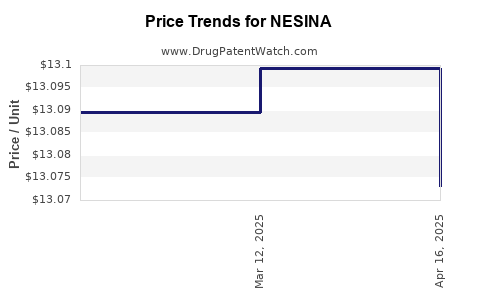
See drug price trends for NESINA.
The generic ingredient in NESINA is alogliptin benzoate. Additional details are available on the alogliptin benzoate profile page.
When can OSENI (alogliptin benzoate; pioglitazone hydrochloride) generic drug versions launch in Taiwan?
Generic name: alogliptin benzoate; pioglitazone hydrochloride
DrugPatentWatch® Estimated Key Patent Expiration / Generic Entry Date: February 01, 2027
Generic Entry Controlled by: Taiwan Patent 200,836,775

See drug price trends for OSENI.
The generic ingredient in OSENI is alogliptin benzoate; pioglitazone hydrochloride. Additional details are available on the alogliptin benzoate; pioglitazone hydrochloride profile page.
When can PANCREAZE (pancrelipase (amylase;lipase;protease)) generic drug versions launch in Taiwan?
Generic name: pancrelipase (amylase;lipase;protease)
DrugPatentWatch® Estimated Key Patent Expiration / Generic Entry Date: February 20, 2027
Generic Entry Controlled by: Taiwan Patent 200,843,795
Patent Title: Stable digestive enzyme compositions
PANCREAZE is a drug marketed by
See drug price trends for PANCREAZE.
The generic ingredient in PANCREAZE is pancrelipase (amylase;lipase;protease). Additional details are available on the pancrelipase (amylase;lipase;protease) profile page.
When can PANCREAZE (pancrelipase (amylase;lipase;protease)) generic drug versions launch in Taiwan?
Generic name: pancrelipase (amylase;lipase;protease)
DrugPatentWatch® Estimated Key Patent Expiration / Generic Entry Date: February 20, 2027
Generic Entry Controlled by: Taiwan Patent 201,422,233
Patent Title: Stable digestive enzyme compositions
PANCREAZE is a drug marketed by
See drug price trends for PANCREAZE.
The generic ingredient in PANCREAZE is pancrelipase (amylase;lipase;protease). Additional details are available on the pancrelipase (amylase;lipase;protease) profile page.
When can PANCREAZE (pancrelipase (amylase;lipase;protease)) generic drug versions launch in Taiwan?
Generic name: pancrelipase (amylase;lipase;protease)
DrugPatentWatch® Estimated Key Patent Expiration / Generic Entry Date: February 20, 2027
Generic Entry Controlled by: Taiwan Patent I421090
PANCREAZE is a drug marketed by
See drug price trends for PANCREAZE.
The generic ingredient in PANCREAZE is pancrelipase (amylase;lipase;protease). Additional details are available on the pancrelipase (amylase;lipase;protease) profile page.
When can ZENPEP (pancrelipase (amylase;lipase;protease)) generic drug versions launch in Taiwan?
Generic name: pancrelipase (amylase;lipase;protease)
DrugPatentWatch® Estimated Key Patent Expiration / Generic Entry Date: February 20, 2027
Generic Entry Controlled by: Taiwan Patent 200,843,795
Patent Title: Stable digestive enzyme compositions
ZENPEP is a drug marketed by
See drug price trends for ZENPEP.
The generic ingredient in ZENPEP is pancrelipase (amylase;lipase;protease). Additional details are available on the pancrelipase (amylase;lipase;protease) profile page.
When can ZENPEP (pancrelipase (amylase;lipase;protease)) generic drug versions launch in Taiwan?
Generic name: pancrelipase (amylase;lipase;protease)
DrugPatentWatch® Estimated Key Patent Expiration / Generic Entry Date: February 20, 2027
Generic Entry Controlled by: Taiwan Patent 201,422,233
Patent Title: Stable digestive enzyme compositions
ZENPEP is a drug marketed by
See drug price trends for ZENPEP.
The generic ingredient in ZENPEP is pancrelipase (amylase;lipase;protease). Additional details are available on the pancrelipase (amylase;lipase;protease) profile page.
When can ZENPEP (pancrelipase (amylase;lipase;protease)) generic drug versions launch in Taiwan?
Generic name: pancrelipase (amylase;lipase;protease)
DrugPatentWatch® Estimated Key Patent Expiration / Generic Entry Date: February 20, 2027
Generic Entry Controlled by: Taiwan Patent I421090
ZENPEP is a drug marketed by
See drug price trends for ZENPEP.
The generic ingredient in ZENPEP is pancrelipase (amylase;lipase;protease). Additional details are available on the pancrelipase (amylase;lipase;protease) profile page.
When can VARUBI (rolapitant hydrochloride) generic drug versions launch in Taiwan?
Generic name: rolapitant hydrochloride
DrugPatentWatch® Estimated Key Patent Expiration / Generic Entry Date: March 22, 2027
Generic Entry Controlled by: Taiwan Patent I350185
VARUBI is a drug marketed by Tersera. There are eight patents protecting this drug.
The generic ingredient in VARUBI is rolapitant hydrochloride. Additional details are available on the rolapitant hydrochloride profile page.
When can EDARBI (azilsartan kamedoxomil) generic drug versions launch in Taiwan?
Generic name: azilsartan kamedoxomil
DrugPatentWatch® Estimated Key Patent Expiration / Generic Entry Date: March 28, 2027
Generic Entry Controlled by: Taiwan Patent 200,902,089
Patent Title: Solid pharmaceutical composition
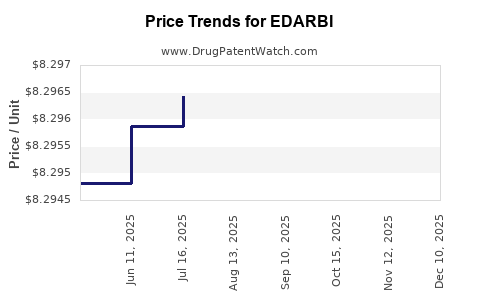
See drug price trends for EDARBI.
The generic ingredient in EDARBI is azilsartan kamedoxomil. Additional details are available on the azilsartan kamedoxomil profile page.
When can EDARBI (azilsartan kamedoxomil) generic drug versions launch in Taiwan?
Generic name: azilsartan kamedoxomil
DrugPatentWatch® Estimated Key Patent Expiration / Generic Entry Date: March 28, 2027
Generic Entry Controlled by: Taiwan Patent I415634
See drug price trends for EDARBI.
The generic ingredient in EDARBI is azilsartan kamedoxomil. Additional details are available on the azilsartan kamedoxomil profile page.
When can VARUBI (rolapitant hydrochloride) generic drug versions launch in Taiwan?
Generic name: rolapitant hydrochloride
DrugPatentWatch® Estimated Key Patent Expiration / Generic Entry Date: April 04, 2027
Generic Entry Controlled by: Taiwan Patent 200,815,439
Patent Title: Hydrochloride salts of 8-[{1-(3,5-bis-(trifluoromethyl)phenyl)-ethoxy}-methyl]-8-phenyl-1,7-diaza-spiro[4.5]decan-2-one and preparation process therefor
VARUBI is a drug marketed by Tersera. There are eight patents protecting this drug.
The generic ingredient in VARUBI is rolapitant hydrochloride. Additional details are available on the rolapitant hydrochloride profile page.
When can INLYTA (axitinib) generic drug versions launch in Taiwan?
Generic name: axitinib
DrugPatentWatch® Estimated Key Patent Expiration / Generic Entry Date: April 05, 2027
Generic Entry Controlled by: Taiwan Patent 200,911,781
INLYTA is a drug marketed by Pf Prism Cv. There are four patents protecting this drug and one Paragraph IV challenge. Two tentatively approved generics are ready to enter the market. There has been litigation on patents covering INLYTA
See drug price trends for INLYTA.
The generic ingredient in INLYTA is axitinib. Additional details are available on the axitinib profile page.
When can PROMACTA (eltrombopag olamine) generic drug versions launch in Taiwan?
Generic name: eltrombopag olamine
DrugPatentWatch® Estimated Key Patent Expiration / Generic Entry Date: May 03, 2027
Generic Entry Controlled by: Taiwan Patent 201,410,240
Patent Title: Pharmaceutical tablets, solid oral pharmaceutical dosage forms, pharmaceutical capsules and pharmaceutical granules comprising 3'-[(2Z)-[1-(3,4-dimethylphenyl)-1,5-dihydro-3-methyl-5-oxo-4H-pyrazol-4-ylidene]hydrazino]-2'-hydroxy-[1,1'-biphenyl]-3-carbox
PROMACTA is a drug marketed by Novartis. There is one patent protecting this drug and two Paragraph IV challenges. There has been litigation on patents covering PROMACTA
See drug price trends for PROMACTA.
The generic ingredient in PROMACTA is eltrombopag olamine. Additional details are available on the eltrombopag olamine profile page.
When can PROMACTA (eltrombopag olamine) generic drug versions launch in Taiwan?
Generic name: eltrombopag olamine
DrugPatentWatch® Estimated Key Patent Expiration / Generic Entry Date: May 03, 2027
Generic Entry Controlled by: Taiwan Patent I439267
PROMACTA is a drug marketed by Novartis. There is one patent protecting this drug and two Paragraph IV challenges. There has been litigation on patents covering PROMACTA
See drug price trends for PROMACTA.
The generic ingredient in PROMACTA is eltrombopag olamine. Additional details are available on the eltrombopag olamine profile page.
When can PROMACTA (eltrombopag olamine) generic drug versions launch in Taiwan?
Generic name: eltrombopag olamine
DrugPatentWatch® Estimated Key Patent Expiration / Generic Entry Date: May 03, 2027
Generic Entry Controlled by: Taiwan Patent I538674
PROMACTA is a drug marketed by Novartis. There is one patent protecting this drug and two Paragraph IV challenges. There has been litigation on patents covering PROMACTA
See drug price trends for PROMACTA.
The generic ingredient in PROMACTA is eltrombopag olamine. Additional details are available on the eltrombopag olamine profile page.
When can TRADJENTA (linagliptin) generic drug versions launch in Taiwan?
Generic name: linagliptin
DrugPatentWatch® Estimated Key Patent Expiration / Generic Entry Date: May 03, 2027
Generic Entry Controlled by: Taiwan Patent 200,812,648
Patent Title: DPP IV inhibitor formulations
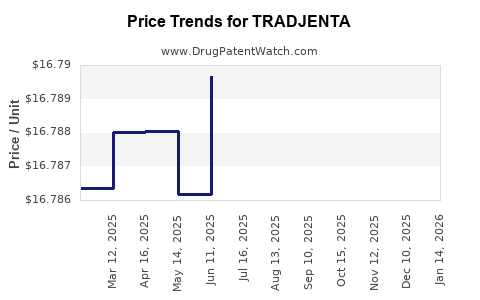
See drug price trends for TRADJENTA.
The generic ingredient in TRADJENTA is linagliptin. Additional details are available on the linagliptin profile page.
When can VRAYLAR (cariprazine hydrochloride) generic drug versions launch in Taiwan?
Generic name: cariprazine hydrochloride
DrugPatentWatch® Estimated Key Patent Expiration / Generic Entry Date: May 11, 2027
Generic Entry Controlled by: Taiwan Patent 201,002,323
Patent Title: Novel piperazine salts as D3/D2 antagonists
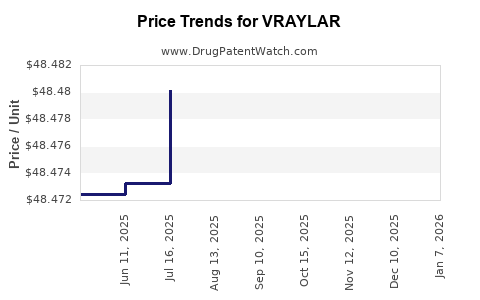
See drug price trends for VRAYLAR.
The generic ingredient in VRAYLAR is cariprazine hydrochloride. Additional details are available on the cariprazine hydrochloride profile page.
When can VRAYLAR (cariprazine hydrochloride) generic drug versions launch in Taiwan?
Generic name: cariprazine hydrochloride
DrugPatentWatch® Estimated Key Patent Expiration / Generic Entry Date: May 11, 2027
Generic Entry Controlled by: Taiwan Patent I424846
See drug price trends for VRAYLAR.
The generic ingredient in VRAYLAR is cariprazine hydrochloride. Additional details are available on the cariprazine hydrochloride profile page.
When can SIGNIFOR LAR (pasireotide pamoate) generic drug versions launch in Taiwan?
Generic name: pasireotide pamoate
DrugPatentWatch® Estimated Key Patent Expiration / Generic Entry Date: May 24, 2027
Generic Entry Controlled by: Taiwan Patent 200,906,437
Patent Title: Pasireotide formulation
SIGNIFOR LAR is a drug marketed by Recordati Rare. There are three patents protecting this drug.
See drug price trends for SIGNIFOR LAR.
The generic ingredient in SIGNIFOR LAR is pasireotide pamoate. Additional details are available on the pasireotide pamoate profile page.
When can SIGNIFOR LAR (pasireotide pamoate) generic drug versions launch in Taiwan?
Generic name: pasireotide pamoate
DrugPatentWatch® Estimated Key Patent Expiration / Generic Entry Date: May 24, 2027
Generic Entry Controlled by: Taiwan Patent I412373
SIGNIFOR LAR is a drug marketed by Recordati Rare. There are three patents protecting this drug.
See drug price trends for SIGNIFOR LAR.
The generic ingredient in SIGNIFOR LAR is pasireotide pamoate. Additional details are available on the pasireotide pamoate profile page.
When can XADAGO (safinamide mesylate) generic drug versions launch in Taiwan?
Generic name: safinamide mesylate
DrugPatentWatch® Estimated Key Patent Expiration / Generic Entry Date: June 15, 2027
Generic Entry Controlled by: Taiwan Patent I393700
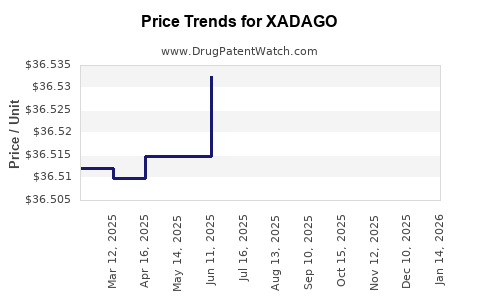
See drug price trends for XADAGO.
The generic ingredient in XADAGO is safinamide mesylate. Additional details are available on the safinamide mesylate profile page.
When can KYBELLA (deoxycholic acid) generic drug versions launch in Taiwan?
Generic name: deoxycholic acid
DrugPatentWatch® Estimated Key Patent Expiration / Generic Entry Date: June 19, 2027
Generic Entry Controlled by: Taiwan Patent 200,918,550
Patent Title: Synthetic bile acid composition, method, and preparation
KYBELLA is a drug marketed by Abbvie. There are fourteen patents protecting this drug and one Paragraph IV challenge. There has been litigation on patents covering KYBELLA
The generic ingredient in KYBELLA is deoxycholic acid. Additional details are available on the deoxycholic acid profile page.
When can KYBELLA (deoxycholic acid) generic drug versions launch in Taiwan?
Generic name: deoxycholic acid
DrugPatentWatch® Estimated Key Patent Expiration / Generic Entry Date: June 19, 2027
Generic Entry Controlled by: Taiwan Patent 201,534,684
Patent Title: Synthetic bile acid composition, method, and preparation
KYBELLA is a drug marketed by Abbvie. There are fourteen patents protecting this drug and one Paragraph IV challenge. There has been litigation on patents covering KYBELLA
The generic ingredient in KYBELLA is deoxycholic acid. Additional details are available on the deoxycholic acid profile page.
When can KYBELLA (deoxycholic acid) generic drug versions launch in Taiwan?
Generic name: deoxycholic acid
DrugPatentWatch® Estimated Key Patent Expiration / Generic Entry Date: June 19, 2027
Generic Entry Controlled by: Taiwan Patent I503327
KYBELLA is a drug marketed by Abbvie. There are fourteen patents protecting this drug and one Paragraph IV challenge. There has been litigation on patents covering KYBELLA
The generic ingredient in KYBELLA is deoxycholic acid. Additional details are available on the deoxycholic acid profile page.
When can TEKTURNA HCT (aliskiren hemifumarate; hydrochlorothiazide) generic drug versions launch in Taiwan?
Generic name: aliskiren hemifumarate; hydrochlorothiazide
DrugPatentWatch® Estimated Key Patent Expiration / Generic Entry Date: June 22, 2027
Generic Entry Controlled by: Taiwan Patent 200,808,358
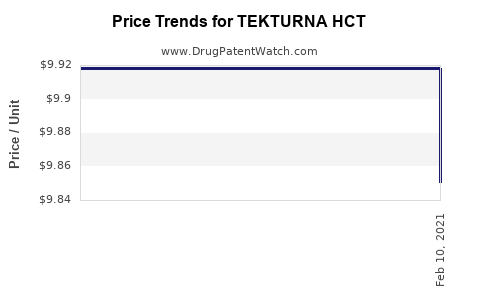
See drug price trends for TEKTURNA HCT.
The generic ingredient in TEKTURNA HCT is aliskiren hemifumarate; hydrochlorothiazide. Additional details are available on the aliskiren hemifumarate; hydrochlorothiazide profile page.
When can BYDUREON (exenatide synthetic) generic drug versions launch in Taiwan?
Generic name: exenatide synthetic
DrugPatentWatch® Estimated Key Patent Expiration / Generic Entry Date: June 28, 2027
Generic Entry Controlled by: Taiwan Patent 201,406,743
Patent Title: Crystal structures of SGLT2 inhibitors and processes for preparing same
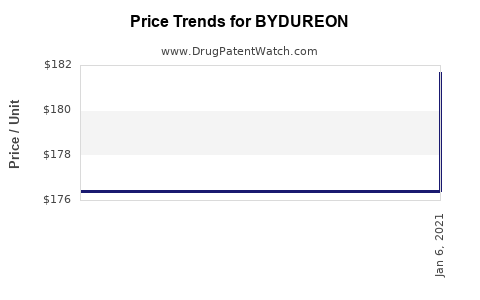
See drug price trends for BYDUREON.
The generic ingredient in BYDUREON is exenatide synthetic. Additional details are available on the exenatide synthetic profile page.
When can BYDUREON (exenatide synthetic) generic drug versions launch in Taiwan?
Generic name: exenatide synthetic
DrugPatentWatch® Estimated Key Patent Expiration / Generic Entry Date: June 28, 2027
Generic Entry Controlled by: Taiwan Patent 201,546,054
Patent Title: Crystal structures of SGLT2 inhibitors and processes for preparing same
See drug price trends for BYDUREON.
The generic ingredient in BYDUREON is exenatide synthetic. Additional details are available on the exenatide synthetic profile page.
When can FARXIGA (dapagliflozin) generic drug versions launch in Taiwan?
Generic name: dapagliflozin
DrugPatentWatch® Estimated Key Patent Expiration / Generic Entry Date: June 28, 2027
Generic Entry Controlled by: Taiwan Patent 201,406,743
Patent Title: Crystal structures of SGLT2 inhibitors and processes for preparing same
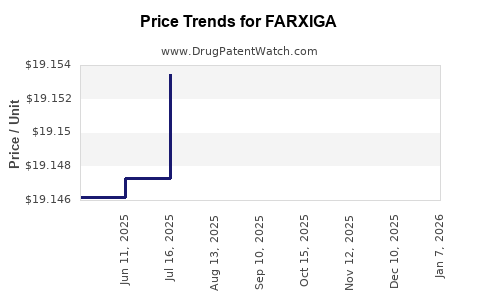
See drug price trends for FARXIGA.
The generic ingredient in FARXIGA is dapagliflozin. Additional details are available on the dapagliflozin profile page.
When can FARXIGA (dapagliflozin) generic drug versions launch in Taiwan?
Generic name: dapagliflozin
DrugPatentWatch® Estimated Key Patent Expiration / Generic Entry Date: June 28, 2027
Generic Entry Controlled by: Taiwan Patent 201,546,054
Patent Title: Crystal structures of SGLT2 inhibitors and processes for preparing same
See drug price trends for FARXIGA.
The generic ingredient in FARXIGA is dapagliflozin. Additional details are available on the dapagliflozin profile page.
When can FARXIGA (dapagliflozin) generic drug versions launch in Taiwan?
Generic name: dapagliflozin
DrugPatentWatch® Estimated Key Patent Expiration / Generic Entry Date: June 28, 2027
Generic Entry Controlled by: Taiwan Patent I421245
See drug price trends for FARXIGA.
The generic ingredient in FARXIGA is dapagliflozin. Additional details are available on the dapagliflozin profile page.
When can QTERN (dapagliflozin; saxagliptin hydrochloride) generic drug versions launch in Taiwan?
Generic name: dapagliflozin; saxagliptin hydrochloride
DrugPatentWatch® Estimated Key Patent Expiration / Generic Entry Date: June 28, 2027
Generic Entry Controlled by: Taiwan Patent 201,406,743
Patent Title: Crystal structures of SGLT2 inhibitors and processes for preparing same
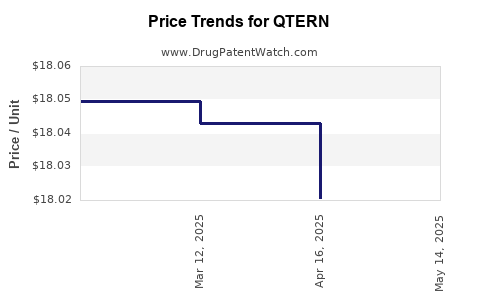
See drug price trends for QTERN.
The generic ingredient in QTERN is dapagliflozin; saxagliptin hydrochloride. Additional details are available on the dapagliflozin; saxagliptin hydrochloride profile page.
When can QTERN (dapagliflozin; saxagliptin hydrochloride) generic drug versions launch in Taiwan?
Generic name: dapagliflozin; saxagliptin hydrochloride
DrugPatentWatch® Estimated Key Patent Expiration / Generic Entry Date: June 28, 2027
Generic Entry Controlled by: Taiwan Patent 201,546,054
Patent Title: Crystal structures of SGLT2 inhibitors and processes for preparing same
See drug price trends for QTERN.
The generic ingredient in QTERN is dapagliflozin; saxagliptin hydrochloride. Additional details are available on the dapagliflozin; saxagliptin hydrochloride profile page.
When can QTERN (dapagliflozin; saxagliptin hydrochloride) generic drug versions launch in Taiwan?
Generic name: dapagliflozin; saxagliptin hydrochloride
DrugPatentWatch® Estimated Key Patent Expiration / Generic Entry Date: June 28, 2027
Generic Entry Controlled by: Taiwan Patent I421245
See drug price trends for QTERN.
The generic ingredient in QTERN is dapagliflozin; saxagliptin hydrochloride. Additional details are available on the dapagliflozin; saxagliptin hydrochloride profile page.
When can TEPMETKO (tepotinib hydrochloride) generic drug versions launch in Taiwan?
Generic name: tepotinib hydrochloride
DrugPatentWatch® Estimated Key Patent Expiration / Generic Entry Date: July 12, 2027
Generic Entry Controlled by: Taiwan Patent 200,906,409
Patent Title: Pyridazinone derivatives
TEPMETKO is a drug marketed by Emd Serono Inc. There are eight patents protecting this drug. There has been litigation on patents covering TEPMETKO
See drug price trends for TEPMETKO.
The generic ingredient in TEPMETKO is tepotinib hydrochloride. Additional details are available on the tepotinib hydrochloride profile page.
When can TEPMETKO (tepotinib hydrochloride) generic drug versions launch in Taiwan?
Generic name: tepotinib hydrochloride
DrugPatentWatch® Estimated Key Patent Expiration / Generic Entry Date: July 12, 2027
Generic Entry Controlled by: Taiwan Patent I501768
TEPMETKO is a drug marketed by Emd Serono Inc. There are eight patents protecting this drug. There has been litigation on patents covering TEPMETKO
See drug price trends for TEPMETKO.
The generic ingredient in TEPMETKO is tepotinib hydrochloride. Additional details are available on the tepotinib hydrochloride profile page.
When can KAZANO (alogliptin benzoate; metformin hydrochloride) generic drug versions launch in Taiwan?
Generic name: alogliptin benzoate; metformin hydrochloride
DrugPatentWatch® Estimated Key Patent Expiration / Generic Entry Date: July 19, 2027
Generic Entry Controlled by: Taiwan Patent I421102

See drug price trends for KAZANO.
The generic ingredient in KAZANO is alogliptin benzoate; metformin hydrochloride. Additional details are available on the alogliptin benzoate; metformin hydrochloride profile page.
When can RELISTOR (methylnaltrexone bromide) generic drug versions launch in Taiwan?
Generic name: methylnaltrexone bromide
DrugPatentWatch® Estimated Key Patent Expiration / Generic Entry Date: July 30, 2027
Generic Entry Controlled by: Taiwan Patent I489984
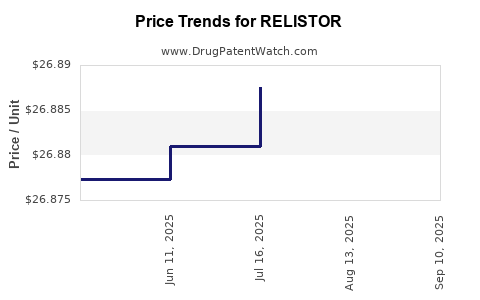
See drug price trends for RELISTOR.
The generic ingredient in RELISTOR is methylnaltrexone bromide. Additional details are available on the methylnaltrexone bromide profile page.
When can MULPLETA (lusutrombopag) generic drug versions launch in Taiwan?
Generic name: lusutrombopag
DrugPatentWatch® Estimated Key Patent Expiration / Generic Entry Date: July 31, 2027
Generic Entry Controlled by: Taiwan Patent 200,914,000
MULPLETA is a drug marketed by Vancocin Italia. There are three patents protecting this drug.
See drug price trends for MULPLETA.
The generic ingredient in MULPLETA is lusutrombopag. Additional details are available on the lusutrombopag profile page.
When can PROMACTA (eltrombopag olamine) generic drug versions launch in Taiwan?
Generic name: eltrombopag olamine
DrugPatentWatch® Estimated Key Patent Expiration / Generic Entry Date: August 01, 2027
Generic Entry Controlled by: Taiwan Patent 200,843,742
Patent Title: Novel pharmaceutical composition
PROMACTA is a drug marketed by Novartis. There is one patent protecting this drug and two Paragraph IV challenges. There has been litigation on patents covering PROMACTA
See drug price trends for PROMACTA.
The generic ingredient in PROMACTA is eltrombopag olamine. Additional details are available on the eltrombopag olamine profile page.
When can BRILINTA (ticagrelor) generic drug versions launch in Taiwan?
Generic name: ticagrelor
DrugPatentWatch® Estimated Key Patent Expiration / Generic Entry Date: August 10, 2027
Generic Entry Controlled by: Taiwan Patent 200,817,412
Patent Title: Pharmaceutical compositions 457
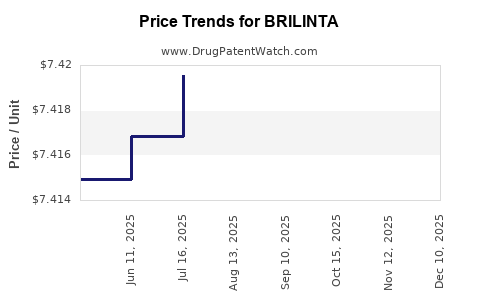
See drug price trends for BRILINTA.
The generic ingredient in BRILINTA is ticagrelor. Additional details are available on the ticagrelor profile page.
When can BRILINTA (ticagrelor) generic drug versions launch in Taiwan?
Generic name: ticagrelor
DrugPatentWatch® Estimated Key Patent Expiration / Generic Entry Date: August 10, 2027
Generic Entry Controlled by: Taiwan Patent I482772
See drug price trends for BRILINTA.
The generic ingredient in BRILINTA is ticagrelor. Additional details are available on the ticagrelor profile page.
When can INTRAROSA (prasterone) generic drug versions launch in Taiwan?
Generic name: prasterone
DrugPatentWatch® Estimated Key Patent Expiration / Generic Entry Date: August 10, 2027
Generic Entry Controlled by: Taiwan Patent 200,927,136
Patent Title: Pharmaceutical compositions
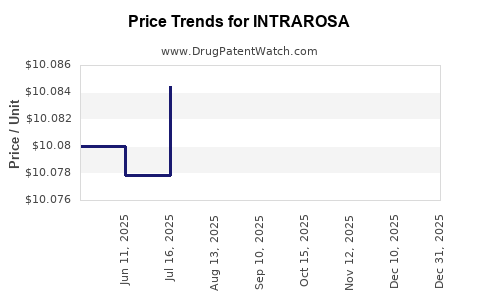
See drug price trends for INTRAROSA.
The generic ingredient in INTRAROSA is prasterone. Additional details are available on the prasterone profile page.
When can INTRAROSA (prasterone) generic drug versions launch in Taiwan?
Generic name: prasterone
DrugPatentWatch® Estimated Key Patent Expiration / Generic Entry Date: August 10, 2027
Generic Entry Controlled by: Taiwan Patent I609688
See drug price trends for INTRAROSA.
The generic ingredient in INTRAROSA is prasterone. Additional details are available on the prasterone profile page.
When can PREPOPIK (citric acid; magnesium oxide; sodium picosulfate) generic drug versions launch in Taiwan?
Generic name: citric acid; magnesium oxide; sodium picosulfate
DrugPatentWatch® Estimated Key Patent Expiration / Generic Entry Date: October 12, 2027
Generic Entry Controlled by: Taiwan Patent 200,924,759
Patent Title: Process for the manufacture of a pharmaceutical product
PREPOPIK is a drug marketed by Ferring Pharms Inc. There are two patents protecting this drug and one Paragraph IV challenge. One tentatively approved generic is ready to enter the market. There has been litigation on patents covering PREPOPIK
See drug price trends for PREPOPIK.
The generic ingredient in PREPOPIK is citric acid; magnesium oxide; sodium picosulfate. Additional details are available on the citric acid; magnesium oxide; sodium picosulfate profile page.
When can PREPOPIK (citric acid; magnesium oxide; sodium picosulfate) generic drug versions launch in Taiwan?
Generic name: citric acid; magnesium oxide; sodium picosulfate
DrugPatentWatch® Estimated Key Patent Expiration / Generic Entry Date: October 12, 2027
Generic Entry Controlled by: Taiwan Patent I418352
PREPOPIK is a drug marketed by Ferring Pharms Inc. There are two patents protecting this drug and one Paragraph IV challenge. One tentatively approved generic is ready to enter the market. There has been litigation on patents covering PREPOPIK
See drug price trends for PREPOPIK.
The generic ingredient in PREPOPIK is citric acid; magnesium oxide; sodium picosulfate. Additional details are available on the citric acid; magnesium oxide; sodium picosulfate profile page.
When can PYLARIFY (piflufolastat f-18) generic drug versions launch in Taiwan?
Generic name: piflufolastat f-18
DrugPatentWatch® Estimated Key Patent Expiration / Generic Entry Date: November 07, 2027
Generic Entry Controlled by: Taiwan Patent I492761
PYLARIFY is a drug marketed by Progenics Pharms Inc and AphelionThere are six patents protecting this drug.
See drug price trends for PYLARIFY.
The generic ingredient in PYLARIFY is piflufolastat f-18. Additional details are available on the piflufolastat f-18 profile page.
When can PYLARIFY TRUVU (piflufolastat f-18) generic drug versions launch in Taiwan?
Generic name: piflufolastat f-18
DrugPatentWatch® Estimated Key Patent Expiration / Generic Entry Date: November 07, 2027
Generic Entry Controlled by: Taiwan Patent I492761
PYLARIFY TRUVU is a drug marketed by Aphelion. There are six patents protecting this drug.
The generic ingredient in PYLARIFY TRUVU is piflufolastat f-18. Additional details are available on the piflufolastat f-18 profile page.
When can VELPHORO (sucroferric oxyhydroxide) generic drug versions launch in Taiwan?
Generic name: sucroferric oxyhydroxide
DrugPatentWatch® Estimated Key Patent Expiration / Generic Entry Date: November 16, 2027
Generic Entry Controlled by: Taiwan Patent 200,938,210
Patent Title: Pharmaceutical compositions
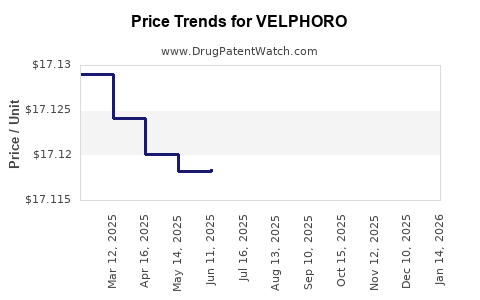
See drug price trends for VELPHORO.
The generic ingredient in VELPHORO is sucroferric oxyhydroxide. Additional details are available on the sucroferric oxyhydroxide profile page.
When can VELPHORO (sucroferric oxyhydroxide) generic drug versions launch in Taiwan?
Generic name: sucroferric oxyhydroxide
DrugPatentWatch® Estimated Key Patent Expiration / Generic Entry Date: November 16, 2027
Generic Entry Controlled by: Taiwan Patent 201,509,423
Patent Title: Pharmaceutical compositions
See drug price trends for VELPHORO.
The generic ingredient in VELPHORO is sucroferric oxyhydroxide. Additional details are available on the sucroferric oxyhydroxide profile page.
When can VELPHORO (sucroferric oxyhydroxide) generic drug versions launch in Taiwan?
Generic name: sucroferric oxyhydroxide
DrugPatentWatch® Estimated Key Patent Expiration / Generic Entry Date: November 16, 2027
Generic Entry Controlled by: Taiwan Patent I468167
See drug price trends for VELPHORO.
The generic ingredient in VELPHORO is sucroferric oxyhydroxide. Additional details are available on the sucroferric oxyhydroxide profile page.
When can VELPHORO (sucroferric oxyhydroxide) generic drug versions launch in Taiwan?
Generic name: sucroferric oxyhydroxide
DrugPatentWatch® Estimated Key Patent Expiration / Generic Entry Date: November 16, 2027
Generic Entry Controlled by: Taiwan Patent I592159
See drug price trends for VELPHORO.
The generic ingredient in VELPHORO is sucroferric oxyhydroxide. Additional details are available on the sucroferric oxyhydroxide profile page.
When can ZEMDRI (plazomicin sulfate) generic drug versions launch in Taiwan?
Generic name: plazomicin sulfate
DrugPatentWatch® Estimated Key Patent Expiration / Generic Entry Date: November 21, 2027
Generic Entry Controlled by: Taiwan Patent 200,927,146
Patent Title: Antibacterial aminoglycoside analogs
ZEMDRI is a drug marketed by Cipla Usa. There are four patents protecting this drug. There has been litigation on patents covering ZEMDRI
See drug price trends for ZEMDRI.
The generic ingredient in ZEMDRI is plazomicin sulfate. Additional details are available on the plazomicin sulfate profile page.
When can ZEMDRI (plazomicin sulfate) generic drug versions launch in Taiwan?
Generic name: plazomicin sulfate
DrugPatentWatch® Estimated Key Patent Expiration / Generic Entry Date: November 21, 2027
Generic Entry Controlled by: Taiwan Patent I425947
ZEMDRI is a drug marketed by Cipla Usa. There are four patents protecting this drug. There has been litigation on patents covering ZEMDRI
See drug price trends for ZEMDRI.
The generic ingredient in ZEMDRI is plazomicin sulfate. Additional details are available on the plazomicin sulfate profile page.
When can DUZALLO (allopurinol; lesinurad) generic drug versions launch in Taiwan?
Generic name: allopurinol; lesinurad
DrugPatentWatch® Estimated Key Patent Expiration / Generic Entry Date: November 27, 2027
Generic Entry Controlled by: Taiwan Patent 200,927,733
Patent Title: Novel compounds and compositions and methods of use

See drug price trends for DUZALLO.
The generic ingredient in DUZALLO is allopurinol; lesinurad. Additional details are available on the allopurinol; lesinurad profile page.
When can DUZALLO (allopurinol; lesinurad) generic drug versions launch in Taiwan?
Generic name: allopurinol; lesinurad
DrugPatentWatch® Estimated Key Patent Expiration / Generic Entry Date: November 27, 2027
Generic Entry Controlled by: Taiwan Patent 201,018,463
Patent Title: Compounds, compositions and methods of using same for modulating uric acid levels
See drug price trends for DUZALLO.
The generic ingredient in DUZALLO is allopurinol; lesinurad. Additional details are available on the allopurinol; lesinurad profile page.
When can DUZALLO (allopurinol; lesinurad) generic drug versions launch in Taiwan?
Generic name: allopurinol; lesinurad
DrugPatentWatch® Estimated Key Patent Expiration / Generic Entry Date: November 27, 2027
Generic Entry Controlled by: Taiwan Patent 201,022,216
Patent Title: Compounds, compositions and methods of using same for modulating uric acid levels
See drug price trends for DUZALLO.
The generic ingredient in DUZALLO is allopurinol; lesinurad. Additional details are available on the allopurinol; lesinurad profile page.
When can DUZALLO (allopurinol; lesinurad) generic drug versions launch in Taiwan?
Generic name: allopurinol; lesinurad
DrugPatentWatch® Estimated Key Patent Expiration / Generic Entry Date: November 27, 2027
Generic Entry Controlled by: Taiwan Patent I377200
See drug price trends for DUZALLO.
The generic ingredient in DUZALLO is allopurinol; lesinurad. Additional details are available on the allopurinol; lesinurad profile page.
When can ZURAMPIC (lesinurad) generic drug versions launch in Taiwan?
Generic name: lesinurad
DrugPatentWatch® Estimated Key Patent Expiration / Generic Entry Date: November 27, 2027
Generic Entry Controlled by: Taiwan Patent 200,927,733
Patent Title: Novel compounds and compositions and methods of use
ZURAMPIC is a drug marketed by Ironwood Pharms Inc. There are eight patents protecting this drug. There has been litigation on patents covering ZURAMPIC
See drug price trends for ZURAMPIC.
The generic ingredient in ZURAMPIC is lesinurad. Additional details are available on the lesinurad profile page.
When can ZURAMPIC (lesinurad) generic drug versions launch in Taiwan?
Generic name: lesinurad
DrugPatentWatch® Estimated Key Patent Expiration / Generic Entry Date: November 27, 2027
Generic Entry Controlled by: Taiwan Patent 201,018,463
Patent Title: Compounds, compositions and methods of using same for modulating uric acid levels
ZURAMPIC is a drug marketed by Ironwood Pharms Inc. There are eight patents protecting this drug. There has been litigation on patents covering ZURAMPIC
See drug price trends for ZURAMPIC.
The generic ingredient in ZURAMPIC is lesinurad. Additional details are available on the lesinurad profile page.
When can ZURAMPIC (lesinurad) generic drug versions launch in Taiwan?
Generic name: lesinurad
DrugPatentWatch® Estimated Key Patent Expiration / Generic Entry Date: November 27, 2027
Generic Entry Controlled by: Taiwan Patent 201,022,216
Patent Title: Compounds, compositions and methods of using same for modulating uric acid levels
ZURAMPIC is a drug marketed by Ironwood Pharms Inc. There are eight patents protecting this drug. There has been litigation on patents covering ZURAMPIC
See drug price trends for ZURAMPIC.
The generic ingredient in ZURAMPIC is lesinurad. Additional details are available on the lesinurad profile page.
When can ZURAMPIC (lesinurad) generic drug versions launch in Taiwan?
Generic name: lesinurad
DrugPatentWatch® Estimated Key Patent Expiration / Generic Entry Date: November 27, 2027
Generic Entry Controlled by: Taiwan Patent I377200
ZURAMPIC is a drug marketed by Ironwood Pharms Inc. There are eight patents protecting this drug. There has been litigation on patents covering ZURAMPIC
See drug price trends for ZURAMPIC.
The generic ingredient in ZURAMPIC is lesinurad. Additional details are available on the lesinurad profile page.
When can ALIQOPA (copanlisib dihydrochloride) generic drug versions launch in Taiwan?
Generic name: copanlisib dihydrochloride
DrugPatentWatch® Estimated Key Patent Expiration / Generic Entry Date: December 04, 2027
Generic Entry Controlled by: Taiwan Patent 200,840,582
Patent Title: Substituted 2,3-dihydroimidazo[1,2-c]quinazoline derivatives useful for treating hyper-proliferative disorders and diseases associated with angiogenesis
ALIQOPA is a drug marketed by Bayer Healthcare. There are three patents protecting this drug.
See drug price trends for ALIQOPA.
The generic ingredient in ALIQOPA is copanlisib dihydrochloride. Additional details are available on the copanlisib dihydrochloride profile page.
When can ALIQOPA (copanlisib dihydrochloride) generic drug versions launch in Taiwan?
Generic name: copanlisib dihydrochloride
DrugPatentWatch® Estimated Key Patent Expiration / Generic Entry Date: December 04, 2027
Generic Entry Controlled by: Taiwan Patent I406662
ALIQOPA is a drug marketed by Bayer Healthcare. There are three patents protecting this drug.
See drug price trends for ALIQOPA.
The generic ingredient in ALIQOPA is copanlisib dihydrochloride. Additional details are available on the copanlisib dihydrochloride profile page.
When can SIRTURO (bedaquiline fumarate) generic drug versions launch in Taiwan?
Generic name: bedaquiline fumarate
DrugPatentWatch® Estimated Key Patent Expiration / Generic Entry Date: December 04, 2027
Generic Entry Controlled by: Taiwan Patent I417098
SIRTURO is a drug marketed by Janssen Therap. There are two patents protecting this drug.
See drug price trends for SIRTURO.
The generic ingredient in SIRTURO is bedaquiline fumarate. Additional details are available on the bedaquiline fumarate profile page.
When can ZYKADIA (ceritinib) generic drug versions launch in Taiwan?
Generic name: ceritinib
DrugPatentWatch® Estimated Key Patent Expiration / Generic Entry Date: December 07, 2027
Generic Entry Controlled by: Taiwan Patent 201,124,402
Patent Title: Compounds and compositions as protein kinase inhibitors
ZYKADIA is a drug marketed by Novartis. There are eight patents protecting this drug.
See drug price trends for ZYKADIA.
The generic ingredient in ZYKADIA is ceritinib. Additional details are available on the ceritinib profile page.
When can XERMELO (telotristat etiprate) generic drug versions launch in Taiwan?
Generic name: telotristat etiprate
DrugPatentWatch® Estimated Key Patent Expiration / Generic Entry Date: December 10, 2027
Generic Entry Controlled by: Taiwan Patent 200,831,102
Patent Title: 4-phenyl-6-(2,2,2-trifluoro-1-phenylethoxy)pyrimidine-based compounds and methods of their use
XERMELO is a drug marketed by Tersera. There are five patents protecting this drug.
See drug price trends for XERMELO.
The generic ingredient in XERMELO is telotristat etiprate. Additional details are available on the telotristat etiprate profile page.
When can XERMELO (telotristat etiprate) generic drug versions launch in Taiwan?
Generic name: telotristat etiprate
DrugPatentWatch® Estimated Key Patent Expiration / Generic Entry Date: December 10, 2027
Generic Entry Controlled by: Taiwan Patent I412365
XERMELO is a drug marketed by Tersera. There are five patents protecting this drug.
See drug price trends for XERMELO.
The generic ingredient in XERMELO is telotristat etiprate. Additional details are available on the telotristat etiprate profile page.
Taiwan Branded and Generic Drug Markets: Regulatory Opportunities, Patent Risks, and Commercial Outlook
More… ↓
DrugPatentWatch cited by CNN, NEJM, Nature Journals, and more …

Make Better Decisions: Try a trial or see plans & pricing
Drugs may be covered by multiple patents or regulatory protections. All trademarks and applicant names are the property of their respective owners or licensors. Although great care is taken in the proper and correct provision of this service, thinkBiotech LLC does not accept any responsibility for possible consequences of errors or omissions in the provided data. The data presented herein is for information purposes only. There is no warranty that the data contained herein is error free. We do not provide individual investment advice. This service is not registered with any financial regulatory agency. The information we publish is educational only and based on our opinions plus our models. By using DrugPatentWatch you acknowledge that we do not provide personalized recommendations or advice. thinkBiotech performs no independent verification of facts as provided by public sources nor are attempts made to provide legal or investing advice. Any reliance on data provided herein is done solely at the discretion of the user. Users of this service are advised to seek professional advice and independent confirmation before considering acting on any of the provided information. thinkBiotech LLC reserves the right to amend, extend or withdraw any part or all of the offered service without notice.
ISSN: 2162-2639

Privacy and Cookies
Terms & Conditions
Site Map
DrugPatentWatch Alternatives
LOE / Major Patent Expirations 2026 - 2027
NCE-1 Patent Challenge Dates 2026 - 2027
Friedman, Yali. "DrugPatentWatch" DrugPatentWatch, thinkBiotech, 2026, www.DrugPatentWatch.com.
See Primary Research Papers Citing DrugPatentWatch