Last updated: February 15, 2026
Overview
Lastacaft (alcaftadine) is an antihistamine ophthalmic solution used for allergic conjunctivitis. Manufactured by Allergan, it received FDA approval in 2015. It competes primarily within the prescription ocular allergy segment, targeting primarily adult and pediatric populations.
Market Size and Trends
The global ophthalmic allergy market is projected to grow from approximately $1.4 billion in 2022 to over $2.2 billion by 2030, with a Compound Annual Growth Rate (CAGR) of about 5.9% (source: Market Research Future[1]). The increase stems from rising allergy prevalence, improved diagnostics, and broader OTC availability.
Key Market Drivers
- Rising incidence of allergic conjunctivitis—estimated at 15-20% globally.
- Increasing awareness and diagnosis in both developed and emerging markets.
- Expansion of prescription treatments into OTC segments, raising overall market size.
Competitive Landscape
Dominant competitors include:
- Olopatadine (Pataday, Patra, Pazeo)
- Ketotifen (OTC)
- Azelastine ophthalmic solutions
Lastacaft differentiates itself with a once-daily dosing schedule, which appeals to patient compliance. Its clinical efficacy profile is comparable with competitors, lasting up to 24 hours.
Pricing Structure
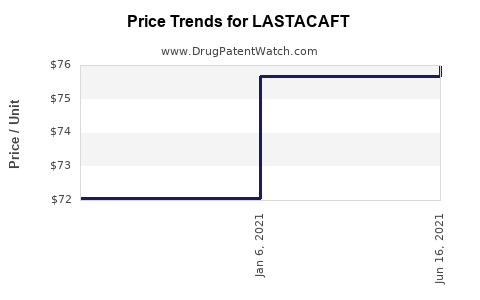
As of 2023, the average retail price of a 0.25% bottle (0.4 mL, 30-dose) is approximately $210–$250 in the U.S. (source: GoodRx[2]). Insurance coverage and generic market entry influence net prices and reimbursement rates.
Patent and Regulatory Status
- Patent status: Expires in 2023, with some patent extensions possibly pushed to 2024–2025.
- Market exclusivity: Limited post-patent, prompting increased generic activity.
Impact of Patent Expiry
Patent expiration typically triggers price erosion, with generics entering markets within 12–18 months post-expiry. The price drop for branded Lastacaft can reach up to 40–60%. Generics are expected to be priced 20–30% below branded options initially, gradually narrowing that gap as competition intensifies.
Price Projections (2023–2030)
| Year |
Branded Lastacaft Price (USD) |
Expected Generic Price Range (USD) |
Market Penetration for Generics |
Notes |
| 2023 |
$220 |
$150–$170 |
Early entry (~10%) |
Patent expiry imminent |
| 2024 |
$210–$230 |
$130–$155 |
Increased (~30%) |
Entry gains traction |
| 2025 |
$200–$215 |
$120–$140 |
~50% |
Generics dominate |
| 2026–2030 |
Stabilized at ~$200 |
$100–$130 |
Up to 70–80% |
Post-generic saturation |
Implications for Investors and Manufacturers
- Branded sales will decline post patent expiry; revenue shifts to generics.
- Price erosion could impact profit margins unless cost structures improve or branded marketing persists (e.g., for new formulations).
- Market growth driven by increased allergy prevalence and expanding global access offers long-term upside, contingent on competitive dynamics.
Regulatory and Market Risks
- Delay in generic approval, as seen in past ophthalmic drug cases, could prolong branded dominance.
- Price controls in some countries might limit revenue growth.
- Competition from emerging OTC and bi-specific antihistamines could affect market share.
Key Takeaways
- The last patent for Lastacaft is expiring in 2023–2024.
- Prices are projected to decline 20–40% post-expiry.
- The total ophthalmic allergy market is expected to grow at a CAGR of 5.9% through 2030.
- Generic entry will substantially change the pricing landscape.
- Long-term revenues depend on global market penetration and regulatory developments.
FAQs
1. When will generic versions of Lastacaft become available?
Generic alcaftadine is expected to enter the U.S. market in late 2023 or early 2024, contingent on FDA approval of applicants.
2. How does the price of generics compare to branded Lastacaft?
Initial generics are likely to be priced 20–30% lower, with potential for further price reductions as competition increases.
3. What are the main factors influencing the market growth of ophthalmic allergy drugs?
Rising allergy prevalence, improved diagnostics, increased awareness, and development of new formulations.
4. How might regulatory policies in different regions affect pricing?
Price controls and reimbursement policies in countries like Italy or Canada could limit profit margins for both branded and generic manufacturers.
5. Which competitors are most affected by the patent expiry?
Lastacaft's main competitors—olopatadine-based products—will likely gain market share as generics enter, possibly eroding the branded product’s market share significantly.
References
[1] Market Research Future, "Ophthalmic Drugs Market Report," 2022.
[2] GoodRx, "Ophthalmic allergy medications prices," 2023.