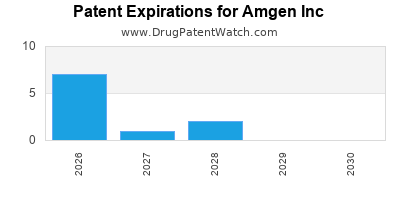
Last updated: October 15, 2025
Introduction
Amgen Inc., a global biotechnology powerhouse, exemplifies innovation-driven growth within the biopharmaceutical sector. Since its founding in 1980, Amgen has cemented itself as a leader in developing therapies for oncology, nephrology, cardiovascular diseases, and inflammatory conditions. This analysis examines Amgen's current market position, core strengths, competitive advantages, and strategic outlook to inform business decisions and investment considerations in the evolving biotech landscape.
Market Position of Amgen Inc.
Amgen ranks among the top-tier biopharmaceutical firms globally by revenue, driven predominantly by its flagship biologics and an expanding pipeline of innovative therapies. According to industry reports, Amgen secured approximately $25 billion in revenue in 2022, positioning it as a leader in revenue among biotech giants [1].
The company's market coverage spans North America, Europe, and emerging markets, with a significant portion of sales attributed to the United States, where its flagship products like Prolia, Kyprolis, and Repatha capture substantial market share. Amgen's presence in specialized therapeutic areas bolsters its resilience amid patent expirations affecting peers.
Key market segments include:
- Oncology & Hematology: Oncology drugs like Kyprolis (carfilzomib) and biosimilars bolster its oncology portfolio.
- Bone Health & Dermatology: Prolia (denosumab) leads the osteoporosis segment.
- Cardiovascular & Metabolic Diseases: Repatha (evolocumab) exemplifies its focus on lipid management.
- Inflammation & Autoimmune: Trials in the pipeline for novel therapies target unmet needs.
Amgen competes fiercely with firms such as Regeneron, AbbVie, Johnson & Johnson, and biosimilar manufacturers, positioning itself as a key innovator with a balanced portfolio of mature blockbusters and promising pipeline candidates.
Strengths of Amgen Inc.
1. Robust Biologic Portfolio & Market Leadership
Amgen's extensive biologic repertoire embodies decades of R&D excellence. Its flagship products are often best-sellers, providing a stable revenue base. Prolia and Repatha continue to demonstrate market dominance owing to proven efficacy and payer acceptance.
2. Pipeline Strength & Innovation Capabilities
Amgen allocates approximately 30% of its revenue to R&D, culminating in a pipeline with over 40 active clinical trials. Noteworthy candidates include potential first-in-class therapies for inflammatory diseases and novel oncology agents. Strategic partnerships, such as with Kyowa Kirin and Peptidream, further enhance its innovation scope.
3. Strategic Biosimilar Expansion
Amgen's biosimilar portfolio allows it to capture a significant share of the generics market for biologics, directly competing with originator brands. The company’s biosimilar offerings, including Kanjinti (trastuzumab biosimilar) and Amjevita (adalimumab biosimilar), diversify revenue streams and mitigate patent cliffs.
4. Global Footprint and Manufacturing Capabilities
Amgen maintains a broad global footprint with manufacturing facilities in North America, Europe, and Asia. This positions the company effectively for supply chain resilience and rapid market response, particularly in emerging markets with growing healthcare expenditure.
5. Focus on Precision Medicine & Digital Health
Amgen is investing in personalized medicine through biomarker-driven therapies and leveraging digital technologies for patient engagement and clinical trial efficiency. These initiatives support product differentiation and market access.
Strategic Insights & Competitive Dynamics
Innovation Drive & R&D Focus
Amgen's continued investment in novel therapies aligns with industry shifts towards personalized treatments. Its pipeline includes pipeline candidates like otezeltamab (a bispecific antibody in oncology) and amgen's CAR-T therapies, potentially offering first-mover advantages in high-value segments.
However, intense competition from biotech startups, major pharmaceutical firms, and emerging gene therapy developers poses ongoing challenges. Staying ahead requires agile innovation and strategic acquisitions.
Strategic Partnerships & Alliances
Amgen's collaborations expand its pipeline and technological capabilities. Recent deals include licensing agreements with Neuron23 (neurodegenerative diseases) and initiatives with APxOnce to develop cell therapy production platforms. These strategically position Amgen to diversify therapeutics and accelerate time-to-market.
Manufacturing and Supply Chain Resilience
Amgen’s investment in advanced biologics manufacturing processes gives it a competitive edge in quality and scalability, critical in pandemic/periodic demand surges. As biosimilars proliferate, supply chain agility becomes increasingly vital.
Market Risks & Challenges
Biologics face patent expirations, leading to revenue erosion. The biosimilar landscape intensifies price competition, particularly in mature markets. Regulatory hurdles, especially in emerging regions, can hinder rapid market access. Additionally, healthcare payers' push for cost containment presses margins.
Regulatory & Commercial Strategies
Amgen's proactive regulatory efforts include expanding indications of existing drugs and seeking approvals in emerging markets. Its early adoption of real-world evidence supports regulatory submissions and market access negotiations.
Impact of External Factors
Global health emergencies, such as COVID-19, delay clinical trials but also accelerate digital health adoption. Policy shifts towards value-based healthcare and drug price negotiations influence strategic priorities and R&D focus.
Conclusion & Strategic Outlook
Amgen remains a formidable player, leveraging a balanced portfolio of mature products, innovative pipeline prospects, and strategic collaborations. Its emphasis on biosimilars as growth drivers complements its pipeline tools in addressing both high-priced specialty drugs and generic biologics markets, positioning the company well amidst patent expirations.
To sustain its competitive edge, Amgen must accelerate innovation, expand its presence in emerging markets, and navigate biosimilar markets with agility. Future growth hinges on breakthroughs in personalized medicine, effective pipeline execution, and adaptive supply chain strategies.
Key Takeaways
- Market Position: Amgen’s leadership in biologics and biosimilars secures a resilient revenue base, especially in oncology, bone health, and cardiovascular segments.
- Strengths: Extensive portfolio, R&D focus, global manufacturing footprint, and strategic partnerships underpin competitive durability.
- Strategic Opportunities: Innovation in personalized therapies and gene editing, expansion into emerging markets, and pipeline optimization can propel future growth.
- Challenges: Patent expirations, biosimilar pricing pressures, regulatory hurdles, and market competition necessitate proactive strategic responses.
- Competitive Strategy: Emphasize pipeline execution, digital health leveraging, and strategic acquisitions to maintain industry leadership.
FAQs
Q1: How is Amgen addressing patent expirations of key products?
A1: Amgen maintains a diversified pipeline of novel therapies, invests in biosimilar expansion, and explores new indications to offset revenue losses from patent cliffs.
Q2: What role do biosimilars play in Amgen’s growth strategy?
A2: Biosimilars provide a lucrative avenue to capture market share in mature biologic segments, offering high margins and mitigating patent expiry impacts.
Q3: How does Amgen innovate within competitive oncology markets?
A3: Through targeted biologics, bispecific antibodies, and CAR-T therapies in development, complemented by strategic collaborations to accelerate novel drug development.
Q4: What challenges does Amgen face in emerging markets?
A4: Regulatory variances, pricing pressures, and local competition necessitate tailored market strategies and pricing optimization efforts.
Q5: How does Amgen's digital health initiative contribute to its strategic positioning?
A5: Digital health initiatives improve patient engagement, facilitate clinical trials, and enable personalized care approaches, helping distinguish its therapeutic offerings.
Sources
- EvaluatePharma. (2022). Amgen Inc. Annual Revenue Figures.
- Amgen Corporate Reports. (2022). Business Overview and Pipeline Data.
- FiercePharma. (2023). Biosimilar Market Trends and Amgen’s Position.
- Statista. (2022). Global Biotech Market Share Data.
- Pharmaceutical Technology. (2022). Innovation Strategies in Biotech Giants.