You're using a free limited version of DrugPatentWatch: Upgrade for Complete Access

Last Updated: December 19, 2025

BOSULIF Drug Patent Profile


✉ Email this page to a colleague

« Back to Dashboard


When do Bosulif patents expire, and what generic alternatives are available?

Bosulif is a drug marketed by Pf Prism Cv and is included in two NDAs. There are four patents protecting this drug and two Paragraph IV challenges.

This drug has eighty-one patent family members in thirty countries.

The generic ingredient in BOSULIF is bosutinib monohydrate. There are five drug master file entries for this compound. Two suppliers are listed for this compound. Additional details are available on the bosutinib monohydrate profile page.

AI Deep Research
Questions you can ask:
  • What is the 5 year forecast for BOSULIF?
  • What are the global sales for BOSULIF?
  • What is Average Wholesale Price for BOSULIF?
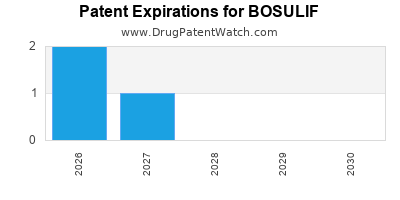
Drug patent expirations by year for BOSULIF
Drug Prices for BOSULIF

See drug prices for BOSULIF

Recent Clinical Trials for BOSULIF

Identify potential brand extensions & 505(b)(2) entrants

SponsorPhase
City of Hope Medical CenterPhase 1
Roche Farma, S.APhase 1/Phase 2
Fundacion Espanola para la Curacion de la Leucemia Mieloide CronicaPhase 1/Phase 2

See all BOSULIF clinical trials

Pharmacology for BOSULIF
Paragraph IV (Patent) Challenges for BOSULIF
Tradename Dosage Ingredient Strength NDA ANDAs Submitted Submissiondate
BOSULIF Tablets bosutinib monohydrate 400 mg 203341 1 2018-10-25
BOSULIF Tablets bosutinib monohydrate 100 mg and 500 mg 203341 2 2016-09-06

US Patents and Regulatory Information for BOSULIF

BOSULIF is protected by four US patents and seven FDA Regulatory Exclusivities.

Applicant Tradename Generic Name Dosage NDA Approval Date TE Type RLD RS Patent No. Patent Expiration Product Substance Delist Req. Exclusivity Expiration
Pf Prism Cv BOSULIF bosutinib monohydrate TABLET;ORAL 203341-002 Sep 4, 2012 AB RX Yes No ⤷  Get Started Free ⤷  Get Started Free ⤷  Get Started Free
Pf Prism Cv BOSULIF bosutinib monohydrate TABLET;ORAL 203341-003 Oct 27, 2017 RX Yes No ⤷  Get Started Free ⤷  Get Started Free ⤷  Get Started Free
Pf Prism Cv BOSULIF bosutinib monohydrate TABLET;ORAL 203341-002 Sep 4, 2012 AB RX Yes No ⤷  Get Started Free ⤷  Get Started Free ⤷  Get Started Free
Pf Prism Cv BOSULIF bosutinib monohydrate TABLET;ORAL 203341-003 Oct 27, 2017 RX Yes No 7,767,678*PED ⤷  Get Started Free Y ⤷  Get Started Free
Pf Prism Cv BOSULIF bosutinib monohydrate TABLET;ORAL 203341-003 Oct 27, 2017 RX Yes No ⤷  Get Started Free ⤷  Get Started Free ⤷  Get Started Free
Pf Prism Cv BOSULIF bosutinib monohydrate TABLET;ORAL 203341-003 Oct 27, 2017 RX Yes No 7,417,148*PED ⤷  Get Started Free Y ⤷  Get Started Free
Pf Prism Cv BOSULIF bosutinib monohydrate CAPSULE;ORAL 217729-001 Sep 26, 2023 RX Yes No 11,103,497*PED ⤷  Get Started Free Y ⤷  Get Started Free
>Applicant >Tradename >Generic Name >Dosage >NDA >Approval Date >TE >Type >RLD >RS >Patent No. >Patent Expiration >Product >Substance >Delist Req. >Exclusivity Expiration

Expired US Patents for BOSULIF

Applicant Tradename Generic Name Dosage NDA Approval Date Patent No. Patent Expiration
Pf Prism Cv BOSULIF bosutinib monohydrate TABLET;ORAL 203341-001 Sep 4, 2012 6,002,008 ⤷  Get Started Free
Pf Prism Cv BOSULIF bosutinib monohydrate TABLET;ORAL 203341-003 Oct 27, 2017 6,002,008 ⤷  Get Started Free
Pf Prism Cv BOSULIF bosutinib monohydrate TABLET;ORAL 203341-002 Sep 4, 2012 6,002,008 ⤷  Get Started Free
>Applicant >Tradename >Generic Name >Dosage >NDA >Approval Date >Patent No. >Patent Expiration

International Patents for BOSULIF

When does loss-of-exclusivity occur for BOSULIF?

Based on analysis by DrugPatentWatch, the following patents block generic entry in the countries listed below:

Argentina

Patent: 4505
Patent: FORMAS CRISTALINAS DE 4- ((2,4-DICLORO-5-METOXIFENIL) AMINO ) -6-METOXI-7-(3-(4-METIL-1-PIPERAZINIL) PROPOXI) -3- QUINOLINCARBONITRILO Y METODOS DE PREPARACION DE LAS MISMAS
Estimated Expiration: ⤷  Get Started Free

Canada

Patent: 13053
Patent: FORMES CRISTALLINES DE 4-[(2,4-DICHLORO-5-METHOXYPHENYL)AMINO]-6-METHOXY-7-[3-(4-METHYL-1-PIPERAZINYL)PROPOXY]-3-QUINOLINECARB-ONITRILE,ET LEURS PROCEDES DE PREPARATION (CRYSTALLINE FORMS OF 4-[(2,4-DICHLORO-5-METHOXYPHENYL)AMINO]-6-METHOXY-7-[3-(4-METHYL-1-PIPERAZINYL)PROPOXY]-3-QUINOLINECARBONITRILE ANDMETHODS OF PREPARING THE SAME)
Estimated Expiration: ⤷  Get Started Free

Norway

Patent: 080051
Estimated Expiration: ⤷  Get Started Free

Spain

Patent: 49197
Estimated Expiration: ⤷  Get Started Free

Generics may enter earlier, or later, based on new patent filings, patent extensions, patent invalidation, early generic licensing, generic entry preferences, and other factors.

See the table below for additional patents covering BOSULIF around the world.

Country Patent Number Title Estimated Expiration
South Korea 20080028386 CRYSTALLINE FORMS OF 4-[(2,4-DICHLORO-5-METHOXYPHENYL)AMINO]-6-METHOXY-7-[3-(4-METHYL-1-PIPERAZINYL)PROPOXY]-3-QUINOLINECARB-ONITRILE AND METHODS OF PREPARING THE SAME ⤷  Get Started Free
South Korea 101493543 ⤷  Get Started Free
Guatemala 200600282 FORMAS CRISTALINAS DE 4-[(2,4-DICLORO-5-METOXIFENIL)-AMINO]-6-METOXI-7-[3-(4-METIL-1-PIPERAZINIL)-PROPOXI]-3-QUINOLINCARBONITRILO Y METODOS PARA PREPARACION DE LAS MISMAS. ⤷  Get Started Free
Brazil PI0812355 ⤷  Get Started Free
Japan 2010529038 ⤷  Get Started Free
Hong Kong 1114614 -二氯- -甲氧苯基 氨基 -甲氧基- -甲基- -哌嗪基 丙氧基 -喹啉腈之晶體形式及其之製備方法 (CRYSTALLINE FORMS OF 4-[(2,4-DICHLORO-5-METHOXYPHENYL)AMINO]-6-METHOXY-7- [3-(4-METHYL-1-PIPERAZINYL)PROPOXY]-3-QUINOLINECARB-ONITRILE AND METHODS OF PREPARING THE SAME 4-[(24--5-)]-6--7-[3-(4--1-)]-3-) ⤷  Get Started Free
China 1874776 4-anilino-3-quinolinecarbonitriles for the treatment of chronic myelogenous leukemia (CML) ⤷  Get Started Free
>Country >Patent Number >Title >Estimated Expiration

Market Dynamics and Financial Trajectory for Bosulif (Bosutinib)

Last updated: July 27, 2025

Introduction

Bosulif (bosutinib) is an oral tyrosine kinase inhibitor developed by Pfizer, primarily approved for the treatment of chronic myeloid leukemia (CML), including Philadelphia chromosome-positive (Ph+) CML in adult patients. Since its FDA approval in 2012, Bosulif has carved a niche within the targeted cancer therapy landscape, driven by evolving clinical data, competitive pressure, regulatory developments, and broader market trends in oncology therapeutics.

This analysis explores the market dynamics influencing Bosulif’s trajectory and projects its financial outlook amid competitive, regulatory, and innovation-driven forces.


Market Overview and Therapeutic Positioning

Indication and Clinical Utility

Bosulif is indicated for treatment-resistant or intolerant Ph+ CML patients, particularly those who have failed prior therapy with other tyrosine kinase inhibitors (TKIs). Its mechanism targets BCR-ABL kinase activity, which is crucial in CML pathology. The increasing prevalence of CML globally, complemented by an expanding base of eligible patients, sustains demand for effective TKI therapies.

Competitive Landscape

Bosulif faces competition from several other TKIs, including imatinib, dasatinib, nilotinib, ponatinib, and later-generation agents like asciminib. The competitive environment influences product uptake, pricing, and physician prescribing patterns, especially as newer agents demonstrate improved safety profiles or efficacy in resistant cases.

Market Penetration and Usage Trends

According to IQVIA data, Bosulif's market share within the CML treatment landscape remains modest, partly due to clinicians’ preference for first-line therapies like imatinib and subsequent lines for resistant cases. Its niche positioning as a second- or third-line agent constrains its volume growth but preserves steady revenue streams.


Regulatory and Scientific Developments Impacting Market Dynamics

Approvals and Label Extensions

While initially approved for second-line treatment, subsequent extensions, or label modifications, may influence adoption. In 2017, the FDA approved Bosulif for adult patients with newly diagnosed Philadelphia chromosome-positive chronic, accelerated, or blast phase CML based on compelling phase 3 data, broadening its deployment.

Clinical Trials and Evolving Data

Ongoing trials exploring Bosulif in combination therapies or in other hematologic malignancies have potential to expand its indications. Positive results could catalyze increased utilization, though competition remains high for such indications.

Safety Profile and Tolerability

Bosulif's adverse event profile influences its market uptake. Its mitochondrial toxicity profile and adverse events such as diarrhea, elevated liver enzymes, and myelosuppression impact physician prescribing, especially when safer alternatives exist.


Market Drivers and Constraints

Drivers

  • Increasing CML Incidence: As global populations age, the prevalence of CML grows, enlarging the patient pool needing effective treatments.
  • Resistance to First-Generation TKIs: Resistance patterns push clinicians toward second-generation inhibitors like Bosulif.
  • Regulatory Approvals: Expanded indications in multiple phases of CML and potential future approvals for novel indications bolster market prospects.
  • Patient Compliance: Oral administration supports better adherence, influencing marketability.

Constraints

  • Intense Competition: The crowded TKI landscape, especially with agents like ponatinib and asciminib, limits market share.
  • Pricing Pressures: Payers demand cost-effective therapies, often favoring generics or less costly options.
  • Limited First-Line Role: Bosulif’s niche as a second- or third-line option constrains growth potential.

Financial Trajectory and Revenue Outlook

Current Revenue Performance

Pfizer’s revenue data indicates that Bosulif’s contribution remains steady but modest within its oncology portfolio. In 2022, estimated global sales hovered around a few hundred million dollars, reflecting its niche positioning.

Long-Term Growth Drivers

  • Market Penetration Expansion: Increased adoption in resistant CML cases as clinician familiarity grows.
  • Regulatory Expansion: Potential approvals for earlier-line use or additional indications could significantly increase sales.
  • Pipeline Development: Investigational uses in combination regimens or other malignancies may unlock new revenue streams.

Challenges to Growth

  • Patent Expiry Risks: The expiration of key patents could lead to generic competition, impacting pricing power.
  • Market Saturation: Saturation within resistant CML cases limits growth unless new indications are approved.
  • Competitive Innovation: Emergence of next-generation TKIs with improved efficacy and tolerability could threaten Bosulif’s market share.

Strategic Outlook and Investment Considerations

Given the evolving landscape, Pfizer's strategic focus might involve:

  • Investing in Clinical Trials: To demonstrate efficacy in novel indications or earlier lines.
  • Pricing Strategies: To maintain profitability amidst payer pressures.
  • Partnerships & Collaborations: For combination therapies or new delivery mechanisms.

Investors should monitor:

  • Regulatory decisions regarding new indications.
  • Clinical trial outcomes for combination or phased studies.
  • Competitive developments from rival TKIs or emerging therapies.

Key Takeaways

  • Bosulif’s market is strategically positioned within resistant CML management, with expansion opportunities contingent on regulatory developments and clinical evidence.
  • The competitive landscape challenges growth, demanding differentiated positioning and potential label expansions.
  • Revenue prospects remain modest in the near term but could improve with broader indications or combination regimens.
  • Pfizer's focus on pipeline development and clinical validation remains crucial for Bosulif’s long-term market viability.
  • Market dynamics are shaped by innovation, pricing, and physician adoption patterns, necessitating continuous strategic adaptation by stakeholders.

FAQs

1. What are the primary competitors to Bosulif in the CML market?
The main competitors include imatinib, dasatinib, nilotinib, ponatinib, and asciminib. These agents differ in efficacy, safety profiles, and line-of-therapy positioning, influencing Bosulif’s market share.

2. How do regulatory approvals influence Bosulif's market trajectory?
New approvals, especially for earlier or additional indications, can expand the patient base and drive sales. Conversely, delays or withdrawal of indications can constrain growth.

3. What safety concerns affect Bosulif’s usage?
Adverse events such as diarrhea, hepatotoxicity, and myelosuppression impact prescribing. Clinicians weigh these risks against benefits, especially when safer alternatives are available.

4. Can Bosulif expand into non-CML indications?
Potential exists if clinical trials demonstrate efficacy in other hematologic malignancies or solid tumors. Currently, its development focus remains primarily on CML.

5. How might patent expirations impact Bosulif’s revenue?
Patent expiration could lead to generic competition, reducing pricing power and sales volumes, unless new indications or formulations are developed and approved.


References

[1] Pfizer. (2012). Bosulif (bosutinib) initial approval announcement.
[2] IQVIA. (2022). Global Oncology Market Data.
[3] FDA. (2017). Bosulif approval expansion for newly diagnosed CML.
[4] National Comprehensive Cancer Network (NCCN). (2023). CML Clinical Practice Guidelines.
[5] EvaluatePharma. (2023). Pharmaceutical Sales Data.

More… ↓

⤷  Get Started Free

Make Better Decisions: Try a trial or see plans & pricing

Drugs may be covered by multiple patents or regulatory protections. All trademarks and applicant names are the property of their respective owners or licensors. Although great care is taken in the proper and correct provision of this service, thinkBiotech LLC does not accept any responsibility for possible consequences of errors or omissions in the provided data. The data presented herein is for information purposes only. There is no warranty that the data contained herein is error free. We do not provide individual investment advice. This service is not registered with any financial regulatory agency. The information we publish is educational only and based on our opinions plus our models. By using DrugPatentWatch you acknowledge that we do not provide personalized recommendations or advice. thinkBiotech performs no independent verification of facts as provided by public sources nor are attempts made to provide legal or investing advice. Any reliance on data provided herein is done solely at the discretion of the user. Users of this service are advised to seek professional advice and independent confirmation before considering acting on any of the provided information. thinkBiotech LLC reserves the right to amend, extend or withdraw any part or all of the offered service without notice.