Expiring Drug Patents Cheat Sheet
We analyse the patents covering drugs in 134 countries and quickly give you the likely loss-of-exclusivity/generic entry date
Australia: These 47 Drugs Face Patent Expirations and Generic Entry From 2026 - 2027
The content of this page is licensed under a Creative Commons Attribution 4.0 International License.

Generic Entry Dates in Other Countries
Friedman, Yali, "Australia: These 47 Drugs Face Patent Expirations and Generic Entry From 2026 - 2027" DrugPatentWatch.com thinkBiotech, 2026 www.drugpatentwatch.com/p/expiring-drug-patents-generic-entry/.
Media collateral
These estimated drug patent expiration dates and generic entry opportunity dates are calculated from analysis of known patents covering drugs. Many factors can influence early or late generic entry. This information is provided as a rough estimate of generic entry potential and should not be used as an independent source. The methodology is described in this blog post.
When can TYMLOS (abaloparatide) generic drug versions launch in Australia?
Generic name: abaloparatide
DrugPatentWatch® Estimated Key Patent Expiration / Generic Entry Date: October 03, 2026
Generic Entry Controlled by: Australia Patent 2,007,322,334
Patent Title: Method of drug delivery for bone anabolic protein

See drug price trends for TYMLOS.
The generic ingredient in TYMLOS is abaloparatide. Additional details are available on the abaloparatide profile page.
When can INREBIC (fedratinib hydrochloride) generic drug versions launch in Australia?
Generic name: fedratinib hydrochloride
DrugPatentWatch® Estimated Key Patent Expiration / Generic Entry Date: October 26, 2026
Generic Entry Controlled by: Australia Patent 2,006,309,013
INREBIC is a drug marketed by Bristol-myers. There are five patents protecting this drug. There has been litigation on patents covering INREBIC
See drug price trends for INREBIC.
The generic ingredient in INREBIC is fedratinib hydrochloride. Additional details are available on the fedratinib hydrochloride profile page.
When can BEVYXXA (betrixaban) generic drug versions launch in Australia?
Generic name: betrixaban
DrugPatentWatch® Estimated Key Patent Expiration / Generic Entry Date: November 07, 2026
Generic Entry Controlled by: Australia Patent 2,006,311,544
Patent Title: Novel pharmaceutical salts and polymorphs of a factor Xa inhibitor
BEVYXXA is a drug marketed by Portola Pharms Inc. There are five patents protecting this drug. There has been litigation on patents covering BEVYXXA
See drug price trends for BEVYXXA.
The generic ingredient in BEVYXXA is betrixaban. Additional details are available on the betrixaban profile page.
When can PYLARIFY (piflufolastat f-18) generic drug versions launch in Australia?
Generic name: piflufolastat f-18
DrugPatentWatch® Estimated Key Patent Expiration / Generic Entry Date: November 08, 2026
Generic Entry Controlled by: Australia Patent 2,007,316,391
PYLARIFY is a drug marketed by Progenics Pharms Inc and AphelionThere are six patents protecting this drug.
See drug price trends for PYLARIFY.
The generic ingredient in PYLARIFY is piflufolastat f-18. Additional details are available on the piflufolastat f-18 profile page.
When can PYLARIFY TRUVU (piflufolastat f-18) generic drug versions launch in Australia?
Generic name: piflufolastat f-18
DrugPatentWatch® Estimated Key Patent Expiration / Generic Entry Date: November 08, 2026
Generic Entry Controlled by: Australia Patent 2,007,316,391
PYLARIFY TRUVU is a drug marketed by Aphelion. There are six patents protecting this drug.
The generic ingredient in PYLARIFY TRUVU is piflufolastat f-18. Additional details are available on the piflufolastat f-18 profile page.
When can KORSUVA (difelikefalin acetate) generic drug versions launch in Australia?
Generic name: difelikefalin acetate
DrugPatentWatch® Estimated Key Patent Expiration / Generic Entry Date: November 10, 2026
Generic Entry Controlled by: Australia Patent 2,007,319,831
KORSUVA is a drug marketed by Vifor Intl. There are twelve patents protecting this drug. There has been litigation on patents covering KORSUVA
See drug price trends for KORSUVA.
The generic ingredient in KORSUVA is difelikefalin acetate. Additional details are available on the difelikefalin acetate profile page.
When can SOFDRA (sofpironium bromide) generic drug versions launch in Australia?
Generic name: sofpironium bromide
DrugPatentWatch® Estimated Key Patent Expiration / Generic Entry Date: November 13, 2026
Generic Entry Controlled by: Australia Patent 2,006,315,657
SOFDRA is a drug marketed by Botanix Sb. There are twenty patents protecting this drug. There has been litigation on patents covering SOFDRA
The generic ingredient in SOFDRA is sofpironium bromide. Additional details are available on the sofpironium bromide profile page.
When can AXUMIN (fluciclovine f-18) generic drug versions launch in Australia?
Generic name: fluciclovine f-18
DrugPatentWatch® Estimated Key Patent Expiration / Generic Entry Date: November 28, 2026
Generic Entry Controlled by: Australia Patent 2,006,319,987
Patent Title: Precursor compound of radioactive halogen labeled organic compound
AXUMIN is a drug marketed by Blue Earth. There are eight patents protecting this drug. There has been litigation on patents covering AXUMIN
The generic ingredient in AXUMIN is fluciclovine f-18. Additional details are available on the fluciclovine f-18 profile page.
When can ZTALMY (ganaxolone) generic drug versions launch in Australia?
Generic name: ganaxolone
DrugPatentWatch® Estimated Key Patent Expiration / Generic Entry Date: November 28, 2026
Generic Entry Controlled by: Australia Patent 2,006,318,349
ZTALMY is a drug marketed by Immedica Pharma. There are eleven patents protecting this drug. There has been litigation on patents covering ZTALMY
See drug price trends for ZTALMY.
The generic ingredient in ZTALMY is ganaxolone. Additional details are available on the ganaxolone profile page.
When can SIRTURO (bedaquiline fumarate) generic drug versions launch in Australia?
Generic name: bedaquiline fumarate
DrugPatentWatch® Estimated Key Patent Expiration / Generic Entry Date: December 05, 2026
Generic Entry Controlled by: Australia Patent 2,007,328,945
SIRTURO is a drug marketed by Janssen Therap. There are two patents protecting this drug.
See drug price trends for SIRTURO.
The generic ingredient in SIRTURO is bedaquiline fumarate. Additional details are available on the bedaquiline fumarate profile page.
When can ZYKADIA (ceritinib) generic drug versions launch in Australia?
Generic name: ceritinib
DrugPatentWatch® Estimated Key Patent Expiration / Generic Entry Date: December 08, 2026
Generic Entry Controlled by: Australia Patent 2,007,333,394
ZYKADIA is a drug marketed by Novartis. There are eight patents protecting this drug.
See drug price trends for ZYKADIA.
The generic ingredient in ZYKADIA is ceritinib. Additional details are available on the ceritinib profile page.
When can ZYKADIA (ceritinib) generic drug versions launch in Australia?
Generic name: ceritinib
DrugPatentWatch® Estimated Key Patent Expiration / Generic Entry Date: December 08, 2026
Generic Entry Controlled by: Australia Patent 2,010,210,019
ZYKADIA is a drug marketed by Novartis. There are eight patents protecting this drug.
See drug price trends for ZYKADIA.
The generic ingredient in ZYKADIA is ceritinib. Additional details are available on the ceritinib profile page.
When can LETAIRIS (ambrisentan) generic drug versions launch in Australia?
Generic name: ambrisentan
DrugPatentWatch® Estimated Key Patent Expiration / Generic Entry Date: December 12, 2026
Generic Entry Controlled by: Australia Patent 2,007,333,115
Patent Title: Composition for treating a pulmonary hypertension
LETAIRIS is a drug marketed by Gilead. There are three patents protecting this drug and one Paragraph IV challenge. There has been litigation on patents covering LETAIRIS
See drug price trends for LETAIRIS.
The generic ingredient in LETAIRIS is ambrisentan. Additional details are available on the ambrisentan profile page.
When can VYKAT XR (diazoxide choline) generic drug versions launch in Australia?
Generic name: diazoxide choline
DrugPatentWatch® Estimated Key Patent Expiration / Generic Entry Date: December 20, 2026
Generic Entry Controlled by: Australia Patent 2,006,335,153
VYKAT XR is a drug marketed by Soleno Therap. There are six patents protecting this drug.
The generic ingredient in VYKAT XR is diazoxide choline. Additional details are available on the diazoxide choline profile page.
When can SEYSARA (sarecycline hydrochloride) generic drug versions launch in Australia?
Generic name: sarecycline hydrochloride
DrugPatentWatch® Estimated Key Patent Expiration / Generic Entry Date: December 21, 2026
Generic Entry Controlled by: Australia Patent 2,007,338,681
Patent Title: Substituted tetracycline compounds for treatment of inflammatory skin disorders
SEYSARA is a drug marketed by Almirall. There are four patents protecting this drug.
See drug price trends for SEYSARA.
The generic ingredient in SEYSARA is sarecycline hydrochloride. Additional details are available on the sarecycline hydrochloride profile page.
When can EPSOLAY (benzoyl peroxide) generic drug versions launch in Australia?
Generic name: benzoyl peroxide
DrugPatentWatch® Estimated Key Patent Expiration / Generic Entry Date: February 01, 2027
Generic Entry Controlled by: Australia Patent 2,008,211,554
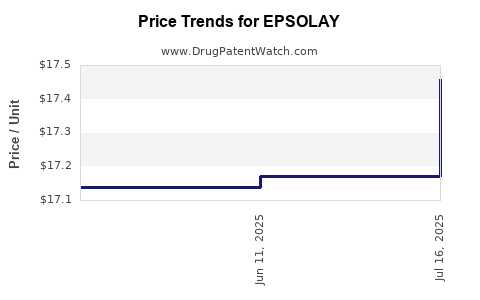
See drug price trends for EPSOLAY.
The generic ingredient in EPSOLAY is benzoyl peroxide. Additional details are available on the benzoyl peroxide profile page.
When can OSENI (alogliptin benzoate; pioglitazone hydrochloride) generic drug versions launch in Australia?
Generic name: alogliptin benzoate; pioglitazone hydrochloride
DrugPatentWatch® Estimated Key Patent Expiration / Generic Entry Date: February 01, 2027
Generic Entry Controlled by: Australia Patent 2,008,211,981

See drug price trends for OSENI.
The generic ingredient in OSENI is alogliptin benzoate; pioglitazone hydrochloride. Additional details are available on the alogliptin benzoate; pioglitazone hydrochloride profile page.
When can PANCREAZE (pancrelipase (amylase;lipase;protease)) generic drug versions launch in Australia?
Generic name: pancrelipase (amylase;lipase;protease)
DrugPatentWatch® Estimated Key Patent Expiration / Generic Entry Date: February 20, 2027
Generic Entry Controlled by: Australia Patent 2,008,218,595
PANCREAZE is a drug marketed by
See drug price trends for PANCREAZE.
The generic ingredient in PANCREAZE is pancrelipase (amylase;lipase;protease). Additional details are available on the pancrelipase (amylase;lipase;protease) profile page.
When can ZENPEP (pancrelipase (amylase;lipase;protease)) generic drug versions launch in Australia?
Generic name: pancrelipase (amylase;lipase;protease)
DrugPatentWatch® Estimated Key Patent Expiration / Generic Entry Date: February 20, 2027
Generic Entry Controlled by: Australia Patent 2,008,218,595
ZENPEP is a drug marketed by
See drug price trends for ZENPEP.
The generic ingredient in ZENPEP is pancrelipase (amylase;lipase;protease). Additional details are available on the pancrelipase (amylase;lipase;protease) profile page.
When can PRESTALIA (amlodipine besylate; perindopril arginine) generic drug versions launch in Australia?
Generic name: amlodipine besylate; perindopril arginine
DrugPatentWatch® Estimated Key Patent Expiration / Generic Entry Date: February 26, 2027
Generic Entry Controlled by: Australia Patent 2,007,220,435
PRESTALIA is a drug marketed by Adhera. There is one patent protecting this drug and one Paragraph IV challenge. There has been litigation on patents covering PRESTALIA
The generic ingredient in PRESTALIA is amlodipine besylate; perindopril arginine. Additional details are available on the amlodipine besylate; perindopril arginine profile page.
When can SPRAVATO (esketamine hydrochloride) generic drug versions launch in Australia?
Generic name: esketamine hydrochloride
DrugPatentWatch® Estimated Key Patent Expiration / Generic Entry Date: March 20, 2027
Generic Entry Controlled by: Australia Patent 2,007,229,866
Patent Title: Intranasal administration of ketamine to treat depression
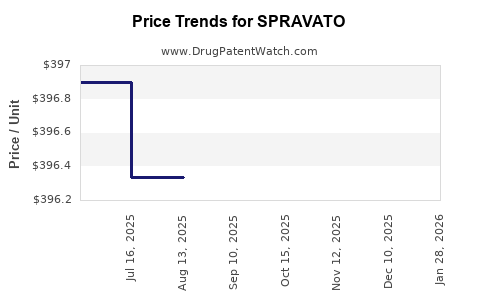
See drug price trends for SPRAVATO.
The generic ingredient in SPRAVATO is esketamine hydrochloride. Additional details are available on the esketamine hydrochloride profile page.
When can XENLETA (lefamulin acetate) generic drug versions launch in Australia?
Generic name: lefamulin acetate
DrugPatentWatch® Estimated Key Patent Expiration / Generic Entry Date: March 20, 2027
Generic Entry Controlled by: Australia Patent 2,008,229,609
XENLETA is a drug marketed by Hong Kong. There are four patents protecting this drug. There has been litigation on patents covering XENLETA
See drug price trends for XENLETA.
The generic ingredient in XENLETA is lefamulin acetate. Additional details are available on the lefamulin acetate profile page.
When can INLYTA (axitinib) generic drug versions launch in Australia?
Generic name: axitinib
DrugPatentWatch® Estimated Key Patent Expiration / Generic Entry Date: April 05, 2027
Generic Entry Controlled by: Australia Patent 2,008,236,444
INLYTA is a drug marketed by Pf Prism Cv. There are four patents protecting this drug and one Paragraph IV challenge. Two tentatively approved generics are ready to enter the market. There has been litigation on patents covering INLYTA
See drug price trends for INLYTA.
The generic ingredient in INLYTA is axitinib. Additional details are available on the axitinib profile page.
When can QVAR REDIHALER (beclomethasone dipropionate) generic drug versions launch in Australia?
Generic name: beclomethasone dipropionate
DrugPatentWatch® Estimated Key Patent Expiration / Generic Entry Date: April 11, 2027
Generic Entry Controlled by: Australia Patent 2,008,234,098
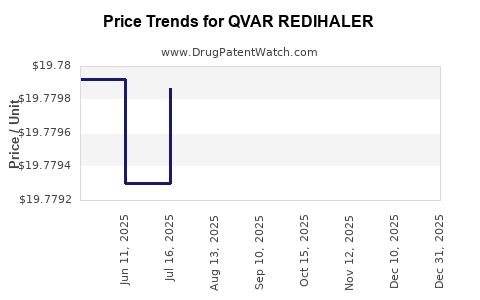
See drug price trends for QVAR REDIHALER.
The generic ingredient in QVAR REDIHALER is beclomethasone dipropionate. Additional details are available on the beclomethasone dipropionate profile page.
When can PROMACTA (eltrombopag olamine) generic drug versions launch in Australia?
Generic name: eltrombopag olamine
DrugPatentWatch® Estimated Key Patent Expiration / Generic Entry Date: May 03, 2027
Generic Entry Controlled by: Australia Patent 2,007,352,608
PROMACTA is a drug marketed by Novartis. There is one patent protecting this drug and two Paragraph IV challenges. There has been litigation on patents covering PROMACTA
See drug price trends for PROMACTA.
The generic ingredient in PROMACTA is eltrombopag olamine. Additional details are available on the eltrombopag olamine profile page.
When can PROMACTA (eltrombopag olamine) generic drug versions launch in Australia?
Generic name: eltrombopag olamine
DrugPatentWatch® Estimated Key Patent Expiration / Generic Entry Date: May 03, 2027
Generic Entry Controlled by: Australia Patent 2,012,201,288
PROMACTA is a drug marketed by Novartis. There is one patent protecting this drug and two Paragraph IV challenges. There has been litigation on patents covering PROMACTA
See drug price trends for PROMACTA.
The generic ingredient in PROMACTA is eltrombopag olamine. Additional details are available on the eltrombopag olamine profile page.
When can PROMACTA (eltrombopag olamine) generic drug versions launch in Australia?
Generic name: eltrombopag olamine
DrugPatentWatch® Estimated Key Patent Expiration / Generic Entry Date: May 03, 2027
Generic Entry Controlled by: Australia Patent 2,014,202,367
PROMACTA is a drug marketed by Novartis. There is one patent protecting this drug and two Paragraph IV challenges. There has been litigation on patents covering PROMACTA
See drug price trends for PROMACTA.
The generic ingredient in PROMACTA is eltrombopag olamine. Additional details are available on the eltrombopag olamine profile page.
When can PROMACTA (eltrombopag olamine) generic drug versions launch in Australia?
Generic name: eltrombopag olamine
DrugPatentWatch® Estimated Key Patent Expiration / Generic Entry Date: May 03, 2027
Generic Entry Controlled by: Australia Patent 2,016,202,063
PROMACTA is a drug marketed by Novartis. There is one patent protecting this drug and two Paragraph IV challenges. There has been litigation on patents covering PROMACTA
See drug price trends for PROMACTA.
The generic ingredient in PROMACTA is eltrombopag olamine. Additional details are available on the eltrombopag olamine profile page.
When can ICLUSIG (ponatinib hydrochloride) generic drug versions launch in Australia?
Generic name: ponatinib hydrochloride
DrugPatentWatch® Estimated Key Patent Expiration / Generic Entry Date: May 08, 2027
Generic Entry Controlled by: Australia Patent 2,007,249,924
ICLUSIG is a drug marketed by Takeda Pharms Usa. There are six patents protecting this drug. One tentatively approved generic is ready to enter the market. There has been litigation on patents covering ICLUSIG
See drug price trends for ICLUSIG.
The generic ingredient in ICLUSIG is ponatinib hydrochloride. Additional details are available on the ponatinib hydrochloride profile page.
When can VRAYLAR (cariprazine hydrochloride) generic drug versions launch in Australia?
Generic name: cariprazine hydrochloride
DrugPatentWatch® Estimated Key Patent Expiration / Generic Entry Date: May 11, 2027
Generic Entry Controlled by: Australia Patent 2,008,249,772
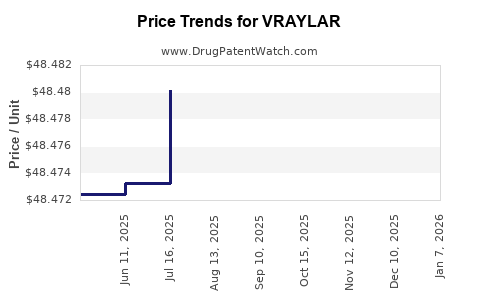
See drug price trends for VRAYLAR.
The generic ingredient in VRAYLAR is cariprazine hydrochloride. Additional details are available on the cariprazine hydrochloride profile page.
When can TRELSTAR (triptorelin pamoate) generic drug versions launch in Australia?
Generic name: triptorelin pamoate
DrugPatentWatch® Estimated Key Patent Expiration / Generic Entry Date: June 06, 2027
Generic Entry Controlled by: Australia Patent 2,008,259,411
TRELSTAR is a drug marketed by Verity. There is one patent protecting this drug.
See drug price trends for TRELSTAR.
The generic ingredient in TRELSTAR is triptorelin pamoate. Additional details are available on the triptorelin pamoate profile page.
When can TRIPTODUR KIT (triptorelin pamoate) generic drug versions launch in Australia?
Generic name: triptorelin pamoate
DrugPatentWatch® Estimated Key Patent Expiration / Generic Entry Date: June 06, 2027
Generic Entry Controlled by: Australia Patent 2,008,259,411
TRIPTODUR KIT is a drug marketed by Azurity. There is one patent protecting this drug.
The generic ingredient in TRIPTODUR KIT is triptorelin pamoate. Additional details are available on the triptorelin pamoate profile page.
When can JAKAFI (ruxolitinib phosphate) generic drug versions launch in Australia?
Generic name: ruxolitinib phosphate
DrugPatentWatch® Estimated Key Patent Expiration / Generic Entry Date: June 13, 2027
Generic Entry Controlled by: Australia Patent 2,008,266,183
JAKAFI is a drug marketed by Incyte Corp. There are nineteen patents protecting this drug and one Paragraph IV challenge. There has been litigation on patents covering JAKAFI
See drug price trends for JAKAFI.
The generic ingredient in JAKAFI is ruxolitinib phosphate. Additional details are available on the ruxolitinib phosphate profile page.
When can KYBELLA (deoxycholic acid) generic drug versions launch in Australia?
Generic name: deoxycholic acid
DrugPatentWatch® Estimated Key Patent Expiration / Generic Entry Date: June 19, 2027
Generic Entry Controlled by: Australia Patent 2,008,265,721
Patent Title: Synthetic bile acid composition, method, and preparation
KYBELLA is a drug marketed by Abbvie. There are fourteen patents protecting this drug and one Paragraph IV challenge. There has been litigation on patents covering KYBELLA
The generic ingredient in KYBELLA is deoxycholic acid. Additional details are available on the deoxycholic acid profile page.
When can JESDUVROQ (daprodustat) generic drug versions launch in Australia?
Generic name: daprodustat
DrugPatentWatch® Estimated Key Patent Expiration / Generic Entry Date: June 22, 2027
Generic Entry Controlled by: Australia Patent 2,007,260,837
Patent Title: Prolyl hydroxylase inhibitors
JESDUVROQ is a drug marketed by Glaxosmithkline. There are six patents protecting this drug.
See drug price trends for JESDUVROQ.
The generic ingredient in JESDUVROQ is daprodustat. Additional details are available on the daprodustat profile page.
When can BYFAVO (remimazolam besylate) generic drug versions launch in Australia?
Generic name: remimazolam besylate
DrugPatentWatch® Estimated Key Patent Expiration / Generic Entry Date: July 10, 2027
Generic Entry Controlled by: Australia Patent 2,007,274,054
Patent Title: Short-acting benzodiazepine salts and their polymorphic forms
BYFAVO is a drug marketed by Acacia. There are eleven patents protecting this drug. There has been litigation on patents covering BYFAVO
See drug price trends for BYFAVO.
The generic ingredient in BYFAVO is remimazolam besylate. Additional details are available on the remimazolam besylate profile page.
When can TWIRLA (ethinyl estradiol; levonorgestrel) generic drug versions launch in Australia?
Generic name: ethinyl estradiol; levonorgestrel
DrugPatentWatch® Estimated Key Patent Expiration / Generic Entry Date: July 10, 2027
Generic Entry Controlled by: Australia Patent 2,008,275,101
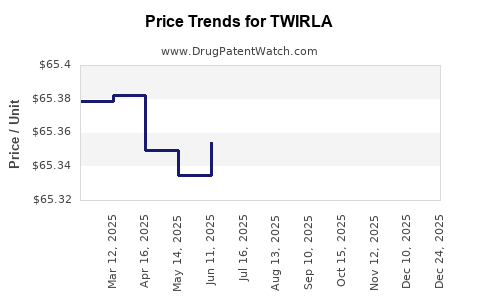
See drug price trends for TWIRLA.
The generic ingredient in TWIRLA is ethinyl estradiol; levonorgestrel. Additional details are available on the ethinyl estradiol; levonorgestrel profile page.
When can TEPMETKO (tepotinib hydrochloride) generic drug versions launch in Australia?
Generic name: tepotinib hydrochloride
DrugPatentWatch® Estimated Key Patent Expiration / Generic Entry Date: July 12, 2027
Generic Entry Controlled by: Australia Patent 2,008,274,534
Patent Title: Pyrimidinyl pyridazinone derivates
TEPMETKO is a drug marketed by Emd Serono Inc. There are eight patents protecting this drug. There has been litigation on patents covering TEPMETKO
See drug price trends for TEPMETKO.
The generic ingredient in TEPMETKO is tepotinib hydrochloride. Additional details are available on the tepotinib hydrochloride profile page.
When can TEPMETKO (tepotinib hydrochloride) generic drug versions launch in Australia?
Generic name: tepotinib hydrochloride
DrugPatentWatch® Estimated Key Patent Expiration / Generic Entry Date: July 12, 2027
Generic Entry Controlled by: Australia Patent 2,008,274,670
Patent Title: Pyridazinone derivates
TEPMETKO is a drug marketed by Emd Serono Inc. There are eight patents protecting this drug. There has been litigation on patents covering TEPMETKO
See drug price trends for TEPMETKO.
The generic ingredient in TEPMETKO is tepotinib hydrochloride. Additional details are available on the tepotinib hydrochloride profile page.
When can KAZANO (alogliptin benzoate; metformin hydrochloride) generic drug versions launch in Australia?
Generic name: alogliptin benzoate; metformin hydrochloride
DrugPatentWatch® Estimated Key Patent Expiration / Generic Entry Date: July 19, 2027
Generic Entry Controlled by: Australia Patent 2,008,276,842

See drug price trends for KAZANO.
The generic ingredient in KAZANO is alogliptin benzoate; metformin hydrochloride. Additional details are available on the alogliptin benzoate; metformin hydrochloride profile page.
When can RASUVO (methotrexate) generic drug versions launch in Australia?
Generic name: methotrexate
DrugPatentWatch® Estimated Key Patent Expiration / Generic Entry Date: July 20, 2027
Generic Entry Controlled by: Australia Patent 2,007,276,387
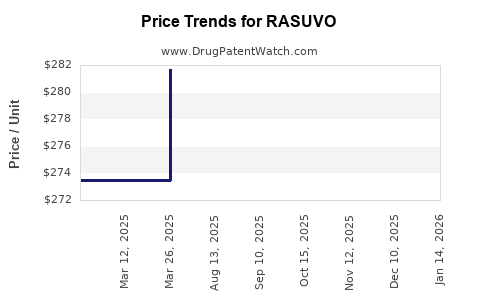
See drug price trends for RASUVO.
The generic ingredient in RASUVO is methotrexate. Additional details are available on the methotrexate profile page.
When can MULPLETA (lusutrombopag) generic drug versions launch in Australia?
Generic name: lusutrombopag
DrugPatentWatch® Estimated Key Patent Expiration / Generic Entry Date: July 31, 2027
Generic Entry Controlled by: Australia Patent 2,008,283,357
MULPLETA is a drug marketed by Vancocin Italia. There are three patents protecting this drug.
See drug price trends for MULPLETA.
The generic ingredient in MULPLETA is lusutrombopag. Additional details are available on the lusutrombopag profile page.
When can SALONPAS (menthol; methyl salicylate) generic drug versions launch in Australia?
Generic name: menthol; methyl salicylate
DrugPatentWatch® Estimated Key Patent Expiration / Generic Entry Date: August 01, 2027
Generic Entry Controlled by: Australia Patent 2,007,279,643
Patent Title: Adhesive preparation
SALONPAS is a drug marketed by Hisamitsu Pharm Co. There are two patents protecting this drug.
The generic ingredient in SALONPAS is menthol; methyl salicylate. Additional details are available on the menthol; methyl salicylate profile page.
When can WINLEVI (clascoterone) generic drug versions launch in Australia?
Generic name: clascoterone
DrugPatentWatch® Estimated Key Patent Expiration / Generic Entry Date: August 03, 2027
Generic Entry Controlled by: Australia Patent 2,008,285,784
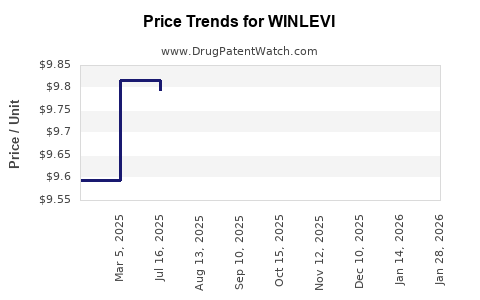
See drug price trends for WINLEVI.
The generic ingredient in WINLEVI is clascoterone. Additional details are available on the clascoterone profile page.
When can INTRAROSA (prasterone) generic drug versions launch in Australia?
Generic name: prasterone
DrugPatentWatch® Estimated Key Patent Expiration / Generic Entry Date: August 10, 2027
Generic Entry Controlled by: Australia Patent 2,008,286,651
Patent Title: DHEA compositions for treating menopause
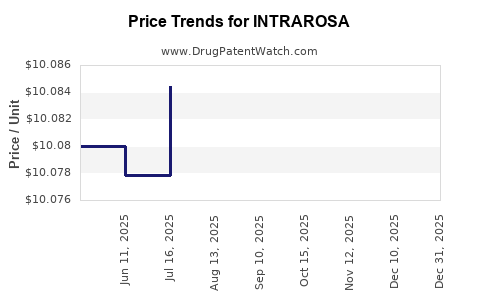
See drug price trends for INTRAROSA.
The generic ingredient in INTRAROSA is prasterone. Additional details are available on the prasterone profile page.
When can BRILINTA (ticagrelor) generic drug versions launch in Australia?
Generic name: ticagrelor
DrugPatentWatch® Estimated Key Patent Expiration / Generic Entry Date: August 20, 2027
Generic Entry Controlled by: Australia Patent 2,007,288,541
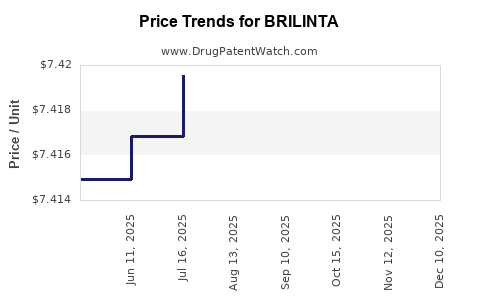
See drug price trends for BRILINTA.
The generic ingredient in BRILINTA is ticagrelor. Additional details are available on the ticagrelor profile page.
When can BRILINTA (ticagrelor) generic drug versions launch in Australia?
Generic name: ticagrelor
DrugPatentWatch® Estimated Key Patent Expiration / Generic Entry Date: August 20, 2027
Generic Entry Controlled by: Australia Patent 2,011,205,164
See drug price trends for BRILINTA.
The generic ingredient in BRILINTA is ticagrelor. Additional details are available on the ticagrelor profile page.
When can VIZAMYL (flutemetamol f-18) generic drug versions launch in Australia?
Generic name: flutemetamol f-18
DrugPatentWatch® Estimated Key Patent Expiration / Generic Entry Date: August 30, 2027
Generic Entry Controlled by: Australia Patent 2,008,292,201
VIZAMYL is a drug marketed by Ge Healthcare. There is one patent protecting this drug.
See drug price trends for VIZAMYL.
The generic ingredient in VIZAMYL is flutemetamol f-18. Additional details are available on the flutemetamol f-18 profile page.
When can PICATO (ingenol mebutate) generic drug versions launch in Australia?
Generic name: ingenol mebutate
DrugPatentWatch® Estimated Key Patent Expiration / Generic Entry Date: November 09, 2027
Generic Entry Controlled by: Australia Patent 2,006,325,244
Patent Title: Therapeutic compositions comprising ingenol-3-angelate

See drug price trends for PICATO.
The generic ingredient in PICATO is ingenol mebutate. Additional details are available on the ingenol mebutate profile page.
When can ZYKADIA (ceritinib) generic drug versions launch in Australia?
Generic name: ceritinib
DrugPatentWatch® Estimated Key Patent Expiration / Generic Entry Date: November 20, 2027
Generic Entry Controlled by: Australia Patent 2,010,210,018
ZYKADIA is a drug marketed by Novartis. There are eight patents protecting this drug.
See drug price trends for ZYKADIA.
The generic ingredient in ZYKADIA is ceritinib. Additional details are available on the ceritinib profile page.
When can ZEMDRI (plazomicin sulfate) generic drug versions launch in Australia?
Generic name: plazomicin sulfate
DrugPatentWatch® Estimated Key Patent Expiration / Generic Entry Date: November 21, 2027
Generic Entry Controlled by: Australia Patent 2,008,326,297
Patent Title: Antibacterial aminoglycoside analogs
ZEMDRI is a drug marketed by Cipla Usa. There are four patents protecting this drug. There has been litigation on patents covering ZEMDRI
See drug price trends for ZEMDRI.
The generic ingredient in ZEMDRI is plazomicin sulfate. Additional details are available on the plazomicin sulfate profile page.
When can DUZALLO (allopurinol; lesinurad) generic drug versions launch in Australia?
Generic name: allopurinol; lesinurad
DrugPatentWatch® Estimated Key Patent Expiration / Generic Entry Date: November 27, 2027
Generic Entry Controlled by: Australia Patent 2,008,329,673

See drug price trends for DUZALLO.
The generic ingredient in DUZALLO is allopurinol; lesinurad. Additional details are available on the allopurinol; lesinurad profile page.
When can DUZALLO (allopurinol; lesinurad) generic drug versions launch in Australia?
Generic name: allopurinol; lesinurad
DrugPatentWatch® Estimated Key Patent Expiration / Generic Entry Date: November 27, 2027
Generic Entry Controlled by: Australia Patent 2,009,289,647
See drug price trends for DUZALLO.
The generic ingredient in DUZALLO is allopurinol; lesinurad. Additional details are available on the allopurinol; lesinurad profile page.
When can DUZALLO (allopurinol; lesinurad) generic drug versions launch in Australia?
Generic name: allopurinol; lesinurad
DrugPatentWatch® Estimated Key Patent Expiration / Generic Entry Date: November 27, 2027
Generic Entry Controlled by: Australia Patent 2,012,203,172
See drug price trends for DUZALLO.
The generic ingredient in DUZALLO is allopurinol; lesinurad. Additional details are available on the allopurinol; lesinurad profile page.
When can ZURAMPIC (lesinurad) generic drug versions launch in Australia?
Generic name: lesinurad
DrugPatentWatch® Estimated Key Patent Expiration / Generic Entry Date: November 27, 2027
Generic Entry Controlled by: Australia Patent 2,008,329,673
ZURAMPIC is a drug marketed by Ironwood Pharms Inc. There are eight patents protecting this drug. There has been litigation on patents covering ZURAMPIC
See drug price trends for ZURAMPIC.
The generic ingredient in ZURAMPIC is lesinurad. Additional details are available on the lesinurad profile page.
When can ZURAMPIC (lesinurad) generic drug versions launch in Australia?
Generic name: lesinurad
DrugPatentWatch® Estimated Key Patent Expiration / Generic Entry Date: November 27, 2027
Generic Entry Controlled by: Australia Patent 2,009,289,647
ZURAMPIC is a drug marketed by Ironwood Pharms Inc. There are eight patents protecting this drug. There has been litigation on patents covering ZURAMPIC
See drug price trends for ZURAMPIC.
The generic ingredient in ZURAMPIC is lesinurad. Additional details are available on the lesinurad profile page.
When can ZURAMPIC (lesinurad) generic drug versions launch in Australia?
Generic name: lesinurad
DrugPatentWatch® Estimated Key Patent Expiration / Generic Entry Date: November 27, 2027
Generic Entry Controlled by: Australia Patent 2,012,203,172
ZURAMPIC is a drug marketed by Ironwood Pharms Inc. There are eight patents protecting this drug. There has been litigation on patents covering ZURAMPIC
See drug price trends for ZURAMPIC.
The generic ingredient in ZURAMPIC is lesinurad. Additional details are available on the lesinurad profile page.
More… ↓
DrugPatentWatch cited by CNN, NEJM, Nature Journals, and more …

Make Better Decisions: Try a trial or see plans & pricing
Drugs may be covered by multiple patents or regulatory protections. All trademarks and applicant names are the property of their respective owners or licensors. Although great care is taken in the proper and correct provision of this service, thinkBiotech LLC does not accept any responsibility for possible consequences of errors or omissions in the provided data. The data presented herein is for information purposes only. There is no warranty that the data contained herein is error free. We do not provide individual investment advice. This service is not registered with any financial regulatory agency. The information we publish is educational only and based on our opinions plus our models. By using DrugPatentWatch you acknowledge that we do not provide personalized recommendations or advice. thinkBiotech performs no independent verification of facts as provided by public sources nor are attempts made to provide legal or investing advice. Any reliance on data provided herein is done solely at the discretion of the user. Users of this service are advised to seek professional advice and independent confirmation before considering acting on any of the provided information. thinkBiotech LLC reserves the right to amend, extend or withdraw any part or all of the offered service without notice.
ISSN: 2162-2639

Privacy and Cookies
Terms & Conditions
Site Map
DrugPatentWatch Alternatives
LOE / Major Patent Expirations 2026 - 2027
NCE-1 Patent Challenge Dates 2026 - 2027
Friedman, Yali. "DrugPatentWatch" DrugPatentWatch, thinkBiotech, 2026, www.DrugPatentWatch.com.
See Primary Research Papers Citing DrugPatentWatch