Expiring Drug Patents Cheat Sheet
We analyse the patents covering drugs in 134 countries and quickly give you the likely loss-of-exclusivity/generic entry date
Israel: These 22 Drugs Face Patent Expirations and Generic Entry From 2026 - 2027
The content of this page is licensed under a Creative Commons Attribution 4.0 International License.

Generic Entry Dates in Other Countries
Friedman, Yali, "Israel: These 22 Drugs Face Patent Expirations and Generic Entry From 2026 - 2027" DrugPatentWatch.com thinkBiotech, 2026 www.drugpatentwatch.com/p/expiring-drug-patents-generic-entry/.
Media collateral
These estimated drug patent expiration dates and generic entry opportunity dates are calculated from analysis of known patents covering drugs. Many factors can influence early or late generic entry. This information is provided as a rough estimate of generic entry potential and should not be used as an independent source. The methodology is described in this blog post.
When can TYMLOS (abaloparatide) generic drug versions launch in Israel?
Generic name: abaloparatide
DrugPatentWatch® Estimated Key Patent Expiration / Generic Entry Date: October 03, 2026
Generic Entry Controlled by: Israel Patent 197,926
Patent Title: תכשיר יציב המכיל חלבון עצם אנבולי, דהיינו אנלוג ל–pthrp, ושימושיו (Stable composition comprising a bone anabolic protein, namely a pthrp analogue, and uses thereof)

See drug price trends for TYMLOS.
The generic ingredient in TYMLOS is abaloparatide. Additional details are available on the abaloparatide profile page.
When can KORSUVA (difelikefalin acetate) generic drug versions launch in Israel?
Generic name: difelikefalin acetate
DrugPatentWatch® Estimated Key Patent Expiration / Generic Entry Date: November 10, 2026
Generic Entry Controlled by: Israel Patent 197,923
KORSUVA is a drug marketed by Vifor Intl. There are twelve patents protecting this drug. There has been litigation on patents covering KORSUVA
See drug price trends for KORSUVA.
The generic ingredient in KORSUVA is difelikefalin acetate. Additional details are available on the difelikefalin acetate profile page.
When can KORSUVA (difelikefalin acetate) generic drug versions launch in Israel?
Generic name: difelikefalin acetate
DrugPatentWatch® Estimated Key Patent Expiration / Generic Entry Date: November 10, 2026
Generic Entry Controlled by: Israel Patent 197,924
KORSUVA is a drug marketed by Vifor Intl. There are twelve patents protecting this drug. There has been litigation on patents covering KORSUVA
See drug price trends for KORSUVA.
The generic ingredient in KORSUVA is difelikefalin acetate. Additional details are available on the difelikefalin acetate profile page.
When can SIRTURO (bedaquiline fumarate) generic drug versions launch in Israel?
Generic name: bedaquiline fumarate
DrugPatentWatch® Estimated Key Patent Expiration / Generic Entry Date: December 05, 2026
Generic Entry Controlled by: Israel Patent 199,077
SIRTURO is a drug marketed by Janssen Therap. There are two patents protecting this drug.
See drug price trends for SIRTURO.
The generic ingredient in SIRTURO is bedaquiline fumarate. Additional details are available on the bedaquiline fumarate profile page.
When can ZYKADIA (ceritinib) generic drug versions launch in Israel?
Generic name: ceritinib
DrugPatentWatch® Estimated Key Patent Expiration / Generic Entry Date: December 08, 2026
Generic Entry Controlled by: Israel Patent 230,972
ZYKADIA is a drug marketed by Novartis. There are eight patents protecting this drug.
See drug price trends for ZYKADIA.
The generic ingredient in ZYKADIA is ceritinib. Additional details are available on the ceritinib profile page.
When can XERMELO (telotristat etiprate) generic drug versions launch in Israel?
Generic name: telotristat etiprate
DrugPatentWatch® Estimated Key Patent Expiration / Generic Entry Date: December 12, 2026
Generic Entry Controlled by: Israel Patent 198,806
XERMELO is a drug marketed by Tersera. There are five patents protecting this drug.
See drug price trends for XERMELO.
The generic ingredient in XERMELO is telotristat etiprate. Additional details are available on the telotristat etiprate profile page.
When can XERMELO (telotristat etiprate) generic drug versions launch in Israel?
Generic name: telotristat etiprate
DrugPatentWatch® Estimated Key Patent Expiration / Generic Entry Date: December 12, 2026
Generic Entry Controlled by: Israel Patent 235,288
Patent Title: צורת מינון המכילה תרכובות המבוססות על 4–פניל–6–(2,2,2–טריפלואורו–1–פנילאתוקסי)פירימידין (Dosage form containing 4-phenyl-6-(2,2,2-trifluoro-1-phenylethoxy)pyrimidine-based compounds)
XERMELO is a drug marketed by Tersera. There are five patents protecting this drug.
See drug price trends for XERMELO.
The generic ingredient in XERMELO is telotristat etiprate. Additional details are available on the telotristat etiprate profile page.
When can OSENI (alogliptin benzoate; pioglitazone hydrochloride) generic drug versions launch in Israel?
Generic name: alogliptin benzoate; pioglitazone hydrochloride
DrugPatentWatch® Estimated Key Patent Expiration / Generic Entry Date: February 01, 2027
Generic Entry Controlled by: Israel Patent 200,108

See drug price trends for OSENI.
The generic ingredient in OSENI is alogliptin benzoate; pioglitazone hydrochloride. Additional details are available on the alogliptin benzoate; pioglitazone hydrochloride profile page.
When can XENLETA (lefamulin acetate) generic drug versions launch in Israel?
Generic name: lefamulin acetate
DrugPatentWatch® Estimated Key Patent Expiration / Generic Entry Date: March 20, 2027
Generic Entry Controlled by: Israel Patent 200,440
XENLETA is a drug marketed by Hong Kong. There are four patents protecting this drug. There has been litigation on patents covering XENLETA
See drug price trends for XENLETA.
The generic ingredient in XENLETA is lefamulin acetate. Additional details are available on the lefamulin acetate profile page.
When can INLYTA (axitinib) generic drug versions launch in Israel?
Generic name: axitinib
DrugPatentWatch® Estimated Key Patent Expiration / Generic Entry Date: April 05, 2027
Generic Entry Controlled by: Israel Patent 201,320
INLYTA is a drug marketed by Pf Prism Cv. There are four patents protecting this drug and one Paragraph IV challenge. Two tentatively approved generics are ready to enter the market. There has been litigation on patents covering INLYTA
See drug price trends for INLYTA.
The generic ingredient in INLYTA is axitinib. Additional details are available on the axitinib profile page.
When can QVAR REDIHALER (beclomethasone dipropionate) generic drug versions launch in Israel?
Generic name: beclomethasone dipropionate
DrugPatentWatch® Estimated Key Patent Expiration / Generic Entry Date: April 11, 2027
Generic Entry Controlled by: Israel Patent 201,256
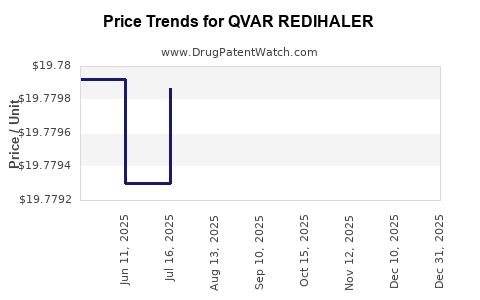
See drug price trends for QVAR REDIHALER.
The generic ingredient in QVAR REDIHALER is beclomethasone dipropionate. Additional details are available on the beclomethasone dipropionate profile page.
When can PROMACTA (eltrombopag olamine) generic drug versions launch in Israel?
Generic name: eltrombopag olamine
DrugPatentWatch® Estimated Key Patent Expiration / Generic Entry Date: May 03, 2027
Generic Entry Controlled by: Israel Patent 201,891
PROMACTA is a drug marketed by Novartis. There is one patent protecting this drug and two Paragraph IV challenges. There has been litigation on patents covering PROMACTA
See drug price trends for PROMACTA.
The generic ingredient in PROMACTA is eltrombopag olamine. Additional details are available on the eltrombopag olamine profile page.
When can PROMACTA (eltrombopag olamine) generic drug versions launch in Israel?
Generic name: eltrombopag olamine
DrugPatentWatch® Estimated Key Patent Expiration / Generic Entry Date: May 03, 2027
Generic Entry Controlled by: Israel Patent 238,840
PROMACTA is a drug marketed by Novartis. There is one patent protecting this drug and two Paragraph IV challenges. There has been litigation on patents covering PROMACTA
See drug price trends for PROMACTA.
The generic ingredient in PROMACTA is eltrombopag olamine. Additional details are available on the eltrombopag olamine profile page.
When can PROMACTA (eltrombopag olamine) generic drug versions launch in Israel?
Generic name: eltrombopag olamine
DrugPatentWatch® Estimated Key Patent Expiration / Generic Entry Date: May 03, 2027
Generic Entry Controlled by: Israel Patent 274,602
PROMACTA is a drug marketed by Novartis. There is one patent protecting this drug and two Paragraph IV challenges. There has been litigation on patents covering PROMACTA
See drug price trends for PROMACTA.
The generic ingredient in PROMACTA is eltrombopag olamine. Additional details are available on the eltrombopag olamine profile page.
When can JAKAFI (ruxolitinib phosphate) generic drug versions launch in Israel?
Generic name: ruxolitinib phosphate
DrugPatentWatch® Estimated Key Patent Expiration / Generic Entry Date: June 13, 2027
Generic Entry Controlled by: Israel Patent 202,524
JAKAFI is a drug marketed by Incyte Corp. There are nineteen patents protecting this drug and one Paragraph IV challenge. There has been litigation on patents covering JAKAFI
See drug price trends for JAKAFI.
The generic ingredient in JAKAFI is ruxolitinib phosphate. Additional details are available on the ruxolitinib phosphate profile page.
When can JAKAFI (ruxolitinib phosphate) generic drug versions launch in Israel?
Generic name: ruxolitinib phosphate
DrugPatentWatch® Estimated Key Patent Expiration / Generic Entry Date: June 13, 2027
Generic Entry Controlled by: Israel Patent 264,276
JAKAFI is a drug marketed by Incyte Corp. There are nineteen patents protecting this drug and one Paragraph IV challenge. There has been litigation on patents covering JAKAFI
See drug price trends for JAKAFI.
The generic ingredient in JAKAFI is ruxolitinib phosphate. Additional details are available on the ruxolitinib phosphate profile page.
When can JAKAFI (ruxolitinib phosphate) generic drug versions launch in Israel?
Generic name: ruxolitinib phosphate
DrugPatentWatch® Estimated Key Patent Expiration / Generic Entry Date: June 13, 2027
Generic Entry Controlled by: Israel Patent 280,401
JAKAFI is a drug marketed by Incyte Corp. There are nineteen patents protecting this drug and one Paragraph IV challenge. There has been litigation on patents covering JAKAFI
See drug price trends for JAKAFI.
The generic ingredient in JAKAFI is ruxolitinib phosphate. Additional details are available on the ruxolitinib phosphate profile page.
When can JAKAFI (ruxolitinib phosphate) generic drug versions launch in Israel?
Generic name: ruxolitinib phosphate
DrugPatentWatch® Estimated Key Patent Expiration / Generic Entry Date: June 13, 2027
Generic Entry Controlled by: Israel Patent 287,708
JAKAFI is a drug marketed by Incyte Corp. There are nineteen patents protecting this drug and one Paragraph IV challenge. There has been litigation on patents covering JAKAFI
See drug price trends for JAKAFI.
The generic ingredient in JAKAFI is ruxolitinib phosphate. Additional details are available on the ruxolitinib phosphate profile page.
When can ENTRESTO SPRINKLE (sacubitril; valsartan) generic drug versions launch in Israel?
Generic name: sacubitril; valsartan
DrugPatentWatch® Estimated Key Patent Expiration / Generic Entry Date: June 18, 2027
Generic Entry Controlled by: Israel Patent 184,027
Patent Title: תרכובת טריסודיום [3-((1s, 3r)-1-ביפניל-4-ילמתיל-3-אתוקסיקרבוניל-1-בוטילקרבמויל)פרופיונאט-(s)-'3-מתיל-'2-(פנטהנויל{" 2-(טטרזול-5-ילאט)ביפניל-'4-ילמתיל}אמינו)בוטיראט] המיפנטההידראט, תכשירים רוקחיים שלה, שיטה להכנתה ושימוש בה להכנת תרופות (Compound trisodium [3-((1s,3r)-1-biphenyl-4-ylmethyl-3-ethoxycarbonyl-1-butylcarbamoyl)propionate-(s)-3’-methyl-2’-(pentanoyl{2’’-(tetrazol-5-ylate)biphenyl-4’-ylmethyl}amino)butyrate] hemipentahydrate, its pharmaceutical compositions, method for its preparation and use thereof in the preparation of medicaments)
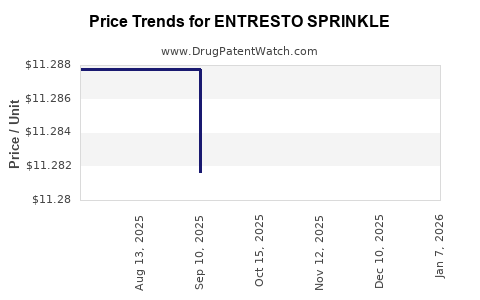
See drug price trends for ENTRESTO SPRINKLE.
The generic ingredient in ENTRESTO SPRINKLE is sacubitril; valsartan. Additional details are available on the sacubitril; valsartan profile page.
When can KYBELLA (deoxycholic acid) generic drug versions launch in Israel?
Generic name: deoxycholic acid
DrugPatentWatch® Estimated Key Patent Expiration / Generic Entry Date: June 19, 2027
Generic Entry Controlled by: Israel Patent 202,203
Patent Title: תכשיר חומצת מרה מלאכותי ושיטה להכנת החומצה (Synthetic bile acid composition and method for preparation of the bile acid)
KYBELLA is a drug marketed by Abbvie. There are fourteen patents protecting this drug and one Paragraph IV challenge. There has been litigation on patents covering KYBELLA
The generic ingredient in KYBELLA is deoxycholic acid. Additional details are available on the deoxycholic acid profile page.
When can TEPMETKO (tepotinib hydrochloride) generic drug versions launch in Israel?
Generic name: tepotinib hydrochloride
DrugPatentWatch® Estimated Key Patent Expiration / Generic Entry Date: July 12, 2027
Generic Entry Controlled by: Israel Patent 203,091
Patent Title: נגזרות פירידאזינון (Pyridazinone derivatives)
TEPMETKO is a drug marketed by Emd Serono Inc. There are eight patents protecting this drug. There has been litigation on patents covering TEPMETKO
See drug price trends for TEPMETKO.
The generic ingredient in TEPMETKO is tepotinib hydrochloride. Additional details are available on the tepotinib hydrochloride profile page.
When can TEPMETKO (tepotinib hydrochloride) generic drug versions launch in Israel?
Generic name: tepotinib hydrochloride
DrugPatentWatch® Estimated Key Patent Expiration / Generic Entry Date: July 12, 2027
Generic Entry Controlled by: Israel Patent 203,094
Patent Title: נגזרות פירימידיניל–פירידאזינון (Pyrimidinyl-pyridazinone derivatives)
TEPMETKO is a drug marketed by Emd Serono Inc. There are eight patents protecting this drug. There has been litigation on patents covering TEPMETKO
See drug price trends for TEPMETKO.
The generic ingredient in TEPMETKO is tepotinib hydrochloride. Additional details are available on the tepotinib hydrochloride profile page.
When can INTRAROSA (prasterone) generic drug versions launch in Israel?
Generic name: prasterone
DrugPatentWatch® Estimated Key Patent Expiration / Generic Entry Date: August 10, 2027
Generic Entry Controlled by: Israel Patent 203,747
Patent Title: שימוש בפרקורסור של סטרויד מין בייצור תרופה למתן 13 מ" ג או פחות למינון יומי דרך הנרתיק לטיפול מחלות נרתיקיות ותכשיר רוקחי נרתיקי המכילה אותה (Use of sex steroid precursor in the manufacture of a medicament for delivering 13 mg or less daily dosage intrvaginally for the treatment of vaginal diseases and a vaginal pharmaceutical composition comprising same)
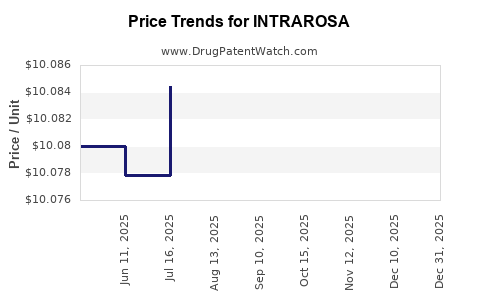
See drug price trends for INTRAROSA.
The generic ingredient in INTRAROSA is prasterone. Additional details are available on the prasterone profile page.
When can VIZAMYL (flutemetamol f-18) generic drug versions launch in Israel?
Generic name: flutemetamol f-18
DrugPatentWatch® Estimated Key Patent Expiration / Generic Entry Date: August 30, 2027
Generic Entry Controlled by: Israel Patent 203,316
Patent Title: תכשיר רוקחי רדיואקטיבי המכיל תרכובת בנזוטיאזול מסומנת ראדיואקטיבית ונשא כשיר ביולוגית ,שיטה להכנת התכשיר ושיטה לדימות על ידי שימוש בו (Radiopharmaceutical composition comprising isotopically-labeled benzothiazole compound and a biocompatible carrier, a method for preparing the composition and a method of imaging using the same)
VIZAMYL is a drug marketed by Ge Healthcare. There is one patent protecting this drug.
See drug price trends for VIZAMYL.
The generic ingredient in VIZAMYL is flutemetamol f-18. Additional details are available on the flutemetamol f-18 profile page.
When can PREPOPIK (citric acid; magnesium oxide; sodium picosulfate) generic drug versions launch in Israel?
Generic name: citric acid; magnesium oxide; sodium picosulfate
DrugPatentWatch® Estimated Key Patent Expiration / Generic Entry Date: October 12, 2027
Generic Entry Controlled by: Israel Patent 204,500
Patent Title: תהליך לייצור הרכב או הרכב רוקחי על ידי ריסוס ציפוי של שכבת נתרן פיקוסולפאט על גרעין של אשלגן ביקרבונאט (Process for the manufacture of a composition or pharmaceutical composition comprising spray coating a layer of sodium picosulphate on a core of potassium bicarbonate)
PREPOPIK is a drug marketed by Ferring Pharms Inc. There are two patents protecting this drug and one Paragraph IV challenge. One tentatively approved generic is ready to enter the market. There has been litigation on patents covering PREPOPIK
See drug price trends for PREPOPIK.
The generic ingredient in PREPOPIK is citric acid; magnesium oxide; sodium picosulfate. Additional details are available on the citric acid; magnesium oxide; sodium picosulfate profile page.
When can XTANDI (enzalutamide) generic drug versions launch in Israel?
Generic name: enzalutamide
DrugPatentWatch® Estimated Key Patent Expiration / Generic Entry Date: November 12, 2027
Generic Entry Controlled by: Israel Patent 187,328
Patent Title: N-מתיל-2-פלואורו-{4-[3-(4-ציאנו-3-טריפלואורומתילפניל)-5,5-דימתיל-4-אוקסו-2-תיאוקסו-אימידאזולידינ-1-איל]}בנזאמיד, תכשירים רוקחים המכילים אותו ושימוש בו להכנת תרופות (N-methyl-2-fluoro-{4-[3-(4-cyano-3-trifluoromethylphenyl)-5,5-dimethyl-4-oxo-2-thioxo-imidazolidin-1-yl]}benzamide, pharmaceutical compositions comprising the same and uses thereof in the manufacture of medicaments)
XTANDI is a drug marketed by Astellas. There are seven patents protecting this drug and one Paragraph IV challenge. Three tentatively approved generics are ready to enter the market. There has been litigation on patents covering XTANDI
See drug price trends for XTANDI.
The generic ingredient in XTANDI is enzalutamide. Additional details are available on the enzalutamide profile page.
When can VELPHORO (sucroferric oxyhydroxide) generic drug versions launch in Israel?
Generic name: sucroferric oxyhydroxide
DrugPatentWatch® Estimated Key Patent Expiration / Generic Entry Date: November 16, 2027
Generic Entry Controlled by: Israel Patent 205,726
Patent Title: תכשירי רוקחות המיכילים אוקסי-הידרוקסיד של ברזל (Pharmaceutical compositions comprising iron oxy-hydroxide)
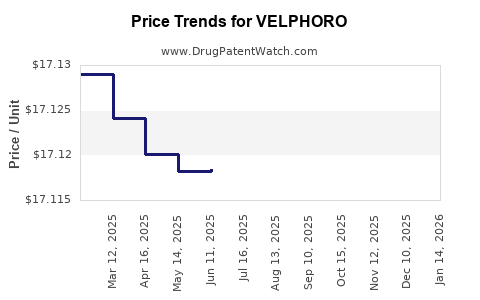
See drug price trends for VELPHORO.
The generic ingredient in VELPHORO is sucroferric oxyhydroxide. Additional details are available on the sucroferric oxyhydroxide profile page.
When can VELPHORO (sucroferric oxyhydroxide) generic drug versions launch in Israel?
Generic name: sucroferric oxyhydroxide
DrugPatentWatch® Estimated Key Patent Expiration / Generic Entry Date: November 16, 2027
Generic Entry Controlled by: Israel Patent 247,741
Patent Title: תכשירי רוקחות המכילים ברזל אוקסו - הידרוקסיד, שיטות להכנתם והשימושים בהם (Pharmaceutical compositions comprising iron oxy-hydroxide, methods for the preparation thereof and their uses)
See drug price trends for VELPHORO.
The generic ingredient in VELPHORO is sucroferric oxyhydroxide. Additional details are available on the sucroferric oxyhydroxide profile page.
When can ZEMDRI (plazomicin sulfate) generic drug versions launch in Israel?
Generic name: plazomicin sulfate
DrugPatentWatch® Estimated Key Patent Expiration / Generic Entry Date: November 21, 2027
Generic Entry Controlled by: Israel Patent 205,880
Patent Title: אנלוגי אמינוגליקוזידים, תכשירים המכילים אותם ושימושים בהם (Aminoglycoside analogs, compositions comprising the same and uses thereof)
ZEMDRI is a drug marketed by Cipla Usa. There are four patents protecting this drug. There has been litigation on patents covering ZEMDRI
See drug price trends for ZEMDRI.
The generic ingredient in ZEMDRI is plazomicin sulfate. Additional details are available on the plazomicin sulfate profile page.
When can DUZALLO (allopurinol; lesinurad) generic drug versions launch in Israel?
Generic name: allopurinol; lesinurad
DrugPatentWatch® Estimated Key Patent Expiration / Generic Entry Date: November 27, 2027
Generic Entry Controlled by: Israel Patent 205,974

See drug price trends for DUZALLO.
The generic ingredient in DUZALLO is allopurinol; lesinurad. Additional details are available on the allopurinol; lesinurad profile page.
When can DUZALLO (allopurinol; lesinurad) generic drug versions launch in Israel?
Generic name: allopurinol; lesinurad
DrugPatentWatch® Estimated Key Patent Expiration / Generic Entry Date: November 27, 2027
Generic Entry Controlled by: Israel Patent 211,429
See drug price trends for DUZALLO.
The generic ingredient in DUZALLO is allopurinol; lesinurad. Additional details are available on the allopurinol; lesinurad profile page.
When can ZURAMPIC (lesinurad) generic drug versions launch in Israel?
Generic name: lesinurad
DrugPatentWatch® Estimated Key Patent Expiration / Generic Entry Date: November 27, 2027
Generic Entry Controlled by: Israel Patent 205,974
ZURAMPIC is a drug marketed by Ironwood Pharms Inc. There are eight patents protecting this drug. There has been litigation on patents covering ZURAMPIC
See drug price trends for ZURAMPIC.
The generic ingredient in ZURAMPIC is lesinurad. Additional details are available on the lesinurad profile page.
When can ZURAMPIC (lesinurad) generic drug versions launch in Israel?
Generic name: lesinurad
DrugPatentWatch® Estimated Key Patent Expiration / Generic Entry Date: November 27, 2027
Generic Entry Controlled by: Israel Patent 211,429
ZURAMPIC is a drug marketed by Ironwood Pharms Inc. There are eight patents protecting this drug. There has been litigation on patents covering ZURAMPIC
See drug price trends for ZURAMPIC.
The generic ingredient in ZURAMPIC is lesinurad. Additional details are available on the lesinurad profile page.
More… ↓
DrugPatentWatch cited by CNN, NEJM, Nature Journals, and more …

Make Better Decisions: Try a trial or see plans & pricing
Drugs may be covered by multiple patents or regulatory protections. All trademarks and applicant names are the property of their respective owners or licensors. Although great care is taken in the proper and correct provision of this service, thinkBiotech LLC does not accept any responsibility for possible consequences of errors or omissions in the provided data. The data presented herein is for information purposes only. There is no warranty that the data contained herein is error free. We do not provide individual investment advice. This service is not registered with any financial regulatory agency. The information we publish is educational only and based on our opinions plus our models. By using DrugPatentWatch you acknowledge that we do not provide personalized recommendations or advice. thinkBiotech performs no independent verification of facts as provided by public sources nor are attempts made to provide legal or investing advice. Any reliance on data provided herein is done solely at the discretion of the user. Users of this service are advised to seek professional advice and independent confirmation before considering acting on any of the provided information. thinkBiotech LLC reserves the right to amend, extend or withdraw any part or all of the offered service without notice.
ISSN: 2162-2639

Privacy and Cookies
Terms & Conditions
Site Map
DrugPatentWatch Alternatives
LOE / Major Patent Expirations 2026 - 2027
NCE-1 Patent Challenge Dates 2026 - 2027
Friedman, Yali. "DrugPatentWatch" DrugPatentWatch, thinkBiotech, 2026, www.DrugPatentWatch.com.
See Primary Research Papers Citing DrugPatentWatch