Expiring Drug Patents Cheat Sheet
We analyse the patents covering drugs in 134 countries and quickly give you the likely loss-of-exclusivity/generic entry date
New Zealand: These 37 Drugs Face Patent Expirations and Generic Entry From 2026 - 2027
The content of this page is licensed under a Creative Commons Attribution 4.0 International License.

Generic Entry Dates in Other Countries
Friedman, Yali, "New Zealand: These 37 Drugs Face Patent Expirations and Generic Entry From 2026 - 2027" DrugPatentWatch.com thinkBiotech, 2026 www.drugpatentwatch.com/p/expiring-drug-patents-generic-entry/.
Media collateral
These estimated drug patent expiration dates and generic entry opportunity dates are calculated from analysis of known patents covering drugs. Many factors can influence early or late generic entry. This information is provided as a rough estimate of generic entry potential and should not be used as an independent source. The methodology is described in this blog post.
When can TYMLOS (abaloparatide) generic drug versions launch in New Zealand?
Generic name: abaloparatide
DrugPatentWatch® Estimated Key Patent Expiration / Generic Entry Date: October 03, 2026
Generic Entry Controlled by: New Zealand Patent 576,682
Patent Title: METHOD OF DRUG DELIVERY FOR BONE ANABOLIC PROTEIN PARATHYROID HORMONE-RELATED PROTEIN (PTHrP)

See drug price trends for TYMLOS.
The generic ingredient in TYMLOS is abaloparatide. Additional details are available on the abaloparatide profile page.
When can COTELLIC (cobimetinib fumarate) generic drug versions launch in New Zealand?
Generic name: cobimetinib fumarate
DrugPatentWatch® Estimated Key Patent Expiration / Generic Entry Date: October 05, 2026
Generic Entry Controlled by: New Zealand Patent 567,140
Patent Title: Azetidines as MEK inhibitors for the treatment of proliferative diseases
COTELLIC is a drug marketed by Genentech Inc. There are seven patents protecting this drug.
See drug price trends for COTELLIC.
The generic ingredient in COTELLIC is cobimetinib fumarate. Additional details are available on the cobimetinib fumarate profile page.
When can INREBIC (fedratinib hydrochloride) generic drug versions launch in New Zealand?
Generic name: fedratinib hydrochloride
DrugPatentWatch® Estimated Key Patent Expiration / Generic Entry Date: October 26, 2026
Generic Entry Controlled by: New Zealand Patent 592,990
INREBIC is a drug marketed by Bristol-myers. There are five patents protecting this drug. There has been litigation on patents covering INREBIC
See drug price trends for INREBIC.
The generic ingredient in INREBIC is fedratinib hydrochloride. Additional details are available on the fedratinib hydrochloride profile page.
When can BEVYXXA (betrixaban) generic drug versions launch in New Zealand?
Generic name: betrixaban
DrugPatentWatch® Estimated Key Patent Expiration / Generic Entry Date: November 07, 2026
Generic Entry Controlled by: New Zealand Patent 567,992
Patent Title: Pharmaceutical salts and polymorphs of N-(5-chloro-2-pyridinyl)-2-[[4-[(dimethylamino)iminomethyl]benzoyl]amino]-5-methoxy-benzamide, a factor Xa inhibitor
BEVYXXA is a drug marketed by Portola Pharms Inc. There are five patents protecting this drug. There has been litigation on patents covering BEVYXXA
See drug price trends for BEVYXXA.
The generic ingredient in BEVYXXA is betrixaban. Additional details are available on the betrixaban profile page.
When can BEVYXXA (betrixaban) generic drug versions launch in New Zealand?
Generic name: betrixaban
DrugPatentWatch® Estimated Key Patent Expiration / Generic Entry Date: November 07, 2026
Generic Entry Controlled by: New Zealand Patent 592,533
Patent Title: METHOD FOR THE PREPARATION OF N-(5-CHLORO-2-PYRIDINYL)-2-[[4-[(DIMETHYLAMINO) IMINOMETHYL] BENZOYL] AMINO]-5-METHOXY-BENZAMIDE, A FACTOR Xa INHIBITOR
BEVYXXA is a drug marketed by Portola Pharms Inc. There are five patents protecting this drug. There has been litigation on patents covering BEVYXXA
See drug price trends for BEVYXXA.
The generic ingredient in BEVYXXA is betrixaban. Additional details are available on the betrixaban profile page.
When can ENTRESTO SPRINKLE (sacubitril; valsartan) generic drug versions launch in New Zealand?
Generic name: sacubitril; valsartan
DrugPatentWatch® Estimated Key Patent Expiration / Generic Entry Date: November 08, 2026
Generic Entry Controlled by: New Zealand Patent 594,006
Patent Title: Pharmaceutical combinations of an angiotensin receptor antagonist and an NEP inhibitor
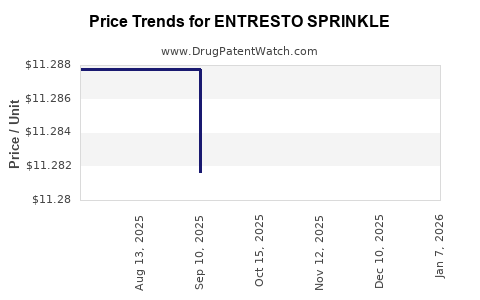
See drug price trends for ENTRESTO SPRINKLE.
The generic ingredient in ENTRESTO SPRINKLE is sacubitril; valsartan. Additional details are available on the sacubitril; valsartan profile page.
When can ENTRESTO SPRINKLE (sacubitril; valsartan) generic drug versions launch in New Zealand?
Generic name: sacubitril; valsartan
DrugPatentWatch® Estimated Key Patent Expiration / Generic Entry Date: November 08, 2026
Generic Entry Controlled by: New Zealand Patent 600,626
Patent Title: Pharmaceutical combinations of an angiotensin receptor antagonist and an NEP inhibitor
See drug price trends for ENTRESTO SPRINKLE.
The generic ingredient in ENTRESTO SPRINKLE is sacubitril; valsartan. Additional details are available on the sacubitril; valsartan profile page.
When can KORSUVA (difelikefalin acetate) generic drug versions launch in New Zealand?
Generic name: difelikefalin acetate
DrugPatentWatch® Estimated Key Patent Expiration / Generic Entry Date: November 10, 2026
Generic Entry Controlled by: New Zealand Patent 577,107
Patent Title: Synthetic peptide amide ligands of the kappa opiod receptor
KORSUVA is a drug marketed by Vifor Intl. There are twelve patents protecting this drug. There has been litigation on patents covering KORSUVA
See drug price trends for KORSUVA.
The generic ingredient in KORSUVA is difelikefalin acetate. Additional details are available on the difelikefalin acetate profile page.
When can KORSUVA (difelikefalin acetate) generic drug versions launch in New Zealand?
Generic name: difelikefalin acetate
DrugPatentWatch® Estimated Key Patent Expiration / Generic Entry Date: November 10, 2026
Generic Entry Controlled by: New Zealand Patent 577,108
Patent Title: Synthetic peptide amides and dimers thereof of the kappa opioid receptor
KORSUVA is a drug marketed by Vifor Intl. There are twelve patents protecting this drug. There has been litigation on patents covering KORSUVA
See drug price trends for KORSUVA.
The generic ingredient in KORSUVA is difelikefalin acetate. Additional details are available on the difelikefalin acetate profile page.
When can SIRTURO (bedaquiline fumarate) generic drug versions launch in New Zealand?
Generic name: bedaquiline fumarate
DrugPatentWatch® Estimated Key Patent Expiration / Generic Entry Date: December 05, 2026
Generic Entry Controlled by: New Zealand Patent 576,485
Patent Title: FUMARATE SALT OF (ALPHA S, BETA R)-6-BROMO-ALPHA-[2-(DIMETHYLAMINO)ETHYL]-2-METHOXY-ALPHA-1-NAPHTHALENYL-BETA-PHENYL-3-QUINOLINEETHANOL
SIRTURO is a drug marketed by Janssen Therap. There are two patents protecting this drug.
See drug price trends for SIRTURO.
The generic ingredient in SIRTURO is bedaquiline fumarate. Additional details are available on the bedaquiline fumarate profile page.
When can ZYKADIA (ceritinib) generic drug versions launch in New Zealand?
Generic name: ceritinib
DrugPatentWatch® Estimated Key Patent Expiration / Generic Entry Date: December 08, 2026
Generic Entry Controlled by: New Zealand Patent 577,197
ZYKADIA is a drug marketed by Novartis. There are eight patents protecting this drug.
See drug price trends for ZYKADIA.
The generic ingredient in ZYKADIA is ceritinib. Additional details are available on the ceritinib profile page.
When can ZYKADIA (ceritinib) generic drug versions launch in New Zealand?
Generic name: ceritinib
DrugPatentWatch® Estimated Key Patent Expiration / Generic Entry Date: December 08, 2026
Generic Entry Controlled by: New Zealand Patent 590,601
Patent Title: PYRIMIDINE COMPOUNDS ESPECIALLY 4-PHENYLAMINO-2-ARYLAMINO-PYRIMIDINE DERIVATIVES AND COMPOSITIONS AS PROTEIN KINASE INHIBITORS
ZYKADIA is a drug marketed by Novartis. There are eight patents protecting this drug.
See drug price trends for ZYKADIA.
The generic ingredient in ZYKADIA is ceritinib. Additional details are available on the ceritinib profile page.
When can XERMELO (telotristat etiprate) generic drug versions launch in New Zealand?
Generic name: telotristat etiprate
DrugPatentWatch® Estimated Key Patent Expiration / Generic Entry Date: December 12, 2026
Generic Entry Controlled by: New Zealand Patent 577,004
Patent Title: 4-PHENYL-6-(2,2,2-TRIFLUORO-1-PHENYLETHOXY)PYRIMIDINE-BASED COMPOUNDS AND METHODS OF THEIR USE
XERMELO is a drug marketed by Tersera. There are five patents protecting this drug.
See drug price trends for XERMELO.
The generic ingredient in XERMELO is telotristat etiprate. Additional details are available on the telotristat etiprate profile page.
When can PICATO (ingenol mebutate) generic drug versions launch in New Zealand?
Generic name: ingenol mebutate
DrugPatentWatch® Estimated Key Patent Expiration / Generic Entry Date: December 18, 2026
Generic Entry Controlled by: New Zealand Patent 569,197
Patent Title: Therapeutic compositions comprising ingenol angelate

See drug price trends for PICATO.
The generic ingredient in PICATO is ingenol mebutate. Additional details are available on the ingenol mebutate profile page.
When can OSENI (alogliptin benzoate; pioglitazone hydrochloride) generic drug versions launch in New Zealand?
Generic name: alogliptin benzoate; pioglitazone hydrochloride
DrugPatentWatch® Estimated Key Patent Expiration / Generic Entry Date: February 01, 2027
Generic Entry Controlled by: New Zealand Patent 579,008

See drug price trends for OSENI.
The generic ingredient in OSENI is alogliptin benzoate; pioglitazone hydrochloride. Additional details are available on the alogliptin benzoate; pioglitazone hydrochloride profile page.
When can LEXISCAN (regadenoson) generic drug versions launch in New Zealand?
Generic name: regadenoson
DrugPatentWatch® Estimated Key Patent Expiration / Generic Entry Date: February 02, 2027
Generic Entry Controlled by: New Zealand Patent 570,239
Patent Title: Preparation of (1-{ 9-[(4S,2R,3R,5R)-3,4-dihydroxy-5-(hydroxymethyl)oxolan-2-yl]-6-aminopurin-2-yl} pyrazol-4-yl)-N-methylcarboxamide monohydrate
LEXISCAN is a drug marketed by Astellas. There are two patents protecting this drug and one Paragraph IV challenge. There has been litigation on patents covering LEXISCAN
See drug price trends for LEXISCAN.
The generic ingredient in LEXISCAN is regadenoson. Additional details are available on the regadenoson profile page.
When can PANCREAZE (pancrelipase (amylase;lipase;protease)) generic drug versions launch in New Zealand?
Generic name: pancrelipase (amylase;lipase;protease)
DrugPatentWatch® Estimated Key Patent Expiration / Generic Entry Date: February 20, 2027
Generic Entry Controlled by: New Zealand Patent 579,047
Patent Title: STABLE DIGESTIVE ENZYME COMPOSITIONS
PANCREAZE is a drug marketed by
See drug price trends for PANCREAZE.
The generic ingredient in PANCREAZE is pancrelipase (amylase;lipase;protease). Additional details are available on the pancrelipase (amylase;lipase;protease) profile page.
When can PANCREAZE (pancrelipase (amylase;lipase;protease)) generic drug versions launch in New Zealand?
Generic name: pancrelipase (amylase;lipase;protease)
DrugPatentWatch® Estimated Key Patent Expiration / Generic Entry Date: February 20, 2027
Generic Entry Controlled by: New Zealand Patent 598,477
Patent Title: STABLE DIGESTIVE ENZYME COMPOSITIONS
PANCREAZE is a drug marketed by
See drug price trends for PANCREAZE.
The generic ingredient in PANCREAZE is pancrelipase (amylase;lipase;protease). Additional details are available on the pancrelipase (amylase;lipase;protease) profile page.
When can ZENPEP (pancrelipase (amylase;lipase;protease)) generic drug versions launch in New Zealand?
Generic name: pancrelipase (amylase;lipase;protease)
DrugPatentWatch® Estimated Key Patent Expiration / Generic Entry Date: February 20, 2027
Generic Entry Controlled by: New Zealand Patent 579,047
Patent Title: STABLE DIGESTIVE ENZYME COMPOSITIONS
ZENPEP is a drug marketed by
See drug price trends for ZENPEP.
The generic ingredient in ZENPEP is pancrelipase (amylase;lipase;protease). Additional details are available on the pancrelipase (amylase;lipase;protease) profile page.
When can ZENPEP (pancrelipase (amylase;lipase;protease)) generic drug versions launch in New Zealand?
Generic name: pancrelipase (amylase;lipase;protease)
DrugPatentWatch® Estimated Key Patent Expiration / Generic Entry Date: February 20, 2027
Generic Entry Controlled by: New Zealand Patent 598,477
Patent Title: STABLE DIGESTIVE ENZYME COMPOSITIONS
ZENPEP is a drug marketed by
See drug price trends for ZENPEP.
The generic ingredient in ZENPEP is pancrelipase (amylase;lipase;protease). Additional details are available on the pancrelipase (amylase;lipase;protease) profile page.
When can XENLETA (lefamulin acetate) generic drug versions launch in New Zealand?
Generic name: lefamulin acetate
DrugPatentWatch® Estimated Key Patent Expiration / Generic Entry Date: March 20, 2027
Generic Entry Controlled by: New Zealand Patent 579,011
Patent Title: PLEUROMUTILIN DERIVATIVES FOR THE TREATMENT OF DISEASES MEDIATED BY MICROBES
XENLETA is a drug marketed by Hong Kong. There are four patents protecting this drug. There has been litigation on patents covering XENLETA
See drug price trends for XENLETA.
The generic ingredient in XENLETA is lefamulin acetate. Additional details are available on the lefamulin acetate profile page.
When can INLYTA (axitinib) generic drug versions launch in New Zealand?
Generic name: axitinib
DrugPatentWatch® Estimated Key Patent Expiration / Generic Entry Date: April 05, 2027
Generic Entry Controlled by: New Zealand Patent 580,126
INLYTA is a drug marketed by Pf Prism Cv. There are four patents protecting this drug and one Paragraph IV challenge. Two tentatively approved generics are ready to enter the market. There has been litigation on patents covering INLYTA
See drug price trends for INLYTA.
The generic ingredient in INLYTA is axitinib. Additional details are available on the axitinib profile page.
When can SYMDEKO (COPACKAGED) (ivacaftor; ivacaftor, tezacaftor) generic drug versions launch in New Zealand?
Generic name: ivacaftor; ivacaftor, tezacaftor
DrugPatentWatch® Estimated Key Patent Expiration / Generic Entry Date: April 09, 2027
Generic Entry Controlled by: New Zealand Patent 571,803
Patent Title: Amide indole derivatives as modulators of ATP-binding cassette transporters
SYMDEKO (COPACKAGED) is a drug marketed by Vertex Pharms Inc. There are twenty-six patents protecting this drug. There has been litigation on patents covering SYMDEKO (COPACKAGED)
The generic ingredient in SYMDEKO (COPACKAGED) is ivacaftor; ivacaftor, tezacaftor. Additional details are available on the ivacaftor; ivacaftor, tezacaftor profile page.
When can SYMDEKO (COPACKAGED) (ivacaftor; ivacaftor, tezacaftor) generic drug versions launch in New Zealand?
Generic name: ivacaftor; ivacaftor, tezacaftor
DrugPatentWatch® Estimated Key Patent Expiration / Generic Entry Date: April 09, 2027
Generic Entry Controlled by: New Zealand Patent 596,889
Patent Title: Use of amide indole derivatives as modulators of ATP-binding cassette transporters
SYMDEKO (COPACKAGED) is a drug marketed by Vertex Pharms Inc. There are twenty-six patents protecting this drug. There has been litigation on patents covering SYMDEKO (COPACKAGED)
The generic ingredient in SYMDEKO (COPACKAGED) is ivacaftor; ivacaftor, tezacaftor. Additional details are available on the ivacaftor; ivacaftor, tezacaftor profile page.
When can SYMDEKO (COPACKAGED) (ivacaftor; ivacaftor, tezacaftor) generic drug versions launch in New Zealand?
Generic name: ivacaftor; ivacaftor, tezacaftor
DrugPatentWatch® Estimated Key Patent Expiration / Generic Entry Date: April 09, 2027
Generic Entry Controlled by: New Zealand Patent 611,485
Patent Title: Modulators of atp-binding cassette transporters
SYMDEKO (COPACKAGED) is a drug marketed by Vertex Pharms Inc. There are twenty-six patents protecting this drug. There has been litigation on patents covering SYMDEKO (COPACKAGED)
The generic ingredient in SYMDEKO (COPACKAGED) is ivacaftor; ivacaftor, tezacaftor. Additional details are available on the ivacaftor; ivacaftor, tezacaftor profile page.
When can PROMACTA (eltrombopag olamine) generic drug versions launch in New Zealand?
Generic name: eltrombopag olamine
DrugPatentWatch® Estimated Key Patent Expiration / Generic Entry Date: May 03, 2027
Generic Entry Controlled by: New Zealand Patent 580,888
PROMACTA is a drug marketed by Novartis. There is one patent protecting this drug and two Paragraph IV challenges. There has been litigation on patents covering PROMACTA
See drug price trends for PROMACTA.
The generic ingredient in PROMACTA is eltrombopag olamine. Additional details are available on the eltrombopag olamine profile page.
When can VRAYLAR (cariprazine hydrochloride) generic drug versions launch in New Zealand?
Generic name: cariprazine hydrochloride
DrugPatentWatch® Estimated Key Patent Expiration / Generic Entry Date: May 11, 2027
Generic Entry Controlled by: New Zealand Patent 580,642
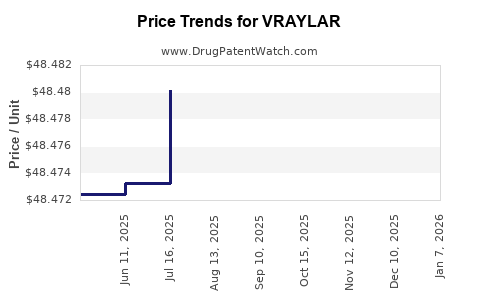
See drug price trends for VRAYLAR.
The generic ingredient in VRAYLAR is cariprazine hydrochloride. Additional details are available on the cariprazine hydrochloride profile page.
When can SIGNIFOR LAR (pasireotide pamoate) generic drug versions launch in New Zealand?
Generic name: pasireotide pamoate
DrugPatentWatch® Estimated Key Patent Expiration / Generic Entry Date: May 24, 2027
Generic Entry Controlled by: New Zealand Patent 580,589
Patent Title: AN EXTENDED-RELEASE COMPOSITION COMPRISING A SOMATOSTATIN DERIVATIVE IN MICROPARTICLES
SIGNIFOR LAR is a drug marketed by Recordati Rare. There are three patents protecting this drug.
See drug price trends for SIGNIFOR LAR.
The generic ingredient in SIGNIFOR LAR is pasireotide pamoate. Additional details are available on the pasireotide pamoate profile page.
When can TRELSTAR (triptorelin pamoate) generic drug versions launch in New Zealand?
Generic name: triptorelin pamoate
DrugPatentWatch® Estimated Key Patent Expiration / Generic Entry Date: June 06, 2027
Generic Entry Controlled by: New Zealand Patent 582,423
TRELSTAR is a drug marketed by Verity. There is one patent protecting this drug.
See drug price trends for TRELSTAR.
The generic ingredient in TRELSTAR is triptorelin pamoate. Additional details are available on the triptorelin pamoate profile page.
When can TRIPTODUR KIT (triptorelin pamoate) generic drug versions launch in New Zealand?
Generic name: triptorelin pamoate
DrugPatentWatch® Estimated Key Patent Expiration / Generic Entry Date: June 06, 2027
Generic Entry Controlled by: New Zealand Patent 582,423
TRIPTODUR KIT is a drug marketed by Azurity. There is one patent protecting this drug.
The generic ingredient in TRIPTODUR KIT is triptorelin pamoate. Additional details are available on the triptorelin pamoate profile page.
When can JAKAFI (ruxolitinib phosphate) generic drug versions launch in New Zealand?
Generic name: ruxolitinib phosphate
DrugPatentWatch® Estimated Key Patent Expiration / Generic Entry Date: June 13, 2027
Generic Entry Controlled by: New Zealand Patent 581,803
JAKAFI is a drug marketed by Incyte Corp. There are nineteen patents protecting this drug and one Paragraph IV challenge. There has been litigation on patents covering JAKAFI
See drug price trends for JAKAFI.
The generic ingredient in JAKAFI is ruxolitinib phosphate. Additional details are available on the ruxolitinib phosphate profile page.
When can KYBELLA (deoxycholic acid) generic drug versions launch in New Zealand?
Generic name: deoxycholic acid
DrugPatentWatch® Estimated Key Patent Expiration / Generic Entry Date: June 19, 2027
Generic Entry Controlled by: New Zealand Patent 581,081
Patent Title: SYNTHETIC DEOXYCHOLIC ACID (DCA) OR AN ESTER, HYDROXAMALE, OR HYDROXYAMIDE THEREOF
KYBELLA is a drug marketed by Abbvie. There are fourteen patents protecting this drug and one Paragraph IV challenge. There has been litigation on patents covering KYBELLA
The generic ingredient in KYBELLA is deoxycholic acid. Additional details are available on the deoxycholic acid profile page.
When can CARDAMYST (etripamil) generic drug versions launch in New Zealand?
Generic name: etripamil
DrugPatentWatch® Estimated Key Patent Expiration / Generic Entry Date: June 20, 2027
Generic Entry Controlled by: New Zealand Patent 582,033
Patent Title: SHORT ACTING PHENYLALKYLAMINE CALCIUM CHANNEL BLOCKERS AND USES THEREOF

See drug price trends for CARDAMYST.
The generic ingredient in CARDAMYST is etripamil. Additional details are available on the etripamil profile page.
When can TWIRLA (ethinyl estradiol; levonorgestrel) generic drug versions launch in New Zealand?
Generic name: ethinyl estradiol; levonorgestrel
DrugPatentWatch® Estimated Key Patent Expiration / Generic Entry Date: July 10, 2027
Generic Entry Controlled by: New Zealand Patent 582,565
Patent Title: DERMAL DELIVERY DEVICE WITH IN SITU SEAL
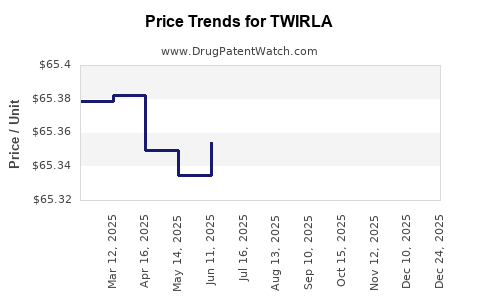
See drug price trends for TWIRLA.
The generic ingredient in TWIRLA is ethinyl estradiol; levonorgestrel. Additional details are available on the ethinyl estradiol; levonorgestrel profile page.
When can TEPMETKO (tepotinib hydrochloride) generic drug versions launch in New Zealand?
Generic name: tepotinib hydrochloride
DrugPatentWatch® Estimated Key Patent Expiration / Generic Entry Date: July 12, 2027
Generic Entry Controlled by: New Zealand Patent 583,186
Patent Title: PYRIMIDINYL-PYRIDAZINONE DERIVATIVES
TEPMETKO is a drug marketed by Emd Serono Inc. There are eight patents protecting this drug. There has been litigation on patents covering TEPMETKO
See drug price trends for TEPMETKO.
The generic ingredient in TEPMETKO is tepotinib hydrochloride. Additional details are available on the tepotinib hydrochloride profile page.
When can TEPMETKO (tepotinib hydrochloride) generic drug versions launch in New Zealand?
Generic name: tepotinib hydrochloride
DrugPatentWatch® Estimated Key Patent Expiration / Generic Entry Date: July 12, 2027
Generic Entry Controlled by: New Zealand Patent 583,187
Patent Title: PYRIDAZINONE DERIVATIVES
TEPMETKO is a drug marketed by Emd Serono Inc. There are eight patents protecting this drug. There has been litigation on patents covering TEPMETKO
See drug price trends for TEPMETKO.
The generic ingredient in TEPMETKO is tepotinib hydrochloride. Additional details are available on the tepotinib hydrochloride profile page.
When can KAZANO (alogliptin benzoate; metformin hydrochloride) generic drug versions launch in New Zealand?
Generic name: alogliptin benzoate; metformin hydrochloride
DrugPatentWatch® Estimated Key Patent Expiration / Generic Entry Date: July 19, 2027
Generic Entry Controlled by: New Zealand Patent 583,346
Patent Title: SOLID PREPARATION COMPRISING ALOGLIPTIN AND METFORMIN HYDROCHLORIDE

See drug price trends for KAZANO.
The generic ingredient in KAZANO is alogliptin benzoate; metformin hydrochloride. Additional details are available on the alogliptin benzoate; metformin hydrochloride profile page.
When can WINLEVI (clascoterone) generic drug versions launch in New Zealand?
Generic name: clascoterone
DrugPatentWatch® Estimated Key Patent Expiration / Generic Entry Date: August 03, 2027
Generic Entry Controlled by: New Zealand Patent 599,437
Patent Title: Enzymatic process for obtaining 17 alpha-monoesters of cortexolone and/or its 9,11-dehydroderivatives.
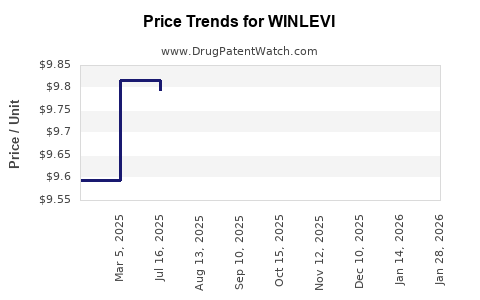
See drug price trends for WINLEVI.
The generic ingredient in WINLEVI is clascoterone. Additional details are available on the clascoterone profile page.
When can WINLEVI (clascoterone) generic drug versions launch in New Zealand?
Generic name: clascoterone
DrugPatentWatch® Estimated Key Patent Expiration / Generic Entry Date: August 03, 2027
Generic Entry Controlled by: New Zealand Patent 600,767
Patent Title: ENZYMATIC PROCESS FOR OBTAINING 17 ALPHA-MONOESTERS OF CORTEXOLONE AND/OR ITS 9,11-DEHYDRODERIVATIVES
See drug price trends for WINLEVI.
The generic ingredient in WINLEVI is clascoterone. Additional details are available on the clascoterone profile page.
When can WINLEVI (clascoterone) generic drug versions launch in New Zealand?
Generic name: clascoterone
DrugPatentWatch® Estimated Key Patent Expiration / Generic Entry Date: August 03, 2027
Generic Entry Controlled by: New Zealand Patent 615,953
Patent Title: Enzymatic process for obtaining 17 alpha-monoesters of cortexolone and/or its 9,11-dehydroderivatives
See drug price trends for WINLEVI.
The generic ingredient in WINLEVI is clascoterone. Additional details are available on the clascoterone profile page.
When can INTRAROSA (prasterone) generic drug versions launch in New Zealand?
Generic name: prasterone
DrugPatentWatch® Estimated Key Patent Expiration / Generic Entry Date: August 10, 2027
Generic Entry Controlled by: New Zealand Patent 583,147
Patent Title: DEHYDROEPIANDROSTERONE COMPOSITIONS FOR TREATING MENOPAUSE
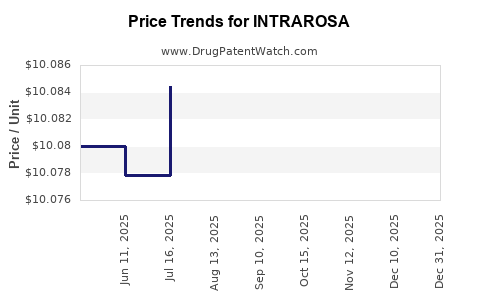
See drug price trends for INTRAROSA.
The generic ingredient in INTRAROSA is prasterone. Additional details are available on the prasterone profile page.
When can INTRAROSA (prasterone) generic drug versions launch in New Zealand?
Generic name: prasterone
DrugPatentWatch® Estimated Key Patent Expiration / Generic Entry Date: August 10, 2027
Generic Entry Controlled by: New Zealand Patent 598,270
Patent Title: DHEA COMPOSITIONS FOR TREATING MENOPAUSE
See drug price trends for INTRAROSA.
The generic ingredient in INTRAROSA is prasterone. Additional details are available on the prasterone profile page.
When can LOCAMETZ (gallium ga-68 gozetotide) generic drug versions launch in New Zealand?
Generic name: gallium ga-68 gozetotide
DrugPatentWatch® Estimated Key Patent Expiration / Generic Entry Date: August 17, 2027
Generic Entry Controlled by: New Zealand Patent 583,931
LOCAMETZ is a drug marketed by Novartis. There are two patents protecting this drug.
See drug price trends for LOCAMETZ.
The generic ingredient in LOCAMETZ is gallium ga-68 gozetotide. Additional details are available on the gallium ga-68 gozetotide profile page.
When can LOCAMETZ (gallium ga-68 gozetotide) generic drug versions launch in New Zealand?
Generic name: gallium ga-68 gozetotide
DrugPatentWatch® Estimated Key Patent Expiration / Generic Entry Date: August 17, 2027
Generic Entry Controlled by: New Zealand Patent 600,085
LOCAMETZ is a drug marketed by Novartis. There are two patents protecting this drug.
See drug price trends for LOCAMETZ.
The generic ingredient in LOCAMETZ is gallium ga-68 gozetotide. Additional details are available on the gallium ga-68 gozetotide profile page.
When can BRILINTA (ticagrelor) generic drug versions launch in New Zealand?
Generic name: ticagrelor
DrugPatentWatch® Estimated Key Patent Expiration / Generic Entry Date: August 20, 2027
Generic Entry Controlled by: New Zealand Patent 574,514
Patent Title: Compositions, suitable for oral administration, comprising a triazolo [4, 5-d]pyrimidin derivate
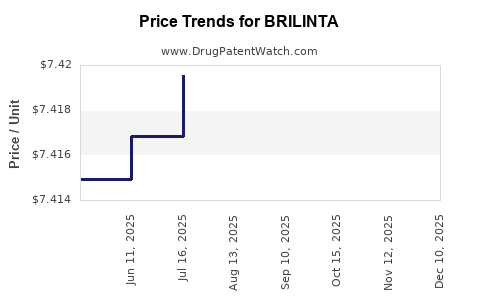
See drug price trends for BRILINTA.
The generic ingredient in BRILINTA is ticagrelor. Additional details are available on the ticagrelor profile page.
When can VIZAMYL (flutemetamol f-18) generic drug versions launch in New Zealand?
Generic name: flutemetamol f-18
DrugPatentWatch® Estimated Key Patent Expiration / Generic Entry Date: August 30, 2027
Generic Entry Controlled by: New Zealand Patent 583,616
VIZAMYL is a drug marketed by Ge Healthcare. There is one patent protecting this drug.
See drug price trends for VIZAMYL.
The generic ingredient in VIZAMYL is flutemetamol f-18. Additional details are available on the flutemetamol f-18 profile page.
When can PREPOPIK (citric acid; magnesium oxide; sodium picosulfate) generic drug versions launch in New Zealand?
Generic name: citric acid; magnesium oxide; sodium picosulfate
DrugPatentWatch® Estimated Key Patent Expiration / Generic Entry Date: October 12, 2027
Generic Entry Controlled by: New Zealand Patent 583,899
Patent Title: PROCESS FOR THE MANUFACURE OF A PHARMACEUTICAL PRODUCT COMPRISING CITRIC ACID, MAGNESIUM OXIDE, POTASSIUM BICARBONATE AND SODIUM PICOSULFATE, PHARMACEUTICAL COMPOSITION COMPRISING GRANULES OBTAINED BY SUCH PROCESS AND INTERMEDIATE
PREPOPIK is a drug marketed by Ferring Pharms Inc. There are two patents protecting this drug and one Paragraph IV challenge. One tentatively approved generic is ready to enter the market. There has been litigation on patents covering PREPOPIK
See drug price trends for PREPOPIK.
The generic ingredient in PREPOPIK is citric acid; magnesium oxide; sodium picosulfate. Additional details are available on the citric acid; magnesium oxide; sodium picosulfate profile page.
When can VELPHORO (sucroferric oxyhydroxide) generic drug versions launch in New Zealand?
Generic name: sucroferric oxyhydroxide
DrugPatentWatch® Estimated Key Patent Expiration / Generic Entry Date: November 16, 2027
Generic Entry Controlled by: New Zealand Patent 585,435
Patent Title: PHARMACEUTICAL COMPOSITIONS COMPRISING IRON OXY-HYDROXIDE
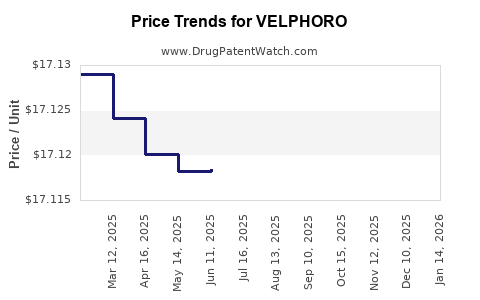
See drug price trends for VELPHORO.
The generic ingredient in VELPHORO is sucroferric oxyhydroxide. Additional details are available on the sucroferric oxyhydroxide profile page.
When can DUZALLO (allopurinol; lesinurad) generic drug versions launch in New Zealand?
Generic name: allopurinol; lesinurad
DrugPatentWatch® Estimated Key Patent Expiration / Generic Entry Date: November 27, 2027
Generic Entry Controlled by: New Zealand Patent 601,786
Patent Title: Novel compounds and compositions and methods of use

See drug price trends for DUZALLO.
The generic ingredient in DUZALLO is allopurinol; lesinurad. Additional details are available on the allopurinol; lesinurad profile page.
When can ZURAMPIC (lesinurad) generic drug versions launch in New Zealand?
Generic name: lesinurad
DrugPatentWatch® Estimated Key Patent Expiration / Generic Entry Date: November 27, 2027
Generic Entry Controlled by: New Zealand Patent 601,786
Patent Title: Novel compounds and compositions and methods of use
ZURAMPIC is a drug marketed by Ironwood Pharms Inc. There are eight patents protecting this drug. There has been litigation on patents covering ZURAMPIC
See drug price trends for ZURAMPIC.
The generic ingredient in ZURAMPIC is lesinurad. Additional details are available on the lesinurad profile page.
New Zealand Branded vs Generic Drug Markets Assessment: Regulatory Opportunities, Barriers, Pricing, and Patent Risk
More… ↓
DrugPatentWatch cited by CNN, NEJM, Nature Journals, and more …

Make Better Decisions: Try a trial or see plans & pricing
Drugs may be covered by multiple patents or regulatory protections. All trademarks and applicant names are the property of their respective owners or licensors. Although great care is taken in the proper and correct provision of this service, thinkBiotech LLC does not accept any responsibility for possible consequences of errors or omissions in the provided data. The data presented herein is for information purposes only. There is no warranty that the data contained herein is error free. We do not provide individual investment advice. This service is not registered with any financial regulatory agency. The information we publish is educational only and based on our opinions plus our models. By using DrugPatentWatch you acknowledge that we do not provide personalized recommendations or advice. thinkBiotech performs no independent verification of facts as provided by public sources nor are attempts made to provide legal or investing advice. Any reliance on data provided herein is done solely at the discretion of the user. Users of this service are advised to seek professional advice and independent confirmation before considering acting on any of the provided information. thinkBiotech LLC reserves the right to amend, extend or withdraw any part or all of the offered service without notice.
ISSN: 2162-2639

Privacy and Cookies
Terms & Conditions
Site Map
DrugPatentWatch Alternatives
LOE / Major Patent Expirations 2026 - 2027
NCE-1 Patent Challenge Dates 2026 - 2027
Friedman, Yali. "DrugPatentWatch" DrugPatentWatch, thinkBiotech, 2026, www.DrugPatentWatch.com.
See Primary Research Papers Citing DrugPatentWatch