Expiring Drug Patents Cheat Sheet
We analyse the patents covering drugs in 134 countries and quickly give you the likely loss-of-exclusivity/generic entry date
Peru: These 13 Drugs Face Patent Expirations and Generic Entry From 2026 - 2027
The content of this page is licensed under a Creative Commons Attribution 4.0 International License.

Generic Entry Dates in Other Countries
Friedman, Yali, "Peru: These 13 Drugs Face Patent Expirations and Generic Entry From 2026 - 2027" DrugPatentWatch.com thinkBiotech, 2026 www.drugpatentwatch.com/p/expiring-drug-patents-generic-entry/.
Media collateral
These estimated drug patent expiration dates and generic entry opportunity dates are calculated from analysis of known patents covering drugs. Many factors can influence early or late generic entry. This information is provided as a rough estimate of generic entry potential and should not be used as an independent source. The methodology is described in this blog post.
When can BEVYXXA (betrixaban) generic drug versions launch in Peru?
Generic name: betrixaban
DrugPatentWatch® Estimated Key Patent Expiration / Generic Entry Date: November 07, 2026
Generic Entry Controlled by: Peru Patent 20,070,717
Patent Title: SAL DE MALEATO Y POLIMORFO DE [2-({4-[(DIMETILAMINO)IMINOMETIL]FENIL}CARBONILAMINO)-5-METOXIFENIL]-N-(5-CLORO-(2-PIRIDIL))CARBOXAMIDA
BEVYXXA is a drug marketed by Portola Pharms Inc. There are five patents protecting this drug. There has been litigation on patents covering BEVYXXA
See drug price trends for BEVYXXA.
The generic ingredient in BEVYXXA is betrixaban. Additional details are available on the betrixaban profile page.
When can SIRTURO (bedaquiline fumarate) generic drug versions launch in Peru?
Generic name: bedaquiline fumarate
DrugPatentWatch® Estimated Key Patent Expiration / Generic Entry Date: December 05, 2026
Generic Entry Controlled by: Peru Patent 20,081,350
Patent Title: SAL FUMARATO DE (ALFAS S, BETA R)-6-BROMO-ALFA-[2(DIMETILAMINO)ETIL]-2-METOXI-ALFA-1-NAFTALENIL-BETA-FENIL-3-QUINOLINAETANOL
SIRTURO is a drug marketed by Janssen Therap. There are two patents protecting this drug.
See drug price trends for SIRTURO.
The generic ingredient in SIRTURO is bedaquiline fumarate. Additional details are available on the bedaquiline fumarate profile page.
When can ZYKADIA (ceritinib) generic drug versions launch in Peru?
Generic name: ceritinib
DrugPatentWatch® Estimated Key Patent Expiration / Generic Entry Date: December 08, 2026
Generic Entry Controlled by: Peru Patent 20,081,447
Patent Title: COMPUESTOS Y COMPOSICIONES COMO INHIBIDORES DE LA PROTEINA CINASA
ZYKADIA is a drug marketed by Novartis. There are eight patents protecting this drug.
See drug price trends for ZYKADIA.
The generic ingredient in ZYKADIA is ceritinib. Additional details are available on the ceritinib profile page.
When can ZYKADIA (ceritinib) generic drug versions launch in Peru?
Generic name: ceritinib
DrugPatentWatch® Estimated Key Patent Expiration / Generic Entry Date: December 08, 2026
Generic Entry Controlled by: Peru Patent 20,120,814
Patent Title: COMPUESTOS Y COMPOSICIONES COMO INHIBIDORES DE LA PROTEINA CINASA
ZYKADIA is a drug marketed by Novartis. There are eight patents protecting this drug.
See drug price trends for ZYKADIA.
The generic ingredient in ZYKADIA is ceritinib. Additional details are available on the ceritinib profile page.
When can NESINA (alogliptin benzoate) generic drug versions launch in Peru?
Generic name: alogliptin benzoate
DrugPatentWatch® Estimated Key Patent Expiration / Generic Entry Date: February 01, 2027
Generic Entry Controlled by: Peru Patent 20,081,734
Patent Title: COMPRIMIDO QUE COMPRENDE 2-[[6-[(3R)-3-AMINO-1-PIPERIDINIL]-3,4-DIHIDRO-3-METIL-2,4-DIOXO-1(2H)-PIRIMIDINIL]METIL]-BENZONITRILO Y CELULOSA MICROCRISTALINA
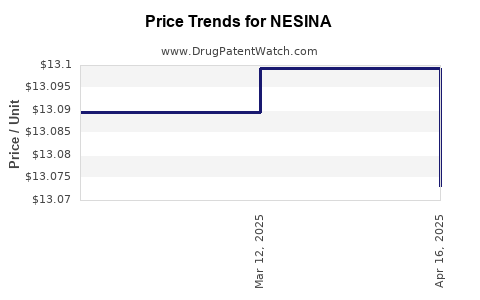
See drug price trends for NESINA.
The generic ingredient in NESINA is alogliptin benzoate. Additional details are available on the alogliptin benzoate profile page.
When can OSENI (alogliptin benzoate; pioglitazone hydrochloride) generic drug versions launch in Peru?
Generic name: alogliptin benzoate; pioglitazone hydrochloride
DrugPatentWatch® Estimated Key Patent Expiration / Generic Entry Date: February 01, 2027
Generic Entry Controlled by: Peru Patent 20,081,663

See drug price trends for OSENI.
The generic ingredient in OSENI is alogliptin benzoate; pioglitazone hydrochloride. Additional details are available on the alogliptin benzoate; pioglitazone hydrochloride profile page.
When can VARUBI (rolapitant hydrochloride) generic drug versions launch in Peru?
Generic name: rolapitant hydrochloride
DrugPatentWatch® Estimated Key Patent Expiration / Generic Entry Date: March 22, 2027
Generic Entry Controlled by: Peru Patent 20,081,891
Patent Title: FORMULACIONES DE COMPRIMIDOS QUE CONTIENEN SALES DE 8-[{1-(3,5-BIS-(TRIFLUOROMETIL)FENIL)-ETOXI}-METIL]-8-FENIL-1,7-DIAZA-SPIRO[4.5]DECAN-2-ONA Y COMPRIMIDOS ELABORADOS A PARTIR DE ESTAS
VARUBI is a drug marketed by Tersera. There are eight patents protecting this drug.
The generic ingredient in VARUBI is rolapitant hydrochloride. Additional details are available on the rolapitant hydrochloride profile page.
When can EDARBI (azilsartan kamedoxomil) generic drug versions launch in Peru?
Generic name: azilsartan kamedoxomil
DrugPatentWatch® Estimated Key Patent Expiration / Generic Entry Date: March 28, 2027
Generic Entry Controlled by: Peru Patent 20,130,210
Patent Title: COMPOSICION FARMACEUTICA SOLIDA QUE COMPRENDE UN DERIVADO DE BENCIMIDAZOL Y UN AGENTE DE CONTROL DE PH
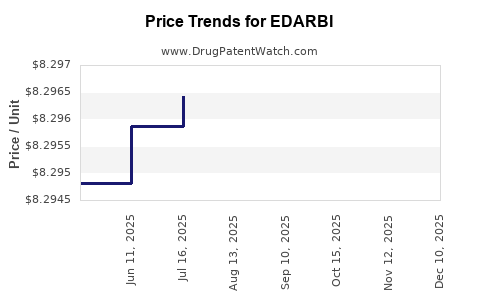
See drug price trends for EDARBI.
The generic ingredient in EDARBI is azilsartan kamedoxomil. Additional details are available on the azilsartan kamedoxomil profile page.
When can PROMACTA (eltrombopag olamine) generic drug versions launch in Peru?
Generic name: eltrombopag olamine
DrugPatentWatch® Estimated Key Patent Expiration / Generic Entry Date: May 03, 2027
Generic Entry Controlled by: Peru Patent 20,080,773
PROMACTA is a drug marketed by Novartis. There is one patent protecting this drug and two Paragraph IV challenges. There has been litigation on patents covering PROMACTA
See drug price trends for PROMACTA.
The generic ingredient in PROMACTA is eltrombopag olamine. Additional details are available on the eltrombopag olamine profile page.
When can PROMACTA (eltrombopag olamine) generic drug versions launch in Peru?
Generic name: eltrombopag olamine
DrugPatentWatch® Estimated Key Patent Expiration / Generic Entry Date: May 03, 2027
Generic Entry Controlled by: Peru Patent 20,121,407
Patent Title: COMPOSICION FARMACEUTICA QUE COMPRENDE BIS-(MONOETANOLAMINA) DE ACIDO 3'-[(2Z)-[1-(3, 4-DIMETILFENIL)-1, 5-DIHIDRO-3-METIL-5-OXO-4H-PIRAZOL-4-ILIDENO] HIDRAZINO]-2'-HIDROXI-[1, 1'-BIFENIL]-3-CARBOXILICO
PROMACTA is a drug marketed by Novartis. There is one patent protecting this drug and two Paragraph IV challenges. There has been litigation on patents covering PROMACTA
See drug price trends for PROMACTA.
The generic ingredient in PROMACTA is eltrombopag olamine. Additional details are available on the eltrombopag olamine profile page.
When can PROMACTA (eltrombopag olamine) generic drug versions launch in Peru?
Generic name: eltrombopag olamine
DrugPatentWatch® Estimated Key Patent Expiration / Generic Entry Date: May 03, 2027
Generic Entry Controlled by: Peru Patent 20,151,953
Patent Title: COMPOSICION FARMACEUTICA QUE COMPRENDE BIS-(MONOETANOLAMINA) DE ACIDO 3'-[(2Z)-[1-(3, 4-DIMETILFENIL)-1, 5-DIHIDRO-3-METIL-5-OXO-4H-PIRAZOL-4-ILIDENO] HIDRAZINO]-2'-HIDROXI-[1, 1'-BIFENIL]-3-CARBOXILICO
PROMACTA is a drug marketed by Novartis. There is one patent protecting this drug and two Paragraph IV challenges. There has been litigation on patents covering PROMACTA
See drug price trends for PROMACTA.
The generic ingredient in PROMACTA is eltrombopag olamine. Additional details are available on the eltrombopag olamine profile page.
When can SIGNIFOR LAR (pasireotide pamoate) generic drug versions launch in Peru?
Generic name: pasireotide pamoate
DrugPatentWatch® Estimated Key Patent Expiration / Generic Entry Date: May 24, 2027
Generic Entry Controlled by: Peru Patent 20,090,387
Patent Title: FORMULACION DE PASIREOTIDA
SIGNIFOR LAR is a drug marketed by Recordati Rare. There are three patents protecting this drug.
See drug price trends for SIGNIFOR LAR.
The generic ingredient in SIGNIFOR LAR is pasireotide pamoate. Additional details are available on the pasireotide pamoate profile page.
When can TEPMETKO (tepotinib hydrochloride) generic drug versions launch in Peru?
Generic name: tepotinib hydrochloride
DrugPatentWatch® Estimated Key Patent Expiration / Generic Entry Date: July 12, 2027
Generic Entry Controlled by: Peru Patent 20,090,287
Patent Title: DERIVADOS DE PIRIDAZINONA
TEPMETKO is a drug marketed by Emd Serono Inc. There are eight patents protecting this drug. There has been litigation on patents covering TEPMETKO
See drug price trends for TEPMETKO.
The generic ingredient in TEPMETKO is tepotinib hydrochloride. Additional details are available on the tepotinib hydrochloride profile page.
When can KAZANO (alogliptin benzoate; metformin hydrochloride) generic drug versions launch in Peru?
Generic name: alogliptin benzoate; metformin hydrochloride
DrugPatentWatch® Estimated Key Patent Expiration / Generic Entry Date: July 19, 2027
Generic Entry Controlled by: Peru Patent 20,090,882
Patent Title: PREPARACION SOLIDA QUE COMPRENDE ALOGLIPTINA Y CLORHIDRATO DE METFORMINA

See drug price trends for KAZANO.
The generic ingredient in KAZANO is alogliptin benzoate; metformin hydrochloride. Additional details are available on the alogliptin benzoate; metformin hydrochloride profile page.
When can KAZANO (alogliptin benzoate; metformin hydrochloride) generic drug versions launch in Peru?
Generic name: alogliptin benzoate; metformin hydrochloride
DrugPatentWatch® Estimated Key Patent Expiration / Generic Entry Date: July 19, 2027
Generic Entry Controlled by: Peru Patent 20,140,923
Patent Title: PREPARACION SOLIDA QUE COMPRENDE ALOGLIPTINA Y CLORHIDRATO DE METFORMINA
See drug price trends for KAZANO.
The generic ingredient in KAZANO is alogliptin benzoate; metformin hydrochloride. Additional details are available on the alogliptin benzoate; metformin hydrochloride profile page.
When can DAKLINZA (daclatasvir dihydrochloride) generic drug versions launch in Peru?
Generic name: daclatasvir dihydrochloride
DrugPatentWatch® Estimated Key Patent Expiration / Generic Entry Date: August 09, 2027
Generic Entry Controlled by: Peru Patent 20,080,542
Patent Title: INHIBIDORES DEL VIRUS DE LA HEPATITIS C

See drug price trends for DAKLINZA.
The generic ingredient in DAKLINZA is daclatasvir dihydrochloride. Additional details are available on the daclatasvir dihydrochloride profile page.
When can INTRAROSA (prasterone) generic drug versions launch in Peru?
Generic name: prasterone
DrugPatentWatch® Estimated Key Patent Expiration / Generic Entry Date: August 10, 2027
Generic Entry Controlled by: Peru Patent 20,090,945
Patent Title: COMPOSICIONES FARMACEUTICAS QUE COMPRENDEN UN PRECURSOR DE ESTEROIDES SEXUALES
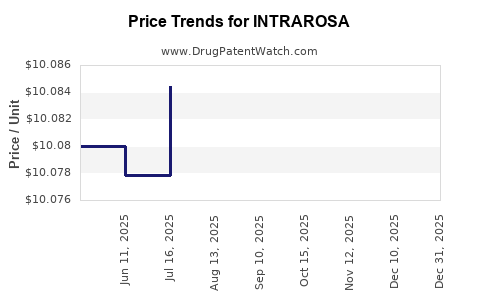
See drug price trends for INTRAROSA.
The generic ingredient in INTRAROSA is prasterone. Additional details are available on the prasterone profile page.
When can INTRAROSA (prasterone) generic drug versions launch in Peru?
Generic name: prasterone
DrugPatentWatch® Estimated Key Patent Expiration / Generic Entry Date: August 10, 2027
Generic Entry Controlled by: Peru Patent 20,140,925
Patent Title: COMPOSICION FARMACEUTICA QUE COMPRENDE UN PRECURSOR DE ESTEROIDES SEXUALES
See drug price trends for INTRAROSA.
The generic ingredient in INTRAROSA is prasterone. Additional details are available on the prasterone profile page.
More… ↓
DrugPatentWatch cited by CNN, NEJM, Nature Journals, and more …

Make Better Decisions: Try a trial or see plans & pricing
Drugs may be covered by multiple patents or regulatory protections. All trademarks and applicant names are the property of their respective owners or licensors. Although great care is taken in the proper and correct provision of this service, thinkBiotech LLC does not accept any responsibility for possible consequences of errors or omissions in the provided data. The data presented herein is for information purposes only. There is no warranty that the data contained herein is error free. We do not provide individual investment advice. This service is not registered with any financial regulatory agency. The information we publish is educational only and based on our opinions plus our models. By using DrugPatentWatch you acknowledge that we do not provide personalized recommendations or advice. thinkBiotech performs no independent verification of facts as provided by public sources nor are attempts made to provide legal or investing advice. Any reliance on data provided herein is done solely at the discretion of the user. Users of this service are advised to seek professional advice and independent confirmation before considering acting on any of the provided information. thinkBiotech LLC reserves the right to amend, extend or withdraw any part or all of the offered service without notice.
ISSN: 2162-2639

Privacy and Cookies
Terms & Conditions
Site Map
DrugPatentWatch Alternatives
LOE / Major Patent Expirations 2026 - 2027
NCE-1 Patent Challenge Dates 2026 - 2027
Friedman, Yali. "DrugPatentWatch" DrugPatentWatch, thinkBiotech, 2026, www.DrugPatentWatch.com.
See Primary Research Papers Citing DrugPatentWatch