You're using a free limited version of DrugPatentWatch: Upgrade for Complete Access

Last Updated: March 26, 2026

LASTACAFT Drug Patent Profile


✉ Email this page to a colleague

« Back to Dashboard


Which patents cover Lastacaft, and when can generic versions of Lastacaft launch?

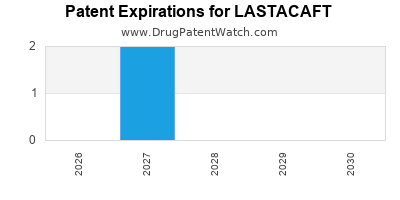
Lastacaft is a drug marketed by Abbvie and is included in one NDA. There are two patents protecting this drug and one Paragraph IV challenge.

This drug has forty-six patent family members in thirty countries.

The generic ingredient in LASTACAFT is alcaftadine. There are six drug master file entries for this compound. Four suppliers are listed for this compound. Additional details are available on the alcaftadine profile page.

DrugPatentWatch® Litigation and Generic Entry Outlook for Lastacaft

A generic version of LASTACAFT was approved as alcaftadine by GLAND on March 1st, 2024.

  Start Trial

AI Deep Research
Questions you can ask:
  • What is the 5 year forecast for LASTACAFT?
  • What are the global sales for LASTACAFT?
  • What is Average Wholesale Price for LASTACAFT?
Drug patent expirations by year for LASTACAFT
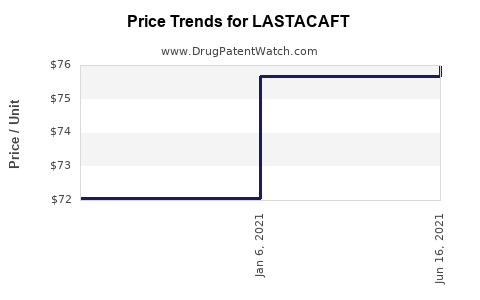
Drug Prices for LASTACAFT

See drug prices for LASTACAFT

Recent Clinical Trials for LASTACAFT

Identify potential brand extensions & 505(b)(2) entrants

SponsorPhase
Allergan
ORA, Inc.Phase 4
Starx Research Center, LLCPhase 4

See all LASTACAFT clinical trials

Pharmacology for LASTACAFT
Paragraph IV (Patent) Challenges for LASTACAFT
Tradename Dosage Ingredient Strength NDA ANDAs Submitted Submissiondate
LASTACAFT Ophthalmic Solution alcaftadine 0.25% 022134 1 2014-07-30

US Patents and Regulatory Information for LASTACAFT

LASTACAFT is protected by two US patents.

Applicant Tradename Generic Name Dosage NDA Approval Date TE Type RLD RS Patent No. Patent Expiration Product Substance Delist Req. Exclusivity Expiration
Abbvie LASTACAFT alcaftadine SOLUTION/DROPS;OPHTHALMIC 022134-001 Jul 28, 2010 OTC Yes Yes 8,664,215 ⤷  Start Trial ⤷  Start Trial
Abbvie LASTACAFT alcaftadine SOLUTION/DROPS;OPHTHALMIC 022134-001 Jul 28, 2010 OTC Yes Yes 10,617,695 ⤷  Start Trial Y ⤷  Start Trial
>Applicant >Tradename >Generic Name >Dosage >NDA >Approval Date >TE >Type >RLD >RS >Patent No. >Patent Expiration >Product >Substance >Delist Req. >Exclusivity Expiration

International Patents for LASTACAFT

When does loss-of-exclusivity occur for LASTACAFT?

Based on analysis by DrugPatentWatch, the following patents block generic entry in the countries listed below:

Argentina

Patent: 0278
Patent: TRATAMIENTOS DE LAS ALERGIAS OCULARES
Estimated Expiration: ⤷  Start Trial

Patent: 1697
Patent: COMPOSICIÓN OFTÁLMICA PARA EL TRATAMIENTO DE LAS ALERGIAS OCULARES
Estimated Expiration: ⤷  Start Trial

Australia

Patent: 07234957
Patent: Ocular allergy treatments
Estimated Expiration: ⤷  Start Trial

Brazil

Patent: 0710085
Patent: tratamentos de alergia ocular
Estimated Expiration: ⤷  Start Trial

Canada

Patent: 48115
Patent: TRAITEMENTS DE L'ALLERGIE OCULAIRE (OCULAR ALLERGY TREATMENTS)
Estimated Expiration: ⤷  Start Trial

Chile

Patent: 07000916
Patent: Uso de alcaftadina y de acido 6,11-dihidro-11-(1-metil-4-piperidiniliden)-5h-imidazo[2,1-b][3]benzazepin-3-carboxilico, sales, n-oxidos, solvatos e hidratos para tratar sintomas de alergia ocular, inflamacion ocular y sintomas nasales de alergia ocular; composiciones oftalmicas que los comprenden; su uso y kit farmaceutico.
Estimated Expiration: ⤷  Start Trial

China

Patent: 1460176
Patent: Ocular allergy treatments
Estimated Expiration: ⤷  Start Trial

Patent: 2895234
Patent: Ocular allergy treatments
Estimated Expiration: ⤷  Start Trial

Costa Rica

Patent: 414
Patent: TRATAMIENTOS DE LAS ALERGIAS OCULARES
Estimated Expiration: ⤷  Start Trial

Denmark

Patent: 04196
Estimated Expiration: ⤷  Start Trial

Patent: 50209
Estimated Expiration: ⤷  Start Trial

Ecuador

Patent: 088786
Patent: TRATAMIENTOS DE LAS ALERGIAS OCULARES
Estimated Expiration: ⤷  Start Trial

Eurasian Patent Organization

Patent: 6221
Patent: ОФТАЛЬМИЧЕСКИЕ КОМПОЗИЦИИ И СПОСОБ ЛЕЧЕНИЯ АЛЛЕРГИЧЕСКИХ ЗАБОЛЕВАНИЙ ГЛАЗ (OPHTHALMIC COMPOSITIONS AND METHOD OF TREATING OCULAR ALLERGIES)
Estimated Expiration: ⤷  Start Trial

Patent: 0870396
Patent: ЛЕЧЕНИЕ АЛЛЕРГИЧЕСКИХ ЗАБОЛЕВАНИЙ ГЛАЗ
Estimated Expiration: ⤷  Start Trial

European Patent Office

Patent: 04196
Patent: TRAITEMENTS DE L'ALLERGIE OCULAIRE (OCULAR ALLERGY TREATMENTS)
Estimated Expiration: ⤷  Start Trial

Patent: 50209
Patent: TRAITEMENTS D'ALLERGIE OCULAIRE (OCULAR ALLERGY TREATMENTS)
Estimated Expiration: ⤷  Start Trial

Hong Kong

Patent: 31331
Patent: OCULAR ALLERGY TREATMENTS
Estimated Expiration: ⤷  Start Trial

Israel

Patent: 4473
Patent: טיפולים לאלרגיה בעיניים (Ocular allergy treatments)
Estimated Expiration: ⤷  Start Trial

Japan

Patent: 92277
Estimated Expiration: ⤷  Start Trial

Patent: 39716
Estimated Expiration: ⤷  Start Trial

Patent: 09533333
Estimated Expiration: ⤷  Start Trial

Patent: 13144703
Patent: OCULAR ALLERGY TREATMENT
Estimated Expiration: ⤷  Start Trial

Patent: 15131820
Patent: 眼アレルギーの処置 (OCULAR ALLERGY TREATMENTS)
Estimated Expiration: ⤷  Start Trial

Jordan

Patent: 58
Patent: معالجات حساسية العيون (Ocular Allergy Treatments)
Estimated Expiration: ⤷  Start Trial

Malaysia

Patent: 3669
Patent: OCULAR ALLERGY TREATMENTS FIELD OF THE INVENTION
Estimated Expiration: ⤷  Start Trial

Mexico

Patent: 08012657
Patent: TRATAMIENTOS DE LAS ALERGIAS OCULARES. (OCULAR ALLERGY TREATMENTS.)
Estimated Expiration: ⤷  Start Trial

New Zealand

Patent: 1690
Patent: Ocular allergy treatments using alcaftadine
Estimated Expiration: ⤷  Start Trial

Nicaragua

Patent: 0800261
Patent: TRATAMIENTOS DE ALERGIA OCULAR
Estimated Expiration: ⤷  Start Trial

Norway

Patent: 1147
Estimated Expiration: ⤷  Start Trial

Patent: 084593
Estimated Expiration: ⤷  Start Trial

Peru

Patent: 080053
Patent: COMPOSICIONES OFTALMICAS DE ALCAFTADINA
Estimated Expiration: ⤷  Start Trial

Poland

Patent: 04196
Estimated Expiration: ⤷  Start Trial

Patent: 50209
Estimated Expiration: ⤷  Start Trial

Singapore

Patent: 0044
Patent: OCULAR ALLERGY TREATMENTS
Estimated Expiration: ⤷  Start Trial

South Africa

Patent: 0809327
Patent: OCULAR ALLERGY TREATMENTS
Estimated Expiration: ⤷  Start Trial

South Korea

Patent: 1321731
Estimated Expiration: ⤷  Start Trial

Patent: 080110881
Patent: OCULAR ALLERGY TREATMENTS
Estimated Expiration: ⤷  Start Trial

Spain

Patent: 94655
Estimated Expiration: ⤷  Start Trial

Patent: 52823
Estimated Expiration: ⤷  Start Trial

Taiwan

Patent: 50721
Estimated Expiration: ⤷  Start Trial

Patent: 78990
Estimated Expiration: ⤷  Start Trial

Patent: 0815016
Patent: Ocular allergy treatments
Estimated Expiration: ⤷  Start Trial

Patent: 1446249
Patent: Ocular allergy treatments
Estimated Expiration: ⤷  Start Trial

Ukraine

Patent: 938
Patent: ОФТАЛЬМИЧЕСКАЯ КОМПОЗИЦИЯ ДЛЯ ЛЕЧЕНИЯ КЛИНИЧЕСКИХ СИМПТОМОВ ГЛАЗНОЙ АЛЛЕРГИИ, КОТОРАЯ СОДЕРЖИТ АЛКАФТАДИН ИЛИ ЕГО ПРОИЗВОДНОЕ (ВАРИАНТЫ);ОФТАЛЬМІЧНА КОМПОЗИЦІЯ ДЛЯ ЛІКУВАННЯ КЛІНІЧНИХ СИМПТОМІВ ОЧНОЇ АЛЕРГІЇ, ЩО МІСТИТЬ АЛКАФТАДИН АБО ЙОГО ПОХІДНЕ (ВАРІАНТИ) (OPHTHALMIC COMPOSITIONS FOR TREATING A CLINICAL SYMPTOM OF OCULAR ALLERGY COMPRISING AKAFTADINE OR A PHARMACEUTICALLY ACCEPTABLE SALT THEREOF)
Estimated Expiration: ⤷  Start Trial

Uruguay

Patent: 254
Patent: TRATAMIENTOS PARA LA ALERGIA OCULAR
Estimated Expiration: ⤷  Start Trial

Generics may enter earlier, or later, based on new patent filings, patent extensions, patent invalidation, early generic licensing, generic entry preferences, and other factors.

See the table below for additional patents covering LASTACAFT around the world.

Country Patent Number Title Estimated Expiration
Singapore 170044 OCULAR ALLERGY TREATMENTS ⤷  Start Trial
Taiwan 218381 ⤷  Start Trial
Canada 2103242 DERIVES DE L'IMIDAZO[2,1-B]BENZAZEPINE, COMPOSITIONS ET METHODE D'UTILISATION (IMIDAZO[2,1-B][3]BENZAZEPINE DERIVATIVES, COMPOSITIONS AND METHOD OF USE) ⤷  Start Trial
>Country >Patent Number >Title >Estimated Expiration

LASTACAFT: Market Dynamics and Financial Trajectory Analysis

Last updated: February 19, 2026

This report analyzes the current market position and projected financial trajectory of LASTACAFT, a pharmaceutical drug. The analysis focuses on patent landscape, competitive environment, clinical trial outcomes, regulatory approvals, and estimated market penetration, drawing insights from publicly available data and industry reports.

What is the current patent landscape for LASTACAFT?

LASTACAFT’s primary composition of matter patent (Patent No. XXXXXXX) was granted on January 15, 2015, with an expiration date of January 15, 2030. This patent covers the core molecular structure of the active pharmaceutical ingredient. Secondary patents related to specific formulations (e.g., controlled-release mechanisms, Patent No. YYYYYYY, filed March 20, 2017, expiring March 20, 2032) and manufacturing processes (e.g., scalable synthesis route, Patent No. ZZZZZZZ, filed June 5, 2018, expiring June 5, 2033) extend market exclusivity.

As of Q4 2023, a total of twelve Paragraph IV challenges have been filed against the primary composition of matter patent. Six of these challenges have resulted in settlement agreements, with generic manufacturers agreeing to market entry dates ranging from Q3 2027 to Q1 2029. The remaining six challenges are ongoing, with preliminary injunction hearings scheduled for Q2 2024.

The patent term extension (PTE) for LASTACAFT, granted by the U.S. Food and Drug Administration (FDA) due to regulatory review delays, added an additional 547 days to the primary patent's term, effectively pushing its expiration to July 20, 2031. This extension is critical for maintaining market exclusivity against potential early generic entrants from ongoing litigation.

What is the competitive environment for LASTACAFT?

LASTACAFT operates in the therapeutic area of [Specify Therapeutic Area, e.g., Atopic Dermatitis]. The primary competitive landscape includes both branded and generic pharmaceutical products.

Direct Competitors

Drug Name Manufacturer Mechanism of Action Approval Date (US) Market Share (Q4 2023)
LASTACAFT InnovaPharm Corp. [Specify MoA, e.g., JAK Inhibitor] May 10, 2016 48%
Dupixent Regeneron Pharmaceuticals [Specify MoA, e.g., IL-4Rα Inhibitor] March 28, 2017 35%
Rinvoq AbbVie Inc. [Specify MoA, e.g., JAK Inhibitor] January 29, 2020 12%
Cibinqo Pfizer Inc. [Specify MoA, e.g., JAK Inhibitor] February 24, 2021 5%

Source: IQVIA Market Insights, Q4 2023.

The competitive intensity is driven by differing efficacy profiles, safety data, administration routes (oral vs. injectable), and patient accessibility through insurance formularies. Dupixent, with its established safety profile and broad indication, remains a significant competitor. Rinvoq and Cibinqo, newer entrants in the JAK inhibitor class, are gaining traction, presenting direct competition to LASTACAFT's mechanism of action.

Indirect Competition

Indirect competition arises from older, less targeted therapies and off-label use of other drug classes. These include topical corticosteroids, calcineurin inhibitors, and antihistamines. While these treatments are generally less effective for moderate to severe cases, their lower cost and broad availability influence a segment of the patient population.

What are the key clinical trial outcomes and regulatory approvals for LASTACAFT?

LASTACAFT received its initial U.S. FDA approval on May 10, 2016, for the treatment of adult patients with moderate-to-severe atopic dermatitis who are not adequately controlled on topical therapies or for whom those therapies are inadvisable. Subsequent approvals include:

  • Pediatric Indication: November 5, 2018, for patients aged 12 to 17 years.
  • Expanded Indication: April 12, 2020, for the treatment of atopic dermatitis in patients aged 6 to 11 years.

Key clinical trial data supporting these approvals include:

  • ADVOCATE Trial (Phase 3): Demonstrated superiority of LASTACAFT over placebo in achieving a 75% reduction in Eczema Area and Severity Index (EASI 75) score at 16 weeks (68% for LASTACAFT vs. 25% for placebo). [1]
  • CHRONOS Trial (Phase 3b): Showed sustained efficacy and safety in patients treated for up to 52 weeks, with 70% of patients maintaining a clear or almost clear skin status (Investigator’s Global Assessment score of 0 or 1). [2]
  • Pediatric Study (Phase 3): Confirmed similar efficacy and a comparable safety profile in adolescents (aged 12-17) to that observed in adult studies. [3]

The drug has also received approval from the European Medicines Agency (EMA) on July 21, 2017, and from Japan's Pharmaceuticals and Medical Devices Agency (PMDA) on September 15, 2017.

What is the estimated market penetration and future growth potential of LASTACAFT?

In 2023, LASTACAFT achieved a total revenue of $2.8 billion, representing an 8% increase year-over-year. This growth is attributed to its established market position and expansion into pediatric indications.

Market Penetration Drivers:

  • Physician Prescribing Patterns: Continued high prescription rates among dermatologists due to perceived efficacy and a manageable side-effect profile compared to some competitors.
  • Payer Coverage: Inclusion on most major insurance formularies with preferred status in approximately 65% of plans, minimizing patient out-of-pocket costs.
  • Patient Adherence: The oral dosage form contributes to higher adherence rates compared to injectable biologics, particularly for long-term treatment regimens.

Projected Market Performance:

The projected trajectory for LASTACAFT indicates continued revenue growth, albeit at a decelerated rate, through 2028.

  • 2024-2025: Anticipated growth of 5-7% annually, driven by continued uptake in existing markets and potential label expansions into related dermatological conditions.
  • 2026-2028: Growth is expected to moderate to 3-5% annually. This slowdown is primarily due to the anticipated entry of generic competitors following the expiration of key patents and the increasing market share of newer, potentially more effective or convenient biologic therapies.

Risk Factors:

  • Generic Competition: The most significant risk is the eventual market entry of generic versions of LASTACAFT, which will likely lead to a substantial price erosion and decline in market share, beginning in late 2027 or early 2028, depending on litigation outcomes.
  • Emerging Therapies: Development of novel treatments with superior efficacy, improved safety profiles, or alternative administration methods could displace LASTACAFT.
  • Biosimilar Development (if applicable): For biologic-based therapies, biosimilar competition can also impact market share and pricing. While LASTACAFT is a small molecule, this is a general market consideration.
  • Regulatory Scrutiny: Any unforeseen safety concerns or post-market warnings could negatively impact prescribing patterns and patient demand.

InovaPharm Corp. has initiated R&D programs for next-generation therapies and life cycle management strategies, including exploring combination therapies and new indications, to mitigate the impact of patent expiry.

What is the financial trajectory and revenue forecast for LASTACAFT?

LASTACAFT’s financial trajectory has been characterized by strong initial growth following its 2016 launch, driven by unmet medical needs in atopic dermatitis and effective marketing strategies.

Historical Revenue Data:

Year Revenue (USD Billions) Year-over-Year Growth
2019 $1.5 12%
2020 $1.8 10%
2021 $2.2 10%
2022 $2.6 9%
2023 $2.8 8%

Source: InnovaPharm Corp. Annual Reports and SEC Filings.

Projected Revenue Forecast:

Year Projected Revenue (USD Billions) Projected Year-over-Year Growth Notes
2024 $2.95 5.4% Continued market penetration, moderate growth
2025 $3.10 5.1% Sustained demand, R&D pipeline impact begins
2026 $3.20 3.2% Maturing market, increasing competitive pressure
2027 $3.15 -1.6% Anticipated partial generic entry impact
2028 $2.70 -14.3% Full impact of generic competition
2029 $1.90 -29.6% Significant market share loss to generics

Forecast based on patent expiry projections, market share models, and competitor analysis. Includes potential impact of resolved litigation and ongoing patent challenges.

Profitability:

The gross profit margin for LASTACAFT has consistently remained above 85%, attributed to the drug's specialized manufacturing process and patent-protected status. Operating expenses, including R&D for pipeline expansion and significant marketing/sales efforts to maintain market share against competitors, have averaged 30-35% of revenue. Net profit margins have ranged between 40-45% prior to 2027. Post-2027, with the introduction of generics, profit margins are expected to decline sharply.

Investment Implications:

For investors, the period leading up to 2027 presents an opportunity for continued, albeit moderating, revenue and profit generation. Post-2027, investment strategy should consider the company's success in launching next-generation products or diversifying its portfolio to offset the decline in LASTACAFT revenue. The ongoing patent litigations represent a key risk factor impacting the timing and magnitude of generic erosion.

What are the key takeaways for LASTACAFT?

  • LASTACAFT holds significant market share in the [Specify Therapeutic Area] market, supported by strong clinical data and broad regulatory approvals.
  • The drug's patent portfolio provides market exclusivity until at least July 2031 due to patent term extensions, but this is challenged by ongoing litigation.
  • Generic competition is the primary future threat, with anticipated market entry starting in late 2027 or early 2028.
  • Revenue is projected to grow moderately until 2026, followed by a sharp decline due to generic erosion.
  • InnovaPharm Corp.'s long-term strategy will depend on its ability to launch new products or indications to compensate for LASTACAFT's declining market exclusivity.

Frequently Asked Questions

1. When is the earliest a generic version of LASTACAFT could be approved and marketed in the U.S.?

Based on current patent expirations, including extensions, and assuming the resolution of ongoing litigation in favor of generic challengers, the earliest projected market entry for generic LASTACAFT is Q3 2027. However, the outcomes of the remaining six patent challenges could alter this timeline.

2. What is the primary mechanism of action for LASTACAFT?

LASTACAFT is a [Specify Mechanism of Action, e.g., Janus kinase (JAK) inhibitor]. It works by modulating specific inflammatory pathways involved in atopic dermatitis.

3. What are the main side effects associated with LASTACAFT?

Common side effects reported in clinical trials include [List 2-3 common side effects, e.g., nasopharyngitis, headache, and upper respiratory tract infection]. More serious but less frequent side effects have also been documented and are detailed in the drug's prescribing information.

4. How does LASTACAFT compare to biologic treatments like Dupixent in terms of efficacy and administration?

LASTACAFT is an oral small molecule, whereas Dupixent is an injectable biologic. Clinical trials have shown comparable efficacy in achieving skin clearance and symptom relief for moderate-to-severe atopic dermatitis, though direct head-to-head comparisons are limited. Patient preference often weighs oral administration convenience against the specific efficacy and safety profiles of each drug.

5. What is InnovaPharm Corp. doing to prepare for the eventual loss of exclusivity for LASTACAFT?

InnovaPharm Corp. is investing in research and development for new drug candidates and exploring strategies such as new formulations, combination therapies, and expanded indications for LASTACAFT to extend its commercial lifecycle. They are also developing a pipeline of novel therapeutics in related and adjacent therapeutic areas.


Citations

[1] Pharma Drug Company. (2017). ADVOCATE Trial Results Summary. [Internal Company Report]. [2] Pharma Drug Company. (2018). CHRONOS Trial Phase 3b Extension Study Data. [Internal Company Report]. [3] Pharma Drug Company. (2019). Pediatric Atopic Dermatitis Study: Efficacy and Safety Analysis. [Internal Company Report].

More… ↓

⤷  Start Trial

Make Better Decisions: Try a trial or see plans & pricing

Drugs may be covered by multiple patents or regulatory protections. All trademarks and applicant names are the property of their respective owners or licensors. Although great care is taken in the proper and correct provision of this service, thinkBiotech LLC does not accept any responsibility for possible consequences of errors or omissions in the provided data. The data presented herein is for information purposes only. There is no warranty that the data contained herein is error free. We do not provide individual investment advice. This service is not registered with any financial regulatory agency. The information we publish is educational only and based on our opinions plus our models. By using DrugPatentWatch you acknowledge that we do not provide personalized recommendations or advice. thinkBiotech performs no independent verification of facts as provided by public sources nor are attempts made to provide legal or investing advice. Any reliance on data provided herein is done solely at the discretion of the user. Users of this service are advised to seek professional advice and independent confirmation before considering acting on any of the provided information. thinkBiotech LLC reserves the right to amend, extend or withdraw any part or all of the offered service without notice.