Last Updated: June 24, 2026

FARXIGA Drug Patent Profile


✉ Email this page to a colleague

« Back to Dashboard


When do Farxiga patents expire, and when can generic versions of Farxiga launch?

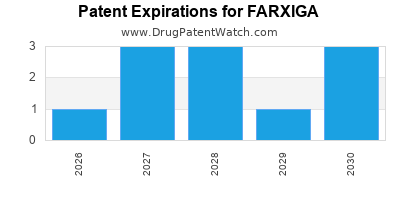
Farxiga is a drug marketed by Astrazeneca Ab and is included in one NDA. There are seventeen patents protecting this drug and one Paragraph IV challenge.

This drug has four hundred and twenty-seven patent family members in fifty-three countries.

The generic ingredient in FARXIGA is dapagliflozin. There are twenty-six drug master file entries for this compound. Twenty-four suppliers are listed for this compound. Additional details are available on the dapagliflozin profile page.

DrugPatentWatch® Litigation and Generic Entry Outlook for Farxiga

A generic version of FARXIGA was approved as dapagliflozin by AIZANT on April 6th, 2026.

  Start Trial

AI Deep Research
Questions you can ask:
  • What is the 5 year forecast for FARXIGA?
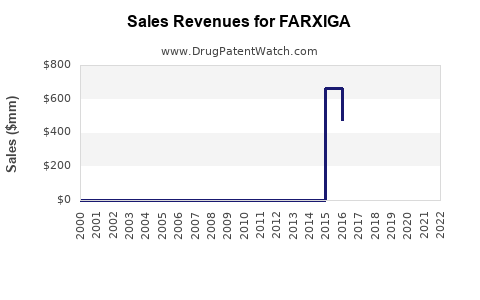
  • What are the global sales for FARXIGA?
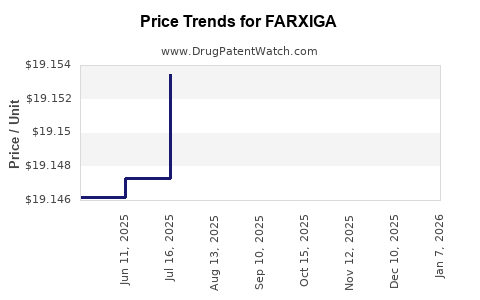
  • What is Average Wholesale Price for FARXIGA?
Recent Clinical Trials for FARXIGA

Identify potential brand extensions & 505(b)(2) entrants

SponsorPhase
UnitedHealthcarePHASE2
Han Xu, M.D., Ph.D., FAPCR, Sponsor-Investigator, IRB ChairPHASE2
The University of Hong KongPhase 2

See all FARXIGA clinical trials

Pharmacology for FARXIGA
Paragraph IV (Patent) Challenges for FARXIGA
Tradename Dosage Ingredient Strength NDA ANDAs Submitted Submissiondate
FARXIGA Tablets dapagliflozin 5 mg and 10 mg 202293 20 2018-01-08

US Patents and Regulatory Information for FARXIGA

FARXIGA is protected by seventeen US patents and four FDA Regulatory Exclusivities.

Applicant Tradename Generic Name Dosage NDA Approval Date TE Type RLD RS Patent No. Patent Expiration Product Substance Delist Req. Exclusivity Expiration
Astrazeneca Ab FARXIGA dapagliflozin TABLET;ORAL 202293-002 Jan 8, 2014 AB RX Yes Yes ⤷  Start Trial ⤷  Start Trial Y ⤷  Start Trial
Astrazeneca Ab FARXIGA dapagliflozin TABLET;ORAL 202293-002 Jan 8, 2014 AB RX Yes Yes ⤷  Start Trial ⤷  Start Trial ⤷  Start Trial
Astrazeneca Ab FARXIGA dapagliflozin TABLET;ORAL 202293-002 Jan 8, 2014 AB RX Yes Yes ⤷  Start Trial ⤷  Start Trial Y ⤷  Start Trial
Astrazeneca Ab FARXIGA dapagliflozin TABLET;ORAL 202293-001 Jan 8, 2014 AB RX Yes No ⤷  Start Trial ⤷  Start Trial Y ⤷  Start Trial
Astrazeneca Ab FARXIGA dapagliflozin TABLET;ORAL 202293-002 Jan 8, 2014 AB RX Yes Yes ⤷  Start Trial ⤷  Start Trial Y ⤷  Start Trial
>Applicant >Tradename >Generic Name >Dosage >NDA >Approval Date >TE >Type >RLD >RS >Patent No. >Patent Expiration >Product >Substance >Delist Req. >Exclusivity Expiration

Expired US Patents for FARXIGA

Applicant Tradename Generic Name Dosage NDA Approval Date Patent No. Patent Expiration
Astrazeneca Ab FARXIGA dapagliflozin TABLET;ORAL 202293-001 Jan 8, 2014 ⤷  Start Trial ⤷  Start Trial
Astrazeneca Ab FARXIGA dapagliflozin TABLET;ORAL 202293-002 Jan 8, 2014 ⤷  Start Trial ⤷  Start Trial
Astrazeneca Ab FARXIGA dapagliflozin TABLET;ORAL 202293-001 Jan 8, 2014 ⤷  Start Trial ⤷  Start Trial
Astrazeneca Ab FARXIGA dapagliflozin TABLET;ORAL 202293-002 Jan 8, 2014 ⤷  Start Trial ⤷  Start Trial
>Applicant >Tradename >Generic Name >Dosage >NDA >Approval Date >Patent No. >Patent Expiration

EU/EMA Drug Approvals for FARXIGA

Company Drugname Inn Product Number / Indication Status Generic Biosimilar Orphan Marketing Authorisation Marketing Refusal
AstraZeneca AB Forxiga dapagliflozin EMEA/H/C/002322Type 2 diabetes mellitusForxiga is indicated in adults and children aged 10 years and above for the treatment of insufficiently controlled type 2 diabetes mellitus as an adjunct to diet and exerciseas monotherapy when metformin is considered inappropriate due to intolerance.in addition to other medicinal products for the treatment of type 2 diabetes.For study results with respect to combination of therapies, effects on glycaemic control, cardiovascular and renal events, and the populations studied, see sections 4.4, 4.5 and 5.1.Heart failureForxiga is indicated in adults for the treatment of symptomatic chronic heart failure.Chronic kidney diseaseForxiga is indicated in adults for the treatment of chronic kidney disease. Authorised no no no 2012-11-11
AstraZeneca AB Edistride dapagliflozin EMEA/H/C/004161Type 2 diabetes mellitusEdistride is indicated in adults and children aged 10 years and above for the treatment of insufficiently controlled type 2 diabetes mellitus as an adjunct to diet and exerciseas monotherapy when metformin is considered inappropriate due to intolerance.in addition to other medicinal products for the treatment of type 2 diabetes.For study results with respect to combination of therapies, effects on glycaemic control, cardiovascular and renal events, and the populations studied, see sections 4.4, 4.5 and 5.1.Heart failureEdistride is indicated in adults for the treatment of symptomatic chronic heart failure.Chronic kidney diseaseEdistride is indicated in adults for the treatment of chronic kidney disease. Authorised no no no 2015-11-09
Viatris Limited Dapagliflozin Viatris dapagliflozin EMEA/H/C/006006Type 2 diabetes mellitusDapagliflozin Viatris is indicated in adults and children aged 10 years and above for the treatment of insufficiently controlled type 2 diabetes mellitus as an adjunct to diet and exercise- as monotherapy when metformin is considered inappropriate due to intolerance.- in addition to other medicinal products for the treatment of type 2 diabetes.For study results with respect to combination of therapies, effects on glycaemic control, cardiovascular and renal events, and the populations studied, see sections 4.4, 4.5 and 5.1.Heart failureDapagliflozin Viatris is indicated in adults for the treatment of symptomatic chronic heart failure with reduced ejection fraction.Chronic kidney diseaseDapagliflozin Viatris is indicated in adults for the treatment of chronic kidney disease. Authorised yes no no 2023-03-24
>Company >Drugname >Inn >Product Number / Indication >Status >Generic >Biosimilar >Orphan >Marketing Authorisation >Marketing Refusal

International Patents for FARXIGA

When does loss-of-exclusivity occur for FARXIGA?

Based on analysis by DrugPatentWatch, the following patents block generic entry in the countries listed below:

Argentina

Patent: 1730
Estimated Expiration: ⤷  Start Trial

Australia

Patent: 07265246
Estimated Expiration: ⤷  Start Trial

Brazil

Patent: 2017015106
Estimated Expiration: ⤷  Start Trial

Patent: 2017021516
Estimated Expiration: ⤷  Start Trial

Patent: 0713544
Estimated Expiration: ⤷  Start Trial

Canada

Patent: 53344
Estimated Expiration: ⤷  Start Trial

Patent: 24318
Estimated Expiration: ⤷  Start Trial

Patent: 85797
Estimated Expiration: ⤷  Start Trial

Chile

Patent: 07001915
Estimated Expiration: ⤷  Start Trial

China

Patent: 1479287
Estimated Expiration: ⤷  Start Trial

Patent: 3145773
Estimated Expiration: ⤷  Start Trial

Colombia

Patent: 60299
Estimated Expiration: ⤷  Start Trial

Croatia

Patent: 0141007
Estimated Expiration: ⤷  Start Trial

Cyprus

Patent: 15738
Estimated Expiration: ⤷  Start Trial

Denmark

Patent: 69374
Estimated Expiration: ⤷  Start Trial

Eurasian Patent Organization

Patent: 8229
Estimated Expiration: ⤷  Start Trial

Patent: 0428
Estimated Expiration: ⤷  Start Trial

Patent: 8259
Estimated Expiration: ⤷  Start Trial

Patent: 5999
Estimated Expiration: ⤷  Start Trial

Patent: 0900066
Estimated Expiration: ⤷  Start Trial

Patent: 1171333
Estimated Expiration: ⤷  Start Trial

Patent: 1490902
Estimated Expiration: ⤷  Start Trial

Patent: 1791254
Estimated Expiration: ⤷  Start Trial

Patent: 2091391
Estimated Expiration: ⤷  Start Trial

European Patent Office

Patent: 69374
Estimated Expiration: ⤷  Start Trial

Patent: 57918
Estimated Expiration: ⤷  Start Trial

Patent: 45466
Estimated Expiration: ⤷  Start Trial

Patent: 63807
Estimated Expiration: ⤷  Start Trial

Hong Kong

Patent: 27359
Estimated Expiration: ⤷  Start Trial

Israel

Patent: 5882
Estimated Expiration: ⤷  Start Trial

Patent: 4180
Estimated Expiration: ⤷  Start Trial

Patent: 4181
Estimated Expiration: ⤷  Start Trial

Patent: 4182
Estimated Expiration: ⤷  Start Trial

Japan

Patent: 13889
Estimated Expiration: ⤷  Start Trial

Patent: 66651
Estimated Expiration: ⤷  Start Trial

Patent: 37187
Estimated Expiration: ⤷  Start Trial

Patent: 09545525
Estimated Expiration: ⤷  Start Trial

Patent: 13209394
Estimated Expiration: ⤷  Start Trial

Patent: 15071636
Estimated Expiration: ⤷  Start Trial

Patent: 16172758
Estimated Expiration: ⤷  Start Trial

Patent: 17222681
Estimated Expiration: ⤷  Start Trial

Patent: 19059779
Estimated Expiration: ⤷  Start Trial

Malaysia

Patent: 8566
Estimated Expiration: ⤷  Start Trial

Patent: 3930
Estimated Expiration: ⤷  Start Trial

Mexico

Patent: 9143
Estimated Expiration: ⤷  Start Trial

Patent: 7155
Estimated Expiration: ⤷  Start Trial

Patent: 08015377
Estimated Expiration: ⤷  Start Trial

New Zealand

Patent: 4346
Estimated Expiration: ⤷  Start Trial

Patent: 9190
Estimated Expiration: ⤷  Start Trial

Patent: 9195
Estimated Expiration: ⤷  Start Trial

Patent: 9202
Estimated Expiration: ⤷  Start Trial

Norway

Patent: 6828
Estimated Expiration: ⤷  Start Trial

Patent: 7770
Estimated Expiration: ⤷  Start Trial

Patent: 085169
Estimated Expiration: ⤷  Start Trial

Patent: 221233
Estimated Expiration: ⤷  Start Trial

Peru

Patent: 080349
Estimated Expiration: ⤷  Start Trial

Patent: 120776
Estimated Expiration: ⤷  Start Trial

Philippines

Patent: 012500168
Patent: CRYSTALLINE SOLVATES AND COMPLEXES OF (IS)-1,5-ANHYDRO-L-C-(3-((PHENYL)METHYL)PHENYL)-D-GLUCITOL DERIVATIVES WITH AMINO ACIDS AS SGLT2 INHIBITORS FOR THE TREATMENT OF DIABETES
Estimated Expiration: ⤷  Start Trial

Poland

Patent: 69374
Estimated Expiration: ⤷  Start Trial

Portugal

Patent: 69374
Estimated Expiration: ⤷  Start Trial

Serbia

Patent: 638
Patent: KRISTALNI SOLVATI DERIVATA (1S)-1,5-ANHIDRO-1-C-(3-((FENIL) METIL) FENIL)-D-GLUCITOLA SA ALKOHOLIMA KAO INHIBITORI SGLT2 ZA TRETMAN DIJABETESA (CRYSTALLINE SOLVATES OF (1S)-1,5-ANHYDRO-1-C-(3-((PHENYL) METHYL) PHENYL)-D-GLUCITOL DERIVATIVES WITH ALCOHOLS AS SGLT2 INHIBITORS FOR THE TREATMENT OF DIABETES)
Estimated Expiration: ⤷  Start Trial

Singapore

Patent: 201402181S
Patent: CRYSTALLINE SOLVATES AND COMPLEXES OF (1S) -1, 5-ANHYDRO-1-C- (3- ( (PHENYL) METHYL) PHENYL) -D-GLUCITOL DERIVATIVES WITH AMINO ACIDS AS SGLT2 INHIBITORS FOR THE TREATMENT OF DIABETES
Estimated Expiration: ⤷  Start Trial

Patent: 2741
Patent: CRYSTALLINE SOLVATES AND COMPLEXES OF (1S) -1, 5-ANHYDRO-1-C- (3- ( (PHENYL) METHYL) PHENYL) -D-GLUCITOL DERIVATIVES WITH AMINO ACIDS AS SGLT2 INHIBITORS FOR THE TREATMENT OF DIABETES
Estimated Expiration: ⤷  Start Trial

Slovenia

Patent: 69374
Estimated Expiration: ⤷  Start Trial

South Africa

Patent: 0810475
Patent: CRYSTALLINE SOLVATES AND COMPLEXES OF (IS)-1,5-ANHYDRO-L-C-(3-((PHENYL)METHYL)PHENYL)-D-GLUCITOL DERIVATIVES WITH AMINO ACIDS AS SGLT2 INHIBITORS FOR THE TREATMENT OF DIABETES
Estimated Expiration: ⤷  Start Trial

South Korea

Patent: 1493102
Estimated Expiration: ⤷  Start Trial

Patent: 090023643
Estimated Expiration: ⤷  Start Trial

Spain

Patent: 21665
Estimated Expiration: ⤷  Start Trial

Patent: 59862
Estimated Expiration: ⤷  Start Trial

Patent: 69130
Estimated Expiration: ⤷  Start Trial

Taiwan

Patent: 0811127
Patent: Crystal structures of SGLT2 inhibitors and processes for preparing same
Estimated Expiration: ⤷  Start Trial

Patent: 1406743
Patent: Crystal structures of SGLT2 inhibitors and processes for preparing same
Estimated Expiration: ⤷  Start Trial

Patent: 1509927
Patent: Crystal structures of SGLT2 inhibitors and processes for preparing same
Estimated Expiration: ⤷  Start Trial

Patent: 1546054
Patent: Crystal structures of SGLT2 inhibitors and processes for preparing same
Estimated Expiration: ⤷  Start Trial

Patent: 21245
Estimated Expiration: ⤷  Start Trial

Patent: 66876
Estimated Expiration: ⤷  Start Trial

Patent: 19528
Estimated Expiration: ⤷  Start Trial

Ukraine

Patent: 765
Patent: КРИСТАЛЛИЧЕСКИЕ СОЛЬВАТЫ И КОМПЛЕКСЫ ПРОИЗВОДНЫХ (IS)-1,5-АНГИДРО-L-C-(3-((ФЕНИЛ)МЕТИЛ)ФЕНИЛ)-D-ГЛЮЦИТОЛА С АМИНОКИСЛОТАМИ КАК ИНГИБИТОРЫ БЕЛКА SGLT2, ПРИГОДНЫЕ В ЛЕЧЕНИИ ДИАБЕТА (CRYSTALLINE SOLVATES AND COMPLEXES OF (IS) -1, 5-ANHYDRO-L-C- (3- ((PHENYL) METHYL) PHENYL) -D-GLUCITOL DERIVATIVES WITH AMINO ACIDS AS SGLT2 INHIBITORS FOR THE TREATMENT OF DIABETES)
Estimated Expiration: ⤷  Start Trial

Generics may enter earlier, or later, based on new patent filings, patent extensions, patent invalidation, early generic licensing, generic entry preferences, and other factors.

See the table below for additional patents covering FARXIGA around the world.

Country Patent Number Title Estimated Expiration
Argentina 026024 COMPUESTOS INHIBIDORES SGLT2 DE GLUCOSIDOS DE C-ARILO Y METODO, LAS COMPOSICIONES FARAMCEUTICAS QUE LOS CONTIENEN Y LOS INTERMEDIARIOS DE SINTESIS DEDICHOS COMPUESTOS ⤷  Start Trial
Argentina 040032 C-ARIL-GLUCOSIDOS COMO INHIBIDORES DE SGLT2 Y METODO ⤷  Start Trial
Austria 295848 ⤷  Start Trial
Austria 353334 ⤷  Start Trial
Australia 2003237886 C-ARYL GLUCOSIDE SGLT2 INHIBITORS AND METHOD ⤷  Start Trial
Australia 781009 ⤷  Start Trial
Australia 7848300 C-aryl glucoside sglt2 inhibitors ⤷  Start Trial
>Country >Patent Number >Title >Estimated Expiration

Supplementary Protection Certificates for FARXIGA

Patent Number Supplementary Protection Certificate SPC Country SPC Expiration SPC Description
1506211 C300585 Netherlands ⤷  Start Trial PRODUCT NAME: DAPAGLIFLOZINE, DESGEWENST IN DE VORM VAN EEN FARMACEUTISCH AANVAARDBAAR ZOUT; REGISTRATION NO/DATE: EU/1/12/795/001-010 20121112
1506211 PA2013008 Lithuania ⤷  Start Trial PRODUCT NAME: DAPAGLIFLOZINUM; REGISTRATION NO/DATE: EU/1/12/795/001 - EU/1/12/795/010 20121112
1506211 122013000033 Germany ⤷  Start Trial PRODUCT NAME: DAPAGLIFLOZIN UND PHARMAZEUTISCH VERTRAEGLICHE SALZE DAVON; REGISTRATION NO/DATE: EU/1/12/795/001-010 20121112
1506211 C20130006 00074 Estonia ⤷  Start Trial PRODUCT NAME: DAPAGLIFLOZIN;REG NO/DATE: K(2012)8378 12.11.2012
1506211 92182 Luxembourg ⤷  Start Trial PRODUCT NAME: DAPAGLIFLOZINE ET SES SELS PHARMACEUTIQUEMENT ACCEPTABLES
1506211 2013/013 Ireland ⤷  Start Trial PRODUCT NAME: DAPAGLIFLOZIN AND PHARACEUTICALLY ACCEPTABLE SALTS THREOF; REGISTRATION NO/DATE: EU/1/12/795/001-010 20121112
1506211 CA 2013 00019 Denmark ⤷  Start Trial
>Patent Number >Supplementary Protection Certificate >SPC Country >SPC Expiration >SPC Description

FARXIGA (dapagliflozin) Market Dynamics and Financial Trajectory: Exclusivity, Patent Risk, and Competitive Outlook

Last updated: June 23, 2026

FARXIGA is a leading SGLT2 inhibitor for type 2 diabetes and a cornerstone cardiovascular and renal franchise. The asset’s financial trajectory is driven by U.S. and ex-U.S. expansion, uptake in heart failure and chronic kidney disease populations, and resilience against GLP-1 and other diabetes competitors. The IP and regulatory risk profile is shaped by ongoing U.S. patent estates for formulations, dosing regimens, and specific clinical method-of-use claims, alongside biosimilar-free competitive pressure from other small-molecule SGLT2 inhibitors.


How does FARXIGA perform financially and what is driving revenue growth?

Direct answer: FARXIGA’s revenue trajectory is powered by (1) growing chronic indications footprint in heart failure and CKD, (2) substitution away from older glucose-centric diabetes-only positioning, and (3) continued broad payer acceptance in the U.S. SGLT2 inhibitor class.

Revenue drivers by commercial line

FARXIGA’s commercial dynamics are best understood as a multi-indication engine:

1) Type 2 diabetes

  • Maintains base demand as the SGLT2 category matures.
  • Growth is influenced by guideline incorporation, formulary positioning, and 2nd-line switching dynamics versus DPP-4 inhibitors and parts of GLP-1 regimens depending on access and outcomes evidence.

2) Heart failure

  • The franchise has moved beyond diabetes-only prescribing.
  • Uptake depends on payer adoption, hospital formulary behavior, and guideline-aligned treatment pathways.

3) Chronic kidney disease

  • CKD adoption is sensitive to nephrology referral patterns and outcomes data assimilation in payer criteria.
  • Dosing convenience and tolerability profile support broader maintenance use.

Key financial inflection mechanisms

Across the SGLT2 class, revenue growth is typically shaped by:

  • Utilization expansion into non-diabetes populations.
  • Net price and rebates shaped by U.S. contracting intensity and class competition.
  • Dose and patient persistence driven by adverse event management (notably genital infections, volume depletion, and rare diabetic ketoacidosis concerns).
  • Competitive interchange between branded products and less-expensive generics where patent and exclusivity allow.

Competitive forces affecting net sales

  • Within-class: price pressure from empagliflozin (Jardiance) and other SGLT2 inhibitors.
  • Cross-class: GLP-1 receptor agonists and dual GIP/GLP-1 agents compete for diabetes volumes and obesity-driven cardiometabolic share.
  • Formulary policy: more restrictive step therapy for diabetes may coexist with more permissive access for heart failure and CKD indications, shifting mix.

What market dynamics shape FARXIGA demand in the SGLT2 inhibitor category?

Direct answer: The category is characterized by rapid indication expansion, payer-driven contracting, and increasing interchange between SGLT2 molecules, with guideline-based adoption in cardiovascular and kidney care sustaining demand even as diabetes-only growth normalizes.

SGLT2 market structure

  • High clinical credibility: outcomes data supports guideline embedding.
  • Payer management: rebates and preferred formulary status determine share at the margin.
  • Clinical substitution: many clinicians treat SGLT2 inhibitors as a class, changing the importance of access and patient-specific tolerability.

Adverse event management as a commercial lever

  • Commercial persistence improves when real-world adverse event rates are managed via patient selection, education, and early intervention for mycotic infections.
  • Safety perceptions can affect switching behavior when competing SGLT2 products have different patient-matched tolerability experiences.

Patient access and health system adoption

  • Heart failure and CKD prescribing is fragmented across cardiology, nephrology, and primary care.
  • Access is affected by prior authorization rules, CKD staging documentation requirements, and disease-criteria alignment.

When does FARXIGA lose exclusivity and what are the patent drivers?

Direct answer: FARXIGA’s U.S. exclusivity and patent landscape is anchored by multiple overlapping protection layers. The practical exclusivity timeline is determined by the latest expiring U.S. patents for specific claims (including method-of-use and formulation/dosing-related claims) and any Orange Book-protected exclusivities tied to FDA approvals.

Exclusivity stack concept

For small molecules, exclusivity risk is typically less about biologics exclusivity mechanics and more about:

  • Patent expiration for composition-of-matter, formulation, and method-of-use claims.
  • Regulatory exclusivity (new chemical entity and related categories) when still applicable.
  • Orange Book listing status for each relevant strength/dosage form.

Ongoing litigation and “evergreening” patterns

In the SGLT2 inhibitor space, generic entry strategy usually targets:

  • Later-expiring formulation or method-of-use patents.
  • Specific dosing regimen claims tied to clinical outcomes indications.

Result: the near-term entry risk is often delayed if challengers must navigate multiple listed patents covering commercial products.


What patents protect FARXIGA in the US and how strong is the patent estate?

Direct answer: FARXIGA is protected by a multi-layer U.S. patent estate that typically includes composition, formulation, and method-of-use claims, with strength depending on whether patents are listed in the Orange Book for the commercial NDA and whether they have survived litigation.

What claim types matter commercially

  1. Method-of-use patents
  • Protect clinical indication-specific dosing and use, often controlling generic launch for labeled populations.
  1. Formulation and stability patents
  • Can block “skinny labels” if they are tied to the approved product dosage form.
  1. Combination or regimen claims
  • More relevant where label evolution aligns with specific use patterns.

How to evaluate strength for licensing and litigation

  • Patents with broad claims spanning multiple indications create launch friction even if challengers can carve out some uses.
  • Patents with narrower claim construction create more predictable “design-around” opportunities, lowering litigation value.

How many Paragraph IV challenges target FARXIGA and what is the litigation track record?

Direct answer: FARXIGA has faced the U.S. generic challenge ecosystem typical for high-selling branded small molecules, with challengers using Paragraph IV filings to attempt earlier entry against Orange Book-listed patents.

Typical litigation outcomes that shape market entry

  • Dismissal or non-infringement shifts the entry date beyond the expected earliest generic launch.
  • Settlement agreements commonly trade earlier entry for licensing payments and defined launch timing.
  • Court invalidation can accelerate entry for certain strengths but may not fully eliminate indication-specific barriers.

Settlement-driven entry calendars

For portfolio planning, the practical lens is:

  • The earliest FDA approval/launch date permitted under settlement.
  • The covered patent list remaining intact.
  • The scope of label (skinny label vs full label) after resolution.

What is the Orange Book status of FARXIGA and how does it affect generic entry?

Direct answer: Orange Book listings for FARXIGA determine which patents must be addressed by an FDA Paragraph IV filing and drive the injunction risk framework.

How Orange Book listings translate into regulatory risk

  • If a Paragraph IV challenger does not secure a carve-out, courts can enjoin approval/launch.
  • A strong listing for method-of-use claims can still limit generic access to certain labeled indications even after patent loss on composition.

Strength of Orange Book coverage

Orange Book protection is generally stronger when:

  • Multiple patents are listed per NDA and strength.
  • Method-of-use patents align with the commercial label used in real-world prescribing.

How does FARXIGA compare with Jardiance and other SGLT2 inhibitors on competitive risk?

Direct answer: The SGLT2 market is a competitive set where head-to-head switching is common, but brand-specific patent timing and Orange Book coverage shape generic substitution windows.

Competitive comparison by commercial posture

  • Jardiance (empagliflozin) competes directly across diabetes and cardiovascular/renal indications.
  • Other SGLT2 inhibitors compete on formulary access, safety perception, and clinician familiarity.

Where FARXIGA’s dynamics tend to differ

  • Indication-specific uptake in heart failure and CKD can change the mix of sales and protect demand when diabetes-only utilization flattens.
  • Patent timing and settlement outcomes affect how soon payers and providers can switch to lower-cost alternatives.

What formulations are protected for FARXIGA and what does that mean for generics?

Direct answer: FARXIGA’s protected dosage forms and formulation attributes influence whether generics can launch for all strengths and whether they must use complex design-around strategies.

Formulation-related barriers

  • If formulation patents cover the approved dosage form’s composition, stability, or delivery characteristics, generic manufacturers face higher risk of infringement claims.
  • Formulation patents can also complicate “label carve-out” strategies if they cover the marketed product irrespective of indication.

Dosing strength and manufacturing approach

  • Different strengths can have different listed patent coverage.
  • Manufacturing methods are rarely the main barrier for branded small molecules unless specific method patents are asserted, but formulation patents can still impose.

What method-of-use patents cover FARXIGA and how do they impact skinny-label launches?

Direct answer: Method-of-use patents for FARXIGA can delay generic entry for certain indications, forcing “carve-out” labeling to avoid infringement.

Skinny label risk logic

  • Generic approval may proceed with restricted indication language.
  • Commercial value depends on whether the restricted label removes the indications driving most sales.

Commercial consequence

  • If the carved-out indication set targets the most profitable or highest-utilization population, generic profitability can be substantially reduced even if launch occurs.

What biosimilar or biologics risk exists for FARXIGA?

Direct answer: No biosimilar risk applies; FARXIGA is a small-molecule drug.


How does FDA regulatory status influence FARXIGA demand and competition?

Direct answer: FDA approval for multiple indications supports durable prescribing and lowers switching friction versus agents with narrower label coverage.

Regulatory pathway impact

  • Once a brand has an expanded label, clinicians can justify continued use in broader populations.
  • Competitors must match labeled outcomes to gain share, which typically requires substantial evidence.

What generic entry risks exist for FARXIGA in different geographies?

Direct answer: Geographic risk depends on local patent enforcement and regulatory filing timelines. In the U.S., the Orange Book and Paragraph IV framework typically drive timing. In major markets, patent validity and enforcement practices determine the practical entry date.

U.S. vs EU vs other markets

  • U.S.: strong linkage between FDA approval and listed patents drives litigation leverage.
  • EU: patent litigation and national enforcement determine injunction ability.
  • Global: transfer pricing and local contracting can affect uptake even after legal entry.

How do licensing deals and settlements influence FARXIGA’s competitive timeline?

Direct answer: Settlements and licensing agreements typically convert a high-uncertainty litigation timeline into a defined launch schedule, shaping payer planning and generic manufacturer investment.

Settlement mechanics to model

  • Launch date gates (full product vs limited label).
  • Designations for covered strengths or indications.
  • Exclusivity carve-outs tied to unresolved patents.

Key patent-lifecycle checkpoints to monitor for FARXIGA

Direct answer: Patent estate value is most sensitive to the next judicial or administrative decision affecting the latest expiring Orange Book-listed patents.

What to track

  • Next scheduled court events in relevant Paragraph IV actions.
  • Claim construction decisions that narrow or expand infringement scope.
  • Any new patent listings or removals from the Orange Book for the NDA.
  • Post-grant review outcomes impacting enforceability.

Key Takeaways

  • FARXIGA’s financial trajectory is driven by label expansion and sustained clinical adoption in heart failure and CKD, not only diabetes utilization.
  • The SGLT2 inhibitor market is highly competitive with class-wide interchange, making payer contracting and real-world tolerability management critical to net sales.
  • Generic risk is governed by Orange Book-listed patents and method-of-use barriers that can force skinny-label launches, reducing the commercial value of generic entry.
  • Patent estate strength depends on whether method-of-use and formulation claims remain enforceable and whether litigation ends in injunctions or settlement-based launch calendars.
  • Biosimilar risk does not apply because FARXIGA is a small molecule.

FAQs

  1. What commercial indications contribute most to FARXIGA sales, and how do label carve-outs change generic profitability?
  2. Which SGLT2 inhibitor patents typically determine the timing of generic entry in the U.S. for class members like FARXIGA and Jardiance?
  3. How do payer policies for CKD and heart failure affect FARXIGA uptake compared with diabetes-first competitors?
  4. What are the main real-world safety and adherence issues that influence FARXIGA persistence and switching?
  5. How do Orange Book patent listing changes alter Paragraph IV risk for FARXIGA strengths and dosing regimens?

References (APA)

  1. U.S. Food and Drug Administration. Orange Book: Approved Drug Products with Therapeutic Equivalence Evaluations. https://www.accessdata.fda.gov/scripts/cder/daf/index.cfm
  2. U.S. FDA. Drug Approval Reports and related labeling for FARXIGA (dapagliflozin). https://www.accessdata.fda.gov/scripts/cder/daf/index.cfm

More… ↓

⤷  Start Trial

Make Better Decisions: Try a trial or see plans & pricing

Drugs may be covered by multiple patents or regulatory protections. All trademarks and applicant names are the property of their respective owners or licensors. Although great care is taken in the proper and correct provision of this service, thinkBiotech LLC does not accept any responsibility for possible consequences of errors or omissions in the provided data. The data presented herein is for information purposes only. There is no warranty that the data contained herein is error free. We do not provide individual investment advice. This service is not registered with any financial regulatory agency. The information we publish is educational only and based on our opinions plus our models. By using DrugPatentWatch you acknowledge that we do not provide personalized recommendations or advice. thinkBiotech performs no independent verification of facts as provided by public sources nor are attempts made to provide legal or investing advice. Any reliance on data provided herein is done solely at the discretion of the user. Users of this service are advised to seek professional advice and independent confirmation before considering acting on any of the provided information. thinkBiotech LLC reserves the right to amend, extend or withdraw any part or all of the offered service without notice.