Last Updated: November 16, 2026

Expiring Drug Patents Cheat Sheet
We analyse the patents covering drugs in 134 countries and quickly give you the likely loss-of-exclusivity/generic entry date

➤ Get the Full List

Hong Kong: These 22 Drugs Face Patent Expirations and Generic Entry From 2026 - 2027

The content of this page is licensed under a Creative Commons Attribution 4.0 International License. Creative Commons License

Preferred citation:
Friedman, Yali, "Hong Kong: These 22 Drugs Face Patent Expirations and Generic Entry From 2026 - 2027" DrugPatentWatch.com thinkBiotech, 2026 www.drugpatentwatch.com/p/expiring-drug-patents-generic-entry/.
Media collateral
These estimated drug patent expiration dates and generic entry opportunity dates are calculated from analysis of known patents covering drugs. Many factors can influence early or late generic entry. This information is provided as a rough estimate of generic entry potential and should not be used as an independent source. The methodology is described in this blog post.
When can SIRTURO (bedaquiline fumarate) generic drug versions launch in Hong Kong?

Generic name: bedaquiline fumarate
DrugPatentWatch® Estimated Key Patent Expiration / Generic Entry Date: December 05, 2026
Generic Entry Controlled by: Hong Kong Patent 1,214,513

SIRTURO is a drug marketed by Janssen Therap. There are two patents protecting this drug.

See drug price trends for SIRTURO.

The generic ingredient in SIRTURO is bedaquiline fumarate. Additional details are available on the bedaquiline fumarate profile page.

When can LETAIRIS (ambrisentan) generic drug versions launch in Hong Kong?

Generic name: ambrisentan
DrugPatentWatch® Estimated Key Patent Expiration / Generic Entry Date: December 12, 2026
Generic Entry Controlled by: Hong Kong Patent 1,218,393
Patent Title: 用於治療肺高壓的複合物 (COMPOSITION FOR TREATING A PULMONARY HYPERTENSION)

LETAIRIS is a drug marketed by Gilead. There are three patents protecting this drug and one Paragraph IV challenge. There has been litigation on patents covering LETAIRIS

See drug price trends for LETAIRIS.

The generic ingredient in LETAIRIS is ambrisentan. Additional details are available on the ambrisentan profile page.

When can VYKAT XR (diazoxide choline) generic drug versions launch in Hong Kong?

Generic name: diazoxide choline
DrugPatentWatch® Estimated Key Patent Expiration / Generic Entry Date: December 20, 2026
Generic Entry Controlled by: Hong Kong Patent 1,117,078
Patent Title: SALTS OF POTASSIUM ATP CHANNEL OPENERS AND USES THEREOF

VYKAT XR is a drug marketed by Soleno. There are six patents protecting this drug. There has been litigation on patents covering VYKAT XR

The generic ingredient in VYKAT XR is diazoxide choline. Additional details are available on the diazoxide choline profile page.

When can PANCREAZE (pancrelipase (amylase;lipase;protease)) generic drug versions launch in Hong Kong?

Generic name: pancrelipase (amylase;lipase;protease)
DrugPatentWatch® Estimated Key Patent Expiration / Generic Entry Date: February 20, 2027
Generic Entry Controlled by: Hong Kong Patent 1,142,818

PANCREAZE is a drug marketed by

See drug price trends for PANCREAZE.

The generic ingredient in PANCREAZE is pancrelipase (amylase;lipase;protease). Additional details are available on the pancrelipase (amylase;lipase;protease) profile page.

When can ZENPEP (pancrelipase (amylase;lipase;protease)) generic drug versions launch in Hong Kong?

Generic name: pancrelipase (amylase;lipase;protease)
DrugPatentWatch® Estimated Key Patent Expiration / Generic Entry Date: February 20, 2027
Generic Entry Controlled by: Hong Kong Patent 1,142,818

ZENPEP is a drug marketed by

See drug price trends for ZENPEP.

The generic ingredient in ZENPEP is pancrelipase (amylase;lipase;protease). Additional details are available on the pancrelipase (amylase;lipase;protease) profile page.

When can VANFLYTA (quizartinib dihydrochloride) generic drug versions launch in Hong Kong?

Generic name: quizartinib dihydrochloride
DrugPatentWatch® Estimated Key Patent Expiration / Generic Entry Date: March 16, 2027
Generic Entry Controlled by: Hong Kong Patent 1,131,141

VANFLYTA is a drug marketed by Daiichi Sankyo Inc. There are eleven patents protecting this drug.

See drug price trends for VANFLYTA.

The generic ingredient in VANFLYTA is quizartinib dihydrochloride. Additional details are available on the quizartinib dihydrochloride profile page.

When can QVAR REDIHALER (beclomethasone dipropionate) generic drug versions launch in Hong Kong?

Generic name: beclomethasone dipropionate
DrugPatentWatch® Estimated Key Patent Expiration / Generic Entry Date: April 11, 2027
Generic Entry Controlled by: Hong Kong Patent 1,141,349
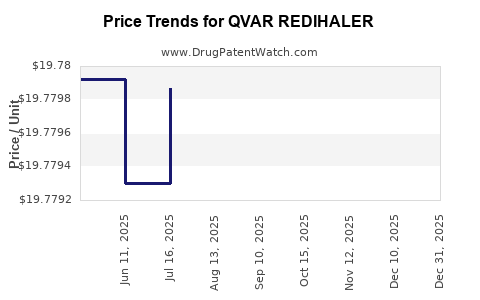
Drug Price Trends for QVAR REDIHALER
QVAR REDIHALER is a drug marketed by Norton Waterford. There are seventeen patents protecting this drug. One tentatively approved generic is ready to enter the market. There has been litigation on patents covering QVAR REDIHALER

See drug price trends for QVAR REDIHALER.

The generic ingredient in QVAR REDIHALER is beclomethasone dipropionate. Additional details are available on the beclomethasone dipropionate profile page.

When can PROMACTA (eltrombopag olamine) generic drug versions launch in Hong Kong?

Generic name: eltrombopag olamine
DrugPatentWatch® Estimated Key Patent Expiration / Generic Entry Date: May 03, 2027
Generic Entry Controlled by: Hong Kong Patent 1,136,968

PROMACTA is a drug marketed by Novartis. There is one patent protecting this drug and two Paragraph IV challenges. There has been litigation on patents covering PROMACTA

See drug price trends for PROMACTA.

The generic ingredient in PROMACTA is eltrombopag olamine. Additional details are available on the eltrombopag olamine profile page.

When can VRAYLAR (cariprazine hydrochloride) generic drug versions launch in Hong Kong?

Generic name: cariprazine hydrochloride
DrugPatentWatch® Estimated Key Patent Expiration / Generic Entry Date: May 11, 2027
Generic Entry Controlled by: Hong Kong Patent 1,140,473
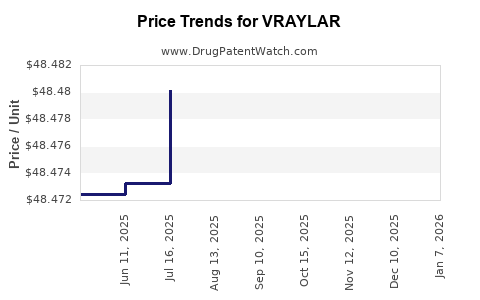
Drug Price Trends for VRAYLAR
VRAYLAR is a drug marketed by Abbvie. There are five patents protecting this drug. There has been litigation on patents covering VRAYLAR

See drug price trends for VRAYLAR.

The generic ingredient in VRAYLAR is cariprazine hydrochloride. Additional details are available on the cariprazine hydrochloride profile page.

When can TRELSTAR (triptorelin pamoate) generic drug versions launch in Hong Kong?

Generic name: triptorelin pamoate
DrugPatentWatch® Estimated Key Patent Expiration / Generic Entry Date: June 06, 2027
Generic Entry Controlled by: Hong Kong Patent 1,141,737

TRELSTAR is a drug marketed by Verity. There is one patent protecting this drug.

See drug price trends for TRELSTAR.

The generic ingredient in TRELSTAR is triptorelin pamoate. Additional details are available on the triptorelin pamoate profile page.

When can TRIPTODUR KIT (triptorelin pamoate) generic drug versions launch in Hong Kong?

Generic name: triptorelin pamoate
DrugPatentWatch® Estimated Key Patent Expiration / Generic Entry Date: June 06, 2027
Generic Entry Controlled by: Hong Kong Patent 1,141,737

TRIPTODUR KIT is a drug marketed by Azurity. There is one patent protecting this drug.

The generic ingredient in TRIPTODUR KIT is triptorelin pamoate. Additional details are available on the triptorelin pamoate profile page.

When can KYBELLA (deoxycholic acid) generic drug versions launch in Hong Kong?

Generic name: deoxycholic acid
DrugPatentWatch® Estimated Key Patent Expiration / Generic Entry Date: June 19, 2027
Generic Entry Controlled by: Hong Kong Patent 1,165,807
Patent Title: 合成的胆汁酸製備方法 (SYNTHETIC BILE ACID PREPARATION)

KYBELLA is a drug marketed by Abbvie. There are fourteen patents protecting this drug and one Paragraph IV challenge. There has been litigation on patents covering KYBELLA

The generic ingredient in KYBELLA is deoxycholic acid. Additional details are available on the deoxycholic acid profile page.

When can KYBELLA (deoxycholic acid) generic drug versions launch in Hong Kong?

Generic name: deoxycholic acid
DrugPatentWatch® Estimated Key Patent Expiration / Generic Entry Date: June 19, 2027
Generic Entry Controlled by: Hong Kong Patent 1,223,372
Patent Title: 脫氧膽酸 的合成 (SYNTHESIS OF DEOXYCHOLIC ACID (DCA) (DCA))

KYBELLA is a drug marketed by Abbvie. There are fourteen patents protecting this drug and one Paragraph IV challenge. There has been litigation on patents covering KYBELLA

The generic ingredient in KYBELLA is deoxycholic acid. Additional details are available on the deoxycholic acid profile page.

When can CARDAMYST (etripamil) generic drug versions launch in Hong Kong?

Generic name: etripamil
DrugPatentWatch® Estimated Key Patent Expiration / Generic Entry Date: June 20, 2027
Generic Entry Controlled by: Hong Kong Patent 1,140,913
Patent Title: 短效苯烷基胺鈣通道阻斷劑及其應用 (SHORT ACTING PHENYLALKYLAMINE CALCIUM CHANNEL BLOCKERS AND USES THEREOF)

Drug Price Trends for CARDAMYST
CARDAMYST is a drug marketed by Milestone Pharms Usa. There are six patents protecting this drug. There has been litigation on patents covering CARDAMYST

See drug price trends for CARDAMYST.

The generic ingredient in CARDAMYST is etripamil. Additional details are available on the etripamil profile page.

When can BYFAVO (remimazolam besylate) generic drug versions launch in Hong Kong?

Generic name: remimazolam besylate
DrugPatentWatch® Estimated Key Patent Expiration / Generic Entry Date: July 10, 2027
Generic Entry Controlled by: Hong Kong Patent 1,137,739
Patent Title: 短效苯並二氮雜噁鹽及其多晶型 (SHORT-ACTING BENZODIAZEPINE SALTS AND THEIR POLYMORPHIC FORMS)

BYFAVO is a drug marketed by Acacia. There are eleven patents protecting this drug. There has been litigation on patents covering BYFAVO

See drug price trends for BYFAVO.

The generic ingredient in BYFAVO is remimazolam besylate. Additional details are available on the remimazolam besylate profile page.

When can TEPMETKO (tepotinib hydrochloride) generic drug versions launch in Hong Kong?

Generic name: tepotinib hydrochloride
DrugPatentWatch® Estimated Key Patent Expiration / Generic Entry Date: July 12, 2027
Generic Entry Controlled by: Hong Kong Patent 1,145,265
Patent Title: PYRIDAZINONE DERIVATES

TEPMETKO is a drug marketed by Emd Serono Inc. There are eight patents protecting this drug. There has been litigation on patents covering TEPMETKO

See drug price trends for TEPMETKO.

The generic ingredient in TEPMETKO is tepotinib hydrochloride. Additional details are available on the tepotinib hydrochloride profile page.

When can DAKLINZA (daclatasvir dihydrochloride) generic drug versions launch in Hong Kong?

Generic name: daclatasvir dihydrochloride
DrugPatentWatch® Estimated Key Patent Expiration / Generic Entry Date: August 09, 2027
Generic Entry Controlled by: Hong Kong Patent 1,126,486
Patent Title: 丙型肝炎病毒 抑制劑 (HEPATITIS C VIRUS INHIBITORS (HCV))

Drug Price Trends for DAKLINZA
DAKLINZA is a drug marketed by Bristol-myers Squibb. There are five patents protecting this drug. There has been litigation on patents covering DAKLINZA

See drug price trends for DAKLINZA.

The generic ingredient in DAKLINZA is daclatasvir dihydrochloride. Additional details are available on the daclatasvir dihydrochloride profile page.

When can LOCAMETZ (gallium ga-68 gozetotide) generic drug versions launch in Hong Kong?

Generic name: gallium ga-68 gozetotide
DrugPatentWatch® Estimated Key Patent Expiration / Generic Entry Date: August 17, 2027
Generic Entry Controlled by: Hong Kong Patent 1,212,588

LOCAMETZ is a drug marketed by Novartis. There are two patents protecting this drug.

See drug price trends for LOCAMETZ.

The generic ingredient in LOCAMETZ is gallium ga-68 gozetotide. Additional details are available on the gallium ga-68 gozetotide profile page.

When can VELPHORO (sucroferric oxyhydroxide) generic drug versions launch in Hong Kong?

Generic name: sucroferric oxyhydroxide
DrugPatentWatch® Estimated Key Patent Expiration / Generic Entry Date: November 16, 2027
Generic Entry Controlled by: Hong Kong Patent 1,207,298
Patent Title: 藥物組合物 (PHARMACEUTICAL COMPOSITIONS)
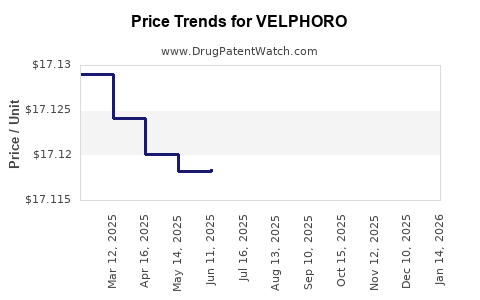
Drug Price Trends for VELPHORO
VELPHORO is a drug marketed by Vifor Fresenius. There are eleven patents protecting this drug. There has been litigation on patents covering VELPHORO

See drug price trends for VELPHORO.

The generic ingredient in VELPHORO is sucroferric oxyhydroxide. Additional details are available on the sucroferric oxyhydroxide profile page.

When can ZYKADIA (ceritinib) generic drug versions launch in Hong Kong?

Generic name: ceritinib
DrugPatentWatch® Estimated Key Patent Expiration / Generic Entry Date: November 20, 2027
Generic Entry Controlled by: Hong Kong Patent 1,134,290

ZYKADIA is a drug marketed by Novartis. There are eight patents protecting this drug.

See drug price trends for ZYKADIA.

The generic ingredient in ZYKADIA is ceritinib. Additional details are available on the ceritinib profile page.

When can DUZALLO (allopurinol; lesinurad) generic drug versions launch in Hong Kong?

Generic name: allopurinol; lesinurad
DrugPatentWatch® Estimated Key Patent Expiration / Generic Entry Date: November 27, 2027
Generic Entry Controlled by: Hong Kong Patent 1,160,843

Drug Price Trends for DUZALLO
DUZALLO is a drug marketed by Ironwood Pharms Inc. There are eight patents protecting this drug. There has been litigation on patents covering DUZALLO

See drug price trends for DUZALLO.

The generic ingredient in DUZALLO is allopurinol; lesinurad. Additional details are available on the allopurinol; lesinurad profile page.

When can DUZALLO (allopurinol; lesinurad) generic drug versions launch in Hong Kong?

Generic name: allopurinol; lesinurad
DrugPatentWatch® Estimated Key Patent Expiration / Generic Entry Date: November 27, 2027
Generic Entry Controlled by: Hong Kong Patent 1,180,337

Drug Price Trends for DUZALLO
DUZALLO is a drug marketed by Ironwood Pharms Inc. There are eight patents protecting this drug. There has been litigation on patents covering DUZALLO

See drug price trends for DUZALLO.

The generic ingredient in DUZALLO is allopurinol; lesinurad. Additional details are available on the allopurinol; lesinurad profile page.

When can ZURAMPIC (lesinurad) generic drug versions launch in Hong Kong?

Generic name: lesinurad
DrugPatentWatch® Estimated Key Patent Expiration / Generic Entry Date: November 27, 2027
Generic Entry Controlled by: Hong Kong Patent 1,160,843

ZURAMPIC is a drug marketed by Ironwood Pharms Inc. There are eight patents protecting this drug. There has been litigation on patents covering ZURAMPIC

See drug price trends for ZURAMPIC.

The generic ingredient in ZURAMPIC is lesinurad. Additional details are available on the lesinurad profile page.

When can ZURAMPIC (lesinurad) generic drug versions launch in Hong Kong?

Generic name: lesinurad
DrugPatentWatch® Estimated Key Patent Expiration / Generic Entry Date: November 27, 2027
Generic Entry Controlled by: Hong Kong Patent 1,180,337

ZURAMPIC is a drug marketed by Ironwood Pharms Inc. There are eight patents protecting this drug. There has been litigation on patents covering ZURAMPIC

See drug price trends for ZURAMPIC.

The generic ingredient in ZURAMPIC is lesinurad. Additional details are available on the lesinurad profile page.

When can INVEGA SUSTENNA (paliperidone palmitate) generic drug versions launch in Hong Kong?

Generic name: paliperidone palmitate
DrugPatentWatch® Estimated Key Patent Expiration / Generic Entry Date: December 19, 2027
Generic Entry Controlled by: Hong Kong Patent 1,223,850
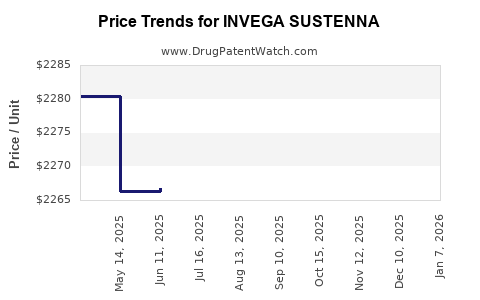
Drug Price Trends for INVEGA SUSTENNA
INVEGA SUSTENNA is a drug marketed by Janssen Pharms. There is one patent protecting this drug and one Paragraph IV challenge. Five tentatively approved generics are ready to enter the market. There has been litigation on patents covering INVEGA SUSTENNA

See drug price trends for INVEGA SUSTENNA.

The generic ingredient in INVEGA SUSTENNA is paliperidone palmitate. Additional details are available on the paliperidone palmitate profile page.

Last updated: October 11, 2026

Hong Kong is a small but commercially relevant pharmaceutical market with a split demand structure. The Hospital Authority controls most public-sector purchasing through formularies and tenders, while private hospitals, clinics and pharmacies support higher-value branded and specialty products. Generic entry is legally feasible but faces registration, bioequivalence, procurement, patent and distribution barriers. Hong Kong has no U.S.-style Orange Book or statutory Paragraph IV pathway. Patent risk must be assessed under Hong Kong’s separate patent system before launch.

Hong Kong Branded and Generic Drug Market Assessment, Regulation and Patent Opportunities

How large and attractive is the Hong Kong pharmaceutical market?

Hong Kong has a population of approximately 7.5 million and a high-income, aging population with substantial demand for chronic-disease medicines, oncology products, vaccines, biologics and specialty therapies. The market is commercially important as a regional launch, re-export and clinical-development location, although its domestic volume is limited compared with mainland China. [1]

The market has two operating channels:

Channel Main buyers Commercial characteristics
Public sector Hospital Authority, public hospitals and clinics Large patient volume, centralized procurement, tender pressure and formulary controls
Private sector Private hospitals, physicians, clinics, pharmacies and distributors Greater brand differentiation, private-pay demand and faster access for selected products

The Hospital Authority provides the majority of publicly funded hospital care and purchases medicines through centralized or institutional procurement. Its Drug Formulary divides medicines into general, special and self-financed categories. Formulary inclusion, clinical utility, comparative cost and supply reliability influence public-sector access. [2]

Private-sector demand is more receptive to branded drugs, imported specialty products, differentiated formulations and therapies prescribed outside public formularies. The private market is also the main route for products with limited public reimbursement or high acquisition costs.

Reliable public data on total pharmaceutical sales, branded-versus-generic value share and manufacturer-level revenue are limited. Hong Kong trade statistics measure imports and exports, not domestic consumption or net manufacturer sales. [3] Companies should therefore avoid using customs import value as a direct proxy for market size.

What is the regulatory pathway for branded and generic drugs in Hong Kong?

A pharmaceutical product generally must be registered with the Hong Kong Department of Health’s Drug Office before it can be sold or supplied in Hong Kong. The governing framework is principally the Pharmacy and Poisons Ordinance, Chapter 138, and its subsidiary regulations. [4]

The registration dossier must address:

  • Pharmaceutical quality and manufacturing controls
  • Product composition and specifications
  • Stability and shelf-life
  • Safety and efficacy
  • Labeling, packaging and package inserts
  • Manufacturing-site information
  • Good Manufacturing Practice compliance
  • Pharmacovigilance and post-market obligations

The Drug Office issues a Hong Kong registration number for approved products. Registration is product-specific and does not automatically follow approval in mainland China, the United States, the European Union or another jurisdiction.

Branded products

Innovator products usually rely on a complete quality, safety and efficacy package or recognized overseas regulatory support. Hong Kong registration may be more efficient where the product has already been reviewed by a major reference regulator, but foreign approval does not eliminate local registration, labeling and licensing requirements.

Generic products

Generic applicants generally need to demonstrate pharmaceutical equivalence and, where applicable, bioequivalence to the reference product. The extent of comparative evidence depends on the dosage form, active ingredient, formulation complexity and regulatory history.

Simple immediate-release oral products are generally more accessible to generic competition than:

  • Modified-release products
  • Inhaled products
  • Long-acting injectables
  • Liposomal formulations
  • Complex topical products
  • Ophthalmic products
  • Biologics and biosimilars
  • Drug-device combination products

A product’s registration approval does not provide freedom to operate under Hong Kong patent law.

When do branded drugs lose exclusivity in Hong Kong?

Hong Kong does not provide a single, publicly searchable exclusivity calendar equivalent to the U.S. Orange Book, FDA regulatory exclusivity listings and patent-term calculation tools. Commercial exclusivity must be analyzed through several separate rights:

  1. Hong Kong patents
  2. Regulatory data and dossier protection
  3. Product registration status
  4. Trademarks and branding
  5. Formulation and manufacturing know-how
  6. Hospital Authority formulary and tender position
  7. Contractual distribution rights

Hong Kong patents generally run for up to 20 years from the relevant filing date, subject to the governing patent type, maintenance requirements and transitional rules. Hong Kong has its own patent jurisdiction. A mainland Chinese patent, European patent or U.S. patent does not automatically protect the product in Hong Kong. [5]

Hong Kong has standard patents, original-grant patents and short-term patents. A standard or original-grant patent can provide the principal product, formulation, use or manufacturing protection. Short-term patents can run for up to eight years and may be relevant to incremental pharmaceutical technologies, although they are usually less important than core composition-of-matter rights.

Hong Kong does not operate a U.S.-style five-year new chemical entity exclusivity system with a public listing that determines generic eligibility. Regulatory data protection and reliance issues must be assessed under the Drug Office’s registration requirements and the applicable intellectual-property framework. Companies should not assume that expiry of a U.S. or European exclusivity period permits immediate Hong Kong launch.

Does Hong Kong have an Orange Book or Paragraph IV patent challenge system?

Hong Kong has no direct equivalent to the U.S. FDA Orange Book. The Drug Office does not publish a comprehensive list that links each registered product to all relevant patents, patent expiry dates and approved uses.

Hong Kong also has no U.S.-style statutory Paragraph IV certification process. A generic applicant does not typically need to certify to the Drug Office that listed patents are invalid, unenforceable or not infringed because there is no equivalent statutory patent-listing mechanism.

The practical consequences are material:

  • Regulatory approval and patent clearance are separate workstreams.
  • A generic can obtain registration while still facing patent infringement risk.
  • Patent holders must monitor registration, importation, distribution and launch activity independently.
  • Generic applicants need a Hong Kong freedom-to-operate review before commercial supply.
  • Patent litigation can proceed without the standardized FDA notification and automatic-stay mechanics used in the United States.

What patents protect branded drugs in Hong Kong?

A pharmaceutical patent estate should be mapped by claim type rather than by product name alone.

Patent category Typical protected subject matter Commercial relevance
Composition-of-matter patent Active ingredient or molecular structure Usually the strongest early exclusivity right
Salt, polymorph or crystal patent Solid-state form, salt, hydrate or solvate Can block specific generic active-ingredient forms
Formulation patent Release profile, excipients, particle size or delivery system Important for modified-release and complex products
Method-of-use patent Treatment of a disease, patient group or dosing regimen May support enforcement against labeled use
Combination patent Active ingredient used with another therapy Relevant in oncology and chronic disease
Manufacturing patent Synthetic route, purification or process control Can block particular production methods
Device or presentation patent Autoinjector, inhaler, cartridge or delivery device Important for combination products
Trademark Product name, logo and trade dress Protects market identity but not the active ingredient

Formulation and method-of-use patents are increasingly important after core compound patents expire. Their commercial value depends on claim scope, infringement evidence and whether the generic’s label, formulation or manufacturing process falls within the claims.

For public-sector products, a narrow patent may have limited value if the Hospital Authority can procure an alternative formulation or therapeutic equivalent. A broad formulation patent has greater leverage where the product depends on a single delivery system or device.

What is the biosimilar risk in Hong Kong?

Biosimilar competition is developing under a more complex regulatory and commercial environment than conventional small-molecule generic competition. Biosimilars require a comparability package addressing analytical quality, functional activity, pharmacokinetics, immunogenicity and, where necessary, clinical evidence.

Key differences from small-molecule generics include:

  • No simple automatic substitution assumption
  • Greater manufacturing-site and process scrutiny
  • Higher development and analytical costs
  • Greater reliance on physician confidence
  • Hospital procurement sensitivity to supply continuity
  • Product-specific interchangeability considerations

The largest biosimilar opportunities are likely to arise in high-cost biologic categories, including oncology, immunology, endocrinology and supportive care. The largest risks affect biologics with strong hospital tender positions, complex delivery devices or multiple formulation and manufacturing patents.

Hong Kong’s biosimilar opportunity is linked to regulatory acceptance, public tender economics and physician adoption. Approval alone does not guarantee substitution or formulary inclusion.

How does the Hong Kong branded market compare with the generic market?

Factor Branded products Generic products
Regulatory burden Higher for novel products, biologics and new indications Lower for established small molecules, but bioequivalence remains critical
Pricing power Strongest in private and specialty channels Limited in public tenders
Public-sector access Requires formulary and procurement success Often benefits from lower acquisition cost
Private-sector positioning Physician familiarity, brand reputation and innovation Price, availability and therapeutic equivalence
Patent exposure Protects revenue but increases litigation risk Creates freedom-to-operate and launch risk
Supply-chain risk Often dependent on multinational manufacturing networks Exposed to API, contract manufacturing and tender supply failures
Revenue profile Higher value per patient Higher volume but lower margin

A branded product can retain meaningful revenue after patent expiry if it has clinical familiarity, strong distribution, a differentiated formulation or private-sector loyalty. A generic can gain volume quickly in public procurement but may face substantial price erosion.

What FDA regulatory status matters for Hong Kong products?

FDA approval is commercially useful but not self-executing in Hong Kong. It can support the quality, safety and efficacy narrative in a Hong Kong registration dossier, particularly when the FDA-approved product is the reference product. It does not replace:

  • Hong Kong product registration
  • Local labeling compliance
  • Import and wholesale licensing
  • Hong Kong pharmacovigilance obligations
  • Patent clearance
  • Hospital Authority tender participation

The U.S. Orange Book can help identify U.S. patents and exclusivity, but those entries do not establish Hong Kong patent coverage. A product with no Orange Book-listed patent may still be protected by a Hong Kong patent, and a product with extensive U.S. listings may have no corresponding enforceable Hong Kong patent.

What litigation and settlement risks affect generic entry?

Hong Kong’s pharmaceutical litigation risk generally centers on patent infringement, validity, interim injunctions, damages, delivery-up orders and contractual disputes. The absence of a Paragraph IV system means disputes may emerge closer to commercial launch rather than through a standardized pre-launch certification process.

Generic companies should assess:

  • Whether a Hong Kong patent is granted and in force
  • Whether maintenance fees are current
  • Whether claims cover the proposed active ingredient, formulation or process
  • Whether the product label induces a patented use
  • Whether importation or manufacturing occurs in Hong Kong
  • Whether a distributor or contract manufacturer has indemnified the applicant
  • Whether a launch could trigger an interim injunction

Settlements may involve delayed entry, licensing, supply arrangements or formulation carve-outs. A U.S. or European settlement should not be assumed to apply in Hong Kong unless its terms expressly cover the territory.

There is no single public database that provides a complete, product-by-product Hong Kong pharmaceutical patent-litigation register. Litigation review should therefore combine Hong Kong court records, patent-register searches, corporate disclosures and local counsel analysis.

What licensing and partnership opportunities exist?

Hong Kong supports several licensing models:

Out-licensing to local distributors

Multinational companies may appoint local registration holders, importers or distributors. The agreement should allocate responsibility for registration maintenance, adverse-event reporting, recalls, inventory and tender submissions.

In-licensing for generic and specialty products

Local companies can license approved products from overseas manufacturers that lack a Hong Kong commercial platform. The strongest targets are products with:

  • Expired or weak patent coverage
  • Established safety records
  • Hospital demand
  • Limited local competition
  • Reliable GMP supply
  • Clear bioequivalence pathways

Biosimilar and complex-generic partnerships

Hong Kong companies can combine local market access with overseas development and manufacturing capability. Contract terms should address interchangeability claims, pharmacovigilance, device compatibility, process changes and supply continuity.

Greater Bay Area and regional models

Hong Kong can support regulatory, financing, clinical, intellectual-property and re-export activities linked to mainland China and wider Asia. It should not be treated as a substitute for National Medical Products Administration approval. Mainland registration, Hong Kong registration and cross-border commercialization remain separate regulatory exercises.

What manufacturing and intellectual-property barriers exist?

Hong Kong has limited domestic pharmaceutical manufacturing capacity relative to major regional production centers. Many products depend on imported finished dosage forms, active pharmaceutical ingredients, packaging components and cold-chain logistics.

The main manufacturing barriers are:

  • Overseas GMP inspection and documentation
  • Import licensing
  • Controlled-drug requirements
  • Cold-chain validation
  • Batch-release and quality-control obligations
  • API supply concentration
  • Device and combination-product qualification
  • Recall and pharmacovigilance infrastructure

Manufacturing patents can matter even when a product patent has expired. A generic applicant may need a non-infringing process, a licensed process or a process challenge. Know-how, trade secrets and quality systems can create practical barriers that are not visible in a patent register.

What generic launch scenarios are most likely?

Scenario Conditions Expected commercial result
Early competitive launch No enforceable Hong Kong patent and ready registration Fast public-tender competition and price reduction
Delayed launch Formulation or method-of-use patents remain active Entry after license, redesign or patent expiry
Private-first launch Public formulary access is delayed Sales through private hospitals, clinics and pharmacies
Tender-led launch Product is therapeutically interchangeable and lowest-cost Rapid volume growth with margin pressure
Specialty launch Complex generic or biosimilar with limited competitors Slower uptake but higher revenue per unit
No-launch outcome Patent injunction, failed registration or unreliable supply Commercial opportunity lost despite technical approval

Revenue exposure is highest when a product depends on Hospital Authority procurement and has little private-sector differentiation. Exposure is lower when the product has strong private demand, multiple approved indications, a differentiated delivery system or a defensible manufacturing process.

How strong is the Hong Kong patent estate for a pharmaceutical product?

A strong Hong Kong pharmaceutical patent estate usually has:

  • A live compound patent or broad product claim
  • One or more enforceable formulation or solid-state patents
  • Valid method-of-use claims aligned with commercial labeling
  • A manufacturing patent that is difficult to design around
  • Patent term extending beyond the planned launch date
  • Consistent protection across Hong Kong and key manufacturing jurisdictions
  • No unresolved validity defect or ownership problem

A weak estate typically relies only on a narrow use patent, an expired compound patent, a formulation claim that is easy to avoid or patents that were never validated or maintained in Hong Kong.

The correct commercial measure is not the number of patents. It is the number of enforceable claims that materially constrain a credible generic or biosimilar pathway.

Key Takeaways

  • Hong Kong is a high-income, low-volume pharmaceutical market with separate public and private demand channels.
  • The Hospital Authority is the main public-sector buyer and applies formulary and tender economics that favor cost-effective supply.
  • Branded drugs retain value through clinical differentiation, private-sector demand, specialty indications and product complexity.
  • Generic registration is possible, but approval does not establish freedom to operate.
  • Hong Kong has no Orange Book equivalent and no statutory Paragraph IV certification route.
  • Hong Kong patents are territorial. Mainland, U.S. and European patents do not automatically protect the market.
  • Formulation, method-of-use, device and manufacturing patents can extend practical market protection after compound-patent expiry.
  • Biosimilar opportunity is growing, but interchangeability, physician adoption and tender access remain separate barriers.
  • FDA approval can support a Hong Kong dossier but does not replace local registration or patent clearance.
  • The strongest market-entry strategy combines Drug Office registration, Hospital Authority access planning, private-sector distribution and a Hong Kong-specific patent review.

FAQs

Can a generic drug approved in China be sold automatically in Hong Kong?

No. Mainland approval does not automatically satisfy Hong Kong registration, import, labeling, licensing or pharmacovigilance requirements.

Does Hong Kong require a generic applicant to certify that patents are invalid?

No U.S.-style Paragraph IV certification system applies. Patent infringement risk must be assessed separately under Hong Kong law.

Can a Hong Kong pharmacy substitute a generic for a branded medicine automatically?

Automatic substitution should not be assumed. Substitution depends on the product, prescriber direction, pharmacy practice, procurement arrangements and applicable regulatory requirements.

Are Hong Kong patents included in the U.S. Orange Book?

No. Orange Book listings concern U.S. patents and U.S. regulatory exclusivity. They do not establish Hong Kong patent coverage.

What is the most attractive entry segment for overseas generic manufacturers?

Established oral small-molecule products with clear bioequivalence pathways, limited Hong Kong patent risk, stable GMP supply and identifiable Hospital Authority or private-sector demand generally offer the clearest entry route.

References

  1. Census and Statistics Department, Hong Kong Special Administrative Region. (2024). Hong Kong in figures.
  2. Hospital Authority. (2024). Hospital Authority Drug Formulary and drug management information.
  3. Census and Statistics Department, Hong Kong Special Administrative Region. (2024). Hong Kong merchandise trade statistics.
  4. Department of Health, Hong Kong Special Administrative Region. (2024). Drug registration and regulatory requirements.
  5. Intellectual Property Department, Hong Kong Special Administrative Region. (2024). Patents in Hong Kong and the Patents Ordinance.
  6. Food and Drug Administration. (2024). Approved drug products with therapeutic equivalence evaluations. U.S. Department of Health and Human Services.

More… ↓

⤷  Start Trial

DrugPatentWatch cited by CNN, NEJM, Nature Journals, and more …

Make Better Decisions: Try a trial or see plans & pricing

Drugs may be covered by multiple patents or regulatory protections. All trademarks and applicant names are the property of their respective owners or licensors. Although great care is taken in the proper and correct provision of this service, thinkBiotech LLC does not accept any responsibility for possible consequences of errors or omissions in the provided data. The data presented herein is for information purposes only. There is no warranty that the data contained herein is error free. We do not provide individual investment advice. This service is not registered with any financial regulatory agency. The information we publish is educational only and based on our opinions plus our models. By using DrugPatentWatch you acknowledge that we do not provide personalized recommendations or advice. thinkBiotech performs no independent verification of facts as provided by public sources nor are attempts made to provide legal or investing advice. Any reliance on data provided herein is done solely at the discretion of the user. Users of this service are advised to seek professional advice and independent confirmation before considering acting on any of the provided information. thinkBiotech LLC reserves the right to amend, extend or withdraw any part or all of the offered service without notice.
