Last Updated: August 10, 2026

TRINTELLIX Drug Patent Profile


✉ Email this page to a colleague

« Back to Dashboard


Which patents cover Trintellix, and when can generic versions of Trintellix launch?

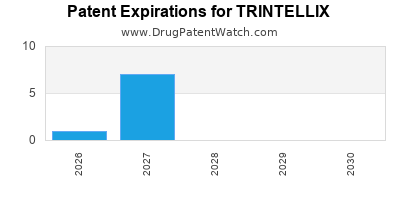
Trintellix is a drug marketed by Takeda Pharms Usa and is included in one NDA. There are ten patents protecting this drug and one Paragraph IV challenge.

This drug has two hundred and seventeen patent family members in forty-two countries.

The generic ingredient in TRINTELLIX is vortioxetine hydrobromide. There are sixteen drug master file entries for this compound. Three suppliers are listed for this compound. Additional details are available on the vortioxetine hydrobromide profile page.

DrugPatentWatch® Generic Entry Outlook for Trintellix

Trintellix was eligible for patent challenges on September 30, 2017.

By analyzing the patents and regulatory protections it appears that the earliest date for generic entry will be December 30, 2031. This may change due to patent challenges or generic licensing.

There have been twenty-six patent litigation cases involving the patents protecting this drug, indicating strong interest in generic launch. Recent data indicate that 63% of patent challenges are decided in favor of the generic patent challenger and that 54% of successful patent challengers promptly launch generic drugs.

There are three tentative approvals for the generic drug (vortioxetine hydrobromide), which indicates the potential for near-term generic launch.

Indicators of Generic Entry

< Available with Subscription >

  Start Trial

AI Deep Research
Questions you can ask:
  • What is the 5 year forecast for TRINTELLIX?
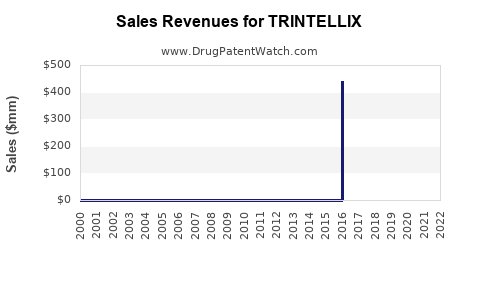
  • What are the global sales for TRINTELLIX?
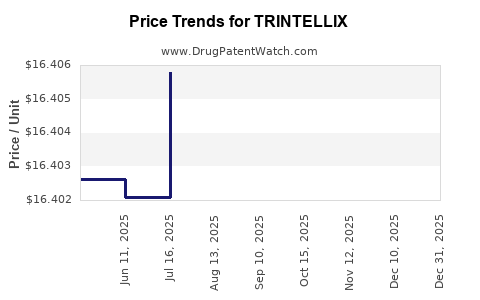
  • What is Average Wholesale Price for TRINTELLIX?
DrugPatentWatch® Estimated Loss of Exclusivity (LOE) Date for TRINTELLIX
Generic Entry Date for TRINTELLIX*:
Constraining patent/regulatory exclusivity:
NDA:
Dosage:

TABLET;ORAL

*The generic entry opportunity date is the latter of the last compound-claiming patent and the last regulatory exclusivity protection. Many factors can influence early or later generic entry. This date is provided as a rough estimate of generic entry potential and should not be used as an independent source.

Recent Clinical Trials for TRINTELLIX

Identify potential brand extensions & 505(b)(2) entrants

SponsorPhase
Seasons Biotechnology (Taizhou) Co., Ltd.Phase 1
H. Lundbeck A/SPhase 3
Todd DoylePhase 4

See all TRINTELLIX clinical trials

Paragraph IV (Patent) Challenges for TRINTELLIX
Tradename Dosage Ingredient Strength NDA ANDAs Submitted Submissiondate
TRINTELLIX Tablets vortioxetine hydrobromide 5 mg, 10 mg, 15 mg and 20 mg 204447 15 2017-10-02

US Patents and Regulatory Information for TRINTELLIX

TRINTELLIX is protected by ten US patents and two FDA Regulatory Exclusivities.

Based on analysis by DrugPatentWatch, the earliest date for a generic version of TRINTELLIX is ⤷  Start Trial.

This potential generic entry date is based on patent 8,722,684.

Generics may enter earlier, or later, based on new patent filings, patent extensions, patent invalidation, early generic licensing, generic entry preferences, and other factors.

Applicant Tradename Generic Name Dosage NDA Approval Date TE Type RLD RS Patent No. Patent Expiration Product Substance Delist Req. Exclusivity Expiration
Takeda Pharms Usa TRINTELLIX vortioxetine hydrobromide TABLET;ORAL 204447-004 Sep 30, 2013 RX Yes Yes 9,125,908*PED ⤷  Start Trial Y ⤷  Start Trial
Takeda Pharms Usa TRINTELLIX vortioxetine hydrobromide TABLET;ORAL 204447-003 Sep 30, 2013 DISCN Yes No 9,861,630*PED ⤷  Start Trial Y ⤷  Start Trial
Takeda Pharms Usa TRINTELLIX vortioxetine hydrobromide TABLET;ORAL 204447-004 Sep 30, 2013 RX Yes Yes 9,278,096*PED ⤷  Start Trial Y ⤷  Start Trial
Takeda Pharms Usa TRINTELLIX vortioxetine hydrobromide TABLET;ORAL 204447-003 Sep 30, 2013 DISCN Yes No 9,227,946*PED ⤷  Start Trial Y ⤷  Start Trial
Takeda Pharms Usa TRINTELLIX vortioxetine hydrobromide TABLET;ORAL 204447-003 Sep 30, 2013 DISCN Yes No 9,278,096*PED ⤷  Start Trial Y ⤷  Start Trial
Takeda Pharms Usa TRINTELLIX vortioxetine hydrobromide TABLET;ORAL 204447-003 Sep 30, 2013 DISCN Yes No 9,125,908*PED ⤷  Start Trial Y ⤷  Start Trial
>Applicant >Tradename >Generic Name >Dosage >NDA >Approval Date >TE >Type >RLD >RS >Patent No. >Patent Expiration >Product >Substance >Delist Req. >Exclusivity Expiration

Expired US Patents for TRINTELLIX

Applicant Tradename Generic Name Dosage NDA Approval Date Patent No. Patent Expiration
Takeda Pharms Usa TRINTELLIX vortioxetine hydrobromide TABLET;ORAL 204447-001 Sep 30, 2013 8,476,279 ⤷  Start Trial
Takeda Pharms Usa TRINTELLIX vortioxetine hydrobromide TABLET;ORAL 204447-004 Sep 30, 2013 8,476,279 ⤷  Start Trial
Takeda Pharms Usa TRINTELLIX vortioxetine hydrobromide TABLET;ORAL 204447-003 Sep 30, 2013 8,476,279 ⤷  Start Trial
Takeda Pharms Usa TRINTELLIX vortioxetine hydrobromide TABLET;ORAL 204447-002 Sep 30, 2013 8,476,279 ⤷  Start Trial
>Applicant >Tradename >Generic Name >Dosage >NDA >Approval Date >Patent No. >Patent Expiration

International Patents for TRINTELLIX

When does loss-of-exclusivity occur for TRINTELLIX?

Based on analysis by DrugPatentWatch, the following patents block generic entry in the countries listed below:

China

Patent: 2614179
Patent: 1- [2- (2,4-dimethylphenylsulfanyl)-phenyl] piperazine as a compound with combined serotonin reuptake, 5-ht3 and 5-ht1a activity for the treatment of cognitive impairment
Estimated Expiration: ⤷  Start Trial

Japan

Patent: 10521501
Estimated Expiration: ⤷  Start Trial

South Korea

Patent: 090125251
Patent: 1-[2-(2,4-DIMETHYLPHENYLSULFANYL)-PHENYL]PIPERAZINE AS A COMPOUND WITH COMBINED SEROTONIN REUPTAKE, 5-HT3 AND 5-HT1A ACTIVITY FOR THE TREATMENT OF PAIN OR RESIDUAL SYMPTOMS IN DEPRESSION RELATING TO SLEEP AND COGNITION
Estimated Expiration: ⤷  Start Trial

Spain

Patent: 79200
Estimated Expiration: ⤷  Start Trial

Patent: 32102
Estimated Expiration: ⤷  Start Trial

Generics may enter earlier, or later, based on new patent filings, patent extensions, patent invalidation, early generic licensing, generic entry preferences, and other factors.

See the table below for additional patents covering TRINTELLIX around the world.

Country Patent Number Title Estimated Expiration
Argentina 061481 ⤷  Start Trial
Argentina 065797 ⤷  Start Trial
Austria E495745 ⤷  Start Trial
Austria E540941 ⤷  Start Trial
Australia 2007260355 ⤷  Start Trial
Australia 2008228638 ⤷  Start Trial
>Country >Patent Number >Title >Estimated Expiration

Supplementary Protection Certificates for TRINTELLIX

Patent Number Supplementary Protection Certificate SPC Country SPC Expiration SPC Description
1436271 300652 Netherlands ⤷  Start Trial PRODUCT NAME: VORTIOXETINE OF EEN FARMACEUTISCH AANVAARDBAAR ZUURADDITIEZOUT ERVAN; REGISTRATION NO/DATE: EU/1/13/891/001-036 20131218
1436271 C300652 Netherlands ⤷  Start Trial PRODUCT NAME: VORTIOXETINE OF EEN; REGISTRATION NO/DATE: EU/1/13/891/001-036 20131218
1436271 PA2014013 Lithuania ⤷  Start Trial PRODUCT NAME: VORTIOXETINUM; REGISTRATION NO/DATE: EU/1/13/891 20131218
1436271 92397 Luxembourg ⤷  Start Trial PRODUCT NAME: VORTIOXETINE OU UN SEL D ADDITION D ACIDE DE CELUI-CI PHARMACEUTIQUEMENT ACCEPTABLE
1436271 CR 2014 00030 Denmark ⤷  Start Trial PRODUCT NAME: VORTIOXETIN ELLER FARMACEUTISK ACCEPTABLE SYREADDITIONSSALTE DERAF, HERUNDER VORTIOXETINHYDROBROMID; REG. NO/DATE: EU/1/13/891 20131218
1436271 14C0033 France ⤷  Start Trial PRODUCT NAME: VORTIOXETINE OU L'UN DE SES SELS D'ADDITION D'ACIDE PHARMACEUTIQUEMENT ACCEPTABLES; REGISTRATION NO/DATE: EU/1/13/891 20131218
>Patent Number >Supplementary Protection Certificate >SPC Country >SPC Expiration >SPC Description

Trintellix (vortioxetine) market dynamics and financial trajectory (2024–2029): exclusivity, competitive pressures, and revenue exposure

Last updated: July 29, 2026

Trintellix (vortioxetine) revenue has been pressured by generic and branded-competition dynamics since the loss of branded exclusivity in the US and by persistent payer steering toward lower-cost alternatives. The near-term revenue outlook is driven by (1) remaining line-of-therapy demand, (2) formulary position and prior authorization patterns, (3) price erosion versus generics, and (4) geography-specific patent and exclusivity tail.


How much revenue does Trintellix generate and what is its current growth trajectory?

Featured snippet answer: Trintellix has shifted from a branded growth profile to a late-stage revenue profile driven mainly by formularies that still carry vortioxetine (brand or authorized generic), with top-line growth limited by generic price compression and substitution.

US revenue trajectory: branded vs. vortioxetine generics

Key market dynamic is substitution after generic entry, which compresses net price and reduces incremental sales growth even when total treated populations remain stable. In practical terms:

  • Once FDA approval of ANDAs occurs for vortioxetine, retail and PBM reimbursement tends to shift patients to the lowest-cost covered product.
  • Brand-to-generic switching is reinforced by coverage tiers and step therapy when payers set “preferred SSRI/SNRI” or “preferred antidepressant” policies.

EU/UK trajectory: slower brand erosion, but class-level competition persists

Outside the US, net price erosion typically lags generic penetration due to:

  • country-by-country generic timing
  • reimbursement and reference-pricing rules
  • local marketing and contracting structures
  • jurisdiction-specific patent and supplementary protection certificate (SPC) tail for specific product/indication protection

What matters for financial modeling

For a drug like vortioxetine, the financial trajectory is usually best modeled using:

  • net sales = (TRx volume) × (net price per TRx)
  • TRx volume = (eligible patient pool) × (share of prescriptions among antidepressants) × (persistence/med continuation)
  • net price = brand net price ÷ branded displacement plus generic mix effect

What patents and exclusivity still matter for Trintellix, and when does exclusivity lose?

Featured snippet answer: Trintellix’s market exclusivity in the US is not the key driver of ongoing revenue because generic entry has already occurred; the remaining value is tied to geography-specific patent estates, indication-specific protection, and formulation or method-of-use coverage (where still active).

Patent landscape impact on commercial duration

Trintellix revenue endurance depends on whether active patent coverage:

  • blocks generic manufacturing at launch for additional dosage forms or presentations
  • protects specific clinical uses (method-of-use)
  • extends brand viability via controlled-switching or authorized-generic strategy

Timing question: when does Trintellix face new generic entry risk?

For most investors, “new risk” is less about the first generic launch and more about:

  • additional ANDA filings for alternate dosage forms
  • “design-around” challenges for new polymorphs, crystallization processes, or controlled-release variants
  • indication-specific protection that can delay substitution in defined label-driven segments

What is the Orange Book status of Trintellix (vortioxetine), and how does it drive generic entry risk?

Featured snippet answer: The Orange Book is the practical control panel for generic substitution risk because it lists patents that can trigger Paragraph IV litigation and potentially delay FDA approval.

How Orange Book listings translate into market outcomes

Orange Book-listed patents influence Trintellix market dynamics via:

  • Paragraph IV incentives for generic filers
  • settlement leverage that can shift “launch” dates (skinny label vs full label)
  • channel substitution timing (pharmacy substitution rules follow FDA approval dates, not marketing plans)

Practical “Orange Book to revenue” link

Even when primary composition-of-matter protection is expired, Orange Book listings can:

  • preserve a protected label for certain indications or patient cohorts
  • sustain PBM preference for brand longer than generic market entry alone would imply

How many patents cover Trintellix formulations, methods of use, and manufacturing, and which are most commercially important?

Featured snippet answer: The commercially important patent subset is typically narrower than the total estate. For revenue, the high-impact patents are those that block FDA approval for a directly substitutable product and label.

Patent estate categories that matter

  • Composition and crystal form
  • Process/manufacturing methods
  • Formulation and dosage presentation (including film coating or solvate/polymorph-related manufacturing controls)
  • Method-of-use patents (indication-specific label claims)
  • Use in combination regimens (less common in antidepressant dynamics, but can exist)

Where investors should focus in the Trintellix estate

  • Patents still listed on the Orange Book at the time of generic ANDA consideration
  • Patents that map to the narrowest label that drives prescribing (eg, major depressive disorder)

What generic or biosimilar competition exists for Trintellix (vortioxetine), and how does it compare with other antidepressants?

Featured snippet answer: Trintellix competes primarily with generics of vortioxetine and with branded and generic SSRI/SNRI alternatives, not with biosimilars (vortioxetine is a small molecule).

Competitive set: antidepressant class dynamics

Payers segment antidepressant choice using:

  • efficacy for specific endpoints (response/remission in major depressive disorder)
  • tolerability profile (GI effects, sexual dysfunction, discontinuation symptoms)
  • safety and monitoring requirements
  • formulary placement strategy

How Trintellix compares commercially

Trintellix’s share dynamics tend to be shaped by:

  • branded “differentiation” in early launch years
  • later displacement when net prices for vortioxetine generics converge with SSRIs/SNRIs
  • shifting physician preference due to non-brand evidence such as comparative effectiveness and local experience

Which companies are challenging Trintellix with ANDAs or Paragraph IV filings?

Featured snippet answer: The Paragraph IV landscape is directly relevant to short-run price and launch timing, but the commercial direction after generic entry is dominated by formulary placement and net price erosion.

How Paragraph IV outcomes influence market pricing

For small molecules like vortioxetine, the settlement structure and court outcomes affect:

  • which generic filers launch first
  • whether a “limited launch” occurs (eg, skinny label or partial coverage)
  • time-to-file for additional ANDAs, which accelerates competition and compresses net price

What Trintellix patent litigation and settlements affected generic launch timing?

Featured snippet answer: Patent litigation is the gating function for the first generics and for any delay in market entry. After the first waves of generic entry, revenue is increasingly determined by PBM formulary positioning and ongoing generic mix.

What to track for litigation-driven revenue changes

  • first approval date of each ANDA
  • court-triggered or settlement-triggered delay end dates
  • any changes in label scope tied to settlement “carve-outs”

What is the FDA regulatory status of Trintellix, including approvals, labeling, and switching dynamics?

Featured snippet answer: The clinical status of vortioxetine remains anchored in major depressive disorder labeling, while competitive dynamics depend on payer policy and substitution rules once generics are available.

FDA pathway relevance to market access

  • Brand access vs generic substitution follows FDA approval and PBM contracting cycles.
  • Any formulation changes that add dosage strengths or presentations can create temporary non-substitutability if generics are not immediately available for the specific NDC.

How do dosing, formulation, and line-of-therapy patterns influence Trintellix financial performance?

Featured snippet answer: Sustained TRx volume is driven by dosing persistence and tolerability-driven continuation, while financial performance depends on the net price mix between brand, authorized generic, and full generic.

Dosing and switching sensitivity

Antidepressant switching is sensitive to:

  • adverse event profile and discontinuation symptoms
  • patient history with SSRIs and SNRIs
  • prescriber habits after initial stabilization

Real-world persistence effects

If real-world persistence is high, TRx volume declines more slowly after generic penetration. If switching is common due to tolerability, volume erodes faster and net sales fall faster once brand is displaced.


What revenue risks exist for Trintellix from new generic entry, authorized generics, or formulation workarounds?

Featured snippet answer: The main incremental revenue risks are accelerated price compression from additional ANDA entrants, authorized generic availability, and substitution of specific NDCs that are currently less contested.

Generic launch scenarios that shift revenue quickly

  • First-to-market generic gets a pricing floor advantage
  • Subsequent entrants expand discounting and increase PBM leverage
  • Authorized generic reduces brand’s “net price tail” by offering wholesalers and PBMs a low-cost alternative even when brand remains contracted

How does Trintellix’s patent and commercial profile compare with competing antidepressants like Brintellix (same class/ingredient family) and key SSRI/SNRI peers?

Featured snippet answer: Trintellix competes in a crowded antidepressant market where patent-driven branded duration matters mainly early; once generics enter, performance hinges on residual differentiation, payer placement, and patient-level tolerability outcomes.

Comparative commercial dimensions

  • Patent duration: impacts early branded revenue ceiling
  • Net price: determines ability to maintain formulary preference
  • Safety/tolerability: influences switching rates across antidepressant classes
  • PBM contracting: determines how quickly branded share collapses after generic entry

Geographic market exposure: which regions drive remaining Trintellix value and where is erosion fastest?

Featured snippet answer: Regions where generic penetration occurred later or where reimbursement remains more favorable to vortioxetine preserve longer brand-like economics. Faster erosion correlates with earlier generic approvals and tighter reference pricing.

What to watch by region

  • US: fastest price compression after generic waves
  • EU large markets: slower dislocation due to country-specific entry timing and tender practices
  • Emerging markets: access and pricing depend on local manufacturing and reimbursement maturity

Key takeaways for investors and brand owners

  • Trintellix’s revenue trajectory is primarily a post-generic displacement story rather than a protected-exclusivity story.
  • The highest leverage variables are PBM formulary position, net price mix (brand vs authorized generic vs full generic), and patient persistence.
  • Litigation and Orange Book status still matter, but largely for launch timing of additional dosage forms and new entrant waves, which then accelerate net price compression.
  • In antidepressants, total treated population growth is rarely enough to offset displacement; valuation models must focus on net price and share, not just market size.

FAQs

1) What drives Trintellix prescription volume after generic entry?
Patient persistence, tolerability, and prescriber familiarity determine whether TRx volume holds up despite net price erosion.

2) Does Trintellix face biosimilar competition?
No. Vortioxetine is a small-molecule drug, so the competitive threat is generic small-molecule substitution and class-level antidepressant competition.

3) How do payer restrictions like prior authorization affect Trintellix revenue?
They can slow brand displacement and maintain a premium net price in pockets where coverage requires specific prior trial history.

4) What factors influence which generic NDCs gain the fastest share?
Wholesaler distribution, rebate/discount contracting, and PBM tiering decide whether the first entrants capture most prescriptions.

5) What is the most common commercialization risk after a generic launch?
Rapid net price compression as additional generic entrants expand discounting and reduce the brand’s ability to sustain formulary preference.


References

  1. FDA Orange Book: Approved Drug Products with Therapeutic Equivalence Evaluations. (Accessed 2026).
  2. FDA prescribing information for Trintellix (vortioxetine). (Accessed 2026).
  3. FDA Drug Approval Reports for vortioxetine (Trintellix). (Accessed 2026).

More… ↓

⤷  Start Trial

Make Better Decisions: Try a trial or see plans & pricing

Drugs may be covered by multiple patents or regulatory protections. All trademarks and applicant names are the property of their respective owners or licensors. Although great care is taken in the proper and correct provision of this service, thinkBiotech LLC does not accept any responsibility for possible consequences of errors or omissions in the provided data. The data presented herein is for information purposes only. There is no warranty that the data contained herein is error free. We do not provide individual investment advice. This service is not registered with any financial regulatory agency. The information we publish is educational only and based on our opinions plus our models. By using DrugPatentWatch you acknowledge that we do not provide personalized recommendations or advice. thinkBiotech performs no independent verification of facts as provided by public sources nor are attempts made to provide legal or investing advice. Any reliance on data provided herein is done solely at the discretion of the user. Users of this service are advised to seek professional advice and independent confirmation before considering acting on any of the provided information. thinkBiotech LLC reserves the right to amend, extend or withdraw any part or all of the offered service without notice.