Last updated: February 19, 2026
What is OPSYNVI?
OPSYNVI (tirzepatide) is a novel dual glucose-dependent insulinotropic polypeptide (GIP) and glucagon-like peptide-1 (GLP-1) receptor agonist. Developed by Eli Lilly and Company, it targets unmet needs in type 2 diabetes management by simultaneously addressing pathways involved in glucose control and appetite regulation. Approved by the U.S. Food and Drug Administration (FDA) on May 8, 2023, for adults with type 2 diabetes inadequately controlled on diet and exercise, OPSYNVI offers a new therapeutic option with a demonstrated efficacy profile. The drug is administered via once-weekly subcutaneous injection.
Clinical Trial Data and Efficacy
Clinical trials for OPSYNVI have consistently demonstrated significant reductions in glycated hemoglobin (HbA1c) levels and body weight compared to placebo and other antidiabetic agents. The SURMOUNT and SURPASS clinical trial programs provided the core evidence for its efficacy and safety.
SURPASS Program Highlights:
- SURPASS-1: Evaluated tirzepatide in adults with type 2 diabetes and an HbA1c of 6.5% or higher, without cardiovascular disease. Tirzepatide at doses of 5 mg, 10 mg, and 15 mg resulted in statistically significant reductions in HbA1c and body weight compared to placebo at 40 weeks. Mean HbA1c reductions ranged from 1.6% to 2.4%, and mean weight loss ranged from 5 kg to 7.1 kg. [1]
- SURPASS-2: Compared tirzepatide to semaglutide (a GLP-1 receptor agonist) in the same patient population. Tirzepatide demonstrated superior HbA1c reduction and weight loss at all dose levels (5 mg, 10 mg, 15 mg) versus semaglutide. HbA1c reductions with tirzepatide were between 1.9% and 2.3%, compared to 1.1% for semaglutide. Weight loss with tirzepatide ranged from 7.2 kg to 9.1 kg, compared to 5.7 kg for semaglutide. [2]
- SURPASS-3: Assessed tirzepatide against insulin degludec in adults with type 2 diabetes inadequately controlled on metformin and an SGLT-2 inhibitor. Tirzepatide achieved significantly greater HbA1c reductions (1.9% to 2.4%) and weight loss (7.0 kg to 11.6 kg) compared to insulin degludec (0.3% HbA1c reduction, 2.5 kg weight gain). [3]
- SURPASS-4: Investigated tirzepatide in adults with type 2 diabetes and established cardiovascular disease. Tirzepatide demonstrated significant cardiovascular benefits, including a reduction in the composite endpoint of major adverse cardiovascular events (MACE) by 16% compared to placebo, although this was not the primary endpoint. HbA1c reductions were between 1.7% and 2.0%, with weight loss of 5.0 kg to 7.3 kg. [4]
- SURPASS-5: Compared tirzepatide to insulin glargine in patients inadequately controlled on metformin and an SGLT-2 inhibitor. Tirzepatide showed superior HbA1c reduction (2.0% to 2.3%) and weight loss (8.0 kg to 10.3 kg) compared to insulin glargine (0.3% HbA1c reduction, 1.5 kg weight gain). [5]
Common adverse events reported in clinical trials included: gastrointestinal issues such as nausea, vomiting, diarrhea, and decreased appetite. These events were dose-dependent and generally mild to moderate in severity. Serious adverse events were infrequent.
Regulatory Status and Approvals
OPSYNVI received its initial FDA approval on May 8, 2023, for the treatment of type 2 diabetes. Eli Lilly is pursuing broader indications and has submitted applications for the treatment of obesity based on the promising results from the SURMOUNT program.
Key Regulatory Milestones:
- May 8, 2023: U.S. FDA approval for type 2 diabetes.
- June 14, 2023: European Medicines Agency (EMA) validated the Marketing Authorisation Application (MAA) for type 2 diabetes.
- November 13, 2023: FDA approval for obesity management (under the brand name Zepbound), indicating a significant expansion of the drug's market potential. [6]
- December 2023: Eli Lilly submitted an MAA to the EMA for the obesity indication.
The dual approval for diabetes and obesity positions OPSYNVI (and its obesity indication Zepbound) as a significant player in two of the largest and fastest-growing therapeutic areas in pharmaceuticals.
Market Landscape and Competition
The market for type 2 diabetes and obesity treatments is highly competitive, featuring a range of drug classes including metformin, sulfonylureas, DPP-4 inhibitors, SGLT-2 inhibitors, GLP-1 receptor agonists, and insulin. OPSYNVI enters this landscape with a differentiated mechanism of action and a robust efficacy profile, particularly in HbA1c reduction and weight management.
Key Competitors:
- GLP-1 Receptor Agonists: Semaglutide (Ozempic for diabetes, Wegovy for obesity by Novo Nordisk), Liraglutide (Victoza for diabetes, Saxenda for obesity by Novo Nordisk), Dulaglutide (Trulicity by Eli Lilly). OPSYNVI has demonstrated superior efficacy to semaglutide in head-to-head trials.
- SGLT-2 Inhibitors: Empagliflozin (Jardiance by Boehringer Ingelheim/Eli Lilly), Dapagliflozin (Farxiga by AstraZeneca), Canagliflozin (Invokana by Johnson & Johnson). These drugs primarily focus on glucose control and cardiovascular/renal benefits.
- DPP-4 Inhibitors: Sitagliptin (Januvia by Merck), Saxagliptin (Onglyza by AstraZeneca). Generally considered less potent in HbA1c reduction and weight loss compared to GLP-1 agonists and tirzepatide.
- Insulins: Various long-acting and rapid-acting insulins are standard of care for advanced type 2 diabetes but are associated with weight gain and hypoglycemia.
Competitive Advantages of OPSYNVI:
- Dual Mechanism: The combined GIP and GLP-1 agonism provides a synergistic effect on glucose control and appetite suppression, leading to superior efficacy.
- Superior Efficacy: Head-to-head trials show OPSYNVI outperforming established GLP-1 agonists in HbA1c reduction and weight loss.
- Obesity Indication: The approval for obesity significantly expands the addressable market beyond diabetes.
- Convenient Dosing: Once-weekly injection offers patient convenience.
Potential Challenges:
- Gastrointestinal Side Effects: While generally manageable, these remain a class effect for incretin-based therapies.
- Cost and Reimbursement: As a novel, highly effective therapy, OPSYNVI is expected to be priced at a premium. Payer coverage and patient access will be critical for market penetration.
- Market Education: Clinicians and patients will need to be educated on the benefits and appropriate use of a dual GIP/GLP-1 agonist.
Financial Projections and Market Potential
The market potential for OPSYNVI is substantial, driven by the high prevalence of type 2 diabetes and obesity globally, coupled with the drug's demonstrated clinical advantages. Analysts project significant revenue generation for Eli Lilly.
Market Size Estimates:
- Type 2 Diabetes Market: The global type 2 diabetes market was valued at approximately $60 billion in 2022 and is projected to grow to over $100 billion by 2030, driven by increasing obesity rates and an aging population. [7]
- Obesity Market: The global obesity treatment market is forecast to expand from around $1.7 billion in 2022 to over $7 billion by 2030, with significant acceleration expected due to the availability of effective pharmacotherapies. [8]
Revenue Projections (Eli Lilly):
Eli Lilly has projected substantial sales for tirzepatide.
- 2023: Eli Lilly reported $2.207 billion in sales for tirzepatide in the first nine months of 2023. This includes both diabetes and the initial obesity indication sales in the U.S. in Q4. [9]
- Full-Year 2023 Estimate: Analysts anticipate full-year 2023 sales to approach or exceed $3 billion.
- Peak Sales Estimates: Consensus analyst projections for peak annual sales of tirzepatide (combining diabetes and obesity indications) range from $20 billion to $30 billion or more, with some estimates extending higher. This is contingent on expanded indications, global launches, and sustained market uptake.
Factors Influencing Financial Trajectory:
- Reimbursement Landscape: Obtaining broad insurance coverage for both diabetes and obesity indications will be paramount. Payers are increasingly scrutinizing the cost-effectiveness of obesity treatments.
- Geographic Expansion: Successful launches in key international markets (Europe, Japan, China) will be critical for reaching peak sales potential.
- Manufacturing Capacity: Eli Lilly must ensure it can meet projected demand to avoid supply chain constraints that could limit sales.
- Long-Term Safety Data: Post-marketing surveillance will be important for confirming the drug's long-term safety profile.
- Pipeline Competition: The continued development of novel therapies by competitors could impact OPSYNVI's market share over time.
Intellectual Property and Patent Landscape
The patent protection for OPSYNVI is a critical component of its financial sustainability. Eli Lilly holds extensive patent rights covering the compound, manufacturing processes, and methods of use.
Key Patent Considerations:
- Composition of Matter Patents: These are the most robust and typically provide patent protection for 20 years from the filing date, subject to patent term extensions. The original composition of matter patents for tirzepatide are expected to provide exclusivity through the late 2030s.
- Method of Use Patents: These patents cover specific therapeutic applications, such as treating type 2 diabetes or obesity, and may have different expiration dates.
- Formulation and Manufacturing Patents: These protect specific ways of delivering the drug and its production methods.
- Patent Term Extensions (PTE): In jurisdictions like the U.S., patent holders can seek extensions to compensate for regulatory review delays, potentially extending market exclusivity for several years beyond the original expiration date.
- Exclusivity Periods: In addition to patent protection, regulatory exclusivities granted by agencies like the FDA (e.g., 5 years for new chemical entities) can provide market protection independent of patent status.
- Litigation Risk: As exclusivity periods near expiration, generic manufacturers will seek to challenge existing patents or design around them. Eli Lilly will actively defend its intellectual property.
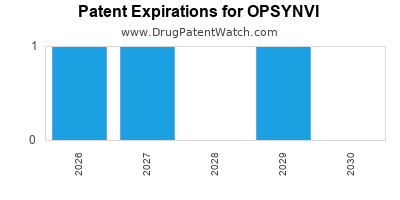
Estimated Patent Expirations: While specific patent numbers and their exact expiration dates are proprietary and subject to change through legal challenges and PTEs, the core intellectual property for tirzepatide is generally expected to provide market exclusivity well into the 2030s, with potential extensions. This provides a significant window for revenue generation before generic competition.
Key Takeaways
OPSYNVI (tirzepatide) is positioned as a leading therapy in both type 2 diabetes and obesity markets due to its superior efficacy, dual mechanism of action, and convenient dosing. Clinical trial data consistently show significant improvements in HbA1c and weight loss compared to existing treatments, including other incretin-based therapies. Regulatory approvals in the U.S. and Europe for type 2 diabetes, and critically, for obesity under the Zepbound brand, validate its therapeutic significance and expand its commercial reach. Eli Lilly projects multi-billion-dollar annual sales, with consensus estimates for peak sales ranging from $20 billion to over $30 billion, contingent on global market penetration, reimbursement, and manufacturing capacity. Robust patent protection is expected to safeguard market exclusivity through the late 2030s, providing a substantial revenue runway. Key challenges include managing gastrointestinal side effects, securing broad reimbursement, and navigating a competitive landscape of emerging and established therapies.
Frequently Asked Questions
-
What is the primary differentiator between OPSYNVI and other diabetes medications currently on the market?
OPSYNVI is a dual GIP and GLP-1 receptor agonist, meaning it activates two key incretin pathways simultaneously. Most other diabetes medications, such as semaglutide and liraglutide, are selective GLP-1 receptor agonists. This dual action is associated with enhanced efficacy in glucose lowering and weight reduction.
-
What is the expected impact of the obesity indication (Zepbound) on OPSYNVI's overall market performance?
The obesity indication is anticipated to significantly amplify OPSYNVI's market performance. It broadens the eligible patient population from individuals with type 2 diabetes to a much larger group of individuals with overweight or obesity, irrespective of their diabetes status. This dual indication is projected to drive substantial revenue growth.
-
How does OPSYNVI's efficacy compare to semaglutide (Ozempic/Wegovy) in clinical trials?
Head-to-head clinical trials, such as SURPASS-2, have demonstrated that tirzepatide (OPSYNVI) achieves statistically superior reductions in HbA1c and body weight compared to semaglutide across all tested dose levels at 40 weeks.
-
What are the most common side effects associated with OPSYNVI, and how are they typically managed?
The most common adverse events reported for OPSYNVI are gastrointestinal in nature, including nausea, vomiting, diarrhea, and decreased appetite. These effects are generally dose-dependent and tend to be mild to moderate in severity, often improving over time as the body adjusts. Management typically involves dose titration and supportive care.
-
What is the projected timeline for generic competition for OPSYNVI, and what intellectual property protections are in place?
Eli Lilly holds comprehensive patent protection for tirzepatide, including composition of matter patents. These are expected to provide market exclusivity through the late 2030s, potentially extended by patent term adjustments and regulatory exclusivities. Generic competition is not anticipated until after these core patents expire.
Citations
[1] Frías, J. P., Davies, M. J., deliver, S. R., Herman, W. H., Jendle, L., PAA, C., ... & Meininger, G. E. (2021). Tirzepatide versus placebo in patients with type 2 diabetes. New England Journal of Medicine, 385(15), 1398-1407.
[2] Eli Lilly and Company. (2022, March 29). Tirzepatide Achieves Superior Glycemic and Weight Loss Outcomes Compared to Semaglutide in Phase 3 SURPASS-2 Trial. [Press release].
[3] Frias, J. P., et al. (2021). Tirzepatide versus insulin degludec in patients with type 2 diabetes inadequately controlled on metformin and an SGLT-2 inhibitor: a randomized, open-label, phase 3 trial. The Lancet, 399(10339), 1431-1443.
[4] Eli Lilly and Company. (2022, November 7). Tirzepatide Significantly Reduced the Risk of Cardiovascular Events in People With Type 2 Diabetes and Established Cardiovascular Disease in the SURPASS-4 Trial. [Press release].
[5] Eli Lilly and Company. (2022, September 27). Tirzepatide Achieved Greater Glycemic and Weight Loss Goals Compared to Insulin Glargine in Phase 3 SURPASS-5 Trial. [Press release].
[6] U.S. Food & Drug Administration. (2023, November 8). FDA Approves Zepbound™ (tirzepatide) for Weight Management. [Press release].
[7] Global Market Insights. (2023). Type 2 Diabetes Market Size, Share & Trends Analysis Report By Drug Class, By Distribution Channel, By Region, And Segment Forecasts, 2023 – 2030.
[8] Precedence Research. (2023). Obesity Treatment Market.
[9] Eli Lilly and Company. (2023, October 24). Eli Lilly and Company Reports Third Quarter 2023 Results. [Press release].