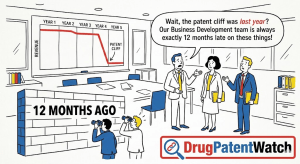
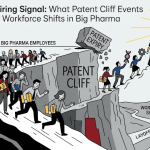
The pharmaceutical industry is staring into a $300 billion revenue vacuum. Between 2025 and 2030, one-sixth of the entire industry’s annual revenue will lose patent protection. We call this Patent Cliff 2.0, and it is three times larger than the wave that hit in 2016. If you are a business development executive or a portfolio manager, you likely think you have this on your radar. You are likely wrong. Most teams operate with a 12-month blind spot that costs them the ability to defend their assets or effectively challenge competitors.
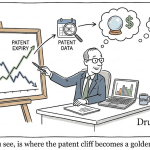
The patent cliff is not a metaphor. It is a specific calendar event. When a blockbuster drug—one generating over $1 billion annually—hits this cliff, the revenue drop is sudden and catastrophic. You do not see a gentle decline. You see an 80% to 90% collapse in revenue within the first year of generic entry.5 For the top ten pharmaceutical firms, the exposure is existential. Five of these companies face over 50% revenue exposure by 2030.
The Illusion of the 20-Year Patent
We often hear that a patent provides a 20-year monopoly. In the life sciences, this is a myth. While the USPTO grants 20 years from the date of filing, your effective patent life is much shorter. You have to file for protection early in the discovery phase, often before you even start preclinical testing. The clock starts ticking while the drug is still a laboratory hypothesis.
By the time you finish discovery, three phases of human clinical trials, and the regulatory review process, you have eaten up 10 to 15 years of that term. This leaves a commercial window of only seven to 12 years to recoup billions in R&D costs. Because this window is so compressed, every single day of exclusivity is worth millions. When the core patent expires, the transition to generic competition is a financial hemorrhage.
This attrition is what drives the industry’s obsession with lifecycle management. You aren’t just managing a drug; you are managing a ticking clock. If your team misses the strategic window to reformulate or protect that asset, you aren’t just losing a product. You are losing the engine that funds your next decade of innovation.
The 24-Month Stability Wall
The biggest mistake I see business development teams make is waiting too long to start a defense campaign. You cannot wait until 12 months before loss of exclusivity (LOE) to make a move. If you do, you have already lost. There is a 24-month stability wall that you cannot climb over with extra cash or late-night meetings.3
This lead time is a requirement of both chemical physics and global bureaucracy. If you want to change your packaging or reformulate your drug to fend off “dumb” generic copies, you need at least two years.3 You need 12 months just to generate the stability data that proves your new version stays effective on the shelf. Then you need another 12 months for regulatory agencies to review and approve those changes.
If you wait until 12 months before the cliff, you have no time to generate that data. You are forced to enter the market war with the same basic bottle or vial you used at launch. You have no shield. Tools like DrugPatentWatch are vital here because they let you identify these windows two to three years in advance.9 By the time your competitors realize the cliff is coming, you should already have your stability data in a repository and your new formulation ready for launch.
Small Molecules and the Day 1 Imperative
For small-molecule drugs, the drop is a literal cliff. These are your oral solids—tablets and capsules. Upon generic entry, a branded drug typically loses 80% to 90% of its sales within the first year. In some extreme cases, market share dwindles by 73% within just two weeks. This happens because of automatic substitution at the pharmacy level.12
In this market, we talk about the Day 1 Imperative. The first generic to hit the market secures a massive, durable advantage. If you are the first-to-file, you get a 180-day exclusivity window where you only compete with the brand.14 During this duopoly, you can capture 30% to 40% of the market share while keeping prices relatively high. But once more players enter, the floor drops.
Number of Generic Competitors
Price Reduction vs. Brand
1
30% – 39%
2
50% – 54%
3 – 5
60% – 79%
6 – 10+
80% – 95%
Source: 12
When you have ten or more competitors, the price often hits the marginal cost of goods sold. Every cent of cost matters. This is why 69% of generic drugs are manufactured outside the U.S., mostly in India and China. If your team is 12 months late to this party, you aren’t just fighting for market share; you are fighting for crumbs in a race to the bottom.10
The Biologic Managed Slope
Biologics don’t fall off cliffs; they walk down a managed slope. These are large, complex molecules like monoclonal antibodies. They are harder to manufacture and more expensive to develop—often costing over $100 million for a biosimilar. Because of this, you see fewer competitors, usually only two to five.12
Erosion for biologics is much slower. Patients who are stable on a therapy like Humira or Stelara are “sticky.” Physicians and patients are often hesitant to switch to a biosimilar unless there is a clear benefit or a mandate from a payer.12 Most biosimilars are approved but not designated as “interchangeable,” meaning a pharmacist cannot substitute them without a doctor’s order.
This slower uptake gives you a longer window for post-LOE strategies. For a drug like Stelara, J&J saw its sales drop 41% in 2025 after losing exclusivity, which is steep, but nothing like the 90% drops we see in small molecules. This difference in erosion curves means your forecasting models must be modality-specific. If you apply a small-molecule cliff model to a biologic, your valuation will be off by billions.
The BPCIA Patent Dance Trap
If you are dealing with biologics in the U.S., you have to understand the patent dance. This is a pre-litigation framework created by the Biologics Price Competition and Innovation Act (BPCIA).18 It is a 250-day choreography of information exchange between the biosimilar maker and the original brand.
The trap is in the disclosure. The biosimilar applicant has to hand over its confidential manufacturing process to its direct competitor. This is a massive strategic moment. Following the Supreme Court decision in Sandoz v. Amgen, this dance is now optional.18 A biosimilar maker can choose to skip the dance, but that triggers a different legal path that might allow the brand to seek immediate injunctions.
Business development teams often miss the signals here because they don’t track the “Purple Book” with the same intensity as the “Orange Book”.12 Historically, the Purple Book lacked patent data. Even after the Purple Book Continuity Act of 2020, the listings only appear after the patent dance has started. If you wait for the listing to appear in the Purple Book, you are already eight months behind the lead competitor.18
Reformulation: The Subcutaneous Pivot
The most effective way to kill a patent cliff is to make your own drug obsolete before the generics arrive. We call this the subcutaneous pivot. You move from a 30-minute intravenous (IV) infusion in a clinic to a 2-minute subcutaneous (SC) injection that a patient can do at home.2
Merck is currently executing this with Keytruda, the world’s top-selling drug.23 Keytruda generated $29.5 billion in 2024—over half of Merck’s entire business. The IV version loses its core patent in 2028.23 If Merck did nothing, they would lose 80% of that revenue.
Instead, they developed Keytruda Qlex, an SC version approved in late 2025.2 By migrating 30% to 40% of their patients to this new form, they preserve $9 billion to $12 billion in annual revenue.2 They spent about $1 billion on this program, which gives them an ROI of over 1,000%.2 More importantly, the patents on the SC delivery technology could protect that revenue until 2042.2 That is how you turn a cliff into a hill.
Digital Health and Ecosystem Lock-in
We are seeing a new type of lifecycle management: patent layering through digital adjacency. You don’t just sell a pill; you sell a platform. This covers clinical decision support software, companion apps, and proprietary connected devices.
If a drug’s efficacy is monitored and optimized through your proprietary device, and that device is integrated into the hospital’s clinical workflow, switching to a generic molecule is difficult. It requires the provider to abandon the entire digital ecosystem. These software patents create a 20-year legal moat that is completely separate from the drug’s chemistry.
Competitive intelligence teams use DrugPatentWatch to map these digital portfolios. You can see when a competitor is building a digital moat long before they launch the product. If you are a business development team looking to in-license a drug, you have to ask: is the value in the molecule or in the software that locks the patient in?.
Supply Chain as a Defensive Weapon
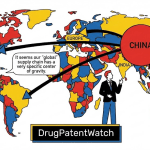
Your supply chain is not just a cost center. It is a competitive weapon. If you can secure your API sources and manufacturing capacity years before the cliff, you win.10 This is especially true now with the BIOSECURE Act and the shift away from Chinese CDMOs.10
Generic procurement teams use Paragraph IV litigation filings as a clock. These filings often trigger a 30-month stay on FDA approval, which gives you a predictable timeline to scale your manufacturing.13 If you are an innovator, you can use “excipient exclusion” as a defensive strategy. By using specific inactive ingredients that are harder for generics to source or replicate, you can delay their bioequivalence trials.
Data shows that drugs developed with these patient-centric, supply-chain-aware processes are 20% more likely to launch successfully. You have to move beyond reactive troubleshooting to intelligent risk mitigation. If you are 12 months late to securing your API, you will find yourself at the mercy of a brittle, fragile supply chain with no redundancy.
Predatory M&A and Valuation Corrections
The patent cliff creates a predictable cycle of M&A activity. When a large cap company hits a revenue gap, they stop caring about early-stage R&D and start looking for late-stage, de-risked assets to “buy” revenue.8 This drives up valuations for mid-sized biotechs with defensible IP.
We use risk-adjusted Net Present Value (rNPV) to model these deals.14 You have to forecast the peak sales and then model the price erosion curve based on how many competitors will enter. If your target’s core patent has a weak PTA or PTE calculation, their valuation should be adjusted downward.
I’ve seen companies save billions by running a target’s portfolio through a forecasting model that looks at the “effective” life rather than the “nominal” life. If the effective life is three years shorter than the legal term, that is a massive valuation correction that your BD team must catch before the deal closes.
Case Study: The Humira $19 Billion Delay
AbbVie’s Humira is the definitive study in lifecycle management.29 It was the world’s best-selling biologic, hitting $21 billion in 2022.30 AbbVie didn’t just have one patent; they built a thicket of over 130 patents. Some estimates say they applied for over 250 patents, half of which were filed after the drug had already been on the market for years.31
This thicket delayed U.S. biosimilar entry until 2023, even though biosimilars were already in Europe five years earlier.29 This delay cost the U.S. healthcare system an estimated $19 billion. AbbVie even used “shadow pricing” with Amgen, where both companies raised prices in lockstep rather than competing.
When the competition finally arrived, it wasn’t a sudden drop. Humira still expected to generate $15 billion in 2024. But the decline is now inevitable. Sales fell from $14 billion in 2023 to about $9 billion in 2024. This shows that while a patent thicket can buy you time, it cannot prevent the cliff.
Case Study: J&J and the Stelara Transition
Johnson & Johnson provides a different model with Stelara. Stelara peaked at $11 billion in 2023. When it lost U.S. patent exclusivity in 2025, J&J didn’t just panic.17 They were already preparing their portfolio for a “post-Stelara” future as far back as 2021.
They pumped up newer meds like Tremfya and Darzalex to fill the gap.35 Tremfya grew 31% in a single quarter as it scooped up indications that Stelara used to dominate.34 Even as Stelara’s sales tumbled 40%, J&J’s global innovative medicine revenue still grew by 5%.
This is how a resilient business model works. You divest non-core assets and double down on your own future pipeline before the cliff hits.7 J&J even pulled back from infectious disease and vaccine investments to ensure they had the capital to ease the Stelara transition.
Case Study: Januvia and the Settlement Strategy
Merck’s diabetes drug Januvia is a primary care blockbuster facing a settlement-driven cliff.37 Its key patent expired in 2023, but salt and polymorph patents extend to 2027. However, Merck reached settlements that allow generics to enter in May 2026.
This creates a predictable erosion. BD teams looking at Januvia can model the exact day the revenue will vanish. For Merck, this is a “meaningful headwind,” but it is small compared to the Keytruda cliff coming in 2028. The Januvia case shows that settlements are often the preferred way to manage a cliff, providing a certain date for all stakeholders rather than the volatility of a court verdict.32
The Regulatory Horizon: IRA and BIOSECURE
We have to talk about the Inflation Reduction Act (IRA).2 The IRA allows Medicare to negotiate prices on top-selling drugs like Eliquis and Keytruda.2 This effectively creates a “legislative cliff” that can hit even before your patents expire.
Keytruda was selected for negotiation in 2026, with new prices active in 2028—the same year its core patent expires. This is a “double impact” that compounds the revenue hit. Your business development team has to factor this in. If you are buying an asset that is likely to be a Medicare negotiation target, its long-term value is significantly lower than it was three years ago.24
At the same time, the BIOSECURE Act is forcing companies to re-evaluate their supply chains. If you rely on a Chinese CDMO for your post-LOE manufacturing, you might find yourself unable to sell to the U.S. government. This adds another layer to your IP and BD strategy. You have to secure your supply chain as early as you secure your patents.
Key Takeaways
The $300 billion patent cliff between 2025 and 2030 is three times larger than the previous cycle, with five of the top ten pharma companies facing over 50% revenue exposure.
Business development teams are consistently 12 months late because they ignore the 24-month stability wall required for chemical data and regulatory review. If defense strategies don’t begin at the 36-month mark, the asset is likely undefendable.
The difference between a small-molecule cliff and a biologic slope is fundamental to valuation. Small molecules lose 80% of revenue almost instantly due to automatic substitution, while biologics require complex payer and physician switches.
Reformulation strategies, particularly moving from intravenous to subcutaneous administration, offer an ROI of over 1,000%. Merck’s Keytruda Qlex program is the current benchmark for preserving billions in annual revenue through formulation IP.
IP intelligence platforms like DrugPatentWatch are no longer optional tools for legal teams. They are essential competitive signals for BD, procurement, and supply chain teams to identify 180-day exclusivity windows and M&A targets.
FAQ
Why do most pharma BD teams miss the 24-month lead time for defensive changes?
Most teams operate on annual budget cycles and reactive performance metrics. Because a patent cliff is perceived as a “future” legal event, teams often prioritize near-term launches. However, the physical requirements for stability testing (12 months) and the regulatory queue (12 months) mean that by the time the cliff is one year away, the window to change the product is already closed.
How does the BPCIA “patent dance” create a blind spot for biosimilar developers?
The dance is a 250-day disclosure process that is now optional. If a developer skips it, the brand can seek immediate litigation. The blind spot occurs because “Purple Book” patent listings only appear after the dance begins. Developers who rely solely on the Purple Book are often months behind competitors who conducted their own FTO (Freedom to Operate) analysis earlier.
Can digital health patents really stop generic substitution?
Yes, through ecosystem lock-in. If a physician uses a proprietary app to dose a drug, and that app is the only one FDA-cleared for that specific clinical outcome, a pharmacist cannot substitute the “dumb” generic pill without the physician also abandoning the software. This creates a commercial barrier that lasts as long as the software patent.
What is the “Day 1 Imperative” in the generic market?
The first generic to market typically captures the majority of the generic share and enjoys a 180-day duopoly with the brand. Once a second or third competitor enters, the price drops by 50% or more. If you aren’t ready to launch on the very first day of patent expiry, your potential margins vanish.
How does the Inflation Reduction Act change patent cliff modeling?
The IRA introduces price negotiations that can start nine years after a small-molecule drug is approved and 13 years for a biologic. This can act as a “soft cliff” that lowers the drug’s price before the actual patent expiry, significantly reducing the terminal value of the asset and its attractiveness as an M&A target.
DrugPatentWatch. (2025). Pharma doesn’t buy on features, they buy on fear of LOE.
Intuition Labs. (2026). Drug Patent Expirations 2026.
DeepCeutix. (2026). $300 Billion in Pharma Revenue Loses Patent Protection by 2030.
LAbiotech. (2024). The Pharma Patent Cliff.
DrugPatentWatch. (2025). The Drug Patent Cliff Portfolio: A Strategic Guide.
Pammolli, F., et al. (2011). The productivity crisis in pharmaceutical R&D.
Kilpatrick IP Rx. (2025). The Cost of Waiting.
Commonwealth Fund. (2025). How Drugmakers Use the Patent Process to Keep Prices High.
DrugPatentWatch. (2024). The Math of Monopoly: Why a 20-Year Drug Patent Lasts Only 12.
Caldwell Law. (2025). Learning from the Pharmaceutical Industry: How to Avoid a Patent Cliff.
Center for Biosimilars. (2025). Biosimilars Drive Savings and Access.
DrugPatentWatch. (2025). Biopharma Packaging: Use LOE Waves to Forecast.
DrugPatentWatch. (2025). Mastering the Inevitable: A Strategic Guide to Drug Market Share Erosion.
Alira Health. (2024). Navigating Growth: Global Biosimilars Market.
IQVIA Institute. (2024). Assessing the Biosimilar Void in the US.
DrugPatentWatch. (2025). Defend the Moat: Extending Pharma Riches with Digital Health.
DrugPatentWatch. (2025). The Patent Playbook: A Strategic Guide to M&A.
DrugPatentWatch. (2025). The Global Gambit: Identifying Cross-Border Licensing.
DrugPatentWatch. (2024). Citations and Market Intelligence.
DrugPatentWatch. (2025). Using DrugPatentWatch for Out-Licensing.
JPO. (2011). Comparative Research on Patent Act.
UK Parliament. (2017). European Union Withdrawal Bill Debates.
DrugPatentWatch. (2025). Mastering the Dance: A Strategic Guide to BPCIA.
DrugPatentWatch. (2025). Establishing a Defensive Patent Expiry Forecasting Program.
American Bar Association. (2025). Symposium on Patent Policy.
Journal of Medical Economics. (2017). Assessment of Biosimilar Impact.
BioPharma Dive. (2025). Amgen and Sandoz Begin Biosimilar Trial.
Intuition Labs. (2025). Measuring AI ROI in Drug Discovery.
DrugPatentWatch. (2025). The Patent is the Supply Chain.
DrugPatentWatch. (2025). A Data-Driven Approach to Generic Drug Portfolio Mastery.
Ciberspring. (2025). Measuring AI ROI in Pharma.
Proactive Worldwide. (2025). How Competitive Intelligence Fuels Authorized Generics.
ClaritasRx. (2023). Pharma Market Insights.
DrugPatentWatch. (2025). Biosimilar Market Timing: The Investor’s Clock.
U.S. House Committee on Oversight and Reform. (2021). AbbVie Staff Report.