The Ticking Clock: Why Patent Expiration is the Most Important Date in Pharma
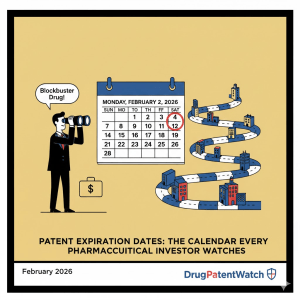
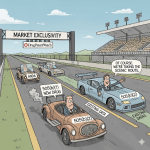
In pharmaceutical finance and strategy, a single date on a calendar can hold more sway than a year’s worth of clinical trial data or a blockbuster marketing campaign. This is not the date of a drug’s discovery, nor its regulatory approval. It is the date its core patent expires. This moment, often years in the making, represents the most predictable and yet most disruptive event in a drug’s lifecycle. It is the point at which a legally protected monopoly, the very engine of the industry’s economic model, dissolves into a fiercely competitive marketplace.
The journey of a new medicine from a laboratory concept to a patient’s hands is a marathon of immense cost and risk. It is a process that typically spans 10 to 15 years, with research and development (R&D) expenditures frequently soaring into the billions of dollars.1 To incentivize companies to undertake this perilous journey, the global intellectual property system offers a crucial reward: a temporary monopoly granted through a patent.3 This period of market exclusivity is the fundamental mechanism by which innovators recoup their staggering upfront investments and generate the profits necessary to fund the search for the next generation of therapies. It is, by design, the lifeblood of pharmaceutical innovation.
But this monopoly is finite. The patent system was conceived as a grand bargain between the innovator and society. In exchange for a limited period of exclusivity, the inventor must fully disclose the invention, allowing others to learn from it and, eventually, to compete with it. This ensures that today’s breakthroughs become tomorrow’s affordable standards of care.6 The expiration of that patent is the fulfillment of this bargain. For the innovator company, however, it triggers a seismic shift in market value, a phenomenon colloquially known as the “patent cliff.”
Understanding this dynamic is not merely an academic exercise for intellectual property lawyers. It is the central strategic challenge for every stakeholder in the pharmaceutical ecosystem. For the C-suite of a brand-name manufacturer, it is a recurring threat that dictates long-term R&D and M&A strategy. For a generic or biosimilar developer, it is a calendar of immense opportunity, marking the moments when new markets become accessible. And for the investor, it is the ultimate catalyst—a predictable event that can erase billions from a company’s valuation or create fortunes for those who anticipate the shift. The entire financial architecture of the pharmaceutical industry, from the venture capital that funds early-stage biotechs to the valuation models used in multi-billion-dollar mergers, is built upon the predictable, yet perilous, nature of patent expiration. The date on that calendar is not just a legal footnote; it is the primary driver of capital allocation and the relentless force that propels the industry’s cycle of destruction and creation.
The Patent Cliff: A Ticking Time Bomb of Tectonic Magnitude
The term “patent cliff” is more than just industry jargon; it is a visceral and apt description of the financial precipice that pharmaceutical companies face. It signifies a sharp, sudden, and often catastrophic decline in revenue that occurs when a blockbuster drug loses its patent protection and the floodgates of competition are thrown open.8 This is not a gentle erosion of market share; it is a fundamental restructuring of the market from a high-margin monopoly to a low-margin, high-volume commodity business.10
Defining the Phenomenon: More Than Just a Drop in Revenue
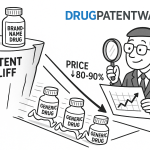
The financial impact of a patent cliff is staggering. For traditional small-molecule drugs, it is not uncommon for the innovator to lose 80% to 90% of their market share within the first year of generic entry.10 This precipitous drop is driven by the immediate availability of chemically identical generic versions at prices that can be 80% to 85% lower than the branded original.9 Payers, pharmacy benefit managers (PBMs), and healthcare systems are heavily incentivized to switch patients to these cheaper alternatives, leading to a rapid and near-total collapse of the branded drug’s revenue stream.
The scale of this recurring phenomenon is now reaching unprecedented levels. While the industry has navigated patent cliffs before, the wave approaching between 2025 and 2030 is of a different magnitude entirely.
The pharmaceutical industry faces a major patent cliff later this decade, with more than $200 billion in annual revenue at risk through 2030.10
Industry analysts project that nearly 70 high-revenue products are set to lose exclusivity in this period, putting a colossal sum—estimated to be between $200 billion and $300 billion in annual global sales—at risk.11 Arda Ural, a health sciences markets leader at EY, has described the scale of this event as being of “tectonic magnitude”.19 This is not a distant threat; it is an imminent and structural feature of the market that is forcing every major pharmaceutical company to re-evaluate its pipeline, its M&A strategy, and its very business model.
The Investor’s Perspective: Why the Cliff Shakes Stock Prices
For investors, a patent cliff is a primary source of risk and a key focus of due diligence. A company’s stock price is a reflection of its future earnings potential. When a significant portion of that future revenue is set to vanish on a specific date, the market reacts accordingly, often well in advance of the actual expiration. A looming, unaddressed patent cliff can erode investor confidence, depress stock prices, and severely limit a company’s access to the capital needed for future innovation.10 Consequently, communicating a clear and credible strategy for navigating this cliff has become a critical component of modern investor relations.
The market’s reaction, however, is not uniform. A company’s vulnerability is a direct function of its “revenue concentration”—the percentage of its total sales derived from the expiring drug. A diversified pharmaceutical giant, while still facing significant challenges, is better positioned to absorb the shock than a smaller biotech company whose entire valuation may be built upon a single product.
Consider the case of Pfizer and its cholesterol drug Lipitor. At its peak, Lipitor accounted for roughly one-sixth of Pfizer’s total sales—a massive figure, but not an existential one.22 The loss of exclusivity was painful, leading to significant restructuring and layoffs, but the company’s diversified portfolio allowed it to survive and eventually recover.23 In contrast, a company with high revenue concentration and a weak or early-stage R&D pipeline faces a much more dire situation. The market will punish this lack of diversification far more severely in the years leading up to the patent cliff.
Therefore, a sophisticated investor must analyze not just the absolute revenue of the expiring drug, but its revenue relative to the company’s total sales and, critically, the maturity of its pipeline assets poised to replace that income. A high revenue concentration paired with a weak pipeline is a glaring red flag, signaling extreme vulnerability and a high probability of defensive M&A activity—either as a desperate buyer seeking to acquire new revenue streams or as a weakened target for a larger competitor.
The Architecture of Monopoly: Deconstructing the Pharmaceutical Patent Portfolio
To understand how companies defend against the patent cliff, one must first understand the structure of the fortress they are defending. A drug’s market exclusivity is rarely protected by a single patent. Instead, it is shielded by a complex, multi-layered portfolio of intellectual property and regulatory protections, each with its own lifespan and strategic purpose. Mastering the nuances of this architecture is fundamental to accurately predicting a drug’s true period of market monopoly.
The Bedrock of Value: Statutory Patent Term vs. Effective Patent Life
At the most basic level, a patent grants protection for a period of 20 years from its earliest filing date.2 This 20-year standard is a global mandate for all World Trade Organization (WTO) member nations under the Agreement on Trade-Related Aspects of Intellectual Property Rights (TRIPS).2 However, a critical and often misunderstood distinction exists between this statutory patent term and the
effective patent life—the actual period during which a drug is on the market with no generic competition.1
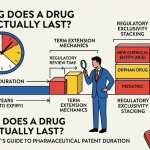
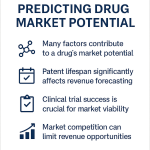
The effective life is consistently and significantly shorter than the nominal 20 years. The reason is simple: the patent clock starts ticking from the filing date, long before the drug is approved for sale. The arduous process of preclinical research, multi-phase clinical trials, and rigorous regulatory review can easily consume 10 to 15 years of the 20-year term.1 The result is that a new drug, on average, enjoys only about 7 to 12 years of effective market exclusivity from its launch date until its foundational patents expire.2 This chasm between the 20-year term and the 7-to-12-year window of actual market exclusivity is the crucible in which nearly every high-stakes commercial strategy is forged. The immense pressure to recoup billions in R&D investment within this compressed timeframe explains the industry’s aggressive launch pricing, its massive marketing expenditures, and its relentless, forward-looking focus on lifecycle management.10
The Patent Arsenal: A Multi-Layered Fortress of Protection
Savvy pharmaceutical companies do not rely on a single patent. They strategically construct a “multi-layered web of protection” or a “patent thicket” using a diverse array of patent types to create formidable barriers against competition.1 This approach is not merely about accumulating patents but about creating a defensive structure that is both deep and diverse.
Composition of Matter Patents: The Crown Jewels
Widely regarded as the “crown jewels” of pharmaceutical intellectual property, composition of matter patents are the most valuable and sought-after form of protection.1 These patents claim the active pharmaceutical ingredient (API) itself—the core molecule responsible for the drug’s therapeutic effect. Their power lies in their breadth; they block any competitor from making, using, or selling the same drug for
any purpose for the duration of the patent term. For an investor evaluating an early-stage biotech, the existence and strength of a granted composition of matter patent in key markets is often the single most important driver of the company’s valuation.
Secondary Patents: The Tools of Lifecycle Management
While the composition of matter patent provides the initial foundation for monopoly, it is the strategic use of secondary patents that extends and fortifies it. These patents are typically filed later in a drug’s lifecycle to protect incremental innovations, forming the primary mechanism of lifecycle management and the more controversial practice of “evergreening”.1 The arsenal of secondary patents includes:
Method of Use Patents: These patents do not cover the drug itself, but rather a specific, novel way of using it to treat a particular disease or condition.2 For example, a drug initially approved for heart disease might later be found effective in treating cancer; a new method of use patent can protect this new indication, potentially blocking a generic from being marketed for that specific use even after the original composition of matter patent has expired.
Formulation Patents: These protect the specific “recipe” or delivery mechanism of the drug, such as an extended-release tablet, a transdermal patch, or a unique injectable solution.27 By developing and patenting improved formulations that offer greater patient convenience or a better side-effect profile, companies can encourage doctors and patients to switch to the new version, thereby preserving market share when the original formulation goes generic.
Dosage Regimen Patents: In some jurisdictions, patents can be obtained for specific dosing schedules or treatment regimens.30 This adds another layer of protection that a generic competitor must navigate.
Process Patents: These patents protect innovative methods for manufacturing the drug.25 While historically less powerful for small-molecule drugs, process patents are critically important for biologics, where the complex manufacturing process is inextricably linked to the final product’s characteristics.
Polymorph, Salt, and Ester Patents: These cover different crystalline structures (polymorphs) or chemical variations (salts, esters) of the API.30 These forms can have different properties related to stability, bioavailability, or manufacturing, and patenting them can block generics from using a more advantageous form of the drug substance.
Beyond Patents: The Overlapping World of Regulatory Exclusivities
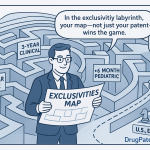
To further complicate the picture, market exclusivity is not derived solely from patents. Regulatory agencies like the U.S. Food and Drug Administration (FDA) grant their own forms of exclusivity to incentivize certain types of drug development. These regulatory exclusivities run in parallel to patents and can sometimes extend a drug’s monopoly even after all relevant patents have expired. Key types include:
New Chemical Entity (NCE) Exclusivity: In the U.S., a drug containing an active ingredient never before approved by the FDA is granted five years of market exclusivity from the date of its approval.2
Orphan Drug Exclusivity (ODE): To encourage the development of treatments for rare diseases (affecting fewer than 200,000 people in the U.S.), the FDA grants a seven-year period of market exclusivity for the approved orphan indication.2
Pediatric Exclusivity: As an incentive for companies to conduct studies of their drugs in children, the FDA can grant an additional six months of exclusivity, which is tacked onto any existing patents and other regulatory exclusivities the drug may have.2
Biologics Exclusivity: Under the Biologics Price Competition and Innovation Act (BPCIA), a new biologic reference product is granted a full 12 years of market exclusivity from its approval date, a significantly longer period than the five years granted to NCEs.2
Stretching the Clock: Patent Term Extensions (PTE) and Adjustments (PTA)
Recognizing that much of the 20-year patent term is lost to regulatory delays, the Hatch-Waxman Act of 1984 created a provision for Patent Term Extension (PTE). This allows a patent holder to apply to restore a portion of the patent life that was consumed during the FDA’s review process.11
The calculation is complex, but the key limitations are that the extension cannot exceed five years, and the total remaining patent term after approval (including the extension) cannot be more than 14 years.2 This 14-year cap on effective market life from the date of approval is a critical data point that investors and competitors must factor into their financial models. Separately, Patent Term Adjustment (PTA) can be granted by the U.S. Patent and Trademark Office (USPTO) to compensate for administrative delays during the patent examination process itself.
The interplay of these different layers of protection is complex. The final Loss of Exclusivity (LOE) date for a drug is not determined by a single patent but by a multi-variable equation. The “controlling” date is the one that expires last, whether it is a core patent, a secondary patent, a regulatory exclusivity, or an extension. A superficial analysis that only looks at the main composition of matter patent is dangerously misleading. A sophisticated investor or competitor must meticulously map out all forms of IP and regulatory protection to identify the “last man standing.” This complex calculus is precisely why specialized competitive intelligence platforms like DrugPatentWatch, which aggregate and analyze these disparate data points, are not a luxury but a necessity for strategic decision-making.48
The Rules of Engagement: Navigating the Legal Frameworks of Competition
The battle between brand-name drug innovators and their generic or biosimilar challengers is not a lawless free-for-all. It is a highly structured conflict governed by two landmark pieces of U.S. legislation: the Hatch-Waxman Act for traditional small-molecule drugs and the Biologics Price Competition and Innovation Act (BPCIA) for large-molecule biologics. These legal frameworks define the pathways for competition, the incentives for challenging patents, and the rules of litigation that shape the entire pharmaceutical marketplace.
The Small-Molecule Battlefield: The Hatch-Waxman Act
Enacted in 1984, the Drug Price Competition and Patent Term Restoration Act, universally known as the Hatch-Waxman Act, is arguably the most influential piece of pharmaceutical legislation in modern history. It was a “grand compromise” designed to strike a delicate balance: rewarding innovators for their R&D investment while creating a robust pathway for affordable generic drugs to enter the market.37
The ANDA Pathway: The Generic Superhighway
The cornerstone of the Hatch-Waxman Act is the Abbreviated New Drug Application (ANDA) pathway.37 Prior to the Act, a generic manufacturer had to conduct its own expensive and time-consuming clinical trials to prove its version of a drug was safe and effective. The ANDA pathway revolutionized this process by allowing generic companies to rely on the FDA’s previous finding of safety and efficacy for the original brand-name drug. The generic applicant only needs to demonstrate that its product is “bioequivalent”—meaning it is absorbed into the bloodstream at the same rate and to the same extent as the brand-name drug. This dramatically lowered the cost and time required for market entry, giving birth to the modern generic drug industry.
The Paragraph IV Certification: An Invitation to Litigate
The Act also created a unique legal mechanism for generics to challenge innovator patents before they expire. When a generic company files an ANDA, it must make a certification for each patent listed in the FDA’s Orange Book for the reference drug. The most aggressive and strategically important of these is the “Paragraph IV” (P-IV) certification, in which the generic applicant asserts that the brand’s patent is invalid, unenforceable, or will not be infringed by the generic product.53
Filing a P-IV certification is considered an “artificial act of infringement” under the law.55 This clever legal fiction allows the brand-name company to sue the generic applicant for patent infringement immediately, long before the generic drug is actually launched. This mechanism is designed to resolve patent disputes before a potentially infringing product hits the market, providing a degree of predictability for both sides.
The 30-Month Stay and the 180-Day Exclusivity Prize
The Hatch-Waxman framework includes two powerful incentives that shape the timing and dynamics of litigation. First, if the brand company files an infringement suit within 45 days of receiving the P-IV notification, the FDA is automatically barred from granting final approval to the generic’s ANDA for up to 30 months.7 This “30-month stay” provides a defined period for the parties to litigate the patent dispute in federal court.
Second, and most critically, the Act provides a powerful prize to encourage these patent challenges. The first generic company to submit a “substantially complete” ANDA with a P-IV certification is rewarded with 180 days of marketing exclusivity.36 During this six-month period, the FDA cannot approve any other generic versions of the same drug. This creates a highly lucrative duopoly between the brand-name drug and the first generic, allowing the challenger to capture significant market share at a price that is lower than the brand but higher than what would exist under full competition. This 180-day exclusivity is the primary driver of the “race to the courthouse” among generic firms.
The Biologics Arena: The Biologics Price Competition and Innovation Act (BPCIA)
For decades, there was no equivalent pathway for generic versions of biologic drugs. Biologics—large, complex molecules derived from living organisms, such as monoclonal antibodies—are far more difficult to manufacture and characterize than small-molecule drugs. In 2010, as part of the Affordable Care Act, Congress enacted the BPCIA to create a regulatory pathway for “biosimilars”.43
Biosimilar vs. Interchangeable: A Critical Distinction
The BPCIA created two tiers of follow-on biologics, a distinction that has profound commercial implications.
Biosimilar: A biosimilar product must be “highly similar” to the original reference product, with “no clinically meaningful differences” in terms of safety, purity, and potency.43 Achieving this standard is a rigorous scientific undertaking, often requiring extensive analytical studies and human clinical trials.
Interchangeable: This is a higher designation. An interchangeable biosimilar must meet the biosimilarity standard and be expected to produce the same clinical result as the reference product in any given patient. Furthermore, for products administered more than once, the risk of switching between the reference product and the interchangeable biosimilar must not be greater than using the reference product alone. The key commercial advantage is that an interchangeable product can be substituted for the reference product by a pharmacist without the intervention of the prescribing physician, much like a traditional generic drug.7 This makes achieving interchangeability a significant competitive advantage.
The “Patent Dance”: A Structured Path to Litigation
The BPCIA also established a complex, multi-step process for identifying and litigating patents, colloquially known as the “patent dance”.7 This framework involves a series of confidential information exchanges between the biosimilar applicant and the reference product sponsor, with specific timelines for each side to disclose their lists of relevant patents and their positions on infringement and validity. The process is designed to narrow the scope of potential disputes before litigation begins. Unlike the mandatory P-IV process, the patent dance is technically optional for the biosimilar applicant, but the decision to engage or not has significant strategic consequences for how and when patent litigation can proceed.62
The legal frameworks governing small molecules and biologics create fundamentally different competitive landscapes. The Hatch-Waxman system is engineered for high-stakes, relatively rapid conflict, with the 180-day exclusivity prize creating a powerful incentive for a “race-to-file” mentality among generic challengers. Investment in this space is often a bet on a binary legal outcome. In contrast, the BPCIA framework for biologics is slower, more complex, and vastly more expensive. The high cost of development, the protracted nature of the patent dance, and the commercial hurdles of marketing a non-interchangeable product mean that biosimilar competition unfolds over a longer timeline. For investors, this means a biosimilar play is less about a single legal catalyst and more about a long-term bet on a company’s scientific prowess, manufacturing capabilities, and commercial execution, in addition to its legal strategy.
Defending the Fortress: Innovator Strategies for Lifecycle Management (LCM)
Brand-name pharmaceutical companies do not passively await the expiration of their core patents. They engage in a sophisticated and continuous process of Lifecycle Management (LCM), a set of strategies designed to maximize a drug’s commercial value and extend its revenue-generating life for as long as legally and commercially feasible.30 These strategies range from genuine, patient-benefiting innovations to more controversial tactics that test the boundaries of patent and antitrust law.
The LCM Playbook: Extending Value Beyond the Core Patent
At its best, LCM involves true innovation that improves a therapy for patients, creating new, patentable value that builds upon the original discovery. These strategies not only defend market share but also advance clinical care.
New Formulations: One of the most common and effective LCM strategies is the development of an improved formulation. This often involves creating an extended-release (ER) or sustained-release version of a drug that was initially taken multiple times a day. An ER formulation can improve patient compliance and convenience, providing a clear clinical benefit. A classic example is Eli Lilly’s launch of Prozac Weekly, a once-a-week formulation of fluoxetine, which helped preserve market share after the original daily-dose Prozac patent expired.31
New Delivery Systems: Shifting the route of administration can also create significant new value. Transitioning a drug from an intravenous (IV) infusion administered in a hospital to a subcutaneous auto-injector that a patient can use at home is a major improvement in convenience and quality of life.7 These new delivery devices are often patentable in their own right.
New Indications (Repurposing): Discovering that an existing drug is effective for a completely new disease is a powerful LCM strategy. This “repurposing” can open up entirely new markets and is protected by new method-of-use patents.7 The recent success of diabetes drugs like Ozempic being repurposed and approved for weight management is a prime example of this strategy’s power.66
Combination Therapies: Combining two or more active ingredients, often with complementary mechanisms of action, into a single pill can improve efficacy and patient adherence. These fixed-dose combinations are considered new products and are eligible for their own patents.7
The Gray Zone: “Evergreening” and “Product Hopping”
While the strategies above often provide clear patient benefits, the line can blur into more controversial tactics aimed primarily at extending monopoly rather than advancing medicine. “Evergreening” is the term used to describe the practice of obtaining secondary patents on minor, often non-innovative, modifications to a drug for the primary purpose of blocking generic competition.67 This is an incredibly common practice; research has shown that nearly 80% of the top-selling drugs have extended their protection with new patents, and a staggering 66% of all patent applications for these drugs are filed
after they have already received FDA approval.68
A particularly aggressive form of evergreening is known as “product hopping” or “product switching.” In a typical product hop, the brand-name company launches a new, trivially different version of their drug (e.g., switching from a capsule to a tablet, or a slight change in dosage) shortly before the original version’s patent expires. They then aggressively market the new version to doctors and patients and, in some cases, completely withdraw the original product from the market.65 This “hard switch” effectively forces patients onto the new, patent-protected version, thereby destroying the market for the impending generic of the original drug, as pharmacists cannot substitute a generic for a product that is no longer prescribed.
The Ultimate Defense: Building a “Patent Thicket”
The most formidable defensive strategy in the modern pharmaceutical landscape is the creation of a “patent thicket.” This involves surrounding a single blockbuster product with a dense, overlapping web of dozens or even hundreds of secondary patents, covering every conceivable aspect of the drug: its formulation, dosing regimens, manufacturing processes, and methods of use.1
The strategic goal of a patent thicket is not necessarily to win every potential lawsuit. Instead, it is to create an impenetrable legal jungle that makes litigation prohibitively expensive and risky for any potential challenger. A generic or biosimilar company faced with a thicket of 100+ patents must be prepared to spend tens of millions of dollars and years in court to clear a path to market. This immense litigation burden can deter many potential competitors altogether or, more commonly, force them into settlements that delay their market entry. This strategy has proven particularly effective for complex biologic drugs, where the intricate manufacturing processes provide fertile ground for filing numerous process patents.41
Post-Exclusivity Warfare: Authorized Generics and Rebate Walls
Even after a generic competitor enters the market, the brand company’s strategic maneuvering does not end.
Authorized Generics (AGs): An AG is a generic version of a drug that is marketed by the brand company itself or through a partner. The brand company can launch its AG at the same time as the first independent generic competitor.10 This allows the innovator to immediately capture a share of the generic market, and the increased competition puts downward pressure on the independent generic’s price, making the 180-day exclusivity period less profitable and thus a less attractive prize to fight for.
Rebate Strategies and “Rebate Walls”: In the period leading up to and following loss of exclusivity, brand companies can use their relationships with powerful PBMs to their advantage. They can terminate existing rebate contracts on the expiring drug to maximize final-year revenue, or they can offer substantial rebates on a next-generation, patent-protected product contingent on the PBM giving it preferential formulary placement over the incoming generic or biosimilar.10 This can create a “rebate wall” that makes it difficult for a new competitor to gain market access, even with a lower list price.
The most successful defensive campaigns are not reactive but are proactive and deeply integrated across the organization. They begin years before a patent is set to expire and weave together legal, commercial, and R&D efforts into a unified strategy. The R&D team develops a follow-on product, the legal team patents it, and the commercial team begins educating the market and negotiating with payers to ensure a smooth transition. This multi-pronged approach demonstrates that modern lifecycle management is not just a series of legal tactics but a core business function essential for softening the inevitable patent cliff.
The Art of the Siege: Generic and Biosimilar Market Entry Strategies
While innovator companies focus on defending their fortresses, generic and biosimilar manufacturers are masters of the siege. Their business models are built on identifying vulnerabilities in a brand’s defenses and executing a swift, efficient, and legally sound strategy to enter the market. Their success hinges on a completely different set of skills than those of their branded counterparts: operational efficiency, regulatory speed, and, above all, legal and strategic acumen.
The Generic Playbook: Speed, Efficiency, and Legal Acumen
The generic pharmaceutical business is a game of volume and speed. Unlike innovators who compete on clinical differentiation, generics compete almost entirely on price. With margins that are often razor-thin, the entire business model is predicated on minimizing costs and being among the first to enter a newly opened market.6
The most critical element of this strategy is the pursuit of the 180-day exclusivity period granted under the Hatch-Waxman Act. Being the “first-to-file” an ANDA with a Paragraph IV certification is the single greatest competitive advantage a generic company can achieve.50 This six-month head start against other generics allows the first filer to capture a substantial portion of the market at a more favorable price point before full-scale commoditization sets in. This prize transforms patent litigation from a defensive necessity into a primary offensive weapon; generic companies actively seek out and challenge patents as a means to trigger the 180-day clock and accelerate their market entry.51
The “At-Risk” Launch: A High-Stakes Financial Gamble
One of the boldest and most consequential strategies in the generic playbook is the “at-risk” launch. This occurs when a generic company decides to launch its product after receiving FDA approval but before all patent litigation with the brand company has been fully resolved.77
This is a high-stakes financial gamble. If the generic company ultimately loses the patent infringement case on appeal, it could be liable for massive damages, potentially including the brand’s lost profits, which can be trebled by the court. These damages can easily wipe out any revenue earned during the at-risk period and more.79 However, if the generic company prevails, the rewards are immense. By launching early, it can establish a strong market presence and reap the profits of being the first or only generic available, sometimes for many months.
This decision is not a reckless one but a carefully calculated business risk. Economic models show that for a first-filer who has already won a favorable decision at the district court level, the probability of being overturned on appeal is relatively low. In these circumstances, the expected value of launching at risk is generally positive, and data shows that generics in this position almost always choose to launch quickly.79
The Biosimilar Challenge: Navigating a More Complex Path
For biosimilar developers, the path to market is significantly more arduous and capital-intensive. The barriers to entry are substantially higher than for small-molecule generics.
Higher Development Costs: Creating a biosimilar is not a simple matter of chemical replication. It is a complex biological manufacturing process that can cost between $100 million and $300 million and take six to nine years.10 Unlike generics, biosimilar applications almost always require some form of human clinical trials to demonstrate similarity to the reference product.11
Manufacturing Complexity: The inherent variability of biologic drugs, which are produced in living cell lines, makes the manufacturing process itself a critical and often patentable aspect of the product.83 A biosimilar developer must not only replicate the final molecule but also develop a robust and consistent manufacturing process, all while navigating the brand’s process patents.
A More Protracted Legal Gauntlet: Biosimilar challengers must navigate the BPCIA’s complex “patent dance” and frequently confront the most formidable patent thickets, which are often built around blockbuster biologics.58 This requires deep legal resources and a long-term litigation strategy that can span many years and multiple legal forums.
For these challengers, success often hinges on a “weakest link” strategy. Rather than attempting a brute-force assault on a brand’s entire patent portfolio, a savvy challenger will conduct extensive prior art searches and technical analysis to identify the most vulnerable patents. The core composition of matter patent for a biologic is often very strong. However, the dozens or hundreds of secondary patents covering specific formulations, manufacturing steps, or methods of use can be more susceptible to invalidity challenges, for instance, by being deemed “obvious” in light of existing science.63 By focusing its litigation resources on surgically invalidating a few key secondary patents, a biosimilar company can often carve out a narrow but viable path to market. This underscores that the true measure of a brand’s defensive fortress is not just the sheer number of patents, but the quality, diversity, and strength of each individual patent within the thicket.
Lessons from the Battlefield: Three Landmark Case Studies
The strategic principles of patent cliffs and lifecycle management are best understood through the lens of real-world battles. The patent expirations of three of the most successful drugs in history—Lipitor, Humira, and Revlimid—serve as landmark case studies. Together, they tell the story of the evolution of pharmaceutical strategy over the past two decades, from the classic cliff dive of a small molecule to the highly managed, multi-year descents of modern blockbusters.
Case Study 1: Pfizer’s Lipitor – The Classic Small-Molecule Cliff
Background: Pfizer’s Lipitor (atorvastatin) was the undisputed king of the blockbuster era. As the world’s best-selling drug for nearly a decade, it generated over $130 billion in cumulative sales, with peak annual revenues of around $13 billion.10 Its U.S. patent expiration on November 30, 2011, was the most anticipated and feared patent cliff event of its time.
Pfizer’s Pre-LOE Strategy: Pfizer’s defense was built on two pillars: brand power and legal delay. For years, the company invested heavily in direct-to-consumer (DTC) advertising, making Lipitor a household name and building immense brand loyalty among patients and physicians.22 Concurrently, Pfizer engaged in protracted and aggressive patent litigation against generic challengers, most notably Ranbaxy Laboratories, to delay generic entry for as long as possible.86
Pfizer’s Post-LOE Strategy: When the cliff finally arrived, Pfizer unleashed a ferocious “180-day war” to defend its market share during the first generic’s exclusivity period.24 The strategy was multifaceted and aggressive:
The “Lipitor-For-You” Program: In an unprecedented move, Pfizer offered a discount card that lowered the co-pay for insured patients to just $4 a month, effectively matching the expected co-pay for the generic version.23
Authorized Generic (AG) Launch: Pfizer partnered with Watson Pharmaceuticals (now part of Teva) to launch an authorized generic version of atorvastatin. This allowed Pfizer to retain a significant portion of the profits from the generic market and immediately compete on price with Ranbaxy’s generic.24
Channel Incentives: Pfizer compensated pharmacists to continue educating patients on the value of the branded Lipitor and to promote the discount card program.23
The Outcome: The result was a textbook patent cliff: a catastrophic but ultimately managed revenue decline. Lipitor’s worldwide sales plummeted by 59%, falling from $9.6 billion in 2011 to just $3.9 billion in 2012.10 The drop was severe and unavoidable. However, Pfizer’s aggressive post-LOE tactics were surprisingly effective. The company managed to retain a much larger share of the atorvastatin market for a longer period than analysts had predicted, successfully softening the financial blow and providing a valuable lesson in hand-to-hand commercial combat in a post-exclusivity world.24
Case Study 2: AbbVie’s Humira – The Modern Fortress and the Controlled Burn
Background: If Lipitor defined the classic patent cliff, AbbVie’s Humira (adalimumab) defined the modern defense. This anti-inflammatory biologic became the new best-selling drug in history, with cumulative sales exceeding $200 billion.90 Its primary U.S. patent was set to expire in 2016, yet the first biosimilar competitors did not enter the U.S. market until January 2023—a remarkable seven-year delay.59
The Strategy: The Patent Thicket Masterclass: AbbVie’s strategy was a masterclass in the proactive use of intellectual property to create an impenetrable legal fortress. The company built a massive “patent thicket” around Humira, filing over 250 patent applications and securing more than 136 granted U.S. patents.70 Critically, over 90% of these patents were filed
after Humira was already on the market.92 Many of these secondary patents covered incremental aspects like formulations, manufacturing methods, and dosing regimens, and a large number were found to be duplicative, linked together by a procedural mechanism known as a “terminal disclaimer”.73
The Execution: Litigation and Settlement: AbbVie wielded this patent thicket as a weapon. It sued every company that attempted to develop a Humira biosimilar, asserting dozens of patents in each case. The sheer volume of patents created immense legal costs and uncertainty for the challengers.92 This overwhelming legal leverage allowed AbbVie to force every single one of its competitors into settlement agreements. Under the terms of these deals, the biosimilar companies were granted a license to enter the European market as early as 2018 but had to agree to stay out of the lucrative U.S. market until 2023.72
The Outcome: The strategy was a resounding success for AbbVie. It secured an additional seven years of U.S. monopoly, generating tens of billions of dollars in revenue that would have otherwise been lost to competition. When biosimilars finally did launch in 2023, their entry was staggered and controlled by the terms of the settlement agreements. The resulting revenue decline was a “controlled burn,” not a cliff. Humira’s sales fell by a significant but manageable 30.8% in the first nine months of competition—a far cry from the 80-90% freefall typical of small molecules.10 The uptake of biosimilars was further complicated by PBM formulary decisions and AbbVie’s successful market conversion of patients to a newer, higher-concentration, citrate-free formulation of Humira that not all biosimilars initially matched.95
Case Study 3: BMS’s Revlimid – The Negotiated Peace and the Volume-Limited Ramp
Background: Revlimid (lenalidomide) was the cornerstone of Celgene’s portfolio and a critical revenue driver for Bristol Myers Squibb following its $74 billion acquisition of the company.97 As a vital therapy for multiple myeloma, Revlimid generated massive sales. Its primary patent expired in 2019, yet through a series of shrewd legal maneuvers, BMS ensured that full, unrestricted generic competition would be delayed until January 2026.98
The Strategy: The Volume-Limited Settlement: Like AbbVie, BMS/Celgene built a substantial patent thicket around Revlimid, with 206 patent applications filed and 117 granted.98 However, they used the leverage from this thicket not to block market entry entirely, but to meticulously
control the terms of that entry. They engaged with multiple generic challengers—including Natco Pharma, Dr. Reddy’s Laboratories, and Sun Pharmaceutical—and negotiated a series of groundbreaking settlement agreements.97
The Execution: The key innovation in these settlements was the concept of volume limitation. The agreements permitted the first generics to enter the market in March 2022, but with a crucial caveat: they could only sell a severely restricted quantity of their product. Initially, the licensed volume was a “mid-single-digit percentage” of Revlimid’s total monthly volume.98 These volume caps were designed to gradually increase over time, finally being eliminated on January 31, 2026, at which point unrestricted generic competition could begin.99
The Outcome: BMS effectively transformed a patent cliff into a predictable, multi-year revenue ramp-down. By tightly controlling the supply of generic lenalidomide, they prevented the price collapse that typically accompanies generic entry. With demand far outstripping the limited generic supply, there was little incentive for the generic manufacturers to offer deep discounts.101 This allowed BMS to maintain the vast majority of the market share and premium pricing for Revlimid for nearly four years after the first generic technically entered the market. The strategy was a masterclass in monetizing the final years of a drug’s lifecycle and providing absolute clarity and predictability to investors regarding the revenue trajectory.
Drug (Company)
Peak Annual Sales
Molecule Type
Number of Key Patents
Primary LCM Strategy
Nature of LOE
Revenue Drop (Year 1)
Key Strategic Takeaway
Lipitor (Pfizer)
~$13 Billion
Small Molecule
~5-10
Brand Loyalty / AG Launch
Classic “Cliff”
-59%
Brand loyalty and reactive tactics can soften the blow but cannot prevent a steep revenue cliff for small molecules.
Humira (AbbVie)
~$21 Billion
Biologic
130+ (Thicket)
Patent Thicket / Litigation & Settlement
Controlled Entry
-31% (9 mos.)
A proactive, massive patent thicket can be used as leverage to negotiate multi-year delays in biosimilar competition.
Revlimid (BMS)
~$12 Billion
Small Molecule
115+ (Thicket)
Volume-Limited Settlements
Managed Ramp-Down
Gradual Decline
Patent leverage can be used not just to control the timing of generic entry, but also the volume, transforming a cliff into a predictable, multi-year decline.
The evolution from the Lipitor cliff to the Revlimid ramp represents a fundamental paradigm shift in innovator strategy. The goal has evolved from a desperate, reactive defense (“defend and delay”) to a sophisticated, proactive campaign of market shaping (“control and monetize”). The objective is no longer to win a winner-take-all war in court but to negotiate the most profitable and predictable peace treaty possible. For investors and competitors, this means that analyzing the fine print of settlement agreements has become just as critical as analyzing the patents themselves, as these documents now contain the true blueprint for a blockbuster’s final act.
The Intelligence Edge: Turning Patent Data into Actionable Strategy
In the strategic chess match of pharmaceutical patents, information is the ultimate advantage. The ability to anticipate a competitor’s move, identify a hidden opportunity, or accurately predict a market-shaking event like a patent expiration depends entirely on the quality of one’s intelligence. Fortunately, a wealth of data exists in the public domain. The challenge—and the opportunity—lies in knowing where to find it, how to interpret it, and, most importantly, how to integrate disparate sources into a coherent, actionable strategy.
The Analyst’s Toolkit: Key Data Sources
Several key public databases form the foundation of any pharmaceutical patent analysis.
The FDA’s Orange Book: Officially titled Approved Drug Products with Therapeutic Equivalence Evaluations, the Orange Book is the definitive resource for U.S. small-molecule drugs.36 It is the master list that links an approved drug product to the specific patents and regulatory exclusivities that protect it. For any analyst, the Orange Book is the starting point for determining a drug’s IP status, identifying patent numbers, use codes, and expiration dates for both patents and regulatory exclusivities like NCE and ODE.103
The USPTO Databases: The United States Patent and Trademark Office maintains several powerful, publicly accessible search tools. The Patent Public Search platform allows users to conduct basic and advanced queries to find the full text of patents and published applications, review the “file wrapper” or prosecution history (the back-and-forth between the applicant and the patent examiner), and check the assignment database to verify patent ownership.107
International Databases: Since patents are territorial, a comprehensive analysis requires a global perspective. The European Patent Office (EPO) and the World Intellectual Property Organization (WIPO) maintain databases like Espacenet and PATENTSCOPE, respectively, which are invaluable for researching international patent filings and tracking a patent “family” across multiple jurisdictions.107
The Power of Integration: Why Raw Data Isn’t Enough
While these primary sources are essential, they present a significant challenge: the data is fragmented and exists in silos. A patent’s expiration date listed on a USPTO document is, by itself, an incomplete and potentially misleading piece of information. To determine the true loss of exclusivity date, an analyst must manually cross-reference that patent with the FDA’s Orange Book to see if it has been granted a Patent Term Extension (PTE). They must then check for any overlapping regulatory exclusivities. Finally, they need to search federal court dockets to determine if the patent is currently being challenged in litigation by a generic filer. This manual process of connecting the dots is time-consuming, complex, and highly susceptible to error.
Competitive Intelligence Platforms: The Strategic Multiplier
This is where the critical function of Competitive Intelligence (CI) comes into play. The role of a CI team or platform is to systematically collect, analyze, and transform this fragmented raw data into actionable intelligence that can inform high-stakes strategic decisions, such as M&A targeting, R&D pipeline prioritization, and brand lifecycle planning.113
Specialized platforms like DrugPatentWatch are designed specifically to solve this integration problem. They serve as a strategic multiplier by aggregating data from dozens of global sources—patent offices, regulatory agencies, clinical trial registries, court dockets, and financial filings—into a single, searchable, and interconnected database.48
The value of such a platform lies not just in the data it contains, but in the connections it makes and the strategic questions it enables users to answer efficiently:
For Portfolio Management and Business Development: A user can instantly identify market entry opportunities by screening for blockbuster drugs with key patents expiring in the next 24-36 months. They can see which generic companies have already filed ANDAs, what the status of any litigation is, and what other secondary patents or exclusivities might still block entry.29 This allows a generic company to make smarter portfolio decisions or a brand company to identify potential acquisition targets to fill an impending revenue gap.
For Wholesalers and Payers: A drug wholesaler can use the platform’s accurate LOE forecasts to prevent overstocking high-priced branded drugs that are about to face generic competition. A healthcare payer or PBM can use the same data to proactively manage their formularies and forecast budget impacts, preparing to switch to lower-cost alternatives as soon as they become available.119
For Investors and Analysts: An investor can de-risk an investment by performing rapid and thorough IP due diligence. They can assess the strength of a company’s patent portfolio, uncover hidden litigation risks, and accurately model the revenue trajectory of a drug based on a fully adjusted and verified LOE date.28
The return on investment for such a tool is measured in accelerated decision-making and the avoidance of costly strategic mistakes. For a business development executive, the ability to identify a promising biotech with a strong, unencumbered patent portfolio weeks or months before competitors can mean the difference between a successful acquisition at a favorable valuation and a missed opportunity. For these sophisticated users, integrated competitive intelligence is the essential engine for turning data into a decisive competitive advantage.
The Investor’s Calendar: A Forward-Looking Conclusion
The cyclical nature of patent expirations provides a unique and powerful lens through which to view the future of the pharmaceutical industry. The patent cliff is not a random event; it is a predictable wave that can be tracked years in advance. By understanding the principles of patent law, lifecycle management, and competitive strategy, stakeholders can move from being reactive victims of this wave to proactive navigators who can harness its power.
The Next Wave: Blockbusters Facing the Cliff (2025-2030)
The calendar for the remainder of this decade is crowded with blockbuster drugs approaching their own loss of exclusivity events. This next wave will test the modern defensive playbooks pioneered by companies like AbbVie and BMS. Key drugs to watch include:
Merck’s Keytruda (pembrolizumab): The current king of oncology and one of the world’s top-selling drugs, Keytruda’s key patents are expected to expire around 2028. Its cliff will be a major test for the biosimilar market in immuno-oncology.10
BMS/Pfizer’s Eliquis (apixaban): A leading oral anticoagulant, Eliquis faces a complex web of patent challenges and potential generic entry between 2026 and 2028.10
Johnson & Johnson’s Stelara (ustekinumab): This major immunology biologic lost its primary patent in 2023, with biosimilar entry expected to begin in 2025 following settlement agreements.15
BMS’s Opdivo (nivolumab): Another foundational immuno-oncology drug, Opdivo’s exclusivity is expected to end around 2028, setting up a major competitive battle with Keytruda biosimilars.90
A defining characteristic of this upcoming cliff is that it is dominated by complex biologic drugs.15 This means the lessons from Humira’s defense—the importance of patent thickets, the strategic use of settlements, and the commercial challenges of biosimilar uptake—will be far more relevant than the small-molecule playbook of the Lipitor era.
The Modern Playbook: A Strategic Checklist for Evaluating LOE Readiness
For investors, executives, and analysts assessing a company’s preparedness for its own patent cliff, the lessons learned from past battles can be synthesized into an actionable checklist:
Pipeline Strength: How robust is the company’s R&D pipeline? Do they have late-stage assets with the potential to launch and scale quickly enough to replace the revenue that will be lost? A company’s ability to innovate its way out of a cliff is the most fundamental measure of its long-term health.27
M&A Strategy: Is the company effectively using its balance sheet to acquire external innovation? A track record of successful, strategically sound mergers and acquisitions is a strong indicator of a management team that is proactively addressing its revenue gaps.17
IP Defensibility: How strong is the patent portfolio around the expiring drug? Is it a true, dense “thicket” that provides significant litigation leverage, or is it just a handful of core patents that are more easily challenged? The nature of the portfolio will dictate the company’s ability to delay or control competitive entry.127
Lifecycle Management Execution: Has the company successfully developed and marketed next-generation products or new indications? The ability to migrate the market to a new, patent-protected version of a therapy before the original goes generic is a hallmark of a sophisticated LCM strategy.14
Commercial and Payer Strategy: How is the company managing its relationships with PBMs and payers? Are they in a position to use rebates and contracting to create a favorable formulary position for a follow-on product or to disadvantage incoming competitors?.75
Final Word: The Patent Cliff as an Engine of Innovation
Ultimately, it is essential to reframe the patent cliff not as a purely negative or destructive force, but as a necessary and powerful catalyst for progress. It is the unforgiving deadline that forces companies to constantly look forward. The finite nature of the patent monopoly compels the industry to reinvest its profits from today’s blockbusters into the high-risk R&D and strategic acquisitions that will yield tomorrow’s breakthrough therapies.4
The patent cliff ensures that no company can rest on its laurels. It creates a perpetual cycle of innovation, competition, and, eventually, affordability. The calendar of patent expirations is, therefore, more than just a schedule of financial events; it is the very heartbeat of the pharmaceutical industry, driving the relentless search for new medicines that save and improve lives. For those who can read it correctly, that calendar is not a threat, but a map to the future.
Key Takeaways
The “Effective Patent Life” is the Critical Metric: The statutory 20-year patent term is misleading. Due to 10-15 years of R&D and regulatory review, the actual period of market exclusivity for a new drug is typically only 7-12 years, creating immense pressure to maximize revenue in a compressed timeframe.
The Patent Cliff is a Market-Shaping Event: The expiration of a blockbuster drug’s patent can erase 80-90% of its revenue within a year. The upcoming cliff (2025-2030) puts over $200 billion in annual revenue at risk and is a primary driver of industry M&A and R&D strategy.
Defense has Evolved from Reactive to Proactive: Early strategies (e.g., Pfizer’s Lipitor) focused on reactive, post-LOE tactics like discount cards and authorized generics. Modern strategies (e.g., AbbVie’s Humira, BMS’s Revlimid) are proactive, using “patent thickets” and sophisticated settlement agreements to control the timing and even the volume of competition for years.
Biologics Have Changed the Game: The patent cliff for biologics is fundamentally different from that for small molecules. Higher development costs for biosimilars, manufacturing complexity, and the lack of automatic substitution lead to a slower, more gradual revenue decline, making the “Humira playbook” more relevant than the “Lipitor playbook” for the next wave of expirations.
Integrated Intelligence is a Competitive Necessity: Raw patent and regulatory data is fragmented and insufficient. Strategic success requires leveraging integrated competitive intelligence platforms like DrugPatentWatch to connect disparate data points (patents, exclusivities, litigation, clinical trials) into a single, actionable view for predicting LOE, de-risking investments, and identifying opportunities.
Frequently Asked Questions (FAQ)
1. What is the single biggest mistake companies make when preparing for a patent cliff?
The single biggest mistake is starting too late. Effective lifecycle management is not a strategy that can be implemented 12-18 months before a patent expires. The most successful defenses, like AbbVie’s for Humira, begin almost a decade in advance. This involves filing secondary patents on new formulations and manufacturing processes early on, initiating clinical trials for new indications years before LOE, and building a legal and commercial strategy that anticipates and shapes the competitive landscape long before the first challenger even files an application. A reactive approach is a recipe for a steep and painful revenue decline.
2. How has the Inflation Reduction Act (IRA) changed the strategic calculation around patent expiration?
The IRA’s drug price negotiation provisions have added a new layer of complexity. For small molecules, Medicare can begin negotiating prices 9 years after approval; for biologics, it’s 13 years. This creates a new “exclusivity clock” that runs in parallel to the patent clock. It may disincentivize companies from pursuing late-stage lifecycle management, such as getting a new indication approved in year 10 of a biologic’s life, as the return on that investment would be curtailed by impending price negotiations. Conversely, it could incentivize brand companies to strike limited-distribution deals with generic/biosimilar manufacturers to introduce “competition” just before the negotiation window opens, as the law only allows negotiation for single-source drugs. This adds another strategic variable to the already complex LOE calculus.
3. Why would a biosimilar developer ever choose not to participate in the BPCIA “patent dance”?
While the patent dance is designed to create an orderly process, some biosimilar developers may strategically opt out. By not providing the reference product sponsor (RPS) with its confidential application and manufacturing information, the biosimilar applicant can control the initial flow of information. This might be advantageous if they believe the RPS’s patent portfolio is weak and they want to force the RPS to sue “blindly” without full knowledge of the biosimilar’s specific processes. It can also be a tactic to delay the start of litigation. However, this is a high-risk strategy. It can open the biosimilar company up to an immediate infringement lawsuit on any and all patents the RPS chooses to assert and may be viewed unfavorably by the court. The decision is a complex strategic calculation based on the perceived strength of the brand’s patents and the challenger’s appetite for risk.
4. For an investor, is a large “patent thicket” always a positive sign for a brand-name drug?
Not necessarily. While a large patent thicket, like Humira’s, can be an incredibly effective deterrent, its quality is more important than its quantity. A thicket composed of many weak, “obvious,” or duplicative patents may not withstand a determined legal challenge in court or at the Patent Trial and Appeal Board (PTAB). An investor must look deeper. Are the patents diverse, covering different aspects like formulation, manufacturing, and methods of use? Have they survived previous legal challenges? A smaller portfolio of 15-20 strong, non-obvious, and diverse patents may ultimately provide a more durable defense than a thicket of 100+ weak patents. The thicket is a measure of a company’s leverage to force a settlement, which is valuable, but it is not a guarantee of invincibility in litigation.
5. Beyond the first-to-file 180-day exclusivity, what is the most important factor for a generic company’s success?
Beyond securing the 180-day exclusivity, the most critical factor is manufacturing and supply chain reliability. The generic business is a low-margin, high-volume game. A company that can reliably produce a high-quality product at a massive scale and ensure it is consistently available to pharmacies will win contracts with the large PBMs and wholesalers. Recent drug shortages, often in the generic space, have highlighted the fragility of pharmaceutical supply chains. A generic company that builds a reputation for rock-solid reliability, even if it isn’t the absolute lowest-cost producer, can build a sustainable competitive advantage and become a preferred partner for payers who prioritize consistency of supply over chasing the lowest possible price.
Find Your Next Blockbuster – Biotech & Pharmaceutical patents, sales, drug prices, litigation – DrugPatentWatch, accessed August 19, 2025, https://www.drugpatentwatch.com/about.php