Introduction: The Market Paradox That Drives Every Deal
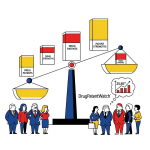
The global generic drug industry has spent the last decade locked in a structural contradiction: a market that expands by tens of billions of dollars each year, yet systematically erodes the per-unit economics of every product inside it. Mergers and acquisitions are the primary mechanism companies use to resolve that contradiction, or at least defer it.
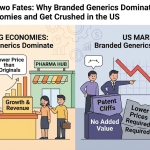
Generic drugs priced roughly 85% below branded equivalents are the healthcare system’s primary cost-containment instrument. They account for approximately 90% of U.S. prescription volume while consuming less than 20% of total drug spend. That asymmetry is the product’s value proposition, and it is also the source of its central financial problem. Every patent expiry that creates a generic market opportunity creates the same opportunity for a dozen competing ANDA applicants simultaneously. The resulting price compression is rapid, deep, and compounding. A newly launched oral solid generic typically loses 70% to 80% of its launch-day price within 18 months of market entry, as competitors reach commercial scale and pharmacy benefit managers (PBMs) use formulary leverage to extract further concessions.
Against that backdrop, M&A in the generic sector is not primarily a growth tactic. It is a structural defense against margin compression. Companies that achieve sufficient scale can offset the per-unit price decline on mature products with new-product volume, reduce per-unit manufacturing costs through facility consolidation, and negotiate more favorable terms with group purchasing organizations (GPOs). Those that do not achieve that scale face an accelerating deterioration in free cash flow that eventually forces either a sale or an exit from the market.
$468BGlobal generic drug market size, 2025 (Precedence Research)
$729BProjected market size by 2034 at 5.04% CAGR
$236BBranded drug sales at risk from patent cliff by 2030
$1.37TBiopharma industry M&A firepower as of early 2025
Global Market Size and Growth Consensus
Five major research firms have independently modeled the global generic drug market’s trajectory, and while their base-year figures and methodological assumptions vary, the directional consensus is clear. Precedence Research pegs the 2025 market at $468 billion, projecting expansion to $729 billion by 2034 at a 5.04% CAGR. Vision Research Reports uses a higher 2025 base of $515 billion but arrives at a comparable 2033 endpoint of $776 billion. Grand View Research, working from a 2022 baseline of $362 billion, applies an 8.3% CAGR to project $683 billion by 2030. IMARC Group’s 2024 baseline of $389 billion grows at 5.66% annually to reach $675 billion by 2033. BCC Research, working from a 2023 base of $435 billion, forecasts $656 billion by 2028.
The divergence in CAGR estimates, ranging from 5.0% to 8.5%, reflects genuine disagreement about three variables: the pace at which biosimilars erode the high-value biologic segment, the degree to which emerging market (EM) governments accelerate generic adoption policies, and the rate at which the FDA’s generic drug approval backlog continues to clear. An investor or acquirer who models the conservative 5% trajectory is pricing in continued pricing headwinds in the U.S. market and slower EM penetration. The 8.5% scenario assumes aggressive biosimilar uptake and government-mandated substitution policies across South Asia and Latin America materializing ahead of schedule.
Research Firm
Base Year
Base Market Size
Projection Year
Projected Size
CAGR
Precedence Research
2025
$468.08B
2034
$728.64B
5.04%
Vision Research Reports
2025
$515.07B
2033
$775.61B
5.25%
Grand View Research
2022
$361.7B
2030
$682.9B
8.3%
BCC Research
2023
$435.3B
2028
$655.8B
8.5%
IMARC Group
2024
$389.0B
2033
$674.9B
5.66%
Table 1. Global generic drug market forecasts from five independent research firms. CAGR divergence reflects differing assumptions about biosimilar uptake velocity, FDA approval throughput, and emerging market policy reform.
The Margin Compression Treadmill
Market size figures tell only part of the story. Gross margins in the U.S. generics segment, which historically had been the most profitable market, have declined materially since 2016. The consolidation of drug distribution through three dominant wholesalers, McKesson, AmerisourceBergen, and Cardinal Health, gave those buyers negotiating leverage that they consistently deployed to extract lower prices from manufacturers. Simultaneously, GPO contracts pushed prices down further at the institutional level. The FDA’s expanded generic approval capacity, a direct result of the Generic Drug User Fee Amendments (GDUFA) reauthorizations, added volume to the supply side faster than demand could absorb it in several therapeutic categories. By 2019, multiple publicly listed generic manufacturers were reporting U.S. generic business gross margins in the 25% to 35% range, versus the 50%-plus levels common before 2016.
This margin compression is directly why M&A frequency has accelerated. A company generating 28% gross margins on a commoditized oral solid portfolio has limited R&D reinvestment capacity. It must either grow its revenue base through acquisition, shift its portfolio toward more complex, higher-margin products, or accept a slow erosion of competitive position. The “treadmill” metaphor is precise: generic companies must run faster, through deal activity and product launches, simply to maintain the same financial position year over year. That structural reality is what makes M&A compulsory rather than discretionary for any generic manufacturer seeking long-term viability.
IP Valuation as the Core Deal Asset
In any generic pharmaceutical acquisition, intellectual property, specifically the patent estate and regulatory exclusivity portfolio of the target, is the primary value-generating asset. This is not equally true across all industries. In consumer goods or manufacturing M&A, tangible assets like factories, distribution networks, and customer relationships can account for the majority of deal value. In generic pharma, the target’s pipeline of filed ANDAs, its first-to-file (FTF) positions on high-revenue branded drugs, and the remaining life on its key compound, formulation, and method-of-use patents typically account for 60% to 80% of enterprise value in a well-structured deal.
The IP valuation process in a generic pharma deal is technically distinct from standard patent valuation in other sectors. In this context, value is not primarily a function of whether the target holds patents that protect its own products. It is a function of whether the target has successfully challenged the innovator’s patents via Paragraph IV certification under the Hatch-Waxman Act, secured a favorable court outcome or settlement, and holds the 180-day market exclusivity that flows to the first generic applicant to do so. That 180-day window, during which no other generic can enter the market, is one of the most concentrated sources of short-term value in all of pharmaceuticals. A target with two or three active FTF positions on drugs generating $500 million or more in annual branded sales can represent hundreds of millions of dollars in net present value even before any other assets are considered.
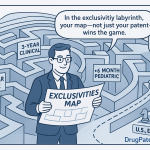
Regulatory exclusivities compound the IP valuation complexity. These are distinct from patent rights, originate from FDA approval decisions rather than U.S. Patent and Trademark Office grants, and can extend a drug’s market protection well beyond its underlying compound patent. New chemical entity (NCE) exclusivity provides five years of data exclusivity from the date of first approval. New clinical investigation (NCI) exclusivity, commonly called three-year exclusivity, attaches to approved changes to existing drugs that required clinical studies. Orphan drug designation, which applies to treatments for diseases affecting fewer than 200,000 U.S. patients, confers seven years of market exclusivity. Pediatric exclusivity adds six months to any patent or regulatory exclusivity period. An acquirer who fails to map all of these exclusivity layers when valuing a target risks materially overpaying for assets that appear to offer generic market entry well before they actually do.
IP Valuation Framework: Core Asset Categories in Generic M&A
The IP estate of a generic drug acquisition target can be segmented into four discrete value pools. The first is the active ANDA pipeline: the total count of pending Abbreviated New Drug Applications, their stage of FDA review, the approval probability, and the projected launch timing. The second is FTF exclusivity positions: Paragraph IV certifications filed against brand-name drug patents, their litigation status, and the probability-weighted revenue the 180-day exclusivity window would generate. The third is complex product formulation IP: patents covering drug delivery systems, extended-release mechanisms, injectable formulations, or transdermal delivery systems that generate a technological moat against later generic entrants. The fourth is regulatory exclusivity: NCE, NCI, orphan, and pediatric exclusivity periods that block ANDA approval independent of any patent protection. Each of these pools requires a distinct valuation methodology, and an acquirer’s due diligence team must model them in combination to arrive at a defensible enterprise value.
Key Takeaways: Introduction
The generic drug market grows at 5% to 8.5% annually in aggregate, but per-unit margin compression accelerates faster than revenue growth in commoditized oral solid categories, making scale acquisition a defensive financial necessity, not simply a growth strategy.
U.S. generic gross margins declined from over 50% to the 25-35% range between 2016 and 2020, driven by GPO consolidation, FDA approval throughput, and PBM formulary leverage, creating a structural floor below which undercapitalized generics manufacturers cannot survive.
IP valuation in generic M&A differs fundamentally from other sectors. It centers on the target’s FTF exclusivity positions, active ANDA pipeline, and regulatory exclusivity stack, not merely on the strength of defensive patents protecting existing products.
The 180-day first-to-file market exclusivity window under Hatch-Waxman can represent hundreds of millions of dollars in NPV and is often the single most valuable asset in a generic company acquisition, warranting its own discrete valuation model.
Investment Strategy: Screening for IP-Rich Generic Acquisition Targets
For institutional investors evaluating generic pharma M&A plays, the most predictive signal of acquisition premium is not trailing revenue but the quality of a target’s ANDA pipeline relative to the total addressable market of branded drugs facing imminent patent expiry. Targets with multiple FTF Paragraph IV certifications on drugs with greater than $500M in annual branded sales, combined with a clean litigation history showing either favorable court rulings or structured settlements, command the highest acquisition multiples.
Screen for FTF density. Count the number of first-to-file positions the target holds per $1 billion of brandname drug revenues at risk within 36 months. A high FTF-per-billion ratio is the clearest proxy for near-term exclusivity revenue.
Model regulatory exclusivity stacks. Use platforms like DrugPatentWatch to map all non-patent market protection periods layered onto each target asset. NCE, pediatric, and orphan exclusivities frequently push effective generic entry dates 12 to 24 months beyond the primary compound patent expiry.
Discount complex product pipelines by manufacturing readiness. A complex injectable or drug-device combination ANDA has limited value without GMP-compliant manufacturing capacity. Verify that the target’s facilities hold current 483-observation-free FDA inspection records for the relevant dosage forms before assigning full pipeline value.
Assess freedom-to-operate exposure. Acquirers frequently underestimate post-closing litigation risk from third-party patents covering excipient combinations, manufacturing processes, or drug delivery mechanisms. A pre-closing FTO analysis covering the Orange Book patent listings and relevant CPC patent subclasses is essential.
Part I: Macro-Forces Shaping Pharma Dealmaking in 2025 and Beyond
Pharmaceutical M&A does not operate in isolation from broader capital markets dynamics, regulatory posture, and geopolitical risk. The deals that get done in 2025 and 2026 are the product of pressures that have been building for five years: an industry-wide revenue gap created by patent expirations, a near-record accumulation of deployable capital on biopharma balance sheets, and a regulatory environment that has grown materially more adversarial toward transactions that reduce generic competition. Understanding each of these forces, and specifically how they interact, is prerequisite to evaluating any individual deal’s strategic rationale and probability of value creation.
The $236 Billion Patent Cliff: Asset Identification and IP Valuation
By 2030, more than 190 commercial drugs will lose patent exclusivity, placing an estimated $236 billion in annual branded drug revenues at risk. This figure, widely cited in the industry, is a gross number. The net opportunity for any single generic entrant is far smaller, reduced by Paragraph IV litigation risk, manufacturing complexity, competitive ANDA count, and the specific regulatory exclusivity profile of each drug. But in aggregate, it represents the largest wave of generic market-opening events in the sector’s history, and it is the single most powerful engine driving both branded pharma’s acquisition imperative and the strategic value of well-positioned generic players.
For branded pharmaceutical companies, the patent cliff creates a revenue gap that internal R&D pipelines cannot realistically close on their own. Late-stage drug development timelines average 6 to 8 years from IND filing to NDA approval, and Phase III failure rates in many therapeutic areas exceed 50%. A company facing the loss of $3 billion to $5 billion in annual revenues from a patent expiry in 2026 or 2027 cannot generate a replacement asset organically in time. The only viable response is an acquisition of an approved or late-stage asset, which directly inflates transaction premiums and fuels competitive bidding processes for high-quality pipeline targets.
For generic manufacturers, the same patent cliff is opportunity rather than threat, but only for those with the financial capacity and pipeline depth to capitalize on it. Companies that have invested in complex product development, specifically in drug-device combinations, long-acting injectables (LAIs), and biologics, are better positioned to capture the higher-margin generic opportunities that arise from the cliff’s most valuable assets. The Humira biosimilar market, which opened to competition in 2023 with the launch of adalimumab-atto (Amgen’s AMJEVITA), illustrates the dynamics. AbbVie’s HUMIRA generated approximately $21 billion in global sales in 2022. The biosimilar market that opened was large, but it was also immediately crowded: ten biosimilar adalimumab products had received FDA approval by mid-2023, compressing the price advantage each entrant could capture. The Humira case is instructive for any generic M&A strategy built around the patent cliff. Volume opportunity is real; per-unit economics require careful modeling at the product level before an ANDA pipeline is priced into an acquisition valuation.
IP Valuation Focus: Seagen’s Antibody-Drug Conjugate Patent Estate and the Pfizer Acquisition
Pfizer’s $43 billion acquisition of Seagen, closed in December 2023, is instructive as an IP valuation case study for the patent cliff response. Seagen’s commercial value rested almost entirely on a cluster of patents covering its proprietary linker-payload technology for antibody-drug conjugates (ADCs), specifically the maleimide linker chemistry and auristatin (MMAE/MMAF) payload classes that underpin four approved cancer medicines: ADCETRIS (brentuximab vedotin), PADCEV (enfortumab vedotin), TUKYSA (tucatinib), and TIVDAK (tisotumab vedotin). The primary compound patents on these agents run into the 2030s, and Seagen had filed extensive secondary patents on specific formulations, dosing regimens, and combination use methods that push effective IP protection further. Pfizer’s IP due diligence team valued not just the four approved drugs but the ADC platform’s applicability to at least 40 tumor targets in Pfizer’s preclinical pipeline. The $43 billion price reflected platform IP, not just product revenues, a valuation model that is becoming standard in oncology M&A. The deal also demonstrated the growing importance of freedom-to-operate analysis in platform acquisitions: Seagen had active patent disputes with Daiichi Sankyo over ADC intellectual property, and acquirers must price those litigation risks into any platform-based deal thesis.
Regulatory Friction: FTC, EU Merger Control, and IRA Pricing Risk
The regulatory environment for pharmaceutical M&A has grown materially more restrictive since 2020. The U.S. Federal Trade Commission has adopted an explicit policy of heightened scrutiny for transactions that reduce the number of generic competitors for specific drugs, recognizing that even a reduction from four manufacturers to three in a given market can produce measurable price increases for payers and patients. The FTC’s 2023 challenge to Amgen’s acquisition of Horizon Therapeutics broke new ground: it did not allege horizontal product overlap but instead advanced a “portfolio effects” theory, arguing that Amgen could use its portfolio of immunology blockbusters to pressure PBMs into preferentially positioning Horizon’s monopoly products. The eventual consent decree, which prohibits Amgen from bundling rebates across its TEPEZZA and KRYSTEXXA products and its existing portfolio, signals that future generic M&A reviews will scrutinize commercial strategy as well as product-level market concentration.
The European Commission applies a parallel but procedurally distinct framework. Under the EU Merger Regulation, deals exceeding specified turnover thresholds require pre-closing notification and approval. The Commission’s analysis of pharmaceutical deals focuses on overlapping product markets defined at the Active Pharmaceutical Ingredient (AthePI) level across each member state, and its remedies can include both product divestitures and commitments about generic product pricing or supply. The Teva-Allergan Generics clearance in 2016 required remedies covering dozens of overlapping products across multiple European markets, a process that ran concurrently with, and compounded the cost of, the parallel FTC review.
Layered on top of antitrust risk is pricing reform uncertainty. The Inflation Reduction Act (IRA), enacted in August 2022, introduced Medicare direct negotiation for a defined set of high-expenditure drugs, with the first ten drugs subject to negotiated pricing effective in 2026. The law also penalizes drug price increases above the rate of inflation and restructures Medicare Part D cost-sharing in ways that shift commercial risk from payers to manufacturers. For a generic company evaluating a branded asset acquisition, the IRA compresses the revenue forecasting window for any drug that could plausibly reach negotiation eligibility within the deal’s hold period. Most Favored Nation pricing models, which would peg U.S. drug prices to international reference prices, have been periodically proposed but not yet enacted. If implemented, they would further complicate the pro-forma financial models that underpin large pharmaceutical acquisitions.
How Macro Headwinds Are Reshaping Deal Architecture
The combined effect of regulatory friction, pricing uncertainty, and geopolitical supply chain risk has not halted pharmaceutical M&A. It has changed which deals get structured, at what size, and through what mechanisms. The horizontal mega-merger between two top-five generic players, the type of transaction that produced Teva-Actavis and Mylan-Upjohn, is now de facto off the table. The antitrust remedies required to close such a deal would strip out enough assets to eliminate the strategic rationale for doing it in the first place. The regulatory barrier is not merely procedural; it is a fundamental check on the feasibility of the largest generic consolidation transactions.
What has emerged in place of the mega-merger is a bifurcated deal market. The “string-of-pearls” approach, in which a large company makes a series of targeted acquisitions in the $1 billion to $15 billion range, has become the dominant paradigm. These deals acquire specific therapeutic capabilities, platform technologies, or geographic commercial presences without creating the market concentration that triggers aggressive antitrust review. Johnson and Johnson’s $35 billion acquisition of Intra-Cellular Therapies in February 2025, focused on the schizophrenia drug CAPLYTA and its broader CNS pipeline, and BMS’s $14 billion acquisition of Karuna Therapeutics in December 2023, targeting the muscarinic agonist KarXT, both reflect this approach: pay a premium for a specific asset or clinical platform, avoid horizontal overlap, and use the acquirer’s global commercial scale to accelerate the asset’s revenue trajectory.
The second emerging deal archetype is the manufacturing capability acquisition. Novo Holdings’ $16.5 billion acquisition of Catalent in February 2024 was explicitly a manufacturing capacity play, motivated by the global supply shortage of GLP-1 receptor agonists. Novo Nordisk’s semaglutide franchise (OZEMPIC, WEGOVY) had been supply-constrained for two years; acquiring a leading CDMO with relevant injectable fill-finish capacity was a more direct solution than attempting to build equivalent capacity organically over a five-to-seven year horizon. This transaction type, where the IP being acquired is manufacturing process know-how and regulatory history rather than drug patents, will become more common as the industry’s capacity constraints in complex dosage forms continue to tighten.
piggyBac transposon-based CAR-T manufacturing platform; allogeneic and autologous cell therapy IP estate
Table 2. Selected key pharmaceutical M&A transactions (2023-2025). Note that each deal’s strategic rationale centers on a specific IP or manufacturing capability asset rather than horizontal scale. This reflects the post-mega-merger deal paradigm in which targeted IP acquisition has replaced broad portfolio consolidation as the primary deal driver.
Key Takeaways: Part I
The $236 billion patent cliff through 2030 is the most powerful structural driver of M&A across all pharmaceutical segments. Branded companies are compelled to acquire pipeline assets to replace expiring revenue; generic companies are compelled to acquire development capabilities and FTF positions to capture the opening generic markets at scale.
The FTC’s Amgen-Horizon consent decree expanded antitrust review scope from horizontal product overlap to commercial portfolio behavior. Future generic M&A transactions will face scrutiny of how the combined entity’s portfolio can be used to entrench branded monopolies, not only whether the deal eliminates a direct competitor.
The IRA’s Medicare negotiation mechanism compresses the long-term revenue modeling horizon for any branded or specialty asset acquired through M&A. Acquirers must build IRA eligibility scenarios into their DCF models and pressure-test deal valuations against a negotiated price outcome within the expected hold period.
The horizontal mega-merger between two major generic players is now functionally blocked by antitrust economics. The deal types that dominate the current market are targeted platform acquisitions ($1B-$15B range), manufacturing capability acquisitions, and PE-led roll-ups of fragmented manufacturing segments.
Manufacturing IP, including GMP process validation history, regulatory filing dossiers, and fill-finish capacity for complex dosage forms, has emerged as a primary acquisition asset class in its own right, as demonstrated by the Novo Holdings/Catalent transaction.
Investment Strategy: Pricing Regulatory Risk Into Pharma M&A Positions
Regulatory review timelines and remedy requirements are now material variables in the financial modeling of any pharmaceutical M&A position. For investors holding positions in deal targets, the following framework structures the risk-adjusted return calculation.
Map the product-level FTC exposure. For every overlapping ANDA or NDA between the acquirer and target, the FTC will assess market concentration. Use Orange Book data to count total ANDA holders per active ingredient and dosage form. Markets with three or fewer manufacturers at deal announcement carry the highest divestiture risk.
Apply a portfolio-effects discount on platform deals. Following Amgen-Horizon, any deal in which the acquirer holds dominant-share products in related therapeutic areas should be modeled with a consent-decree probability of 30% to 50%, with a corresponding 12-to-18-month timeline extension and the cost of compliance monitoring baked into the pro forma.
Price in IRA negotiation eligibility for specialty assets. Any drug generating more than $200M in annual Medicare Part D revenues that has been approved for more than 9 years (small molecule) or 13 years (biologic) at deal close should be modeled with a negotiated price reduction of 25% to 60% in the year of negotiation, based on the CMS methodology published for the first negotiation cycle.
Geopolitical supply chain risk requires a tariff scenario. The proposed 25% tariff on pharmaceutical imports, if enacted, would materially increase the cost of goods for any API-importing manufacturer and compress margins on U.S. generic launches. Model a tariff-inclusive scenario for any target with more than 40% of API sourcing from non-U.S. suppliers.
Part II: The Twin Engines of M&A: Strategic Opportunity and Structural Risk
Every pharmaceutical merger or acquisition is a bet that the combined entity will generate more value than the two companies would have created independently. That bet rests on a set of affirmative strategic claims, what this analysis calls the “opportunity engine,” and it is always made in the face of a set of structural risks, the “risk engine,” that can negate those claims and destroy the capital invested. A rigorous M&A framework requires analyzing both engines simultaneously and quantifying, to the extent possible, the conditions under which the opportunity thesis fails and the risk thesis prevails.
The Strategic Upside: Four Pillars of Generic Consolidation
The rationale for consolidation in the generic drug industry runs along four distinct axes. When all four are present in a single transaction and successfully executed, they compound each other in a self-reinforcing cycle. When one fails, the absence of that contribution can strain the others enough to threaten the overall value thesis.
The first axis is operational scale. In a market where per-unit price is the primary competitive lever, per-unit cost is the primary profitability driver. Manufacturing consolidation, specifically the reduction of active production lines across a larger combined revenue base, produces the most direct and measurable cost benefit in any generic merger. A company operating six tablet and capsule manufacturing sites with a combined capacity of 10 billion units annually, acquired by a company with four equivalent sites producing 7 billion units, can rationally consolidate into seven sites producing 17 billion units at substantially lower per-unit overhead. Facility consolidation also reduces regulatory maintenance costs, specifically the expense of maintaining current Good Manufacturing Practice (cGMP) compliance, site master files, and FDA inspection readiness across every active site. KPMG’s generics sector analysis identifies becoming “bigger and better” through this type of manufacturing rationalization as the most immediate and reliable synergy capture mechanism in a generic M&A transaction.
The second axis is portfolio and geographic diversification. Organic expansion into a new therapeutic category or a new geographic market requires years of regulatory filings, commercial infrastructure investment, and relationship-building with local distribution partners. A well-structured acquisition compresses that timeline to close-to-zero, delivering an established commercial presence, a regulatory dossier library, and existing customer relationships on the day the deal closes. For generic companies specifically, this matters most in two contexts: entering complex or specialty generic categories (oncology injectables, modified-release oral solids, transdermal systems, sterile biologics) where the R&D and manufacturing barriers are high, and accessing emerging markets where local regulatory approval processes and distribution structures are deeply relationship-dependent and difficult to enter without an established local partner.
The third axis is pipeline de-risking through ANDA and FTF acquisition. Late-stage ANDA development carries real capital risk. A bioequivalence study failure, a Complete Response Letter (CRL) from the FDA citing Chemistry, Manufacturing, and Controls (CMC) deficiencies, or a Paragraph IV litigation loss can each consume two to four years of development time and several million dollars in sunk costs. Acquiring a target with a portfolio of late-stage or already-approved ANDAs converts this risk from variable and contingent to fixed and priced. An acquirer buys known assets at a negotiated price rather than funding uncertain development outcomes. The most valuable version of this de-risking play is the acquisition of FTF exclusivity positions on high-revenue branded drugs: pre-approved or litigation-cleared Paragraph IV certifications that carry the right to 180 days of exclusive generic marketing. Allergan’s generics business was specifically attractive to Teva in 2015 in part because of its strong FTF pipeline in the U.S., a pipeline that Teva calculated would generate hundreds of millions of dollars in exclusivity-period revenues in the years following the acquisition’s close.
The fourth axis is technology and capability acquisition, particularly relevant in biologics and complex drug delivery. Generic companies have historically competed on cost and regulatory speed; technology differentiation was the domain of innovator companies. That boundary has dissolved as the generic market has segmented into commodity and complex tiers. A company producing conventional oral solids at high volume cannot credibly compete for the most profitable generic opportunities, which now include biosimilars, LAIs, dry powder inhalers (DPIs), and drug-device combination products. Building the analytical characterization capabilities, cell line development expertise, and aseptic manufacturing infrastructure needed for biologics development requires a decade of investment and takes talent that is scarce in the market. Acquiring a company with established capabilities in any of these areas is materially faster and often more cost-effective than building organically, which is why biologics capability acquisitions consistently trade at premiums to comparable revenue-based valuations.
IP Portfolio Valuation: How Acquirers Price Patent Assets
Each of the four strategic pillars generates a distinct IP valuation challenge. Manufacturing scale deals value process IP: validated manufacturing methods, proprietary API synthesis routes that reduce raw material costs, and know-how embedded in cGMP-compliant production records. Portfolio acquisition deals value ANDA completeness and FTF coverage across the Orange Book patent landscape. Technology acquisition deals value platform patents: broad claims on biologic expression systems, drug delivery mechanisms, or bioequivalence testing methodologies that apply across multiple future products, not just existing commercial assets.
The three standard valuation methodologies used in patent asset appraisal each have specific limitations in the generic pharmaceutical context. The income approach, typically a risk-adjusted discounted cash flow (DCF) model applied to the expected revenue and margin stream from the patent-protected period, is the most commonly used and most directly tied to financial outcomes. Its weakness in generic drug deals is that it requires highly specific assumptions about the number of generic entrants at exclusivity expiration, the rate of price erosion after FTF exclusivity ends, and the probability of successful regulatory approval, each of which can move the resulting NPV by 30% to 60%. The market approach, which compares the subject IP to prices paid in comparable patent licensing transactions or prior acquisitions, requires a sufficiently large comparable transaction dataset. In specialty generic or biosimilar M&A, the transaction set is often too thin to produce statistically reliable comparable multiples. The cost approach, which values IP based on the cost of recreating the asset (development expense, clinical study costs, regulatory submission preparation), provides a useful floor value but typically understates market value substantially for assets with strong commercial potential and limited competition.
Sophisticated acquirers use a combination of all three approaches calibrated by scenario analysis. The specific scenario variables that matter most in generic IP valuation are: the number of pending ANDAs filed by competitors on the same drug (the “ANDA count”), the litigation clearance timeline for any remaining Paragraph IV patent challenges, the FDA’s Generic Drug Action Date for the subject ANDA, the projected branded drug revenues at the time of generic launch, and the branded company’s public statements about authorized generic launch plans. Authorized generic (AG) competition, in which the brand company launches its own generic product through a subsidiary at the time of FTF exclusivity, captures roughly 50% of the FTF volume and materially reduces the 180-day exclusivity window’s financial value.
IP Valuation Focus: Viatris and the Biosimilar Portfolio Divestiture to Biocon
When Viatris divested its biosimilar business to Biocon Biologics in 2022, the transaction structure reflected the distinct IP valuation logic of the biosimilar segment. The Viatris biosimilar portfolio included approved and pipeline biosimilars targeting trastuzumab (OGIVRI, reference: Herceptin), bevacizumab (ZIRABEV, reference: Avastin), adalimumab (Hulio, reference: Humira), pegfilgrastim (FULPHILA, reference: Neulasta), and insulin glargine (Semglee, reference: Lantus). Each of these products required separate biologics license applications (BLAs) rather than ANDAs, and each rested on a distinct IP position that included both process patents (covering the cell line, fermentation process, and purification methodology used to produce the biosimilar) and biosimilar interchangeability data. The interchangeability designation, which allows pharmacists to substitute the biosimilar for the reference product without physician intervention, carries specific IP and regulatory value because it provides a commercial positioning advantage over non-interchangeable biosimilars competing for the same formulary slot. Viatris’s decision to divest this portfolio reflects a strategic judgment that the capital intensity and long development cycle of biosimilar development were incompatible with the company’s deleveraging priorities at that stage of its post-merger integration. For Biocon, the acquisition provided immediate commercial-stage assets and U.S. market access without the 10-to-12-year development cycle that characterizes originator biosimilar programs.
Technology Roadmap: Biosimilar Development as an M&A Catalyst
Biosimilars have become the most important long-term growth driver in the off-patent pharmaceutical market, and the complexity of their development pathway explains why M&A is the primary mechanism for capability acquisition in this segment. A biosimilar development program is not analogous to a small-molecule ANDA. It is a decade-long scientific and regulatory program with a capital requirement measured in hundreds of millions of dollars and a technical risk profile that demands expertise across molecular biology, analytical characterization, cell culture manufacturing, and immunogenicity assessment. Understanding the development roadmap in granular detail is essential for any analyst evaluating a biosimilar-focused acquisition.
Phase 1 / Years 1-2
Reference Product Characterization and Expression System Selection
The program begins with extensive analytical characterization of the reference biologic using orthogonal methods: mass spectrometry for primary structure verification, glycan mapping for post-translational modification profiling, and various biophysical techniques (DSC, SEC-MALS, DLS) for higher-order structure assessment. The goal is to define a “fingerprint” of the reference product’s critical quality attributes (CQAs) against which the biosimilar candidate will be measured. Simultaneously, the development team selects and engineers the expression system, typically CHO cell lines for monoclonal antibodies, E. coli for some peptides, and yeast for certain glycoproteins. Cell line selection and clonal screening can take 12 to 18 months and produces IP in the form of proprietary cell line patents that contribute to the biosimilar’s competitive moat against subsequent biosimilar entrants. The IP generated at this stage is process IP rather than composition-of-matter IP, meaning it covers the manufacturing method rather than the drug molecule itself.
Phase 2 / Years 2-4
Process Development, Upstream and Downstream Manufacturing Scale-Up
Upstream process development optimizes cell culture conditions (media composition, feeding strategy, temperature, pH, dissolved oxygen) to maximize titer and product quality. Downstream purification process development designs and validates the chromatography, filtration, and viral clearance unit operations that produce the drug substance at cGMP quality. This phase is the primary source of manufacturing process IP. Companies that develop novel purification methods with broader applicability, for example, a protein A affinity resin configuration that produces superior glycoform control across multiple antibody types, can file broad process patents that apply to their entire biosimilar pipeline. Scale-up from bench to pilot to manufacturing scale introduces process characterization obligations under FDA’s Process Validation guidance, and the data generated during scale-up forms the analytical comparability bridge that will support the BLA submission.
Phase 3 / Years 4-6
Analytical Comparability Package and Clinical Bridging Studies
The totality-of-evidence approach required by FDA for biosimilar approval places analytical comparability at the center of the development program. The comparability package must demonstrate, through a comprehensive array of structural and functional assays, that the biosimilar is “highly similar” to the reference product notwithstanding minor differences in clinically inactive components. The clinical development component typically includes a Phase 1 PK/PD bridging study in healthy volunteers or relevant patient population, and for immunogenicity-sensitive molecules like anti-TNF antibodies, a Phase 3 efficacy and safety study in at least one sensitive clinical population. Interchangeability designation under the BPCIA requires an additional switching study demonstrating that patients alternating between the biosimilar and reference product do not experience greater safety or efficacy risk than patients remaining on either product continuously. The interchangeability data package generates regulatory exclusivity of its own: the first biosimilar to receive an interchangeability designation for a given reference product receives one year of exclusivity against subsequent interchangeable biosimilars.
Phase 4 / Years 6-10
BLA Submission, Patent Litigation (BPCIA “Patent Dance”), and Commercial Launch Preparation
Biosimilar BLA submission triggers the BPCIA’s “patent dance” procedure, which requires the biosimilar applicant to share its BLA with the reference product sponsor and engage in a structured negotiation over which of the reference product’s patents will be litigated pre-launch. The reference product sponsor’s patent portfolio, listed in the FDA’s “Purple Book” rather than the Orange Book applicable to small-molecule drugs, typically includes composition-of-matter patents (if any remain), process patents, and use patents for approved indications. A biosimilar company with strong analytical characterization data and no manufacturing process overlap with the reference product’s patent claims can sometimes navigate the patent dance without triggering a launch-blocking preliminary injunction. Commercial launch preparation at this stage involves supply chain qualification, commercial fill-finish arrangements, GPO and PBM contracting strategy, and the pricing structure that will allow the biosimilar to gain formulary access while generating sufficient margin to return the program’s decade of capital investment. The global biosimilar market, projected to grow at approximately 18% CAGR through 2034, reflects the cumulative value of these development investments across a growing pipeline of reference products losing biologic exclusivity.
This multi-phase development roadmap explains why biosimilar M&A transactions command substantial premiums. An acquirer that purchases a biosimilar company with three programs in Phase 3 and two in Phase 2 is not paying for current revenues; it is paying for four to six years of already-sunk development capital, a validated analytical characterization platform, a cGMP manufacturing site with biologics-compliant infrastructure, and a team with the regulatory expertise to navigate the BPCIA patent dance. Each of those elements has a distinct replacement cost that is generally higher than its acquisition cost in a competitive transaction, which is why DCF models for biosimilar platform acquisitions almost always produce enterprise values above comparable small-molecule ANDA portfolio transactions on a per-revenue-dollar basis.
Evergreening Tactics and Their Impact on Acquisition Timing
Innovator pharmaceutical companies routinely use a suite of intellectual property and regulatory strategies to extend the effective period of market exclusivity beyond the expiration of the primary compound patent. These strategies, collectively described as “evergreening,” are not illegal and are explicitly contemplated within the Hatch-Waxman and BPCIA frameworks. For generic drug developers and their potential acquirers, understanding the full stack of evergreening tactics deployed against a target drug is a prerequisite for accurately modeling the generic market entry date and, by extension, the value of any ANDA position or FTF exclusivity right.
Secondary patents are the most common and most extensively documented evergreening mechanism. After a primary compound patent issues, the innovator files additional patents covering specific polymorphic crystal forms of the drug substance, specific salt forms, specific enantiomers of a racemic mixture, specific dosage forms or formulations, specific manufacturing processes, specific drug delivery systems, and specific methods of treatment. Each of these secondary patents is separately listed in the FDA Orange Book if it meets the listing criteria, and each requires a separate Paragraph IV certification and potential litigation from any generic applicant whose product potentially falls within the patent’s claims. A blockbuster small-molecule drug can accumulate 30 to 100 or more Orange Book patents, creating a dense litigation thicket that extends effective market exclusivity well past the primary compound patent expiry. The compound patent for AstraZeneca’s NEXIUM (esomeprazole) expired in 2012, but a series of secondary patents and regulatory exclusivities delayed generic entry until 2015 in the United States.
Authorized generics deployed at the moment of first generic entry are a second, commercially powerful evergreening response. When the first ANDA filer’s 180-day exclusivity period begins, the brand company launches its own generic product through a subsidiary or licensing arrangement, capturing roughly 50% of the FTF volume and cutting the financial value of the exclusivity period by half. The FTC has characterized this practice as potentially anti-competitive in some circumstances, particularly when it results from a “reverse payment” settlement agreement in which the brand company pays the generic filer to delay launch and agrees not to compete with an authorized generic during the exclusivity period. The Supreme Court’s 2013 ruling in FTC v. Actavis established that reverse payment settlements are subject to antitrust scrutiny under the rule of reason, and since then the number and size of reverse payment settlements have declined, but brand companies retain the right to launch authorized generics absent a specific contractual prohibition.
Product switches constitute a third evergreening pathway: reformulating an existing drug into a new dosage form (for example, converting an immediate-release tablet to an extended-release formulation), a new combination product, or a new route of administration, obtaining new regulatory exclusivity and patent protection for the reformulated product, and actively migrating the patient population from the original product to the new formulation before generic entry on the original becomes available. The brand company then discontinues or de-promotes the original product, reducing the commercial value of the generic market that opens. Abbott’s conversion of DEPAKOTE (divalproex sodium tablets) to the DEPAKOTE ER extended-release formulation, executed well before generic entry on the original formulation, is a frequently cited example of this strategy’s commercial effectiveness.
For acquisition analysts evaluating an ANDA-based target’s pipeline, evergreening analysis must precede any financial modeling. Each drug in the target’s ANDA pipeline requires a complete Orange Book patent mapping, an assessment of pending patent applications in the relevant CPC subclasses that may not yet be Orange Book-listed, a product switch risk assessment based on the brand company’s pipeline filings and public strategic statements, and a settlement landscape review to understand whether prior reverse payment settlements have established adverse precedents on the key compound or formulation patents. Platforms like DrugPatentWatch provide systematic access to this data, including patent expiration timelines that account for patent term extensions (PTE) and patent term adjustments (PTA), regulatory exclusivity status by drug and dosage form, and Orange Book patent listing history that reveals when secondary patents were added and whether they were subsequently delisted under legal challenge.
IP Valuation Focus: Teva’s COPAXONE Evergreening Dispute and Its M&A Implications
Teva’s own experience defending COPAXONE (glatiramer acetate injection) against generic entry illustrates the double-edged nature of evergreening from the perspective of a company that was simultaneously an innovator defending one product and a generic attacker on many others. Teva held a series of patents on COPAXONE’s 20 mg/mL daily formulation and then, anticipating generic entry, reformulated to a 40 mg/mL three-times-weekly formulation with new clinical data and new patent protection. Teva simultaneously migrated patients from the 20 mg formulation to the 40 mg formulation, reducing the commercial value of the generic 20 mg market. Multiple generic companies challenged the 40 mg formulation patents via Paragraph IV certifications, leading to years of litigation. The COPAXONE patent disputes ultimately resolved through a combination of patent invalidations and court rulings that accelerated generic entry on both formulations. The financial impact on Teva was substantial: COPAXONE had contributed over $4 billion annually at its peak, and its erosion compounded the financial strain from the Actavis acquisition debt. For M&A analysts, the COPAXONE case demonstrates that a branded product’s evergreening strategy must be assessed for both its probability of success in delaying generic entry and its vulnerability to Paragraph IV challenge, and that the same drug can be the primary revenue driver for an acquirer even as its patent estate is eroding under legal assault.
The Perils of Ambition: Four Structural Risks That Destroy Deal Value
The strategic logic for generic M&A is clear and consistently articulated. The record of value creation, however, is uneven enough that the risks deserve analysis at least as rigorous as the opportunity. Four structural risk categories account for the majority of post-merger value destruction in the generic pharmaceutical sector.
Post-merger integration is the first and most frequently underestimated risk. The operational complexity of merging two pharmaceutical manufacturers, each with multiple GMP-regulated sites, complex quality management systems, and regulatory filing libraries covering hundreds of products across dozens of markets, is categorically different from integrating two software companies or two retail chains. Every active manufacturing site requires an uninterrupted chain of regulatory approvals; changes to manufacturing processes, equipment, or facilities trigger cGMP change control obligations that must be communicated to regulators in multiple jurisdictions. IT system harmonization in pharma M&A must account for validated computer systems under 21 CFR Part 11, which cannot be merged or modified with the speed typical in other industries without risking the regulatory compliance status of the affected processes. Viatris’s post-merger integration required a 12-month global project specifically dedicated to aligning Environmental, Health, and Safety standards across more than 50 manufacturing and R&D sites, a scope that illustrates why synergy timelines in pharma M&A routinely run 12 to 18 months longer than equivalent transactions in less regulated industries. Cultural integration adds another layer. Acquired teams who know the product and regulatory history of their assets deeply often leave within the first 18 months following a transaction, taking institutional knowledge that is difficult to replace quickly and that, in some cases, is embedded in unwritten manufacturing practices that affect product quality.
Antitrust remedies represent the second structural risk. The FTC’s review of horizontal generic pharmaceutical mergers has consistently required divestitures whenever the combined entity would reduce the number of manufacturers in a given drug market below a threshold that the agency considers competitive, typically between four and six manufacturers for an oral solid and fewer for complex products with higher barriers to entry. The challenge for acquirers is that these divestitures cannot be negotiated selectively; the FTC determines which products must be divested based on its own market analysis, and the acquirer’s preference for retaining specific high-value assets is not a material consideration in that analysis. The Teva-Allergan Generics FTC remedy, requiring divestiture of 79 drug products to eleven different buyers, is the most extreme example of this risk, but it is not an outlier in kind. Any large horizontal generic merger will face product-level review across every therapeutic area of overlap, and the cumulative divestiture requirement can strip enough value from the combined portfolio to retroactively invalidate the deal’s financial rationale.
Financial leverage is the third structural risk, and it interacts with the other three risks in ways that amplify their potential damage. Large pharmaceutical acquisitions are typically financed with debt, creating leverage ratios that would be appropriate in a stable, predictable revenue environment but become dangerous if post-merger revenues underperform due to market price erosion, integration failures, or mandated divestitures. Teva’s corporate debt exceeded $30 billion immediately after the Allergan Generics close. When the U.S. generic market experienced accelerated FDA approval throughput and intensified price competition in 2016 and 2017, the revenue shortfall against pro forma projections created a debt service burden that consumed capital that would otherwise have funded R&D, new product launches, and the pipeline investments needed to maintain competitiveness. The debt became the strategy: every operational and capital allocation decision at Teva from 2017 through at least 2023 was filtered through the constraint of debt reduction, limiting the company’s ability to make the portfolio adjustments that might have improved its competitive position. A company whose M&A financing has consumed all financial flexibility has no buffer against the market’s normal volatility, and a generic drug market is rarely as predictable as the models used to justify large-deal debt financing assume.
Market and competitive risk, the fourth structural category, encompasses two related but distinct threats. The first is concentrated therapeutic area risk: a merger predicated on dominance in a specific category leaves the combined entity highly vulnerable to unexpected competition in that category, whether from a new market entrant, a biosimilar launch, or a pricing intervention by a large payer. The second is the regulatory response to consolidation itself. Academic research consistently finds that higher concentration in generic drug markets is associated with higher prices and increased risk of drug shortages, and the FTC and Congress have demonstrated willingness to respond to these dynamics through both enforcement action and legislative proposals. A company that becomes too dominant in specific therapeutic categories through M&A can attract not just antitrust review of the transaction but ongoing commercial and political scrutiny of its pricing behavior, creating a reputational and regulatory overhang that constrains its commercial strategy well after the deal closes.
Key Takeaways: Part II
The four strategic pillars of generic M&A, operational scale, portfolio and geographic diversification, pipeline de-risking through ANDA and FTF acquisition, and technology capability acquisition, compound each other when successfully executed but also create interdependencies where a failure in one dimension can undermine the financial case for the others.
IP portfolio valuation in generic M&A requires three distinct methodological approaches applied in combination: income-based DCF modeling of exclusivity-period revenue, market-based comparables for platform IP, and cost-based replacement value for manufacturing know-how. No single method produces a reliable standalone valuation for complex pharmaceutical IP portfolios.
Biosimilar development programs require 8 to 12 years and hundreds of millions of dollars in capital before commercial revenues begin. This capital profile makes M&A the most cost-effective entry path for companies seeking to participate in the biosimilar market, and justifies the premium multiples paid for late-stage biosimilar assets relative to equivalent small-molecule ANDA pipelines.
Evergreening tactics, including secondary patent filings, authorized generic launches, and product switches, can delay effective generic market entry by 3 to 7 years beyond the primary compound patent expiry. An ANDA pipeline valuation that does not account for the full evergreening stack of each target drug will systematically overstate the value of near-term generic market entry opportunities.
Post-merger integration failure, mandated antitrust divestitures, excess leverage, and concentrated therapeutic area risk are the four most common destroyers of value in generic pharmaceutical M&A. They are not independent: integration failures reduce revenue, which strains leverage, which limits the financial flexibility needed to respond to competitive market shifts and regulatory demands.
Investment Strategy: Building a Risk-Adjusted M&A Evaluation Framework for Generic Pharma
For institutional investors and corporate development analysts, a rigorous deal evaluation framework for generic pharmaceutical M&A must integrate IP valuation, integration complexity, leverage, and regulatory exposure into a single risk-weighted model. The following analytical checklist structures that evaluation.
FTF exclusivity NPV as a percentage of purchase price. Calculate the probability-weighted net present value of all active first-to-file Paragraph IV certifications in the target’s pipeline. If this figure represents more than 20% of the proposed purchase price, the deal’s returns are significantly dependent on litigation outcomes that are inherently binary. Stress-test the model against a scenario in which the two largest FTF positions are lost in court or settled on unfavorable terms.
Evergreening-adjusted launch date modeling. For each material ANDA in the target’s pipeline, apply a systematic Orange Book and patent application analysis to identify all secondary patents with remaining life and all regulatory exclusivities that have not yet expired. Re-model the generic launch date for each product under a bear-case scenario in which the brand successfully defends its secondary patents, and calculate the resulting NPV difference. This delta represents the deal’s evergreening risk in dollar terms.
Integration cost as a percentage of year-one synergy target. If the estimated integration cost, including IT system harmonization, regulatory change control filings, quality management system realignment, and facilities rationalization, exceeds 60% of the year-one synergy target, the synergy realization timeline is almost certainly optimistic. Extend synergy capture assumptions by 12 to 18 months in your base case and build an integration failure scenario with zero synergy capture in years one through three.
Leverage coverage ratio under a price erosion stress test. Model the pro-forma combined entity’s debt service coverage ratio assuming a 15% year-over-year price decline in the U.S. generics segment for 24 months following close, a scenario consistent with the market conditions that materialized after the Teva-Allergan deal. If the coverage ratio falls below 2.0x in this stress scenario, the deal’s debt structure carries material refinancing or covenant breach risk.
Antitrust divestiture probability by therapeutic area. For each therapeutic category in which the combined entity would hold a market share exceeding 35% by ANDA count or volume, assign a divestiture probability of 50% to 70% and model the financial impact of losing those assets at a forced sale discount of 20% to 30% to market value. Sum these discounted values and subtract from the deal’s pro-forma enterprise value to arrive at a regulatory-risk-adjusted transaction price.
Investment Strategy: Screening for IP-Rich Generic Acquisition Targets
For institutional investors evaluating generic pharma M&A plays, the most predictive signal of acquisition premium is not trailing revenue but the quality of a target’s ANDA pipeline relative to the total addressable market of branded drugs facing imminent patent expiry. Targets with multiple FTF Paragraph IV certifications on drugs with greater than $500M in annual branded sales, combined with a clean litigation history showing either favorable court rulings or structured settlements, command the highest acquisition multiples.
Screen for FTF density. Count the number of first-to-file positions the target holds per $1 billion of brandname drug revenues at risk within 36 months. A high FTF-per-billion ratio is the clearest proxy for near-term exclusivity revenue.
Model regulatory exclusivity stacks. Use platforms like DrugPatentWatch to map all non-patent market protection periods layered onto each target asset. NCE, pediatric, and orphan exclusivities frequently push effective generic entry dates 12 to 24 months beyond the primary compound patent expiry.
Discount complex product pipelines by manufacturing readiness. A complex injectable or drug-device combination ANDA has limited value without GMP-compliant manufacturing capacity. Verify that the target’s facilities hold current 483-observation-free FDA inspection records for the relevant dosage forms before assigning full pipeline value.
Assess freedom-to-operate exposure. Acquirers frequently underestimate post-closing litigation risk from third-party patents covering excipient combinations, manufacturing processes, or drug delivery mechanisms. A pre-closing FTO analysis covering the Orange Book patent listings and relevant CPC patent subclasses is essential.
Introduction: The Unrelenting Pursuit of Scale and Survival
The global generic drug market presents a fundamental paradox for the executives who navigate its complexities. On one hand, it is a sector defined by immense and sustained growth, a landscape where demographic trends, government policy, and the cyclical nature of pharmaceutical innovation create a powerful tailwind. On the other, it is an arena of relentless margin compression, where the very forces that fuel its expansion also intensify the competitive pressures that erode profitability. In this environment, mergers and acquisitions (M&A) are not merely a discretionary tactic for growth; they have become a foundational and often compulsory strategy for survival and market leadership. The imperative is clear: achieve scale or risk obsolescence.
The top-line growth narrative is compelling and well-documented. The global generic drugs market, valued at approximately USD 445-465 billion in 2024, is on a trajectory to exceed USD 728-779 billion by 2034.1 This expansion is underpinned by a projected compound annual growth rate (CAGR) that various market analyses place between 5.0% and 8.5% over the next decade.1 This robust growth is not speculative; it is driven by powerful, structural forces. A significant number of blockbuster branded drugs are losing patent exclusivity, opening the door for generic competition.1 Simultaneously, governments and healthcare payers worldwide are aggressively promoting the use of generics as a primary tool to curtail spiraling healthcare expenditures.5 The rising global prevalence of chronic diseases such as cancer, diabetes, and cardiovascular conditions, which often require long-term medication, further solidifies the demand for affordable therapeutic alternatives.2 In the United States alone, the use of medicines has climbed 9.6% in recent years, reaching nearly 194 billion days of therapy in 2021, a significant portion of which is satisfied by generic alternatives.1
However, this impressive market expansion masks a much harsher operational reality. The core value proposition of a generic drug is its affordability, with products typically priced around 85% less than their branded counterparts.2 This creates an industry characterized by high volume but razor-thin margins. The same patent expirations that create market opportunities for one company also create them for a dozen rivals, leading to intense price wars that can rapidly erode the profitability of a newly launched product. This dynamic establishes a strategic treadmill, often described as a “Red Queen’s race,” where companies must continuously expand their scale, launch new products, and cut costs simply to maintain their financial position. Growth in this context is not just about increasing revenue; it is a defensive necessity to offset the constant downward pressure on prices. It is this fundamental tension—the paradox of a growing market with shrinking per-unit profitability—that serves as the primary catalyst for the ceaseless wave of M&A activity that defines the generic drug sector. Consolidation is the mechanism by which companies seek to escape this paradox, leveraging scale to gain a competitive edge in a market that is both expanding and unforgiving.
Metric
Precedence Research (2025-2034) 1
Vision Research Reports (2025-2033) 3
Grand View Research (2023-2030) 6
BCC Research (2023-2028) 4
IMARC Group (2025-2033) 5
Base Year Market Size
USD 468.08 Billion (2025)
USD 515.07 Billion (2025)
USD 361.7 Billion (2022)
USD 435.3 Billion (2023)
USD 389.0 Billion (2024)
Projected Market Size
USD 728.64 Billion (2034)
USD 775.61 Billion (2033)
USD 682.9 Billion (2030)
USD 655.8 Billion (2028)
USD 674.9 Billion (2033)
Compound Annual Growth Rate (CAGR)
5.04%
5.25%
8.3%
8.5%
5.66%
Table 1: Global Generic Drugs Market Forecasts from Multiple Industry Analyses
This table synthesizes projections from several leading market research firms, providing a consolidated view of the generic drug market’s robust growth trajectory. While specific figures vary, the consensus points to a sustained CAGR of over 5%, reinforcing the sector’s expanding scale and strategic importance.
The Macro-Forces Shaping Pharma Dealmaking
The strategic decisions made within the generic drug sector do not occur in a vacuum. They are profoundly influenced by the broader M&A currents sweeping across the entire pharmaceutical and life sciences landscape. After a period of relative caution in 2024, which was characterized by a preference for smaller, strategically focused “bolt-on” acquisitions, industry analysts widely anticipate a significant rebound in dealmaking activity in 2025.7 This resurgence is fueled by a confluence of strategic imperatives and immense financial capacity, set against a backdrop of persistent economic and regulatory uncertainty.
The most potent driver of this anticipated M&A wave is the impending “patent cliff.” By 2030, more than 190 commercial drugs are set to lose patent exclusivity, placing an estimated $236 billion in annual sales for large pharmaceutical companies at risk.10 This looming revenue gap creates an existential urgency for these companies to replenish their pipelines and acquire new sources of growth. This pressure is not merely theoretical; it is a core component of their strategic planning. As noted by analysts at the 2025 J.P. Morgan Healthcare Conference, the patent cliff is a primary motivating factor for the sector’s M&A outlook.11 Compounding this strategic need is an unprecedented level of financial readiness. The biopharma industry currently holds a near-record M&A “firepower”—a measure of a company’s capacity to fund deals based on its balance sheet strength—of approximately $1.37 trillion.9 This massive reservoir of capital, combined with the strategic imperative to act, creates a powerful engine for dealmaking.
However, this engine must operate against significant headwinds. The M&A environment is becoming increasingly complex and unpredictable.13 Regulatory bodies, particularly the U.S. Federal Trade Commission (FTC), have adopted a more aggressive posture, signaling heightened scrutiny of deals that could potentially reduce competition or lead to higher drug prices.14 This increased regulatory friction extends timelines and adds a layer of uncertainty to large-scale transactions. Furthermore, the implementation of drug pricing reforms, such as the Inflation Reduction Act (IRA) in the United States and the potential for Most Favored Nation (MFN) pricing models, complicates revenue forecasting and asset valuation, forcing dealmakers to be more cautious.8 Geopolitical factors, including ongoing supply chain disruptions and the specter of new trade tariffs on pharmaceutical imports, add another layer of risk that must be priced into any transaction.14 As Roche’s CEO Thomas Schinecker warned, the imposition of tariffs could make the financial case for M&A “more difficult” across the industry.17
This dynamic tension—between the immense pressure to do deals and the significant friction in the dealmaking environment—is fundamentally reshaping the nature of pharmaceutical M&A. It has created a bifurcated market where certain types of transactions are favored while others face nearly insurmountable obstacles. Large-scale, horizontal mega-mergers between direct competitors, which were a hallmark of the previous decade, are now subject to intense regulatory resistance. This has effectively channeled M&A activity toward two other primary pathways. The first is the “string-of-pearls” strategy, where large companies make a series of smaller, targeted acquisitions, typically in the $1 billion to $15 billion range.14 These deals are designed to acquire specific assets, technologies, or capabilities—such as a promising oncology drug or a cell therapy platform—and are generally less likely to trigger major antitrust challenges.7 The second pathway involves moves into adjacent or less-regulated spaces, such as vertical integration to control the supply chain or private equity-led consolidation of fragmented market segments. The macro-environment, therefore, is not halting M&A but rather redirecting its flow, rewarding strategic precision and agility over sheer scale.
Acquirer
Target
Deal Value (USD)
Date Announced
Strategic Rationale
Source(s)
Pfizer
Seagen
$43 Billion
March 2023
Pipeline Replenishment (Acquisition of leading antibody-drug conjugate portfolio in oncology)
8
Bristol-Myers Squibb
Karuna Therapeutics
$14 Billion
December 2023
Entry into New Therapeutic Area (Neuroscience, specifically schizophrenia treatment)
20
Novo Holdings
Catalent
$16.5 Billion
February 2024
Manufacturing Scale (Acquisition of a leading CDMO to support GLP-1 drug production)
7
Johnson & Johnson
Intra-Cellular Therapies
$35 Billion
February 2025
Pipeline Replenishment (Strengthening position in mental health with approved and pipeline assets)
7
Sun Pharma
Checkpoint Therapeutics
$355 Million
March 2025
Portfolio Expansion (Adding an approved PD-L1 inhibitor for skin cancer to its onco-derm portfolio)
7
Roche
Poseida Therapeutics
$1.5 Billion
December 2024
Capability Acquisition (Expanding cell therapy capabilities, specifically in CAR-T therapies)
This table illustrates the diverse strategic drivers behind recent M&A activity. While large-scale deals like Pfizer/Seagen still occur to address major patent cliffs, a significant portion of activity is focused on acquiring specific capabilities (Roche/Poseida), entering new therapeutic areas (BMS/Karuna), or securing manufacturing capacity (Novo/Catalent), reflecting the trend towards more targeted, strategic transactions.
The Twin Engines of M&A: Opportunity and Challenge
The decision to pursue a merger or acquisition in the generic drug sector is a calculated wager on the transformative power of consolidation. For every deal that successfully creates a market leader, another becomes a cautionary tale of value destruction. Understanding the strategic calculus requires a clear-eyed assessment of both the immense opportunities that drive these transactions and the formidable challenges that can derail them. These twin engines of opportunity and risk are not mutually exclusive; they are inextricably linked, and navigating the fine line between them defines success in the high-stakes world of generic M&A.
The Strategic Upside: Building the Generic Titans of Tomorrow
The rationale for consolidation in the generic drug industry rests on four interconnected strategic pillars. When executed successfully, these pillars create a virtuous cycle, or a “synergy flywheel,” where each element reinforces the others, building a more competitive and resilient enterprise.
Pillar 1: Achieving Transformative Economies of Scale
In an industry where price is the primary competitive lever, operational efficiency is paramount. M&A offers the most direct path to achieving significant economies of scale.22 By combining operations, companies can consolidate manufacturing facilities, streamline redundant R&D programs, and optimize global supply chains, thereby slashing the per-unit cost of production.22 This is not merely about incremental cost-cutting; it is a fundamental strategic realignment. As outlined by analysts at KPMG, a key strategy for generics manufacturers is to “Become bigger and better”.23 This increased scale provides crucial leverage in negotiations with the powerful consolidated buyers that dominate the U.S. market, such as group purchasing organizations (GPOs) and pharmacy benefit managers (PBMs). A larger, more efficient manufacturer can offer more competitive pricing across a broader portfolio, making it an indispensable partner and securing its position in a crowded market.23 The formation of Viatris, for instance, was explicitly designed to create a sprawling network that could drive down production costs and enhance pricing competitiveness on a global scale.22
Pillar 2: Expanding Market and Portfolio Reach
Organic growth into new geographic territories or therapeutic categories is a slow, capital-intensive process. M&A provides a powerful shortcut, enabling a company to acquire an established market presence or a complementary product portfolio almost overnight.22 This is particularly critical for accessing high-growth emerging markets in Asia, Latin America, and Africa, where navigating local regulatory landscapes and distribution networks requires significant expertise.22 A well-executed acquisition can transform a regional player into a global powerhouse, as was the case in Teva’s $40.5 billion acquisition of Allergan’s generics business, which was intended to cement its dominance across multiple continents.22 Similarly, M&A is the primary vehicle for portfolio diversification. A company focused on simple oral solids for cardiovascular disease can acquire a firm with expertise in more complex and profitable areas like oncology injectables, respiratory drugs, or transdermal patches. This diversification not only opens up new revenue streams but also reduces the company’s dependence on any single product or therapeutic area, making it more resilient to market shifts.22
Pillar 3: Accelerating Innovation and Acquiring Complexity
The term “generic” can be misleading, as the market is increasingly segmented between simple, commoditized products and complex, high-value generics and biosimilars. Developing these complex products—which can include long-acting injectables, drug-device combinations, and biologic medicines—requires specialized R&D capabilities and significant investment. M&A allows companies to acquire these capabilities rather than building them from the ground up.22 This is especially true for the biosimilars market, which represents the new frontier of generic competition. The barriers to entry are immense, but the rewards are substantial. Consequently, M&A has become the preferred strategy for firms looking to fast-track their entry into this lucrative niche.22 This strategy of “buying innovation” also extends to technology platforms. As artificial intelligence (AI) and machine learning begin to revolutionize drug development, companies are increasingly acquiring smaller tech-focused firms to integrate these advanced capabilities into their R&D and manufacturing processes.24
Pillar 4: De-risking the Development Pipeline
The development of any new drug, even a generic one, carries inherent risks, from manufacturing challenges to regulatory delays. M&A can be a powerful tool to mitigate this risk. For a “pure generic” company, acquiring a target with a portfolio of late-stage Abbreviated New Drug Applications (ANDAs) already under review by the FDA is a direct way to purchase near-term revenue streams. An even more valuable prize is a company that holds a “first-to-file” (FTF) position for a blockbuster drug. The Hatch-Waxman Act grants a 180-day period of market exclusivity to the first generic applicant to challenge a brand-name drug’s patents, a provision that can be worth hundreds of millions of dollars in sales. Acquiring a company with a strong pipeline of these FTF opportunities, as Allergan Generics possessed before its acquisition by Teva, is one of the most effective ways to de-risk a pipeline and secure future growth.26
These four pillars do not operate in isolation. They form a self-reinforcing cycle that drives the logic of consolidation. The economies of scale achieved through a merger (Pillar 1) generate the enhanced cash flow and balance sheet strength necessary to fund further acquisitions into new markets and portfolios (Pillar 2). This expanded commercial footprint provides the revenue base to support the acquisition of more complex and innovative assets, such as biosimilar pipelines (Pillar 3). The resulting diversified portfolio of existing and acquired products, including de-risked late-stage assets (Pillar 4), reduces the company’s overall risk profile and generates stable profits, which can then be reinvested into further operational efficiencies and strategic acquisitions, thus restarting the flywheel. This theoretical engine of value creation is the strategic ideal that every M&A deal in the generic space aims to achieve.
The Perils of Ambition: Navigating the High-Stakes Risks
While the strategic logic for M&A is compelling, the path to value creation is fraught with peril. The ambition to build a generic titan can easily lead to a financial and operational quagmire if the inherent risks are not managed with extreme discipline. These challenges are not independent threats; they are often interconnected, creating a negative feedback loop where a failure in one domain can trigger a cascade of problems across the entire enterprise.
Challenge 1: The Integration Nightmare
Often cited as the single greatest risk in any M&A transaction, post-merger integration is a monumental undertaking that is frequently underestimated.22 The challenge is multifaceted. At the human level, merging two distinct corporate cultures can lead to internal friction, loss of morale, and an exodus of key talent, particularly from the acquired company.22 Operationally, the task of harmonizing disparate IT systems, quality control protocols, and global supply chains is immensely complex and costly.28 The case of Viatris provides a stark example of this scale; the post-merger integration required a fast-tracked, 12-month global project to align Environmental, Health, and Safety (EHS) standards across more than 50 manufacturing and R&D sites worldwide.29 If this process is mismanaged, the projected cost synergies that formed the financial bedrock of the deal can fail to materialize, leading to a significant destruction of value.22
Challenge 2: The Regulatory Gauntlet
Horizontal mergers in the generic drug industry—those that combine direct competitors—are met with intense skepticism from antitrust regulators globally. Agencies like the FTC in the U.S. and the European Commission are mandated to prevent concentrations that would significantly impede effective competition and harm consumers through higher prices or reduced supply.30 Their reviews are painstaking and product-specific, analyzing every market where the merging parties’ portfolios overlap. When a deal is deemed anti-competitive, regulators will not hesitate to block it or, more commonly, require the divestiture of specific products to other companies as a condition of approval.22 This process is both costly and value-eroding. The landmark Teva-Allergan transaction serves as the ultimate cautionary tale. To secure regulatory clearance, Teva was forced to divest a staggering 79 pharmaceutical products to eleven different buyers, the largest such remedy ever ordered by the FTC in a pharmaceutical merger case.31 These mandated sell-offs can fundamentally alter the strategic and financial logic of the original deal, forcing the acquirer to part with valuable assets they had intended to keep.
Challenge 3: The Financial Strain
Large-scale acquisitions are almost always financed with a significant amount of debt. While manageable in a stable market with predictable cash flows, this financial leverage becomes a major vulnerability if the post-merger reality does not align with pre-deal projections.22 If the expected synergies are not realized due to integration failures, or if the market takes an unexpected downturn—as happened in the U.S. generics market shortly after the Teva-Allergan deal due to accelerated FDA approvals and increased competition—the acquirer can be left with a crippling debt burden.33 This debt can become a strategic straitjacket, consuming free cash flow that would otherwise be used for R&D, capital expenditures, or future value-creating acquisitions. In the worst-case scenario, the company’s credit rating can be downgraded, increasing borrowing costs and further constraining its financial flexibility.33
Challenge 4: Market and Competitive Risks
The very act of consolidation can, paradoxically, amplify market risks. A merger may be predicated on achieving a dominant position in a particular therapeutic category, but this concentration makes the combined entity more vulnerable to shifts in that specific market. If new, unexpected competitors emerge, or if pricing pressure from payers intensifies more than forecasted, the financial model underpinning the acquisition can quickly unravel.22 Furthermore, a highly consolidated market invites greater scrutiny. Academic studies and regulatory analyses have shown that higher concentration in generic markets is often correlated with higher prices and an increased risk of drug shortages.34 This can lead to political backlash and further regulatory intervention, creating a hostile operating environment for the newly formed entity.35 The goal of M&A is to enhance competitiveness, but if consolidation goes too far, it can trigger a response from regulators and the market that ultimately undermines the company’s position.35
The interlocking nature of these challenges creates the potential for a devastating downward spiral. A poorly executed integration (Challenge 1) leads to a failure to achieve synergy targets. This financial underperformance makes it increasingly difficult to service the massive debt load taken on to finance the deal (Challenge 3). The resulting financial pressure may force the company to take aggressive pricing actions in the markets it now dominates, which in turn attracts the unwanted attention of antitrust regulators and politicians (Challenge 2) and incentivizes new players to enter the market, further eroding prices (Challenge 4). This vicious cycle demonstrates that a failure in one domain—be it operational, financial, or regulatory—is rarely contained. It can quickly metastasize, turning a deal that was meant to create a market leader into one that threatens the very survival of the company.
Anatomy of a Deal: Landmark Case Studies in Generic M&A
Theoretical discussions of M&A strategy, with its synergy flywheels and interlocking risks, are best understood through the lens of real-world application. The modern generic drug landscape has been shaped by a series of transformative transactions, each offering a distinct lesson in strategic ambition, execution, and consequence. By dissecting three of the most pivotal deals of the last decade—the cautionary tale of Teva’s acquisition of Allergan Generics, the calculated play for scale in the formation of Viatris, and Amgen’s sophisticated pivot to high-value assets—we can extract a practical understanding of what separates value creation from value destruction in this high-stakes arena.
The Cautionary Tale: Teva’s $40.5 Billion Acquisition of Allergan Generics (2016)
In the mid-2010s, the generics industry was gripped by a “scale game” mentality. Amid thinning margins and intensifying pricing pressure, the prevailing strategic wisdom was that only the largest players would survive and thrive.37 Teva Pharmaceutical Industries, already the world’s largest generic drug maker, felt compelled to make a definitive move to solidify its dominance. After a failed hostile bid for its rival Mylan, Teva turned its sights on Allergan’s generics unit, Actavis. In July 2015, it announced a colossal $40.5 billion deal to acquire the business, a transaction that was, at the time, the largest in Israeli history.37
The strategic rationale was, on its face, a textbook example of the consolidation gambit. The acquisition was designed to create an undisputed global leader with unparalleled scale, a highly diversified revenue stream, and a world-class pipeline. Allergan’s generics business was particularly attractive for its leading position in first-to-file opportunities in the lucrative U.S. market.22 The combined entity was projected to generate approximately $26 billion in pro forma sales and $9.5 billion in EBITDA in 2016, with Teva promising shareholders substantial cost synergies and tax savings of around $1.4 billion annually within three years.26 It was a bold, transformative bet on the power of scale.
However, the sheer size of the proposed combination immediately triggered a regulatory firestorm around the globe. Antitrust authorities in the United States, Europe, and Canada launched in-depth investigations, concerned that the merger of two of the world’s top four generic players would substantially lessen competition, leading to higher prices and reduced access to essential medicines for patients.30 The review process was arduous and costly. To appease regulators, Teva was forced to make unprecedented concessions. The U.S. Federal Trade Commission (FTC) mandated the largest drug divestiture in its history, compelling Teva to sell off the rights and assets for 79 different pharmaceutical products to a diverse group of eleven competing firms.31 Similarly, the European Commission demanded the divestment of the majority of Allergan’s business in the UK and Ireland, along with dozens of overlapping products in other European countries.30 These forced divestitures were not minor adjustments; they fundamentally chipped away at the asset base and synergy potential that had justified the deal’s enormous price tag.
The financial aftermath of the transaction proved to be even more challenging. The deal was financed with $33.75 billion in cash and $6.75 billion in Teva stock, causing Teva’s corporate debt to balloon to over $30 billion.26 This massive leverage would have been manageable if the market had performed as expected. Unfortunately, almost immediately after the deal closed in 2016, the U.S. generics market underwent a dramatic and unforeseen shift. The FDA, under new leadership and legislative mandates, began to approve generic drug applications at a much faster rate than in previous years. This flood of new competition created a period of intense and accelerated price erosion that caught the entire industry by surprise.33
This confluence of events—a massive debt load and a rapidly deteriorating market—placed Teva in a precarious position. The assets it had acquired for a premium price were suddenly generating far less revenue and profit than forecasted, making the acquisition appear vastly overpriced in hindsight. The debt taken on to finance the deal became a strategic anchor, severely constraining the company’s ability to invest in R&D, pursue other acquisitions, or respond nimbly to market changes. For nearly a decade following the acquisition, Teva’s corporate narrative has been dominated by efforts to reduce this debt and restructure its operations.37
The Teva-Allergan saga stands as a masterclass in the peril of a “strategy-price mismatch.” The strategy of achieving ultimate scale was, in theory, a sound response to the industry’s pressures. However, the price paid for that strategy was fundamentally disconnected from the imminent reality of the market. Teva paid a top-of-the-market valuation for a portfolio of assets just as the underlying value of those assets was about to decline precipitously. The regulatory risks were also underestimated, leading to value-eroding divestitures. The long-term consequence is that the debt incurred to execute the strategy effectively became the strategy. For years, every major corporate decision was viewed through the lens of debt service and deleveraging. This case study serves as a powerful cautionary tale for the entire industry, demonstrating how a single transaction, if its timing, pricing, and regulatory risks are misjudged, can define and constrain a global company for a decade or more.
The Play for Scale: The Genesis and Evolution of Viatris (2020)
In stark contrast to the cautionary tale of Teva, the 2020 merger that created Viatris offers a different model for large-scale consolidation—one rooted in geographic diversification, disciplined execution, and continuous portfolio optimization. The transaction, which combined Mylan with Pfizer’s off-patent branded and generic drug division, Upjohn, was not an acquisition but a merger of equals. The strategic logic was clear and compelling: to create a new kind of global healthcare giant by uniting two complementary commercial footprints.22 Mylan brought a significant and established presence in the highly competitive markets of the United States and Europe, while Upjohn contributed a strong leadership position in China and other high-growth emerging markets.41 The goal was to build a geographically diversified powerhouse with immediate global scale, capable of weathering volatility in any single region.
From its inception, the leadership of Viatris emphasized a culture of disciplined execution and financial prudence. The company set an ambitious target of achieving over $1 billion in cost synergies by the end of 2023, a goal it remained on track to meet through rigorous integration and restructuring efforts.42 This integration was a formidable task, requiring the harmonization of complex operational, regulatory, and commercial systems across more than 50 global sites.29 Concurrently, Viatris prioritized strengthening its balance sheet. The company embarked on an aggressive debt reduction plan, paying down $4.2 billion in its first year and targeting a total of $6.5 billion in debt repayment by the end of its initial “Phase 1” integration period.42 This focus on synergy realization and rapid deleveraging was critical to establishing a stable financial foundation for the new entity.
Perhaps the most significant differentiator in the Viatris strategy has been its approach to the merger as a starting point for transformation, not an endpoint. Unlike Teva, which became strategically constrained by its massive acquisition, Viatris immediately began a process of active portfolio reshaping to sharpen its focus and improve profitability. A pivotal move was the decision to divest its biosimilars business to Biocon Biologics, a transaction designed to unlock value while allowing Viatris to concentrate on its core areas.42 This was part of a broader strategy of divesting non-core assets to reduce selling, general, and administrative (SG&A) expenses, lower capital expenditure requirements, and improve the company’s overall gross margin profile.42 This agile approach to portfolio management demonstrates a clear departure from the “bigger is always better” mentality, prioritizing strategic coherence and profitability over sheer size.
The financial performance of Viatris since the merger reflects this disciplined approach. While the company has not delivered explosive top-line growth, it has consistently achieved its financial targets, meeting its guidance for total revenues, adjusted EBITDA, and free cash flow.45 In 2023, the company reported total revenues of $15.4 billion and a healthy free cash flow of $2.4 billion.45 This stable financial performance has enabled Viatris to consistently return capital to its shareholders through a combination of quarterly dividends and a significant share repurchase program, with its board authorizing up to $2 billion for buybacks.45 Critically, the company has deliberately de-risked its business model by reducing its exposure to the highly volatile U.S. generics market. As of 2022, U.S. generics represented only approximately $1.8 billion of the company’s estimated $16.5 billion in total sales, a testament to its successful geographic diversification strategy.42
The Viatris story provides a powerful counter-narrative to the Teva experience. It demonstrates that a mega-merger can be a successful strategic maneuver if it is viewed as the first step in a longer journey of transformation. The initial transaction created the necessary scale and global platform. However, it was the subsequent actions—the disciplined integration, the aggressive debt paydown, and, most importantly, the strategic divestitures of non-core assets—that were crucial in optimizing that platform for long-term profitability and resilience. Viatris used its merger not as a final destination, but as a springboard for continuous portfolio optimization, creating a more focused and durable enterprise.
Metric
2021
2022
2023
2024
Total Revenues (USD Billion)
~$17.8 (Guidance)
~$16.5 (Est.)
$15.4
$14.7
Adjusted EBITDA (USD Billion)
$6.2 – $6.5 (Guidance)
$5.8 – $6.2 (Guidance)
$5.1
$4.7
Free Cash Flow (USD Billion)
$2.5 – $2.9 (Guidance)
$2.5 – $2.9 (Guidance)
$2.4
$2.0
Cumulative Debt Repayment Since Merger (USD Billion)
This table tracks key financial metrics for Viatris following the 2020 merger, based on company guidance and reported results.42 The data demonstrates consistent execution on its stated goals of revenue generation, profitability, strong cash flow, and aggressive deleveraging, providing a quantitative measure of the merger’s operational success.
The Pivot to Value: Amgen’s Dual Strategy of Innovation and Biosimilars
Amgen, one of the world’s leading biotechnology pioneers, offers a third, and perhaps more forward-looking, model for M&A strategy. The company has developed a sophisticated “barbell” approach that simultaneously embraces the high-volume, cost-competitive world of off-patent biologics while aggressively acquiring high-margin, innovative assets in new therapeutic areas. This dual strategy represents a direct and calculated response to the core paradox of the modern pharmaceutical market: how to generate stable cash flow in an era of increasing price pressure while also fueling a pipeline of future blockbuster drugs.
On one end of the barbell is Amgen’s formidable biosimilar business. Recognizing the immense opportunity presented by the expiration of patents on blockbuster biologic drugs, Amgen has invested over $2 billion to build a robust portfolio of 11 biosimilar medicines, focusing on high-value targets in oncology and immunology.48 This was not a tentative foray but a deep strategic commitment. The company has leveraged its decades of experience in biologics manufacturing to become a leader in the space, as demonstrated by its launch of AMJEVITA, the first U.S. biosimilar to AbbVie’s Humira, the best-selling drug in history.50 Amgen’s strategy has also included strategic collaborations, such as its partnership with Allergan to co-develop a biosimilar to Roche’s Rituxan.51 The company has ambitious goals for this business, projecting that its biosimilar revenues will more than double between 2021 and 2030, providing a significant and growing source of cash flow.52
On the other end of the barbell is Amgen’s aggressive pursuit of high-growth, innovative assets through large-scale M&A. The cornerstone of this strategy was the $27.8 billion acquisition of Horizon Therapeutics in 2023.53 This was not a traditional generics or biosimilars deal. It was a strategic pivot to acquire a leading portfolio of first-in-class medicines for rare inflammatory diseases, including the blockbuster thyroid eye disease treatment TEPEZZA.55 The primary motivation for this transaction was to secure new, durable sources of revenue to offset the future loss of exclusivity for Amgen’s own aging blockbusters, such as Enbrel.56 The deal was designed to be accretive to earnings from 2024 onward and to leverage Amgen’s global commercial infrastructure to expand the reach of Horizon’s products.54
This landmark transaction also revealed a new dimension of regulatory scrutiny. The FTC’s challenge to the Amgen-Horizon deal was novel. Instead of arguing that the merger would eliminate a direct competitor (as there was no product overlap), the agency advanced a “portfolio effects” or “bundling” theory. The FTC alleged that Amgen could leverage its portfolio of “must-have” blockbuster drugs to pressure insurance companies and PBMs into giving preferential formulary placement to Horizon’s monopoly products, thereby disadvantaging any potential future competitors to those drugs.57 The eventual settlement, which explicitly prohibits Amgen from engaging in such bundling practices, sent a clear signal to the industry that future antitrust reviews will not be limited to simple horizontal overlaps. Regulators are now willing to scrutinize how a combined company’s entire portfolio can be used to exert market power and stifle competition.
Amgen’s M&A activity thus reveals a highly sophisticated strategy that may serve as a blueprint for the future of large, integrated pharmaceutical companies. The company is effectively using both ends of the value spectrum to its advantage. The biosimilar business, which thrives on manufacturing scale and operational excellence, functions as a reliable cash-generation engine. The profits from this business, combined with the company’s strong balance sheet, are then deployed to acquire high-growth, high-margin, patent-protected assets in adjacent therapeutic areas. This “barbell” strategy allows Amgen to compete effectively in the increasingly cost-sensitive world of off-patent biologics while simultaneously funding a pipeline of next-generation innovative therapies. It is a strategy that both embraces the economic realities of the generic/biosimilar model and uses M&A as a powerful tool to escape its inherent margin pressures. The FTC’s response to the Horizon deal provides an equally crucial lesson: as companies build these complex, diversified portfolios, regulators will be watching closely to ensure that market power is not used to anti-competitively entrench monopolies.
The Modern M&A Playbook: Key Strategic Levers
In the dynamic and increasingly complex landscape of generic drug development, successful M&A is no longer simply a matter of financial firepower. It requires a sophisticated and multi-faceted strategic playbook. Today’s market leaders are leveraging advanced analytical tools, innovative deal structures, and forward-looking strategies to gain a competitive edge. Three key levers have emerged as central to the modern M&A playbook: the use of patent intelligence as an offensive strategic weapon, the growing influence of private equity as a catalyst for consolidation, and the strategic pursuit of new frontiers in vertical integration, biosimilars, and artificial intelligence.
Patent Intelligence: The Cornerstone of Due Diligence and Competitive Advantage
In the context of pharmaceutical M&A, intellectual property (IP) is not merely one asset among many; it is often the foundational asset upon which the entire value of a transaction is built.58 A target company’s portfolio of patents, which grants the legal right to exclude others from making, using, or selling an invention for a limited time, represents its primary source of future revenue and market exclusivity.59 Consequently, the valuation of any pharmaceutical deal is fundamentally tied to the strength, scope, and remaining lifespan of the target’s patent estate.
Given the centrality of IP, patent due diligence is one of the most critical phases of any M&A process. This is a meticulous and systematic review aimed at validating the quality and legal standing of the target’s patent portfolio.60 The process involves several non-negotiable steps. First, ownership and the “chain of title” must be rigorously verified to ensure the seller has the undisputed right to transfer the patents. Second, the validity of key patents must be assessed by searching for “prior art” that could potentially invalidate their claims of novelty or inventiveness. Third, a freedom-to-operate (FTO) analysis is conducted to determine whether the target’s own products or processes infringe upon the patents of third parties, a situation that could expose the acquirer to costly post-deal litigation.59 This legal and technical analysis is further complicated by the need to map out regulatory exclusivities—such as data exclusivity or orphan drug status—which can provide additional market protection independent of patents and vary significantly by jurisdiction.58
In the modern era, this complex process is increasingly powered by sophisticated patent intelligence platforms. Services like DrugPatentWatch have become mission-critical tools for corporate development and M&A teams, transforming raw patent data into actionable strategic intelligence.62 These platforms serve several key functions in the M&A lifecycle. For target identification, they provide comprehensive, searchable databases that allow acquirers to screen for companies with valuable patent portfolios in specific therapeutic areas or with patents nearing expiration, signaling potential generic opportunities.63 For competitive intelligence, these tools enable companies to monitor the patent filings of their rivals, including applications that are still “patent pending.” Analyzing this data offers a crucial early window into competitors’ R&D priorities, future product pipelines, and strategic direction, often years before a product reaches the market.65 During the due diligence phase, platforms like DrugPatentWatch provide structured data on patent litigation history, helping to identify potential legal risks early in the process.60 Finally, by providing data on comparable patent transactions and market dynamics, these platforms are instrumental in the valuation of a target’s IP portfolio, forming the basis for both income-based and market-based valuation models.64
The evolution of these tools signifies a fundamental shift in the role of patent analysis in M&A. What was once a largely defensive, legalistic exercise—a “checkbox” to ensure the acquirer was not buying a lawsuit—has been transformed into an offensive strategic weapon. Companies that master the use of data-driven patent intelligence can move beyond simply reacting to deal opportunities as they arise. By systematically analyzing the global patent and regulatory landscape, an acquirer can proactively identify “white spaces” for innovation where competition is low, predict the strategic moves of its competitors with a high degree of confidence, and pinpoint undervalued acquisition targets with strong, defensible IP that others may have overlooked. In a competitive deal environment, the ability to act with greater speed and insight is a decisive advantage. Companies that leverage patent intelligence to its full potential are not just participants in the M&A market; they are positioned to dominate the deal flow by being smarter, faster, and more strategically precise than their rivals.22
The Rise of Private Equity: Reshaping the Generic Landscape
The generic drug industry, with its fragmented nature and constant pressure for operational efficiency, has become an increasingly attractive playground for private equity (PE) firms. These financial sponsors are playing a pivotal and growing role in the sector’s consolidation, often employing a “roll-up” strategy to acquire and combine multiple smaller companies into a larger, more valuable entity.68 This activity is fundamentally reshaping the competitive landscape, with PE firms acting as both consolidators and catalysts for change.
The PE roll-up playbook is a well-defined process for value creation. It typically begins with the acquisition of a solid “platform” company in a fragmented market segment, such as contract manufacturing (CMO) or specialized generics. This platform then serves as the base for a series of subsequent “bolt-on” or “tuck-in” acquisitions of smaller, complementary businesses.71 Value is generated through three primary mechanisms. The first is the realization of traditional economies of scale. By centralizing back-office functions like finance and HR, consolidating purchasing power to negotiate better terms with suppliers, and eliminating redundant operations, the PE firm can significantly improve the margin profile of the combined entity.68
The second, and often most powerful, value driver is “multiple arbitrage.” In private markets, smaller companies are generally considered riskier investments and are therefore acquired at a lower multiple of their earnings (EBITDA). Larger, more stable companies command a higher valuation multiple. The roll-up strategy exploits this discrepancy. A PE firm might acquire several small companies at, for example, a 5x EBITDA multiple. After integrating them into a single, larger platform, that new entity might be valued at an 8x or 10x multiple, creating substantial value purely through the act of consolidation, even before operational improvements are factored in.72
The third mechanism is direct operational improvement. PE firms bring more than just capital; they bring deep management expertise and a relentless focus on efficiency. They often install new leadership teams, implement more rigorous financial controls, and drive strategic initiatives to optimize the business for growth and profitability.68 This can involve expanding into new markets, investing in new technologies, or divesting non-core assets.
The impact of this strategy on the generic drug industry is significant. The creation of Aenova, a leading European contract development and manufacturing organization (CDMO), is a prime example. The company was formed through a PE-led merger of two portfolio companies and subsequently grew through a series of further acquisitions, creating a major market player that would not have existed otherwise.68 Similarly, the 2018 acquisition of German generics and consumer health company Stada by Bain Capital and Cinven for a high valuation multiple of approximately 13x EBITDA demonstrates the willingness of PE firms to pay a premium for quality assets with clear potential for growth and operational improvement.73
This trend positions private equity as a crucial intermediary in the broader consolidation of the pharmaceutical industry. Large strategic players, like Teva or Viatris, may be hesitant to undertake the complex and time-consuming task of acquiring and integrating multiple small, often inefficient, companies. The integration costs and management distraction can be prohibitive. Private equity firms, however, specialize in this type of hands-on value creation. They effectively perform the “heavy lifting” of consolidation, rolling up fragmented players, professionalizing their operations, and creating a clean, scaled-up, and strategically coherent asset. This newly created entity then becomes a much more attractive and easily digestible acquisition target for a large strategic buyer. In this sense, PE firms are not just competing with strategic acquirers for assets; they are actively manufacturing more valuable, “deal-ready” assets, thereby serving as a critical lubricant that accelerates the overall pace and efficiency of industry consolidation.
The New Frontiers: Vertical Integration, Biosimilars, and AI
While traditional horizontal M&A aimed at achieving scale remains a cornerstone of generic industry strategy, the most forward-looking dealmaking is increasingly focused on new frontiers that promise higher margins, greater supply chain control, and a more sustainable competitive advantage. This represents a strategic evolution in M&A, shifting the focus from simply acquiring what a company makes (its existing portfolio of drugs) to acquiring how a company makes things—its underlying capabilities, technologies, and position in the value chain. Three areas stand out as the primary battlegrounds for this new wave of M&A: vertical integration, biosimilars, and artificial intelligence.
Vertical Integration: Securing the Supply Chain
The generic drug industry has long relied on a globalized and often fragmented supply chain, with many manufacturers outsourcing the production of critical Active Pharmaceutical Ingredients (APIs) to third-party suppliers, frequently located in offshore markets like India and China. While this model has been effective at reducing costs, the COVID-19 pandemic and subsequent geopolitical tensions have exposed its vulnerabilities, leading to significant supply chain disruptions.8 In response, companies are increasingly pursuing vertical integration through M&A, seeking to acquire API manufacturers and other key suppliers to gain greater control over their entire value chain.23 This strategy is driven by a desire to secure the supply of essential inputs, insulate the company from geopolitical volatility, and ensure quality control from raw material to finished product. The trend appears to be self-reinforcing; academic research suggests a “bandwagon” effect, where a firm’s decision to vertically integrate is heavily influenced by similar moves from its rivals, indicating that supply chain control is rapidly becoming a competitive necessity.74
The Biosimilar Gold Rush: The Pursuit of Higher Value
Biosimilars—highly similar versions of complex biologic drugs—represent the most significant growth opportunity in the off-patent market. Unlike simple small-molecule generics, biosimilars command higher prices and face less competition due to the immense technical and financial barriers to entry. The development and manufacturing of biologics require a level of scientific expertise and capital investment that is an order of magnitude greater than for traditional generics. For many companies, M&A is the only viable path to enter this lucrative market.22 Acquirers are targeting companies with established biosimilar development pipelines, specialized manufacturing facilities, and the regulatory expertise needed to navigate the complex approval pathways in the U.S. and Europe. With the global biosimilars market projected to grow at a staggering CAGR of nearly 18% through 2034, M&A activity in this space is expected to intensify, becoming one of the most active and competitive arenas for dealmaking in the coming decade.75
AI and Technology Integration: The Quest for Efficiency
The integration of artificial intelligence (AI) and other advanced technologies is poised to transform every aspect of pharmaceutical development, from drug discovery and formulation to clinical trial optimization and manufacturing.76 For generic companies, AI offers the potential to dramatically accelerate development timelines and reduce costs. AI-driven algorithms can analyze vast datasets to identify promising generic candidates, optimize drug formulations for bioequivalence, and streamline the preparation of complex regulatory submissions.24 As with biosimilars, building these advanced technological capabilities organically is a slow and difficult process. Consequently, M&A has emerged as the primary mechanism for acquiring them. We are seeing a new class of deals where established pharmaceutical players are acquiring smaller, specialized technology companies and AI platforms.22 These transactions are not about acquiring a drug portfolio; they are about acquiring a fundamentally new and more efficient way of developing drugs.
This strategic evolution from acquiring products to acquiring platforms and capabilities marks a pivotal shift in the industry’s M&A calculus. The most valuable acquisition targets of the future may not be those with the largest existing sales, but those with the most advanced and efficient platforms for manufacturing, R&D, and supply chain management. In an industry defined by relentless price pressure, the ultimate competitive advantage lies not just in selling today’s drugs more cheaply, but in developing tomorrow’s drugs more quickly and efficiently.
Executive Perspectives and Future Outlook
The strategic landscape of generic drug M&A is ultimately shaped by the decisions made in the C-suite and the boardroom. The perspectives of industry leaders, gleaned from investor calls, conference panels, and interviews, provide an invaluable real-world lens through which to interpret the data and trends. By weaving together these executive viewpoints with the preceding analysis, we can construct a nuanced understanding of how leaders are navigating the current environment and project the likely trajectory of consolidation in the years to come.
Voices from the C-Suite: How Leaders Navigate the M&A Gauntlet
The discourse among pharmaceutical executives reveals a sophisticated and often cautious approach to M&A, reflecting the hard-won lessons of the past decade. The prevailing sentiment is one of disciplined strategic calculus, where the allure of a transformative deal is constantly weighed against the demands of internal innovation and the realities of a complex market.
The Capital Allocation Dilemma: Internal vs. External Investment
A recurring theme in executive commentary is the fundamental tension between investing in the company’s own R&D pipeline and deploying capital for external acquisitions. This is the central challenge of capital allocation. Richard Francis, CEO of Teva, articulated this dilemma clearly at the 2025 J.P. Morgan Healthcare Conference, noting that with a strong and promising internal pipeline, the company must “think carefully” before pursuing M&A. The critical question is whether an external asset can provide a better return for shareholders than the capital allocated to their own late-stage programs.79 AbbVie’s CEO, Rob Michael, echoed this sentiment, explaining that the company’s strong organic growth platform provides the “flexibility to invest more in R&D and to continue to acquire external innovation”.80 This perspective frames the CEO’s role not as a “deal junkie,” but as a disciplined portfolio manager, constantly evaluating the relative ROI of internal and external opportunities.81
The Unrelenting Mandate for Growth
Despite this cautious calculus, leaders universally acknowledge that M&A remains an indispensable tool for long-term growth. The looming patent cliffs facing major pharmaceutical companies create a revenue gap that is often too large to be filled by organic R&D alone.83 As Novo Nordisk’s CEO Lars Fruergaard Jorgensen stated, “Across our business we need to increasingly look for external innovation”.85 M&A is seen as the most effective mechanism to access new technologies, enter new therapeutic areas, and replenish pipelines. The strategic logic can be particularly compelling for the target company as well. David Epstein, the former CEO of Seagen, highlighted this in the context of his company’s $43 billion acquisition by Pfizer. He noted that a large acquirer like Pfizer possesses capabilities—such as the ability to run multiple large-scale Phase 3 trials simultaneously—that a mid-sized biotech cannot match on its own, making a merger the most efficient path to maximizing the value of its assets.21
A Decisive Shift in Deal Strategy
The era of the horizontal mega-merger appears to be over, a direct lesson learned from the Teva-Allergan experience. Teva’s own leadership has signaled this shift. Years ago, former Chairman Phillip Frost stated that multi-billion-dollar acquisitions would be “reserved for very special cases,” emphasizing a future focus on smaller product, company, and technology acquisitions.86 This view is now consensus, with industry trends and executive commentary pointing to a sustained focus on smaller, strategic “bolt-on” deals.9 The goal is no longer to be the biggest, but to be the best in specific, high-value niches.
Navigating a Minefield of Headwinds
Today’s CEOs are acutely aware of the external risks that can impact dealmaking. The threat of U.S. tariffs on pharmaceutical imports is a significant concern. Roche’s CEO, Thomas Schinecker, explicitly warned that such tariffs would make the financial justification for M&A “more difficult,” potentially leading to a slowdown in deal activity across the industry.17 The competitive landscape is also changing, with the rise of innovation from China creating new dynamics. As Praveen Tipirneni, former CEO of Morphic Therapeutics, noted at an RBC Capital Markets conference, the availability of “three China assets only two years behind” is now being used by large pharma as a negotiating tactic to drive down the valuation of U.S. and European acquisition targets.84 This complex web of regulatory, geopolitical, and competitive pressures requires a level of strategic foresight and risk management that was less critical in previous M&A cycles.
The Future of Consolidation: Projecting the Next Wave of Generic M&A
Synthesizing the market data, case studies, and executive perspectives, a clear picture emerges of the future of M&A in the generic drug industry through 2030. The “scale at all costs” era has given way to a more nuanced and strategic phase of consolidation. The next wave of dealmaking will be defined by five key trends.
Trend 1: The End of the Generic Mega-Merger
The Teva-Allergan transaction serves as a permanent scar on the industry’s collective memory. The combination of extreme financial risk and the near certainty of intense, value-eroding antitrust scrutiny makes another horizontal mega-merger between two of the top five generic players highly improbable. The regulatory and financial hurdles are simply too high.
Trend 2: The Dominance of the Strategic Bolt-On
The M&A “sweet spot” will continue to be in the $1 billion to $15 billion range.18 Dealmaking will be characterized by precision and strategic focus. Companies will pursue targeted acquisitions to achieve specific objectives: acquiring a portfolio of complex injectable products, gaining entry into a niche therapeutic area with limited competition, or securing a late-stage pipeline of first-to-file assets.
Trend 3: The Rise of the “Platform” Acquisition
The strategic focus of M&A will continue to shift from products to platforms. Acquirers will increasingly target companies not for their current revenue streams, but for their underlying capabilities. This includes acquiring AI-driven drug discovery engines, companies with novel drug delivery systems, or firms with advanced, highly efficient manufacturing technologies.22 The goal is to acquire a sustainable competitive advantage in
how drugs are developed and made.
Trend 4: Continued PE-Driven and Vertical Integration
Private equity will remain a dominant force, continuing its roll-up strategy in fragmented segments of the pharmaceutical value chain, particularly among contract manufacturers and API producers.68 This will be complemented by strategic players who will pursue vertical integration M&A to de-risk their supply chains, ensure quality control, and gain a durable cost advantage over less integrated rivals.23
Trend 5: The Biosimilar Battleground as the New Frontier
As a wave of blockbuster biologic drugs, valued at hundreds of billions of dollars, loses patent exclusivity over the next decade, the biosimilar market will become the most important and fiercely contested arena for M&A. Acquiring biosimilar pipelines, manufacturing expertise, and commercial capabilities will be a top strategic priority for both established generic players and new entrants seeking to capture a share of this high-growth, high-margin market.22
Ultimately, the future of M&A in the generic drug industry can be understood as a process of The Great Unbundling and Rebundling. We are witnessing large, diversified pharmaceutical giants “unbundling” their corporate structures by divesting or spinning off their non-core or lower-margin generic and consumer health businesses—as seen with Pfizer’s spin-off of Upjohn and Sanofi’s sale of Zentiva.41 Simultaneously, a new class of more specialized players—including pure-play generic companies and PE-backed platforms—are “rebundling” these and other assets into new, more focused, and operationally efficient combinations. The winners in this new era will not necessarily be the biggest companies, but the most strategically coherent. They will be the ones who use data-driven M&A not just to grow, but to build focused, resilient, and profitable enterprises that are purpose-built to navigate the unique and paradoxical pressures of the modern generic drug market.