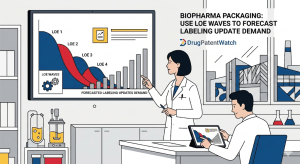
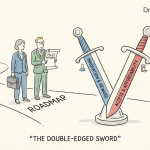
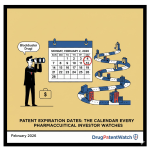
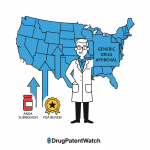
The pharmaceutical industry is entering a period of revenue redistribution. Between 2025 and 2030, a “super-cliff” of patent expirations exposes between $200 billion and $400 billion in annual branded revenue to generic and biosimilar competition.1 This transition is a predictable trigger for a surge in demand for new artwork, secondary packaging, and stability testing services. For biopharma packaging companies, these waves of loss of exclusivity (LOE) are not a crisis but a lead-generation roadmap. Managing this transition requires moving away from reactive order-taking to predictive business development using intellectual property (IP) intelligence.
The 2026-2030 Revenue Transfer
The scale of the impending LOE cycle is larger than any previous cycle. Analysis of current market data indicates that 190 medicines, including 69 blockbuster products, lose protection by 2030.1 This revenue does not vanish; it transfers to generic manufacturers or is salvaged by innovators through lifecycle management (LCM) strategies. Each outcome requires a complete overhaul of the product label and secondary packaging.
Quantifying the $400 Billion Vacuum
The revenue gap is a catalyst for industry consolidation and strategic realignment. For a company like Merck, a $30 billion revenue hole opens starting in 2028.3 This immense time pressure is a central economic driver that necessitates a forward-looking focus on lifecycle management. We see that the industry has adapted its business model toward developing single drugs that target broader populations, but declining R&D productivity and rising costs of commercialization force companies to focus on strategies that increase returns from existing portfolios.4
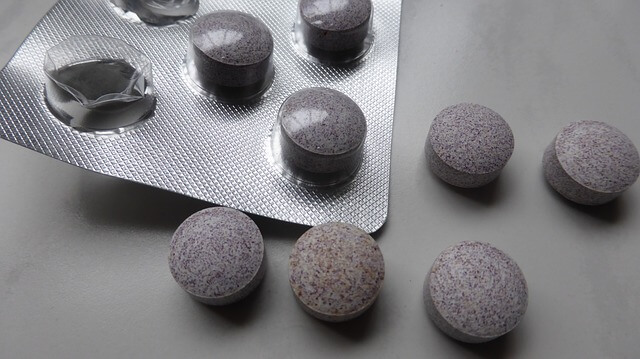
The severity of the revenue drop depends on the drug modality. Small-molecule drugs, which are typically oral solids like tablets or capsules, face a precipitous decline. Sales often plummet by 80% to 90% within the first year of generic entry, and market share can erode by 90% in just months.3 This happens because the regulatory pathway for generics allows competitors to rely on the innovator’s safety and efficacy data, proving only bioequivalence to gain approval.5
Small Molecule Erosion vs Biologic Managed Slopes
Biologics, such as monoclonal antibodies, experience a managed slope rather than a cliff. Biosimilars are not identical copies; they are highly similar products that require a more complex approval process under the BPCIA.5 Consequently, the erosion for biologics is slower, providing a longer window for post-LOE lifecycle management strategies to take hold and protect market share.5
Impact Variable
Small-Molecule Generics
Biologic Biosimilars
Erosion Velocity
80-90% in first 180 days
20-30% annual decline
Price Reduction
Up to 95% with 10+ competitors
Typically 15-35%
Regulatory Pathway
Hatch-Waxman (ANDA)
BPCIA (351(k) BLA)
Packaging Shift
High-volume cost sensitivity
Device-led differentiation
Sources: 3
The speed of erosion is influenced by several variables, including the number of generic competitors and global market differences. The U.S. model of rapid substitution is not universal, but it remains the most aggressive.3 For packaging firms, this means the volume of labels and cartons for the branded product drops instantly in the U.S., while the demand for generic packaging across multiple new market entrants grows rapidly.
Predict Demand with the 24-Month Stability Wall
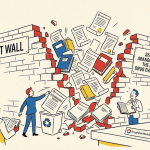
The most critical timing factor for biopharma packaging companies is the 24-month pre-LOE window.2 Any change in primary packaging, which is the material in direct contact with the drug, requires stability testing. Waiting until 12 months before LOE makes the regulatory and technical hurdles of stability testing insurmountable.
The Chemistry of Stability Testing
Stability programs are governed by ICH guidelines and 21 CFR Part 211.5 Regulatory requirements mandate that any change in primary packaging must undergo testing to ensure the product maintains at least 90% of its labeled potency throughout its shelf life.2 This testing protocol typically takes 12 to 18 months. If a packaging company waits until 12 months before LOE, the innovator company has no time to generate the stability data needed to support a primary packaging change.2
The physics of chemical stability and the bureaucracy of global regulatory agencies dictate this lead time. The sequential nature of these tasks dictates the sales cycle:
Months 1-6: Package design, material selection, and prototype development.
Months 7-18: Real-time and accelerated stability testing.
Months 19-24: Regulatory submission and production scale-up.2
CMC Documentation and Dossier Synchronization
Packaging firms that maintain internal Chemistry, Manufacturing, and Controls (CMC) departments can generate the necessary documentation, such as Drug Master File (DMF) updates and Letters of Authorization (LoA), more efficiently than a third-party consultant.8 By providing stability data for intervals up to 36 months under real-time conditions and 6 months under accelerated conditions, a packaging partner builds the regulatory case for the redesign on behalf of the client.8
Regulatory support teams at these firms assist with market-specific strategy for the FDA, EMA, NMPA, and PMDA.8 They also manage post-approval changes such as label updates and line extensions to optimize the commercial life of the product.8 The strategic bundling of redesign and regulatory support is rooted in the Total Cost of Ownership (TCO) model, helping firms calculate the ROI of integrated models and forecast the economic impact of market entry.8
Mapping the 2026 Loss of Exclusivity Wave
In 2026, a cluster of widely prescribed small-molecule drugs used in primary care, cardiology, and immunology begins to lose protection. Once generics enter, price erosion is steep, and payers move quickly to favor lower-cost versions.7 These drugs represent high-volume opportunities for packaging manufacturers to secure contracts with incoming generic players.
Cardiovascular Anchors: Eliquis and Entresto
One of the most consequential expirations is Eliquis (apixaban), co-marketed by Bristol Myers Squibb and Pfizer. U.S. patent protection runs into late 2026, after which generic versions enter the market.7 As an oral small molecule with high prescription volume, Eliquis is structurally exposed to rapid multi-generic competition once barriers fall.7
Entresto (sacubitril/valsartan) from Novartis faces a similar timeline. The heart-failure therapy anchors Novartis’s cardiovascular franchise, but U.S. patent litigation centers around protections expiring in 2026.7 Novartis’ CEO has cited Entresto as a patent cliff challenge for the company, as its key patent expires around 2026–2027 in regulatory filings.9 Overall, the cardiovascular category will see routine agents replaced by generics.9
Diabetes and Metabolic Targets: The Januvia Franchise
Diabetes products dominate the 2026 list. Merck’s Januvia (sitagliptin) and Janumet (sitagliptin + metformin) are among the highest-volume drugs losing exclusivity. Combined U.S. sales of these exceeded $3.6 billion in 2023.9 Merck has settled with 25 generic manufacturers, allowing them to launch generic versions of Januvia in May 2026.10
Janumet and Janumet XR, the fixed-dose combinations, generated approximately $1.43 billion in combined sales in 2023.10 Like Januvia, these products face patent expiry that triggers rapid price erosion. Combination products often enjoy a different competitive dynamic compared with single-agent drugs because branded combinations retain some prescriber loyalty due to convenience.10 However, once generic fixed-dose combinations become available, payers encourage switching aggressively.10
Immunology and JAK Inhibitors: Xeljanz
Pfizer’s Xeljanz (tofacitinib) is another 2026 inflection point. Patent listings indicate that key protections expire in mid-2026.7 Xeljanz was the first JAK inhibitor approved for rheumatoid arthritis, and its oral administration distinguished it from injectable biologics. In 2024, it generated $1.1 billion in sales.10 As a small molecule, Xeljanz is far more straightforward to replicate than monoclonal antibodies, raising the prospect of rapid substitution.10
Drug Product
Manufacturer
Expiry Date
2023/24 Sales
Eliquis
BMS / Pfizer
Nov 2026
~$12B+ Global
Januvia
Merck
May 2026
~$2B+ Global
Janumet
Merck
May 2026
~$1.43B Global
Xeljanz
Pfizer
Mid-2026
~$1.1B Global
Entresto
Novartis
2026–2027
~$6B+ Global
Pradaxa
Boehringer
Mar 2026
Small U.S. share
Sources: 7
The Biologic Super-Cliff: 2028 and Beyond
As we look toward 2028 and 2030, the cliff shifts toward oncology and biologics. These drugs are embedded in hospital and oncology networks, and biosimilar uptake is negotiated through tenders and contracting rather than quick retail-level substitution.7
Oncology and the PD-1 Revolution: Opdivo and Keytruda
Opdivo (nivolumab) from BMS has an estimated minimum market exclusivity date of 2028 in the U.S. and 2030 in the EU.7 PD-1 therapies like Opdivo require complex packaging, including vials and potentially prefilled syringes. Darzalex (daratumumab) is a biologic with similar dynamics in hematologic oncology. Its patents expire in 2029 in the U.S. and 2031 in Europe, and royalties are expected to decline materially in 2029.7
The most significant biologic expiration is Humira (adalimumab). While its primary patent expired in 2016, AbbVie delayed biosimilar competition in the U.S. until 2023 through a web of over 130 patents covering manufacturing and formulations.5 A central component of Humira’s defense was the Humira Pen, a self-injecting device designed to enhance patient convenience and trust.5
Immunology and the Dupixent Window
Dupixent (dupilumab) from Sanofi has two method-of-use patents expiring in October 2030 and another in April 2031.7 Those dates do not mean the franchise collapses overnight, as Dupixent is a multi-indication biologic used long-term.7 Biosimilar uptake moves through payer contracts and prescribing habits, but the early 2030s are the window for packaging companies to prepare for biosimilar entries.7
For semaglutide products like Ozempic, Rybelsus, and Wegovy, compound patent expiry in the U.S. is 2032.7 The market is shaped by manufacturing scale and delivery devices. Novo Nordisk holds follow-on patents covering delivery devices and formulation until 2031, plus 12-year biologics exclusivity for the molecular entity.9 Thus, despite a key patent lapsing in 2026, U.S. generics or biosimilars of Ozempic are not expected until 2032.9
Skinny Labeling: A Continuous Design Reset
The skinny label, technically the Section viii carve-out, allows generic competitors to enter the market for unpatented uses while the brand innovator retains exclusivity over new, patented methods of use.11 This mechanism is meant to allow generics to enter before method-of-use patents expire, but only if the patented use is fully omitted from the generic labeling.12
The Section viii Carve-Out Mechanism
If the core compound patent has expired but a method-of-use patent remains, the generic has a statutory right to file a Section viii statement.11 However, a generic drug with a skinny label approved only for Indication A will inevitably be dispensed to patients for Indication B. This creates a situation where the generic manufacturer knows their product is used for infringing purposes.11
The Federal Circuit reinstated a $235 million jury verdict against Teva, finding that the company induced infringement despite the carve-out.11 This ruling suggests that complying with FDA Section viii regulations does not protect a company from patent liability.11 Generic manufacturers have since begun scrubbing their websites, press releases, and investor decks to avoid mentions of equivalence that could be weaponized in court.11
Legal Liability After Amarin v. Hikma
The Supreme Court agreed in early 2026 to decide a case about how generic companies communicate about their products, specifically whether their promotion infringes innovator use patents through an inducement theory.12 The case concerns Hikma’s generic version of Vascepa, which sought to omit the cardiovascular risk-reduction indication still protected by patents.12
Courts now look beyond the package insert to the totality of circumstances to find evidence of intent to induce infringement.11 Risks include:
The Generic Version Trap: Describing a product as a generic version without qualifying that it is only for specific indications.11
Weaponization of the AB Rating: Using the AB rating in marketing materials implies the drug is equivalent for all uses.11
The Total Sales Trap: Citing total annual sales figures in investor decks signals an intent to capture the entire market.11
For packaging teams, these legal shifts force a constant state of artwork readiness. Labels must be hyper-specific and potentially updated rapidly to comply with shifting case law.11
The Inflation Reduction Act’s New Commercial Cliff
The Inflation Reduction Act (IRA) grants the Centers for Medicare & Medicaid Services (CMS) authority to set drug prices, creating a new event horizon for product lifecycles.14 This legislation distinguishes between small molecules and biologics, allowing 9 years of market pricing for small molecules and 13 years for biologics.14
The Pill Penalty and Lifecycle Compression
The IRA discourages small-molecule development by shifting R&D incentives toward large molecules.14 Early-stage funding for small-molecule development has fallen nearly 70% since the IRA was introduced.15 Manufacturers must now consider the comparative value of various indications to maximize return over a shortened economic window.15
The price-setting provisions ignore the critical R&D that continues after a medicine is first approved. Innovation doesn’t end at initial approval; researchers often pursue new uses, dosage forms, and formulations later.17 Because price setting can begin seven years after approval, companies may choose not to explore new dosage forms that improve delivery or help patients manage conditions.17
MFP Negotiation Timelines and Selection Criteria
The HHS secretary negotiates maximum fair prices (MFP) for 10 qualifying drugs in 2026, 15 in each of 2027 and 2028, and 20 in 2029 and following years.18 This program applies to high-cost drugs covered under Medicare Part B and Part D.18
Negotiated Drugs Target
Year of Pricing Implementation
10 Part D drugs
2026
15 Part D drugs
2027
15 Part B and D drugs
2028
20 Part B and D drugs
2029 and each subsequent year
Sources: 18
The IRA includes Medicare inflation-based rebates, requiring manufacturers to pay rebates if they increase prices above inflation.18 These provisions put pressure on revenue and gross margins, forcing companies to reconsider launch prices and lifecycle management strategies.18 Packaging firms must adapt to shorter product lifespans and increased pricing pressure by enhancing margins and shifting focus toward biologics.20
Sustainability and the 2030 Mono-Material Mandate
Environmental responsibility is emerging as a decisive competitive factor. Packaging companies are under pressure to reduce material usage and improve recyclability without compromising safety.21
PPWR Compliance and Packaging Redesign
The EU’s Packaging and Packaging Waste Regulation (PPWR) requires that all packaging in the EU market be designed for recyclability by 2030.8 This mandate forces a massive wave of packaging redesigns across the biopharma sector.8 Firms are replacing traditional plastics with bio-based or recycled materials and optimizing package size to eliminate excess void space.8
Sustainable material roadmaps involve a shift toward mono-material roadmaps. This includes transitioning from PVC and aluminum structures to recyclable alternatives like Polypropylene (PP) or green aluminum.2
Material Type
Innovation
Advantage
Plastic
Mono-material films
Easier to recycle than laminates
Aluminum
Green aluminum
Lower carbon intensity from recycling
Paper
Compostable paper-based
Reductions in landfill waste
Polymers
Bio-based (PLA, PHA)
Fossil-fuel independent sources
Sources: 5
Cold Chain Innovation for Biologics
The growth of biologics and specialty therapies drives demand for advanced cold chain compatibility.21 Redesigning packaging for extreme environments, such as those required for cell and gene therapies, requires materials that do not become brittle or lose seal integrity.8 Firms like Cryoport and Clinigen have developed specialized service models for this sector.8 Adopting eco-friendly cold chain packaging—using phase-change materials and reusable insulated shippers—presents a high-growth opportunity 24 months before LOE.5
Serialization and Traceability as Demand Drivers
Assigning unique identifiers and maintaining end-to-end visibility is a mandate under both the U.S. Drug Supply Chain Security Act (DSCSA) and the EU Falsified Medicines Directive (FMD).22 These regulations represent the global gold standard in pharmaceutical serialization.
DSCSA vs EU FMD Requirements
The DSCSA requires unit-level serialization and interoperable track-and-trace of prescription medicines.22 It focuses on transactional trace, requiring electronic exchange of transaction data among partners.22 The EU FMD implements a point-of-dispense verification model where each pack is authenticated by scanning against a central repository at the point of dispensing.22
Requirement
U.S. DSCSA
EU FMD
Traceability Focus
Transactional trace (ePedigree)
Point-of-dispense verification
Anti-Tampering
Not required on all packs
Mandatory anti-tamper seal
Verification Timing
Only returned or suspect drugs
Every drug verified at dispensing
Serial ID Data
NDC, Serial, Lot, Expiry
Product Code, Serial, Lot, Expiry
Rollout Milestone
Full compliance by 2024
Active since Feb 2019
Sources: 22
The Cost of Aggregation and Verification Errors
Serialization and global unique drug identifiers protect the supply chain, but mistakes can be serious and costly. If a supply chain partner cannot find a record of a serial number, the drug product cannot be sold or dispensed until the discrepancy is resolved.25 Aggregation enables companies to build a serialized relationship between unique identifiers assigned to packaging containers.25 It allows companies to eliminate the need to open every shipper case to verify every bottle, which would otherwise bog down the distribution system and escalate costs.25
Rx-to-OTC Switches and the ACNU Rule
Innovators use Rx-to-OTC switches to salvage brand equity after losing exclusivity.2 This shift is a massive realignment of how patients access medication. For packaging companies, this realignment provides a decisive lead-generation trigger.2
Identifying Targets with IP Intelligence
Business development teams must look at patent filings as blueprints for future sales opportunities. A patent is a complex legal instrument with a hierarchy of strategic value.2 Proactive packaging firms use DrugPatentWatch to monitor patent challenges and new formulation patents, such as extended-release versions, which signal a product hop and a cue to model a ramp-up for new packaging formats.2
Child-Resistant Packaging Compliance
Under 16 CFR 1700, most OTC drug products require child-resistant packaging (CRP).2 Packaging firms must conduct specific third-party testing involving 50 children and 50 seniors to ensure the package is difficult for children under five to open but accessible for adults.2 Innovation that makes a package both child-resistant and senior-friendly is a key way to improve patient satisfaction and boost sales.5
The FDA finalized the Nonprescription Drug Product with an Additional Condition for Nonprescription Use (ACNU) rule in late 2024.2 Historically, a drug could only switch to OTC if its label alone provided all necessary information for safe use.2 Now, sponsors can implement extra safety steps, such as digital questionnaires or diagnostics accessed via packaging. Packaging firms that integrate digital triggers like QR codes or NFC tags into their designs will be prioritized.2
Operational Excellence in Business Development
Achieving commercialization excellence requires realistic forecasting alongside early preparation, ideally 18–24 months before launch.26 Packaging firms use strategic market intelligence to navigate the shift from small-molecule generics to complex biologics and personalized medicines.8
Using DrugPatentWatch for Forecasting
Packaging teams use intelligence to identify which drugs require specialized containment and plan integrated redesign services accordingly.8 The cost of delay for a blockbuster biologic can exceed $1 million per day, so firms use data to synchronize supply chains and manage post-approval changes like line extensions.8
Strategic IP consulting can reduce prosecution costs by 30% to 40% by optimizing prior art search strategies.27 High-level professionals use Risk-Adjusted Net Present Value (rNPV) and Real Options Analysis to price the probabilistic outcomes of litigation.27 Getting the LOE date wrong by even one year can shift a company’s valuation by 10% to 15%.27
Late-Stage Customization and Digital Printing
Late-stage customization (LSC) allows manufacturers to keep brite stock—unlabeled containers—and print labels only once a regional order is confirmed.2 This reduces inventory risk and waste from country-specific packaging that might otherwise expire.2 LSC is achieved by using digital printing technologies that allow for rapid label changes without compromising speed.2
In 2026, buyers expect 5–7 business days as a standard turnaround for pressure-sensitive labels, with 48–72 hours for expedited requests.28 For multi-panel or folded labels, typical expectations range from 7–10 business days.28 Booklet labels remain the most complex, with 10–15 business days considered reasonable.28 Digital workflow solutions can cut label production delays by up to 40%.29
The Financial Risk of Labeling Errors
Labeling and packaging errors are a major cause of product recalls in the life sciences sector. Product recalls increased again in 2024, extending a post-pandemic trend that raises risk exposure.30
Recall Statistics and Severity Trends
U.S. pharmaceutical recall activity rose in 2025, and defective units climbed sharply by 26% to 858 million.31 Pharmaceutical recalls surged 140.2% by unit volume compared to 2024.32 Drug recalls are typically driven by sterility failures, cGMP compliance issues, and labeling or packaging mix-ups.30
Recall Data (2025)
Life Sciences Impact
Total Units Defective
858 Million (Up 26%)
Pharma Unit Surge
140.2% Increase vs 2024
Medical Device Recalls
490 Million Units
Food & Drink Recalls
571 Events (9-year high)
Sources: 31
The average cost of a pharmaceutical recall ranges from $10 million to $100 million, depending on severity and scope.34 A single warranty or recall process can cost a manufacturer up to $600 million, excluding lawsuits.34 These costs extend far beyond removing products and include manufacturing replacements, redistribution, refunds, and safe disposal.30
ROI of Quality Control and Prevention
The rising costs of recalls underscore the critical importance of prevention. Investing in robust quality control and rigorous testing saves millions in direct costs and protects brand reputation.34 Smart packaging, which integrates digital tools like NFC, RFID, and Bluetooth, transforms the package into an interactive caregiver, reducing medication errors estimated at $42 billion annually.5
Digital adherence tools improve patient outcomes and provide clear ROI for manufacturers. In specialty pharmacy channels, adherence programs achieve compliance rates 7% to 10% higher than traditional pharmacies.5 By initiating these campaigns 24 months before LOE, innovator companies build evidence that their branded connected products deliver superior outcomes compared to generics.5
Key Takeaways
The period between 2025 and 2030 represents a $400 billion revenue transfer. Packaging business development must target the 24-month stability window to secure new contracts. The 2026 wave of small-molecule expirations, led by Eliquis and Januvia, requires high-volume oral solid packaging. The 2028-2030 wave of biologics, including Opdivo and Dupixent, drives demand for specialized cold chain and delivery device integration.
Skinny labeling under Section viii creates a continuous need for artwork resets and legal compliance auditing. The Inflation Reduction Act shortens product lifecycles and shifts development toward biologics, while sustainability mandates like the EU PPWR force a move toward mono-materials by 2030. Serialization requirements under DSCSA and EU FMD necessitate unit-level redesigns to accommodate 2D barcodes and anti-tamper features. By using DrugPatentWatch to monitor Paragraph IV challenges and NCE-1 windows, packaging firms can transition from reactive suppliers to strategic partners.
FAQ
How does DrugPatentWatch help forecast packaging demand specifically?
Packaging teams use DrugPatentWatch to monitor Paragraph IV challenges and NCE-1 windows. A Paragraph IV filing indicates a generic manufacturer is attempting to enter the market early. This serves as a trigger for packaging firms to pitch their services 24 months before the potential launch to allow for the mandatory 18-month stability testing cycle.
What is the significance of the 24-month window for stability testing?
Any change in primary packaging material requires stability testing to prove the drug maintains potency. The protocol typically takes 12 to 18 months, with additional time needed for design and regulatory submission. If a firm waits until 12 months before LOE, they cannot generate the data needed to support a packaging change, forcing the client to stick with legacy providers.
How does the Section viii “skinny label” impact packaging artwork?
A skinny label allows a generic to omit patented indications. However, recent legal rulings like Amarin v. Hikma increase the risk of inducement liability. Artwork must be hyper-specific, and any mention of equivalence or total brand sales can be weaponized. This forces packaging companies to maintain high artwork agility and potentially scrub labels of certain terms rapidly.
What are the primary differences between DSCSA and EU FMD for packaging?
The U.S. DSCSA focuses on transactional trace (ePedigree) and does not require anti-tamper devices on all packs. The EU FMD mandates an anti-tamper seal and point-of-dispense verification where every pack is scanned at the pharmacy. Packaging must be redesigned to accommodate 2D datamatrix codes and tamper-evident features in both regions.
How is the Inflation Reduction Act changing packaging strategy for small molecules?
The IRA limits small molecules to 9 years of market pricing before potential negotiations, compared to 13 years for biologics. This “pill penalty” compresses the lifecycle, making innovators less likely to invest in late-stage dosage form changes. Packaging firms must shift their focus to biologics or find ways to enhance margins through procurement efficiency and operational speed.