The Investor’s Clock-Watching Pain Point: Understanding the Core Challenge
Setting the Stage: The Promise vs. The Reality
For too long, the narrative around biosimilars has been framed by a simple, optimistic premise: when a blockbuster biologic drug’s patent expires, a wave of lower-cost biosimilar competitors will flood the market, generating significant savings and expanding patient access. On the surface, the numbers support this promise. The U.S. healthcare system has already realized over $56 billion in savings from biosimilars since their first approval in 2015.1 Projections suggest this number could soar to a staggering $181 billion by 2027, alleviating immense financial pressure on patients, payers, and health systems.2
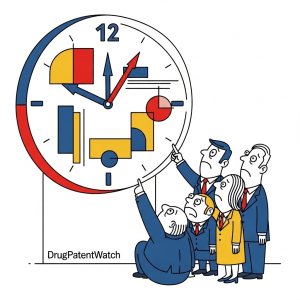
However, for sophisticated professionals in the biopharma, legal, and investment communities, this simple narrative feels frustratingly incomplete. They are the ones watching the clock, waiting for a biosimilar to finally hit the market long after its regulatory approval. They understand a far more complex reality. The central pain point is a profound and unsettling uncertainty: the time between a biosimilar receiving FDA licensure and its actual commercial launch is neither short nor predictable. This lag, which can stretch for years, fundamentally decouples the regulatory milestone from the commercial event, creating a landscape of delayed ROI, thwarted portfolio strategies, and a lingering sense of déjà vu.
Defining the Pain Point
The “clock-watching” pain point is more than just an inconvenience; it is a direct consequence of a multi-layered system of hurdles that exists specifically for these complex medicines. The traditional, small-molecule drug model, where patent expiry leads directly and rapidly to generic entry, simply does not apply here. A generic drug is chemically identical to its brand-name counterpart, a fundamental fact that streamlines its regulatory and commercial journey. A biosimilar, by its very nature, is different. This single distinction—that a biosimilar is “highly similar” but not identical to its reference product—is the foundation of every subsequent challenge.3
This report is a deep dive into that system. We will move beyond the superficial “patent cliff” narrative to dissect the complex, interconnected forces—regulatory, legal, and commercial—that govern biosimilar market timing. We will use hard data and real-world case studies to provide a strategic framework for turning this uncertainty into a competitive advantage. The goal is to move from simply watching the clock to understanding what makes it tick and, more importantly, how to reset it in your favor.
Deconstructing the Biosimilar: From Scientific Identity to Regulatory Reality
The Fundamental Distinction: Biosimilars are not Generics
To understand the unique challenges of biosimilars, we must first appreciate their fundamental scientific and structural differences from generic drugs. A generic drug is a chemically synthesized, small molecule that is an identical replica of its brand-name counterpart.3 Its molecular structure can be precisely determined and reproduced, allowing regulators to approve it with a high degree of certainty based on a demonstration of bioequivalence.
Biosimilars, on the other hand, are a different class of medicine entirely. They are large, complex proteins made from living organisms or cells, such as bacteria, plant cells, or yeast.4 Their complexity is not just a matter of size; it is a function of their manufacturing process. Because they are derived from a living source, biologics have inherent, natural variability even between different manufacturing batches of the same product.3 A biosimilar manufacturer cannot simply copy the originator’s proprietary cell line and manufacturing process. Instead, they must reverse-engineer the final product and develop their own unique process to create a molecule that is “highly similar” to the original, with “no clinically meaningful differences” in terms of safety, purity, and potency.3
This scientific nuance—the concept of “highly similar, not identical”—is a powerful ripple effect that touches every aspect of the biosimilar lifecycle. It mandates a distinct, more rigorous regulatory pathway than that for generics, a different legal framework for intellectual property disputes, and a significant psychological barrier to adoption among healthcare providers and patients. This distinction creates a “confidence gap” that simply does not exist for identical generics, where the substitution is a routine, transparent event.5
The U.S. Regulatory Pathway: The Biologics Price Competition and Innovation Act (BPCIA)
In the United States, the regulatory framework for biosimilars is governed by the Biologics Price Competition and Innovation Act (BPCIA), which was enacted in 2010.6 Much like the Hatch-Waxman Act for small-molecule generics, the BPCIA was designed to create an abbreviated pathway for the approval of biosimilars, fostering competition and potentially reducing healthcare costs.6
The BPCIA has several key provisions that directly impact market timing. It grants the originator biologic a 12-year period of market exclusivity, during which no biosimilar approval can become effective.6 Additionally, a biosimilar application cannot be filed for four years after the reference product’s initial license date.8 These statutory exclusivity periods are the first, most predictable determinant of market timing.
For a biosimilar to gain approval through this abbreviated pathway, the FDA requires a demonstration of biosimilarity based on the “totality of the evidence”.5 This is a stepwise process designed to confirm that the biosimilar is highly similar and has no clinically meaningful differences from its reference product, while avoiding the ethical and financial burden of unnecessarily duplicating large-scale clinical trials.9 The cornerstone of this process is an exhaustive analytical characterization, where a battery of state-of-the-art laboratory techniques are used to compare the molecular structure, purity, and potency of the biosimilar and the reference product.8 This analytical data is foundational and, if compellingly presented, can reduce the need for extensive non-clinical and clinical studies.5
The European Gold Standard: The EMA’s Centralized Pathway
The European Medicines Agency (EMA) was a global pioneer, establishing its biosimilars pathway in 2005, years before the U.S..15 This head start has allowed the EMA’s framework to evolve into a mature, influential model that is widely considered the gold standard for regulatory approvals, influencing frameworks in the U.S., Japan, and other regions.15
The EMA’s process follows a centralized approval pathway that, if successful, grants a marketing authorization valid across all EU member states.15 The process includes several key phases:
Pre-Submission Phase: Manufacturers engage in early dialogue with the EMA to seek scientific advice and align on development programs.
Comparability Studies: The core of the application, involving a comprehensive package of analytical, preclinical, and clinical data to demonstrate biosimilarity.
Dossier Preparation: Submission of a detailed dossier, known as the Common Technical Document (CTD), with a strong emphasis on quality and comparability data.
CHMP Review: The EMA’s Committee for Medicinal Products for Human Use (CHMP) evaluates the data, often issuing questions that require detailed responses.
European Commission Decision: The final approval is granted by the European Commission, making the product valid for commercialization across the EU.15
The EU’s earlier, more streamlined framework has led to more predictable and often earlier market entry for biosimilars compared to the U.S..10 The definitive proof of this is the case of Humira, where a biosimilar was approved and launched in Europe a full five years before the first U.S. entry.10 This demonstrates that the regulatory framework itself is a primary, predictive indicator of market timing, not just a procedural step.
The Interchangeability Designation: The Ultimate Substitution Debate
A unique and highly sought-after designation in the U.S. market is “interchangeability”.5 An interchangeable biosimilar is a subset of biosimilars that not only meets all biosimilarity requirements but also meets additional standards demonstrating that it can be substituted for the reference product at the pharmacy level without the need for a physician’s intervention.7 This is the closest a biosimilar comes to the generic drug substitution model and is governed by individual state pharmacy laws.7
Historically, achieving this designation was a costly and time-consuming process that often required additional clinical studies, particularly “switching studies”.7 These studies were designed to demonstrate that alternating or switching a patient between the reference product and the biosimilar does not result in a greater safety risk or diminished efficacy than staying on the reference product alone.7 However, recent FDA draft guidance has indicated a move away from mandating these studies, suggesting that the designation may be granted based on a compelling scientific justification using existing comparative data.18
While interchangeability is not a clinical term and does not imply that an interchangeable biosimilar is safer or more effective than a non-interchangeable one, it is a significant commercial advantage.18 It removes a major administrative barrier for pharmacists and, in theory, should accelerate adoption. However, a lingering perception exists that non-interchangeable biosimilars are clinically inferior, which can contribute to prescriber and patient hesitancy and slow market uptake.18
The Legal Labyrinth: Decoding the Intellectual Property Minefield
The Anatomy of a Patent Thicket
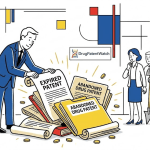
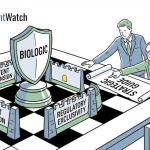
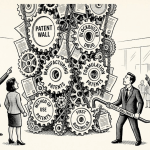
For investors, a simple patent expiry date is a poor predictor of market entry. The true determinant is the legal landscape, which is often dominated by a formidable legal strategy: the patent thicket.16 A patent thicket is a “dense web of overlapping intellectual property rights that a company must hack its way through in order to actually commercialize new technology”.16 It is an aggressive, proactive strategy by originator companies to protect their monopoly long after the primary patent has expired.
This strategy relies on a crucial distinction between two categories of patents.16 The
primary patent covers the core innovation, which for a biologic is typically the active pharmaceutical ingredient (API), such as the protein sequence.16 Once this foundational patent expires, the originator company can assert dozens, or even hundreds, of
secondary patents that cover minor, incremental, or follow-on innovations related to the original drug.16 These can include patents on the drug’s formulation, its manufacturing process, a specific method of use for a rare indication, or the design of the delivery device.21
The objective is to create a complex and costly litigation landscape that is so difficult to navigate that would-be competitors are deterred from challenging the monopoly, thereby extending it for years beyond what was originally envisioned by the BPCIA.16 The Humira case study is the definitive proof of this strategy’s impact. In the U.S., AbbVie created a thicket of over 165 granted patents for Humira, which directly resulted in a five-year delay in biosimilar competition compared to Europe.16 The extended monopoly in the U.S. is estimated to have cost the American healthcare system tens of billions of dollars.16 This demonstrates that these legal strategies by originator companies have tangible, multi-billion-dollar consequences for market timing and national healthcare spending.
The Infamous “Patent Dance”
At the heart of the U.S. biosimilar patent litigation process is a complex framework known colloquially as the “patent dance”.8 Designed to facilitate an exchange of information and resolve disputes early, this structured process has, in practice, become a powerful tool for delay.8
The patent dance is a scheduled, multi-step process that can take up to 250 days, or approximately eight months, to complete if both parties take the maximum allotted time.22 It is initiated when the biosimilar applicant notifies the originator company that the FDA has accepted its application, providing a copy of the application and other manufacturing information.8 This triggers a series of information exchanges, including the originator providing a list of potentially infringed patents and the biosimilar applicant providing a detailed, claim-by-claim rebuttal for each of those patents.22 This process is followed by a period of good-faith negotiation to narrow the scope of potential litigation.22
The legal framework of the BPCIA was intended to promote competition, but its very complexity has made it an accidental delay mechanism. By requiring a full patent review and a potential legal gauntlet before market entry, the law effectively provides a roadmap for originators to slow down the process, as seen with both Humira and Stelara.10 A landmark Supreme Court ruling in 2017 clarified that the patent dance is not mandatory, but opting out has significant consequences, as it shifts the power of initiating a patent infringement lawsuit entirely to the originator.23 For a would-be biosimilar competitor, navigating this legal chess match is an essential precursor to market entry.
The Crucial Role of Patent Data: Gaining a Competitive Edge
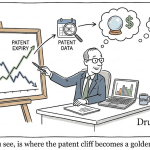
For any company or investor seeking to enter the biosimilar market, proactive patent intelligence is no longer a luxury—it is a strategic imperative. In a landscape defined by complex patent thickets and protracted legal battles, the ability to predict litigation outcomes and identify the optimal path to market is a powerful competitive advantage.8
This is where specialized tools and data services like DrugPatentWatch become essential. These platforms provide a centralized, detailed view of the intellectual property landscape surrounding a reference biologic. By analyzing the number and type of patents, their expiration dates, and the history of related litigation, these tools help to:
Deconstruct Patent Thickets: They allow IP and legal teams to analyze the patents protecting a reference product, distinguishing between foundational API patents and the secondary patents that form the thicket.16
Predict Litigation Outcomes: They provide data that can help predict the likely success of a patent challenge, informing the decision of whether to litigate or pursue a settlement.8
Inform Strategic Decisions: This intelligence informs critical business decisions, such as which biosimilar candidates to prioritize for development, when to initiate the patent dance, and whether to pursue an “at-risk” launch or a negotiated settlement with an originator company to secure a specific market entry date.8
In this environment, a deep understanding of the legal landscape is as important as the clinical data. The first company to effectively combine legal, regulatory, and commercial intelligence will be the one to master the timing of the market.
The Commercial Gauntlet: The Post-Approval Hurdle
The Market Access Maze: The PBM’s Role as Gatekeeper
Even after navigating the regulatory and legal gauntlets, a biosimilar’s journey is far from over. The final and perhaps most significant hurdle is market access, a maze controlled by Pharmacy Benefit Managers (PBMs).17 PBMs act as powerful intermediaries between manufacturers, health plans, and patients, managing drug formularies and dictating which drugs are covered and at what cost.27 Their influence is immense, and they have become the central gatekeepers of the biosimilar market.
A key factor in this dynamic is the “rebate war”.28 Originator companies, determined to protect their market share, respond to biosimilar competition by offering massive rebates to PBMs in exchange for favorable formulary placement.28 The data shows that these rebates can be significant, increasing by as much as 89%, while net prices for the originator can fall by over 60% after multiple biosimilar entrants.28
The issue for the biosimilar market is that this system creates a “rebate trap” or “rebate wall,” which distorts normal market behavior.29 While low-WAC (Wholesale Acquisition Cost) biosimilars may have a lower net cost for employers and patients, PBMs and their vertically-integrated pharmacies often profit more from the high-list-price, high-rebate originator drug.30 This explains the market’s irrational behavior, where a cheaper product with proven clinical equivalence does not automatically win. The system is fundamentally designed to protect PBM profits, not to promote patient access or lower costs.30
High-WAC vs. Low-WAC: A Strategic Pricing War
To navigate this complex reimbursement landscape, some biosimilar manufacturers have adopted a dual-pricing strategy, offering both high-WAC and low-WAC versions of their products.31 The purpose of this approach is to compete effectively across different payer segments and balance market access with revenue optimization.31
Low-WAC: This strategy, offering a significant discount of 55% to 85% off the originator’s WAC, is designed to appeal to patients whose co-insurance is tied to the drug’s list price, thereby reducing their out-of-pocket costs.32 It is also attractive to health systems that purchase drugs under a fee-for-service model.
High-WAC: This strategy, with a smaller 5% to 6% discount off the originator’s WAC, is designed to provide larger rebates to PBMs and health plans.32 It allows manufacturers to compete directly with the originator on a rebate-based formulary, addressing PBMs’ concerns about losing the large rebates associated with the originator drug.32
The Rise of PBM-Led Launches and Private Label Biosimilars
The chaotic, fragmented launch of Humira biosimilars in 2023 demonstrated a clear lesson: price and rebate alone were insufficient to drive widespread adoption.33 The market’s response to this lesson has been a paradigm shift, as PBMs have moved from simply being gatekeepers to becoming active partners in the launch process. This new model is defined by the emergence of PBM-affiliated “private label” or “white label” biosimilars.33
The Stelara launch in 2025 provides a powerful case study for this new model. The original patent litigation had delayed launches from a projected 2023 to 2025.21 However, unlike the fragmented Humira launch, the Stelara market saw a more coordinated, PBM-driven rollout.33 Amgen’s Wezlana was the first to launch on January 1, 2025, via an exclusive distribution model with Nuvaila, a subsidiary of UnitedHealth Group’s OptumRx.33 Three other ustekinumab biosimilars followed in February 2025, each with their own PBM partnerships.25
This signals that the future of biosimilar market timing is less about winning a public patent war and more about securing a private, exclusive partnership with a major PBM.33 This new playbook shifts the power dynamic from a manufacturer-led “push” to a PBM-led “pull,” making PBM partnership a critical, early-stage strategic imperative for future success.33
Overcoming the “Confidence Gap”: The Imperative for Physician and Patient Education
Even with a clear path through the legal and commercial hurdles, a final, often overlooked, barrier to market timing remains: the “confidence gap” among physicians and patients.5 Despite the FDA’s rigorous approval process, a lingering hesitancy exists due to the “highly similar, not identical” nature of biosimilars.5
Physician hesitancy often stems from a lack of experience with these products, concerns about switching a patient who is stable on the originator drug, and confusion over different state substitution laws and formulary requirements.13 For patients, the barriers are often psychological and financial, fueled by worries about efficacy, potential side effects, and confusing insurance coverage.13
A successful market entry strategy cannot be driven by price alone.5 It must include a robust, evidence-based education campaign to build trust and increase adoption.11 This means engaging with key opinion leaders, providing clear data to healthcare providers, and simplifying patient-facing information to close the gap between scientific reality and public perception.35
Financial Models and the Investor’s Calculus
The High-Stakes Investment: Costs and Timelines
Biosimilar development is a high-stakes, capital-intensive endeavor that sits in the middle of a unique economic spectrum.37 It is not the low-investment, high-volume model of generics, which can cost as little as $1-$5 million to develop.5 Nor is it the multi-billion-dollar, decade-plus commitment required for a novel biologic.5
Bringing a biosimilar to market requires a substantial investment of approximately $100 million to $300 million and takes an average of six to eight years from initiation to market approval.9 This significant cost of entry is a powerful economic lever that naturally limits the number of competitors for any given reference product. The stakes are immense, and the financial viability of a project hinges on its ability to capture early market share.
Evaluating Opportunity: The Risk-Adjusted Net Present Value (rNPV) Model
For investors and business development teams, evaluating a biosimilar opportunity is a sophisticated economic calculation. The gold standard for this assessment is the risk-adjusted Net Present Value (rNPV) model, which introduces greater precision by weighting future cash flows by the probability of technical, regulatory, and commercial success.37
This model provides a structured framework for analyzing the financial viability of a biosimilar candidate, incorporating key industry-specific assumptions:
Development Costs: $100-$250 million.37
Timelines: 6-8 years to market approval.37
Manufacturing Costs: 25-35% of total revenue.37
Market Share: Peak market share assumptions of 15-30%.37
Price Discounts: Launch discounts of 30-40% compared to the reference product.2
Success Probabilities: The probability of success for biosimilars is significantly higher than for novel biologics (65-75% versus 10-15%), but still lower than for generics.37
Understanding ROI in the Biosimilar Landscape: The Primary Value Drivers
The rNPV model reveals a fundamental truth about the biosimilar market: time-to-market is the single greatest driver of ROI.37 Early market entry provides a “substantial NPV advantage” because the first one or two entrants can capture significant market share before aggressive price erosion from a crowded field begins to diminish margins.1 The entire financial viability of a project can hinge on this race to be first or second to market.
Conversely, delays, whether from protracted patent litigation or a fragmented launch strategy, can have a devastating impact on profitability. The multi-billion-dollar investment is predicated on a finite period of market exclusivity and a limited number of competitors, making any delay an immediate and significant erosion of project value.11
The Portfolio Strategy: Sizing the Opportunity
A smart portfolio strategy for biosimilar development requires more than a scientific assessment of a molecule’s feasibility. It is a sophisticated economic calculation that analyzes the complexity of the molecule against the size of the addressable market.5 Products with greater complexity require a higher investment, and therefore, can only be viable in large markets with substantial sales.5
The analysis of historical data suggests that biosimilars for originator drugs with global sales of over $7 billion have a low financial risk.40 In contrast, a biosimilar for a drug with sales of around $1.6 billion carries considerable financial risk.40 This economic principle allows strategists to model the competitive intensity for any given biologic and forecast which assets are not just technically feasible but commercially viable.5
Case Studies: Real-World Lessons in Market Timing
The Humira Chronicle: A Definitive Case Study in Patent Thickets
The story of Humira biosimilars is the ultimate lesson in the decoupling of regulatory approval and commercial launch. The first Humira biosimilar, Amjevita, was approved by the FDA in September 2016.41 Despite this early regulatory victory, the actual U.S. launch was delayed for more than six years, finally occurring in January 2023.41 Multiple other biosimilars followed in July 2023.42
This seven-year gap was not an accident; it was the direct result of AbbVie’s formidable patent thicket, which consisted of over 165 granted patents.10 Rather than engaging in a protracted, multi-front public patent war, most biosimilar developers chose to reach confidential settlement agreements with AbbVie, which granted them a specific market entry date in 2023.26
The post-launch market was equally complex. As multiple biosimilars entered the market, a “rebate war” ensued, with originator AbbVie offering massive rebates to PBMs to maintain its formulary position.29 This strategy initially stifled biosimilar adoption, with Humira retaining over 80% of its patient base by the end of 2023.33 It was only after a major PBM, CVS Caremark, launched a co-branded, private-label version of Hyrimoz that biosimilar utilization began to grow rapidly.44
The Stelara Story: PBMs Reshaping the Launch Narrative
The launch of Stelara biosimilars in 2025 provides a clear evolution of the market access playbook. Like Humira, the Stelara biosimilars faced protracted patent litigation that delayed their launches from a projected 2023 to 2025.21 However, the market entry strategy was markedly different.
Amgen’s Wezlana was the first to launch on January 1, 2025, but it did so via an exclusive distribution model with Nuvaila, a subsidiary of OptumRx.33 This launch was not a single, chaotic event; it was a coordinated, PBM-driven market strategy. Following this, three other ustekinumab biosimilars launched in February 2025, each with their own PBM partnerships.25
The Stelara launch signals that the future of biosimilar market timing is less about winning a public patent war and more about securing a private, exclusive partnership with a major PBM.33 This shifts the power dynamic from a manufacturer-led push to a PBM-led pull. Payers and PBMs are increasingly orchestrating market entry and controlling the distribution of preferred biosimilars, a critical lesson for any future market entrant.33
Strategic Toolkit: Turning Data into Advantage
For R&D Teams: De-risking the Pipeline from Day One
The lessons from the biosimilar market are clear: the race to market begins long before an application is filed. R&D teams must adopt a proactive, “quality-by-design” (QbD) approach that anticipates and addresses regulatory questions early in the development process.12 This includes a foundational investment in extensive analytical characterization to build a robust “totality of the evidence” package that leaves no room for doubt about biosimilarity.5 By front-loading the data and focusing on comparative analysis, teams can significantly de-risk the regulatory pathway and streamline the clinical program.
For IP & Legal Teams: Proactive Patent Intelligence and Dispute Resolution
In a market dominated by patent thickets, legal strategy must move from a reactive to a proactive posture. IP and legal teams must leverage sophisticated patent intelligence tools like DrugPatentWatch to monitor the landscape, deconstruct patent thickets, and predict litigation outcomes.8 This intelligence should be used to inform proactive dispute resolution strategies, including strategic settlements to secure an earlier market entry date and avoid the costs and delays of a full-scale legal battle.8 The goal is not to “win” a public patent war but to secure a specific, predictable launch date.
For Business Development & Commercial Teams: Masterful Market Access Strategy
A successful commercial launch strategy for a biosimilar is fundamentally different from that of a generic. It cannot be driven by price alone.5 Business development and commercial teams must engage with PBMs and payers early in the process.35 The new imperative is to explore PBM partnership models as a primary market entry strategy, as seen in the Stelara launch.33 This includes understanding the dual-pricing models and private label agreements that are reshaping access and distribution.31 Additionally, teams must develop a comprehensive commercialization plan that addresses the “confidence gap” through targeted, evidence-based education for physicians and patients.13
For Investors and Consultants: The Due Diligence Checklist
For investors and consultants, effective due diligence goes far beyond reviewing an FDA approval document. A comprehensive checklist for evaluating a biosimilar opportunity must include:
The IP Landscape: A thorough assessment of the originator’s patent thicket and the number and type of patents being asserted.16
The Competitive Field: An analysis of the number of biosimilar competitors in the pipeline and the likely timing of their entry.5
The PBM and Payer Landscape: A deep dive into the PBMs and payers that control the therapeutic area’s formulary and their historical approach to biosimilar adoption.33
The Commercial Strategy: An evaluation of the target biosimilar’s commercial strategy, including its approach to pricing, distribution, and PBM engagement.31
Conclusion: The Shifting Sands of the Biosimilar Market
The biosimilar market is undergoing a profound structural shift. The simple, linear model of “patent expiry followed by immediate competition” has been replaced by a complex, multi-faceted ecosystem where market timing is dictated by the interplay of legal, regulatory, and commercial forces. The investor’s clock-watching pain point is a direct consequence of this new reality.
The historical case of Humira showed us that patent thickets can delay market entry for years and that a high-volume, low-margin launch strategy is insufficient to overcome the rebate-driven power of PBMs. The recent case of Stelara, however, offers a glimpse into the future, where market entry is increasingly orchestrated by PBMs themselves through strategic partnerships and exclusive distribution models.
For all stakeholders, from R&D and IP teams to investors and business development executives, success depends on adapting to this new reality. The ability to predict a product’s true time-to-market requires moving beyond a simple review of its regulatory status. It demands a sophisticated analysis of the originator’s patent portfolio, a deep understanding of PBM formulary dynamics, and a proactive strategy to engage with all stakeholders across the healthcare ecosystem. The future of the biosimilar market belongs not to the fastest developer, but to the most strategic.
Key Takeaways
Market Timing is a Multi-Factor Problem: A biosimilar’s time-to-market is not determined by its FDA approval date but by a complex interplay of patent litigation, legal settlements, and market access strategies.
The Patent Thicket is a Primary Delay Mechanism: Originator companies use dense webs of secondary patents to create costly legal barriers that can delay U.S. market entry for years, as seen in the Humira case.
PBMs are the New Kingmakers: Pharmacy Benefit Managers (PBMs) control market access through their formulary decisions and rebate schemes. The rise of PBM-led launches and private-label biosimilars, as seen with Stelara, is reshaping the entire competitive landscape.
Financial Viability Hinges on Time-to-Market: Early market entry provides a substantial NPV advantage, mitigating the risk of aggressive price erosion from a crowded field.
Interchangeability is a Commercial Advantage: While not a clinical superiority, the interchangeability designation is a significant commercial advantage that simplifies pharmacy-level substitution and can accelerate market adoption.
Education is a Strategic Imperative: A lingering “confidence gap” among physicians and patients must be overcome with proactive, evidence-based education to increase adoption and drive market penetration.
Data is Your Compass: Tools like DrugPatentWatch are essential for navigating the complex IP landscape, predicting litigation outcomes, and informing strategic decisions about market entry and settlements.
Frequently Asked Questions (FAQ)
1. What is the single biggest factor determining a biosimilar’s time-to-market?
While multiple factors are at play, the single biggest factor determining a biosimilar’s time-to-market is often the outcome of patent litigation or settlement with the originator company. The U.S. BPCIA framework, particularly the “patent dance,” allows originator companies to assert dozens of patents, creating a legal gauntlet that can delay a launch for years after regulatory approval, as demonstrated by the Humira and Stelara cases.
2. How do PBMs decide which biosimilar to cover, and what is the “rebate trap”?
PBMs decide which drugs to cover primarily based on cost-effectiveness and their ability to generate revenue. The “rebate trap” is a strategy where originator companies offer massive rebates to PBMs in exchange for maintaining a favorable formulary position for their high-list-price brand drug. This practice can financially disincentivize a PBM from shifting volume to a lower-cost biosimilar, even if it has a lower net cost for the health plan.
3. What is the Humira “patent thicket,” and why did it delay U.S. launches for years?
The Humira patent thicket was a legal strategy by AbbVie to protect its monopoly by acquiring a dense web of over 165 patents on the drug. These patents covered not only the core molecule but also secondary aspects like formulations, manufacturing processes, and delivery devices. This complex web of intellectual property rights made it extremely costly and difficult for biosimilar competitors to challenge the monopoly, leading to a series of settlements that delayed U.S. launches for over six years after the first biosimilar was approved.
4. How does the Stelara launch represent a new model for biosimilar market entry?
The Stelara launch in 2025 demonstrated a new PBM-driven market entry model. Unlike the fragmented, multi-front launches for Humira, the first Stelara biosimilar was launched via an exclusive distribution partnership with a major PBM subsidiary. This coordinated approach shifts the power dynamic, suggesting that future biosimilar market success will depend less on winning public patent wars and more on securing private, strategic partnerships with PBMs to control market access and distribution.
5. For investors, what is the most critical metric for evaluating a biosimilar opportunity?
For investors, the most critical metric for evaluating a biosimilar opportunity is the risk-adjusted Net Present Value (rNPV). This financial model goes beyond simple revenue projections by incorporating key risk factors, such as the probability of regulatory approval and commercial success. It highlights that the single greatest driver of a project’s value is early market entry, which provides a substantial NPV advantage before a crowded market erodes profitability.
Biosimilar Medicines: From Development Process to Marketing Authorization by the EMA and the FDA – MDPI, accessed September 17, 2025, https://www.mdpi.com/2076-3417/14/17/7529