The Looming Precipice: An Introduction to the Patent Cliff Phenomenon
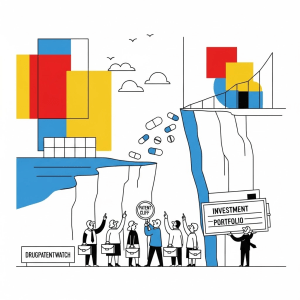
For decades, the pharmaceutical industry has operated on a foundational business model: invest billions in risky research and development, secure intellectual property protection, and then leverage a period of market exclusivity to generate immense profits that subsidize future innovation.1 This cycle, while immensely successful, is inherently punctuated by an inevitable and often seismic event known as the patent cliff. Far from a gentle, gradual decline, a patent cliff is the sudden, sharp, and often catastrophic drop in revenue that a company experiences when a blockbuster drug’s patent expires and faces a deluge of generic or biosimilar competition.3 It is a predictable yet profoundly disruptive force that fundamentally alters market dynamics and threatens the financial stability of even the largest pharmaceutical companies.4 The term itself is a powerful metaphor for a phenomenon where a firm’s revenues can literally “fall off a cliff”.2
While the term applies to any industry reliant on patents, its resonance in pharmaceuticals is uniquely potent due to the sheer financial scale of the products involved. A “blockbuster” drug, for example, is defined as one with sales exceeding US$1 billion per year, and the loss of exclusivity for just one such asset can destabilize an entire company’s financial structure.3 As a result, the period leading up to and following a patent expiry is a critical inflection point, one that separates companies with a robust, forward-looking strategy from those that are overexposed and unprepared.5 The pharmaceutical landscape is in a perpetual state of this cycle, but the current wave of expirations is shaping up to be one of the most significant in recent memory.
The Scale of the Coming Storm: Quantifying the 2025-2030 Wave
The industry is currently bracing for an unprecedented wave of patent expirations, a “patent cliff” that is projected to be one of the biggest since 2010 from a loss of revenue perspective.6 Projections indicate that between 2025 and 2030, the global pharmaceutical industry faces a staggering US$236 billion patent cliff, with nearly 70 high-revenue products losing exclusivity.8 This is not a scattered event affecting a few isolated products; it is a concentrated storm that will fundamentally reshape entire therapeutic areas, particularly oncology and diabetes.7 For many of the world’s leading firms, this financial exposure is immense. According to one analysis, more than 30% of the collective revenues from companies like Bristol Myers Squibb, Pfizer, and Regeneron are at risk in the coming years.9
The financial impact of this wave will be immediate and severe. The extent of the revenue erosion, however, is not uniform. A nuanced understanding of the market reveals that the “cliff” is not a single, universal descent but a spectrum of descents determined by the type of drug. For traditional small-molecule drugs, the decline is often abrupt and precipitous, with sales plummeting by up to 80-90% and market share eroding by 90% within months of generic entry.8 For biologics, the decline is slightly slower but still substantial, with revenues typically falling by 30-70% in the first year.8 This fundamental difference in velocity is a crucial variable in strategic planning. It is a distinction rooted in the underlying science and manufacturing. Unlike small-molecule generics, which are chemically synthesized and can be copied exactly, biosimilars are highly complex, large-molecule proteins derived from living organisms.11 Due to inherent micro-variability, they cannot be exact copies and require a more complex, tightly controlled, and expensive manufacturing and regulatory process.11 The higher barriers to entry for biosimilars offer originators a slightly longer runway to transition patients to next-generation products or expand into new indications. For investors, this means a small-molecule cliff represents a short-term, high-impact risk or opportunity, while a biologic cliff is a more drawn-out and complex strategic play.
This is a critical juncture for anyone involved in the business of medicine. To navigate this landscape successfully, professionals must shift their focus from what a company’s revenue is today to what it will be after its main cash cow loses its protective moat.5 This requires a proactive, data-driven approach that goes far beyond a simple analysis of a company’s financial statements. It demands a granular understanding of the intellectual property, the pipeline, and the management’s strategic vision. A strategic playbook is required, and it starts with a clear-eyed look at the blockbuster drugs on the brink.
“Between 2025 and 2030, the global pharmaceutical industry faces a staggering $236 billion patent cliff, exposing nearly 70 high-revenue products to intense generic competition.” 8
The following table provides a high-level overview of some of the most prominent drugs facing the upcoming patent cliff, mapping the scale of the challenge that lies ahead.
Table 1: The 2025-2030 Blockbuster Patent Expiry Roster
Drug Name (Brand/Generic)
Company
Estimated Expiry (US)
Peak Annual Sales
Drug Type
Eliquis (apixaban)
Bristol Myers Squibb / Pfizer
2026-2028
>$18 billion (joint)
Small-Molecule
Keytruda (pembrolizumab)
Merck
2028
~$30 billion
Biologic
Imbruvica (ibrutinib)
AbbVie / Johnson & Johnson
2027
N/A
Small-Molecule
Stelara (ustekinumab)
Johnson & Johnson
2025 (US)
>$10 billion
Biologic
Eylea (aflibercept)
Regeneron
2025
>$9 billion
Biologic
Ozempic (semaglutide)
Novo Nordisk
2026
N/A
Biologic
Xarelto (rivaroxaban)
Bayer / Janssen (J&J)
2026
N/A
Small-Molecule
The Innovator’s Playbook: Strategies for Defense and Resilience
The patent cliff is not a surprise. It is a predictable event that companies can, and must, prepare for years in advance.13 The most successful innovators do not wait for the storm to hit; they spend years fortifying their defenses and charting a course for the future. The strategies they employ are a fascinating blend of scientific innovation, legal maneuvering, and proactive portfolio management.
Fortifying the Moat: The Art of Life Cycle Management
Long before the final patent expires, pharmaceutical companies engage in sophisticated, multi-pronged life cycle management (LCM) strategies. This is a form of proactive defense designed to extend a drug’s commercial life and smoothly transition patients to new, patent-protected versions before generics can seize market share. One of the most common and controversial tactics is known as “evergreening,” a strategy of obtaining new patents based on slight modifications of an existing drug.14
The practice of evergreening is often portrayed negatively, but a closer look reveals a spectrum of strategic purposes, some of which offer genuine patient benefits.15 A company might, for instance, develop a “next-generation” product with enhanced efficacy, a reduced side-effect profile, or a more convenient dosing schedule. The purpose is to make the original, soon-to-be-genericized drug less relevant by providing a demonstrably better alternative.15
A company may also explore new formulations and delivery systems, creating extended-release versions, transdermal patches, or long-acting injectables of an oral medication.15 This provides a fresh layer of patent protection while offering tangible improvements in patient adherence and convenience. A third tactic involves seeking new indications by conducting additional clinical trials to treat a different disease or patient population.15 Each new approved indication can come with its own period of market exclusivity, creating a patchwork of protection that extends the drug’s revenue stream well beyond the original patent’s expiration. Finally, innovators may develop combination therapies by merging their drug with other active ingredients to create a new, patent-protected product that offers enhanced value.15
While innovators argue that evergreening is a necessary measure to protect R&D investment and encourage further innovation, critics counter that these efforts are primarily for economic gain and often provide little or no therapeutic advantage to patients.14 This debate highlights the central tension in the pharmaceutical business model: balancing the need for profitability to fuel future research with the public’s need for affordable, accessible medicine.
Litigation as a Tactic: Extending Exclusivity Through Legal Maneuvers
In the United States, the legal battlefield is defined by the Hatch-Waxman Act, a piece of legislation passed in 1984 that attempted to balance the conflicting goals of encouraging generic competition and protecting innovator intellectual property.16 The act established an expedited pathway for generic approval but also provided brand companies with a powerful toolkit for defense. This includes the ability to extend patents to compensate for time lost during regulatory review and, most critically, the ability to list a multitude of secondary patents in the FDA’s Orange Book.17
When a generic manufacturer challenges one of these patents, it triggers a predictable legal chess match. The Hatch-Waxman Act provides the innovator with a 30-month stay on FDA approval for the generic, granting the brand-name company a guaranteed period of extended monopoly.17 This framework has transformed litigation from a last resort into a core competency. The legal team is now as critical as the R&D department in maximizing product value. This focus on patent defense can lead to a “last man standing” effect, where a company relies on a web of secondary patents to maintain its monopoly long after the original core patent has expired.19
One of the most controversial legal tactics to emerge from this framework is the “pay-for-delay” strategy, where an innovator company compensates a generic manufacturer to delay market entry.17 Pfizer, for example, used this strategy with the Indian company Ranbaxy to secure a guaranteed exclusivity period for its blockbuster drug, Lipitor.20 While these agreements provide the innovator with legal certainty and a predictable timeline for revenue decline, they have drawn intense scrutiny from regulators and critics who argue that they stifle competition and keep drug prices artificially high.
The Proactive Pivot: Portfolio Diversification and R&D Renewal
The ultimate defense against a patent cliff is not merely to protect the past but to invest in the future. The immense financial pressure of impending expirations compels companies to re-evaluate and redefine their entire business strategy. One of the most common responses is a spike in mergers and acquisitions (M&A), as companies look to “buy growth” and acquire new revenue streams to fill the looming gap.5 Pfizer’s 2020 divestment of its legacy, off-patent division into a new company, Viatris, is a prime example of a strategic realignment designed to focus on a more nimble, innovative portfolio.22 Similarly, AstraZeneca divested the rights to its long-standing drug Nexium in Europe to re-focus on high-growth areas like oncology.23
This strategic shift extends to the R&D model itself. The traditional, vertically integrated model, where a single company shepherds a drug from basic research to market, is becoming less common.24 Instead, large pharmaceutical companies are increasingly externalizing their innovation, reducing in-house R&D and acquiring or in-licensing promising new assets from smaller biotech firms, particularly in the later, less-risky stages of development.24 This approach allows them to quickly fill a pipeline, target areas of high unmet need, and leverage the agility and specialized expertise of smaller companies. The patent cliff, in a way, is forcing a much-needed evolution in how the industry discovers and develops new medicines, creating a more interconnected and collaborative ecosystem.
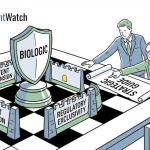
The Strategic Chessboard: A Deep Dive into Blockbuster Expiries
To truly understand how to navigate the patent cliff, one must move beyond the theoretical and examine the real-world strategies of companies facing these challenges. The following case studies provide a comparative analysis of different approaches and outcomes, offering invaluable lessons for anyone looking to identify opportunities and mitigate risk.
Case Study: Merck’s Strategic Preparations for Keytruda’s LOE
Merck’s Keytruda is not just a drug; it is a global phenomenon. As the best-selling drug in the world, it clocked in nearly US$30 billion in worldwide sales in 2024 and is projected to generate even higher revenue before its core patent expiration in 2028.9 The looming loss of exclusivity for such a critical asset has prompted intense scrutiny from analysts and investors alike.27
In preparation for this predictable but seismic event, Merck has announced a strategic plan that includes US$3 billion in cost cuts, with the intention of redirecting those funds toward the development and support of newer drugs and research initiatives.29 The company is also actively pursuing a subcutaneous formulation of Keytruda, which, if successful, could help buoy sales and lessen the velocity of the patent cliff.9 This is a classic example of a “next-generation” product strategy designed to retain market share by offering a more convenient formulation.
However, the company’s approach is not without its risks. Analysts project that Keytruda sales could still decline by 10-20% in the first year post-expiration, creating a substantial revenue gap.28 While Merck’s pipeline includes promising candidates, some analysts are concerned that these assets will not reach their full commercial potential until after 2025, leaving a narrow window to ramp up sales before the Keytruda cliff hits.28 This case study highlights the importance of precise timing and the challenges of replicating a blockbuster’s success.
Case Study: The Eliquis Alliance: How BMS and Pfizer Prepare for Dual Expiry
Eliquis, a leading anticoagulant, is a financial pillar for both Bristol Myers Squibb (BMS) and Pfizer, with joint revenues exceeding US$18 billion.5 The drug’s impending loss of exclusivity is not just a problem for one company but a shared risk for a critical alliance. The partners have engaged in a fierce legal battle to extend the drug’s monopoly, a fight that resulted in a critical court win that secured a launch date for generic competitors no earlier than April 2028.9 This case study perfectly illustrates the high-stakes nature of patent litigation and how a successful legal defense can add years of revenue and value to a drug’s life cycle.
The companies, however, face a dual challenge. The Inflation Reduction Act (IRA) has designated Eliquis as one of the first 10 drugs subject to price negotiations with the Centers for Medicare & Medicaid Services (CMS).9 This means that even before generic competition fully erodes sales, the drug’s pricing power will be under intense government pressure. For an investor, this situation highlights the complex interplay of intellectual property law and government policy, two forces that can independently and collectively impact a company’s bottom line. The prospects for Pfizer, in particular, have been called “bleak” by some analysts, who note the company’s reliance on Eliquis and an “underwhelming legacy pipeline” as compounding factors.9
Case Study: The Humira Precedent: A Look Back at AbbVie’s Masterclass in Mitigation
When biosimilar competition for Humira, the world’s best-selling drug with peak sales of US$21.2 billion, began to emerge in 2023, many predicted a catastrophic financial collapse for AbbVie.10 However, the company’s proactive, multi-pronged strategy has provided a modern blueprint for a managed, rather than abrupt, decline.
AbbVie’s success was built on two pillars. First, it leveraged a formidable “patent thicket,” a web of hundreds of secondary patents and legal challenges that created a complex barrier to entry and extended the drug’s exclusivity far beyond its original expiration date.31 Second, and most critically, the company strategically launched a new generation of immunology blockbusters—Skyrizi and Rinvoq—well before Humira’s exclusivity ended.26 These new drugs were so successful that their combined sales in 2024 were nearly enough to make up for Humira’s initial revenue dip, with AbbVie projecting they will exceed Humira’s peak sales by 2027.26
The Humira case demonstrates that the size of a patent cliff is not just about the value of the drug at risk; it is a direct function of the company’s ability to create and commercialize a successor. This approach highlights a core business philosophy: prioritizing the creation of a new, differentiated pipeline as the primary mitigation strategy, a sharp contrast to a company that relies on cost-cutting or other defensive maneuvers.
Case Study: The Stelara Story: J&J’s Approach to a Biologic Cliff
Johnson & Johnson (J&J) is an immunology powerhouse, and its blockbuster drug Stelara, with over US$10 billion in annual sales, is a key part of its portfolio.32 When Stelara began facing biosimilar competition in Europe and the US in 2024 and 2025, respectively, the immediate financial impact was severe, with Q2 sales dropping by 42.7% year-over-year.33
However, despite this significant decline, J&J’s overall top-line revenue grew by 5.8% in the same period.33 This result reveals a critical distinction in corporate philosophy. J&J’s strategy is one of deep diversification. The company’s financial structure is not overly reliant on a single product, allowing it to absorb a significant revenue shock from one asset without jeopardizing the entire enterprise.33 J&J is not just relying on its broad portfolio of pharmaceuticals; it is also a major player in the medical device industry and is investing in new technologies like robotic-assisted surgery systems.33 This is a stark contrast to companies that are forced into austerity measures or sweeping layoffs when faced with a similar cliff. Analyzing a company’s response to a patent cliff is a litmus test for management’s long-term vision. Is the company structured to be a resilient, diversified healthcare powerhouse (like J&J), or is it a highly-leveraged firm forced into defensive, short-term austerity (as seen in the Bristol Myers Squibb example)?
Case Study: The Lipitor Legacy: A Historical Blueprint for Managing Loss
To understand the modern patent cliff, one must look back at the quintessential historical case study: Pfizer’s Lipitor.20 With peak sales of US$13 billion in 2006, Lipitor was the world’s most-sold drug, and its 2011 patent expiration was the event that popularized the term “patent cliff”.20
Pfizer’s pre-expiry strategy was a masterclass in aggressive marketing and legal defense. The company invested heavily in direct-to-consumer advertising and strategic pricing to secure its position as the market leader.20 When a generic company, Ranbaxy, challenged its patents, Pfizer used a “pay-for-delay” settlement to secure a guaranteed exclusivity period until November 2011.20
After the patent expired, Pfizer’s strategy shifted to a fierce battle for market share. It launched an “authorized generic,” a strategy that allowed it to capture a portion of the post-expiry market and maintain its manufacturing volume.20 The company also engaged in a price war, offering aggressive rebate programs to try and retain its customer base.20 Despite these efforts, Lipitor’s worldwide revenues still experienced a dramatic 59% decline in one year.20 While the financial loss was immense, the case provided invaluable lessons for the entire industry on how to proactively manage an inevitable challenge.
The following table summarizes and compares the strategic responses of these major innovators, linking their corporate philosophies to their tactical decisions.
Table 3: Innovator Mitigation Strategies: A Comparative Analysis
Company
Key Drug Facing Cliff
Mitigation Strategies Employed
Corporate Philosophy
Merck
Keytruda
Cost-cutting, reinvestment, subcutaneous formulation development
Proactive cost-control and portfolio realignment
BMS/Pfizer
Eliquis
Legal litigation to extend exclusivity, cost-cutting (BMS)
Defensive legal action, financial austerity
AbbVie
Humira
Patent thicket, launch of new blockbusters (Skyrizi, Rinvoq)
Lifecycle management as a core R&D function
Johnson & Johnson
Stelara
Deep portfolio diversification, continued R&D investment
The Disruptor’s Opportunity: Unlocking Value in the Post-Exclusivity Era
For every cliff, there is an opportunity. The patent cliff phenomenon is, at its core, a massive transfer of value from originator companies to generic and biosimilar manufacturers. For the discerning investor or business development professional, this shift presents a distinct and actionable investment opportunity.
The Rise of Generics: From Volume to Innovation
The business model of a traditional generic drug company is fundamentally different from that of an innovator.35 While an innovator relies on a temporary monopoly and high-margin branded sales, the generic industry operates in a multi-competitor model where success hinges on scale and cost efficiency.35 The profit for a generic manufacturer is directly correlated to the number of competitors that enter the market. The price erosion of a branded drug is rapid and predictable.36 With just one generic competitor, the price of the original drug typically drops by 30% to 39%.36 With two, the price falls further, by approximately 54%.36 With three to five competitors, the price can plummet by 60% to 70%.36 For a generic manufacturer, timing of market entry is arguably the most critical factor for success.36 The first-to-file generic often enjoys a 180-day period of market exclusivity, providing a unique and highly profitable first-mover advantage.16
The generic business model is now bifurcating in response to the patent cliff’s dual nature (small-molecule vs. biologic). The traditional “Volume Operations” model, where success is based on commoditized, simple generics, is being challenged. A new “Science & Technology” model is emerging, focused on complex generics and biosimilars where success is driven by innovation, R&D prowess, and the ability to master a complex regulatory and manufacturing landscape.36 For an investor, this distinction is crucial. The future of the disruptor market lies not just with large-scale manufacturers but with companies that have mastered the “Science & Technology” model—those with the R&D and manufacturing prowess to develop and launch complex biosimilars.
Table 2: Generic & Biosimilar Price Erosion Model
Number of Generic Competitors
Typical Price Drop (Relative to Pre-Expiry Brand Price)
1
30%-39%
2
~54%
3-5
60%-70%
Biosimilars: A New Paradigm of Competition
The current patent cliff is distinct from previous waves due to the high proportion of biologics losing exclusivity.5 Biologics are highly complex molecules grown in living systems, and because of their inherent micro-variability, biosimilars cannot be exact copies.11 The legal framework governing their competition, the Biologics Price Competition and Innovation Act (BPCIA), mirrors the Hatch-Waxman Act for small molecules, creating an abbreviated approval pathway for drugs that are “similar” to the reference biologic with “no clinically meaningful differences”.11
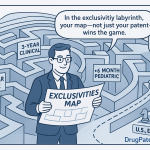
The complexity of a biologic’s patent portfolio, often referred to as a “patent thicket,” is orders of magnitude greater than that of a small molecule. To identify and predict the precise timelines for biosimilar market entry, sophisticated tools are indispensable. A platform like DrugPatentWatch offers the detailed, granular patent and regulatory data needed to map these complex landscapes.31 For both disruptors planning their entry and originators defending their assets, these databases are essential for understanding the multiple layers of patents and exclusivities that protect a biologic and for anticipating when a competitor may finally be able to enter the market.37 The higher barriers to entry for biosimilars mean that initial competition is less fierce, and the profit margins for the first biosimilar to market can be substantial, making it a highly attractive, albeit complex, business model.
A Practitioner’s Framework for Due Diligence and Investment
The patent cliff, while a source of significant risk, is a predictable market event that creates clear opportunities for those who are prepared.5 For business professionals and investors, the key is to move past the hype and conduct a rigorous, data-driven due diligence process that assesses a company’s readiness to withstand the storm.
Assessing Corporate Readiness: Five Key Criteria
The following five criteria, synthesized from the lessons of the case studies, provide a robust framework for evaluating a company’s resilience.
Revenue Concentration: A company with a highly concentrated revenue stream, where a single blockbuster drug accounts for a significant portion of its total sales, is highly vulnerable. An exposure of over 30% to a single asset is a major red flag that signals an outsized impact from any loss of exclusivity.5 The first step in any analysis must be to identify which companies have their portfolios structured this way.
Pipeline Robustness: The most effective defense against a patent cliff is a strong, late-stage pipeline of new drugs that can offset the impending revenue losses.5 The analysis must go beyond a simple list of pipeline candidates. It must assess whether the company has drugs in Phase III or awaiting approval that are positioned to become the next generation of blockbusters. The AbbVie case study perfectly demonstrates this; the company’s foresight in developing Skyrizi and Rinvoq well in advance of Humira’s expiry was the core of its successful transition.
Balance Sheet Strength: A company with a strong cash reserve and low debt has the financial flexibility to acquire new assets, invest heavily in R&D, or simply absorb a temporary revenue shock.5 A heavily leveraged company, by contrast, is far more vulnerable to the financial turmoil of a patent cliff, as its access to capital may be curtailed at the very moment it needs to act decisively.
Management’s Historical Performance: A company’s track record of navigating past patent cliffs is a powerful indicator of future resilience.5 Did the leadership team successfully manage the decline of previous blockbusters, or did the company founder? The strategic decisions made by the teams at AbbVie and J&J stand in stark contrast to those of other companies that have faced similar challenges, revealing a fundamental difference in corporate philosophy and competence.
Strategic Vision: The most resilient companies are those that are actively redefining their portfolios, divesting non-core assets, pursuing strategic alliances, and embracing a new R&D model.7 For example, the strategic decision to externalize innovation and acquire or in-license technology from smaller biotech firms is a forward-looking strategy that can accelerate pipeline development and mitigate the risk of a sputtering in-house R&D engine.24
Identifying Opportunities in the Turmoil
While the patent cliff presents significant risks, it also creates distinct investment opportunities for those with a discerning eye. The financial markets are forward-looking and often begin to price in the impact of a loss of exclusivity 12-24 months before the actual expiry date.5 Analysts issue downgrades, and investor confidence wanes, leading to significant stock volatility and a potential overreaction by the market.5 This can create a classic value investing opportunity. A discerning investor, armed with a robust due diligence framework, can identify a fundamentally strong company whose stock has been unfairly punished by short-term market sentiment, such as J&J, which continued to post solid financials despite a key drug’s sales drop.33
The most direct way to capitalize on the patent cliff, however, is to invest in the companies that benefit from the disruption. This means looking at established generic and biosimilar manufacturers like Teva, Viatris, and Sandoz, and smaller, agile firms that have mastered the “Science & Technology” business model.5 For these companies, the patent cliff is not a threat but a predictable source of new revenue streams and an opportunity for significant growth and market expansion.36
Key Takeaways
The drug patent cliff is a predictable but transformative event, with a concentrated wave of expirations between 2025 and 2030 putting over US$236 billion in global revenue at risk.
The velocity of the decline is not uniform. Small-molecule drugs face a precipitous drop in sales (90% within months), while biologics face a slower but still substantial erosion (30-70% in the first year), creating different strategic timelines for innovators and competitors.
Innovator companies employ a multifaceted playbook to mitigate losses, including life cycle management tactics like evergreening, aggressive patent litigation, and proactive portfolio diversification through M&A and R&D renewal.
A company’s response to a patent cliff is a litmus test for management’s long-term vision, revealing whether its core philosophy is one of resilient diversification (Johnson & Johnson) or financial austerity (Bristol Myers Squibb).
The patent cliff creates a clear transfer of value to generic and biosimilar manufacturers, whose business model is bifurcating into a high-volume, low-margin segment for simple drugs and a high-complexity, high-value segment for biologics.
For professionals and investors, the key to success is to move beyond market hype and use a data-driven due diligence framework to assess a company’s readiness based on its revenue concentration, pipeline strength, balance sheet, management’s track record, and strategic vision.
Frequently Asked Questions
1. Is the patent cliff a one-time event, or is this a recurring cycle?
The patent cliff is a recurring, cyclical event inherent to the pharmaceutical industry’s business model. It is a direct result of the fixed patent terms granted to innovators to incentivize costly and risky R&D. While patent expirations for smaller drugs are always happening, the period between 2025 and 2030 is particularly significant due to the sheer number of multi-billion dollar “blockbuster” drugs losing exclusivity simultaneously, making this a concentrated and highly impactful wave of expirations.5
2. How can a company with a strong pipeline still be considered vulnerable to the patent cliff?
A strong pipeline is a critical defense, but it is not a guarantee of success. The timing of the pipeline is crucial. As seen in the Merck example with Keytruda, if a company’s most promising new assets are not projected to reach their full commercial potential until after the key drug’s patent expires, there can still be a significant revenue gap and a period of financial instability.28 This is why a company’s strategic vision for commercializing and scaling new products is as important as the pipeline itself.
3. What is the difference between a patent and a regulatory exclusivity?
While often used interchangeably, patents and regulatory exclusivities are distinct forms of market protection. A patent is granted by the US Patent and Trademark Office (USPTO) for an invention, typically for 20 years, and is meant to protect the unique intellectual property of a drug.2 Regulatory exclusivity, by contrast, is granted by the US Food and Drug Administration (FDA) and is intended to incentivize specific actions, such as developing a new chemical entity or a drug for a rare disease.37 These exclusivities operate alongside patents, creating a layered defense that can significantly delay generic competition.37 A company can lose its patent protection but still retain exclusivity, and vice versa.
4. How does the market entry of a biosimilar differ from a generic, and why does this matter for investors?
The market dynamics for biosimilars are fundamentally different from those of generics. Generics are exact chemical copies of small-molecule drugs, and their market entry is often characterized by a rapid and steep price decline as multiple competitors quickly enter the market.8 Biosimilars, due to their biological complexity, cannot be exact copies, and their manufacturing and regulatory approval process is more difficult and time-consuming.11 This leads to a slower, more deliberate market entry and often results in a less severe initial price erosion than seen with generics. For an investor, this means the first biosimilar to market may command a more stable price and enjoy a greater share of the market for a longer period, making it a potentially more valuable investment than a generic with a large number of competitors.36
5. Should a company’s stock be sold immediately upon news of a major patent expiry?
Not necessarily. Financial markets are forward-looking, and the stock price of a company facing a significant patent cliff often begins to decline 12-24 months before the actual loss of exclusivity.5 By the time the news of an expiry is widespread, the stock may have already bottomed out. A smarter approach is to use the news as an impetus for a thorough, data-driven analysis of the company’s preparedness. If the analysis reveals a strong late-stage pipeline, a fortified balance sheet, and a management team with a proven track record, the stock may present a compelling value investing opportunity, as the market may have overreacted to the predictable event.