A patent is far more than a legal document; it is the foundational asset upon which entire companies are built, markets are won, and the future of medicine is financed. To the uninitiated, it may seem like a mere certificate of invention. But to those of us in the trenches—the R&D leaders, the IP counsel, the business development executives, and the investors who fuel this engine—we understand its true nature. A drug patent is the financial bedrock of our industry, the sole mechanism that allows companies to recoup the monumental, high-risk investments required to bring a new medicine from a laboratory bench to a patient’s bedside.1 It is, in the most literal sense, the lifeblood of pharmaceutical innovation and revenue.2
The entire economic model of the innovator biopharma industry can be understood as an “Innovation-Exclusivity-Reinvestment Cycle”.4 This cycle begins with a massive, high-risk R&D investment, which can now exceed $2.2 billion per new drug, followed by a lengthy and arduous regulatory approval process that can span 10 to 15 years.4 This staggering investment is protected by patents that grant a temporary period of market exclusivity. This exclusivity allows for the generation of substantial revenues—often 80-90% of a drug’s lifetime revenue is earned during this period—which are then reinvested into the next cycle of innovation, fueling the discovery of future therapies.5 Without this promise of a protected return, the financial incentive to undertake such ventures would evaporate, stifling the development of new treatments.8
Yet, this system creates a fundamental and unavoidable tension. The patent represents a grand societal bargain: in exchange for the public disclosure of an invention and the immense investment required to turn it into a safe and effective medicine, society grants the innovator a temporary, legally enforceable monopoly.2 This monopoly, however, is what leads to high drug prices, creating potential barriers to patient access and sparking intense public and political debate.10 This conflict is the primary driver of nearly all strategic, legal, and regulatory maneuvers within the pharmaceutical landscape. It shapes how patents are written, how portfolios are constructed, how companies compete, and how governments regulate the industry.4
Welcome, then, to the alchemist’s ledger. This report is designed for you—the seasoned professional who understands that valuing a drug patent is not a simple accounting exercise. It is a complex, multi-disciplinary art that blends the rigor of legal analysis, the uncertainty of scientific discovery, and the brutal realities of the commercial marketplace. Our goal is to move beyond a simple checklist of factors and provide you with a holistic framework for understanding how these elements interconnect to create, enhance, or utterly destroy a patent’s value. We will deconstruct the anatomy of a high-value patent portfolio, dissect the scientific, commercial, and legal drivers of value, and equip you with the valuation methodologies used by the industry’s sharpest minds. Through it all, we will ground our analysis in hard data and real-world case studies, transforming the abstract concept of “patent value” into a tangible tool for securing competitive advantage.
Part I: The Anatomy of a High-Value Patent Portfolio
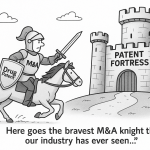
A successful drug patent portfolio is not an incidental collection of intellectual property; it is a coherently designed strategic collection of individual patents and applications, meticulously curated to protect a product or technology platform.4 Think of it not as a single wall, but as a medieval fortress, with a central keep, concentric walls, moats, and watchtowers. Each element has a distinct purpose, but their collective strength is far greater than the sum of their parts.
The Cornerstone and the Fortress Walls: Types of Drug Patents
To understand the value of the fortress, you must first understand the materials from which it is built. A drug’s IP protection is a layered defense system, with each type of patent playing a specific and crucial role.
Composition of Matter (CoM) Patents: The Crown Jewel
At the very heart of the fortress lies the keep: the Composition of Matter (CoM) patent. Widely regarded as the “gold standard” or “crown jewel” of a drug’s IP portfolio, this patent covers the active pharmaceutical ingredient (API) itself—the core chemical or biological entity responsible for the drug’s therapeutic effect.6 Its power lies in its breadth. If the patented molecule is present in a competitor’s product in any form—be it a pill, capsule, cream, or liquid—the patent applies, making it an “iron-clad” barrier to entry.4 A competitor cannot simply change the formulation or find a new disease to treat; if they use the core molecule, they infringe. This makes the CoM patent the most fundamental and valuable form of protection, providing the broadest and most difficult-to-circumvent shield against generic competition.6
Method of Use (MoU) / Method of Treatment Patents: Expanding the Territory
Surrounding the keep are the inner walls, often constructed from Method of Use (MoU) patents. These patents do not protect the drug itself but rather a specific way of using the drug to treat a particular disease or condition.16 What if a drug initially approved for heart disease is later found to be effective against cancer? A new MoU patent can be secured for this new application.12
Their strategic importance cannot be overstated, particularly in the context of product lifecycle management (LCM). As the foundational CoM patent nears expiration, MoU patents become a critical tool for extending a drug’s commercial life. In fact, a significant portion—41%—of patents for top drugs filed after FDA approval are MoU patents.12 This reflects a strategic shift from merely protecting the initial discovery to continuously innovating and patenting new applications throughout the drug’s lifecycle, turning existing assets into new revenue streams.12
Formulation Patents: Reinforcing the Defenses
The next layer of defense is the formulation patent. This type of patent protects the unique combination of the API with other inactive ingredients (excipients) that constitute the final dosage form.10 Are you marketing a standard tablet, an extended-release capsule that allows for once-daily dosing, a transdermal patch, or a pre-filled syringe? Each of these specific formulations can be patented.16
Formulation patents are vital for two key reasons. First, they can significantly improve a product’s profile by enhancing patient compliance (e.g., moving from a twice-daily pill to a once-daily one), improving stability, or reducing side effects. Second, they are a cornerstone of “evergreening” strategies, providing additional years of market exclusivity long after the original CoM patent has expired.12 A generic company might be free to manufacture the API, but if they cannot replicate the innovator’s patented extended-release formulation, their market entry is effectively blocked.
Process Patents: Guarding the Supply Lines
Process patents protect the innovative methods of manufacturing a drug.8 While they do not cover the final product, they can create a formidable barrier to entry.16 A competitor may have the legal right to produce the API, but if the innovator’s patented manufacturing process is the only commercially viable way to do so, the competitor is stymied. They must either invest heavily in developing a novel, non-infringing process or risk a lawsuit. In many countries, the burden of proof is even reversed, forcing the potential infringer to prove they are
not using the patented process.16
Other Secondary Patents: The Moats and Watchtowers
A truly robust portfolio includes numerous other types of secondary patents that add further layers of complexity for would-be challengers. These can include patents on:
Polymorphs: Specific crystalline structures of the API that can affect its stability and solubility.4
Salts and Metabolites: Different salt forms of the API or the active metabolites the body produces after ingesting the drug.17
Combination Therapies: The use of the drug in a fixed-dose combination with one or more other active ingredients.4
Each of these patents, while perhaps narrower in scope than the CoM patent, contributes to a defensive “patent wall” that collectively protects the commercial franchise.4
More Than the Sum of Its Parts: The Strategic Value of the “Patent Thicket”
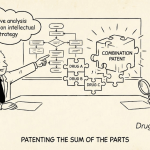
When these various layers of patents are strategically accumulated around a single product, they create what is known as a “patent thicket”—a dense, overlapping web of intellectual property rights that can be incredibly difficult for a competitor to navigate.3 It’s crucial to understand that this is not an accident of legal filing; it is a deliberate and sophisticated commercial strategy that has evolved from a defensive act of protecting an invention to an offensive one of building an impenetrable fortress around a market franchise.3
The quintessential example, of course, is AbbVie’s Humira, the best-selling drug in history. AbbVie was granted over 130 patents in the U.S. alone, creating a thicket so formidable that it successfully delayed biosimilar competition for seven years after its primary CoM patent expired, protecting billions in revenue.3
The true value of a patent thicket lies not just in the staggered expiration dates of its individual patents, but in the asymmetric risk it creates for challengers. A single patent can be targeted, litigated, and potentially invalidated. But to launch a generic or biosimilar in the face of a patent thicket, a challenger must be prepared to fight and win dozens of separate infringement lawsuits. The innovator, on the other hand, only needs to win on a single valid patent claim to block market entry. This dynamic dramatically shifts the economic calculus for a potential competitor. The sheer cost and uncertainty of litigating through a dense thicket can be so prohibitive that it deters entry altogether or forces a settlement on terms highly favorable to the brand manufacturer.19 In this way, the value of the portfolio becomes multiplicative, not merely additive. The whole is truly, and immensely, greater than the sum of its parts.
Part II: Scientific and Technical Value Drivers
While the structure of a patent portfolio provides the strategic framework for value, the intrinsic worth of each individual patent is rooted in its scientific and technical defensibility. A fortress built with weak materials will crumble under the first assault. Here, we dissect the core scientific and legal pillars that determine a patent’s strength and, by extension, its value.
The Strength of the Claim: How Scope Dictates Value
At the heart of any patent are its claims—the numbered sentences at the end of the document that legally define the precise boundaries of the invention.9 The language of these claims is not mere legalese; it is the single most important determinant of a patent’s scope and, therefore, its commercial value. Crafting these claims is a high-stakes balancing act.
On one hand, the goal is to secure the broadest possible protection to make it difficult for competitors to “design around” the invention.12 A patent with overly narrow claims is of limited commercial use because a rival could make a minor, trivial modification and fall outside the protected territory. For CoM patents, this often involves using a “Markush structure,” a specialized chemical formula with variable components that can describe millions of potential compounds within a single claim, effectively blanketing a wide area of chemical space.15
On the other hand, claims that are too broad are vulnerable to attack. Under U.S. patent law, a patent must provide a sufficient “written description” and “enable” a person of ordinary skill in the art (POSITA) to make and use the full scope of the invention without “undue experimentation”.27 The Supreme Court’s landmark 2023 decision in
Amgen Inc. v. Sanofi drove this point home. Amgen’s patents for its cholesterol drug, Repatha, claimed an entire class of antibodies based on their function (binding to a specific protein). However, the Court found the patents invalid for lack of enablement, ruling that Amgen had only disclosed a few examples and had not provided a roadmap for a skilled person to reliably create all the other antibodies covered by the broad functional claim.28 This ruling has put a spotlight on enablement as a key vulnerability for many biologic patents and serves as a stark reminder: a patent’s value is directly tied to its ability to withstand legal scrutiny.
Even the choice of a single word can have immense consequences. The transitional phrase connecting the preamble of a claim to its body is critical. Using the word “comprising” creates an open-ended claim, meaning a competitor’s product that includes all the listed elements plus additional ones would still infringe. In contrast, “consisting of” creates a closed-ended claim; if a competitor adds just one unlisted element, they may not infringe.12 This nuance in claim drafting can be the difference between a patent worth billions and one that is easily circumvented.
The Pillars of Patentability: Novelty and Non-Obviousness
For a patent to be granted and, more importantly, to be defensible in court, the underlying invention must meet several statutory requirements. The two most critical pillars are novelty and non-obviousness. A patent’s perceived strength against challenges on these grounds is a direct input into its valuation.
Novelty (35 U.S.C. § 102): This is the most straightforward requirement. The invention must be new.10 It cannot have been previously patented, described in a printed publication, or in public use anywhere in the world before the patent’s effective filing date. This body of existing knowledge is known as “prior art”.28 A patent that is vulnerable on novelty grounds—for instance, if a challenger uncovers an obscure scientific article that described the compound years earlier—has significantly diminished value due to the high risk of invalidation. This is why a comprehensive prior art search is not just a legal formality but a critical step in de-risking a patent asset and establishing its foundational value.27
Non-Obviousness (35 U.S.C. § 103): This is a much higher, more complex, and more subjective hurdle to clear.32 Even if an invention is technically novel (i.e., not identical to any single piece of prior art), it is not patentable if the differences between the invention and the prior art are such that the invention as a whole would have been “obvious” to a POSITA at the time the invention was made.10
This is where many secondary patents, particularly for incremental innovations like new formulations or dosage regimens, face their greatest challenge. A generic challenger will often argue that creating an extended-release version of a known drug, for example, was an obvious and predictable step for a skilled formulator to take.33 To overcome such a challenge and solidify the patent’s value, the innovator must demonstrate that the invention produced “unexpected results”.10 Perhaps the new formulation was surprisingly more stable, or it achieved a therapeutic effect at a surprisingly low dose, or it worked synergistically in a combination therapy. Without such evidence of an inventive leap, the patent is weak and its value must be heavily discounted.
The very structure of these patentability requirements, however, creates a profound and often overlooked market failure. The law focuses on whether the idea for a drug is novel and non-obvious. Yet, the mere idea for a drug is of little value to society. Without the billions of dollars and decade-plus of clinical trials required to prove its safety and efficacy, it will never become a medicine that helps patients.36 A company might identify a promising drug candidate that is, from a purely chemical standpoint, an “obvious” modification of a known compound. Because it is deemed obvious, it cannot be patented. And because it cannot be patented, no company will ever make the colossal investment needed to develop it. The result is that a potentially life-saving, socially valuable drug is abandoned in the “valley of death” simply because the patent system makes no concession for the immense, non-obvious, and high-risk effort of its clinical development.36 This gap directly impacts the valuation of early-stage assets; those with even a hint of obviousness are assigned little to no value by investors, regardless of their scientific promise.
The Gauntlet of Development: How Clinical Stage Determines Value
A patent’s value is not a fixed number assigned at the time of filing. It is a dynamic figure that grows—or vanishes—as the drug it protects navigates the perilous gauntlet of clinical development. The journey from a preclinical compound to an approved medicine is one of systematic de-risking, and at each successful step, the value of the underlying patent portfolio takes a quantum leap forward.
The risk of failure is astronomical at the outset and decreases with each successful phase.38 Understanding these value inflection points is the cornerstone of modern biopharma valuation:
Pre-Clinical: This is the stage of maximum risk and, therefore, minimum value. Patents filed at this stage protect a concept, not a proven asset. The cumulative probability of a preclinical drug ever reaching the market is a mere 1-5%.38 Consequently, public market investors and potential partners typically assign little to no standalone value to preclinical patents.40
Phase I (Safety): The first major hurdle is testing the drug in a small group of healthy volunteers to establish its safety and dosage range.43 Successful completion of Phase I is the first signal that the drug is not overtly toxic in humans. This is a significant de-risking event. In one valuation model, the risk-adjusted net present value (rNPV) of a hypothetical asset jumped from $45.8 million at the preclinical stage to $87.3 million upon entering Phase II.38 The probability of a drug successfully passing Phase I is approximately 52-70%.43
Phase II (Efficacy – Proof of Concept): This is the acid test. For the first time, the drug is tested in a small group of patients with the target disease to see if it actually works.43 Phase II is the largest hurdle in drug development, with the lowest success rate—only about 29-40% of drugs that enter Phase II will advance to Phase III.38 A positive Phase II result, providing the first “proof of concept” in patients, is arguably the single largest value inflection point in a drug’s development, often causing a company’s stock price to soar.
Phase III (Pivotal Trials): These are large, expensive, multi-center trials involving hundreds or thousands of patients to confirm the drug’s efficacy and safety against a placebo or the current standard of care.43 Success in Phase III dramatically de-risks the asset and provides the pivotal data needed for regulatory submission. The rNPV in our hypothetical model doubles again, jumping to $165.9 million at Phase III initiation and then to $312.1 million upon submission of the New Drug Application (NDA).38 The success rate for Phase III is roughly 58-65%.45
Regulatory Approval: This is the final de-risking event. The patent now protects a tangible, revenue-generating asset. Its value is no longer a function of probabilities but is based on concrete commercial forecasts. The probability of a drug being approved after a successful NDA submission is very high, often over 90%.46
This phase-gated increase in value is precisely why accurate, up-to-date data on clinical trial success rates is so critical for valuation. These probabilities are the core input for the risk-adjusted Net Present Value (rNPV) models that have become the industry standard. As the data below shows, these rates vary dramatically not only by phase but also by therapeutic area, making granular data essential for any credible valuation.
Table 1: Clinical Trial Success Rates by Phase and Therapeutic Area (2011-2024 Data)
Therapeutic Area
Phase I Success Rate
Phase II Success Rate
Phase III Success Rate
Filing to Approval Success Rate
Likelihood of Approval (LOA) from Phase I
All Indications (Overall)
52.0%
28.9%
57.8%
90.6%
7.9%
Hematology
~75%
~50%
~65%
~92%
23.9%
Rare Diseases
~70%
~45%
~60%
~91%
17.0%
Immuno-Oncology
~65%
~35%
~55%
~90%
12.4%
All Oncology
~60%
~25%
~50%
~88%
5.3%
Chronic High Prevalence
~55%
~28%
~55%
~90%
5.9%
Respiratory
~50%
~20%
~50%
~85%
4.5%
Urology
~48%
~18%
~45%
~85%
3.6%
Note: Data is synthesized from multiple recent industry reports.45 Phase-specific rates for individual therapeutic areas are illustrative estimates based on overall LOA and typical attrition patterns. The overall rates for All Indications are directly from a 2011-2020 BIO report.46 The LOA rates for specific therapeutic areas are from recent 2024 analyses.46
The Verdict of the Data: Efficacy, Safety, and the Bottom Line
Ultimately, a patent’s value is a proxy for the commercial potential of the drug it protects. That potential is forged in the crucible of clinical trials. A patent for a drug with a superior efficacy and safety profile compared to existing treatments—the “standard of care”—is immensely valuable.49 A blockbuster is born when a drug offers a significant improvement in patient outcomes, such as better survival rates in cancer, a cure for a chronic disease, or a vastly improved side-effect profile. Conversely, a patent protecting a “me-too” drug that offers only marginal benefits over cheaper, established alternatives will struggle to gain market share and reimbursement, severely depressing its value.
This creates a strategic paradox. The very clinical trials that generate the value-driving efficacy and safety data can also create risks to the patent portfolio. The public disclosure of a clinical trial protocol, for example on ClinicalTrials.gov, can be considered “prior art” by a patent office.50 If a new invention, such as an optimal dosage regimen, is discovered during that trial, a patent on that discovery could be rejected as “obvious.” The argument would be that the trial protocol created a “reasonable expectation of success” for the tested regimen, thereby making the positive outcome an obvious one.50 This creates a delicate dance for IP strategists, who must balance the need for transparency in clinical research with the imperative to protect the very intellectual property that makes the research financially viable in the first place.
Part III: Market and Commercial Value Drivers
A scientifically sound, legally robust patent is a necessary but not sufficient condition for high value. If the market for the protected drug is small, the competition is fierce, or payers refuse to cover its cost, even the strongest patent will be worth little. The commercial landscape is the final arbiter of a patent’s financial worth.
Sizing the Prize: Market Potential and Unmet Medical Need
The most fundamental commercial driver of a patent’s value is the size of the potential market for the drug it protects.39 A patent’s value is ultimately capped by the revenue it can generate. Market size analysis is therefore a foundational step in any valuation. It involves a “top-down” or “bottom-up” assessment of several key factors:
Addressable Patient Population: How many people have the disease the drug is intended to treat? This is determined by analyzing epidemiological data on disease prevalence (the total number of cases at a given time, for chronic conditions) and incidence (the number of new cases per year, for acute conditions).49
Market Penetration: What percentage of that patient population is likely to be treated with the new drug? This depends on factors like diagnosis rates, treatment rates, and the drug’s position in the treatment paradigm (e.g., first-line therapy vs. last resort).
Geographic Distribution: Where do these patients live? A drug’s global sales potential is determined by its approval and adoption in key markets like the U.S., Europe, and Japan.49
Within this framework, the concept of “unmet medical need” (UMN) acts as a massive value multiplier.7 A patent for a first-in-class drug that addresses a condition with no satisfactory treatment options is exponentially more valuable than a patent for the tenth drug in a crowded market. Why? Because a drug that meets a UMN commands significant pricing power, faces limited competition, and often receives preferential treatment from regulators and payers.
In fact, UMN is not just a clinical descriptor; it’s a formal policy tool. Regulatory bodies like the FDA and EMA have created specific incentives to encourage R&D in these areas. The most well-known of these is the Orphan Drug Act, which grants seven years of additional market exclusivity in the U.S. for drugs treating rare diseases (affecting fewer than 200,000 people).55 This powerful incentive directly de-risks investment and enhances the value of patents for orphan drugs, often justifying their notoriously high prices.58
However, this policy-driven valuation creates its own complexities. If incentives are tied too narrowly to pre-defined categories of UMN, it can inadvertently discourage the kind of blue-sky, exploratory research that often leads to unexpected breakthroughs. The development of mRNA technology is a perfect case in point: originally researched as a potential oncology treatment, it found its world-changing application in COVID-19 vaccines.56 This illustrates that a patent’s value can be influenced not just by the current clinical landscape, but by the shifting definitions of policy priorities, adding a layer of regulatory risk to long-term valuation.
The Battlefield: Competitive Landscape and Freedom-to-Operate (FTO)
No drug, and therefore no patent, exists in a vacuum. Its value is always relative to the competitive environment.2 A thorough competitive landscape analysis is therefore an indispensable component of any patent valuation. This involves:
Pipeline Analysis: Identifying and evaluating all competing drugs in development, including their mechanism of action, stage of development, and expected launch timelines.49
Patent Landscaping: Systematically searching and analyzing the patent portfolios of all competitors in a given therapeutic area. This helps identify “white space” opportunities where there is little patent activity, as well as crowded areas where the barriers to entry are high.61
Beyond assessing the competition, a company must also ensure it has the legal right to sell its own product without infringing on the patents of others. This is determined through a Freedom-to-Operate (FTO) analysis.4 An FTO is a formal legal opinion, typically prepared by patent attorneys, that involves an exhaustive search for any third-party patents that the company’s proposed product might infringe.
An FTO analysis is a critical due diligence step that can make or break a patent’s value. A “clean” FTO opinion, which concludes that there are no significant infringement risks, substantially increases an asset’s value by de-risking its commercial launch. It provides assurance to management and investors that the path to market is clear of legal roadblocks.73 Conversely, a “dirty” FTO that identifies one or more “blocking” patents can render a company’s own patent portfolio effectively worthless. If you cannot legally sell your product, the patents protecting it have no commercial value. In such a scenario, the company faces a stark choice: design around the blocking patent (if possible), license or purchase the patent from the competitor, challenge the patent’s validity in court, or abandon the project entirely.73 For this reason, many venture capitalists and strategic partners will not invest in a company or asset without a favorable FTO opinion.73
The Power of the Price: Pricing, Reimbursement, and Market Access
A patent’s primary commercial function is to grant a temporary monopoly, which in turn allows the innovator to set a price high enough to recoup its massive R&D investment and earn a profit.11 The anticipated price of a drug is therefore a direct and powerful input into the valuation of its patent.
However, this pricing power is far from absolute. In today’s healthcare environment, the price of a drug is not set in a free market. It is negotiated with, and scrutinized by, a powerful group of stakeholders known as payers—these include private insurance companies, pharmacy benefit managers (PBMs), and large government programs like Medicare and Medicaid in the United States.76 These payers are increasingly demanding that the price of a new drug be justified by its demonstrated value. A drug with a strong patent but only marginal clinical benefit over existing, cheaper alternatives will face significant reimbursement hurdles. Payers may refuse to cover it, place it on a disadvantageous formulary tier with high patient co-pays, or require stringent prior authorization, all of which will severely limit its market access and cap its revenue potential.82
Furthermore, governments are taking a more active role in controlling drug prices. The landmark Inflation Reduction Act (IRA) of 2022 in the U.S. represents a seismic shift in this landscape. For the first time, it empowers the federal government to directly negotiate the prices of certain high-cost drugs covered by Medicare.76 This new reality means that even for a highly innovative, strongly patented drug, the long-term revenue potential may be significantly lower than in the past. This legislative risk must now be factored into any forward-looking patent valuation, as it directly impacts the “cash inflow” side of the equation. A patent’s value is no longer just a function of its legal strength and the size of the patient population; it is now also a function of its susceptibility to government price negotiations.
Part IV: Legal and Regulatory Value Drivers
The legal and regulatory framework governing pharmaceuticals is the chessboard on which the game of patent value is played. The rules of this game—from the length of a patent’s term to the procedures for challenging its validity—are not mere technicalities; they are powerful levers that can add or subtract billions of dollars in value.
The Ticking Clock: Effective Patent Life and Term Extensions
Perhaps the single most misunderstood—and most critical—concept in drug patent valuation is the difference between the statutory 20-year patent term and the much shorter effective commercial life of a drug.2
Under international agreements like TRIPS, the standard term for a patent is 20 years from its earliest non-provisional filing date.13 However, the patent clock starts ticking the moment the application is filed, which typically occurs very early in the R&D process. The subsequent journey through preclinical studies, three phases of human clinical trials, and rigorous regulatory review can easily consume 10 to 15 years of that 20-year term.2 The result is that by the time a drug finally reaches the market, it may have only 7 to 12 years of effective patent life remaining before facing generic competition.5
To compensate for this erosion of patent life, governments have created several mechanisms to extend a drug’s period of market exclusivity. These extensions are incredibly valuable and must be factored into any valuation:
Patent Term Extension (PTE) / Restoration (PTR): In the United States, the Hatch-Waxman Act allows for a portion of the time lost during the FDA’s regulatory review to be added back to a patent’s term. This extension can be up to five years, but it is capped such that the total remaining patent life after approval cannot exceed 14 years.2
Supplementary Protection Certificates (SPCs): These are the European Union’s equivalent of PTE, providing up to five additional years of protection to compensate for regulatory delays.13
Regulatory Exclusivities: These are distinct from patents and are granted by the FDA upon a drug’s approval. They provide their own periods of market protection that run concurrently with or extend beyond patent protection. Key examples include:
New Chemical Entity (NCE) Exclusivity: 5 years of market exclusivity for a drug containing a novel active ingredient.13
Orphan Drug Exclusivity (ODE): 7 years of market exclusivity for a drug designated to treat a rare disease.13
Pediatric Exclusivity: An additional 6 months of exclusivity tacked onto any existing patents and exclusivities as an incentive for conducting studies in children.13
This complex interplay of patents, extensions, and exclusivities means that determining a drug’s final Loss of Exclusivity (LOE) date is a sophisticated calculation, not a simple lookup. The true LOE date is the expiration of the last-to-expire of all relevant patents (with their PTEs) and all relevant regulatory exclusivities. This calculated LOE date is arguably the single most critical input for any financial valuation model, as it defines the end of the high-margin revenue stream and the beginning of the “patent cliff,” when revenues can plummet by 80-90% following generic entry.22 An error of just six months in this calculation—for instance, by missing a pediatric extension—can translate into an error of hundreds of millions of dollars in the valuation of a blockbuster drug.
Planting the Flag: The Strategic Importance of Geographic Coverage
It is a common misconception that a patent provides global protection. In reality, there is no such thing as a “world patent.” Patents are territorial rights, meaning protection must be sought and granted in each individual country or region where a company wishes to prevent others from making, using, or selling its invention.87
A company’s global filing strategy is therefore a critical component of its patent portfolio’s value. A patent with protection only in a small market has limited value, regardless of its scientific merit. The value of a portfolio is heavily weighted by its coverage in the key pharmaceutical markets: the United States, Europe (typically via a single application to the European Patent Office, or EPO), Japan, and, increasingly, China.14
The primary mechanism for international filing is the Patent Cooperation Treaty (PCT) system. The PCT allows an applicant to file a single “international” application, which secures a priority filing date in over 150 member countries.14 The true strategic value of the PCT is that it delays the decision—and the significant costs—of entering the “national phase” in individual countries for up to 30 or 31 months.87 This gives companies valuable time to gather more clinical data and assess a drug’s commercial potential before committing to the expensive process of obtaining patents in multiple jurisdictions. A well-executed geographic filing strategy, aligned with the company’s commercial goals for manufacturing and sales, is essential to maximizing the global value of a patent asset.93
The Inevitable Challenge: Litigation Risk and the Paragraph IV Gauntlet
A patent is not a guarantee of market exclusivity; it is merely the right to sue others for infringement. Therefore, a patent’s value must always be discounted by the risk and cost of litigation.1 In the United States, this risk is institutionalized through the Hatch-Waxman Act’s
Paragraph IV patent challenge process.
This process creates a unique and highly adversarial pathway for generic drug manufacturers to seek early market entry. When filing an Abbreviated New Drug Application (ANDA), a generic company can certify under Paragraph IV that the brand company’s patents listed in the FDA’s Orange Book are invalid, unenforceable, or will not be infringed by the generic product.95 This filing is considered an artificial act of infringement, giving the brand company a 45-day window to sue the generic applicant.95
If a lawsuit is filed, two critical things happen:
An automatic 30-month stay is triggered, during which the FDA cannot grant final approval to the generic drug, giving the brand company a period of continued exclusivity while the litigation proceeds.95
The first generic company to file a successful Paragraph IV challenge is rewarded with 180 days of generic exclusivity, a highly lucrative period during which they are the only generic on the market.95
This system creates powerful incentives for generics to challenge patents, and the likelihood of a challenge is directly correlated with the drug’s market value. A blockbuster drug with billions in annual sales is almost guaranteed to face multiple Paragraph IV challenges.96 The litigation itself is incredibly expensive—the median cost for a case with more than $25 million at stake is $5.5 million through trial and appeal—and carries the inherent risk that a court will invalidate the patent.1
Furthermore, the creation of the Patent Trial and Appeal Board (PTAB) in 2012 introduced administrative trial proceedings, such as Inter Partes Review (IPR), which provide a faster, cheaper, and often more successful venue for challengers to invalidate patents.28 The high probability of facing these costly and high-stakes challenges must be factored into any realistic valuation of a drug patent. A patent that is perceived as being vulnerable to a Paragraph IV or IPR challenge will be assigned a significantly lower value by investors and potential partners.
Part V: The Valuation Toolkit: Translating Factors into Figures
Understanding the myriad factors that drive patent value is the first step. The second, and arguably more challenging, step is to translate that qualitative understanding into a quantitative figure. Valuation is not an exact science, but a set of disciplined methodologies designed to estimate an asset’s worth based on its future economic potential. In the biopharma industry, three core approaches dominate the valuation toolkit.
The Industry Standard: Risk-Adjusted Net Present Value (rNPV)
For any drug that has not yet received regulatory approval, the risk-adjusted Net Present Value (rNPV) methodology is the undisputed gold standard.38 It is the most appropriate method because it explicitly accounts for the single greatest variable in drug development: the high probability of clinical failure.
The rNPV model starts with a standard Discounted Cash Flow (DCF) analysis, which projects all future cash inflows (revenues) and outflows (R&D, manufacturing, and commercialization costs) over the drug’s expected lifecycle. However, it adds a crucial layer of sophistication: each year’s projected net cash flow is multiplied by the cumulative probability of the drug successfully reaching that stage of development.38
The key inputs required for a robust rNPV model are:
Projected Revenues: An annual sales forecast from launch until the Loss of Exclusivity (LOE) date, followed by a steep decline modeling the patent cliff.
Projected Costs: Phase-specific R&D and clinical trial costs, as well as post-launch manufacturing and marketing expenses.
Timeline: The expected time required to complete each remaining clinical phase and the regulatory review period.
Discount Rate: A rate used to discount future cash flows to their present value, reflecting the time value of money and commercial risk. This is typically in the range of 10-13% for pharma companies.104
Probability of Success (PoS): This is the crux of the model. Using historical industry data (like that presented in Table 1), a specific probability is assigned to successfully completing each stage of development (Phase I, Phase II, Phase III, and regulatory filing).38
By weighting each future cash flow by its probability of ever occurring, the rNPV method provides a much more realistic valuation of a high-risk, development-stage asset than a standard DCF.
Once a drug has successfully navigated the clinical and regulatory gauntlet and received marketing approval, the development risk drops to zero. At this point, the standard Discounted Cash Flow (DCF) or Net Present Value (NPV) method becomes the more appropriate valuation tool.40
The focus of a DCF analysis for a commercial-stage asset is on accurately forecasting the revenue stream until the calculated LOE date, and then modeling the dramatic revenue erosion caused by the patent cliff.44 The key inputs are primarily commercial rather than clinical:
Peak Sales Forecast: An estimate of the drug’s maximum annual revenue, based on market size, pricing, and market share assumptions.40
Launch and Erosion Curves: Models of how quickly the drug will ramp up to peak sales and, just as importantly, how quickly its sales will decline after generic entry.
Operating Costs: The costs of goods sold (COGS), sales and marketing (S&M), and general and administrative (G&A) expenses.
Discount Rate: A weighted average cost of capital (WACC) reflecting the company’s overall risk profile.
The Reality Check: Comparable Analysis and Precedent Transactions
While rNPV and DCF models provide an estimate of an asset’s intrinsic value, it’s always wise to check those estimates against the real world. Market-based valuation approaches provide this crucial reality check.42
Comparable Company Analysis (“Comps”): This method involves identifying a peer group of publicly traded companies that are similar to the company being valued in terms of therapeutic area, stage of development, and size. The valuation multiples of these peer companies (e.g., Enterprise Value-to-Sales, Price-to-Earnings) are then applied to the target company’s own metrics to derive a valuation.103
Precedent Transaction Analysis: This method looks at the prices that have been paid for similar assets or companies in recent M&A deals or licensing partnerships.42 For example, if several Phase II oncology assets were recently acquired for around $500 million upfront, that provides a strong benchmark for valuing another Phase II oncology asset. The primary challenge with this method is the difficulty in finding truly comparable transactions and the fact that the full financial terms of many deals are not publicly disclosed.103
No single method is perfect. The most robust valuations triangulate a value by using an intrinsic method like rNPV or DCF and then cross-referencing it with market-based methods like comps and precedent transactions.
Table 2: Comparison of Core Valuation Methodologies
Methodology
Primary Use Case
Key Inputs
Advantages
Disadvantages
Risk-Adjusted NPV (rNPV)
Clinical-stage assets (pre-approval)
PoS by phase, R&D costs, revenue forecast, discount rate
Explicitly accounts for high risk of clinical failure; dynamic value reflects de-risking over time
Highly sensitive to PoS and peak sales assumptions; can be complex to build
Standard, widely understood financial model; focuses on commercial variables
Does not account for development risk; highly sensitive to LOE date and discount rate
Comparable Analysis
Market benchmark / Sanity check
Peer group selection, market multiples (P/E, EV/Sales), precedent deal values
Grounded in current market reality and sentiment; relatively simple to calculate
Difficult to find truly comparable companies/deals; can reflect market bubbles/downturns
Source: Synthesized from.42
The Role of Data Services in Modern Valuation
It should now be clear that these sophisticated valuation methodologies are intensely data-dependent. A model is only as good as its inputs, and in the pharmaceutical world, those inputs are complex, scattered across disparate sources, and constantly changing. Modern patent valuation is simply impossible without access to high-quality, aggregated, and curated data services.119
This is where platforms like DrugPatentWatch become indispensable strategic tools. They perform the crucial work of collecting, cleaning, and connecting the vast ecosystem of data points needed to power these valuation models. Think of patent data as a geological survey map that reveals the composition, depth, and structural integrity of a company’s core assets.125 Services like DrugPatentWatch provide this map by delivering critical, granular inputs, including:
Verified Loss of Exclusivity (LOE) Dates: They perform the complex calculations to determine the final LOE date, integrating patent expiration data from the USPTO with all potential term extensions (PTE, Pediatric) and regulatory exclusivities from the FDA.9 This single data point is the bedrock of any DCF or rNPV forecast.
Integrated Regulatory and Litigation Data: They link patents directly to the drugs they cover in the FDA’s Orange Book and provide comprehensive histories of all litigation involving those patents, including Paragraph IV challenges and PTAB proceedings.9 This allows an analyst to directly assess the litigation risk associated with a patent and adjust its value accordingly.
Global Patent Family Information: They track related patent filings across the globe, providing a clear picture of a drug’s international protection and commercial potential.125
By transforming raw, unstructured information into actionable intelligence, these services enable analysts to move beyond data gathering and focus on what truly matters: strategic analysis and data-driven decision-making.
Part VI: Lessons from the Battlefield: Case Studies in Patent Value
Theory and methodology are essential, but the true lessons in patent valuation are learned on the commercial battlefield. By examining the histories of some of the industry’s most iconic drugs, we can see these abstract principles of value creation and destruction play out in stark, multi-billion-dollar reality.
The Fortress: The Story of Humira’s Multi-Billion Dollar Patent Thicket
There is no better case study in modern patent strategy than AbbVie’s Humira (adalimumab), the best-selling drug in the history of medicine with cumulative sales exceeding $200 billion.3 Humira’s story is the story of the “patent thicket” perfected as an offensive commercial weapon.
Humira was first approved by the FDA in 2002. Its primary CoM patent on the adalimumab molecule was set to expire in the U.S. in 2016. A conventional analysis would have predicted a catastrophic patent cliff at that point. But AbbVie rewrote the playbook. Over the drug’s lifecycle, the company filed an astonishing 257 patent applications, resulting in over 130 granted U.S. patents.3 Critically, between 90% and 94% of these patent applications were filed
after the drug was already on the market, demonstrating a systematic and relentless post-approval campaign to prolong its monopoly.3
This impenetrable thicket covered every conceivable aspect of the product:
New Indications: As Humira was approved for a dozen new autoimmune conditions beyond its original rheumatoid arthritis indication, AbbVie secured new method-of-use patents for each one.
New Formulations: A key part of the strategy involved patenting incremental but commercially significant improvements, such as a citrate-free formulation that reduced injection-site pain and a higher-concentration version that reduced injection volume.3
Manufacturing Processes: Patents were also filed on various aspects of the complex biologic manufacturing process, adding another layer of difficulty for biosimilar competitors.3
The strategic outcome was a staggering success. The patent thicket created a legal minefield so complex and costly to navigate that it successfully delayed the launch of any biosimilar competitors in the lucrative U.S. market from 2016 all the way to 2023.3 This seven-year extension of its monopoly after the primary patent expired was worth well over $100 billion in additional revenue. The Humira case study is the ultimate testament to the multiplicative value of a well-constructed patent portfolio, where the whole is immensely greater than the sum of its parts.
The Cliff: Lipitor and the Harsh Reality of Exclusivity Loss
To understand why the Humira strategy became the industry standard, one must look at what came before it: the cautionary tale of Pfizer’s Lipitor (atorvastatin). For years, Lipitor was the world’s best-selling drug, a cholesterol-lowering statin with cumulative sales of over $125 billion.3
Unlike Humira, Lipitor’s patent strategy was more traditional. It was anchored by a very strong core CoM patent filed in the mid-1980s, supported by a smaller number of secondary patents.3 While Pfizer vigorously defended this portfolio, it was not the dense, overlapping thicket that would later define the Humira strategy.
The result was that when Lipitor’s main U.S. patent expired on November 30, 2011, the consequences were swift and brutal. Generic versions flooded the market, and Lipitor’s revenue collapsed. In a single year, its worldwide sales plummeted by 59%, from $9.5 billion in 2011 to just $3.9 billion in 2012.22 This event became the canonical example of the “patent cliff,” a term that now strikes fear into the hearts of pharmaceutical executives.
Pfizer did not go down without a fight. In the final months of its exclusivity, it launched aggressive defensive tactics, including an unprecedented “Lipitor-For-You” rebate program that offered the branded drug at near-generic prices and the launch of its own “authorized generic” to capture a piece of the generic market.22 While these moves helped soften the blow, they could not prevent the massive and permanent erosion of the drug’s value. The lesson from Lipitor’s fall was seared into the consciousness of the industry: a single point of failure, even a strong CoM patent, is no longer a sufficient defense. This harsh reality directly spurred the development of the hyper-aggressive, defense-in-depth patent thicket strategy that AbbVie would later perfect with Humira.3
Table 3: The Financial Impact of the Patent Cliff – Blockbuster Case Studies
Drug Name (Brand)
Innovator Company
Peak Annual Sales (USD)
Year of U.S. Patent Expiration
Actual/Projected Revenue Impact
Lipitor (atorvastatin)
Pfizer
~$13 Billion
2011
Sales plummeted by over 50% in the first year; worldwide revenues fell 59% from $9.5B in 2011 to $3.9B in 2012.
Plavix (clopidogrel)
BMS / Sanofi
~$9 Billion
2012
Experienced a significant and immediate drop in sales as multiple cheaper generic alternatives became available.
Humira (adalimumab)
AbbVie
~$21.2 Billion
2023 (effective)
Sales fell 30.8% in the first nine months of 2023, a less severe drop than anticipated due to defensive contracting strategies.
Keytruda (pembrolizumab)
Merck
~$29.5 Billion (2023)
2028
Projected to be one of the largest patent cliffs in history, with Merck actively pursuing M&A to offset the expected revenue loss.
Source: Synthesized from.22
The Fallen Stars: Valuing Patents After Clinical Failure or Commercial Disappointment
The stories of Humira and Lipitor underscore the immense value of patents that protect successful drugs. But it is just as important to study the failures, as they reveal a fundamental truth: a legally impeccable patent has zero value if the underlying drug fails to become a commercially viable product. A patent’s value is ultimately a conditional probability—it is the value of the potential commercial success multiplied by the probability of achieving that success.
The landscape of drug development is littered with the ghosts of “fallen stars”—patented compounds that absorbed hundreds of millions or even billions of dollars in investment before failing in late-stage clinical trials. A famous example is Pfizer’s Torcetrapib, a drug designed to raise “good” HDL cholesterol. After years of development and billions in investment, a massive Phase III trial was halted in 2006 when it was discovered that the drug was actually causing an increase in deaths and cardiovascular events.129 At that moment, the entire patent portfolio protecting Torcetrapib, no matter how strong or broad, became instantly worthless. There was no product to sell, no revenue stream to protect, and thus nothing of commercial value.
The same is true for drugs that successfully clear the regulatory hurdles but fail in the marketplace. Pfizer’s Exubera, an inhaled form of insulin, was approved in 2006 with great fanfare and strong patent protection. However, the product was a commercial disaster. The inhaler device was bulky and inconvenient, and patients and doctors were not receptive to the new delivery method. After failing to gain market traction, Pfizer pulled the plug in 2007, writing off $2.8 billion in assets.129 Again, the patents protecting Exubera were rendered valueless by the market’s verdict.
These cases provide the crucial counterpoint to the Humira story. They demonstrate that patent valuation cannot be conducted in a legal vacuum. A patent is not an asset in and of itself; it is a tool for protecting the value of another asset—the drug. If that underlying asset fails, either in the clinic or in the market, its patent protection becomes a legal shield surrounding an empty vault. This reinforces the primacy of the scientific, clinical, and commercial factors in our valuation framework. The legal strength of a patent is the final, necessary link in the value chain, but it cannot create value where none exists.
Conclusion: A Strategic Synthesis for Competitive Advantage
We have journeyed through the intricate and often counterintuitive world of drug patent valuation. We have seen that a patent’s worth is not a fixed attribute but a dynamic outcome, forged at the intersection of law, science, and commerce. It is a complex alchemy where the legal defensibility of claims, the scientific merit of the innovation, the crucible of clinical trials, the vastness of market need, the intensity of the competitive landscape, and the shifting sands of the regulatory environment all combine to create, or destroy, value.
The central lesson for any professional in this industry is that patent valuation is not a retrospective accounting exercise to be performed by the legal department in isolation. It is a forward-looking, continuous strategic function that must be integrated across the entire organization. The value of your patent portfolio is a direct reflection of the quality of your R&D, the acuity of your commercial strategy, and the foresight of your legal counsel.
Ultimately, the true power of this framework lies in shifting your perspective. Cease to view patent data as a historical record of what has been invented. Instead, wield it as a powerful intelligence tool for predicting the future. Use it to deconstruct your competitors’ strategies, to identify untapped “white space” opportunities for your own pipeline, to de-risk your investments, and to build and defend your competitive advantage. In the high-stakes, multi-billion-dollar chess game of the pharmaceutical industry, the ability to accurately value and strategically deploy your patent assets is not just a measure of success—it is the very definition of survival.
A Note on the Economics of Innovation: “The business model for drug discovery follows directly from the patent system. Patents allow pharmaceutical companies a period of time to recoup their initial investments, typically lasting 20 years from the application filing date. However, by the time a drug is brought to market, it usually has an average of 12 to 15 years of exclusivity remaining. This period is crucial for companies to generate revenue and profit from their investments.”
Source: R Street Institute, “The Economics of Drug Discovery and the Impact of Patents” 53
Key Takeaways
A Patent’s Value is Multi-Factorial: The value of a drug patent is not determined by a single factor but by the complex interplay of its scientific/technical strength (claim scope, novelty, clinical data), market/commercial potential (market size, unmet need, competition), and legal/regulatory durability (effective patent life, litigation risk).
Effective Patent Life is the Critical Metric: The statutory 20-year patent term is misleading. The effective commercial life—the time from market launch to loss of exclusivity (LOE)—is typically only 7-12 years. Maximizing this period through patent term extensions and strategic lifecycle management is a primary driver of value.
The “Patent Thicket” is a Modern Strategic Imperative: The era of relying on a single “gold standard” Composition of Matter patent is over. High-value assets are now protected by a dense, multi-layered “patent thicket” of secondary patents (formulation, method-of-use, etc.) designed to create a formidable litigation barrier and deter generic competition.
Value is Forged in the Clinic: A patent’s value increases exponentially as its underlying drug successfully progresses through clinical trials. Positive Phase II (proof-of-concept) data represents the most significant value inflection point. A patent for a clinically failed drug is worthless, regardless of its legal strength.
rNPV is the Gold Standard for Valuation: For development-stage assets, the risk-adjusted Net Present Value (rNPV) model is the industry standard because it explicitly incorporates the high probability of clinical failure into the valuation, providing a more realistic assessment of a high-risk asset’s worth.
Data is the Foundation of Modern Valuation: Accurate, comprehensive, and integrated data is non-negotiable for modern patent valuation. Services like DrugPatentWatch are critical tools that provide the essential inputs—from calculated LOE dates to litigation histories—needed to power sophisticated valuation models.
Frequently Asked Questions (FAQ)
1. How has the rise of artificial intelligence (AI) in drug discovery started to affect the “non-obviousness” standard for new patents?
The increasing use of AI and machine learning in drug discovery is creating a fascinating and complex challenge to the non-obviousness standard. Historically, “obviousness” has been assessed from the perspective of a “person of ordinary skill in the art” (POSITA). The question is now becoming: what are the capabilities of an AI-equipped POSITA? If an AI algorithm can screen billions of compounds and predict their therapeutic potential, does that make the discovery of a new drug candidate “obvious”? Patent offices and courts are beginning to grapple with this. The standard for what is considered an “inventive step” is rising.2 To secure a valuable patent in the AI era, it may no longer be enough to simply identify a novel compound. Innovators will increasingly need to demonstrate non-obviousness in other areas, such as a surprising and unpredictable biological effect, a novel drug delivery system, or a unique clinical application that the AI would not have predicted. This shifts the focus of patent value from the
discovery of the molecule to the application and understanding of its biological context.
2. What is the valuation impact of a “skinny label” strategy when facing a Paragraph IV challenge to a method-of-use patent?
A “skinny label” strategy is a clever maneuver used by generic companies to enter the market even when a brand-name drug is still protected by one or more method-of-use (MoU) patents. Here’s how it works: if the brand drug is approved for three indications, but only two of those indications are still patent-protected, the generic company can launch its product with a label that “carves out” the patented uses, seeking approval only for the indication whose patent has expired. This allows them to avoid infringing the MoU patents.
The valuation impact is significant for both sides. For the generic company, it provides a pathway to earlier market entry, allowing them to start generating revenue sooner. However, their market will be limited to the off-patent indication. For the brand company, the value of their MoU patent is diminished. While the patent remains valid and enforceable for the protected uses, it no longer provides a complete monopoly over the molecule itself. This leads to price erosion and market share loss, albeit less severe than if all indications went generic. The ultimate value of the MoU patent then becomes a function of how much of the market is concentrated in the still-protected indications.
3. Why would a company intentionally abandon a patent application for a promising drug candidate, and what value can that abandoned asset have for a competitor?
Companies abandon patent applications for several strategic reasons, not just because the science failed.130 A primary driver is a strategic pivot. The pharmaceutical industry is dynamic; a company that was focused on cardiology five years ago may now be entirely dedicated to oncology. If a promising cardiovascular patent application from their old pipeline is no longer aligned with their business goals, maintaining it becomes a costly distraction. They abandon it to reallocate legal and financial resources to their new core areas.130
For a competitor, this abandoned application can be a goldmine of intelligence. While the application itself cannot be revived by the competitor, its detailed technical disclosure enters the public domain. A competitor can analyze this disclosure to:
Gain Competitive Intelligence: Understand a rival’s former R&D direction and technical capabilities.
Find “White Space”: The abandoned path may reveal adjacent, unpatented areas for their own innovation.
Use as Prior Art: The disclosure can be used to block a competitor from later trying to re-patent a similar invention.
Accelerate R&D: The technical data within the application, even if it doesn’t lead to a patent, can provide valuable scientific insights that inform and accelerate a competitor’s own research programs.
4. In an rNPV valuation, how do you account for the value of a “platform technology” patent that could apply to multiple future drug candidates?
Valuing a broad platform technology patent (e.g., a new mRNA delivery system or a CRISPR gene-editing technique) is more complex than valuing a patent for a single drug candidate. A standard rNPV is insufficient because it’s tied to the specific probabilities and cash flows of one product. The value of a platform lies in its “optionality”—the potential to generate multiple future products.
A more advanced approach, often used by venture capitalists, is Real Options analysis.103 In this framework, the platform patent is treated like a financial call option (or rather, a series of options). Each potential future drug candidate that could be developed using the platform is a separate option. The cost to initiate a preclinical program for a new drug is the “strike price” to exercise the option. The potential rNPV of that future drug is the “value of the underlying asset.” The platform patent’s total value is the sum of the values of all these individual options. This method better captures the immense strategic value of a foundational technology that can fuel an entire pipeline, even if many of the specific future products are still highly speculative.
5. How does the increasing M&A activity, particularly acquiring early-stage biotechs, change the way large pharma companies view and value patents?
The “patent cliff” is forcing a strategic shift in how large pharmaceutical companies approach innovation and, by extension, patent valuation.115 Instead of relying solely on their internal R&D to replace blockbuster revenues, they are increasingly turning to M&A, acquiring smaller biotech companies to buy, rather than build, their next generation of products.
This changes the valuation calculus in several ways. For large pharma, the value of a target biotech’s patent is not just its standalone rNPV. They also factor in significant strategic value drivers38:
Pipeline Synergy: How well does the target’s patented drug fit into the acquirer’s existing therapeutic areas and commercial infrastructure? A strong fit can dramatically reduce future marketing costs and accelerate market uptake, adding value beyond the simple cash flow projections.
Portfolio Diversification: The acquisition may be valuable simply because it provides entry into a new, high-growth therapeutic area, de-risking the acquirer’s reliance on their current blockbusters.
Defensive Value: Acquiring a company might be a strategic move to prevent a competitor from getting their hands on a promising new technology.
This means that the price a large pharma company is willing to pay in an acquisition (the “precedent transaction” value) can often be significantly higher than the intrinsic rNPV of the asset alone. For the small biotech, this reality is crucial: the value of their patent is not just what their own financial model says, but what it is worth to a strategic acquirer who needs to fill a looming revenue gap.
Analysis of the Factors Influencing Enterprise and Government Participation in the Medicines Patent Pool Based on System Dynamics Model – PMC, accessed August 19, 2025, https://pmc.ncbi.nlm.nih.gov/articles/PMC6277711/
Unmet medical needs definition and incentives: stakeholders perspectives on the reform of the EU pharmaceutical legislation – PMC, accessed August 19, 2025, https://pmc.ncbi.nlm.nih.gov/articles/PMC11747691/
FDA approval, clinical trial evidence, efficacy, epidemiology, and price for non-orphan and ultra-rare, rare, and common orphan cancer drug indications: cross sectional analysis | The BMJ, accessed August 19, 2025, https://www.bmj.com/content/381/bmj-2022-073242
Facilitating Access to Cross-Border Supplies of Patented Pharmaceuticals: The Case of the COVID-19 Pandemic – PMC – PubMed Central, accessed August 19, 2025, https://pmc.ncbi.nlm.nih.gov/articles/PMC7543411/
The impacts of the rise of Paragraph IV challenges on startup alliance formation and firm value in the pharmaceutical industry – PubMed, accessed August 19, 2025, https://pubmed.ncbi.nlm.nih.gov/20605244/