Introduction: The Two Engines of Pharma Value – Clinical Success and IP Fortresses
In the high-stakes world of biopharmaceutical investment, the market’s attention is perpetually captured by a single, dramatic event: the clinical trial readout. Fortunes are made and lost in the moments it takes to read a press release announcing Phase III results. A positive outcome can send a company’s stock soaring, while a failure can halve its market capitalization overnight, a phenomenon that underscores the binary nature of drug development.1 This intense focus is understandable. Clinical data is the crucible where scientific promise is tested, offering the first tangible proof that a molecule might one day become a medicine. For many, it is the primary, and often only, metric of a biotech company’s potential.
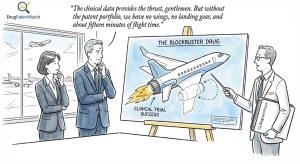
But for the most sophisticated institutional investors—the hedge funds, venture capitalists, and private equity firms that deploy billions into this sector—this is a dangerously incomplete picture. They understand that while a successful clinical trial provides the initial, powerful thrust of value, it is the company’s patent portfolio that determines how far, how fast, and for how long that value can be sustained. Think of it as a venture with two engines. The clinical trial is the engine of potential, proving the vehicle can fly. The patent portfolio, however, is the engine of profitability, defining the exclusive airspace in which that vehicle can operate, the duration of its flight, and its defense against hijackers. Without the second engine, even the most spectacular launch is destined for a short, and ultimately unprofitable, journey.
This report is a deep dive into that second engine. We will move beyond the headlines of clinical success and into the complex, nuanced world of intellectual property (IP) strategy. We will explore why, for the world’s sharpest investors, the patent portfolio is not a secondary legal consideration but the fundamental blueprint of a company’s economic moat. As one industry analysis aptly states, “A company’s balance sheet tells you its financial health today. Its clinical pipeline tells you what it hopes to achieve tomorrow. But its patent portfolio tells you what it owns—the defensible, revenue-generating intellectual property (IP) that underpins its entire valuation”.2
The economic realities of the pharmaceutical industry make this scrutiny non-negotiable. Bringing a single new drug to market is a monumental gamble, a decade-long odyssey that costs, on average, a staggering $2.6 billion.3 The odds are brutal. For every drug that successfully navigates the gauntlet of clinical trials, thousands of promising compounds fail along the way.4 Only about 12% of drugs that enter human testing will ever receive regulatory approval, a figure that has been revised down from earlier, more optimistic estimates.3 This is not a business for the faint of heart; it is a war of attrition where the cost of failure must be subsidized by the profits of the rare success.
The High-Stakes Reality of Drug Development
Metric
Value / Rate
Average Cost to Market (Capitalized)
$2.6 Billion 3
Average Development Timeline
10-15 Years 3
Cumulative Success Rate (Phase I to Approval)
~7.9% – 12% 6
Phase I Success Rate (to Phase II)
~47% 8
Phase II Success Rate (to Phase III)
~28% 8
Phase III Success Rate (to Approval)
~55% 8
Estimated Cost of a Failed Phase III Trial
$200 Million – $500 Million 5
This immense financial risk is precisely why patents are not just important, but the very lynchpin of the entire biopharma business model.9 The temporary monopoly granted by a patent is the sole mechanism that allows a company to recoup its massive R&D expenditure and fund the next generation of innovation.4
This reality creates a profound information asymmetry in the market. Clinical trial results are public, dramatic, and relatively easy for a generalist investor to understand. The market reacts swiftly and, at times, violently to this news.12 The strength of a patent portfolio, however, is opaque. Its analysis requires deep legal and scientific expertise, access to specialized databases, and an understanding of complex litigation strategies.13 The market may be efficient at pricing in the
immediate impact of a trial result, but it is often highly inefficient at pricing in the long-term value and risk profile dictated by the underlying IP. This gap is where institutional investors find their edge. By correctly assessing that a company’s patents are weak—perhaps the claims are too narrow, or they are vulnerable to a validity challenge—an investor can anticipate that even a positive clinical result will lead to a shorter-than-expected revenue tail and a lower long-term valuation than the market’s initial euphoric reaction might suggest.
Furthermore, the patent portfolio serves as a leading indicator of corporate strategy. While the clinical pipeline shows what a company is developing, its patent filing activity reveals how it plans to defend its assets, where it sees future value, and which markets it intends to dominate.14 A sudden surge in filings around a novel drug delivery system or a new manufacturing process can signal a strategic pivot years before it is ever mentioned in an annual report. Geographic filing patterns provide a clear map of commercial ambition; a company seeking protection in the US, Europe, Japan, and China is telegraphing its intent to become a global player.14
In this report, we will equip you with the frameworks used by these sophisticated investors. We will deconstruct the anatomy of a high-value patent portfolio, quantify its impact on valuation models, dissect the strategies for navigating the predictable earthquake of the “patent cliff,” and explore the high-stakes battlefield of litigation. We will move beyond the lab bench and into the boardroom, the courtroom, and the trading floor, demonstrating how turning patent data into competitive advantage is the defining skill in modern biopharmaceutical investment.
Section I: Deconstructing the Fortress – The Anatomy of a Strategically Built Patent Portfolio
To the untrained eye, a patent portfolio is simply a list of legal documents, often judged by a single, crude metric: its size. But to a seasoned investor, it is an intricate architectural structure, a fortress designed to protect a multi-billion-dollar asset. The strength of this fortress is not determined by the number of stones used in its construction, but by their quality, their placement, and the strategic design of its defenses. A portfolio of a hundred weak, narrow, and easily circumvented patents can be worth less than a single, iron-clad patent that covers the core of an invention. Understanding this architecture is the first step in assessing a company’s true competitive moat.
The most effective portfolios are not incidental collections of IP; they are “coherently designed strategic collections” meticulously curated to protect a product or technology platform.9 This requires a dynamic, cross-functional approach where legal, R&D, and business development teams work in concert to shield every innovation and position it for maximum market success.8 This transforms the portfolio from a potential cost center, burdened by maintenance fees, into a powerful profit center.9 The central metaphor is one of fortification: a central keep, protected by layers of outer walls, moats, and battlements, all designed to create a formidable “patent thicket” that deters and defeats would-be invaders.13
The Cornerstone: Composition of Matter (CoM) Patents
At the very heart of this fortress lies the keep: the Composition of Matter (CoM) patent. Universally regarded as the “crown jewel” of pharmaceutical IP, the CoM patent protects the active pharmaceutical ingredient (API) itself—the novel molecule at the core of the medicine.17 This is the strongest, broadest, and most valuable form of protection because it covers the inventive entity irrespective of its final formulation, its method of use, or its manufacturing process.9 If the patented molecule is present in a competitor’s product in any form—be it a pill, a cream, or an injectable liquid—the patent applies, making it an “iron-clad” barrier to entry.9
For an investor evaluating an early-stage biotech company, the strength and remaining term of this single patent are often the most significant drivers of the company’s entire valuation.2 It is the foundational asset upon which all future value is built. Sophisticated companies and their legal teams work to make this cornerstone as broad as possible. One key strategy is the use of
Markush structures in the patent claims. A Markush claim describes a class of structurally related chemical compounds by defining a core structure with various optional components that can be attached to it. This allows a single patent claim to cover potentially millions of functionally equivalent variations of the core compound, making it significantly more difficult for competitors to make a minor chemical tweak and “design around” the invention.9
Building the Walls: The Strategic Role of Secondary Patents
While the CoM patent is the indispensable core, a fortress with only a keep is still vulnerable. The 20-year term of a patent begins from the date of filing, not the date of market approval.11 Given the decade-plus journey of drug development, much of this term is consumed before a single dollar of revenue is generated.11 To counteract this erosion and fortify their market position for as long as possible, companies construct a multi-layered “web of protection” around the core invention using a variety of secondary patents.9 This practice, often referred to by critics as “evergreening” and by strategists as “life-cycle management” (LCM), is a rational and essential response to the economic realities of the industry.2
These secondary patents serve as the outer walls, moats, and defensive towers of the IP fortress:
Method-of-Use Patents: These patents do not protect the drug itself, but rather a specific, novel method of using that drug to treat a particular disease.18 A drug initially approved for rheumatoid arthritis might later be found effective for psoriasis. By securing a new method-of-use patent for the psoriasis indication, a company can open up an entirely new market and create a fresh layer of exclusivity, even as the original CoM patent nears expiration.18
Formulation Patents: These patents cover the specific “recipe” or delivery mechanism of a drug, not the API.18 This could be an extended-release formulation that allows for once-daily instead of twice-daily dosing, a transdermal patch that replaces an injection, or a specific combination of inactive ingredients that improves the drug’s stability or absorption.13 These innovations can significantly improve patient convenience and adherence, and the resulting patents can create a new, protected product that preserves market share long after the original formulation is exposed to generic competition.27 The case of Adderall, a novel formulation of amphetamine salts that were long in the public domain, is a classic example of the power of formulation patents.21
Process Patents: These patents protect the novel and proprietary methods used to manufacture a drug.18 For complex biologics, the manufacturing process is often as innovative and difficult to replicate as the molecule itself. A strong process patent can create a significant barrier to entry for a biosimilar competitor, who may be forced to spend years and millions of dollars developing an alternative, non-infringing manufacturing method.
Combination Patents: These protect therapies that combine multiple active ingredients into a single product, often to achieve a synergistic effect in treating complex diseases like HIV or cancer.18
This layering of different patent types tells a story over time. An investor can analyze the chronology of a company’s patent filings. An early, broad CoM patent followed a decade later by a steady stream of patents on new, clinically meaningful indications or improved formulations is a clear signal of a successful and well-managed LCM strategy. It shows that the company’s R&D engine is still firing, actively working to improve its product and defend its franchise. Conversely, a portfolio for a mature drug that consists only of an aging CoM patent with no recent secondary filings is a major red flag, signaling a company that is passively awaiting a brutal patent cliff.
The “Patent Thicket”: A Rational Defensive Strategy
When these layers of secondary patents are combined, they create what is known as a “patent thicket”—a dense, overlapping, and interlocking web of IP rights that can be incredibly difficult for a competitor to navigate.15 While often portrayed in the media as an abusive tactic to stifle competition, from a business and investment perspective, it is a necessary and rational defensive strategy to protect a multi-billion-dollar asset from the certainty of generic and biosimilar challenges.9
The goal of a patent thicket is not just to protect the core innovation, but to create a legal minefield that makes challenging the franchise prohibitively expensive and risky for a would-be competitor.29 A generic company might succeed in invalidating one or two patents, but if they still face dozens of others, the path to market remains blocked. This forces competitors into arduous and costly litigation battles on multiple fronts, a war of attrition that serves to delay the entry of lower-cost alternatives, often for years.29
The quintessential example of this strategy is AbbVie’s defense of its blockbuster drug, Humira. AbbVie constructed a fortress of over 130 granted patents around Humira, with the vast majority filed after the drug was already on the market.31 This formidable thicket successfully delayed the launch of biosimilars in the lucrative U.S. market for nearly six years longer than in Europe, a delay that was worth tens of billions of dollars in additional revenue for AbbVie.27 For an investor, analyzing the density and strategic construction of a company’s patent thicket is essential for accurately forecasting the true duration of market exclusivity.
Section II: Pricing the Moat – How Investors Quantify the Value of Patent Exclusivity
A qualitative understanding of a patent portfolio’s strength is essential, but institutional investors operate in a world of numbers. Their ultimate goal is to translate the strategic value of an IP fortress into a precise, defensible valuation for a company or its assets. This process bridges the gap between the legal and scientific analysis of patents and the rigorous financial modeling that drives investment decisions. While various valuation methodologies exist, they all share a common feature in the biopharma space: their most critical and sensitive inputs are not financial assumptions, but rather conclusions drawn directly from an analysis of the patent portfolio.
The Investor’s Toolkit: Core Valuation Methodologies
Investors in the biopharma space employ a range of valuation tools, often using multiple methods to triangulate a final value.33 The most common approaches include:
Discounted Cash Flow (DCF): A foundational method that projects a company’s future cash flows and discounts them back to their present value.33 While useful for established pharmaceutical companies with stable revenue streams, standard DCF models often fail when applied to pre-revenue biotech firms, as they struggle to account for the profound scientific and regulatory uncertainty.35
Comparable Company Analysis (“Comps”): This market-based method values a company by comparing its financial multiples (e.g., Price-to-Sales, EV-to-EBITDA) to those of similar publicly traded peers.34 The challenge, especially for companies with novel technologies, is finding truly comparable peers.38
Sum-of-the-Parts (SOTP) Analysis: This approach is particularly useful for companies with multiple drug candidates in their pipeline. Each asset is valued separately (often using the rNPV method described below), and the individual values are summed to arrive at a total company value.34 This granular method allows investors to properly capture the value of early-stage assets and perform sensitivity analysis on individual drug assumptions.
The Gold Standard: Risk-Adjusted Net Present Value (rNPV)
For valuing individual clinical-stage assets—the core of any biotech investment thesis—the industry gold standard is the Risk-Adjusted Net Present Value (rNPV) model.34 This method is a sophisticated enhancement of the standard DCF. It explicitly accounts for the high risk of failure inherent in drug development by adjusting, or “weighting,” the projected future cash flows by the probability of success (POS) at each stage of the clinical and regulatory process.1
The mechanics of an rNPV model involve several key inputs, and it is here that the centrality of the patent portfolio becomes crystal clear:
Projected Revenues and Cash Flows: The model starts by forecasting the annual sales a drug will generate if it reaches the market. This forecast is built on assumptions about the addressable market size, market penetration, and pricing.6
Probability of Success (POS): Each year’s projected cash flow is then multiplied by a probability factor. This POS is the cumulative likelihood that the drug will successfully pass all remaining clinical trials and receive regulatory approval. These probabilities are based on historical industry data for similar drugs in the same therapeutic area and at the same stage of development.1 For example, a drug in Phase II might be assigned a 30-40% probability of reaching the market, while a drug that has just completed successful Phase III trials might carry a probability of 60-70% or higher.1
Discount Rate: The resulting risk-adjusted cash flows are then discounted back to their present value using a discount rate that reflects the time value of money and the inherent risk of the investment. Early-stage assets with significant scientific and commercial uncertainty command much higher discount rates (sometimes 40% or more) than late-stage or already-marketed products.5
The output of this calculation is a single number representing the present value of a drug candidate, adjusted for the profound risk that it may never generate any revenue at all. As a drug successfully progresses through development, its POS increases, and its rNPV can jump dramatically. For a hypothetical drug, its value might increase from $45.8 million at the start of Phase I to $87.3 million at Phase II, $165.9 million at Phase III, and ultimately $312.1 million upon submission to regulators.1
What is crucial for an investor to understand is that the rNPV model is, in essence, a financial distillation of the patent portfolio’s strength. The most sensitive inputs in the entire model are not assumptions about market growth rates or operating margins; they are the legal and strategic conclusions derived from IP analysis. The duration of the revenue forecast is determined by the Loss of Exclusivity (LOE) date, which is the expiration date of the last relevant patent in the portfolio, including any patent term extensions.34 A two-year error in calculating the LOE date for a blockbuster drug can alter its rNPV by billions of dollars. This makes the patent attorney’s analysis of the portfolio’s durability more impactful on the final valuation number than the financial analyst’s spreadsheet assumptions.
The Unseen Value Driver: How Patent Strength Influences Pricing Power
Beyond defining the duration of the revenue stream, the strength of a patent portfolio directly influences its magnitude through pricing power. The fundamental purpose of a patent is to grant a temporary monopoly.15 The more effective that monopoly is, the greater the company’s ability to command premium prices without fear of immediate competition.
A company whose drug is protected by a fortress-like patent thicket, like AbbVie’s Humira, can implement aggressive pricing strategies, confident that competitors are legally barred from entering the market.32 This allows the analyst building the rNPV model to use higher and more durable pricing assumptions, which significantly boosts the valuation. Conversely, if a drug is protected by only a single, weak CoM patent that is known to be vulnerable to a legal challenge, the analyst must incorporate a higher risk of premature generic entry. This would force them to use more conservative pricing assumptions and perhaps apply a probability-weighted “early generic entry” scenario to the model, which would substantially lower the drug’s rNPV. The perceived strength of the IP portfolio is therefore a direct input into the pricing assumptions that drive the entire valuation.
Sophisticated investors add another layer of data-driven rigor by using quantitative patent metrics as a “sanity check” on their valuation models. A growing body of academic research has demonstrated a correlation between certain patent metrics and a company’s market value. Specifically, the number of forward citations a patent receives (the number of times it is cited by later patents) and the size of its patent family (the number of countries in which protection is sought) have been shown to be positively correlated with a company’s Tobin’s q, a measure of its market value relative to its assets.45 One influential study found that, on average, an extra citation per patent boosts a firm’s market value by 3%.47
An investor building an rNPV model can use this data to validate their assumptions. For example, if the model assumes a drug will be a durable blockbuster, but its core patents have very few forward citations compared to other drugs in its class, this is a major red flag. It suggests that other innovators do not view the technology as foundational or important, which may indicate that the patent is less valuable or more easily challenged than the qualitative legal analysis might suggest. This integration of quantitative patent analytics provides a powerful, empirical check on the valuation’s core IP-driven assumptions.
Section III: The Predictable Earthquake – Strategizing Around the Patent Cliff
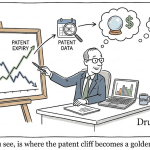
In the world of equity markets, few events are as predictable yet as profoundly impactful as a blockbuster drug’s loss of patent protection. Unlike the sudden shock of a failed clinical trial or an unexpected regulatory decision, patent expiration dates are public knowledge, often fixed years or even decades in advance. This predictability makes the “patent cliff”—the colloquial term for the sharp, sudden decline in revenue that follows LOE—a unique and powerful catalyst for institutional investors.22 It represents a massive, scheduled transfer of value, a predictable earthquake that reshapes the competitive landscape. For those who can look beyond the narrative of loss for the innovator company, this event creates a rich ecosystem of investment opportunities.
“The pharmaceutical industry will need growth, and is sitting on a tremendous amount of cash,” says Asad Haider, head of the healthcare business unit in Goldman Sachs Research. “The baseline expectation is that there is going to be continued M&A… driven by the fact that pharmaceutical companies are facing big cliffs toward the end of the decade with roughly $200 billion in revenue that will erode as a result of patent expirations that will allow for competition from generic drugs.” 48
Defining the “Effective Patent Life”
To understand the patent cliff, one must first grasp the critical concept of “effective patent life.” A U.S. patent grants a nominal term of 20 years from its filing date.22 However, this figure is profoundly misleading for pharmaceutical products.23 Because patents are typically filed early in the discovery process, a decade or more of the patent term is often consumed by preclinical research, clinical trials, and regulatory review before the drug ever reaches the market.11
The effective patent life is the actual period of market exclusivity a company enjoys after a drug has been approved by the FDA.23 This period is typically only 7 to 12 years.19 This compressed timeframe is the crucible in which nearly every high-stakes commercial strategy is forged. The immense pressure to recoup a multi-billion-dollar R&D investment within this narrow window explains the industry’s aggressive launch pricing, its massive marketing expenditures, and its relentless focus on life-cycle management strategies designed to extend this period of exclusivity for as long as possible.23
The Investor Playbook for Innovators Facing LOE
For the innovator company, the patent cliff is an existential threat. The financial impact of generic or biosimilar entry is staggering and swift. It is not uncommon for a blockbuster drug’s revenue to plummet by 80-90% within the first year of losing exclusivity.23 Pfizer’s Lipitor, for example, saw its worldwide revenues fall by 59%, from $9.5 billion in 2011 to $3.9 billion in 2012, the year it faced generic competition.23 The scale of this threat is immense; analysts project that between 2025 and 2030, nearly 70 high-revenue products will face patent expiration, putting a colossal $236 billion in annual revenue at risk.23
This predictable revenue collapse creates a clear set of strategies for investors:
Short-Selling and Re-evaluation: For investors, a looming, unaddressed patent cliff is a powerful signal to sell a long position or even initiate a short sale. The analysis centers on the company’s dependency on the expiring drug and the strength of its R&D pipeline to replace the lost revenue.23 A company like Johnson & Johnson or Novartis can weather the loss of a major product like Stelara or Entresto because they have deep, diversified portfolios and a track record of innovation to fill the gap.52 A smaller company heavily reliant on a single product is far more vulnerable.
Assessing Life-Cycle Management (LCM) Success: Investors scrutinize the innovator’s LCM strategies to predict the steepness of the revenue decline. A company with a robust patent thicket and a successful “product hop” to a new, patent-protected formulation can turn a cliff into a more manageable slope.2 The launch of an “authorized generic”—where the brand company markets its own generic version—can also help capture a portion of the post-LOE market and soften the revenue blow.23
A fascinating dynamic is emerging that is reshaping the traditional cliff model. The classic, near-vertical drop in revenue was characteristic of small-molecule drugs. For biologics, however, the cliff is becoming a gentler, more protracted decline. This is due to several factors. Biologics are not replaced by identical generics, but by “biosimilars,” which are highly similar but not identical. This creates greater “brand stickiness,” as physicians and patients may be more hesitant to switch from a trusted original.54 The manufacturing process for biologics is also vastly more complex, creating a higher barrier to entry for competitors.27 Finally, as the Humira case demonstrated, a masterfully constructed patent thicket can be used to orchestrate a staggered, managed entry of biosimilars through settlement agreements, rather than an all-at-once flood of competition.27 For investors, this means the valuation model for a biologic LOE is different. The terminal value of the innovator’s drug is not zero, and the market share gain for the biosimilar is slower, changing the risk/reward profile for all parties involved.
The Investor Playbook for Generic and Biosimilar Challengers
For generic and biosimilar manufacturers, the patent cliff is not a threat but the primary engine of growth.16 Their entire business model is predicated on identifying lucrative targets and being among the first to market after LOE. Today, generic drugs account for over 90% of all prescriptions filled in the U.S., up from just 19% in 1984, a testament to the transformative impact of the Hatch-Waxman Act.23
Investors in this space focus their analysis on a specific set of patent-driven factors:
Target Selection: The first step is identifying the most attractive opportunities. This involves screening for blockbuster drugs with billions in annual sales and a clear, near-term patent expiration date.16
IP Due Diligence: The generic company must meticulously analyze the innovator’s entire patent portfolio to identify all relevant patents and exclusivities. The goal is to find a “chink in the armor”—a key patent that is weak and can be successfully challenged in court, or to simply map out the timeline to the last-expiring patent.16
First-to-File Advantage: For small-molecule drugs in the U.S., the Hatch-Waxman Act provides a powerful incentive: the first generic company to file an Abbreviated New Drug Application (ANDA) with a “Paragraph IV” patent challenge and win the subsequent lawsuit is granted 180 days of market exclusivity.16 During this period, they are the only generic on the market, creating a temporary duopoly with the brand. This is often the most profitable phase of a generic drug’s lifecycle, making the race to be the “first filer” a critical strategic objective that investors watch closely.57
Competitive Landscape: The value of a generic opportunity diminishes rapidly with each new competitor that enters the market. While the first generic entrant might see prices drop by only 6%, the entry of a second competitor can cut the price in half, and a flood of competitors can lead to price erosion of up to 90%.42 Therefore, investors in generic companies must assess not only the target drug but also how many other generic players are in the race.
The patent cliff is arguably the most predictable, high-impact catalyst in the equity markets. Unlike the inherent uncertainty of scientific discovery, patent expiration dates are public, fixed, and knowable years in advance. This allows for the construction of long-term, high-conviction investment theses—whether long a generic challenger or short a vulnerable innovator—that are less subject to the random volatility that characterizes so much of the biopharma sector.
Section IV: The Battlefield of Exclusivity – Assessing and Pricing Litigation Risk
If the patent portfolio is a fortress, then patent litigation is the inevitable siege. In the pharmaceutical industry, litigation is not an anomaly; it is a core and predictable component of the business cycle. For a brand-name company, defending its patents is a rational, multi-million-dollar necessity to protect a multi-billion-dollar revenue stream.4 For a generic manufacturer, challenging those patents is a calculated strategic investment, the price of admission to a lucrative market.16 For institutional investors, understanding the rules of this battlefield, the motivations of the combatants, and the likely outcomes is a critical and sophisticated form of risk analysis. Litigation events are not just legal noise; they are powerful, value-defining catalysts that can be anticipated, analyzed, and traded upon.
The Rules of Engagement: Hatch-Waxman and the BPCIA
The legal frameworks governing pharmaceutical patent disputes are highly specialized, creating a structured and somewhat predictable “dance” of litigation.
The Hatch-Waxman Act (for Small Molecules): The Drug Price Competition and Patent Term Restoration Act of 1984, universally known as Hatch-Waxman, created the modern generic drug industry and the litigation pathway that defines it.4 Its most critical feature for investors is the Paragraph IV certification. When a generic company files its ANDA, it must certify the status of the brand’s patents listed in the FDA’s “Orange Book.” A Paragraph IV certification is an assertion that the brand’s patent is invalid, unenforceable, or will not be infringed by the generic product.16
This filing is legally considered an act of patent infringement, and it serves as a formal declaration of war. It gives the brand company 45 days to sue the generic filer. If they do, it triggers an automatic 30-month stay of the FDA’s approval for the generic drug.16 This stay is a crucial strategic element. It gives the brand company a predictable window to litigate and defend its patents without facing immediate market competition, while simultaneously creating a known timeline for investors to watch.
The BPCIA (for Biologics): The Biologics Price Competition and Innovation Act of 2009 created the abbreviated pathway for biosimilars. It includes a more complex, and technically optional, information exchange and litigation process known as the “patent dance”.4 This process involves a series of steps where the biosimilar applicant and the brand company exchange information about the biosimilar’s manufacturing process and the patents the brand believes it might infringe. While the Supreme Court has ruled that this dance is not mandatory, the strategic decisions made by both sides during this process can significantly influence the timing and scope of the ensuing litigation.4
The Economics of the Challenge: Why Generics Sue
The high cost of patent litigation—where a high-stakes case can easily cost over $4 million to take through trial and appeal—is a formidable barrier to entry.4 So why do generic companies so willingly engage in these expensive battles? The answer lies in a powerful economic incentive: the
180-day market exclusivity period granted to the first generic company to successfully challenge a brand’s patent with a Paragraph IV certification.7
This exclusivity creates a temporary duopoly, allowing the first generic entrant to capture significant market share at prices that are only moderately discounted from the brand’s price (typically 15-25% below).57 This period is often the most profitable phase of a generic product’s lifecycle, potentially worth hundreds of millions of dollars for a blockbuster drug.57 The odds are also surprisingly favorable; one study found that Paragraph IV challengers have a 76% success rate in litigation.57 This high potential payoff makes the multi-million-dollar cost of litigation a rational and often highly profitable strategic investment.
How Investors Analyze Litigation Risk
Sophisticated investors do not simply wait for a verdict. They perform their own deep due diligence to form a high-conviction view on the likely outcome of a patent dispute, treating the litigation process itself as a series of investable catalysts. This analysis mirrors the work that the litigants’ own legal teams would perform 59:
Patent Strength and Validity Analysis: This is the core of the assessment. Investors will hire their own experts to review the patent’s prosecution history, also known as the “file wrapper”.2 This record of the back-and-forth between the inventor and the patent office can reveal critical weaknesses. For example, if the patent examiner initially rejected the claims as obvious and the inventor had to significantly narrow them to get the patent granted, it may be more vulnerable in court. They will also conduct their own prior art searches to uncover any earlier patents or scientific publications that the patent examiner may have missed, which could be used to invalidate the patent.2
Venue and Judge Analysis: Where a case is filed matters immensely. Certain federal districts are known to be more favorable to patent holders (“rocket dockets”), while others are more skeptical. Advanced litigation analytics can provide data on a specific judge’s history in patent cases, their rate of granting summary judgment, and even how juries in that district have decided similar cases in the past.59
Litigation Team and Party History: The track record of the law firms and even the individual lawyers involved can be a predictive factor. Some firms are known for their aggressive trial strategies and history of winning large verdicts, while others may be more inclined to settle.59 Similarly, a patent holder’s history of defending its patents can signal its willingness to litigate to the end versus seeking an early settlement.
Post-Grant Challenge Risk: Investors also closely monitor proceedings at the U.S. Patent and Trademark Office (USPTO). The America Invents Act created new ways to challenge the validity of a patent after it has been granted, most notably the Inter Partes Review (IPR). IPRs have proven to be a very effective tool for invalidating patents, and the initiation of an IPR against a key drug patent is a major red flag for investors.2
By analyzing these factors, an investor can construct a probability-weighted thesis on a litigation’s outcome. This transforms the legal battle from an unpredictable risk into a calculable event. A hedge fund might take a long position in a generic company and a short position in the innovator ahead of a key court ruling where their diligence suggests the innovator’s patent is highly likely to be invalidated. The legal docket becomes as important a source of alpha as the clinical trial pipeline.
A latent and likely underpriced risk in this space is the emergence of biopharma “patent trolls,” or non-practicing entities (NPEs). While traditionally a problem for the tech industry, the increasing complexity and tech-convergence of biotech (e.g., AI in drug discovery) and the rise of litigation finance are making the sector a more attractive target for NPEs.62 For investors, this means that a traditional Freedom-to-Operate analysis that only looks at direct competitors is no longer sufficient. Diligence must now expand to scan for patents held by known NPEs that could represent a future, unexpected litigation threat.63
Section V: The Investor’s Toolkit – Leveraging Patent Intelligence for Competitive Advantage
In the data-driven world of modern finance, intuition and experience are necessary, but insufficient. The most successful institutional investors are those who can acquire, process, and act upon superior information. In the pharmaceutical sector, the global patent system represents the world’s largest, most detailed, and most up-to-date repository of technological and commercial intelligence.14 Every patent application is a declaration of intent, revealing what a company considers valuable, the problems it is solving, and the markets it is targeting.14 Learning to decode this information is what separates the leaders from the laggards. This section details the practical tools and processes investors use to transform raw patent data into actionable, alpha-generating intelligence.
The Non-Negotiable Due Diligence Step: Freedom-to-Operate (FTO) Analysis
Before any significant capital is deployed—be it in a venture round, a licensing deal, or a multi-billion-dollar acquisition—a critical question must be answered: does the company have the freedom to actually sell its product? A Freedom-to-Operate (FTO) analysis is the systematic process of determining whether a proposed commercial product or process can be made, used, or sold without infringing the valid intellectual property rights of a third party.65
It is a common and dangerous misconception that owning a patent on your own product automatically grants you the right to commercialize it.68 A biotech startup could have an iron-clad patent on a novel therapeutic antibody (Product X), but if the manufacturing process required to produce that antibody is covered by a broader, pre-existing patent held by a major pharmaceutical company (Patent Y), the startup cannot legally sell Product X without a license for Patent Y. Uncovering such a “blocking patent” is a primary goal of FTO analysis, and its discovery can be a deal-killer or, at the very least, force a significant re-valuation to account for future royalty payments or the cost of designing an alternative, non-infringing process.65
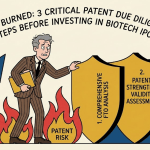
For investors, a thorough FTO analysis is a non-negotiable part of due diligence.70 It is a preemptive measure to minimize litigation risk and de-risk the investment.65 Many investors will not even consider a term sheet until the company can demonstrate that it has conducted a rigorous FTO assessment. However, the most sophisticated investors recognize that FTO is not a one-time, static legal opinion. The patent landscape is constantly in flux, with new patents being granted every week. A company that had clear FTO last year might find itself blocked by a newly issued competitor patent today. Therefore, investors must demand evidence of
ongoing patent landscape monitoring, transforming FTO from a legal checkbox into a dynamic risk management function that must be maintained throughout a product’s lifecycle.13
Competitive Landscaping with Patent Analytics
Beyond the defensive necessity of FTO, patent data is an incredibly powerful offensive tool for competitive landscaping. A patent landscape analysis provides a panoramic, data-driven overview of all innovation activity within a specific technology or therapeutic area.2 By analyzing thousands of patent documents in aggregate, investors can uncover strategic insights that are invisible from any other data source. This analysis typically reveals:
Key Players and Their Strategies: Who are the dominant patent holders in a given space? Are they established pharma giants or nimble biotech startups? Analyzing their patent portfolios can reveal their core technologies, their R&D focus, and their geographic priorities.64
Innovation Trends and Velocity: Is patenting activity in a particular area (e.g., KRAS inhibitors in oncology) accelerating or plateauing? What are the emerging technical approaches? Tracking these trends can help investors identify hot areas of innovation and predict future market shifts.64
“White Space” Opportunities: Perhaps most valuable, a landscape analysis can identify areas with relatively little patent activity.2 This “white space” can represent untapped biological targets, unmet needs in drug delivery, or other novel approaches that are being ignored by competitors. For a venture capitalist, identifying a startup operating in a promising white space is a powerful investment thesis.
The Power of Platforms: Automating Intelligence with DrugPatentWatch
Manually conducting this level of analysis across the global patent landscape is a herculean task, requiring immense resources and specialized expertise. This is where advanced patent intelligence platforms have become indispensable tools for the modern investor. Platforms like DrugPatentWatch are designed to aggregate, structure, and analyze the vast, complex datasets of the pharmaceutical world, transforming them into accessible and actionable business intelligence.74
For an institutional investor, leveraging such a platform provides a significant analytical edge. Instead of spending weeks or months on manual data collection, they can execute sophisticated strategic analyses in a fraction of the time. Key use cases include:
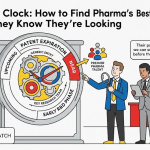
Predictive Forecasting: The platform’s structured databases allow for the systematic tracking of patent expiration dates, patent term extensions, and regulatory exclusivities for drugs across the globe. This enables investors to build accurate models of upcoming patent cliffs, predicting with high confidence which drugs are vulnerable and when.27
Real-Time Competitive Intelligence: Investors can set up automated alerts to monitor the activities of specific companies or technologies. They can be instantly notified when a key competitor files a new patent, when a lawsuit is filed challenging a blockbuster drug’s IP, or when a new clinical trial is initiated for a competing product. This provides a real-time feed of market-moving intelligence.14
Accelerated Due Diligence: During the M&A screening process, an analyst can use a platform like DrugPatentWatch to quickly pull a target company’s complete patent portfolio, view its litigation history, identify all associated regulatory exclusivities, and even find confidential settlement terms from past disputes. This dramatically accelerates the initial due diligence process, allowing the investment team to focus its resources on the most promising targets.77
The true power of this approach, however, comes from integrating these disparate datasets. A patent filing on its own shows intent. A new entry on ClinicalTrials.gov for that same drug shows action. The company’s latest SEC filing reveals the financial commitment and management’s perception of risk associated with that program.2 By linking these data points, an investor can confirm that a patent filing is not merely a speculative legal maneuver but part of a funded, active development program, giving it much higher strategic weight. Platforms that facilitate this data fusion are no longer just information providers; they are essential components of the modern investment decision-making process.
Section VI: Lessons from the Titans – Landmark Case Studies in IP Strategy
Theory and frameworks are essential, but the true value of IP strategy is best understood through the lens of real-world conflict. The history of the pharmaceutical industry is punctuated by epic battles over patent rights, where the outcomes have determined the fate of companies, reshaped markets, and dictated the flow of billions of dollars in revenue. These landmark cases serve as powerful, practical lessons for investors, bringing the abstract concepts of patent thickets, litigation risk, and life-cycle management to life. By dissecting these high-stakes sagas, we can see precisely how a company’s IP strategy—or lack thereof—translates directly into shareholder value.
Landmark IP Cases and Their Market Impact
Company
Drug
Core IP Strategy / Event
Key Outcome
Quantifiable Financial Impact
AbbVie
Humira
Patent Thicket Creation: Filed >250 patent applications (90% post-approval) to build a dense web of secondary patents.
Successfully delayed U.S. biosimilar entry from an expected 2017 to 2023.
Protected tens of billions in revenue; Humira sales exceeded $100B, accounting for ~66% of AbbVie’s total revenue.27
Gilead vs. Merck
Sovaldi / Harvoni
High-Stakes Litigation: Faced a patent infringement lawsuit from Merck over its blockbuster Hepatitis C drugs.
Initial record $2.54B verdict for Merck was completely overturned due to Merck’s “unclean hands” and litigation misconduct.
Gilead’s stock was under immense pressure from the verdict, which was then wiped out, securing a multi-billion dollar franchise.79
Teva
Copaxone
Patent Invalidation: Key patents for its blockbuster multiple sclerosis drug were successfully challenged and invalidated by generic competitors.
Led to earlier-than-expected generic entry by Mylan, decimating Teva’s most important revenue stream.
Teva’s stock plunged 14% on the news of Mylan’s approval; Copaxone’s U.S. sales were nearly halved in the following year.81
Case Study 1: AbbVie’s Humira – The Masterclass in Building a Patent Fortress
No case better illustrates the sheer economic power of a masterfully executed patent strategy than AbbVie’s defense of Humira (adalimumab). The story of Humira is not just about a successful drug; it is the quintessential example of how a “patent thicket” can be wielded to extend a product’s commercial life far beyond the expiration of its core patent, creating tens of billions of dollars in value in the process.
The Strategy: Humira’s foundational patent on the adalimumab molecule was set to expire in the U.S. in 2016. A conventional analysis would have predicted a catastrophic patent cliff at that point. However, AbbVie undertook an unprecedented and aggressive life-cycle management program. The company built a formidable fortress of intellectual property around its blockbuster, ultimately filing over 250 patent applications, resulting in more than 130 granted patents in the U.S. alone.30 Critically, approximately 90% of these patent applications were filed
after Humira was already approved and on the market, a clear indication that the strategy was focused on blocking competition rather than protecting the initial invention.31 This thicket included patents covering every conceivable aspect of the product: specific formulations, methods of manufacturing, and various methods of use for Humira’s numerous approved indications.85
The Outcome: The strategy was a resounding success. While biosimilar versions of Humira launched in Europe in October 2018, AbbVie’s U.S. patent fortress held firm. Through a series of litigation wins and strategic settlements with would-be competitors, AbbVie managed to delay the first U.S. biosimilar entry until January 2023.27 This delay, from an initially expected entry in 2017, added nearly six years of monopoly pricing in the world’s most lucrative pharmaceutical market.
The Financial Impact: The numbers are breathtaking. The six-year delay was worth tens of billions of dollars in additional revenue. Humira became the best-selling drug in history, generating over $100 billion in sales for AbbVie since its launch.31 At its peak, the drug was responsible for nearly two-thirds of AbbVie’s total corporate revenue.31 This firehose of cash flow funded the company’s entire corporate strategy for a decade, enabling acquisitions, pipeline development, and shareholder returns.
The Investor Lesson: The Humira saga is a masterclass in the ROI of a proactive and aggressive IP strategy. It teaches investors that the expiration date of the core CoM patent is often just the beginning of the story. To accurately forecast a drug’s revenue tail and a company’s long-term value, one must meticulously map the entire secondary patent estate and assess the company’s willingness and ability to defend it. Humira proved that a well-constructed patent thicket is not just a legal shield; it is one of the most powerful value-creation tools in the pharmaceutical industry.
Case Study 2: Gilead vs. Merck – The Multi-Billion Dollar Sovaldi Litigation Saga
If Humira demonstrates the strategic value of building a fortress, the legal war over Gilead’s Hepatitis C drugs, Sovaldi and Harvoni, illustrates the extreme volatility and binary outcomes of high-stakes patent litigation. This case was a rollercoaster of billion-dollar verdicts and stunning reversals, providing a stark lesson in the unpredictability of the courtroom.
The Conflict: In 2013, Gilead launched Sovaldi (sofosbuvir), a revolutionary drug that offered a cure for Hepatitis C. The drug was an instant blockbuster. However, Merck & Co., through its subsidiary Idenix Pharmaceuticals, sued Gilead for patent infringement, claiming that sofosbuvir infringed on an Idenix patent covering a class of antiviral compounds.
The Initial Verdict: In December 2016, the case went to a jury trial in the District of Delaware. The jury found in favor of Merck, ruling that Gilead had willfully infringed Idenix’s patent. In a stunning decision, the jury awarded Merck $2.54 billion in damages—the largest patent infringement verdict in U.S. history.79 The verdict sent shockwaves through the industry and created a massive financial overhang for Gilead, threatening the future profitability of its most important franchise.
The Reversal: Gilead’s legal team, however, had pursued a parallel defense strategy based on the legal doctrine of “unclean hands.” They argued that Merck had obtained the patent through a pattern of misconduct and deceit. In a separate but related case in California, it was revealed that a Merck in-house patent attorney had violated a “firewall” agreement during early collaboration talks with Pharmasset (the company Gilead later acquired to get sofosbuvir). The attorney had obtained confidential information about sofosbuvir and then used it to secretly amend Merck’s pending patent applications to specifically target and cover Gilead’s compound.86 The court found this behavior to be egregious, calling it a case of “systematic and outrageous deception”.88 Based on this finding of profound litigation misconduct, the judge in the Delaware case granted Gilead’s post-trial motion and threw out the entire $2.54 billion verdict, holding the Merck patent to be unenforceable against Gilead.79
The Investor Lesson: The Sovaldi saga is the ultimate illustration of how litigation outcomes can create—and destroy—billions of dollars in value in an instant. It highlights the critical importance for investors to look beyond the technical merits of the patents in a dispute. The conduct of the parties, the credibility of witnesses, and the adherence to legal ethics can be just as decisive as the scientific arguments. This case demonstrates that even a seemingly lost cause can be won on procedural or equitable grounds, underscoring the extreme risk and unpredictability that must be priced into any valuation that is contingent on the outcome of a major patent lawsuit.
Case Study 3: Teva’s Copaxone – The Perils of Patent Invalidation
Teva Pharmaceuticals built its empire on the back of its blockbuster multiple sclerosis drug, Copaxone (glatiramer acetate). For years, it was the company’s cash cow, at one point representing approximately half of Teva’s total revenue.81 The story of Copaxone’s decline is a cautionary tale about the dangers of over-reliance on a single product and the catastrophic financial consequences of a successful patent challenge from a determined generic competitor.
The Challenge: Teva, like AbbVie, had attempted to extend Copaxone’s life by developing a new, longer-acting 40 mg/mL formulation with its own set of patents, successfully switching the majority of patients to this new version before the patents on the original 20 mg/mL dose expired.81 However, generic manufacturer Mylan (now part of Viatris) aggressively challenged the validity of the patents covering the new 40 mg/mL version.
The Outcome: The legal battle culminated in a series of court rulings that went against Teva. In 2018, the U.S. Court of Appeals for the Federal Circuit affirmed a lower court decision that Teva’s key patents on the 40 mg/mL dose were invalid for being “obvious” in light of prior art.89 This decision cleared the final legal hurdle for Mylan to launch its generic version, an event that occurred much earlier than many analysts had anticipated.90 In Europe, Teva’s strategy of using divisional patents to prolong uncertainty was also met with failure, with the European Patent Office ultimately destroying a key patent and the European Commission levying a massive €462.6 million fine for misusing the patent system and disparaging competitors.92
The Financial Impact: The market reaction was swift and brutal. On the news of the FDA’s surprise approval of Mylan’s generic, Teva’s stock plummeted by 14%, while Mylan’s stock surged by 20%.84 The impact on Teva’s business was devastating. In the second quarter of 2018, following the generic launch, U.S. sales of Copaxone were nearly halved, dropping from $843 million to $448 million compared to the same period a year prior.82 The loss of its primary revenue driver plunged Teva into a deep financial crisis, forcing a massive corporate restructuring, significant debt management issues, and a long and painful recovery process.83
The Investor Lesson: The fall of Copaxone is a stark warning about the risks of concentration and the critical need to constantly stress-test the defensibility of a company’s most important patents. It demonstrates how quickly a market-leading position and a primary revenue stream can evaporate when a patent fortress proves to be built on a weak foundation. For investors, this case underscores the necessity of performing deep, independent diligence on a company’s key patents, rather than simply taking management’s assertions about their strength at face value. A single adverse court ruling can change everything.
Conclusion: The Enduring Value of Intellectual Property in an Evolving Landscape
The biopharmaceutical industry stands at a crossroads of unprecedented scientific opportunity and mounting economic pressure. As we have seen, the narrative of value creation in this sector is a tale of two engines: the explosive but uncertain power of clinical innovation and the steady, durable force of intellectual property protection. While the market will always be captivated by the drama of a clinical trial readout, the analysis presented in this report makes one conclusion unequivocally clear: for the institutional investor, looking “beyond clinical trials” to conduct a deep, sophisticated, and continuous analysis of a company’s patent portfolio is not optional. It is the very definition of rigorous due diligence and the foundation of sustainable, long-term value creation.
The patent portfolio is the tangible manifestation of a company’s competitive advantage. It is the legal and economic moat that protects a multi-billion-dollar investment from the inevitable flood of competition. Its architecture—the interplay of foundational CoM patents and strategic secondary patents—defines the breadth and depth of that moat. Its duration, meticulously calculated through an analysis of expiration dates and potential extensions, is the single most critical input in any credible financial valuation. The strength of this IP fortress dictates a company’s pricing power, its ability to navigate the predictable earthquake of the patent cliff, and its resilience on the high-stakes battlefield of litigation.
The landmark sagas of Humira, Sovaldi, and Copaxone are not mere historical footnotes; they are enduring lessons written in billions of dollars of shareholder value created and destroyed. They demonstrate that IP strategy is not a siloed legal function but a core driver of C-suite decision-making, directly influencing a company’s ability to fund its pipeline, pursue M&A, and shape its own destiny.
Looking ahead, the landscape is only becoming more complex. The rise of artificial intelligence in drug discovery is raising novel and challenging questions about inventorship and patentability, forcing a re-evaluation of what constitutes a protectable innovation.75 The convergence of life sciences and high-tech is creating new hybrid IP strategies, where data and trade secrets are becoming as valuable as patents themselves.62 The legal environment continues to shift, with court decisions on patent eligibility and disclosure requirements creating new risks and opportunities for investors.96
In this dynamic environment, the ability to dissect, analyze, and strategically interpret patent data will become an even more critical differentiator for successful investors. It is the compass that allows one to navigate the fog of R&D uncertainty, to identify true, durable innovation amidst the hype, and to build portfolios that are resilient not just for the next quarter, but for the next decade. The engine of clinical success will always provide the spark, but it is the fortress of intellectual property that will ultimately protect the flame.
Key Takeaways
IP Defines the Economic Moat: While positive clinical trial data creates initial value, the patent portfolio determines the duration, defensibility, and ultimate profitability of a drug’s revenue stream. For institutional investors, IP analysis is the primary tool for assessing a company’s long-term competitive advantage.
Valuation is Driven by Patent Analysis: The most sensitive inputs in sophisticated valuation models like Risk-Adjusted Net Present Value (rNPV)—namely, the period of market exclusivity (Loss of Exclusivity date) and pricing power assumptions—are direct outputs of legal and strategic patent analysis, not financial forecasting.
The “Patent Cliff” is a Predictable, Investable Catalyst: Unlike unpredictable clinical outcomes, patent expiration dates are known years in advance. This predictability allows investors to build high-conviction, long-term theses to either short vulnerable innovators or go long on well-positioned generic/biosimilar challengers.
Litigation is a Core Part of the Business Cycle: High-stakes patent litigation is not a random risk but an inevitable and analyzable event. Sophisticated investors treat legal proceedings under frameworks like the Hatch-Waxman Act as a series of catalysts, conducting their own due diligence to predict outcomes and invest accordingly.
A “Patent Thicket” is a Rational Defensive Strategy: The layering of secondary patents (formulation, method-of-use, process) around a core drug is a necessary business strategy to protect a multi-billion-dollar asset. The density and quality of this “thicket” are key indicators of a company’s ability to manage its product lifecycle and soften the patent cliff.
Intelligence Platforms are Essential Tools: The complexity and scale of global patent data make specialized intelligence platforms, such as DrugPatentWatch, indispensable for modern investors. These tools automate the tracking of patent expirations, litigation, and competitor activity, enabling efficient and data-driven strategic decision-making.
Quantitative Metrics Validate Qualitative Analysis: Metrics like forward patent citations and patent family size serve as powerful, data-driven proxies for patent quality and technological importance. Investors use these metrics to validate or challenge the assumptions in their financial models.
Frequently Asked Questions (FAQ)
1. How can investors quantitatively differentiate a “strong” patent thicket from a “weak” one without being a patent attorney?
While a definitive legal opinion requires a patent attorney, investors can use several quantitative and qualitative indicators to assess the strength of a patent thicket. First, analyze the diversity of patent types: a strong thicket will include not just the core Composition of Matter (CoM) patent, but also numerous patents covering formulations, methods of use, manufacturing processes, and even combination therapies.9 Second, examine the
timing of the filings: a continuous stream of patent filings long after the drug’s initial approval signals an active and deliberate life-cycle management strategy, as seen with Humira.31 Third, use patent analytics to assess the
quality of the patents within the thicket. Look at the forward citation count for key secondary patents; highly cited patents are generally considered more technologically significant and potentially more defensible.45 Finally, review the company’s litigation history. A track record of successfully defending its patents in court or securing favorable settlements is a strong indicator of a formidable and well-managed patent estate.
2. What are the biggest red flags to look for in a company’s patent portfolio during M&A due diligence?
During M&A due diligence, several red flags in a target’s patent portfolio can derail a deal or trigger a significant valuation cut. The most critical is a Freedom-to-Operate (FTO) issue, where the target’s product, despite being patented, appears to infringe on a broader, pre-existing patent held by a third party.65 Another major red flag is a
broken chain of title, where the ownership of the patents is unclear or has not been properly transferred from inventors or previous institutions, meaning the target may not actually own its most valuable assets.14 A third red flag is a
weak prosecution history (“file wrapper”) for key patents, showing that the patent office raised significant objections that forced the company to severely narrow its claims, making the patent easier to design around.2 Finally, the discovery of undisclosed, highly relevant
prior art that was not considered by the patent examiner can render a patent invalid and is a sign of extreme vulnerability.61
3. How is the rise of AI in drug discovery likely to change the way investors value a biotech’s IP?
The rise of AI in drug discovery introduces new layers of complexity to IP valuation. First, it challenges the traditional concept of inventorship, as current U.S. law requires a human inventor, raising questions about the patentability of molecules designed entirely by AI.75 Investors will need to scrutinize the level of documented human contribution to AI-driven inventions to assess patent validity risk. Second, AI significantly accelerates the discovery process, which could lead to a
compression of R&D timelines.75 This might shorten the “dead time” before a patent generates revenue, potentially increasing the effective patent life and, therefore, the rNPV of an asset. Third, AI-driven platforms themselves can be protected by a combination of patents (on the algorithms) and
trade secrets. Investors will need to value not just the patented drug candidates but also the underlying proprietary AI platform that generates them, treating it as a valuable, recurring source of future innovation.
4. Beyond the core patent cliff, what is the most overlooked IP-related risk for a pharmaceutical company?
Beyond the well-understood risk of a primary patent cliff, one of the most overlooked IP risks is vulnerability within the supply chain. A pharmaceutical product is a complex system of components, and a company may not own the IP for all of them. For example, a blockbuster biologic drug may be delivered via a sophisticated auto-injector device, the patents for which are owned by a separate medical device company. If the license for that device technology expires or is terminated, the pharmaceutical company could find itself with an approved drug that it can no longer legally sell in its most commercially successful format. Investors often focus on the patents for the active ingredient but may neglect to perform due diligence on the IP protecting critical delivery devices, manufacturing components, or even diagnostic tools required for the drug’s use, creating a hidden dependency and a significant latent risk.
5. For a pre-revenue biotech, is it more important to have a single, iron-clad composition of matter patent or a broader portfolio of early-stage process and method patents?
For a pre-revenue biotech, a single, iron-clad Composition of Matter (CoM) patent is almost always more valuable. The CoM patent is the foundational asset that provides the broadest possible protection for the core invention—the molecule itself.2 It is the “cornerstone” of the IP fortress and the primary driver of the company’s valuation in the eyes of early-stage investors and potential pharmaceutical partners.2 A strong CoM patent signals a clear, defensible monopoly on a future product. While a portfolio of process and method patents can be valuable for building a defensive “thicket” later in a drug’s lifecycle, without the core CoM patent, these secondary patents offer much weaker protection. A competitor could potentially invent a different manufacturing process or find a different use for the same molecule, completely circumventing the portfolio. Therefore, securing a robust CoM patent is the first and most critical IP milestone for any therapeutic-focused biotech startup.