A deep-dive guide for investors, analysts, and executives who need to anticipate — not react to — patent expirations that will reshape the pharmaceutical landscape through 2032.
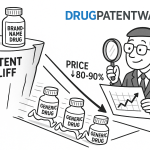
Every year, billions of dollars in pharmaceutical revenue disappear inside a 12-month window. Generic competitors file, courts rule, exclusivity ends, and prices collapse — sometimes by 80 to 90 percent within the first six months of generic entry. The executives who got caught flat-footed at Pfizer when Lipitor lost exclusivity in November 2011 did not lack intelligence. They lacked a system for reading the signals early enough to act.
This guide builds that system. It is not a survey of the problem. It is a technical and strategic manual for anyone who needs to predict when a drug’s protected revenue will end — and what happens next. That means analysts building discounted cash flow models, portfolio managers sizing pharmaceutical positions, payers negotiating contract terms, and business development teams hunting for acquisition targets before the market reprices them.
The drug patent cliff is not a future event. It is a continuous process. Patents expire every quarter on products ranging from blockbusters generating $5 billion annually to specialty drugs holding niche but defensible market positions. The question is never whether a cliff exists. The question is how far away you are standing from the edge, and whether you can see it clearly enough to plan.
What follows is a structured framework: the mechanics of pharmaceutical patent protection, the analytical tools available to map expiration dates, the specific drugs and revenue pools at risk through 2032, the strategies companies use to extend their runway, the biosimilar complication that makes biological products a separate case entirely, and the investment logic that flows from all of it.
What the Patent Cliff Actually Is
A Technical Definition Without the Jargon
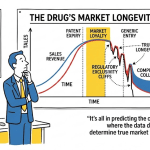
A drug patent cliff occurs when one or more pharmaceutical products lose their patent-based market exclusivity, triggering immediate generic or biosimilar competition that sharply reduces the originator company’s revenue from those products. The term “cliff” is accurate: the drop is abrupt, not gradual. Generic entry rarely produces a slow erosion. It typically produces a step-change.
The cliff is not a single event tied to a single patent. Most drugs have multiple overlapping patents covering the active molecule, the formulation, the manufacturing process, and specific methods of use. The relevant question for any given product is not “when does the patent expire?” but rather “when does the last legally enforceable barrier to generic competition fall?” Those two questions often have different answers, sometimes separated by years.
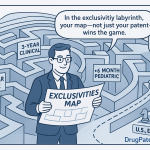
In regulatory terms, what actually prevents generic entry is not the patent itself but the combination of patent protection and regulatory exclusivity. In the United States, the Food and Drug Administration grants several forms of exclusivity independently of patent law: five-year new chemical entity exclusivity for drugs with no previously approved active moiety, three-year clinical investigation exclusivity for new formulations backed by new trials, and seven-year orphan drug exclusivity for drugs treating rare diseases. These exclusivities can run concurrently with or extend beyond patent protection, creating a more complex timeline than the patent record alone suggests.
The practical definition for analytical purposes is this: the cliff begins when the first generic or biosimilar product enters the market and ends when the originator’s price and market share stabilize at their post-competition equilibrium. That stabilization process typically takes 12 to 24 months.
The Revenue Numbers That Make This Worth Studying
Between 2025 and 2030, pharmaceutical analysts estimate that products with aggregate annual revenues exceeding $300 billion face patent expiration globally. That figure is not evenly distributed across years or therapeutic categories, but it represents one of the largest transfers of pharmaceutical revenue from branded to generic players in the industry’s history.
To put individual cliffs in context: Humira, the anti-inflammatory biologic that held the title of world’s best-selling drug for over a decade, generated approximately $21 billion in U.S. revenue in 2022. Following the expiration of its core patents and the entry of biosimilar competitors beginning in January 2023, AbbVie projected U.S. net revenues from the product to decline dramatically over the following two years. The company had anticipated this for over a decade and spent that time building a successor portfolio specifically to offset it.
Eliquis, the oral anticoagulant co-marketed by Bristol-Myers Squibb and Pfizer, generated combined global sales of approximately $19.4 billion in 2022 [1]. Its primary U.S. patent protection runs through 2026, with litigation ongoing over additional claims. When generic apixaban enters the U.S. market at scale, the revenue impact will be immediate and substantial for both parent companies.
The Keytruda situation is structurally different. Merck’s pembrolizumab, the leading PD-1 checkpoint inhibitor with global revenues exceeding $25 billion in 2023 [2], faces composition-of-matter patent expiration in 2028 in the U.S. market. Merck has spent years developing subcutaneous formulations, combination regimens, and expanded indications specifically to generate new intellectual property and delay the effective competitive entry date.
“By 2030, an estimated $236 billion in annual brand-name drug sales in the U.S. alone will have lost patent protection, compared to $58 billion over the preceding five-year period.” — IQVIA Institute for Human Data Science, The Use of Medicines in the U.S. 2023 [3]
Historical Precedent: The 2011-2015 Cliff Taught the Industry Everything
The period from 2011 through 2015 is the reference point for every subsequent discussion of the patent cliff. During those four years, the pharmaceutical industry experienced an unprecedented wave of patent expirations on products that had defined the blockbuster era of drug development.
Lipitor (atorvastatin) lost U.S. exclusivity in November 2011 after generating peak annual revenues of approximately $12.9 billion. Within 12 months of generic entry, the branded product retained a fraction of its former market share. Pfizer’s total revenues fell from $67.4 billion in 2010 to $58.5 billion in 2012 [4], a decline substantially attributable to Lipitor’s generic exposure.
Plavix (clopidogrel), then the world’s second-best-selling drug, lost U.S. exclusivity in May 2012. Seroquel, Singulair, Diovan, Actos, and Zyprexa all followed within roughly the same window. The industry as a whole faced what analysts at the time estimated as $255 billion in branded revenue exposed to generic competition between 2010 and 2015 [5].
The companies that managed this period best were not the ones that denied the cliff was coming. They were the ones that had built acquisition pipelines, executed in-licensing deals, and restructured their commercial operations years before the expirations hit. Pfizer’s acquisition of Wyeth in 2009 was explicitly motivated, in part, by the need to replace Lipitor revenue. AstraZeneca’s aggressive partnership strategy reflected the same logic applied to a different product mix.
The 2011-2015 wave also established the analytical playbook that patent watchers still use. Patent databases, Orange Book records, Paragraph IV certification filings, and post-grant review proceedings all became standard inputs in competitive intelligence work. Tools like DrugPatentWatch emerged from this period as structured resources that aggregate patent expiration data, litigation history, and exclusivity records in a format analysts can actually use without becoming patent attorneys.
How Pharmaceutical Patents Actually Work
The Patent Types That Control Market Entry
A pharmaceutical product’s patent protection is never a single document. It is a portfolio of claims, each protecting a different aspect of the drug and each potentially expiring on a different date. Understanding which patent type actually blocks generic competition is the first analytical step.
Composition-of-Matter Patents
Composition-of-matter patents are the most valuable and the most defensible. They cover the active chemical entity itself — the molecule. When a company discovers a new chemical compound with therapeutic activity, the composition-of-matter patent on that compound prevents anyone else from making, using, or selling it for the patent’s term.
These patents are typically filed early in drug development, often before clinical trials begin. Because the standard patent term runs 20 years from the filing date, and because it typically takes 10 to 12 years to bring a drug from patent filing to market approval, the effective market exclusivity from a composition-of-matter patent is often closer to 8 to 12 years in practice.
Generics companies target composition-of-matter patents first in their legal challenges because defeating these claims creates the cleanest path to market. If a generic manufacturer can demonstrate that a composition-of-matter patent is invalid — because the compound was obvious given prior art, or because the patent disclosure was insufficient — the entire foundation of the brand company’s exclusivity erodes.
Formulation and Method-of-Use Patents
Formulation patents cover specific physical forms of a drug: extended-release tablets, transdermal patches, specific salt forms, microencapsulation techniques, or combination products. These patents are typically filed later than composition-of-matter patents, which means they expire later. A formulation patent filed five years after the composition-of-matter patent expires five years later, potentially extending effective market exclusivity well beyond the molecule’s original protection.
Method-of-use patents cover specific indications, dosing regimens, or combinations with other drugs. The legal theory is that while anyone may be free to make the underlying molecule, they cannot practice a specific method of using it without a license. In practice, these patents are harder to enforce against generics companies because a generic product approved for a different indication (but identical in composition) can be prescribed off-label for the patented use.
Process patents protect manufacturing methods. These matter when a specific synthesis route is the only commercially viable way to make the drug at scale. They are less significant in small-molecule generics, where alternative synthesis routes are often available, than in biologics manufacturing, where process and product are more closely intertwined.
The 20-Year Clock and Its Extensions
The United States Patent and Trademark Office grants patents with a standard term of 20 years from the filing date. For pharmaceutical products, this baseline gets modified by two mechanisms: Patent Term Restoration under the Hatch-Waxman Act and pediatric exclusivity granted by the FDA.
Patent Term Restoration
The Drug Price Competition and Patent Term Restoration Act of 1984 — universally called the Hatch-Waxman Act — established the framework for generic drug entry in the United States and simultaneously created a mechanism to partially compensate brand companies for the time their patents run while the FDA reviews their drug applications.
Patent Term Restoration (PTR) adds back to a patent’s term the time the drug spent in FDA regulatory review after the relevant patent was filed. The calculation is specific: you can restore one-half of the time spent in clinical trials plus all of the time spent in FDA review, subject to a maximum restoration of five years and a maximum total remaining patent term of 14 years from the date of FDA approval.
The practical effect is substantial. A drug that took 10 years from first patent filing to FDA approval might receive four or five years of patent term restoration, extending its effective exclusivity meaningfully beyond what the base patent record suggests. Any analysis of a drug’s expiration date that does not account for PTR will produce a systematically early estimate.
Patent term restoration information is publicly available through the FDA’s Orange Book, which lists not only the base patent expiration but the restored term. DrugPatentWatch aggregates these Orange Book records and overlays them with litigation data, making it possible to build expiration timelines without parsing government databases directly.
Pediatric Exclusivity
The Best Pharmaceuticals for Children Act grants pharmaceutical companies an additional six months of market exclusivity when they conduct FDA-requested pediatric studies of their drug, regardless of whether those studies show efficacy in children. This six-month extension applies to all of a drug’s patents and exclusivities simultaneously, effectively pushing every expiration date forward by half a year.
Pediatric exclusivity is nearly automatic for any blockbuster drug. The studies are typically inexpensive relative to the revenue implications, and the FDA routinely issues written requests for pediatric studies on widely used drugs. For a drug generating $5 billion annually, six months of additional exclusivity is worth approximately $2.5 billion at current revenue rates before accounting for the post-exclusivity revenue decline.
Because pediatric exclusivity is attached to the most recent expiration date on a drug’s patent portfolio, analysts must identify the “last patent standing” before calculating the pediatric extension. A drug with a composition-of-matter patent expiring in 2026 and a formulation patent expiring in 2028 would have pediatric exclusivity running through June 2029 if the six-month extension attaches to the 2028 patent.
The Orange Book: The Primary Data Source
The FDA’s Approved Drug Products with Therapeutic Equivalence Evaluations — the Orange Book — is the foundational reference for U.S. pharmaceutical patent analysis. Published and updated continuously since 1980, it lists every FDA-approved small-molecule drug product along with the patents and exclusivities the brand company has submitted as relevant to that approval.
The Orange Book contains two types of protective entries: patent listings, which brand companies submit voluntarily (but with legal consequences for accuracy), and exclusivity codes, which the FDA itself assigns based on the type of approval granted. An analyst reading the Orange Book needs to understand both: the patents tell you what the company claims protects the drug, and the exclusivities tell you what federal law guarantees regardless of patent validity.
The Orange Book is a litigation tool as much as an information resource. When a generics company files an Abbreviated New Drug Application (ANDA) to sell a generic version of a listed drug, it must address each patent in the Orange Book. If it wants to market before any listed patent expires, it must file a Paragraph IV certification stating that the patent is invalid, unenforceable, or will not be infringed by the generic product. This certification triggers the brand company’s 45-day window to file an infringement lawsuit and the automatic 30-month stay of FDA approval that follows.
The Biologics Price Competition and Innovation Act created an equivalent system for biological products — the Purple Book — but the mechanics differ in important ways that we will address in the biosimilar section.
Why Patent Cliffs Are Genuinely Difficult to Predict
The Patent Thicket Problem
A patent thicket is a dense web of overlapping patents surrounding a pharmaceutical product, each covering a slightly different aspect of the drug or its use. The thicket is not accidental. Sophisticated pharmaceutical companies deliberately build these portfolios to maximize the legal complexity any potential generic entrant must navigate.
AbbVie’s patent strategy around Humira became the most studied example of the modern thicket. At its peak, AbbVie held over 130 patents covering adalimumab, including composition-of-matter patents on the antibody itself, manufacturing process patents on the cell culture conditions used to produce it, formulation patents on the citrate-free formulation that reduced injection-site pain, and method-of-use patents covering specific dosing regimens for individual indications.
No single Humira patent, taken in isolation, would have blocked biosimilar entry as long as AbbVie’s litigation settlements ultimately did. The power of the thicket was that challenging any single patent left dozens more standing. Biosimilar developers had to assess whether they could clear the entire portfolio — or negotiate their way past it. AbbVie’s settlements with Samsung Bioepis, Amgen, and other biosimilar developers, which delayed U.S. entry until January 2023 while European entry occurred in October 2018, reflected the leverage that thicket creates in licensing negotiations.
For analysts trying to predict when competition will actually arrive, the patent thicket creates genuine uncertainty. You can identify the nominal expiration dates of all listed patents. What you cannot predict with certainty is which ones a court will uphold, which ones a generic challenger will successfully invalidate, and whether a settlement will accelerate or delay entry relative to the nominal patent schedule.
Patent Term Extensions and Supplementary Protection Certificates
In the European Union, the equivalent of U.S. patent term restoration takes the form of Supplementary Protection Certificates (SPCs), which can extend protection on approved pharmaceutical products for up to five years beyond the base patent expiration, with an additional six-month extension available for products with pediatric data.
The SPC system creates a divergence between U.S. and EU patent timelines that complicates global analysis. A drug with a U.S. patent term restoration bringing its effective expiration to 2027 may have an SPC in Germany expiring in 2028 and an SPC in France expiring in 2027 due to differences in national approval dates. An analyst building a global revenue model needs country-specific expiration data, not a single global date.
Japan maintains its own patent term extension system with different calculation rules. Canadian data exclusivity periods run 8 years (with a 6-month pediatric extension available) rather than the U.S. standard of 5 years for new chemical entities. The result is a patchwork of expiration dates across major markets that makes any single “patent expiration date” a simplification requiring significant qualification.
Paragraph IV Litigation as a Timing Variable
Paragraph IV patent challenges are the mechanism by which generic drug companies accelerate market entry. When a generics manufacturer files a Paragraph IV ANDA, it is asserting that it has the legal right to market before the listed patents expire — either because those patents are invalid, unenforceable, or because the generic product does not actually infringe them.
The 30-month automatic stay of ANDA approval that follows a brand company’s infringement lawsuit was designed to give courts time to resolve patent disputes before generics hit the market. In practice, Paragraph IV litigation often resolves before the 30-month stay expires — either through a court decision or, more commonly, through a settlement.
Settlement agreements between brand and generic companies frequently contain provisions about the date the generic company is permitted to launch its product. These “authorized entry dates” may be earlier than the nominal patent expiration date (if the brand company agrees to let the generic in early to avoid an adverse court ruling) or later (if the settlement includes a license running to a specific date). Neither outcome is predictable from the patent record alone.
The Federal Trade Commission monitors these settlements for antitrust concerns, particularly “pay-for-delay” arrangements where the brand company makes reverse payments to the generic challenger in exchange for delayed entry. The Supreme Court’s 2013 ruling in FTC v. Actavis established that these settlements are subject to antitrust scrutiny under a rule-of-reason analysis, creating legal risk for the most aggressive delay tactics. But settlements remain common, and their terms are not always disclosed in detail to the public.
Reading the Paragraph IV Filing Record
Paragraph IV certifications are publicly disclosed in the FDA’s database, and this disclosure is genuinely useful to analysts even when the litigation outcome is uncertain. The filing of a Paragraph IV ANDA tells you several things: a generics company believes there is a viable legal argument against the listed patents, the generics company has committed the resources (including the patent challenge costs) to pursue market entry, and FDA review of the ANDA is underway.
The volume of Paragraph IV certifications against a given drug, and the identity of the companies filing them, gives an indication of how much competitive pressure the brand product faces and how near that pressure may be to resolving into actual market entry. A drug with ten Paragraph IV certifications from well-resourced generic manufacturers is in a qualitatively different position than one with two filings from smaller players.
DrugPatentWatch tracks Paragraph IV filing activity by product and by filer, allowing analysts to monitor the litigation pressure building against specific drugs without reading every ANDA filing individually. The platform’s alerts on new Paragraph IV certifications have become a standard part of competitive intelligence workflows at major pharmaceutical companies and investment firms.
Inter Partes Review and Post-Grant Proceedings
The America Invents Act of 2011 established two administrative proceedings at the U.S. Patent Trial and Appeal Board (PTAB) that have changed the pharmaceutical patent landscape: Inter Partes Review (IPR) and Post-Grant Review (PGR).
IPR allows any party to petition the PTAB to review the validity of an issued patent based on prior art patents and printed publications. The proceeding is faster than district court litigation (decisions typically issue within 18 months of institution), less expensive, and uses a standard of proof that is generally more favorable to challengers than the “clear and convincing evidence” required to invalidate a patent in federal court.
Generic manufacturers have used IPR petitions strategically: filing them in parallel with Paragraph IV ANDAs to create a second front against brand company patents, or filing them as a lower-cost initial challenge to assess patent validity before committing to full ANDA preparation. Brand companies have argued that IPRs unfairly tilt the playing field, and there have been legislative efforts — so far unsuccessful — to limit IPR use in the pharmaceutical context.
For analysts, IPR petitions create another source of timing uncertainty. A patent that appears secure on its nominal expiration date may be invalidated through IPR proceedings years before that date. The PTAB publicly discloses all filed petitions and their outcomes, and DrugPatentWatch incorporates this data alongside Orange Book records to provide a more complete picture of patent vulnerability for specific products.
How to Systematically Map the Cliff
Building a Patent Expiration Calendar: The Four-Source Method
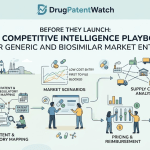
Reliable patent cliff prediction requires synthesizing data from at least four distinct sources: the FDA Orange Book, the USPTO patent database, litigation databases tracking Paragraph IV proceedings and IPR petitions, and market intelligence platforms that overlay all three with context.
No single source is sufficient. The Orange Book lists patents the brand company has submitted as relevant to its approval — but it may exclude patents the company considers so commercially important that it does not want to highlight them, and it does not list process patents or unasserted composition patents. The USPTO database captures the full patent record but does not filter for pharmaceutical relevance or map patents to specific approved drug products. Litigation databases tell you about legal challenges but require legal expertise to interpret.
Step One: Orange Book Audit
Start with the Orange Book for any drug you are analyzing. Identify every listed patent and its expiration date, including any patent term extensions. Note the exclusivity codes separately — these are the FDA-granted exclusivities independent of patent law. Identify the latest expiration date across all listed patents and all exclusivities, then add six months if the drug has received pediatric exclusivity.
This gives you a “ceiling” date — the latest date by which competition must occur absent any extraordinary legal developments. In most cases, competition occurs earlier because generic companies do not wait passively for patents to expire; they challenge them.
Step Two: USPTO Patent Search
Search the USPTO database for all patents assigned to the brand company (or its parent) with claims covering the active ingredient. This catches patents that the brand company did not list in the Orange Book, either because they cover methods of use for unapproved indications, manufacturing processes, or intermediate compounds.
Patent claims analysis requires attention to the independent claims, which define the scope of protection without depending on any other claim. Dependent claims add limitations that narrow scope. A patent with broad independent claims is harder to design around and more valuable as a barrier to entry. A patent whose independent claims have been narrowed by amendment during prosecution may have large gaps that a generic formulation can exploit.
Step Three: Litigation Surveillance
Search the federal court PACER database and the PTAB’s PRPS system for all active and resolved litigation involving the drug’s patents. Active Paragraph IV cases tell you which generic companies are currently challenging the patents and in which courts. Resolved cases tell you how courts have evaluated the strength of specific patent claims — information that is highly predictive for claims not yet litigated.
Pay particular attention to cases where the brand company lost a validity challenge. An invalidated patent claim is gone, and its absence from the effective patent estate brings the earliest viable generic entry date forward. Similarly, a case where the brand company won on a method-of-use claim tells you that the claim is likely to survive future challenges and represents a real barrier.
Step Four: Competitive Intelligence Integration
DrugPatentWatch and similar platforms aggregate the first three sources and add layers of context: historical filing timelines for generic applications on comparable drugs, analysis of the competitive landscape among generic filers for a specific product, and alerts on new filings or litigation developments that might shift the expiration timeline.
The analytical value of these platforms is not primarily in the raw data — a patient analyst can assemble much of it from primary sources. The value is in the aggregation, the cross-referencing, and the speed. When a new Paragraph IV certification is filed against a blockbuster drug, the market implications can be material to a company’s stock price. Getting that information the day it is filed rather than a week later is the difference between acting on intelligence and reacting to news.
Calculating the Effective Exclusivity Window
Once you have assembled the patent and exclusivity record, the calculation of the effective exclusivity window requires distinguishing between nominal expiration and effective competitive entry. These are frequently different.
The nominal expiration date is when the last relevant patent expires on paper. The effective competitive entry date is when the first generic or biosimilar product actually reaches the market at a price that competes meaningfully with the brand product. Between these two dates, there is often a gap created by regulatory review timelines, manufacturing scale-up, and — in some cases — litigation settlements.
In the U.S. small-molecule generics market, FDA review of an ANDA typically takes 10 to 18 months from filing to approval if no major issues arise. A generics company that wants to launch on the day a patent expires therefore needs to have its ANDA filed and under review well in advance. The fact that a generic ANDA has been filed and is under review tells you that competition is imminent relative to the patent expiration, and the FDA’s Generic Drug User Fee Amendments program has substantially reduced review timelines over the past decade.
In the biologics market, the timeline from biosimilar application to approval is longer and the subsequent market dynamics are more complex, but the analytical principle is the same: the nominal exclusivity end date and the actual competitive entry date diverge, and the gap is what you need to estimate.
The Upcoming Patent Cliff: 2025 Through 2032
The Scale of What Is Coming
The pharmaceutical industry faces its second major patent cliff wave between 2025 and 2032, and by most measures it dwarfs the 2011-2015 event in absolute revenue terms. The difference this time is that the products at risk are more complex — more biologics, more specialty medications, more combination therapies — which means the competitive dynamics after expiration are different from the small-molecule generic launches that defined the earlier wave.
EvaluatePharma estimated in its 2023 World Preview that global branded pharmaceutical sales at risk from patent expiry between 2023 and 2028 total approximately $251 billion [6]. This figure is cumulative — it represents the total revenue of products that will face their first generic or biosimilar competition during that window, not the annual revenue loss, which is lower because generic price erosion is not instantaneous.
Key Products by Year of Effective Exclusivity End
2025 and 2026: The Transition Begins
Several major products face patent expiration or first generic competition in 2025 and 2026, though the revenue impact of each will extend across the subsequent two to three years as generic market share builds.
Jardiance (empagliflozin), Boehringer Ingelheim and Eli Lilly’s SGLT2 inhibitor for diabetes and heart failure, had U.S. sales of approximately $3.3 billion in 2022 [7]. The primary composition-of-matter patent extends into 2025, with formulation and method-of-use patents running later. Paragraph IV challenges have been filed by multiple generic manufacturers. The key variable is whether any litigation settlement creates an authorized entry window earlier or later than the nominal patent schedule.
Eliquis (apixaban), jointly owned by Bristol-Myers Squibb and Pfizer, faces its primary U.S. patent expiration in 2026. With combined global revenues near $20 billion [8], this is one of the largest single-product revenue pools currently under patent protection in the United States. The composition-of-matter patent on apixaban, combined with formulation patents and method-of-use patents on dosing regimens, creates a multi-patent landscape. Paragraph IV certifications have been filed, litigation is underway, and the outcome of that litigation will determine whether generic entry arrives in 2026 at the base patent expiration or earlier.
Ibrance (palbociclib), Pfizer’s CDK4/6 inhibitor for breast cancer, had 2022 revenues of approximately $5.1 billion [9]. The primary patent protection runs through 2023 in some markets and into the mid-2020s in others, with a U.S. patent picture complicated by multiple active claims. Generic manufacturers have been active in challenging the patent portfolio, and the resolution of those challenges will determine the effective entry timeline.
2027 and 2028: The Largest Single-Year Exposure
The 2027-2028 window represents the period of highest concentrated patent risk in the current cycle, driven primarily by the anticipated expiration of protection on several immunology and oncology biologics.
Keytruda (pembrolizumab), Merck’s PD-1 checkpoint inhibitor, is the single largest patent cliff event on the horizon. With 2023 global revenues of approximately $25 billion [10], Keytruda accounts for roughly one-third of Merck’s total revenue. The primary U.S. composition-of-matter patent on pembrolizumab expires in 2028. Merck has invested heavily in protecting downstream revenue through subcutaneous formulations (which received FDA approval in 2024), combination regimens with other oncology agents, and expanded indications that generate their own method-of-use patent protection.
The Keytruda situation illustrates a principle that will recur throughout this section: for blockbuster biologics facing 2028 expiration, the company’s actions between now and then are as important as the patent record itself. Merck will not sit passively watching its largest revenue source erode. The question for analysts is whether its diversification and reformulation strategy is sufficient to offset the revenue decline — and that question requires modeling the biosimilar entry dynamics, not just the patent expiration date.
Dupixent (dupilumab), co-developed by Sanofi and Regeneron for atopic dermatitis and several other type 2 inflammatory conditions, had combined 2023 revenues exceeding $11 billion [11]. The composition-of-matter patent runs into the late 2020s in the U.S. market, with a complex international patent picture. Dupixent’s commercial trajectory has been one of the most impressive in recent biopharmaceutical history, and the patent cliff timeline determines how long that trajectory continues before biosimilar competition reshapes it.
2029 Through 2032: The Second Wave
The products facing initial generic or biosimilar competition between 2029 and 2032 are in many cases still generating their peak revenues today, which makes analysis of this window particularly actionable for long-term investment positioning.
Opdivo (nivolumab), Bristol-Myers Squibb’s competing PD-1 inhibitor, and Imfinzi (durvalumab) from AstraZeneca both face U.S. patent expirations in the late 2020s to early 2030s. The oncology checkpoint inhibitor space will undergo a fundamental competitive restructuring once biosimilar versions of both PD-1 and PD-L1 antibodies are available, as the cost basis for combination regimens will change dramatically.
Ozempic and Wegovy (semaglutide), Novo Nordisk’s GLP-1 receptor agonists for type 2 diabetes and obesity respectively, represent the most commercially significant near-term pipeline story in the industry. The primary composition-of-matter patent on semaglutide expires in the late 2020s in the U.S. market, though Novo Nordisk holds additional patents on the specific formulations used in each product, and the device patents covering the delivery pen may provide further protection. The revenue at stake — Novo Nordisk’s GLP-1 franchise generated approximately $21 billion in the first three quarters of 2024 alone [12] — makes semaglutide’s patent cliff one of the most watched events in pharmaceutical finance.
Therapeutic Area Distribution of Patent Risk
The 2025-2032 patent cliff is not evenly distributed across therapeutic categories. Oncology and immunology carry the largest share of at-risk revenue, reflecting the concentration of blockbuster biologics in these areas during the 2010s approval wave.
Oncology accounts for approximately 35 to 40 percent of at-risk global revenue through 2028, driven by checkpoint inhibitors, CDK inhibitors, and targeted kinase inhibitors. Many of these are biological or complex synthetic molecules, meaning biosimilar rather than small-molecule generic competition is the relevant framework.
Immunology (including rheumatology and dermatology) carries roughly 25 percent of at-risk revenue, concentrated in anti-cytokine biologics for conditions like rheumatoid arthritis, psoriasis, and inflammatory bowel disease. The Humira biosimilar wave of 2023-2024 is a preview of what this category will look like at scale.
Diabetes and metabolic disease carries approximately 15 percent of at-risk revenue, with insulin biosimilars already a mature category and GLP-1 agonists forming the next wave. Neurology, cardiovascular, and rare disease products account for the remainder.
Geographic Variation in Patent Timelines
A drug’s U.S. patent expiration date and its European patent expiration date frequently differ by one to three years, and the gap between U.S. and Japanese timelines can be larger still. Building a global revenue model that treats patent expiration as a single global date will produce systematic errors.
In Europe, the SPC system extends patent protection up to five years beyond the base patent, but SPCs expire by country on different dates because they are calculated from the national marketing authorization date rather than a centralized EU approval date. A product approved centrally through the EMA on a specific date will have SPCs expiring on roughly the same date across EU member states, but minor variations arise from differences in national patent filing dates and administrative handling.
China has become an increasingly important variable in global patent cliff analysis. Chinese courts have shown willingness to invalidate pharmaceutical patents on obviousness or disclosure grounds, and the domestic generics industry has grown sophisticated in filing invalidation requests. Products that retain exclusivity in the U.S. and EU through 2030 may face Chinese generic competition years earlier, which affects royalty streams from Chinese licensees and the competitive dynamics for multinational companies with significant China revenue.
Generic Entry Dynamics
How Generics Enter the Market and Why Price Falls So Fast
The economics of generic drug entry follow a consistent pattern. On the day the first generic enters a market previously held by a single branded product, branded market share begins to decline. Price competition escalates as additional generic entrants arrive. Within 12 months of competitive market entry, the original brand product typically holds less than 20 percent of the market by volume, though it may retain a much higher share of revenue if it holds price while generics compete on cost.
The speed and extent of price erosion depends on several structural factors: the number of generic entrants, whether any generic holds the 180-day exclusivity period, the complexity of the manufacturing process, the size of the patient population, and whether the prescriber base is price-sensitive or brand-loyal.
For high-volume primary care medications — statins, antihypertensives, antidepressants — price erosion after generic entry is typically swift and severe. These are products prescribed by general practitioners in large volumes to patients whose insurance covers the cost, and where switching to a generic is routine. For specialty medications administered in hospital or clinic settings, where physician familiarity and reimbursement contracts slow switching, the erosion curve is less steep, though the endpoint is similar.
The 180-Day Exclusivity Mechanism
Under Hatch-Waxman, the first company to file a Paragraph IV ANDA against each patent listed in the Orange Book for a given drug receives 180 days of generic market exclusivity before any subsequent generic can enter. This “first-to-file” exclusivity is economically extremely valuable: the first generic entrant can price its product at a modest discount to the brand (typically 10 to 20 percent in the exclusivity window) rather than competing with multiple generics and driving prices down by 80 to 90 percent.
The 180-day exclusivity creates a tournament structure around pharmaceutical patent cliffs. Multiple generic manufacturers race to file ANDAs against the same brand product’s patents, each hoping to be the first to file (and thus first to receive the exclusivity period). The filing date matters even if the litigation takes years to resolve: if you filed first and win the patent challenge (or reach a settlement with an authorized entry date), you get 180 days of exclusive generic marketing.
For analysts, the first-to-file status is important information. When you see that three or four large generics manufacturers have all filed Paragraph IV certifications against the same drug, but one of them filed months before the others, that first filer is likely in settlement negotiations that will determine the actual entry date. The settlement terms — specifically the authorized entry date and whether the brand company is paying any consideration to the generic — are the variables that matter most for predicting the timing of competitive entry.
DrugPatentWatch tracks first-to-file status and Paragraph IV certification dates across the generics pipeline, making it possible to identify which generic companies hold the 180-day exclusivity trigger position for specific branded drugs. This is commercially sensitive information that the platform aggregates from public FDA records, providing a view of the competitive landscape that would otherwise require extensive primary source research.
Authorized Generics: The Brand Company’s Competitive Response
An authorized generic is a version of a brand-name drug sold under the brand drug’s NDA approval but at a generic price, typically through a different distribution channel or under a different label. Brand companies use authorized generics to compete directly with the independent generic manufacturer during its 180-day exclusivity period, reducing the value of that exclusivity period and capturing revenue that would otherwise flow entirely to the generic company.
From the brand company’s perspective, an authorized generic is a partial hedge against the revenue cliff. Instead of watching 180 days of generic exclusivity revenue go entirely to a competitor, the brand company participates in the generic market through its authorized product. The margin on an authorized generic is lower than on the branded product, but it is higher than zero.
From the independent generic company’s perspective, an authorized generic is the most effective weapon a brand company has against the 180-day exclusivity period’s economics. If the brand company markets an authorized generic at the same price as the independent generic, the independnt generic captures roughly half the volume it would have held with a true monopoly on the generic market — destroying much of the business case for the Paragraph IV challenge.
This dynamic affects how generic companies evaluate the economics of Paragraph IV litigation. Before filing a challenge, a sophisticated generic company will assess the probability that the brand company will respond with an authorized generic, and will price that probability into its decision about whether to pursue the challenge at all.
Biosimilars: A Different Kind of Cliff
Why Biologics Don’t Fall the Way Small Molecules Do
Biological drugs — proteins, antibodies, and other large molecules produced in living cells — face a fundamentally different competitive dynamic after patent expiration than small-molecule chemical drugs. The differences are structural, regulatory, and commercial, and failing to account for them produces systematically wrong predictions about the revenue impact of biologic patent expirations.
The core difference is that a biosimilar is not a copy of the original biologic in the way that a generic tablet is a copy of the brand tablet. The active ingredient of a generic small-molecule drug is chemically identical to the brand product — same molecule, same structure, full stop. A biosimilar is “highly similar” to the reference biologic, but not identical: the manufacturing process, cell line, and analytical characterization of the proteins will inevitably produce minor differences between the biosimilar and the reference product, even though those differences are not clinically meaningful for most patients.
This “not identical but not meaningfully different” status has regulatory, legal, and commercial consequences. Regulatory consequences: the FDA requires biosimilar manufacturers to demonstrate their product’s similarity through extensive analytical, non-clinical, and clinical data, a process that is more expensive and time-consuming than ANDA filing for a small-molecule generic. Legal consequences: the biosimilar regulatory pathway under the Biologics Price Competition and Innovation Act has a 12-year exclusivity period for reference products, a patent dance mechanism for resolving patent disputes, and specific rules about interchangeability that affect pharmacy-level substitution. Commercial consequences: physicians and payers approach biosimilars with more caution than generic small molecules, slowing the market share conversion.
The 12-Year Exclusivity Barrier
The Biologics Price Competition and Innovation Act of 2009 (BPCIA) grants approved biologic reference products 12 years of regulatory exclusivity from the date of first approval, during which no biosimilar can be approved based on the reference product’s data. This exclusivity runs independently of patent protection and cannot be shortened by patent challenges.
The 12-year period is meaningfully longer than the 5-year new chemical entity exclusivity for small molecules, reflecting the greater development cost and complexity of biologics. It also reflects the political economy of the BPCIA negotiations, in which the pharmaceutical industry successfully argued for longer exclusivity as a condition for accepting the biosimilar pathway at all.
For analysts, the 12-year exclusivity creates a hard floor on when biosimilar competition can begin, regardless of the patent picture. A biologic approved in 2015 cannot have a biosimilar approved on the basis of reference product data until 2027, even if every patent on the product expires in 2024. The distinction matters: a patent-free biologic from 2024 to 2027 is not generic-equivalent — it’s simply three years of reduced-competition branded marketing before biosimilar entry becomes legally possible.
The Patent Dance
The BPCIA created a complex pre-litigation process, colloquially called the “patent dance,” for resolving patent disputes between reference biologic manufacturers and biosimilar applicants. The process involves mandatory exchange of the biosimilar’s application and manufacturing process information, a negotiated list of patents to be litigated immediately, and a notification requirement that triggers the formal litigation window.
In practice, biosimilar applicants have frequently chosen to “opt out” of portions of the patent dance, accepting some additional litigation risk in exchange for faster path to market. The Supreme Court’s 2017 ruling in Amgen v. Sandoz clarified aspects of the opt-out option, establishing that biosimilar applicants can decline to share their application with the reference product holder at the initial stage and instead litigate later.
The patent dance’s complexity has contributed to the slower-than-expected development of the U.S. biosimilar market. Despite the pathway opening in 2010, the first biosimilar — Zarxio (filgrastim-sndz), a biosimilar to Neupogen — was not approved until 2015 [13]. The complexity of biologic manufacturing, the patent thicket strategies of reference product holders, and the conservatism of prescribers all contributed to this slow start.
Interchangeability and Its Commercial Significance
A biosimilar product can receive an additional designation from the FDA beyond basic biosimilar approval: it can be designated “interchangeable” with the reference product. An interchangeable biosimilar can be substituted for the reference product at the pharmacy level without prescriber intervention — the same automatic substitution that applies to small-molecule generics in most states.
Interchangeability is the commercial prize in biosimilar competition because it drives volume at the pharmacy counter without requiring active prescriber decisions. Without interchangeability, every switch from reference product to biosimilar requires either a new prescription from the physician or an active choice by the payer’s formulary. With interchangeability, the pharmacist can dispense the biosimilar automatically when it is the preferred product on the formulary.
The FDA finalized its guidance on demonstrating interchangeability in 2019, and the first interchangeable biosimilar — Semglee, an interchangeable insulin glargine — was approved in July 2021 [14]. The Humira biosimilar wave of 2023-2024 included several products pursuing interchangeability designation, with AbbVie closely monitoring the implications for its authorized generic strategy.
For analysts modeling biosimilar market uptake, interchangeability status is one of the key variables distinguishing which biosimilar entrants will gain meaningful volume quickly and which will remain niche products requiring active physician adoption.
Why Biosimilar Penetration Remains Slower Than Generic Small Molecules
Even with interchangeability designation, biosimilar uptake in the U.S. market has consistently been slower than small-molecule generic penetration. Several structural factors explain the gap.
Physician inertia is real. Oncologists and rheumatologists who have treated patients successfully with a reference biologic for years are often reluctant to switch stable patients to a biosimilar, even when evidence of clinical equivalence is robust. This inertia is partially driven by liability concerns (would switching cause a problem that the physician would then have to explain?) and partially by the lobbying and sampling efforts of reference product manufacturers.
Payer dynamics are more complex for biologics than for small molecules. A health plan that automatically substitutes generics for branded small molecules may still maintain the reference biologic on its formulary alongside biosimilars, particularly if the reference product manufacturer offers significant rebates to maintain formulary position. AbbVie’s strategy with Humira — offering rebates on the reference product that effectively made it competitive with biosimilar pricing for major payers — maintained U.S. Humira revenues at higher levels than the European experience (where biosimilars captured market rapidly after entry) would have predicted.
Manufacturing complexity means that biosimilar supply chains are less robust than generic supply chains in the early years of market entry. If a biosimilar manufacturer experiences a manufacturing deviation that affects supply, payers and physicians who switched patients to the biosimilar face a supply gap, reinforcing the inertia toward keeping patients on the reference product.
How Pharmaceutical Companies Defend the Cliff
Evergreening: Legitimate Innovation or Patent Abuse?
Evergreening refers to strategies pharmaceutical companies use to extend effective market exclusivity beyond the expiration of the original composition-of-matter patent. The term carries a pejorative connotation in policy discussions, but the actual strategies range from genuine improvements to minor modifications designed primarily to shift prescribers to a new form before the generic version of the original becomes available.
Legitimate evergreening involves genuine innovation: developing extended-release formulations that improve the pharmacokinetic profile of a drug, discovering new indications that require their own clinical development programs, or creating combination products that offer clinical benefits over the components alone. These activities generate new patents and often new regulatory exclusivities that independently justify extended protection.
Less clearly legitimate evergreening involves modifications to drug delivery systems, salt forms, or enantiomers that provide no meaningful clinical improvement over the original compound but are designed primarily to capture patents expiring later than the original. The textbook example is the switch from omeprazole (Prilosec) to esomeprazole (Nexium) — the S-enantiomer of the same compound, patented separately and marketed aggressively to shift prescribers before generic omeprazole entered the market.
Courts and policymakers have struggled to establish clear rules distinguishing innovation from gaming. The result is that both genuine and marginal evergreening strategies remain in active use, and analysts must assess them case by case. The relevant question for patent cliff prediction is not whether the evergreening strategy is ethically defensible, but whether it is legally defensible — and that requires assessing the patent claims and their vulnerability to challenge.
Patent Thickets as a Systematic Defense
Beyond individual patent filings, pharmaceutical companies build strategic patent portfolios that collectively create barriers to market entry greater than any single patent could provide. This is the patent thicket strategy described earlier in the context of Humira, and it is now standard practice for any biopharmaceutical company managing a product generating more than a few hundred million dollars annually.
The commercial logic is straightforward: a generic or biosimilar company contemplating market entry must assess the cost and probability of success in challenging the entire patent portfolio, not just the lead patent. A portfolio of 50 patents covering a product — including some weak patents alongside strong ones — creates the same deterrent effect as a portfolio of 10 strong patents, because the challenger cannot know in advance which patents will prove vulnerable.
Thicket strategies are most effective in biologics, where patent portfolios regularly exceed 100 patents and where the interaction between manufacturing process patents and product patents creates barriers that require specialized legal expertise to navigate. In small molecules, where synthesis routes are more standardized and method-of-use patents are harder to enforce against generics that carry off-label prescribing, thickets are less effective.
Authorized Generics and Controlled Entry
Pharmaceutical companies increasingly use authorized generic programs not just as reactive tactics during the 180-day exclusivity period but as proactive strategies to control the terms of generic entry. By licensing an authorized generic to a specific distribution partner before the patent expiration — sometimes years before — the brand company creates a channel through which it participates in the generic market from day one.
The authorized generic program also provides intelligence. The brand company can observe exactly how the generic market is developing: which pharmacies are switching quickly, which payer formularies are driving substitution, and which patient populations are remaining on the branded product. This intelligence is valuable for optimizing the commercial strategy during the post-expiration period.
Life Cycle Management Through New Indications
The most commercially defensible form of life cycle management is pursuing new FDA-approved indications for an existing product. Each approved indication generates its own three-year clinical investigation exclusivity (for indications backed by new clinical studies), and collectively they create a portfolio of uses that complicates the generic market even when the composition-of-matter patent expires.
A generic product approved for the original indication (typically the indication covered by the expiring patent) cannot legally be marketed for the newer indications still protected by exclusivity or method-of-use patents — though physicians can prescribe it off-label. The practical commercial effect depends heavily on whether the newer indications represent a large share of current prescribing volume. If 70 percent of a drug’s prescriptions are for a newly approved indication with five years of remaining exclusivity, the generic that enters on the original indication captures only 30 percent of the addressable market initially.
Keytruda’s indication strategy is the clearest current example. Merck has pursued and received FDA approval for pembrolizumab across more than 30 individual indications in various tumor types and lines of therapy, generating method-of-use patents and regulatory exclusivities with varying expiration dates. When the base composition-of-matter patent expires in 2028, Merck’s patent portfolio will still include numerous method-of-use claims covering specific treatment regimens that biosimilar pembolizumab products cannot immediately exploit.
The Role of Patient Assistance Programs and Payer Contracts
Patient assistance programs and favorable payer contracting are commercial moats that patent data cannot capture but that meaningfully delay the revenue impact of patent expiration. A brand company that has locked in multi-year formulary exclusivity agreements with major pharmacy benefit managers, and that offers patient assistance programs covering copays for commercially insured patients, creates switching friction that persists even after generic entry.
This is the playbook AbbVie executed on Humira in the U.S. market. By offering substantial rebates to PBMs and insurers in exchange for maintaining the reference product on preferred formulary tiers, AbbVie was able to limit the market share gains of biosimilar entrants through 2023-2024, despite those biosimilars being clinically equivalent and available at significant list price discounts. The authorized generic strategy and the PBM contracting strategy worked together: payers who negotiated favorable Humira rebates were also offered the Hadlima authorized generic at biosimilar pricing, maintaining their cost advantage without requiring them to switch patients to a competitor’s product.
Investment Applications: Reading the Cliff Strategically
For Long Investors: Cliff Risk as a Valuation Input
Patent cliff risk is one of the most analytically tractable risks in pharmaceutical investing precisely because the timeline, while uncertain at the margins, is bounded and knowable within a range. A drug with a composition-of-matter patent expiring in 2028 will face biosimilar competition sometime between, roughly, 2028 and 2032 in the U.S. market. The uncertainty is not whether competition will arrive but when within that window, and how fast market share will erode after it does.
Standard pharmaceutical DCF models discount expected revenues at a constant rate, applying a single probability adjustment to the revenue line to account for patent expiration and competitive entry. More sophisticated models use a scenario tree: base case (competition arrives at nominal patent expiration), bull case (litigation delays entry 18 months beyond nominal expiration), and bear case (an IPR proceeding invalidates a key patent and accelerates entry 12 months ahead of nominal expiration).
The probability weights assigned to each scenario should reflect the litigation record for the drug’s patent claims, the number and quality of Paragraph IV challengers currently in the field, and any public statements from the brand company or its legal filings about the strength of specific patent positions. DrugPatentWatch’s litigation tracking is particularly useful here: it allows analysts to see how courts have treated specific patent claims and whether any of the existing litigation has produced claim constructions that strengthen or weaken the brand company’s position.
For long investors, the relevant cliff analysis identifies companies where the market is overestimating the durability of revenue protection (creating potential shorts) and companies where the market has priced in cliff risk that is actually less severe than feared (creating potential longs). Both conditions exist simultaneously in the pharmaceutical sector at all times.
For Short Investors: Identifying Overvalued Cliff Exposure
The most productive short opportunities in pharmaceutical patent cliff analysis involve brand companies whose revenue concentration in a single product or narrow product portfolio is higher than the market appears to have priced, and where the patent protection on those products is weaker than the company’s public communications suggest.
Identifying this condition requires independent patent analysis rather than reliance on management guidance. Brand companies are legally constrained in what they can say about specific patent litigation (active cases involve attorney-client privilege and litigation strategy considerations), but they are not constrained in the overall impression they create about the strength of their patent position. Analyst conference calls frequently include language about “robust patent protection” and “defending our intellectual property” that provides no specific information about the vulnerability of individual patent claims.
The analytical work that identifies short opportunities involves going to the primary sources: reading the patent claims themselves, reviewing any inter partes review petitions filed against the drug’s patents (which contain detailed arguments about why the claims should be invalidated), reviewing the court record in any active Paragraph IV litigation, and comparing the expiration timeline to the sell-side consensus revenue model.
When the independent analysis produces a competitive entry date meaningfully earlier than the consensus model, and when the affected revenue represents a large share of enterprise value, you have the skeleton of a short thesis. The trade requires specific catalysts — a court ruling, an IPR institution decision, an ANDA approval — that will force the market to reprice the cliff risk you have already quantified.
For Generic Manufacturers: The Opportunity on the Other Side
The patent cliff is obviously an opportunity for generic pharmaceutical manufacturers, but the value varies enormously across different market entries. The 180-day exclusivity period is the prize position: first-to-file generics that can launch exclusively for six months before the competitive field opens capture margins that are three to five times higher than the post-exclusivity generic margins.
The investment logic for publicly traded generic manufacturers (Teva, Viatris, Amneal, and their global counterparts) therefore turns significantly on the breadth and quality of their Paragraph IV ANDA portfolios. A generics company with first-to-file position on ten high-value products expiring over the next five years has a more predictable and valuable pipeline than one with authorized generic agreements across twenty products.
The biosimilar opportunity for generic and specialty pharma companies is structurally different and requires significantly higher capital investment. Developing and manufacturing a biosimilar requires biologic manufacturing capability, specialized analytical chemistry, and clinical development resources that most small generics manufacturers do not have. The biosimilar market has consequently concentrated among a smaller number of larger players: Samsung Bioepis (joint venture between Samsung and Biogen), Amgen (which has built a significant biosimilar business), Coherus Biosciences, and the biosimilar arms of Pfizer, Sandoz (Novartis), and Organon.
For investors in these companies, the patent cliff calendar for major biologics is directly relevant to revenue modeling. A biosimilar developer with Phase III clinical data for a pembrolizumab biosimilar, on track for FDA approval before the 2028 Keytruda patent expiration, holds a valuable asset whose worth is directly tied to the patent cliff timeline.
Merger and Acquisition Implications
Patent cliff exposure is a primary driver of pharmaceutical M&A activity. Companies facing concentrated revenue exposure in products with near-term patent expirations are motivated buyers of late-stage pipeline assets, marketed products in earlier stages of their commercial life cycle, and companies in therapeutic areas where they currently have limited presence.
Reading the cliff calendar therefore informs M&A prediction. When a major pharmaceutical company faces a patent cliff removing 30 to 40 percent of its revenue over a three-year window beginning in three years, and when its internal pipeline does not obviously replace that revenue, it is almost certainly in conversations about acquisitions. The question is which acquisition targets are in play.
Merck’s situation with Keytruda provides the clearest current example. With $25 billion in annual Keytruda revenue at risk in the late 2020s, Merck has been among the most active pharmaceutical acquirers of the past several years, purchasing Prometheus Biosciences, Harpoon Therapeutics, and Acceleron Pharma (previously Acceleron was acquired by Merck, though this was 2021), and pursuing multiple other transactions. Reading the cliff calendar tells you where the urgency is; mapping the target landscape tells you which companies are best positioned to fill the gap.
Policy Pressures on Patent Cliffs
The Inflation Reduction Act’s Drug Pricing Provisions
The Inflation Reduction Act of 2022 (IRA) introduced drug price negotiation authority for Medicare for the first time in the program’s history. Beginning with ten drugs in 2026 and expanding to additional drugs in subsequent years, HHS can negotiate prices for high-expenditure Medicare drugs that lack generic or biosimilar competition.
The IRA’s interaction with patent cliff dynamics is nuanced. On one hand, it creates downward pricing pressure on drugs in the period before patent expiration — precisely the period when brand companies are most focused on maximizing revenue before generic entry. On the other hand, it may reduce the investment case for aggressive patent thicket strategies by limiting the pricing power those strategies protect.
The drugs selected for the first round of Medicare negotiation — including Eliquis, Jardiance, Xarelto, Januvia, Farxiga, Entresto, Enbrel, Imbruvica, Stelara, and Fiasp — are predominantly products currently protected by patents or exclusivities [15]. The negotiated prices take effect in 2026 for most of these products, some of which will be facing patent expiration in the same period. The interaction between negotiated pricing and generic entry creates a complex pricing landscape for the transition period.
The IRA also includes a provision accelerating Medicare drug price negotiation eligibility for biologics: small-molecule drugs become eligible for negotiation 9 years after approval, while biologics become eligible 13 years after approval, reflecting the different development timelines and the 12-year BPCIA exclusivity period. This difference creates an asymmetry that may influence whether companies invest in developing drugs as small molecules versus biologics at the margin — though the primary determinants of drug class are scientific, not regulatory.
International Reference Pricing and Its Cliff Implications
Several major pharmaceutical markets use explicit reference pricing mechanisms that tie domestic drug prices to prices in other countries. Germany’s AMNOG process, France’s Health Technology Assessment system, and several other European frameworks all influence the pricing environment in ways that interact with patent expiration dynamics.
When a drug’s price is negotiated downward in a reference pricing country, that reduction can flow through to other countries that use the first country’s price as a reference point. A price cut negotiated in Germany in 2025 may reduce the reference price used in several Central and Eastern European markets, creating a rippling price decline that occurs before patent expiration.
For global revenue modeling, this means that patent expiration is not the only mechanism through which branded pharmaceutical revenues decline over time. Price erosion through reference pricing can begin years before a patent expires, and the model that assumes stable pre-expiration revenues is wrong for products in markets with active reference pricing frameworks.
Compulsory Licensing and Public Health Flexibilities
The Agreement on Trade-Related Aspects of Intellectual Property Rights (TRIPS) and subsequent Doha Declaration provisions allow countries to grant compulsory licenses for patented pharmaceuticals in circumstances of public health need. Compulsory licenses effectively override patent protection, allowing domestic manufacturers or licensed foreign manufacturers to produce generic versions of patented drugs without the patent holder’s consent.
Compulsory licensing has historically been used primarily for HIV/AIDS medications in low-income countries, but the COVID-19 pandemic saw significant pressure to apply the mechanism more broadly to vaccines and therapeutics. Several countries granted compulsory licenses for COVID-19 products, and the political feasibility of the mechanism in middle-income countries for non-pandemic conditions increased as a result.
For patent cliff analysis, compulsory licensing creates a scenario in which a drug loses effective exclusivity in specific markets earlier than the patent record suggests, with limited compensation to the patent holder. This is a tail risk for products with high humanitarian interest — antiretrovirals, cancer drugs on essential medicines lists, pandemic-relevant products — and for companies with significant revenue exposure in middle-income markets that have historically been sympathetic to compulsory licensing.
Building a Competitive Intelligence System Around Patent Data
The Components of an Effective Patent Monitoring System
Organizations that systematically benefit from patent cliff analysis — whether pharmaceutical companies, payers, investment funds, or consulting firms — have built ongoing monitoring systems rather than running periodic one-off analyses. The continuous nature of patent expiration (something is always expiring, and new Paragraph IV certifications are filed every month) means that static analysis becomes stale quickly.
An effective monitoring system has four components. First, a database of products under observation, organized by patent expiration date and annotated with litigation status and competitive entry probability. Second, an alert mechanism that flags new developments: Paragraph IV certification filings, IPR petitions, court decisions in active litigation, FDA ANDA approvals, and relevant regulatory actions. Third, a model framework that translates patent events into revenue projections, capable of being updated as new information arrives. Fourth, a review cycle — quarterly at minimum — that applies the updated patent intelligence to portfolio or strategy decisions.
DrugPatentWatch is structured precisely to serve as the alert and database component of this system. The platform’s product alert subscriptions notify users when new Paragraph IV certifications are filed against specified drugs, when patent expirations approach, and when court decisions affect listed patents. Users at pharmaceutical companies use these alerts to monitor competitive threats to their own products and opportunities against competitors’; users at investment funds use them to monitor the products in their pharmaceutical equity portfolios.
Cross-Referencing Patent Data With Pipeline Intelligence
Patent cliff analysis gains significantly more predictive value when combined with pipeline intelligence: knowledge of which generic and biosimilar products are in development, how far along they are in clinical or regulatory review, and which manufacturers are best positioned to capitalize on upcoming expirations.
FDA’s ANDA database provides information on all generic drug applications filed, including their status in the review process. Combining this with Orange Book patent data creates a picture of how many potential generic entrants are in the field for each product approaching its patent expiration, and how ready they are to launch.
For biosimilars, the FDA’s Biosimilar Product Development Program database is the equivalent resource, listing all development programs for which companies have had Biosimilar Initial Advisory meetings with the FDA. This is earlier-stage information than the ANDA database — it tells you that a company has engaged with FDA on biosimilar development, not that an application has been filed — but it is useful for long-horizon forecasting of biosimilar competitive entry.
Using Clinical Trial Registrations as Leading Indicators
ClinicalTrials.gov registrations for Phase III clinical trials provide leading indicators of both brand company life cycle management strategies and biosimilar/generic development activity.
A brand company that has registered Phase III trials for a new formulation, combination, or indication of its product is signaling its investment in extending product exclusivity. The indication scope of these trials, the patient population enrolled, and the primary endpoints studied all provide information about what new patents the company is generating and what new regulatory exclusivities it may receive.
A generic or biosimilar developer that has registered Phase I or Phase III clinical trials for a product similar to a branded drug within a specified patent window is signaling market entry intent. Biosimilar developers in particular are required to conduct clinical pharmacology studies and, in many cases, Phase III confirmatory studies — both of which generate ClinicalTrials.gov registrations that can be tracked.
Combining clinical trial surveillance with patent monitoring is a standard practice at major pharmaceutical competitive intelligence units and at hedge funds with dedicated healthcare research teams. The combination is more predictive than either source alone: you can identify which products face both patent pressure and active competitive development, creating the conditions for earlier-than-expected competition.
Scenario Planning Around Litigation Outcomes
Because patent cliff timing depends partly on litigation outcomes that cannot be predicted with certainty, effective analytical frameworks build scenario plans that quantify the revenue implications of different judicial decisions rather than picking a single predicted outcome.
A four-scenario framework is manageable in practice. Scenario one: the brand company wins on all material patent claims, and generic entry occurs only at nominal expiration. Scenario two: the generics company wins on one key claim, accelerating entry by 18 to 24 months. Scenario three: a settlement creates an authorized entry date that is some combination of earlier-than-nominal and later-than-accelerated. Scenario four: an IPR proceeding invalidates a claim and entry occurs significantly earlier than any scenario based on district court litigation.
Each scenario has a probability weight based on the litigation record (how often do courts invalidate this type of claim?), the strength of the specific patent claims being challenged (based on patent claim analysis), and any public information about the state of settlement negotiations. The weighted average revenue impact across the four scenarios is the analyst’s expected value, and the variance across scenarios captures the uncertainty that deserves risk management attention.
The four-scenario approach is more informative than a point estimate precisely because it makes explicit the scenarios where the analysis is most wrong, allowing the analyst to specify what information would cause them to revise the probabilities. A court claim construction ruling that narrows the brand company’s independent claims shifts the probability mass toward scenarios two and three. A PTAB decision denying institution of an IPR petition shifts probability mass toward scenario one. Both events are observable and can trigger model updates.
Integrating Patent Intelligence Into Therapeutic Area Forecasting
At the therapeutic area level, the patent cliff calendar determines the competitive structure that will exist for patients, payers, and prescribers in specific disease categories over the next decade. A payer building a multi-year formulary strategy for oncology drugs needs to understand when checkpoint inhibitor biosimilars will be available, at what price, and with what clinical differentiation from reference products. A pharmaceutical company planning launches in immunology needs to understand which competitive reference products will be losing exclusivity during its launch window, potentially changing the standard of care and the prescribing environment its product enters.
This kind of therapeutic area-level patent forecasting requires aggregating the individual product analyses described above into a coherent competitive picture. The output is a timeline showing, for a specific therapeutic category, when each significant product faces its effective competitive entry date and what the cumulative effect on category pricing and prescribing patterns will be.
This analysis is particularly important in oncology right now, given the pending Keytruda expiration. If pembrolizumab biosimilars enter the U.S. market at 20 to 30 percent of current Keytruda list pricing in 2029 or 2030, the economics of combination regimens built around a PD-1 inhibitor change fundamentally. Companies developing drugs intended to be paired with checkpoint inhibitors need to model both the world in which checkpoint inhibitors remain expensive branded products and the world in which they have become commodity components of low-cost combination regimens.
The Data Infrastructure: What Analysts Actually Use
Primary Government Databases
The primary government databases relevant to pharmaceutical patent analysis are the FDA’s Orange Book and Purple Book, the USPTO patent database (accessible via PatentsView and Lens.org in addition to the USPTO’s own interfaces), the PTAB’s PRPS system for post-grant proceedings, the federal court PACER system for district court litigation, and the FDA’s ANDA and biosimilar application databases.
Each of these is free and publicly accessible, which is a genuine advantage. The disadvantage is that navigating them efficiently requires familiarity with their data structures and query interfaces. The Orange Book, for instance, lists patent expiration dates that include patent term extensions but does not always make clear how those extensions were calculated or which Orange Book submission by the brand company triggered the listing. Analysts who use the Orange Book without understanding its conventions will make systematic errors.
Commercial Patent Intelligence Platforms
Commercial platforms aggregate and contextualize the primary source data for analysts who cannot invest the time to work directly from government databases. DrugPatentWatch is the most widely referenced platform specifically for pharmaceutical patent expiration and generic drug competition analysis. The platform covers over 10,000 drugs and biologics, providing patent expiration timelines, Paragraph IV certification history, litigation summaries, and competitive landscape analysis for each product.
DrugPatentWatch’s value in the competitive intelligence workflow is particularly strong for monitoring a portfolio of products over time. Rather than periodically querying the Orange Book and PACER for each drug of interest, analysts can set up product alerts that push notifications when new Paragraph IV certifications are filed, when FDA actions (ANDA approvals, tentative approvals) affect relevant products, or when court decisions resolve active litigation.
The platform also provides comparative analysis — for any drug facing patent expiration, it provides data on comparable products that have previously gone generic, including the time from first Paragraph IV certification to generic market entry, the number of generic entrants and their market share trajectories, and price erosion dynamics. These historical comparables provide the empirical basis for revenue modeling after competitive entry.
Other commercial platforms include IQVIA’s pharmaceutical intelligence products (focused more on commercial sales data than patent data), Clarivate’s Cortellis (which combines patent data with pipeline intelligence), and various litigation analytics platforms that track patent case outcomes. A complete competitive intelligence infrastructure typically uses multiple platforms in combination, with DrugPatentWatch serving as the specialized resource for expiration and generic competition analysis and broader platforms providing sales data and pipeline context.
Building an Analytical Model From These Sources
The practical workflow for a specific product analysis might look like this: start with DrugPatentWatch to identify all listed patents and their expiration dates, including any patent term extensions, and to review the current Paragraph IV certification status. Cross-reference against the Orange Book to verify the patent listing and exclusivity codes. Search PACER for any active Paragraph IV litigation to review the specific patent claims being challenged and any court rulings to date. Search PTAB’s PRPS for any IPR or PGR petitions filed against the listed patents. Search ClinicalTrials.gov for any active trials of biosimilar or generic versions of the product. Synthesize this information into a scenario framework with probability weights.
This workflow, executed thoroughly for a single product, takes approximately 4 to 8 hours for an experienced analyst. Maintaining this analysis for a portfolio of 20 to 30 products on an ongoing basis requires either a dedicated analyst or systematic use of the alert and monitoring features of platforms like DrugPatentWatch.
For investment applications, the resulting patent timeline feeds directly into the revenue model. In a discounted cash flow model, the patent expiration date determines when the revenue line begins its step-down trajectory, and the scenario probabilities determine the expected timing and steepness of that step-down. The difference between an accurate and an inaccurate patent timeline can represent billions of dollars in valuation for a major pharmaceutical company.
Common Analytical Mistakes and How to Avoid Them
Using a Single Patent Expiration Date Without Verification
The most common mistake in pharmaceutical patent analysis is taking the “patent expiration date” from a secondary source — a sell-side research report, a news article, a database entry — without verifying it against the primary Orange Book data and the actual patent record. Secondary sources frequently cite the base patent expiration date without accounting for patent term restoration, pediatric exclusivity, or formulation/method-of-use patents that expire later.
The practical consequence of this mistake is a systematic underestimate of branded drug exclusivity duration. An analysis that shows a drug losing exclusivity in 2026 based on the base composition-of-matter patent expiration, when the actual effective exclusivity end (accounting for a five-year patent term restoration and six months of pediatric exclusivity) is mid-2028, will be wrong by two-and-a-half years in its competitive entry timing. For a drug generating $3 billion annually, that error is worth approximately $7.5 billion in revenue.
Treating Nominal Patent Expiration as Actual Competitive Entry
The second most common error is treating the date the last patent expires as the date generic competition begins. As the sections on Paragraph IV litigation and authorized generics describe, the relationship between patent expiration and competitive entry is more complicated. Competition can begin earlier than nominal expiration (through successful patent challenges or settlement-authorized early entry) or later (when generic manufacturers have not completed their ANDA processes, or when biosimilar development timelines extend beyond the patent expiration date).
The correct approach is to estimate a competitive entry probability distribution rather than a single date, with explicit consideration of the litigation status, the number of ANDA or biosimilar application filers, and the historical precedent for comparable products.
Ignoring the Biosimilar Distinct from Generic Analysis
Analysts trained primarily on small-molecule pharmaceutical analysis routinely apply generic drug market share and pricing models to biologics facing biosimilar competition. The models are wrong for biologics in systematic ways: biosimilar market share uptake is slower, price erosion is less severe, and the branded product can maintain meaningful market share even when biosimilars are available — particularly if the reference product holder pursues an aggressive rebate strategy.
Post-Humira data provides the empirical foundation for biosimilar market modeling in the U.S. market. AbbVie’s U.S. Humira revenues in the year after biosimilar entry declined by less than many analysts predicted, driven by the combination of authorized generics, PBM contracting, and formulary access strategies described earlier. That experience should recalibrate expectations for every subsequent biologic patent expiration.
Overlooking Geographic Patent Variation
Models that apply a single global patent expiration date to a product’s worldwide revenue will be wrong for virtually every pharmaceutical product with significant revenues in multiple markets. U.S. expiration, EU expiration, and Japanese expiration dates differ routinely by one to three years. Building a global revenue model requires country-specific or region-specific patent timelines, which requires access to SPC data for EU markets, Japanese patent term extension data, and the data exclusivity frameworks of each major market.
For publicly traded pharmaceutical companies, the disclosure of patent expiration dates by geography in their annual reports and 10-K filings provides a starting point. But company disclosures are not always complete or precise, and independent verification against country-specific patent registers is the appropriate standard for high-stakes analytical work.
The Next Frontier: AI and Machine Learning in Patent Cliff Prediction
Where AI Is Already Useful
Machine learning models trained on historical patent litigation data have demonstrated meaningful ability to predict litigation outcomes in patent cases. Several academic studies and commercial litigation analytics vendors have built models that use features of the patent claims, the parties, the court, and the prior art landscape to predict the probability of patent invalidity findings. These models are not perfect — no model predicts complex judicial decisions with high accuracy — but they improve on baseline rates and provide quantitative inputs for the probability weighting in scenario analysis.
Natural language processing applications to patent claim analysis have enabled more systematic identification of claim scope and vulnerability. A model trained to identify patent claims covering specific chemical structures, biological mechanisms, or manufacturing processes can screen large patent portfolios faster than human analysts, flagging the claims most likely to be challenged as well as those most likely to survive challenge.
For organizations maintaining patent watches across large product portfolios, AI-assisted monitoring of USPTO and PTAB filings can reduce the manual review burden significantly. Rather than reading every ANDA filing and IPR petition in full, analysts can use machine learning-based summarization tools to prioritize which documents require human attention based on their relevance to specified products and patent portfolios.
Where Human Analysis Remains Essential
Patent litigation outcome prediction is probabilistic, and the important events in pharmaceutical patent litigation are often idiosyncratic. A judge’s claim construction ruling in a specific Paragraph IV case — which turns on the judge’s interpretation of specific claim language in light of the prosecution history — may be highly significant for future litigation but may not fit cleanly into the feature space of any existing machine learning model.
Similarly, the strategy decisions of pharmaceutical companies — whether to settle a patent case and on what terms, whether to pursue an IPR against a competitor’s patent, whether to launch an authorized generic — are driven by business considerations that are not fully observable in the patent data. Human analysts with knowledge of the competitive landscape, the companies’ financial situations, and the relationship between their patent portfolios and business strategies will consistently outperform purely data-driven models on these strategic questions.
The appropriate model is human-AI collaboration: AI tools handle the data aggregation, screening, and pattern recognition tasks that benefit from scale and speed; human analysts provide the judgment, context, and strategic reasoning that no current model replicates. This is the de facto practice at the most sophisticated pharmaceutical intelligence organizations.
Key Takeaways
Summary for Analysts, Investors, and Executives
The drug patent cliff is not a single event — it is a continuous, structured process with predictable inputs and variable timing. Here is what the evidence supports:
• The nominal patent expiration date is the beginning of analysis, not the conclusion. Patent term restoration, pediatric exclusivity, and formulation/method-of-use patents routinely extend effective exclusivity well beyond the composition-of-matter patent expiration date.
• Paragraph IV certification filings and IPR petitions are the most valuable leading indicators of generic and biosimilar competitive entry. These are public, trackable events that provide real-time intelligence about when competition is coming and from whom.
• The 2025-2032 window represents one of the largest patent cliff episodes in pharmaceutical history by absolute revenue at risk, concentrated in oncology biologics (led by Keytruda) and immunology products (following the Humira wave), as well as the GLP-1 franchise approaching mid-decade.
• Biosimilar competition operates differently from small-molecule generic competition: slower market share uptake, less severe price erosion, and meaningful branded product resilience when the reference product holder pursues aggressive commercial strategies.
• Brand companies have genuine and legally available tools for managing cliff exposure — evergreening, patent thickets, authorized generics, new indications, payer contracting — and the effectiveness of these tools varies by product, company capability, and market structure.
• The Inflation Reduction Act adds a new dimension to cliff analysis for Medicare-significant products, creating downward pricing pressure before patent expiration and accelerating effective revenue loss relative to pre-IRA models.
• Systematic patent cliff analysis requires synthesizing at least four data sources: the FDA Orange Book, the USPTO patent database, litigation records, and commercial intelligence platforms such as DrugPatentWatch that aggregate these sources with analytical context.
• Scenario analysis with explicit probability weights is more useful and more honest than a single predicted competitive entry date. The uncertainty is real, and models that encode it outperform those that pretend a single timeline is correct.
Frequently Asked Questions
FAQ
1. How accurate are published patent expiration dates, and what is the most common source of error?
Published patent expiration dates from secondary sources — including many financial research reports and database platforms — are frequently inaccurate because they cite the base patent term without incorporating patent term restoration, pediatric exclusivity extensions, or the later-expiring formulation and method-of-use patents that extend effective exclusivity. The most common error is a systematic underestimate of remaining exclusivity duration. Verification against the FDA Orange Book, which lists the actual restored expiration dates, is essential before relying on any published date for analytical purposes.
A secondary source of error is failure to distinguish between patent expiration and generic market entry. Even when the patent expiration date is correctly identified, the assumption that generic competition begins on that date is wrong in most cases. FDA review timelines, manufacturing scale-up, and settlement agreements all create a gap — sometimes a significant one — between when patents expire and when competition materially affects branded revenues.
2. What is the single most important variable for predicting when a branded drug will face generic competition?
The filing of a Paragraph IV ANDA certification is the single most predictive observable event. When a Paragraph IV certification is filed, it indicates that at least one generics manufacturer has: completed its formulation development work, assembled evidence supporting its patent challenge or non-infringement argument, filed an ANDA that FDA considers sufficiently complete to accept for review, and committed the legal resources to pursue market entry before patent expiration.
The date of the first Paragraph IV filing, combined with information about FDA ANDA review timelines and the litigation history for similar patent claims, gives you the best available estimate of when generic competition will begin. Without a Paragraph IV filing, the nominal patent expiration date is the best estimate — but for any product with significant commercial value, Paragraph IV filings typically occur years before the nominal expiration, providing early warning.
3. Why do biosimilars capture market share more slowly than small-molecule generics, and is this changing?
Biosimilar market share uptake is slower than small-molecule generic uptake for three structural reasons. First, biosimilars are not considered therapeutically identical to their reference products — they are “highly similar,” which creates hesitation among prescribers accustomed to treating them as interchangeable. Second, interchangeability designation (which enables pharmacy-level substitution) requires additional data and is not automatic, meaning that biosimilar uptake requires active prescriber engagement rather than passive formulary substitution. Third, reference product manufacturers have become increasingly sophisticated at defending their market positions through rebate-based payer contracting.
The answer to whether this is changing: yes, incrementally. Interchangeability designations are becoming more common as biosimilar developers build the data packages required. PBMs are increasingly willing to exclude reference products from formularies when biosimilar pricing is sufficiently attractive. And the expanding body of post-marketing experience with biosimilars is reducing prescriber concerns. The Humira biosimilar cohort, with over a dozen entrants competing for market share from 2023 onward, will generate the largest dataset yet on U.S. biosimilar uptake dynamics.
4. How does the IRA drug price negotiation program interact with patent cliff timing for the drugs it covers?
For drugs selected for Medicare price negotiation under the IRA, the interaction with patent cliff timing creates several complications. If a drug reaches its negotiated price effective date while still under patent protection, it faces simultaneous pressure from below (negotiated Medicare pricing) and from the patent expiration horizon ahead. The pricing power that brands typically maximize in the years before patent expiration is constrained by the negotiated price for the Medicare portion of utilization.
For drugs where patent expiration and IRA negotiated price effective dates are close together, the revenue impact compounds. Eliquis, whose core U.S. patents expire around 2026 and whose negotiated Medicare price takes effect in 2026, faces both developments in the same window. The modeling challenge is determining whether the negotiated price creates a meaningful additional drag relative to the generic entry revenue loss, or whether the generic entry so rapidly erodes branded utilization that the negotiated price becomes irrelevant before it has significant commercial effect.
5. What is the correct framework for modeling Keytruda’s revenue trajectory through and after its 2028 patent expiration?
Keytruda’s revenue trajectory requires a framework that captures four distinct phases. Phase one (today through 2028): continued labeled indication expansion and subcutaneous formulation uptake, with revenues growing modestly from the current $25 billion annual base as new indications add prescribing volume. Phase two (2028-2030): composition-of-matter patent expiration triggers biosimilar application activity, but biosimilar FDA approval typically lags 12 to 18 months after first application filing, meaning competitive entry begins at the earliest in late 2029 or 2030.
Phase three (2030-2033): biosimilar market entry with initial pricing at 15 to 25 percent discounts to Keytruda list price, with institutional oncology practices adopting biosimilars faster than community settings. Keytruda branded revenues decline by an estimated 30 to 40 percent over this period, with the pace depending heavily on whether interchangeable biosimilar designation enables pharmacy substitution in applicable settings. Phase four (2033 onwards): the mature biosimilar competitive market, with multiple biosimilars competing on price, Keytruda retaining a premium-priced share through method-of-use claims on specific combination regimens, and Merck’s revenues stabilized at 20 to 35 percent of 2028 peak levels from this product. Importantly, Merck’s overall revenue trajectory through this period depends on the success of its diversification strategy — the next generation of cancer immunotherapy candidates and its cardiovascular and cardiometabolic pipeline.
[2] Pfizer Inc. (2023). 2022 Annual Report. Pfizer Inc.
[3] IQVIA Institute for Human Data Science. (2023). The Use of Medicines in the U.S. 2023: Usage and Spending Trends and Outlook to 2027. IQVIA Institute.
[4] Pfizer Inc. (2013). 2012 Annual Report. Pfizer Inc.
[5] IMS Health. (2011). The Patent Cliff: Managing the Impact of Generic Entry on Pharmaceutical Companies. IMS Health Institute.
[6] EvaluatePharma. (2023). World Preview 2023, Outlook to 2028. Evaluate Ltd.
[7] Eli Lilly and Company. (2023). 2022 Annual Report. Eli Lilly and Company.
[8] Bristol-Myers Squibb Company & Pfizer Inc. (2023). Combined Eliquis Revenue Disclosures. Respective 2022 Annual Reports.
[9] Pfizer Inc. (2023). Full-Year 2022 Earnings Presentation. Pfizer Inc.
[10] Merck & Co., Inc. (2024). Full-Year 2023 Financial Results. Merck & Co., Inc.
[11] Sanofi. (2024). 2023 Annual Results. Sanofi.
[12] Novo Nordisk A/S. (2024). Interim Financial Report Q1-Q3 2024. Novo Nordisk A/S.
[13] U.S. Food and Drug Administration. (2015). FDA approves first biosimilar product Zarxio. FDA Press Announcements. https://www.fda.gov
[14] U.S. Food and Drug Administration. (2021). FDA Approves First Interchangeable Biosimilar Insulin Product for Treatment of Diabetes. FDA Press Announcements. https://www.fda.gov
[15] U.S. Department of Health and Human Services. (2023). HHS Selects the First Drugs for Medicare Drug Price Negotiation. HHS Press Office. https://www.hhs.gov