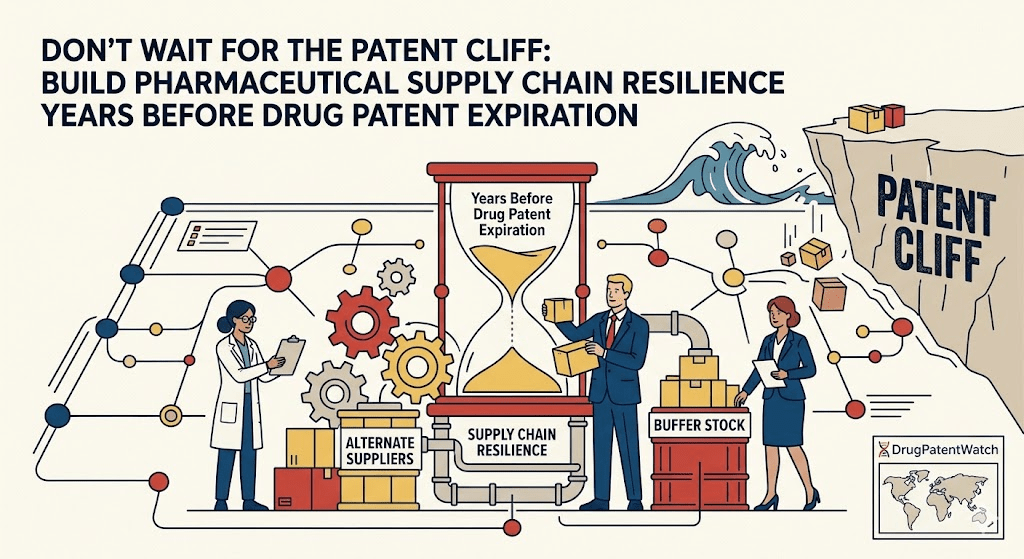
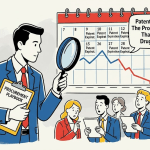
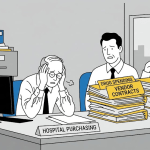
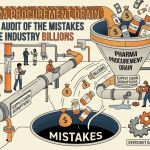
Every procurement director who has watched a blockbuster drug lose market exclusivity knows the same thing in hindsight: the scramble started too late. The Active Pharmaceutical Ingredient supplier was already committed to three other companies. The Contract Development and Manufacturing Organization (CDMO) had no available bioreactor capacity until the following year. The FDA inspection of the backup API facility came back with a Form 483. Meanwhile, the company that had been preparing for 36 months was shipping product on day one of generic entry and capturing formulary position that it would hold for the next decade.
That pattern repeats itself every time a major patent expires, and the coming years will produce more repetitions than anything the industry has seen before. Between 2025 and 2030, more than $300 billion in prescription drug revenues will lose patent exclusivity — roughly one-sixth of the industry’s annual revenue. Nearly 200 drugs will see their patents expire in this window, including about 70 blockbusters generating over $1 billion each in annual sales. The previous patent cliff, in 2016, eroded about $100 billion in brand-name sales. The current one is three times that size.
The numbers are not projections subject to interpretation. They are patent expiration dates filed with the USPTO, mapped to drugs, mapped to revenue. Supply chain leaders at generic manufacturers, hospital group purchasing organizations, specialty distributors, and branded companies managing lifecycle assets all have the same underlying problem: they are managing against a countdown that started years ago, and the preparation window is shorter than most organizations acknowledge.
This article is for the professionals who want to close that gap. It covers the mechanics of why supply chains fail at patent expiry, the structural pressures that make the 2025-2030 cliff distinctly more difficult than previous cycles, the specific preparation timelines that separate companies that capture market share from those that watch competitors do it, and the role of patent intelligence platforms like DrugPatentWatch in converting publicly available data into a forward-looking operational plan.
The Scale of What Is Coming
The pharmaceutical industry has always had patent cliffs. What makes the current cycle structurally different from prior periods is the simultaneous convergence of scale, complexity, and geopolitical pressure on the supply chain.
Revenue at Risk by Company and Molecule
The headline numbers are large enough to restructure entire companies. Among the most exposed are Merck and Pfizer, whose portfolios include several blockbuster small-molecule drugs reaching loss of exclusivity. For Bristol Myers Squibb, the stakes are particularly high. Eliquis, together with the company’s immuno-oncology drug Opdivo, accounts for roughly half of BMS’s total earnings. As both drugs approach the end of their exclusivity, the company faces what analysts describe as the largest growth gap among its large-cap pharmaceutical peers, estimated at approximately $38 billion in future at-risk revenue.
The specific drug-level data tells the operational story. The top 20 drugs heading for the patent cliff accounted for a combined $176.4 billion in sales in a recent reporting year — 75% of the $236 billion in annual sales set to disappear with the loss of exclusivity. Among the specific drugs facing expiry: Merck’s Januvia (sitagliptin, $2.255 billion); Pfizer’s Xeljanz (tofacitinib, $1.618 billion); Merck’s Janumet and Janumet XR (sitagliptin and metformin hydrochloride, $1.433 billion) in 2026; Pfizer’s Ibrance (palbociclib, $6.393 billion) in 2027; and Amgen and Pfizer’s Enbrel (etanercept, $5.386 billion) in 2028.
Then there is Keytruda. Keytruda (pembrolizumab) is the world’s best-selling oncology drug. Its core composition-of-matter patent in the United States is expected to expire in 2028 — an event that places more than $25 billion in annual revenue directly in the path of biosimilar competition. No single patent expiry in the history of oncology pharmacology carries a comparable revenue figure. Multiple biosimilar development programs are already underway. Regulatory submissions to the FDA could occur as early as 2026 or 2027. That means the supply chain preparation for the post-2028 pembrolizumab market is not a future problem. It is a current operational task.
By 2026, eight of the 13 largest pharmaceutical firms, representing 55% of global market value, could see 30% or more of their revenue jeopardized, with losses ranging from $6 billion to $38 billion per company. That figure contextualizes the supply chain problem. When a company faces a $20 billion revenue reduction over three years, the instinct is to solve it through M&A, pipeline acceleration, and investor relations. Supply chain resilience rarely appears in the first three slides of the board presentation, even though a failure to prepare the supply chain is often what determines whether the company captures meaningful generic revenue to offset the brand loss — or cedes that market to faster-moving competitors.
Biologics Make It Harder
Previous patent cliffs were primarily small-molecule events. A molecule like sitagliptin or tofacitinib has a defined chemical structure. Once the composition-of-matter patent expires, a qualified manufacturer can produce a chemically equivalent tablet using a reverse-engineered synthesis route. The regulatory pathway — the Abbreviated New Drug Application (ANDA) — requires bioequivalence data, chemistry and manufacturing controls, and a demonstrated ability to produce consistently at commercial scale. The whole program, from target identification to FDA approval, takes on average 3 to 4 years.
Biologics work differently. Biologic manufacturing is an exceptionally intricate process, encompassing multiple sophisticated steps from the initial genetic engineering of a cell to produce the desired biologic, through various purification stages, and culminating in extensive quality testing. Key stages typically include cell line development, fermentation or cell culture, purification (often involving chromatography), and final formulation. The profound complexity of these processes means that even minor alterations in manufacturing conditions can significantly impact the final product’s safety, purity, and potency. This underpins the fundamental principle that for biologics, ‘the product is the process.’
The supply chain implications are direct. A biosimilar manufacturer cannot simply synthesize a copy. They must develop an independent cell line — typically Chinese Hamster Ovary (CHO) cells — capable of expressing a protein with sufficiently similar structural and functional characteristics to the reference product. Because the biosimilar developer is using a different, independently developed cell line and manufacturing process, minor variations in the final, complex structure are inevitable. The regulatory standard is therefore not identity, but a rigorous demonstration of high similarity. That demonstration requires years of analytical work, clinical data, and regulatory interaction before a single commercial batch can be produced.
A wave of biologics is nearing expiration, with market share losses of 30% to 70% expected in the first year due to the growing presence of biosimilars in the U.S. Those are the market share losses for the originator. For the biosimilar manufacturer trying to capture that share, the question is whether the manufacturing infrastructure, cell line development work, and regulatory submissions are far enough advanced to be ready on the day the market opens. Companies that started their cell line programs in 2023 for a 2028 patent expiry are on a reasonable timeline. Companies that start in 2027 are building a business case for watching from the sidelines.
Why Supply Chains Fail at Patent Expiry
The failures are predictable. They follow the same pattern regardless of the molecule, the company size, or the therapeutic area. Understanding why they happen is the first step toward not repeating them.
The API Sourcing Bottleneck
The active pharmaceutical ingredient is the rate-limiting input for any generic or biosimilar launch. For small-molecule generics, most pharmaceutical procurement teams still treat API sourcing as a cost-per-kilogram exercise. That framing is expensive. The supplier who manufactures the drug substance controls more than a physical material — they hold the manufacturing know-how that, in many cases, constitutes the most defensible intellectual property in the entire drug’s commercial lifecycle.
The problem gets structural when you examine where API manufacturing actually happens. About 60% of APIs for U.S. prescription medications come from India, China, and the European Union. This makes the overall supply chain vulnerable to geopolitical events and various production issues. For generic drugs specifically, the concentration is even more pronounced. Essential APIs are overwhelmingly used in generic medicines (92%), meaning the APIs most critical for patient care are exposed not only to geographic concentration risks, but also to the supply chain vulnerabilities inherent in low-cost sourcing dynamics.
India leads in volume, supplying 52% of essential APIs used in oral solid products. But India’s own supply chain has a dependency that most procurement teams underweight. India depends on China for almost two-thirds of the APIs required to produce those medications, and for up to 90% of certain medications. This means a disruption in Chinese chemical manufacturing — whether from geopolitical friction, factory closure, or export restriction — can ripple through Indian generic manufacturers, then through U.S. formularies, then into hospital pharmacies, within weeks. The 2020 COVID lockdowns demonstrated exactly this cascade in real time.
When a major patent expires, every generic manufacturer targeting that molecule is simultaneously competing for the same API supply from a constrained set of qualified suppliers. Sourcing managers cannot simply react to market demand; they must anticipate it years in advance to secure KSM supply before competitors do. A company that begins API supplier qualification 18 months before anticipated launch — which is common practice — is competing for allocations against companies that started three years earlier. The earlier entrant locked in supply agreements, completed the technical qualification batches, and already has the supplier’s Drug Master File (DMF) referenced in its ANDA. The later entrant is in a queue.
The FDA Inspection Variable
API sourcing is not just a procurement decision. It is a regulatory one. Qualified API manufacturers must comply with FDA current Good Manufacturing Practice (cGMP) regulations as specified in 21 CFR Part 211 and the ICH Q7 guideline for Active Pharmaceutical Ingredients. Pre-approval inspections by the FDA are routine for any API manufacturer named in an ANDA, and a Form 483 observation or warning letter issued to an API supplier can delay or prevent ANDA approval regardless of the finished dosage form’s own compliance status.
This creates a dependency chain. A generic company may complete every aspect of its own ANDA correctly — formulation, bioequivalence, stability, packaging — and still miss its launch date because the API supplier it referenced received a warning letter from the FDA six months before approval was expected. The supply chain failure is not the generic company’s fault in any direct operational sense, but the consequence is identical: a competitor who qualified a second API supplier captures the formulary position, and recovering that position takes years, not months.
The DMF must be current: if the API manufacturer has changed its synthesis route, impurity profile, or manufacturing site since the DMF was filed, FDA will identify the discrepancy during review and issue a deficiency. For companies planning to launch on day one of patent expiry, any DMF-related deficiency that surfaces during the pre-approval inspection window is a commercial catastrophe. The mitigation is straightforward — qualify two API suppliers, both referenced in the ANDA, both with current DMFs, both with clean inspection histories — but it requires lead time that most companies do not build into their planning timelines.
CDMO Capacity Constraints
The finished dosage form manufacturing constraint operates similarly to the API constraint, but in a market that has been further tightened by the BIOSECURE Act and by biosimilar investment cycles.
The BIOSECURE Act, signed into law in December 2025, prohibits U.S. government agencies from contracting with companies that use biotechnology equipment or services from designated ‘biotechnology companies of concern.’ While no companies have been formally designated as of early 2026, the legislation was primarily targeted at Chinese CRO/CDMO companies, specifically WuXi AppTec and WuXi Biologics, which together serve a significant portion of the global biopharma outsourcing market.
WuXi AppTec alone is estimated to be involved in the production of a quarter of drugs used in the United States. In the short-to-medium term, there is likely to be a decline in CDMO capacity, which could push up prices, due to companies winding down contracts with WuXi ahead of 2032 and disruptions to operations at its U.S. plants. Replacing lost capacity cannot be done quickly given the long permitting and design process used in the pharmaceutical industry.
The practical consequence: the CDMO capacity market was already tight before the patent cliff. Now, companies migrating away from Chinese CDMOs due to BIOSECURE compliance are competing for the same Western CDMO slots as the generic and biosimilar manufacturers ramping up for the 2025-2030 wave of expirations. Total disclosed investment in CDMO capacity reached $24.86 billion in 2025, with 74% ($18.48 billion) flowing to the United States. Western CDMOs with available capacity — Lonza, Samsung Biologics, Catalent/Novo Holdings, Thermo Fisher — have seen valuation premiums as sponsors shift manufacturing away from Chinese suppliers.
A company that secures a CDMO manufacturing slot for 2028 biosimilar production in 2026 has an asset. A company that begins those conversations in 2027 is price-taking at the top of the market, if capacity is available at all.
Distribution Agreements and GPO Negotiations
The supply chain problem does not end at finished dosage form. Distribution access in the U.S. requires contracts with Cencora, Cardinal Health, and McKesson. These negotiations should begin 12 to 18 months before the anticipated launch date. The difference between a generic company that captures 70% of a genericized market in year one and one that captures 10% is almost always attributable to pre-launch preparation, not to anything that happens after the FDA grants approval.
Hospital group purchasing organizations and pharmacy benefit managers establish formulary position for generic substitution before the generic is on the market. A company without a distribution agreement in place cannot be listed. A company that is listed but cannot guarantee supply continuity — because its API supplier has a Warning Letter or its CDMO has a capacity gap — loses the formulary position to a competitor who can. The reputational cost persists well beyond the initial shortage event.
The Hatch-Waxman Framework: Competitive Intelligence Built Into Law
Understanding patent expiry timelines requires understanding the legal architecture within which those timelines operate. The Drug Price Competition and Patent Term Restoration Act of 1984 — universally called Hatch-Waxman — created the system that governs small-molecule generic entry in the U.S. It contains structural features that supply chain professionals need to understand not because they need to practice patent law, but because those features determine the competitive timeline.
The Orange Book and Patent Linkage
When a branded drug is approved by the FDA, the innovator company lists its associated patents in a publication called the Orange Book. Generic applicants filing an ANDA must address each listed patent, choosing among four possible certifications. The most commercially significant is the Paragraph IV certification, in which the generic company asserts that a listed patent is either invalid or will not be infringed by its product.
Filing a Paragraph IV certification constitutes an act of patent infringement under Hatch-Waxman, which triggers the innovator’s right to sue within 45 days. If the innovator sues, the FDA is stayed from approving the ANDA for 30 months — the so-called 30-month stay — regardless of the underlying merits of the patent claim. This is the mechanism by which branded companies defend market exclusivity even when composition-of-matter patents have expired, by listing additional patents covering formulation, dosage form, or method of use.
For supply chain planners, the 30-month stay is not an abstract legal concept. It determines when FDA approval can issue, which determines when supply chain readiness must be achieved, which determines when API qualification and CDMO capacity need to be locked. An at-risk launch occurs when a generic drug manufacturer begins selling its product after receiving final FDA approval but before all patent litigation with the brand-name manufacturer has been definitively resolved. This places the launch decision squarely in the hands of the generic company’s leadership. The launch is considered ‘at-risk’ because if the company ultimately loses the patent litigation, it will be liable for massive damages for patent infringement for every pill it sold during the at-risk period.
The decision to launch at risk is a supply chain decision as much as a legal one. A company that has done the supply chain preparation — qualified APIs, CDMO slots reserved, distribution agreements in place — can make the at-risk launch call on a defined timeline. A company that is still sourcing API cannot launch at-risk even if its legal team recommends it.
The 180-Day Exclusivity Window
Hatch-Waxman created the most valuable prize in generic drug strategy: 180-day marketing exclusivity for the first ANDA filer to successfully challenge a patent with a Paragraph IV certification. During this six-month window, no other generic can enter the market, allowing the first-filer to capture significant market share at a relatively high price. This ‘bounty’ is the central incentive that drives generics to litigate rather than simply wait for patents to expire.
The financial magnitude of this window explains both the litigation intensity and the supply chain urgency. Up to 80% of a generic company’s potential profit for any one product is made during the exclusivity period. For a drug with $2 billion in annual branded sales, the first-filer’s 180-day exclusivity window can generate revenues that exceed the total cost of the litigation and ANDA development program, sometimes by a large multiple. The supply chain constraint during this window is not just about capturing revenue — it is about preventing forfeiture of exclusivity.
If the first applicant forfeits its exclusivity, the 180-day period is extinguished. At that point, the FDA can approve the ANDA of any subsequent filer that is otherwise ready for approval. Forfeiture provisions in Hatch-Waxman include failure to market the product within 75 days of final FDA approval, failure to obtain final approval within 30 months of the first ANDA filing, and other specific triggers. A company that holds first-filer status but cannot supply product because its API supplier has a compliance problem forfeits its exclusivity — and the market share it would have captured goes to the next filer in line.
This is not a theoretical concern. The 180-day first-filer exclusivity transformed generic strategy from manufacturing-centric to litigation-centric. The prize is large enough that losing a Paragraph IV case on a major drug is often worth the attempt — a 76% first-filer win rate confirms the strategy’s positive expected value. The supply chain must be equally aggressive. Winning the litigation but losing the commercial opportunity to supply constraints is a failure mode that the 76% win rate statistic does not capture.
New Chemical Entity Exclusivity and the ANDA Filing Window
Hatch-Waxman also grants five years of New Chemical Entity (NCE) exclusivity to drugs approved with an entirely new active ingredient. During the first four years of this exclusivity, no ANDA can be filed at all. Between years four and five, an ANDA with a Paragraph IV certification can be submitted, but FDA approval cannot be granted until the five-year period expires. This creates an absolute, non-negotiable floor on generic entry regardless of the patent status of the drug.
For supply chain planning, the NCE exclusivity clock provides a precise minimum timeline. A company targeting a drug currently in year two of NCE exclusivity knows it cannot obtain ANDA approval for at least three more years. That three-year window is the preparation window for API qualification, process development, and CDMO capacity negotiation — not the post-approval scramble that characterizes reactive supply chain management.
Building the Preparation Timeline: What Happens When
The abstract case for early preparation is easy to make. The operational question is more specific: what exactly should be happening at each point in the preparation window, and how do you prioritize among the dozens of molecules that may be on a company’s target list?
Five or More Years Before Patent Expiry: Intelligence and Candidate Selection
The work that happens five-plus years before a patent expiry determines everything downstream. At this distance, the supply chain work is primarily intelligence gathering and candidate prioritization.
The first task is accurate patent mapping. The nominal patent expiration date — the date printed on the patent, adjusted for any Patent Term Extension under Hatch-Waxman — is only the starting point. A drug may be protected by a composition-of-matter patent expiring in year five and method-of-use patents that extend into years eight or nine. Formulation patents and pediatric exclusivity extensions can push the effective competition date substantially beyond the nominal expiry. A company that builds its supply chain preparation around the wrong date — the nominal expiry rather than the effective competition date — wastes preparation resources.
Platforms such as DrugPatentWatch aggregate the Orange Book’s foundational data and enrich it with patent litigation records, ANDA filing data, API sourcing information, international patent databases, and drug pricing data to produce a decision-support environment for generic portfolio strategy. The core analytical capability of these platforms is the ability to synthesize disparate data streams into a coherent view of a drug’s competitive timeline. A strategist querying a single product can obtain the full Orange Book patent and exclusivity listing, a count of existing ANDA filers with their Paragraph IV certification dates, the status of any associated litigation, the identity of the current first-filer for 180-day exclusivity purposes, international patent expiration dates across major markets, and the names of qualified API manufacturers.
This is the capability that separates reactive from proactive supply chain planning. Knowing that sitagliptin’s patents expired in 2026 is public information. Knowing that 14 companies had filed ANDAs with Paragraph IV certifications, that the primary composition-of-matter patent was held invalid in a 2019 decision, and that three specific API manufacturers had current, FDA-accepted DMFs on file — that is operational intelligence. It tells a supply chain planner whether the target molecule is worth pursuing, which API suppliers to approach, and how crowded the eventual generic market will be.
At the five-year mark, the candidate selection decision should be made using a framework that evaluates four variables in combination: the revenue size of the branded market, the complexity of the patent landscape, the number of competing ANDA filers, and the availability of qualified API supply. A high-revenue drug with a simple patent landscape and two available API suppliers is a better target than a high-revenue drug with a thicket of method-of-use patents and a single API manufacturer who is already committed to four other generic applicants.
Three to Four Years Before Patent Expiry: Technical Development
With the candidate selected and the patent landscape mapped, the technical development work begins. For small-molecule generics, this window covers formulation development, bioequivalence study design and execution, process validation batches, and the CMC package that will go into the ANDA.
API qualification runs in parallel. The first step is identifying which manufacturers have existing, acceptable DMFs on file with the FDA for the specific molecule. Where no DMF exists — which can happen with newer molecules or API manufacturers in emerging markets — the lead time for DMF establishment extends the ANDA timeline by a year or more. A DMF is not filed as part of the ANDA itself; it is a separate confidential submission that the API manufacturer files with the FDA, and the ANDA applicant references it by obtaining a Letter of Authorization from the DMF holder. The generic drug applicant references the DMF in its ANDA by submitting a Letter of Authorization from the DMF holder, which permits FDA to review the confidential DMF data in connection with the ANDA review.
For biosimilars targeting the 2028 onwards wave of biologic expirations, this window — 2024 to 2025 for a 2028 target — is when cell line development programs need to be underway. The cell line is the foundation of the entire biosimilar program. Key stages typically include cell line development, fermentation or cell culture, purification (often involving chromatography), and final formulation. Companies that are not yet in active cell line development programs for their 2028 targets are running behind the timeline that first-to-market biosimilar launches require.
The CDMO selection decision also belongs in this window. For small molecules, the finished dosage form manufacturer must be identified early enough to complete process transfer, equipment qualification, and at least three validation batches before the pre-approval inspection. For biologics, the bioreactor qualification timeline at a CDMO can run 18 to 24 months before commercial-scale batches are available. A company that waits until year two before launch to begin CDMO negotiations may find that the slots they need are already committed to earlier movers.
Two Years Before Patent Expiry: ANDA Submission and Regulatory Execution
For most generic drug programs, ANDA submission happens in the 18-to-30-month window before anticipated approval. The strategic timing of submission depends on the Paragraph IV certification decision — whether to challenge active patents or wait for them to expire.
For drugs where the primary patent has already been invalidated in litigation, or where only weak secondary patents remain, filing a Paragraph III certification (waiting for expiry) eliminates litigation risk but means the ANDA cannot be approved until the patent expires. The supply chain preparation proceeds on the calendar expiry date as the anchor.
For drugs where patents are vulnerable to challenge, the Paragraph IV certification strategy requires the ANDA to be technically complete at the time of filing. A ‘substantially complete’ ANDA is a prerequisite for securing first-to-file status. Rushing a Paragraph IV challenge with a deficient application can lead to a ‘Refuse to Receive’ letter and the loss of 180-day exclusivity. This creates a precise technical dependency: the API qualification, formulation development, bioequivalence data, and process validation batches must all be complete before the ANDA can be submitted with a Paragraph IV certification that secures the first-filer position.
CMC deficiencies are the leading cause of first-cycle Complete Response Letters (CRLs), which delay approval by a year or more. Facility inspection readiness at the time of ANDA filing — not at the time of the pre-approval inspection — is the standard FDA expects. API DMF currency and supply chain concentration risk are active review areas. ANDAs citing DMFs with unresolved discrepancies or facilities with prior inspection problems will receive PAI-related deficiencies.
The implication for supply chain planning is that the API supplier’s regulatory status is not just a sourcing concern — it is a direct determinant of approval timing. Running a periodic audit of each API supplier’s FDA inspection history, DMF status, and any pending regulatory actions is a supply chain function with regulatory consequences. It belongs on the same dashboard as cost-per-kilogram and lead time.
One Year Before Patent Expiry: Commercial Preparation
In the final 12 months before anticipated approval, the work shifts from technical to commercial. Distribution agreements, formulary negotiations with GPOs and PBMs, pricing strategy, and inventory buildup all belong in this window.
A company that holds a Tentative Approval for a drug whose composition-of-matter patent expires on a fixed date and plans to launch the day that patent expires needs to have its Request for Final Approval on file no later than three months before that date, and earlier if any changes have accumulated since the Tentative Approval. If the request arrives late, the FDA’s review extends past the patent expiry date, the company cannot launch on day one, and a competitor that filed its request on time captures first-mover advantage. This is not a hypothetical scenario; it happens in competitive generic launches repeatedly because launch teams focus on manufacturing, supply chain, and commercial preparation while underweighting the regulatory countdown.
Inventory buildup is a specific operational challenge in the final pre-launch window. Under the Bolar Exemption (35 U.S.C. § 271(e)(1)), generic companies can manufacture product for FDA submission purposes while brand patents remain in force. But commercial-scale production for inventory buildup before approval requires careful legal review, particularly if any patents remain listed in the Orange Book and litigation is pending. A company that arrives at approval with six weeks of inventory on hand is in a fundamentally different commercial position than one that can ship the week approval issues.
The BIOSECURE Act: A Supply Chain Forcing Function
The supply chain pressures of the patent cliff intersect with a regulatory development that will restructure pharmaceutical outsourcing relationships for the rest of the decade: the BIOSECURE Act, signed into law on December 18, 2025, as part of the Fiscal Year 2026 National Defense Authorization Act.
What the Law Does
The BIOSECURE Act prohibits the federal government from procuring or obtaining any biotechnology equipment or service from a biotechnology company of concern, or entering into, extending, or renewing a contract with any entity that uses biotechnology equipment or services from such a company in the performance of a federal contract.
The BIOSECURE Act prohibitions may not take effect until 2027, given the required OMB list publication by December 2026, subsequent implementing guidance, FAR revision, and then 60 or 90-day effective dates depending on the category of company. Companies are nevertheless advised to consider these prohibitions now, particularly if they are considering new contracts.
The practical supply chain consequences are already arriving ahead of the legal effective date. Some of the smaller biotechs and biopharma firms have communicated to investors that with the BIOSECURE Act they are actually moving their supply chain out of China. Companies are committing to dual-sourcing projects with U.S.-based CDMOs to bring external manufacturing stateside.
The Capacity Transition Problem
The transition problem is structural, not just contractual. Reshoring is costly: U.S. manufacturing runs 30 to 50% higher than in China, India, or Mexico. A company that built its cost model for a generic launch on Chinese CDMO pricing needs to recalculate margins against Western CDMO rates before committing to a product that may be less profitable than projected.
The capacity constraint compounds the cost issue. Replacing lost capacity cannot be done quickly given the long permitting and design process used in the pharmaceutical industry. Shifting supply chains for drugs would often trigger the FDA’s qualification and validation process, which takes a long time. A CDMO that builds a new manufacturing suite in 2026 cannot validate it for commercial production until 2028 at the earliest. Companies that need capacity in 2027 for a 2028 launch are competing for infrastructure that does not yet exist at the required scale.
The interaction with the patent cliff is the central supply chain challenge of the next three years. Demand for qualified CDMO capacity in Western geographies is rising simultaneously from three independent drivers: BIOSECURE-related migration away from Chinese suppliers; biosimilar programs for the 2028-2030 wave of biologic expirations; and generic programs for the 2026-2028 wave of small-molecule expirations. Supply is constrained and expanding slowly. Companies that locked in CDMO capacity agreements in 2024 and 2025 have a structural advantage over companies making those decisions today.
What Patent Intelligence Actually Does for Supply Chain Teams
The gap between how most supply chain teams use patent data and how the best ones use it is large. The typical use is passive: legal monitors Orange Book filings, flags upcoming expirations, and informs procurement when it is time to start sourcing. The advanced use treats patent data as a forward-looking signal about where supply and demand for API and manufacturing capacity will concentrate, and acts on that signal well ahead of when the market becomes competitive.
“Companies that use patent data for trend forecasting are 2.3 times more likely to be market leaders in their respective fields.” — McKinsey & Company [70]
From Orange Book to Competitive Supply Model
The professionals who close this gap — who build or access the intelligence layer that transforms raw Orange Book data into a forward-looking model of competitive supply availability — gain an advantage that is directly measurable in procurement economics, formulary management outcomes, and supply disruption prevention. The framework is not inaccessible. The underlying data is largely public. The analytical structure is well-defined. The tools to assemble and organize the data — platforms like DrugPatentWatch that integrate FDA exclusivity records, ANDA filing history, Paragraph IV litigation data, and patent term information in a pharmaceutical-specific structure — are available. What most organizations lack is not access to the raw data but the deliberate decision to build the analytical workflow that extracts actionable intelligence from it.
The workflow starts with three data streams that any supply chain team can access: the Orange Book, the FDA’s ANDA database, and publicly available Paragraph IV certification notices. These three sources, combined, tell a procurement team how many companies are targeting a specific molecule, at what stage their applications are, whether any have first-filer status, and what the likely competitive supply timeline looks like from day one of patent expiry onward.
A molecule with twelve ANDA filers, three of whom have first-filer Paragraph IV certifications and are awaiting litigation outcomes, will look very different at patent expiry than a molecule with two ANDA filers and no active Paragraph IV challenges. The supply pricing, the volume allocation dynamics, and the formulary substitution timeline all differ. A hospital GPO that builds its contract strategy on the assumption of rapid price erosion for the twelve-filer molecule — and holds existing inventory of the branded product accordingly — makes a better economic decision than one that treats all patent expiries as equivalent events.
API Supplier Intelligence
These platforms provide comprehensive, real-time databases that track patent expiration dates, market exclusivities, and patent litigation, including Paragraph IV challenges under the Hatch-Waxman Act. By leveraging this intelligence, generic companies can proactively identify high-value opportunities, assess the competitive landscape for a given drug, and make informed decisions about which products to add to their development pipeline. This data-driven approach is crucial for aligning R&D and API sourcing strategies with the most lucrative and strategically sound market entry points, ensuring that resources are focused on targets with the highest probability of commercial success.
For procurement specifically, DrugPatentWatch’s integration of DMF data with patent expiry information answers a question that most procurement teams address manually and incompletely: which API suppliers are positioned to supply which molecules at which points in time, and what is their current regulatory standing with the FDA? A supplier with an import alert or a pending warning letter is not a reliable source for an ANDA submission, regardless of their price per kilogram. Identifying that regulatory status before locking in an API sourcing agreement saves the procurement team from a supply chain disruption that surfaces at the worst possible moment — during FDA pre-approval inspection.
Paragraph IV Monitoring as Supply Chain Signal
The competitive intelligence use case for Paragraph IV monitoring extends beyond first-filer strategy. For supply chain planners, a Paragraph IV notification filed against a currently marketed branded drug is a signal that generic entry may accelerate beyond the nominal patent expiry date. Monitoring patent challenges (like Paragraph IV filings) can signal an accelerated timeline for generic entry and a potential need for new manufacturing partners.
A hospital system or pharmacy benefit manager watching Eliquis in 2022 had access to the Paragraph IV notifications that signaled multiple generic competitors were actively challenging the patent estate. The supply chain response — beginning formulary transition planning, building inventory position models, and preparing substitution protocols — required 18 to 24 months of lead time. Organizations that used Paragraph IV monitoring as an early warning system were positioned. Those that waited for FDA approval announcements were reacting.
Biosimilar-Specific Supply Chain Challenges
The biologic supply chain deserves separate treatment because the lead times, the technical complexity, and the competitive dynamics differ substantially from small-molecule generics.
Cell Line to Commercial: The Minimum Timeline
Biosimilar development is a multi-year scientific program before any manufacturing capacity can be considered. The sequence runs from target biologic selection and reference product characterization, through cell line development and screening, to upstream process development, downstream purification development, analytical similarity assessment, formulation development, and clinical pharmacology studies. Biosimilars typically have a shorter timeline for approval (eight years) compared to 12 years for innovator drugs, and the development cost can be 10 to 20% of the innovator drug. Even at eight years from inception to approval, a company that decides in 2026 to pursue a pembrolizumab biosimilar for the 2028 market is already too late to be first to market.
The companies that will capture the Keytruda biosimilar opportunity at or near the 2028 patent expiry started their cell line development programs in 2020 or earlier. Samsung Bioepis, Amgen, and several Indian manufacturers are conducting clinical programs to prepare for launches post-2028. Their supply chains are not being built — they are being validated and scaled. A new entrant to the pembrolizumab biosimilar market in 2026 is building a program for 2031 at the earliest.
Cold Chain and Distribution Complexity
Biologic drugs impose cold chain requirements that small-molecule generics do not. A monoclonal antibody like pembrolizumab or adalimumab must be maintained within a defined temperature range from bioreactor to patient. Biosimilars are fragile. They require strict cold chain management, meaning they must be kept at precise temperatures from the moment they leave the bioreactor until they reach the patient. A single failure in a refrigerator or a rough ride in a delivery truck can cause the proteins to unfold or clump, rendering the entire batch useless.
The distribution infrastructure for biologic products — specialized cold chain logistics, controlled-temperature warehousing, temperature-monitored transportation — is a separate qualification exercise from the manufacturing supply chain. A biosimilar company that has solved the manufacturing problem but has not qualified its cold chain distribution network cannot commercially launch without risking product integrity failures that would be catastrophic to both patient safety and the company’s FDA standing.
Reference Product Procurement
There is an often-overlooked supply chain dependency in biosimilar development: the reference product itself. To conduct the analytical similarity and clinical pharmacology studies required for regulatory approval, the biosimilar developer must obtain sufficient quantities of the originator product from multiple lots manufactured over time. This procurement is necessary to characterize the natural batch-to-batch variability of the reference product and to establish the similarity margins used to assess the biosimilar.
For a drug like Keytruda with annual sales exceeding $25 billion, obtaining reference product is not commercially difficult. For smaller biologics with limited distribution channels, reference product procurement can be a genuine supply chain constraint on the biosimilar program timeline. Companies that build reference product procurement into their program planning from the outset avoid the regulatory consequence of analytical packages built on an insufficient number of reference lots.
Case Geometry: Reading the 2026-2030 Pipeline
The abstract principles become concrete when applied to specific molecules in the current pipeline. Each presents a distinct supply chain preparation challenge.
Januvia and Janumet (2026): The Crowded Small-Molecule Case
Merck’s sitagliptin franchise — Januvia ($2.255 billion) and Janumet ($1.433 billion) — reached patent expiry in 2026. These are oral solid dosage forms with well-understood synthetic chemistry. Multiple ANDA filers had been preparing for years, and qualified API suppliers had established DMFs for sitagliptin well in advance of the expiry date. Once generics enter, price erosion is usually steep, and payers move quickly to favor lower-cost versions.
The supply chain lesson from the sitagliptin market is about timing and volume commitment. When many generic competitors enter simultaneously, early price erosion is severe. A manufacturer that locked in API supply at a negotiated price two years before launch can maintain margin through the initial price-competitive period. A manufacturer that sourced API reactively after launch is paying spot market prices in a commodity market. The preparation window translates directly into margin protection.
Xeljanz (2026): The Method-of-Use Complexity Case
Pfizer’s tofacitinib (Xeljanz, $1.618 billion) presents a more complex patent landscape than sitagliptin. While the composition-of-matter patent expired in 2026, Pfizer maintained method-of-use patents covering specific indications that could create “skinny label” complexity for generic entrants. A “skinny label” (Section viii carve-out) is a generic drug label that omits patent-protected indications to allow for early market entry. It poses a procurement risk because recent court rulings (e.g., GSK v. Teva) suggest that payers or distributors could be liable for “induced infringement” if they encourage the use of the generic for the patented indication through formulary placement or marketing materials.
For supply chain planners at hospital GPOs and PBMs, the skinny label dynamic means that a generic approved on a carve-out label may not be fully substitutable for all branded prescriptions on day one. Formulary substitution protocols need to distinguish between indications, which creates procurement complexity that a simple “branded to generic” transition planning model does not capture. Organizations that understood this distinction prepared differentiated substitution protocols in advance. Those that did not experienced formulary compliance problems and legal exposure that post-dated the actual patent expiry.
Ibrance (2027): The CDK4/6 Inhibitor Opportunity
Pfizer’s palbociclib (Ibrance, $6.393 billion) faces patent expiry in 2027. The CDK4/6 inhibitor class has become standard of care in hormone receptor-positive breast cancer, meaning the patient population is large, the prescription volume is high, and the payer interest in a generic-priced alternative is intense. The API chemistry for palbociclib is complex relative to first-generation oral oncologics, requiring a qualified manufacturer with specific synthetic capabilities.
By the time dulaglutide faces full competitive exposure, it will no longer represent the leading edge of GLP-1 innovation. The likely dynamic is not disruption at the top of the category, but stratification within it. The same dynamic applies to palbociclib: the CDK4/6 inhibitor market includes ribociclib and abemaciclib, both still under patent. A generic palbociclib enters a market where prescribers have branded alternatives. The supply chain preparation needs to account for a market-share capture trajectory that is competitive not just against other generic palbociclib filers, but against the branded CDK4/6 alternatives that payers may prefer to maintain in formulary even after generic entry.
Keytruda (2028): The Largest Single-Drug Supply Chain Event in Oncology History
The pembrolizumab patent expiry in 2028 requires more advance preparation than any biologic before it. Keytruda’s 2028 patent cliff puts more than $25 billion in annual oncology revenue at risk. The scale means that the biosimilar supply chain must be designed for commercial volumes that are, in some therapeutic settings, orders of magnitude larger than any previous biologic genericization event.
Regulatory submissions to the FDA could occur as early as 2026 or 2027, allowing for FDA review and potentially approvals in 2028 or shortly after. Companies with regulatory submissions in 2026 are competing for first-to-market position. Their cell line programs, upstream process development, CDMO capacity agreements, and clinical pharmacology packages are already substantially complete. The supply chain window for first-to-market participation in the pembrolizumab biosimilar market has effectively closed for new entrants.
For payers and hospital systems, the 2028 pembrolizumab biosimilar entry creates a different kind of supply chain planning requirement. Formulary transition from innovator pembrolizumab to a biosimilar requires clinical protocols, prescriber education, and patient communication well in advance of the transition date. Innovators are developing subcutaneous formulations to defend market positions against biosimilar competition, affecting payer and provider decisions. Merck has a subcutaneous pembrolizumab formulation with patent protection extending substantially beyond 2028 — potentially to 2039 for the subcutaneous formulation patents. A payer that transitions its formulary from intravenous pembrolizumab to a biosimilar in 2028 may face pressure to maintain coverage for the subcutaneous brand for patients who have been converted, a complexity that requires advance planning and clinical guidance.
The Organizational Infrastructure for Proactive Supply Chain Management
The tactical preparation steps — API qualification, CDMO capacity, distribution agreements — are executable only within an organizational structure that treats patent intelligence as an operational input rather than a legal function. Most pharmaceutical companies have not built this structure. The ones that have created measurable competitive advantages across multiple patent expiry cycles.
The Patent-to-Procurement Workflow
The effective workflow begins with patent monitoring that is broader than most legal teams run. Standard Orange Book monitoring tracks patents listed by the brand company for drugs in the company’s existing portfolio. The proactive supply chain approach tracks the entire universe of molecules approaching patent expiry across all therapeutic areas relevant to the company’s generic portfolio strategy, including patents that are not yet listed in the Orange Book because the drug is still under NCE exclusivity.
Platforms like DrugPatentWatch provide the data layer required to convert patent monitoring from a legal function into a strategic planning input. The specific use case for supply chain teams is not the legal analysis of patent validity — that belongs to IP counsel — but the operational translation of patent timelines into preparation start dates. A drug whose NCE exclusivity expires in 18 months has a defined window within which Paragraph IV filings can first occur, which defines when the 30-month stay clock could start, which defines the earliest possible generic entry date, which defines the backward-looking preparation timeline for API qualification and CDMO capacity.
The integration between the patent intelligence function and the procurement function requires organizational design. In companies where IP and procurement operate in separate silos with no shared planning horizon, the supply chain preparation consistently starts too late. In companies where the patent landscape analysis is shared with procurement leadership as part of the annual portfolio planning cycle, preparation begins at the right time. The organizational change is not complex, but it requires deliberate decision-making at the leadership level to establish the shared workflow.
Supplier Qualification at Scale
Running simultaneous API qualification programs for multiple molecules across a multi-year portfolio pipeline requires a qualification infrastructure that many companies have not built. The typical approach — qualifying a supplier for one molecule, completing the qualification, then starting the next — creates a bottleneck at the quality function that makes multi-molecule preparation programs sequentially longer than they need to be.
The alternative is a platform qualification approach, in which a supplier is qualified across a range of synthetic capabilities and then referenced for multiple molecules within that capability range. This approach requires more front-end investment in the supplier relationship and the quality audit process, but it dramatically reduces the per-molecule qualification time for the second and third molecules sourced from the same supplier.
The DMF structure supports this approach. A Type II API DMF covers the manufacturing process, synthetic route, controls, and facilities for a specific API at a specific facility. A supplier with accepted DMFs for 20 molecules has a qualification track record that reduces the due diligence burden for the 21st. An experienced generic company builds its preferred supplier list specifically to include manufacturers with broad DMF portfolios, clean FDA inspection histories, and demonstrated process stability across multiple molecules.
Safety Stock and Inventory Strategy
The supply chain resilience case is not only about first-to-market launch timing. It is equally about avoiding the supply disruptions that cause drug shortages — a problem that affects patients in ways that no patent expiry strategy can ignore.
The generic pharmaceutical industry is fairly unique relative to other types of manufacturing. Supply chains are rigid due to the necessity of regulatory review of changes and the specialization of manufacturing processes. If disruptions occur, the ability of these supply chains to adapt is very limited, and shortages can quickly arise.
Four systemic drivers underlie these shortages: low pricing that discourages investment, geographic concentration of manufacturing (particularly in China and India), process complexity, and quality failures. Together, they create a fragile, domino-like system with little margin for disruption.
Safety stock policy in generic pharmaceuticals has historically been minimal. Thin margins discourage inventory holding, and the regulatory barriers to rapid supplier changes mean that safety stock is the primary buffer against disruption. A company that holds two months of API safety stock can sustain a supplier disruption while the qualification of a backup supplier proceeds. A company that holds two weeks of safety stock has two weeks to find a solution before product shortages reach hospital pharmacies.
The calculation changes when the supply chain disruption intersects with a major patent expiry. A shortage of a newly genericized drug during the 180-day exclusivity window is not just a patient care problem — it is a forfeiture trigger. If the first-filer cannot supply the market because of an API shortage, competing ANDA holders may receive accelerated approval, and the commercial value of the exclusivity window is diluted or eliminated. Building adequate safety stock of the API before the anticipated launch date is not a working capital inefficiency; it is insurance against the most consequential supply chain failure scenario available.
What Branded Companies Should Do Differently
The supply chain discussion in the context of patent cliffs is not exclusively about generic manufacturers. Branded companies facing loss of exclusivity have their own supply chain decisions to make, and many of them are made poorly for the same reasons: planning horizons that are too short and patent intelligence integration that is too shallow.
Authorized Generics
An authorized generic is a branded drug that the innovator markets as a generic — under the same ANDA as the branded NDA, using the branded manufacturing infrastructure — during the period after patent expiry or, more strategically, during the first-filer’s 180-day exclusivity window. Launching an authorized generic during the 180-day window means the first-filer’s exclusivity does not prevent competition from the branded company itself. The authorized generic captures generic-priced volume that would otherwise go entirely to the challenger, reducing but not eliminating the first-filer’s commercial advantage.
The supply chain decision for an authorized generic is about capacity planning. The branded manufacturer must be able to produce both the branded product (for patients with remaining refills or payers who have not yet switched formulary) and the authorized generic (for formulary positions that have transitioned). That requires production capacity allocation decisions made at least 12 months before the expiry date, which in turn requires API supply commitments that account for the total volume of both products simultaneously.
Lifecycle Management and Reformulation
A big pharma company gradually increased its whole acquisition cost (WAC) of its nerve pain medication starting as early as three years before loss of exclusivity in anticipation of the looming revenue cliff. Similarly, another big pharma company raised the price of its multiple myeloma drug by more than 50% between 2016 and 2022 to maximize profits before the product’s loss of exclusivity in 2022. In the case of multiple generic entrants, manufacturers’ increases of WAC can be more significant as brands expect a steeper revenue cliff.
This price maximization strategy is separate from, but interacts with, lifecycle management through reformulation. A brand that converts its patient base from an immediate-release tablet to an extended-release formulation before the immediate-release patent expires gains additional exclusivity on the extended-release form. The supply chain requirements for two simultaneous products — managing down inventory of the immediate-release while ramping up the extended-release — are complex and require planning that starts before the reformulation launch, not after.
The most common tactics are formulation switching (developing a new dosage form, typically from an immediate-release tablet to an extended-release capsule, and actively promoting the new formulation to prescribers and pharmacy benefit managers). The supply chain corollary is that the extended-release formulation may require a different API particle size distribution, a different API supplier, or manufacturing equipment that the immediate-release production line does not have. These qualification requirements start from the same place as a generic program — with the API DMF — and require the same lead times.
The Hospital System and GPO Perspective
The supply chain resilience discussion focuses heavily on manufacturers, but hospital systems and group purchasing organizations face their own preparation requirements at each patent expiry event. Their preparation is less about qualifying suppliers and more about formulary transition planning, contracting strategy, and inventory management.
Formulary Transition Planning
A hospital pharmacy that transitions 200 patients from branded apixaban to generic apixaban on the day the first generic enters the market is not doing formulary management — it is doing emergency substitution. The actual formulary transition process requires physician communication, pharmacy benefit reauthorization updates, electronic health record order set revisions, and patient notification. None of these steps happens in a day.
The organizations that execute formulary transitions smoothly at patent expiry start the clinical protocol work 12 to 18 months before the anticipated generic entry date. They use patent intelligence data — specifically, Paragraph IV filing counts and litigation status — to predict the likely number of generic entrants and the expected price point on day one. That pricing model drives the contract negotiation strategy with generic manufacturers and the GPO bid process that determines which generic supplier gets the preferred formulary position.
The interaction between the 180-day exclusivity window and GPO contracting deserves specific attention. During the 180-day period, only the first-filer’s generic is available. Formulary substitution at the first-filer’s generic price may still represent significant savings relative to the branded price, but it will not represent the lowest achievable price, which arrives after multiple generic entrants produce commodity pricing. Hospital systems that understand this dynamic — and that build their formulary transition in two phases, a first-phase transition to the 180-day generic and a second-phase renegotiation when multi-source pricing is available — capture more of the available savings than those who wait for “the” generic to arrive before beginning the transition process.
Drug Shortage Risk Management
Hospital systems bear the direct consequences of drug shortages regardless of their cause. The supply of both generic and branded drugs may be interrupted by events in any of three key categories: market-wide supply constraints, product-specific issues, and reimbursement and market access limitations. The substantial geographic concentration of API manufacturing globally heightens geopolitical supply risk, in particular regions such as China, India, and Eastern Europe.
The patent cliff creates a specific shortage risk at the moment of generic entry, not just in the years that follow. When a patent expires and multiple generic manufacturers enter the market simultaneously, each is ramping up production from a standing start. Demand from hospitals and retail pharmacies shifts rapidly from branded to generic. The generic manufacturers’ production schedules may not keep pace with the immediate demand surge, particularly if API supply was not fully contracted in advance. The result is a shortage of the newly genericized product even though, paradoxically, more supply exists than at any previous point.
Hospital systems that maintain 30-to-60-day inventory buffers of high-risk generic molecules — specifically those where the patent expiry is imminent and the number of qualified suppliers is small — reduce their exposure to this launch-period shortage pattern. The USP Medicine Supply Map, which tracks upstream supply chains for approved medicines, provides the upstream visibility that makes this risk quantifiable rather than speculative.
Geopolitical and Logistics Pressures on the Preparation Timeline
The internal preparation timeline exists within an external environment that has become materially less stable since the COVID period. The supply chain team that anchors its preparation timeline exclusively to FDA-related milestones and ignores the geopolitical and logistics factors is planning in a simplified model that does not match the operating environment.
Key Starting Materials: The Upstream Dependency
API manufacturing depends on Key Starting Materials (KSMs) — the chemical building blocks from which the API synthesis begins. KSMs are often simple commodity chemicals with broad industrial uses, which means they are manufactured at scale and are generally available. But KSMs for complex molecules, particularly those requiring specialized chemical intermediates or fluorinated compounds, can have concentrated supply chains that create vulnerabilities upstream of the API itself.
The Red Sea crisis and the Panama Canal drought in 2024 drove up shipping costs and extended lead times for KSMs traveling from Asia to Europe and the Americas. These logistic choke points force companies to hold higher safety stocks, tying up working capital. A company whose API qualification program was running on a timeline calibrated to normal shipping lead times encountered unexpected delays when those lead times doubled or tripled. The preparation timeline needs to include logistics buffer that accounts for periodic disruption events, not just the best-case scenario.
Trade Policy and Tariff Exposure
The pharmaceutical supply chain is not immune to trade policy changes, though it has historically been treated as a sector requiring protection from supply disruptions rather than a sector to target with tariffs. The post-2024 trade policy environment has increased uncertainty about the cost and availability of Chinese-origin pharmaceutical chemicals and intermediates.
The U.S. government added 32 entities to its trade blacklist in late 2025, including Chinese and Indian firms involved in dual-use technologies, further complicating procurement for companies with entangled supply chains. A generic company with a launch target in 2027 that has not audited its supply chain for entities on the trade blacklist faces potential ANDA approval delays if an API supplier or KSM source is restricted. The due diligence is not just a legal compliance matter — it is a supply chain continuity matter with direct consequences for launch timing.
India’s Regulatory Position
India’s pharmaceutical manufacturing sector has a complicated relationship with the FDA’s inspection process. Warning Letters and Import Alerts issued to Indian API and finished-dose manufacturers have been a recurring feature of the U.S. pharmaceutical supply chain for more than a decade. The FDA’s Office of Pharmaceutical Quality has increased inspection frequency and rigor at Indian sites, and several major Indian generic manufacturers have accumulated facility-specific import alerts that prevent them from exporting specific products to the U.S.
For supply chain planners, this means that an Indian API supplier’s current regulatory standing is a dynamic variable that must be monitored continuously, not assessed at the beginning of a qualification program and then assumed to remain stable. Almost two-thirds of the API Drug Master Files filed in 2021 were from India, which means that a significant portion of the qualification infrastructure for U.S. generic drugs is dependent on Indian manufacturers maintaining FDA compliance. A company that monitors this compliance in real time — using FDA inspection databases, import alert lists, and establishment inspection report data — has an early warning capability that allows it to qualify backup suppliers before a compliance problem becomes a supply disruption.
Building the Resilient Supply Chain: A Practical Framework
The strategic analysis resolves to a practical framework. The following structure organizes the supply chain preparation tasks by lead time, providing a starting point for companies that want to move from reactive to proactive management.
The Patent Cliff Preparation Matrix
The framework starts with three inputs that any supply chain team can generate: the list of molecules whose patents will expire within a five-year horizon, the revenue size of each branded molecule, and the current count of ANDA filers for each molecule. This matrix defines the priority tier for preparation effort — high-revenue molecules with few competing ANDA filers warrant the most aggressive preparation investment; low-revenue molecules with many competitors may be better addressed through a fast-follower supply chain strategy that leverages other companies’ qualification work.
From the priority tier, the preparation tasks map to a timeline:
Years 5+ before expiry: patent landscape analysis, ANDA filer count monitoring, API supplier identification, KSM supplier mapping, early CDMO capacity inquiry.
Years 3-4 before expiry: API supplier qualification initiation, DMF status assessment, Paragraph IV certification strategy decision, CDMO capacity reservation, formulation development initiation.
Years 1-2 before expiry: ANDA submission (P-IV or P-III), regulatory monitoring, backup API supplier qualification completion, distribution agreement negotiation, inventory strategy finalization, authorized generic decision (for branded companies).
Year of expiry: Final Approval request filing, commercial launch execution, supply monitoring, shortage risk management, formulary transition protocols.
The Intelligence Layer
This framework is executable only with continuous patent intelligence feeding the preparation timeline. The manual equivalent — legal team monitoring of Orange Book updates, procurement team tracking of API supplier FDA inspection results, commercial team monitoring of ANDA filing counts — exists at most companies in fragmented form. The problem is that the data streams do not flow to a single planning function on a shared timeline, so the coordination that produces proactive preparation does not happen.
Platforms like DrugPatentWatch go beyond simple patent searches to provide a holistic view of the pharmaceutical landscape. The platform integrates patent data with crucial business intelligence on drug development pipelines, litigation, patent expirations, formulation and supplier information, allowing for highly targeted business development and supply chain planning. The operational benefit is that this integrated view replaces the manual coordination effort across multiple data systems, reducing both the time and the error rate in the preparation planning process.
For a supply chain team managing 20 generic targets simultaneously across different points in the preparation timeline, the intelligence platform is not a nice-to-have research tool. It is the operational infrastructure that makes the preparation matrix executable at scale.
The Cost of Waiting
The preparation investments described above — API qualification, CDMO capacity reservation, Paragraph IV litigation support, inventory strategy — are not free. They require working capital, management attention, and organizational prioritization that competes with other demands. The supply chain leaders who make these investments do so because they have quantified the cost of not making them.
The cost structure of late preparation is asymmetric. The additional cost of qualifying a second API supplier two years before launch is a fixed, measurable expense — engineering time, audit costs, qualification batch material costs, legal fees for the DMF authorization. The cost of not qualifying a backup supplier is probabilistic, but when it materializes, it is catastrophic: forfeiture of 180-day exclusivity, market share loss that may be permanent, and regulatory consequences from a supply disruption that can affect the entire ANDA portfolio, not just the affected molecule.
During previous cliffs, small-molecule drugs typically lost up to 90% of their revenues to generic competition after loss of exclusivity. That revenue shift happens whether or not a specific generic manufacturer is ready to capture it. The question is not whether the market transition will happen — it will — but whether your supply chain is positioned to participate in it on the terms that make the investment worthwhile.
Large pharma companies have been aware of the patent cliff risk for years and have already incorporated it into their portfolio strategies. Collectively, large manufacturers face an estimated $100 billion revenue shortfall relative to desired growth targets by the end of the decade. That shortfall has driven record M&A activity. The companies that are acquiring their way through the patent cliff are also, implicitly, acquiring supply chains. A generic company or biosimilar developer that builds its own supply chain resilience — qualified API suppliers, CDMO capacity, distribution agreements — creates a comparable strategic asset through operational investment rather than acquisition.
Conclusion
The $300 billion patent cliff is not a single event. It is a series of commercial opportunities, each with its own competitive timeline, each requiring preparation that starts years before the FDA approves the first generic or biosimilar. The companies that capture the available market share — and the hospital systems that capture the available formulary savings — are the ones whose supply chain preparation mirrors the length of the preparation window, not the length of the FDA review process.
The data to support this preparation is not proprietary. Patent expiration dates, ANDA filing counts, Paragraph IV certifications, API supplier DMF records, FDA inspection histories — these are public or semi-public data streams that any organization can access and integrate. Platforms like DrugPatentWatch exist specifically to make this integration faster and more complete, converting months of manual data assembly into a query-response workflow that feeds operational planning in real time.
The preparation framework is not complex. It is a timeline, mapped to milestones, governed by a decision process that assigns preparation resources to targets in proportion to their commercial potential and strategic risk. What makes it unusual is the lead time. Starting five years before a patent expiry feels premature to organizations that measure performance in quarters. It is not premature. It is the minimum preparation window that the technical and regulatory requirements of the supply chain actually require.
The cliff is dated. The preparation window is open now. The companies that are still waiting for the cliff to arrive before they start are not being cautious. They are conceding the market.
Key Takeaways
The scale is unprecedented. More than $300 billion in prescription drug revenues will lose patent exclusivity between 2025 and 2030, three times the size of the 2016 patent cliff. Eight of the 13 largest pharmaceutical companies face revenue exposure of $6 billion to $38 billion each.
Biologics require longer preparation windows than small molecules. Biosimilar development takes 8 years from inception to approval. Companies targeting the 2028 Keytruda loss of exclusivity had to start cell line development programs no later than 2020 to be first-to-market. New programs started in 2026 are planning for 2031 entry.
API supply chain failures are the most common cause of launch timing failures. Qualifying two API suppliers, both with current FDA-accepted DMFs and clean inspection histories, is the minimum resilience standard for any high-priority generic launch target. Single-source API strategies are a forfeiture risk during the 180-day exclusivity window.
The BIOSECURE Act is compressing CDMO capacity availability. Companies migrating away from Chinese CDMOs are competing for the same Western CDMO slots as biosimilar and generic manufacturers preparing for the 2025-2030 expiry wave. CDMO capacity agreements made in 2024-2025 carry a structural advantage over agreements negotiated in 2026 and beyond.
Patent intelligence converts public data into operational advantage. Platforms like DrugPatentWatch integrate Orange Book data, ANDA filing history, Paragraph IV litigation status, API DMF records, and international patent databases into a single operational view that allows supply chain teams to execute multi-molecule preparation programs without manual data assembly. The competitive gap between organizations that use this infrastructure and those that do not is measurable in market share and formulary savings.
Hospital systems and GPOs need their own preparation timeline. Formulary transition planning, GPO contract strategy, and inventory management for newly genericized molecules require 12 to 18 months of lead time. Organizations that begin this work at FDA approval rather than two years before it capture less of the available formulary savings and face greater supply disruption exposure during the launch-period shortage window.
Frequently Asked Questions
Q1: How many years in advance should a generic manufacturer begin API qualification for a molecule approaching patent expiry?
The minimum is three years. For complex molecules with limited API supplier options, or for biologics where cell line development must precede API qualification, the practical timeline extends to five years or more. The three-year figure reflects the average ANDA development timeline of 3 to 4 years from target identification to FDA approval. Starting API qualification in parallel with target selection — rather than sequentially after it — is the practice that separates companies that launch on day one of patent expiry from those that launch six to twelve months later. For first-filer Paragraph IV strategies, where the 180-day exclusivity window makes launch timing the primary commercial variable, the preparation must be complete before the ANDA is submitted, not before it is approved.
Q2: What is the practical difference between a Paragraph III and Paragraph IV ANDA certification from a supply chain planning perspective?
A Paragraph III certification means the generic company is waiting for the listed patent to expire before it can receive FDA approval. The supply chain preparation timeline is anchored to the patent expiry date as a known future event. The commercial competition from other ANDA filers begins simultaneously on the day of expiry, and pricing erodes quickly in proportion to the number of filers. A Paragraph IV certification means the generic company is challenging the listed patent as invalid or non-infringed. If the innovator sues, the FDA is stayed from approval for 30 months, but if the challenge succeeds — either through litigation or settlement — generic entry can occur years before the patent’s nominal expiry date. The supply chain implication is that the P-IV strategy requires the preparation to be complete at the time of ANDA submission, not at the time of anticipated approval. The commercial upside — 180-day exclusivity if first-filer — justifies the earlier preparation investment.
Q3: What specific data should procurement teams pull from DrugPatentWatch when building a supply chain preparation plan for a target molecule?
The most operationally relevant data points are the full Orange Book patent and exclusivity listing (to establish the effective competition date, not just the nominal expiry date), the count and filing dates of existing ANDA filers (to assess competitive crowding and the availability of first-filer exclusivity), the status of any associated Paragraph IV litigation (to assess the probability and timing of early entry), the names of API manufacturers with accepted DMFs on file for the molecule (to prioritize supplier outreach), and international patent expiration dates (for companies planning multi-market launches). For biosimilar targets, the equivalent data — biosimilar development pipeline status, originator patent estate breadth, reference product procurement requirements — informs the cell line development and CDMO capacity decisions that must be made years before any regulatory submission.
Q4: How does the BIOSECURE Act affect supply chain preparation timelines for biosimilar programs targeting the 2028 Keytruda patent expiry?
The BIOSECURE Act, signed into law December 18, 2025, creates a five-year transition period for existing contracts with biotechnology companies later designated as “companies of concern.” WuXi AppTec and WuXi Biologics are not currently formally designated but are expected to face designation following the Department of Defense’s 1260H list update. Companies with pembrolizumab biosimilar programs that used WuXi for cell line development or clinical manufacturing need to assess whether those partnerships create BIOSECURE compliance exposure for programs that include U.S. government funding — which includes Medicare and Medicaid reimbursement in some interpretations. The safe harbor runs through approximately 2030, creating a parallel timeline with the 2028 Keytruda launch window. Companies that have already transitioned their manufacturing to Western CDMOs are insulated from this compliance risk. Companies still evaluating the transition face a compressed timeline that adds complexity to an already demanding biosimilar preparation schedule.
Q5: What is the most common supply chain failure mode in the 180-day exclusivity window, and how do you prevent it?
The most common failure is API supply constraint during the exclusivity period. A first-filer that launches and captures formulary position but cannot maintain supply continuity — because its API supplier had a compliance problem, because KSM procurement was not contracted sufficiently in advance, or because demand exceeded the production capacity that had been validated in the ANDA — either forfeits its exclusivity or triggers a shortage that damages its distributor relationships. Prevention requires two steps: qualifying a backup API supplier before the ANDA is filed (not after approval), and building 60 to 90 days of API safety stock before the anticipated launch date. The working capital cost of the safety stock is quantifiable. The cost of a supply disruption during the exclusivity window — lost formulary position, potential forfeiture, GPO contract penalties — is also quantifiable, and it exceeds the safety stock cost by an order of magnitude in most blockbuster generic scenarios. The investment in pre-launch inventory is the single most underweighted supply chain resilience measure in generic drug launch planning.
References
Drug Discovery News. (2026, February 24). Blockbuster drugs face a massive patent cliff in 2026. https://www.drugdiscoverynews.com/blockbuster-drugs-face-a-massive-patent-cliff-in-2026-17019
Genetic Engineering & Biotechnology News. (2025, November 25). Top 20 drugs heading for the patent cliff, 2026–2029. https://www.genengnews.com/topics/drug-discovery/top-20-drugs-heading-for-the-patent-cliff-2026-2029/
Labiotech. (2026, March 23). The next pharma patent cliff: how 2026–2032 will reshape revenue. https://www.labiotech.eu/best-biotech/pharma-patent-cliff/
BioSpace. (2025, February 19). 5 pharma powerhouses facing massive patent cliffs—and what they’re doing about it. https://www.biospace.com/business/5-pharma-powerhouses-facing-massive-patent-cliffs-and-what-theyre-doing-about-it
DeepCeutix. (2026, February 2). $300 billion in pharma revenue loses patent protection by 2030. https://deepceutix.com/insights/patent-cliff-reformulation
Pharmaceutical Commerce. (2026, February 21). Patent cliff pressure to sustain pharma M&A momentum in 2026. https://www.pharmaceuticalcommerce.com/view/patent-cliff-pressure-to-sustain-pharma-momentum-2026
Global Pricing Innovations. (2025, November 4). Patent cliff in pharma: navigating disruption and creating opportunity. https://globalpricing.com/patent-cliff-in-pharma-navigating-disruption-and-creating-opportunity/
EY. (2026). Navigating pharma loss of exclusivity. https://www.ey.com/en_us/insights/life-sciences/navigating-pharma-loss-of-exclusivity
DrugPatentWatch. (2025, November 26). The invisible backbone: a strategic report on sourcing key starting materials (KSMs) for pharmaceutical APIs in a volatile global economy. https://www.drugpatentwatch.com/blog/sourcing-the-key-starting-materials-ksms-for-pharmaceutical-active-pharmaceutical-ingredients-apis/
DrugPatentWatch. (2025, December 8). The strategic core: a definitive guide to API sourcing for generic drug manufacturers. https://www.drugpatentwatch.com/blog/the-strategic-core-a-definitive-guide-to-api-sourcing-for-generic-drug-manufacturers/
DrugPatentWatch. (2026, March 22). API sourcing, CDMO strategy, and pharmaceutical patent intelligence. https://www.drugpatentwatch.com/blog/customer-success-api-and-cdmo-business-development/
DrugPatentWatch. (2026, March 10). The patent cliff playbook: pharmaceutical IP valuation, generic entry timing, and biosimilar strategy. https://www.drugpatentwatch.com/blog/patent-expirations-seizing-opportunities-in-the-generic-drug-market/
DrugPatentWatch. (2026, March 22). How to find a reputable API supplier: the definitive guide. https://www.drugpatentwatch.com/blog/how-to-find-a-reputable-api-supplier/
McKesson. (n.d.). 5 common supply chain drivers of prescription drug shortages. https://www.mckesson.com/health-systems/prescribed-perspectives/5-common-drivers-of-prescription-drug-shortages/
Pharmaceutical Technology. (2026). Drug shortages explained: inside the broken supply chain. https://www.pharmtech.com/view/drug-shortages-explained-inside-the-broken-supply-chain
NABP. (2025, October 15). Solving the puzzle of chronic medication shortages. https://nabp.pharmacy/news/blog/solving-the-puzzle-of-chronic-medication-shortages/
U.S. Pharmacopeia Quality Matters Blog. (n.d.). India leads essential API manufacturing, while China gains ground. https://qualitymatters.usp.org/india-leads-essential-api-manufacturing-while-china-gains-ground
Brookings Institution. (2025, August 20). US drug supply chain exposure to China. https://www.brookings.edu/articles/us-drug-supply-chain-exposure-to-china/
CSIS. (2024, December 6). A bilateral approach to address vulnerability in the pharmaceutical supply chain. https://www.csis.org/analysis/bilateral-approach-address-vulnerability-pharmaceutical-supply-chain
Arxiv. (2021). Pharmaceutical supply chain reliability and effects on drug shortages. https://arxiv.org/pdf/2107.09167
Pharmacy Times. (2026, February 20). Soaring off the patent cliff: preparing for the next wave of oncology biosimilars. https://www.pharmacytimes.com/view/soaring-off-the-patent-cliff-preparing-for-the-next-wave-of-oncology-biosimilars
Grand View Research. (n.d.). Pembrolizumab (Keytruda) market: navigating the patent cliff and strategic implications. https://www.grandviewresearch.com/market-trends/pembrolizumab-market-navigating-patent-cliff-strategic-implications
DrugPatentWatch. (2026, March 24). Win the generic drug market: patents, ANDAs, IP valuation, and the tactics that separate first-movers from also-rans. https://www.drugpatentwatch.com/blog/how-to-succeed-in-generic-drug-market-entry/
DrugPatentWatch. (2026, March 30). Generic drug development timelines: the definitive playbook for faster ANDA approval. https://www.drugpatentwatch.com/blog/how-to-manage-generic-drug-development-timelines-strategies-for-successv/
DrugPatentWatch. (2025, November 3). A C-suite playbook for navigating the pharmaceutical patent cliff. https://www.drugpatentwatch.com/blog/a-c-suite-playbook-for-navigating-the-pharmaceutical-patent-cliff/
DrugPatentWatch. (2026, March 30). FDA tentative approval: the generic drug strategist’s complete playbook. https://www.drugpatentwatch.com/blog/the-us-food-and-drug-administrations-tentative-approval-process-and-the-global-fight-against-hiv/
DrugPatentWatch. (2026, March 8). Read the Orange Book, then ignore it: how smart supply chains use patent intelligence. https://www.drugpatentwatch.com/blog/read-the-orange-book-then-ignore-it-how-smart-supply-chains-use-patent-intelligence/
DrugPatentWatch. (2026, March 30). How to track competitor R&D pipelines through drug patent filings. https://www.drugpatentwatch.com/blog/how-to-track-competitor-rd-pipelines-through-drug-patent-filings/
BioProcess International. (2025, March 10). BIOSECURE and tariffs: surviving 2025’s one-two punch. https://www.bioprocessintl.com/global-markets/biosecure-and-tariffs-surviving-2025-s-one-two-punch
Fierce Pharma. (2025, December 9). Biosecure Act slips into key US defense bill. https://www.fiercepharma.com/pharma/biosecure-legislation-makes-way-key-us-defense-bill-teeing-potential-china-biopharma
IB Interview Questions. (2026, March 3). The BIOSECURE Act, China decoupling, and supply chain reshoring. https://ibinterviewquestions.com/guides/healthcare-investment-banking/biosecure-act-china-decoupling-reshoring
Arnold & Porter. (2025, December 23). The BIOSECURE Act becomes law in the United States. https://www.arnoldporter.com/en/perspectives/advisories/2025/12/the-biosecure-act-becomes-law-in-the-united-states
Latham & Watkins. (2025, December 31). BIOSECURE Act becomes law limiting grants with biotechnology companies of concern. https://www.lw.com/en/insights/biosecure-act-becomes-law-limiting-grants-with-biotechnology-companies-of-concern
Health-ISAC. (2024). Impacts of the BIOSECURE Act on the global biotech industry. https://health-isac.org/wp-content/uploads/11.4.24_WP_ImpactsoftheBIOSECUREActontheGlobalBioTechIndustry.pdf
DrugPatentWatch. (2026, January 8). A strategic playbook for timing ANDA submissions using drug patent data. https://www.drugpatentwatch.com/blog/a-strategic-playbook-for-timing-anda-submissions-using-drug-patent-data/
Mabion. (2026, February 11). Manufacturing of biosimilars from cell line to commercial product. https://www.mabion.eu/science-hub/articles/end-to-end-manufacturing-of-biosimilars/
DrugPatentWatch. (2026). The biosimilar gauntlet: navigating the high-stakes maze of development and commercialization. https://www.drugpatentwatch.com/blog/navigating-the-complex-landscape-key-challenges-in-biosimilar-development/
Jimenez, M. (2012). Patent cliff and strategic switch. PMC/NCBI. https://pmc.ncbi.nlm.nih.gov/articles/PMC4899342/
McKinsey & Company. (cited in DrugPatentWatch, 2026). Companies using patent data for trend forecasting are 2.3 times more likely to be market leaders. https://www.drugpatentwatch.com/blog/how-to-track-competitor-rd-pipelines-through-drug-patent-filings/