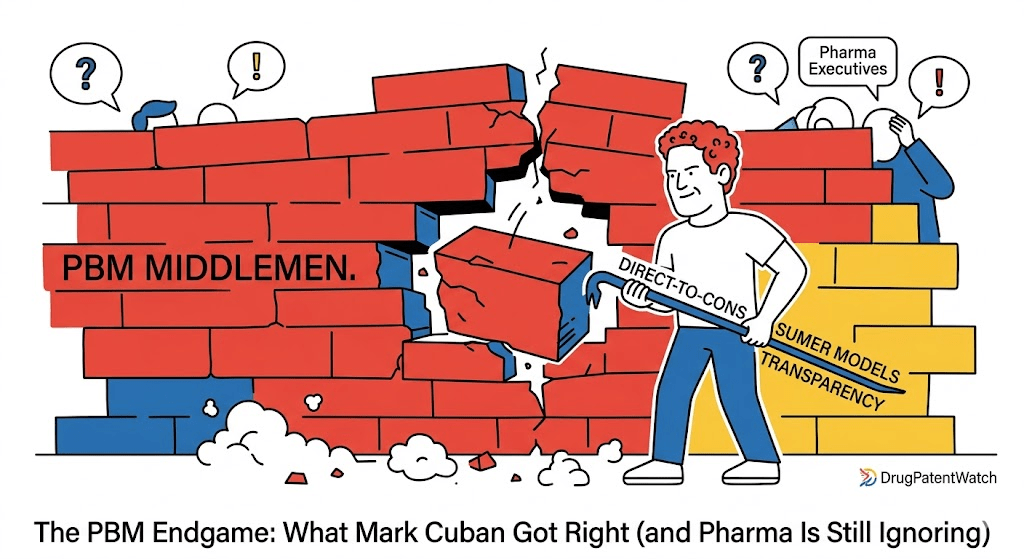
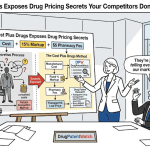
Mark Cuban launched Cost Plus Drugs in January 2022 with a simple premise: buy generic drugs at manufacturer cost, add a fixed 15% markup, charge a $3 dispensing fee, and sell directly to patients. The prices were so low they shocked people. Imatinib, a generic cancer drug, went from $9,657 per month at many retail pharmacies to $47 at Cost Plus. Clonazepam, a common seizure and anxiety drug, dropped to pennies per pill. Cuban had not invented a new drug. He had not built a better supply chain. He had simply cut out the pharmacy benefit manager.
That act of removal — eliminating the PBM — exposed what the industry had obscured for decades: a system of opaque markups, hidden rebates, and contractual spread pricing that extracted billions from patients, employers, and government payers while routing the money upward through three vertically integrated conglomerates that now control roughly 80% of all U.S. prescription drug claims. The response from legacy pharma was telling: silence, then concern, then a defensive crouch. The PBM lobby mobilized. Lawsuits followed. Congress scheduled hearings. And wholesale drug prices, for the most part, stayed exactly where they were.
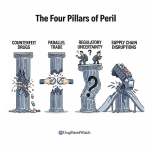
This article traces how the PBM system grew from an administrative convenience into a structural chokepoint, what Cuban’s model actually proved — and what it could not fix — and why pharmaceutical manufacturers have been remarkably slow to respond to an obvious competitive threat.
What a PBM Actually Does — and What It Actually Takes
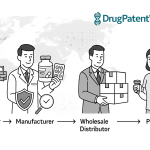
The official job description of a pharmacy benefit manager sounds administrative to the point of tedium: PBMs process prescription drug claims on behalf of health insurers, employers, and government programs. They negotiate drug prices with manufacturers, build pharmacy networks, manage formularies, and run mail-order pharmacies. In theory, they use their scale to push drug prices down. That is the pitch. That is what the industry brochures still say.
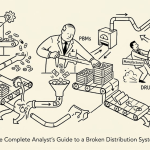
The actual business model is more sophisticated. PBMs make money in at least four ways simultaneously, some of which directly conflict with the interests of the plan sponsors who hire them.
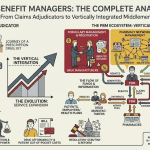
The first revenue stream is the administrative fee, charged to the plan sponsor for claims processing. This is the visible, negotiated line item. The second is spread pricing: the PBM reimburses a pharmacy at one rate and bills the plan sponsor at a higher rate, pocketing the difference. In 2018, an Ohio audit found that PBMs charged the state Medicaid program $224.8 million more than they paid pharmacies — a spread of $1.15 per prescription on generics, which sounds small until you multiply it by 115 million Ohio Medicaid prescriptions. [1] The third revenue stream is manufacturer rebates: drug companies pay the PBM to secure preferred placement on formulary tiers. These rebates can run from 30% to over 60% of a brand-name drug’s list price, and PBMs keep a substantial portion rather than passing the full amount back to plan sponsors. [2] The fourth is the vertical integration play: the three major PBMs — CVS Caremark, Express Scripts (Cigna), and OptumRx (UnitedHealth) — all own mail-order pharmacies, specialty pharmacies, and in CVS’s case an insurance company. Directing claims to their own pharmacies generates additional margin that does not show up in PBM fee disclosures.
To understand the scale, you need numbers. In 2023, the three largest PBMs processed roughly 6.6 billion prescriptions. [3] Express Scripts alone managed pharmacy benefits for over 100 million Americans. The entire PBM industry generated an estimated $500 billion in total drug spend under management, and industry analysts estimated PBM revenues — across all fee types — at somewhere between $100 billion and $150 billion annually, though precise figures are nearly impossible to verify because PBMs are not required to disclose rebate totals or spread amounts to plan sponsors in most states. [4]
That opacity is not an accident. It is the product.
The Rebate Trap: How High List Prices Became Structurally Necessary
To understand why pharmaceutical manufacturers have been slow to lower list prices even when Cuban’s model demonstrated it was commercially viable, you need to understand the rebate game and why it creates a perverse incentive for high prices to persist.
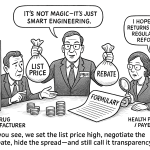
Here is the mechanism: a brand-name drug manufacturer sets a high list price — what the industry calls the Wholesale Acquisition Cost, or WAC. Then the manufacturer negotiates confidential rebates with PBMs to secure preferred formulary positioning. These rebates are calculated as a percentage of WAC. If a manufacturer charges $500 per month WAC for a drug and offers a 45% rebate, the PBM nets $225 per prescription in rebate dollars. If the manufacturer lowers the list price to $250 and offers a 10% rebate, the PBM nets $25. The arithmetic is brutal: lower list prices mean smaller rebates, and smaller rebates mean the PBM has far less reason to give the drug favorable formulary placement.
This is why the list price of Humira (adalimumab) sat above $6,000 per month even as biosimilar competitors launched at 55-85% discounts in 2023. AbbVie maintained Humira’s list price and offered PBMs aggressive rebates to keep it on preferred formulary tiers. Several biosimilar manufacturers tried to compete on net price; many found their products languishing on non-preferred tiers or requiring prior authorizations that brand Humira did not face. [5] The result, as documented in multiple analyses including data pulled from DrugPatentWatch, was that biosimilar market penetration lagged expectations well into 2024 despite far lower acquisition costs at the manufacturing level. [6]
This dynamic plays out across most major therapeutic categories. Insulin is the most politically visible example. The list price of Humalog rose from roughly $21 per vial in 1999 to over $274 per vial by 2017 — a 13-fold increase over 18 years. [7] The net price paid by PBMs after rebates rose far less, but patients subject to deductibles and cost-sharing pay based on list price, not net price. The sickest patients, who haven’t hit their deductible yet, pay the most. Insulin rationing — documented by multiple patient advocacy groups — resulted directly from this pricing structure, and at least a handful of deaths were attributed to patients stretching their insulin doses. Congress finally capped out-of-pocket insulin costs for Medicare beneficiaries at $35 per month as part of the Inflation Reduction Act of 2022, [8] but no equivalent protection exists in the commercial market without employer action.
The Formulary Tier System as a Pricing Weapon
Formulary tier placement is the primary lever PBMs use to extract manufacturer rebates, and the system has grown more aggressive over the past decade. A Tier 1 placement means low or no patient cost-sharing; a Tier 3 or non-formulary placement means the patient pays significantly more out of pocket, or the drug requires prior authorization. Tier placement is ostensibly about clinical value, but in practice it correlates strongly with manufacturer willingness to pay rebates rather than with independent clinical assessment.
The Institute for Clinical and Economic Review (ICER), which conducts independent drug value assessments, has repeatedly found that formulary placement decisions diverge from evidence-based recommendations. Drugs with strong clinical evidence sometimes sit on less favorable tiers than therapeutically inferior alternatives that generate larger rebates. [9]
For manufacturers, the calculus is straightforward: accept the rebate demand or risk formulary exclusion. CVS Health’s formulary exclusion list — drugs that CVS Caremark will not cover at all — grew from roughly 100 drugs in 2012 to over 450 drugs by 2023. [10] The threat of exclusion is explicit leverage, and manufacturers respond by increasing list prices specifically to fund larger rebates rather than by improving net affordability.
Mark Cuban Didn’t Invent Transparency. He Made It Embarrassing to Ignore.
Cost Plus Drugs was not the first transparent pharmacy model. Several compounding pharmacies, direct-to-consumer platforms, and pharmacy benefit administrators had experimented with cost-plus pricing before January 2022. What Cuban brought was two things the earlier efforts lacked: celebrity-grade distribution and a willingness to be brutally specific about pricing comparisons.
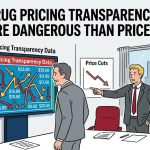
When Cost Plus Drugs launched, it published a side-by-side comparison showing that its price for generic imatinib — $47.10 per month — compared to $9,657 at GoodRx’s retail price and substantially more at cash price at major pharmacy chains. [11] The comparison was specific enough that no one could call it misleading. It was also incendiary, because it revealed that the manufacturing cost of many generic drugs is so low that the entire retail price at a traditional pharmacy is, in substantial part, intermediary margin.
Cuban’s model works through a straightforward structure: Cost Plus Drugs buys directly from generic drug manufacturers at cost, applies a 15% markup to cover operations and margin, adds a $3 pharmacy dispensing fee and a $5 shipping fee for mail order. There is no PBM in the chain. There is no formulary negotiation. There is no rebate. The price is the price, and it is posted publicly for anyone to see.
By mid-2024, Cost Plus Drugs had added over 2,500 medications to its catalog, was processing hundreds of thousands of prescriptions monthly, and had expanded into a laboratory testing service. [12] The company partnered with Mark Cuban’s HDC Health insurance product to offer plan sponsors a direct-purchase option that routes drug purchases away from traditional PBM claims. The model had proven, at scale, that a large portion of the generic drug supply could be dispensed to patients at prices that are a fraction of PBM-routed retail costs.
What the Model Cannot Fix
Cost Plus Drugs is not a solution to the full drug pricing problem. Its limitations are structural and worth being precise about, because the pharma industry has occasionally used them to dismiss the broader challenge.
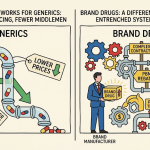
First, Cost Plus Drugs works primarily for generics. Brand-name drugs are priced based on manufacturer decisions about list price, not based on manufacturing cost, and manufacturers are not obligated to sell to Cost Plus at cost. Cuban’s model has limited leverage over the brand-name drug segment, which accounts for roughly 10% of prescriptions but over 80% of total drug spend in the U.S. [13]
Second, Cost Plus Drugs does not solve the insurance integration problem. Most commercially insured patients use their prescription benefit through their employer’s PBM contract. Many cannot or do not know to route around it. The Cost Plus model serves primarily the uninsured, underinsured, or patients who are cost-aware enough to comparison shop — which is a smaller universe than the total drug market.
Third, specialty drugs — biologics, gene therapies, oncology treatments — are distributed through restricted networks that manufacturers control via Risk Evaluation and Mitigation Strategies (REMS) programs or limited distribution agreements. Cost Plus Drugs cannot access most specialty products. These are the highest-cost drugs in the system.
None of these limitations diminish what Cuban proved for generics. They define the territory where the PBM system remains largely intact and largely immune to Cost Plus-style disruption without structural regulatory intervention.
The Three Conglomerates and How They Got Here
Understanding the current PBM landscape requires a brief account of how three companies came to control the majority of American pharmaceutical distribution. It happened through a decade of mergers that regulators approved despite concentrated competitive concerns.
CVS Health acquired Caremark in 2007, creating the first major PBM-pharmacy chain vertical. Express Scripts acquired Medco Health Solutions in 2012 in a $29 billion deal that the Federal Trade Commission approved after a superficial review, creating the largest standalone PBM. UnitedHealth Group built OptumRx through multiple acquisitions and the absorption of internal pharmacy benefits management, tying it to the country’s largest health insurer. Then in 2018, CVS Health acquired Aetna for $69 billion, creating a company that simultaneously processed drug claims, operated pharmacies, and insured the patients using both. Cigna acquired Express Scripts the same year for $67 billion. [14]
The result by 2023: three companies managed approximately 80% of all U.S. prescription drug claims. [15] Each company’s vertical integration allows it to steer patients toward its own affiliated pharmacies, its own specialty drug distributors, and its own mail-order operations — often without disclosing that referral to plan sponsors or patients.
“The three largest PBMs — CVS Caremark, Express Scripts, and OptumRx — processed approximately 80 percent of all U.S. prescription drug claims in 2023, while their affiliated pharmacies captured a disproportionate share of dispensing revenue from those same claims.”– Federal Trade Commission, Pharmacy Benefit Managers: The Powerful Middlemen Inflating Drug Costs and Squeezing Main Street Pharmacies, July 2024 [16]
The FTC’s July 2024 interim report on PBMs was the most thorough federal examination of the industry to date. It documented how major PBMs used their formulary power to disadvantage competing pharmacies, how rebate dollars were retained rather than passed through to patients, and how spread pricing inflated costs for employer plan sponsors who lacked the leverage to audit their own contracts. The report stopped short of recommending specific legislation — that is not the FTC’s role — but it provided the empirical foundation for every reform bill that followed.
Vertical Integration and the Self-Referral Problem
The conflict of interest embedded in PBM vertical integration is not subtle. When CVS Caremark decides which pharmacy a patient should use for a specialty drug, it can steer that prescription to CVS Specialty, earning dispensing revenue that does not flow to an independent pharmacy. When OptumRx processes a claim, it can incentivize patients to use the Optum-owned mail-order service rather than a local pharmacy. The plan sponsor pays the PBM to act as a neutral administrator; the PBM uses its position to direct margin to its own subsidiaries.
The FTC report found instances where PBMs reimbursed their own affiliated pharmacies at rates substantially higher than they paid independent pharmacies for the same drugs. [16] In the specialty pharmacy segment, where dispensing a single prescription of a biologic can generate thousands of dollars in margin, the financial stakes of self-referral are acute.
Independent pharmacies have been closing at an accelerating rate, partly as a result. The National Community Pharmacists Association estimated that over 2,000 independent pharmacies closed between 2019 and 2023, citing PBM reimbursement rates that often fell below the pharmacy’s acquisition cost for certain drugs — a phenomenon sometimes called “DIR fees” (Direct and Indirect Remuneration fees), which PBMs charged back to pharmacies after the point of sale. [17] Congress restricted certain DIR fee practices in Medicare Part D through the Inflation Reduction Act, but the commercial market practice continued largely unchecked.
Patent Thickets, Data Barriers, and Why Generic Competition Takes So Long
To understand why the generic drugs that Cuban can price cheaply represent only a fraction of total drug spend, you need to understand the patent and regulatory barriers that keep brand-name drugs shielded from competition well beyond their original patent expiration. This is where platforms like DrugPatentWatch become genuinely useful to anyone trying to assess competitive dynamics in pharmaceutical markets.
DrugPatentWatch provides detailed patent expiration data, Paragraph IV patent challenge filings, and FDA exclusivity tracking across the U.S. drug portfolio. [18] It allows researchers, investors, plan sponsors, and drug pricing analysts to identify when generic entry is legally possible — and just as importantly, when it has been strategically delayed through patent thicket strategies or REMS manipulation.
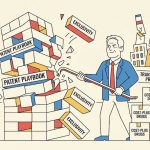
A patent thicket is exactly what it sounds like: a dense cluster of patents around a single drug product that individually might not survive challenge but collectively deter generic entrants because the cost of litigating a dozen patents simultaneously is prohibitive. AbbVie built one of the most extensively documented patent thickets around Humira: a portfolio of over 160 patents that extended U.S. market protection years beyond the core molecule’s original patent expiration. [19] Biologic drugs like Humira are additionally protected by a 12-year regulatory exclusivity period under the Biologics Price Competition and Innovation Act of 2009, and the interplay between patent protection and regulatory exclusivity created a situation where biosimilar competitors began launching in Europe in 2018 but could not enter the U.S. market until 2023. By then, AbbVie had earned over $200 billion in global Humira revenue. [20]
How Manufacturers Game FDA Exclusivity Rules
Beyond patent thickets, manufacturers have developed a set of regulatory strategies for extending market exclusivity that are individually legal but collectively represent a systematic delay of generic competition. The most common techniques include:
Citizen petitions, which allow any party to ask the FDA to delay approval of a generic drug application, are routinely filed by brand manufacturers near the expected approval date of a competing generic, creating administrative delay. A 2019 study published in the New England Journal of Medicine found that brand-name drug manufacturers filed 92% of citizen petitions seeking to delay generic competition. [21]
Product hopping is the practice of making minor reformulations of a drug — switching from a capsule to a tablet, or from twice-daily dosing to once-daily — then aggressively marketing the new formulation and potentially withdrawing the old one, forcing generic manufacturers to restart their Abbreviated New Drug Application (ANDA) process from scratch. The FTC has challenged several product hops as anticompetitive, but they remain common.
Authorized generics — versions of brand drugs that the brand manufacturer sells through a subsidiary at a discount — can be timed to undercut independent generic manufacturers that have won Paragraph IV challenges, eroding the 180-day exclusivity period that is supposed to reward first-filers for taking the litigation risk. This practice, documented extensively in patent challenge databases, effectively taxes generic competition without providing any benefit to the patients the competitive system is supposed to serve.
Reading the Patent Landscape: What DrugPatentWatch Data Shows
Drug pricing analysts and plan sponsors who want to anticipate generic availability use patent databases as a forward-looking tool. DrugPatentWatch tracks not just when patents expire, but when Paragraph IV certifications — which signal that a generic manufacturer believes a patent is invalid or not infringed — have been filed. Paragraph IV filings are often the first public signal that generic competition is coming, sometimes years before an ANDA approval.
For plan sponsors and PBMs negotiating formulary rebates, this information is commercially sensitive. A manufacturer whose drug faces imminent generic competition has far less leverage in rebate negotiations than one with a 10-year exclusivity runway. PBMs with access to patent expiration data can time formulary changes to shift patients to generics at the moment generic launch occurs, capturing the price reduction for their plan sponsor clients — or alternatively, if rebates are sufficiently large, maintaining brand drug formulary preference even after generic entry, which has also been documented. [22]
The asymmetry between what PBMs know about the patent landscape and what plan sponsors know is itself a source of PBM negotiating advantage. Plan sponsors that do their own patent landscape analysis using tools like DrugPatentWatch are better positioned to audit whether their PBM’s formulary decisions reflect clinical value and cost optimization, or whether they reflect rebate economics. This kind of independent verification is rare among employer plan sponsors — most lack the pharmaceutical expertise to do it — but it is exactly the kind of due diligence that self-insured employers and benefits consultants who take fiduciary duty seriously should be performing.
The Employer’s Dilemma: Fiduciary Duty and PBM Contracts
Self-insured employers — companies that bear the direct cost of employee prescription drug benefits rather than purchasing fully-insured coverage — have a fiduciary duty under ERISA to act in the financial interest of their beneficiaries. PBM contracts, in their standard form, are almost perfectly designed to make fiduciary compliance difficult.
The contracts are long, technically complex, and structured to prevent independent auditing. Most standard PBM contracts include audit rights that are narrowly scoped: the employer can audit claims data, but typically cannot audit whether rebates were fully disclosed, cannot see the manufacturer rebate contracts, and cannot independently verify spread pricing without sophisticated actuarial support. The FTC documented in its 2024 report that even large plan sponsors with significant bargaining power often could not obtain meaningful transparency into PBM fee structures. [16]
The past three years have seen an emerging legal strategy: ERISA litigation against plan sponsors who failed to scrutinize PBM contracts. In 2022, the Supreme Court ruled in Hughes v. Northwestern University that plan fiduciaries cannot escape scrutiny simply by offering a range of investment or benefit options; they must monitor the options offered and remove imprudent ones. While that case involved retirement plan investments, its logic has been applied in subsequent litigation to health benefit plan management. [23] Law firms specializing in ERISA began filing cases in 2022 and 2023 arguing that employers who signed opaque PBM contracts without adequate due diligence may have breached their fiduciary duty to employees who overpaid for drugs as a result. Several of those cases are ongoing.
The Employer Coalition Response
Some large employers did not wait for litigation to force change. The Purchaser Business Group on Health, the Business Roundtable’s health initiatives, and the Pacific Business Group on Health all began publishing guidance in 2022 and 2023 on how to negotiate PBM contracts more effectively. The core demands were consistent: full pass-through of manufacturer rebates, prohibition on spread pricing, access to complete claims data, carve-out rights for direct-purchase arrangements, and independent audit rights. [24]
Several large employers — Boeing, Walmart, and a number of state employee benefit plans — moved portions of their drug benefit to pass-through PBM models or direct-purchase arrangements during this period. Pass-through PBMs, which charge a flat administrative fee rather than keeping rebates or spread, exist as a category (Prime Therapeutics, Capital Rx, Navitus Health Solutions, and a few others operate on this model), but they control a small fraction of the market. [25]
The underlying economics are challenging. Pass-through PBMs earn less per claim and cannot subsidize their administrative fees with rebate retention. For plan sponsors managing low drug-cost populations, a flat administrative fee may end up costing more in visible fees than a traditional PBM arrangement — even if the traditional PBM is extracting more in total when rebate retention is included. The optics matter: CFOs see the PBM fee line clearly; they cannot easily see the rebate retention line.
The Congressional Response: Hearings Without Consequences
Congress has held at least a dozen hearings on PBM practices since 2018. The pattern is consistent: executives are called to testify, they say that competition is robust and rebates are passed through to consumers, senators express outrage and cite constituent stories of unaffordable drugs, and then nothing happens. This is not because the legislative diagnosis is wrong. It is because the prescription drug distribution system is among the most thoroughly lobbied sectors in the American economy, and legislative reform requires overcoming simultaneous opposition from manufacturers, PBMs, wholesalers, and insurers who share few interests except the preservation of opacity.
The Pharmacy Benefit Manager Transparency Act, introduced in various forms between 2021 and 2024, required PBMs to disclose to plan sponsors the aggregate rebates received from manufacturers and the spread between what they paid pharmacies and what they billed plan sponsors. A version passed the Senate Commerce Committee unanimously in 2023, with co-sponsorship from senators of both parties. It did not come to a Senate floor vote. A companion provision was included in an end-of-year spending package and then removed during negotiations. [26]
The Lower Costs, More Transparency Act, which passed the House of Representatives 359-66 in December 2023, contained PBM transparency requirements and was considered the most viable reform legislation in years. It was attached to a year-end continuing resolution in the Senate and died when the resolution failed. [27]
The legislative failure was not primarily about disagreement on the substance. The FTC report, the academic literature, and even some PBM-commissioned studies acknowledged the opacity problem. The failure was about lobbying weight and the legislative priority queue. PBM reform competes for floor time against the federal budget, defense authorization, and everything else.
State-Level Action and Its Limits
Where federal legislation stalled, states moved. By 2024, over 40 states had enacted some form of PBM regulation, ranging from spread pricing prohibitions in Medicaid to PBM licensure requirements to patient cost-sharing protections that cap what patients pay for brand drugs at the PBM’s net cost rather than the WAC price. [28]
Arkansas passed a law in 2018 requiring PBMs to reimburse pharmacies at or above the state’s cost benchmark; it was challenged by PBMs in federal court and ultimately upheld by the Supreme Court in Rutledge v. Pharmaceutical Care Management Association in 2020, which held that ERISA does not preempt state laws that regulate PBM-pharmacy payment rates. [29] This opened the door for more aggressive state regulation.
The limitation of state-level regulation is ERISA preemption for self-insured employer plans. Most state PBM laws apply only to fully-insured plans regulated under state insurance law. Self-insured employer plans — which cover the majority of commercially insured Americans — are governed by federal ERISA and largely exempt from state insurance regulation. States can regulate Medicaid PBMs directly, since Medicaid is a state-federal program, and many have done so aggressively. But the largest pool of commercial drug claims sits in ERISA-governed employer plans where state law cannot easily reach.
What Pharma Is Still Ignoring
The pharmaceutical industry’s strategic response to the Cost Plus Drugs moment and the broader PBM reform movement has been primarily defensive. Manufacturers have, on the whole, not used the political opening created by PBM criticism to restructure their distribution relationships or fundamentally alter their pricing strategies. This is strategic myopia, and it has a cost.
Consider the biosimilar situation. When adalimumab biosimilars launched in the U.S. in 2023, the opportunity existed for manufacturers to price aggressively relative to Humira’s list price and capture rapid market share by competing on net cost. Several did not. Coherus BioSciences launched Yusimry at $995 per month WAC — a substantial discount to Humira’s $6,000+ list price, but still priced to maintain room for rebates rather than at true cost-plus manufacturing economics. Fresenius Kabi launched Idacio at a similar price point. Amgen launched Amjevita with a two-price strategy: a low list price version ($1,557) and a high list price version ($6,923), explicitly designed to fit into either a low-rebate direct model or a high-rebate PBM model. [30]
The two-price strategy is itself an acknowledgment that the rebate system distorts pricing. Amgen was essentially saying: we will sell at one price if you want transparency and another price if you want to play the PBM game. The market data from 2023 and 2024 suggests that, despite the availability of cheaper alternatives, Humira maintained substantial market share through PBM formulary protection. AbbVie had pre-negotiated rebate contracts with PBMs in advance of biosimilar entry. [5]
Why Manufacturers Keep Feeding the System They Complain About
Pharmaceutical manufacturers are not reluctant participants in the PBM system. They negotiated the rebate structure. They benefit from the opacity that allows high list prices to coexist with lower net prices. They use formulary negotiations as a competitive moat against rivals. Their complaints about the PBM system are real — they do believe PBMs extract disproportionate value — but their behavior remains structurally dependent on the system they criticize.
The reasons are familiar from any analysis of incumbent system dependence. The rebate-based model produces predictable revenue even for drugs that face formulary competition. A manufacturer that converts to a transparent, low-list-price model gains the moral high ground and potentially direct-to-patient market access, but simultaneously loses formulary position in the PBM-administered plans that cover 85% of insured Americans. The transition cost is enormous and the outcome uncertain. No major brand-name drug manufacturer has made a complete systemic pivot away from rebate-based pricing for a major product line.
The closest thing to a market signal came from Eli Lilly, which cut the list price of its most commonly used insulin products by 70% in March 2023, capping out-of-pocket costs at $35 per month and making its products accessible at Cost Plus Drugs. [31] The price cuts were real and meaningful for uninsured and underinsured patients. Novo Nordisk and Sanofi followed with their own insulin list price reductions within weeks. But the reductions were specific to insulin, a product under intense congressional and public scrutiny, and did not represent a general strategic shift. Eli Lilly’s tirzepatide (Mounjaro, Zepbound) launched with list prices in the $1,000-per-month range and a conventional PBM formulary strategy.
The Direct-to-Patient Distribution Opportunity
What manufacturers are genuinely slow to pursue is direct-to-patient distribution at scale for appropriate product categories. The FDA cleared a limited pathway for drug manufacturers to sell certain products directly to patients through manufacturer-run pharmacies or telepharmacy arrangements years ago, but uptake has been modest. Mark Cuban’s model demonstrated that patients will use a frictionless, price-transparent direct channel when the price differential is large enough. The differential for many generics is enormous. For many brand-name drugs, particularly in the growing category of GLP-1 agonists where patient demand vastly exceeds PBM-managed supply, the direct-to-patient opportunity is commercially significant.
Novo Nordisk launched a direct-to-patient website offering semaglutide (Wegovy) at lower prices than retail in 2024. Several compounding pharmacies had filled the access gap created by semaglutide shortages through FDA temporary allowances. The regulatory environment around direct-to-patient pharmaceutical sales is evolving, and manufacturers that build direct-channel infrastructure now will be better positioned as that environment clarifies. Those that wait for the PBM system to deliver them equitable margin will continue waiting. [32]
The GLP-1 Disruption: A Case Study in PBM Gatekeeping
No drug category illustrates the tension between PBM gatekeeping and patient access more vividly than GLP-1 receptor agonists. Semaglutide (Ozempic, Wegovy) and tirzepatide (Mounjaro, Zepbound) are, by multiple clinical measures, the most effective obesity treatments in medical history. The Phase III data for both drugs showed sustained weight loss of 15-22% in obese patients — results that prior drug classes could not approach. [33]
Despite this, PBM and insurer coverage of GLP-1s for obesity has been restricted, slow, and inconsistent. The list prices for both drugs exceed $1,000 per month, and PBMs have used prior authorization requirements, step therapy mandates, and formulary exclusions to limit utilization. The official rationale has been cost control — the drugs are expensive, and if everyone who is eligible for them actually took them, the actuarial cost would be very large. The actuarial concern is real. But the implementation of coverage restrictions has not been clinically uniform; coverage decisions have correlated with negotiating leverage rather than patient clinical criteria.
Medicare Part D was prohibited from covering weight loss drugs by the law that established the Part D program in 2003, before the GLP-1 class existed. The Treat and Reduce Obesity Act, which would lift that prohibition, had bipartisan support in Congress but had not passed as of mid-2025. The irony is acute: Medicare covers the cardiovascular consequences of obesity — bypass surgery, heart failure hospitalizations, joint replacements — but the drug that could prevent many of those consequences sits outside the covered benefit. [34]
Cost Plus Drugs listed semaglutide for $399 per month in late 2024 — at the time less than half the retail cash price at most pharmacies, though it remained unavailable at that price to most insured patients because their plan benefit required going through a PBM. [35] The Cost Plus price was possible because FDA-approved semaglutide was available through specific compounding relationships and generic pathways that existed due to shortage designations. It illustrated again that the barrier to affordable drug access in America is not primarily manufacturing cost. It is distribution architecture.
The Litigation Escalation: FTC Versus the Big Three
The FTC’s July 2024 interim report was not just a policy document. It was preparation for litigation. In September 2024, the FTC filed suit against the three major PBM companies — CVS Caremark, Express Scripts, and OptumRx — along with their affiliated group purchasing organizations, alleging that their practices had artificially inflated insulin prices by favoring high-list-price insulins on formulary to maximize rebate revenue. [36]
The lawsuit focused specifically on how PBM formulary decisions for insulin — the most politically charged drug category after years of price-rationing scandals — had systematically disadvantaged lower-list-price products in favor of products that generated larger rebates. The complaint alleged that this practice violated Section 5 of the FTC Act, which prohibits unfair methods of competition.
The PBMs denied the allegations and challenged the FTC’s legal theory, arguing that the rebate system provides value to plan sponsors and that formulary decisions reflect competitive negotiations rather than anticompetitive coordination. Litigation timelines for FTC actions typically run three to five years before resolution, meaning the legal outcome may not be known until 2027 or later.
The litigation matters for pharmaceutical manufacturers even if they are not defendants. A court ruling that PBM formulary practices constitute unfair competition would fundamentally alter the rebate negotiating dynamic. It would also validate the legislative reform effort with a judicial factual record that Congress could use to support regulatory action. The pharmaceutical industry, which has complained privately about PBM practices for decades, has been notably quiet about supporting the FTC’s case in public. The reason is predictable: manufacturers need their drugs on PBM formularies, and publicly antagonizing the companies that control formulary access is commercially dangerous even when those companies are defendants in federal litigation.
International Comparisons and the American Difference
American drug prices are not high because manufacturing is more expensive in the United States. They are high because the United States lacks the centralized purchasing or price-setting mechanisms that exist in virtually every other developed economy. In Germany, the Pharmaceutical Market Restructuring Act (AMNOG) requires manufacturers to demonstrate the added benefit of a new drug over existing therapy within 12 months of launch; if no benefit is shown, the drug is priced at the existing standard of care. In England, the National Institute for Health and Care Excellence (NICE) conducts cost-effectiveness analysis and recommends maximum prices based on quality-adjusted life years. In Canada, the Patented Medicine Prices Review Board sets price ceilings based on comparisons with other countries. [37]
The result is that Americans pay two to four times more than patients in peer countries for the same drugs. A 2021 RAND Corporation analysis found that U.S. prices for brand-name drugs were 256% higher on average than prices in 32 peer countries. [38] The political argument for maintaining this differential — that high U.S. prices fund global pharmaceutical R&D — has some empirical basis, but it does not justify the role of PBMs in the differential. PBMs are an American institution. Other countries have drug pricing systems; none have PBMs. The rebate opacity layer adds cost without adding clinical value.
The Inflation Reduction Act of 2022 introduced, for the first time, limited federal negotiating authority for Medicare drug prices. The first 10 drugs subject to negotiation were announced in 2023, including Eliquis (apixaban), Xarelto (rivaroxaban), and Jardiance (empagliflozin). The negotiated prices took effect in 2026. [39] The drug manufacturer industry mounted legal challenges arguing that the negotiation process constituted a constitutional taking, but courts largely rejected those arguments. The negotiated prices were, in most cases, meaningfully below existing Medicare Part D average prices, but the program applies only to a limited set of Medicare drugs and does not extend to the commercial market.
What Reform Would Actually Look Like
Effective PBM reform requires addressing four distinct problems: the rebate opacity problem, the spread pricing problem, the vertical integration conflict problem, and the ERISA preemption gap that shields self-insured employer plans from state regulation.
The rebate opacity problem has a relatively simple fix: require PBMs to pass 100% of manufacturer rebates to plan sponsors at point of sale, disclosed in real time. This eliminates the revenue incentive for favoring high-rebate drugs over lower-cost alternatives. It does not eliminate rebates as a negotiating mechanism, but it changes who benefits from them. Several pass-through PBM models already operate this way; the legislative question is whether to require it universally. The Pharmacy Benefit Manager Transparency Act was built around this requirement.
Spread pricing in Medicaid has already been largely banned at the state level in the largest programs following the Ohio audit findings. Federal prohibition of spread pricing in Medicare would follow naturally, and several legislative proposals include it. For the commercial market, the fix is disclosure: requiring PBMs to report to plan sponsors the per-prescription spread in a standardized format that plan sponsors can audit independently.
The vertical integration problem is harder. The mergers that created CVS Health-Caremark-Aetna and Cigna-Express Scripts have already occurred. Divestiture is politically and legally difficult. The practical reforms are behavioral constraints: prohibiting PBMs from giving preferred formulary position to their own affiliated pharmacies, requiring that patient pharmacy choice be genuinely free without financial penalty for using non-affiliated dispensers, and mandating independent oversight of specialty pharmacy referrals.
The ERISA gap requires federal action. A federal law establishing minimum transparency standards that apply to all employer drug benefit plans — including self-insured plans — would close the state regulation gap. The mental health parity precedent is instructive: Congress imposed federal mental health coverage requirements on self-insured plans through the Mental Health Parity and Addiction Equity Act of 2008, demonstrating that ERISA does not block Congress from establishing minimum standards. [40]
The Financial Stakes for Drug Manufacturers in a Post-PBM World
Pharmaceutical companies spend a great deal of time modeling the financial impact of patent expiry and generic competition. They spend far less time modeling what their revenue and margin structure would look like in a transparent drug distribution system where rebate-based formulary protection does not exist. The latter scenario deserves more attention, because the regulatory and market trajectory is moving in that direction whether manufacturers plan for it or not.
In a world of transparent, net-price-based distribution, the economics of brand-name drugs shift substantially. Drugs with strong clinical differentiation — clear superiority over alternatives, no equivalent therapeutic substitute — can maintain high prices because payers will cover them regardless of rebate strategy. Drugs without clear clinical differentiation, which currently maintain market position through rebate deals, would face rapid price compression. The middle of the drug market — marginally differentiated drugs in competitive therapeutic categories — is the most exposed segment.
For generic drug manufacturers, the shift is directionally positive. Lower distribution friction, direct-channel access, and platform economics favor the transparent-pricing model that Cost Plus Drugs proved viable. Generic manufacturers with clean cost structures and direct-to-patient capabilities would gain share in a transparent market; generic manufacturers dependent on PBM formulary management for market access would be disrupted.
The specialty drug segment presents the most complex transition challenge. Specialty drugs — biologics, gene therapies, cell therapies, targeted oncology drugs — often have restricted distribution, intensive patient management requirements, and pricing structures that are negotiated confidentially with payers rather than published as WAC. The opaque pricing practices in specialty drugs are, if anything, more extreme than in traditional pharmaceuticals, and the dollar amounts are larger. A single prescription of a gene therapy can cost $3 million. The margin questions in specialty distribution are not academic. [41]
Direct-to-Consumer and the Telehealth Channel
The COVID-19 pandemic permanently loosened telehealth regulations and accelerated patient comfort with remote healthcare. The conjunction of telehealth prescribing and direct-to-patient pharmacy creates a distribution channel that entirely bypasses both the traditional physician office and the PBM-pharmacy network. Several pharmaceutical manufacturers experimented with supporting telehealth prescribing for their products during this period, and the business case for manufacturer-supported telehealth-to-pharmacy pipelines strengthened as GLP-1 demand outpaced covered supply.
Hims & Hers Health built a large business during 2023 and 2024 on telehealth-facilitated prescriptions of compounded semaglutide, operating entirely outside the traditional PBM network and reaching patients at a lower out-of-pocket cost than the brand drug through insured channels. The company reported over 270,000 GLP-1 subscribers by late 2024. [42] When the FDA removed semaglutide from its shortage list in early 2025, the compounding permission was withdrawn, creating a disruption to that specific business model — but the patient demand the model had identified did not disappear. It redirected, in part, toward direct-purchase programs offered by Novo Nordisk and, to a lesser extent, toward coverage through employer direct-contracting arrangements.
The telehealth channel is not a complete substitute for the PBM-pharmacy system. It works best for drugs with predictable dosing, low monitoring requirements, and patient populations comfortable with digital-first healthcare. But it is a meaningful parallel channel that manufacturers can develop without requiring PBM cooperation, and it represents exactly the kind of direct relationship with patients that the traditional rebate-based system systematically prevents manufacturers from building.
The Regulatory Calendar: What Happens Next
The regulatory and litigation pipeline for PBM reform in 2025 and 2026 involves several simultaneous tracks that will play out on different timescales.
The FTC’s litigation against the three major PBMs will proceed through discovery and motion practice. Even if the FTC does not ultimately prevail, the discovery process will produce a public factual record about PBM internal pricing practices that will fuel both congressional action and private plaintiff litigation.
CMS (the Centers for Medicare and Medicaid Services) finalized rules in 2023 and 2024 that require PBMs administering Medicare Part D plans to report drug cost information more completely and to cap Medicare patient cost-sharing at negotiated net drug prices rather than WAC. These rules take effect on a phased schedule through 2026 and represent the most significant administrative change to PBM transparency in Medicare since Part D’s creation. [43]
The first cohort of Medicare drug price negotiations under the Inflation Reduction Act resulted in negotiated prices effective January 2026. The prices were, in several cases, substantially below the pre-negotiation market rate. Eliquis negotiated to $295 per 30-day supply from a prior Medicare average of roughly $521. [44] The pharmaceutical industry’s legal challenges to the negotiation program failed in federal circuit courts in 2024, and the program appears likely to expand in subsequent negotiation cycles.
State legislative activity will continue. Several states are considering extending PBM regulation to self-insured employer plans to the extent permitted by ERISA, using the logic that state insurance oversight of stop-loss insurance purchased by self-insured employers gives states some indirect leverage over employer plan practices. Whether this approach survives ERISA preemption challenges will depend on state-specific legislative drafting and federal court interpretation.
The Independent Pharmacy Survival Question
One consequence of PBM consolidation that does not fit neatly into the narrative about large-scale reform is the devastation of independent retail pharmacy. The closure of 2,000+ independent pharmacies since 2019 is not a minor market adjustment. Independent pharmacies disproportionately serve rural communities, elderly patients with complex medication regimens who benefit from pharmacist relationship, and minority communities in urban areas underserved by chain pharmacy expansion. [17]
PBM reimbursement rates to independent pharmacies have fallen below acquisition cost for many commonly dispensed drugs, partly as a result of retroactive DIR fee clawbacks and partly because PBMs negotiate preferential reimbursement for their own affiliated pharmacies. An independent pharmacy dispensing a 30-day supply of a generic cardiovascular drug may receive $2.50 from the PBM but pay $3.00 to acquire the drug wholesale. The pharmacy loses money on the prescription. Multiply that across hundreds of prescriptions per day and the business model collapses.
Congress restricted DIR fee practices in Medicare Part D through the Inflation Reduction Act, and CMS rules effective January 2024 prohibit retroactive pharmacy clawbacks in Part D. But the commercial market equivalent has not been addressed federally, and state-level DIR fee regulations vary significantly in scope and enforcement. [45]
The independent pharmacy closure trend also accelerates PBM market power by reducing patient choice. When the closest independent pharmacy closes and patients shift to a chain affiliated with a major PBM, the PBM gains additional claims volume and another data point on patient prescription behavior. Patient data, aggregated across hundreds of millions of claims, is itself a commercially valuable asset that PBMs monetize through analytics services sold back to manufacturers and plan sponsors. [46]
The Startup Ecosystem Betting on System Disruption
Cost Plus Drugs is the highest-profile challenger to the traditional PBM model, but not the only one. A set of companies founded between 2018 and 2023 are attempting to disrupt different parts of the drug distribution stack, and their collective activity gives some indication of where the system is most vulnerable.
Capital Rx operates as a “unitized” PBM, charging a single flat administrative fee per member per month and passing through all rebates and spread to plan sponsors. The company has grown from serving small employers to managing benefits for larger organizations, including the State of New York’s Small Business Marketplace. [47]
Civica Rx, a nonprofit generic drug manufacturer founded by hospital systems in 2018, produces generic drugs at cost and sells them at predictable, transparent prices to member hospitals. By 2024, Civica had released over 80 generic drug products and was expanding into retail pharmacy supply. [48] It operates on a model structurally similar to Cost Plus — cost-plus manufacturing with transparent pricing — but for hospital rather than retail markets.
Scripta Insights and similar pharmacy analytics platforms offer employer plan sponsors real-time alerts when a patient is filling a brand drug for which a less expensive therapeutic equivalent exists, enabling benefit plan administrators to suggest lower-cost alternatives. These services operate entirely around PBM opacity — they exist because employers cannot trust PBM formulary management to optimize for cost rather than rebate revenue. [49]
None of these companies has yet achieved the scale to structurally threaten the three major PBMs. But collectively they represent a market validation of the hypothesis that transparency, direct purchasing, and flat-fee administration are commercially viable alternatives to the current model. The question for the major manufacturers and plan sponsors is whether to support this ecosystem’s growth as a strategic counterweight to PBM bargaining power, or to continue managing their PBM relationships defensively in a system that benefits neither manufacturers nor patients.
Lessons from Other Industries: The Disintermediation Playbook
The pharmaceutical distribution system is not unique in having a powerful intermediary layer that extracts margin through opacity and regulatory capture. The travel industry had travel agents. The securities industry had stock brokers charging fixed commissions. The mortgage industry had loan originators taking substantial spread on rate. Each of these intermediary layers was disrupted by a combination of technology that made pricing transparent and regulatory changes that required disclosure.
Travel agents were largely disintermediated by online booking platforms in the late 1990s. Securities commissions were deregulated in 1975 and then compressed by online discount brokers beginning in the 1990s, ultimately reaching zero for most retail trades by 2019. Mortgage pricing transparency requirements from Dodd-Frank, combined with rate comparison platforms, substantially compressed origination spreads in the 2010s.
The pharmaceutical distribution case has two features that make it harder to disintermediate than those examples. First, the product is not standardized in the way airline seats or stock shares are standardized — drug formulary decisions involve clinical complexity that provides a genuine basis for intermediary expertise, even if that expertise is routinely subordinated to rebate economics. Second, the regulatory framework actively protects the intermediary role: PBMs are embedded in Medicare Part D program structures, state insurance regulations, and ERISA reporting requirements in ways that create institutional lock-in beyond pure market dynamics.
The travel and securities analogies still hold directionally. In both cases, the inflection point came when a combination of pricing transparency, technology-enabled direct access, and regulatory disclosure requirements removed the information asymmetry on which intermediary margin depended. The pharmaceutical equivalent is coming. The timeline is uncertain; the direction is not. Mark Cuban did not invent the disintermediation thesis. He just made it impossible to pretend it was too complicated to execute.
What Pharma Should Actually Do
The pharmaceutical industry’s strategic response to the PBM reform moment needs to go beyond lobbying for balanced regulation and defending the current pricing architecture. The companies that will come out of the transition period in a stronger position are those that begin building direct-channel infrastructure now, before regulatory change forces a hasty adaptation.
For generic manufacturers, the strategic conclusion is clearest: partner with or build cost-plus distribution channels. The manufacturing cost of most generics is so low that a transparent distribution model generates viable margins even at prices 80-90% below current retail. The market is ready for it — Cost Plus Drugs proved that with a catalog of 2,500+ products. Generic manufacturers that supply Cost Plus-style platforms are capturing retail revenue that would otherwise flow to PBM-affiliated mail-order operations.
For brand-name manufacturers, the two-price strategy that Amgen pioneered with Amjevita — a low-list-price version and a high-list-price version — is a hedge rather than a commitment. A more aggressive strategy would be to select one or two products that have strong clinical differentiation and convert fully to a transparent, low-list-price model, building the direct formulary access relationships with large employers and government payers that allow the product to maintain access without PBM intermediation. This requires upfront investment in direct contracting capabilities and is a meaningful commercial risk. But it builds a relationship with payers and patients that the rebate-based model structurally prevents.
For biologic and specialty drug manufacturers, the direct-to-patient telehealth channel is the most accessible near-term opportunity. The FDA pathway for direct distribution of specialty drugs with appropriate clinical support exists; the regulatory environment for telehealth prescribing is relatively settled; and the patient demand for accessible, affordable specialty drug access is documented and large. Manufacturers that invest in telehealth partnerships and direct-to-patient dispensing infrastructure for appropriate products will have non-PBM-dependent revenue channels when the regulatory environment shifts.
None of these moves is costless or risk-free. All of them require accepting the disruption of current revenue models. The alternative — continuing to rely on PBM formulary management in a system facing litigation, legislative pressure, and competitive disruption from transparent-pricing challengers — is also costly. The question is not whether the current system will change. It is whether pharmaceutical manufacturers will be architects of the change or casualties of it.
The Patient Reality
It is easy, in an analysis this focused on structural economics and competitive strategy, to lose sight of what the PBM opacity debate means for the 131 million Americans who take at least one prescription drug regularly. [50]
A 2023 survey by the Kaiser Family Foundation found that 29% of U.S. adults reported not taking their medications as prescribed due to cost in the prior year. Among adults with low incomes, the figure was 43%. [51] These are not edge cases. They represent a systemic failure in which the administrative layer between manufacturers and patients is extracting enough value that patients at the bottom of the income distribution cannot afford drugs that could keep them out of the hospital. The cardiovascular drugs, the diabetes medications, the psychiatric drugs — the consequences of cost-driven non-adherence show up in emergency departments and ICU admissions that cost multiples of what the medications would have cost.
Mark Cuban understood this intuitively and said it plainly. The drugs are cheap to make. The markup is enormous. The people in the middle are making the money. He built a company around that insight, and it works — for generics, for patients who know about it, for conditions where treatment is straightforward enough for mail-order delivery. It does not work for the full system. Fixing the full system requires the legislative, regulatory, and strategic corporate action that the industry has collectively avoided.
The FTC is suing. State legislatures are acting. Employers are filing ERISA claims. Transparent-pricing competitors are growing. The political visibility of drug prices is at an all-time high across the partisan spectrum. The PBM system is under more pressure than at any point in its 50-year history. Whether that pressure produces structural change or gets absorbed into the next round of hearings without consequences will depend on whether enough of the parties with the power to change the system decide that the cost of defending it exceeds the cost of transforming it.
Cuban already made his decision. Pharma is still working on the math.
Key Takeaways
The three largest PBMs — CVS Caremark, Express Scripts, and OptumRx — control approximately 80% of U.S. prescription drug claims, creating a concentrated intermediary layer that extracts value through rebate retention, spread pricing, and self-referral to affiliated pharmacies.
Cost Plus Drugs proved the manufacturing cost of most generics is a small fraction of retail prices. The markup is intermediary margin, not manufacturing or R&D cost.
The rebate system creates a perverse incentive for high list prices: manufacturers must price high to generate rebates large enough to secure favorable formulary placement, and PBMs benefit from larger rebates by keeping a portion, not from lower drug costs.
Patent thicket strategies, product hopping, and citizen petition abuse extend brand-name drug market exclusivity well beyond the period justified by the original innovation. Platforms like DrugPatentWatch provide the patent landscape transparency that plan sponsors and drug pricing analysts need to audit PBM formulary decisions independently.
Biosimilar competition — including adalimumab biosimilars that launched at 55-85% WAC discounts to Humira — has been systematically slowed by PBM formulary strategies that protect high-rebate brand drugs. Market share shifted less than clinical evidence and economic logic would predict.
The FTC’s 2024 litigation against the three major PBMs represents the most significant federal enforcement action in PBM history. The outcome will shape the regulatory environment for the rest of the decade regardless of who wins.
Pharmaceutical manufacturers who continue relying solely on PBM-managed distribution are exposed to a structural transition they are not preparing for. Direct-to-patient channels, telehealth prescribing partnerships, and cost-plus pricing pilots are available strategies that companies have been slow to pursue at scale.
Frequently Asked Questions
Q1: Why can’t employers simply negotiate lower drug prices directly, without going through a PBM?
Some do, and the number is growing. But direct manufacturer contracting for the full drug benefit is administratively complex: it requires managing thousands of individual drug contracts, building or licensing claims processing infrastructure, and maintaining a pharmacy network. PBMs provide genuine operational services — claims adjudication, formulary management, pharmacy network contracting — that have real costs. The problem is not that intermediaries exist; it is that the intermediary market is too concentrated to produce competitive pricing, and the contracts are opaque enough to prevent employers from auditing whether they are getting market-competitive terms. Large employers using pass-through PBM models and supplementing with direct-purchase arrangements for specific high-cost drugs represent the most viable near-term approach for employers with the scale to negotiate it.
Q2: How does DrugPatentWatch help plan sponsors and pharmaceutical analysts make better decisions?
DrugPatentWatch provides a structured database of U.S. drug patent expirations, Paragraph IV patent challenge filings, and FDA regulatory exclusivity periods, updated continuously from Orange Book and patent office data. For plan sponsors, it enables independent verification of when generic alternatives should become available, which can be used to audit whether a PBM’s formulary decisions are optimizing for cost or for rebate revenue. For investors and pharmaceutical analysts, Paragraph IV challenge data serves as an early signal of upcoming generic competition, often appearing in the database months or years before an ANDA approval. For policy researchers, the database supports analysis of how patent extension strategies delay competition across therapeutic categories.
Q3: Why didn’t the FTC block the CVS-Aetna and Cigna-Express Scripts mergers that created PBM vertical integration?
The FTC reviewed both deals, and the DOJ reviewed the CVS-Aetna transaction. Both agencies ultimately approved the mergers with limited conditions — CVS was required to divest certain Medicare Part D plan assets, and Cigna-Express Scripts faced standard review without structural conditions. The approvals reflected the antitrust theory of the time: that the mergers were horizontal consolidations in specific market segments, not vertical integration threats. In retrospect, the failure to model how vertical integration would allow the combined companies to steer prescription volume to affiliated pharmacies and create conflicts of interest in formulary management was a significant analytical gap. The FTC’s 2024 interim report reads in many respects as an implicit acknowledgment that the merger approvals were inadequately analyzed.
Q4: Is the Cost Plus Drugs model scalable beyond generics, or is it fundamentally limited to that segment?
It is largely limited to generics in its current form, for two structural reasons. Brand-name drug manufacturers control their own pricing and are not obligated to sell to Cost Plus at cost — they set WAC and negotiate rebates with whoever they choose. Specialty drugs have additional barriers: restricted distribution networks controlled by manufacturers through REMS programs and limited distribution agreements that prevent a cost-plus model from accessing the products at all. The addressable market for the Cost Plus model is large and commercially significant — generic drugs account for 90% of prescription volume even if they represent only 20% of total drug spend — but the high-dollar, high-cost corner of the drug market where the most patient harm from pricing occurs remains inaccessible to the model as currently structured.
Q5: What would pharmaceutical distribution look like if PBM reform actually succeeded?
A reformed system would have several features that distinguish it from today’s architecture: manufacturer rebates would be disclosed to plan sponsors in real time and passed through fully rather than retained by PBMs; spread pricing would be prohibited or mandated to be reported; PBMs would be prohibited from giving preferred reimbursement to affiliated pharmacies over independent ones; and self-insured employer plans would face minimum federal transparency requirements currently shielded by ERISA preemption. In this environment, drug prices would not necessarily fall at the list price level — manufacturers control WAC — but the incentive structure that pushes manufacturers to raise list prices specifically to fund larger rebates would weaken substantially. Net prices would become more visible. Drugs with genuine clinical differentiation would maintain pricing power; drugs that rely on rebate-financed formulary protection would face rapid price compression. Independent pharmacies would be somewhat less disadvantaged in PBM networks. The total savings to plan sponsors and patients are estimated by various analyses at $30 billion to $100 billion annually, though estimates vary widely depending on modeling assumptions about manufacturer pricing response.
References
Ohio Auditor of State. (2018). Ohio Medicaid managed care pharmacy services: A performance audit. Office of the Auditor of State. https://auditor.ohio.gov/Press%20Releases/2018%20Press%20Releases/AuditReport-Medicaid-ManagedCare.pdf
USC Schaeffer Center for Health Policy and Economics. (2022). Prescription drug rebates and formulary placement: Evidence from the Medicare Part D program. USC Schaeffer. https://healthpolicy.usc.edu/research/prescription-drug-rebates-formulary-placement/
IQVIA Institute for Human Data Science. (2024). The use of medicines in the U.S. 2024: Usage and spending trends and outlook to 2028. IQVIA. https://www.iqvia.com/insights/the-iqvia-institute/reports/the-use-of-medicines-in-the-us-2024
Herkert, D., Vijayakumar, P., Luo, J., Schwartz, J. I., Rabin, T. L., DeFilippo, E., & Lipska, K. J. (2019). Cost-related insulin underuse among patients with diabetes. JAMA Internal Medicine, 179(1), 112-114. https://doi.org/10.1001/jamainternmed.2018.5008
Inflation Reduction Act of 2022, Pub. L. No. 117-169, 136 Stat. 1818 (2022).
Institute for Clinical and Economic Review. (2023). Unsupported price increases: A report on how drug companies raised prices in 2022 without new clinical evidence. ICER. https://icer.org/unsupported-price-increases/
Cost Plus Drugs. (2022). How we price drugs. Mark Cuban Cost Plus Drug Company. https://costplusdrugs.com/medications/
Cost Plus Drugs. (2024). Company milestones and medication catalog. Mark Cuban Cost Plus Drug Company. https://costplusdrugs.com/about/
Association for Accessible Medicines. (2023). Generic drug and biosimilar access and savings in the U.S.: A 2023 report. AAM. https://accessiblemeds.org/resources/reports
Federal Trade Commission. (2024, July). Pharmacy benefit managers: The powerful middlemen inflating drug costs and squeezing main street pharmacies (Interim Staff Report). FTC. https://www.ftc.gov/reports/pharmacy-benefit-managers-report
Federal Trade Commission. (2024, July). Pharmacy benefit managers: The powerful middlemen inflating drug costs and squeezing main street pharmacies (Interim Staff Report), p. 4. FTC. https://www.ftc.gov/reports/pharmacy-benefit-managers-report
National Community Pharmacists Association. (2023). Independent pharmacy performance report 2023. NCPA. https://ncpa.org/page/niche-pharmacy-performance-report
DrugPatentWatch. (2024). About DrugPatentWatch: U.S. drug patent data and intelligence. https://www.drugpatentwatch.com/p/about/
I-MAK. (2021). Overpatented, overpriced: How Humira’s 132 patents blocked competition and cost Americans billions. Initiative for Medicines, Access & Knowledge. https://www.i-mak.org/overpatented-overpriced-humira/
AbbVie Inc. (2023). 2022 annual report. AbbVie. https://investors.abbvie.com/financial-information/annual-reports
Darrow, J. J., Avorn, J., & Kesselheim, A. S. (2020). FDA approval and regulation of pharmaceuticals, 1983-2018. JAMA, 323(2), 164-176. https://doi.org/10.1001/jama.2019.20288
Carrier, M. A., & Shadowen, S. D. (2016). Product hopping: A new framework. Notre Dame Law Review, 92(1), 167-224.
Hughes v. Northwestern University, 595 U.S. 170 (2022).
Purchaser Business Group on Health. (2023). PBM contract guide for large employers. PBGH. https://www.pbgh.org
Capital Rx. (2023). About Capital Rx: The unitized PBM. Capital Rx. https://capitalrx.com/about
U.S. Senate Committee on Commerce, Science, and Transportation. (2023). Pharmacy Benefit Manager Transparency Act of 2023, S. 127, 118th Congress. https://www.commerce.senate.gov
U.S. House of Representatives. (2023). Lower Costs, More Transparency Act, H.R. 5378, 118th Congress. https://clerk.house.gov
National Academy for State Health Policy. (2024). State pharmaceutical pricing laws database. NASHP. https://nashp.org/state-rx-database/
Rutledge v. Pharmaceutical Care Management Association, 592 U.S. 80 (2020).
Konkel, S. (2023, July 17). Two prices, one drug: Amgen’s strategy for Amjevita. STAT News. https://www.statnews.com/2023/07/17/amjevita-biosimilar-two-price-strategy/
Eli Lilly and Company. (2023, March 1). Lilly cuts insulin prices by 70% and caps out-of-pocket costs at $35 per month [Press release]. https://investor.lilly.com/news-releases/news-release-details/lilly-cuts-insulin-prices-70-and-caps-out-pocket-costs-35-month
Novo Nordisk A/S. (2024). NovoCare patient assistance & direct purchase program. https://www.novocare.com
Wilding, J. P. H., Batterham, R. L., Calanna, S., Davies, M., Van Gaal, L. F., Lingvay, I., McGowan, B. M., Rosenstock, J., Tran, M. T. D., Wadden, T. A., Wharton, S., Yokote, K., Zeuthen, N., & Kushner, R. F. (2021). Once-weekly semaglutide in adults with overweight or obesity. New England Journal of Medicine, 384(11), 989-1002. https://doi.org/10.1056/NEJMoa2032183
Covering All Bases Coalition. (2024). Medicare coverage of GLP-1 anti-obesity medications: TROA legislative analysis. https://coveringallbasescoalition.org
Cost Plus Drugs. (2024, October). Semaglutide product listing. https://costplusdrugs.com/medications/semaglutide-1mg-ml-1ml-vials/
Federal Trade Commission. (2024, September). FTC takes action against prescription drug middlemen for inflating insulin drug prices [Press release]. https://www.ftc.gov/news-events/news/press-releases/2024/09/ftc-takes-action-against-prescription-drug-middlemen-inflating-insulin-drug-prices
Docteur, E., & Berenson, R. A. (2009). How does the quality of U.S. health care compare internationally? Urban Institute. https://www.urban.org/research/publication/how-does-quality-us-health-care-compare-internationally
Mulcahy, A. W., Whaley, C. M., Tebeka, M. G., Schwam, D., Edenfield, N., & Becerra-Ornelas, A. U. (2021). International prescription drug price comparisons: Current empirical estimates and comparisons with previous studies. RAND Corporation. https://www.rand.org/pubs/research_reports/RR2841.html
Centers for Medicare & Medicaid Services. (2024). Medicare drug price negotiation program: Negotiated prices for initial price applicability year 2026. CMS. https://www.cms.gov/inflation-reduction-act/medicare-drug-price-negotiation-program
Mental Health Parity and Addiction Equity Act of 2008, Pub. L. No. 110-343, 122 Stat. 3765 (2008).
Institute for Clinical and Economic Review. (2023). Gene therapy assessment: Pricing models and patient access. ICER. https://icer.org/research/gene-therapy/
Hims & Hers Health, Inc. (2024). Q3 2024 earnings release and supplemental financial data. https://ir.hims.com/news-releases
Centers for Medicare & Medicaid Services. (2023). Contract year 2025 Medicare advantage and Part D final rule (CMS-4201-F). CMS. https://www.cms.gov/newsroom/fact-sheets/contract-year-2025-medicare-advantage-and-part-d-final-rule-cms-4201-f
Department of Health and Human Services. (2024). Fact sheet: Biden-Harris administration announces historic Medicare drug price negotiation results. HHS. https://www.hhs.gov/about/news/2024/08/15/fact-sheet-biden-harris-administration-announces-historic-medicare-drug-price-negotiation-results.html
Centers for Medicare & Medicaid Services. (2022). Announcement of calendar year 2023 Medicare Advantage capitation rates and Part C and Part D payment policies. CMS. https://www.cms.gov/files/document/2023-rate-announcement.pdf
Capital Rx. (2023). State of New York small business marketplace case study. Capital Rx. https://capitalrx.com/resources/
Civica Rx. (2024). About Civica Rx. https://www.civicarx.org/about/
Scripta Insights. (2023). Prescription drug savings analytics platform. Scripta. https://www.scripta.com
Centers for Disease Control and Prevention. (2023). Prescription drug use in the United States. CDC. https://www.cdc.gov/nchs/fastats/drug-use-therapeutic.htm
Kaiser Family Foundation. (2023). KFF health tracking poll: Public opinion on prescription drugs and their prices. KFF. https://www.kff.org/health-costs/poll-finding/kff-health-tracking-poll-prescription-drugs-and-their-prices/