The story of generic drugs is often told in simple terms: they are the affordable alternatives that save patients and healthcare systems money. While this narrative is true, it represents only the surface of a far more complex and compelling reality. For the professionals in intellectual property, R&D, business development, and legal counsel who navigate this landscape every day, a simple definition is insufficient. The generic drug industry is not a passive provider of commodities; it is a dynamic, multi-hundred-billion-dollar market defined by ferocious competition, sophisticated legal maneuvers, and an unrelenting pursuit of efficiency. It is a world where every strategic decision, from the lab bench to the courtroom, is a calculated move in a high-stakes game.
This report pulls back the curtain on that world. It is a deep dive into the legal architecture, scientific standards, and strategic intelligence that underpin the modern generic drug enterprise. The analysis is for those who are skeptical of hype and respond best to hard data, real-world case studies, and a clear understanding of the return on investment. The objective is to provide a comprehensive playbook for turning publicly available data—from regulatory filings to patent landscapes—into a durable competitive advantage.
Part I: The Strategic and Economic Imperative
The Unseen Engine of Healthcare: Sizing the Generic Drug Market
The scale of the generic drug market is nothing short of immense, yet its true economic impact is often underappreciated. Globally, the industry is a behemoth, with its market size valued at over USD 445 billion in 2024 and forecasted to surge to approximately USD 728 billion by 2034, expanding at a compound annual growth rate (CAGR) of around 5%.1 The United States, in particular, remains the largest and most dynamic market. The U.S. generic drugs market size was exhibited at USD 139 billion in 2024 and is projected to be worth around USD 231 billion by 2034, growing at an even higher CAGR of 5.24%.1
These numbers, while impressive, do not tell the full story. The immense societal value of generic drugs is revealed when market share is juxtaposed against spending. The data is clear: generic drugs account for a remarkable 90% of all prescriptions filled in the United States, yet they represent only a small fraction of the nation’s total prescription drug spending—just 13.1% to 17.5%.2 This stunning efficiency has not only democratized access to essential medications but has also generated staggering, system-wide savings. In 2022 alone, generic and biosimilar medicines saved the U.S. healthcare system a record USD 408 billion, contributing to a cumulative total of over USD 2.9 trillion in savings over the past decade.3 For context, these savings are not just theoretical; they translate into direct economic benefits for every major stakeholder. In 2022, Medicare savings from generics climbed to USD 130 billion, and commercial health plans saved USD 194 billion, rising to USD 206 billion in 2023.4
The immense disparity between prescription volume and cost share is not an incidental feature of the generic market; it is the fundamental business model. The industry is a quintessential high-volume, low-margin enterprise where success is a direct function of operational efficiency and strategic execution. The market is not won by those who discover the next blockbuster molecule, but by those who can produce and distribute proven medicines with unwavering quality at the most competitive price. This relentless pursuit of cost leadership is the defining characteristic of the entire industry and the force that dictates every strategic decision from product selection to supply chain management.
The Foundational Framework: How the Hatch-Waxman Act Engineered an Industry
To truly understand how generic drugs are made, one must first grasp the legislative genius that made it all possible. Before 1984, the regulatory and legal challenges facing generic manufacturers were so prohibitive that the market was anemic. To gain approval, a generic company had to conduct its own costly and time-consuming clinical trials to prove the safety and efficacy of its product from scratch.5
The landscape was fundamentally transformed by the passage of the Drug Price Competition and Patent Term Restoration Act of 1984, universally known as the Hatch-Waxman Act.5 This landmark legislation was a meticulously crafted compromise designed to balance two competing interests: fostering innovation by rewarding brand-name drug companies for their R&D investments and promoting competition by facilitating the timely entry of generic drugs.5
The cornerstone of the Act was the creation of the Abbreviated New Drug Application (ANDA) pathway.5 This mechanism revolutionized the industry by allowing generic manufacturers to rely on the FDA’s prior determination of the safety and efficacy of an approved brand-name drug, thereby eliminating the need to repeat expensive and lengthy clinical trials.3 This single provision dramatically lowered the barrier to market entry, allowing generic manufacturers to bring products to market at a fraction of the cost and time. The “abbreviated” nature of the pathway is the fundamental source of the cost savings associated with generic drugs.
In exchange for this streamlined pathway, the Act provided brand-name drug companies with new incentives. It created periods of “regulatory exclusivity” that could protect a drug from competing applications for a defined period.5 It also established the “Approved Drug Products with Therapeutic Equivalence Evaluations” publication, better known as the Orange Book.6 This public registry lists all FDA-approved drugs and the patents and exclusivities that protect them, thereby creating a clear, centralized roadmap for all parties involved. By establishing these clear rules of engagement, Hatch-Waxman transformed the generic drug market from a chaotic, litigation-prone wilderness into a statutorily defined game board with clear rules, timelines, and consequences.11
The Affordability Paradox: High Volume, Wafer-Thin Margins
The immense success of the generic drug market, celebrated for its efficiency and cost savings, is built on a foundation of profound strategic contradictions. This is what can be described as the “Affordability Paradox.” The same relentless price competition that allows generic drugs to be 80% to 85% cheaper than their branded counterparts is the very force that compresses margins to wafer-thin levels and, in a broader sense, destabilizes the supply chain.8
The data on price erosion is stark and instructive. The entry of the very first generic competitor typically slashes the price of a drug by 30% to 39% compared to the brand. This initial drop is significant, but it is only the beginning. The real collapse occurs as more players enter the market. With just two or three competitors, the price plummets by 50% to 70%. Once the number of competitors reaches ten or more, the price reduction can be as high as 95%.2
As one industry observer noted, “The immense economic impact of generic drugs on the United States healthcare system is not an incidental feature of market economics but the direct result of a meticulously constructed legal and scientific framework. They are less expensive because the development and approval process is streamlined, not because their quality is inferior”.4
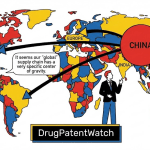
In this high-volume, low-margin reality, every cent of cost matters. This business model incentivizes manufacturers to seek the lowest-cost sources for active pharmaceutical ingredients (APIs) and finished dose forms (FDFs).14 As a result, over 69% of generic drug products are manufactured outside the U.S., with a geographic concentration of API manufacturers in countries like India and China.15 While this strategy ensures low prices, it also creates a brittle, fragile supply chain with minimal redundancy.14
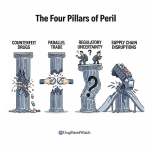
This fragility was laid bare by the nitrosamine crisis that began in 2018. The discovery of cancer-causing impurities in several classes of drugs forced a massive, industry-wide response. Companies were required to conduct extensive risk assessments and implement costly process re-validation and reformulation across their portfolios.2 For many products with razor-thin margins, these significant, unbudgeted costs were the final straw. Rather than undertake the expensive mitigation efforts, some companies simply discontinued products, directly contributing to or worsening drug shortages.2 This event served as a stark case study, revealing that drug shortages are often a symptom of a dysfunctional market model where relentless price pressure creates a system with no economic buffer or resilience. The very cost-saving mechanism of the generic market creates a single point of failure that can, under the right circumstances, lead to a public health crisis.
Part II: The Technical and Regulatory Gauntlet
Proving “Sameness”: The Scientific Cornerstone of Bioequivalence
The concept of a generic drug is founded on a single, powerful premise: that it is a high-quality, bioequivalent substitute for its brand-name counterpart.7 But what does “bioequivalent” truly mean? It is a statistically rigorous concept, not a casual one. For a generic to be approved, it must scientifically demonstrate that it delivers the same amount of active ingredient into a patient’s bloodstream in the same amount of time as the innovator drug.7
This is proven through specialized bioequivalence (BE) studies, which are the scientific cornerstone of the ANDA pathway.11 These studies are meticulously designed to compare the pharmacokinetic (PK) and pharmacodynamic (PD) properties of the generic (test) and brand (reference) products.16 They typically involve administering both drugs to a small group of 24 to 36 healthy volunteers and then measuring the concentration of the drug in their blood over time.11 The data from these studies is used to measure two key PK parameters:
Cmax (Maximum Concentration): The highest concentration of the drug in the blood. This is a measure of the rate of absorption.3
AUC (Area Under the Curve): The total exposure to the drug over time. This is a measure of the extent of absorption.3
For a generic to be approved, the FDA mandates that the 90% confidence interval for the ratio of the generic’s geometric means to the brand’s must fall within a narrow acceptance criterion, typically 80% to 125%.16 While this range may seem wide, in practice, the average difference in absorption between generic and brand-name drugs is minuscule, typically around 3.5%.4 The statistical rigor of this standard ensures that patients can switch from a brand to a generic and expect the same therapeutic effect.19
Despite this exacting scientific reality, a significant gap exists between the regulatory framework and public perception. Patients and physicians are often conditioned to believe that a lower price implies a lower quality.4 This skepticism is often fueled by the visual cues that distinguish a generic from its brand-name counterpart—a different color, shape, or size. These differences are a result of variations in inactive ingredients like flavoring, preservatives, or dyes, which are permitted by the FDA as long as they do not affect how the medicine functions.12 For business development and marketing professionals, this perception gap presents a key challenge. Winning the “hearts and minds” of prescribers and patients requires a data-driven narrative that addresses these misconceptions head-on, focusing on the hard scientific and regulatory rigor that underpins generic drug approval.
The Abbreviated New Drug Application (ANDA): A Masterclass in Data Synthesis
The Abbreviated New Drug Application (ANDA) is the cornerstone of the generic drug approval process in the United States. It is a comprehensive dossier of scientific and technical data designed to prove that the proposed generic product is a high-quality, bioequivalent substitute for the Reference Listed Drug (RLD).7 As the name suggests, the application is “abbreviated” because it allows the generic applicant to rely on the brand-name drug’s established safety and efficacy data, which saves the generic manufacturer a tremendous amount of time and money.5
However, “abbreviated” should not be confused with “simple.” The preparation of an ANDA dossier is a complex and meticulous undertaking that requires a deep understanding of scientific principles, manufacturing processes, and regulatory requirements.11 The dossier is not just a collection of forms; it is a masterclass in data synthesis, requiring the applicant to present information that demonstrates its product is the “same” as the RLD with respect to:
Active Ingredient(s): The proposed product’s active ingredients must be identical to those of the RLD.20
Dosage Form and Strength: The drug product must have the same dosage form (e.g., tablet, capsule, injectable) and strength.20
Route of Administration: The route of administration must be the same (e.g., oral, topical).20
Labeling: The proposed labeling must be the same as the most recently approved labeling for the RLD, with certain exceptions.20
The two core components of the ANDA dossier are bioequivalence (BE) data, which was discussed previously, and Chemistry, Manufacturing, and Controls (CMC) information.11 The CMC section is a detailed blueprint of how the generic product will be made. It must include information to ensure the product’s identity, strength, quality, and purity, including the proposed or actual master production record and a description of the equipment to be used for commercial manufacturing.21
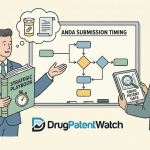
To assist applicants and improve the quality of submissions, the FDA’s Office of Generic Drugs (OGD) develops and publishes Product-Specific Guidances (PSGs), which provide detailed, up-to-date recommendations on the most appropriate methodologies for demonstrating bioequivalence for specific drug products.7 The FDA’s goal, as part of the Generic Drug User Fee Amendments (GDUFA), is to provide assistance in the early stages of the application process so that a complete and high-quality ANDA will contain all the necessary information for the FDA to complete its review in a single review cycle.21 For a generic company, a well-prepared ANDA is a prerequisite for a timely launch. A failure to appreciate the complexity of the submission process can lead to a “Refuse-to-Receive” letter and significant delays, directly impacting the ability to capitalize on a market opportunity.
Building the Foundation of Quality: Navigating cGMP and Supply Chain Resilience
While the ANDA approval process is a one-time event, the obligation to produce a safe and effective drug is perpetual. This is where Current Good Manufacturing Practice (cGMP) regulations come into play.23 cGMP compliance is not a static checklist; it is a dynamic, living standard that establishes the minimum requirements for the methods, facilities, and controls used in manufacturing, processing, and packing a drug product.23 The “C” in cGMP stands for “current,” requiring companies to use technologies and systems that are up-to-date and reflect modern standards.23
The core obligations of cGMP compliance are often summarized by the “Five Ps”:
Primary Materials and Products: Ensuring that raw ingredients meet all applicable quality standards.23
Premises: Maintaining facilities that are clean, properly equipped, and free from contamination.23
People: Ensuring that personnel are properly trained and qualified for their roles.23
Processes: Implementing scientifically sound and reliable manufacturing processes.23
Procedures: Maintaining thorough documentation and strict adherence to established protocols.23
cGMP compliance is not optional; it is a prerequisite for pre-market approval. The FDA reviews a manufacturer’s compliance during the ANDA process and continues to monitor it through on-site inspections.23 A failure to comply can render a drug “adulterated” under the law, which can lead to costly recalls, warning letters, and even legal action.23 In a high-volume, low-margin market, a single quality issue can have catastrophic consequences, wiping out years of profitability. This makes robust internal monitoring, auditing, and a proactive approach to quality assurance a strategic necessity.
The modern generic supply chain presents a unique set of challenges in this regard. As of 2025, over 69% of generic drug products are manufactured outside the United States, with less than 30% of APIs for branded and generic drugs manufactured domestically.14 The global, specialized nature of these supply chains creates a significant risk of disruption. The concentration of manufacturing in a few regions means that a single geopolitical shock, natural disaster, or quality issue can trigger widespread drug shortages.14 For business development professionals, understanding a potential partner’s cGMP track record and the resilience of its supply chain is as critical as analyzing its patent strategy. A company with a “clean” record and redundant, diversified supply sources has a massive, often unappreciated, competitive advantage in a market where trust and reliability are paramount.
Part III: The High-Stakes Chess Match of Intellectual Property
Understanding the Game Board: Patents, Exclusivities, and the Orange Book
The Hatch-Waxman Act is the master blueprint that established the modern drug patent “game board.” It created a patent linkage system where a generic manufacturer’s quest for FDA approval is directly tied to the intellectual property rights of the brand-name drug.6 The central piece of this game board is the FDA’s Orange Book, a publicly available list of patents and regulatory exclusivities that protect a given brand-name drug.6
When a generic company files an ANDA, it must review the Orange Book and make a specific “certification” for every single patent listed for the brand-name drug.2 There are four types of certifications, each with distinct legal consequences:
Paragraph I: A certification that the brand-name drug has no patents listed in the Orange Book.9
Paragraph II: A certification that the listed patent has already expired.9
Paragraph III: A certification that the generic company will not market its product until the listed patent expires.9
Paragraph IV: A certification that the listed patent is either invalid or will not be infringed by the proposed generic product.9
A standard patent term lasts 20 years from the date of filing.25 However, due to the lengthy regulatory review process, a brand-name drug’s average effective market protection from its primary patent is often only 11 to 12 years.25 This limited monopoly is meant to be the brand company’s reward for its massive R&D investment. For a generic company, the Orange Book is more than a list; it is a strategic map that defines the battlefield and the path to a potential market opportunity. A savvy generic firm uses this data to identify patents with the closest expiration dates and to assess which patents are weak and ripe for a challenge. This data-driven analysis is the foundational step in a successful Paragraph IV strategy.
The Strategic Offensive: How Paragraph IV Certifications Unlock the Market
The Paragraph IV certification is the most powerful and high-stakes offensive maneuver in the generic playbook. It is a formal legal statement that serves as an “artificial” act of patent infringement, thereby allowing for the early resolution of patent disputes before a generic drug is actually marketed.9 This single act triggers a strict, statutorily defined timeline that can either result in a significant market advantage or a costly legal entanglement.
Upon receiving a notice of a Paragraph IV certification, the brand-name company faces a critical decision: it has 45 days to file a patent infringement lawsuit against the generic applicant.9 If the brand files a timely lawsuit, the FDA is automatically prevented from approving the generic application for up to 30 months while the parties litigate the dispute.9 If the court rules that the patent is invalid or not infringed, the FDA can approve the ANDA as of the date of the judgment, regardless of the 30-month clock.9 If the case is still pending after the 30-month stay expires, the FDA may approve the ANDA, and the generic company can choose to launch its product “at-risk”.9
The Paragraph IV strategy is so powerful because of the prize at the end: the 180-day period of market exclusivity.10 This de facto monopoly is awarded to the first company or companies to submit a “substantially complete” ANDA with a Paragraph IV certification to a listed patent.10 This six-month window allows the generic company to be the sole competitor, price its product at a significant discount to the brand but still far above the price that will prevail once more competitors enter the market, and generate immense profits.2 This “winner-take-all prize” is the primary financial incentive that justifies the immense costs of litigation and development, and it is a powerful tool for promoting scrutiny of patents of questionable merit.27
The impact of this strategy can be profound. When Pfizer’s blockbuster drug Lipitor (atorvastatin) lost its patent protection, the first generic version of atorvastatin “rapidly seized over 70% of the genericized market within just a few months”.3 This case illustrates the power of the “first-mover advantage” and the immense financial value of the 180-day exclusivity period. For a generic company, the entire process is a meticulously planned campaign to secure this prize.
Defensive Fortifications: The Anatomy of a Patent Thicket
In a world where a single generic launch can obliterate billions in brand-name revenue, innovator companies have developed sophisticated defensive strategies. One of the most common and powerful is the creation of a “patent thicket.” This is a dense, overlapping network of secondary patents that protects a single drug.2 The goal of a patent thicket is to create a legal deterrent that can overwhelm and delay potential competitors.2
These secondary patents can cover a wide range of incremental or peripheral innovations, including:
Formulations
Methods of use
Manufacturing processes
Dosage forms
The existence of a patent thicket means that a generic company cannot simply wait for the foundational patent to expire; it must also navigate the maze of these later-expiring patents.28 This creates a new arms race where the brand company’s R&D efforts shift from purely novel drug discovery to lifecycle management and patent extensions. For a generic company, the strategic challenge is not to avoid the thicket but to deconstruct it. The data suggests that this strategy is not as impregnable as it once was. As Professor Jacob Sherkow explained, the practice of using patent thickets is being targeted by regulatory changes, though he cautioned that companies may still find clever ways to skirt the rules.29 Despite the increase in patenting over time, the fraction of drugs subjected to patent challenges has also increased, suggesting that savvy generics are becoming more willing to scrutinize and challenge weaker patents within the thicket.27
Beyond the Board: The Unwritten Rules of Product Hopping and Reverse Payments
The Hatch-Waxman framework, for all its sophistication, has not prevented all anti-competitive tactics. Some brand-name companies have found “workarounds” to the law that exploit its nuances to delay generic competition.25 Two of the most controversial are product hopping and reverse payment settlements.
Product hopping, also known as “product switching,” is a controversial strategy where a brand-name company launches a slightly modified version of a drug and encourages patients to switch to the new, patent-protected version before the original’s patents expire.31 The most notorious example of this is Teva’s strategy for its blockbuster multiple sclerosis drug, Copaxone (glatiramer acetate).2 Well before the patent on the original 20mg daily injection expired, Teva developed and launched a new 40mg three-times-a-week version.2 According to a House Committee on Oversight investigation, Teva’s strategy created a 2.5-year delay in generic competition, which cost the U.S. healthcare system between USD 4.3 billion and USD 6.5 billion in excess expenditures.31 One striking detail from the investigation was a memo from a Teva scientist who indicated his team was “strongly against” a study into the benefits of the new formulation because it had “no scientific rationale/value”.32 This case study reveals how a seemingly minor clinical change can be used as a powerful anti-competitive tool to extract billions in monopoly profits by creating a legal and commercial barrier to generic entry.
Reverse payment settlements are another controversial tactic that has drawn the scrutiny of antitrust authorities.6 In these settlements, a brand-name company pays a generic firm to delay its market entry.6 Because the payment flows counterintuitively, from the patent owner to the accused infringer, it has been termed a “reverse” payment.34 While some argue that these settlements are a consequence of the Hatch-Waxman Act’s specialized procedures, others have concluded that they are anti-competitive and violate antitrust laws.6 Since 2003, Congress has required that litigants notify federal antitrust authorities of their pharmaceutical patent settlements, and courts have reached different conclusions on whether such a settlement constitutes a violation.34
Part IV: The Modern Generic Playbook: From Commodity to Competitive Advantage
Turning Data into Domination: The Power of Patent and Competitive Intelligence
The success of a generic drug company in the modern era is no longer a given; it is the calculated outcome of a meticulously planned, data-driven, and flawlessly executed strategy.3 The most critical decision in this entire process is product selection. This choice begins not in the lab but in front of a computer screen, with a multifaceted analysis of a target drug’s market size, its complete patent and exclusivity landscape, and its regulatory history.11
This is where competitive intelligence (CI) and advanced patent analytics become indispensable tools. CI is the systematic collection, analysis, and application of data about competitors, market trends, and regulatory changes to inform strategic decision-making.35 For a generic company, this means going beyond a simple keyword search to develop a comprehensive search strategy that utilizes integrated intelligence platforms.13 Platforms like DrugPatentWatch provide the strategic business intelligence necessary to navigate the complex patent landscape and identify lucrative opportunities.11
The modern generic industry is a knowledge-based industry. The value proposition has shifted from simply being the most efficient manufacturer to being the most strategic user of data. By using a platform like DrugPatentWatch, a company can systematically deconstruct a brand company’s patent thicket, identify the weakest patents that are ripe for a challenge, and assess the competitive environment to see how crowded the market is likely to be on day one.11 This process is crucial because a key indicator of a potentially lucrative opportunity is a market with low competition.3 The only way to find such a niche is through superior data and intelligence, which allows a company to turn market data into a competitive moat. Services like DrugPatentWatch provide this capability, helping to inform R&D decisions, identify market opportunities, and anticipate competitive moves.36
The New Era of Value-Added Generics: Embracing Complexity and Innovation
In a market defined by razor-thin margins and intense price pressure, the traditional generic model of simple replication is no longer a viable path to long-term, durable profitability for many products.2 The future of the generic pharmaceutical industry will not be won by the company that is merely the cheapest, but by the one that is the most strategic.2 The industry is now embracing what some call the “new generic playbook”—a strategic evolution from a focus on commodities to a new vision of strategic dominance built on complexity, technology, and geography.13
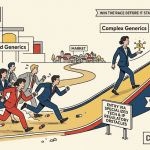
This involves a decisive shift from simple oral dosage forms to higher-value segments like complex generics (e.g., injectables, inhalables, transdermal patches) and biosimilars.13 These products are scientifically challenging and costly to develop, which creates significant barriers to entry that protect against the hyper-competition seen in simpler markets. By moving “up the value chain,” a company can build a more durable, profitable enterprise that is less susceptible to commoditization.13
A key part of this strategy is the development of “value-added medicines” (VAMs).13 These are existing molecules with a novel innovation that can be patented, thereby creating a differentiated product with its own intellectual property protection and a unique market position beyond a traditional generic.2 Examples of VAMs include reformulations (e.g., nanoparticle delivery of paclitaxel), new combination products (e.g., oxycodone + naloxone), or new drug-device combinations.2 The development of these products often uses the “hybrid” 505(b)(2) regulatory pathway, which can be faster and cheaper than a traditional New Drug Application (NDA) and can even provide its own period of market exclusivity.2 This strategic pivot requires a new set of capabilities—not just a strong manufacturing team, but also a sophisticated R&D and regulatory team experienced in navigating these complex pathways.
Advanced Manufacturing: A Look at Continuous Processing and the Future of Production
The future of pharmaceutical manufacturing is often depicted as a shift from traditional, slow “batch” processing to the sleek efficiency of Advanced Manufacturing Technologies (AMT), such as Continuous Manufacturing (CM) and 3D printing.2 The FDA has been a strong advocate for these technologies, touting their potential to enhance drug quality, reduce costs, and improve supply chain resilience.24 CM represents a paradigm shift where input materials are continuously fed into a system, transformed, and removed as finished products.39 The benefits are clear: reduced environmental impact, less waste, and a lowered risk that an entire batch will be rejected due to a quality issue.39
However, the adoption of these technologies has been slow among generic manufacturers.14 This is due to a fundamental business model mismatch. The cost of AMTs, particularly CM, often outweighs the return on investment (ROI) that generic manufacturers can expect relative to other options.14 The existing evidence on the value of CM technologies applies to a single, continually produced product.14 In contrast, the generic business is characterized by a large portfolio of products with fast turnover and highly variable demand cycles.14 The high capital expenditure required to adopt CM does not make sense for a product that will soon face severe price erosion from multiple competitors.
Another promising, albeit nascent, technology is 3D printing, which allows for on-demand drug production and personalized medicine with precise dosages and tailored drug-release profiles.2 This technology has the potential to accelerate R&D and reduce dependency on large-scale manufacturing and storage.42 Yet, like CM, its widespread adoption faces significant challenges, including regulatory compliance and quality assurance.42 For these advanced manufacturing technologies to be widely adopted by the generic sector, a fundamental shift in the economic calculus would be necessary, perhaps through government incentives or a business model that prioritizes a smaller portfolio of high-volume, continuously produced products.14
Winning the Last Mile: Crafting a Launch Strategy for Stakeholders
The process of bringing a generic drug to market does not end with a final approval from the FDA. A successful launch is a “flawlessly executed strategy” that begins years before the product reaches the pharmacy shelf and extends long after.3 The pricing journey can be divided into two distinct phases: Phase 1, the Exclusivity/Limited Competition Window, and Phase 2, the Multi-Competitor Market.3 The goal of the launch strategy is to lock in market share during Phase 1 to build a durable position that can withstand the inevitable price erosion that defines Phase 2.2
Winning this “last mile” requires a sophisticated, stakeholder-specific approach to marketing and education. The message must be tailored to the audience:
For Physicians: The communication should be clinical and data-driven, focusing on the rigorous science of bioequivalence and the drug’s proven safety and efficacy.3
For Pharmacists and Payers: The focus should be on economics and logistics. The message should highlight the significant cost savings and the seamless integration of the product into existing formularies.3
For Patients: The message must be simple and reassuring, conveyed primarily through trusted healthcare professionals. It must address common misconceptions about generic quality and emphasize that the product delivers the same therapeutic benefits at a lower cost.3
The long-term success of a generic drug hinges on the commercial team’s ability to build trust and relationships with these key stakeholders. This requires a level of strategic foresight that extends far beyond the regulatory and legal challenges. It is the final act in a strategic play that must be planned years in advance, with every step—from patent analysis to manufacturing excellence—working in concert to ensure a decisive and profitable market entry.
Key Takeaways
The Hatch-Waxman Act is the foundational legislative blueprint that created the modern generic drug industry by codifying a high-volume, low-margin business model.
Bioequivalence is the rigorous scientific standard that validates a generic drug’s “sameness” to its brand-name counterpart, a reality that stands in direct contrast to public perceptions of quality based on appearance or price.
Patent litigation is not a system failure; it is a designed feature of the Hatch-Waxman Act, with the 180-day exclusivity period serving as a powerful financial incentive that encourages generic companies to challenge potentially weak patents.
The “Affordability Paradox” highlights the systemic fragility of the generic market, where intense price competition, while generating immense cost savings, can also destabilize supply chains and contribute to drug shortages.
The future of the generic industry lies in a “new playbook”—a strategic shift from competing on price for commodity products to embracing complexity and innovation to create defensible, value-added medicines.
Competitive intelligence and patent analytics are no longer optional tools; they are the strategic necessity for identifying market opportunities, navigating legal challenges, and building a durable competitive advantage.
Frequently Asked Questions (FAQ)
Q1: How can a generic drug be different in appearance (e.g., color, shape) but still be considered “the same” by the FDA?
A generic drug is legally and scientifically required to have the same active ingredient, strength, dosage form, and route of administration as its brand-name counterpart.20 However, the FDA does not require generic manufacturers to use the same inactive ingredients, such as dyes, flavors, or preservatives.12 These differences in inactive ingredients are what cause the variations in a generic drug’s color, shape, and size. The FDA’s regulatory focus is on ensuring that these physical differences do not affect the drug’s performance. The cornerstone of the approval process is demonstrating bioequivalence—that the generic and brand-name drugs deliver the same amount of active ingredient into the bloodstream in the same amount of time.7 The scientific data consistently shows that despite these cosmetic differences, the drugs are therapeutically equivalent.
Q2: Does the U.S. government have a strategy to address the potential for drug shortages in the generic market?
The U.S. government recognizes that the low-margin business model of the generic market creates a fragile supply chain that is vulnerable to disruption and can lead to drug shortages.2 In response, the FDA and other government agencies have actively encouraged the adoption of advanced manufacturing technologies (AMT), such as continuous manufacturing (CM).14 Proponents of these technologies argue that they can enhance quality, reduce costs, and improve supply chain resilience.14 However, the high capital costs of adopting these technologies often outweigh the ROI for generic manufacturers in the short term, leading to slow adoption.14 As a result, government efforts are now focused on providing incentives and public financing to alter the business case and accelerate the transition to a more robust, domestically-focused manufacturing infrastructure.14
Q3: What role do services like DrugPatentWatch play for investors and analysts in the pharmaceutical space?
For investors and analysts, services like DrugPatentWatch are essential for competitive intelligence and risk assessment.35 These platforms provide a centralized, normalized view of a drug’s entire intellectual property landscape, including a list of all patents and exclusivities in the FDA’s Orange Book.9 This data is crucial for evaluating a drug’s commercial potential and a company’s strategic position. For a branded drug, the data helps forecast the timing of the “patent cliff” and the level of risk from generic challengers.37 For a generic company, the data helps investors determine whether a company is positioned for a first-to-market advantage, which is a major driver of profitability due to the 180-day exclusivity period.2 In essence, these services turn complex legal and regulatory data into actionable financial intelligence.38
Q4: Is it always beneficial for a generic company to be the first to market?
The analysis indicates that being the first to market is almost always the most beneficial position for a generic company, particularly if it secures the 180-day market exclusivity period.2 This temporary monopoly allows the company to price its product well above the commodity-level prices that will prevail once more competitors enter.2 The first generic can rapidly seize a significant portion of the market, as seen in the launch of generic Lipitor, which captured over 70% of the market in a few months.3 However, this advantage is fleeting. A successful launch strategy must be meticulously planned to capitalize on this window of opportunity before other competitors flood the market and drive prices down by as much as 95%.2
Q5: What is the primary difference between a generic drug and a biosimilar?
While both are affordable alternatives to brand-name drugs, a generic drug and a biosimilar are fundamentally different in their structure and development pathway. A generic drug is a chemically identical copy of a small-molecule drug, such as a simple pill.12 It is developed via the Abbreviated New Drug Application (ANDA) pathway, which requires a demonstration of bioequivalence but not new clinical trials.7 In contrast, a biosimilar is a “highly similar” version of a large, complex biologic drug, which is derived from living organisms.43 Due to their complexity and natural variability, it is impossible to create an identical copy. The development pathway for biosimilars is significantly more complex and costly, requiring clinical data to demonstrate that there are no clinically meaningful differences from the reference product.43 Biosimilars are a key component of the new generic playbook, representing a path to higher-margin, more defensible growth.13