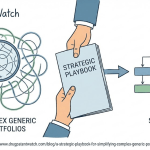
The global generic drug market stands at a strategic inflection point, poised for robust expansion yet simultaneously confronting unprecedented challenges that are fundamentally reshaping its competitive landscape. While market forecasts project the sector will grow from a baseline of approximately $450 billion to $500 billion in the mid-2020s to well over $700 billion by the early 2030s, this growth is not guaranteed to be profitable.1 The traditional playbook, predicated on manufacturing scale and speed to market, is no longer sufficient. Survival and, more importantly, profitable growth in the modern generic market are no longer guaranteed by these factors alone; they depend on a deliberate, disciplined transformation—a journey from reactive opportunism to a proactive, data-driven, and holistic approach to portfolio management.2
This report serves as a definitive roadmap for that journey. It deconstructs the core challenges defining the industry’s “profitability paradox,” including relentless price erosion, the consolidated power of intermediaries, and the increasing fragility of global supply chains.3 It then presents a rigorous, multi-stage blueprint for portfolio construction and management, moving from data-driven candidate identification and sophisticated intellectual property strategy to flawless execution of the development and regulatory pathway.
The central thesis of this analysis is that the future of the generic drug industry will be defined by a strategic bifurcation. One path involves competing on ruthless cost efficiency in the commoditized “vanilla” generics space. The other, more sustainable path requires a fundamental pivot toward higher-barrier, higher-value products like complex generics and biosimilars.3 This latter path necessitates a new set of corporate capabilities centered on scientific innovation, advanced analytics, and supply chain resilience.
To navigate this new reality, this report provides concrete frameworks, advanced analytical tools, and forward-looking strategies to streamline the generic drug portfolio. It outlines data-driven methodologies for identifying high-value opportunities by mastering patent and regulatory intelligence. It details advanced financial modeling techniques, such as risk-adjusted Net Present Value (rNPV) and Real Options Analysis (ROA), to move beyond simple return on investment calculations to a more sophisticated valuation of pipeline assets under uncertainty. Finally, it provides frameworks for active portfolio management, including the implementation of a holistic Key Performance Indicator (KPI) dashboard and a systematic process for portfolio rationalization. For those who master this transition from chaos to clarity, the rewards will be significant: enhanced profitability, reduced risk, and a sustainable leadership position in an industry that remains essential to global health.2
Part I: Deconstructing the Modern Generic Market Landscape: From Chaos to Clarity
Before a winning portfolio can be constructed, the architect must first understand the terrain. The modern generic drug market is not defined by a single challenge but by a confluence of intense, interconnected pressures that have fundamentally altered the industry’s risk-reward calculus.2 Moving beyond reactive, opportunistic decision-making requires a deep, analytical appreciation of the economic, competitive, and policy forces that create a state of perpetual turmoil for many generic companies.2 This section deconstructs these forces to establish the foundational “why” behind the imperative for a data-driven approach to portfolio mastery.
1.1 The Profitability Paradox: Thriving in a High-Volume, Low-Margin Reality
The societal value proposition of the generic drug industry is its staggering efficiency, which generates hundreds of billions of dollars in savings and enables broad patient access to life-saving treatments.2 Generic and biosimilar medicines account for 90% of prescriptions filled in the U.S. but only 13% of total drug spending, saving the healthcare system $445 billion in 2023 alone and an estimated $3.1 trillion over the past decade.4 However, this very success creates the industry’s central strategic challenge: a profitability paradox where immense volume is coupled with ferocious price pressure and razor-thin margins.6
The Price Erosion Cascade
The most formidable challenge is the precipitous and predictable decline in price that occurs upon generic entry.3 This is not a gradual slope but a cliff. The entry of a single generic competitor typically slashes the brand price by 30-39%.2 As more competitors enter, a “race to the bottom” ensues, rapidly commoditizing the market. This dynamic, quantified through extensive analysis of real-world pricing data, is the single most critical variable in forecasting the long-term value of any generic asset.
A synthesized model of this price erosion, based on data from the U.S. Food and Drug Administration (FDA) and the Department of Health and Human Services (HHS), provides a stark quantitative picture of the competitive landscape.8
Number of Generic Competitors
Average Price Reduction vs. Brand Price
Strategic Implication for Portfolio Managers
1
30% – 39%
The “first generic” window offers the highest potential margins. This is the primary target for Paragraph IV challengers seeking 180-day exclusivity.2
2
50% – 54%
A significant price drop occurs. Profitability remains viable but requires highly efficient cost structures and robust supply chains.2
3-5
60% – 79%
Competition intensifies dramatically. Margins begin to compress severely, making the market challenging for higher-cost producers.2
6-10+
80% – 95%
The market becomes fully commoditized. Margins are razor-thin or negative. Only the most efficient, high-volume manufacturers can sustain profitability.2
This predictable cascade means that a portfolio selection strategy based on the simple revenue of the branded drug is doomed to fail.7 A financial model for a generic product can be rendered obsolete within months of its launch if it fails to accurately predict the number of competitors. Therefore, a core competency of portfolio management is the ability to forecast competitive intensity and model its direct impact on pricing and profitability over the product’s lifecycle.
Consolidated Buyer Power
The generic market is not a simple transaction between a manufacturer and a patient. It is a B2B game of logistics and negotiation, dominated by a small number of powerful intermediary organizations that control pharmaceutical distribution and reimbursement.3 Powerful group purchasing organizations (GPOs), pharmacy benefit managers (PBMs), and wholesale buying consortia exert enormous leverage, forcing generic firms to accept steep discounts and rebates, further compressing margins.2 This consolidated buyer power means that market access is not guaranteed upon regulatory approval; it must be won through sophisticated negotiation and contracting, a factor that must be weighed heavily in the initial assessment of a product’s commercial viability.
Supply Chain Fragility and the Cost of Quality
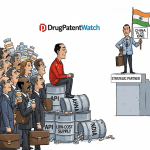
Decades of relentless focus on cost optimization have driven the manufacturing of most Active Pharmaceutical Ingredients (APIs) offshore, with an estimated 80% originating from China and India.3 While this has enabled lower production costs, it has created a fragile and geographically concentrated global supply chain that is highly vulnerable to geopolitical shocks, trade disputes, natural disasters, and systemic quality failures.2
The nitrosamine impurity crisis that began in 2018 serves as a stark case study. The discovery of these potential carcinogens in several classes of widely used drugs forced a massive, industry-wide response, including extensive testing, costly process re-validation, and in some cases, product reformulation or discontinuation, leading to significant drug shortages.2 This event underscored that supply chain resilience and quality management are not merely operational concerns but core strategic imperatives. The risk of a supply chain disruption or a major quality event must be factored into the portfolio risk assessment model, as it can instantly render a low-margin product unprofitable.3
1.2 The Strategic Bifurcation: Two Paths to Market Domination
The confluence of these pressures has led to a strategic bifurcation within the generic drug industry. The future will be defined by two divergent and increasingly distinct paths to success, each requiring a different set of corporate capabilities, investment profiles, and strategic mindsets.3 A successful portfolio strategy must consciously choose which game to play or how to skillfully balance both.
Path 1: The “Vanilla” Generics Game of Ruthless Cost Efficiency
The first path involves competing in the commoditized space of “vanilla” generics—typically high-volume, simple oral solid dosage forms. Success in this arena is a game of operational excellence and is predicated on being the lowest-cost producer.3 This strategy demands a relentless focus on optimizing every element of the cost structure, from API sourcing and synthesis to manufacturing efficiency and supply chain logistics.10 Companies pursuing this path must achieve massive scale to survive on razor-thin margins and must possess a culture of continuous improvement, often leveraging methodologies like Lean Six Sigma to eliminate waste and reduce process variation.10 While viable, this model is inherently high-risk, as market stability is constantly threatened by new low-cost entrants and the ever-present risk of price wars that can erase profitability entirely.3
Path 2: The High-Value Pivot to Complexity and Innovation
The second, and arguably more sustainable, path requires a fundamental pivot away from the hyper-competitive commoditized space toward higher-barrier, higher-value products where competition is naturally limited.3 A company optimized for low-cost, high-volume tablet manufacturing is not inherently equipped to manage the scientific and operational demands of this segment. This path requires a different set of corporate capabilities centered on scientific innovation, advanced manufacturing, and mastery of complex regulatory pathways. This segment includes two primary categories:
Complex Generics: These are products that are difficult to develop, manufacture, or gain regulatory approval for. This complexity can stem from the active ingredient (e.g., peptides, complex mixtures), the formulation (e.g., liposomes), the route of delivery (e.g., long-acting injectables, inhalers, transdermal patches), or the drug-device combination (e.g., auto-injectors).3 The scientific and technical hurdles associated with replicating these products create natural barriers to entry, resulting in fewer competitors, more stable pricing, and more durable and profitable markets.6
Biosimilars: Representing the pinnacle of complexity, biosimilars are highly similar versions of large, complex biologic drugs made from living cells.11 Creating a biosimilar is a far more scientifically demanding and expensive endeavor than developing a small-molecule generic, requiring advanced biotechnology capabilities for cell line development, protein expression, and purification.15 The regulatory pathway is also significantly more rigorous, often requiring comparative clinical studies to demonstrate no clinically meaningful differences from the originator biologic.15 This high barrier to entry ensures a less crowded competitive field and less severe price erosion, typically in the range of 15-30% compared to the 80-95% seen with small-molecule generics.15
This bifurcation means that portfolio mastery is no longer just about picking individual drug candidates; it is about making a conscious, top-down strategic decision to align the entire organization’s capabilities, capital allocation, and risk tolerance with a chosen competitive arena.3
1.3 The Evolving Regulatory and Policy Gauntlet
The strategic landscape of the generic industry is not shaped by market forces alone; it is fundamentally defined by its regulatory and policy environment. Understanding this framework is a prerequisite for any successful portfolio strategy.
The Hatch-Waxman Act as the Foundational Blueprint
The modern generic drug industry in the United States was born from the Drug Price Competition and Patent Term Restoration Act of 1984, commonly known as the Hatch-Waxman Act.1 This landmark legislation created a masterful compromise. For the generic industry, it established the Abbreviated New Drug Application (ANDA) pathway, allowing approval based on a demonstration of bioequivalence without repeating costly and ethically redundant clinical trials.17 Crucially, it also created a powerful incentive for generic companies to challenge weak brand patents through the Paragraph IV certification process, rewarding the first successful challenger with a 180-day period of market exclusivity.6 For the innovator industry, it provided patent term restoration to compensate for time lost during the lengthy FDA review process.17 This act engineered an entirely new market with predictable rules and powerful, counterbalancing incentives that continue to govern the industry’s core strategic decisions.17
The Inflation Reduction Act (IRA) as a Market Disruptor
More than three decades later, the Inflation Reduction Act (IRA) of 2022 represents the most significant policy shift to impact the pharmaceutical market since Hatch-Waxman.18 While its primary aim is to lower drug costs for Medicare beneficiaries, its provisions are poised to have profound and potentially disruptive consequences for the generic drug business model.18
The IRA’s Medicare Drug Price Negotiation Program authorizes the government to set a “maximum fair price” (MFP) for certain high-spend, single-source drugs, many of which are the blockbuster targets most attractive to generic manufacturers.18 This intervention fundamentally alters the risk-reward calculation for generic development. The core financial incentive for a generic company to undertake a costly and risky Paragraph IV patent challenge is the opportunity to launch during the 180-day exclusivity period and capture significant market share at a price just below the high-priced branded drug.6 The IRA, however, establishes this government-negotiated MFP
before the drug’s patents expire.18
This creates a direct causal chain with significant strategic implications. First, the IRA lowers the brand’s price, which serves as the anchor for generic pricing. Second, this reduces the price differential between the brand and the first generic, thereby shrinking the potential profit pool available during the lucrative 180-day exclusivity window. Third, this diminished potential profit reduces the calculated return on investment (ROI) for undertaking an expensive, multi-year patent litigation battle.18 Consequently, the IRA may disincentivize generic challenges against all but the very largest blockbuster drugs, potentially leading to less market competition and fewer generic options in some therapeutic areas—an unintended consequence that could undermine the Act’s own cost-saving goals.18 For portfolio managers, this means that future-looking financial models must now incorporate a “policy-adjusted” ROI, treating the probability and impact of IRA price negotiation as a key input variable.3
Part II: The Data-Driven Engine of Candidate Selection
Having established the complex macro-environment, the focus now shifts to the core operational task of portfolio management: identifying and selecting the right high-value product opportunities in a crowded field.2 This process must be a rigorous, data-driven discipline, not an intuitive guess.6 Success requires a multi-disciplinary approach that integrates commercial analysis, intellectual property law, and technical feasibility assessment.3 This section provides a detailed, step-by-step framework for transforming raw data from regulatory, legal, and commercial sources into a robust, quantitative model for opportunity identification and prioritization.
2.1 Mastering Patent and Exclusivity Intelligence: The Foundation of Opportunity
The starting point for any generic portfolio strategy is the systematic identification of potential opportunities by filtering the entire universe of branded drugs down to a shortlist of high-potential candidates.3 This process is anchored in the mastery of patent and regulatory data.
Deconstructing the FDA Orange Book
The FDA’s publication, “Approved Drug Products with Therapeutic Equivalence Evaluations,” commonly known as the Orange Book, is not merely a regulatory list; it is the foundational dataset for competitive intelligence in the generic drug industry.20 Every data field is a strategic signal that can be decoded to map the competitive landscape, predict brand defense strategies, and identify the most vulnerable targets for generic entry. A surface-level view sees a list of approved drugs, but a deep, analytical approach reveals its strategic utility.20 Generic developers must master the interpretation of its key data fields 23:
Application Type (N vs. A): This simple field distinguishes between a New Drug Application (NDA or innovator) and an Abbreviated New Drug Application (ANDA or generic). Counting the number of ‘A’ applications for a given innovator product provides an immediate, real-time measure of the existing level of generic competition.23
Reference Listed Drug (RLD) / Reference Standard (RS): The RLD is the specific innovator drug product that an ANDA applicant must demonstrate its generic is bioequivalent to. The RS is the product an applicant must use for in vivo bioequivalence studies. Identifying the correct RLD and RS is the non-negotiable first step in the entire development process.23
Therapeutic Equivalence (TE) Code: This code indicates the FDA’s rating of therapeutic equivalence between a generic and its RLD. An “AB” rating signifies that the product meets the necessary bioequivalence requirements and is considered therapeutically equivalent, allowing for substitution at the pharmacy level. Understanding TE codes is critical for assessing a product’s market potential and interchangeability.21
Patent and Exclusivity Data: This is the heart of the Orange Book for strategic planning. It includes the Patent Number, the Patent Expire Date, and Patent Use Codes which describe the specific approved use covered by a method-of-use patent.23 A thorough analysis of this data allows a company to build a comprehensive calendar of patent and regulatory exclusivity expirations, which forms the long-range pipeline of potential opportunities.3 A brand drug protected by a “thicket” of numerous, late-expiring formulation and method-of-use patents signals a strong defensive strategy by the innovator.6 This data allows a generic firm to strategically prioritize challenging the weakest of these patents rather than waiting for all of them to expire. Furthermore, analyzing the Patent Use Codes can reveal opportunities for a “skinny label” launch, where a generic is approved for only the non-patented indications of the brand drug, enabling earlier market entry.23
Beyond the Orange Book: Leveraging Commercial Intelligence Platforms
While the Orange Book is foundational, it provides a view primarily of the U.S. regulatory landscape. To achieve true portfolio mastery in a global market, companies must augment this public data with specialized commercial intelligence platforms like DrugPatentWatch.3 These platforms are indispensable tools for proactive strategic forecasting, integrating disparate data streams into a single, actionable dashboard.6 Their value lies in providing:
Global Patent and Exclusivity Data: Tracking patent status and expirations in over 130 countries, which is essential for developing a global launch strategy.26
Litigation Tracking: Providing real-time updates on patent litigation, including Paragraph IV challenges, which can signal early generic entry opportunities and reveal the legal strategies of competitors.25
API and Finished Product Supplier Information: Identifying potential suppliers for Active Pharmaceutical Ingredients and finished drug products, which is critical for assessing manufacturing feasibility and supply chain risk.25
Clinical Trial Data: Monitoring ongoing clinical trials can provide early insights into the R&D pipelines of both innovator and generic competitors.25
By consolidating this information, these platforms transform the data-gathering process from a manual, time-consuming task into an automated, strategic function, allowing portfolio managers to focus on analysis and decision-making.26
Freedom-to-Operate (FTO) Analysis as a Core Discipline
A critical early-stage activity informed by patent intelligence is the Freedom-to-Operate (FTO) analysis.6 This is not a simple patent search; it is a rigorous legal and technical assessment to determine whether a proposed product, manufacturing process, or method of use may infringe on the valid intellectual property rights of a third party.27 A robust FTO analysis is a core risk mitigation discipline. In the U.S., a finding of willful infringement can lead to treble damages, a potentially catastrophic financial outcome. A well-documented FTO analysis serves as evidence of due diligence, providing a good-faith belief of non-infringement that can effectively neutralize this threat.27
The FTO process is systematic and multi-phased 27:
Scoping: Clearly defining the product’s technical features (chemical structure, formulation, manufacturing process, intended uses) and the geographic markets for manufacturing and sale.
Searching: Conducting comprehensive searches of patent databases in the relevant jurisdictions to identify potentially blocking patents.
Analysis: A detailed legal and technical review of the claims of the identified patents to assess the risk of infringement. Patents are often stratified into risk tiers (e.g., high, medium, low) to prioritize further action.
Reporting and Strategy: Summarizing the findings and outlining strategic options, which may include proceeding with the launch, “designing around” the blocking patent, challenging the patent’s validity, or seeking a license.
2.2 The Legal Chess Match: A Quantitative Approach to the Paragraph IV Challenge
The Hatch-Waxman Act’s Paragraph IV (P-IV) certification pathway is the central mechanism for pre-expiration generic entry in the U.S. It allows a generic company to assert that a brand’s listed patents are invalid, unenforceable, or will not be infringed by the proposed generic product.17 This filing is considered an artificial act of infringement, designed to trigger litigation and resolve patent disputes before the generic drug hits the market.30
The P-IV Pathway as a Core Business Strategy
For sophisticated generic companies, the P-IV pathway is not viewed as a mere legal hurdle but as an offensive business strategy.6 The “brass ring” is the 180-day period of marketing exclusivity granted to the first applicant to file a “substantially complete” ANDA with a P-IV certification.6 During this period, the FDA cannot approve other generics for the same drug, creating a lucrative, temporary duopoly between the brand and the first-filer.6 The financial reward can be immense, often defining a company’s performance for an entire year.6 Therefore, the high costs of litigation (often $5 million to $10 million or more) and the potential 30-month stay of FDA approval should be viewed as the fixed upfront costs—the “premium” paid—for the chance to win this high-reward prize.6 This reframes the decision from a purely legal question of “Can we win this case?” to a strategic financial question: “Is the risk-adjusted value of this exclusivity period greater than the cost of the litigation?”
Assessing Patent Vulnerability
A successful P-IV strategy begins with a rigorous assessment of the brand’s patent portfolio to identify vulnerabilities.33 Innovator companies often build “patent thickets”—dense networks of overlapping secondary patents covering formulations, methods of use, and manufacturing processes—to prolong their monopolies beyond the expiration of the core composition-of-matter patent.3 The generic challenger’s task is to dissect this thicket and find the weakest links. This analysis focuses on the core pillars of patent validity 30:
Novelty and Prior Art: Was the invention truly new at the time of filing, or does prior art exist that invalidates the patent’s claims?
Obviousness: Would the invention have been obvious to a “Person Having Ordinary Skill in the Art” (PHOSITA) based on the existing body of knowledge?
Enablement and Written Description: Does the patent sufficiently describe the invention to enable a skilled person to make and use it without undue experimentation?
Modeling the Probability of Litigation Success
While patent litigation is inherently uncertain, a data-driven approach can be used to move beyond qualitative legal opinions to a more quantitative risk assessment. Historical data reveals a high overall success rate for generic challengers, with one study finding that 76% of first-to-file P-IV challenges are ultimately successful.30 This aggregate data can be refined by building a simple probabilistic model to evaluate specific cases 34:
P(success)=P(validity)×P(non-infringement)
The inputs for this model are derived from a deep analysis of case-specific factors:
P(validity): The probability that the brand’s patent will be found valid. This is informed by the strength of the invalidity arguments (e.g., the quality of the identified prior art).
P(non-infringement): The probability that the generic product will be found not to infringe the patent’s claims. This is higher if the generic company has successfully “designed around” the patent.
These probabilities can be estimated by analyzing historical litigation outcomes for similar types of patents (e.g., formulation vs. method-of-use), in specific therapeutic areas, and before specific judicial venues, which are known to have different tendencies.31 This quantitative framework provides a disciplined way to assess legal risk and is a critical input for the overall portfolio selection model.
2.3 A Multi-Factor Model for Opportunity Scoring
The final step in candidate selection is to integrate these disparate data streams—commercial, competitive, technical, and legal—into a single, coherent framework for scoring and ranking opportunities.3 This imposes a quantitative discipline on the decision-making process, ensuring that projects are compared on an “apples-to-apples” basis and that selections align with the company’s overarching strategic goals.35
The Four Pillars of Assessment
A robust scoring model is built on four pillars, each informed by specific data sources 3:
Commercial Viability: This pillar assesses the size of the prize. It involves a deep dive into historical and projected sales of the Reference Listed Drug (RLD), using data from commercial providers like IQVIA and GlobalData.36 Analysis should focus on identifying the market “sweet spot”—often markets with annual sales between $50 million and $200 million, which are large enough to be profitable but may deter the intense competition seen with multi-billion-dollar blockbusters.3 Critically, this analysis must now include a “policy-adjusted” ROI to model the potential revenue impact of IRA price negotiations.3
Competitive Intensity: This pillar assesses how the prize will be divided. It involves using FDA data (e.g., the Paragraph IV Certification List) to count the number of existing and pending ANDAs for the target drug.3 This forecast of the number of future competitors is a direct input into the price erosion models that are essential for realistic revenue projections. An opportunity with a high commercial value but an expectation of 10+ competitors may be less attractive than a smaller market with clear barriers to entry that will limit competition to two or three players.
Technical & Manufacturing Feasibility: This pillar assesses the ability to execute the project. It involves a rigorous internal evaluation of the complexity of the formulation, the challenges of API sourcing and synthesis, and the requirements of the manufacturing process.3 For companies pivoting to a high-value strategy, a high degree of technical complexity can be a positive factor, as it creates a barrier to entry for less sophisticated competitors.3
Legal & Regulatory Risk: This pillar assesses the probability of reaching the market in a timely manner. It incorporates the quantitative output from the P-IV litigation success model and an assessment of any unique regulatory hurdles, such as the need for complex and costly bioequivalence studies or the lack of clear FDA guidance.33
These pillars are then integrated into a weighted scoring matrix, which provides a tangible tool to implement a data-driven selection process.
Risk Factor
Description
Weighting
Data Sources
Candidate A Score (1-5)
Candidate B Score (1-5)
Commercial Viability
Market size, projected profitability, price erosion risk, IRA negotiation risk.
30%
IQVIA/GlobalData Sales, IRA Drug Lists, Internal Price Erosion Models
5
3
Competitive Intensity
Number of current/pending ANDAs, likelihood of an Authorized Generic launch.
25%
FDA Orange Book, P-IV Certification List, Competitor Pipeline Intelligence
2
4
Technical Feasibility
Complexity of formulation, manufacturing process, API sourcing, and analytical methods.
25%
Internal R&D Assessment, Supplier Audits, FDA Product-Specific Guidances
3
4
Legal & Regulatory Risk
Strength of brand patents, probability of P-IV litigation success, BE study complexity.
20%
FTO Analysis, Internal/External Legal Counsel, P-IV Success Model
4
2
Total Weighted Score
100%
3.60
3.20
This model forces an explicit discussion of strategic priorities through the assignment of weights and provides a disciplined, defensible rationale for prioritizing Candidate A over Candidate B, despite Candidate B’s lower competitive and technical risk. It transforms a complex, multi-faceted decision into a structured, data-driven choice.
Part III: Advanced Financial Modeling for Portfolio Valuation
Traditional financial metrics such as simple ROI or payback period are insufficient for navigating the high-stakes, high-uncertainty environment of generic drug development.2 The long timelines, significant upfront investment, and binary nature of many risks (e.g., litigation success/failure, regulatory approval/rejection) demand more sophisticated valuation methodologies. This section details the application of advanced financial models that are purpose-built to handle uncertainty and managerial flexibility, providing a more realistic and strategically sound basis for portfolio decision-making.
3.1 Beyond ROI: Risk-Adjusted Net Present Value (rNPV) for High-Stakes Decisions
The gold standard for valuing clinical-stage and high-risk pharmaceutical assets is the risk-adjusted Net Present Value (rNPV) methodology.40 This technique enhances standard Discounted Cash Flow (DCF) analysis by explicitly incorporating the unique probabilities of technical and regulatory success (PTRS) inherent in drug development.40 While a standard NPV calculation discounts future cash flows by a rate that reflects the time value of money and general market risk, it does not adequately capture the stage-specific development risks. The rNPV model corrects this by adjusting the cash flow projections themselves for the probability of success at each phase.40
Mechanics of the rNPV Calculation
The application of rNPV to a generic drug project involves a multi-step process that integrates financial, clinical, and regulatory data 40:
Forecast Peak Sales and Market Share: Project the potential annual revenue for the generic product, assuming it successfully reaches the market. This forecast is based on the originator drug’s sales, the expected market share capture (which is heavily influenced by first-mover advantage), and the anticipated price.2
Model the Price Erosion Curve: Develop a realistic price erosion curve based on the forecasted number of competitors. This critical step, informed by the models discussed in Part I, ensures that revenue projections are not overly optimistic and reflect the harsh realities of the generic market.3
Estimate Costs: Project all anticipated costs throughout the project’s lifecycle, including R&D expenses (formulation, BE studies), regulatory submission fees (GDUFA fees), potential legal expenses for P-IV challenges, manufacturing scale-up costs, and ongoing Cost of Goods Sold (COGS).2
Determine Phase-Specific Probabilities of Success (POS): This is the core of the rNPV method. Each stage of the development and launch process is assigned a probability of success. For a generic drug, these phases might include:
Successful Formulation and BE Study Completion
Successful ANDA Submission and FDA Approval
Successful P-IV Litigation (if applicable)
Successful Commercial Launch Historical industry data can provide benchmarks for these probabilities, which are then adjusted based on project-specific factors (e.g., complexity of the drug, company’s track record).
Calculate Risk-Adjusted Cash Flows: For each year in the forecast period, the projected net cash flow (Revenues – Costs – Taxes) is multiplied by the cumulative probability of reaching that year. For example, if the probability of successful development is 70% and the probability of successful regulatory approval is 80%, the cash flows during the market phase are adjusted by a cumulative probability of 0.70×0.80=0.56.
Discount to Present Value: The risk-adjusted annual cash flows are then discounted back to their present value using an appropriate discount rate (often the company’s Weighted Average Cost of Capital, or WACC). The sum of these discounted cash flows yields the rNPV of the project.
The rNPV method provides a more conservative and realistic valuation than a standard DCF because it directly penalizes future cash flows for the very real risk that they may never materialize.40 This makes it an indispensable tool for comparing projects with different risk profiles and for making capital allocation decisions based on a clear-eyed view of potential value.
3.2 Valuing Flexibility: Real Options Analysis (ROA) in R&D Decision-Making
While rNPV is a powerful tool for incorporating risk, it has a key limitation: it assumes a static decision path. It calculates the value of a project based on a pre-determined plan and does not capture the value of managerial flexibility—the ability to adapt the plan based on new information.42 In the dynamic world of pharmaceutical R&D, this flexibility is incredibly valuable. Real Options Analysis (ROA) is a valuation technique, borrowed from financial engineering, that is designed to quantify this value.42
ROA frames an R&D project not as a single, irreversible investment, but as a series of “options”.42 The investment in one phase of development (e.g., a Phase 1 trial or a P-IV litigation) is seen as paying a “premium” to acquire the “option” to proceed to the next phase if the results are positive.43 If the results are negative, management has the right, but not the obligation, to abandon the project, thereby limiting the downside loss to the cost of the initial investment.43
Conceptual Application of ROA to a Generic Project
Consider a generic drug candidate that requires a P-IV challenge. A traditional NPV or rNPV analysis might show a negative value due to the high upfront litigation costs and the risk of failure. However, ROA provides a different perspective 42:
The Project as a Call Option: The investment in the P-IV litigation is the “option premium.” The “underlying asset” is the future stream of profits from the generic drug if the litigation is won and the drug is launched. The “exercise price” is the cost of launching the drug (e.g., manufacturing scale-up, marketing).
Valuing the Flexibility to Abandon: ROA recognizes that if the litigation fails, the company will not incur the launch costs. This ability to abandon the project after a negative outcome truncates the potential for large losses, which is a source of value that traditional models ignore.43
Decision Trees and Valuation: In practice, ROA often uses decision trees to map out the various possible paths and outcomes of a project, with probabilities assigned to each branch.43 Option valuation models (like the Black-Scholes model or binomial models) are then used to calculate the value at each decision node, working backward from the final potential payoff.43
ROA consistently yields a higher valuation for high-risk, high-reward projects than rNPV because it correctly assigns a positive value to managerial flexibility and the ability to limit downside risk.42 This makes it a particularly suitable framework for evaluating aggressive P-IV challenges or investments in complex generics with high technical uncertainty. It provides a strong theoretical justification for pursuing projects that may appear unattractive under more rigid valuation methods but hold significant strategic potential.
3.3 Modeling the Price Erosion Curve
A critical input for both rNPV and ROA models is a realistic forecast of future revenues. As established in Part I, the single most important factor determining the revenue trajectory of a generic drug is the rate of price erosion, which is driven by the number of competitors entering the market.9 Therefore, building a data-driven model for price erosion is a foundational capability for accurate portfolio valuation.
The relationship between the number of competitors and price is non-linear.41 Sophisticated models move beyond simple linear assumptions and use a set of binary variables to represent the number of competitors, allowing for a more nuanced and empirically validated curve.41 The process for building a predictive price erosion model involves:
Data Collection: Assembling a historical dataset of generic launches, using sources like Medicare Part D data or commercial databases from providers like IQVIA.9 For each launch, the data should include the brand price prior to generic entry, the generic price over time (e.g., monthly for 36 months post-launch), and the number of generic competitors in the market for each month.41
Multivariate Regression Analysis: A regression model is built where the dependent variable is the ratio of the generic price to the baseline brand price. The main independent variable is the number of generic competitors (modeled as a series of binary variables, e.g., is_2_competitors, is_3_competitors, etc.).
Inclusion of Control Variables: To improve the model’s accuracy, other factors that influence pricing are included as control variables, such as the size of the market and the number of therapeutic substitutes available in the same drug class.41
Generating the Predictive Curve: Once the model is validated, it can be used to generate a predicted price erosion curve for a new product candidate. The key input is the forecasted number of competitors for that product (derived from the competitive intensity analysis in Part II).
This quantitative, evidence-based approach to forecasting price erosion removes much of the guesswork from revenue projections. It provides the financial modeling team with a defensible, data-driven input that significantly improves the reliability of the rNPV and ROA valuations, ultimately leading to better-informed and more robust portfolio investment decisions.
Part IV: From Selection to Launch: Operational and Commercial Excellence
A meticulously selected and financially sound portfolio is worthless without the ability to execute. Once a candidate is chosen, the focus shifts from strategic analysis to operational and commercial excellence. This is a high-stakes gauntlet of scientific, manufacturing, regulatory, and marketing challenges where speed-to-market is critical.3 Any delay can significantly impair a product’s commercial viability, especially in a market defined by the overwhelming power of the first-mover advantage.3
4.1 The Scientific Gauntlet: Overcoming Development Hurdles
The scientific and regulatory cornerstone of the abbreviated approval pathway is demonstrating equivalence to the branded original.3 This requires precision, adherence to high-quality standards, and the ability to navigate increasingly complex scientific challenges.
Proving Sameness: The Science of Bioequivalence
For a generic drug to be approved via an ANDA, the manufacturer must prove that it is bioequivalent (BE) to the Reference Listed Drug (RLD).17 Bioequivalence means that the generic drug delivers the same amount of active ingredient into the bloodstream over the same period of time as the brand-name drug.17 This is typically demonstrated through pharmacokinetic (PK) studies in a small group of healthy volunteers.6 These studies measure two key parameters 6:
Cmax (Maximum Concentration): The highest concentration of the drug in the blood, which measures the rate of absorption.
AUC (Area Under the Curve): The total exposure to the drug over time, which measures the extent of absorption.
To establish bioequivalence, the 90% confidence interval for the geometric mean ratio of the generic product’s Cmax and AUC to the brand’s must fall within the acceptance range of 80% to 125%.6
The Rise of Complex Generics: Where Science Becomes Strategy
While demonstrating BE for simple oral tablets is a well-established process, the challenge is magnified for complex generics.45 Generic developers must replicate the performance of the RLD without access to the innovator’s proprietary formulation data.6 While the active pharmaceutical ingredient (API) must be identical, the inactive ingredients (excipients) can differ, introducing risk if they affect the drug’s stability, dissolution, or absorption.6
For complex products like modified-release formulations, parenteral drugs, or inhalation products, standard PK studies may be insufficient.17 The FDA has recognized these challenges and often issues Product-Specific Guidances (PSGs) that outline the recommended BE studies, which may require a “weight-of-evidence” approach combining in vitro tests, PK studies, pharmacodynamic (PD) studies, and sometimes even comparative clinical endpoint studies.13 Navigating these complex scientific and regulatory requirements is a significant barrier to entry, which is precisely why these products offer more stable and profitable markets for companies with the requisite scientific expertise.6
4.2 Forging a Resilient Supply Chain
A robust and reliable supply chain is not a back-office function; it is a core competitive weapon and a prerequisite for a successful Day 1 launch.6 A company can have a perfect formulation and a timely FDA approval, but if it cannot deliver the product to pharmacies on the day of launch, the first-mover advantage is lost.
Strategic API Sourcing and Risk Mitigation
Given that the API can represent over half of a generic drug’s production cost, mastering its sourcing is the single most impactful strategy for achieving cost leadership and ensuring supply reliability.10 This requires intense due diligence on potential suppliers, evaluating them on regulatory compliance (cGMP), quality systems (via on-site audits), technical capability, and scalability.6
The geographic concentration of API manufacturing in India and China introduces systemic risks, including geopolitical tensions, trade tariffs, and quality crises that can lead to widespread drug shortages.6 A resilient supply chain strategy must therefore incorporate proactive risk mitigation 3:
Supplier Diversification: The most fundamental strategy is to avoid single-sourcing by qualifying multiple API suppliers in different geographic regions.3
Strategic Inventory: Maintaining strategic buffer stocks of critical APIs and finished products can insulate the company from short-term supply disruptions.3
Transparent Partnerships: Building strong, transparent relationships with suppliers allows for better planning and the ability to capitalize on competitor disruptions, building a reputation for reliability in the market.6
AI-Powered Demand Forecasting
Forecasting demand in the pharmaceutical market is notoriously difficult due to demand volatility.10 Traditional methods often lead to either overstocking, which ties up working capital, or stockouts, which result in lost sales and damaged reputation. Artificial Intelligence and Machine Learning are creating a revolutionary leap in this capability. AI-powered forecasting models can analyze diverse and complex datasets—including historical sales data, prescription trends, payer formulary changes, and even public health data—to generate highly accurate demand forecasts. This enables optimized production scheduling and leaner inventory management, freeing up capital and minimizing the risk of product obsolescence.3
4.3 The Day 1 Imperative: Executing the Flawless Launch
In the generic drug market, timing is everything. The first generic to market secures a commanding and durable competitive advantage, a phenomenon known as the “Day 1 Imperative”.6
Quantifying the First-Mover Advantage
The evidence overwhelmingly demonstrates that the first generic to launch captures a disproportionate and persistent market share.46 Analysis shows that the initial generic entrant enjoys an 80% market share advantage over the second entrant and a 225% advantage over the third.46 This dominance often allows the first mover to capture up to 90% of the genericized market, an advantage that can persist for years.6
This enduring advantage stems from several factors: physicians begin prescribing the first available generic, pharmacies establish ordering patterns and integrate the product into their systems, and patients become familiar with the product’s appearance. Together, these create high “switching costs” for later entrants, making it incredibly difficult to dislodge the established first mover.6 Real-world examples vividly illustrate this phenomenon. When the first generic version of the blockbuster cholesterol drug atorvastatin (Lipitor) launched, it rapidly captured over 70% of the generic market. Similar patterns were seen with generic versions of olanzapine (Zyprexa) and Teva’s 2017 launch of generic Viagra, which captured 70% of the market within a year.46
Crafting a Dynamic Pricing and Reimbursement Strategy
Pricing in the generic market must be dynamic and segmented, adapting to the rapidly changing competitive context.6 The pricing journey can be divided into two distinct phases:
Phase 1: The Exclusivity/Limited Competition Window: For the first generic to market, especially one with 180-day exclusivity, the pricing strategy is focused on value capture. The price is typically set at a modest discount of 15% to 30% below the brand’s wholesale acquisition cost (WAC). This allows the company to rapidly recoup its R&D and legal costs while aggressively capturing market share from the high-priced brand.6
Phase 2: The Multi-Competitor Market: As soon as a second competitor enters, the strategic focus shifts from value capture to market share retention. This phase is defined by the rapid and severe price erosion detailed in Part I. Pricing strategies become reactive and are primarily cost-based (covering COGS plus a minimal profit) and market-based (continuously monitoring and responding to competitor prices). In this phase, long-term profitability is determined not by pricing power, but by having the most efficient cost structure and operational excellence.6
Navigating the PBM and Payer Landscape
Securing favorable formulary placement with payers and Pharmacy Benefit Managers (PBMs) is a critical component of a successful launch.6 PBMs act as powerful gatekeepers, managing prescription drug benefits for millions of patients and creating formularies—tiered lists of covered medications that determine patient co-payments.6 Gaining placement on the lowest co-pay tier (Tier 1, Preferred Generics) is essential for driving patient and pharmacy adoption.6
However, the incentives of PBMs are not always aligned with promoting the lowest-cost drug. PBMs often derive significant profit from rebates negotiated with brand manufacturers and from “spread pricing” on generics. This can create a perverse incentive where a high-list-price brand drug with a large rebate is more profitable for the PBM than a low-cost generic, leading to generics being placed on higher, more expensive tiers or being excluded from formularies altogether.6 Therefore, a successful launch requires a sophisticated PBM and payer engagement plan that articulates a value proposition beyond simple unit price, potentially involving strategic contracts or rebates to secure preferred Tier 1 placement.6
Part V: Active Management and Future-Proofing the Portfolio
Portfolio management is not a one-time event; it is a dynamic and continuous process of evaluation, optimization, and strategic foresight.35 Once products are launched, they must be actively managed to maximize their value throughout their lifecycle. Simultaneously, the organization must look beyond the current portfolio and invest in the capabilities and technologies that will secure a competitive advantage in the future. This final section outlines the frameworks for ongoing performance measurement, systematic portfolio rationalization, and the strategic imperatives for future-proofing the portfolio.
5.1 Measuring What Matters: A Holistic KPI Dashboard for Portfolio Health
To effectively manage a complex portfolio, decision-makers need a clear, concise, and balanced view of performance.35 A holistic Key Performance Indicator (KPI) dashboard provides this clarity, moving beyond purely financial metrics to encompass all critical aspects of the business.2 A well-designed dashboard, structured around four key quadrants, ensures that short-term financial performance is not pursued at the expense of long-term market position, R&D productivity, or operational stability.2
The Four-Quadrant Dashboard Framework
This framework provides a comprehensive, “apples-to-apples” basis for evaluating the health of the entire portfolio and the performance of individual products.35
Quadrant
Key Performance Indicator (KPI)
Definition / Standard Formula
Strategic Importance & Actionable Insights
Financial Health
Portfolio Gross Profit Margin
(Net Sales – COGS) / Net Sales
Tracks overall profitability. A declining trend signals severe price erosion or rising costs, triggering a review of pricing strategies or manufacturing efficiency initiatives.50
Cost of Goods Sold (COGS) %
COGS / Net Sales
Measures manufacturing and procurement efficiency. An increasing trend prompts investigation into API sourcing costs, production inefficiencies, or quality issues.10
Return on Research Capital (RORC)
Current Year Gross Profit / Previous Year R&D Spend
Measures the efficiency and productivity of R&D investments. A low or declining RORC suggests that the R&D pipeline is not generating sufficient value, prompting a review of the candidate selection process.2
Operating Cash Flow
Cash generated from core business operations.
The ultimate measure of financial health and the ability to fund future investments. Negative cash flow from a product is a strong indicator for potential divestment.2
Market & Commercial Performance
Market Share of Key Drugs
Company’s Product Sales / Total Market Sales for that Product
Tracks competitive position for high-value assets. A loss of market share may indicate new competitor entry, aggressive pricing from rivals, or supply chain issues.11
Price Erosion Rate
% Change in Average Selling Price over Time
Directly measures the impact of competition. A faster-than-expected erosion rate requires immediate adjustments to financial forecasts and profitability models.2
New Product Launch Revenue
Revenue generated from products launched in the last 12-24 months.
Measures the success of the R&D pipeline in bringing valuable new products to market. Weak performance indicates issues with launch execution or candidate selection.2
Generic Dispensing Rate
% of Prescriptions for a Molecule Filled with the Company’s Generic
Indicates adoption by pharmacies and payers. A low rate may signal issues with PBM formulary placement or supply chain reliability.2
R&D and Regulatory Excellence
Pipeline Strength
Number of ANDAs filed or in late-stage development.
A leading indicator of future growth. A weak pipeline signals a future revenue gap and the need to accelerate business development or R&D efforts.35
Bioequivalence (BE) Study Success Rate
(# Successful BE Studies / Total BE Studies Conducted) * 100
Measures the effectiveness of the formulation and clinical development teams. A low success rate indicates scientific or operational issues that need to be addressed to avoid costly delays.49
Average ANDA Approval Time
Time from ANDA submission to FDA approval.
Measures regulatory efficiency. Longer-than-average times can indicate issues with submission quality, leading to the loss of first-mover advantage.2
First-Cycle Approval Rate
% of ANDAs Approved Without a Complete Response Letter (CRL)
A critical measure of regulatory submission quality. A low rate signifies costly delays and rework, indicating a need for process improvement in the regulatory affairs department.49
Operational & Supply Chain Resilience
Inventory Turnover Rate
COGS / Average Inventory
Measures how efficiently inventory is being managed. A low rate may indicate overstocking or poor demand forecasting, tying up working capital.50
API Sourcing Diversification
% of critical APIs with at least two qualified suppliers in different geographic regions.
A direct measure of supply chain risk. A low score indicates high vulnerability to geopolitical or logistical disruptions, requiring immediate action to qualify alternative suppliers.10
Manufacturing Capacity Utilization
(Total Actual Output / Total Possible Output) * 100
Indicates the efficiency of production operations. Consistently low rates may signal a need for network rationalization, while rates near 100% may indicate a need for capital investment to avoid bottlenecks.49
Drug Recall Frequency / Quality Audit Scores
Number of product recalls; scores from regulatory (e.g., FDA) inspections.
A fundamental measure of product quality and compliance. Poor performance signals significant operational and reputational risk, requiring immediate corrective action.51
By establishing baselines, setting clear targets, and regularly reviewing trends across these four quadrants, management can make balanced, data-driven decisions to steer the portfolio, allocate resources effectively, and proactively address emerging challenges before they become crises.49
5.2 The Art of Pruning: A Systematic Framework for Portfolio Rationalization
Active and continuous portfolio management is essential to maintain profitability and strategic focus as a portfolio matures.3 Rather than a one-time restructuring event, portfolio rationalization should be an ongoing, disciplined process—the “art of pruning”—to systematically weed out underperforming assets and reallocate capital, manufacturing capacity, and talent to higher-value opportunities.2
The goal is to move beyond an emotional attachment to legacy products and make objective, data-driven decisions.35 A practical framework for this process involves four key steps 2:
Analyze & Collect Data: Gather comprehensive performance data for every product/SKU in the portfolio, drawing directly from the KPI dashboard. This includes financial data (gross profit margin, COGS), commercial data (market share trends), and operational data (supply chain stability, manufacturing costs).
Classify & Score: Perform a Pareto analysis (80/20 rule) to segment the portfolio and identify the small number of products driving the majority of profits, as well as the long “tail” of low-volume or low-margin products. Use a scoring model, similar to the one for candidate selection, to rank all existing products based on metrics like gross profit contribution, market growth potential, and strategic fit.
Strategic Review: Conduct a deep-dive analysis of the low-performing “tail” products. This review must go beyond the numbers to consider qualitative factors. Does the product play a strategic role in a key customer relationship? Does it complete a therapeutic portfolio offering? Is it a necessary component of a government tender?
Decide & Execute: Based on this comprehensive review, assign a clear strategic disposition to every product 3:
Invest/Grow: High-potential products in growing markets that warrant additional investment in marketing or capacity.
Maintain/Harvest: Stable, profitable products in mature markets that require minimal investment and should be managed to maximize cash flow.
Divest/Discontinue: Underperforming, low-margin, or non-strategic products that are draining resources. A clear execution plan should be developed to either sell the product line or manage a market withdrawal in a way that minimizes customer disruption.
This disciplined process of pruning ensures that the portfolio remains lean, profitable, and strategically focused, freeing up critical resources to fuel the next generation of growth engines.2
5.3 The Next Frontier: AI, Biosimilars, and the Portfolio of Tomorrow
To thrive in the coming decade, generic companies must look beyond the current state and invest in the capabilities and technologies that will define the future of the industry.2 This involves a decisive strategic pivot toward complexity and the adoption of transformative digital tools.
The Digital Revolution: AI in Candidate Selection and Formulation
Artificial Intelligence and Machine Learning (ML) are emerging as the single most disruptive force in the generic industry, moving beyond simple automation into an era of predictive intelligence.54 ML algorithms can sift through millions of data points—patent litigation histories, scientific literature, chemical property databases, clinical trial results—to identify subtle correlations and forecast outcomes with a level of insight previously unimaginable.54
AI in Portfolio Selection: ML is transforming the candidate selection process described in Part II. Natural Language Processing (NLP) models can analyze the text of patent claims and court rulings to generate “patent strength scores” and predict litigation outcomes. Other models can integrate vast commercial and clinical datasets to produce a holistic “Product Attractiveness Score,” ranking opportunities by their risk-adjusted, long-term ROI.54 This transforms a high-stakes gamble into a calculated, data-driven decision.54
AI in Formulation Development: ML is turning the art of formulation into a predictive science. By training on historical formulation data, supervised learning models can predict a tablet’s key quality attributes (e.g., hardness, dissolution profile) based on the properties of the API and excipients, and the manufacturing process parameters.54 This allows formulators to run thousands of “virtual experiments” in silico, drastically reducing the time and cost of laboratory work and accelerating the path to a bioequivalent formulation.54
The Strategic Imperative of Biosimilars
As discussed in Part I, the pivot to biosimilars is a critical strategy for escaping the commoditization of the small-molecule generic market.3 While the development path is significantly more complex, costly, and time-consuming, the rewards are substantial. The higher barriers to entry result in a less crowded competitive field and more sustainable pricing and profitability.15
Integrating biosimilars into a portfolio is not a simple product line extension; it is a fundamental strategic transformation that requires new corporate capabilities 15:
Advanced R&D: Expertise in biotechnology, including cell line development, protein characterization, and immunology.
Complex Manufacturing: Mastery of aseptic manufacturing and sophisticated quality control paradigms to manage the inherent variability of products derived from living systems.16
Clinical and Regulatory Expertise: The ability to design and execute the comparative clinical studies often required for biosimilar approval and to navigate a more complex and evolving global regulatory landscape.16
Specialized Commercialization: Marketing to specialists and hospital systems, which often requires a different commercial model than that used for retail generics.57
For companies that successfully make this transition, biosimilars represent the most significant growth engine for the next decade, providing access to a more lucrative and less commoditized segment of the pharmaceutical market.15
Conclusion: Synthesizing the Winning Formula
The generic drug industry is navigating a period of profound structural change. The traditional levers of success—manufacturing scale and speed—while still necessary, are no longer sufficient to guarantee sustainable, profitable growth. The market has bifurcated, forcing a strategic choice between a high-volume, low-margin game of operational excellence and a high-barrier, high-value game of scientific and technological mastery. The relentless pressure of price erosion, the consolidated power of market intermediaries, and the disruptive force of new policies like the Inflation Reduction Act have rendered reactive, opportunistic decision-making obsolete.
Mastery of the modern generic drug portfolio is a multi-year marathon requiring an integrated synthesis of scientific ingenuity, legal audacity, regulatory precision, and commercial acumen. The winning formula is unequivocally data-driven. It begins with transforming the vast, complex datasets of the pharmaceutical world—patent filings, regulatory databases, clinical trial results, and commercial sales data—into actionable, predictive intelligence.
The strategic imperatives are clear:
Master Patent and Regulatory Intelligence: Transform public and commercial databases from simple information sources into powerful competitive intelligence engines to identify and prioritize the most valuable market opportunities.
Embrace a Quantitative, Risk-Adjusted Approach to Valuation: Move beyond simplistic financial metrics to adopt sophisticated models like rNPV and ROA that embrace uncertainty and quantify the value of strategic flexibility, especially in high-stakes endeavors like Paragraph IV patent litigation.
Execute with Operational and Commercial Excellence: Build resilient, data-informed supply chains and execute flawless Day 1 launches that maximize the powerful and enduring first-mover advantage.
Manage the Portfolio Actively and Holistically: Implement comprehensive KPI dashboards to maintain a clear view of performance and employ disciplined rationalization frameworks to continuously prune the portfolio, reallocating capital from legacy assets to future growth engines.
Innovate to Escape Commoditization: Future-proof the portfolio by strategically pivoting toward higher-value, more complex products and embracing the transformative potential of artificial intelligence to accelerate development, reduce risk, and create a durable competitive edge.
The future of the generic market will belong not to the biggest or the fastest, but to the smartest. It will belong to the organizations that can break down internal silos and build a single, integrated learning system—a system where data from every part of the value chain informs the decisions of every other part. The path from chaos to clarity is not simple, but it is achievable. For those who master this data-driven transformation, the reward will be a resilient, focused, and powerful engine of value creation, securing a sustainable leadership position in an industry that remains, and will always remain, essential to global health.