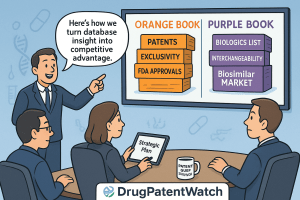
The Orange Book and Purple Book are not regulatory housekeeping. They are the official ledgers where billions of dollars of drug revenue are won and lost, where 30-month litigation stays are triggered on a single patent listing, where biosimilar launch timelines compress or expand by years based on a two-letter code. Every Paragraph IV filing, every exclusivity expiration, every interchangeable designation in these databases is a decision with nine-figure commercial consequences.
The professionals who read these documents casually lose market share. The ones who read them fluently set the competitive terms for the entire industry.
This pillar page covers every strategic layer: the legislative architecture that made these databases commercially indispensable, the exact mechanics of therapeutic equivalence and biosimilar interchangeability, the FTC’s accelerating crackdown on improper patent listings, the patent dance litigation from Amgen v. Sandoz to its industry-wide implications, and the specific data fields that IP teams, portfolio managers, and business development executives need to track in real time.
How the Hatch-Waxman Act Turned a Regulatory List into a $100B Competitive Weapon
Before 1984, generic drug companies had no efficient path to market. Replicating the full safety and efficacy trial package required for an original NDA was economically prohibitive for most off-patent molecules, which left brand manufacturers with de facto monopolies long after patents expired. Generic penetration was minimal. Drug prices stayed high. The problem was structural, not scientific.
The Drug Price Competition and Patent Term Restoration Act of 1984, known universally as Hatch-Waxman, broke the stalemate with a calculated legislative trade. Generic manufacturers got the Abbreviated New Drug Application pathway, allowing approval based on bioequivalence data referencing the innovator’s original clinical evidence. In exchange, innovator manufacturers received patent term restoration for time lost during FDA review and a suite of new, non-patent market exclusivities.
To make the ANDA system function, the law required the FDA to publish and maintain a comprehensive list of approved drug products along with their associated patents and exclusivity periods. That mandate transformed a modest FDA publication into the Orange Book: the central operational ledger for every generic drug launch, patent challenge, and lifecycle management strategy in the U.S. market.
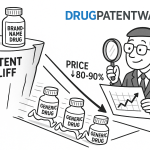
The commercial implications were immediate and durable. Within a decade of Hatch-Waxman’s passage, generic penetration reached 40% of prescriptions. Today it exceeds 90% of dispensed prescriptions, with generics accounting for roughly 13% of total drug spending despite that volume dominance. Every percentage point of that market dynamic traces back to data fields in the Orange Book.
Why 1962 Matters More Than Most Analysts Realize
The Kefauver-Harris Drug Amendments of 1962 imposed the efficacy standard on drug approval, requiring manufacturers to demonstrate through substantial evidence that a product actually worked, not just that it was safe. This change, driven by the thalidomide crisis in Europe, created the modern clinical trial apparatus and dramatically extended drug development timelines.
The FDA launched the Drug Efficacy Study Implementation program, a systematic retrospective review of roughly 4,000 drugs approved between 1938 and 1962. DESI’s methodology of evaluating multisource drug products for comparative effectiveness was the direct intellectual predecessor of the therapeutic equivalence evaluation system embedded in today’s Orange Book. Understanding DESI explains why the Orange Book’s TE codes carry the specific legal weight they do and why the FDA’s determinations on substitutability are not arbitrary clinical opinions but the product of decades of regulatory jurisprudence.
Decoding Therapeutic Equivalence: What AB, BC, and BX Ratings Actually Mean for Generic Launch Economics
The TE code assigned to a generic drug product in the Orange Book determines whether that product can be automatically substituted at the pharmacy counter without a prescriber’s intervention. For a generic manufacturer, an A rating is the difference between a commercially viable product and one that requires a physician-level marketing effort the economics of generics cannot support.
The FDA’s bioequivalence standard requires that 90% confidence intervals for Cmax and AUC fall within 80-125% of the reference listed drug under equivalent conditions. That statistical window has generated substantial litigation around narrow therapeutic index drugs, where clinicians argue that even within-range variation can produce clinical consequences. Warfarin, levothyroxine, phenytoin, carbamazepine, and tacrolimus sit at the center of this debate, and a product’s TE code does not resolve the prescriber perception problem even when bioequivalence has been rigorously demonstrated.
AB Ratings and Multi-RLD Complexity: Why AB1 and AB2 Are Not Interchangeable
When more than one Reference Listed Drug exists for a given active ingredient and dosage form, the FDA assigns numeric suffixes to the AB code. An AB1-rated generic is bioequivalent to one specific RLD; an AB2-rated product is bioequivalent to a different RLD. The two generics are not rated as equivalent to each other.
This matters for formulary placement, pharmacy benefit manager contracting, and substitution logic in dispensing software. A PBM that contracts on one AB1 product and a pharmacy that dispenses an AB2 product creates a technical substitution error, even though both products carry A ratings. IP teams and commercial forecasting analysts who miss this layer of the TE code system produce systematically flawed market share models.
When a B Rating Is a Negotiating Position, Not a Permanent State
B-rated products are not permanently excluded from the generic market. A BC rating for an extended-release dosage form or a BN rating for a nebulizer product reflects the FDA’s current assessment that submitted data does not support a therapeutic equivalence determination, but it is revisable upon submission of adequate evidence. Several complex generics have spent years in BC status before resolving bioequivalence questions through in vitro dissolution studies or reformulation, then receiving AB ratings.
This status transition is a commercial trigger. A competitor moving from BC to AB status on a high-revenue product can shift formulary contracts within a single PBM contracting cycle. Monitoring TE code changes in the Orange Book for pipeline targets is therefore not a quarterly exercise; it requires continuous tracking.
Complete Orange Book Therapeutic Equivalence Code Reference
TE Code
Category
Definition
Commercial Implication
AA
A-Rated
Conventional dosage forms with no bioequivalence problems
Automatic substitution; simplest path to market
AB
A-Rated
Bioequivalence demonstrated through in vivo or in vitro study
Standard for oral solid generics; key to formulary access
AB1, AB2…
A-Rated
Bioequivalent to a specific RLD in multi-RLD scenario
Cannot cross-substitute between AB1 and AB2 products
AN
A-Rated
Solutions for aerosolization
Considered equivalent by formulation
AO
A-Rated
Injectable oil-based solutions
Formulation-based equivalence
AP
A-Rated
Injectable aqueous solutions
Formulation-based equivalence
AT
A-Rated
Topical products meeting formulation standards
Substitutable under most state laws
B*
B-Rated
Under FDA investigation; determination pending
Uncertain commercial status; monitor for resolution
BC
B-Rated
Extended-release; bioequivalence data insufficient
Watch for data submissions that could upgrade to AB
BR
B-Rated
Suppositories/enemas; lacks systemic equivalence data
Niche pathway; limited generic competition
BS
B-Rated
Active ingredient has drug standard deficiencies
API quality issues; rare designation
BT
B-Rated
Topical with bioequivalence issues
Topical complex generics are increasingly contested
BX
B-Rated
Insufficient data submitted
Presumed inequivalent until additional data provided
Orange Book Patent Listings: The Rules, the Loopholes, and the FTC’s New Enforcement Posture
Patent information in the Orange Book is not self-policing. When an NDA holder submits a patent for listing, the FDA performs no independent verification that the patent meets the statutory requirements. The agency acts as a registrar. It records what is submitted and publishes it. If a patent does not belong in the Orange Book, the mechanism for removing it runs through litigation, not FDA administrative review.
This design choice, deliberate or not, created an enormous structural incentive for innovator companies to list aggressively. Every patent listed in the Orange Book that is challenged by a generic filer triggers the Hatch-Waxman litigation process and, if the brand manufacturer sues within 45 days, an automatic 30-month stay of generic approval. A questionable patent that secures a 30-month stay on a drug generating $2 billion in annual revenue is worth approximately $5 billion in protected cash flow. The economics of aggressive listing are obvious.
Eligible listings are limited by statute to three categories: patents claiming the drug substance (the active pharmaceutical ingredient), patents claiming the drug product (the final formulation or composition), and patents claiming an approved method of using the drug. Manufacturing process patents, packaging patents, metabolite patents, and intermediate patents are explicitly excluded.
Why Teva v. Amneal Redrew the Line on Device Patents
The ProAir HFA inhaler litigation exposed a specific tactic that had become common in drug-device combination products: listing patents that claim components of the device itself without any reference to the active pharmaceutical ingredient. Teva listed patents on the dose counter and inhaler device components of ProAir HFA (albuterol sulfate) in the Orange Book. These patents, by their own terms, did not claim albuterol sulfate or any formulation of it.
Amneal Pharmaceuticals challenged the listings, and the FTC filed an amicus brief characterizing such device-only listings as unfair methods of competition under Section 5 of the FTC Act. The U.S. Court of Appeals for the Federal Circuit, in a December 2024 precedential decision, held that for a patent to qualify for Orange Book listing, its claims must actually recite the active pharmaceutical ingredient. Teva’s device patents, which made no reference to albuterol, failed that test and were ordered delisted.
The decision’s implications extend well beyond albuterol inhalers. Any NDA holder with combination product listings that rely on device-only claim structures faces prospective litigation risk and retroactive FTC scrutiny. The legal fee exposure alone, combined with the reputational cost of an FTC investigation, has materially changed the risk calculus for combination product patent strategy.
What the FTC’s Orange Book Campaign Means for Patent Thicket Valuation
Between 2023 and 2024, the FTC sent patent listing dispute letters to pharmaceutical manufacturers covering patents across dozens of products. The agency’s position is that improperly listed patents used to trigger 30-month stays constitute anticompetitive conduct under Section 5 of the FTC Act, regardless of whether the underlying patent is valid.
This is a meaningful legal distinction. A patent can be valid and still improperly listed if it claims subject matter that is not within the three eligible categories. The FTC is not challenging patent validity; it is challenging listability. That distinction changes the litigation dynamics considerably, because listability is a question of regulatory law and statutory interpretation rather than a complex technical patent dispute.
For hedge funds and institutional investors modeling the terminal value of patent thickets around combination products, the FTC’s campaign is a discount factor, not a binary event. Listings that survive FTC scrutiny carry different risk profiles than those that do not. Analysts who treat all Orange Book-listed patents as equivalent protection are overvaluing the portfolios of companies with heavy device-claim listings.
The Orange Book Exclusivity Clock: Revenue Implications of NCE, ODE, PED, and 180-Day Periods
Patent expiration dates get the most attention in loss of exclusivity models, but FDA-granted market exclusivities are often the controlling variable. An exclusivity period is a statutory bar on FDA approval of competing applications. It does not depend on patent validity or claim scope. It cannot be designed around. A drug with expired patents but active NCE exclusivity generates zero generic competition, regardless of how many ANDAs are filed.
Why NCE Exclusivity Is the First Number Every Generic Analyst Should Look Up
New Chemical Entity exclusivity provides five years of data exclusivity for drugs containing an active moiety not previously approved by the FDA. During the first four years, the FDA will not even accept an ANDA or 505(b)(2) application for filing. In year four, a Paragraph IV-containing ANDA can be submitted, but approval cannot occur before the NCE exclusivity expires. The practical effect is a five-year floor on generic-free sales, running from the date of the first NDA approval, regardless of when the patent clock runs out.
For generic manufacturers doing portfolio screening, the NCE expiration date is the starting point. Everything else, patent landscapes, competitor ANDA counts, TE code complexity, is subordinate to confirming that the exclusivity clock has cleared.
Orphan Drug Exclusivity and Its Seven-Year Moat
ODE grants seven years of protection against approval of the same drug for the same orphan indication, covering any product designated and approved under the Orphan Drug Act for diseases affecting fewer than 200,000 patients in the U.S. The protection is indication-specific and product-specific: a different drug for the same orphan indication is not blocked by a competitor’s ODE, and the same drug for a different indication is also outside the exclusivity scope.
Several manufacturers have used the orphan designation strategically, securing ODE for a subset of a drug’s commercial indications to extend overall market protection. Alexion’s eculizumab (Soliris), Sarepta’s eteplirsen (Exondys 51), and BioMarin’s various enzyme replacement therapies all illustrate how ODE can anchor a lifecycle management strategy when the primary patent position erodes. The seven-year period stacks on top of whatever patent life remains, creating the type of compound exclusivity that generates the 20-30 year protection windows visible in orphan drug financials.
Pediatric Exclusivity: The $500M Six-Month Extension
PED grants six additional months of exclusivity tacked onto every existing patent and exclusivity period for the active moiety. It is granted when a manufacturer completes FDA-requested pediatric studies, regardless of whether those studies produce positive results for pediatric use. Six months on a drug generating $3 billion per year in annual U.S. net sales is $1.5 billion in protected revenue. The pediatric studies generating that extension typically cost $20-50 million to conduct. The return on that investment is difficult to match through any other life cycle management mechanism.
Pfizer’s atorvastatin (Lipitor), AstraZeneca’s omeprazole (Prilosec), and AbbVie’s adalimumab (Humira) all benefited from pediatric exclusivity extensions at commercially critical moments. For products nearing the patent cliff, identifying whether a pediatric Written Request is outstanding or has been fulfilled is a material data point in loss of exclusivity modeling.
180-Day Exclusivity: The First-Filer Prize and Its Forfeiture Risks
The 180-day marketing exclusivity granted to the first ANDA filer with a Paragraph IV certification is the financial engine of the generic pharmaceutical industry’s patent challenge business. During the 180-day window, only the brand and the first-filer(s) can sell the product. For a high-volume small-molecule drug, that duopoly period generates gross margins that can be four to six times the margins on a fully genericized product.
The mechanics have grown significantly more complex since 1984. First-to-file status is determined by the date of a substantially complete ANDA submission, not the date of any court decision. Multiple applicants filing on the same day share the 180-day exclusivity. Forfeitures can occur if the first-filer fails to market within specified timeframes after approval or after a court judgment of invalidity. The forfeiture provisions exist specifically to prevent companies from sitting on a first-filer position as a blocking mechanism without actually launching.
Tracking the ANDA filing dates, forfeiture trigger events, and approval timelines for Paragraph IV challenges on high-value branded drugs is a real-time intelligence function, not a periodic review process. A forfeiture event on a first-filer can create immediate commercial opportunity for the second-filer queue.
Orange Book Exclusivity Summary: Duration, Trigger, and Competitive Effect
New indication, dosage form, or condition with essential new clinical trials
FDA approval of ANDA/505(b)(2) for that specific change
ODE
7 Years
Orphan designation plus approval for the orphan indication
Approval of same drug for same orphan indication
PED
+6 Months
Completion of FDA-requested pediatric studies
Extension added to all existing patents and exclusivities
GAIN
+5 Years
QIDP designation for Qualified Infectious Disease Product
Add-on to NCE, NCI, or ODE
PC / 180-Day
180 Days
First substantially complete ANDA with Para IV certification
FDA approval of subsequent ANDAs for same drug
CGT
180 Days
First approval for a drug designated Competitive Generic Therapy
FDA approval of subsequent ANDAs in same CGT window
Why the Orange Book’s Discontinued List Is an Underutilized Intelligence Asset
Most analysts track active Orange Book listings. Fewer track the discontinued list with comparable rigor, which is a systematic gap. A drug product on the discontinued list is one that has been withdrawn from marketing. For a generic manufacturer seeking approval based on a discontinued reference product, the FDA must formally determine that the product was not withdrawn for reasons of safety or effectiveness before an ANDA can proceed.
That determination process takes time and introduces regulatory uncertainty into timelines. Tracking the FDA’s safety-related withdrawal determinations for discontinued products is directly relevant for any generic program targeting a drug that was pulled from the market for commercial rather than clinical reasons. Missed withdrawn-for-safety designations can invalidate an entire ANDA investment.
The discontinued list also reveals competitive intelligence about a branded product’s commercial trajectory. A manufacturer that discontinues a formulation or dosage strength may be consolidating toward a next-generation product, executing an authorized generic strategy, or withdrawing in anticipation of loss of exclusivity. Reading those signals early creates options for generic manufacturers that their competitors who ignore the discontinued list do not have.
The Purple Book: Why Biologics Require a Completely Different Analytical Framework
The single most expensive mistake a biosimilar analyst can make is applying Orange Book logic to Purple Book data. The two databases share a regulatory government, the FDA, and a common strategic purpose, competitive intelligence, but their underlying legal frameworks, the scientific standards they encode, the patent information they contain, and the exclusivity architectures they reflect are structurally distinct.
Small-molecule drugs are chemically synthesized to defined molecular specifications. Two manufacturers following the same synthesis route produce identical molecules. This identity makes “generic” a scientifically coherent concept: if the active moiety is the same and bioequivalence is demonstrated, substitution is defensible.
Biologics do not work this way. A monoclonal antibody like pembrolizumab (Keytruda) is a 149 kDa protein with a specific amino acid sequence, glycosylation pattern, and three-dimensional folding structure that emerge from a specific cell line, fermentation process, and purification cascade. A different manufacturer using a different CHO cell line under different process conditions will produce a molecule that is highly similar, but not identical. The downstream clinical consequences of minor structural variation are not predictable from first principles, which is why biosimilar approval requires demonstration of “no clinically meaningful differences” in safety, purity, and potency, not mathematical identity.
How the BPCIA Created a Different Set of Commercial Rules
The Biologics Price Competition and Innovation Act of 2010, enacted as part of the Affordable Care Act, created the abbreviated pathway for biosimilar licensure by amending the Public Health Service Act, the statute governing biologic licensing. This is a crucial structural point: because Hatch-Waxman amended the FD&C Act, its provisions have never applied to biologics. The BPCIA is a separate legislative architecture with different exclusivity periods, different patent dispute mechanisms, and a different standard for what constitutes an approvable follow-on product.
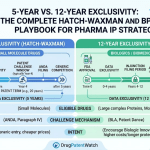
The reference product exclusivity under the BPCIA is 12 years from first licensure, compared to 5 years for NCE exclusivity under Hatch-Waxman. The seven-year data exclusivity provision under Hatch-Waxman has no direct analogue in biologics, though orphan drug designations can generate comparable protection for qualifying products. The first interchangeable exclusivity under the BPCIA, typically one year, has no close parallel in the small-molecule framework.
For biosimilar developers building financial models, these differences in exclusivity architecture have material implications for the earliest possible approval and launch date, which is the foundational variable in any biosimilar NPV calculation.
Orange Book vs. Purple Book: Structural Comparison for Strategic Analysts
Dimension
Orange Book (Small Molecules)
Purple Book (Biologics)
Governing Statute
Hatch-Waxman (amending FD&C Act)
BPCIA (amending PHS Act)
Follow-on Product Concept
Generic (bioequivalent, identical active moiety)
Biosimilar (highly similar, no clinically meaningful differences)
Approval Pathway
ANDA (Abbreviated NDA)
aBLA (abbreviated Biologics License Application)
Innovator Data Exclusivity
5 years (NCE), 3 years (NCI)
12 years (reference product exclusivity)
Patent Listing Obligation
Mandatory upon NDA approval
Required disclosure of patent dance lists post-2021
Patent Dispute Mechanism
Paragraph IV certification + 30-month stay
Patent dance (optional) or immediate broad litigation
Substitution Standard
Therapeutic equivalence (A rating)
Interchangeability designation
Pharmacy-Level Substitution
Automatic for A-rated products (state law permitting)
Only for interchangeable products (state law permitting)
Manufacturing Scrutiny
Chemistry, manufacturing, and controls section
Extensive process validation; “the product is the process”
How the Purple Book Interchangeability Designation Shifts Biosimilar Commercial Economics
A biosimilar without an interchangeable designation requires physician-level prescribing. The commercial team must persuade individual prescribers to write for the biosimilar by name, which requires field force investment that generic companies, operating on thin margins, cannot sustain at scale. The interchangeable designation changes the commercial model entirely.
An interchangeable biologic can be substituted at the pharmacy without the prescribing physician’s intervention, subject to applicable state pharmacy laws. This enables the same demand-creation mechanisms that make AB-rated generics commercially viable: formulary placement, PBM-level contracting, pharmacy benefit design, and step therapy protocols. The physician becomes a secondary variable rather than the primary acquisition target.
The commercial value of interchangeability is most visible in the insulin market. Semglee (insulin glargine-yfgn), approved as the first interchangeable biosimilar insulin in July 2021, achieved market penetration substantially faster than non-interchangeable biosimilar insulins. Civica Rx’s approach to biosimilar insulin contracting and the emerging role of PBMs in driving interchangeable biosimilar uptake are direct functions of that designation’s pharmacy-level substitution rights.
How the FDA’s 2024 Draft Guidance on Switching Studies Changed Biosimilar Development ROI
For the first decade of the BPCIA, achieving the interchangeable designation required dedicated clinical switching studies demonstrating that alternating between the reference product and the biosimilar carried no greater risk than continuous use of the reference product. Those studies were expensive, time-consuming, and carried approval risk. Many biosimilar developers concluded the incremental commercial value of interchangeability did not justify the additional development cost and filed for biosimilar approval only.
In June 2024, the FDA issued updated draft guidance signaling that, based on a decade of post-marketing data from approved biosimilars and advances in analytical characterization technology, switching studies may not be necessary in many cases to support an interchangeability determination. The FDA’s position is that robust structural, functional, and pharmacokinetic data may be sufficient to demonstrate that switching between products is clinically safe.
This guidance revision materially improves the ROI calculation for interchangeability-seeking biosimilar programs. Development timelines shorten, costs decrease, and the risk-adjusted probability of achieving the premium designation increases. For biosimilar developers who filed for biosimilar status only and are now reconsidering interchangeability applications for approved products, the regulatory pathway has become more accessible. Expect a wave of interchangeability supplements over the next 24-36 months as sponsors reassess their development portfolios under the new guidance framework.
First Interchangeable Exclusivity and Its Strategic Use
The first biosimilar product to achieve interchangeable status for a given reference product receives a period of exclusivity, typically one year, during which the FDA cannot license another biosimilar for that reference product as interchangeable. This is the Purple Book’s closest analogue to the 180-day first-filer exclusivity in the Orange Book, and it creates a comparable strategic dynamic.
Being first-to-interchangeable status confers a temporary competitive moat at the pharmacy-level access channel. The one-year period is short relative to the development investment, but for high-volume products where pharmacy substitution drives significant volume, first-interchangeable exclusivity can justify accelerating development timelines and accepting higher clinical development costs.
The Patent Dance: When Biologics Enter Litigation Before Launch
The BPCIA’s patent dispute mechanism, universally called the “patent dance,” is a multi-step information exchange process between the biosimilar applicant and the reference product sponsor. The sequence begins when the biosimilar applicant shares its complete, confidential aBLA with the reference product sponsor. The sponsor then produces a list of patents it believes could be asserted against the applicant’s product and process. The parties negotiate which patents will be litigated in an initial wave and which will be reserved for later. The entire choreography plays out over several months before any lawsuit is filed.
The commercial purpose of the dance is to structure biologic patent litigation in a way that both limits the number of patents in initial litigation and provides the biosimilar applicant with advance notice of the claims it will face, allowing more informed launch timing decisions. The reference product sponsor benefits from the applicant’s process disclosure, which is often the most commercially sensitive information in a biologic development program.
Why Sandoz’s Decision to Opt Out of the Patent Dance Changed Industry Practice
In the Zarxio biosimilar program, Sandoz chose not to share its aBLA with Amgen and did not initiate the patent dance. The Supreme Court’s 2017 ruling in Amgen v. Sandoz confirmed that participation in the dance is optional under the BPCIA. The statute provides a specific consequence for opting out: the reference product sponsor can immediately file a broad patent infringement suit on any patent it chooses, rather than being limited to the negotiated initial wave. That consequence, the Court held, is the exclusive federal remedy for non-participation. An injunction to compel participation is not available.
Sandoz’s strategic calculation was that accepting the risk of a broader initial patent suit was preferable to disclosing its fermentation and purification process details, which are among the most competitively sensitive aspects of a biologic manufacturing operation. The process disclosure required in the patent dance effectively gives the reference product sponsor a detailed look at a competitor’s manufacturing infrastructure. For a first-to-market biosimilar in a new therapeutic class, that disclosure could create long-term competitive disadvantages that outlast the initial litigation.
The Amgen v. Sandoz ruling also settled the question of when the 180-day commercial marketing notice can be given. The Court held that notice can be provided before FDA approval, allowing the pre-approval clock to run concurrently with the final stages of FDA review. This effectively shortened the post-approval waiting period for Zarxio and established the template that subsequent biosimilar launchers have followed.
How the 2021 Purple Book Patent Transparency Law Changed Biosimilar Intelligence
For its first decade, the Purple Book contained no patent information. Biosimilar developers had to conduct their own independent patent landscaping without any FDA-published reference point, creating substantial legal uncertainty about the patent risks they faced at launch. Reference product sponsors had comprehensive patent portfolios but no obligation to disclose them in any centralized format.
The Consolidated Appropriations Act of 2021 included a biological product patent transparency provision requiring reference product sponsors to submit to the FDA the patent lists exchanged during the patent dance. The FDA now publishes these lists in the Purple Book. This is a material improvement over the prior information vacuum, but it is not equivalent to the comprehensive patent listing system in the Orange Book for several reasons: the patent dance is optional, so sponsors who face non-participating applicants have no disclosure obligation under that mechanism; the submitted lists may reflect negotiating positions rather than the sponsor’s complete patent portfolio; and the FDA publishes what is submitted without verifying that all relevant patents are included.
The practical result is that biosimilar developers using the Purple Book patent lists as their primary IP intelligence source have an incomplete picture. The lists are a starting point, not a ceiling. Thorough biosimilar patent landscaping still requires independent searches of USPTO databases, European Patent Office records, foreign filing equivalents, and prosecution history review for potentially relevant claims.
What the Zarxio Launch Proves About Biosimilar Patent Strategy ROI
Sandoz launched Zarxio (filgrastim-sndz) as the first FDA-approved biosimilar in U.S. history in September 2015, referencing Amgen’s Neupogen (filgrastim). The commercial results across the biosimilar market since then provide the clearest available evidence of biosimilar patent strategy’s financial consequences.
The Association for Accessible Medicines reported that biosimilars delivered $12.4 billion in healthcare system savings in 2023. That figure represents both the direct price competition biosimilars create and the indirect effect on reference product pricing as sponsors respond to competitive entry. For Amgen specifically, the Neupogen biosimilar market demonstrated a standard pattern: rapid price competition and volume loss in the short-cycle oncology supportive care segment, partially offset by commercial loyalty programs for the reference product.
The biosimilar market for adalimumab (AbbVie’s Humira), which opened to competition beginning in January 2023 after a patent thicket defense lasting more than a decade, provides the most commercially significant recent case. Humira generated peak annual U.S. net sales exceeding $17 billion. By the end of 2024, biosimilar market share had reached approximately 20% of adalimumab prescriptions, with pricing competition driving reference product WAC reductions and rebate structure changes that materially affected AbbVie’s U.S. revenue. The speed and depth of biosimilar penetration in the adalimumab market is directly related to the number of biosimilar entrants, their pricing strategies, and the interchangeability status of products from Hadlima, Cyltezo, Hyrimoz, and others.
How Patent Thickets Work and Why Biologics Are More Vulnerable Than Small Molecules
A patent thicket is a dense collection of overlapping patents that a drug manufacturer accumulates around a single product, covering not just the active molecule but its formulations, manufacturing processes, dosing methods, patient populations, device components, and combinations. The tactical purpose is to create a litigation burden so extensive that potential competitors face years of multi-front patent battles before any product can reach market.
AbbVie’s patent thicket around adalimumab became the benchmark case. At peak protection, AbbVie held more than 130 U.S. patents directly or indirectly covering Humira. These patents spanned the antibody sequence, various formulation concentrations, manufacturing cell lines, autoinjector devices, and methods of treatment for specific indications including rheumatoid arthritis, Crohn’s disease, and psoriasis. Biosimilar developers faced the prospect of litigating dozens of these patents serially, with each lawsuit potentially triggering years of additional delay.
AbbVie’s resolution strategy was a series of settlements with biosimilar developers beginning in 2016 under which biosimilar manufacturers received licenses to launch at negotiated dates, with royalty terms that have not been publicly disclosed in full. The structure effectively controlled the timing and pricing dynamics of biosimilar entry rather than attempting to prevent entry altogether. Amgen, Samsung Bioepis, Sandoz, Mylan (now Viatris), Boehringer Ingelheim, Fresenius Kabi, Coherus BioSciences, and others all settled on terms that gave AbbVie advance certainty about when competition would begin.
Why Biologic Patent Thickets Are Harder to Dismantle Than Small-Molecule Thickets
Challenging a small-molecule patent thicket through Paragraph IV filings is a well-tested playbook. The generic developer files its ANDA with Paragraph IV certifications against each listed patent, litigation proceeds on a defined statutory timeline, and invalidity arguments are evaluated against the documented prior art and prosecution history of each individual patent.
For biologics, the equivalent challenge involves the patent dance, which is optional, followed by patent-by-patent litigation without the procedural guardrails that Hatch-Waxman provides. Process patents covering biologic manufacturing, which are not eligible for Orange Book listing but are fully litigatable for biologics, add complexity that has no small-molecule analogue. A biosimilar developer challenging a biologic patent thicket may face simultaneous litigation over antibody sequence patents, formulation patents, cell culture process patents, purification patents, and device patents for autoinjectors, each in different courts under different legal standards.
The cost of that multi-front litigation is a structural barrier to biosimilar entry that is only partially addressed by the BPCIA’s dispute resolution framework. This is why biosimilar settlement deals, rather than litigation victories, have become the dominant mode of biosimilar market entry in the U.S. for highly patent-protected reference products.
Revenue at Risk: Mapping the Biologic Patent Cliff Through 2030
The largest known concentration of biologic revenue at loss of exclusivity risk through the end of the decade clusters in oncology, immunology, and ophthalmology. Tracking these exposure windows requires integrating Purple Book exclusivity data, patent family expiration dates, biosimilar development pipeline information, and regulatory precedents for each therapeutic class.
Pembrolizumab (Keytruda, Merck), with annual global sales exceeding $25 billion, faces its earliest U.S. patent expiration for the core pembrolizumab antibody in 2028, though Merck has filed additional patents that extend into the early 2030s. Biosimilar developers including Samsung Bioepis, BioNTech, and several Chinese manufacturers have announced aBLA or IND-stage programs. Merck’s strategy involves combination indications, formulation changes, and subcutaneous delivery development as lifecycle management tools, but the core IV monotherapy market will face biosimilar competition once core patents clear.
Dupilumab (Dupixent, Sanofi/Regeneron), approaching $14 billion in annual global sales across atopic dermatitis, asthma, COPD, and other indications, has core patents expiring in the late 2020s to early 2030s. The multi-indication expansion strategy creates method-of-treatment patents that could extend litigation complexity even after core molecule patents expire.
Ustekinumab (Stelara, Johnson & Johnson), with the U.S. reference product exclusivity now expired, saw the first biosimilar approvals from Amgen (Wezlana) and Samsung Bioepis (Pyzchiva) in late 2023, with commercial launches beginning January 2025. The revenue erosion trajectory for Stelara will be studied as a template for other IL-12/23 pathway biologics.
Which Biosimilar Pipeline Drugs Present the Largest Generic Opportunity Through 2028
Beyond the headline biologics, several smaller-revenue products present attractive biosimilar development opportunities due to favorable patent landscapes, manufacturing accessibility, or limited biosimilar competition in the pipeline.
Eculizumab (Soliris, Alexion/AstraZeneca) generated approximately $4.5 billion in annual global peak sales. The biosimilar competition landscape includes Amgen’s zilucoplan and Samsung Bioepis’s SB17, with regulatory reviews ongoing as of 2024. The ultra-high price of eculizumab and its orphan indications create a distinctive commercial dynamic where even modest biosimilar market share represents substantial savings and revenue opportunity.
Natalizumab (Tysabri, Biogen), used in multiple sclerosis, and rituximab (Rituxan, Genentech/Roche) in oncology and autoimmune disease have each attracted multiple biosimilar developers. Rituximab biosimilars from Celltrion (Truxima), Pfizer (Ruxience), and Sandoz (Riabni) are already approved and marketed. The rituximab biosimilar market is the most mature multi-entrant biologic biosimilar competition in the U.S. and provides the most reliable data on long-term price erosion trajectories for high-cost biologic products.
How the FDA’s Orange Book and Purple Book Data Feed Commercial Forecasting Models
The data fields in the Orange and Purple Books are not static attributes; they are dynamic inputs into financial models that pharmaceutical companies, hedge funds, and institutional investors use to estimate future revenue streams and competitive exposure. The precision of those models depends directly on the completeness and accuracy of the database reading.
For loss of exclusivity forecasting on a branded small-molecule drug, the key data points are the NCE exclusivity expiration date, the last-to-expire listed patent date, the number of pending ANDAs with Paragraph IV certifications, and the TE code complexity of the reference product’s dosage form. Each of these variables has a different uncertainty profile and requires different analytical treatment.
NCE expiration is deterministic: it is five years from the first NDA approval date, published in the Orange Book. Patent expiration dates are more complex because term adjustment claims may have extended individual patents beyond their base 20-year term, and each Paragraph IV challenge may result in different court rulings for different patents.
ANDA counts and first-filer status introduce competitive dynamics that affect market share erosion curves. Products with five or more approved ANDAs lose 90% or more of branded unit share within 90 days of generic entry. Products with two or three generic competitors see more gradual erosion. The Orange Book’s ANDA filing and approval data, supplemented by FDA’s Paragraph IV filing disclosures in the Federal Register, allows analysts to estimate the competitive landscape at the time of generic entry with reasonable accuracy.
How Orange Book Data Changes Acquisition and Licensing Valuations
In pharmaceutical M&A and licensing transactions, the Orange Book and Purple Book data directly affect the IP due diligence and commercial risk assessment. A drug approaching loss of exclusivity with a complex patent thicket that is actively being challenged through Paragraph IV litigation will be valued differently than one with a clean patent position and a single first-filer competitor.
Deal teams that conduct thorough Orange Book due diligence before a drug acquisition can identify exclusivity periods the seller may not have highlighted, pending Paragraph IV challenges that are not yet public knowledge (the notice letters are sent to the NDA holder, not published), and TE code risks that could limit generic substitution uptake even after exclusivity ends. Each of these factors affects the revenue assumption in the acquisition model.
For biosimilar licensing transactions, Purple Book due diligence includes verifying the reference product exclusivity expiration, identifying any existing approved biosimilars, and assessing the patent dance history to understand what litigation the licensor has already resolved and what remains outstanding.
Key Patent Expiry Dates and Exclusivity Cliffs: What Investors Are Watching Now
The commercially significant LOE events in the near-to-medium term include several products whose exclusivity windows close at a time when biosimilar or generic pipelines are already in advanced development. The sequence of entry, pricing of the first entrant, and PBM contracting dynamics will determine how quickly revenue erodes.
Dupilumab’s U.S. core patent portfolio, filed around the IL-4/IL-13 receptor alpha chain antibody, includes patents extending into the early 2030s across different claim families. Sanofi and Regeneron’s filing of continuation patents and device patents for the autoinjector presentation creates a multi-layer defense similar in structure, if not in scale, to the Humira thicket. Biosimilar developers entering the dupilumab space will need to either design around device patents or face the same FTC scrutiny that targeted Teva’s ProAir device listings.
Ocrelizumab (Ocrevus, Genentech/Roche), with approximately $7 billion in annual global sales for multiple sclerosis, has core patents expiring in the late 2020s. Several biosimilar programs are underway at the preclinical and Phase 1 stage, with commercial timelines converging on the 2028-2030 window depending on clinical development speed and patent litigation outcomes.
For investors specifically modeling pharmaceutical sector exposure to LOE risk, the Purple Book’s exclusivity expiration fields, combined with ANDA count data from the Orange Book for small-molecule products, provide the most reliable public-domain data set for constructing a patent cliff timeline. The limitations are known: patent litigation outcomes are not predictable from the data alone, and settlement agreements, which are filed with the FTC and DOJ but whose terms are not always public, may alter the competitive timeline materially.
How Paragraph IV Litigation Changes Drug Valuation: The Prozac Case as Quantified Precedent
The Barr Laboratories challenge to Eli Lilly’s fluoxetine (Prozac) patents remains the clearest quantified example of Paragraph IV litigation’s financial consequences. Barr filed its ANDA with Paragraph IV certifications in 1996, challenging Lilly’s patent position on the drug that was then generating peak annual U.S. sales exceeding $2 billion. After years of litigation, Barr prevailed on a key patent invalidity argument.
The commercial results were immediate and extreme. Barr launched its generic fluoxetine in August 2001, capturing 65% of the Prozac market within two months of entry. Over the following 11 months, Barr’s fluoxetine generated $367.5 million in sales, representing 31% of its total product revenue. The company’s gross profit margin roughly doubled from 15.5% to 28.7% in the peak exclusivity quarter. Barr’s stock price increased more than 35% in the month the favorable patent ruling was issued.
The Prozac case established several commercial parameters that have become industry reference points: the speed of generic market penetration following a first-filer launch, the gross margin profile during 180-day exclusivity, and the stock market response to patent litigation victories. Each of these parameters has been observed in subsequent Paragraph IV cases with varying magnitudes depending on the therapeutic class, the number of co-first-filers, and the branded product’s price elasticity.
How the Teva v. Amneal Federal Circuit Ruling Quantifies Improper Listing Risk
The December 2024 Federal Circuit decision in the ProAir HFA case did not quantify damages, but the commercial implications are calculable. Albuterol sulfate inhalers represent approximately $2.5-3 billion in annual U.S. net sales across the market. Teva’s device-only patent listings, had they survived challenge, would have maintained the 30-month stay of generic approval that delays competitive entry. The revenue protected by those listings during a potential 30-month stay period would have been substantial.
For Amneal, the delisting outcome accelerates the path to generic approval. The commercial value of eliminating a wrongly listed patent that triggers a 30-month stay can be estimated as the product of the market revenue, the generic manufacturer’s projected market share, and the duration of delay avoided. On a product of this scale, that calculation easily reaches nine figures.
Most Important Ongoing Biosimilar and Patent Litigation to Track
The Humira biosimilar market’s trajectory through 2025-2026 is the most commercially significant litigation and market access narrative in the U.S. pharmaceutical market. The 2016-2023 settlement agreements between AbbVie and biosimilar manufacturers gave AbbVie visibility into its U.S. competitive timeline. The royalty terms embedded in those settlements, while not disclosed publicly in full, affect the financial statements of both AbbVie and the biosimilar manufacturers. Analysts trying to model AbbVie’s post-LOE SKYRIZI (risankizumab) and RINVOQ (upadacitinib) pipeline replacement strategy need to understand how fast Humira revenue is declining and how much of that decline is offset by biosimilar royalty income under the settlement agreements.
The ustekinumab (Stelara) litigation and settlement landscape provides a more recent and fully resolved example. J&J’s settlements with multiple biosimilar manufacturers resulted in launches beginning January 2025. Early market share data from the ustekinumab biosimilar competition will be the most informative real-world test of how quickly immunology biologics face volume erosion once multiple interchangeable or highly similar products enter at competitive prices.
The ongoing FDA activity around infliximab biosimilars (Remicade, J&J) and the multi-entrant competition among Celltrion’s Inflectra, Pfizer’s Ixifi, Samsung Bioepis’s Renflexis, and Fresenius Kabi’s Zymfentra provides the longest-running dataset on biologic biosimilar price competition dynamics in the U.S.
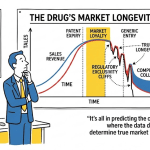
What Happens Financially After Loss of Exclusivity: The Revenue Erosion Curve
The generic market entry event is not a cliff; it is the beginning of a steep descent that follows a predictable mathematical curve for small-molecule drugs and a more variable trajectory for biologics. Understanding the parameters that govern erosion speed is essential for both branded defenders and generic entrants.
For oral solid-dose small molecules with a clean Paragraph IV landscape and multiple ANDA approvals available on day one of generic entry, unit volume loss can exceed 80% within 30 days and approach 90% within 90 days. Net revenue erosion is typically less dramatic in percentage terms because some branded volume is price-protected by copay assistance programs, specialty pharmacy channels, or formulary positions that restrict substitution. But the branded product’s commercial contribution margin collapses rapidly as the high-gross-margin volume shifts to generics.
The erosion trajectory for biologics is slower. Biosimilar price discounts are typically 15-35% below the reference product WAC at launch, compared to 80-90% discounts for small-molecule generics at full market genericization. Biosimilar market share penetration is measured in quarters rather than weeks. The factors governing biosimilar penetration speed include the number of biosimilar entrants, the interchangeability designation status of those entrants, the reference product sponsor’s rebate-based contracting strategy with payers, and the clinical culture around biologic switching in the treating specialty.
What Authorized Generics Do to 180-Day Exclusivity Economics
A branded manufacturer has the option to launch an authorized generic (AG), a product made under the original NDA license but sold at generic prices, simultaneously with the first Paragraph IV filer’s entry. This is a legally available strategy that does not forfeit the brand’s NDA rights but directly attacks the economics of the first-filer’s 180-day exclusivity period.
The AG competes with the Paragraph IV filer during the 180 days, eroding the first-filer’s market share and reducing the financial prize that justified the litigation investment. The dynamic has deterred some potential Paragraph IV filers from challenging certain branded drugs when the manufacturer has a credible history of AG launches. AbbVie’s AG launch for the Humira LOE event and the Lipitor AG launched by Pfizer during the atorvastatin first-filer period are frequently cited examples of how AG strategy can partially offset LOE revenue loss while undermining the generic challenger’s projected ROI.
Common Investor Questions About the Orange and Purple Books
What is the single most important data point to track for an imminent generic threat?
The NCE exclusivity expiration date in the Orange Book. Patent dates are subject to challenge, extension, and litigation outcomes. NCE exclusivity is a statutory absolute that the FDA cannot waive and competitors cannot design around. The NCE date sets the floor on generic entry timing regardless of patent status.
How many ANDA filers signal high generic competition on day one of LOE?
Five or more approved first-day ANDAs typically correlate with 90%+ unit volume erosion within 90 days and price reductions exceeding 85% of the branded WAC within six months. Three to four filers produce somewhat slower erosion curves. Fewer than three often indicates manufacturing complexity or market size constraints that limited generic developer interest.
Does interchangeable biosimilar status always produce faster market penetration?
It produces a different access pathway, not guaranteed faster penetration. Interchangeable biosimilars can be substituted at the pharmacy, but PBM formulary decisions, rebate contracting by the reference product sponsor, and specialty pharmacy channel controls all affect the rate at which that access advantage translates into actual prescription volume. The insulin glargine market shows interchangeable biosimilars gaining meaningful share; the adalimumab market shows more complex dynamics where contractual protections for Humira slowed biosimilar penetration even where interchangeable products were available.
How should an acquirer value a drug with an active Paragraph IV challenge?
Assign probability-weighted revenue scenarios to (a) the brand winning litigation and maintaining its patent protection, (b) the brand losing and facing first-filer generic entry at the court-determined date, and (c) a settlement under which the generic enters at a negotiated date with or without royalty obligations. The weighted average of those scenarios, discounted at an appropriate risk-adjusted rate, provides a more realistic acquisition valuation than either assuming full patent protection or assuming immediate generic entry.
What does FTC Orange Book enforcement mean for pharma IP strategy in 2025-2026?
Combination product manufacturers need to audit their Orange Book listings against the Federal Circuit’s Teva v. Amneal standard. Device-only claim patents that do not recite the active pharmaceutical ingredient are at high delisting risk. Manufacturers with such listings face a choice: proactively delist, wait for a generic challenge and delist after an adverse court ruling, or contest the listing and absorb the antitrust scrutiny that accompanies that posture. The risk-adjusted cost of maintaining problematic listings has increased materially since December 2024.
How does the 12-year biologic reference product exclusivity interact with orphan drug exclusivity?
The two exclusivities run concurrently, not consecutively. A biologic approved with both a 12-year reference product exclusivity and a 7-year orphan drug exclusivity for the same indication does not receive 19 years of combined protection. The longer period controls. A biologic with ODE but less than 7 years of reference product exclusivity remaining at ODE grant would benefit from the orphan protection gap-filling to the 7-year ODE term.
Key Takeaways
The Orange Book and Purple Book are operational intelligence tools, not compliance archives. Every TE code, exclusivity expiration date, patent listing, and ANDA count in these databases is a data point with direct commercial and financial implications.
The FDA’s ministerial role in Orange Book patent listings created the structural conditions for both aggressive listing strategies and aggressive FTC enforcement. The Teva v. Amneal ruling in December 2024 is the most significant constraint on innovator listing strategy since the Hatch-Waxman Act was enacted, and it is not the last word: the FTC’s multi-company campaign against improper listings is ongoing.
The Purple Book’s patent transparency provisions, added in 2021, reduced but did not eliminate the information asymmetry between reference product sponsors and biosimilar developers. Thorough biosimilar patent landscaping still requires independent analysis beyond the Purple Book.
The FDA’s 2024 draft guidance on biosimilar interchangeability, signaling that switching studies may not be required in many cases, is the most significant regulatory development for biosimilar development economics since the BPCIA’s enactment. Its full commercial impact will become visible as sponsors file interchangeability supplements for already-approved biosimilars.
For portfolio managers and institutional investors, the most reliable public-domain data for pharmaceutical LOE risk modeling sits in these two databases. The firms that integrate Orange and Purple Book data into continuous monitoring workflows, rather than periodic reviews, carry a systematic information advantage over those that do not.
Investment Strategy: Positioning Around LOE Events and Biosimilar Catalysts
A structured approach to pharmaceutical investment around patent expiry and biosimilar entry events requires separating three distinct signals: the timing of generic or biosimilar entry (determined primarily by exclusivity and patent data), the magnitude of revenue erosion (determined by competitive dynamics and pricing), and the pipeline replacement capacity of the branded manufacturer (determined by the clinical stage portfolio).
The Orange and Purple Books speak directly to the timing signal. The competitive dynamics and pipeline assessment require additional analysis, but without accurate timing data from these databases, the other two analyses are anchored on uncertain assumptions.
For hedge funds running event-driven pharmaceutical strategies, the Orange Book ANDA filing dates, Paragraph IV notice letters, and exclusivity expiration calendars provide a forward-looking event schedule. The Purple Book exclusivity fields and biosimilar approval histories provide an equivalent schedule for biologic LOE events. Both databases update continuously, and the commercially significant data changes are often most visible to analysts who track the incremental daily updates rather than relying on periodic summary reviews.
The current LOE event landscape through 2030 is the largest pipeline of scheduled patent cliff events in the industry’s history. The aggregate branded revenue exposed to generic or biosimilar competition through 2030 exceeds $200 billion by most estimates. The companies best positioned to predict the precise timing, competitive intensity, and pricing dynamics of that exposure are the ones that have made the Orange and Purple Books genuinely operational intelligence assets rather than reference documents.
All patent expiration dates, exclusivity periods, and market data referenced in this analysis should be verified against current FDA Orange Book and Purple Book records, as these databases are updated continuously. Patent litigation outcomes and regulatory guidance are subject to change.