Introduction: The Search for Alpha in the Biotech Maze
In biotechnology the quest for the next breakthrough therapy is a relentless pursuit. For investors, business development teams, and R&D strategists, the landscape is a labyrinth of profound promise and perilous risk. We are constantly navigating a world of complex science, binary clinical trial outcomes, and protracted development timelines that can stretch for more than a decade.1 In this environment, how do we find true value? How do we separate the fleeting hype from the foundational innovations that will generate durable returns?
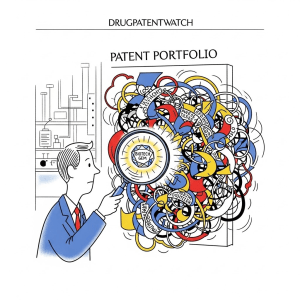
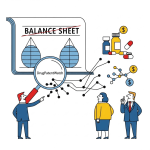
The answer, we argue, lies beyond the conventional confines of a balance sheet or an income statement. In an industry where a majority of companies are pre-revenue and burning through hundreds of millions in capital, traditional financial metrics are not just inadequate; they are often irrelevant.3 The true measure of a biotech company’s potential, its competitive moat, and its long-term viability is etched not in its financial filings, but in the legal architecture of its intellectual property (IP). The patent portfolio is the bedrock of value.6
This report is designed for you—the savvy professional who understands the fundamentals but demands a more sophisticated, data-driven framework for decision-making. We will move beyond simplistic patent counts and superficial metrics to build a comprehensive methodology for translating the dense, legalistic language of patents into actionable financial alpha. We will deconstruct the very definition of “undervalued” in the biotech context, revealing it to be a function of a market’s failure to accurately price the probability of future success—a probability that is overwhelmingly dictated by the strength and strategic design of a company’s patent estate.7
Our journey will be a practical one. We will begin by dissecting the unique challenges of biotech valuation, establishing why IP is the essential starting point. We will then provide a granular, “in the trenches” guide to assessing patent portfolio quality, exploring the critical qualitative and quantitative metrics that separate a world-class portfolio from a worthless one. From there, we will survey the modern analyst’s toolkit, including powerful platforms like DrugPatentWatch and the transformative potential of artificial intelligence. Finally, we will bridge theory and practice, demonstrating through real-world case studies how this intelligence can be deployed to de-risk investments, sharpen R&D focus, and drive successful M&A and licensing deals. This is not an academic exercise; it is a playbook for gaining a decisive competitive edge.
Section 1: The Valuation Labyrinth – Why Traditional Metrics Fail in Biotech
Before we can identify an “undervalued” company, we must first agree on what “value” means in the biotech sector. It’s a concept that bears little resemblance to its definition in manufacturing, software, or consumer goods. The valuation of a biotech firm is an exercise in quantifying future potential, a process fraught with profound uncertainty and unique challenges that render conventional financial analysis obsolete.
Deconstructing “Undervalued” in a Pre-Revenue World
In most industries, an undervalued company might be one with a low price-to-earnings (P/E) ratio, a strong balance sheet, and consistent cash flow that the market has somehow overlooked. In biotech, such a company rarely exists. The vast majority of small- to mid-cap biotech firms have no earnings, negative cash flow, and a balance sheet that primarily reflects how much investor capital they have left to spend.4
So, what are we looking for? An undervalued biotech company is one where the market has not fully and accurately priced in the probability-adjusted future cash flows that will be generated if its lead drug candidate succeeds.10 The entire valuation hinges on a series of future events—successful clinical trials, regulatory approval, and market adoption—all of which are uncertain. The value is not in the present; it is a calculated bet on the future, a bet protected by an intellectual property moat.
This leads to what is often described as a “bimodal” distribution of outcomes in the sector.12 Many, if not most, early-stage biotech companies will ultimately fail, their value collapsing to zero or near-zero after a negative clinical trial result. However, a select few will succeed, generating astronomical returns for their early backers as their drugs become blockbusters. Identifying an undervalued company, therefore, is the art and science of finding a firm whose probability of landing in that successful cohort is significantly higher than its current market capitalization implies. This mispricing often occurs because the market has underestimated the quality of the underlying science and, most critically, the durability of the competitive protection afforded by its patent portfolio.
The Unique Challenges of Biotech Valuation
The biotech industry’s financial landscape is shaped by a unique confluence of factors that make valuation a specialized discipline.
Long Development Cycles & High Capital Burn
The journey from a laboratory discovery to a marketable drug is a marathon, not a sprint. It is a process that routinely takes 10 to 15 years and consumes staggering amounts of capital.1 The Tufts Center for the Study of Drug Development famously estimated the capitalized cost of bringing a single new drug to market at approximately $2.6 billion, a figure that accounts for the high cost of failures along the way.8 Some analyses place the figure even higher.13 This creates a massive “valley of death” where companies must sustain themselves for years on investor capital before generating a single dollar of revenue. A standard discounted cash flow (DCF) analysis, which relies on predictable future earnings, is simply not applicable in its traditional form.5
Binary Clinical Trial Outcomes
Perhaps the most defining characteristic of biotech investing is the binary nature of clinical trial risk. Unlike a software company that can iterate on its product or a manufacturer that can adjust its production, a biotech’s fate often rests on a single, definitive data readout. A positive Phase 3 trial result can cause a company’s stock to double or triple in a single day, creating immense value. Conversely, a trial failure can be catastrophic, wiping out 70-80% or more of a company’s market capitalization overnight.2 As one study found, the market reaction to these announcements is profound, with a median shareholder value loss of $20 million upon the announcement of patent litigation alone in its sample.16 This extreme, event-driven volatility is a core reason why standard valuation models, which assume a smoother, more linear progression of value, are ill-suited for the task.17
The Regulatory Gauntlet
Even with stellar science and successful clinical trials, a drug has no commercial value until it is approved by regulatory bodies like the U.S. Food and Drug Administration (FDA) or the European Medicines Agency (EMA).1 The regulatory approval process is a complex, multi-year gauntlet that serves as the ultimate gatekeeper of value. A company’s ability to navigate this process—to design trials that meet regulatory endpoints, to compile a comprehensive and convincing data package, and to engage effectively with regulators—is a critical, and often underestimated, factor in its valuation.18 The approval itself is a massive value inflection point, but the path to that point is laden with uncertainty and potential delays that must be factored into any credible valuation.
Alternative Valuation Models: A Primer
Given these challenges, investors in the biotech space have developed a set of specialized tools to grapple with this uncertainty. While a full exploration is beyond our scope here, a basic understanding is essential context for appreciating the role of patent analysis.
Risk-Adjusted Net Present Value (rNPV): This is the gold standard for valuing clinical-stage assets.1 The model starts like a traditional DCF, forecasting the potential future revenues of a drug if it reaches the market. However, it then applies a discount to these cash flows based on the probability of failure at each stage of development. For example, historical data might suggest a drug in Phase 1 has only a ~10-15% chance of ever reaching the market, while a drug in Phase 3 might have a 50-60% chance.1 By multiplying the potential cash flows by these probabilities, the rNPV model arrives at a value that explicitly accounts for the high risk of failure.
Comparables/Precedent Transactions: This market-based approach values a company by looking at what investors have recently paid for similar companies.5 An analyst might look at the acquisition prices of several Phase 2 oncology companies over the last 18 months to establish a valuation range for a new target. This method is highly dependent on the current market sentiment and the availability of truly comparable deals.5
Venture Capital Method & Scorecards: For very early-stage, preclinical companies, even rNPV can be too speculative. Here, investors often rely on more qualitative methods. A “scorecard” valuation might assign weights to various factors like the strength of the management team, the size of the market opportunity, the novelty of the science, and, crucially, the strength of the intellectual property.12
The common thread running through all these models is the concept of probability. The core challenge for an analyst isn’t just forecasting revenue; it’s forecasting the likelihood of that revenue ever materializing. This is where information asymmetry creates opportunity. While the market may price a company based on broad, industry-average probabilities of success, a deeper analysis of its patent portfolio can provide a more accurate, proprietary assessment of that probability. A company with an ironclad patent portfolio has a much higher actual probability of achieving long-term commercial success than one with a weak, easily challenged IP position. An analyst who can accurately quantify the strength of that IP can identify when the market’s assumed probability is too low, revealing a truly undervalued asset.
Section 2: The Patent as the Cornerstone of Value
If the valuation of a biotech company is a complex structure built on probabilities and future potential, then its intellectual property portfolio is the concrete foundation upon which that entire structure rests. In the biopharmaceutical industry, IP is not merely a legal or defensive asset; it is the central economic engine that drives investment, enables competition, and ultimately creates shareholder value.21 For the vast majority of these companies, the IP
is the business.23
This reality is rooted in the fundamental economics of drug development. The industry operates on what can be described as an “Innovation-Exclusivity-Reinvestment Cycle”.22 Companies undertake massive, high-risk R&D investments to innovate. Patents provide a period of market exclusivity for the successful innovations, allowing the company to recoup its initial investment and generate a profit. Those profits are then reinvested into the next wave of R&D, perpetuating the cycle.24 Without the promise of exclusivity granted by patents, this entire model collapses. No rational actor would spend billions of dollars over a decade to develop a new medicine if a competitor could simply copy the final molecule and sell it at a fraction of the price the moment it was approved.26
The Strategic Functions of a Patent Portfolio
A well-architected patent portfolio serves several critical, interconnected strategic functions that are the primary drivers of a biotech company’s valuation.
Creating Barriers to Entry
The most direct function of a patent is to create a legal monopoly. A patent grants its owner the right to exclude others from making, using, or selling the claimed invention for a limited time—typically 20 years from the filing date.25 This is the moat that protects a company’s revenue stream from generic and biosimilar competition. The economic impact of this barrier is immense. Upon patent expiry, it is common for generic competitors to enter the market at prices up to 85% lower than the branded drug, rapidly eroding the innovator’s market share.30 Today, 90% of all prescriptions in the U.S. are filled with lower-cost generics, a testament to how effective and complete this market shift is once patents expire.24 A strong patent portfolio is the only thing standing between a blockbuster revenue stream and a precipitous fall off the “patent cliff.”
The biopharma industry currently holds a near-record M&A “firepower”—a measure of a company’s capacity to fund deals based on its balance sheet strength—of approximately $1.37 trillion. This financial readiness, combined with the strategic need to replenish pipelines as major drugs lose patent protection, is a potent driver for M&A activity. 30
Attracting Investment and Funding
For early-stage and pre-revenue biotech companies, the patent portfolio is arguably their most valuable asset when seeking capital. Venture capitalists, private equity firms, and public market investors scrutinize a company’s IP as a primary indicator of its defensibility and long-term potential.21 A strong, well-prosecuted patent application or a granted patent provides tangible evidence of innovation and serves as the principal means of safeguarding an investor’s capital.33 As one analysis notes, investors see exclusive rights like patents as potential drivers of profitability and competitive advantage, which is why companies with a patent portfolio can lower their cost of debt and more easily obtain venture capital.35 Without a clear, defensible IP position, a company will struggle to attract the significant funding required to advance its programs through clinical trials.33
Enabling Partnerships and Licensing
Patents are not just shields; they are tradable assets. A robust patent portfolio opens up a world of strategic options beyond direct commercialization. A small biotech with a promising, patented drug candidate but without the resources for late-stage trials and marketing can out-license that asset to a larger pharmaceutical company in exchange for upfront payments, milestone payments, and future royalties.21 This creates non-dilutive or minimally dilutive funding and validates the technology. Similarly, patents can be used as bargaining chips in joint ventures and collaborations, allowing companies to pool resources and expertise to tackle complex scientific challenges.36 The ability to monetize IP through these strategic partnerships is a key component of a company’s value and a critical tool for de-risking its business model.
Enhancing M&A Valuation
Ultimately, for many biotech startups and their investors, the most successful exit is an acquisition by a larger pharmaceutical company. In these transactions, the patent portfolio is the prize. Large pharma companies are constantly facing their own patent cliffs and use M&A as a primary strategy to replenish their R&D pipelines.6 A target company with a strong, defensible, and long-lived patent portfolio covering a promising drug is an incredibly attractive acquisition target. The quality of the IP directly correlates with the acquisition price, with strong portfolios commanding significant premiums.39 Thorough IP due diligence is a cornerstone of every major pharma M&A deal, and any weakness uncovered in the target’s portfolio can lead to a reduced valuation or even cause the deal to collapse.6
The true value of a patent portfolio, however, extends beyond its explicit legal rights. A dense, well-managed portfolio creates a powerful deterrent effect. It signals to the market and to potential competitors that the company is serious about defending its technological territory. This “defensive patent wall” can discourage would-be challengers from even attempting to enter the market, as they face the prospect of a costly, complex, and uncertain legal battle against a well-prepared incumbent.22 This ability to prevent litigation before it starts is an intangible but immensely valuable function of a strong IP position, representing millions in avoided legal fees and a significant reduction in competitive risk. This deterrent value, while never appearing on a balance sheet, is a critical component of a company’s intrinsic worth.
Section 3: Decoding the Blueprint – Key Metrics for Patent Portfolio Analysis
Having established the patent portfolio as the central pillar of biotech valuation, our task now is to deconstruct it. How do we move from the abstract concept of a “strong portfolio” to a concrete, data-driven assessment? The process requires a disciplined, multi-factor analysis that blends the qualitative art of legal interpretation with the quantitative science of data analytics. It is a fundamental error to believe that all patents are created equal.
Moving Beyond Patent Counts: Quality Over Quantity
The most common and misleading metric used in superficial IP analysis is the simple patent count. A company boasting of “500 patents” may sound impressive, but this number, in isolation, is meaningless.42 As numerous studies and legal precedents have shown, the value of a portfolio is determined by the quality of its individual assets, not their sheer quantity.43 A single, foundational patent with broad, defensible claims covering a blockbuster drug is infinitely more valuable than hundreds of narrow, trivial patents on minor process improvements. Our analysis, therefore, must prioritize quality over quantity at every step.
Qualitative Analysis: The Art of Reading a Patent
Qualitative analysis requires a deep dive into the legal substance of the patents themselves. It’s about understanding the scope of the monopoly granted and the strategic hierarchy of the different types of protection a company has secured.
Claim Scope – The Boundaries of Monopoly
The claims are the heart of any patent. They are the numbered paragraphs at the end of the document that legally define the boundaries of the invention, much like a fence defines the boundaries of a piece of real estate.44 Everything detailed in the patent’s specification that is not covered by a claim is not legally protected.44 The scope of these claims is paramount.
Broad Claims: These are generally more valuable because they are more difficult for a competitor to “design around.” A broad claim might cover an entire class of molecules that share a common functional characteristic. However, this breadth comes with a risk: the broader the claim, the more likely it is to read on the “prior art” (pre-existing knowledge) and be vulnerable to a validity challenge on the grounds of novelty or obviousness.46
Narrow Claims: These are more specific, often covering a single molecule or a very particular method. They are typically easier to obtain from the patent office and easier to defend in court, but they also provide a clearer roadmap for competitors to develop non-infringing alternatives.44
A well-architected portfolio contains a strategic mix of both.22 It will typically lead with broad, independent claims to establish the widest possible protective territory, followed by a series of narrower, dependent claims that act as fallback positions. If the broad claim is invalidated in litigation, the narrower dependent claims may survive, preserving a core of protection.45
The Hierarchy of Patent Types
Not all types of patents offer the same level of protection. In the pharmaceutical world, there is a clear hierarchy of value, and a strong portfolio will have layers of protection built from these different patent types.
Composition of Matter (CoM) Patents: These are the undisputed “crown jewels” of any pharmaceutical patent portfolio.6 A CoM patent protects the new chemical or biological entity itself—the active molecule.14 This is the most powerful form of protection because it prevents anyone from making, using, or selling that molecule for any purpose for the duration of the patent term. The presence of an issued or likely-to-issue CoM patent on a company’s lead drug candidate is one of the strongest positive indicators of a high-quality portfolio.
Method of Use (MoU) Patents: These patents do not protect the molecule itself, but rather a specific method of using that molecule to treat a particular disease.6 MoU patents are critical for drug repurposing and for expanding a drug’s commercial life. A famous example is sildenafil, which was originally studied for heart conditions; its blockbuster value was unlocked through subsequent MoU patents for the treatment of erectile dysfunction.14
Formulation & Delivery Patents: These patents protect specific formulations of a drug (e.g., an extended-release tablet, a specific combination of inactive ingredients) or a novel device for administering it (e.g., a pre-filled auto-injector, a specialized inhaler).22 These are key tools in a company’s lifecycle management strategy, often filed years after the original CoM patent. They can create new barriers to entry for generic competitors even after the CoM patent has expired, forming the basis of a “patent thicket”.14
Process Patents: These patents protect a specific method of manufacturing a drug.49 They are particularly important for biologics—large, complex molecules produced in living cells. Because it is incredibly difficult to create an exact copy of a biologic, competitors develop “biosimilars.” A strong portfolio of process patents can make it much more difficult and expensive for a competitor to develop a non-infringing manufacturing process, thereby delaying or deterring their market entry.7
Quantitative Analysis: The Science of Patent Data
Quantitative analysis uses statistical measures derived from patent databases to assess a portfolio’s influence, importance, and commercial intent. These metrics serve as powerful, objective proxies for value.
Citation Analysis – Measuring Influence
When a new patent application is filed, it must cite all relevant prior art, including earlier patents. This creates a web of connections that can be analyzed to measure the technological impact of an invention.
Forward Citations: This is the number of times a patent is cited by subsequent patents. There is a robust body of economic literature demonstrating a strong correlation between a patent’s forward citation count and its technological and economic value.50 The logic is intuitive: a truly foundational patent will be cited frequently by later innovators who are building upon, improving, or trying to design around that core technology.50 A high number of forward citations, especially from entities other than the patent owner (“non-self citations”), is a powerful indicator that the patent protects a significant invention.7
Backward Citations: These are the earlier patents that a given patent cites. Analyzing a portfolio’s backward citations can reveal its technological foundations, identify the key players it is building upon, and help map the broader competitive and technological landscape.53
Patent Family Size and Geographic Coverage – Gauging Commercial Ambition
A patent only provides protection in the country where it is granted. To protect an invention globally, a company must file for a patent in each individual country or region, a costly and complex process.33 A “patent family” is the collection of all patent documents filed around the world that cover the same invention.56
The size and geographic scope of a patent family is a strong proxy for the invention’s perceived commercial value.42 Companies will not spend the significant resources required to pursue international patent protection for trivial inventions. They reserve this investment for their most important assets—the ones they believe have true global market potential.59 An analyst should look for protection in the key pharmaceutical markets: the United States, Europe, and Japan. A patent family that includes protection in all three of these jurisdictions is known as a “triadic” patent family and is considered a particularly strong indicator of high value.56
These qualitative and quantitative metrics do not exist in a vacuum. They form an interconnected, reinforcing system. A breakthrough discovery will likely be protected by a strong Composition of Matter patent with broad claims. Because it is foundational, it will attract a high number of forward citations from other innovators. Recognizing its immense value, the company will invest heavily in securing protection in all major global markets, resulting in a large and geographically diverse patent family. When an analyst sees this constellation of positive signals—strong qualitative features validated by strong quantitative metrics—it provides a high degree of confidence in the portfolio’s value. Conversely, a mismatch, such as a company touting a revolutionary technology that has few citations and is only patented in one country, should be a major red flag warranting deeper investigation.
Metric
Definition
What It Indicates
Potential Pitfalls
Composition of Matter (CoM) Patent
A patent claiming the novel chemical or biological molecule itself.
The strongest form of protection; a “crown jewel” asset. Indicates a high-value, foundational invention.
May expire early in the product’s commercial life if filed too early in R&D.
Broad Claim Scope
Patent claims that cover a wide range of variations of the invention.
High value; difficult for competitors to “design around.” Establishes a large protective territory.
More vulnerable to invalidity challenges; may be rejected by patent examiners.
High Forward Citation Count
The patent is frequently cited by later patents filed by other companies.
High technological significance and economic value. The invention is a foundational piece of technology.
Can be artificially inflated by “self-citations.” The metric takes time to accumulate; new patents will have few citations.
Large Patent Family Size
The invention is protected by patents in numerous countries.
High perceived commercial value; strong global market ambition. The company is investing heavily to protect the asset.
Costly to maintain. Some jurisdictions may be commercially irrelevant.
Triadic Patent Family
The patent family includes protection in the US, Europe, and Japan.
A gold standard indicator of a high-value invention with major global commercial potential.
Does not guarantee commercial success, only the company’s intent and belief in its potential.
Low Self-Citation Ratio
The majority of forward citations come from other companies, not the patent owner.
The invention’s impact is recognized externally by the broader scientific/R&D community, a strong sign of objective importance.
A high self-citation ratio may indicate a company is building a “patent thicket” in a key area, which can also be a sign of strategic importance.
Section 4: The Modern IP Analyst’s Toolkit
The ability to perform the sophisticated, multi-factor analysis described above is contingent on having the right tools. The days of manually sifting through paper patent filings are long gone. Today’s IP strategist operates at the intersection of law, science, and data analytics, armed with powerful platforms that can aggregate, parse, and visualize vast quantities of patent information.
Foundational Tools and Databases
At the most basic level, the raw data for any analysis originates from the public databases maintained by the world’s major patent offices. These include the U.S. Patent and Trademark Office (USPTO), the European Patent Office (EPO), and the World Intellectual Property Organization (WIPO).60 While these sources are authoritative, their interfaces can be cumbersome, and the data is often “unclean,” with inconsistencies in assignee names, legal status updates, and family linkages.
This has given rise to a host of commercial patent analytics platforms. These services invest heavily in aggregating data from dozens of international patent offices, cleaning and standardizing it, and building analytical and visualization layers on top. These tools allow analysts to conduct complex searches, track patent families, analyze citation networks, and generate landscape maps far more efficiently than would be possible using public databases alone.62
Deep Dive: Leveraging DrugPatentWatch for Strategic Intelligence
While generalist patent platforms are powerful, the unique complexities of the biopharmaceutical industry—with its intricate interplay of patents, clinical trials, and regulatory exclusivities—demand a more specialized tool. This is the niche filled by platforms like DrugPatentWatch, which is purpose-built to provide not just raw patent data, but curated biopharmaceutical business intelligence.65 It transforms patent data from a static legal record into a dynamic tool for strategic decision-making.
By integrating data from the FDA, USPTO, and other global sources, DrugPatentWatch provides a holistic view of a drug’s entire lifecycle and competitive environment. Its key applications in the search for undervalued companies include:
Competitive Intelligence: An analyst can track a competitor’s entire drug pipeline, monitor their new patent filings in real-time, and receive alerts on ongoing patent litigation.68 This provides an early warning system for new competitive threats and strategic shifts long before they are announced in press releases. As one user noted, the platform reveals “who potential competitors are and what they are planning based on not only their NDAs and patents, but also references to clinical trials”.68
Identifying Undervalued Assets: The platform’s detailed tracking of patent and regulatory exclusivity expiration dates is a goldmine for opportunity analysis.71 For generic drug manufacturers, it pinpoints the exact moment a blockbuster drug becomes open for competition. For investors and M&A teams, it identifies branded pharma companies that are facing a steep “patent cliff” and may be highly motivated to acquire new assets to fill the impending revenue gap, making them potential buyers for smaller biotechs.68
Business Development and Partnering: By analyzing the patent portfolios of hundreds of companies, a business development professional can identify firms with complementary technologies or pipeline gaps that their own company’s assets could fill. This allows for a highly targeted, data-driven approach to identifying and vetting potential licensing partners.71
Accelerating Due Diligence: In the context of a potential investment or acquisition, time is of the essence. A platform like DrugPatentWatch consolidates a vast range of critical data points—patent families, litigation history, regulatory exclusivities, API suppliers, and even drug sales data—into a single, easily searchable interface. This dramatically accelerates the initial stages of due diligence and allows the team to focus its resources on the most critical issues.67
The AI Revolution in Patent Analytics
The latest and most transformative development in the analyst’s toolkit is the application of artificial intelligence (AI) and machine learning. AI is fundamentally changing the scale, speed, and sophistication of patent analysis, turning it from a retrospective, labor-intensive process into a predictive, data-driven science.72
Key AI applications that are reshaping the field include:
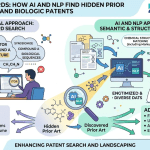
Automated Prior Art Searches: Traditionally, conducting a thorough prior art search to assess a patent’s novelty or a product’s freedom to operate was a painstaking manual process. AI-powered algorithms can now scan millions of patent and non-patent documents in seconds, using natural language processing (NLP) to understand the context and meaning of technical descriptions, thereby improving the speed and comprehensiveness of these critical searches.74
Predictive Analytics: By training models on vast historical datasets of patent filings, litigation outcomes, and market data, AI can begin to identify patterns and make predictions. This includes forecasting technological trends, identifying patents that are at high risk of being litigated, and even developing algorithms to estimate a patent’s economic value based on a multitude of factors.72
Semantic Search and Clustering: A major limitation of traditional keyword-based searching is that innovators often use different terminology to describe similar concepts. AI-driven semantic search overcomes this by understanding the underlying concepts and meaning of the text. This allows AI to group technologically similar patents together, even if they don’t share the same keywords. This capability is revolutionary for patent landscaping, enabling a much more accurate identification of technology clusters and true “white space”.7
The emergence of these advanced tools creates a new strategic imperative. The competitive advantage no longer comes from simply having access to data, but from the ability to synthesize it. The most effective approach is a hybrid, “human-supervised AI” model.76 In this model, AI serves as an incredibly powerful research associate, handling the immense scale and complexity of the data—identifying patterns, flagging relevant documents, and generating initial analyses. However, the final strategic interpretation remains a human endeavor. An experienced IP strategist, a VC partner, or a BD lead must take the AI’s output and apply their deep domain expertise, understanding of legal nuance, and broader business context to make the final judgment call. A company that masters this synergistic partnership—leveraging AI for speed and scope while relying on human experts for wisdom and strategy—will be best positioned to uncover the hidden value in the complex world of biotech IP.
Section 5: From Data to Deals – Applying Patent Intelligence Across the Enterprise
The true power of patent intelligence is unleashed when it breaks free from the confines of the legal department and becomes an integral part of an organization’s strategic decision-making fabric. For a biotech company to thrive, its R&D, business development, and legal teams must share a common, data-driven understanding of the IP landscape. This integrated approach creates a virtuous cycle where patent insights inform scientific direction, which in turn generates stronger IP, which then creates more valuable business opportunities.
For the Investor & Business Development Team: IP Due Diligence
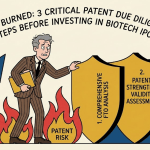
For any investor considering a capital injection or a company contemplating an acquisition or in-licensing deal, intellectual property due diligence is not just a box-checking exercise; it is the most critical phase of risk mitigation.77 A flawed or incomplete IP diligence process can lead to catastrophic value destruction, such as acquiring a company whose core patent is invalid or whose product infringes on a competitor’s IP.6 A rigorous due diligence process, often conducted in tiered levels of intensity depending on the stage of the company and the size of the investment, seeks to answer several fundamental questions.78
Chain of Title & Ownership: Is the ownership of the IP clean? The investigation must confirm that all rights from inventors (including university professors and consultants) have been properly and irrevocably assigned to the company. Any ambiguity in the chain of title can create future legal battles and is a major red flag for investors.21
Patent Validity & Enforceability: Will the key patents hold up in court? This involves a deep dive into the “prosecution history” (the back-and-forth between the company and the patent office) and an independent prior art search to assess whether the patents are truly novel and non-obvious. Any signs of weakness could invite challenges from competitors and jeopardize market exclusivity.77
Freedom to Operate (FTO): This is perhaps the most crucial and often overlooked question. Does the company have the right to actually commercialize its product, or does it infringe on a broader, dominant patent held by a third party? A negative FTO analysis can be a deal-killer, as it means the product cannot be sold without securing a costly license or facing an infringement lawsuit.21
Portfolio Scope & Duration: Does the patent portfolio adequately protect the commercial product and its future improvements? The diligence team will map the company’s patents to its products to identify any gaps in coverage. They will also calculate the true remaining period of market exclusivity by analyzing the expiration dates of all relevant patents (including secondary patents) and factoring in any potential patent term extensions.6
This complex process requires a multi-disciplinary team of patent attorneys, technical specialists, and regulatory experts to ensure that the perceived value of the IP is real and defensible.77
Risk Category
Key Question
Documents to Review / Actions
Ownership / Chain of Title
Does the company unequivocally own its core IP?
Review all inventor employment/consulting agreements for IP assignment clauses. Verify recorded assignments at the USPTO. For university-licensed IP, confirm the university’s rights and the license terms.
Patent Validity
Are the key patents likely to withstand a legal challenge (e.g., in an IPR or district court)?
Conduct an independent prior art search. Analyze the patent’s prosecution history (“file wrapper”) for arguments made to the examiner that might limit claim scope. Evaluate vulnerability to obviousness and written description challenges.
Freedom to Operate (FTO)
Can the company make and sell its product without infringing on third-party patents?
Commission a formal FTO search and opinion from outside counsel. Identify any “blocking” patents and assess the risk of infringement. Evaluate the potential need for in-licensing.
Portfolio Strategy & Scope
Does the patent portfolio provide a durable competitive moat around the commercial product?
Map patent claims directly to product features. Assess the strength and expiration dates of secondary patents (formulation, method of use). Evaluate the geographic coverage in key commercial markets.
In-Licenses
If the core technology is licensed-in, are the terms favorable and secure?
Review the license agreement for scope of rights (exclusive vs. non-exclusive), field of use, territory, royalty obligations, and sublicensing rights. Ensure there are no clauses that could terminate the license unexpectedly.
Trade Secrets
Does the company have adequate policies to protect its valuable non-patented know-how?
Review employee confidentiality agreements and exit procedures. Assess physical and cybersecurity measures for protecting sensitive R&D data.
For the R&D Team: Strategic Patent Landscaping
For the scientists and researchers at the bench, patent data is an invaluable, and often underutilized, source of strategic intelligence. The process of “patent landscaping” involves creating a comprehensive map of all patent activity within a specific technological domain.61 This map provides a bird’s-eye view of the competitive terrain, revealing who is working on what, where the innovation hotspots are, and where opportunities lie.
R&D teams can leverage patent landscaping in several powerful ways:
Identifying “White Space”: A landscape analysis can reveal areas within a technology field that are sparsely patented.61 This “white space” represents untapped opportunities where a company can innovate and establish a strong, first-mover IP position with a lower risk of infringing on existing patents.
Informing R&D Strategy: By tracking the patent filings of competitors, an R&D team can gain real-time insights into their strategic direction.84 Are they shifting focus to a new biological target? Are they investing heavily in a new modality like cell therapy or RNAi? This intelligence allows a company to make more informed, data-driven decisions about which of its own projects to accelerate, pivot, or terminate.86
Avoiding Infringement: One of the worst-case scenarios for an R&D program is to spend years and millions of dollars developing a product, only to discover at a late stage that it infringes on a competitor’s patent. By incorporating patent analysis early in the development process, teams can proactively identify these potential roadblocks and design their products to avoid infringement from the outset.61
Improving Patent Quality: When scientists are aware of the existing prior art, they can better articulate the novelty and inventiveness of their own discoveries. This collaboration between R&D and legal teams, informed by landscape analysis, results in the drafting of stronger, more defensible patents that are more likely to be granted and to withstand future challenges.61
For the Legal & IP Counsel: Proactive Portfolio Management
The role of in-house and external IP counsel has evolved from a reactive function (filing patents when asked) to a proactive, strategic one. The patent portfolio must be managed as a dynamic asset, continuously aligned with the company’s business objectives.22
Key activities for the modern IP counsel include:
Portfolio Pruning: Not all patents are worth keeping. Maintaining a patent requires paying significant annual fees to patent offices around the world. A strategic counsel will regularly review the portfolio to identify patents that no longer align with the company’s commercial strategy or that have low strategic value, and then allow them to lapse. This “pruning” frees up capital that can be redeployed to protect more valuable innovations.22
Lifecycle Management (LCM): This is a critical strategy for maximizing the value of a successful drug. The legal team works closely with R&D to identify and patent incremental improvements to a drug as it moves through its commercial life. This can include new formulations, new methods of use for different diseases, or new combination therapies. This strategy of filing secondary patents creates a “patent thicket” that can extend a drug’s effective market exclusivity long after its original composition of matter patent expires.7
Litigation Strategy: A strong portfolio is both a sword and a shield. The legal team must be prepared to offensively enforce its patents against infringers to protect its market. Simultaneously, the portfolio serves a defensive function. A dense patent portfolio can act as a powerful deterrent, discouraging competitors from launching a risky legal challenge. It can also provide assets for a “countersuit,” giving the company leverage in any litigation brought against it.22
The true competitive advantage emerges when these functions are not performed in isolation but are deeply integrated. Imagine a scenario where R&D, using patent landscaping, identifies a promising “white space” in a new therapeutic area. They begin research, and as they generate novel data, they work with the legal team, who, armed with the same landscape analysis, drafts a series of patent applications with claims specifically designed to dominate that white space. Once the initial patents are filed, the business development team leverages this strong, targeted IP position as a key asset to attract a Series A financing round, confidently demonstrating to investors the technology’s novelty and defensibility. This seamless flow of information and strategy—from market gap to R&D focus to legal protection to business development leverage—is the hallmark of a highly effective, IP-centric organization.
Section 6: Lessons from the Battlefield – Illuminating Case Studies
Theory and metrics are essential, but the true art of patent analysis is learned by studying its application in the real world. The history of the biopharmaceutical industry is replete with stories of companies whose fortunes were made or broken based on the strength of their patent strategies. These case studies provide invaluable lessons for any analyst seeking to understand the link between IP and market value.
The Fortress – AbbVie’s Humira and the Art of the Patent Thicket
No discussion of pharmaceutical patent strategy is complete without examining AbbVie’s masterclass in lifecycle management for its blockbuster drug, Humira (adalimumab). The original composition of matter patent for Humira expired in the United States in 2016. By traditional logic, this should have opened the floodgates to low-cost biosimilar competition, decimating the drug’s multi-billion dollar revenue stream. Yet, AbbVie successfully held off all U.S. biosimilar competitors until 2023. How?
The answer lies in the “patent thicket.” Over the course of two decades, AbbVie built a veritable fortress of intellectual property around Humira. The company filed an astonishing 257 patent applications, resulting in over 130 granted patents in the U.S. alone.22 Crucially, 90% of these patents were filed
after Humira was already on the market.89 These were not patents on the core molecule, but a dense, overlapping web of secondary patents covering:
Specific Methods of Use: Patents for treating specific autoimmune conditions like Crohn’s disease, rheumatoid arthritis, or psoriasis.
Formulations: Patents on the specific formulation of the drug, including stabilizers and buffers that reduce injection-site pain.
Manufacturing Processes: Patents covering various aspects of Humira’s complex manufacturing process.
Dosing Regimens: Patents on specific dosing schedules for particular patient populations.
The strategic genius of the Humira thicket was not necessarily in the strength of any single secondary patent, but in their cumulative deterrent effect.14 Any potential biosimilar competitor was faced not with the prospect of invalidating one patent, but with fighting a war on dozens of fronts simultaneously. The sheer cost, complexity, and risk of litigating against this patent fortress were so prohibitive that it effectively delayed biosimilar entry for seven years, adding tens of billions of dollars to Humira’s total sales. The Humira case is the archetypal example of how a proactive, aggressive lifecycle management strategy can transform a patent portfolio into an almost impenetrable commercial fortress.
The Platform – Moderna’s mRNA Technology
While AbbVie’s strategy was about protecting a single product, Moderna’s story illustrates a different, and arguably more powerful, approach: protecting a foundational platform. Moderna’s immense valuation was not initially built on a specific commercial drug, but on its pioneering work in messenger RNA (mRNA) technology. The company’s core value proposition was its ability to use mRNA to instruct human cells to produce therapeutic proteins.
Moderna’s early and strategic patent filings were crucial to securing its leadership position. Their portfolio was not focused on a single indication, but on the core components of the platform itself 91:
mRNA Chemical Modifications: Patents covering the use of modified nucleosides (like N1-methylpseudouridine) to make the mRNA molecule more stable and less likely to trigger an unwanted immune response.92
Lipid Nanoparticle (LNP) Delivery: Patents on the specific lipid compositions used to encapsulate the fragile mRNA molecule and deliver it safely into cells.91
These platform patents proved to be immensely valuable when the COVID-19 pandemic struck. They provided the foundational technology for Moderna’s Spikevax vaccine and became the basis for its high-profile patent infringement lawsuits against Pfizer and BioNTech.92 Moderna alleged that the Pfizer/BioNTech vaccine, Comirnaty, infringed on its core patents related to mRNA modification and the encoding of the full-length spike protein.
This case study highlights a critical lesson for investors: the most valuable patent portfolios may be those that protect not just a single “product,” but an “engine” capable of generating a pipeline of future products. A strong platform IP position creates a more sustainable, long-term competitive advantage and offers diversification that a single-product company cannot match.
The Precedent – Ariad v. Eli Lilly and the Written Description Requirement
The landmark 2010 Federal Circuit decision in Ariad Pharmaceuticals, Inc. v. Eli Lilly & Co. serves as a crucial cautionary tale for anyone evaluating a patent’s strength. The case revolved around a patent held by Ariad related to the discovery of the NF-κB cell signaling pathway. The patent’s claims were incredibly broad, covering all methods of reducing NF-κB activity to treat diseases. Eli Lilly was selling two drugs, Evista and Xigris, that were found by a jury to infringe these claims, resulting in a massive $65 million verdict against Lilly.97
However, on appeal, the Federal Circuit invalidated Ariad’s patent. The reason was not that the invention wasn’t novel or was obvious. Instead, the court ruled that the patent failed to meet the “written description” requirement of U.S. patent law.99 The court found that while Ariad had claimed a desired result (reducing NF-κB activity), its patent did not sufficiently describe
how to achieve that result. The patent hypothesized three classes of molecules that might work but did not provide enough detail for a person skilled in the art to identify those molecules without undue experimentation.101
The Ariad decision firmly established that the written description requirement is a separate and distinct hurdle from enablement. It’s not enough to describe a problem and a goal; the patent must describe the actual invention with sufficient detail to demonstrate that the inventor was in “possession” of it at the time of filing.97 For analysts and investors, this case is a critical reminder that a patent with broad, powerful-sounding claims can be a house of cards if it is not supported by a robust and detailed specification. During due diligence, scrutinizing the link between the claims and the written description is absolutely essential to assessing a patent’s true validity and strength.
The Underdog – Alnylam and the Power of Focus
Alnylam Pharmaceuticals provides a compelling case study in how a company can build tremendous value by dominating a specific technological niche. Alnylam pioneered the field of RNA interference (RNAi) therapeutics, a novel modality for silencing disease-causing genes. From its inception, the company pursued a deliberate and focused IP strategy to build a commanding position in this emerging field.10
Rather than scattering its resources, Alnylam methodically built a deep and defensible patent portfolio covering the core aspects of RNAi technology, including fundamental patents on the composition and use of small interfering RNAs (siRNAs) and their delivery systems. This focused portfolio became a key strategic asset, enabling the company to:
Attract significant investment from both venture capitalists and public markets.102
Form strategic partnerships with larger pharmaceutical companies, such as Regeneron.105
Navigate a complex legal landscape, including patent disputes with competitors, to secure its freedom to operate.106
Alnylam’s success demonstrates that a company does not need a Humira-style patent thicket covering hundreds of minor variations to be valuable. A deep, foundational, and well-prosecuted portfolio that provides dominant protection in a high-potential technological area can be an equally, if not more, effective strategy for creating long-term value. For investors, this highlights the importance of looking for companies that are not just filing patents, but are building a coherent, strategic estate that aligns with their core scientific and business focus.
These cases reveal an important evolutionary arc in patent strategy. The traditional model focused on protecting a single molecule. This gave way to the defensive “fortress” model of building a thicket around a single blockbuster. The most modern and powerful approach, however, may be the “platform” model, where the IP protects a core technology engine capable of generating an entire pipeline of future products. For an investor searching for undervalued gems, identifying a company with a strong, defensible platform patent portfolio can be a sign of a deeply undervalued and de-risked asset, as it offers a level of diversification and long-term sustainability that a single-product company, no matter how well protected, simply cannot match.
Section 7: Beyond the Patent – A Holistic Framework for Valuation
A deep and nuanced analysis of a company’s patent portfolio is a necessary condition for any sound investment thesis in the biotech sector. However, it is not, by itself, a sufficient condition. A patent is ultimately a right to exclude others from practicing an invention; it is not a right to a successful product or a guarantee of commercial returns.107 The most brilliantly crafted, ironclad patent portfolio in the world is rendered worthless if the drug it protects proves to be unsafe, ineffective, or commercially non-viable.12
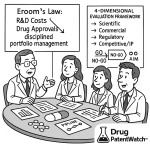
Therefore, a truly sophisticated valuation framework must treat patent analysis as the foundational layer, but then integrate it with a rigorous assessment of several other critical, non-patent factors. The relationship between these elements is not merely additive; it is multiplicative. A strong patent portfolio acts as a powerful multiplier on the value generated by the underlying science, the clinical data, and the market opportunity. If any of these other factors are zero, the total value is zero, regardless of patent strength.
The Limitations of a Patent-Only Analysis
Relying solely on patent data can lead to a dangerously incomplete picture. The data can tell you about the legal strength of a company’s moat, but it cannot tell you if there is any treasure worth protecting inside that moat. A patent count, a citation analysis, or a claim scope review will not reveal:
Whether the drug has a therapeutic benefit.
Whether the drug’s side-effect profile is acceptable.
Whether the drug can be manufactured at scale and at a reasonable cost.
Whether doctors will prescribe it and if insurers will pay for it.
Whether the management team is capable of executing a successful launch.
Failing to integrate these factors is a common mistake that can lead to grossly misjudging a company’s true value and risk profile.43
Integrating Critical Non-Patent Factors
A holistic valuation model must place the patent analysis in a broader strategic context, carefully weighing the following elements.
Clinical Trial Data
This is the single most important driver of value for a clinical-stage biotech company. Positive data from well-designed and well-conducted clinical trials, particularly in mid-to-late stages (Phase 2 and Phase 3), is the ultimate de-risking event.15 Strong clinical data demonstrates that the technology is not just a scientific curiosity but has the potential to become a real medicine that benefits patients. Investors and potential acquirers scrutinize this data with extreme care, looking for clear evidence of efficacy, a manageable safety profile, and a statistically significant improvement over the current standard of care.109 The combination of a strong patent portfolio and compelling clinical data is the holy grail for biotech investors.111
Regulatory Exclusivity
Beyond the protection afforded by patents, regulatory agencies like the FDA provide their own forms of market exclusivity to incentivize drug development in certain areas.112 These are critical assets that can significantly extend a drug’s monopoly period. Key forms include:
Orphan Drug Exclusivity (ODE): In the U.S., a drug approved to treat a rare disease (affecting fewer than 200,000 people) receives 7 years of market exclusivity, independent of its patent status.23
New Chemical Entity (NCE) Exclusivity: A new small-molecule drug receives 5 years of data exclusivity, during which the FDA cannot approve a generic version that relies on the innovator’s data.81
Biologics Exclusivity: New biologic drugs receive a much longer period of 12 years of data exclusivity in the U.S., reflecting their complexity.23
These regulatory exclusivities can be a lifeline for a drug whose core patents are nearing expiration. A thorough valuation must map out both the patent and regulatory exclusivity timelines to determine the true, effective period of monopoly protection.112
Market Access & Reimbursement
A drug may be patented and FDA-approved, but its commercial success is ultimately determined by market access—the willingness of payers (insurance companies, government programs like Medicare, and national health systems) to cover the cost of the drug.112 In today’s cost-conscious healthcare environment, payers are increasingly demanding evidence that a new, expensive drug provides a significant benefit over existing, cheaper alternatives. A company must have a sophisticated market access strategy and compelling health-economic data to secure favorable reimbursement. A valuation that fails to analyze the pricing and reimbursement landscape for a given disease area is incomplete and likely overly optimistic.20
Management Team & Execution
An idea is only as good as the team that executes it. This is especially true in biotech, where navigating the complexities of drug development requires a rare blend of scientific, clinical, regulatory, and commercial expertise.5 Investors place a high premium on management teams with a proven track record of success—leaders who have successfully advanced drugs through the clinic, secured regulatory approvals, and orchestrated successful product launches.12 A brilliant scientific founder paired with an experienced CEO and a world-class clinical development team is a powerful combination that significantly de-risks the venture and commands a higher valuation.
Competitive Landscape
Finally, a company’s value must be assessed in the context of its competitive landscape.84 This goes beyond the FTO analysis of the patent landscape. What is the current standard of care for the disease the company is targeting? Are there other drugs on the market? What do competitors have in their pipelines? A patented, approved, and reimbursed drug may still fail commercially if it does not offer a clear and compelling clinical advantage over other available options in terms of efficacy, safety, or convenience.112
A simplified, conceptual model for this integrated valuation might look something like this:
Pclinical, Pregulatory, and Pcommercial are the probabilities of clinical, regulatory, and commercial success, respectively.
Durationexclusivity is the effective period of market monopoly, determined by a detailed analysis of both the patent portfolio and regulatory exclusivities.
This framework illustrates the multiplicative relationship. If the clinical trial fails (Pclinical=0), the entire valuation collapses, no matter how strong the patent portfolio. However, for a drug with promising clinical data and a clear market need, a strong patent portfolio that doubles the effective duration of exclusivity can directly double the company’s risk-adjusted valuation. The patent analysis, therefore, is not about finding value in a vacuum; it is about quantifying the crucial multiplier that should be applied to the value being created by the science and the business.
Section 8: The Horizon – The Future of Biotech IP and Investment Strategy
The principles and frameworks we have discussed provide a robust methodology for valuing biotech companies today. However, the landscape of biotechnology and intellectual property law is anything but static. Technological breakthroughs, evolving legal precedents, and shifting regulatory environments are constantly reshaping the terrain. A forward-looking investor or strategist must not only master the present but also anticipate the future.
The Impact of Emerging Technologies on Patent Law
The relentless pace of innovation in life sciences is creating novel challenges and questions for the patent system, with two areas standing out in particular.
AI and Inventorship: The use of artificial intelligence in drug discovery is exploding. AI algorithms can now screen billions of potential molecules, predict their therapeutic properties, and identify promising drug candidates with a speed and scale that is impossible for human researchers alone.72 This raises a profound legal and philosophical question: If an AI system identifies a novel, life-saving molecule without direct human intellectual contribution to the final structure, can it be an “inventor” under patent law? So far, patent offices around the world, including the USPTO, have held that an inventor must be a human being.74 But this issue is far from settled. The future of patent law will have to grapple with how to incentivize and protect innovations that are increasingly the product of human-machine collaboration. For investors, this creates uncertainty around the patentability and defensibility of AI-driven discoveries.48
Gene Editing & Synthetic Biology: Technologies like CRISPR have revolutionized our ability to edit genomes, opening up unprecedented therapeutic possibilities. However, this has also led to incredibly complex and high-stakes patent battles, such as the long-running dispute between the Broad Institute and the University of California over foundational CRISPR patents.114 The outcomes of these disputes are shaping the commercial landscape for gene editing, determining who needs to license what technology from whom. Similarly, advances in synthetic biology are blurring the lines between what is a product of nature and what is a human invention, creating new challenges for patent eligibility.116
Evolving Legal and Regulatory Landscapes
Beyond technology, the legal and regulatory frameworks governing biopharma IP are in constant flux.
Patent Eligibility Standards: In the U.S., a series of Supreme Court decisions have created uncertainty around what is considered patent-eligible subject matter, particularly for diagnostic methods and inventions related to natural phenomena. This has made it more challenging to secure and defend certain types of biotech patents.117
The Unified Patent Court (UPC) in Europe: The recent launch of the UPC is streamlining patent litigation across much of Europe. This could make it easier and more cost-effective for companies to enforce their patents across multiple countries, but it also creates a new risk: a single UPC decision can invalidate a patent across all member states.118
Shifting Regulatory Incentives: Governments are continually adjusting the balance between incentivizing innovation and controlling healthcare costs. Changes to drug pricing legislation, such as the Inflation Reduction Act (IRA) in the U.S., or modifications to the criteria for regulatory exclusivities can have a direct and significant impact on a drug’s future revenue potential and, therefore, its valuation.119
The Future of IP Strategy: From Static Defense to Predictive Offense
In this dynamic environment, the nature of IP strategy itself must evolve. The traditional approach of viewing patents as a static, defensive shield is no longer sufficient. The future belongs to companies and investors who adopt a proactive, predictive, and offensive IP strategy.
The integration of AI into patent analytics is the key enabler of this shift. With powerful analytical tools, it is now possible to move beyond reacting to the current patent landscape to actively predicting its future evolution.8 By analyzing filing trends, citation velocities, and scientific literature, analysts can identify emerging technological trajectories and anticipate where the next competitive battles will be fought.
This predictive capability allows for a much more sophisticated approach to portfolio construction. The goal is no longer just to protect what has already been invented, but to proactively build an IP position in the areas that will become strategically important in five or ten years. It’s about playing chess, not checkers—anticipating the future state of the board and securing the key squares before your competitors even realize their value. For the investor seeking undervalued biotech companies, the ultimate prize will be identifying those management teams who have mastered this forward-looking approach—the ones who are not just building a patent portfolio for today, but are architecting an IP estate for tomorrow.
Conclusion: Synthesizing Data into a Competitive Edge
The journey to identify an undervalued biotech company is a complex, multi-disciplinary endeavor. It demands a departure from the familiar comfort of traditional financial statements and an immersion into the intricate worlds of science, law, and medicine. As we have demonstrated, this journey must begin with a deep, strategic analysis of the company’s intellectual property. The patent portfolio is the Rosetta Stone for decoding a biotech’s true potential, offering the most reliable leading indicator of its future value and its ability to sustain a competitive advantage.
However, our analysis makes it clear that a patent-centric view, while necessary, is not sufficient. The insights gleaned from the patent portfolio must be rigorously integrated with a clear-eyed assessment of clinical trial data, the regulatory landscape, market access dynamics, and the caliber of the management team. It is at the intersection of these domains—where a strong, defensible patent portfolio protects a clinically meaningful, commercially viable, and well-managed asset—that true, durable value is found.
The modern tools of patent intelligence, from specialized databases like DrugPatentWatch to the transformative power of AI-driven analytics, have equipped us with an unprecedented ability to conduct this integrated analysis with greater speed, scale, and sophistication. For the discerning investor, the diligent business development professional, and the forward-thinking R&D leader, mastering this analytical framework is no longer just an advantage; it is a strategic imperative. In the high-stakes, rapidly evolving world of biotechnology, the ability to transform complex patent data into a clear, predictive, and actionable competitive edge is the ultimate key to unlocking superior returns.
Key Takeaways
Value in Biotech is Future-Focused: Traditional valuation metrics (P/E, EBITDA) are largely irrelevant for pre-revenue biotech companies. Value is derived from the risk-adjusted potential of a future revenue stream protected by intellectual property.
Patents are the Core Asset: For most biotech companies, the patent portfolio is not an ancillary legal document but the central economic engine. It creates barriers to entry, attracts investment, enables partnerships, and is the primary driver of M&A valuation.
Quality Trumps Quantity: A simple count of patents is a misleading metric. The quality of a portfolio is determined by factors like the presence of a foundational Composition of Matter patent, the breadth and defensibility of its claims, and its strategic construction.
Quantitative Metrics Provide Objective Signals: Key data points like a high number of forward citations (especially non-self citations) and a large, geographically diverse patent family (particularly “triadic” families) are strong, empirically validated proxies for an invention’s technological importance and commercial value.
Patent Thickets and Platforms are Key Strategies: Advanced IP strategies move beyond protecting a single invention. “Patent thickets” (e.g., AbbVie’s Humira) extend a single product’s life, while “platform” patents (e.g., Moderna’s mRNA technology) protect an engine for generating multiple future products, offering a more sustainable value proposition.
IP Due Diligence is Non-Negotiable: For any investment or M&A transaction, a rigorous IP due diligence process is essential to mitigate risk. Key areas of scrutiny include clean ownership (chain of title), patent validity, and freedom to operate (FTO).
Holistic Analysis is Crucial: Patent strength is a powerful value multiplier, but it is worthless without a viable product. A complete valuation must integrate patent analysis with an assessment of clinical trial data, regulatory exclusivities, market access, and the quality of the management team.
AI is Transforming IP Strategy: Artificial intelligence is revolutionizing patent analytics, enabling faster, more comprehensive searches and predictive insights. The future of IP strategy lies in a “human-supervised AI” approach, combining machine scale with human expertise to move from a defensive posture to a predictive, offensive one.
FAQ Section
1. During due diligence, how should an investor weigh the value of a patent with very broad claims versus one with narrower, but more easily defensible, claims?
This is a classic risk-reward trade-off. A patent with extremely broad claims is, in theory, more valuable because it’s harder for competitors to design around and can potentially block a wider range of competing products. However, this breadth is also its greatest vulnerability. Broad claims are more likely to be challenged and invalidated for lacking sufficient written description (as in the Ariad v. Lilly case) or for being obvious over the prior art. A patent with narrower, more specific claims is less powerful but is often “ironclad” in its validity.
An investor should approach this by valuing the portfolio as a set of strategic options. The broad claim represents a high-reward, high-risk “call option.” Its value should be heavily discounted by the probability of it being invalidated. The narrower claims represent a lower-value but more certain asset—the “floor” value of the IP. A truly valuable portfolio has both: a broad “reach” claim to deter competitors and a series of well-supported, narrower “fallback” claims that ensure a baseline of protection survives even if the broadest claim falls. The ideal scenario is not an either/or but a layered defense.
2. What are the most critical “red flags” to look for in a patent’s prosecution history (the “file wrapper”)?
The prosecution history is a treasure trove of information that reveals the patent’s potential weaknesses. Key red flags include:
Numerous Rejections on Obviousness Grounds: If the patent examiner repeatedly rejected the claims as obvious over a combination of prior art references, and the applicant had to significantly narrow the claims to get the patent allowed, it suggests the invention is an incremental improvement rather than a true breakthrough. This history can be used by a future challenger to argue for a narrow interpretation of the claims.
Arguments that Limit Claim Scope (Prosecution History Estoppel): Pay close attention to the arguments the applicant made to overcome rejections. If they argued that their invention is different from the prior art because it has a specific feature (e.g., “our compound works at a pH between 6 and 7”), they are generally “estopped” or prevented from later arguing in court that their patent also covers a product that works at a pH of 8. This can severely limit the patent’s effective scope.
Failure to Disclose Known, Relevant Prior Art: Applicants have a duty of candor to the patent office. If there is evidence that the company knew about a highly relevant piece of prior art and intentionally withheld it during prosecution, the resulting patent can be declared unenforceable due to “inequitable conduct.” This is a potential atom bomb for a patent’s value.
3. How can I use patent data to assess a company’s R&D efficiency and focus?
Patent data provides a powerful lens into the inner workings of a company’s R&D engine. To assess efficiency and focus, an analyst can look at several metrics:
Patent-to-R&D Spend Ratio: While not a perfect measure, you can compare the number of new patent families a company generates per year to its reported R&D budget. Comparing this ratio across peer companies can provide a rough gauge of innovative output per dollar spent.
Technology Clustering: Using patent landscaping tools, you can map a company’s entire portfolio by technology classification codes (e.g., CPC codes). A company with a tight cluster of patents in a few specific areas demonstrates a focused R&D strategy. In contrast, a portfolio scattered across dozens of unrelated fields might suggest a lack of strategic direction or a “shotgun” approach to innovation.
Inventor Analysis: Analyzing the key inventors on a company’s patents can reveal where the core innovative talent resides. Is innovation driven by a small, consistent team, or is it diffuse? Is the company retaining its key inventors, or have they recently left for a competitor? This provides insight into the human capital behind the IP.
4. How does the rise of the Unified Patent Court (UPC) in Europe change the calculus for valuing a biotech’s European patent portfolio?
The UPC represents a major paradigm shift. Previously, enforcing or challenging a European patent required separate, country-by-country litigation, which was incredibly expensive and time-consuming. The UPC creates a single forum for patent disputes across most of the EU. This has a dual effect on valuation:
Increased Offensive Value: For a company with a strong, valid patent, the UPC increases its value. The patent holder can now obtain a single injunction that blocks an infringer across all member countries, making enforcement much more powerful and cost-effective.
Increased Defensive Risk: The flip side is that the UPC also creates a single point of failure. A competitor can now challenge a patent in the UPC and, if successful, invalidate it across all member countries in a single action. This “central revocation” risk means that a patent that might have survived a challenge in one country could now be lost everywhere.
For investors, this means the stakes are higher. A strong, high-quality European patent is now more valuable than ever. However, a European patent with potential validity weaknesses is now significantly riskier and should be discounted more heavily during valuation.
5. Beyond the core drug patents, what is the most undervalued type of IP in a typical biotech M&A deal?
While patents on the drug itself get the most attention, the most frequently undervalued IP asset is often the company’s trade secrets related to manufacturing and process development, especially for biologics. These are often referred to as Chemistry, Manufacturing, and Controls (CMC) data.
A patent provides a detailed recipe that, by law, must be sufficient to allow others to replicate the invention. However, the subtle, hard-won, practical know-how of how to efficiently and consistently manufacture a complex biologic at commercial scale is often not fully captured in the patents and is protected as a trade secret. This includes things like optimal cell culture conditions, purification techniques, and analytical methods. For a potential acquirer, this CMC know-how can be immensely valuable. It can shave years off the time it takes to scale up production and navigate the regulatory approvals for manufacturing facilities. A target company that has meticulously documented and protected its manufacturing trade secrets possesses a hidden asset that can significantly accelerate the path to market, and this value is often not fully captured in a standard patent-focused due diligence.
Find Your Next Blockbuster – Biotech & Pharmaceutical patents, sales, drug prices, litigation – DrugPatentWatch, accessed August 20, 2025, https://www.drugpatentwatch.com/about.php
Patent landscape analysis—Contributing to the identification of technology trends and informing research and innovation funding policy – PubMed Central, accessed August 20, 2025, https://pmc.ncbi.nlm.nih.gov/articles/PMC10034625/
The U.S. Patent System, Biotechnology, and the Courts – Reaping the Benefits of Genomic and Proteomic Research – NCBI, accessed August 20, 2025, https://www.ncbi.nlm.nih.gov/books/NBK19867/
Patently-O, the nation’s leading patent law blog, accessed August 20, 2025, https://patentlyo.com/