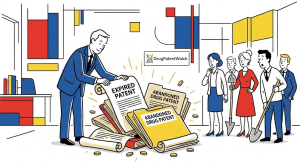
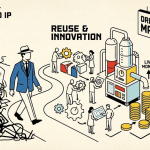
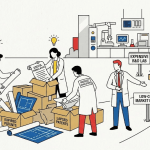
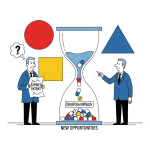
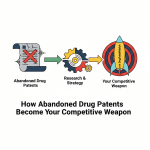
Every year, dozens of pharmaceutical patents expire quietly. A few dozen more get abandoned before they even reach their full term. The combined market opportunity sitting inside those two categories runs into the hundreds of billions of dollars, and most of the people who could exploit it never bother to look.
That is not an accident. The pharmaceutical patent system is deliberately complex. It involves multiple overlapping layers of protection, regulatory exclusivities that operate independently of patent law, and a litigation culture designed to keep generic entrants busy in court long after a compound patent has technically lapsed. Most observers focus on the drama of that litigation. They miss the quieter, more lucrative opportunity sitting in the expiry calendar and the abandonment records.
This article is a guide to finding, interpreting, and acting on expired and abandoned drug patents. It covers the mechanics of how pharmaceutical patents die, the economics of what happens next, the strategic tools available to companies that pay attention, and the mistakes made repeatedly by those who do not. The audience is broad: generic drug manufacturers, biotech investors, business development executives at branded pharma companies watching their own pipeline, and the legal and financial advisors who serve all of them.
The data is out there. Tools like DrugPatentWatch aggregate and interpret it. The gap is not access; it is the willingness to do the work.
Why the Pharmaceutical Patent Graveyard Is Open for Business
The Scale of What Has Been Left Behind
The United States Patent and Trademark Office (USPTO) currently holds records on more than eleven million issued patents, of which several hundred thousand relate to pharmaceutical compounds, formulations, methods of treatment, and manufacturing processes. The vast majority of those patents are no longer in force. They expired naturally at the end of their twenty-year term, or they were abandoned by their owners, who stopped paying maintenance fees and let the rights lapse.
According to the Medicines Patent Pool, more than 90 percent of medicines on the World Health Organization’s Essential Medicines List are off-patent globally, though regulatory and market barriers still limit access in many lower-income countries [1]. In the United States, the FDA’s Orange Book, which lists approved drug products and their associated patents and exclusivities, contained approximately 4,600 active patent listings for small-molecule drugs as of early 2025 [2]. That number sounds large until you compare it to the total volume of pharmaceutical compounds ever brought to market. The ratio of still-protected to unprotected drugs is far smaller than most people assume.
What does “unprotected” mean in practice? It means that any company with the manufacturing capability, the regulatory patience, and the market intelligence can take the underlying compound, formulation, or method and build a product around it, without seeking a license, without paying a royalty, and without fear of patent infringement. The only constraints are FDA approval requirements and any surviving regulatory exclusivities, which are a separate legal category from patents and expire on their own schedule.
The opportunity pool is enormous. Researchers at RAND Corporation estimated that generic drug competition saved the U.S. healthcare system approximately $2.2 trillion over a ten-year period, a figure that tracks almost perfectly with the cadence of major patent expirations [3]. That savings number is the other side of a revenue opportunity: every dollar not paid to a branded manufacturer is, at least in part, revenue available to be captured by a generic entrant willing to supply the same molecule.
How Patent Expiry Actually Works
A U.S. patent on a new chemical entity has a nominal term of twenty years from the date the patent application is filed. For pharmaceutical compounds, that creates an immediate structural problem: drug development takes time. The average time from initial filing to FDA approval for a new drug is around twelve years, though that figure varies widely by therapeutic area and development complexity [4]. A company filing a composition-of-matter patent on a promising molecule in 2010 might not receive FDA approval until 2022, leaving only eight years of effective patent protection in the marketplace.
Congress recognized this problem in 1984, when it passed the Drug Price Competition and Patent Term Restoration Act, universally known as the Hatch-Waxman Act. Among its provisions, Hatch-Waxman allows branded drug manufacturers to apply for a patent term extension (PTE) of up to five years to compensate for time spent in regulatory review. The total remaining patent life after the PTE cannot exceed fourteen years from FDA approval [5]. PTEs are not automatic; they require a formal application and meet specific eligibility criteria. Not every manufacturer applies, and not every application is granted.
The result is that effective market exclusivity for a branded drug, the period during which no generic can legally enter the market based on an abbreviated new drug application (ANDA), is typically somewhere between seven and fourteen years post-approval. After that window, the patents expire and the market is, at least in theory, open.
The Difference Between Expiry and Abandonment
Patent expiry and patent abandonment are two distinct events with different causes and different legal consequences, though both result in the patent entering the public domain.
Expiry is the natural end of a patent’s term. The patent ran its twenty-year course from filing date (accounting for any granted extensions) and ceased to be enforceable. No action is required by the patent owner; the patent simply terminates by operation of law. Expiry is predictable, dateable in advance, and tracked by everyone from generic manufacturers to institutional investors.
Abandonment is different. A patent is abandoned when the owner stops maintaining it, either by failing to pay the periodic maintenance fees required to keep it in force, or by affirmatively filing a notice of abandonment. Maintenance fees in the U.S. fall due at 3.5, 7.5, and 11.5 years after the patent issues, with the amounts escalating over time (from a few hundred dollars for small entities to approximately $7,700 for the final large-entity fee as of 2024) [6]. Miss a payment window and the patent lapses. Miss it and fail to revive within the grace period, and the patent is gone permanently.
Abandonment creates a different kind of intelligence opportunity than expiry. An expiring patent is on the calendar; anyone tracking the Orange Book or the USPTO database knows it is coming. An abandoned patent is a signal about the patent owner’s strategic thinking. When a large pharmaceutical company stops paying maintenance fees on a patent covering a compound it once believed was valuable, that fact says something about how the company now assesses that compound’s commercial potential. It might mean the compound failed in development, or that a superior molecule made it obsolete, or that the company concluded the patent was not enforceable and therefore not worth maintaining. Any of those conclusions is actionable for a competitor willing to do the analysis.
Terminal Disclaimers and What They Mean
Terminal disclaimers are a specialized patent prosecution tool that frequently confuses non-practitioners. When a patent applicant files multiple related patent applications on variations of the same underlying invention (different salt forms, different dosage forms, different methods of use), the USPTO examiner may raise an obviousness-type double patenting rejection, arguing that the later application is merely an obvious variant of an already-patented invention.
The standard response is to file a terminal disclaimer, in which the applicant agrees to limit the later patent’s term to expire no later than the earlier patent. The practical consequence is that a family of patents covering related pharmaceutical innovations may all share the same expiry date, regardless of their individual filing dates. When the first-filed patent in that family expires, all the terminally-disclaimed descendants expire with it.
This matters for patent watchers because it creates cliff-edge scenarios. A company defending its market position may have filed dozens of continuation patents covering various aspects of its product, all terminally disclaimed back to a composition-of-matter patent that expires in 2026. When 2026 arrives, the entire family goes down simultaneously. Monitoring terminal disclaimers in a drug’s patent family, which services like DrugPatentWatch compile and display, gives a clearer picture of when a product is genuinely exposed to generic entry than looking at any single patent in isolation.
The Patent Cliff: History’s Best Business Lesson
The $250 Billion Cliff That Rewrote Generic Drug Industry
Between 2010 and 2016, the pharmaceutical industry experienced the largest sustained wave of patent expirations in its history. Analysts at EvaluatePharma estimated that drugs generating more than $250 billion in annual sales lost patent protection during that period [7]. The event became known as “the patent cliff,” and it remade the economics of both branded and generic pharmaceuticals.
For branded manufacturers, the cliff was a crisis. Companies like Pfizer, AstraZeneca, and Eli Lilly watched revenue collapse as generic versions of their flagship products captured market share within months of patent expiry. Pfizer’s Lipitor (atorvastatin) alone generated over $13 billion annually at its peak; within two years of patent expiry in November 2011, generic versions had captured approximately 80 percent of prescription volume [8]. Pfizer’s total revenue fell from $67.4 billion in 2010 to $51.6 billion in 2013 as the full weight of expiries hit [9].
For generic manufacturers, the cliff was the largest single business opportunity the sector had ever seen. Companies like Teva, Mylan (now Viatris), Sandoz, and Apotex invested heavily in ANDA filings for the wave of expiring drugs. Those investments produced extraordinary returns for the companies positioned early.
The cliff also produced something less discussed: a competitive intelligence arms race. Generic manufacturers who wanted the 180-day exclusivity that U.S. law grants the first ANDA filer needed to be thinking about patent expiry years in advance. They needed to know not just when the primary composition-of-matter patent expired, but the full constellation of secondary patents, regulatory exclusivities, and potential litigation timelines. That need drove investment in patent monitoring capabilities that have become standard practice in the generic industry, with platforms like DrugPatentWatch becoming essential research infrastructure.
What the Original Patent Holders Got Wrong
The patent cliff exposed a strategic failure that repeated itself across multiple large pharma companies: the assumption that secondary patents would hold the line. During the 1990s and 2000s, pharmaceutical companies built elaborate strategies around extending effective market exclusivity by filing continuation patents on new formulations, new delivery mechanisms, new dosage strengths, and new methods of use. The strategy is called “evergreening,” and it works under specific conditions.
What many companies discovered in the patent cliff era is that secondary patents are vulnerable in ways that primary composition-of-matter patents are not. A new formulation patent is easier to design around. A method-of-use patent only prevents infringement if the generic product’s labeling specifically promotes the patented method. Secondary patents are more susceptible to invalidity challenges through inter partes review (IPR) proceedings at the Patent Trial and Appeal Board. And generic manufacturers, who had developed substantial patent litigation expertise by the mid-2000s, became skilled at identifying and attacking secondary patents specifically designed to extend exclusivity without genuine innovation.
The lesson for anyone monitoring expired and abandoned patents today is that secondary patents often fail to deliver what their owners expected. A pharmaceutical compound whose primary patent has expired may have dozens of continuation patents still nominally in force, but those patents may be narrow, easily designed around, or already challenged successfully in litigation. The compound may be more available than a surface-level patent count suggests.
The Lipitor Case Study
Atorvastatin calcium, sold by Pfizer as Lipitor, is the best-documented example of patent expiry dynamics in the pharmaceutical industry. The drug became the best-selling pharmaceutical product of all time, generating cumulative revenues estimated at over $140 billion from its 1997 launch through patent expiry [10].
Pfizer’s patent portfolio around atorvastatin was extensive. The original composition-of-matter patent (U.S. Patent No. 4,681,893) expired in 2010, but a process patent and a calcium salt formulation patent extended effective exclusivity. Ranbaxy Laboratories (now part of Sun Pharma) filed a Paragraph IV certification challenging the validity and infringement of Pfizer’s patents in 2003, triggering a litigation process that ran for years. The eventual settlement allowed Ranbaxy to enter the market with a generic in November 2011, six months before the last relevant patent expired, in exchange for dropping its invalidity challenge [11].
That six-month window, in which Ranbaxy held the only authorized generic on the market, was extraordinarily valuable. Ranbaxy generated approximately $600 million in revenues from generic atorvastatin in the first 180 days of sales [12]. The example illustrates both the value of being first into a large expiring drug market and the complexity of determining when “expiry” truly occurs when a company has layered multiple patents over its product.
The Plavix Case Study
Clopidogrel bisulfate, sold as Plavix by Bristol-Myers Squibb and Sanofi, was the second-largest pharmaceutical product by revenues at the time of its patent expiry in May 2012, generating approximately $9.4 billion annually at peak [13]. The Plavix saga has a different lesson than Lipitor: it illustrates what happens when a company makes a catastrophic error in its patent litigation strategy.
In 2006, BMS and Sanofi struck a deal with Canadian generic manufacturer Apotex in which Apotex agreed not to launch a generic version of Plavix in exchange for what amounted to a promise not to sue for a prior patent infringement. The U.S. Federal Trade Commission and the New York Attorney General’s office objected to the deal as anticompetitive; under threat of regulatory action, BMS unwound the settlement. Apotex immediately launched its generic product “at risk,” meaning before the patent litigation was fully resolved. BMS won an injunction against further sales, but Apotex had already shipped approximately $1.4 billion worth of product in the days before the injunction was granted [14].
The story ends with Apotex eventually losing the patent case, being ordered to disgorge significant profits, and paying damages. But the episode reveals the violent speed at which generic entry can occur when patent protection is uncertain, and the financial stakes involved in getting patent strategy right.
Anatomy of an Abandoned Patent
Why Companies Walk Away
When a large pharmaceutical company abandons a patent, the decision almost always has a rational business explanation. Understanding that explanation is the starting point for identifying whether the abandoned patent represents an opportunity.
The most common reason for abandonment is that the underlying compound or technology failed in development. A company files a patent on a promising molecule, spends two or three years paying maintenance fees while clinical development proceeds, then receives phase II or phase III trial data showing the drug does not work. At that point, the patent has no value. There is no approved product to protect, no licensing opportunity, and no reason to continue paying the USPTO maintenance schedule. The patent gets abandoned.
A second common reason is obsolescence. The pharmaceutical industry advances quickly, and a compound that looked promising five years ago may have been superseded by a superior molecule that works better, has fewer side effects, or has a stronger intellectual property position. AstraZeneca’s pipeline history contains numerous examples of compounds that were patented, developed to some stage, then discontinued as the company’s research focused on other therapeutic approaches. The patents covering those discontinued compounds were abandoned, making the underlying chemistry available.
A third reason is strategic portfolio pruning. After mergers and acquisitions, large pharmaceutical companies regularly find themselves with patent portfolios containing thousands of patents, many of which cover areas outside their current therapeutic focus. Maintaining those patents costs money; strategic reviews conclude that some categories of patents are not worth maintaining. The abandoned patents from post-merger portfolio reviews often include genuine technology that the acquiring company simply has no interest in developing.
A fourth reason, less flattering to the patent owner, is that the company concluded the patent was not valid or enforceable and therefore not worth maintaining. This can happen when prior art emerges that was not available during prosecution, or when the company receives legal analysis suggesting the patent claims are narrower than originally believed.
Maintenance Fees and the Economics of Abandonment
U.S. utility patent maintenance fees are due at 3.5, 7.5, and 11.5 years after grant, with a six-month grace period that allows late payment with a surcharge. The fee structure as of 2024 is approximately $2,000 for the 3.5-year payment, $3,760 for the 7.5-year payment, and $7,700 for the 11.5-year payment, for large entities (small entities and micro-entities qualify for reduced fees) [15]. These amounts are not individually large. For a company managing a portfolio of thousands of patents, though, total annual maintenance fee expenditure can run into the tens of millions of dollars.
Patent portfolio management has become a significant discipline in large pharmaceutical companies. IP departments review portfolios systematically, assessing each patent against current business strategy and making keep-or-abandon decisions. The decision to abandon a patent at the 3.5-year maintenance window (approximately 5 to 7 years after filing, given typical prosecution timelines) versus the 7.5-year window sends a different signal about the patent owner’s confidence in the underlying technology.
Early abandonment, before the 3.5-year maintenance fee, typically signals a development failure. Abandonment at 7.5 years is more ambiguous: it might reflect a failure, a strategic shift, or a portfolio pruning decision. Abandonment at 11.5 years, when the patent is approaching the later portion of its term anyway, might simply reflect a calculation that the remaining years of protection are not commercially valuable enough to justify the fee. Each of those abandonment signals has a different implication for the opportunity it creates.
How to Read an Abandonment Notice
When a patent is abandoned for failure to pay maintenance fees, the USPTO records the event in its publicly accessible Patent Application Information Retrieval (PAIR) system, now called Patent Center. The abandonment notice includes the patent number, the entity size of the patent owner, and the date of abandonment. What it does not include is any explanation of why the patent was abandoned; that information is proprietary to the owner.
Reading abandonment notices effectively requires combining the USPTO data with other sources. DrugPatentWatch maintains cross-referenced databases that connect patent abandonment records with drug product approvals, ANDA filings, Orange Book listings, and clinical trial data. This cross-referencing allows a researcher to ask questions like: Was the compound covered by this patent ever approved? Does any NDA reference this patent? Have any generic manufacturers filed ANDAs citing this patent? Were there any clinical trials registered under the compound covered by this patent? The answers to those questions, in combination with the abandonment record, substantially improve the ability to assess whether an abandoned patent represents genuine opportunity or a dead end.
What Happens After Abandonment
When a patent is abandoned, the underlying technology enters the public domain immediately. Anyone can make, use, sell, offer for sale, or import the claimed invention without seeking permission from or paying a royalty to the former patent owner.
There is an important exception: a patent can sometimes be revived after abandonment if the owner files a petition establishing that the failure to pay the maintenance fee was either unintentional or unavoidably delayed. The USPTO grants petitions for unintentional abandonment liberally, and there is technically no statutory time limit for filing a revival petition, though the USPTO’s precedent makes revival increasingly difficult as time passes. In practice, the pharmaceutical industry has developed a “dead zone” standard: if more than two years have passed since abandonment and no revival petition has been filed, the patent is almost certainly permanently abandoned. Even within that two-year window, a company that has been actively developing the underlying compound would typically have filed a revival petition quickly if the abandonment was genuinely unintentional.
For anyone seeking to use technology from an abandoned patent, the revival risk creates a practical due diligence requirement. Before investing significant resources in a development program built around an abandoned patent, it is prudent to confirm the abandonment is permanent and to assess whether the former patent owner retains any related active patents that might cover overlapping subject matter.
The Generic Drug Machine
ANDA Filings and the 505(b)(2) Pathway
The mechanism through which generic drug manufacturers access expired patents is the Abbreviated New Drug Application (ANDA), established under the Hatch-Waxman Act. An ANDA allows a generic applicant to rely on the FDA’s previous finding of safety and efficacy for a reference listed drug (RLD), the branded product, rather than conducting its own clinical trials. The generic applicant must demonstrate bioequivalence to the RLD, establish that its product meets the same identity, strength, quality, and purity standards, and certify its status with respect to any patents listed in the Orange Book for the RLD.
The certification requirement is where patent strategy enters the ANDA process. An applicant can file four types of patent certification, designated as Paragraph I through Paragraph IV. Paragraph I certifies that no patent has been listed for the RLD. Paragraph II certifies that the listed patent has expired. Paragraph III certifies that the generic product will not be marketed until the listed patent expires. Paragraph IV certifies that the listed patent is invalid, unenforceable, or will not be infringed by the generic product.
Paragraph IV certifications are the engine of Hatch-Waxman litigation. They are simultaneously an assertion about patent status and an invitation for the patent holder to sue. Under Hatch-Waxman, a branded company that receives a Paragraph IV notice has 45 days to file a patent infringement lawsuit, which automatically triggers a 30-month stay on FDA approval of the ANDA. The 30-month stay allows the litigation to proceed before the generic product reaches market. It is the most powerful tool available to branded pharmaceutical companies defending patent protection, and it is frequently used regardless of the merits of the underlying patent claims.
The 505(b)(2) pathway is a related but distinct route that allows applicants to rely on published scientific literature or FDA’s prior findings for products that are not straight generic copies of existing drugs. New formulations, new delivery systems, new salt forms, and new combinations can use this pathway. It is particularly relevant for companies seeking to develop improved products based on expired compound patents: the compound is no longer protected, but a genuinely improved formulation can obtain its own intellectual property protection through the 505(b)(2) route.
Paragraph IV Certifications: Legal Combat as Business Strategy
Paragraph IV certifications have become one of the most sophisticated intersections of pharmaceutical business strategy and litigation tactics in U.S. commerce. The FDA’s records show that approximately 80 percent of ANDA applications for top-selling drugs involved at least one Paragraph IV certification by 2020, reflecting the ubiquity of secondary patent disputes in the sector [16].
The economics of Paragraph IV litigation are distinctive. The cost of defending a Paragraph IV case can reach tens of millions of dollars. A generic manufacturer that loses bears those costs without getting to market; a generic manufacturer that wins may get to market years ahead of the patent’s scheduled expiry date. The expected value calculation therefore depends heavily on the applicant’s assessment of the patent’s validity or the drug’s freedom to operate under the patent’s claims.
Generic manufacturers have become skilled at identifying weak patents. A patent that was granted without thorough examination of prior art, or whose claims are broader than the specification supports, or that relies on formulation choices that are obvious combinations of known excipients, is a candidate for a Paragraph IV challenge. The practice of “patent mining,” reviewing a branded company’s patent portfolio for vulnerable claims before deciding where to focus ANDA resources, is now standard at major generic manufacturers.
“Drugs with Paragraph IV certifications reached the market on average 4.3 years before their patents expired when the generic company prevailed in litigation” — Congressional Budget Office, 2021 Report on Generic Drug Competition [17]
First-to-File Advantages
The Hatch-Waxman Act grants the first ANDA applicant to file a Paragraph IV certification a 180-day period of generic market exclusivity. During those 180 days, the FDA will not approve any other ANDA for the same drug product. The first filer, if it successfully clears the patent hurdles and obtains FDA approval, enters the market with only one generic competitor (the branded product). Pricing in that environment is dramatically better than in a fully commoditized market with multiple generic entrants.
Modeling the value of 180-day exclusivity requires estimating three variables: the branded product’s revenue base at the time of generic entry, the price discount the first generic will take relative to the branded price, and the market share the first generic will capture during the exclusivity period. Industry data suggests first generics typically price 20 to 30 percent below brand and capture 40 to 60 percent market share in the exclusivity window [18]. For a drug generating $1 billion annually, those numbers imply 180-day exclusivity revenues of $100 million to $175 million for the first filer.
The strategic implication is that for high-revenue drugs approaching patent expiry, being first to file a Paragraph IV ANDA is itself a major competitive objective. Generic manufacturers invest in the same patent monitoring infrastructure as branded companies, using Orange Book tracking and USPTO database analysis to identify and prepare for filing windows. The quality of that intelligence, including accurate expiry date tracking and rapid identification of any terminal disclaimers or patent term adjustments that might shift the expiry date, directly affects the ability to achieve first-filer status.
The 180-Day Exclusivity Windfall
The 180-day exclusivity has been the source of some of the largest single-product revenue events in the generic drug sector’s history. Teva’s authorized generic of Copaxone (glatiramer acetate) generated significant revenues during its exclusivity period. Mylan’s entry into generic Provigil (modafinil) following a Paragraph IV challenge produced substantial returns. But the single largest 180-day exclusivity event on record remains the Ranbaxy-Lipitor entry discussed earlier: approximately $600 million in revenue from one product over six months [12].
What is less commonly discussed is the frequency of exclusivity forfeiture. The first ANDA filer can lose its 180-day exclusivity in several ways: failing to obtain FDA approval within a specified period, failing to market the drug within a specified period after approval, or entering into an agreement with the branded manufacturer that constitutes a “forfeiture event” under the statute. Forfeitures create opportunities for second-in-line filers; tracking which first filers are at risk of forfeiture is a niche but real part of ANDA competitive intelligence.
Beyond Generics: The Biosimilar Opportunity
Biologics’ Patent Cliff Is Different
Small-molecule drugs and biologics operate in separate regulatory frameworks, and their patent protection landscapes are correspondingly different. Biologics are large, complex protein-based therapies typically manufactured by living cells. The technical complexity of their manufacture and the analytical challenges of demonstrating sameness to a reference product create barriers to generic (biosimilar) entry that do not exist for small molecules.
The Biologics Price Competition and Innovation Act (BPCIA), passed as part of the Affordable Care Act in 2010, created the U.S. regulatory pathway for biosimilars. It also created a separate exclusivity framework that operates alongside (and sometimes independently of) patent protection. Under the BPCIA, reference biologic products receive twelve years of exclusivity from the date of first FDA licensure, during which the FDA will not approve a biosimilar application. This is a regulatory exclusivity that has nothing to do with patents; it runs regardless of the patent status of the reference product.
The twelve-year exclusivity period is substantially longer than the five-year NCE exclusivity available to small-molecule drugs. It reflects Congressional recognition that the cost and complexity of biologic development exceed those of small-molecule drug development and therefore require a longer protected period to justify investment. Critics argue it has also created an environment in which biosimilar competition is delayed far longer than necessary, contributing to extraordinarily high biologic drug prices.
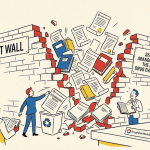
The 12-Year Exclusivity Wall and What Comes After
When twelve years of BPCIA exclusivity expires, the patent landscape becomes the primary determinant of biosimilar entry timing. Biologic manufacturers have typically used that twelve-year period to build extensive patent portfolios around their reference products: manufacturing process patents, formulation patents, device patents covering the auto-injector or prefilled syringe used to deliver the drug, and method-of-use patents covering specific indications or dosing regimens.
The resulting “patent thickets” around blockbuster biologics have become one of the most discussed topics in pharmaceutical patent policy. Research by I-MAK (Initiative for Medicines, Access & Knowledge) found that AbbVie had filed for 311 patents on Humira (adalimumab), of which 165 had been granted as of 2023 [19]. The sheer volume of patents, spread across multiple aspects of the product, forces biosimilar manufacturers to conduct extensive freedom-to-operate analyses and raises the risk of infringement even for a manufacturer that has successfully developed a technically comparable product.
The opportunity created by biologic patent expiry and abandonment is therefore more complex than the small-molecule case. It requires analyzing not just whether the primary biologic composition patent has expired, but the full architecture of the surrounding patent thicket, identifying which patents in the thicket are vulnerable to challenge and which must be designed around.
The Humira Aftermath
Adalimumab’s U.S. market situation is the most extensively documented case study in biosimilar patent dynamics. Humira was the world’s best-selling drug for over a decade, generating peak annual revenues of approximately $20.7 billion in the United States alone [20]. Its BPCIA exclusivity expired in 2016. Seven years of biosimilar launches followed in Europe, where AbbVie’s patent position was weaker.
In the United States, AbbVie maintained market exclusivity through 2023 by leveraging its patent portfolio, entering into settlements with biosimilar manufacturers that allowed entry in January 2023 rather than requiring continued litigation. The first biosimilar entrants, Amjevita (adalimumab-atto, Amgen) and Hadlima (adalimumab-bwwd, Organon), launched in January 2023, roughly seven years after BPCIA exclusivity expired. Each settled, with a delayed-entry agreement rather than fighting through the full patent thicket.
By late 2023, ten biosimilars had entered the U.S. market. Pricing dynamics were more complex than the small-molecule generic analogy would predict: biosimilar manufacturers offered substantial rebates to pharmacy benefit managers and payers rather than simply lowering list prices, maintaining a pricing structure that confused patients and payers accustomed to simple generic substitution. U.S. net prices for adalimumab products fell by approximately 80 percent from branded list price by mid-2024 as competition intensified, but the transition took two years after the first biosimilar launch [21].
Biosimilar Patent Thickets
Patent thickets in biologics are not unique to Humira. Genentech’s bevacizumab (Avastin), rituximab (Rituxan), and trastuzumab (Herceptin) all had extensive patent portfolios that complicated biosimilar entry. Johnson & Johnson’s infliximab (Remicade) maintained a patent position that slowed uptake of biosimilars Inflectra and Renflexis even after their approval.
For companies investing in biosimilar development, navigating the patent thicket requires both legal expertise and a strategic willingness to litigate. The BPCIA’s “patent dance” provisions, which require the biosimilar applicant and the reference product sponsor to exchange information about relevant patents and negotiate litigation timing, create a structured but adversarial process that typically results in either settlement or a targeted patent challenge. Understanding which patents in a thicket are genuinely strong versus which were filed primarily as strategic speed bumps is the core analytical challenge.
DrugPatentWatch tracks biologic patent portfolios alongside small-molecule pharmaceutical patents, providing a consolidated view of the intellectual property landscape for major biologics and biosimilar applicants. The database cross-references patent expiry dates with BPCIA exclusivity timelines, giving a more accurate picture of when true biosimilar entry opportunity exists than either data source would provide alone.
How to Actually Find Expired and Abandoned Patents
USPTO Patent Full-Text Database
The USPTO’s Patent Full-Text and Image Database (PatFT) and the Patent Application Full-Text and Image Database (AppFT) are the primary public repositories for U.S. patent information. They are free, comprehensive, and authoritative. They are also poorly designed for the kind of systematic pharmaceutical patent monitoring that business decisions require.
PatFT allows searching by assignee (company name), inventor, filing date, issue date, classification code, and text strings within the patent abstract, claims, and specification. For a researcher trying to identify expired patents in a specific therapeutic area, a combination of USPC or CPC classification codes (the international cooperative patent classification system includes specific classes for pharmaceutical compounds, formulations, and methods) and text searches on relevant chemical or therapeutic terms can generate a starting list.
The limitation of PatFT for pharmaceutical research is that it does not natively link patents to FDA-approved products, clinical development status, or Orange Book listings. A patent for a compound that was never developed looks the same in PatFT as a patent for a blockbuster drug. Converting the raw patent data into actionable pharmaceutical intelligence requires additional data layers.
Using DrugPatentWatch to Track Pharmaceutical IP
DrugPatentWatch was built specifically to bridge the gap between USPTO patent data and FDA regulatory data. It compiles Orange Book patent listings, exclusivity periods, ANDA filing data, Paragraph IV certifications, and patent expiry dates into a unified database designed for pharmaceutical competitive intelligence. Researchers and business development teams use it to answer questions that would require manually cross-referencing multiple government databases: Which patents cover Drug X? When does each expire? Have any generic manufacturers filed ANDAs? Has the primary patent been challenged? Is the compound covered by regulatory exclusivity independent of patent protection?
The platform’s patent expiry calendar is one of its most used features. It allows users to view upcoming expirations by therapeutic category, drug product, company, or time period, giving generic manufacturers and investors an advance view of the competitive opportunity pipeline. For a generic manufacturer planning capital allocation across multiple ANDA projects, a reliable expiry calendar is essential; a product that enters a fully expiry-driven generic market without first-filer exclusivity faces rapid price erosion, and project returns need to be modeled accordingly.
Beyond simple expiry tracking, DrugPatentWatch’s patent status data includes abandonment records, terminal disclaimer identifications, and patent term extension records, allowing a more nuanced view of effective market exclusivity than a simple composition patent expiry date would provide. It also tracks patent litigation outcomes: which Paragraph IV challenges resulted in settlement, which went to trial, which were decided on invalidity grounds. That litigation history is a direct indicator of which patent positions are genuinely strong and which have already been successfully attacked.
Orange Book and Purple Book Intelligence
The FDA’s Orange Book (formally, Approved Drug Products with Therapeutic Equivalence Evaluations) is the authoritative list of patent and exclusivity information for FDA-approved small-molecule drug products. It is updated daily and is freely accessible online. Every patent that a branded manufacturer certifies is relevant to a listed drug product appears in the Orange Book; every ANDA filer must address each listed patent through a certification.
The Purple Book is the biologic equivalent: it covers biological products licensed under the Public Health Service Act, though its patent information disclosure requirements under the BPCIA are less systematic than the Orange Book’s Hatch-Waxman framework. The Purple Book lists all FDA-licensed biologics and their biosimilar counterparts, along with dates of licensure and exclusivity periods, but unlike the Orange Book, it does not include individual patent listings. Patent information for biologics is exchanged privately between the reference product sponsor and the biosimilar applicant through the BPCIA patent dance, rather than being publicly disclosed.
For small-molecule drugs, the Orange Book creates a transparent patent landscape that enables systematic monitoring. For biologics, the absence of public patent listings in the Purple Book means that patent intelligence requires more active assembly: reviewing the reference product sponsor’s public filings, patent database searches, litigation records, and the settlements that sometimes provide the first public confirmation of which patents are most relevant.
Freedom-to-Operate Searches
A freedom-to-operate (FTO) analysis is a legal opinion about whether practicing a specific technology, such as manufacturing a specific drug compound, would infringe any valid and enforceable patent. FTO analyses are standard practice before significant pharmaceutical development investments; no generic manufacturer launches a product without an FTO opinion covering the relevant patent landscape.
Identifying expired and abandoned patents is a core component of FTO work. An expired patent is per se non-infringement: there is nothing to infringe. An abandoned patent, assuming it is genuinely beyond revival, is likewise non-infringing. The FTO analyst’s job is to confirm that the patents covering the technology of interest have in fact expired or been abandoned (accounting for any extensions, terminal disclaimers, or continuation applications that might be still in force), and that no related still-active patents exist that would cover the planned activity.
The complexity of FTO work in pharmaceuticals reflects the layered patent strategy that branded manufacturers employ. A compound may be covered by an expired composition patent but still protected by in-force process patents (covering the specific manufacturing method), formulation patents (covering the specific salt form or dosage form), or method-of-use patents (covering the specific therapeutic indication). An FTO analysis that focuses only on the composition patent and misses an active formulation patent can lead to expensive and avoidable litigation.
Patent Family Analysis
Every pharmaceutical patent exists within a family of related patents and applications. The family typically includes the original patent, any continuation applications filed to claim additional or modified subject matter, any continuation-in-part applications adding new matter while claiming priority to the original filing, any divisional applications separating out distinct inventions originally claimed together, and any foreign counterparts filed in other jurisdictions claiming priority to the U.S. original.
Patent family analysis is essential for anyone using expired U.S. patents as the basis for drug development. The expiry of the U.S. patent does not automatically mean that corresponding foreign patents have expired; different jurisdictions have different term calculations, different extension provisions, and different histories with respect to whether maintenance fees were paid. A company that plans to manufacture a drug in a facility outside the United States, or sell it in foreign markets, needs to conduct jurisdiction-specific patent analysis for each relevant market.
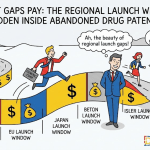
Conversely, foreign patent expirations sometimes precede U.S. expirations, creating geographic market opportunities in countries where patent protection has lapsed before the U.S. equivalent. Pharmaceutical companies operating in emerging markets with different patent term structures have long exploited this geographic arbitrage, a topic addressed in depth in a later section.
The Art of Patent Mining: What Investors Look For
Formulation Patents vs. Compound Patents
Among the various categories of pharmaceutical patents, compound patents (also called composition-of-matter patents) and formulation patents occupy very different positions in the strategic landscape. Understanding the difference, and what expiry or abandonment means for each, is fundamental to pharmaceutical patent mining.
A compound patent claims the chemical structure of a new drug substance: the active pharmaceutical ingredient (API) itself. It is typically the broadest and most valuable patent in a drug’s protection portfolio. When a compound patent expires, every manufacturer becomes free to make and sell the underlying API (subject to any surviving process or formulation patents). This is the event that triggers primary generic entry in the Hatch-Waxman framework.
A formulation patent claims a specific combination of the API with excipients, in a specific physical form (tablet, capsule, suspension), at a specific concentration, or using a specific delivery technology. Formulation patents can be extremely valuable when the formulation solves a genuine clinical problem: extended-release mechanisms that allow once-daily dosing where the API would otherwise require multiple daily doses, or formulations that reduce food-drug interactions or improve bioavailability in patient populations with absorption challenges. Formulation patents can also be trivially valuable, covering combinations of excipients that are commercially standard and that any skilled formulation chemist would select as a matter of routine.
When a formulation patent expires or is abandoned, it creates specific opportunities. A company can use the formulation approach covered by the expired patent, saving the research and development cost of independently deriving an equivalent approach. For delivery technologies in particular, such as specific matrix tablet architectures or specific lipid nanoparticle formulations, accessing an expired formulation patent can provide years of formulation development insight at no cost.
Method-of-Use Patents and the Risk They Carry
Method-of-use patents claim the use of a drug compound to treat a specific disease or condition. A company that discovers that a compound already in use for one indication has efficacy in a second indication can file a method-of-use patent on that second indication. If the compound’s composition patent has already expired, the method-of-use patent for the new indication may be the only remaining IP protection for the new use.
Method-of-use patents create a category of patent risk that generic manufacturers navigate carefully: the “carve-out” or “skinny label” strategy. Under current FDA practice, a generic manufacturer seeking to market a drug whose compound patent has expired but whose label includes a patented method-of-use can apply for approval on a skinny label that omits the patented indication. The theory is that the generic product does not infringe the method-of-use patent because its approved labeling does not actively induce physicians to use the drug for the patented indication.
The skinny label strategy has been extensively litigated. The key case is GlaxoSmithKline LLC v. Teva Pharmaceuticals USA, Inc., which involved carvedilol and a method-of-use patent covering its use in congestive heart failure. The Federal Circuit held in 2021 that generic manufacturers can be liable for induced infringement of a method-of-use patent even when selling under a skinny label, if there is evidence that physicians are prescribing the generic product for the patented indication [22]. That holding substantially increased the risk of the skinny label approach and has led some generic manufacturers to delay market entry for products covered by method-of-use patents even when the compound patent has expired.
For patent miners, the lesson is that an expired compound patent is not the end of the patent risk analysis. Method-of-use patents, particularly for drugs repurposed to new indications, may survive the compound patent’s expiry by years and create infringement risk for generic manufacturers entering the market. Identifying and evaluating the strength of any surviving method-of-use patents is a required component of due diligence.
The 30-Month Stay Game
The automatic 30-month stay triggered by a Paragraph IV lawsuit is both a tool of legitimate patent enforcement and a strategic delay mechanism. Understanding how it works is essential for modeling the timeline from patent expiry to actual generic market entry.
When a branded company receives a Paragraph IV certification notice and files suit within 45 days, the FDA is automatically prohibited from finally approving the ANDA for 30 months from the date of the notice. The stay expires either at the end of 30 months, at a court decision on the merits, or upon the entry of a consent judgment. During the stay, the FDA continues to review the ANDA but issues only tentative approvals; no final approval (which triggers the right to market) is granted.
The practical consequence is that a drug whose last relevant patent expires on a specific date may not face generic competition for 2.5 years after that date if a 30-month stay is active. For companies modeling the revenue impact of patent expiry, accounting for stay risk substantially changes the calculation. A drug with patents expiring in 2027 but facing an active 30-month stay filed in 2026 may not see generic entry until 2028 or 2029.
Branded manufacturers have been known to file patent infringement suits based on relatively weak patent positions specifically to obtain the 30-month stay benefit. The Medicare Modernization Act of 2003 eliminated the practice of stacking multiple 30-month stays for a single ANDA by requiring that each ANDA can only be subject to one 30-month stay, but the single available stay is still a significant competitive tool.
Secondary Patents and Evergreening
Evergreening is the practice of filing secondary patents covering reformulations, new salt forms, new polymorphs, new dosage strengths, new delivery systems, new combinations, and new methods of use around an existing drug, with the intent to extend effective market exclusivity beyond the life of the primary composition patent.
The commercial logic of evergreening is simple. A branded manufacturer facing the expiry of a $5 billion-per-year drug has an enormous incentive to develop a successor product, even one that is modestly improved over the original, and to line up patent protection for the successor before the original goes off-patent. If the successor can be positioned as a clinically differentiated product and prescribing physicians can be persuaded to switch patients to it before the original goes generic, the branded manufacturer can maintain significant revenue even as generic versions of the original compound flood the market.
Critics, including the FTC, academic researchers, and patient advocacy groups, argue that many evergreening patents cover trivially non-innovative changes, particularly new polymorphs (different crystal structures of the same compound) and new salt forms, that provide no clinical benefit but extend patent protection through technically valid though strategically abusive means. The pharmaceutical industry responds that reformulation and delivery system innovation can provide genuine clinical benefits and that the patent system should reward such innovation.
For patent miners, evergreening creates both complication and opportunity. The complication is that an expiring compound patent may coexist with still-active secondary patents that must be evaluated. The opportunity is that those secondary patents are frequently narrower and more vulnerable than primary compound patents, and a generic manufacturer willing to challenge them through Paragraph IV or IPR may be able to access the market earlier than a simple expiry date analysis suggests.
The Reformulation Play
Turning Expired Active Ingredients into New Products
When a compound patent expires, the active pharmaceutical ingredient becomes a commodity. Any qualified manufacturer can produce it, and competition among API suppliers typically drives the raw material price down dramatically within a few years of expiry. The commodity status of the API creates a paradox: the molecule may be cheap to procure, but that cheapness drives down the price of finished generic products, compressing margins for manufacturers who compete primarily on price.
The reformulation play is a strategy for escaping that commodity competition by building a new, differentiated product on top of an expired compound patent. The essential insight is that the expiry of the compound patent frees the molecule for use in any formulation, including formulations that are genuinely innovative and that would qualify for their own patent protection. A company can take a 30-year-old molecule, develop a novel delivery system that addresses a recognized unmet clinical need, file patents on the new delivery system, and launch a product that competes with generic versions of the original not by being cheaper, but by being clinically better.
The most successful reformulations share a common characteristic: they solve a real clinical problem with the original product. Common clinical problems that drive reformulation value include inconvenient dosing frequency (requiring patients to take a drug three times daily rather than once daily), food-drug interactions that limit prescribing flexibility, formulation-related side effects (such as GI irritation from a tablet that dissolves too quickly), and instability issues that limit shelf life or require cold chain distribution.
Delivery System Innovation
Pharmaceutical delivery system technology is one of the most patent-rich areas of pharmaceutical innovation, and it is an area where the expiry of underlying compound patents has historically created significant business opportunities. Controlled-release technology, in particular, has produced numerous successful reformulation products built on molecules whose compound patents expired decades earlier.
Morphine sulfate extended-release, sold as MS Contin and later as numerous generic and branded extended-release formulations, is an instructive example. The morphine compound itself has been off-patent for over a century. The various extended-release formulations developed over the past 40 years have each generated independent patent protection covering their specific matrix technology, coating systems, or abuse-deterrent mechanisms. Each reformulation, even of a molecule as old as morphine, had the potential to generate a meaningful period of market exclusivity.
The abuse-deterrent formulation space represents a more recent and commercially significant application of this principle. The FDA has actively encouraged the development of abuse-deterrent formulations for opioid analgesics, creating a regulatory pathway (guidance on abuse-deterrent opioids was first issued in 2015 and updated since) that allows branded manufacturers to obtain product-specific labeling acknowledging the abuse-deterrent properties of their formulation. Purdue Pharma’s OxyContin reformulation in 2010, which incorporated a polyethylene oxide matrix that makes the tablet difficult to crush or dissolve for illicit purposes, is the best-known example. That reformulation generated new patent protection on the delivery system and regulatory labeling advantages, even though the underlying opioid compounds had long since lost their compound patent protection.
Extended-Release Mechanisms
Extended-release (ER) formulation technology encompasses a range of mechanisms for controlling the rate at which a drug is released from its dosage form: matrix tablets in which the drug is embedded in a hydrophilic or hydrophobic polymer that controls diffusion; reservoir systems with rate-controlling membranes; osmotic pump systems (OROS technology) that use osmotic pressure to drive drug delivery at a nearly constant rate; multiparticulate systems in which the drug is coated onto small beads with controlled-release coatings.
The patent landscape for ER technology is complex. Many foundational ER patents have expired, but improvements, specific polymer combinations, specific coating formulations, and specific application of ER technology to particular drugs may still be protected. A company seeking to develop an ER version of an expired-patent compound needs to assess the ER technology landscape as carefully as the compound patent landscape: using another company’s still-patented ER technology without a license is patent infringement, even if the compound itself is free to use.
The OROS technology, developed by Alza Corporation and subsequently acquired by Johnson & Johnson, illustrates the layered IP structure of ER delivery systems. The core OROS patents have expired, but improvements and specific applications retained protection for years after the foundational patents lapsed. Companies developing ER products around expired compound patents frequently use the expiry of these foundational delivery system patents as a catalyst for development programs, knowing that both the API and the delivery technology are now available without license.
Combination Products
Fixed-dose combination (FDC) products combine two or more active pharmaceutical ingredients in a single dosage form. When both component compounds are off-patent, the FDC can still qualify for independent patent protection if the combination is novel and non-obvious, and if the formulation of the combination presents technical challenges that required inventive effort to solve.
The hypertension market has been particularly active in FDC development built on expired compound patents. Combinations of amlodipine (compound patent expired 2007) with olmesartan, valsartan, or perindopril have been developed and launched, some with independent patent protection covering the specific combination formulation. The clinical rationale, that combining an ACE inhibitor or ARB with a calcium channel blocker in a single pill improves patient adherence compared to taking two separate pills, is well-documented and provides genuine clinical differentiation from the individual generic components.
For anyone mining expired patents for business opportunities, FDC development represents a middle path between pure generic entry (which offers limited differentiation and rapidly compresses margins) and full branded drug development (which requires clinical trials, carries high development risk, and takes years). An FDC built on two expired compound patents may require only bioequivalence studies or limited clinical pharmacology work to support an NDA or 505(b)(2) application, while generating independent patent protection and branded pricing.
Geographic Arbitrage in Patent Law
Why the Same Drug Has Different Patent Status Worldwide
Patent rights are territorial. A U.S. patent grants rights only within the United States; a European patent covers only those European Patent Convention member states in which it has been validated; a patent application filed only in the United States provides no protection in any other country. This territorial structure creates a global patchwork of patent protection for pharmaceutical compounds, in which the same molecule may be entirely unprotected in some countries, protected until different expiry dates in others, and subject to compulsory licensing provisions in others still.
The reasons for different expiry dates across jurisdictions are multiple. Different countries use different reference dates for term calculation (some use filing date, some use grant date). Different extension mechanisms operate differently. Some countries have historically had weaker or shorter pharmaceutical patent protection, particularly for process patents as opposed to compound patents. Some developing countries were not required to provide pharmaceutical product patent protection at all under pre-TRIPS international trade rules, and only began granting such patents after their TRIPS compliance obligations came into effect (India, for example, began granting pharmaceutical product patents only in 2005).
For pharmaceutical companies operating internationally, geographic patent status differences create both risks and opportunities. A drug that can be manufactured under patent protection in the United States may be manufactured freely as a generic in Brazil, India, or South Africa, and those generic versions may be exported to third markets where the patent has also expired or where the exporter holds a license. Supply chain strategies that take advantage of geographic patent differentials have been central to the global generic pharmaceutical industry’s development.
Emerging Markets and the Patent Gap
Emerging markets represent the fastest-growing segment of global pharmaceutical demand. The World Health Organization projected that emerging and developing economies would account for over 50 percent of global pharmaceutical market growth between 2015 and 2025 [23]. Within those markets, patent status varies dramatically both by country and by drug, creating a competitive landscape quite different from the tightly regulated U.S. and European environments.
In markets like India, Brazil, China, and South Africa, generic manufacturers have built substantial businesses supplying drugs that are still under patent in the United States or Europe. This is possible for several reasons: pre-TRIPS patents in some countries may have expired earlier; some emerging markets have implemented TRIPS flexibilities that allow compulsory licensing for public health reasons; and some pharmaceutical compounds were never patented in specific markets because the originator company did not file applications there.
For a company looking to build a pharmaceutical business in emerging markets, mapping the patent status of key drugs in each target market is essential, and it is a substantially different exercise than mapping U.S. patent status. A compound that appears on a U.S. “expired patents” list may have different IP status in each of 50 individual emerging market countries. Services that provide this geographic patent mapping, typically combining database analysis with local patent counsel expertise, are a specialized but valuable part of the pharmaceutical intelligence infrastructure.
Compulsory Licensing in Practice
Compulsory licensing allows a government to authorize the manufacture, sale, or importation of a patented product without the consent of the patent holder, in circumstances defined by national law. The TRIPS Agreement, which governs intellectual property rights for World Trade Organization members, permits compulsory licensing under specified circumstances, including public health emergencies.
The most prominent exercise of compulsory licensing in pharmaceuticals was Brazil’s 2007 issuance of a compulsory license on efavirenz, an antiretroviral drug used to treat HIV/AIDS that was under patent protection by Merck. Brazil determined that Merck’s price for efavirenz was too high relative to the country’s public health budget and issued the compulsory license, allowing the Ministry of Health to import generic efavirenz from India at substantially lower cost. Merck challenged the decision through diplomatic channels but could not prevent it; the TRIPS framework explicitly permitted the action [24].
Compulsory licensing affects patent mining in two ways. For companies in countries that issue compulsory licenses, the effective patent protection on drugs subject to compulsory licensing is reduced even before formal patent expiry. For companies in countries that supply generic products under compulsory licenses, the licenses create export markets that would not otherwise exist. Tracking compulsory licensing activity globally, which typically involves monitoring both government health ministry announcements and WTO notification databases, is a specialized form of geographic patent intelligence.
TRIPS Flexibilities
Beyond compulsory licensing, the TRIPS Agreement includes several other flexibilities that affect pharmaceutical patent protection in developing countries. Parallel importation allows countries to source patented products from any country where they are legitimately marketed, at whatever price applies in that country; this flexibility allows price arbitrage within the bounds of patent law. Research and experimentation exemptions allow scientists to use patented inventions for research purposes without the patent holder’s permission. Bolar provisions allow generic manufacturers to conduct bioequivalence testing and regulatory submissions before a patent expires, so they can launch immediately upon expiry rather than beginning the approval process after expiry.
Different countries have implemented TRIPS flexibilities differently and to different extents. India’s Section 3(d) of the Patents Act, which restricts patentability of new forms of known substances unless they demonstrate enhanced efficacy, has become one of the most discussed TRIPS-compatible patent restrictions in the world. It was the basis of the Supreme Court of India’s 2013 decision rejecting Novartis’s patent application for the beta crystalline form of imatinib mesylate (Gleevec/Glivec), on the grounds that the new form did not demonstrate significantly enhanced therapeutic efficacy over the known compound [25]. That decision effectively prevented the evergreening of imatinib’s patent protection in India and is examined in more detail in the case study section.
Real-World Case Studies
The Metformin Story
Metformin hydrochloride is perhaps the single best example of what happens to a pharmaceutical market after comprehensive patent expiry. The compound was first synthesized in the 1920s, was approved in Europe in the 1950s, and received FDA approval in the United States only in 1994. Its U.S. patent expired in 2002, when Bristol-Myers Squibb’s market exclusivity on the branded product Glucophage ended.
What happened next is textbook. Within months of the Glucophage patent expiry, multiple generic versions entered the market. The price of metformin tablets collapsed. A 30-day supply of metformin 500mg tablets went from approximately $50 for the branded product to under $10 for the generic, and continued to fall as competition among manufacturers intensified. By 2010, metformin had become available on many pharmacy discount programs for $4 to $10 per month.
The commodity-level pricing of metformin did not eliminate the commercial opportunity; it transformed it. The extremely low cost of the drug made it the first-line pharmacological treatment for type 2 diabetes in virtually every clinical guideline worldwide, dramatically expanding the total patient population using it. Volume compensated for price to a significant degree. The manufacturing opportunity in generic metformin still supports a substantial global generics industry.
The metformin story also generated a reformulation opportunity that several companies successfully exploited. Extended-release metformin (Glucophage XR) was developed and patented by BMS, with patent protection extending years beyond the immediate-release compound. The ER formulation addressed a genuine clinical problem: the GI side effects (nausea, diarrhea, abdominal discomfort) that cause many patients to discontinue immediate-release metformin are significantly reduced with the ER version, which releases the drug more slowly. Generic ER metformin manufacturers entered that market in turn when the ER formulation patents expired, completing the cycle.
Sildenafil: From Patent to OTC
Sildenafil citrate has one of the most interesting patent-to-generic trajectories in modern pharmaceutical history. Pfizer discovered sildenafil’s effects on erectile dysfunction during development of a cardiovascular drug; the initial compounds were patented in the early 1990s, and Viagra received FDA approval in March 1998. The drug became one of the most recognized pharmaceutical brands in the world.
Pfizer’s U.S. composition-of-matter patent for sildenafil expired in March 2012. However, Pfizer held a method-of-use patent on the use of sildenafil specifically to treat erectile dysfunction that was set to expire in 2020. Generic manufacturers filed Paragraph IV challenges to that method-of-use patent, and Pfizer ultimately settled with multiple generic manufacturers, allowing them to enter the market under authorized generic agreements in December 2017, three years before the method-of-use patent’s scheduled expiry.
By 2017, generic sildenafil had entered at a price approximately 50 percent below the branded Viagra price. But the more transformative event came in March 2017, when the FDA approved Viagra Connect, an over-the-counter version of sildenafil in the United Kingdom, and Pfizer subsequently pursued OTC approval in the United States. The OTC switch, which occurred in 2018 in the U.S. through an NDA supplement, effectively moved sildenafil from prescription-only to pharmacy shelf status, radically expanding the accessible market. Today, OTC generic sildenafil is available for approximately $1 to $2 per dose from online pharmacies, representing a 99 percent price decline from branded Viagra’s original U.S. retail price of roughly $15 to $20 per dose.
The sildenafil case illustrates several patent mining principles: the importance of method-of-use patents as a secondary line of defense after compound patent expiry; the role of settlements in determining actual generic entry timing; and the potential for OTC switches to create new market segments even after generic entry has already commoditized the prescription market.
Imatinib and the Novartis India Case
Imatinib mesylate (Gleevec in the United States, Glivec in most other markets) was among the first targeted cancer therapies and has transformed the treatment of chronic myelogenous leukemia (CML) and gastrointestinal stromal tumors (GIST). Novartis launched Gleevec in 2001 at a U.S. price of approximately $26,000 per year, a price that increased to over $120,000 annually by 2016 [26].
Novartis’s patent strategy on imatinib followed the evergreening playbook. The original imatinib freebase compound patent was filed before Novartis was formed (it originated from Ciba-Geigy). Novartis filed for patents on specific salt forms, polymorphs, and other variations of the compound as its commercial value became clear. The most important of these secondary applications was the patent application for the beta crystalline form of imatinib mesylate, which is the specific chemical form in which the drug is commercially manufactured.
India’s Patent Office rejected the beta crystalline form patent in 2006, and the Supreme Court of India upheld that rejection in its landmark 2013 ruling, applying Section 3(d)’s requirement for demonstrated enhanced efficacy [25]. The decision, Novartis AG v. Union of India, established that incremental improvements to known compounds do not automatically qualify for Indian patent protection unless they produce enhanced clinical efficacy. It became one of the most-cited cases in the global debate over pharmaceutical patent scope and access to medicines.
The practical consequence of the India ruling is that generic imatinib has been available in India since the original patent landscape was clear. Natco Pharma, Cipla, and other Indian manufacturers produced and sold generic imatinib at prices approximately 95 percent below the Novartis branded price, and those generic versions have been exported to developing countries under compulsory licensing arrangements. Novartis’s global revenue from Gleevec/Glivec remained substantial through the U.S. patent protection period, but the company never captured the Indian or developing market opportunity it sought.
Atorvastatin’s Generic Aftermath
The post-Lipitor atorvastatin market produced a competitive dynamic that has become a template for understanding generic drug market structure after a blockbuster patent expiry. Ranbaxy’s authorized generic, Pfizer’s own authorized generic (launched simultaneously with Ranbaxy’s product to limit Ranbaxy’s 180-day exclusivity advantage), and subsequently over a dozen generic manufacturers entering the market at 180-day exclusivity expiry compressed atorvastatin pricing dramatically.
Within three years of the November 2011 patent expiry, generic atorvastatin prices had fallen by approximately 90 percent from branded Lipitor levels. The number of atorvastatin prescriptions actually increased as lower prices made the drug more accessible to uninsured and underinsured patients and as formulary placement of generics improved. Total atorvastatin sales volume (measured in prescriptions) rose even as total market dollar value fell. By 2015, atorvastatin was among the most commonly prescribed drugs in the United States, with annual prescription volumes exceeding 100 million [27].
Pfizer’s strategic response to the Lipitor expiry, investing in its own authorized generic business while simultaneously launching the next-generation statin Sutent (sunitinib) for an entirely different market, illustrates how branded pharmaceutical companies can manage the transition from patent protection to generic competition. The authorized generic strategy allows the originator to capture some of the generic market revenue while managing the price erosion timeline. The next-generation product strategy redirects R&D and commercial investment toward areas with new patent protection.
What Institutional Investors Miss
Patent Expiry as a Catalyst Event
In the lexicon of pharmaceutical equity analysis, the “patent cliff” is widely tracked. Analysts at every major investment bank maintain models projecting branded revenue decline as key products approach patent expiry. Those models are public, extensively discussed, and reflected in equity prices well before the actual expiry event. In the efficient market context of major-cap branded pharmaceutical stocks, patent expiry is rarely a surprise.
What institutional investors consistently underweight is the other side of the transaction: the opportunity created for generic manufacturers, the biosimilar developers, and the reformulation-focused specialty pharma companies whose businesses exist to exploit those expiries. The asymmetry reflects coverage bias: branded pharmaceutical companies receive far more analyst attention than generic manufacturers, and the generic sector’s complex portfolio economics are harder to model than a straightforward brand-to-generic revenue transfer narrative.
Patent expiry events drive specific, quantifiable changes in the economics of generic pharmaceutical companies that have positioned early. A generic manufacturer that successfully filed a first-ANDA position on a drug generating $3 billion annually, and that prevails in Paragraph IV litigation, is looking at a 180-day exclusivity period that could generate $400 million to $600 million in revenues from a single product launch. That kind of catalyst event is as significant as a major drug approval for a branded company, yet it receives comparatively little anticipatory investor coverage.
How to Model Revenue Impact
Modeling the revenue impact of patent expiry requires several inputs that are not always easily available, but which can be assembled with the right data sources. The first input is the branded product’s current revenue base: not just the list price revenue, but the net price after rebates and contract discounts, which is the revenue figure actually at risk. For branded drugs, the difference between list and net price can be substantial; Humira’s list price revenue of $20 billion annually contrasted with a net revenue figure closer to $15 billion after rebates [28].
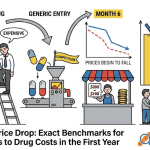
The second input is the expected price erosion curve after generic entry. Generic price erosion follows a consistent pattern across therapeutic categories: the first generic typically prices 20 to 30 percent below brand, the second and third generics push the price to 40 to 60 percent below brand, and a fully commoditized market with six or more generic competitors typically settles at 80 to 95 percent below the original brand price. The speed of progression through these stages depends on the number of generic entrants, the size of the market, and whether any exclusive marketing arrangements were part of patent litigation settlements.
The third input is the timing of generic entry, which as discussed depends on patent expiry dates, terminal disclaimers, regulatory exclusivities, and 30-month stay status. A model that uses the nominal compound patent expiry as the generic entry date will be wrong in most cases; the actual entry date is a distribution of possibilities that needs to reflect the full patent landscape. DrugPatentWatch’s ANDA filing data and patent litigation status tracking provide the inputs needed to narrow that distribution.
Generic Entry Speed
The speed of generic market entry after patent expiry is not uniform across drug classes. For oral solid dosage forms of small-molecule drugs, the generic entry process is well-established and can proceed rapidly. An ANDA that received tentative FDA approval during a 30-month stay can receive final approval on the day the stay expires or the day the last relevant patent expires, enabling launch within 24 hours of the patent expiry event.
For sterile injectables, complex drug products such as liposomal formulations, transdermal patches, and ophthalmic preparations, the generic development and regulatory pathway is more complex. The FDA’s product-specific guidance documents for these complex generics can take years to develop and implement, and the technical challenges of demonstrating bioequivalence for complex formulations mean that generic entry may lag patent expiry by several years. Investors modeling revenue impact for branded manufacturers with complex formulation portfolios need to adjust their generic entry timing assumptions accordingly.
Price Erosion Curves
The empirical data on pharmaceutical price erosion after generic entry is robust and consistent across multiple decades of observation. The FDA’s own analysis of generic drug market dynamics, published periodically in reports on drug pricing competition, has documented the relationship between the number of generic entrants and the magnitude of price decline: with one generic entrant, the market price typically falls to 80 to 90 percent of the branded price. With two entrants, prices fall to 50 to 70 percent of brand. With five or more entrants, prices typically fall to 20 percent or below the branded price [29].
These averages conceal significant variability across drug types. Small-molecule generics in high-volume primary care markets (statins, ACE inhibitors, beta-blockers) erode to near-commodity pricing quickly because the market is large enough to attract many entrants. Specialty pharmaceutical products with smaller patient populations may support fewer generic entrants and therefore slower price erosion. Some highly complex generic products, where only one or two manufacturers successfully clear the technical and regulatory hurdles, maintain pricing close to brand level even after entry.
For patent miners, the price erosion curve is the economic context within which every other analysis takes place. Identifying an expiring patent on a high-revenue drug is only the beginning of the analysis; the ultimate return on any development investment depends on where the product sits in the generic entry sequence and how many competitors will be in the market at launch.
The Regulatory Layer
FDA Exclusivity vs. Patent Protection
One of the most persistent sources of confusion in pharmaceutical patent monitoring is the relationship between patent protection and FDA regulatory exclusivity. They are completely separate legal frameworks, governed by different statutes, administered by different parts of the government, and expiring on different schedules. Both can block generic entry; understanding how they interact is essential.
FDA exclusivity is a period of market protection granted by the FDA as a regulatory matter, independent of any patent. The most important exclusivity types for small-molecule drugs under Hatch-Waxman are the five-year New Chemical Entity (NCE) exclusivity, which prevents the FDA from accepting any ANDA for five years from the date of approval of an NDA for a new molecular entity; and the three-year New Clinical Investigation (NCI) exclusivity, which applies when a new clinical investigation is essential to the approval of a supplement (such as a new indication, new dosage form, or new strength) and prevents the FDA from approving an ANDA for three years. For biologics, the twelve-year BPCIA exclusivity operates similarly.
The practical consequence is that a drug may have no surviving patents and yet remain protected by FDA exclusivity. Conversely, a drug may have active patent protection but no FDA exclusivity if its exclusivities have already expired. The starting date for any analysis of generic entry timing must account for both patent expiry dates and FDA exclusivity expiry dates; whichever comes later sets the earliest possible generic market entry date.
DrugPatentWatch maintains integrated tracking of both patent protection and FDA exclusivity for drug products listed in the Orange Book, providing a single view of the effective protection timeline that accounts for both legal frameworks.
Orphan Drug Exclusivity
Orphan drug designation, which is available under the Orphan Drug Act for drugs intended to treat rare diseases or conditions affecting fewer than 200,000 people in the United States, confers seven years of market exclusivity from the date of FDA approval. Orphan drug exclusivity is among the most robust forms of FDA exclusivity available, because it prevents the FDA from approving any other application (including an NDA, not just an ANDA) for the same drug for the same indication for the full seven-year period, except under limited circumstances.
Orphan drugs have become an increasingly significant segment of pharmaceutical development, driven by a combination of the tax and exclusivity incentives under the Orphan Drug Act and a recognition that targeted therapies for rare diseases, particularly rare cancers and genetic disorders, can command premium prices that make development economically viable despite small patient populations. The FDA approved 60 drugs under orphan designation in 2021, representing approximately 40 percent of all novel drug approvals that year [30].
For patent miners, orphan drug exclusivity creates a complication: even a drug whose patent protection has entirely expired may be protected by orphan exclusivity that runs for years beyond the last patent expiry. The orphan exclusivity period is indication-specific; a competing product can obtain approval for a different indication using the same active ingredient, but cannot obtain approval for the orphan-designated indication until the exclusivity expires.
Pediatric Exclusivity Extensions
The Best Pharmaceuticals for Children Act (BPCA) grants six months of additional exclusivity to branded drug manufacturers who conduct FDA-requested pediatric studies on their approved products. The six-month pediatric extension attaches to any existing patent or exclusivity period for the drug; if a drug has both an NCE exclusivity expiring in 2026 and a method patent expiring in 2027, successful completion of pediatric studies can extend both to 2026.5 and 2027.5, respectively.
Pediatric exclusivity extensions are routine in the pharmaceutical industry, particularly for drugs that have been on the market for several years and whose primary exclusivity periods are approaching their scheduled end. Any patent monitoring program needs to identify whether a pediatric extension request has been made and whether pediatric studies have been completed, as the six-month extension can shift the generic entry timeline for major products by what may seem a small amount of time but represents hundreds of millions of dollars in revenue difference at branded prices.
NCE Exclusivity
New Chemical Entity exclusivity is the foundational FDA exclusivity for innovative pharmaceutical products. It runs for five years from the date of approval and, unlike patents, does not depend on whether the drug was already known or disclosed in prior art; it runs automatically upon approval of an NDA for a new molecular entity. The five-year NCE period prevents the FDA from accepting (not merely approving) any ANDA that references the branded product for the first four years, and from approving any ANDA that does not include a Paragraph IV certification for the full five years. The effect is to guarantee at least five years of market exclusivity regardless of the patent position.
For pharmaceutical investors, NCE exclusivity is the most reliable measure of minimum protected market life for a newly approved drug. A drug approved in 2024 will have NCE exclusivity until 2029. Patent protection may extend further, but the five-year floor is guaranteed. When modeling the risk-adjusted value of pharmaceutical compounds in development, NCE exclusivity duration is the baseline around which patent extension scenarios are modeled upward.
Competitive Intelligence Applications
Tracking Competitor Pipeline Through Patent Analysis
Patent applications, unlike granted patents, are published 18 months after their earliest priority date. This publication occurs regardless of whether the application is ultimately granted. The 18-month publication cycle means that a competitor’s patent application reveals the direction of its research program more than a year before any product announcement, and years before any clinical trial disclosure.
Systematic analysis of competitor patent application publications is one of the most underutilized forms of competitive intelligence in the pharmaceutical industry. The applications describe, in technical detail, the compounds a company is actively pursuing, the formulation approaches it is investigating, and the therapeutic indications it considers most promising for its pipeline molecules. A company whose R&D strategy involves building a competitive position in a specific therapeutic area can monitor competitor patent filings to identify convergence risks (are multiple companies developing the same target?) and differentiation opportunities (are there target or mechanism spaces that major players are not filing patents in?).
This form of patent intelligence has a specific application in abandoned patent identification. When a company stops filing continuation applications on a previously active patent family, that cessation is a signal. If a company has been filing annual continuation applications covering variations on a compound family for several years and then stops, the end of new filings suggests either that the company has concluded its development work on that family or that the program has been discontinued. Either way, the cessation of continuations often precedes formal patent abandonment by a year or more and gives early notice that the patent family may soon enter the public domain.
Freedom to Operate in Drug Development
Every pharmaceutical development program begins with an IP landscape assessment, and that assessment includes a systematic review of relevant expired and abandoned patents. The purpose is not simply to confirm freedom to operate (though that is essential) but to understand the full prior art landscape that will define the boundaries of any new patent protection the development team can obtain.
Expired patents are prior art. A claim in a new patent application cannot cover subject matter that was disclosed in an expired patent, because the expiry of the patent does not erase the publication’s effect as prior art. A new patent can cover genuine innovations that build on or improve upon the expired patent’s teachings, but it cannot reclaim what the expired patent has already disclosed and dedicated to the public.
Understanding this distinction between freedom to operate (expired patent = no infringement risk) and patent scope (expired patent = prior art that limits new patent claims) is important for development teams. The freedom-to-operate conclusion that an expired patent gives license to practice its claims is correct. The distinct and separate analysis of whether a new patent protecting improvements to the expired technology needs to navigate around that prior art is equally important and sometimes neglected.
The Legal Minefield
Inter Partes Review and Patent Challenges
Inter partes review (IPR) is a procedure for challenging the validity of issued patents before the Patent Trial and Appeal Board (PTAB) at the USPTO, created by the America Invents Act of 2011. IPR allows any party to petition for review of a patent’s validity based on prior art in the form of patents or printed publications, and has become the primary mechanism by which generic manufacturers and other competitors challenge pharmaceutical patents they believe to be invalid.
IPR has substantially changed the pharmaceutical patent landscape since its introduction. Prior to the America Invents Act, patent validity challenges in the pharmaceutical context were primarily conducted through Paragraph IV litigation in federal district court. District court litigation is expensive, slow (typically taking two to three years to trial), and unpredictable. PTAB IPR proceedings are faster (typically resolved within 18 months of institution), conducted by technically sophisticated administrative patent judges rather than generalist district court judges and juries, and have historically shown higher rates of patent invalidation than district courts.
Research by Lex Machina found that PTAB invalidated or cancelled claims in approximately 60 to 70 percent of instituted IPR proceedings involving pharmaceutical patents between 2012 and 2022 [31]. This success rate reflects both the efficiency of the PTAB process and the fact that IPR petitioners typically select the most vulnerable patents for challenge. The prospect of IPR challenges has made pharmaceutical company patent prosecution practices more careful; patents that were filed quickly and broadly in the pre-AIA environment are more vulnerable than patents developed under the post-AIA practice of careful specification drafting and claim scoping.
For patent miners, the IPR record is a valuable data source. A patent that has already faced an IPR petition that was denied institution (meaning PTAB did not even agree to begin review) is more likely to be valid than average. A patent that has survived a fully litigated IPR proceeding is more likely to be valid still. A patent on which IPR petitions successfully cancelled claims is weaker than its face suggests; the remaining claims may be narrower than originally granted, changing the freedom-to-operate analysis for the technology covered.
Settlement Strategies in Hatch-Waxman Litigation
The vast majority of Hatch-Waxman patent infringement cases settle before trial. FTC data shows that between 2000 and 2022, approximately 70 percent of all Hatch-Waxman patent suits were resolved through settlement [32]. The settlements take various forms, some of which have been the subject of significant regulatory scrutiny.
The most controversial settlement type is the “reverse payment” or “pay-for-delay” settlement, in which the branded drug manufacturer pays the generic manufacturer some form of consideration (cash, an authorized generic license, or other value) in exchange for the generic’s agreement to delay market entry until a specified date, typically before but not significantly before the patent’s scheduled expiry. The logic from the branded manufacturer’s perspective is that paying the generic to wait costs less than losing the patent case; the generic receives certain value rather than risking an uncertain litigation outcome.
The FTC has challenged reverse payment settlements as anticompetitive. The Supreme Court ruled in FTC v. Actavis, Inc. (2013) that reverse payment settlements can violate antitrust law, adopting a “rule of reason” analysis that requires courts to weigh the anticompetitive effects of the delay against any legitimate justifications [33]. The Actavis decision spurred a wave of FTC challenges and class action suits against branded manufacturers and generic companies that had entered into large reverse payment agreements.
For anyone monitoring pharmaceutical patent landscapes as an investor or competitor, settlement terms and dates are critical data points that affect the timing of market entry events. Settlement terms are sometimes disclosed in SEC filings or in the public record of litigations, though confidentiality provisions in many settlements limit the detail available. DrugPatentWatch tracks known settlement outcomes and their general terms, providing a baseline for entry timing analysis that accounts for the resolution of major Hatch-Waxman litigations.
Building Your Patent Intelligence System
The Data Sources You Need
A functioning pharmaceutical patent intelligence system requires at minimum four data sources, and each needs to be monitored continuously rather than accessed episodically. The first is the USPTO database, which provides the authoritative record of patent status: issued, active, expired, or abandoned. The second is the FDA Orange Book (for small molecules) and Purple Book (for biologics), which ties patent records to approved drug products and provides FDA exclusivity data. The third is the FDA’s ANDA and biosimilar application database, which reveals which products generic manufacturers are targeting and at what stage of regulatory review those applications sit. The fourth is the federal court system’s public records database, PACER, which provides access to patent litigation records and settlement filings.
These four primary sources, used in combination, provide the raw material for pharmaceutical patent intelligence. The challenge is that they are maintained in different formats, updated on different schedules, and use different identification systems (patents are identified by patent number; drugs are identified by NDA or ANDA number; both need to be connected to drug product trade names and active pharmaceutical ingredients). Assembling and cross-referencing these sources manually is laborious; commercial databases like DrugPatentWatch perform this integration automatically, providing the cross-referenced view that makes the data actionable.
Beyond these primary sources, secondary data sources add context. SEC filings from pharmaceutical companies disclose patent litigation developments that are material to financial results. IPR petition records at PTAB reveal which patents are being challenged and by whom. Clinical trial registries (ClinicalTrials.gov) reveal development programs that may be building on expired compound patents. Financial analyst reports on major pharma companies frequently include patent expiry analysis that synthesizes public data. News databases track patent litigation outcomes, regulatory actions, and settlement announcements.
Monitoring Workflows for Different Use Cases
Different professional users need different monitoring workflows. A generic drug manufacturer focused on ANDA strategy needs a forward-looking expiry calendar filtered by therapeutic category and U.S. revenue, with automated alerts for new ANDA filings on its target products, new IPR petitions on relevant patents, and litigation outcomes in relevant Paragraph IV cases. The priority is knowing who is positioned on which products and whether the patent landscape for those products is changing.
A pharmaceutical investor tracking potential catalyst events needs a different view: the expected timing and revenue impact of major patent expiries for companies in the portfolio, adjusted for the probability of successful first-ANDA positioning by generic competitors, the likely entry timing given Paragraph IV litigation status, and the resulting revenue cliff or ramp that will affect earnings. This investor use case requires connecting patent data to revenue models, which in turn requires current revenue data from SEC filings and analyst estimates.
A business development executive at a branded pharmaceutical company uses patent intelligence in yet another way: monitoring competitor patent filing activity to identify where research is converging, tracking the abandonment of patents in adjacent technology areas to identify licensing or acquisition opportunities, and maintaining awareness of the patent positions of potential acquisition targets. The BD use case is more exploratory and less calendar-driven than the generic manufacturer or investor use cases.
A regulatory affairs professional working on 505(b)(2) applications needs to understand which patents are listed in the Orange Book for the reference listed drug, which of those have already been challenged successfully, and which regulatory exclusivities are still running. Missing an active exclusivity and filing an NDA that the FDA cannot approve until that exclusivity expires is an expensive mistake; mapping the full regulatory IP landscape before filing is essential.
Quantifying the Opportunity
The aggregate value of the pharmaceutical patent expiry opportunity in any given year can be estimated by multiplying the number of U.S. drug products facing primary patent expiry by their average net annual revenues, discounted by the probability that generic entry actually occurs in that year rather than being delayed by regulatory exclusivities, litigation stays, or other factors.
By that methodology, the annual U.S. generic drug market opportunity from patent expiries has historically run between $20 billion and $50 billion in the branded revenue base facing initial generic competition, with significant year-to-year variation depending on which specific drugs are scheduled to go off-patent. The historic peak of the 2011-2016 patent cliff era significantly exceeded those averages, which is precisely why it drew so much capital investment into generic drug manufacturing and ANDA filing activity.
The opportunity calculation for biosimilars is more complex and longer-tailed. The twelve-year BPCIA exclusivity period, combined with the typical additional years of patent protection beyond that exclusivity, means that the biologic patent cliff unfolds over a longer time horizon than the small-molecule cliff. Total potential U.S. savings from biosimilar competition through 2025, according to IQVIA analysis, exceeded $70 billion [34]. That savings figure corresponds to a revenue opportunity of similar magnitude for the biosimilar manufacturers able to navigate the regulatory and patent hurdles to entry.
Key Takeaways
The pharmaceutical patent graveyard, the accumulated universe of expired and abandoned patents covering drug compounds, formulations, and methods of treatment, represents one of the largest and most systematically underexploited sources of commercial opportunity in the global economy. Here is what you need to remember:
Patent expiry and patent abandonment are legally distinct events. Expiry is predictable and calendar-driven. Abandonment is a signal about the former owner’s strategic assessment of the underlying technology and often precedes the patent’s scheduled expiry date. Both events create public domain access to the underlying technology.
The compound patent is the primary target, but the full patent family matters. Terminal disclaimers, method-of-use patents, formulation patents, and process patents can each extend effective market exclusivity beyond the compound patent’s expiry date. Complete patent mining requires analyzing the full family, not just the headline patent.
FDA regulatory exclusivities (NCE, NCI, orphan drug, pediatric extension) operate independently of patent protection. Generic entry cannot occur until both patent protection and any overlapping FDA exclusivity have expired. Models that ignore exclusivity will be wrong.
The 180-day first-ANDA exclusivity is a finite and time-sensitive opportunity. First-filer status on a major drug going off-patent can generate hundreds of millions of dollars in revenues from a single product launch. The intelligence advantage of early, accurate patent expiry tracking directly supports the competitive filing strategy required to achieve that status.
The reformulation play converts commodity molecules into differentiated products. Expired compound patents are the raw material for 505(b)(2) applications, fixed-dose combination products, and delivery system innovations that can generate new patent protection and branded pricing even for molecules that have been off-patent for decades.
Geographic patent status varies significantly across jurisdictions. The same molecule may be freely available in Brazil or India while still protected in the United States and Europe. Mapping the global patent landscape, not just the U.S. landscape, reveals export and manufacturing opportunities that domestic-only analysis misses.
Integrated data tools are not optional. The volume and complexity of pharmaceutical patent data, across multiple databases, multiple legal frameworks, and multiple countries, exceeds the capacity of any manual monitoring system. Platforms like DrugPatentWatch provide the cross-referenced, continuously updated patent intelligence that professional decision-making in this space requires.
The biologic patent cliff is larger in total value but harder to access than the small-molecule cliff. Biosimilar entry requires navigating patent thickets, a BPCIA patent dance process, and complex manufacturing and regulatory approval requirements. The rewards are proportionally large, but the analytical and operational requirements are more demanding.
Frequently Asked Questions
1. Can a company revive an abandoned pharmaceutical patent and assert it against a generic manufacturer that has already begun development based on the abandonment?
In theory, yes, with important qualifications. The USPTO can revive an abandoned patent upon petition showing that the abandonment was unintentional. If revived, the patent is treated as if it never lapsed. A generic manufacturer that began development on the assumption that the patent was permanently abandoned would then face a patent that is enforceable. This risk is real but manageable with proper due diligence. The practical steps are to verify that the abandonment is beyond the period during which revival is typically granted (more than two years post-abandonment with no revival petition filed), to confirm that the former patent owner has not filed any related continuation applications that remain active, and to obtain a legal opinion on the abandonment’s permanence before making significant development investments. If the compound covered by the abandoned patent has no clinical development history and the patent owner is clearly not in the relevant therapeutic space, the revival risk is effectively zero. If the patent owner is still active in the space and the abandonment appears to have been recent or possibly accidental, more caution is warranted.
2. How do biosimilar patent thickets differ from small-molecule secondary patent strategies, and which is more effective at delaying competition?
Small-molecule secondary patent strategies (evergreening) involve filing patents on formulations, new polymorphs, new salt forms, and new methods of use. These patents typically cover specific, narrow innovations and are amenable to design-around strategies by generic manufacturers, particularly when the generic product can use a different formulation or salt form and still demonstrate bioequivalence. Biosimilar patent thickets are different in character. They involve manufacturing process patents covering specific cell line choices, fermentation conditions, and purification methods; device patents on delivery systems like auto-injectors; and formulation patents covering specific excipient combinations. Because the biosimilar manufacturer must demonstrate highly similar biological activity to the reference product (not merely bioequivalence in the pharmacokinetic sense), there is less flexibility to simply use a different process or device. The thicket effect is therefore more durable for biologics than for small molecules. However, large-scale empirical studies of competition delay show that both strategies have been effective: average time from BPCIA exclusivity expiry to first biosimilar entry (excluding the exclusivity period itself) has been longer than the equivalent period for small-molecule generics after patent expiry, driven by both patent thickets and the higher regulatory burden of biosimilar approval.
3. What is the practical difference between a patent expiry listed in the Orange Book and the actual date on which generic entry becomes possible?
The two dates are often different, sometimes by years. The Orange Book lists individual patent expiry dates as reported by the branded manufacturer, but those dates are the unadjusted expiry date for each specific patent. Actual generic entry timing depends on the following additional factors: whether there is a terminal disclaimer that makes the patent expire simultaneously with an earlier-listed patent in the same family; whether an FDA exclusivity (NCE, NCI, pediatric extension, or orphan drug exclusivity) extends protection beyond the last listed patent expiry; whether a 30-month stay from Paragraph IV litigation is in effect at the time the last patent expires; and whether a settlement agreement with the first ANDA filer specifies an entry date that differs from the patent expiry. In a typical major product situation, you may find a compound patent expiring in Year 5, a formulation patent expiring in Year 7 with a pediatric extension to Year 7.5, an active 30-month stay from litigation commenced in Year 6, and a settlement that specified Year 8 entry for the first-filing generic. The actual first generic entry date in that scenario is Year 8, three years after the compound patent expiry and almost one year after the last Orange Book patent listing. This is precisely the kind of multi-factor analysis that platforms like DrugPatentWatch are designed to support.
4. How should a generic drug company prioritize which expiring patents to target when there are dozens of opportunities in any given year?
Priority setting in ANDA strategy involves four main criteria ranked differently by different companies depending on their capabilities, capital position, and risk appetite. Revenue size of the reference branded product is the starting point: ANDA investment is justified by the revenue opportunity, and the 180-day exclusivity economics work best for products generating at least $100 million annually. Patent vulnerability is the second criterion: a product with a clean expiry calendar and no Paragraph IV litigation already in progress is easier to analyze and less legally risky than a product with multiple active litigations and unsettled patent positions. Competitive density is the third criterion: the number of other ANDA filers already on the product determines whether first-filer status is achievable or whether the company will be launching into a fully commoditized market. Manufacturing capability is the fourth criterion: a generic manufacturer that has existing sterile injectable manufacturing infrastructure should prioritize injectable generics over oral solids, because its existing capability creates a competitive advantage that other ANDA filers may not have. The interaction of these four criteria, combined with firm-specific factors like regulatory track record at FDA and capital available for development, determines portfolio prioritization. The data needed to apply all four criteria is available from the Orange Book, FDA ANDA database, and services like DrugPatentWatch; the analysis is straightforward in principle but requires current, accurate data to execute reliably.
5. Is it possible to patent an improvement to a molecule that has already been off-patent for decades, and if so, how valuable is such a patent?
Yes, it is possible and it is done regularly. The expired patent’s compound claims are prior art, which prevents any new patent from claiming the compound itself. But genuinely novel improvements, such as a new crystalline form with superior stability characteristics, a new delivery system that enables a clinically different profile, a newly discovered therapeutic indication that was unknown at the time of the original patent, or a formulation that overcomes a specific bioavailability challenge in a defined patient population, can each support new patent claims. The value of such improvement patents depends entirely on two factors: the clinical significance of the improvement and the difficulty of the improvement being designed around. A new dosage form for a 50-year-old antibiotic that simply substitutes a different excipient with no clinical benefit is easy to design around and will generate little commercial protection. A new sustained-release mechanism for the same antibiotic that enables once-weekly dosing in a patient population that requires long-term maintenance therapy, reducing adherence failures and associated hospitalizations, is clinically meaningful and may be difficult to replicate without infringing the new patent. The commercial value of improvement patents over old molecules is therefore highly variable but potentially very significant, and it is the commercial logic that drives the entire 505(b)(2) and specialty pharma reformulation industry.
Sources
[1] Medicines Patent Pool. (2022). Patented medicines and public health: Access and affordability in low and middle-income countries. Medicines Patent Pool.
[2] U.S. Food and Drug Administration. (2025). Approved drug products with therapeutic equivalence evaluations (Orange Book), 45th edition. FDA.
[3] RAND Corporation. (2019). Do generic drugs save money? Estimating generic drug savings in the U.S. RAND Health Quarterly, 8(3), 2.
[4] DiMasi, J. A., Grabowski, H. G., & Hansen, R. W. (2016). Innovation in the pharmaceutical industry: New estimates of R&D costs. Journal of Health Economics, 47, 20–33.
[5] Drug Price Competition and Patent Term Restoration Act, Pub. L. No. 98-417, 98 Stat. 1585 (1984).
[6] United States Patent and Trademark Office. (2024). Patent maintenance fee rates and periods. USPTO.gov.
[7] EvaluatePharma. (2012). World preview 2012, outlook to 2018: Returning to growth. EvaluatePharma.
[8] IMS Health / IQVIA. (2013). The use of medicines in the United States: Review of 2012. IMS Institute for Healthcare Informatics.
[9] Pfizer Inc. (2013). Annual report on Form 10-K for the fiscal year ended December 31, 2013. U.S. Securities and Exchange Commission.
[10] Grabowski, H., Ridley, D., & Schulman, K. (2011). Entry and competition in generic biologics markets. Managerial and Decision Economics, 32(7), 495–509.
[11] Federal Trade Commission. (2012). FTC staff study: Pay-for-delay: How drug company pay-offs cost consumers billions. FTC.
[12] Sun Pharmaceutical Industries Ltd. (2014). Annual report 2013–2014. Sun Pharma.
[13] Bristol-Myers Squibb Company. (2012). Annual report on Form 10-K for fiscal year 2011. U.S. Securities and Exchange Commission.
[14] In re Plavix Direct Purchaser Antitrust Litigation, 2015 WL 13670 (D.N.J. 2015).
[15] United States Patent and Trademark Office. (2024). Fee schedule. USPTO.gov.
[16] U.S. Food and Drug Administration. (2020). Generic drug competition and patent challenges: Annual analysis, 2020. FDA.
[17] Congressional Budget Office. (2021). A comparison of brand-name drug prices among selected federal programs. CBO.
[18] Federal Trade Commission. (2019). Authorized generic drugs: Short-term effects and long-term impact. FTC Report.
[19] Initiative for Medicines, Access and Knowledge (I-MAK). (2023). Overpatented, overpriced special report: Humira. I-MAK.
[20] AbbVie Inc. (2022). Annual report on Form 10-K for fiscal year 2021. U.S. Securities and Exchange Commission.
[21] IQVIA Institute for Human Data Science. (2024). The use of medicines in the U.S. 2024: Usage and spending trends and outlook to 2028. IQVIA.
[22] GlaxoSmithKline LLC v. Teva Pharmaceuticals USA, Inc., 7 F.4th 1320 (Fed. Cir. 2021).
[23] World Health Organization. (2015). World medicines situation report 2015. WHO.
[24] Chaves, G. C., Oliveira, M. A., & Hasenclever, L. (2007). Evolution of the international intellectual property rights system. Cadernos de Saude Publica, 23(7), 1538–1547.
[25] Novartis AG v. Union of India, Civil Appeal Nos. 2706–2716 of 2013 (Supreme Court of India, 2013).
[26] Kantarjian, H., & Rajkumar, S. V. (2015). Why are cancer drugs so expensive in the United States, and what are the solutions? Mayo Clinic Proceedings, 90(4), 500–504.
[27] Centers for Disease Control and Prevention. (2016). Therapeutic drug use: National Center for Health Statistics data brief 334. CDC.
[28] AbbVie Inc. (2023). Annual report on Form 10-K for fiscal year 2022. U.S. Securities and Exchange Commission.
[29] U.S. Food and Drug Administration. (2019). Drug competition action plan: Evaluating the landscape of generic competition. FDA.
[30] U.S. Food and Drug Administration. (2022). Novel drug approvals for 2021: Summary of new molecular entities. FDA.
[31] Lex Machina. (2023). Pharmaceutical patent litigation report: PTAB and district court outcomes 2012–2022. LexisNexis.
[32] Federal Trade Commission. (2023). Overview of agreements filed in fiscal year 2022: A report by the Bureau of Competition. FTC.
[33] Federal Trade Commission v. Actavis, Inc., 570 U.S. 136 (2013).
[34] IQVIA Institute for Human Data Science. (2023). Biosimilars in the United States 2023–2027: Competition, savings, and sustainability. IQVIA.