Introduction: Beyond Legal Formalities — Patents as the Cornerstone of Commercial Strategy
A single, well-crafted drug patent strategy can be the definitive line between market dominance and obscurity. For far too long, patent strategy has been relegated to the legal department, viewed as a necessary but often opaque compliance function.1 This perspective, however, is a critical corporate error. It fundamentally misunderstands the strategic power of intellectual property in the pharmaceutical sector. A geographic patent strategy is not a legal footnote; it is a C-suite imperative, a dynamic offensive and defensive tool that underpins the entire pharmaceutical business model.2
The entire industry rests on a delicate and often contentious societal bargain: a temporary, government-granted monopoly in exchange for the monumental risk and expense of inventing and developing new life-saving medicines.3 This unique economic model, built on the bedrock of patent protection, seeks to strike a balance between incentivizing private-sector innovation and ensuring public access to medicine.2 Consequently, patent strategy in the pharmaceutical sector is not a siloed function. It is a core element of corporate strategy, profoundly influencing which drug candidates are pursued, how R&D portfolios are structured, and how development is financed.2
This foundational economic model can be understood as an “Innovation-Exclusivity-Reinvestment Cycle”.5 This cycle begins with massive, high-risk R&D investment, which can exceed $2 billion per new drug, followed by a lengthy and arduous regulatory approval process that can take 12 to 13 years.3 This investment is protected by patents that grant a period of market exclusivity. This exclusivity is the engine that allows for the generation of substantial revenues, which are then reinvested into the next cycle of innovation, fueling the discovery of future therapies.5 The numbers speak for themselves: drugs protected by robust patents generate 80-90% of their lifetime revenue during these few precious years of exclusivity.3 The moment that protection expires—an event known as the “patent cliff”—the consequences are immediate and severe, with revenue plummeting by as much as 90% following the entry of generic competition.3
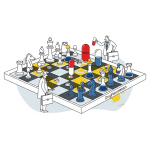
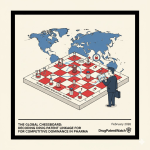
This report will deconstruct the entire process of building and executing a global patent strategy, treating the world not as a single market, but as a complex chessboard. We will journey from architecting a foundational patent portfolio to navigating the unique regulatory and legal landscapes of diverse global markets. From the harmonized systems of the United States and Europe to the challenging but crucial emerging markets of China, India, and Brazil, every decision—where to file, when to file, and how to defend—carries billion-dollar implications.3 As one expert aptly describes, “A well-constructed patent portfolio is like a chess game. Each patent is a piece on the board, strategically placed to defend your product and block competitors’ moves”.1
However, a modern geographic patent strategy must be more than just legally robust; it must also be politically and socially resilient. The patent system is perpetually framed as a “delicate and often contentious societal bargain” 3, operating against a backdrop of “ingrained public distrust” of the link between medicine and monopoly.3 This tension becomes particularly acute during public health crises, where patents can be portrayed as barriers to access, leading to intense political pressure and the potential for government intervention.9 A strategy that focuses solely on the legal defensibility of its patents—novelty, non-obviousness, utility—is dangerously brittle. It ignores a significant non-market risk: public and political backlash that could trigger measures like compulsory licensing, effectively nullifying a patent’s commercial value.3 Therefore, a truly comprehensive strategy must integrate a public affairs and communications component. It must proactively articulate the value of the innovation to patients and society, justifying the period of exclusivity and building a narrative that can withstand political pressure. This protects the commercial value of the patent portfolio not just in a court of law, but in the court of public opinion.
Section I: Architecting the Fortress — Foundational Principles of a Global Patent Portfolio
A successful drug patent portfolio is far more than an incidental collection of intellectual property; it is a coherently designed strategic collection of individual patents and applications meticulously curated to protect a product or technology platform.5 It is a fortress, and its construction requires a deep understanding of both offensive and defensive architectural principles. A successful strategy must be robust enough not only to protect the underlying science but also to defend a multi-billion-dollar commercial franchise for as long as legally and strategically possible.2
The Cornerstone: Securing the Composition of Matter Patent
At the very heart of any drug patent portfolio lies the composition of matter patent. This is the foundational patent, the cornerstone of the entire structure, and it provides the broadest and strongest form of protection.2 It covers the new chemical entity (NCE) or new molecular entity (NME) itself—the active pharmaceutical ingredient (API) that is the core of the medicine.2 Securing a strong, defensible composition of matter patent is the primary goal of any early-stage drug patent strategy. It is the most difficult type of patent for a generic competitor to challenge or design around, and it forms the bedrock upon which all subsequent layers of protection are built.2
To be granted, this cornerstone patent must meet several stringent legal conditions, which are rigorously examined by patent offices worldwide 11:
Novelty: The invention must be entirely new, meaning it was not publicly known or disclosed anywhere in the world before the patent application was filed.13
Non-Obviousness (Inventive Step): The invention must not be an obvious modification of a known compound to a “person having ordinary skill in the art.” This is often the most contentious and heavily litigated requirement, as it involves a subjective judgment about what constitutes a true inventive leap versus a predictable step forward.2
Utility: The invention must have a specific, substantial, and credible utility. For a drug, this means it must have a demonstrated therapeutic effect.2
Building the Walls: The Strategic Construction of a “Patent Thicket”
While the composition of matter patent is the cornerstone, a fortress is not built with a single stone. The true strength of a modern drug patent portfolio comes from the strategic layering of numerous secondary patents. These patents do not cover the core molecule itself but instead protect every conceivable aspect of the drug’s development, formulation, manufacturing, and use.2 This deliberate strategy creates a dense and overlapping network of protection—the “patent thicket”—that serves as a powerful deterrent to generic competition.1
The strategic value of a patent thicket lies not in the individual strength of any single secondary patent, but in its cumulative deterrent effect.2 A generic competitor must navigate a minefield of intellectual property. They don’t just have to invalidate or design around one patent; they may have to confront dozens.2 This significantly increases the legal risk, financial cost, and time required for a generic product to reach the market, transforming patent strategy into a form of economic warfare.2
This approach can be seen as an exercise in strategic ambiguity and economic attrition. While many secondary patents may be individually “weaker” or more susceptible to challenge than the core compound patent 17, their power lies in their number. A generic company’s decision to launch is an economic one, weighing the cost of litigation against the potential profit from market entry. A single, strong composition of matter patent presents a clear, binary challenge. A thicket of dozens of patents, however, changes the game entirely. The challenger now faces not one lawsuit, but potentially dozens. The legal costs are multiplied, the timeline is extended, and the risk of losing on just
one of those patents could be enough to block market entry. The thicket’s purpose is to create profound uncertainty and escalate costs to a point where the fight becomes economically irrational for the challenger, forcing them to either abandon their plans or agree to a settlement that is favorable to the brand manufacturer.17
The key types of secondary patents that form the walls of this fortress include:
Formulation Patents: These protect the specific “recipe” of the final drug product, such as an extended-release version that allows for once-daily dosing instead of twice-daily, a specific coating that improves stability, or a novel nanoparticle delivery system that enhances bioavailability.2 These often provide genuine patient benefits while creating new 20-year patent terms that extend well beyond the original.
Method-of-Use / New Indication Patents: These protect a new way of using a known drug and serve as the legal foundation for drug repurposing.2 If a company discovers that a drug approved for one condition is also effective for another, it can obtain a new method-of-use patent for that new indication, opening new markets and revenue streams. A classic example is Pfizer’s Viagra; beyond the original compound patent, the company secured method-of-use patents specifically for the treatment of erectile dysfunction, which became the drug’s blockbuster indication and extended its commercial life.2
Process Patents: Instead of protecting the drug itself, these patents protect a specific, novel, and non-obvious method of manufacturing it.2 For complex molecules like biologics, the manufacturing process can be as innovative and difficult to replicate as the product itself. A process patent can create a significant hurdle for generic manufacturers, forcing them to develop an entirely new, non-infringing process, which can be a costly and time-consuming endeavor.
Other Reinforcements: The patent thicket can be further reinforced with several other specialized types of patents 2:
Polymorph Patents: These protect specific crystalline structures of the drug molecule, which can affect properties like stability and solubility.
Chiral Switch Patents: Many drugs exist as mirror-image molecules (enantiomers), where often only one is therapeutically active. A “chiral switch” involves developing and patenting the single, more effective enantiomer, creating a new product with a new patent life. AstraZeneca’s Nexium, a follow-on to Prilosec, is a famous example of this strategy.2
Metabolite Patents: These cover the active metabolites that a drug is converted into within the body.
Delivery Device Patents: For drugs requiring a specific administration device (e.g., inhalers, auto-injectors), the device itself can be patented, forcing competitors to develop their own systems. Sanofi’s patents on the Lantus SoloSTAR insulin pen, for instance, extended market protection for its insulin glargine product long after the core drug patent expired.2
Lifecycle Management (LCM): Integrating Patent Strategy from Discovery to Post-Launch
Effective patent strategy is not a singular event that occurs at the discovery stage; it is a continuous process of lifecycle management (LCM) that must be integrated into every phase of a drug’s life, from the lab bench to the pharmacy shelf.5 The primary goal of LCM is to proactively manage the patent portfolio to extend market exclusivity for as long as possible and navigate the dreaded “patent cliff.”
The “patent cliff” serves as a stark, real-world illustration of why patent defense is fundamentally a business problem. Between 2025 and 2030, an estimated $236 billion in global revenue is projected to evaporate as patents for blockbuster drugs expire, unleashing a flood of generic competition. 8
This phenomenon compels companies to constantly rethink revenue strategies, pipeline investments, and lifecycle management.1 Effective LCM involves regular portfolio reviews to assess patent strength, identify gaps in protection, evaluate the competitive landscape, and analyze the remaining patent life of each asset.5 This is not just about adding new patents. It also includes the strategic “pruning” of low-value patents to manage the significant costs of maintenance and focus resources on assets that directly support commercial goals and defend key revenue streams.5 This continuous feedback loop ensures that the patent portfolio remains a dynamic, value-generating asset rather than a static legal archive.
Section II: The Opening Gambit — Choosing Your International Filing Pathway
Protecting a pharmaceutical innovation across multiple countries is not a matter of securing a single “world patent.” Such a thing does not exist.3 Rather, it requires navigating a complex patchwork of international treaties and regional agreements that together form the global IP architecture. A patent is a national right, meaning protection must be sought and granted in each individual country where a company wishes to prevent others from making, using, or selling its invention.3 The initial choice of filing pathway is a critical strategic decision with profound implications for cost, flexibility, and speed to market.
The PCT Route: A Deep Dive into the 30-Month Strategic Delay
For most companies with global ambitions, the most common playbook for executing an international filing strategy is the Patent Cooperation Treaty (PCT).3 The PCT system allows an applicant to file a single “international” application, which has the same legal effect as filing separate national patent applications in all of its 150+ member countries.23 This initial filing secures a “priority date”—a critical timestamp that establishes the novelty of the invention against any subsequent disclosures.3
However, the true strategic genius of the PCT system lies in what it allows a company not to do. The international phase of the PCT process typically lasts for 30 months (or 31 in some jurisdictions) from the earliest priority date.3 Only at the end of this period must the applicant decide in which specific countries they wish to proceed by entering the “national phase.” This is the point at which the significant costs of national filing fees, translation fees, and local patent attorney fees are incurred.3
This 30-month delay transforms the PCT from a mere legal convenience into a powerful financial management and strategic planning tool, particularly for capital-constrained startups and biotech firms.3 Filing patents in just 10 different countries can easily cost over $250,000 over the life of the patents, with a substantial portion of that cost due upfront.3 The PCT allows a company to defer these major expenditures while critical events unfold. In that two-and-a-half-year window, a company can:
Generate more clinical data to strengthen the invention’s value proposition and better define its commercial potential.
Secure additional funding or strategic partnerships, using the “patent pending” status as a key asset in negotiations.
Assess market potential and competitor activity in various regions, allowing for a more informed and data-driven decision on where to ultimately seek protection.
Receive valuable early feedback on patentability from the international search report (ISR) and written opinion, which can help refine the patent claims or even lead to a decision to abandon the application before incurring major national phase costs.22
This choice of filing pathway is not just a legal-administrative decision; it is a corporate finance strategy that should be meticulously aligned with fundraising and clinical development milestones. A typical biotech startup’s life is defined by financing rounds (Seed, Series A, B, etc.) that are triggered by value-inflection points, primarily positive clinical trial data. The cost of entering the national phase in key global markets can be a massive capital outlay for an early-stage company.3 A savvy leadership team should map the PCT timeline directly onto their clinical and financial roadmap. The 30-month deadline for national phase entry should ideally fall
after a major data readout, such as the results from a Phase II trial. Positive data increases the company’s valuation, making the subsequent financing round larger and less dilutive. This new capital can then be used to fund the expensive national phase entry, turning a potentially crippling upfront cost into a manageable expense funded by success. The PCT route allows patent strategy to follow and be funded by R&D success, rather than having to be paid for upfront.
The Direct (Paris Convention) Route: When Speed and Specificity Trump Deferral
The alternative to the PCT is the “direct” or “Paris route,” named after the Paris Convention for the Protection of Industrial Property. This pathway involves filing separate patent applications directly with the national or regional patent offices of each target country.23 This must be done within 12 months of the first (priority) filing date.11
While the PCT route is often the default for broad international protection, the direct route has specific strategic advantages. It is the preferred option when a company has a clear, limited set of high-priority markets and needs to accelerate the examination and grant process. Bypassing the 18-month international phase of the PCT can get the application in front of a national examiner much faster, potentially leading to a quicker patent grant that can be used to deter competitors or attract investors.26 Furthermore, if protection is only sought in a handful of countries (e.g., three or four), the direct route can be more cost-effective in the long run by avoiding the upfront fees associated with the PCT international phase.26
The primary disadvantages of the direct route are its lack of flexibility and its high upfront cost. It forces a company to make early and often irreversible decisions about its geographic footprint. The significant costs of filing, translation, and local attorney fees for multiple countries are all incurred within that first 12-month period, which can be a prohibitive financial burden for many organizations.22
A Strategic Framework: Decision-Making for Your Organization
The choice between the PCT and direct filing routes is a critical strategic decision that depends on a company’s financial resources, commercial strategy, and risk tolerance. The following framework provides a high-level comparison to guide this decision-making process.
Strategic Variable
PCT Route
Direct (Paris) Route
Upfront Cost
Lower. Major costs are deferred for 30 months. Initial filing fees are manageable.
Higher. All national filing, translation, and attorney fees are due within 12 months.
Speed to Grant
Slower. The international phase adds at least 18 months before national examination begins.
Faster. National examination can begin immediately after filing, leading to a quicker grant.
Flexibility
High. Provides 30 months to evaluate markets, secure funding, and refine strategy before committing to specific countries.
Low. Geographic decisions are locked in within 12 months. Little room to adapt to new data or market changes.
Geographic Scope
Broad. Preserves the option to file in over 150 countries.
Limited. Practical only for a small, pre-defined set of target countries.
Strategic Suitability
Ideal for startups, biotech firms, and companies with uncertain global market strategies or limited upfront capital.
Suitable for established companies with clear, limited target markets and a need for rapid patent issuance.
Section III: Mastering the Major Leagues — Deep Dives into Key Jurisdictions
While international treaties provide a framework, the real battle for market exclusivity is won or lost at the national and regional level. Each major market—the United States, the European Union, Japan, and China—has its own unique and complex interplay of patent law, regulatory hurdles, and market access dynamics. A global strategy cannot be a monolith; it must be a portfolio of distinct, tailored sub-strategies designed to master the specific rules of each of these high-value arenas.
The U.S. Fortress: Navigating the USPTO, FDA, and the Hatch-Waxman Act
The United States is the largest pharmaceutical market in the world, accounting for nearly half of global sales revenue.27 Its system for protecting pharmaceutical innovation is characterized by a strong, patent-centric approach, governed by the intricate legal framework of the Hatch-Waxman Act.
Patentability Standards (USPTO)
To secure a patent from the U.S. Patent and Trademark Office (USPTO), an invention must meet four key conditions 11:
Patentable Subject Matter: The invention must be a process, machine, manufacture, or composition of matter. Laws of nature, physical phenomena, and abstract ideas are not patentable.11
Novelty: The invention must not have been previously known or used by others.
Non-obviousness: The invention must be a significant enough advance that it would not have been obvious to a person with ordinary skill in the field.
Enablement & Written Description: The patent application must describe the invention in sufficient detail to teach a skilled person how to make and use it without “undue experimentation”.31 This requirement has become a potent weapon against overly broad patent claims, especially in biotechnology. The Supreme Court’s 2023 decision in Amgen Inc. v. Sanofi invalidated patents for Amgen’s cholesterol drug, Repatha, because they claimed an entire class of antibodies by their function but only disclosed a small number of examples. The Court found the patent did not enable a skilled person to reliably create all the other antibodies covered by the broad functional claim, thus rendering it invalid for lack of enablement.14
The Patent-Regulatory Linkage: Hatch-Waxman and the Orange Book
The modern framework for U.S. pharmaceutical competition was established by the 1984 Drug Price Competition and Patent Term Restoration Act, commonly known as the Hatch-Waxman Act.15 This landmark legislation created the system of “patent linkage,” which directly connects the patent status of a drug to its regulatory approval process.34
The lynchpin of this system is the FDA’s publication, “Approved Drug Products with Therapeutic Equivalence Evaluations,” universally known as the Orange Book.13 When a company submits a New Drug Application (NDA) for an innovative drug, it must also submit a list of all patents that it believes claim the drug product or a method of using it. The FDA then publishes this patent information in the Orange Book alongside the approved drug’s details.33 This public listing serves as the official notice to the world, and particularly to generic drug manufacturers, of the patents protecting the branded product.
Regulatory Exclusivities (FDA)
In addition to patent protection, the FDA grants several types of non-patent regulatory exclusivities, which provide distinct periods of market protection and can run concurrently with, or even outlast, patents.13 These are critical layers of the U.S. fortress:
5-Year New Chemical Entity (NCE) Exclusivity: Granted to a drug containing an active moiety that has never before been approved by the FDA. This exclusivity prevents the FDA from even accepting a generic application for five years from the date of the brand drug’s approval (or four years if the generic challenges a patent).33
3-Year “Other” Exclusivity: Granted for applications that required new clinical investigations (other than bioavailability studies) to support a change to a previously approved drug, such as a new indication, dosage form, or strength. This exclusivity prevents the FDA from approving a generic application that relies on that new data for three years.33
7-Year Orphan Drug Exclusivity (ODE): A powerful incentive for developing drugs for rare diseases (affecting fewer than 200,000 people in the U.S.). ODE prevents the FDA from approving any other application for the same drug for the same orphan indication for seven years.12
6-Month Pediatric Exclusivity (PED): This valuable exclusivity is not a standalone protection but acts as an “add-on.” If a company conducts pediatric studies requested by the FDA, an additional six months of protection is added to all existing patents and exclusivities listed in the Orange Book for that drug.12
The Generic Challenge: Paragraph IV and 180-Day Exclusivity
The Hatch-Waxman Act created an abbreviated pathway for generic drug approval, the Abbreviated New Drug Application (ANDA). A generic company filing an ANDA does not need to repeat costly clinical trials; it only needs to prove its product is bioequivalent to the branded drug.13
When filing an ANDA, the generic manufacturer must make a certification for each patent listed in the Orange Book for the reference drug. The most aggressive and commercially significant of these is the “Paragraph IV” certification, in which the generic company asserts that the branded drug’s patent is invalid, unenforceable, or will not be infringed by the generic product.33
Filing a Paragraph IV certification is an act of commercial warfare. It triggers a series of events:
The generic applicant must notify the brand company of its filing.
The brand company then has 45 days to file a patent infringement lawsuit against the generic applicant.
If a lawsuit is filed, the FDA is automatically barred from approving the generic’s ANDA for a period of up to 30 months, or until the court case is resolved, whichever comes first.17 This 30-month stay provides the brand company with a critical window to defend its patents in court.
As a powerful incentive to challenge patents, the Hatch-Waxman Act grants the first generic company to file a successful Paragraph IV certification a lucrative 180-day period of market exclusivity. During this six-month period, the FDA cannot approve any other generic versions of the same drug, allowing the first-filer to capture significant market share at a higher price point before full generic competition begins.33
U.S. Market Protection Layers
Duration
What it Protects
Strategic Implication
Composition of Matter Patent
20 years from filing
The active pharmaceutical ingredient (API) itself.
The strongest and broadest form of protection; the cornerstone of the portfolio.
Secondary Patents (Formulation, Use, etc.)
20 years from filing
Specific formulations, new indications, manufacturing processes, delivery devices.
Creates a “patent thicket” to deter generic challenges and extend protection beyond the core patent’s expiry.
New Chemical Entity (NCE) Exclusivity
5 years from approval
Market protection for a drug containing a novel active moiety.
Provides a baseline period of protection, preventing generic filings for 4-5 years.
“Other” Exclusivity
3 years from approval
Market protection for changes (e.g., new indication) supported by new clinical trials.
Incentivizes lifecycle management and drug repurposing.
Orphan Drug Exclusivity (ODE)
7 years from approval
Market protection for a drug approved for a rare disease.
A powerful incentive for R&D in niche, high-unmet-need areas.
Pediatric Exclusivity (PED)
6 months (add-on)
Adds 6 months to all existing listed patents and exclusivities.
A highly valuable “term extender” that can be worth hundreds of millions of dollars for a blockbuster drug.
180-Day Generic Exclusivity
180 days
Exclusive marketing rights for the first successful generic challenger.
The primary incentive for generics to litigate and challenge brand patents, driving the entire system.
The European Union Labyrinth: A Unified Strategy for a Diverse Market
The European Union represents the second-largest pharmaceutical market in the world.30 Its approach to protecting pharmaceutical innovation is fundamentally different from the U.S. system. While patents are crucial, the EU framework provides a robust, parallel system of regulatory protection that is independent of patent status, creating a more predictable and de-risked environment for innovators.
The Dual Patent System: EPO and National Offices
Unlike the U.S., there is no single “EU patent” (though the new Unitary Patent is changing this). Instead, inventors have two main routes. They can file for national patents in each individual EU member state, or they can use the more common and efficient route of filing a single application with the European Patent Office (EPO).40 If the EPO grants a European patent, it does not become a single right but rather a “bundle” of national patents, which must then be “validated” in each designated country to be enforceable there.41 The recent introduction of the
Unitary Patent and the Unified Patent Court (UPC) aims to streamline this process, offering a single patent right and a single court system for participating EU member states, which will significantly reduce complexity and cost over time.40
Regulatory Framework and Exclusivity Mechanisms
Marketing authorization is handled centrally for most innovative medicines by the European Medicines Agency (EMA). The EU’s key mechanisms for extending market protection beyond the basic 20-year patent term are Supplementary Protection Certificates (SPCs) and a powerful data and market exclusivity system.
Supplementary Protection Certificates (SPCs)
SPCs are a critical tool for innovators in Europe. They are not a patent term extension in the U.S. sense but a separate, sui generis intellectual property right that comes into force the day after the basic patent expires.43
Purpose: The sole purpose of an SPC is to compensate the patent holder for the effective patent term lost during the lengthy clinical trial and regulatory approval process required for medicinal products.43
Duration and Calculation: An SPC can extend protection for a maximum of 5 years.43 The duration is calculated as the period between the patent application filing date and the date of the first marketing authorization in the EEA, minus five years. However, a crucial cap applies: the total combined period of protection from the patent and the SPC cannot exceed 15 years from the date of the first marketing authorization.44
Pediatric Extension: An additional 6-month extension can be added to the SPC term if the company completes an agreed-upon Paediatric Investigation Plan (PIP), bringing the maximum possible SPC duration to 5.5 years.43
Data and Market Exclusivity: The “8+2+1” Rule
The most significant difference between the EU and U.S. systems is the EU’s robust, patent-independent regulatory exclusivity framework, commonly known as the “8+2+1” rule.48 This system provides a guaranteed minimum period of market protection for all new medicines, regardless of their patent status.
8 Years of Data Exclusivity: For the first eight years after a new drug receives marketing authorization, generic or biosimilar companies are prohibited from referencing the originator’s preclinical and clinical trial data in their own applications.48 This effectively blocks them from filing for approval during this period.
+2 Years of Market Protection: After the 8-year data exclusivity period ends, a generic company can file its application by referencing the originator’s data. However, even if approved, the generic product cannot be placed on the market for another two years. This creates a guaranteed 10-year period of total market protection from the date of the originator’s authorization.48
+1 Year Extension: This 10-year period can be extended to a total of 11 years if, during the first eight years of authorization, the originator company gets approval for one or more new therapeutic indications which bring a significant clinical benefit compared to existing therapies.48
Feature
United States System
European Union System
Core Protection
Heavily reliant on the patent portfolio. Market exclusivity is primarily dictated by patent life.
Dual system: Patents provide the primary layer, but a strong regulatory exclusivity framework provides a parallel, independent layer of protection.
Patent Term Extension
Patent Term Extension (PTE) can restore up to 5 years of patent term lost to regulatory delay.
Supplementary Protection Certificate (SPC) provides up to 5.5 years of additional protection after patent expiry.
Regulatory Exclusivity
Multiple, distinct exclusivities (NCE, ODE, PED) that run concurrently with patents and can provide protection if patents are weak or expire early.
A standardized “8+2+1” rule provides a guaranteed minimum of 10 years of market protection for all new drugs, independent of patent status.
Generic Challenge
Formal “patent linkage” system (Hatch-Waxman). Generic challenge (Paragraph IV) is a direct, adversarial legal process that triggers a 30-month stay.
No formal patent linkage. Generic entry is governed by the expiry of patents, SPCs, and the “8+2+1” clock. Litigation occurs in national courts but is not formally linked to the regulatory approval process.
Strategic Implication
High-risk, high-reward. A weak patent portfolio can lead to early generic entry. Litigation is a central part of the business strategy.
Lower risk, more predictable. The 10-year market protection provides a “safety net,” making the market viable even for products with a less robust patent estate.
This fundamental difference is vital for global strategy. It clarifies why a drug with a potentially weak patent might still be a very attractive commercial asset in the EU, where it is guaranteed at least 10 years of market protection. The same drug would face a much higher risk of early generic competition in the patent-centric U.S. market.
The Japanese Precision Play: Decoding the JPO, PMDA, and the Re-examination System
Japan is the world’s third-largest pharmaceutical market, characterized by a sophisticated and highly precise regulatory and patent system. Success in Japan requires a deep understanding of its unique rules, which differ significantly from both the U.S. and EU models, particularly regarding patentable subject matter and the mechanism for patent-regulatory linkage.
Patentability Standards (JPO)
An application filed with the Japan Patent Office (JPO) must meet the standard requirements of industrial applicability, novelty, and inventive step.54 However, a critical distinction for pharmaceutical companies is that
methods for the medical treatment of humans are generally not considered patentable.57 The JPO considers such methods to lack “industrial applicability” because they are seen as the professional activities of medical doctors rather than industrial processes. This means that claims drafted as “A method of treating disease X by administering compound Y” are typically rejected. To overcome this, patent claims must be carefully drafted in a different format, such as:
“Second Medical Use” Claims: “Use of compound Y for the manufacture of a medicament for treating disease X.”
This is more than a semantic distinction; it requires a strategic focus on patenting the product and its use in a specific formulation, rather than the act of treatment itself.
Patent Term Extension (PTE) and the Re-examination Period
Like the U.S. and EU, Japan provides a mechanism to compensate for the erosion of the 20-year patent term due to lengthy clinical trials and regulatory review by the Pharmaceuticals and Medical Devices Agency (PMDA).
Patent Term Extension (PTE): Japan’s Patent Act allows for the term of a pharmaceutical patent to be extended by up to a maximum of 5 years.56 The extension period corresponds to the time the patented invention could not be worked, calculated from the start of clinical trials or the patent registration date (whichever is later) up to the date of marketing approval.58
Re-examination Period (Data Exclusivity): Japan’s unique form of data exclusivity is its re-examination period.60 After a new drug is approved, it is subject to a mandatory post-market surveillance period, during which the marketing authorization holder must continue to collect real-world safety and efficacy data. During this period, the Ministry of Health, Labour, and Welfare (MHLW) will not approve any generic applications for that drug. This effectively acts as a period of market exclusivity that is independent of the patent status. The standard re-examination period is 8 years for a new drug and can be up to 10 years for an orphan drug or a drug with a pediatric indication.60
The Informal “Patent Linkage” System
One of the most nuanced aspects of Japanese strategy is its “patent linkage” system. Unlike the formal, legally codified system in the U.S., Japan’s system is de facto, operating through a series of administrative notices and guidances issued by the MHLW.60 This informal nature makes it more flexible but also less transparent and predictable. The system operates in two distinct stages:
Stage One: The PMDA Approval Review. During the PMDA’s scientific review of a generic drug application, it is tasked with checking for potential patent infringement from the perspective of ensuring a “stable supply of medicines”.60 This review is narrowly focused, typically considering only the originator’s substance patents (covering the API) and use patents. Other patent types, like formulation or manufacturing process patents, are not considered at this stage.60 The PMDA relies on a “Pharma Patent Information Sheet” submitted by the brand company, which is not publicly available, creating uncertainty for generic developers.60
Stage Two: The Pre-NHI Listing Negotiation. This crucial stage occurs after the PMDA has approved the generic drug but before it is listed on the National Health Insurance (NHI) Drug Price Standard, which is required for reimbursement and effective market launch. This stage addresses the other patent types not considered by the PMDA, primarily formulation and manufacturing process patents.60 MHLW guidance encourages the brand and generic companies to negotiate and resolve potential patent disputes during this period. They are required to report the status of their negotiations to the MHLW.60 While reaching an agreement is not mandatory, the system strongly favors a negotiated settlement over litigation.
This two-stage, negotiation-based system means that a purely adversarial approach that might work in the U.S. is less effective in Japan. Success requires a combination of a strong patent portfolio and a sophisticated regulatory affairs team capable of engaging in nuanced discussions with both competitors and the MHLW.
The China Gambit: Capitalizing on the World’s Fastest-Growing Pharma Market
For decades, China was viewed as a high-risk market for intellectual property. However, in a remarkably short period, it has transformed its IP landscape, implementing a sophisticated and increasingly robust system designed to encourage both domestic innovation and foreign investment.62 As the world’s second-largest and fastest-growing major pharmaceutical market, mastering its new rules is no longer optional for any company with global aspirations.
Patentability (CNIPA)
The China National Intellectual Property Administration (CNIPA) grants patents for chemical compounds, compositions, and microorganisms.63 Similar to Europe and Japan, methods for the diagnosis or treatment of diseases are excluded from patentability under Article 25 of China’s Patent Law.64 However, China officially recognizes
“Swiss-type” claims (e.g., “Use of compound X in the preparation of a drug for treating disease Y”) as a permissible format. This provides a crucial legal mechanism for protecting new medical uses and repurposed drugs.64 For a pharmaceutical patent to be granted, the application must include sufficient experimental data in the original disclosure to demonstrate the claimed therapeutic effect; post-filing data is often not accepted to remedy a deficient initial disclosure.65
A Formal Patent Linkage System
In a landmark move, China implemented a formal patent linkage system on June 1, 2021, through amendments to its Patent Law. This system is modeled in part on the U.S. Hatch-Waxman Act and is designed to provide an early resolution mechanism for patent disputes.62
Patent Information Registration Platform: The National Medical Products Administration (NMPA) has established a public platform, equivalent to the U.S. Orange Book, where marketing authorization holders must register relevant patents for their approved drugs within 30 days of approval.62 Eligible patents include those covering active ingredients, compositions containing active ingredients, and medical uses.62
Generic Declarations: When a generic company files for marketing approval, it must make a declaration for each patent listed on the platform, including a “Type 4” declaration analogous to the U.S. Paragraph IV, stating that the listed patent should be invalidated or is not infringed.62
9-Month Stay: If the patent holder or an interested party files a lawsuit in the Beijing IP Court or an administrative action with CNIPA within 45 days of the generic application’s publication, the NMPA will impose a 9-month stay on the final approval of the generic chemical drug. During this period, the technical review of the generic application can continue.62
12-Month Exclusivity: As an incentive for generics to challenge patents, the first generic applicant to successfully challenge a listed patent and obtain marketing approval is granted a 12-month period of market exclusivity. During this period, the NMPA will not approve other generic versions of the same drug.66
Patent Term Compensation (PTE) and Data Exclusivity
To further align its system with international standards, China has also introduced mechanisms for patent term extension and data exclusivity.
Patent Term Compensation (PTE): The amended Patent Law allows for compensation for the time taken for the review and approval of a new drug. The patent term can be extended for up to 5 years, with the crucial caveat that the total effective patent term after marketing approval cannot exceed 14 years.70 This compensation is available for innovative new drugs and certain specified “improved new drugs,” such as new salts/esters or new indications for known compounds.70
Data and Market Exclusivity: China is in the process of implementing a formal data and market exclusivity system. Draft regulations have proposed up to 6 years of regulatory data protection for innovative drugs, as well as periods of market exclusivity for orphan drugs (up to 7 years) and pediatric drugs (up to 12 months).62
The rapid development of these sophisticated IP mechanisms signals China’s ambition to become a global hub for pharmaceutical innovation. However, strategists must navigate these new formal rules while remaining aware that state industrial policy and the desire to foster domestic champions can still influence the IP landscape. The differing approaches to patent linkage across these four major markets create fundamentally different risk profiles and strategic imperatives. The U.S. system is a predictable, adversarial legal battleground. The EU de-risks market entry with strong, patent-independent exclusivity. Japan requires a nuanced, negotiation-based approach. China has created a hybrid system where formal, Western-style rules are being implemented within a framework still influenced by national industrial policy. A global Head of IP must therefore function as a Head of IP and Market Risk, deploying a litigation budget in the U.S., leveraging regulatory safety nets in the EU, building relationships in Japan, and understanding both the new laws and the government’s five-year plan in China.
Section IV: Conquering New Frontiers — Patent and Market Access Strategies for Emerging Economies
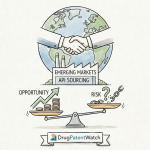
While the established markets of the U.S., EU, Japan, and China form the core of any global pharmaceutical strategy, the primary engines of future growth lie in the sprawling, dynamic, and complex emerging economies.74 These markets, from the BRICS nations (Brazil, Russia, India, China, South Africa) to the MIST countries (Mexico, Indonesia, South Korea, Turkey), are no longer a secondary consideration; they are the new epicenter of growth, offering significant potential that contrasts sharply with the often-stagnant mature markets.74
The BRICS Challenge: Navigating Opportunity and Risk in Brazil, Russia, and India
The strategic pivot toward emerging markets is backed by an overwhelming body of evidence. In a mere five-year span, pharmaceutical sales in the BRICS and MIST countries doubled, collectively capturing approximately 20% of the entire global market share.75 This explosive expansion is fueled by a powerful confluence of rising incomes, expanding healthcare access, and a dual disease burden that includes both infectious diseases and a growing prevalence of non-communicable “Western” diseases like diabetes and cancer.10 Brazil’s pharmaceutical market, for example, is the largest in Latin America and is projected to reach US$48.62 billion by 2030.74
However, the most critical strategic error a company can make is to view “emerging markets” as a single, homogenous entity. The reality is a complex tapestry of nations, each with its own unique regulatory hurdles, IP risks, political instabilities, and infrastructure gaps.75 A one-size-fits-all strategy is not just suboptimal; it is a recipe for failure. Each country requires a deeply localized approach to navigate its specific challenges.75
Tackling Key Hurdles: The Triad of Enforcement, Compulsory Licensing, and Price Controls
Conquering these markets is challenging. Innovator companies face a triad of significant hurdles that can undermine the value of their intellectual property and block market access.
Weak and Inconsistent Enforcement: A primary challenge in many emerging markets is the inconsistent enforcement of patent rights. Legal systems may lack specialized IP courts, leading to lengthy and unpredictable litigation outcomes. This variability in enforcement makes defending a patent a costly and uncertain endeavor, requiring a robust strategy that includes monitoring markets for potential infringements and engaging with local legal experts.3
The Specter of Compulsory Licensing: Compulsory licensing is a powerful and frequently threatened tool under the WTO’s TRIPS agreement. It allows a government to authorize a third party (such as a local generic manufacturer) to produce a patented product without the consent of the patent holder, typically in response to a public health crisis or if the drug is not being made available on reasonable terms.3 The landmark Doha Declaration affirmed the primacy of public health over private intellectual property rights, emboldening developing nations to use these TRIPS flexibilities to their fullest extent to promote access to medicines.3 This represents a significant political risk that can effectively expropriate a patent’s value.
Price Controls and Market Access Barriers: Securing a patent and gaining regulatory approval is often only the beginning of the battle. Commercial viability is ultimately determined by navigating government price controls and securing reimbursement from national health systems.10 These processes are often opaque, lengthy, and result in intense pricing pressure, particularly in countries with large public healthcare systems like Brazil.77
Building a Resilient, Localized Strategy
Success in these challenging environments requires a hybrid strategy that integrates legal, political, and commercial tactics. A purely legalistic, enforcement-heavy approach is likely to fail. Instead, companies must build a resilient, localized strategy that acknowledges the unique socio-political context of each market.
Partnerships and Local Investment: One of the most effective ways to mitigate political risk is to align the company’s interests with national priorities. This can be achieved by establishing local or regional manufacturing facilities, conducting clinical trials within the country, and forming joint ventures or partnerships with local companies.10 Such investments demonstrate a long-term commitment and contribute to the local economy and healthcare infrastructure, making the government a partner rather than an adversary.
Flexible Commercial Models: Proactively adopting flexible pricing models can preempt calls for more drastic measures like compulsory licensing. Tiered pricing, where a drug is priced differently based on a country’s purchasing power, or entering into voluntary licensing agreements with local manufacturers can dramatically improve access and affordability.10 These approaches allow the innovator to generate revenue while addressing public health concerns, creating a win-win scenario.
Proactive Government and Stakeholder Engagement: Building strong, transparent relationships with local regulatory authorities, health ministries, patient advocacy groups, and community leaders is crucial.10 Open dialogue can foster trust, provide valuable insights into local health needs and policy priorities, and allow companies to collaboratively shape solutions that balance innovation with access.
In these markets, a patent’s function fundamentally changes. It is often less an instrument of absolute monopoly and more a powerful lever for negotiation. The significant risk of compulsory licensing or other government interventions means that the 20-year monopoly granted by a patent is far from guaranteed. At the same time, these governments are eager to build local manufacturing capacity and attract foreign investment and technology transfer.10 This creates a dynamic where the patent holder’s optimal strategy is often not to “go it alone” and fight for full monopoly rights, which risks losing everything. Instead, the patent becomes the key asset in a three-way negotiation between the innovator, a local partner, and the government. It allows the innovator to structure a deal—a voluntary license with royalties, a joint venture where they retain a significant stake, a technology transfer agreement—that is far more profitable and secure than having no patent at all. The patent’s value shifts from “enabling a monopoly” to “enabling a structured, profitable partnership.”
Section V: The Financial Realities — The True Cost of a Global Patent Portfolio
The decision to pursue a global patent strategy is a multi-decade financial commitment of staggering proportions. The initial figures quoted for attorney and filing fees, often in the range of $10,000 to $50,000, are deceptive.7 They represent merely the visible tip of a colossal financial iceberg. The true cost of a drug patent is a far more complex figure, with the vast majority of its mass submerged in the deep waters of multi-billion-dollar research and development, protracted global prosecution, and the ever-present threat of multi-million-dollar post-grant defense.7
The Tip of the Iceberg: From R&D to Filing
The journey to understanding the cost of a drug patent must begin long before any legal documents are drafted. It begins in the lab. The most widely cited figure for this endeavor comes from the Tufts Center for the Study of Drug Development (CSDD), which estimated the average capitalized cost to develop a new prescription drug and bring it to market at a staggering $2.6 billion.7
This figure is crucial for business leaders to understand. It is not just the out-of-pocket spending on scientists and clinical trials. It is a “capitalized” cost, meaning it includes two critical, often-overlooked factors:
The Cost of Failure: For every successful drug that reaches the market, thousands of promising compounds fail at some stage of the development process. The enormous costs of these failures are absorbed by the rare successes.7
The Time Value of Money (Opportunity Cost): Drug development is a marathon, typically taking 10 to 15 years from discovery to approval. The capital invested during this protracted period incurs an opportunity cost, representing the returns that could have been generated if that money were invested elsewhere. These time costs accounted for nearly half of the total capitalized cost in the Tufts CSDD study.7
This massive upfront investment is the economic justification for the patent system. The industry’s R&D spending is immense; PhRMA member companies invested a record high of $102.3 billion in 2021 alone.7 The patent portfolio is the sole mechanism to protect this investment and generate a return.
The Prosecution Gauntlet: A Global Breakdown of Costs
Once a promising candidate is identified, the direct costs of securing patent protection begin to accumulate. These costs vary significantly by jurisdiction, with translation and local counsel fees often dwarfing the official government fees in non-Anglophone countries.
The geographic distribution of these costs is highly asymmetric. A budget that simply multiplies a single-country cost by the number of target countries will be wildly inaccurate. The decision to file in Japan, for example, is not a ~$1,500 decision based on JPO fees, but a decision that will likely exceed $10,000 once mandatory translation and local agent costs are factored in. This reality must inform which markets are chosen, especially for companies with limited budgets. A global budget must be weighted, recognizing that each key non-Anglophone market represents a significant and distinct cost center.
Jurisdiction
Attorney Drafting & Filing Fees (USD)
Key Official Fees (USD Est.)
Estimated Total National Phase Entry Cost (incl. Translation)
United States
$15,000 – $50,000+
$2,000 (Filing, Search, Exam)
N/A
European Union
(Handled by EP Attorney)
$4,500 (Filing, Search, Exam, Designation)
$6,000 – $10,000+
Japan
(Handled by JP Attorney)
$1,500 (Entry, Exam)
$9,000 – $10,000+
China
(Handled by CN Attorney)
< $500 (Filing, Exam)
$2,000 – $4,000+
Data compiled from sources.7
United States: The most significant direct expense is retaining a skilled patent attorney, with fees for drafting and filing a complex pharmaceutical application ranging from $15,000 to $50,000 or more. Official USPTO fees for a large entity add approximately $2,000 for basic filing, search, and examination. Responding to office actions from an examiner can add $3,500 to $10,000 per response, with several rounds being common.7 A conservative budget for a single U.S. patent from drafting through issuance is often in the range of $30,000 to $70,000.7
European Union: The European Patent Office (EPO) provides a centralized examination process. Core official fees total over €4,300 (approx. $4,500). When combined with required European patent attorney fees, the upfront cost to prosecute an application at the EPO can easily exceed €6,000 to €10,000 before the costs of validating the granted patent in individual countries are even considered.7
Japan & China: In these key Asian markets, the official government fees are relatively low. The JPO’s examination fee is around $1,400 for a typical application, and CNIPA’s fees are less than $500.7 However, these figures are misleading. The mandatory requirement to translate the entire patent application into Japanese or Mandarin and to engage local patent agents means the all-in cost for national phase entry is substantial, frequently exceeding $9,000 in Japan and $3,000 in China.7
The Long Tail: Budgeting for Lifetime Maintenance (Annuities)
Patents are not a one-time purchase; they are assets that require ongoing investment to remain in force. Most patent offices around the world require the payment of periodic maintenance fees, or “annuities,” throughout the 20-year life of the patent. These fees typically escalate over time.
In the U.S., maintenance fees are due at 3.5, 7.5, and 11.5 years post-grant. For a large entity, the cumulative cost to maintain a single U.S. patent for its full term is $14,470 in official fees alone.7
Globally, these costs multiply. For a company maintaining a patent portfolio across dozens of countries, the annual annuity budget can run into the hundreds of thousands or even millions of dollars. The total cost to obtain and uphold a patent in nearly all 200 countries for its entire term could potentially approach $2,000,000.79
The Ultimate Cost: Preparing for the Multi-Million-Dollar Reality of Litigation
The single largest potential cost in a patent’s lifecycle is defending it against a challenge or enforcing it against an infringer. Pharmaceutical patent litigation is among the most expensive forms of commercial litigation in the world.
For a typical pharmaceutical patent infringement case where more than $25 million is at stake—a common scenario for a successful drug—the financial commitment is immense. According to the American Intellectual Property Law Association (AIPLA), the median total cost through trial and appeal is $5.5 million.7 Even for smaller Hatch-Waxman (ANDA) litigation cases with less than $1 million at risk, the median total cost can still reach $900,000.7 These astronomical costs are driven by high legal fees for specialized patent litigators (who can charge over $1,200 per hour), extensive and time-consuming discovery processes, and the fees for scientific and economic expert witnesses required to testify at trial.7 This reality makes the decision to litigate a strategic business decision of the highest order, not just a legal one.
Section VI: The Strategist’s Edge — Turning Patent Data into Market Dominance
In the modern pharmaceutical landscape, a patent portfolio should not be a static collection of legal documents stored in a vault. It must be an active, dynamic source of competitive intelligence. The vast global patent databases, once the exclusive domain of specialized lawyers and search firms, are now accessible tools that can be leveraged to map the competitive battlefield, de-risk market entry, and identify new opportunities. A reactive approach to patent management is a recipe for disaster; a proactive, data-driven mindset is what transforms patent data into a potent competitive advantage.1
Freedom-to-Operate (FTO) Analysis: The Prerequisite for Market Entry
Before a company commits hundreds of millions of dollars to late-stage clinical trials and commercial launch activities in a new geographic market, it must answer one fundamental question: are we free to operate? A Freedom-to-Operate (FTO) analysis is not an optional legal check; it is a fundamental strategic prerequisite for market entry.32
An FTO analysis involves a comprehensive search and analysis of the patent landscape in a specific country or region to identify any third-party patents that could potentially be infringed by the company’s product. This process is critical for:
Risk Mitigation: It identifies potential “blocking” patents that could lead to a costly infringement lawsuit and prevent the product from being launched.
Strategic Decision-Making: The results of an FTO analysis inform key strategic choices. If a blocking patent is found, the company can decide to:
Design Around: Modify its own product or process to avoid infringing the competitor’s claims.
In-License: Negotiate a license with the patent holder to gain the right to use the technology.
Challenge the Patent: Attempt to invalidate the competitor’s patent through litigation or administrative proceedings.
Abandon the Market: In some cases, the risk may be too high, leading to a decision not to enter that specific geographic market.
Conducting this analysis early and thoroughly de-risks the entire commercialization effort and prevents a company from investing heavily in a market it cannot legally enter.32
Competitive Intelligence: Mapping the Battlefield
Beyond its defensive role in FTO analysis, the global patent system is an incredibly rich source of offensive competitive intelligence.4 Because patent applications are typically published 18 months after filing, they provide an early window into competitors’ R&D activities, long before products are announced or clinical trial results are published. By systematically monitoring and analyzing competitors’ patent filings, a company can:
Map R&D Pipelines: Identify the specific molecules, therapeutic targets, and technologies that rivals are investing in.
Anticipate Future Competition: Track the progression of competitors’ patent applications to forecast their future product launches and market entry timelines.
Identify “White Space”: Analyze the patent landscape in a therapeutic area to find untapped niches or technological approaches that are not being pursued by competitors, revealing opportunities for innovation.
Scout for M&A and Licensing Opportunities: Discover promising technologies or assets from smaller companies or academic institutions that could be acquired or in-licensed to bolster the company’s own pipeline.
Leveraging Platforms like DrugPatentWatch for Actionable Insights
The sheer volume and complexity of global patent data can be overwhelming. This is where specialized business intelligence platforms like DrugPatentWatch become indispensable strategic tools. These platforms aggregate, organize, and analyze vast amounts of disparate data—from patent filings and litigation outcomes to regulatory approvals and clinical trial information—and transform it into clear, actionable insights for strategic decision-making.20
For pharmaceutical professionals, these platforms operationalize the principles of competitive intelligence and provide a tangible edge in developing and executing a geographic market entry strategy. Key use cases include:
Precision Timing for Generic Entry: A generic manufacturer can use DrugPatentWatch to create a comprehensive dashboard for a target branded drug. The platform provides daily-updated information on all associated patents, their expiration dates, any patent term extensions, regulatory exclusivities, and the status of any ongoing litigation in 134 countries.84 This allows the generic company to precisely identify the earliest possible date for a Paragraph IV filing in the U.S. or to map out the timeline for market entry in the EU based on the “8+2+1” clock, ensuring they are positioned to be the first to market.82
Informing Branded Drug Strategy: An innovator company can leverage the platform to conduct deep landscape analyses for a new therapeutic area. By searching for patents related to a specific disease or biological target, they can identify all existing treatments, map the IP of potential competitors, and pinpoint unmet medical needs where a new therapy could have a significant impact.83
Forecasting and Strategic Risk Management: Business development and portfolio management teams can use the platform to anticipate future revenue events across the industry. By tracking the patent cliffs of competitors’ blockbuster drugs, a company can identify opportunities to launch its own products into a newly competitive space. It also allows for monitoring the burgeoning pipeline of biosimilars and other next-generation competitors, providing an early warning system for future threats.83
Strengthening Patent Applications: Before filing a new patent, an R&D or legal team can use DrugPatentWatch to study the prior art, claim scope, and litigation history of similar drugs. This intelligence can be used to draft a more robust and defensible patent application that is specifically designed to withstand the types of challenges that have been successful against similar patents in the past.84
The strategic use of such platforms effectively democratizes competitive strategy. It lowers the barrier to entry for sophisticated analysis, allowing smaller, more agile, data-savvy players to anticipate market shifts and outmaneuver larger, more bureaucratic incumbents. In this new landscape, success becomes less about the sheer size of a company’s R&D budget and more about its strategic agility and its ability to interpret and act on data faster than its rivals. Data analytics becomes the great equalizer in the global strategic patent game.
Key Takeaways
IP as a Business Driver: Treat patent strategy as a core component of corporate strategy, integrated with R&D, finance, and commercial operations, not as a siloed legal function. Its primary purpose is to secure the market exclusivity necessary to generate a return on the multi-billion-dollar investment in innovation.
Defense in Depth: A single patent is a single point of failure. The most resilient portfolios are “patent thickets”—multi-layered webs of protection covering not just the core molecule but also its formulations, methods of use, manufacturing processes, and delivery devices. The goal is to create formidable economic and legal barriers to entry for competitors.
Global yet Local: Develop a global filing framework, most often using the PCT to preserve options and defer costs, but execute with deeply localized strategies. Each major market (U.S., EU, Japan, China) has unique rules, and a one-size-fits-all approach is doomed to fail.
Integrate Patent and Regulatory: Master the intricate interplay between patent law and regulatory exclusivities. In the EU, regulatory protection can provide a 10-year safety net independent of patent strength. In the U.S., the Hatch-Waxman Act inextricably links patent litigation to the generic approval process. They are two sides of the same market protection coin.
Budget for the Full Lifecycle: Understand that the true cost of a patent portfolio is a multi-decade investment. It begins with the capitalized cost of R&D and extends through prosecution, global maintenance fees (annuities), and the potential for multi-million-dollar litigation.
Weaponize Data: In the modern era, patent data is not just for defense. Leverage modern business intelligence platforms like DrugPatentWatch to transform global patent and regulatory data from a defensive shield into an offensive weapon for competitive analysis, opportunity identification, and strategic market entry.
Frequently Asked Questions (FAQ)
1. Q: For a biotech startup with a single lead asset and limited funding, what is the single most critical decision in a geographic patent strategy?
A: The most critical decision is unequivocally to leverage the Patent Cooperation Treaty (PCT). Filing a single PCT application is a financially prudent and strategically powerful move. It secures a priority date, which is essential for establishing novelty, and preserves the option to file in over 150 countries. Most importantly, it delays the enormous cost of national phase entry—including translation and local attorney fees in each country—for up to 30 months. This delay is not just a legal convenience; it is a vital financial tool. It allows the startup to use its limited capital to achieve its next value-inflection point, typically generating crucial Phase I or Phase II clinical data. Positive data strengthens the asset’s value, which in turn facilitates a stronger position in the next fundraising round. That new capital can then be used to pay for the global filings, effectively allowing R&D success to fund the expansion of IP protection.
2. Q: Why would a company file for a “weaker” secondary patent, like a new formulation, when its core composition of matter patent is still in force?
A: This is a core tactic in building a “patent thicket” and is a highly rational, defensive strategy. While the secondary patent may seem redundant initially, it serves two crucial long-term purposes. First, it has its own independent 20-year patent term, which begins on its own filing date. This new patent will almost certainly extend well beyond the expiration date of the original compound patent, thereby prolonging the product’s overall period of market exclusivity. Second, it adds another legal barrier that a generic competitor must independently overcome. A challenger must now not only invalidate or design around the original patent but also this new formulation patent. This multiplies their litigation cost, risk, and timeline, making a legal challenge a much less attractive business proposition and increasing the likelihood that they will be deterred or forced into a more favorable settlement.
3. Q: My company’s blockbuster drug faces patent expiry in the U.S. and EU soon. Where does the biggest immediate difference in generic competition lie?
A: The biggest and most immediate difference lies in the EU’s robust “8+2+1” rule for data and market exclusivity, which operates independently of patent status. In the U.S., the system is heavily patent-centric. Once your last relevant patent listed in the Orange Book expires (including any extensions), generic competition can begin almost immediately, often leading to a sharp and sudden revenue decline—the “patent cliff.” In the EU, however, even if your basic patent and any Supplementary Protection Certificate (SPC) have expired, the regulatory framework guarantees a minimum of 10 years of market protection from the date of the drug’s first marketing authorization. This provides a patent-independent “safety net” that makes the revenue cliff in Europe less steep and more predictable than the abrupt drop-off often seen in the United States.
4. Q: We are considering entering the Chinese market. Is the new patent linkage system there as robust as the U.S. Hatch-Waxman system?
A: China’s system, implemented in 2021, is rapidly becoming more robust and has been deliberately designed to incorporate many features of the U.S. model, such as a patent registration platform (the “Chinese Orange Book”), a stay on generic approval pending litigation, and a period of market exclusivity for successful generic challengers. However, it is not a carbon copy and has key differences. The stay on generic approval is shorter, at 9 months compared to 30 months in the U.S. Furthermore, there are specific and evolving rules about which types of patents can be listed and which types of drug improvements are eligible for patent term compensation. Therefore, while it provides a much stronger and more predictable framework for innovators than existed previously, strategists must navigate these formal rules while remaining aware that state industrial policy and the goal of fostering domestic champions can still influence the IP landscape.
5. Q: How can a tool like DrugPatentWatch help us decide which emerging market to enter first?
A:DrugPatentWatch provides the critical data necessary to conduct a sophisticated, risk-adjusted comparative market analysis. Instead of relying on market size alone, you can use the platform to gain deep competitive intelligence. For your specific therapeutic area, you can compare the patent landscape across Brazil, India, and Russia, for example. You can identify which markets have fewer competing patents from established players, potentially indicating a lower barrier to entry. Crucially, you can also track patent litigation and invalidation trends in each country to assess the real-world strength and predictability of IP enforcement. By combining this granular patent and regulatory intelligence with broader data on market size, healthcare spending, and disease prevalence, you can create a multi-factor opportunity score for each country. This enables a data-driven, strategic decision on where to prioritize your market entry efforts, allocating resources to the market that offers the best balance of commercial opportunity and manageable IP risk.