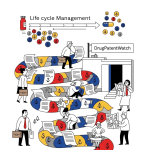
The journey from a single molecule to a blockbuster drug is paved with billions of dollars in investment and fraught with risk, the patent document stands as the ultimate arbiter of value.1 For those of us on the front lines—advising the innovators, guiding the investors, and defending the market leaders—we understand a fundamental truth: a pharmaceutical patent is far more than a simple legal right. It is the foundational asset, the very DNA of a drug’s commercial lifecycle.1
The pressure has never been more intense. The infamous “patent cliff,” a term that strikes fear into the hearts of executives, represents the moment this exclusivity ends. When a blockbuster drug loses patent protection, generic competition can flood the market, causing revenues to plummet by as much as 79% in a shockingly short period.1 Between now and 2030, analysts project that more than $200 billion in annual pharmaceutical revenue is at risk from these expiring patents, making the science of maximizing every single day of exclusivity a critical strategic imperative.1 This is not merely a legal problem; it is a core business strategy problem.2
Welcome to the European pharmaceutical patent gauntlet. It is a complex, multi-layered chessboard, an ecosystem of interacting and sometimes conflicting systems: the centralized granting authority of the European Patent Office (EPO), the patchwork of national courts, and now, the revolutionary Unified Patent Court (UPC).4 Success in this arena is not about mastering one system in isolation. It is about orchestrating a symphony of actions across multiple venues to build an impenetrable fortress around your innovation.
This report is your playbook. It is not a dry recitation of legal statutes. It is a strategic guide forged from decades of experience in the trenches of European patent prosecution and litigation. We will move beyond the what and the how, focusing relentlessly on the why—translating complex legal mechanisms into tangible competitive advantage. We will deconstruct the entire patent lifecycle, from drafting an application that can withstand future attacks to leveraging every available exclusivity extension, from navigating the seismic shifts of the Unitary Patent system to weaponizing patent data as a predictive intelligence tool.
For the seasoned IP counsel, the R&D leader, the business development executive, or the savvy investor, the goal is the same: to turn intellectual property from a cost center into a powerful engine of value. Let’s begin.
Section 1: The Foundation – Navigating the European Patent Office (EPO) and the Classic Granting Procedure
Before we can delve into the advanced strategies of lifecycle management and litigation, we must first master the fundamentals. The European Patent Office (EPO) is the gateway to patent protection across the continent and beyond. Understanding its structure, procedures, and nuances is the first, non-negotiable step in building a robust European IP portfolio. This is not merely a procedural hurdle; it is the foundational stage where the strength and defensibility of your most valuable assets are forged.
Deconstructing the European Patent Convention (EPC): More Than Just a Treaty
It’s a common misconception, particularly among those outside Europe, to equate the European patent system with the European Union. This is a critical error. The entire framework for granting European patents rests on the European Patent Convention (EPC), an international treaty signed in Munich in 1973.8 This convention established the European Patent Organisation, with the EPO as its executive arm, to create a single, harmonized procedure for granting patents in its member states.4
The distinction is strategically vital because the EPC’s membership is significantly broader than the EU’s. As of October 2022, the EPC has 39 contracting states.9 This includes all 27 EU member states, but also key non-EU markets that are epicenters of pharmaceutical innovation and commerce, such as the United Kingdom, Switzerland, Norway, and Türkiye.9
Furthermore, the EPO has established “extension” and “validation” agreements with several other non-contracting states, such as Bosnia & Herzegovina, Morocco, Tunisia, and Cambodia.8 This allows applicants, for an additional fee, to extend the protection of a granted European patent to these territories. The result is a powerful, centralized system that allows a single patent application, filed in a single language, to mature into patent protection across more than 40 countries—a vast and commercially critical territory.
The Centralized Filing and Examination Gauntlet: A Step-by-Step Strategic Guide
The journey from invention to a granted European patent is a multi-stage process, with each step presenting both procedural requirements and strategic decision points. Navigating this gauntlet effectively requires not just legal precision but also commercial foresight.
Filing the Application: Critical First Steps
There are two primary pathways to begin the process at the EPO. The first is to file a direct European patent application with the EPO.13 The second, and more common route for companies with global ambitions, is to enter the “regional phase” in Europe via an international application filed under the Patent Cooperation Treaty (PCT).4 The “Euro-PCT” route allows an applicant to use a single international filing as the basis for seeking patent protection in numerous regions, including Europe, typically up to 30 or 31 months from the earliest priority date.
Regardless of the route, the application itself must meet stringent formal requirements. It must contain a request for grant (EPO Form 1001), a detailed description of the invention, one or more claims defining the scope of protection sought, any necessary drawings, and an abstract.14
This initial drafting stage is arguably the most critical moment in the entire life of the patent. The EPO operates under an exceptionally strict “added matter” doctrine, meaning that any amendments made later during examination or post-grant opposition proceedings must be directly and unambiguously supported by the application as it was originally filed.17 A poorly drafted application, one that fails to provide a clear basis for potential fallback positions, can cripple a patent’s ability to withstand challenges years down the line. It is here that the foundation of your IP fortress is laid; a weak foundation will inevitably lead to collapse under pressure. This demands intense, early-stage collaboration between your R&D scientists, who understand the technical nuances and potential variations of the invention, and your patent attorneys, who understand how to articulate those possibilities in a way that satisfies the EPO’s rigid requirements.
A cornerstone of this early strategy is the Paris Convention, which allows an applicant to claim “priority” from an earlier patent application filed within the previous 12 months.4 This is a standard tactic for UK or US-based companies, who will file a national application first to secure an early priority date, and then file a comprehensive European or PCT application within the year, claiming the benefit of that date while incorporating additional data and refinements.
Search and Examination: The First Test of Strength
Several months after filing, the EPO issues its first substantive feedback: the extended European search report.15 This document is more than a formality; it is a crucial piece of competitive intelligence. It consists of two parts: the search report itself, which lists the prior art documents (patents and non-patent literature) that the examiner considers relevant to the patentability of your invention, and a detailed written opinion explaining the examiner’s preliminary assessment of whether your claims meet the core requirements of novelty, inventive step, and industrial application.15
This opinion provides the first clear signal of the challenges ahead. It allows you to gauge the strength of your application, understand the most relevant prior art, and begin formulating a prosecution strategy. For many companies, the search report arrives early enough to inform the decision of whether to pursue costly foreign filings at the 12-month priority deadline.
Around 18 months from the earliest priority date, the application is published (as an A1 publication if the search report is included, or A2 if not).15 This is another key milestone. Your invention is now public, putting your competitors on notice. It also marks the beginning of provisional protection in many member states, allowing you to potentially claim damages for infringement that occurs even before the patent is granted.
The next strategic hurdle is the deadline to request examination, which is six months from the date the search report was published.15 This is not a passive step. Along with paying the examination fee, you must file a substantive response to the objections raised in the written opinion. This is your first opportunity to amend the claims and present arguments to the examiner, setting the tone for the entire prosecution that follows.
Substantive Examination and Grant: Navigating the Examiner
Once examination is requested, the application enters a dynamic, iterative phase of negotiation with the EPO examiner. The examiner will issue one or more examination reports detailing objections to patentability, and you will respond with arguments and, typically, further claim amendments to narrow the scope of protection and overcome the cited prior art.20
This back-and-forth can take several years. Success requires a deep understanding of European patent law, particularly the “problem-solution approach” used by the EPO to assess inventive step, as well as a clear commercial objective for the desired claim scope.
Eventually, if the examiner is persuaded that the application meets all the requirements of the EPC, the EPO will issue a “Communication under Rule 71(3) EPC,” indicating its intention to grant the patent.21 This triggers the final steps of the centralized procedure: paying the grant and printing fees, and filing translations of the allowed claims into the other two official EPO languages (English, French, and German).20 Once these formalities are complete, the grant of the patent is published in the European Patent Bulletin, and the centralized phase comes to an end.
The “Bundle of Rights”: The Critical National Validation Stage
The grant of a European patent by the EPO does not, in itself, create a single, enforceable pan-European right. Instead, it creates what is often called a “bundle of national patent rights”.5 To bring these rights to life, the patent owner must “validate” the European patent in each individual country where protection is desired.4 This is a critical, often costly, and highly strategic post-grant phase.
The validation process must typically be completed within three months of the grant date.22 It involves several steps that vary by country: appointing a local patent attorney or address for service, paying official fees to the national patent office, and, most significantly, filing translations of the patent specification.22
Translation requirements are a major cost driver. Some countries, such as Spain and Italy, require a full translation of the entire patent specification into their national language.23 Others, like Denmark or Sweden, may only require a translation of the claims.23 A third group of countries are signatories to the London Agreement, which significantly reduces these costs. For these countries, which include the UK, Germany, France, and Switzerland, if the European patent was granted in English, no further translations are required at all.23
This validation stage is not an administrative afterthought; it is a key lever for portfolio optimization and cost control. Given the high costs, particularly for a lengthy pharmaceutical patent, validating in all 39 EPC member states is commercially unfeasible. The decision of where to validate must be a strategic one, driven by hard data on key commercial markets, competitor manufacturing locations, pricing and reimbursement landscapes, and the strength of the local judicial system.24 A company might choose a lean validation strategy focused on the top five European markets to conserve cash, or it might strategically validate in a smaller country known to be a manufacturing hub for a key generic competitor. This decision directly shapes the geographic footprint of your protection and has profound implications for your enforcement capabilities and your budget. With the advent of the Unitary Patent system, which we will explore later, this cost-benefit analysis of classic validation versus unitary protection has become one of the most crucial strategic questions facing innovators in Europe today.
Section 2: Beyond the 20-Year Horizon – Mastering Lifecycle Management and Exclusivity Extension
The standard 20-year patent term is, for the pharmaceutical industry, a cruel illusion. The arduous journey through preclinical research, multi-phase clinical trials, and rigorous regulatory review can consume 12 to 15 years of that term before a product even reaches the market.2 This leaves a drastically shortened period of effective market exclusivity—often just 7 to 8 years—to recoup an investment that can exceed $2.6 billion.2
To address this imbalance, European law provides a sophisticated toolkit of exclusivity extensions that are paramount to a drug’s commercial success. Mastering these mechanisms is not just an option; it is the core of modern pharmaceutical lifecycle management. A successful strategy does not rely on a single form of protection but instead layers multiple exclusivities—patents, SPCs, paediatric extensions, and regulatory designations—to construct a formidable and extended period of market monopoly. This complex interplay is a competitive weapon, and understanding it is essential to creating and preserving shareholder value.
Supplementary Protection Certificates (SPCs): The Cornerstone of Pharma Exclusivity
The single most important tool for extending the commercial life of a patented medicine in Europe is the Supplementary Protection Certificate (SPC).
What is an SPC and Why Does it Exist?
An SPC is a unique, sui generis intellectual property right. It is not a patent extension in the strictest sense, but rather a standalone right that comes into force the day after the “basic patent” protecting the drug expires.27 Its sole purpose, as enshrined in Regulation (EC) No 469/2009, is to compensate the patent holder for the erosion of the effective patent term caused by the mandatory and lengthy process of obtaining a regulatory Marketing Authorisation (MA).29 It is a direct legislative acknowledgment of the unique economic realities of pharmaceutical R&D.
To be eligible for an SPC, an applicant must meet several conditions:
The product must be protected by a basic patent in force in the country where the SPC is sought.
A valid MA to place the product on the market as a medicinal product must have been granted.
The product must not have already been the subject of an SPC.
The MA mentioned must be the first MA to place that product on the market.28
The Mechanics of an SPC: Duration and Calculation
The duration of an SPC is calculated based on a specific formula: it is equal to the period that elapsed between the filing date of the basic patent application and the date of the first MA in the European Economic Area (EEA), minus a period of five years.31
However, this duration is capped in two important ways:
The maximum term of an SPC cannot exceed five years.27
The total combined period of market protection from the patent and the SPC cannot exceed 15 years from the date of the first MA.32
This creates a complex calculation that must be performed for each product in each country to determine the precise loss of exclusivity (LOE) date.
The Paediatric Extension: A Critical 6-Month Bonus
Recognizing the critical need for medicines specifically tested and approved for children, the EU offers a powerful incentive: a six-month extension to the term of an SPC.27 This reward is granted if the company completes a series of studies in accordance with an agreed Paediatric Investigation Plan (PIP), which is a development plan aimed at ensuring the necessary data are obtained to determine the conditions in which a medicinal product may be used in the paediatric population.32
This six-month extension is incredibly valuable, potentially adding hundreds of millions of euros to the revenue of a blockbuster drug. However, securing it involves a strategic choice. An applicant may have to choose between this six-month SPC extension and a separate one-year extension of market and data protection if they develop a new therapeutic indication that brings a significant clinical benefit over existing therapies.32 This forces a careful calculation of which form of extended exclusivity will deliver greater commercial value.
The SPC Manufacturing Waiver: A New Competitive Dynamic
In a move to bolster the competitiveness of Europe’s generic and biosimilar industries, the EU introduced the SPC manufacturing waiver in 2019.29 This regulation creates a significant exception to SPC protection. It allows EU-based manufacturers, during the SPC term, to produce a generic or biosimilar version of the protected medicine for two specific purposes:
For export to markets outside the EU where patent or SPC protection does not exist or has expired.
For stockpiling during the final six months of the SPC’s term, allowing for a “day-one” launch in the EU the moment the SPC expires.28
This waiver represents a recalibration of the balance of power between innovators and generics. While it aims to preserve the core incentive of the SPC for the European market, it erodes the innovator’s global monopoly during the SPC period. Innovator companies must now factor this into their global supply chain strategies and LOE forecasting, as competitors can legally begin manufacturing within the EU before exclusivity has ended.
The Future is Unitary: The Unitary SPC and Centralized Examination
For decades, the SPC system has been a purely national one. An SPC must be applied for, examined, and granted by the national patent office of each individual member state. This has created what many in the industry describe as a costly, inefficient, and unpredictable system. As Brigitte Carion-Taravella, a European patent attorney at Sanofi, bluntly stated, “The current situation with SPCs is a mess. We have no transparency of information… it’s currently a huge cost that as soon as you have to file an SPC… you have to file it in each 27 EU member state”.37
In response to this widespread criticism, the European Commission proposed a comprehensive reform in April 2023.29 The proposal aims to create a new, centralized procedure for granting SPCs, managed by the European Union Intellectual Property Office (EUIPO). Crucially, it will also introduce a “Unitary SPC” that will provide a single, unified extension for the new Unitary Patents. This reform is widely seen as a logical and necessary step to reduce administrative burden, increase legal certainty, and align the SPC system with the new reality of the Unitary Patent and Unified Patent Court.31
Orphan Drug Designation: Niche Markets, Powerful Exclusivity
Beyond the SPC system, another powerful tool for extending market protection is the Orphan Drug Designation. This regime is designed to stimulate the development of medicines for rare diseases, which might otherwise be neglected by pharmaceutical companies due to their limited market size.
The Rationale and Criteria for Orphan Drug Status
Under Regulation (EC) No 141/2000, a medicine can be designated as an “orphan medicinal product” if it is intended for the diagnosis, prevention, or treatment of a condition that is life-threatening or chronically debilitating and affects no more than 5 in 10,000 people in the EU.39
Companies that obtain this designation benefit from a range of incentives, including scientific advice from the European Medicines Agency (EMA) (protocol assistance) and fee reductions.39 However, the most significant reward is a period of market exclusivity.
The Power of Orphan Market Exclusivity
Upon receiving marketing authorization, a designated orphan drug is granted 10 years of market exclusivity for the approved orphan indication.39 This is a powerful form of protection that runs independently of any patent or SPC rights. During this period, regulatory authorities are prohibited from accepting an application for, or granting an MA to, a “similar medicinal product” for the same therapeutic indication.42
This exclusivity is indication-specific. A single drug can have multiple orphan designations for different rare diseases, each with its own 10-year exclusivity period.40
Furthermore, the paediatric incentive for orphan drugs is even more generous than for non-orphan products. If a company completes a PIP for an orphan drug, the 10-year market exclusivity period is extended to 12 years.33 This replaces the standard 6-month SPC extension, offering a much longer period of protection for these critical medicines. The strategic implication is clear: for drugs targeting rare diseases, securing orphan designation is a paramount objective that can provide a decade or more of guaranteed monopoly, profoundly shaping the commercial value of the asset.
Section 3: The New Paradigm – The Unitary Patent (UP) and the Unified Patent Court (UPC)
On June 1, 2023, the European patent landscape underwent its most significant transformation in half a century.45 The launch of the Unitary Patent (UP) and the Unified Patent Court (UPC) marked the dawn of a new era, promising to replace a fragmented, costly, and often unpredictable system of national litigation with a streamlined, centralized, and harmonized approach. For pharmaceutical and biotech companies, whose fortunes are built upon the strength and enforceability of their patents, this new system presents both revolutionary opportunities and formidable risks. Navigating this new paradigm requires a fundamental rethinking of long-held European IP strategies.
A Revolution in European Patents: Understanding the UP and UPC
The new system consists of two interconnected pillars: the patent itself and the court that enforces it.
The Unitary Patent (UP) is a single, indivisible patent right granted by the EPO that provides uniform protection across all EU member states that have ratified the UPC Agreement.6 As of September 2024, this includes 18 countries, among them the economic powerhouses of Germany, France, and Italy.7 An applicant for a European patent can, upon grant, simply request “unitary effect,” transforming the classic “bundle” of national patents into one single UP for these territories.6
The Unified Patent Court (UPC) is a new international court common to the participating member states.45 It has been established to provide a single, specialized forum for patent litigation. Crucially, the UPC has exclusive jurisdiction not only over the new Unitary Patents but also over all “classic” European patents validated in the participating countries, unless they have been specifically “opted out” during a transitional period.6
The court has a multi-tiered structure. The Court of First Instance is composed of a Central Division (with seats in Paris and Munich, and a third planned for Milan specializing in life sciences) and a network of Local and Regional Divisions set up in various member states.6 Generally, infringement actions are heard in the Local/Regional Divisions, while standalone revocation actions are heard by the Central Division.6 All appeals are heard by a centralized Court of Appeal in Luxembourg.6 This structure is designed to combine local accessibility with centralized harmonization of case law.
The Strategic Crossroads: To Opt-In or Opt-Out?
The creation of the UPC forces every owner of a European patent to make a critical strategic decision: should they embrace the new system or use the “opt-out” mechanism to remain within the familiar confines of national litigation? This is not a simple choice; it is a complex risk-reward calculation with profound implications.
The Pros of the Unitary System: Simplicity, Cost-Savings, and Pan-European Power
The case for the UP/UPC system is built on three compelling advantages:
Cost and Simplicity: For applicants seeking broad European protection, the Unitary Patent is a game-changer. It eliminates the complex and expensive national validation process. Instead of paying multiple national renewal fees in different currencies to different offices, a UP owner pays a single annual renewal fee directly to the EPO in Euros.47 The renewal fees have been set at a level equivalent to the combined fees of the top four most frequently validated countries, making the UP highly cost-effective for companies that would typically validate in four or more of the participating states.6
Powerful, Centralized Enforcement: This is the UPC’s greatest draw. Previously, stopping a widespread infringer required launching separate, costly, and time-consuming lawsuits in every country where infringement was occurring. This could lead to conflicting decisions from different national courts, creating legal uncertainty.7 The UPC sweeps this away. A patentee can now obtain a single injunction from one court that is enforceable across the entire territory of the participating member states.7 This offers a powerful, efficient, and harmonized tool for enforcing patent rights.
Speed: The UPC is designed to be fast. Its Rules of Procedure aim for a final decision at first instance within approximately one year, a stark contrast to the multi-year timelines common in many national court systems.49
The Cons of the Unitary System: The “All Eggs in One Basket” Risk
Despite its advantages, the new system carries one monumental risk that gives many in the pharmaceutical industry pause.
Central Revocation: This is the primary reason for caution. Just as a patentee can win a pan-European injunction, an opponent can achieve a pan-European knockout blow. A single successful revocation action before the UPC will invalidate the patent across all participating countries simultaneously.21 For a pharmaceutical company whose entire business may rest on a single “crown jewel” patent protecting a blockbuster drug, this risk of central invalidation is a terrifying prospect.55
Loss of Flexibility: The Unitary Patent is an indivisible, all-or-nothing right. It is not possible to strategically abandon protection in certain countries over the patent’s lifetime to reduce renewal costs, a common portfolio management tactic.21 Similarly, the patent must be licensed or transferred as a single block across the entire territory.21
Uncertainty and Unpredictability: The UPC is a new court. While staffed by many experienced national patent judges, it is still developing its own body of case law and procedural practices.46 Early decisions have shown some inconsistencies between different divisions, creating a degree of unpredictability that is unsettling for a risk-averse industry where legal certainty is paramount.45
The Opt-Out Mechanism: A Temporary Safe Harbor
The architects of the UPC understood these concerns. To allow users to adapt, they created a transitional period (initially seven years, extendable to fourteen) during which owners of classic European patents (not Unitary Patents) can file a formal “opt-out” request.6 An opt-out removes the patent entirely from the UPC’s jurisdiction, meaning any litigation concerning that patent must be brought before the national courts, just as before.45
This opt-out provides a crucial strategic lever. Many pharmaceutical companies have used it to shield their most valuable legacy patents from the risk of central revocation while the new court finds its footing.45 The strategy can be dynamic: an opt-out can be withdrawn at any time (provided no national litigation has commenced), allowing a patentee to bring their patent back into the UPC’s jurisdiction if, for example, they wish to use its powerful enforcement tools against an infringer.45 This creates a fascinating strategic play: opt-out for safety, then withdraw the opt-out to go on the offensive.
To aid in this complex decision-making process, the following table provides a direct comparison of the key strategic factors.
Feature
Classic European Patent (Validated in Key Markets)
Potentially lower if selectively maintained in <4 countries; higher if maintained broadly
Potentially higher if only a few markets are key; lower if 4+ markets are key
Geographic Flexibility
High (can drop countries individually to manage costs)
Low (all-or-nothing renewal)
Geographic Scope
Customizable (any EPC state, including non-EU)
Fixed (only participating, ratified EU states at time of grant)
Enforcement Forum
Decentralized (parallel national court litigation)
Centralized (single UPC action)
Enforcement Power
Multiple national injunctions required
Single pan-European injunction
Validity Challenge Forum
Decentralized (national courts) or Centralized (EPO Opposition within 9 months)
Centralized (UPC revocation action for life of patent)
Risk Profile
Lower (revocation in one country does not affect others)
High (single central revocation action kills the patent everywhere)
Best For
“Crown jewel” patents where risk of central loss is unacceptable; portfolios where geographic flexibility is key
Patents where broad, cost-effective enforcement is the priority and the validity is considered very strong
The UPC in Action: Emerging Trends and Key Decisions for Life Sciences
Although the court is still in its infancy, a significant body of case law is already emerging, providing crucial insights into how the UPC will handle the complex issues central to life sciences patent litigation.
Early Caseload and Industry Adoption
The overall uptake of the UPC has been strong, exceeding initial expectations with over 900 cases filed by mid-2024.52 However, the engagement from the life sciences sector has been more measured. While medical device companies have been active litigants, pharmaceutical and biotech companies have adopted a more cautious, “wait and see” approach, with many choosing to opt out their key portfolios initially.45 As of May 2025, life sciences cases accounted for about 26% of infringement actions, a significant but not dominant share.61 This reflects the industry’s high-stakes, risk-averse nature.
Landmark Rulings and Their Strategic Implications
Despite the cautious approach, several key decisions are already shaping litigation strategies:
Preliminary Injunctions (PIs): The UPC has demonstrated its willingness to grant powerful preliminary injunctions, including on an ex parte basis (i.e., without the defendant being heard first).53 In the landmark 10x Genomics v. NanoString case, the Court of Appeal established the legal standard for granting a PI: the patentee must show that it is “more likely than not” that the patent is valid and infringed.62 Crucially, in assessing validity for a PI, the courts have shown they will conduct a deep dive into the patent’s prosecution and opposition history at the EPO. A robust defense during an EPO opposition is now a critical prerequisite for obtaining preliminary relief at the UPC.63
Validity and Central Revocation: The fear of central revocation has been realized. In a high-profile innovator-versus-innovator dispute, the UPC’s Munich Central Division revoked a key patent belonging to Sanofi related to the blockbuster PCSK9 inhibitor Praluent, following a challenge from Amgen.45 This decision sent a clear signal that the UPC will not hesitate to invalidate patents, even those protecting major commercial products, reinforcing the “all eggs in one basket” risk.
Second Medical Use Claims: In another Sanofi v. Amgen case, the Düsseldorf Local Division issued the UPC’s first decision on the infringement of second medical use claims.64 The court established a multi-factor test, looking at all relevant circumstances, including the market share of the patented use and actions taken by the alleged infringer to encourage or discourage that use. This provides crucial early guidance on how these vital lifecycle management patents will be enforced in the new system.
The Bolar Exemption: Early decisions are beginning to sketch the boundaries of the “Bolar exemption,” which permits the use of a patented invention for the purposes of seeking regulatory approval. In Novartis v. Celltrion, the Düsseldorf Local Division held that the exemption does not provide a blanket shield for all pre-launch activities, particularly commercial preparations made after an MA has already been granted.61 This signals that generics and biosimilar manufacturers must tread carefully in their launch preparations.
These early cases demonstrate that the UPC is a serious, fast-moving, and powerful forum. While legal certainty will take years to fully establish, the court is rapidly building a body of case law that is becoming essential reading for any life sciences IP strategist in Europe.
Section 4: Offensive and Defensive Plays – FTO, Opposition, and Litigation Strategy
A robust European patent strategy is not merely about acquiring rights; it is about actively managing the competitive landscape. This requires a sophisticated understanding of both offensive and defensive maneuvers. Offensively, this means clearing the path for your own product launch through rigorous Freedom-to-Operate analysis and strategically challenging competitors’ patents. Defensively, it means building a patent portfolio that can withstand the inevitable attacks that come with commercial success. In the interconnected world of the EPO and the UPC, these plays are more dynamic and interdependent than ever before.
The Pre-Emptive Strike: Freedom-to-Operate (FTO) Analysis in Europe
Why FTO is a Strategic Lifeline, Not a Legal Checkbox
Before a single dollar is spent on a Phase III trial or a product launch, every pharmaceutical company must answer a fundamental question: “Can we legally and profitably bring this product to market?”.65 A Freedom-to-Operate (FTO) analysis is the systematic process of answering that question. It is a deep-dive investigation to determine whether a planned commercial activity—manufacturing, marketing, or selling a product—in a specific country infringes the valid intellectual property rights of a third party.65
In the pharmaceutical industry, FTO is not a perfunctory legal checkbox; it is a strategic lifeline.68 Neglecting it is akin to building a skyscraper without checking who owns the land.65 The consequences of getting it wrong are catastrophic: a launch-day injunction, crippling damages, and the potential obliteration of a billion-dollar R&D investment.65 It is crucial to distinguish FTO from other types of patent searches. A patentability search asks, “Can I get a patent on my invention?” An FTO search asks, “Can I commercialize my product without being sued?” The two are entirely different; owning a patent on your product gives you no right to infringe someone else’s.65
Conducting a Robust European FTO
A thorough FTO analysis is a multi-stage, iterative process:
Scoping: The process begins by meticulously deconstructing your product and its manufacturing process into its constituent parts: the active pharmaceutical ingredient (API), its crystalline form (polymorphs), the formulation and excipients, the method of synthesis, and the specific therapeutic use or dosage regimen.68 You must then define the key jurisdictions for the search. For Europe, this means searching for granted European patents and pending applications via databases like the EPO’s Espacenet, as well as considering any relevant national patents in key markets.67
Searching: The search itself must be comprehensive, looking for patents that are currently in force. Given that patents have a 20-year term, and SPCs can add up to 5.5 years, a search in Europe must look back at least 25 years to be safe.65
Analysis: This is the most critical step. Infringement is determined solely by the patent’s claims, not its general description.69 A painstaking, element-by-element comparison of your product against the claims of potentially relevant patents is required. The analysis must be broad, considering not just “composition of matter” patents on the API, but also secondary patents covering formulations, methods of manufacturing, specific polymorphs, or methods of use, which are often used to build a “patent thicket”.68
Continuous Monitoring: An FTO analysis is a snapshot in time, but the patent landscape is constantly changing. Patent applications are typically published 18 months after they are filed, creating a “dark period” where a potential threat may be invisible.68 Therefore, FTO cannot be a one-time event. It must be an ongoing process of monitoring, with periodic updates as your product moves closer to market.
The Central Challenge: Using the EPO Opposition Procedure as a Strategic Weapon
Once a competitor’s European patent is granted and identified as a potential threat by your FTO analysis, the EPO opposition procedure offers the single most powerful and cost-effective tool to neutralize it.
The Power of a Centralized Challenge
The EPO opposition is a quasi-judicial, inter partes proceeding that allows any third party—a competitor, an academic, or even a “straw man” front to conceal the true challenger’s identity—to centrally challenge the validity of a newly granted European patent.17 The window for filing an opposition is a strict, non-extendable nine months from the date the patent grant was published.17
Its strategic value is immense. Unlike national litigation, which must be fought country by country, a single successful opposition before the EPO can revoke or limit the patent’s scope across all the countries for which it was validated.71 This provides incredible leverage, allowing a challenger to clear the path for their own product across the entire European market in one fell swoop, and at a fraction of the cost of multi-jurisdictional litigation.
The Opposition Playbook: Attacking a Competitor’s Patent
A successful opposition requires a meticulously prepared and front-loaded case. The grounds for opposition are strictly limited by the EPC to three main arguments:
The subject matter is not patentable (i.e., it lacks novelty or an inventive step).
The patent does not disclose the invention sufficiently for a person skilled in the art to carry it out.
The subject matter of the patent extends beyond the content of the application as originally filed (“added matter”).17
The notice of opposition must lay out the full case, including all arguments, facts, and evidence.71 Late-filed evidence is often rejected, so it is critical to put your best foot forward from the start. A particularly effective, though often overlooked, strategy is to attack the patent’s priority claim. If you can demonstrate that the subject matter of the claims was not disclosed in the priority document, this can “break” the priority date, making more recent publications available as devastating prior art.72
The Defensive Playbook: Weathering an Opposition
For the patentee, facing an opposition is a serious threat to a valuable asset. A successful defense begins years earlier, with the drafting of a robust and thoughtful patent application. The cornerstone of defending an EPO opposition is the strategic use of “auxiliary requests”—a series of pre-prepared, amended sets of claims that offer progressively narrower fallback positions.75 If the main, broadest claim is found invalid, the patentee can retreat to the first auxiliary request, and so on. This creates multiple defensive lines, increasing the chance that some commercially valuable protection will survive.
However, each of these fallback positions must have a clear and unambiguous basis in the application as filed, once again highlighting the critical importance of proactive, forward-thinking patent drafting.75 When facing an attack based on insufficiency of disclosure, a common tactic is to shift the burden of proof. According to EPO case law, the opponent must substantiate their doubts with verifiable facts; mere assertion is not enough.77 By challenging the opponent to provide this evidence, a patentee can often defeat a weak insufficiency attack.
The interplay between these offensive and defensive strategies is creating a new, complex calculus in pan-European patent disputes. The EPO and the UPC are not just alternative venues; they are strategically linked. A defendant in a UPC infringement case can, for instance, file an EPO opposition and request acceleration of those proceedings, hoping to get a swift validity decision from the EPO’s technical experts to use as leverage in the court case.78 Conversely, a patentee might use a UPC action to pressure an opponent, knowing the court will closely examine the EPO opposition file when deciding on a preliminary injunction.63 This feedback loop means that any strategic decision in one forum must anticipate the counter-move in the other.
Advanced Prosecution Tactics for a Stronger Defense
Beyond the basics of examination, savvy applicants can use several procedural tools at the EPO to strengthen their position and accelerate grant.
Divisional Applications: Before a parent patent application is granted, the applicant has the right to file one or more “divisional” applications. These applications are carved out from the parent and can be used to pursue different aspects or embodiments of the invention.75 This is a crucial defensive strategy. By filing a divisional, you keep a “pending” application in the family, providing a backup in case the parent patent is revoked in an opposition. It allows you to pursue claims of a different scope or category, creating multiple, independent lines of defense for a key technology.
Patent Prosecution Highway (PPH): The PPH is a network of work-sharing agreements between major patent offices, including the EPO, USPTO, and JPO.4 If you receive a ruling from one participating office that your claims are allowable, you can request accelerated examination for the corresponding application at another office.79 This can significantly reduce the time to grant. However, it is not a rubber stamp; the EPO will still conduct its own rigorous, independent examination.80
PACE Program: For applicants who want to accelerate their European application without relying on a foreign allowance, the EPO offers its own program for accelerated prosecution, known as PACE.80 A simple request can be filed to speed up either the search or the examination phase. This is a useful tool when speed to grant is a key commercial objective.
Section 5: Advanced Playbooks for Modern Therapeutics
The fundamental principles of European patent law apply across all technologies, but the life sciences present unique and complex challenges. The very nature of biologics, the high bar for patenting antibodies, and the strategic repurposing of existing drugs through second medical use claims demand specialized playbooks. Success in these cutting-edge fields requires a nuanced understanding of how the EPO applies its rules to these complex inventions.
Patenting Biologics and Biosimilars: A High-Stakes Game of Similarity
The rise of biologics—large, complex molecules such as monoclonal antibodies and therapeutic proteins derived from living systems—has revolutionized medicine. It has also transformed the patent landscape.
The Unique Challenges of Biologics
Unlike small-molecule drugs that can be chemically synthesized and perfectly replicated, biologics are inherently more complex and variable.26 This complexity has profound implications for IP strategy. Originator companies build formidable defensive walls around their blockbuster biologics using “patent thickets”—dense, overlapping webs of secondary patents that go far beyond the initial composition of matter.26 These patents can cover specific formulations, manufacturing processes, purification methods, dosage regimens, and new therapeutic uses, creating a multi-layered barrier designed to delay and deter competition.83
The Biosimilar Pathway in Europe
Europe has been a global pioneer in creating a regulatory pathway for biosimilars, approving the first one back in 2006.26 The standard for approval is “highly similar, not identical,” requiring extensive analytical and clinical studies to demonstrate no clinically meaningful differences from the originator’s reference product.26
For biosimilar developers, the primary strategic challenge is navigating the originator’s patent thicket. Their path to market often involves a two-pronged attack: “designing around” patents where possible (e.g., developing a novel formulation) and actively “clearing the way” by challenging the validity of blocking patents. The EPO opposition procedure has proven to be a particularly effective forum for this, with studies showing that biosimilar developers have a high success rate in invalidating or narrowing the scope of secondary patents in these proceedings.82
Antibodies at the EPO: Navigating Strict Inventive Step and Sufficiency Rules
Monoclonal antibodies are the dominant class of biologics, and the EPO has developed a specific and demanding set of practices for their patenting. Simply discovering a new antibody is rarely enough to secure a strong patent.
Defining the Antibody: From Sequence to Function
An antibody can be defined in a patent claim in several ways: by its structure (the amino acid sequences of its variable regions and/or its six Complementarity Determining Regions, or CDRs), by the specific target antigen it binds, or by the precise location on that antigen it recognizes (the epitope).88 While all are possible, defining the antibody by its sequence—at a minimum, the six CDRs that form the antigen-binding site—is the most common and robust approach and is often required by EPO examiners.90
The Inventive Step Hurdle for Antibodies
Herein lies the greatest challenge. The EPO’s established position is that if the target antigen is already known, the routine generation of new antibodies against it is considered obvious to a person skilled in the art. Therefore, a novel antibody to a known target is generally considered to lack an inventive step unless the applicant can demonstrate that it possesses a “surprising technical effect” compared to antibodies already in the prior art.91
Mere structural difference is not enough.91 The applicant must provide data in the patent application showing that their antibody is unexpectedly
better in some meaningful way. This could be a significantly higher binding affinity, improved stability, reduced immunogenicity, or a novel functional activity.91 This high bar forces a fundamental shift in R&D. It is no longer enough to simply find an antibody that binds a target; the R&D program must be designed from the outset to generate comparative data that proves superiority, directly linking scientific discovery to the stringent demands of patent law.
Sufficiency of Disclosure: The “Plausibility” Requirement
The patent application must also provide enough information for a skilled person to practice the invention without undue burden. For therapeutic antibodies, this translates into a “plausibility” standard. The data in the application as filed must make it plausible that the antibody will actually achieve the claimed therapeutic effect.93 While supplementary data can be filed later during examination to bolster the case for inventive step, it cannot be used to establish plausibility from scratch if the original application was merely speculative.95
For broad claims, such as those defining an antibody by its function or epitope, the sufficiency requirement is even tougher. The application must provide a reproducible method that would allow a skilled person to reliably generate other antibodies that also have the claimed properties, not just re-make the specific examples disclosed.88
Second Medical Use Claims: Unlocking New Value from Existing Assets
One of the most powerful lifecycle management tools in the pharmaceutical industry is the discovery of new uses for existing drugs. European patent law provides a specific mechanism to protect these valuable follow-on innovations.
The Legal Framework and Strategic Value
Article 54(5) of the EPC explicitly states that a known substance or composition can still be patented for a specific new use in a surgical, therapeutic, or diagnostic method, provided that use itself is novel and inventive.96 This is the foundation of the “second medical use” claim.
The strategic value is enormous. It allows companies to extend the patent life of a successful drug by protecting its use in a completely new disease, or even by patenting a new, more effective way of using it for the same disease. This can include:
A new dosage regimen (e.g., once-daily instead of twice-daily).96
A new mode of administration (e.g., a subcutaneous injection instead of an intravenous infusion).98
Use in a specific new patient sub-population (e.g., patients with a particular genetic marker).98
These patents are drafted in a specific format, known as a “purpose-limited product claim,” such as: “Substance X for use in the treatment of disease Y”.96
Evolving EPO Case Law on Novelty and Inventive Step
The EPO Boards of Appeal have developed a rich body of case law in this area. The landmark decision G 2/08 confirmed that a new dosage regimen can be the sole novel feature that renders a second medical use claim patentable.96 More recent decisions have clarified that novelty is assessed holistically; for example, a claim to a known drug for a known disease was found to be novel because it was combined with a novel surgical step as part of the treatment method (T 0558/20).96
As with antibodies, the application must provide sufficient evidence to make the new therapeutic effect plausible.95 This creates a delicate strategic tension. Companies need to generate clinical data to support the patent, but the clinical trial process itself can create public disclosures (e.g., in trial registries) that could become prior art against the very patent they are trying to secure.99 This requires a sophisticated, integrated strategy where the IP, clinical, and regulatory teams work in lockstep to carefully manage the timing of patent filings relative to public disclosures.
Section 6: From Data to Dominance – Weaponizing Patent Intelligence
In the modern pharmaceutical landscape, the companies that win are not just the ones with the best science; they are the ones with the best intelligence. A proactive, data-driven approach to competitive intelligence (CI) is no longer a luxury for the legal department—it is a core business function that informs R&D, shapes portfolio strategy, and drives successful business development. Patent documents, far from being dusty legal filings, are one of the richest and most predictive sources of this intelligence.
Competitive Intelligence as a Core Business Function
Pharmaceutical competitive intelligence is the systematic process of gathering, analyzing, and transforming information about rival companies into actionable insights that support strategic decision-making.100 The goal is to understand what competitors are doing, what they are
planning to do, and how to use that knowledge to secure a competitive advantage.100
Patent filings serve as an unparalleled early warning system.102 Because patent applications are typically published 18 months after filing, they provide a window into a competitor’s R&D pipeline years before a product is announced or enters clinical trials.102 A McKinsey & Company report found that companies using patent data for trend forecasting are 2.3 times more likely to be market leaders.102 Systematically monitoring this data allows a company to move from reacting to competitor launches to proactively anticipating their strategic moves 5 to 10 years in advance.
Leveraging Patent Databases for Strategic Advantage
Harnessing the power of patent data requires knowing where to look and what to look for. The sheer volume of information can be overwhelming without the right tools and a clear strategy.
Key Databases and Platforms
The landscape of patent information includes both public and commercial resources.
Public Databases: Freely accessible databases like the EPO’s Espacenet, the USPTO’s public search, and WIPO’s PATENTSCOPE are invaluable for targeted searches and document retrieval.105
Commercial Platforms: For deep, strategic analysis, specialized platforms are essential. Services like DrugPatentWatch are designed specifically for the pharmaceutical industry, integrating disparate data streams into a single, powerful interface. They provide not just patent data, but also crucial context on regulatory exclusivities, SPCs, litigation, generic challengers, and clinical trials, transforming raw data into strategic intelligence.106
Strategic Applications of Patent Data
With the right tools, patent data can be weaponized to achieve several key business objectives:
Tracking Competitor Pipelines: By setting up alerts for new patent publications from key competitors or in specific technology areas, companies can get an early look at the molecules, targets, and therapeutic indications their rivals are pursuing. The claims and examples in these applications reveal the likely features and advantages of future products, allowing for more accurate market forecasting and strategic planning.102
Identifying Generic and Biosimilar Threats: The most immediate financial threat to an innovator company is the loss of exclusivity. Platforms like DrugPatentWatch are critical for monitoring the landscape around your key products. They allow you to track not just when your core patents and SPCs expire, but also which generic or biosimilar companies are filing their own patents on alternative formulations or manufacturing processes, signaling their intent to enter the market.101 This intelligence is vital for developing effective lifecycle management and defensive strategies.
Informing Business Development & M&A: Patent data is a cornerstone of due diligence. When considering a licensing deal or an acquisition, a deep analysis of the target company’s patent portfolio is essential to assess the strength, breadth, and defensibility of their IP.102 This analysis can uncover weaknesses that provide negotiating leverage or reveal hidden strengths that increase the target’s value.
Patent Landscape Analysis: Mapping the Battlefield
Beyond tracking individual patents, a more holistic approach known as patent landscape analysis provides a bird’s-eye view of the entire competitive and technological terrain for a specific field.111
Strategic Goals of Landscaping
A patent landscape analysis involves using data analytics tools to map thousands of patents, revealing patterns and trends that are invisible at the individual document level. The strategic goals are manifold:
Identifying “White Space”: By visualizing where patent activity is concentrated, a landscape map can reveal areas with low patent density—the “white space”.65 This is invaluable for R&D, allowing companies to direct their resources toward less crowded and potentially more fruitful areas of innovation, increasing the probability of securing strong, defensible patents.
Risk Mitigation: A landscape analysis provides the essential context for a detailed FTO. It identifies the key players and the patents that define the state of the art, allowing for a more focused and efficient assessment of infringement risk.111
Competitive Benchmarking: Landscaping allows you to compare your patent portfolio directly against your competitors. Are they filing more patents than you? Are they focused on a different aspect of the technology? Are their patents cited more often, indicating they are more foundational? This benchmarking provides critical insights into their R&D strategy and your relative competitive position.111
Ultimately, the most sophisticated companies understand that patent data, regulatory data, clinical trial data, and commercial data are not separate streams of information. They are pieces of a single, complex puzzle. The true competitive advantage comes from integrating these datasets, often using advanced platforms like DrugPatentWatch, to build a holistic, predictive model of the market. This allows for the transition from simply knowing what has happened to understanding what is likely to happen next, and positioning your company to win that future.
Section 7: Navigating External Forces and Real-World Battlefields
Even the most meticulously crafted patent strategy does not exist in a vacuum. It is constantly shaped and challenged by external forces—geopolitical shifts, landmark court decisions, and evolving regulatory philosophies. Two such forces have profoundly reshaped the European pharmaceutical IP landscape in recent years: the United Kingdom’s exit from the European Union and the increasing scrutiny of patent practices by competition authorities. Understanding these dynamics is crucial for navigating the real-world battlefields where patent value is ultimately decided.
The Lingering Impact of Brexit: A Divided System
The UK’s departure from the EU, or “Brexit,” has fundamentally re-fragmented the European IP landscape, creating a new set of strategic complexities for pharmaceutical companies.
Patents Remain Unaffected, But the Ecosystem Has Changed
At a fundamental level, the process of obtaining a European patent for the UK remains unchanged. The European Patent Convention is not an EU treaty, and the UK remains a full and active member of the European Patent Organisation.116 Applicants can continue to file a single application at the EPO and, upon grant, validate it in the UK to obtain an enforceable UK patent.
However, the litigation and enforcement ecosystem has been split. The UK is not part of the new Unitary Patent and Unified Patent Court system.119 This has profound strategic consequences. A pan-European injunction granted by the UPC will not extend to the UK. Conversely, a UK court’s decision on a patent’s validity or infringement will have no bearing in the UPC’s territory. This means that for comprehensive European protection and enforcement, companies must now pursue a bifurcated strategy: one for the UPC member states and a separate, parallel one for the UK, which remains one of the largest pharmaceutical markets in Europe. This increases costs and complexity but also creates new strategic possibilities, such as using the highly respected UK courts to test the validity of a patent before deciding whether to risk a central attack at the UPC.
The Complication for SPCs
The situation for Supplementary Protection Certificates is also more complex. While UK law has largely retained the substance of the EU’s SPC regulations, the two systems can now diverge over time.116 A key change relates to the “first marketing authorisation” that triggers the calculation of the SPC term. For a UK SPC, this can now be the first MA granted in either the UK
or the EEA, whichever is earlier.120 Furthermore, the unique post-Brexit status of Northern Ireland, which remains aligned with EU pharmaceutical regulations under the Windsor Framework, creates potential complexities regarding which MAs can form the basis for a UK-wide SPC.119 This adds another layer of diligence required for lifecycle management in the UK.
Lessons from the Trenches: Landmark European Pharma Litigation
The courtroom is the ultimate test of a patent’s strength. Several landmark European cases have provided crucial lessons and shaped the strategic thinking of the entire industry.
Pemetrexed (Eli Lilly vs. Fresenius Kabi): The Doctrine of Equivalents and Claim Interpretation
The long-running, multi-jurisdictional battle over Eli Lilly’s blockbuster cancer drug, Alimta (pemetrexed), is a masterclass in European patent litigation.121 The central issue was whether generic versions using a different salt form of the active ingredient (pemetrexed diacid) infringed Lilly’s patent, which was claimed as pemetrexed disodium.121
Courts across Europe, including in the UK, Germany, and France, ultimately found infringement. However, they arrived at that conclusion through different legal paths. Some, like the French court, found literal infringement by interpreting the claims broadly in light of the patent’s description.121 Others, like the UK Supreme Court, relied on the “doctrine of equivalents,” finding that while the generic product was not literally within the claim’s wording, it achieved the same result in essentially the same way. The Pemetrexed saga perfectly illustrates the lack of legal harmonization that plagued the old system and which the UPC was designed to fix. It also underscores the critical importance of claim language and how it will be interpreted under different legal doctrines.
The Rise of Antitrust Scrutiny: “Pay-for-Delay” and Strategic Patenting
In recent years, European competition authorities have become a powerful new force policing the boundaries of acceptable patent strategy. It is no longer enough for a strategy to be legal under patent law; it must also comply with competition law.
The Lundbeck Case: This was a landmark decision where the European Commission imposed massive fines on the Danish innovator Lundbeck and several generic companies for entering into “pay-for-delay” settlement agreements.122 The Commission found that Lundbeck had effectively paid its generic competitors to stay off the market after its primary patent for the antidepressant citalopram had expired, which it deemed an illegal restriction of competition.
The Teva Investigation: More recently, the Commission has opened a formal investigation into Teva’s lifecycle management strategy for its multiple sclerosis drug, Copaxone.123 The investigation is scrutinizing whether Teva’s alleged practice of filing and withdrawing a series of divisional patents—a classic “patent thicket” tactic—constituted an abuse of a dominant position aimed at artificially extending its monopoly and hindering generic entry.
These cases signal a paradigm shift. Competition law is now being used to challenge not just the validity of patents, but the very way they are used. This forces IP strategists to add a rigorous antitrust risk assessment to every major lifecycle management decision.
SPC and Plausibility Disputes
Given their immense commercial value, SPCs are a frequent subject of litigation. The French Supreme Court has issued several important rulings in cases involving Dana-Farber Cancer Institute and Ono Pharmaceutical, setting key precedents on how the requirements of the SPC regulation should be interpreted, particularly regarding whether a basic patent truly “protects” a complex biologic drug.125 Similarly, the pan-European dispute over the blockbuster anticoagulant apixaban (Eliquis) has seen courts grapple with the crucial standard of “plausibility”—how much data is needed in a patent application to make its claimed therapeutic effect credible.125
Perspectives from the Front Line: Insights from IP Leaders
The strategic thinking of leading in-house and external patent counsel provides an invaluable real-world perspective on these complex issues.
This sentiment captures the core mission. The strategy is not just about legal compliance; it’s about securing the exclusivity necessary to justify the massive R&D investment.2 As Jurgen Dressel, former Head of IP Litigation at Novartis, emphasizes, when defending a blockbuster drug, “you leave no stone unturned… you will put in 120% effort”.127
There is a deep respect for the quality of the EPO’s work. Lars Balzer Nielsen, Vice President of IP at Novo Nordisk, explains that his company’s long-standing strategy of filing first at the EPO is “based on the EPO’s high quality, which provides a strong foundation for Novo Nordisk’s global IP portfolio”.128 Similarly, Philips’ Head of IP Licensing, Jako Eleveld, calls the EPO “the benchmark” and its search report “instrumental in shaping the company’s filing strategy”.129
However, there is also a clear-eyed recognition of the system’s challenges. The national-by-national SPC system is widely seen as inefficient and in desperate need of the harmonization that the proposed Unitary SPC promises.37 And while the UPC is hailed as a “huge success” by EPO President António Campinos 130, industry leaders acknowledge that pharmaceutical companies have been cautious, with many opting out key assets to await greater legal certainty from the new court.45 This blend of respect for the system’s quality and strategic maneuvering to mitigate its risks perfectly encapsulates the modern approach to European pharmaceutical IP.
Conclusion: The Future of European Pharma IP Strategy
The European pharmaceutical patent landscape is in the midst of a profound and exhilarating transformation. The old paradigms of fragmented national litigation and predictable lifecycle timelines are giving way to a new reality defined by centralization, strategic complexity, and unprecedented speed. The launch of the Unified Patent Court and the promise of a future Unitary SPC are not mere procedural tweaks; they represent a fundamental rewiring of the system, creating powerful new tools for innovators while simultaneously introducing formidable new risks.
Success in this dynamic environment is no longer the domain of the siloed legal expert. It demands a holistic, integrated, and relentlessly commercial approach. The most successful organizations will be those that break down the walls between their R&D, clinical, regulatory, and legal teams, embedding IP strategy into every stage of a drug’s lifecycle, from the first moment of discovery to the last day of exclusivity.
The playbook is clear. It begins with building a fortress at the drafting stage—creating robust patent applications with multiple, well-supported fallback positions designed to withstand future attacks. It requires mastering the intricate dance of exclusivity extensions, strategically layering patents, SPCs, and regulatory protections to maximize the period of market monopoly. It demands a sophisticated, data-driven approach to competitive intelligence, using powerful platforms like DrugPatentWatch to transform patent data from a historical record into a predictive map of the future competitive battlefield. And now, it requires a new level of strategic calculus to navigate the UP/UPC system—weighing the immense power of a pan-European injunction against the existential risk of a central revocation.
The European patent gauntlet is more challenging than ever, but for those who master its rules and learn to anticipate their opponent’s moves, the rewards are greater than ever. The future belongs to the strategists.
Key Takeaways
Strategy Begins at Drafting: The EPO’s strict “added matter” rules mean that the defensibility of a patent in post-grant opposition or UPC litigation is largely determined by the quality and foresight of the initial application. Build in multiple, clearly supported fallback positions from day one.
Exclusivity is a Multi-Layered Fortress: Do not rely on a single patent. The most robust lifecycle management strategies layer multiple forms of protection: base patents, secondary patents (formulation, use), SPCs, paediatric extensions, and orphan drug exclusivity to create the longest possible period of market monopoly.
The UP/UPC is a High-Risk, High-Reward System: The UPC offers unprecedented power through pan-European injunctions but carries the immense risk of central revocation. The decision to use the system—or opt-out—must be made on a case-by-case basis, weighing the strength of the patent against the value of the asset. For “crown jewel” patents, a cautious opt-out strategy is often the prudent initial choice.
EPO Opposition is a Powerful, Cost-Effective Weapon: The EPO opposition procedure remains the most effective tool for centrally challenging a competitor’s European patent. A single, successful opposition can clear the market across more than 40 countries.
Weaponize Patent Intelligence: Do not treat patent monitoring as a passive activity. Use specialized platforms to actively track competitor R&D pipelines, anticipate generic/biosimilar entry, and conduct landscape analyses to identify “white space” for your own innovation. This is a predictive, not a historical, exercise.
Brexit Has Bifurcated Europe: The UK is no longer part of the EU’s harmonized IP system or the UPC. It must be treated as a separate, critical jurisdiction requiring its own dedicated litigation and lifecycle management strategy.
Antitrust is the New Frontier: European competition authorities are actively scrutinizing how patents are used. Aggressive “patent thicket” strategies and “pay-for-delay” settlements now carry significant antitrust risk, requiring a new layer of legal analysis for all lifecycle management decisions.
Frequently Asked Questions (FAQ)
1. For a “crown jewel” patent on a future blockbuster drug, what is the safest approach to the UP/UPC system in its early years?
For a patent of critical commercial importance, the most prudent and widely adopted strategy is to initially opt-out of the UPC’s jurisdiction. This shields the patent from the risk of a single, central revocation action while the court’s case law is still developing. This approach keeps litigation within the familiar, albeit more costly, system of national courts, where a negative decision in one country does not affect the patent’s validity elsewhere. However, this should be an active, not a passive, strategy. The opt-out can be withdrawn at any time (as long as no national action has been initiated), allowing you to “opt-in” later to take advantage of the UPC’s powerful pan-European enforcement tools if a widespread infringement threat emerges.
2. How can my company use the EPO opposition system to delay or deter a competitor’s launch without revealing our own commercial strategy?
A common and effective tactic is to file the opposition using a “straw man” or nominal opponent.71 This involves instructing an independent third party, such as a specialized service provider or a trusted law firm not otherwise associated with your company, to file the opposition in their name. This conceals your identity as the true party of interest, preventing the patentee from linking the challenge to your specific commercial activities or future product launch. This allows you to challenge a threatening patent and potentially gain clarity on its valid scope without tipping your competitive hand.
3. What are the first three things my R&D team should change about their process to better support EPO patentability requirements for antibodies?
First, shift from a “discovery-first” to a “differentiation-first” mindset. The R&D program must be designed not just to identify a novel antibody, but to generate data demonstrating a “surprising technical effect” (e.g., superior affinity, stability, or function) compared to the closest known prior art antibodies. Second, integrate comparative testing early and systematically. Head-to-head experiments against the most relevant prior art antibodies should be a standard part of the preclinical development process, with the resulting data incorporated directly into the patent application. Third, enhance documentation of the entire generation process. The patent application needs to provide a detailed, reproducible method for generating antibodies with the claimed properties. Meticulous records of the antigen used, immunization protocols, and screening assays are essential to satisfy the EPO’s sufficiency of disclosure requirements, especially for broader functional claims.
4. Beyond patent expiration dates, what are the most critical data points from a platform like DrugPatentWatch that we should be monitoring for competitive intelligence?
While expiration dates are crucial, the most strategic intelligence comes from integrating multiple data points. Three critical areas to monitor are:
New Patent Filings by Competitors in Your Therapeutic Area: This is your earliest warning of their future pipeline. Analyze the claims and examples to predict the features of their next-generation products.
Litigation and Opposition Activity: Track which companies are challenging which patents. A surge in oppositions or litigation against patents for a specific drug signals that generic/biosimilar manufacturers are actively preparing for market entry. DrugPatentWatch can provide data on past successes of patent challengers, helping you assess the threat level.106
Regulatory Exclusivity Data: Look beyond patents to track SPC filings and grants, as well as orphan drug and paediatric exclusivities. The true loss of exclusivity date is often determined by these regulatory protections, not just the patent term.
5. With the UK outside the UPC, how should we adjust our European litigation budget and strategy?
Your strategy must now be bifurcated, and your budget must reflect this. You can no longer rely on a single court action to cover the key European markets. You must plan for two parallel tracks: one for the UPC territory and a separate one for the UK. This means budgeting for potentially two major litigations instead of one. Strategically, this creates both challenges and opportunities. You will need to coordinate legal teams and arguments across both forums. However, it also allows you to use the jurisdictions tactically. For example, you might initiate proceedings in the UK first to benefit from its extensive discovery process and detailed technical judgments before launching a broader, faster action in the UPC.
An overview of patents on therapeutic monoclonal antibodies in Europe: are they a hurdle to biosimilar market entry? – PubMed, accessed August 19, 2025, https://pubmed.ncbi.nlm.nih.gov/32306833/