Introduction: The Billion-Dollar Question – Decoding the Link Between Patents and Market Value
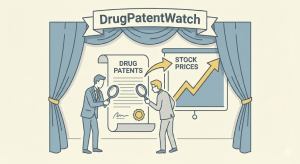
In the intricate and high-stakes world of the pharmaceutical industry, a company’s stock price is far more than a simple reflection of its quarterly earnings or sales figures. It is a dynamic, minute-by-minute referendum on its most valuable asset: its intellectual property (IP) portfolio. For pharmaceutical and biotechnology firms, patents are not merely legal shields; they are the fundamental economic engine, the very currency of innovation and the ultimate arbiter of long-term corporate viability.1 Consequently, the stock market acts as a continuous, real-time IP due diligence mechanism, where every patent filing, clinical trial result, regulatory update, and court ruling is a critical signal that investors immediately and often ruthlessly price into a company’s valuation.
The foundational economic model of the innovator pharmaceutical industry is an “Innovation-Exclusivity-Reinvestment Cycle”.1 This cycle begins with massive, high-risk investment in research and development (R&D). Bringing a single new drug to market is a monumental undertaking, a marathon that can span 10 to 15 years and consume, on average, a staggering $2.6 billion in capitalized costs.3 This figure is so high not only because of the direct costs of research but because it must account for the industry’s punishingly high attrition rates; for every successful drug that reaches the pharmacy shelf, thousands of promising candidates fail along the way, with well over 90% of drugs that enter clinical trials never receiving approval.5 This high-risk, high-reward dynamic makes the temporary monopoly granted by a patent the absolute “lifeblood of pharma”.1 Without the promise of a protected period of market exclusivity to recoup these vast investments, the financial incentive to innovate would evaporate.
Patents are therefore universally recognized as “strategic business assets” that dictate market exclusivity and drive investment decisions.7 The connection between a robust patent portfolio and a company’s ability to attract and secure capital is direct and crucial for survival, particularly for smaller, pre-revenue biotechnology firms that rely on investor funding to advance their pipelines.5 A strong patent portfolio is a magnet for investors, signaling that a company’s innovations are protected and that there is a clear pathway to profitability.8
This report pulls back the curtain on the complex interplay between the drug patent lifecycle and a company’s stock market performance. It will demonstrate that a company’s valuation is a living reflection of the market’s collective assessment of its IP fortress. While a company’s internal valuation of its patents may be based on sophisticated financial models, the stock price represents the external, and often more critical, consensus. This external valuation is influenced not just by the patents themselves but by the market’s perception of the management team’s ability to defend, leverage, and ultimately translate that intellectual property into a sustainable stream of revenue. Understanding the intricate signals sent by the patent ecosystem is no longer a niche legal concern; it is an indispensable skill for any investor, executive, or strategist seeking to navigate the future of pharmaceutical value creation.
Part I: The Bedrock of Value – Understanding the Pharmaceutical Patent Ecosystem
To comprehend how patents influence stock prices, one must first understand the architecture of the protection itself. The value of a pharmaceutical company is built upon a foundation of intellectual property and regulatory frameworks that are far more complex than a single 20-year patent. This ecosystem is a layered defense, combining statutory patent terms, government-granted market exclusivities, and a diverse arsenal of patent types. For investors and analysts, deconstructing this foundation is the first and most critical step in accurately modeling a company’s future revenue streams and, by extension, its present-day valuation.
1.1 The 20-Year Illusion: Statutory Term vs. Effective Commercial Life
The most common and dangerous misconception in pharmaceutical IP is the idea of a 20-year market monopoly. While it is true that the standard statutory term for a U.S. patent is 20 years from the date of its earliest filing, this figure is a legal abstraction that bears little resemblance to the commercial reality of the drug industry.6 The true measure of a patent’s commercial value lies in its “effective patent life”—the actual period during which a drug is sold on the market with patent protection and without direct generic competition. This period is consistently and significantly shorter than the nominal 20-year term.12
The discrepancy arises from the grueling and protracted nature of the drug development process. The journey from a promising molecule in a laboratory to a life-saving medication is a marathon, not a sprint, typically segmented into several long and costly stages:
Discovery and Preclinical Research: This initial phase involves identifying molecular targets, screening thousands of compounds, and conducting rigorous laboratory (in vitro) and animal (in vivo) studies to assess basic safety and efficacy. This period alone can span anywhere from 4 to 7 years.6
Clinical Research: Upon filing an Investigational New Drug (IND) application with the Food and Drug Administration (FDA), the drug enters human testing, which is divided into three sequential phases. Phase I trials test for safety in a small group of healthy volunteers (20-80 participants) and take up to a year. Phase II trials evaluate efficacy and optimal dosage in a larger group of patients (100-300) and can take up to two years. Phase III trials are the largest, most expensive, and most critical, confirming efficacy and monitoring for long-term adverse reactions in hundreds to thousands of patients.6
Regulatory Review: Following successful clinical trials, the company submits a New Drug Application (NDA) to the FDA. The agency’s review process itself can take an additional 6 to 12 months, or even longer for complex therapies.6
Cumulatively, this entire journey from initial discovery to market launch consumes a massive portion of the 20-year patent term—often 10 to 15 years.6 As a result, the effective patent life for most new drugs is a mere 7 to 12 years.6 This compressed window for recouping billions in R&D investment creates immense financial pressure and is the primary economic driver behind nearly all of the industry’s most critical—and often most controversial—strategic behaviors.
The erosion of the patent term during R&D establishes a direct causal link to a company’s financial strategy. With only a limited window of exclusivity to recoup its initial investment, cover the costs of its many failed projects, and fund the next generation of research, a company is forced to adopt a strategy of maximum value extraction. This manifests in two key ways that are closely watched by investors: high launch prices, designed to begin recouping costs immediately, and aggressive lifecycle management, designed to extend the exclusivity window by any legal means necessary. Therefore, sophisticated investors do not simply look at a patent’s expiration date; they analyze the company’s entire lifecycle management strategy to predict the true duration of its high-margin revenue stream, which is the ultimate determinant of its stock value.
1.2 More Than a Patent: The Layered Defense of Regulatory Exclusivities
While patents form the primary shield of intellectual property, they are not the only form of market protection. A parallel and often overlapping system of regulatory exclusivities, granted by the FDA upon a drug’s approval, provides a crucial secondary layer of defense. These exclusivities are distinct legal instruments from patents; they are not granted by the U.S. Patent and Trademark Office (USPTO) but are provisions within federal law designed to incentivize specific types of drug development.11 For an investor, understanding this dual system is critical, as regulatory exclusivities can provide a guaranteed “floor” for a drug’s monopoly period, sometimes extending protection even after key patents have expired.
This dual system was largely formalized by the landmark Drug Price Competition and Patent Term Restoration Act of 1984, commonly known as the Hatch-Waxman Act. The act was a grand compromise designed to balance the competing interests of innovator drug companies and the burgeoning generic industry. It streamlined the path for generic drug approval while simultaneously creating new incentives for innovation in the form of these regulatory exclusivities.17
The key types of regulatory exclusivity that directly impact a company’s valuation include:
New Chemical Entity (NCE) Exclusivity: This is one of the most significant forms of protection. It provides a 5-year period of data exclusivity for a drug containing an active moiety that has never before been approved by the FDA. During these five years, the FDA is barred from accepting an Abbreviated New Drug Application (ANDA) from a generic competitor for the first four years, and cannot approve it for five years. This provides a guaranteed initial period of market protection, allowing the innovator to establish its brand and begin recouping R&D costs without any generic competition.12
Orphan Drug Exclusivity (ODE): To incentivize the development of treatments for rare diseases (those affecting fewer than 200,000 people in the U.S.), the Orphan Drug Act provides a 7-year period of market exclusivity. This is a powerful form of protection because it prevents the FDA from approving any other application for the same drug for the same rare disease, regardless of whether the competitor relies on the innovator’s data.12
Pediatric Exclusivity (PED): To encourage drug testing in children, the FDA can grant an additional 6-month period of exclusivity. This valuable extension is tacked onto all existing patents and other regulatory exclusivities for the drug, effectively extending the entire monopoly by half a year.12
New Clinical Investigation Exclusivity: This provides a 3-year period of exclusivity for drugs that are already approved but for which the company conducts new clinical trials to support a significant change, such as a new indication, a new dosage form, or a switch from prescription to over-the-counter (OTC) status.15
Biologics Exclusivity: Under the Biologics Price Competition and Innovation Act (BPCIA), innovative biologic drugs receive a longer period of 12 years of data exclusivity, reflecting their greater complexity and higher development costs.6
For investors, these exclusivities are not just legal footnotes; they are quantifiable assets. A 5-year NCE exclusivity, for example, can be far more valuable than a patent that has only three years of life remaining at the time of the drug’s approval. This makes a company’s regulatory strategy a direct and powerful driver of its valuation. A company that successfully navigates the FDA’s rules to secure an orphan drug designation for its lead product has not just achieved a regulatory milestone; it has added two years of guaranteed monopoly revenue to its financial projections, a feat that can add billions to its market capitalization. The stock price, therefore, reflects the market’s confidence not only in a company’s R&D prowess but also in the sophistication of its regulatory affairs team.
1.3 The Innovator’s Arsenal: A Taxonomy of Pharmaceutical Patents
A blockbuster drug’s protection rarely rests on a single patent. Instead, innovator companies construct a formidable “patent portfolio,” often described as a “patent thicket,” comprising numerous different types of patents that create multiple, overlapping layers of defense.7 Understanding the architecture of this thicket is essential for assessing the true defensibility of a company’s revenue stream and predicting how long it can fend off generic competition.
The strongest and most valuable patent in any portfolio is the Composition of Matter patent, often referred to as the API (Active Pharmaceutical Ingredient) patent. This is the “gold standard” of protection because it covers the novel molecule itself, regardless of how it is made, formulated, or used.1 The expiration of this core patent is typically the event that opens the primary window for generic entry.
However, the defense does not end there. Companies strategically file a host of secondary patents throughout a drug’s lifecycle to extend its protection. These include:
Method of Use Patents: These patents cover new indications or specific ways of using a drug to treat a disease. For example, a drug initially approved for rheumatoid arthritis might later be found effective for psoriasis, and this new use can be patented, granting an additional period of exclusivity for that specific indication.10
Formulation Patents: These protect unique ways of delivering the drug, such as an extended-release tablet that only needs to be taken once a day, a new injectable formulation, or a liquid version for pediatric patients. These improvements in convenience or patient compliance can be valuable and patentable.6
Process Patents: These cover novel and non-obvious methods of manufacturing the drug. While often considered weaker than composition of matter patents, they can still create significant hurdles for generic manufacturers who must prove their own manufacturing process does not infringe.2
Patents on Polymorphs, Salts, and Metabolites: These cover different crystalline structures (polymorphs), salt forms, or active metabolites of the original drug. These can offer advantages in stability or bioavailability and provide another layer of patent protection.5
The strategic goal of this multi-layered approach is to create a “dense and overlapping network of protection” that complicates, delays, and increases the cost of generic market entry.2 AbbVie’s defense of its blockbuster biologic, Humira, is the canonical example of this strategy in action. By amassing a portfolio of over 250 patents covering every conceivable aspect of the drug, AbbVie created a legal fortress that successfully delayed U.S. biosimilar competition for nearly seven years after its primary patent expired.13
The value of a patent thicket is not merely additive; its deterrent effect is exponential. Each additional patent does not simply add one more hurdle for a generic challenger; it geometrically increases the complexity, cost, and risk of litigation. To launch its product, a generic company must either successfully “design around” every single one of the innovator’s patents or be prepared to challenge their validity in court. Litigating dozens or even hundreds of patents is an astronomically expensive and uncertain proposition. The probability of losing on even one critical patent could block market entry entirely, leading to catastrophic financial losses. This dramatically reduces the economic incentive for a generic company to mount a challenge in the first place. The innovator’s monopoly is thus extended not by the absolute legal force of any single patent, but by the collective economic barrier created by the entire thicket. For investors, this means the density and diversity of a company’s patent portfolio are often more important indicators of long-term revenue security than the expiration date of the single primary patent. Mapping and analyzing these complex patent estates is a critical task for which specialized competitive intelligence platforms like DrugPatentWatch are indispensable.34
Part II: The Market’s Pulse – How Patent Events Directly Trigger Stock Price Movements
The stock market is a forward-looking discounting mechanism. It does not wait for a drug’s revenue to appear on an income statement; it attempts to price in the probability-weighted value of that future revenue stream today. As a result, any event that alters the probability of a drug’s success, the size of its potential market, or the duration of its market exclusivity will trigger an immediate and often dramatic re-evaluation of the company’s stock price. The journey from the laboratory to the market is punctuated by a series of such high-impact events—clinical trial readouts, regulatory decisions, and legal battles—each serving as a powerful catalyst for stock price movement.
2.1 From Lab to Ticker: Valuing R&D Milestones
For a development-stage biotechnology company, its pipeline is its value. With little to no current revenue, its stock price is almost entirely a function of the market’s perception of the future commercial potential of its drug candidates. The long and arduous path through clinical trials is therefore the primary arena where this value is created or destroyed.
The clinical trial process is a brutal gauntlet. As previously noted, the vast majority of drugs that enter human testing ultimately fail to reach the market.6 This high degree of uncertainty means that each stage of the process represents a critical “de-risking” event. A positive result in a clinical trial provides tangible evidence that the drug is safe and effective, dramatically increasing its probability of success and, consequently, its value. This is why a single press release announcing the outcome of a pivotal trial can, quite literally, “double or halve a company’s market value overnight”.35
Investors and analysts quantify this process using models like the risk-adjusted Net Present Value (rNPV) model. In this framework, the future cash flows from a drug are discounted not only by the cost of capital but also by the probability of failure at each successive stage. When a drug successfully completes a trial, its probability of reaching the market increases, causing its calculated rNPV to jump significantly.35 For example, the perceived value of a hypothetical drug might leap from $45.8 million at the start of Phase I to $312.1 million upon the submission of an NDA, simply because the risk of failure has been substantially reduced along the way.35
Furthermore, positive signals from the FDA itself can act as powerful catalysts. When the agency grants a drug a special designation, such as Fast Track, Breakthrough Therapy, or Priority Review, it signals that the FDA sees the drug as a potentially significant advance for a serious condition. These designations can shorten development and review timelines and are viewed by the market as a strong vote of confidence, often leading to a significant boost in the company’s stock price.36
However, the market’s reaction is more nuanced than a simple binary response to success or failure. Sophisticated investors do not just react to the headline, such as “Phase III Trial Succeeds.” They delve deep into the details of the data release, parsing the specific efficacy endpoints, the drug’s safety profile, and its performance relative to the current standard of care. A trial can be a statistical success but a commercial disappointment. For instance, a company might announce that its new cancer drug met its primary endpoint of improving progression-free survival, causing its stock to jump 50% in pre-market trading. But when the full data is released, it may reveal that the survival benefit was a mere 1.5 months and was accompanied by a concerning side effect profile. Analysts would quickly realize that while the drug will likely gain FDA approval, physicians will be hesitant to prescribe it over existing, safer options. They would slash their peak sales forecasts, and the stock could easily give back all its gains and end the day in negative territory. This demonstrates that the market is not just pricing in the regulatory outcome; it is pricing in the commercial potential implied by the quality and context of the clinical data.
2.2 The Litigation Crucible: Pricing the Risk of Patent Challenges
If clinical trials are the scientific battleground where a drug’s value is proven, then the courtroom is the legal battleground where the duration of that value is determined. Patent litigation is a multi-million-dollar war where market dominance is forged and fortunes are decided, and the stock market watches every skirmish with intense focus.3
The most common form of pharmaceutical patent litigation is initiated by a generic company through a Paragraph IV certification. Under the Hatch-Waxman Act, when a generic company files an ANDA, it must certify the status of the brand-name drug’s patents listed in the FDA’s Orange Book. A Paragraph IV certification is a bold assertion that the generic company believes the brand’s patent is invalid, unenforceable, or will not be infringed by its generic product. This filing is considered a “direct challenge” and an “artificial act of patent infringement,” and it effectively fires the starting gun on litigation.17
The market reaction to these events is often swift and predictable:
The Challenge: The public announcement of a Paragraph IV challenge is typically negative news for the innovator company and positive news for the generic challenger. Studies have shown that the initial announcement of patent litigation can cause an average decrease of 2% in the defendant firm’s value, representing a significant loss of shareholder wealth.38
The Lawsuit: The innovator company has a 45-day window to file a patent infringement lawsuit against the generic challenger. Doing so triggers an automatic 30-month stay on the FDA’s ability to grant final approval to the generic drug. This stay is an incredibly valuable procedural tool for the brand company, as it guarantees at least two and a half years of continued market exclusivity, protecting billions of dollars in revenue while the case proceeds through the courts.17 The filing of the lawsuit itself is often seen as a positive signal of the innovator’s intent to vigorously defend its IP, and can result in a positive stock return for the plaintiff firm.40
The Verdict: The outcome of the litigation has a direct and immediate impact on stock prices. A court decision finding a patent “Invalid” is a major blow to the innovator, and has been shown to cause an average loss in firm value of approximately 0.85%, which can translate to tens of millions of dollars.41 Conversely, a ruling that a patent is “Valid and Infringed” is a major victory, causing an average gain in firm value of about 0.7%.41 Interestingly, the magnitude of the loss from an invalidity ruling is typically greater than the gain from a win, suggesting that patent holders have more to lose than to gain in litigation, as the market has already priced in some expectation of victory.41
The Settlement: The vast majority of these cases—about 65.5%—are settled out of court.38 The terms of these settlements are closely scrutinized by investors. Of particular interest are “pay-for-delay” or “reverse payment” settlements, in which the brand-name company pays the generic challenger to drop its lawsuit and delay its market entry until a specified date. While highly controversial and subject to antitrust scrutiny, the announcement of such a settlement is often bullish for the innovator’s stock, as it provides certainty and extends the monopoly period. One study found that settlements with an indication of collusion increased the brand firm’s stock price by an average of 3.5%.42
An even more nuanced layer of analysis reveals that the stock market’s reaction to a court verdict can itself be a predictive tool. Financial market theory assumes that stock prices are informationally efficient, incorporating all available public information.38 Before a verdict is announced, a company’s stock price reflects the market’s collective, probability-weighted expectation of the outcome. When the verdict is finally revealed, the resulting change in the stock price can be deconstructed into two components: an “uncertainty removal” component (the value of simply knowing the outcome) and a “surprise” component (the degree to which the actual outcome deviated from the market’s prior expectation).38
If one assumes that the collective wisdom of the market is a reasonably accurate assessor of a patent’s true legal and economic value, then a court ruling that causes a massive, unexpected stock price swing—a large “surprise”—may signal a “problematic ruling” that is out of step with the fundamental merits of the case.38 Indeed, one academic study found a statistically significant correlation: the larger the deviation of the actual stock market reaction from the expected reaction, the more likely it was that the verdict would later be reversed upon appeal. This suggests that sophisticated investors can use the magnitude of the initial stock price reaction to a verdict as a data point to handicap the probability of a successful appeal, turning market sentiment itself into a form of predictive legal analysis.
2.3 The Announcement Effect: How Patent Grants and Publications Shape Investor Sentiment
While the high-drama events of clinical trials and courtroom battles are the most potent stock price catalysts, the more routine business of securing patents also has a measurable, albeit more subtle, influence on investor sentiment and valuation. The grant of a new patent is a positive signal that strengthens a company’s IP fortress and reinforces the durability of its future revenue streams.
Empirical studies have demonstrated a strong positive correlation between a company’s level of innovation—as measured by R&D spending and patent data—and its stock market performance.40 Some analysts even suggest that a company’s patent filing rate can serve as an early indicator of its future stock price performance, providing a leading signal of the innovation that will eventually translate into new products and revenue.40
However, the market’s reaction to patent grants is far more nuanced than its reaction to clinical or legal news. One study that compared the market’s reaction to the patent grant for a new molecule versus the subsequent FDA approval of the drug made from that same molecule found a telling difference. The immediate stock price jump, or “announcement effect,” was significantly smaller for the patent grant than for the FDA approval.44 This suggests that the broader market of investors pays less immediate attention to the more technical and less salient news of a patent being issued.
This relative inattention can lead to a phenomenon known as “post-announcement stock return drift.” Because the full value of the newly granted patent is not immediately priced into the stock, its value is recognized more slowly over the subsequent weeks and months, causing the stock price to gradually “drift” upward as the market digests the information.44 The value of different types of patents is also weighted differently by the market; for example, patents that are more frequently cited by subsequent inventions are seen as more technologically significant and are correlated with a higher market valuation for the firms that hold them.41
This market underreaction to patent grant announcements creates a potential arbitrage opportunity for specialized, highly attentive investors. A generalist investor might be focused on quarterly earnings reports and upcoming Phase III trial readouts, paying little attention to the dense, technical announcements from the USPTO.44 However, a specialized life sciences hedge fund, using sophisticated competitive intelligence tools like
DrugPatentWatch to monitor patent grants in real-time, can gain a significant information advantage.34
Imagine a company is granted a new formulation patent for its existing blockbuster drug. The news is technical and buried in USPTO filings, and the company’s stock barely moves. The specialized fund, however, immediately analyzes the patent’s claims and determines that it will effectively block generic competition for an additional three years, securing an extra $2 billion in future revenue that was not previously in the market’s consensus model. The fund can then acquire a position in the undervalued stock. Over the following months, as sell-side analysts and the broader market gradually recognize the significance of the new patent and update their financial models, the stock price will drift upward to reflect this newly secured revenue stream. The specialized fund profits directly from the market’s initial inattention, demonstrating that in the world of pharmaceutical investing, the ability to rapidly decode patent data is a direct source of alpha.
Part III: The Patent Cliff – Anatomy of a Corporate Cataclysm
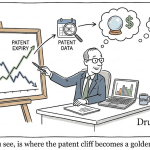
Perhaps no other term in the corporate lexicon so vividly captures the peril of intellectual property loss as the “patent cliff.” It describes the precipitous, and often catastrophic, decline in a company’s revenue that occurs when a blockbuster drug loses its patent protection and is suddenly exposed to a flood of low-cost generic competition.13 This phenomenon is one of the most predictable, yet most destructive, events in the business world. For investors, a company’s ability to successfully navigate its patent cliff is the ultimate test of its long-term strategic planning, R&D productivity, and commercial resilience.
3.1 The Economics of Expiration: Price Erosion, Market Share Collapse, and the Generic Wave
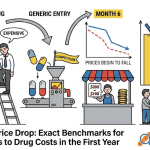
The financial impact of patent expiration is staggering. The scale of the impending cliff is massive, with various industry analyses projecting that between $200 billion and $356 billion in annual branded drug sales are at risk globally from patent expirations in the period from 2023 to 2030.48 When a blockbuster drug goes “off-patent,” it is not uncommon for its revenue to plummet by as much as 80-90% within the very first year of generic entry.6
This rapid collapse is driven by two powerful market forces: extreme price erosion and a massive shift in market share.
Price Erosion: Generic drugs are chemically identical to their brand-name counterparts but can be brought to market for a fraction of the cost because their manufacturers do not have to bear the enormous expense of initial R&D and clinical trials. As a result, they are typically priced 80-85% lower than the branded product.51 The competition is fierce; the entry of just a second generic competitor can cut prices by more than 50%, and with multiple players in the market, prices can fall to a mere fraction of the original brand’s price.52
Market Share Collapse: In the face of such dramatic cost savings, loyalty to the branded product evaporates quickly. Payers, pharmacy benefit managers (PBMs), and pharmacy chains have powerful incentives to switch patients to the lower-cost generics. Consequently, generic versions can capture 80% or more of the drug’s total market share within the first year of launch.26
The patent cliff is far more than just a threat to a single company’s bottom line; it is a powerful force that shapes the strategic direction of the entire industry. The predictable and inevitable loss of massive revenue streams creates an “innovation treadmill,” forcing companies to constantly reinvest their earnings to discover and develop the next generation of patent-protected blockbusters. This relentless pressure is a primary driver of the industry’s M&A activity, as large pharmaceutical companies facing imminent patent cliffs often look to acquire smaller, innovative biotech firms to replenish their pipelines and fill their impending revenue holes.13
This dynamic also pushes R&D priorities away from therapeutic areas with easily replicable small-molecule drugs and towards more complex and defensible technologies like biologics, cell therapies, and gene therapies. These products not only benefit from longer regulatory exclusivity periods (12 years for biologics in the U.S.) but are also inherently more difficult for competitors to copy, creating a more durable competitive moat.6 For an investor, a company’s patent expiration timeline is therefore a remarkably accurate roadmap to its future strategic behavior. A looming patent cliff is one of the strongest possible signals that a company is about to embark on an acquisition spree or announce a major strategic pivot in its R&D focus. A company’s stock performance through this period becomes a clear referendum on the market’s confidence in its long-term strategic plan to replace the lost revenue.
“The pharmaceutical industry faces a major patent cliff later this decade, with more than $200 billion in annual revenue at risk through 2030. This looming wave of expirations is forcing companies to aggressively restock their pipelines by investing in R&D, licensing experimental therapies, or acquiring other drugmakers.” 13
3.2 Case Study 1: The Lipitor Legacy – Pfizer’s Battle Against the Inevitable
The patent expiration of Pfizer’s Lipitor on November 30, 2011, stands as the archetypal case study of a small-molecule drug going over the patent cliff. Lipitor (atorvastatin) was not just a successful drug; it was a cultural and financial phenomenon, the most profitable prescription medicine in history, with over $130 billion in lifetime sales and peak annual revenues of approximately $13 billion.51 Its loss of exclusivity was a long-dreaded, seismic event for Pfizer and a watershed moment for the entire industry.55 The strategies Pfizer deployed to defend its flagship product established the modern playbook for a
commercial and marketing-based defense against generic erosion.
Pfizer’s Defensive Playbook:
Faced with the certain loss of its biggest revenue generator, Pfizer executed a multi-pronged strategy aimed at maximizing revenue before the cliff and retaining as much market share as possible after it.
Pre-Expiration Revenue Maximization: In the years leading up to the 2011 expiration, Pfizer engaged in a strategy of aggressive price increases to extract maximum value from Lipitor’s remaining monopoly. One study found that the price of Lipitor rose by 9.3% in the year preceding patent expiration and by a further 17.5% in 2011, the year of expiration itself.56
Legal and Strategic Certainty: Pfizer engaged in long-running patent litigation with Ranbaxy Laboratories, the first generic manufacturer to challenge its patents. In 2008, the two companies reached a settlement agreement that provided Ranbaxy with a license to launch its generic version on November 30, 2011. This settlement, while ceding the market on a specific date, was strategically crucial because it provided shareholders and the market with certainty, removing the volatility associated with ongoing litigation and allowing Pfizer to plan its defense with a clear deadline.57
Post-Expiration Commercial Warfare: Once the patent expired, Pfizer’s strategy shifted to direct competition with the generics.
Direct-to-Consumer Rebates: In an unprecedented move, Pfizer launched the “Lipitor-For-You” program, which offered a discount card to privately insured patients, allowing them to continue receiving the branded drug for a co-pay as low as $4—a price competitive with generic co-pays.13
Aggressive Price Matching: Pfizer leveraged its massive scale and low manufacturing costs to engage in a price war, dropping the price of branded Lipitor to undercut the initial generic offerings and vowing to match any further price reductions.55
The Authorized Generic (AG) Gambit: Pfizer did not cede the generic market entirely. It entered into a partnership with Watson Pharmaceuticals to launch an authorized generic version of atorvastatin. This allowed Pfizer to capture a significant share of the revenue from the generic market it was now competing in.13
Stock Performance and Market Reaction:
The expiration of Lipitor’s patent was one of the most widely anticipated events in Wall Street history, and as such, its impact was largely priced into Pfizer’s stock (PFE) well in advance. Throughout 2011, Pfizer’s stock traded in a relatively stable range of $17 to $20 per share.60 The strategic certainty provided by the Ranbaxy settlement likely helped to prevent further stock erosion by removing the risk of an earlier-than-expected generic launch.
Pfizer’s full-year 2011 revenues were $67.4 billion, a modest 1% increase over 2010. However, the initial impact of the cliff was visible in the fourth-quarter results, which showed a 4% year-over-year revenue decline, driven in part by the loss of exclusivity for Lipitor in some international markets and in the U.S. for the final month of the quarter.61 The decline accelerated rapidly from there.
The Lipitor case was a crucial lesson for the industry and for investors. It demonstrated that a creative and aggressive commercial strategy could indeed “soften the blow” of a patent cliff and retain a portion of the market for a longer period than previously thought. Analysts initially upgraded Pfizer’s rating, with some expecting the company to retain a significant portion of its market share.55 However, the fundamental economics of the generic market proved to be an overpowering force. Despite Pfizer’s best efforts, the allure of an 80-85% cost saving was too great for the healthcare system to ignore. Within just a few years, Lipitor’s annual revenue had collapsed from its $13 billion peak to under $3 billion.51
The ultimate takeaway for investors was profound and has shaped pharmaceutical investment strategy ever since. For small-molecule drugs, brand loyalty evaporates with shocking speed in the face of massive cost savings. A company’s defense, no matter how brilliant, can delay but not prevent the inevitable revenue collapse. This shifted the investment thesis for all of Big Pharma: a company’s value in the face of a patent cliff is determined almost entirely by the strength of its replacement pipeline and its ability to launch new, patent-protected blockbusters, not by its ability to defend old ones.
3.3 Case Study 2: The Humira Fortress – AbbVie’s Masterclass in Modern Biologic Defense
If the Lipitor case wrote the playbook for defending a small-molecule drug, the 2023 U.S. loss of exclusivity for AbbVie’s Humira tore that playbook up and wrote a new one for the modern era of biologics. Humira (adalimumab), an injectable treatment for a range of autoimmune diseases, surpassed Lipitor to become the best-selling drug in history, generating approximately $200 billion in lifetime sales and peaking at over $21 billion in annual revenue in 2022.13 AbbVie’s defense of this unprecedented revenue stream represents a paradigm shift away from purely commercial tactics and towards a sophisticated, multi-layered strategy rooted in
legal, regulatory, and market-access warfare.
The most stunning fact of the Humira story is that its primary composition of matter patent in the U.S. actually expired in 2016. Yet, through a masterclass in lifecycle management, AbbVie successfully prevented any biosimilar competitors from entering the lucrative U.S. market until January 2023, securing an additional seven years of monopoly profits worth tens of billions of dollars.65
AbbVie’s Defensive Fortress:
AbbVie’s strategy was built on several powerful, interlocking pillars:
The Patent Thicket: AbbVie constructed an impenetrable legal fortress around Humira, amassing a portfolio of more than 250 patents. Crucially, approximately 90% of these patents were filed after Humira was already on the market. This “patent thicket” covered not just the molecule itself, but every conceivable aspect of the product: manufacturing processes, formulations, methods of use, and specific dosing regimens. The sheer volume and complexity of this patent estate made a legal challenge a prohibitively expensive and risky undertaking for any potential competitor.7
Strategic Settlements: AbbVie leveraged its patent thicket not to win in court, but to avoid court altogether. It used the threat of endless, costly litigation to force every major biosimilar developer into settlement agreements. These agreements were a strategic masterstroke: AbbVie granted its competitors licenses to launch their biosimilars, but on a staggered, controlled timeline of AbbVie’s own choosing, beginning in January 2023. This allowed AbbVie to eliminate uncertainty and manage the transition from monopoly to competition on its own terms.65
The Rebate Wall: Recognizing that PBMs are the ultimate gatekeepers to the market, AbbVie built a “rebate wall.” It negotiated lucrative contracts with the nation’s largest PBMs, offering them substantial rebates on branded Humira in exchange for keeping biosimilars in an unfavorable position on their drug formularies, or excluding them altogether. This created a perverse economic incentive for PBMs to prefer the high-price, high-rebate brand over the lower-priced biosimilar, dramatically blunting the initial uptake of competitors.13
Pipeline Replacement: AbbVie used the billions in extra revenue generated during the extended monopoly period to prepare for Humira’s eventual decline. It made strategic acquisitions, most notably the $63 billion purchase of Allergan, the maker of Botox. More importantly, it invested heavily in developing and launching its own next-generation immunology drugs, Skyrizi and Rinvoq, which treat many of the same conditions as Humira. The goal was to switch patients and physicians to these new, patent-protected products before the Humira cliff arrived, effectively replacing the lost revenue from within its own portfolio.63
Stock Performance and Market Reaction:
The market’s reaction to Humira’s loss of exclusivity was remarkably different from that of Lipitor. The first biosimilar competitor, Amgen’s Amjevita, launched on January 31, 2023.70 At that time, AbbVie’s stock (ABBV) was trading at approximately $148 per share. Despite the entry of its first-ever U.S. competitor, AbbVie’s stock remained remarkably stable and actually rose throughout the year, ending 2023 at around $155 per share.72
This stability was a testament to the success of AbbVie’s strategy. The company had spent years telegraphing its plan to investors, providing clear guidance on the expected rate of Humira’s revenue erosion. When the 2023 financial results came in, Humira’s global revenue had fallen significantly to $14.4 billion, but this decline was in line with the company’s projections, preventing a negative surprise for the market.68 Furthermore, the rapid growth of Skyrizi and Rinvoq demonstrated that the replacement strategy was working, giving investors confidence in the company’s post-Humira future.75
The Humira case has fundamentally rewritten the rules for valuing biologic assets and navigating their patent cliffs. It proved that for complex biologics, the legal expiration of a patent is no longer the definitive trigger for revenue collapse. AbbVie successfully decoupled the legal event (patent expiry) from the commercial event (loss of market share). This has created a new, more complex landscape for investors, who must now analyze a series of distinct potential “cliffs”:
The Patent Cliff: The expiration of the core patents.
The Interchangeability Cliff: The launch of a biosimilar that the FDA has designated as “interchangeable,” allowing pharmacists to substitute it automatically for the brand without a new prescription.
The Formulary Cliff: The moment when a major PBM decides to remove the branded drug from its preferred formulary in favor of one or more biosimilars.
AbbVie’s masterclass in defense demonstrated that a company’s stock can hold up as long as it can successfully defend its position against all three of these threats.
Table: The Evolution of Patent Cliff Defense – Lipitor vs. Humira
This table provides a concise, at-a-glance comparison of the two landmark case studies, highlighting the paradigm shift in defensive strategies from the small-molecule era to the modern biologics landscape.
Time Between Primary Patent Expiry and Major Competition
Effectively 0 days. Competition began the day the patent expired.
Nearly 7 years (U.S. primary patent expired in 2016; first biosimilar launched in 2023).
Speed of Revenue Erosion (First Year)
Catastrophic. Sales fell by more than 50% within the first year.
Managed. U.S. sales fell by ~35% in the first full year of competition.
Primary Determinant of Post-Cliff Success
Strength of the replacement R&D pipeline.
Strength of the multi-layered defense (legal, regulatory, commercial) and the replacement pipeline.
Key Investor Takeaway
For small molecules, revenue collapse is swift and inevitable; the pipeline is everything.
For biologics, a sophisticated defense can decouple legal patent expiry from commercial collapse, creating a more gradual and manageable erosion.
Part IV: The Strategist’s Toolkit – Quantifying Value and Gaining a Competitive Edge
In an industry where a single patent can be worth billions of dollars, the ability to accurately value intellectual property is not just an academic exercise; it is a critical strategic capability. For executives making R&D investment decisions, for business development teams negotiating licensing deals, and for investors allocating capital, translating a complex patent portfolio into a credible dollar value is paramount. This requires sophisticated financial models fueled by precise, timely, and comprehensive patent data.
4.1 The Alchemist’s Playbook: Advanced Models for Valuing Pharmaceutical IP
Valuing a pharmaceutical asset is notoriously difficult. Unlike a manufacturing company with tangible factories and inventory, a biotech’s most valuable assets are often intangible ideas, protected by patents and subject to the binary, all-or-nothing outcomes of clinical trials and regulatory approvals.4 Standard valuation methodologies must be adapted to account for this unique risk profile.
While several methods exist, the most relevant and widely used approaches in the pharmaceutical industry are income-based, as they focus on the future economic benefit the IP is expected to generate.77
Discounted Cash Flow (DCF): This is a standard valuation technique that projects a company’s future cash flows and discounts them back to the present day to arrive at an intrinsic value. While useful for established companies with predictable revenues, the traditional DCF model struggles to handle the profound uncertainty inherent in pharmaceutical R&D.35
Risk-Adjusted Net Present Value (rNPV): To address the shortcomings of DCF, the industry has adopted the rNPV model as its “gold standard” for valuing pipeline assets.35 The rNPV model is a modification of DCF that explicitly incorporates the high probability of failure. It works by projecting the potential cash flows from a drug if it is successful, and then multiplying the cash flows at each stage of development by the statistical probability of successfully passing that stage. This provides a more realistic, probability-weighted valuation that directly accounts for clinical and regulatory risk.
Real Options Analysis (ROA): An even more sophisticated approach, ROA applies the principles of financial option pricing to R&D projects. It recognizes that a company’s management team doesn’t just passively follow a pre-set plan; it has the flexibility to make strategic decisions at each stage of development—to continue investing, to expand the project, to delay it, or to abandon it entirely. ROA quantifies the value of this managerial flexibility, treating each stage of R&D as a “call option” on the subsequent stages. This method is particularly useful for valuing early-stage, high-risk assets where this flexibility is most valuable.4
Crucially, all of these sophisticated models are utterly dependent on a set of key inputs, and the most critical of these inputs are derived directly from patent and regulatory data. The model needs to know the potential market size, the likely price of the drug, the level of competition, and, most importantly, the duration of market exclusivity. This duration is determined by a careful analysis of the entire patent portfolio—including the expiration dates of all primary and secondary patents—and all applicable regulatory exclusivities. An error in calculating the effective patent life by even a single year can lead to a valuation error of hundreds of millions or even billions of dollars.
This creates a powerful, recursive relationship between a company’s patent strategy and its valuation. The output of a valuation model can be used to justify further investment in strengthening the patent portfolio, which in turn improves the inputs to the model, creating a positive feedback loop that drives shareholder value. For example, a company might run an rNPV analysis on a Phase II asset and arrive at a valuation of $500 million, assuming its patents provide exclusivity until 2035. The IP legal team could then propose a strategy to file a series of new formulation patents that could potentially extend that exclusivity to 2038, at a cost of $5 million in legal fees. When the rNPV model is re-run with the longer exclusivity period, the asset’s valuation might jump to $800 million. In this scenario, a $5 million investment in legal strategy has created $300 million in quantifiable, model-driven value. This demonstrates that patent portfolio management is not a mere cost center; it is a core value-creation function with a clear, measurable return on investment that can be articulated to investors and the board of directors.
4.2 Turning Data into Dominance: The Role of Competitive Intelligence
In the high-stakes, information-driven game of pharmaceutical patents, a competitive advantage is often synonymous with an information advantage. The ability to anticipate market shifts, identify threats from generic challengers, uncover partnership opportunities, and benchmark one’s own R&D pipeline against competitors is a strategic necessity.8 This is the domain of
competitive intelligence (CI), a discipline focused on the ethical collection and analysis of information to support strategic decision-making.79
For the pharmaceutical industry, the global patent system is one of the richest sources of competitive intelligence available. Patent filings provide a detailed roadmap to a competitor’s R&D strategy, revealing what technologies they are investing in, what diseases they are targeting, and what their next generation of products might look like. Litigation records provide a real-time feed on patent challenges that could lead to the early market entry of a generic, while regulatory databases reveal the exclusivity strategies companies are pursuing.
However, this data is vast, complex, and fragmented across dozens of international patent offices, court systems, and regulatory agencies. Manually collecting, cleaning, and analyzing this information is a herculean task. This has led to the rise of specialized competitive intelligence platforms that aggregate, curate, and structure this data into a single, searchable, and actionable resource.
Platforms like DrugPatentWatch are designed to provide this integrated, actionable intelligence. They serve a wide range of stakeholders across the pharmaceutical ecosystem by transforming raw data into strategic insights.6
For branded pharmaceutical manufacturers, these platforms allow them to monitor the patent landscape, assess the litigation track record of potential generic challengers, and elucidate the research paths of their competitors.34
For generic and specialty pharmaceutical companies, they are indispensable tools for identifying market entry opportunities, informing portfolio management decisions, and finding promising drug candidates for development.34
For investors and financial analysts, they provide the raw data needed to build accurate financial models, track litigation events that could impact a stock’s price, and conduct thorough due diligence on a company’s IP portfolio.46
The value of these platforms extends beyond the data itself; it lies in their ability to democratize sophisticated IP analysis. Not long ago, the ability to track thousands of patents and court cases on a global scale was the exclusive domain of Big Pharma companies with massive internal legal and business intelligence departments. This information asymmetry gave them a significant strategic advantage in litigation, M&A, and licensing negotiations.
Today, a subscription-based platform like DrugPatentWatch makes this level of analysis accessible to a much broader audience, from smaller biotech firms and generic manufacturers to venture capital funds and even individual investors.34 A small generic company can now use the platform to precisely identify the weakest patents in a blockbuster’s thicket to target for a Paragraph IV challenge. A venture capital firm can perform rapid, deep due diligence on a potential investment’s IP landscape to assess its defensibility. This reduction in information asymmetry levels the playing field, leading to more efficient capital allocation across the industry and fostering a more robust and competitive market, which ultimately benefits the entire healthcare system.
Conclusion: Navigating the Future of Pharmaceutical Value
The intricate dance between drug patents and stock prices is a testament to the unique economic structure of the pharmaceutical industry—a structure built on the promise of a temporary, patent-protected monopoly as the reward for breathtakingly expensive and risky innovation. As this report has detailed, a company’s market valuation is not a static number but a living, breathing entity that responds in real-time to every event that strengthens or threatens that monopoly.
The journey from the “20-year illusion” of the statutory patent term to the harsh reality of a 7- to 12-year effective commercial life sets the stage for every strategic decision a pharmaceutical company makes. This intense time pressure has given rise to a sophisticated arsenal of lifecycle management strategies, from the construction of formidable “patent thickets” to the orchestration of complex legal and market-access defenses.
The landmark case studies of Lipitor and Humira serve as powerful bookends to the evolution of this strategic warfare. Lipitor’s patent cliff demonstrated the overwhelming power of generic price erosion for small-molecule drugs, teaching investors that even the most creative commercial defense could not prevent the inevitable, and shifting the focus squarely onto the strength of a company’s replacement R&D pipeline. A decade later, AbbVie’s defense of Humira rewrote the playbook for biologics, proving that a masterfully executed legal and market-access strategy could successfully decouple the legal event of patent expiration from the commercial catastrophe of revenue collapse.
Looking forward, the relationship between patents and stock prices is poised to become even more complex. The rise of artificial intelligence in drug discovery will introduce novel and challenging questions about inventorship and patentability, forcing a re-evaluation of how we protect and value AI-driven innovation.5 Evolving regulatory landscapes, particularly the drug price negotiation provisions of the U.S. Inflation Reduction Act, will directly impact the profitability of the patent-protected period, altering the financial calculations that underpin every valuation model.13 The continued dominance of biologics, cell therapies, and gene therapies will ensure that the “Humira model” of defense—with its emphasis on patent thickets and market-access battles—will become the norm rather than the exception.
Success in this dynamic and challenging environment will demand a holistic, data-driven, and forward-looking approach to intellectual property strategy. The traditional silos between a company’s legal, R&D, and finance departments must be broken down, replaced by a deeply integrated function where IP strategy is recognized as a core driver of value creation. For the modern pharmaceutical executive, strategist, and investor, understanding the complex language of patents is no longer optional; it is now synonymous with understanding the language of the stock market itself.
Key Takeaways
Effective Patent Life is the Key Financial Metric: The 20-year statutory patent term is a legal fiction. The “effective patent life” of 7 to 12 years—the actual period of market exclusivity post-approval—is the single most important variable driving financial strategy, from pricing to lifecycle management.
The Market Prices in “Surprise,” Not Just News: Stock prices react most dramatically to events that deviate from consensus expectations. The magnitude of a stock’s reaction to a clinical trial result or court ruling is a direct measure of the “surprise” it delivered to the market.
The Patent Cliff Defense Has Evolved: The strategy for defending against loss of exclusivity has shifted. For small molecules (like Lipitor), the battle was primarily commercial and marketing-based. For modern biologics (like Humira), the defense is a multi-front war based on legal (patent thickets), regulatory, and market-access (rebate walls) strategies.
Patent Data Fuels Financial Valuation: Sophisticated valuation models like risk-adjusted Net Present Value (rNPV) are the industry standard. The accuracy of these models is entirely dependent on precise inputs for the duration of market exclusivity, which are derived from a thorough analysis of patent and regulatory data.
Regulatory Exclusivities Provide a Valuation Floor: FDA-granted exclusivities (e.g., 5-year NCE, 7-year Orphan Drug) run parallel to patents and can provide a guaranteed period of monopoly, acting as a crucial “safety net” that must be factored into any financial model.
Competitive Intelligence is a Non-Negotiable Strategic Tool: In an industry defined by its intellectual property, the ability to monitor and analyze the competitive patent and litigation landscape is paramount. Specialized platforms like DrugPatentWatch are essential for transforming complex global data into actionable, value-creating strategic insights.
Frequently Asked Questions (FAQ)
1. Why do brand-name drug prices sometimes go UP after a generic enters the market?
This counterintuitive phenomenon is often referred to as the “generic paradox”.49 When a generic version of a drug launches at a price 80-90% lower than the brand, the market bifurcates. The vast majority of price-sensitive patients, insurers, and pharmacy systems rapidly switch to the low-cost generic. However, a small, less price-sensitive segment of the market—often consisting of patients with strong brand loyalty or specific physician instructions—may remain on the branded product. The brand-name manufacturer, having lost the majority of its volume, shifts its strategy from maximizing market share to maximizing revenue from this remaining loyal base. By raising the price of the branded drug, they can often increase their total revenue from this smaller group of patients, even as their overall market share plummets.
2. What is the single biggest difference between a small-molecule patent cliff (like Lipitor) and a biologic patent cliff (like Humira)?
The single biggest difference is the speed and predictability of revenue erosion. For a small-molecule drug like Lipitor, the entry of chemically identical generics leads to a rapid and catastrophic collapse in revenue, often 80-90% within a year or two. The defense is largely a delaying action. For a complex biologic like Humira, the entry of “biosimilars” (which are highly similar, but not identical) leads to a much slower, more managed, and less predictable erosion. This is due to several factors: biologics have longer regulatory exclusivities (12 years in the U.S.), they are protected by dense “patent thickets” that delay and complicate entry, and innovator companies can use “rebate walls” with PBMs to control market access even after biosimilars launch. The result is that the patent cliff for a biologic is often less of a “cliff” and more of a gradual, multi-year slope.13
3. Are “patent thickets” and “evergreening” legal?
This is one of the most contentious issues in pharmaceutical policy. On an individual basis, each patent within a “thicket” has been examined and granted by the USPTO, making it presumptively valid and legal. “Evergreening,” the practice of obtaining new patents on incremental improvements to existing drugs, is also legal as long as those improvements meet the patentability standards of being new, useful, and non-obvious.6 However, critics and antitrust regulators argue that while the individual patents may be legal, the overarching
strategy of amassing hundreds of patents to create an impenetrable thicket is an anti-competitive practice designed to unlawfully extend a monopoly and block competition.84 This area is under increasing scrutiny from lawmakers and the Federal Trade Commission, and the line between legitimate lifecycle management and anti-competitive behavior is a key focus of ongoing legal and legislative debate.
4. How does the Inflation Reduction Act (IRA) change the financial calculation of the patent cliff?
The Inflation Reduction Act (IRA) fundamentally alters the financial landscape by allowing the U.S. government (through Medicare) to negotiate the prices of certain high-cost drugs that have been on the market for a number of years without generic competition. This has a dual effect on the patent cliff calculation. First, it effectively lowers the “peak” from which a drug’s revenue will eventually fall. By subjecting a drug to price negotiation before its patent expires, the IRA reduces the total revenue a company can earn during its monopoly period. Second, it can weaken the incentive for generic companies to challenge patents. If government negotiation has already significantly lowered the brand’s price, the potential profit margin for a generic entrant is squeezed, making the high cost of litigation less economically attractive.13
5. For a pre-revenue biotech, which is more important to investors: strong clinical data or a strong patent portfolio?
This is a classic “chicken and egg” question, but the most accurate answer is that they are two inseparable sides of the same coin. Neither is sufficient on its own. Strong clinical data is what creates the potential value; it demonstrates that a company has a drug that is safe and effective and could one day generate revenue. However, without a strong patent portfolio, that value is unprotected and ephemeral. A competitor could simply copy the drug, rendering the innovator’s massive R&D investment worthless. Conversely, a strong patent portfolio is meaningless if the drug it protects fails in clinical trials. Therefore, sophisticated investors look for companies that have both: promising clinical data that creates value, and a robust, defensible patent portfolio that protects that value, ensuring a clear path to market exclusivity and a return on their investment.5
Using Stock Price Movements to Estimate the Harm from Collusive Drug Patent Litigation Settlements | NBER, accessed August 18, 2025, https://www.nber.org/papers/w33196
The Expiry of Humira® Market Exclusivity and the Entry of Adalimumab Biosimilars in Europe: An Overview of Pricing and National Policy Measures, accessed August 18, 2025, https://pmc.ncbi.nlm.nih.gov/articles/PMC7839249/