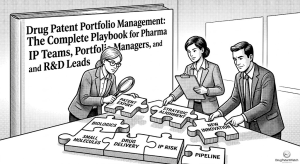
The pharmaceutical company that treats its patent portfolio as a legal filing system is the one that gets ambushed at the patent cliff. The one that treats it as a strategic asset class, actively managed with the same rigor applied to a drug pipeline, consistently extracts more value per R&D dollar, defends exclusivity longer, and commands a premium in M&A transactions. This guide covers the mechanics of doing that, from foundational IP architecture to lifecycle management, competitive intelligence, and the increasingly complex legal terrain of biologics and digital therapeutics.
Part 1: The Economics of Exclusivity — Why Patents Are the Business Model
The Tufts Center for the Study of Drug Development put the capitalized cost of bringing a new prescription drug to market at $2.6 billion in 2016, accounting for failed projects and cost of capital. That number has continued to climb. No company can operate on that cost structure without a protected window to generate revenue. The patent system provides that window, nominally 20 years from the filing date, though effective market exclusivity is almost always shorter once you subtract the years consumed by clinical trials and regulatory review.
What makes this calculus sharp is the alternative. A drug without patent protection is a generic drug. Generics enter at prices 70-90% below the branded price, and they capture 80-90% of prescription volume within 12 months of launch. That is not a gradual erosion; it is a revenue collapse. Understanding that dynamic is the baseline assumption behind every decision discussed in this guide.
The Patent Cliff Is a Structural Feature, Not an Accident
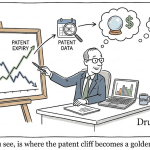
The patent cliff is not a surprise event. It is a known, scheduled discontinuity that a competent IP team can plan around years in advance. The companies that get hurt are those that treat it as inevitable and unavoidable rather than as the starting point for a lifecycle management program. The companies that manage it well have been filing secondary patents, pursuing new indications, and maximizing regulatory exclusivity periods since before the original composition of matter (CoM) patent was even granted.
What the Revenue Exposure Actually Looks Like
Consider a drug generating $5 billion in annual U.S. revenue. If generic entry cuts net revenue to $500 million within 18 months of patent expiry, the company loses roughly $4.5 billion per year in perpetuity. That is the value being protected by the patent estate. Seen in those terms, a $10 million investment in additional patent prosecution, lifecycle management research, and litigation defense is not a cost — it is a highly favorable return on risk-adjusted capital.
Key Takeaways: Part 1
The fundamental purpose of a drug patent portfolio is to create and preserve the revenue window that makes R&D investment rational. Every other strategy in this guide flows from that premise. The portfolio is not a compliance function. It is the financial infrastructure of the business.
Part 2: Strategic Alignment — Connecting IP to Corporate Goals
A patent on an asset the company has no intention of commercializing is a maintenance fee with no payoff. A patent filed in 40 jurisdictions for a drug the company plans to sell in three markets is a resource drain dressed up as diligence. Strategic alignment means the IP team knows the corporate plan well enough to make filing decisions that support it, and the executive team understands the IP position well enough to make commercial decisions that protect it.
Why Most IP Teams Are Still Structured Wrong
The historical model placed IP as a service function inside the legal department. Scientists disclosed inventions; attorneys filed patents; business leaders only engaged when litigation appeared. This structure guarantees misalignment. The patent team lacks the commercial context to prioritize correctly, and the commercial team lacks the IP literacy to identify risks early enough to address them.
A better structure gives the Chief IP Officer (CIPO) direct access to the strategic planning process. The IP team attends pipeline reviews, market planning sessions, and business development discussions. In return, the IP team provides the commercial and R&D functions with competitive intelligence on what rivals are patenting, estimates of how long product exclusivity windows will hold, and technical analysis of the patentability of new research directions.
The IP-Commercial Nexus in Practice
The most concrete expression of strategic alignment is a formal process for translating commercial priorities into filing decisions. This works in both directions. Commercial teams identify clinical differentiation points that will drive prescribing, which signals to R&D and IP teams where formulation or method-of-use patents should be prioritized. IP teams provide competitive patent landscape analysis, which informs commercial teams about the likely competitive environment three to five years out.
A specific example: a commercial team assessing a product for Type 2 diabetes identifies physician demand for a once-weekly injectable as the key differentiator. That insight is fed into R&D prioritization. When the once-weekly formulation is successfully developed, the IP team is already primed to file a formulation patent immediately, months before a competitor might independently reach the same conclusion. This is not luck. It is a structured process.
Geographic Filing as a Commercial Decision
The decision to file a patent in a given country should be driven by market analysis, not habit. Filing in 50 jurisdictions as a default costs hundreds of thousands of dollars annually in prosecution and maintenance fees. A disciplined geographic strategy asks three questions for each market: Is there meaningful commercial revenue at stake? Does the country have a functional enforcement mechanism? Does the patent system recognize the type of claim being filed? China, India, and Brazil each warrant specific analysis.
China has become the second-largest pharmaceutical market globally, and its specialized IP courts have improved enforcement substantially since 2017. The State Intellectual Property Office (SIPO, now CNIPA) examines pharmaceutical patents with increasing rigor, and secondary patents, including formulation and method-of-use patents, receive meaningful protection provided claims are carefully drafted.
India presents a distinct challenge. Section 3(d) of the Indian Patents Act blocks patents on new forms of known substances, including polymorphs, salts, and esters, unless the applicant demonstrates a significant enhancement of the known efficacy of that substance. This provision was designed explicitly to prevent the kind of secondary patenting that extends exclusivity in Western markets. Companies need to decide whether to file strategically in India for CoM patents and genuine first-in-class innovations, while accepting that many secondary patents will not survive examination.
Brazil’s patent office (INPI) has historically had multi-year backlogs. A backlog review implemented after 2017 has reduced delays, but applicants should still anticipate prosecution timelines of 8-12 years for complex applications. ANVISA previously had a co-approval role for pharmaceutical patents with health implications, a requirement that was constitutionally challenged and substantially revised, but the interplay between patent prosecution and regulatory review remains a factor in planning.
Key Takeaways: Part 2
Strategic alignment is not a philosophical commitment; it is a set of structured processes that connect commercial plans to filing decisions, geographic prioritization to market revenue, and competitive intelligence to R&D direction. Without those processes, even a well-resourced IP team will systematically misallocate its budget.
Investment Strategy Note
Portfolio managers evaluating a pharma company should assess whether its IP team is integrated into executive decision-making. Companies where the head of IP reports directly to the CEO or COO, rather than through the general counsel, tend to have better-aligned portfolios and more durable exclusivity windows. This is an indicator worth surfacing in diligence calls.
Part 3: Building the Patent Estate — Architecture, Claim Strategy, and Global Prosecution
A single patent is a litigation target. A patent estate is a strategic environment that a competitor has to navigate, not just attack. The architecture of a well-built pharmaceutical patent estate has at minimum four distinct layers, each with a different filing timeline and a different defensive purpose.
Layer 1: The Composition of Matter Patent
The CoM patent claims the novel chemical entity itself. For a small molecule, that means the specific molecular structure, typically written as a genus claim covering a range of related structures and a species claim targeting the lead compound. For a biologic, the equivalent is a patent on the antibody amino acid sequence, the protein structure, or the nucleotide sequence of a gene construct.
The CoM patent is the most powerful because it is structure-agnostic: it covers the molecule regardless of what disease it treats, how it is formulated, or how it is manufactured. A generic competitor cannot market that molecule in any form in a jurisdiction where a valid CoM patent is in force.
The drafting of a CoM patent application demands the closest collaboration between synthetic chemists and patent attorneys. The core challenge is claim breadth calibration. Claims written too broadly — ‘any compound that inhibits Enzyme X’ without sufficient structural specificity — invite invalidation on enablement or written description grounds. Claims written too narrowly — claiming only the single tested species — invite design-around. The standard approach is a cascading claim hierarchy: a broad genus claim, one or more sub-genera grounded in structural features linked to the mechanism, and then species claims targeting the commercial lead. Each narrower claim is a fallback position if the broader claim is invalidated.
Layer 2: Method-of-Use Patents
Method-of-use (MoU) patents claim the use of the molecule to treat a specific disease or patient population. They do not claim the molecule itself, which means they can be filed later, when clinical data supports a new indication, and they expire later than the original CoM patent. A generic company that markets the compound after CoM expiry can be blocked from marketing it for the patented indication even if it markets it for other unprotected uses — a practice called skinny labeling.
The strategic implication is that MoU patents require ongoing clinical investment. A company that runs Phase IV trials to identify additional indications, biomarker-defined subpopulations, or new dosing regimens is simultaneously generating clinical value and creating patentable subject matter. AstraZeneca’s experience with dapagliflozin (Farxiga) illustrates the model: originally approved for Type 2 diabetes, subsequent trials generated MoU patents for heart failure with reduced ejection fraction and chronic kidney disease, each adding exclusivity that the original glucose-lowering indication alone could not sustain.
Layer 3: Formulation and Delivery Patents
Formulation patents cover the combination of the API with excipients to produce a final dosage form. Extended-release mechanisms, particle size modifications that improve bioavailability, lipid nanoparticle delivery systems, and pH-sensitive coatings are all patentable provided they are non-obvious. These patents typically have filing dates 3-7 years after the CoM patent, which translates into 3-7 additional years of expiry protection.
Delivery system patents — covering transdermal patches, pre-filled auto-injectors, nasal sprays, or intrathecal formulations — layer additional protection and often create commercial inertia that outlasts the patents themselves. Patients and prescribers adapt to the delivery format, making a generic competitor with a less convenient delivery system commercially disadvantaged even after the patent expires.
Layer 4: Polymorph, Salt Form, and Manufacturing Process Patents
Many small molecules crystallize into multiple solid-state forms with different thermodynamic stability, solubility, and dissolution characteristics. A novel polymorph that demonstrates superior bioavailability or enhanced stability compared to prior-known forms can be patented. The standard for patentability is non-obviousness: if the existence of multiple polymorphs was predictable given prior art, and if the particular polymorph claimed shows no unexpected properties, the patent is weak. But a polymorph discovered to have unexpectedly superior characteristics relative to prior forms stands on solid ground.
Manufacturing process patents claim novel synthetic routes, purification methods, or production techniques. They are harder to enforce because infringement occurs behind factory walls, but they have value in jurisdictions with process discovery rules (most of Europe), and they can support trade secret protection for the most commercially sensitive steps.
The Art of Claim Drafting: Prosecution Strategy
Beyond architecture, the prosecution strategy for each application shapes how durable the resulting patent will be. Key tactics include:
Continuation applications, which allow the original disclosure to support new claims filed years later in response to competitor activity or new clinical data. If a competitor designs around your original claim, a continuation lets you file a new claim that covers their design-around, provided it is supported by the original specification.
Continuation-in-part (CIP) applications add new matter to the original disclosure, which introduces a later priority date for the new matter but allows a single application family to cover evolving technology.
Divisional applications, required when the patent office identifies two distinct inventions in a single application, create separate patent families from a single original filing, each with independent prosecution history.
PCT Strategy and National Phase Entry
The Patent Cooperation Treaty (PCT) provides a 30-month window from the earliest priority date to decide in which countries to enter the national phase. This window is invaluable for pharmaceutical companies because it delays major international prosecution costs until after Phase II data is available to inform the go/no-go decision for each market.
The PCT international search report and written opinion provide an early assessment of novelty and inventive step. A negative opinion is a signal, not a death sentence: applicants can and do argue against the examiner’s position in the national phase, and the EPO or USPTO may reach different conclusions. However, a series of negative PCT opinions on the same application is worth surfacing to R&D leadership as a potential vulnerability.
Key Takeaways: Part 3
A four-layer estate — CoM, MoU, formulation, and polymorph/process — built around a commercial product creates a web of protection that is qualitatively more durable than any single patent. Each layer has a different expiry date, a different vulnerability profile, and a different set of potential challengers. Together they force a would-be generic entrant to navigate multiple legal fronts simultaneously, substantially increasing the cost and risk of any challenge.
Part 4: IP Valuation as a Core Asset — Methods, Metrics, and M&A Implications
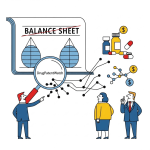
Patent portfolios appear on balance sheets at historical cost, which is the worst possible measure of economic value. A portfolio assembled for $50 million in R&D and prosecution costs might protect $20 billion in annual revenue. A portfolio that cost $500 million to build might protect a discontinued product line. Accurate IP valuation requires moving beyond cost accounting to income-based and market-based approaches that connect patent protection to actual economic output.
The Three Valuation Approaches and When Each Applies
The cost approach values IP at what it would cost to recreate it: R&D expenditure, patent prosecution costs, and the time value of money. This approach is the least informative for drugs with commercial traction, because it captures inputs, not outputs. Its main use is as a floor value in early-stage transactions where the drug has not yet generated meaningful revenue data.
The market approach identifies comparable transactions. For pharmaceutical IP, true comparables are rare: every drug, every indication, and every patent estate is materially different. But comparable licensing royalty rates exist across therapeutic categories and can provide a useful reference point. Royalty rates for pharmaceutical licenses have historically ranged from 3% to 20% of net sales, with oncology and rare disease assets commanding the higher end of that range.
The income approach discounts projected future cash flows attributable to the IP to their present value. This is the most commonly used method for commercial-stage pharmaceutical assets. The key inputs are revenue forecasts for the protected product, the probability-weighted duration of exclusivity (which depends on the patent estate’s strength and the likelihood of successful generic challenges), operating margins, and a discount rate reflecting the risk profile of the asset.
For a blockbuster with a dense patent estate and no pending Paragraph IV challenges, the income approach might discount cash flows over 8-10 years of remaining exclusivity at a 10-12% rate. For a product with a single patent nearing the end of its term and an active ANDA litigation, the discount rate rises and the exclusivity duration shortens, sharply reducing the present value.
IP Valuation in M&A Transactions
Acquisitions of pharma and biotech companies are in large part acquisitions of patent portfolios. When Bristol-Myers Squibb acquired Celgene in 2019 for $74 billion, a material portion of the valuation represented the IP estate protecting Revlimid (lenalidomide) and Pomalyst (pomalidomide), along with the pipeline of hematology and oncology assets. Understanding the strength, scope, and remaining term of that estate was essential to underwriting the transaction.
IP due diligence in M&A contexts examines chain of title (do the patents actually belong to the target company, with all inventors having assigned their rights?), claim scope (do the claims cover the commercial product?), prosecution history estoppel (did the applicant narrow claims during prosecution in a way that limits enforceability?), and third-party encumbrances (are there co-ownership interests, pre-existing licenses, or university rights attached to the IP?).
A broken chain of title is a deal-killer. An inventor who was not properly listed or who did not execute an assignment agreement creates a co-ownership claim that can allow any co-owner to license the patent without the other’s consent. This risk is particularly acute for university spin-outs where the original research was conducted before the startup was incorporated.
The IP Valuation of Specific Drug Classes
Biologic patents carry different valuation characteristics than small molecule patents. Because biosimilar interchangeability has historically been harder to establish than generic bioequivalence, biologic products have tended to maintain larger market shares post-patent expiry. However, as the FDA’s biosimilar interchangeability program matures — with interchangeable designations now available for products including insulin analogs and adalimumab biosimilars — that differential is narrowing. Valuing a biologic’s IP estate now requires a more nuanced view of biosimilar penetration rates and interchangeability designation timelines.
Orphan drug IP carries a premium because it stacks orphan drug exclusivity (ODE) on top of patent protection. ODE provides seven years of market exclusivity from approval for a drug targeting a condition affecting fewer than 200,000 U.S. patients. Stacked against a robust CoM patent and potential pediatric exclusivity, an orphan asset can carry 12-14 years of combined exclusivity from approval. For drugs targeting ultra-rare conditions with no existing therapies, even modest commercial revenue over that window can justify a significant IP valuation.
Key Takeaways: Part 4
IP valuation is not a single number; it is a range that reflects the strength of the patent estate, the remaining exclusivity period, the probability of successful generic or biosimilar challenge, and the expected revenue the IP will protect. Companies that quantify their patent portfolio value accurately can defend it more effectively in M&A negotiations, licensing discussions, and investor relations.
Investment Strategy Note
Analysts covering a pharma company should model exclusivity scenarios, not just base cases. For each major revenue-generating product, map the patent expiry dates by claim type, assign probability weights to Paragraph IV challenge success, and discount revenue accordingly. A company trading at 12x earnings with a clean, dense patent estate through 2032 is materially different from one with the same multiple but a single expiring patent and two pending ANDAs.
Part 5: Active Portfolio Curation — Audit Frameworks and the Pruning Imperative
A portfolio that grows continuously without corresponding pruning becomes a liability. Maintenance fees compound across jurisdictions. Administrative overhead accumulates. Patent counsel spends time tracking deadlines for assets with zero commercial relevance. The result is a portfolio that costs more to run than it returns — and obscures the genuinely valuable assets that deserve concentrated attention.
The Annual Portfolio Audit: A Structured Framework
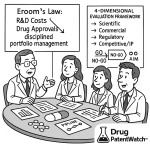
The foundation of active portfolio management is a systematic annual audit. The audit scores each patent family across three dimensions: strategic alignment, legal strength, and financial value. The scoring outputs a grid that drives action.
Strategic alignment scores are based on whether the patent family protects a current commercial product, a product in Phase III or Phase II development, an earlier-stage pipeline candidate, or a discontinued asset. The geographic coverage of the family is compared against the company’s commercial presence. A patent maintained in 30 jurisdictions for a product sold in eight markets is misallocated.
Legal strength scores account for claim breadth (is the coverage narrow or genus-level?), the known prior art landscape (how exposed are the claims to an IPR or opposition challenge?), prosecution history (did the applicant make limiting arguments that estop a broad reading?), and litigation history (has the patent been challenged and survived, or is it untested?).
Financial value scores estimate the revenue protected by the patent family in each jurisdiction, the licensing royalty the patent could command if out-licensed, and the cost of maintaining the patent family through its remaining term.
The ‘Keep, License, or Abandon’ Decision Matrix
After scoring, each patent family lands in one of four categories. Core assets — high on all three dimensions — get maximum resource allocation and litigation-readiness support. Strategic flank assets — important but not central to current revenue — get maintained with periodic review. Out-licensing candidates — technically strong but commercially non-core — get actively marketed to potential licensees. Low-value assets get abandoned systematically, with the savings reallocated.
The abandonment decision is the hardest to execute in practice because organizations accumulate emotional attachment to patents as symbols of scientific achievement. The operational reality is that each abandoned patent family releases capital. For a portfolio maintaining 500 families in 15 jurisdictions at an average annuity cost of $3,000 per family per jurisdiction, abandoning 50 non-strategic families saves $2.25 million annually. That figure funds new prosecution, FTO searches, or litigation defense for the assets that actually matter.
Orphan Patents and the Cost of Inaction
The most dangerous category in any pharmaceutical patent portfolio is what might be called the ‘orphan patent’ — a family that is maintained out of inertia rather than strategy. It was filed when the project was active, the project was later discontinued or deprioritized, but no one formally decided to abandon the patent because no one asked. These families accumulate. In large pharma organizations, portfolios can contain hundreds of families protecting discontinued or superseded programs. Systematic audit processes identify and eliminate these consistently.
Key Takeaways: Part 5
Portfolio quality matters more than portfolio quantity. A focused estate of 200 well-drafted, strategically aligned patents protecting active commercial products is worth more, and costs less to manage, than 800 patents spanning discontinued programs, non-priority markets, and technologies abandoned by R&D. The discipline of pruning is what keeps the portfolio sharp.
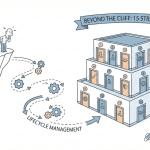
Part 6: Lifecycle Management — Evergreening Tactics, Regulatory Exclusivities, and Technology Roadmaps
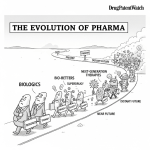
Lifecycle management (LCM) is the structured program to extend a drug’s commercial value beyond the expiration of its original patent protection. ‘Evergreening’ is the pejorative framing used by critics; ‘secondary innovation’ is more accurate when the patents in question cover genuine improvements. The distinction matters legally, commercially, and ethically. India’s Section 3(d) exists precisely because regulators in some jurisdictions have concluded that certain secondary patents do not clear the bar of genuine innovation. A credible LCM program generates patents that would survive that scrutiny.
A 2012 study analyzing 100 top-selling drugs found that 78% had acquired new patents after initial market approval, extending protection by an average of nearly 7 years. More than half were associated with new post-approval clinical trials. LCM is not a marginal practice: it is standard operating procedure for any drug with significant commercial scale.
The LCM Technology Roadmap
An LCM roadmap should be built at the time of first regulatory approval, or ideally during Phase III, and should map specific R&D investments to specific patent filing windows and anticipated regulatory submissions.
A representative roadmap for a small molecule in chronic disease might look like this:
Year 0 (Approval): CoM patent and primary MoU patent in force. New chemical entity (NCE) data exclusivity begins (5 years in U.S.). Pediatric study plan submitted under the Best Pharmaceuticals for Children Act.
Year 2-3: Extended-release formulation completed and tested. Formulation patent filed. NDA supplement for ER version submitted. If approved, new 3-year clinical investigation exclusivity attaches to the new formulation.
Year 4-5: Pediatric studies completed. Six-month pediatric exclusivity added to all existing patents and exclusivities.
Year 5-7: Phase II data for a second indication emerges. New MoU patent filed for new indication. Supplemental NDA for second indication submitted. If orphan-eligible, ODE pursued.
Year 7-8: Fixed-dose combination with an established partner drug enters Phase III. FDC patent filed.
Year 10-12: Original CoM patent expiry approaches. ER formulation, FDC, and second-indication MoU patents remain in force. Generic entry is limited to the original immediate-release formulation for the original indication.
This roadmap does not require every element to succeed. Even two or three successful follow-on patents and one regulatory exclusivity extension can shift the revenue decline from a cliff to a slope.
Chiral Switch Strategy
The chiral switch — developing a single-enantiomer product from an existing racemate — remains one of the more reliable LCM strategies for small molecules where the pharmacological activity is concentrated in one enantiomeric form. The resulting single-enantiomer product can often be patented as a distinct compound provided it was not previously described in the prior art. The clinical bar requires showing that the single enantiomer provides a meaningful benefit, whether through a cleaner side-effect profile, a lower effective dose, or an improved pharmacokinetic curve.
Esomeprazole (Nexium), the S-enantiomer of omeprazole (Prilosec), is the canonical example. AstraZeneca was criticized for the chiral switch because the incremental clinical benefit was contested, but the legal strategy succeeded in creating a new patent-protected product that extended the commercial franchise. The lesson is not that every chiral switch is appropriate, but that where genuine pharmacological differences exist between enantiomers, the strategy is both scientifically defensible and commercially powerful.
Fixed-Dose Combinations
Fixed-dose combinations (FDCs) are particularly important in therapeutic areas where multi-drug regimens are the standard of care: HIV, hypertension, type 2 diabetes, and hepatitis C. The clinical rationale is reduced pill burden, which drives adherence. The IP rationale is that a patent on the specific combination — covering the ratio of active ingredients, the formulation, or the dosing regimen — creates a new exclusivity period even after the individual components are off-patent.
Gilead’s Atripla (efavirenz/emtricitabine/tenofovir disoproxil fumarate) demonstrated the commercial power of this strategy in HIV. The combination tablet simplified a three-drug regimen to a single daily pill, drove substantial market share, and carried its own IP that outlasted the individual component patents. Generic manufacturers faced a more complex competitive entry because they had to separately license or design around each component and the combination patent simultaneously.
Regulatory Exclusivity Stacking
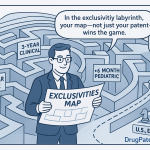
Regulatory exclusivity runs in parallel with patent protection and sometimes provides coverage when patents are unavailable, invalid, or expired. The main categories in the U.S.:
NCE exclusivity: 5 years from approval for a new chemical entity, during which the FDA cannot accept an ANDA. This applies to the active moiety, not just the specific salt or ester, so enantiomers of previously approved racemates receive only 3-year exclusivity.
3-year clinical investigation exclusivity: Applies to applications supported by new clinical investigations essential to approval, including new formulations, new routes of administration, and new indications.
Pediatric exclusivity: An additional 6 months attached to all existing patents and exclusivities, triggered by completion of FDA-requested pediatric studies. For a drug with $4 billion in annual U.S. revenue, 6 months of additional exclusivity is worth approximately $2 billion in gross revenue before generic erosion begins.
Orphan drug exclusivity: 7 years from approval for an orphan-designated indication. ODE is not absolute — it does not block approval of a clinically superior version of the same drug for the same rare disease — but it provides substantial protection.
Biologic exclusivity under the BPCIA: 12 years of reference product exclusivity from first approval, during which the FDA cannot approve a biosimilar referencing that product. A 4-year data exclusivity period within that 12-year window blocks biosimilar applications from even being accepted.
Key Takeaways: Part 6
LCM is a program, not a reaction. Companies that build the LCM roadmap alongside the original product development plan, treat regulatory exclusivity stacking as a design criterion, and invest in genuine follow-on innovation consistently generate more durable revenue curves than those that wait until the patent cliff is visible.
Part 7: Competitive Intelligence — FTO Analysis, Landscape Mapping, and PTAB Monitoring
A company that only knows its own portfolio is playing chess while looking at only half the board. Competitive intelligence in pharmaceutical IP has three components: freedom-to-operate analysis to clear the path for new projects, ongoing landscape monitoring to track competitor activity, and PTAB/opposition surveillance to identify vulnerabilities and opportunities in rival estates.
Freedom-to-Operate Analysis: Mechanics and Timing
A freedom-to-operate (FTO) analysis assesses whether a planned commercial activity — making, using, selling, or importing a specific product or process — would infringe a valid claim of a third-party patent. It is not a novelty search (which asks whether something is patentable) and it is not a patentability analysis (which asks whether a claim can be obtained). FTO specifically asks whether a commercial act can be performed without infringing.
The analysis has three components: identifying relevant third-party patents through a structured search across relevant technology classifications and assignees; claim mapping, in which each relevant patent claim is mapped against the elements of the proposed commercial activity; and legal opinion, in which a patent attorney renders a conclusion on infringement risk and validity strength.
FTO is not a binary answer. The output is a risk-stratified list: high-risk patents where infringement is likely and the patent appears strong; medium-risk patents where infringement is arguable or the patent is potentially weak; and low-risk patents that are either clearly not infringed or are highly vulnerable to validity challenge.
For high-risk patents, the strategic responses are licensing, designing around, challenging validity through IPR, or changing the commercial timeline to allow the patent to expire.
FTO timing governs its utility. A preliminary FTO scan should occur before significant resources are committed to a new drug candidate — ideally at nomination of a lead series. A detailed FTO opinion should precede Phase III initiation. A final pre-launch FTO update should review any patents that have been granted since the previous analysis, particularly in the 18-36 months immediately before launch when competitor continuation applications may have published.
Patent Landscape Analysis and White Space Identification
Landscape analysis maps the patent activity of all players in a technology area, identifies concentration zones (heavily patented technologies where freedom to operate is constrained), and identifies white space (technology sub-areas with minimal patent activity that may be accessible for new development).
A landscape analysis of PD-1/PD-L1 checkpoint inhibitors conducted in 2015 would have revealed extraordinary claim density around anti-PD-1 and anti-PD-L1 antibody sequences, with Merck’s pembrolizumab (Keytruda) and Bristol-Myers Squibb’s nivolumab (Opdivo) claims occupying much of the core territory. But white space existed around combination regimens, patient selection biomarkers, and novel delivery formats. Companies that identified and entered those white spaces early secured defensible positions in the field without direct conflict with the foundational antibody patents.
Monitoring Competitor Prosecution and Litigation
Patent prosecution documents — office actions, applicant responses, examiner interviews — are public records in most major jurisdictions once the application publishes. These documents reveal competitor claim strategies, the prior art the examiner considers most relevant, and the arguments the applicant is making to secure claim scope. Monitoring this ‘file wrapper’ for key competitor applications provides a real-time window into the strength and scope of patents before they are granted.
Post-grant activity is equally informative. PTAB docketing data shows which patents have been challenged by IPR or post-grant review (PGR), who the challengers are, what prior art they are asserting, and how the proceedings are resolved. An IPR that invalidates a competitor’s key secondary patent can open a market opportunity. An IPR filed against a competitor’s blocking patent and then denied by PTAB can signal that the patent is stronger than assumed.
Hatch-Waxman litigation docketing, available through the FDA’s Orange Book and federal court PACER records, tracks when ANDAs have been filed against branded drugs and whether the innovator has initiated the 30-month stay. This information is commercially significant: an active ANDA with a Paragraph IV certification against a major product signals that a generic challenger has assessed the patent estate and found it vulnerable.
Key Takeaways: Part 7
FTO analysis is a risk management tool. Patent landscape analysis is a strategic planning tool. Competitor prosecution and litigation monitoring is an intelligence tool. Together, they give an IP team the situational awareness needed to operate offensively rather than reactively in the patent landscape.
Part 8: Monetization — Licensing, Partnerships, and Strategic Deal Structures
The most immediate measure of a patent portfolio’s value is the revenue it protects from erosion. The second measure is the revenue it generates independently through licensing and partnerships. A mature IP function treats out-licensing as an active business line, not a passive fallback.
Out-Licensing Non-Core Assets
Every large pharmaceutical company has assets in its portfolio that are not aligned with its current commercial focus. A company that has exited cardiovascular disease holds CoM patents on molecules it developed but never advanced. A biologics-focused company holds platform technology patents from a small molecule phase of development that it has since abandoned. These assets have value to other organizations for whom they are core.
Out-licensing these assets requires the same commercial rigor as any other business development activity: identifying potential licensees whose strategic focus aligns with the asset, preparing a credible data package demonstrating the asset’s value, negotiating economic terms that reflect the contribution of the IP relative to the licensee’s additional investment, and structuring the agreement with sufficient diligence obligations to ensure the asset is actually developed.
The financial structure of pharmaceutical licenses varies by stage and asset type. For an early-stage compound, a licensor might receive a modest upfront payment, development milestones tied to clinical phase transitions and regulatory approval, and a royalty of 5-12% on net sales. For a late-stage or approved product, upfront payments are larger, milestone payments may be fewer (because some milestones have already been passed), and royalty rates may be higher or replaced by a profit-sharing arrangement.
In-Licensing to Fill Pipeline Gaps
In-licensing — acquiring rights to a third party’s IP — is a faster path to pipeline depth than internal discovery for organizations that have commercial infrastructure but limited early-stage research output. The mid-size pharma company with a cardiovascular sales force but a depleted pipeline acquires rights to a Phase II cardiovascular compound from a biotech that has completed proof-of-concept but lacks the capital for Phase III. The deal structure transfers development risk to the mid-size company, which has the scale to run a large trial, while the biotech retains milestone and royalty participation.
IP due diligence for in-licensing should be comprehensive. Key risks include: patents that do not actually cover the licensed product (scope mismatch), patents with significant prior art vulnerabilities that would not survive a Paragraph IV challenge, freedom-to-operate issues that the licensor has not identified (which become the licensee’s problem post-deal), and co-ownership interests from universities or prior collaborators that were not disclosed.
The Orange Book as a Strategic Tool
For products marketed in the United States, listing patents in the FDA’s Orange Book is a strategic decision, not just a regulatory obligation. Only patents covering the approved drug product or method of using it are eligible for listing. Improperly listed patents — those that do not cover the approved product — are subject to exclusion and can expose the innovator to antitrust liability.
The benefit of listing is substantial: a Paragraph IV certification against a listed patent triggers the right to file suit and obtain a 30-month stay on generic approval, regardless of whether the patent is ultimately upheld. This converts patent litigation into a time-based commercial asset. Even a weak listed patent that generates a 30-month stay is worth hundreds of millions of dollars in protected revenue if the drug in question generates significant sales.
Key Takeaways: Part 8
Patent monetization operates at two levels. Revenue protection, the core function, is what the portfolio does by preventing generic entry. Revenue generation, the secondary function, converts non-core assets into cash through licensing and partnerships. Companies that operate at both levels extract more value per dollar invested in IP.
Part 9: Enforcement and Defense — Hatch-Waxman, BPCIA, and Post-Grant Proceedings
A patent right is a right to exclude. It is not self-executing. When a generic or biosimilar developer challenges that right, the innovator must decide whether and how to assert it, in what forum, and at what cost.
Hatch-Waxman ANDA Litigation: The Mechanics
The Abbreviated New Drug Application (ANDA) pathway, created by Hatch-Waxman, allows a generic company to seek FDA approval for a drug by demonstrating bioequivalence to a branded reference product rather than running its own clinical trials. The patent certification system built into Hatch-Waxman is the trigger for litigation.
A Paragraph IV (PIV) certification declares that a listed patent is invalid, unenforceable, or will not be infringed by the generic product. Filing a PIV certification is a technical act of patent infringement under 35 U.S.C. 271(e)(2), which allows the innovator to file suit before any generic product actually enters the market. The 45-day window to file suit and the resulting 30-month stay mechanism are central to the commercial impact of the litigation.
For first filers, a 180-day generic marketing exclusivity period attaches, meaning the first ANDA filer with a PIV certification on a given patent is entitled to six months of exclusive generic marketing before other generics can enter. This exclusivity creates strong financial incentives for generic companies to challenge pharmaceutical patents aggressively, regardless of the merits.
The innovator’s litigation strategy must account for claim-by-claim analysis. In a case with a multi-patent estate, the relevant question is not just whether any patent is valid and infringed, but which specific patents are most defensible and most commercially significant to protect. Prioritizing litigation resources around the patents with the longest remaining terms and the broadest claims maximizes the commercial outcome even if some secondary patents are invalidated.
BPCIA and the Biosimilar Patent Dance
The Biologics Price Competition and Innovation Act (BPCIA) governs biosimilar approval and creates a pre-litigation exchange of information between the reference product sponsor (RPS) and the biosimilar applicant. This exchange, which courts and practitioners have nicknamed the ‘patent dance,’ involves multi-step disclosure of the biosimilar application, manufacturing process information, and patent lists, followed by negotiated litigation planning.
The Supreme Court’s 2017 decision in Sandoz v. Amgen clarified key provisions of the dance, holding that biosimilar applicants need not engage in the full dance but that failing to provide 180 days’ notice of commercial marketing before launching a product could constitute an actionable infringement under state law. The practical effect is that biosimilar entry timelines are more unpredictable than Hatch-Waxman timelines, requiring innovators to maintain litigation-readiness across a wider range of biosimilar sequences and manufacturing processes.
Biologic patent estates must account for the distinct features of biosimilar interchangeability. An interchangeable biosimilar can be substituted at the pharmacy level without prescriber intervention, in states that permit automatic substitution. The FDA’s interchangeability designation requires additional switching studies demonstrating that alternating between the reference product and biosimilar produces no greater safety or efficacy risk than continuing on either product alone. Patents covering the specific formulation, device component (auto-injector design), or method of switching between products can potentially reach products that seek interchangeability designation.
Inter Partes Review: The PTAB Challenge
Inter Partes Review (IPR) proceedings before the Patent Trial and Appeal Board (PTAB) allow any party to challenge the validity of a granted patent on prior art grounds — novelty (prior art anticipation under 35 U.S.C. 102) and obviousness (35 U.S.C. 103). The standard for IPR institution is whether there is a reasonable likelihood that the petitioner would prevail on at least one claim.
IPR has become a standard tool in pharmaceutical patent litigation. Generic and biosimilar challengers file IPR petitions concurrently with, or even before, ANDA litigation, hoping to invalidate key patents faster and more cheaply than full district court litigation. The proceedings are resolved by technically sophisticated administrative patent judges within 12 months of institution, significantly faster than federal court.
For innovators, IPR creates a dual-front problem: district court litigation under Hatch-Waxman and a parallel PTAB proceeding challenging the same patent. The America Invents Act’s estoppel provisions limit the prior art grounds a petitioner can raise after an IPR final written decision, but the proceedings themselves require a coordinated response strategy and dedicated resources.
The tactical response includes: filing well-supported patent applications that anticipate the most likely prior art combinations (building IPR-resilience into the prosecution strategy), filing declarations from named inventors and technical experts during prosecution to establish the objective indicia of non-obviousness (which are more difficult to overcome in IPR), and preparing IPR-specific defenses before a challenge is filed rather than after.
Key Takeaways: Part 9
Patent enforcement in pharma is a multi-front operation. Hatch-Waxman litigation, BPCIA patent dance, IPR proceedings, and post-grant opposition in Europe can all run simultaneously on the same patent family. Organizations that integrate their enforcement strategy — with district court counsel, PTAB specialists, and European opposition counsel coordinating under a unified commercial strategy — generate better outcomes than those that manage each proceeding in isolation.
Part 10: Biologics IP — The Biosimilar Interchangeability War and What Comes Next
Biologics are now the fastest-growing segment of pharmaceutical spending, with the top 20 biologics collectively generating over $200 billion in global annual revenue. The patent estates protecting these products are structurally different from small molecule portfolios, and the competitive dynamics of biosimilar entry are evolving rapidly.
Why Biologic Patent Estates Are Structurally Different
A small molecule patent estate centers on a CoM patent for a discrete, chemically definable structure. A biologic patent estate does not have an equivalent anchor because the structural complexity of large molecules — antibodies typically have approximately 150,000 Daltons of molecular weight and extensive post-translational modifications — makes it impossible to fully define a biologic by its structure alone. The reference product and a biosimilar may share the same amino acid sequence but differ in glycosylation pattern, charge variants, or aggregate content.
This structural ambiguity means that biologic patent estates rely more heavily on claims to the production process, the cell line, the formulation, the device component, and the clinical method of use. An innovator holding a patent on a specific cell culture media composition or a particular purification step has protection that does not depend on structural identity between the reference product and the biosimilar.
The 12-Year Exclusivity Period and Its Commercial Implications
Under BPCIA, reference products have 12 years of exclusivity from initial approval during which the FDA cannot approve a biosimilar referencing them. For a biologic approved in 2020, no biosimilar can be approved until 2032, regardless of patent status. This exclusivity period is longer than the equivalent Hatch-Waxman data exclusivity for small molecules (5 years for NCEs) and reflects Congress’s recognition of the higher complexity and cost of biologic development.
The commercial implication is that the strategic value of biologic patent estates is concentrated in the period after 12-year exclusivity expires. Patents that will remain in force after 2032 for a 2020-approved product are the ones that generate durable competitive protection. Patents that expire before 2032 provide legal deterrence (because filing a biosimilar ANDA triggers the patent dance) but not the commercial benefit of actual blocking.
The Biosimilar Interchangeability Designation
The FDA’s interchangeability pathway, formalized in a 2019 guidance document, allows biosimilars that complete additional switching studies to be designated as interchangeable. An interchangeable biosimilar can be automatically substituted for the reference product at the pharmacy counter in states that permit such substitution, without a new prescription. This is the functional equivalent of AB-rated generic substitution for small molecules.
Insulin glargine-yfgn (Semglee, Viatris/Mylan) received the first interchangeable biosimilar designation in 2021 for a non-insulin product class, a designation that Sanofi’s Lantus, the reference product, had to contend with commercially. Multiple adalimumab biosimilars, including Hadlima (Samsung Bioepis) and Hyrimoz (Sandoz), received interchangeability designations by 2023, which AbbVie’s Humira brand had to absorb as the originator composition of matter patent expired.
The patent strategy for products facing interchangeable biosimilar competition must account for the faster prescription volume erosion that interchangeability enables. Device patents covering the auto-injector design, formulation patents covering high-concentration versions that reduce injection volume, and method patents covering transition protocols between products have all been deployed as defensive tools in this environment.
Evergreening Tactics Specific to Biologics
The biologic LCM toolkit includes several tactics not available for small molecules. Formulating antibodies at higher concentrations to enable subcutaneous administration — replacing intravenous infusion — is a significant clinical improvement that also attracts a new patent. AbbVie’s development of a high-concentration, citrate-free adalimumab formulation (marketed as Humira with a new citrate-free formulation in the U.S.) illustrates this approach: the new formulation patent, covering the reduction of injection-site pain by eliminating citrate, created additional IP even as the original antibody patents expired.
Combination products — biologics co-formulated or co-administered with small molecules — create new patent opportunities in the intersection space. Co-formulated checkpoint inhibitor combinations, co-packaged CAR-T and conditioning regimen protocols, and biosimilar-device combinations each represent patentable innovations at the boundary of biologic and device law.
Key Takeaways: Part 10
Biologic IP strategy requires a different architecture than small molecule strategy because the anchor is the process, formulation, and use, not the molecular structure. The 12-year BPCIA exclusivity period shapes which patents are commercially valuable: those expiring after that window provide real blocking value, while those expiring before it provide negotiating leverage in the patent dance. Interchangeable biosimilar designation is the new competitive frontier, and the formulation and device patents that create clinical differentiation are the tools that slow its commercial impact.
Part 11: Digital Therapeutics and Personalized Medicine IP — A New Frontier
The definition of a pharmaceutical product is expanding. Software applications approved by the FDA as prescription medical devices, companion diagnostics required for drug prescribing, and RNA-based therapies targeting individual patient mutations are all generating IP that does not fit neatly into the traditional pharmaceutical patent categories. IP teams need a framework for protecting these assets before the competitive landscape fills in.
Digital Therapeutics: Software as a Drug
Prescription digital therapeutics (PDTs) are software-based treatments for recognized medical conditions. The FDA has approved PDTs for substance use disorder (reSET, Pear Therapeutics), insomnia (Somryst), and ADHD (EndeavorRx, Endeavor Digital Health). These products are regulated as medical devices under the Software as a Medical Device (SaMD) framework.
The IP strategy for a PDT must layer multiple IP types because no single category provides complete protection. Software patents — covering the specific algorithms, the cognitive training sequences, or the biofeedback mechanisms — provide core protection, but U.S. patent eligibility for software remains constrained by the Supreme Court’s Alice test, which requires demonstrating that the software claims are directed to a specific improvement in computer functionality rather than an abstract idea implemented on a computer.
Copyright protects the source code and the user interface design, providing a different and complementary layer of protection that does not require the Alice analysis. Trade secret law protects the underlying algorithm and training data if the company does not publish them. Trademark law protects the brand identity of the therapeutic.
For a PDT that generates patient behavioral and physiological data, the data itself is a potentially valuable asset. The EU General Data Protection Regulation (GDPR) and U.S. state privacy laws (particularly HIPAA and CCPA for health data) create compliance obligations, but they do not prevent a company from asserting trade secret or contractual rights over the data architecture and aggregated dataset.
Companion Diagnostics and Personalized Medicine IP
The personalized medicine model pairs a therapeutic with a diagnostic test: the diagnostic identifies patients who carry the biomarker predicting response to the drug. The IP protecting this model must cover both components.
After the Supreme Court’s 2012 decision in Mayo Collaborative Services v. Prometheus Laboratories, patents claiming correlations between a biomarker and a therapeutic outcome face serious patent eligibility challenges in the U.S. The Court held that a claim to the relationship between a patient’s thiopurine metabolite levels and drug toxicity was a law of nature and therefore not patentable. This reasoning has been extended by lower courts to many diagnostic method patents, creating persistent uncertainty about the patentability of biomarker-based companion diagnostics.
The practical workaround is to claim the diagnostic method in a way that integrates a specific technical step that itself provides a meaningful contribution beyond the natural correlation. A patent claiming ‘a method of measuring biomarker X using reagent Y with a threshold sensitivity of Z’ has a stronger eligibility argument than one claiming ‘a method of correlating biomarker X levels with therapeutic response.’ The specificity of the technical implementation is the key variable.
For the therapeutic side of a personalized medicine model, the MoU patent covering use of the drug in patients selected by the companion diagnostic is a critical asset. Roche’s trastuzumab (Herceptin) for HER2-positive breast cancer is the archetype: the combination of the antibody patents and the method patents for HER2 testing and treatment selection created an integrated IP estate that protected both the drug and the diagnostic-treatment paradigm.
mRNA and Gene Therapy: The Next Generation of IP Complexity
mRNA therapeutics and gene therapies present novel IP challenges. The core innovation in mRNA therapeutics often lies not in the RNA sequence itself (which encodes a naturally occurring protein) but in the delivery vehicle — lipid nanoparticle (LNP) formulations that protect the mRNA from degradation and deliver it to target cells — and in the chemical modifications to the RNA backbone that increase stability and reduce immunogenicity.
The patent landscape for LNP delivery is heavily contested, as illustrated by the Moderna/NIH vs. Arrowhead and Alnylam-related LNP disputes that have proceeded through multiple venues since 2021. Companies developing mRNA products for new indications need FTO analyses specifically focused on LNP formulation patents and backbone modification patents, not just the sequence claims.
Gene therapy IP faces the additional complication of government march-in rights under the Bayh-Dole Act. Where foundational gene editing technology (CRISPR, for example) was developed with federal funding, the government retains rights that could allow it to compel licensing to additional manufacturers if the patent owner fails to make the product available to the public on reasonable terms. While march-in rights have never been exercised by the U.S. government, the debate around high-priced gene therapies has increased the political pressure to do so.
Key Takeaways: Part 11
Digital therapeutics and personalized medicine require multi-IP-type strategies because software, data, and biomarker-based innovations do not fit cleanly into pharmaceutical patent law. Companies entering these categories should build portfolios that layer patents, copyrights, trade secrets, and regulatory data exclusivities rather than relying on any single protection mechanism.
Part 12: Building the IP Function — Team Design, Culture, and Analytics Infrastructure
The quality of a pharmaceutical patent portfolio is a direct function of the team that builds it and the organizational culture that supports them. A world-class IP function has three characteristics: multidisciplinary depth, real-time intelligence infrastructure, and an organizational position that gives it authority to shape strategy.
Team Composition
A pharmaceutical IP team needs scientific training aligned with the company’s research focus. Patent attorneys with organic chemistry PhDs handle small molecule prosecution differently than generalists, because they understand synthesis routes, selectivity arguments, and the prior art landscape intuitively rather than abstractly. Biologics-focused teams need members with training in protein biochemistry, cell biology, and immunology.
Beyond attorneys, a high-functioning team includes patent scientists or technical advisors who bridge R&D and legal — individuals with graduate-level scientific training who can evaluate invention disclosures, conduct patentability assessments, and communicate with both scientists and attorneys. Patent analysts who specialize in database search, competitive intelligence, and quantitative portfolio assessment are a separate role, distinct from the drafting and prosecution function.
In-house teams handle strategic direction, relationship management with R&D, competitive intelligence, and high-stakes prosecution and litigation oversight. Specialized outside counsel handle the volume of prosecution in complex jurisdictions (Japan, South Korea, China), provide litigation-specific expertise, and offer EPO opposition and PTAB IPR capabilities.
Building an IP-Literate Scientific Culture
The most consequential IP event in a pharmaceutical company often happens at the lab bench: an invention is made. Whether that invention is captured in an invention disclosure, reviewed promptly, and filed before a public disclosure becomes prior art depends entirely on the culture the company has built around the disclosure process.
Scientific staff should understand four basic principles. First, the one-year grace period in U.S. patent law (under the America Invents Act, post-AIA) does not protect against prior art created by third parties — only against the inventor’s own prior disclosures. International patent law provides no grace period: public disclosure before filing destroys novelty everywhere outside the U.S. Second, a lab notebook is a legal document; dated, signed, and witnessed entries create a record of conception and reduction to practice. Third, conference abstracts, poster presentations, and informal discussions with collaborators outside the company can constitute prior art if they disclose the invention before a patent application is filed. Fourth, the IP team is not an adversary — it is a co-investor in the scientist’s work.
Analytics Infrastructure: From Data to Intelligence
Patent data is abundant. Intelligence — the kind that drives decisions — requires tools and processes to turn data into insight. A modern IP analytics infrastructure includes a patent management system (such as Anaqua, CPA Global, or similar platforms) that tracks prosecution status, maintenance fee deadlines, and portfolio metadata across jurisdictions; a competitive intelligence feed that monitors competitor filings, grant events, and litigation through services such as DrugPatentWatch, Derwent Innovation, or Clarivate; and internal analytics capability to run landscape analyses, citation analyses, and portfolio value models.
The patent management system is the operational backbone. The competitive intelligence feed is the strategic early warning system. The analytics capability is what converts both into business decisions.
Key Takeaways: Part 12
Building the IP function means hiring scientific depth, creating a scientific culture that captures inventions before they are lost to prior art, and equipping the team with the analytics infrastructure to convert patent data into competitive intelligence and business decisions. These are organizational investments, not legal expenses.
Part 13: The AI Transformation of Patent Strategy
Artificial intelligence is changing the economics of patent work across the board. The tasks that previously required senior patent attorney time — prior art searching, claim mapping, landscape analysis — are increasingly automated or augmented by machine learning tools. The implication is not that patent attorneys become redundant, but that the ratio of strategic to operational work in an IP function shifts, and the quality of intelligence available to support decisions improves.
AI-Powered Prior Art Search and Patentability Assessment
Traditional prior art searches use keyword and classification code queries across patent databases. An experienced searcher can cover the major databases in a few hours, but the search is inherently constrained by the searcher’s vocabulary and the time available. AI-powered search tools — using natural language processing and semantic similarity models trained on patent corpora — identify conceptually related prior art that keyword searches miss.
Tools such as PatSnap Discovery, Patented Technologies’ GenPat, and emerging capabilities in the major legal research platforms run searches in minutes that previously took days. The gain is not just speed: semantic search identifies prior art that uses different terminology for the same concept, which is exactly the kind of prior art that undermines patents in post-grant proceedings.
For patentability assessment, machine learning models trained on prosecution outcomes can estimate the probability that a claim will be allowed by a specific examining group at the USPTO, or that a patent will survive PTAB review. These probabilistic estimates are not determinative, but they calibrate expectations and support resource allocation decisions.
Generative AI in Patent Drafting
Large language models (LLMs) are being deployed as drafting assistants that produce initial claim sets, specification sections, and office action responses. The current generation of LLMs can generate legally appropriate language and maintain internal consistency across a long document, but they cannot substitute for the attorney’s judgment about claim scope, strategic fallback positioning, and prosecution history implications.
The productive use of generative AI in drafting is as a first-draft generator that human attorneys then substantially revise. This reduces the time from invention disclosure to filing, which matters when competitors may be working on the same concept and the priority date is commercially significant.
The Inventorship Question
The Federal Circuit’s 2022 decision in Thaler v. Vidal held that an AI system cannot be named as an inventor on a U.S. patent — inventorship requires human authorship. This holding resolves the AI inventorship question for now, but it will be revisited as AI systems play increasingly direct roles in identifying novel compounds and designing experiments. The practical implication for IP teams is ensuring that human researchers who use AI tools maintain sufficient scientific engagement with the research to qualify as inventors under 35 U.S.C. 101, both for domestic filings and under the laws of foreign jurisdictions that may apply different standards.
Key Takeaways: Part 13
AI tools reduce the cost of patent search, landscape analysis, and initial drafting, while increasing the quality and speed of intelligence available to IP decision-makers. The IP teams that integrate these tools effectively will outperform those that do not — not by eliminating attorney judgment, but by giving attorneys better inputs for that judgment.
Part 14: Investment Strategy — What Patent Data Tells Institutional Investors
Patent data is public information that most institutional investors underuse. For analysts covering pharmaceutical companies, patent filing activity, prosecution status, litigation docketing, and ANDA challenge history are leading indicators of competitive dynamics that will eventually show up in earnings — but patent data often leads earnings by 2-5 years.
Reading the Orange Book and ANDA Pipeline
The FDA’s Orange Book lists patents protecting approved branded drugs. An ANDA with a Paragraph IV certification against an Orange Book-listed patent signals that a generic company has determined the patent is either invalid or non-infringed, and has committed the resources to a legal challenge. Tracking Orange Book listings and ANDA certifications is a standard tool for generics investors (to identify entry timing) and should be a standard tool for branded pharma investors (to assess exclusivity risk).
The 180-day first-filer exclusivity provision creates a gap between the first filer and subsequent generic entrants. During this period, only one generic can be on the market, which limits price erosion. After the 180 days expire, multi-source competition typically drives rapid price compression. Understanding which ANDAs have been filed, and whether the first filer has already litigated to a resolution, tells an analyst how the revenue decline will be structured.
Patent Expiry Modeling
The standard model for pharmaceutical patent risk assigns a probability to each active patent challenge (based on litigation outcomes in similar cases), calculates an expected exclusivity duration, and discounts projected revenue accordingly. A more sophisticated model tracks the full patent estate by claim type — CoM, MoU, formulation, polymorph — and models each layer independently, since different layers have different vulnerability profiles and different expiry dates.
For biologics, the model must also account for BPCIA exclusivity, the interchangeability designation timeline, and the expected pace of biosimilar market penetration, which has been slower than generic penetration for small molecules but is accelerating as prescriber and payer comfort with biosimilars grows.
Patent Filing Activity as a Leading Indicator of R&D Direction
Patent applications publish 18 months after filing, meaning the patent publication feed provides a 18-month-lagged but reasonably complete picture of a company’s R&D investment. A company that begins filing heavily in a new therapeutic area three to four years before an announced strategic pivot has signaled its intentions through patent filings long before the press release.
Tracking competitor continuation filings in a specific technology area can reveal strategic investment levels. A company filing 40 continuation applications in a single CAR-T platform over a 3-year period is investing differently in that platform than one filing 4. The continuation filing pattern is public, available through the USPTO’s Patent Center, and analytically meaningful.
Key Takeaways: Part 14
For pharmaceutical investors, patent data is a primary source of intelligence on competitive moats, exclusivity duration, and pipeline direction. Companies with dense, multi-layered patent estates protecting their major revenue products, with no active Paragraph IV challenges or active challenges that have been successfully defended, are structurally better positioned than their earnings multiples may suggest. Companies with thin estates and pending ANDA certifications carry hidden revenue risk that demands adjustment in forecasting models.
Conclusion: The Portfolio as a Dynamic Business System
Drug patent portfolio management, done well, is not a legal practice. It is a business system that connects scientific innovation to commercial outcomes, manages competitive risk, and extracts value from IP across every stage of a drug’s lifecycle. The organizations that have figured this out — that have integrated IP into strategic planning, built multi-layer estates around their most valuable products, invested in lifecycle innovation programs, and structured their IP teams with the depth and tools to operate at this level — consistently outperform those that treat patents as administrative artifacts.
The landscape will continue to evolve. Biosimilar interchangeability will reshape the biologic market faster than most innovators have modeled. Digital therapeutics will create IP that does not fit existing patent categories. AI will change the economics of patent prosecution and intelligence. The Inflation Reduction Act’s drug pricing provisions, which allow Medicare to negotiate prices for certain high-revenue drugs, will shift the calculus on exclusivity-extending investment for the drugs subject to negotiation.
None of these changes eliminate the fundamental role of IP in pharmaceutical business models. They require adaptation. The companies best positioned to adapt are those that already treat their patent portfolio as what it is: a dynamic, actively managed strategic asset that deserves the same analytical rigor, resource allocation discipline, and executive attention as the R&D pipeline itself.
Key Takeaways: Full Article
The CoM patent is the foundation, but it is never sufficient on its own. Build a multi-layer estate covering method of use, formulation, polymorph, and manufacturing process, with each layer having a later filing date and expiry than the one before.
Strategic alignment between IP, R&D, and commercial is the prerequisite for every best practice discussed here. Without it, even technically strong patents are misallocated.
Active portfolio curation — regular audits, disciplined pruning, and reallocation of resources to high-value assets — is what separates a well-managed portfolio from an expensive archive.
Lifecycle management must begin at or before regulatory approval, not when the patent cliff is visible. The LCM technology roadmap should map specific R&D investments to specific filing windows and regulatory exclusivity milestones.
IP valuation is an analytical discipline, not an accounting exercise. Income-based valuation of the exclusivity window protected by each patent family is the method that most directly connects IP to business outcomes.
Competitive intelligence — FTO analysis, landscape mapping, and PTAB/ANDA monitoring — is what allows an IP team to operate offensively rather than reactively.
Biologic patent estates require a structurally different architecture than small molecule estates, and biosimilar interchangeability is the competitive dynamic that is redefining that architecture now.
AI tools are already improving the quality and reducing the cost of prior art search, landscape analysis, and patent drafting. IP functions that do not integrate them will be outpaced.
For institutional investors, patent filing activity, Orange Book listings, ANDA certifications, and PTAB docketing are leading indicators of competitive dynamics that precede earnings impact by years.
This guide references publicly available research, regulatory frameworks, and published legal decisions. Specific commercial situations require analysis by qualified patent counsel in the relevant jurisdiction.