A drug patent is more than a legal document; it is the financial bedrock upon which entire companies are built. It represents the culmination of a decade or more of painstaking research, navigating a gauntlet of clinical trials where for every one success, thousands of compounds fail . This journey incurs staggering costs that can approach $4 billion when accounting for these failures . The reward for this monumental risk is a finite period of market exclusivity, a window often compressed to a mere 7 to 12 years by the lengthy regulatory approval process . During this brief period, the patent must enable the innovator to recoup their investment and fund the next generation of life-saving medicines.
Given these astronomical stakes, understanding the true strength and resilience of these patent assets is not just a matter of due diligence; it is a paramount strategic imperative. A strong patent is a fortress, securing future revenue streams and commanding a high valuation . A weak patent, however, is a house of cards—a catastrophic liability waiting to collapse under the first serious challenge, potentially wiping out billions in market capitalization overnight.
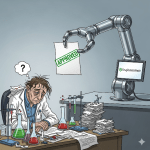
Yet, for decades, the tools used to assess these billion-dollar assets have remained stubbornly archaic. The traditional, manual process of patent evaluation—a painstaking, time-consuming, and prohibitively expensive endeavor performed by highly specialized attorneys—is fundamentally broken. It is a system built for a different era, one that is ill-equipped to handle the volume, complexity, and velocity of modern pharmaceutical IP. This old playbook, reliant on human intuition and limited by the sheer cost of analysis, forces companies into a reactive, defensive posture, leaving them dangerously exposed to unforeseen risks.
But a revolution is underway. The convergence of big data, advanced algorithms, and immense computing power has given rise to a new generation of tools capable of transforming patent analysis from a subjective art into a predictive science. Machine Learning (ML) models are now being deployed to dissect the intricate fabric of patent law and data, offering a level of speed, scale, and objectivity that was previously unimaginable. These systems can score patent strength, quantify invalidity risk with probabilistic accuracy, and predict litigation outcomes, turning patent data from a static legal record into a dynamic source of competitive advantage.
This report is your guide to this new frontier. We will dissect the fundamental flaws of the traditional approach to patent analysis and build a comprehensive framework for understanding the multifaceted nature of patent strength and invalidity risk. We will then pull back the curtain on the AI arsenal—the specific ML models, from Natural Language Processing (NLP) to advanced predictive analytics—that are powering this transformation. We will explore how these models are fueled, how they work in practice, and, most importantly, how they can be strategically implemented to revolutionize M&A due diligence, optimize portfolio management, and forge an unassailable competitive edge. The era of guesswork is over. Welcome to the age of predictive patent intelligence.
Part I: The High-Stakes Chess Game of Pharmaceutical Patents: Why the Old Playbook Is Obsolete
Before we can appreciate the revolutionary potential of machine learning, we must first confront the stark realities of the environment in which pharmaceutical patents exist. It is a world of immense financial pressure, where the cost of both innovation and litigation has spiraled to unsustainable levels. The traditional methods for navigating this landscape are no longer merely inefficient; they are a direct threat to a company’s long-term viability.
The Billion-Dollar Bet: Quantifying the Stakes of Patent Exclusivity
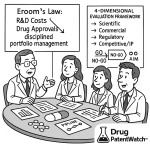
The journey of a new drug from laboratory bench to patient bedside is one of the most arduous and expensive undertakings in modern commerce. The capitalized cost to develop a single new medicine, accounting for the high attrition rates of candidates that fail in preclinical or clinical trials, can approach a staggering $4 billion . This colossal investment is made against the backdrop of a ticking clock. A patent term is typically 20 years from its filing date, but this period begins long before the drug is ever sold . The rigorous and lengthy clinical trial and regulatory approval process, which can easily consume a decade or more, significantly erodes this lifespan . The result is an “effective patent life”—the actual time a drug is on the market with patent protection—that often shrinks to a mere 7 to 12 years .
This compressed window of exclusivity is everything. It is the sole period during which a company can recoup its multi-billion-dollar R&D investment without facing competition from lower-priced generic alternatives. Every single day of that exclusivity can be worth millions of dollars for a blockbuster drug. Consequently, the strength and defensibility of the patents protecting that drug are not just legal details; they are the primary determinants of the company’s financial health, its ability to invest in future research (R&D expenditures for major pharma companies range from 15% to over 28% of total sales), and its overall market valuation . A strong patent portfolio is the ultimate competitive advantage, a legal and financial fortress that secures a company’s future.
The Crippling Cost of Uncertainty: The Flaws of Manual Patent Analysis
Given the immense value locked within these patents, one would expect the methods for evaluating their strength and risk to be equally sophisticated. The reality is alarmingly different. The traditional, manual approach to patent due diligence, prosecution, and litigation analysis is a relic of a bygone era, fraught with crippling costs, systemic inefficiencies, and dangerous subjectivity.
The Financial Drain of Litigation and Due Diligence
The most visible cost of the old model is litigation. Patent litigation is notoriously expensive, with the average cost for a case with significant stakes ranging from $2.5 million to $4 million . These costs are not a single line item but a cascade of expenses that accumulate through each phase of a legal battle. Legal fees, often billed at hundreds or even thousands of dollars per hour, constitute the largest portion. The discovery phase, where both sides exchange vast quantities of documents, is frequently the most expensive stage due to the sheer volume of data that must be manually reviewed by high-priced attorneys . Add to this the substantial fees for expert witnesses, essential for explaining complex science to a court, and the various court and filing fees, and the total financial burden becomes immense .
Worryingly, many of these costly disputes arise directly from the shortcomings of the manual drafting and analysis process itself—unclear claims or inadequate descriptions that create ambiguities ripe for exploitation by competitors .
Even before litigation, the cost of routine, manual due diligence is prohibitive. A thorough patent search, a foundational step to ensure an invention is novel, can cost thousands of dollars . Each official response an attorney drafts during the patent prosecution process can add over a thousand dollars more, and multiple rejections are common . For a company with a portfolio of hundreds of patents, or one considering the acquisition of such a portfolio, the cost of conducting a deep, manual analysis of every single asset quickly runs into the millions, making a truly comprehensive review a financial impossibility.
This economic reality forces a dangerous form of triage. Companies must make difficult choices about where to allocate their limited legal and analytical resources, creating an “affordability bias.” They are compelled to focus their deepest scrutiny only on their most valuable “crown jewel” assets or the most immediate and obvious competitive threats. This pragmatic, cost-driven decision-making leaves vast swathes of their own and their competitors’ portfolios unexamined or only superficially reviewed. It creates a landscape riddled with latent risks—vulnerabilities in mid-tier patents or emerging threats from smaller players—that go undetected until they erupt into full-blown, company-threatening litigation. The very cost of the manual system creates the blind spots that lead to its most expensive failures.
The Human Bottleneck: Subjectivity and Scale Limitations
Beyond the direct financial costs, the manual system is constrained by the inherent limitations of human analysis. A patent examiner at the U.S. Patent and Trademark Office (USPTO), for example, operates under the principle of “compact prosecution,” where they are expected to review every claim for compliance with every statutory requirement in a single initial action . This is a monumental task. An examiner must understand the complex technology, search through a vast universe of prior art, and meticulously dissect the legal language of each claim limitation . Given the tens of thousands of applications filed each week, this process is inevitably subject to time pressures and individual interpretation, which can lead to the issuance of patents with underlying weaknesses.
This problem of scale and subjectivity extends to corporate and law firm environments. A team of human attorneys, no matter how skilled, can only review a finite number of documents in a given timeframe. Their analysis is based on their own experience and interpretation, which can vary from person to person. They rely on keyword-based searches, which can easily miss conceptually similar prior art that uses different terminology.
This human bottleneck creates a critical strategic lag. The slow pace of manual analysis means that by the time a threat is identified, analyzed, and a response is formulated, months may have passed. In the fast-moving pharmaceutical industry, this delay is a significant competitive disadvantage. It locks companies into a state of strategic inertia, forcing them to be reactive and defensive. They are constantly playing catch-up, responding to lawsuits filed or patents granted long ago, rather than proactively anticipating market shifts and shaping the competitive landscape to their advantage. The old playbook is simply too slow for the modern game.
Part II: Deconstructing Patent Strength: From Bedrock Claims to Impenetrable Fortresses
To move beyond the limitations of the old model, we must first establish a clear and rigorous definition of our target. What, precisely, is “patent strength”? It is not a monolithic or abstract quality but a composite attribute, a measure of a patent’s ability to withstand challenges and effectively protect a product’s market position . A truly strong patent is one that not only survives the initial examination process but can also endure the intense scrutiny of litigation, with claims broad enough to prevent competitors from easily designing around them, yet specific enough to be valid over the prior art .
Defining the Indefinable: What Is Patent Strength?
At its core, patent strength is the “survivability quotient” of a patent . It is the measure of its robustness and enforceability in the face of potential challenges, whether in a courtroom or in post-grant review proceedings at the patent office . This strength directly translates into economic value. A strong patent portfolio secures future revenue streams, commands higher royalties in licensing negotiations, provides significant leverage in M&A deals, and ultimately serves as a formidable barrier to competition, reinforcing a company’s market dominance .
Several key factors contribute to the strength of an individual patent:
Novelty and Non-Obviousness: The invention must be genuinely new and represent an inventive step over existing public knowledge, or “prior art” .
Claim Scope: The claims define the legal boundaries of the invention. A well-balanced claim scope is critical; claims that are too broad may be vulnerable to invalidation, while claims that are too narrow offer limited protection .
Disclosure Quality: The patent specification must clearly and completely describe the invention, enabling a person skilled in the field to make and use it .
Litigation History: A patent that has successfully withstood previous legal challenges is generally considered to be stronger .
However, in the pharmaceutical industry, the strength of a drug’s protection rarely rests on a single patent. Instead, it is derived from a sophisticated, multi-layered portfolio strategy.
The Cornerstone: The Primacy of the Composition of Matter Patent
The foundation of any drug’s patent protection is almost always the “composition of matter” patent. As defined by the U.S. Supreme Court, this includes “all compositions of two or more substances and all composite articles” . In the pharmaceutical context, this patent claims the specific chemical structure of the active pharmaceutical ingredient (API) itself. This “base patent” is typically the first one filed, often early in the discovery phase, and its 20-year term establishes the initial period of market exclusivity .
To be granted, this foundational patent must meet the stringent requirements of patentability:
Novelty: The chemical structure must not have been previously disclosed.
Utility: The compound must have a demonstrated therapeutic effect.
Non-Obviousness: The molecule must not be an obvious modification of a known compound to a medicinal chemist of ordinary skill. This is often the most heavily litigated requirement for composition of matter patents .
Securing a strong, defensible composition of matter patent is the primary goal of any early-stage drug patent strategy, as it provides the broadest possible protection for the innovative molecule at the heart of the new medicine.
Building the Fortress: The Strategic Role of the “Patent Thicket”
While the composition of matter patent is the cornerstone, a fortress is not built with a single stone. The true strength of a modern drug’s intellectual property shield comes from the strategic layering of numerous secondary patents. This deliberate creation of a dense and overlapping network of protection is known as a “patent thicket” .
The objective of a patent thicket is not necessarily to win every potential court battle. Rather, it is to make the prospect of litigation so daunting, complex, and expensive that generic competitors are deterred from even attempting a challenge, or are pushed toward settlements that are highly favorable to the brand manufacturer . This strategy acknowledges the imperfect nature of intellectual property rights, where multiple patents with uncertain scope and enforcement can cover a single product, creating an indeterminate period of monopoly protection that extends long after the primary patent expires .
This network of patents is not just a legal barrier; it represents a complex data structure. The strength of the thicket is an emergent property that arises from the intricate relationships between the individual patents—their overlapping claims, their citation links, and their claim dependencies. This network complexity is exceedingly difficult for a human to fully map and analyze but is an ideal problem for machine learning models, particularly those based on graph theory, which can quantify the thicket’s density and resilience in ways a human analyst cannot.
Layering the Defenses: Key Secondary Patent Types
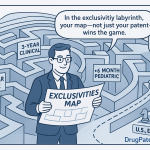
The patent thicket is meticulously constructed using a variety of specialized secondary patents, each designed to protect a different aspect of the drug’s development, formulation, and use. These layers create legal and temporal ambiguity, extending the uncertainty of monopoly protection and making it incredibly difficult for a generic competitor to find a clear path to market . Key types include:
Formulation Patents: These are among the most common and powerful secondary patents. They do not cover the API itself, but rather the unique combination of the active ingredient with various inactive ingredients (excipients), carriers, or delivery mechanisms . A formulation patent might protect an extended-release version of a pill that allows for once-daily dosing, a specific coating that improves the drug’s stability, or a novel nanoparticle delivery system that enhances bioavailability .
Method-of-Use / New Indication Patents: These patents are the legal foundation for drug repurposing. If a company discovers that a drug originally approved for one condition (e.g., hypertension) is also effective for a completely different one (e.g., hair loss), it can obtain a new method-of-use patent for that new indication . This allows companies to find new value in existing assets and extend their commercial life.
Process Patents: These patents protect the specific, proprietary methods used to manufacture the drug . A unique and efficient manufacturing process can be a significant competitive advantage and a difficult hurdle for a generic company to overcome or design around.
Polymorph and Chiral Switch Patents: These highly technical patents add further layers of complexity. Polymorph patents protect specific crystalline structures of the drug molecule, which can affect its stability and dissolution properties . Chiral switch patents protect a specific “enantiomer” (one of a pair of mirror-image molecules) that may have a better efficacy or safety profile than a mixture of both .
By strategically filing these and other types of patents over the lifecycle of a drug, pharmaceutical companies build a formidable defensive fortress. This thicket ensures that even after the foundational composition of matter patent expires, a host of other patents remain in force, each presenting a new and costly legal challenge for any potential generic entrant. Analyzing the strength and vulnerability of this complex, interconnected web of protection is a central task for modern, AI-powered patent intelligence.
Part III: The Challenger’s Playbook: A Deep Dive into Patent Invalidity Risks
A patent, once granted by the USPTO, is presumed valid. However, this presumption is not absolute. It can be challenged and overturned in court or through specialized administrative proceedings. For generic drug manufacturers and other competitors, understanding the grounds for patent invalidity is the key to unlocking the market. For innovator companies, understanding these vulnerabilities is critical for building a resilient patent portfolio and defending it against attack. These grounds for invalidity represent the fundamental rules of the patent game, and they are the specific weaknesses that machine learning models are now being trained to detect with remarkable accuracy.
The Anatomy of a Challenge: Primary Grounds for Invalidity
While patent law varies by jurisdiction, the core principles for what constitutes a valid, enforceable patent are largely harmonized. A successful challenge typically targets one of three fundamental pillars of patentability.
Lack of Novelty (Anticipation): The “Is It Truly New?” Test
The most basic requirement for any patent is novelty. An invention cannot be patented if it already existed in the public domain before the patent’s effective filing date . In U.S. law, this is known as “anticipation” under 35 U.S.C. § 102 . The test is stringent and direct: a patent claim is invalid if a single piece of “prior art”—be it a previously issued patent, a scientific journal article, a conference presentation, or even a product publicly sold—discloses each and every element of the claimed invention.
A particularly potent tool for challengers is the Doctrine of Inherent Anticipation. This doctrine holds that even if a prior art reference doesn’t explicitly state a feature of the invention, the patent can still be invalid if that feature is the natural and inevitable result of what is described in the prior art . For example, if a new patent claims a specific metabolite that is formed when a known drug is ingested, that patent could be invalidated if it’s shown that the formation of that metabolite was an inherent, though previously unrecognized, consequence of taking the original drug.
Obviousness: The Artillery Barrage of Patent Litigation
If lack of novelty is a sniper’s shot, requiring a single, perfect piece of prior art, then obviousness is an artillery barrage. It is, by a wide margin, the most common, most complex, and most frequently successful ground for invalidating a drug patent. An invention might be technically novel—meaning no single prior art reference discloses it entirely—but it may still be unpatentable if the differences between the invention and the prior art are so trivial that they would have been “obvious” to a “person having ordinary skill in the art” (a POSITA) at the time the invention was made .
The POSITA is a legal fiction, a hypothetical person presumed to know all relevant prior art in a specific field and possess standard creativity . The central question in an obviousness analysis is whether this hypothetical skilled person, faced with a known problem, would have been motivated to combine elements from different pieces of prior art to arrive at the claimed invention with a reasonable expectation of success .
The legal landscape for obviousness was significantly reshaped by the 2007 U.S. Supreme Court decision in KSR International Co. v. Teleflex. The court rejected a rigid test that required an explicit teaching, suggestion, or motivation (TSM) in the prior art to combine references. Instead, it adopted a more flexible and expansive approach, making it easier for challengers to argue that combining known elements would have been obvious. This led to the rise of the “Obvious to Try” doctrine, where an invention may be deemed obvious if there were a finite number of identified, predictable solutions to a known problem, and a skilled person had good reason to pursue them with a reasonable expectation of success .
To counter an obviousness attack, patent holders rely on objective evidence known as secondary considerations of non-obviousness. These are real-world indicators that the invention was not, in fact, obvious, and they serve as a crucial guard against using hindsight to piece together an invention. Key secondary considerations include :
Commercial Success: The patented product achieved significant success in the marketplace.
Long-Felt But Unsolved Need: The invention solved a problem that the industry had been struggling with for a long time.
Failure of Others: Other skilled researchers had previously tried and failed to solve the same problem.
Unexpected Results: The invention produced a surprising or superior result that would not have been predicted from the prior art.
Crucially, the patent holder must establish a clear “nexus” between this evidence and the novel features of the claimed invention. For instance, commercial success must be tied directly to the patented innovation, not to superior marketing or brand recognition.
The legal standard for obviousness, with its need to find a “motivation to combine” disparate pieces of prior art and weigh a “reasonable expectation of success,” is fundamentally a pattern-recognition problem. It requires synthesizing vast amounts of technical literature to find non-obvious connections. This is precisely the kind of complex, data-intensive task at which advanced Natural Language Processing models excel, allowing them to simulate the knowledge base of a super-human POSITA and identify potential invalidity arguments that a human researcher might easily miss.
Insufficient Disclosure: The Post-Amgen Enablement Gauntlet
A patent is a bargain with the public: in exchange for a temporary monopoly, the inventor must provide a full and clear disclosure of the invention. If the patent fails to uphold its end of this bargain, it can be invalidated for insufficient disclosure under 35 U.S.C. § 112. This requirement has two main prongs:
Written Description: The patent specification must describe the invention in enough detail to demonstrate that the inventor was in “possession” of the full scope of what they are claiming at the time of filing .
Enablement: The specification must teach a POSITA how to make and use the full scope of the claimed invention without requiring “undue experimentation” .
The legal standard for enablement was fundamentally reshaped by the 2023 Supreme Court decision in Amgen v. Sanofi. The court’s ruling sent shockwaves through the biotech and pharmaceutical industries, particularly for patents covering a broad class (or “genus”) of molecules defined by their function (e.g., “all antibodies that bind to protein X”). The Court affirmed a simple but powerful principle: “The more you claim, the more you must enable”. This means that if a patent claims an entire functional class of molecules, it is not enough to provide a few examples and a “roadmap” for scientists to discover the rest through trial and error. The patent must actually enable a skilled person to make and use the full scope of the claimed class. This decision has created a powerful new avenue for challenging broad biologic patents and has forced innovators to rethink their filing strategies, placing a greater emphasis on narrower claims supported by extensive experimental data.
The PTAB Gauntlet: Quantifying the Real-World Threat
The primary battlefield for these validity challenges in the United States is the Patent Trial and Appeal Board (PTAB), an administrative body within the USPTO that conducts trial proceedings, most notably inter partes reviews (IPRs). IPRs allow third parties to challenge the validity of an issued patent on the grounds of novelty and obviousness based on prior art patents and printed publications .
The statistics from the PTAB paint a sobering picture for pharmaceutical patent holders.
While bio/pharma patents have a slightly better survival rate once a trial is instituted compared to other technologies, the initial hurdle of institution is where the real story lies. Bio/pharma patents account for a relatively small fraction of total IPR petitions, typically around 6-7% . However, they face the highest institution rate of any technology sector. In fiscal year 2024, a staggering 73% of IPR petitions filed against bio/pharma patents were instituted, meaning the PTAB found a “reasonable likelihood” that the challenger would prevail in invalidating at least one claim.
This extraordinarily high institution rate is a critical data signal. It suggests that a significant number of pharmaceutical patents being issued may have detectable vulnerabilities that were not fully addressed during the initial examination. It also means that once a generic company decides to file an IPR, there is a very high probability that the patent holder will be forced into a full, expensive trial.
Overall outcomes further underscore the risk. Across all technologies, only a small percentage of patents that go through a full PTAB trial emerge completely unscathed. In FY2024, only 6% of patents that reached a final written decision were found to be wholly patentable, while 27% were found to be entirely unpatentable, with the rest being a mix of outcomes or settlements . This data demonstrates that the threat of invalidation is not theoretical; it is a frequent and tangible risk that must be proactively managed. The public records of these successful challenges—the IPR petitions that detail precisely which prior art was used and how it was combined to invalidate a patent—create a rich, labeled dataset. This dataset is the perfect training ground for machine learning models designed to learn the patterns of vulnerability and predict which patents are most likely to fall.
Part IV: The Dawn of Predictive Intelligence: Introducing Machine Learning to Patent Strategy
The traditional world of patent analysis, as we have seen, is a world of constraints. It is constrained by cost, by time, and by the cognitive limits of human experts. This forces a reactive, risk-averse posture where strategic decisions are often based on incomplete information. The advent of Artificial Intelligence (AI) and, more specifically, Machine Learning (ML), represents a fundamental break from these constraints. It offers a new set of tools that can analyze patent data at a scale and depth previously unimaginable, transforming patent strategy from a defensive legal exercise into a proactive, data-driven source of competitive intelligence.
A Paradigm Shift: From Manual Retrieval to Automated Intelligence
At its core, AI patent analysis involves using machine learning algorithms and other advanced computational techniques to augment and automate the review, assessment, and management of patents . This is not about replacing human experts but empowering them. By automating the laborious, time-consuming tasks of data collection and low-level analysis, ML frees up attorneys, IP managers, and business strategists to focus on what they do best: making high-level strategic decisions .
The shift is profound. It represents a move away from simple knowledge retrieval towards knowledge creation. A traditional patent search is a retrieval task: an attorney uses keywords to find a specific document that is already known to be relevant or is explicitly linked through citations. An ML model performs a far more sophisticated function. It can analyze the semantic content of thousands of documents, uncovering latent, non-obvious relationships between them. For example, it might identify that patents from a specific company using a particular style of claim language are invalidated at a disproportionately high rate, or that a competitor is consistently filing patents that cite research from a seemingly unrelated scientific field. This is not merely retrieving facts; it is synthesizing disparate data points to generate a new, actionable strategic insight that did not exist before the analysis. This is the essence of what has been termed “Intellectual Property Intelligence (IPI)”: the data science of analyzing vast IP datasets to discover hidden relationships and trends that drive better decision-making .
The Value Proposition: Speed, Scale, and Objectivity
The benefits of integrating ML into patent analysis are transformative and can be understood across three key dimensions:
Speed: ML systems can perform in minutes or hours tasks that would take a team of human experts weeks or months. They can sift through millions of patent documents, scientific articles, and litigation records to conduct a comprehensive prior art search or a landscape analysis with breathtaking velocity . This ability to operate in near-real-time collapses the strategic lag inherent in the manual process, allowing companies to react instantly to competitor moves and market shifts.
Scale: The sheer volume of data in the patent world is overwhelming for human analysis. ML models, however, thrive on scale. They can analyze an entire technology sector’s patent portfolio, not just a curated handful of documents. This allows for a truly comprehensive understanding of the competitive landscape, eliminating the “affordability bias” that creates blind spots in manual due diligence.
Objectivity: Human analysis is inherently subjective, influenced by individual experience, cognitive biases, and interpretation. ML models, by contrast, are data-driven. Their assessments are based on the statistical patterns learned from vast historical datasets of patent characteristics and their real-world outcomes (e.g., litigation success, licensing value). This introduces a level of empirical rigor and consistency that is impossible to achieve through manual review alone, reducing the impact of human error and bias in critical decisions .
The widespread adoption of these tools is poised to democratize high-level patent strategy. In the past, only the largest corporations with multi-million-dollar legal budgets could afford the deep-dive analyses required for sophisticated competitive intelligence. ML-powered platforms, often delivered as a service, lower this barrier to entry. They allow smaller biotech firms and mid-sized pharmaceutical companies to access the same level of insight as their Big Pharma rivals, intensifying competition and raising the strategic stakes for everyone. In this new environment, no company can afford to be ignorant of the vulnerabilities in its portfolio, because those weaknesses are now more visible than ever to any competitor with the right tools.
Table 1: Traditional vs. ML-Powered Patent Analysis
Metric
Traditional (Manual) Analysis
ML-Powered Analysis
Speed
Weeks / Months
Minutes / Hours
Scale
Dozens of patents
Thousands of patents
Scope
Keyword-based, citation-limited
Semantic, conceptual, cross-domain
Objectivity
Subjective (Examiner/Attorney dependent)
Objective (Data-driven, statistical)
Cost
High per-unit cost, scales linearly
Low per-unit cost, highly scalable
Core Function
Reactive / Historical (What happened?)
Proactive / Predictive (What will happen?)
This table crystallizes the business impact of the technological shift. It translates abstract concepts like “semantic analysis” into tangible business outcomes: moving from a slow, expensive, and reactive process to one that is fast, cost-effective, and proactive. This is the fundamental value proposition driving the adoption of AI in the high-stakes world of pharmaceutical patents.
Part V: The AI Arsenal: Unpacking the Machine Learning Models Transforming Patent Analysis
To truly grasp the power of this new paradigm, we must look inside the “black box” and understand the specific machine learning models that form the AI arsenal for patent analysis. These are not monolithic, all-knowing systems, but rather a collection of specialized tools, each designed for a specific task. The true magic happens when these tools are combined into sophisticated pipelines that can ingest raw, unstructured patent data and output clear, actionable strategic intelligence. For the business and legal professional, a foundational understanding of these model types is essential for evaluating vendors, interpreting results, and making informed decisions.
Understanding the Unstructured: Natural Language Processing (NLP) and Transformer Models
The vast majority of valuable information within a patent is locked away in unstructured text: the detailed description, the prosecution history, and, most importantly, the legal claims . Natural Language Processing (NLP) is the branch of AI dedicated to teaching computers how to read, understand, and interpret human language . It is the foundational technology that makes all subsequent analysis possible.
Early NLP techniques involved basic text preprocessing steps like tokenization (breaking text into individual words or subwords) and stop word removal (eliminating common, non-informative words like “the” or “is”) to prepare the text for analysis . However, the real breakthrough came with the development of advanced deep learning architectures, particularly transformer models.
The most famous of these is BERT (Bidirectional Encoder Representations from Transformers) . Unlike older models that read text in a linear sequence (left-to-right or right-to-left), BERT processes the entire sequence of words at once. This “bidirectional” approach allows it to learn deep contextual relationships between words . It understands that the word “bank” means something very different in “river bank” versus “investment bank.” This ability to grasp nuance and context is perfectly suited for the dense, jargon-filled language of patents .
In practice, general-purpose models like BERT are often “fine-tuned” on domain-specific data. By training the model on millions of patent documents, it learns the unique vocabulary and linguistic structures of patent law. This has led to the creation of specialized models like PatentBERT and ChemBERTa, which are highly optimized for analyzing chemical and pharmaceutical patents, respectively.
Key Applications of NLP/Transformers:
Advanced Prior Art Search: These models power semantic search engines that go far beyond simple keywords. They can find prior art documents that are conceptually similar to an invention, even if they use entirely different terminology, dramatically increasing the thoroughness of a novelty search.
Claim Construction and Analysis: NLP models can automatically parse the complex grammar of a patent claim, identifying its key limitations and helping to determine its legal scope. This is crucial for assessing infringement risk and identifying potential design-around opportunities.
Forecasting the Future: Predictive Analytics for Risk and Value
Once NLP models have extracted and structured the information from patent text, that data can be used as features to train predictive models. This is the realm of supervised learning, where an algorithm learns from historical data in which the outcome is already known, and then uses that knowledge to predict the outcome for new, unseen data. A variety of models are used for this purpose, including:
Logistic Regression: A statistical model used for binary classification, predicting the probability of a yes/no outcome (e.g., will this patent be litigated?) .
Support Vector Machines (SVMs): A powerful classification model that finds the optimal boundary (or “hyperplane”) to separate data points into different classes (e.g., “valid” vs. “invalid”) .
Decision Trees and Random Forests: These models create a series of if-then rules to classify data. A Random Forest is an “ensemble” method that combines the predictions of many individual decision trees to produce a more accurate and robust result .
Key Applications of Predictive Analytics:
Invalidity Risk Scoring: This is a primary application. A model is trained on a large dataset of patents that have been challenged at the PTAB, with the final outcome (e.g., “all claims invalidated,” “all claims survived”) serving as the label. The model learns the features—textual, citation-based, legal—that are correlated with invalidation. When presented with a new patent, it can output a probabilistic risk score (e.g., “This patent has a 65% chance of being invalidated if challenged in an IPR”) .
Litigation Likelihood Prediction: Models can also be trained to predict the probability that a patent will be involved in litigation at all. Studies have shown that by using a combination of patent features, assignee financial data (from SEC filings), and citation network information, it’s possible to predict which drugs will face generic patent challenges with over 80% accuracy.
Patent Valuation and Quality Scoring: Instead of predicting risk, models can be trained to predict value. Here, the outcome label might be a known licensing value, a transfer/sale price, or simply whether the patent’s maintenance fees were paid for its full term. Models like the Deep Learning based Patent Quality Valuation (DLPQV) combine text analysis from the patent itself with citation network data to generate a holistic quality score .
Creating New Knowledge: Generative AI and Large Language Models (LLMs)
The latest and most powerful evolution in this space is the rise of Generative AI and Large Language Models (LLMs) like the GPT (Generative Pre-trained Transformer) series . These are massive transformer models trained on a vast corpus of text and data from the internet. Their scale gives them remarkable capabilities for both understanding and generating human-like text.
While closely related to the NLP models discussed earlier, their primary distinction is their advanced generative capability. They are not just analyzing existing text; they are creating new content based on the patterns they have learned.
Key Applications of Generative AI/LLMs:
Automated Summarization and Landscape Analysis: LLMs can read hundreds of patents in a specific technology area and generate a concise, human-readable summary of the competitive landscape, identifying key players, emerging trends, and potential white space for innovation .
Prior Art and Novelty Assessment: By performing a deep semantic analysis of an invention disclosure, an LLM can quickly search through vast databases of patents and scientific literature to identify the most relevant prior art, providing a rapid initial assessment of an invention’s uniqueness.
Hypothesis Generation and Drug Discovery: In a cutting-edge application, generative models are being used not just to analyze patents, but to accelerate the invention process itself. Models can be tasked to “design a novel molecule that binds to target protein X and has property Y,” generating new chemical structures that can then be synthesized and tested, dramatically shortening the early stages of drug discovery.
The most powerful solutions often come from creating hybrid pipelines that chain these different models together. For instance, an NLP model might first be used to parse thousands of patents and extract structured features. These features are then fed into a predictive model to generate a risk score for each patent. Finally, a generative model could take the outputs for the highest-risk competitor patents and write a summary report for a human attorney, highlighting the key vulnerabilities and suggesting potential lines of attack. This integration of specialized tools is what unlocks the full potential of AI for transforming patent strategy.
Table 2: The AI Arsenal for Patent Analysis
Model Type
Primary Function
Key Applications in Pharma Patents
NLP/Transformer Models (e.g., BERT, ChemBERTa)
Text Understanding & Semantic Search
Prior art discovery, Claim construction analysis, Freedom-to-operate searches
Automated landscape reporting, Hypothesis generation for new indications, Initial patent draft outlining
Part VI: Fueling the Engine: The Critical Role of High-Quality, Curated Data
The sophisticated machine learning models that form the AI arsenal are powerful, but they are not magic. Their performance, accuracy, and ultimate strategic value are entirely dependent on the quality of the data used to train them. The principle of “garbage in, garbage out” is not just a cliché in data science; it is an immutable law . For the complex task of pharmaceutical patent analysis, building a robust and reliable model requires sourcing, cleaning, and integrating a diverse array of high-quality data. This process is one of the greatest challenges in the field and is where specialized data providers create their most significant value.
Garbage In, Garbage Out: The Data Quality Imperative
All applications that harness AI depend on the quality of their input data . A model trained on incomplete, inaccurate, or biased data will inevitably produce incomplete, inaccurate, or biased predictions, no matter how sophisticated its algorithm. In the high-stakes context of patent litigation and M&A, a decision based on flawed data can lead to catastrophic financial consequences.
The challenge is that patent-related data is notoriously “messy” . Publicly available data from patent offices, while a necessary starting point, is often not clean, standardized, or complete enough for direct use in training advanced ML models. Achieving the level of data quality required for reliable predictive modeling is a significant undertaking that requires deep domain expertise in both data engineering and intellectual property law.
The Raw Ingredients: Sourcing Data for Patent Models
Building a comprehensive model for patent strength and invalidity risk requires weaving together data from multiple, disparate sources. The model must learn from legal, scientific, and financial information to build a holistic picture. The key raw ingredients include:
Patent Office Data: National and international patent offices like the USPTO are the primary source for the patents and patent applications themselves. Bulk data downloads provide the full text of patents, including claims and specifications, as well as critical metadata like filing dates, inventor names, and prosecution history (the back-and-forth between the applicant and the examiner) . The USPTO also releases curated research datasets, such as the Artificial Intelligence Patent Dataset (AIPD), which can be valuable for specific research tasks .
Litigation and Administrative Data: To predict invalidity, a model must be trained on past outcomes. This requires data from the venues where patents are challenged. The most important source is the PTAB, whose IPR proceedings provide a rich, structured dataset of challenges and their outcomes . Data from federal district court litigation is also essential for capturing the full picture of patent enforcement and challenges .
Scientific and Technical Literature: The universe of “prior art” extends far beyond just patents. It includes scientific journals, conference proceedings, and other technical publications . Accessing and processing this vast corpus of unstructured text is a critical component of any novelty or obviousness analysis.
Financial and Market Data: As studies have shown, a drug’s market value is a powerful predictor of whether its patents will be challenged . Therefore, models must incorporate financial data, such as a company’s public SEC filings, and market data, such as drug sales and prescription numbers, to accurately assess risk and value .
Regulatory Data: In the pharmaceutical space, patent data cannot be viewed in isolation. It is deeply intertwined with regulatory data from the FDA, such as drug approval dates, clinical trial information, and periods of regulatory exclusivity (e.g., orphan drug exclusivity) .
The Curation Challenge: Why Raw Data Isn’t Enough
Simply gathering these raw data feeds is not enough. The data must be cleaned, structured, linked, and enriched—a process known as curation. This is where the most significant challenges lie, and where the true value of a specialized data platform becomes apparent.
The Ownership Problem: One of the most persistent problems in raw patent data is accurately identifying the current owner of a patent. Companies merge, are acquired, spin off subsidiaries, and change their names. Raw data feeds often list the original assignee, not the current owner, making it incredibly difficult to assess a competitor’s true portfolio . A high-quality curated database requires extensive corporate structure research to resolve these ownership chains and correctly attribute patents to their ultimate parent company.
Data Integration and Linking: The raw data sources exist in separate silos. A patent document from the USPTO does not come with a link to its subsequent PTAB litigation record or the sales figures for the drug it protects. The critical step of curation involves creating these links, building a knowledge graph that connects a patent to its legal challenges, its related scientific literature, the product it covers, and that product’s commercial performance. Without these connections, it is impossible to train a model on the multi-faceted features that drive risk and value.
Structuring Unstructured Data: As noted, the most crucial information is often in unstructured text. Curation involves using sophisticated NLP techniques to parse this text and convert it into structured, machine-readable features (e.g., identifying specific claim limitations, extracting the arguments from an office action response).
This is precisely the problem that platforms like DrugPatentWatch are designed to solve. They undertake the immense data engineering effort of aggregating these disparate sources and, more importantly, cleaning and linking them to create a single, integrated, and reliable database . By providing curated, analysis-ready data on patents, litigation, regulatory exclusivities, clinical trials, and market sales, such platforms provide the high-octane fuel required to train powerful and accurate predictive models . The competitive advantage in AI-driven patent analysis, therefore, lies not just in having a clever algorithm, but in having access to a superior, proprietary dataset. This forces a strategic shift within pharmaceutical companies, requiring them to break down internal data silos and integrate their IP data with clinical, commercial, and regulatory data streams to create the holistic view needed to power next-generation predictive intelligence.
Part VII: From Theory to Practice: AI-Powered Scoring and Risk Assessment in Action
With a clear understanding of the AI models and the data that fuels them, we can now turn to their practical application. How does this technology move from the abstract world of algorithms and datasets to the concrete world of business decisions? The answer lies in its ability to distill immense complexity into simple, quantifiable, and actionable metrics: a patent strength score and an invalidity risk percentage. These outputs transform the way IP assets are evaluated, managed, and integrated into financial and strategic planning.
Engineering a Patent Strength Score
A patent strength score is a composite metric designed to represent the overall quality, robustness, and economic potential of a patent. It is not a direct measure of validity but rather an indicator of its overall importance and likely resilience. Generating this score is a multi-step process that involves feature engineering and predictive modeling.
First, the system converts a patent and its surrounding context into a set of numerical features. An ML model doesn’t “read” a patent in a human sense; it analyzes a vector of these quantitative attributes. Key features often include:
Citation-Based Features: The number of times a patent is cited by later patents (“forward citations”) is a strong, empirically validated proxy for its technological importance and value . The number of prior art documents it cites (“backward citations”) can also provide context.
Patent Family Features: The size of a patent’s family (the number of jurisdictions in which protection has been sought) and its “Market Coverage” (which weights those jurisdictions by their economic size) are powerful indicators of the owner’s perceived economic value of the invention .
Text-Based Features: Using NLP, the model analyzes the patent’s text to derive features. A critical one is claim scope. The model can be trained to assess whether claims are broad (covering a wide technological territory) or narrow (covering a very specific embodiment). While broad claims offer more protection, they are often more vulnerable to invalidity challenges . Other textual features might include claim clarity, the number of independent claims, and the presence of specific linguistic patterns.
Prosecution History Features: The model can analyze the back-and-forth between the patent applicant and the examiner. A patent that was granted quickly with few rejections may be viewed differently than one that underwent a long and contentious prosecution.
Litigation History: A patent that has already survived an IPR or a district court challenge is demonstrably stronger, and this history is a powerful predictive feature .
Once this feature vector is created for a patent, it is fed into a predictive model. This is typically a regression model or a more complex deep learning architecture like the Deep Learning based Patent Quality Valuation (DLPQV) model, which combines citation network analysis with text-based deep learning . The model has been trained on a large historical dataset where a proxy for “strength” or “value” is known—for example, patents that were successfully licensed for high royalties, were highly valued in an M&A transaction, or were successfully asserted in litigation. The model learns the statistical relationships between the input features and the desired outcome, assigning a weight to each feature. It then outputs a single, normalized score (e.g., on a scale of 1-100) that represents the predicted strength of the new patent.
This scoring system allows for the financialization of intellectual property. It transforms a complex legal asset into a quantitative metric that can be directly incorporated into standard financial models. Just as a drug in development has a “Probability of Technical and Regulatory Success” (PTRS) used in a risk-adjusted Net Present Value (rNPV) calculation, it can now have a “Probability of IP Survival” derived from its strength score. A drug with a 90% chance of FDA approval is a much riskier bet if its core patent has a low strength score, indicating a high likelihood of being invalidated. This allows for a far more accurate and holistic financial valuation of a company’s R&D pipeline.
Calculating a Probabilistic Invalidity Risk
While a strength score provides a general measure of quality, a more direct and actionable metric for competitors and for defensive portfolio management is the invalidity risk score. This is typically framed as a classification problem: what is the probability that this patent will be invalidated if challenged?
The process is similar to strength scoring but focuses on features indicative of vulnerability. The feature engineering stage is designed to capture the legal grounds for invalidity:
Prior Art Density: The model quantifies the “crowdedness” of the technological space around the patent. A patent in a field with a high density of similar prior art is inherently at higher risk of an obviousness challenge .
Claim Language Vulnerabilities: The model can be trained to identify specific types of claim language or structures that have historically been found to be indefinite, non-enabling, or overly broad by courts or the PTAB.
Prosecution History Red Flags: A contentious prosecution history with many rejections on novelty or obviousness grounds can be a feature indicating underlying weaknesses, even if the patent was eventually granted.
Structural Features: Simple features like the number of claims or the age of the patent can also have predictive power. For example, some studies suggest that combination patents or patents with a very high number of claims may be more prone to invalidation .
This feature set is then used to train a classification model, such as an SVM or a Random Forest . The training data consists of thousands of patents that were previously challenged in IPR proceedings. For each patent in the training set, the model is given its features and the known historical outcome: “all claims invalidated,” “some claims invalidated,” or “all claims survived.”
After training, the model can be given a new patent it has never seen before. It analyzes its features and, based on the patterns it learned from the historical data, outputs a probability for each potential outcome. The result is a clear, probabilistic risk assessment: “Based on its characteristics and comparison to thousands of past IPRs, this patent has a 65% probability of having all its challenged claims invalidated.” This transforms a complex legal question into a quantitative risk metric that can be used to guide strategic decisions, from whether to launch a generic product “at risk” to which of a competitor’s patents to target for an invalidation challenge.
Furthermore, this scoring system can create a powerful feedback loop that improves patent quality over time. By systematically identifying the features—linguistic, structural, and legal—of patents that are consistently scored as “weak” or “high-risk,” patent attorneys can learn to avoid these pitfalls during the initial drafting and prosecution phases. An AI tool can be used proactively, flagging potentially weak claim language in real-time and suggesting alternatives that have historically proven more resilient, thereby shifting AI’s role from purely analytical to prescriptively improving the quality of the IP being created.
Part VIII: Strategic Implementation and the ROI of Predictive Patent Intelligence
The true measure of any new technology is not its technical elegance but its tangible impact on business outcomes. For AI-powered patent analysis, the strategic applications are vast and transformative, fundamentally altering how pharmaceutical companies approach M&A, manage their internal portfolios, and engage in competitive warfare. The return on investment (ROI) is not merely incremental efficiency; it is a step-change in strategic capability that can create and protect billions of dollars in value.
Revolutionizing M&A Due Diligence
Mergers and acquisitions are pivotal, high-stakes events in the pharmaceutical industry, often driven by the need to acquire promising new assets and replenish R&D pipelines. Traditionally, IP due diligence in these transactions has been a time-consuming and often superficial process, limited by time and cost to a review of only the most critical patents in a target’s portfolio .
AI is changing every aspect of this process . Instead of a manual review that takes weeks, AI-powered platforms can conduct a comprehensive analysis of a target’s entire IP portfolio—and the surrounding competitive landscape—in a matter of hours or days. This offers several game-changing advantages:
Speed and Efficiency: AI can reduce the time spent on document review by up to 70%, accelerating the entire deal timeline and allowing deal teams to focus on strategic integration rather than manual data sifting . Tools like Kira.ai and Imprima AI are designed to automatically extract key clauses, identify change-of-control provisions, and flag potential risks across thousands of legal documents simultaneously .
Depth of Analysis: AI goes beyond a simple checklist. It can run a quantitative strength and invalidity risk assessment on every patent and patent application owned by the target company. This uncovers hidden risks that would be missed in a manual review, such as a seemingly minor patent that could be a “blocking patent” for a key pipeline asset, or a foundational patent that has a high probability of being invalidated post-acquisition .
Enhanced Valuation and Negotiation: The outputs of these AI models—patent strength scores and invalidity risk percentages—fundamentally change the valuation conversation. An acquirer can use a data-driven report showing weaknesses in a target’s portfolio to negotiate a lower purchase price or demand stronger indemnification clauses. Conversely, a target company can use a favorable AI-generated report to justify a higher valuation and demonstrate the defensibility of its assets. This transforms IP from a subjective legal asset into a hard, quantifiable line item in M&A financial models.
Optimizing Patent Portfolio Management
For any pharmaceutical company, its patent portfolio is a dynamic and expensive asset to maintain. Annual maintenance fees paid to patent offices around the world can run into the millions of dollars. Making strategic, data-driven decisions about which patents to maintain, which to allow to lapse, and which to actively license or sell is critical for maximizing ROI.
AI-powered portfolio management offers a solution:
Data-Driven Pruning: By assigning a strength and value score to every patent in the portfolio, AI tools can help IP managers identify underperforming or low-value assets that are not worth the maintenance costs. This allows for a strategic “pruning” of the portfolio, focusing resources on the patents that provide the most significant competitive protection and commercial value .
Strategic R&D Alignment: Predictive models that forecast the success probability of R&D projects can be integrated with patent landscape analysis. This ensures that R&D investments are directed toward areas with not only high scientific promise but also clear and defensible IP space, avoiding crowded fields where patent protection will be weak or difficult to obtain .
Proactive Risk Mitigation: Instead of waiting for a challenge to arise, companies can use AI to continuously monitor their own portfolio for vulnerabilities. If a model flags a key patent as having a high invalidity risk due to newly published prior art, the company can take proactive steps, such as filing a continuation application with amended claims or acquiring blocking patents to strengthen its position.
Leading pharmaceutical companies are already deep into this journey. Sanofi, Pfizer, Novartis, and AstraZeneca are all actively using AI and machine learning to enhance their R&D processes and make more informed portfolio decisions, partnering with tech companies and building in-house capabilities to leverage these powerful tools.
Gaining an Unfair Competitive Advantage
Perhaps the most powerful application of predictive patent intelligence is in competitive strategy. It allows companies to shift from a passive, defensive IP posture to an aggressive, offensive one . The goal is no longer just to protect one’s own assets, but to actively map and exploit the weaknesses in competitors’ portfolios.
With AI-powered tools, a company’s competitive intelligence team can:
Continuously Monitor the Landscape: Set up automated systems to monitor all new patent filings, litigation events, and PTAB challenges in a given technology space.
Identify the Weakest Links: Run invalidity risk assessments across a competitor’s entire patent portfolio to pinpoint their most vulnerable patents. This intelligence can be used to inform a company’s own R&D, guiding them to “design around” the competitor’s weakest claims.
Target for Invalidation: The analysis can identify the ideal patents to target with an IPR challenge. By proactively invalidating a competitor’s key patent, a company can clear the way for its own product launch, a strategy that is central to the generic drug industry. The rich, curated data provided by platforms like DrugPatentWatch on historical patent litigation, Paragraph IV challenges, and regulatory exclusivities is the essential fuel for building the ML models that power this type of aggressive competitive intelligence .
This capability can even accelerate the practice of “patent privateering,” where operating companies sell patents to Non-Practicing Entities (NPEs) to assert against their rivals. AI makes it cheaper and more efficient for NPEs to identify high-strength patents in any portfolio and to map those patents against the products of potential infringers, potentially leading to an increase in this type of litigation.
Quantifying the Return on Investment (ROI)
The ROI from implementing these AI strategies is substantial and multifaceted. It is derived from both cost savings and revenue generation:
Cost Savings: Reduced legal spend from avoiding protracted litigation by settling early based on accurate risk assessments, lower M&A due diligence costs, and savings from discontinuing maintenance fees on low-value patents.
Revenue Enhancement: A McKinsey report estimates that by using AI and automation to accelerate regulatory submissions—a similarly data-intensive process—a company can extend the period of patent exclusivity during peak sales, unlocking as much as $180 million in net present value for a single $1 billion drug . Proactively defending patents and delaying generic entry using AI-driven insights can yield comparable returns.
Risk Mitigation: The greatest, though hardest to quantify, return comes from avoiding catastrophic failure. By using AI to identify a fatal piece of prior art before a company invests hundreds of millions of dollars in Phase III clinical trials, the technology can save a company from a value-destroying write-down. Furthermore, a Deloitte report has noted that drugs discovered using AI are showing success rates in Phase I trials of 80-90%, a dramatic improvement over historical industry averages of 40-65%, pointing to a massive potential ROI in overall R&D productivity .
Ultimately, predictive patent intelligence is not just an IT upgrade; it is a fundamental shift in business strategy that provides a clear, measurable, and durable competitive advantage.
Part IX: Navigating the New Frontier: Challenges, Ethics, and the Future of AI in Patent Law
While the transformative potential of AI in patent analysis is undeniable, the path to its widespread and responsible adoption is not without significant obstacles. Navigating this new frontier requires a clear-eyed understanding of the technology’s inherent limitations, the complex ethical and legal questions it raises, and the evolving relationship between human experts and their new intelligent counterparts. The future of patent strategy will not be one of full automation, but of sophisticated human-machine collaboration.
Technical Hurdles: The ‘Black Box’ and Data Bias
Two fundamental technical challenges loom over the implementation of AI in any high-stakes domain: interpretability and bias.
The ‘Black Box’ Problem: Many of the most powerful machine learning models, particularly deep neural networks, operate as “black boxes” . We can see the inputs (the patent data) and the outputs (the risk score), but the internal decision-making process—the specific combination of features and weights that led to a particular conclusion—can be incredibly complex and opaque, even to the data scientists who built the model. This lack of interpretability poses a significant problem in the legal field, where decisions must be justifiable and explainable . An attorney cannot simply stand before a board of directors or a judge and say, “The algorithm told me this patent was weak.” They need a defensible, logical argument. This trust deficit is a major barrier to adoption and means that AI outputs must be treated as a starting point for human analysis, not a final answer.
Data Bias: An ML model is a reflection of the data it was trained on. If that historical data contains inherent biases, the model will learn and amplify them . For example, if patents from smaller, less-resourced companies have historically been invalidated at a higher rate simply because they couldn’t afford a top-tier legal defense, a model trained on that data might learn to assign a higher risk score to patents from small companies, regardless of their technical merit. Similarly, if past data reflects systemic biases in inventorship, the model could perpetuate those inequities. Diligent auditing of training data and model outputs is essential to identify and mitigate these biases to ensure fair and accurate assessments.
Ethical and Legal Minefields: Confidentiality, Accountability, and AI Inventorship
The application of AI to patent law also raises a host of novel ethical and legal challenges that the industry is only beginning to grapple with.
Security and Confidentiality: The process of patenting an invention requires absolute secrecy prior to filing. Using third-party, cloud-based AI tools often involves uploading highly sensitive and confidential data about a new invention . This creates a significant security risk. A data breach could lead to the inadvertent public disclosure of an invention, destroying its novelty and rendering it unpatentable . Companies must exercise extreme caution, ensuring any AI vendor has ironclad security protocols, zero-data-retention policies, and clear contractual safeguards.
Accountability and Liability: The question of accountability is a legal minefield. If a law firm relies on an AI tool that fails to identify a critical piece of prior art, and their client’s billion-dollar patent is subsequently invalidated, who is liable? Is it the law firm for professional malpractice? Or is it the AI vendor for providing a faulty tool? The lines of responsibility are dangerously blurred, and these issues will almost certainly be litigated in the coming years, establishing new precedents for liability in the age of AI .
The Specter of AI Inventorship: Perhaps the most profound long-term challenge is the question of inventorship. U.S. patent law currently requires an inventor to be a human being, a principle affirmed in the landmark case Thaler v. Vidal . However, as generative AI models become more sophisticated, their role is shifting from that of a simple tool to an active participant in the inventive process . The USPTO has issued guidance stating that inventions created with the assistance of AI are patentable, provided that one or more natural persons made a “significant contribution” to the conception of the invention . But as AI’s capabilities grow, the “contribution” of the human user—who may simply be providing a high-level prompt—could be seen as increasingly insignificant. This raises the alarming possibility that some of the most groundbreaking, purely AI-discovered drugs may be deemed unpatentable under current law .
This legal battle over inventorship is a proxy for a much larger economic struggle over who will capture the value created by AI-driven innovation. If patents on AI-discovered therapies are weakened or invalidated, it could fundamentally disrupt the traditional pharmaceutical business model, which relies on strong patent protection to justify massive R&D investments. This could shift power and value away from the pharmaceutical companies that develop and commercialize drugs and toward the technology companies that own the AI platforms that discover them.
The Road Ahead: The Symbiotic Future of Human Experts and AI
Given these challenges, the future of AI in patent law is not one of full automation. Rather, it is a future of augmentation. The most effective operational model will be a “human-in-the-loop” system that combines the strengths of both machine and expert. The AI will serve as a tireless, incredibly powerful analyst, scanning the entire data universe, identifying patterns, flagging risks, and surfacing non-obvious connections at a scale no human could ever match.
The human expert—the patent attorney, the IP strategist, the M&A leader—will then take these data-driven outputs and apply the uniquely human skills of context, strategic judgment, legal reasoning, and business acumen. The AI provides the “what”—the data and the probabilities. The human provides the “so what”—the strategic interpretation and the final decision.
The legal and technological landscape is evolving at a breathtaking pace. We can expect to see new legislation and landmark court cases that provide clearer guidelines for AI-generated IP and the use of copyrighted data for training models . AI tools will become increasingly integrated into the daily workflows of IP professionals, from automated patent drafting to AI-assisted office action responses . In this dynamic environment, the winners will be those who embrace this symbiotic relationship—who learn to wield these powerful new tools not as a replacement for human expertise, but as a force multiplier for human ingenuity.
Conclusion: From Data to Dominance
The pharmaceutical industry stands at a critical inflection point. The traditional model of patent analysis—slow, costly, and subjective—is no longer fit for purpose in an era of escalating R&D costs and intense competition. The risks associated with relying on an outdated playbook are simply too high when the value of a single drug’s market exclusivity is measured in the billions of dollars. The adoption of machine learning is not merely an incremental improvement; it is a necessary evolution, a paradigm shift from reactive legal administration to proactive, predictive intelligence.
By leveraging the power of AI, companies can now dissect patent strength and invalidity risk with unprecedented speed, scale, and objectivity. Natural Language Processing models can unlock the rich information buried in unstructured legal and scientific text. Predictive analytics can forecast litigation outcomes and score patent value with data-driven accuracy. Generative AI can synthesize vast landscapes of information into actionable strategic reports. These tools, fueled by high-quality, curated data from platforms like DrugPatentWatch, are transforming every facet of IP strategy.
In M&A, AI-powered due diligence is replacing superficial reviews with deep, quantitative risk assessments, fundamentally changing how deals are valued and negotiated. In portfolio management, it enables a dynamic, data-driven approach to resource allocation, maximizing ROI by focusing on the most robust and valuable assets. And in the competitive arena, it arms companies with the intelligence to move from a defensive crouch to an offensive strategy, identifying and exploiting the weaknesses in their rivals’ patent fortresses.
However, this powerful new toolkit is not without its challenges. The “black box” nature of complex algorithms, the risk of data bias, and the profound legal and ethical questions surrounding confidentiality and AI inventorship require careful navigation and a steadfast commitment to a “human-in-the-loop” approach. The future does not belong to the machines alone, but to the human experts who learn to master them.
For the business and pharmaceutical leaders reading this report, the message is clear: the time for experimentation is over. Predictive patent intelligence is no longer a futuristic concept but a present-day strategic imperative. The companies that successfully integrate these AI-powered capabilities into the core of their business—rewiring their processes, breaking down data silos, and upskilling their talent—will be the ones who thrive in the coming decade. They will make smarter investments, build more resilient patent portfolios, and consistently outmaneuver their competition. In the high-stakes chess game of pharmaceutical patents, they will be the ones who turn data into dominance.
Key Takeaways
The Old Model is Broken: Traditional, manual patent analysis is too slow, expensive, and subjective for the modern pharmaceutical industry. Its high costs create an “affordability bias,” leaving companies blind to significant risks in their IP portfolios.
Patent Strength is a Quantifiable, Multi-Factor Metric: True patent strength is not just about a single “composition of matter” patent but the entire “patent thicket.” It is a complex, data-rich attribute that can be measured and scored using features like citation networks, patent family size, claim scope, and litigation history.
Invalidity Risk is Real and Predictable: Obviousness is the most common and successful ground for invalidating a drug patent. The high institution rate for bio/pharma patents at the PTAB (73%) indicates that many issued patents have detectable vulnerabilities. ML models can be trained on historical litigation data to predict this invalidity risk with high accuracy.
AI Provides a Triumvirate of Advantages: Speed, Scale, and Objectivity: Machine learning transforms patent analysis from a manual retrieval task to an automated intelligence-gathering process. It can analyze thousands of documents in minutes, providing an objective, data-driven assessment that is impossible for human teams to replicate.
A Specialized AI Arsenal is Required: Effective analysis relies on a pipeline of specialized models. NLP and transformer models (like BERT) are used to understand text, predictive models (like Random Forests and SVMs) are used to forecast outcomes, and Generative AI (like GPT) is used for summarization and content creation.
Curated Data is the True Competitive Advantage: The performance of any AI model is entirely dependent on the quality of its training data. Raw data from patent offices is messy and incomplete. The real value lies in curated, integrated datasets that link patent information with litigation outcomes, regulatory data, and market performance—the kind of data provided by specialized platforms.
AI Transforms Key Business Functions: The application of these models provides a significant ROI by revolutionizing M&A due diligence (making it faster and deeper), optimizing portfolio management (enabling data-driven maintenance and pruning decisions), and enabling offensive competitive intelligence (proactively identifying competitor weaknesses).
Adopt a “Human-in-the-Loop” Approach: Significant challenges, including the “black box” problem, data bias, and unresolved legal questions like AI inventorship, mean that full automation is not the goal. The most effective strategy is augmentation, where AI provides the data-driven insights and human experts provide the final strategic judgment and context.
Frequently Asked Questions (FAQ)
1. We already have a team of experienced patent attorneys. Why do we need to invest in AI tools that seem to duplicate their work?
This is a common and important question. The goal of these AI tools is not to replace experienced attorneys but to augment and amplify their expertise. An attorney’s time is incredibly valuable. The current manual process forces them to spend a significant portion of that time on low-level, laborious tasks like sifting through thousands of documents for prior art or manually tracking competitor filings. AI automates these tasks with superhuman speed and scale. This frees your legal team to focus on high-value strategic work: interpreting the AI’s findings, crafting nuanced legal arguments, developing offensive litigation strategies, and advising R&D on complex IP landscapes. It shifts their role from data gatherer to strategic advisor, dramatically increasing their leverage and the ROI on your legal spend.
2. How can we trust the “black box” nature of these AI models for making multi-million-dollar decisions?
Trust is paramount, and it’s why a “human-in-the-loop” approach is essential. You should not treat the AI’s output (e.g., a 75% invalidity risk score) as an infallible command. Instead, treat it as a highly sophisticated alert system. The value of a good AI platform lies not just in the score itself, but in its “explainability” features. The system should be able to show why it assigned that score by highlighting the key risk factors it identified—for example, pointing to the specific three prior art references it found that form a powerful obviousness combination, or flagging specific claim language that has been problematic in past court decisions. This allows your human experts to instantly focus on the most critical evidence, validate the AI’s findings, and build their own defensible legal strategy based on the insights provided.
3. Our company’s patent data is spread across multiple departments and systems. How can we even begin to implement an AI strategy?
This is one of the most common and critical hurdles. An AI strategy is, first and foremost, a data strategy. The first step is to recognize that IP data cannot live in a silo. To build effective predictive models, patent data must be integrated with clinical, regulatory, and commercial data. The process often starts with a pilot project focused on a single, high-value therapeutic area. This forces the cross-functional collaboration needed to build the initial integrated dataset. Success in this pilot can then serve as a business case to justify a broader investment in a centralized data infrastructure or partnership with a data provider like DrugPatentWatch, which has already done the heavy lifting of aggregating and curating these disparate data sources.
4. What is the single most significant risk in not adopting an AI-driven approach to patent analysis?
The single biggest risk is being strategically outmaneuvered by a competitor who has adopted these tools. While you are spending weeks manually analyzing a new threat, your competitor has already analyzed your entire portfolio, identified your three weakest patents, and is preparing an IPR petition. While your M&A team is conducting slow, high-level due diligence on a target, your competitor has already completed a deep, AI-driven analysis and made a more informed and aggressive offer. In a competitive market, speed and information are paramount. Not adopting AI is akin to continuing to rely on maps and a compass while your competitors are using GPS; you might eventually get to your destination, but you will almost certainly get there last.
5. How will the rise of AI in drug discovery itself, particularly in generating novel molecules, affect the patent strategies we are analyzing?
This is a critical, forward-looking question. As AI’s role shifts from analyzing inventions to creating them, it will put immense pressure on the legal definition of “inventorship.” Currently, a human must make a “significant contribution.” If a purely AI-generated drug is deemed unpatentable, it could disrupt the entire industry’s business model. This creates two strategic imperatives. First, companies using AI for discovery must meticulously document the human contribution at every step—designing the model, curating the training data, defining the problem, and selecting and refining the AI’s output—to build a strong case for human inventorship. Second, companies must use AI analysis tools to monitor the evolving legal landscape, tracking court cases and patent office guidance on AI inventorship to adapt their filing strategies in real-time. The very nature of what constitutes a defensible patent is in flux, making continuous, AI-powered intelligence more critical than ever.
References
Gupta, R. (2024). Drug Patents: A First-Best System? UCLA Anderson School of Management.
DrugPatentWatch. (n.d.). Developing a Comprehensive Drug Patent Strategy. Retrieved from https://www.drugpatentwatch.com/blog/developing-a-comprehensive-drug-patent-strategy/
DrugPatentWatch. (n.d.). Optimizing Your Drug Patent Strategy: A Comprehensive Guide for Pharmaceutical Companies. Retrieved from https://www.drugpatentwatch.com/blog/optimizing-your-drug-patent-strategy-a-comprehensive-guide-for-pharmaceutical-companies/
GeneOnline. (2025, April 14). Drug Patent Watch: Five Key Factors, Including Patent Portfolio Strength, Determine Pharma Company Valuation. Retrieved from https://www.geneonline.com/drug-patent-watch-five-key-factors-including-patent-portfolio-strength-determine-pharma-company-valuation/
Gupta, R. (2024). Drug Patents: A First-Best System? UCLA Anderson School of Management.
DrugPatentWatch. (n.d.). Handling Drug Patent Invalidity Claims. Retrieved from https://www.drugpatentwatch.com/blog/handling-drug-patent-invalidity-claims/
Zhang, Y., et al. (2024). Analysis of factors affecting the quality of traditional Chinese medicine patents based on invalidation cases. Annals of Medicine, 56(1).
DrugPatentWatch. (n.d.). Identifying and Invalidating Weak Drug Patents in the United States. Retrieved from https://www.drugpatentwatch.com/blog/identifying-and-invalidating-weak-drug-patents-in-the-united-states/
Zhang, Y., et al. (2024). Analysis of factors affecting the quality of traditional Chinese medicine patents based on invalidation cases. Annals of Medicine, 56(1).
Congressional Research Service. (2021). Patents and the Pharmaceutical Industry: An Overview.
XLSCOUT. (n.d.). Assessing Patent Strength with AI Patent Invalidity Search. Retrieved from https://xlscout.ai/assessing-patent-strength-with-ai-patent-invalidity-search/
Henry Hughes IP. (n.d.). What makes a strong patent? Retrieved from https://www.henryhughes.com/Site/news/what-makes-a-strong-patent.aspx
XLSCOUT. (n.d.). Assessing Patent Strength with AI Patent Invalidity Search. Retrieved from https://xlscout.ai/assessing-patent-strength-with-ai-patent-invalidity-search/
GreyB. (n.d.). Checking Patent Strength. Retrieved from https://www.greyb.com/blog/checking-patent-strength/
LexisNexis. (n.d.). The LexisNexis Patent Asset Index Methodology. Retrieved from https://www.lexisnexisip.com/resources/patent-asset-index/
PTAB Law. (2025, January 6). Trial Statistics & Trends at the PTAB: 2024 Edition. Retrieved from https://www.ptablaw.com/2025/01/06/trial-statistics-trends-at-the-ptab-2024-edition/
PTAB Litigation Blog. (2024, October 31). PTAB AIA FY2024 Roundup: Key Insights and Statistics. Retrieved from https://www.ptablitigationblog.com/ptab-aia-fy2024-roundup-key-insights-and-statistics/
USPTO. (n.d.). PTAB Statistics. Retrieved from https://www.uspto.gov/patents/ptab/statistics
USPTO. (2022). PTAB AIA FY2022 Roundup.
Akin Gump Strauss Hauer & Feld LLP. (n.d.). IPR and Biopharma Patents: What the Statistics Show.
USPTO. (n.d.). MPEP § 2103. Retrieved from https://www.uspto.gov/web/offices/pac/mpep/s2103.html
USPTO. (n.d.). MPEP § 2107. Retrieved from https://www.uspto.gov/web/offices/pac/mpep/s2107.html
Congressional Research Service. (2020). An Introduction to U.S. Patent Law.
PatentDefenses.com. (n.d.). Time Limitation on Damages. Retrieved from https://patentdefenses.com/time-limitation-on-damages/
DisputeSoft. (n.d.). Patent Litigation Part Three: An Introduction to Patent Claims, Limitations, Infringement, and Invalidity. Retrieved from https://www.disputesoft.com/patent-litigation-part-three-an-introduction-to-patent-claims-limitations-infringement-and-invalidity/
Solve Intelligence. (n.d.). AI Patent Analysis: Benefits, Challenges, and Best Practices. Retrieved from https://www.solveintelligence.com/blog/post/ai-patent-analysis-benefits-challenges-and-best-practices
LexisNexis. (n.d.). AI Patent Analytics. Retrieved from https://www.lexisnexisip.com/ai-patent-analytics/
Li, Y., et al. (2024). Artificial Intelligence Exploring the Patent Field. arXiv.
Krestel, R., et al. (2024). A Comprehensive Survey on AI-based Methods for Patents. arXiv.
Carnegie Mellon University. (n.d.). Center for AI and Patent Analysis (CAPA) Research. Retrieved from https://www.cmu.edu/epp/patents/research/index.html
LegalZoom. (n.d.). How Much Does a Patent Cost? Retrieved from https://www.legalzoom.com/articles/how-much-does-a-patent-cost
TT Consultants. (n.d.). The Hidden Costs of Poor Patent Drafting: Lessons from Litigation. Retrieved from https://ttconsultants.com/the-hidden-costs-of-poor-patent-drafting-lessons-from-litigation/
PatentPC. (n.d.). Patent Litigation Costs: What You Need to Know. Retrieved from https://patentpc.com/blog/patent-litigation-costs-what-you-need-to-know
PatentPC. (n.d.). How to Leverage AI in Patent Valuation. Retrieved from https://patentpc.com/blog/how-to-leverage-ai-in-patent-valuation
XLSCOUT. (n.d.). AI-Driven Patent Valuation: Unveiling the True Worth of Your IP. Retrieved from https://xlscout.ai/ai-driven-patent-valuation-unveiling-the-true-worth-of-your-ip/
Krestel, R., et al. (2024). A Comprehensive Survey on AI-based Methods for Patents. arXiv.
Lin, H., et al. (2018). Patent Quality Valuation with Deep Learning Models.
de Andrade, D., et al. (n.d.). Identifying Valuable Patents: A Deep Learning Approach. University of Cambridge.
Wang, Y., et al. (2023). Prediction of Patent Value Based on Machine Learning Algorithms. EUDL.
Krestel, R., et al. (2025). A Survey on Patent Analysis: From NLP to Multimodal AI. ACL Anthology.
PatentPC. (n.d.). How to Tackle Patent Eligibility Challenges in NLP Software. Retrieved from https://patentpc.com/blog/how-to-tackle-patent-eligibility-challenges-in-nlp-software
MDPI. (2024). Natural Language Processing Patents Landscape Analysis.
Li, Y., et al. (2024). Natural Language Processing in Patents: A Survey. arXiv.
ResearchGate. (n.d.). (PDF) Natural language processing for patents analysis and classification.
PowerPatent. (2023, July 24). NLP Techniques Used in AI-Assisted Patent Drafting. Retrieved from https://powerpatent.com/blog/nlp-techniques-used-in-ai-assisted-patent-drafting/
DrugPatentWatch. (n.d.). 5 Ways to Predict Patent Litigation Outcomes. Retrieved from https://www.drugpatentwatch.com/blog/5-ways-to-predict-patent-litigation-outcomes/
Dynamic Resolution Management. (n.d.). Predicting litigation likelihood and time to litigation for patents.
IJCAI. (n.d.). Patent Litigation Prediction: A Convolutional Tensor Factorization Approach.
PowerPatent. (n.d.). Role of Predictive Analytics in Litigation Outcomes. Retrieved from https://powerpatent.com/blog/role-of-predictive-analytics-in-litigation-outcomes
ResearchGate. (2014). Two Methodologies for Predicting Patent Litigation Outcomes: Logistic Regression Versus Classification Trees.
Google Patents. (n.d.). EP3850549A1 – System and method for obtaining training data.
Li, Y., et al. (2024). Artificial Intelligence Exploring the Patent Field. arXiv.
LexisNexis IP. (n.d.). AI and Data in Patent Analytics. Retrieved from https://www.lexisnexisip.com/resources/ai-in-patent-analytics/
Patinformatics. (n.d.). Machine Learning in Patent Analytics – Part 1. Retrieved from https://www.patinformatics.com/blog-posts/machine-learning-in-patent-analytics-part-1-clustering-classification-and-spatial-concept-maps-oh-my
Google Patents. (n.d.). US11461646B2 – Systems and methods for training machine learning models.
USPTO. (n.d.). Application Data – Patent File Wrapper. Retrieved from https://data.uspto.gov/patent-file-wrapper/details/18976833/application-data?zipFileName=ipa250327.zip&prefix=pgpubDocumentMetaData
USPTO. (n.d.). Open Data Portal. Retrieved from https://developer.uspto.gov/
USPTO. (2024). The Artificial Intelligence Patent Dataset (AIPD) 2023 update.
USPTO. (n.d.). The Artificial Intelligence Patent Dataset (Stata (.dta) and MS Excel (.csv)). Retrieved from https://developer.uspto.gov/product/artificial-intelligence-patent-dataset-stata-dta-and-ms-excel-csv
USPTO. (n.d.). The Artificial Intelligence Patent Dataset (AIPD) for Academia and Researchers. Retrieved from https://data.uspto.gov/bulkdata/datasets/ecopatai?fileDataFromDate=2021-07-30&fileDataToDate=2024-08-19
FedScoop. (2021, February 24). Machine learning speeding up patent classifications at USPTO. Retrieved from https://fedscoop.com/machine-learning-patent-classifications-uspto/
MBHB. (2025, May 13). From Abstract to Concrete: The Path Forward for Machine Learning Patents. Retrieved from https://www.mbhb.com/intelligence/snippets/from-abstract-to-concrete-the-path-forward-for-machine-learning-patents/
PatentPC. (n.d.). The Role of Machine Learning in Predicting Patent Success Rates. Retrieved from https://patentpc.com/blog/the-role-of-machine-learning-in-predicting-patent-success-rates
MDPI. (n.d.). Development of Patent Technology Prediction Model Based on Machine Learning.
IDEAS/RePEc. (n.d.). Leveraging patent classification based on deep learning: The case study on smart cities and industrial Internet of Things.
DrugPatentWatch. (n.d.). How Machine Learning is Revolutionizing Generic Drug Development. Retrieved from https://www.drugpatentwatch.com/blog/optimizing-generic-drug-development-with-machine-learning/
DrugPatentWatch. (n.d.). How Machine Learning is Recoding the Future of Drug Discovery. Retrieved from https://www.drugpatentwatch.com/blog/the-application-of-machine-learning-in-drug-discovery-revolutionizing-pharmaceutical-research/
Slashdot. (2025). DrugPatentWatch Reviews – 2025. Retrieved from https://slashdot.org/software/p/DrugPatentWatch/
SourceForge. (2025). DrugPatentWatch Reviews in 2025. Retrieved from https://sourceforge.net/software/product/DrugPatentWatch/
DrugPatentWatch. (2025, May 19). AI-Powered Portfolio Management in Pharmaceuticals. Retrieved from https://www.drugpatentwatch.com/blog/ai-powered-portfolio-management-in-pharmaceuticals/
PMC. (n.d.). Applications of machine learning in drug discovery and development.
ResearchGate. (2025, May 16). (PDF) AI-POWERED PORTFOLIO MANAGEMENT IN PHARMACEUTICAL R&D.
Akin Gump. (2024, February 12). Patentability and predictability in AI-assisted drug discovery.
DrugPatentWatch. (2025, May 14). Quantitative Methods for Drug Portfolio Optimization. Retrieved from https://www.drugpatentwatch.com/blog/quantitative-methods-for-portfolio-optimization/
Hogan Lovells. (2024, May 21). The rise of AI assets and what it means for intellectual property due diligence in M&A transactions.
Fenwick. (2025, April 29). IP Due Diligence Review for Life Sciences Companies: Essential Preparations for Successful Transactions. Retrieved from https://www.fenwick.com/insights/publications/ip-due-diligence-review-for-life-sciences-companies-essential-preparations-for-successful-transactions
Thomson Reuters. (2023, April 16). How AI for M&A due diligence is changing every aspect of the deal process.
AI Law and Policy. (2025, May 21). Guarding Against the Unknown: M&A Due Diligence of AI Companies in Data-Sensitive Sectors.
IMAA Institute. (2024, January 24). Best AI Tools for M&A Due Diligence. Retrieved from https://imaa-institute.org/blog/ai-for-due-diligence/
DrugPatentWatch. (n.d.). 5 Ways to Predict Patent Litigation Outcomes. Retrieved from https://www.drugpatentwatch.com/blog/5-ways-to-predict-patent-litigation-outcomes/
PMC. (2025, February 12). Predicting patent challenges for small-molecule drugs: A cross-sectional study.
PLOS One. (n.d.). A new hybrid machine learning model for predicting the renewal life of patents.
Emerald Insight. (2024, November 13). Intellectual capital forecasting for invention patent through machine learning model.
Medicines Law & Policy. (2025, April). Pharmaceutical patents and data exclusivity in an age of AI-driven drug discovery and development.
Congress.gov. (2024, December 12). Artificial Intelligence and Patent Law.
Bennett Jones. (2022, November 15). Artificial Intelligence Patenting: Top Challenges and Key Considerations.
IPWatchdog.com. (2024, February 9). What Are the Risks of Generative AI For the Patent Law Profession? Retrieved from https://ipwatchdog.com/2024/02/09/risks-generative-ai-patent-law-profession/id=173091/
Benesch Law. (2024, March 22). Artificial Intelligence Presents Challenges for Intellectual Property Laws’ Focus on Human Creation.
AI Law and Policy. (2024, October 15). The Double-Edged Sword of AI in Patent Drafting and Prosecution.
IBM. (2024, October 29). What Is Black Box AI and How Does It Work? Retrieved from https://www.ibm.com/think/topics/black-box-ai
University of Michigan-Dearborn. (n.d.). AI’s mysterious ‘black box’ problem, explained. Retrieved from https://umdearborn.edu/news/ais-mysterious-black-box-problem-explained
Internet Policy Review. (n.d.). Black box algorithms and the rights of individuals: no easy solution to the “explainability” problem.
World Lawyers Forum. (2024, June 6). Addressing the Black Box Problem in Legal Generative AI.
Product Law Perspective. (2025, April 4). Artificial Intelligence: The ‘Black Box’ of Product Liability.
Arapackelaw.com. (2024, September 9). How Innovators Are Bulletproofing Their Machine Learning Intellectual Property.
Li, Y., et al. (2024). Artificial Intelligence Exploring the Patent Field. arXiv.
Atera. (n.d.). 18 Inspiring Agentic AI Quotes From Industry Leaders. Retrieved from https://www.atera.com/blog/agentic-ai-quotes/
Medicines Law & Policy. (2025, April). Pharmaceutical patents and data exclusivity in an age of AI-driven drug discovery and development.
IPWatchdog.com. (2023, September 25). Artificial Intelligence in Drug Development: Patent Considerations.
YouTube. (2024, June 22). Promise and Perils of Artificial Intelligence.
Ropes & Gray LLP. (2024, October 10). Patentability Risks Posed by AI in Drug Discovery.
Supply Chain Today. (n.d.). Artificial Intelligence & Machine Learning Quotes from Top Minds. Retrieved from https://www.supplychaintoday.com/artificial-intelligence-machine-learning-quotes-top-minds/
JDSupra. (2025, July 25). Real Case, Altered Quote: Yet Another AI Trap for Lawyers.
University of Washington Law Review. (2014). Machine Learning and Law.
American Bar Association. (2024, July/August). Quotable Quotes on the Impact of AI on the Legal Profession.
Weil, Gotshal & Manges LLP. (n.d.). Artificial Intelligence and Machine Learning. Retrieved from https://www.weil.com/experience/practices/artificial-intelligence-and-machine-learning
Bernard Marr. (n.d.). 28 Best Quotes About Artificial Intelligence. Retrieved from https://bernardmarr.com/28-best-quotes-about-artificial-intelligence/
Time Magazine. (2025, April 25). 15 Quotes on the Future of AI.
Salesforce. (n.d.). 35 Inspiring Quotes About Artificial Intelligence. Retrieved from https://www.salesforce.com/artificial-intelligence/ai-quotes/
GrowPath. (2022, September 6). 7 Quotes on Legal Data Analytics: Measuring Success.
Harvard Law School Center on the Legal Profession. (2025, February). The Impact of Artificial Intelligence on Law Firms’ Business Models.
Morningstar. (2025, August 4). Lantern Pharma Announces Public Release of Transformative, Advanced AI Module for Blood-Brain Barrier Permeability Prediction, predictBBB.ai™.
Pharmaceutical Executive. (n.d.). The Leap Forward: Practical Gains for Pharma AI Use.
Salesforce. (n.d.). 35 Inspiring Quotes About Artificial Intelligence. Retrieved from https://www.salesforce.com/artificial-intelligence/ai-quotes/
Pharmaceutical Executive. (2025, April 17). How AI is Shaking Up Pharma Marketing.
Pharmaceutical Executive. (2023, July 10). The AI Revolution Has Arrived: Shaping the Next Generation of Pharma Marketing.
DealRoom.net. (2025, June 16). AI M&A Examples (Key Uses in 2025).
RTS Labs. (2025, July 9). AI in Due Diligence – What It Is & How It’s Transforming M&A (2025).
Deloitte. (n.d.). AI in Pharma and Life Sciences. Retrieved from https://www.deloitte.com/us/en/Industries/life-sciences-health-care/articles/ai-in-pharma-and-life-sciences.html
EY. (2024, January 17). How AI will impact due diligence in M&A transactions.
Bain & Company. (2024, January 30). Generative AI in M&A: Where Hope Meets Hype.
ResearchGate. (2025, February 16). (PDF) THE FUTURE OF AI-DRIVEN PORTFOLIO OPTIMIZATION IN BIOPHARMACEUTICAL PROGRAM MANAGEMENT.
DrugPatentWatch. (2025, June 2). Maximizing ROI on Drug Development by Monitoring Competitive Patent Portfolios.
XLSCOUT. (n.d.). Maximizing ROI with AI-based Patent Portfolio Management. Retrieved from https://xlscout.ai/maximizing-roi-with-ai-based-patent-portfolio-management/
Patentskart. (n.d.). AI-Driven Patent Portfolio Management: Maximizing ROI in Innovation. Retrieved from https://patentskart.com/ai-driven-patent-portfolio-management-maximizing-roi-in-innovation/
Deloitte. (2024, October 1). The convergence of AI technologies and human expertise in pharma R&D.
PatentPC. (n.d.). The Future of AI Patents Trends and Predictions. Retrieved from https://patentpc.com/blog/the-future-of-ai-patents-trends-and-predictions
Omnus Law. (2025, January 29). AI and the Evolution of Intellectual Property in 2025.
Sterne Kessler. (2025, January 16). 2024 AI Intellectual Property Year in Review: Analysis & Trends.
ResearchGate. (n.d.). BERT based freedom to operate patent analysis.
arXiv. (2024). PatentFinder: A Multi-Agent Framework for Patent Infringement Assessment in AI-guided Drug Discovery.
ResearchGate. (n.d.). Patent classification by fine-tuning BERT language model.
PMC. (n.d.). BERT goes to the patent office: A new method for identifying chemical drug patents.
Promptsty. (n.d.). Facilitating Patent Research and Drafting with ChatGPT. Retrieved from https://promptsty.com/facilitating-patent-research-and-drafting-with-chatgpt/
USPTO. (n.d.). Patent Public Search. Retrieved from https://www.uspto.gov/patents/search/patent-public-search
Reddit. (n.d.). r/Patents – Prior art search. Retrieved from https://www.reddit.com/r/Patents/comments/10l53wg/prior_art_search/
MDPI. (n.d.). Enhancing Patent Prior Art Search through BERT.
Finnegan. (2025, July/August). Navigating the Future: Ensuring Patentability for AI-Assisted Innovations in the Pharmaceutical and Chemical Space.
DrugPatentWatch. (n.d.). 5 Ways to Predict Patent Litigation Outcomes. Retrieved from https://www.drugpatentwatch.com/blog/5-ways-to-predict-patent-litigation-outcomes/
PatentPC. (n.d.). The Role of Machine Learning in Predicting Patent Success Rates. Retrieved from https://patentpc.com/blog/the-role-of-machine-learning-in-predicting-patent-success-rates
PMC. (2025, February 12). Predicting patent challenges for small-molecule drugs: A cross-sectional study.
PatentPC. (n.d.). The Impact of AI on Patent Portfolio Management. Retrieved from https://patentpc.com/blog/the-impact-of-ai-on-patent-portfolio-management
DrugPatentWatch. (2025, May 19). AI-Powered Portfolio Management in Pharmaceuticals. Retrieved from https://www.drugpatentwatch.com/blog/ai-powered-portfolio-management-in-pharmaceuticals/
ResearchGate. (2025, May 16). (PDF) AI-POWERED PORTFOLIO MANAGEMENT IN PHARMACEUTICAL R&D.
Patentskart. (n.d.). AI-Driven Patent Portfolio Management: Maximizing ROI in Innovation. Retrieved from https://patentskart.com/ai-driven-patent-portfolio-management-maximizing-roi-in-innovation/
Hunton Andrews Kurth LLP. (2025, July 11). IP Due Diligence Tips For AI Assets In M&A Transactions, Law360.
DealRoom.net. (2025, June 16). AI M&A Examples (Key Uses in 2025).
PwC. (2023). M&A trends in AI for drug discovery.
PatentPC. (n.d.). The Role of Patent Valuation in Mergers and Acquisitions. Retrieved from https://patentpc.com/blog/the-role-of-patent-valuation-in-mergers-and-acquisitions
IPWatchdog.com. (2024, February 9). What Are the Risks of Generative AI For the Patent Law Profession? Retrieved from https://ipwatchdog.com/2024/02/09/risks-generative-ai-patent-law-profession/id=173091/
PowerPatent. (n.d.). Ethical Considerations in AI Patent Drafting. Retrieved from https://powerpatent.com/blog/ethical-considerations-in-ai-patent-drafting
Dentons. (2025, January 28). AI and intellectual property rights.
Congress.gov. (2024, December 12). Artificial Intelligence and Patent Law.
Omnus Law. (2025, January 29). AI and the Evolution of Intellectual Property in 2025.
American Bar Association. (2025, February). IP in the Age of AI.
World Economic Forum. (2024, January 13). Cracking the code: Generative AI and intellectual property.
USC Intellectual Property and Technology Law Society. (2025, February 4). AI, Copyright, and the Law: The Ongoing Battle Over Intellectual Property Rights.
PowerPatent. (n.d.). Why the Best Patent Attorneys Are Already Using AI. Retrieved from https://www.powerpatent.com/blog/why-the-best-patent-attorneys-are-already-using-ai
Deloitte. (n.d.). AI in Pharma and Life Sciences. Retrieved from https://www.deloitte.com/us/en/Industries/life-sciences-health-care/articles/ai-in-pharma-and-life-sciences.html
Deloitte. (n.d.). Integrated evidence strategy in the biopharma industry.
Deloitte. (n.d.). Life sciences M&A, divestments and restructuring.
Deloitte. (n.d.). Future of Pharma Field Force: AI-Driven Agility.
Deloitte. (n.d.). Generative AI to Reshape the Future of Life Sciences.
PwC. (n.d.). The future of care. Retrieved from https://www.pwc.com/gx/en/issues/business-model-reinvention/how-we-care-for-ourselves/future-of-care-healthcare-ecosystem.html
PwC. (n.d.). Artificial intelligence everywhere. Retrieved from https://www.pwc.com/us/en/services/ai.html
PwC. (2025). Pharmaceutical and life sciences: US Deals 2025 midyear outlook.
PwC. (n.d.). Deriving M&A insights using analytics. Retrieved from https://www.pwc.com/us/en/services/consulting/deals/deal-analytics.html
PwC. (2023). M&A trends in AI for drug discovery.
McKinsey & Company. (2025, August 1). Rewiring pharma’s regulatory submissions with AI and zero-based design.
McKinsey & Company. (2025, January 28). Gen AI: A game changer for biopharma operations.
McKinsey & Company. (2025, June 20). The next innovation revolution—powered by AI.
McKinsey & Company. (2024, January 9). Generative AI in the pharmaceutical industry: Moving from hype to reality.
McKinsey & Company. (2025, January 10). Scaling gen AI in the life sciences industry.
BCG. (n.d.). What Will AI Do for Health Care? Retrieved from https://www.bcg.com/capabilities/artificial-intelligence/ai-for-business-society-individuals/health-care
BCG. (2025). Biopharma Trends: Focus on Innovation Amid Complexity.
BCG. (2025). Reigniting Biopharma’s Research Engine.
Northern Light. (2022, September 20). BCG: Adopting AI in Drug Discovery.
BCG. (2022, March 29). Adopting AI in Drug Discovery.
DrugPatentWatch. (n.d.). How Machine Learning is Revolutionizing Generic Drug Development. Retrieved from https://www.drugpatentwatch.com/blog/optimizing-generic-drug-development-with-machine-learning/
DrugPatentWatch. (n.d.). A Comprehensive Guide to Predicting Drug Market Potential. Retrieved from https://www.drugpatentwatch.com/blog/predicting-drug-market-potential/
PMC. (2022). Explainable Artificial Intelligence for Predictive Modeling in Healthcare.
PMC. (2023). Predictive Models Based on Molecular Images and Molecular Descriptors for Drug Screening.
MDPI. (2023). Predictive Modeling in Medicine.
CipherLaw. (2025, May 2). Whitepaper: Updated Strategies for Patenting AI Subject Matter.
Dreyfus. (2025, June 9). The role of artificial intelligence in the valuation strategy of intangible assets.
Harvard Business School. (n.d.). Value of AI Innovations.
arXiv. (2024). A Comprehensive Survey on AI-based Methods for Patents.
Entis.AI. (2025). Unlocking Investment Insights Through Patent Data and Innovation.
Managing Intellectual Property. (2025, August 7). Our ‘duty’ to pass AI benefits on to clients: Pérez-Llorca.
Scholarship Repository. (2021). In-House Counsel, the Adoption of Artificial Intelligence, and Legal Ethics.
DrugPatentWatch. (n.d.). Developing a Comprehensive Drug Patent Strategy.
DrugPatentWatch. (2025, July 31). Handling Drug Patent Invalidity Claims.
PTAB Law. (2025, January 6). Trial Statistics & Trends at the PTAB: 2024 Edition.
TT Consultants. (n.d.). The Hidden Costs of Poor Patent Drafting: Lessons from Litigation.
arXiv. (n.d.). A Comprehensive Survey on AI-based Methods for Patents.
XLSCOUT. (n.d.). AI-Driven Patent Valuation: Unveiling the True Worth of Your IP.
LexisNexis IP. (2025). AI and Data in Patent Analytics.
Dynamic Resolution Management. (n.d.). Predicting litigation likelihood and time to litigation for patents.
DrugPatentWatch. (n.d.). How Machine Learning is Revolutionizing Generic Drug Development.
DrugPatentWatch. (2025, May 19). AI-Powered Portfolio Management in Pharmaceuticals.
Fenwick. (n.d.). IP Due Diligence Review for Life Sciences Companies: Essential Preparations for Successful Transactions.
IBM. (n.d.). What Is Black Box AI and How Does It Work?
ResearchGate. (n.d.). BERT based freedom to operate patent analysis.
Finnegan. (2025, July/August). Navigating the Future: Ensuring Patentability for AI-Assisted Innovations in the Pharmaceutical and Chemical Space.
Sterne Kessler. (n.d.). 2024 AI Intellectual Property Year in Review: Analysis & Trends.
IPWatchdog.com. (2024, February 9). What are the specific risks and ethical considerations of using generative AI in the legal profession, especially concerning patent law?.