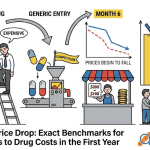
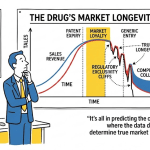
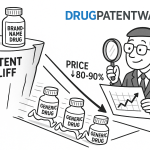
The pharmaceutical business operates on a singular economic premise: the finite nature of exclusivity. Unlike other sectors where brand equity or trade secrets provide indefinite competitive moats, a pharmaceutical asset is a melting ice cube.1 The moment a drug receives regulatory approval, a clock begins to tick toward patent expiration. At that point, revenues typically collapse by 90% within months of generic entry.1 This reality creates a massive rational incentive for brand manufacturers to spend whatever it takes to defend their monopoly. Extending exclusivity by even a single quarter for a blockbuster drug can yield hundreds of millions of dollars in free cash flow, a return that significantly exceeds the legal fees required for litigation.1
For generic manufacturers and biosimilar developers, the challenge is no longer just about demonstrating bioequivalence. It is about navigating a patent thicket—a dense web of overlapping intellectual property rights designed to make market entry cost-prohibitive or legally impossible.2 To succeed in this environment, business development and legal teams must shift from reactive litigation to proactive, data-driven strategy. This report examines the mechanics of evergreening and provides a playbook for using patent intelligence to turn data into a competitive advantage.
The Architecture of the Patent Thicket
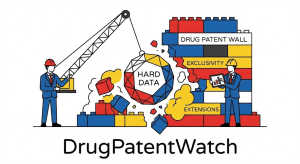
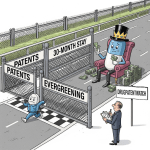
A patent thicket is a strategic blockade. It involves surrounding a commercial product with a dense system of overlapping rights covering the drug’s composition, manufacturing processes, formulations, and methods of use.3 While the primary composition of matter patent—the foundation of the drug’s exclusivity—typically expires 20 years from filing, brand manufacturers layer secondary patents to extend this window.
Strategic patenting often involves filing applications long after the original drug’s discovery. In the case of Humira (adalimumab), over 90% of the patent applications were filed after the drug received FDA approval in 2002.1 This drip-feed approach ensures that as older patents near expiration, new ones are granted to replace them. These secondary patents often cover minor improvements or ancillary aspects.
Secondary patents may claim various features of a drug or biologic beyond the active ingredient itself. These include formulations, methods of use for specific diseases, manufacturing technologies, and administration devices.4 While individual patents might seem minor, they collectively form the building blocks of a powerful evergreening strategy.5
Patent Type
Scope of Coverage
Strategic Utility
Composition of Matter
Active Pharmaceutical Ingredient (API)
Primary foundation of exclusivity 2
Formulation
Specific combinations of API and excipients
Blocks bioequivalent copies of the specific dosage form 2
Method of Use
Treatment of specific indications or populations
Prevents generics from marketing for high-volume uses 2
Process/Manufacturing
Methods of synthesis or purification
Particularly effective for biologics where “the process is the product” 2
Device/Combination
Delivery systems (inhalers, pens)
Triggers 30-month stays even if the drug patent is expired 1
The 30-Month Stay: A Legal Lever for Financial Gain
Under the Hatch-Waxman Act, the mere filing of a patent infringement lawsuit by a brand manufacturer triggers an automatic 30-month stay on FDA approval for the generic applicant.1 This stay acts as a de facto injunction, regardless of the ultimate merit of the patents. If a company can stack consecutive stays or create a thicket that takes years to unravel, they win financially even if they lose the legal verdict in the long run.1
The stay is a tactical delay, while the patent thicket is the strategic blockade.1 When a brand lists new patents in the Orange Book years after approval, they can effectively reset the clock on generic entry for specific product variations.1 Business development teams must heavily discount the value of device patents as a barrier to entry if those patents cannot be defensibly listed in the Orange Book.1
The Economic Toll of Strategic Delay
The cost of evergreening is borne by the entire healthcare system. When generic entry is delayed, payers continue to pay branded prices for drugs that should be commoditized. The financial asymmetry of this dynamic is stark: while a duplicative secondary patent may cost a brand manufacturer as little as $25,000 to obtain, challenging it can cost a generic firm an average of $774,000 in administrative proceedings, with district court litigation costs often exceeding $6 million.9
“The delayed entry of generics for just three major drugs—Humira, Eliquis, and Enbrel—cost U.S. payers approximately $167 billion compared to what costs would have been had generics entered at the time of primary patent expiry.” 1
This transfer of wealth from payers to innovators is massive. A study analyzing just 31 delayed generic products found that Medicaid overspent by $761 million over seven years due to litigation-induced delays.11 For blockbuster drugs, the return on investment for the brand is undeniable.
Number of Generic Entrants
Price Reduction vs. Brand
Market Dynamic
1 (Exclusivity Period)
20% – 39%
Duopoly; Brand retains rebate leverage 10
2
50% – 54%
Competition begins; price floor remains high 11
3 – 5
60% – 79%
Aggressive discounting begins 11
6+
80% – 95%
Commoditization; prices near marginal cost 11
Humira: The Definitive Case Study in Patent Thicketing
AbbVie’s management of Humira is the industry standard for lifecycle management. At its peak, the drug generated over $20 billion in annual revenue.1 While the primary patent on the adalimumab molecule expired in 2016, biosimilar competition did not enter the U.S. market until 2023.1
AbbVie filed over 300 patent applications related to the drug, with approximately 160 eventually being issued.1 The sheer density of this thicket forced major biosimilar competitors—including Amgen, Sandoz, and Samsung Bioepis—to settle. These settlements typically allowed for entry in Europe immediately, in exchange for agreeing to delay U.S. market entry until 2023.1
Faced with the cost of litigating against 160 patents, biosimilar manufacturers chose the certainty of a future entry date over the risk and expense of trial. This converted the patent cliff into a managed slope, stabilizing brand revenue while costing U.S. payers billions.1
Revlimid and the Masterstroke of Managed Slopes
Bristol Myers Squibb (via Celgene) utilized a variation of the thicket strategy for its cancer drug Revlimid.1 While the primary patent was expiring, the company secured numerous secondary patents on specific polymorphic crystalline forms of the drug.1
The resulting settlements created a two-phase entry system:
Phase 1 (2022 – 2026): Generics are permitted to launch, but their market share is strictly capped, starting at single-digit percentages.1
Phase 2 (2026 onward): Full, unlimited generic entry is permitted.1
This structure avoids the price crash associated with multiple generic entrants. By constraining supply, the generic price remains high because the generic manufacturer has no incentive to slash prices if they cannot capture more volume.1
The Paragraph IV Playbook: Aggressive Certification
For a generic manufacturer, the Paragraph IV (PIV) certification is the primary tool for market disruption. By asserting that a brand’s patent is invalid, unenforceable, or not infringed, the generic company initiates a legal battle that can lead to 180 days of marketing exclusivity—the ultimate prize in the Hatch-Waxman system.13
The Paragraph IV certification is not a passive declaration; it is a direct assertion that the brand’s intellectual property fortress is legally deficient.8 Upon receiving a PIV notice letter, the brand has 45 days to file suit, which triggers the 30-month stay.8
The first generic company to file a substantially complete ANDA with a Paragraph IV certification is eligible for the 180-day market exclusivity period.13 During this window, the first-filer can price its product just below the brand’s price, capturing massive market share before the price drops associated with multi-generic competition.13
PTAB and IPR: The Administrative Alternative
The Patent Trial and Appeal Board (PTAB) provides a parallel venue for challenging patents through Inter Partes Review (IPR). IPRs are generally faster and less expensive than district court litigation, costing approximately $725,000 and taking 12 months, whereas district court litigation can cost $6.1 million and take years.9
In 2024, the PTAB’s all-claims invalidation rate reached 70%, meaning that when an IPR reaches a final written decision, all challenged claims are found invalid 70% of the time.17 On a per-claim basis, the invalidation rate reached 78% in 2024.17
Despite these high success rates for challengers who reach a final decision, the hurdle to get an IPR started—the institution rate—has become more difficult. Between 2024 and 2025, the PTAB significantly increased its use of discretionary denials.9
PTAB Outcome (FY2024)
Petitions reaching final written decision
Outcome
All Unpatentable
70%
100% of challenged claims found invalid 17
All Patentable
16%
Patent survives challenge 18
Mixed
14%
Some claims invalidated 18
Discretionary Denials and the “Settled Expectations” Hurdle
The rise of discretionary denials has undermined the congressional purpose of the IPR process. In 2024, the PTAB approved nearly 75% of all requests to institute a review, but by September 2025, that rate fell to approximately 35%.9
The board introduced a rationale known as “settled expectations,” arguing that if a patent has been in force for a significant period (typically more than six years), the owner has a reasonable expectation it will no longer face administrative challenges.9 This rationale prioritizes the passage of time over the technical merit of the patent, effectively shielding older patents from review.9
The average age of a drug patent at the time of a discretionary denial in 2025 was 5.6 years.9 Furthermore, procedural changes implemented in late 2025 reduced allowable brief lengths by 60%, constraining the ability of challengers to address the multiple reasons cited for these denials.9
The FTC and the War on “Junk” Listings
A major shift occurred in 2024 and 2025 as the Federal Trade Commission (FTC) launched a coordinated campaign against improper Orange Book listings. The FTC argues that listing patents that do not meet statutory criteria—particularly patents on device components of drug-device combinations—constitutes an unfair method of competition.19
The Commission sent warning letters to major companies including Teva, GSK, AstraZeneca, and Novo Nordisk, challenging over 300 patent listings.19 The FTC asserted that these “junk” listings delay generic alternatives and block competition by triggering the 30-month stay on improper grounds.19
This enforcement agenda has remained a focus across administrations. In May 2025, the FTC renewed its challenges to over 200 patent listings, targeting those that remained in the Orange Book despite previous warnings.19
The Teva v. Amneal Inhaler Precedent
The FTC’s efforts were bolstered by a landmark ruling in Teva Branded Pharmaceutical Products R&D v. Amneal Pharmaceuticals. The Federal Circuit affirmed a district court’s order requiring Teva to delist five patents from the Orange Book that claimed only device components (like a dose counter) of its ProAir HFA inhaler.7
The court held that for a patent to claim a drug and be properly listed, it must claim at least the active ingredient of the approved product.7 Because the inhaler patents did not recite albuterol sulfate, they were not properly listable.23
This victory led to a massive delisting event. In December 2025, Teva requested that the FDA remove more than 200 improper patent listings from the Orange Book covering asthma, diabetes, and COPD treatments.21 By removing these patents, the mechanism for triggering a 30-month stay was dismantled, clearing a path for generic competitors.1
Mastering the Patent Dance: BPCIA Strategy
Biosimilar manufacturers face a different legal framework under the Biologics Price Competition and Innovation Act (BPCIA). The “patent dance” is a structured exchange of information between the biosimilar applicant and the brand sponsor.1
The dance begins when the FDA accepts a biosimilar application (aBLA). Within 20 days, the applicant must provide the brand sponsor with its aBLA and manufacturing information.26 This starts a back-and-forth process designed to identify patents that will be the subject of infringement litigation.26
BPCIA Step
Timeline
Description
aBLA Disclosure
Day 0 + 20 Days
Applicant provides aBLA and manufacturing details 26
Patent List
Day 20 + 60 Days
Brand sponsor lists all patents for which infringement could be asserted 26
Contention Exchange
Day 80 + 60 Days
Applicant provides detailed invalidity and non-infringement contentions 26
Rebuttal
Day 140 + 60 Days
Brand sponsor provides its rebuttal contentions 26
Negotiation
Day 200 + 15 Days
Parties negotiate which patents to litigate in “Wave 1” 26
The BPCIA creates two triggers for legal action. “Wave 1” litigation follows the patent dance, while “Wave 2” is triggered by the applicant’s 180-day “Notice of Commercial Marketing”.26 Success in this arena requires the applicant to use the dance to identify and resolve patent disputes before the 12-year exclusivity period for the reference product expires.26
The Skinny Label Risk Post-GSK
The “skinny label” or Section viii carve-out has traditionally allowed generics to enter the market for unpatented uses while the brand retains exclusivity over patented indications.29 However, recent judicial decisions have turned this regulatory safe harbor into a liability minefield.
In GlaxoSmithKline v. Teva, the Federal Circuit found Teva liable for induced infringement even though it used a skinny label that carved out the patented heart failure indication for the drug Coreg.30 The court ruled that Teva’s marketing materials and press releases, which called the product an “AB-rated generic equivalent,” could be evidence of intent to induce doctors to prescribe the generic for the patented use.30
This ruling suggests that complying with FDA labeling regulations does not provide a safe harbor against patent liability.30 Generic launches must now adhere to strict “hygiene protocols” regarding communications to ensure they do not accidentally promote a carved-out, patented use.30
Strategic Intelligence: DrugPatentWatch as a Competitive Weapon
To turn patent data into a competitive advantage, business development teams must move beyond simple expiration dates. Platforms like DrugPatentWatch allow strategists to perform deep analytics on patent portfolios, litigation outcomes, and generic entry opportunities.33
Key applications include:
Due Diligence: Vetting the advertised value of a target by uncovering hidden IP risks or identifying “weak” patent thickets.34
Pipeline Forecasting: Identifying first generic entrants and assessing the level of potential competition.34
Settlement Intelligence: Accessing confidential royalty and settlement terms to inform negotiation strategy.33
Advanced search tools combined with expert analysis allow companies to safeguard their intellectual property while maintaining a competitive edge.37 Sophisticated teams use this data from the earliest stages of R&D to guide investment and monitor competitor moves in near real-time.6
The Re-Innovation Pivot: Super Generics and VAMs
As the traditional generic model faces price commoditization, many firms are pivoting toward “Value-Added Medicines” (VAMs) or “super generics”.10 This involves taking an off-patent drug and re-innovating it to solve specific clinical problems.
This re-innovation can take several forms:
Drug Reformulation: Creating a more convenient delivery system, such as a switch from a pill to a transdermal patch or an extended-release version.5
Drug Repurposing: Identifying new therapeutic uses for existing, approved drugs.12
Combination Products: Combining two existing drugs into a single dosage form to improve compliance.5
These strategies allow a generic company to escape the “commoditization trap” by offering a proprietary product with a distinct value proposition.10 This shift from replication to re-innovation requires a holistic mastery of scientific, legal, and regulatory tools.12
The Legislative Horizon: REMEDY, ETHIC, and APPA
Congress is increasingly focused on curbing patent abuse to lower drug prices. Several key pieces of legislation are moving through the 119th Congress in 2025 and 2026.
The REMEDY Act (Reforming Evergreening and Manipulation that Extends Drug Years) aims to prevent brand manufacturers from extending monopolies through court manipulation.38 It seeks to restrict the “one patent” rule to limit the number of 30-month stays a brand can trigger.11
The ETHIC Act (Eliminating Thickets to Improve Competition) would streamline litigation by placing a limit on the number of patents a drug company can assert in a single lawsuit.38 It also includes safeguards for quality patents that represent true innovation.38
The Affordable Prescriptions for Patients Act would encourage generic and biosimilar competition by addressing patent thickets and product hopping as potential antitrust violations.38 The Congressional Budget Office estimates this bill would save billions for Medicare and private insurance.40
Managed Slopes and Volume Limits
The structure of recent settlements, particularly for blockbusters like Revlimid and Humira, indicates a shift toward managing the “patent cliff” into a “managed slope”.1 By staggering generic entry or capping market volume, brands can prevent the price “flash crash” that occurs when multiple generics enter simultaneously.8
Generic Entrants
Revenue Plunge (Brand)
Market Impact
First Filer
~20% – 30% reduction
Duopoly; high generic price 11
2-3 Filers
~50% – 70% reduction
Competition begins; margins compress 11
4+ Filers
80% – 95% reduction
Commoditization; price at marginal cost 1
Investors and business development teams must monitor these settlement dynamics closely. The “Oversold Incumbent” thesis identifies companies with managed slope strategies that are not fully priced into the market.8
Key Takeaways
Exclusivity is a Variable: It is no longer a fixed date but a function of patent density, regulatory strategy, and litigation leverage.2
The Thicket is the Asset: For biologics and complex small molecules, the manufacturing and formulation patents often provide more durable protection than the original composition of matter patent.2
Settlement as Strategy: Procompetitive settlements accelerate market access by an average of five years (64 months) compared to waiting for patent expiry.41
The FTC is an Ally: Generic firms should leverage the FTC’s current hostility toward “junk” device patents to compel the delisting of improper Orange Book entries.19
Digital Hygiene is Mandatory: Post-GSK v. Teva, generic firms must strictly segregate their marketing language to avoid “induced infringement” claims when using skinny labels.30
Data-Driven Due Diligence: Use DrugPatentWatch to monitor competitor pipelines, identify first-to-file opportunities, and vet the advertised value of acquisition targets.33
FAQ
1. What is the difference between evergreening and a patent thicket? Evergreening is the practice of filing new, secondary patents on minor modifications—such as new formulations, dosages, or methods of use—to extend a drug’s life beyond the original 20-year term.3 A patent thicket is a broader strategic blockade where a brand manufacturer amasses a large, overlapping portfolio (often hundreds of patents) to make the cost of litigation and market entry prohibitive for competitors.2
2. How does the 30-month stay work in the United States? When a generic manufacturer files an ANDA with a Paragraph IV certification, it must notify the brand manufacturer. If the brand sues within 45 days, the FDA is automatically barred (stayed) from approving the generic application for 30 months, or until a court decides the patent is invalid or not infringed.1
3. What is “product hopping”? Product hopping occurs when a brand manufacturer switches the market to a new, patent-protected version of a drug (e.g., from a tablet to a capsule or an immediate-release to an extended-release version) just before the old version’s patents expire.4 In a “hard switch,” the brand removes the old product from the market, forcing patients to switch and eliminating the market for upcoming generic versions of the old drug.4
4. Why is the Teva v. Amneal ruling significant for drug-device combinations? The ruling established that patents claiming only device components (like dose counters or canisters) cannot be listed in the Orange Book unless they also claim the active ingredient.7 This allows generic manufacturers to challenge such “junk” listings and potentially avoid the 30-month stay for drug-device combinations like asthma inhalers.1
5. How successful are Inter Partes Review (IPR) challenges at the PTAB? While the all-claims invalidation rate is high (70% in 2024), the PTAB has become more selective about which cases it allows to proceed.17 In 2025, discretionary denials tripled, with the board frequently rejecting petitions for patents that have been in force for more than six years or where parallel district court litigation is well-advanced.9