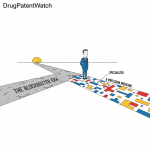
The fundamental economic engine of the innovator pharmaceutical industry functions through a self-sustaining loop. This cycle begins with massive research and development investment, which the patent system then protects through limited-term monopolies. These grants confer market exclusivity, allowing companies to charge prices above the marginal cost of production. The resulting revenues fund the next generation of therapies, creating a perpetual motion machine for medical advancement.1 For business professionals in the life sciences, intellectual property is not a peripheral legal concern but the central asset underpinning firm valuation and future cash flows.2
A common misconception among generalist investors is that a drug enjoys a flat twenty-year monopoly. In reality, the timeline for development—preclinical toxicology, three phases of human trials, and regulatory review—consumes a significant portion of that term before a product generates its first dollar of revenue.3 The average drug development cycle spans 10 to 13 years, leaving an “Effective Patent Life” of only 7 to 12 years.2 Within this compressed window, companies must recoup an average R&D cost of $2.6 billion per approved new molecular entity.3
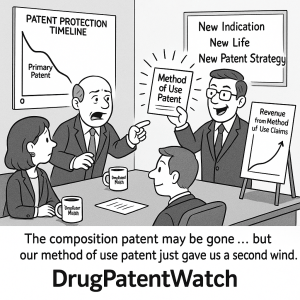
This economic pressure necessitates a shift from molecule-centric to lifecycle-centric intellectual property strategies. Relying solely on a primary “composition of matter” patent is no longer sufficient. Innovators must instead construct a “patent fortress”—a layered defense involving formulation, process, and method-of-use patents.5 Method-of-use claims have emerged as the most versatile of these layers, offering a mechanism to extend market dominance long after the original molecule has entered the public domain.
Defining the legal divide between structure and application
To turn patent data into a competitive advantage, one must understand the anatomy of a claim. Patent claims are the specifications that define and protect the scope of an invention.7 They function as the legal boundaries of a company’s territory. Composition of matter claims protect the physical structure and chemical makeup of an invention, disregarding the intended application.8 If a molecule is present in a product, a composition patent applies, offering the broadest possible protection against unauthorized replication.5
On the other hand, a method-of-use patent protects the specific ways an invention is utilized to achieve a particular result.5 Unlike composition claims that protect the “thing,” method claims protect the “act.” This distinction is vital when the novelty of an invention lies in its application rather than its chemical structure.9 A known chemical compound might be discovered to have a new therapeutic use; a method-of-use claim would protect this novel application, granting the inventor exclusive rights to use the compound for that purpose even if the molecule itself is no longer proprietary.9
Feature
Composition of Matter Claim
Method-of-Use Claim
Object of Protection
Chemical structure/API
Specific therapeutic application
Scope of Protection
Broad: any use of the molecule
Targeted: specific indication or dosing
Typical Filing Timing
Early: at discovery stage
Later: during or after clinical trials
Infringement Trigger
Presence of molecule in a product
Utilization for the claimed purpose
Strategic Utility
Primary monopoly
Lifecycle extension/Repurposing
5
The architecture of the patent fortress
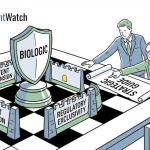
Innovator companies rarely rely on a single patent to defend a blockbuster drug. Instead, they build a multi-layered fortress of intellectual property rights.5 This systematic approach involves moving beyond the primary molecule patent to file secondary patents on every aspect of the drug’s lifecycle.3 This creates a “patent thicket”—a dense, overlapping web of various patent types that forces generic or biosimilar challengers to invalidate dozens or hundreds of patents rather than just one.12
Method-of-use claims are the most dynamic layer of this fortress. They allow companies to continuously innovate and patent improvements throughout the drug’s lifecycle, such as new indications, dosing regimens, or patient populations.5 This strategy is often referred to as “evergreening” by critics, but from a business perspective, it is a rational response to the “Effective Patent Life” deficit.2
“The construction of a ‘patent thicket’ is not merely a collection of intellectual property; it is a strategic deterrent. By filing patents on every aspect of a drug’s lifecycle—from its chemical synthesis and crystalline forms to its delivery mechanisms and dosing regimens—companies create a labyrinth that competitors must navigate.” 3
By securing patents on new indications as a drug progresses through clinical trials, a company can prolong its temporary monopoly even as the original base patent nears expiration.6 This transforms the “patent cliff”—a sudden drop in revenue—into a “managed slope,” allowing for a controlled descent and the preservation of value long after the primary patents have expired.3
The regulatory nexus: Orange Book and 30-month stays
In the United States, the link between patents and drug approval is managed through the FDA’s “Orange Book”.15 This register lists brand-name drugs and the patents that cover them. For a patent to be included, it must claim the active ingredient, the formulation, or a method of use for which the drug is approved.15 Generic manufacturers use this data to identify which barriers they must overcome to launch a version of the drug.15
When a generic firm files an Abbreviated New Drug Application, it must make one of four certifications regarding each patent listed in the Orange Book. A “Paragraph IV” certification—claiming the patent is invalid or will not be infringed—is a technical act of infringement that triggers litigation.16 If the brand-name manufacturer sues within 45 days, the FDA is prohibited from approving the generic version for 30 months, effectively granting the innovator 2.5 years of additional exclusivity while the case is litigated.13
Method-of-use patents are particularly potent in this setting because they are linked to specific “Patent Use Codes” in the Orange Book.15 These codes define the scope of the protected indication. Generic firms often try to “carve out” these patented uses from their labeling to avoid infringement, a practice known as “skinny labeling”.16
The death of the regulatory safe harbor
For nearly forty years, generic manufacturers assumed that following FDA labeling regulations and carving out patented indications provided a safe harbor against patent infringement. This assumption was shattered by the Federal Circuit’s decision in GlaxoSmithKline (GSK) LLC v. Teva Pharmaceuticals USA, Inc..19 Teva had launched a generic version of the heart drug Coreg, carving out the patented indication for heart failure.18 Despite this, the court reinstated a $235 million jury verdict against Teva for inducing infringement.19
The court ruled that Teva’s overall conduct—including press releases, catalogs, and marketing materials—encouraged doctors to prescribe the generic for the patented heart failure indication.20 Central to the verdict was Teva’s use of the term “AB-rated generic equivalent” in its communications.19 The court agreed that calling a product an “equivalent” without qualification implies it is equivalent for all uses, including those protected by method-of-use patents.19
This decision transformed the environment from a clear regulatory procedure into a litigation minefield. It suggests that even if a company follows the law perfectly, it can still be liable for massive damages based on the “totality of circumstances” surrounding its product launch.19
Amarin v. Hikma and the 2026 Supreme Court pivot
The implications of the GSK v. Teva ruling are currently being tested in the U.S. Supreme Court case of Hikma Pharmaceuticals USA, Inc. v. Amarin Pharma, Inc..16 Hikma launched a generic version of Amarin’s drug Vascepa, carving out the patented cardiovascular risk reduction indication.21 Amarin sued for induced infringement, arguing that Hikma’s marketing materials and citations of total sales data for Vascepa encouraged doctors to use the generic for the protected indication.23
On January 16, 2026, the Supreme Court agreed to hear the case to clarify when induced-infringement liability can attach to a generic launched under a skinny label.16 The outcome will reshape the legal calculus for both brand and generic companies. A decision that tightens the standards for inducement would reinforce the carve-out pathway; a decision validating broader theories would drive generic firms toward more conservative launches and strict controls on public statements.24
For business professionals, this means the “skinny label” is no longer a shield. All corporate communications—press releases, website metadata, investor decks, and sales forecasts—must be audited against potential inducement risk.19 Mentioning a brand’s total sales figures, which inherently include revenues from patented uses, can now be used as evidence of intent to capture the entire market.19
The 15 strategies of the lifecycle management playbook
Maximizing the value of a therapeutic asset requires a holistic framework. This playbook is divided into three pillars: developmental and clinical, commercial and market-facing, and legal and regulatory.13 Method-of-use claims are the common thread that links these pillars together, enabling the transition from a “molecule” to a “franchise.”
Pillar A: Developmental and clinical strategies
Indication Expansion: This is the most common use of method patents. Finding new applications for an existing drug expands the patient pool and creates new revenue streams.13 This strategy is particularly successful for orphan drugs, which can be tested for more prevalent conditions after initial approval.13
Next-Generation Formulations: Modifying how a drug is delivered, such as switching from a tablet to an extended-release capsule or an injectable depot, allows for new patent filings.13
Dosing Frequency Optimization: Improving patient convenience—for example, moving from once-daily to once-weekly dosing—creates competitive differentiation and new method-of-use protection.13
Side Effect Profile Reduction: Differentiating a product based on improved safety can result in physician preference and new patentable claims.13
Combination Therapies: Combining two known agents to enhance efficacy can lead to clinical superiority and a fresh patent thicket.13
“Encore” Products: Introducing an improved follow-on product before the original’s patent expires helps transition the market and preserve dominance.13
Pillar B: Commercial and market-facing strategies
Authorized Generics: Launching a branded generic can capture market share that would otherwise go to competitors.13
Rx-to-OTC Switch: Moving a prescription drug to over-the-counter status extends its commercial life.13
Value-Based Contracting: Shifting the conversation from price to total therapeutic value using outcomes data helps maintain formulary positioning.13
Product Hopping: Transitioning patients to a newer, patent-protected version of the drug before the original’s exclusivity ends.12
Beyond the Pill Services: Investing in patient support programs to build brand loyalty and “stickiness”.13
Pillar C: Legal and regulatory strategies
Patent Term Extensions (PTE): Compensating for time spent in regulatory review to restore lost exclusivity.25
Pediatric Exclusivity: Gaining six months of additional protection by conducting pediatric studies.13
Orphan Drug Designation: Securing seven years of market exclusivity for a rare disease indication.13
Serial Litigation: Using continuation applications to keep patent families alive and target competitors with new claims as their products develop.13
The staggering ROI of pediatric exclusivity
One of the most potent tools in the lifecycle management arsenal is the pediatric extension. Under the Best Pharmaceuticals for Children Act, a manufacturer that completes pediatric trials requested by the FDA receives an additional six months of market protection.17 This extension is added to every unexpired patent and exclusivity listed in the Orange Book for that drug.4
The financial impact of this six-month window can be massive. For a drug generating $40 million per month in revenue, the extension represents a potential benefit of $240 million.27 A study of cancer drugs found that while the mean investment for these trials was $39 million, the mean revenue generated by the resulting exclusivity was $309 million per drug.28
Drug Example
Investment for Trials
Revenue from 6-Mo Extension
Eribulin
~$20M – $75M
$42M
Ruxolitinib
~$20M – $75M
$741M
Mean for Cancer Drugs
$39M
$309M
26
This high return-to-cost ratio—sometimes exceeding 70x—makes pediatric extensions a primary target for late-stage lifecycle planning.29 It serves as a financial stabilizer, reducing idiosyncratic volatility in a company’s stock price by providing clearer expectations for future cash flows.31
Aligning clinical trials with patent claims
A common failure in pharmaceutical strategy occurs when the patent department and the R&D team operate in silos.13 For a method-of-use patent to be robust, the claims must directly track the product’s label and the data generated in clinical trials. This requires aligning trial endpoints with intended patentable features.32
Companies should use a layered approach to claim drafting, starting with broad umbrella claims and delving into specific dependent claims for dosing, administration routes, and patient subpopulations.33 Furthermore, trial protocols must be handled with extreme care. Protocols published online can be cited as “prior art,” rendering later-filed patent claims “obvious” to a person having ordinary skill in the art.35 Best practice dictates filing patent applications containing prophetic examples before the trial protocol is disclosed to the public.35
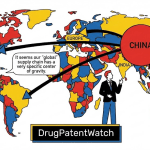
The global landscape: US, EU, Japan, and China
Global drug patent strategy must account for the reality that different jurisdictions have different rules for what qualifies as a patentable invention.6 While the US allows direct protection for medical procedures, most other regions exclude them to protect physicians.37
In Europe, innovators use “purpose-limited product claims” (e.g., “Compound X for use in the treatment of disease Y”).36 These claims protect the compound when it is specifically packaged or labeled for that use. In Japan, treatment methods are excluded due to a lack of “industrial applicability,” requiring claims to be rewritten as “pharmaceutical compositions for treating disease Y”.39
China has undergone a significant regulatory evolution in 2024 and 2025. The new Patent Term Extension framework now allows for compensation of up to five years for innovative drugs and new indications.25 For example, in May 2025, the biological drug Telitacicept was granted a full five-year extension, moving its market exclusivity from 2027 to 2032.25 Additionally, China has introduced draft measures for up to six years of data exclusivity for innovative drugs, further strengthening the protection for new clinical data.42
Jurisdiction
Treatment Method Patentability
Compensation for Approval Delay
United States
Allowed
PTE: up to 5 years
European Union
Excluded (EPC 2000 format used)
SPC: up to 5 years (+ 6 mo pediatric)
Japan
Excluded (Composition format used)
PTE: at least 2, up to 5 years
China
Excluded (Swiss-style format used)
PTE: up to 5 years
25
The ROI of drug repurposing and 505(b)(2)
Drug repurposing—identifying new therapeutic applications for existing drugs—is a strategy valued for being more expeditious and cost-effective than discovery from scratch.13 Because these drugs already have established safety profiles, they bypass many early-stage clinical risks.44 Repurposed products reach the market in 3 to 12 years, compared to the 10 to 17 years required for new entities, and cost approximately 50-60% less to develop.13
In the US, this strategy is powered by the 505(b)(2) regulatory pathway, which allows a sponsor to rely on the FDA’s previous findings of safety for a reference listed drug.13 Method-of-use patents are the primary mechanism for securing exclusivity for these repurposed products. A classic example is sildenafil, which was repositioned from a cardiovascular drug to a treatment for erectile dysfunction and eventually pulmonary arterial hypertension.44
Competitive intelligence and white space analysis
Turning patent data into a competitive advantage requires moving from passive observation to proactive strategy. Business professionals must use advanced analytics to decode competitor patent portfolios and identify gaps in the technological landscape.1
“White space analysis” involves the systematic fusion of patent filings with clinical trial data to find areas of high unmet medical need where a path to protected commercialization is visible.45 By visualizing the rate of new filings—using velocity heatmaps or network diagrams—firms can identify “blue oceans” where they can innovate with minimal risk of infringement.45 Platforms like DrugPatentWatch allow CI professionals to monitor these signals in real-time, providing an early warning system for generic challenges or rival line extensions.10
Deformulation: The science of reverse engineering
For generic manufacturers, reverse engineering (or deformulation) is a cornerstone of competition. It is the process of deconstructing a drug product to identify its components and their interactions.47 The goal is to develop a formulation that is bioequivalent to the innovator product, a prerequisite for ANDA approval.47
Innovator companies often engage in “technical evergreening” by making their products deliberately difficult to deconstruct, such as using complex co-polymers or unique solid-state structures.47 For generic firms, speed and accuracy in deformulation are paramount. Being “first-to-file” an ANDA with a Paragraph IV certification can grant 180 days of generic market exclusivity, during which 60% to 80% of a product’s total potential profit is often made.48
Quantitative modeling and price erosion
The traditional “patent cliff” narrative—a sudden drop in revenue to zero—is empirically false.3 The actual erosion of value depends on the number of generic entrants and the complexity of the patent fortress. When only a single generic enters the market, the price of the brand-name drug typically drops by 30% to 39%.3 However, once three or more competitors enter, a “competitive collapse” occurs, and prices can plummet by 50% to 70% or more.11
Entrants
Stage
Estimated Price Erosion
1 Generic
First-mover advantage
30% – 39%
2-3 Generics
Market broadening
50% – 70%
Multiple Generics
Competitive collapse
80% – 90%+
3
Method-of-use patents are critical for delaying this collapse. Even if the primary molecule patent has expired, a surviving method patent can block generics from the most lucrative indications, forcing them into smaller, less profitable segments and preserving the brand’s revenue for as long as possible.10
Key Takeaways
Protect the Application, Not Just the Molecule: Composition of matter patents provide the initial monopoly, but method-of-use claims are the primary vehicle for lifecycle management and repurposing.5
The Safe Harbor is Gone: Following GSK v. Teva and Amarin v. Hikma, “skinny labeling” no longer provides absolute immunity. All corporate communications must be audited for potential inducement risk.19
Pediatric Extensions are High-ROI Assets: A six-month extension can generate hundreds of millions in additional revenue for blockbuster drugs, with return-to-cost ratios often exceeding 10x.27
Global Strategies Require Local Tuning: Claims must be formatted specifically for different jurisdictions, such as purpose-limited product claims in Europe and composition-formatted use claims in Japan.36
China is a Growing IP Powerhouse: The 2024-2025 reforms in China, including patent term extensions for new indications, have created a more robust environment for pharmaceutical innovators.25
Data Integration is Key to Competitive Intelligence: Success requires fusing patent data with clinical trial updates using platforms like DrugPatentWatch to identify “white spaces” and anticipate competitor moves.10
Modeling Must Be Risk-Adjusted: Quantitative forecasts should account for “thicket density” and the probability of different generic entry scenarios rather than relying on a single expiration date.11
Frequently Asked Questions
1. How does the 2026 Supreme Court decision in Hikma v. Amarin affect generic marketing? The Court is clarifying the standard for induced infringement. If the Court upholds the Federal Circuit, generic manufacturers will need to be extremely cautious. Even “anodyne” statements, such as calling a product a generic equivalent or citing the brand’s total sales, could be enough to create liability if they imply effectiveness for a patented, carved-out use.23
2. Is a method-of-use patent harder to defend than a composition patent? Generally, yes. Composition patents are considered the “gold standard” because they are easier to prove infringement—you simply need to show the molecule is present. Method patents are often “weaker” secondary patents because they require proving how a drug is being used and, in the case of inducement, that the manufacturer intended to encourage that specific use.2
3. Why would a company file for pediatric exclusivity if the patent is already strong? Pediatric exclusivity is not just about the patent; it adds six months of protection to everything in the Orange Book, including other regulatory exclusivities. This adds a critical “commercial tail” at the end of a drug’s most profitable years. For a blockbuster drug, those six months can translate into hundreds of millions in risk-free revenue.4
4. What is the “Biosimilar Paradox” created by the Inflation Reduction Act? The IRA allows the government to negotiate lower prices for top-selling drugs. Historically, biosimilars gained market share by offering discounts on high brand prices. If the brand price is already capped by the government, the “spread” available for a biosimilar to undercut the brand shrinks, which may make it financially unviable for biosimilars to enter the market.46
5. How does a Swiss-style claim work in China? Since China does not allow patents on medical treatment methods, innovators use the Swiss-style format: “Use of compound X for the manufacture of a medicament for the treatment of disease Y.” This shifts the focus from the act of treating the patient to the act of manufacturing the drug for a specific purpose, which is considered patentable subject matter.36