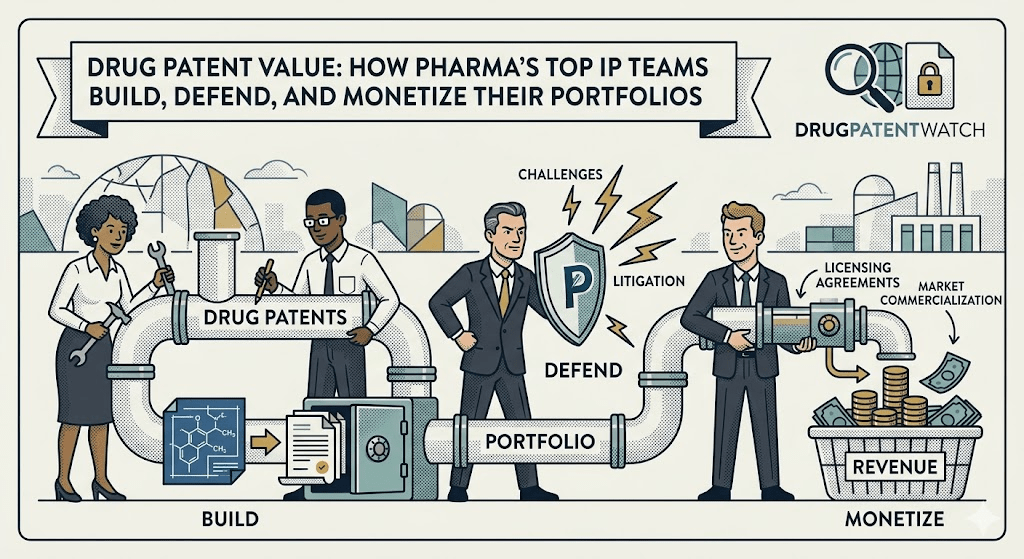
A drug patent is not a legal formality. It is the financial architecture that determines whether a company can fund its next clinical program, sustain its R&D workforce, or defend its share price against a generic entrant that paid nothing to discover the molecule. Yet most treatments of pharmaceutical IP stop at the surface: 20-year terms, Paragraph IV challenges, evergreening in broad strokes. This guide goes deeper. It covers the mechanics of patent valuation as a balance-sheet asset, the specific lifecycle tactics that extend blockbuster exclusivity, the litigation playbooks both innovators and challengers deploy, and the emerging IP terrain around biologics, gene therapy, and AI-assisted drug discovery. The target reader is a pharma IP team, portfolio manager, or R&D lead who needs to make decisions, not pass a bar exam.
I. The Economics of Drug Patents: Why IP Is the Core Asset, Not the Supporting Documentation
The Real Cost Calculus Behind Patent Protection
The headline figure for bringing a single new molecular entity (NME) to market sits between $1 billion and $2.6 billion when all-in R&D costs are capitalized across the failure rate of candidate compounds. That range is wide because the denominator varies: a company that advances 10 candidates to Phase II and approves one spreads its entire Phase II spend across that one winner. The Tufts Center for the Study of Drug Development estimated $2.6 billion in 2014 dollars; more recent IQVIA modeling puts the median at $1.3 billion for small molecules and higher for biologics, where manufacturing scale-up and characterization costs compound significantly before Phase III even begins.
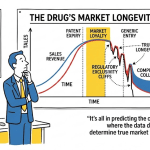
The 20-year nominal patent term from filing sounds adequate until you map the timeline. Most NMEs are filed at or near the point of synthesis, which precedes IND filing by one to three years, Phase I by two to four years, and approval by eight to twelve years in total development time. After FDA review, the effective market exclusivity window for a typical small molecule is seven to nine years. For biologics, the window is often compressed further by the BPCIA’s mandatory 12-year reference product exclusivity, which runs concurrently with the patent clock rather than extending it in most cases. This structural compression is why every percentage point of Patent Term Extension (PTE) and every secondary patent filing matters financially: they are not incremental legal maneuvers but essential revenue-recovery mechanisms.
IP Valuation as a Balance-Sheet Asset
Pharma and biotech finance teams increasingly treat patent portfolios as quantifiable assets rather than cost centers. The three standard valuation frameworks are the cost approach, the market approach, and the income approach. Each produces materially different numbers, and understanding when to use which matters for M&A due diligence, licensing negotiations, and litigation damages claims.
The cost approach estimates replacement cost: what it would take to re-create the patent’s underlying invention from scratch. It is most useful for early-stage assets where no market comparable exists and no revenue projection is credible. For a Phase I compound, the cost approach anchors the floor of value.
The market approach relies on comparable transactions, which in pharma means royalty rate benchmarking across therapeutic area and development stage. Industry benchmarks from the RoyaltySource and ktMINE databases show median royalty rates of 4-6% for small-molecule drugs in primary care indications, 8-12% for oncology, and 15-25% for rare disease or biologics with high unmet need and limited competition. These rates compress sharply as patent expiry approaches or as biosimilar competition materializes.
The income approach, by far the most commonly used in litigation and licensing, projects net present value (NPV) of future cash flows attributable to the patent’s exclusivity. For a drug like Keytruda (pembrolizumab), where $33.7 billion in 2028 sales were forecasted before generic entry risk materialized, the income approach value of the core composition-of-matter patents dwarfed the company’s entire physical asset base. Patent NPV calculations require inputs on revenue trajectory, pricing assumptions, probability-adjusted discount rates, and a precise read on competitive patent term, including the risk that an IPR petition invalidates key claims.
Investment Strategy Note: For portfolio managers evaluating pharma equities, patent NPV derived from income-approach modeling is the most direct predictor of post-LOE (loss of exclusivity) revenue retention. A company whose lead drug has 12 years of remaining exclusivity on a composition-of-matter patent, layered with formulation and method-of-use patents extending to years 14 and 16, carries materially lower cliff risk than a company with a single expiring patent and no lifecycle management pipeline. This differential is frequently mispriced in equity markets, particularly for mid-cap biotechs where patent intelligence is under-followed by sell-side analysts.
II. The Legal Architecture: What Can Be Patented and Why It Matters
Composition of Matter: The Crown Jewel
The composition-of-matter patent covers the active pharmaceutical ingredient (API) itself, the specific molecular structure with therapeutic activity. It is the most commercially valuable and legally durable of all pharmaceutical patent types. A granted composition-of-matter patent is difficult to design around because any therapeutic use of that molecule, regardless of formulation or delivery mechanism, falls within the claim scope.
The legal standard for obtaining this protection requires novelty, utility, and non-obviousness. Novelty is typically straightforward for NMEs. Utility requires demonstrated or credibly asserted therapeutic activity. Non-obviousness, evaluated from the perspective of a person of ordinary skill in the art (POSA) at the time of invention, is where most serious disputes occur. Courts and the USPTO require that the POSA would not have been motivated to combine or modify prior-art structures to arrive at the claimed compound with a reasonable expectation of success. In oncology and CNS drug development, where structure-activity relationships are densely characterized in the literature, this is a genuinely difficult bar to clear.
For a drug like apixaban (Eliquis, co-developed by Bristol-Myers Squibb and Pfizer), the composition-of-matter patent covering the factor Xa inhibitor structure was the foundational asset around which all lifecycle management was built. The IP portfolio protecting Eliquis included not only the core molecule patent but also separate patents on polymorphic forms, specific dosing regimens for atrial fibrillation prophylaxis, and tablet formulation. That layering was not accidental; it was constructed from the outset of the development program to maximize the exclusivity horizon.
Secondary Patent Taxonomy: From Formulations to Dosage Regimens
The academic literature sometimes treats secondary patents as a monolith labeled ‘evergreening,’ but from an IP strategy standpoint they are distinct tools with different claim scopes, different litigation profiles, and different valuation implications.
Formulation patents cover specific pharmaceutical compositions: extended-release matrices, co-crystal forms, nanoparticle delivery vehicles, lipid nanoparticle (LNP) encapsulation, or subcutaneous depot formulations. The clinical justification for these innovations ranges from genuine PK improvement (reduced peak-to-trough variability, reduced pill burden) to marginal differentiation. A well-drafted formulation patent can withstand invalidity challenge if it demonstrates a non-obvious technical solution to a specific delivery problem. AstraZeneca’s Seroquel XR (quetiapine extended-release) is frequently cited in the lifecycle management literature: the once-daily formulation patent extended meaningful commercial exclusivity in schizophrenia beyond the expiry of the original quetiapine composition patent. Crucially, AstraZeneca’s Paragraph IV litigation against generic challengers to Seroquel XR succeeded in maintaining the 30-month stay, preserving peak-period revenues while litigation proceeded.
Method-of-use patents protect specific therapeutic applications, either a new indication for an approved drug or a specific patient population subtype. GlaxoSmithKline’s Imitrex (sumatriptan) provides a clean example: after the original composition-of-matter patent on sumatriptan expired, GSK successfully pursued method patents covering intranasal delivery for acute migraine, which were listed in the Orange Book and provided additional protection against ANDA filers targeting that route. Method patents are, however, susceptible to the ‘skinny label’ carve-out strategy, under which generic applicants seek approval for uses not covered by the listed method patent. The Caraco v. Novo Nordisk litigation in 2012 and the more recent Amarin v. Hikma litigation around icosapentaenoic acid (Vascepa) illustrate how aggressively generics can exploit this mechanism when method-of-use patents are the primary listed protection.
Polymorph and salt form patents protect specific crystalline or amorphous solid-state structures of the API. These are among the most contested in pharmaceutical patent litigation because the prior-art compound (in a different form) is already disclosed, and challengers frequently argue that the new form was obvious to one of skill in formulation science. The Indian patent system’s Section 3(d) provision explicitly bars patents on new forms of known substances unless they demonstrate ‘significantly enhanced efficacy,’ a standard that has blocked several multinational companies from extending exclusivity in that jurisdiction. Process of manufacture patents, covering specific synthetic routes, reaction conditions, or purification steps, are largely immune from the Hatch-Waxman ANDA challenge mechanism because generics can design around process claims by using alternative routes, making them most commercially significant in preventing biosimilar manufacturing from replicating a proprietary biological process.
Key Takeaways from Section II:
The composition-of-matter patent is the financial anchor of any drug’s IP portfolio. Its valuation dominates NPV calculations. Secondary patents, correctly understood, are not cosmetic additions but distinct legal instruments with specific technical requirements and litigation profiles. IP teams need to plan secondary patent filings systematically from IND stage, not reactively as primary patent expiry approaches. The 7-to-9-year effective exclusivity window on primary patents makes secondary patent architecture a requirement, not an option.
III. Strategic Filing Mechanics: Priority, Prosecution, and Portfolio Construction
Provisional to Non-Provisional: Managing the 12-Month Window
The provisional patent application is the starting pistol of pharmaceutical patent strategy. Filed with fewer formal requirements and at lower cost than a non-provisional, it establishes a priority date while giving the applicant 12 months to develop clinical and preclinical data, assess commercial viability, and refine claim language. The 12-month window has direct financial value: it delays the start of the 20-year non-provisional term by up to one year while securing the earlier priority date for novelty purposes.
The strategic error most commonly made at this stage is filing a narrow provisional that fails to prophetically claim the full scope of related structural analogs, formulations, and therapeutic uses. Because the non-provisional cannot introduce new matter, whatever is not described in the provisional cannot be claimed with the provisional’s priority date in a subsequent continuation or CIP. Drug discovery programs routinely generate scaffold series with dozens of analogs; a well-constructed provisional captures the entire series with representative examples across key structural variations, not merely the single lead compound nominated for development. This upfront investment in claim breadth is worth many times its cost if the program succeeds and a secondary candidate in the series becomes commercially relevant.
Continuation Strategy: Building the Thicket
Continuation applications allow a company to prosecute additional claims to subject matter already disclosed in a pending parent, using the same specification and claiming the parent’s priority date. In pharmaceutical patent practice, continuation strategy is the mechanism by which a single core disclosure generates a portfolio of claims with different scope, different claim type (composition, method, process), and staggered prosecution timelines.
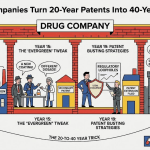
A company that files a composition-of-matter patent in year one, then files continuations directed to specific formulations in year three, method-of-use patents in year six as additional indications are identified, and dosage regimen patents in year nine as clinical data matures, can have patents issuing with 17-year terms from grant, all tracing priority to the original filing. This staggering means that even as earlier-issued patents expire or are challenged, later-issued patents remain enforceable. The practical effect is that generic or biosimilar challengers must litigate a series of patents sequentially rather than one terminal event, substantially increasing the cost and risk of early market entry.
AbbVie’s management of the Humira (adalimumab) portfolio illustrates the most aggressive version of this strategy. I-MAK analysis documented approximately 250 patent applications filed on adalimumab, with roughly 90% filed after the drug’s 2002 FDA approval. The result was US biosimilar exclusivity extending to 2023, approximately six years beyond the expiry of the original composition patent. Biosimilars entered the European market in 2018 when the EU patent protections expired, generating a natural experiment in the revenue impact of patent thicket construction: European adalimumab volumes shifted dramatically toward biosimilars while AbbVie maintained U.S. prices and volumes largely intact for an additional five years.
Divisional and CIP Applications: Capturing Adjacent Innovation
When an examiner issues a restriction requirement finding that a single application encompasses multiple independent inventions, the applicant must elect one invention for prosecution and file divisional applications for the rest. Divisional applications preserve the original priority date. For pharmaceutical companies running parallel CMC (chemistry, manufacturing, and controls) development alongside clinical programs, restriction requirements frequently arise when a single application covers both the API and the manufacturing process, or both the compound and a specific formulation. Filing divisionals preserves full protection across all distinct inventions without losing the priority date.
Continuation-in-part (CIP) applications allow new matter to be added, with new claims tied to the new subject matter receiving the CIP’s filing date while claims supported by the parent’s disclosure retain the parent’s priority date. In drug development, CIPs are appropriate when late-stage clinical data reveals a specific patient subpopulation or dosing context that was not foreseeable at the time of original filing. A CIP claiming that specific subpopulation with clinical evidence is harder to invalidate under obviousness than a pure continuation because it introduces new technical disclosure. The trade-off is a shorter effective exclusivity term on the CIP-specific claims, which must be weighed against the claim scope benefit.
Orange Book and Purple Book Listing: The Regulatory Patent Integration Layer
A patent’s commercial value in U.S. pharma depends heavily on whether it is listable in the FDA’s Approved Drug Products with Therapeutic Equivalence Evaluations (the Orange Book for small molecules) or the Biologics License Application reference (the Purple Book for biologics). Orange Book listing triggers the Hatch-Waxman 30-month stay mechanism: when an ANDA filer submits a Paragraph IV certification against a listed patent, and the brand company sues within 45 days, the FDA is barred from approving the ANDA for 30 months unless the court rules in the generic’s favor earlier.
Not all patent types are Orange Book-listable. The FDA’s listing regulations under 21 C.F.R. 314.53 restrict listing to patents that claim the drug substance, drug product, or a method of using the drug. Process patents and packaging patents are not listable. Courts have contested the boundaries of listable claims; Allergan’s litigation against generic challengers to Restasis (cyclosporine ophthalmic emulsion) involved questions about whether specific formulation claims met the ‘drug product’ listing standard.
The strategic implication is that filing a broad and diversified patent portfolio is necessary but not sufficient. IP teams must also evaluate each patent’s listability during prosecution and draft claims with listing eligibility in mind. A process patent that cannot be listed generates no 30-month stay and provides only a secondary litigation threat to generics that adopt the covered manufacturing route.
IV. Patent Term Extension, Regulatory Exclusivities, and the Stacking Strategy
Patent Term Restoration Under Hatch-Waxman
PTE under 35 U.S.C. 156 compensates patent holders for time lost during FDA’s regulatory review of the product. The calculation is complex: the extension equals half the time in clinical testing plus the full time in regulatory review, reduced by time during which the applicant failed to act with due diligence. The cap is five additional years, subject to the constraint that total post-approval exclusivity from all sources cannot exceed 14 years.
Only one patent per drug product can receive PTE, and the election must be made within 60 days of NDA approval. The elected patent must be the one that would have been infringed had the drug been marketed without approval. This means IP counsel must evaluate the remaining term of all patents in the portfolio at the time of approval and select the one for which PTE maximizes the commercially relevant exclusivity window. For a drug approved with eight years remaining on the composition patent but only three years remaining on a formulation patent, the composition patent is the obvious candidate, but the analysis should also consider which patent faces the greatest litigation risk: extending a patent that is subsequently invalidated in IPR generates no commercial benefit.
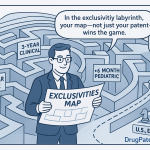
The FDA’s regulatory exclusivity system operates independently of, and sometimes in parallel with, the patent system. New Chemical Entity (NCE) exclusivity provides five years of protection during which no ANDA referencing the drug can be submitted. Orphan Drug Exclusivity (ODE) provides seven years of protection against FDA approval of the same drug for the same rare disease indication. Pediatric exclusivity adds six months to any existing patent or exclusivity term when the sponsor completes pediatric studies in response to a Written Request from FDA, regardless of the pediatric study outcome.
The stacking opportunity arises when multiple exclusivities can be triggered simultaneously or sequentially. A drug that qualifies as an NCE (five years), receives orphan designation for a rare indication (seven years from approval of the orphan indication), and completes pediatric studies (adding six months to each underlying protection) can accumulate more than a decade of regulatory exclusivity coverage on top of its patent portfolio. Shire’s Vyvanse (lisdexamfetamine) in ADHD and binge eating disorder held NCE exclusivity, benefited from multiple pediatric study completions, and carried a robust formulation patent portfolio, generating combined exclusivity protection that delayed generic entry substantially beyond the primary compound patent expiry.
The 180-day first-filer exclusivity for generic challengers creates an asymmetric incentive. The first ANDA applicant to file a Paragraph IV certification against each listed patent receives 180 days of generic exclusivity from the date of first commercial marketing or a court decision of invalidity or non-infringement, whichever comes first. Brand companies have attempted, with limited success, to prevent triggering of first-filer exclusivity through settlements or authorized generics launched simultaneously with the first filer. The FTC has reviewed several reverse payment settlements under the antitrust standard established in FTC v. Actavis (2013), where the Supreme Court held that large cash payments from brand to generic in exchange for delayed entry are not immune from antitrust scrutiny and must be evaluated under a rule-of-reason analysis.
Key Takeaways from Section IV:
The interaction between PTE election, NCE exclusivity, orphan designation, and pediatric exclusivity requires coordinated planning across IP, regulatory, and commercial teams before NDA submission, not after. Companies that optimize this stacking exercise retain revenue streams that uncoordinated programs lose by default. For analysts modeling patent cliff exposure, the relevant exclusivity expiry is the latest of all applicable protection layers, not merely the primary patent expiry date.
V. Lifecycle Management in Practice: Evergreening Roadmaps by Asset Class
Small Molecule Evergreening: The Standard Playbook
For conventional small-molecule drugs, the lifecycle management roadmap runs through a predictable sequence of opportunities, each of which generates patentable subject matter if executed with adequate scientific rigor.
The first wave of secondary patent filings targets salt forms, polymorphs, and solvates of the API, along with specific pharmaceutical compositions (tablet, capsule, suspension). These filings typically occur during early clinical development when CMC work generates characterization data on solid-state forms. The commercial value of polymorph patents is contingent on whether the specific crystalline form used in the approved drug product is the protected form; a generic using an alternative polymorph that achieves equivalent bioavailability will argue non-infringement.
The second wave targets method-of-use patents as clinical data accumulates across the development program. Phase III trials routinely generate data on specific patient subpopulations, dose-response relationships, and co-administration protocols that can support narrow, defensible method claims. These are listed in the Orange Book if they meet the FDA’s method-of-use listing criteria and require specific label language covering the patented method.
The third wave targets formulation improvements that offer genuine PK or compliance benefits: extended-release formulations reducing dosing frequency from twice-daily to once-daily, orally disintegrating tablets for patients with swallowing difficulties, or fixed-dose combinations pairing the primary drug with a complementary agent. Bristol-Myers Squibb and Pfizer’s development of Eliquis in fixed-dose combination formats, and the subsequent patent portfolio covering those combinations, represents a characteristic third-wave strategy for a blockbuster anticoagulant facing primary patent expiry.
Biologic Evergreening: A Different Playbook
For biologics, the evergreening toolkit differs substantially because the molecular complexity of large-molecule therapeutics generates different patent opportunities and different litigation dynamics.
The composition-of-matter patent on a biologic typically claims the amino acid sequence of the active protein, antibody, or antibody-drug conjugate. For monoclonal antibodies, the complementarity-determining regions (CDRs) that confer antigen specificity are the most protected structural elements. Because biosimilars are not required to be structurally identical, only ‘highly similar’ with no clinically meaningful differences in safety, purity, and potency, the composition patent landscape for biologics is more complex: small differences in glycosylation, aggregation, or post-translational modification may or may not constitute infringement of a composition claim depending on claim language and expert testimony.
Process patents carry greater commercial significance for biologics than for small molecules. Upstream manufacturing processes (cell line selection, culture conditions, feeding strategy) and downstream purification processes (chromatography sequences, viral inactivation steps) can be patented and are genuinely difficult for biosimilar manufacturers to replicate without using the protected process. Because biosimilar manufacturers must develop their own manufacturing processes to achieve comparability rather than identity, they are often exposed to process patent claims even when the final product is sufficiently similar for regulatory purposes.
The BPCIA’s ‘patent dance’ mechanism requires the biosimilar applicant to provide its abbreviated Biologics License Application (aBLA) and manufacturing information to the reference product sponsor within 20 days of the FDA accepting the aBLA for review. The reference product sponsor then has 60 days to identify patents it would assert in litigation, and the parties exchange lists of patents they believe relevant and assertions of infringement or non-infringement. This disclosure-heavy process creates a structured negotiation window before litigation begins, enabling both parties to assess exposure with more information than is typically available in Hatch-Waxman litigation. It also enables reference product sponsors to identify process infringement claims they might not have asserted based on public information alone.
AbbVie’s management of the Humira biosimilar entry into the U.S. market illustrates how the biologic patent thicket can operate independently of the BPCIA patent dance. AbbVie’s settlements with Amgen, Mylan, Samsung Bioepis, and other biosimilar developers were structured as licenses allowing U.S. entry in 2023, after AbbVie had captured approximately six additional years of U.S. exclusivity beyond the EU expiry in 2018. The license fee structures in those settlements were not publicly disclosed but were analyzed by I-MAK as generating substantial payments to AbbVie in exchange for the right to enter the U.S. market. From a revenue perspective, AbbVie’s U.S. Humira revenues remained above $14 billion annually through the 2018-2022 period, even as EU revenues declined precipitously from biosimilar competition.
Product Hopping: The Authorized Successor Strategy
Product hopping, or product switching, describes the strategy of introducing a next-generation formulation or delivery method of an existing drug shortly before the primary patent expires, then migrating prescribing volume to the successor product ahead of generic entry. If successful, the strategy shifts patient and physician preference to the new product before generics can establish substitution habits, with generics only able to enter against the older formulation.
Merck’s Keytruda (pembrolizumab) strategy ahead of its U.S. patent expiry provides the most high-profile current example. With core pembrolizumab patents expiring in 2028, Merck has filed extensively for a subcutaneous formulation of pembrolizumab that would deliver the same antibody through an injection lasting minutes rather than a 30-minute intravenous infusion. The subcutaneous formulation carries its own patent portfolio. If Merck secures approval and migrates prescribers to the subcutaneous product, biosimilar IV pembrolizumab faces a market where the innovator product is no longer the primary prescribed form. The I-MAK analysis of Keytruda’s patent portfolio identified 129 patent applications with more than 50% filed after initial FDA approval, a construction similar to the Humira strategy scaled to the oncology market.
The antitrust risk of product hopping is real. New York v. Actavis (2014) involved Namenda (memantine) for Alzheimer’s disease, where the Second Circuit found that Actavis’s withdrawal of the immediate-release formulation immediately before generic entry, combined with a hard switch to the extended-release formulation, constituted anticompetitive product hopping under a rule-of-reason analysis. The distinction between a permissible product improvement and an anticompetitive switch depends on whether the company withdraws the old product to prevent generic substitution or allows both to coexist in the market.
Investment Strategy Note: For institutional investors evaluating pharma equities with approaching LOE events, product-hopping strategies introduce both upside and legal risk. A successful subcutaneous switch for Keytruda could retain 60-70% of the IV revenue base under the new patent portfolio; a failed switch or antitrust challenge could accelerate revenue decline. The key variables are FDA approval timing for the new formulation, prescriber conversion rates in oncology (historically slower than primary care), and the probability of antitrust challenge from state attorneys general or private payer litigation.
VI. Patent Litigation: The Hatch-Waxman and BPCIA Battlegrounds
The Paragraph IV Mechanism and 30-Month Stay Economics
When a generic drug manufacturer files an ANDA certifying that a listed Orange Book patent is invalid or will not be infringed by the generic product (a Paragraph IV certification), it must notify the patent holder. If the patent holder files suit within 45 days, FDA approval of the ANDA is automatically stayed for 30 months. The 30-month stay is the most powerful near-term tool available to brand companies in Hatch-Waxman litigation because it imposes delay without requiring the brand to succeed on the merits.
The economics are straightforward: for a drug generating $3 billion annually, a 30-month stay is worth approximately $7.5 billion in revenue assuming 100% market retention, or substantially less after accounting for competitive erosion and authorized generic competition. Generic companies understand this calculus and price it into litigation strategy: filing a Paragraph IV challenge is economically rational even with low probability of success if the expected settlement value from a reverse payment agreement exceeds the litigation cost.
The 180-day exclusivity creates a ‘race to file’ dynamic among generic manufacturers. The first ANDA filer to submit a Paragraph IV certification receives 180 days of market exclusivity upon entry, which can be worth hundreds of millions on a high-volume primary care drug. This incentive drives generics to challenge patents well before they would otherwise expire, prospecting for compositional or non-obviousness weaknesses in secondary patents. The empirical data bears this out: a University of Chicago study documented that generic challenges succeed in invalidating or finding non-infringement on a substantial fraction of the challenged patents, with settlement rates above 70% before trial.
In 2023, 18% of all U.S. patent litigation cases involved pharmaceutical patents, according to PatentPC analysis of district court data. The success rate for patent owners in litigation was 32%, substantially lower than the general patent litigation benchmark. For IPR petitions filed at the PTAB, petitioners succeeded in instituting review and obtaining claim cancellation or amendment in approximately 70% of concluded proceedings. This asymmetry, high challenger success in IPR and relatively low brand success in district court, reflects both the quality issues in some secondary pharmaceutical patents and the procedural advantages available to challengers in the post-America Invents Act landscape.
Inter Partes Review: The PTAB as Second Front
The America Invents Act of 2011 created the Inter Partes Review (IPR) proceeding at the Patent Trial and Appeal Board as an administrative alternative to district court invalidity challenges. IPRs allow any third party to petition PTAB to review the validity of an issued patent on grounds of anticipation or obviousness over prior art. The standard of proof is preponderance of the evidence, lower than the clear-and-convincing standard required in district court invalidity challenges.
Generic manufacturers have used IPR extensively to invalidate secondary pharmaceutical patents. The Kyorin Pharmaceutical v. Allergan IPR proceedings targeting ophthalmic composition patents, and multiple IPRs against Shire’s Vyvanse formulation patents, illustrate the tactical use of IPR as a tool for clearing the patent thicket without the full cost of Hatch-Waxman district court litigation. The timing dynamics are important: IPR proceedings are designed to complete within 18 months of institution, while Hatch-Waxman district court cases run approximately 30 months on average. Courts rarely stay Hatch-Waxman cases pending IPR outcomes, meaning brand companies frequently litigate both fronts simultaneously, requiring coordinated prosecution and litigation strategy and substantially increasing legal costs.
The parallel proceedings environment creates strategic complexity for brand companies. An IPR petition filed concurrently with Paragraph IV ANDA submission means the brand must defend claim validity in both PTAB and district court simultaneously, with estoppel effects from PTAB final written decisions affecting what invalidity arguments the generic can raise in district court. Brand IP teams must coordinate closely with outside litigation counsel and PTAB specialists to manage these parallel tracks, avoid creating inconsistent positions on claim construction, and ensure that prosecution history estoppel from the patent prosecution file does not inadvertently limit claim scope in district court.
Biosimilar Patent Dance: Litigation Under the BPCIA
The BPCIA’s ‘patent dance’ was designed to front-load patent dispute resolution before biosimilar market entry, but litigation has resolved many of its procedural ambiguities. Amgen v. Sandoz (2017) established that the aBLA disclosure to the reference product sponsor is optional, not mandatory, but that a biosimilar applicant that skips the dance forfeits certain procedural protections, including the statutory bar on the reference product sponsor filing a declaratory judgment action before the biosimilar’s commercial launch notice. The practical effect is that most sophisticated biosimilar applicants participate in the dance, treating the information exchange as an opportunity to narrow the patent dispute before incurring full trial costs.
The written description requirement has been an active site of biologic patent litigation. In Juno Therapeutics v. Kite Pharma (2021), the Federal Circuit reversed a $1.1 billion jury verdict finding infringement of a CAR-T cell therapy patent, holding that the patent’s written description was insufficient because it failed to disclose a representative number of species across the claimed genus of antigen-binding elements. The court’s application of the ‘representative species’ test for written description adequacy directly affects how biologic patent claims should be drafted: claims to functional categories of binding elements (e.g., ‘any scFv that binds CD19’) without structural disclosure of representative species across the claimed functional space risk invalidity for written description insufficiency. This case materially changed how CAR-T and monoclonal antibody patent applications are drafted, requiring more extensive structural characterization of representative antibody sequences at the time of filing.
VII. AI-Assisted Drug Discovery: Patent Strategy in the Machine Learning Era
The Inventorship Problem and Its Commercial Consequences
AI’s integration into drug discovery has generated significant revenue for companies like Insilico Medicine, Recursion Pharmaceuticals, Schrödinger, and Exscientia, but it has also created a genuine legal ambiguity that patent strategies must address immediately.
Under U.S. patent law and the Federal Circuit’s 2022 decision affirming the USPTO’s rejection of DABUS patents, only natural persons can be named as inventors. The contribution to conception must come from a human, not an algorithm. The commercial consequence is that companies using machine learning models to identify novel chemical structures must maintain meticulous records documenting the specific human decisions that constitute inventive conception: which training data was selected, how model outputs were filtered and evaluated by human researchers, which candidates from the model’s ranked list were selected for synthesis and why, and which experimental results from human-conducted assays informed the decision to advance a specific compound. Without this documentation, a competitor challenging the patent could argue that the human ‘contribution’ was merely following the machine’s recommendations and did not rise to the level of inventive conception.
The non-obviousness bar has also shifted in practice. The POSA in AI-augmented drug discovery has access to generative chemistry tools capable of exploring enormous chemical space. If a machine learning model trained on public data would have suggested the claimed compound, and if a person of ordinary skill would routinely use such a model, that prior prediction may render the compound obvious. The USPTO’s 2024 guidance on AI-assisted inventions requires applicants to identify specifically how human contribution rises above the AI’s suggestion, which in practice means claim language and specification support must anchor the novel contribution to human experimental insight, structural reasoning, or unpredictable results rather than mere AI output.
The IP Portfolio Strategies of AI-First Drug Discovery Companies
Recursion Pharmaceuticals has built a patent strategy centered on proprietary data generation methods and the computational models trained on that data, rather than on specific drug candidates identified through the models. The logic is that the value in an AI-first platform is the pipeline-generation capability, not any single candidate, and that protecting the methods of data collection, featurization, and model architecture preserves the platform’s commercial advantage even as individual candidates advance or fail. Recursion’s filing history reflects extensive process patent coverage on phenomic profiling methods and machine learning architectures for target identification.
Insilico Medicine’s approach has been different: the company has advanced AI-identified candidates through IND and Phase I trials (ISM001-055 for idiopathic pulmonary fibrosis reached Phase II as of 2023) and built composition-of-matter patents on the specific compounds identified through AI-assisted discovery. The patent applications for these candidates face the standard scrutiny on non-obviousness but benefit from the same legal standards as conventionally discovered compounds: if the compound is novel and non-obvious given prior-art structures and the knowledge available to a POSA at the time of filing, it is patentable regardless of the discovery method.
Schrödinger’s commercial model involves licensing its physics-based simulation platform to drug discovery partners while also advancing its own internal pipeline. Its patent strategy covers both the computational methodology and the specific drug candidates advanced internally, creating a hybrid IP portfolio that protects both the platform and its products.
Key Takeaways from Section VII:
AI in drug discovery does not eliminate the need for robust patent protection; it changes what needs to be protected and how it must be documented. Companies must implement invention documentation protocols specifically designed for AI-assisted programs, capturing human decision points throughout the discovery workflow. The non-obviousness standard requires evidence that AI-identified compounds produce unexpected results or are not simply predictable from prior-art structures. Platform companies should protect their data generation and model architecture through process patents and trade secret law alongside any compound-specific protection.
VIII. Personalized Medicine, Gene Therapy, and Digital Therapeutics: The Frontier Patent Challenges
Gene Therapy Patent Architecture: CRISPR and CAR-T
The gene therapy sector presents some of the most contested patent disputes in biopharma history. The CRISPR-Cas9 patent interference and inter partes review proceedings between the Broad Institute (licensed to Editas Medicine and others) and the University of California Berkeley (licensed to Intellia Therapeutics and Caribou Biosciences, with early ties to CRISPR Therapeutics) have generated a parallel body of case law governing priority, written description, and the scope of composition and method claims for gene editing tools.
The Broad Institute’s claim to the patent on CRISPR-Cas9 in eukaryotic cells, upheld by the PTAB in 2017 and affirmed by the Federal Circuit in 2018, turned on whether the University of California’s original CRISPR patent disclosure sufficiently enabled the extension to eukaryotic systems. The PTAB concluded there was no interference-in-fact because the two sets of patents were directed to distinct inventions: Berkeley’s in prokaryotic systems, Broad’s in eukaryotic cells. The downstream licensing consequences for therapeutic programs using CRISPR in human cells were substantial: any company using Cas9 for in vivo or ex vivo gene editing in human cells must navigate licenses from both estates unless the relevant patent claims are subsequently narrowed or invalidated.
The written description adequacy issue from Juno v. Kite applies directly to CAR-T therapy patents more broadly. Any patent claiming a genus of CAR constructs defined by function (e.g., ‘a chimeric antigen receptor that binds a tumor-associated antigen and activates T cells upon binding’) without disclosing representative structures that enable a POSA to practice the full scope of the genus faces serious written description risk. Drafters of CAR-T patents after Juno must include extensive sequence data and experimental results across multiple binding elements to support broad genus claims.
Personalized Medicine: Companion Diagnostic Co-Development and IP
Personalized medicine programs, particularly oncology therapeutics tied to companion diagnostic (CDx) tests, generate IP across two distinct frameworks: the drug itself and the diagnostic assay. The Roche/Foundation Medicine model illustrates how a CDx can be patent-protected independently while its use as a companion to a specific therapy is covered by method-of-use patents on the therapeutic program.
The Supreme Court’s decision in Mayo Collaborative Services v. Prometheus Laboratories (2012) significantly affected the patentability of diagnostic methods tied to natural correlations. The Court held that a method of determining dosing of thiopurine drugs based on metabolite levels in the blood was not patent-eligible because it claimed a natural relationship between metabolite concentration and drug efficacy. The practical consequence is that diagnostic method patents must claim a specific, non-abstract method of measurement, data processing, or result interpretation rather than merely the natural correlation between a biomarker and a drug response. For companion diagnostics in oncology, patent claims are typically directed to the specific assay method, the reagents used, or the analytical pipeline for variant classification, not the correlation itself.
Digital Therapeutics: Software, Devices, and the Alice Problem
Prescription digital therapeutics (PDTs) present a specific patent eligibility challenge under the Alice/Mayo framework governing software patents. Under Alice Corp. v. CLS Bank International (2014), software claims must do more than apply an abstract idea on a computer; they must contain an ‘inventive concept’ that transforms the abstract idea into a patent-eligible application.
For a PDT like Pear Therapeutics’ reSET (for substance use disorder) or Akili Interactive’s EndeavorRx (for pediatric ADHD), the patent strategy must anchor claims in the specific, concrete technical implementation of the therapeutic software, the particular interface design, the specific algorithm producing the therapeutic effect, or the novel hardware-software interaction, rather than the general concept of delivering behavioral therapy through a digital device. Claims drafted at a high level of abstraction (‘a method of treating ADHD comprising presenting cognitive tasks on a computing device’) will fail Alice scrutiny. Claims that specify the particular cognitive task design, the specific adaptive algorithm parameters, and the measurable neurological endpoint with clinical evidence have a substantially higher probability of surviving eligibility analysis.
IX. Global Patent Strategy: Filing Geography, TRIPS Flexibilities, and Harmonization
Jurisdiction-by-Jurisdiction Patent Prosecution
The global pharmaceutical patent landscape is not uniform. The USPTO’s obviousness standard (35 U.S.C. 103), the EPO’s inventive step requirement, and the Indian Patent Office’s Section 3(d) bar each apply different substantive tests to the same compound, producing different grant outcomes across major markets.
For U.S. prosecution, the examiner will cite prior-art references and argue that a POSA would have been motivated to combine or modify those references to arrive at the claimed compound with a reasonable expectation of success. The argument against obviousness must demonstrate either that the combination would not have been obvious to try among many alternatives, or that the compound produces unexpected results relative to the closest prior-art compounds.
The EPO’s inventive step analysis uses the problem-solution approach, in which the examiner identifies the closest prior art, formulates the objective technical problem the invention solves relative to that art, and asks whether the claimed solution would have been obvious to a POSA seeking to solve that problem. For pharmaceutical claims, this means the technical effect of the compound (its potency, selectivity, metabolic stability, or clinical efficacy) must be tied to specific structural features distinguishing the claim from the prior art.
India’s Section 3(d), enacted in 2005 as part of the Indian Patents Act’s TRIPS compliance, bars patents on new forms of known substances unless the applicant demonstrates ‘significantly enhanced efficacy.’ The Supreme Court of India’s 2013 decision in Novartis AG v. Union of India upheld the rejection of Novartis’s patent on the beta-crystalline form of imatinib (Gleevec/Glivec), finding that improved bioavailability attributable to a polymorph did not constitute significantly enhanced efficacy within the meaning of the statute. This decision has been applied to exclude several formulation and polymorph patents that would have been routinely granted by the USPTO.
PCT Strategy and the 30-Month National Phase Entry
The Patent Cooperation Treaty (PCT) allows an applicant to file a single international application with WIPO that establishes a filing date in all PCT member states simultaneously. The applicant then has 30 months from the priority date to enter the national phase in each desired jurisdiction, paying national fees and complying with local formal requirements. The PCT international search report and written opinion on patentability provide an early, non-binding assessment of the application’s prospects, which is valuable for deciding which markets to pursue national phase entry given the application’s apparent strength.
For pharmaceutical programs, the PCT strategy should track commercial prioritization: markets where the drug will be launched, where it will be manufactured, where major export volumes originate, and where generics might be produced for re-export. Filing in 30-40 PCT member states is common for blockbuster programs; more targeted strategies covering 15-20 key markets are standard for specialty or rare disease drugs with narrower commercial footprints.
Investment Strategy Note: Global patent coverage data is directly usable by institutional investors evaluating a drug’s protected revenue geography. A drug with U.S. patent protection but no EU, Japanese, or Chinese patents faces competitive entry in those markets before the U.S. exclusivity period ends, compressing global revenue projections materially. Patent landscape analyses, available through WIPO PATENTSCOPE and DrugPatentWatch, allow analysts to map patent expiry by jurisdiction and forecast geographic revenue cliff timing with precision unavailable from public financial filings alone.
X. Portfolio Defense, Competitive Intelligence, and the Litigation-Ready Organization
Building the Litigation-Ready IP Organization
Patent litigation in pharmaceuticals is not a discrete event managed by outside counsel; it is a sustained operational mode that may run for three to five years across multiple proceedings. Companies that treat patent defense reactively, pulling in outside litigation specialists only after a Paragraph IV notice arrives, lose time and strategic positioning that could have been preserved through earlier preparation.
A litigation-ready pharmaceutical IP organization maintains current claim charts mapping each Orange Book-listed patent to the approved product’s specific formulation and use, updated whenever the drug’s label changes. It tracks ANDA filings against the drug through the FDA’s databases and third-party patent watch services, identifying first filers as early as possible to begin evaluating whether a Paragraph IV certification is likely and on which patents. It maintains inventor availability and institutional knowledge for any patent that might be litigated, because inventor testimony on conception and reduction to practice is frequently contested in Hatch-Waxman trials. It also runs freedom-to-operate analysis on competitors’ pipeline drugs, identifying whether the company’s patents might support offensive claims against a competitor’s product.
Competitive patent intelligence is a core function, not an optional research project. Patent filings by competitors reveal R&D priorities months or years before clinical development disclosures. An oncology company filing extensively in KRAS G12C combination regimens signals its next-generation combination development program. A biologic manufacturer filing process patents around a specific cell culture media composition signals a manufacturing optimization effort that might intersect with the company’s own process claims.
Key Takeaways: The Complete Drug Patent Value Framework
The economics of pharmaceutical IP protection depend on the interaction of five variables: effective exclusivity duration (the latest expiry across all patents and regulatory exclusivities), claim scope breadth (how difficult it is for generics or biosimilars to design around the portfolio), listing coverage (which patents generate 30-month stays), litigation readiness (how quickly and effectively the company can enforce against challengers), and global geography (how many major markets carry patent protection).
Companies that optimize all five variables simultaneously, through coordinated prosecution, staggered secondary patent filing, regulatory exclusivity stacking, Orange Book listing strategy, pre-litigation preparation, and multi-jurisdictional coverage, generate materially longer exclusivity periods and higher NPV per drug than companies that manage IP reactively. The Humira model, however controversial, is the proof case: AbbVie extended U.S. exclusivity approximately six years beyond what a simpler IP strategy would have generated, capturing revenue that has directly funded the pipeline Rinvoq (upadacitinib) and Skyrizi (risankizumab) needed to compensate for the post-2023 revenue decline.
For R&D teams, the takeaway is that IP strategy must begin at the point of synthesis, not at the IND filing. Provisional applications should capture full scaffold series. CMC development decisions should account for patentability of the selected solid-state form. Formulation choices should be made with secondary patent opportunity in mind. Clinical program design should generate data that supports method-of-use claims in the specific patient populations most likely to drive commercial uptake.
For institutional investors, the takeaway is that patent portfolio depth and architecture predict post-LOE revenue retention better than any other publicly available variable. The number of Orange Book-listed patents, their type distribution (composition, formulation, method), their expiry dates by jurisdiction, and the history of Paragraph IV challenges and their outcomes are all data points that should be incorporated into pharma equity valuation models as a matter of routine.
Patent data sourced from USPTO, FDA Orange Book, WIPO PATENTSCOPE, and DrugPatentWatch. Revenue figures and litigation outcomes reflect publicly available records. This analysis does not constitute legal or investment advice.