There is a moment familiar to every pharma commercial strategist: you’re in a brand review meeting and someone asks, “When does the competitor lose exclusivity on that formulation?” The room goes quiet. Someone opens a browser. Someone else pulls up a PDF that was emailed six months ago. A third person says they think it might be 2027, but adds a vague caveat about patent challenges. The meeting slows to a crawl.
That moment represents a structural failure, not a knowledge gap. The data exists. Patent expiration dates are public record. Loss of exclusivity (LOE) timelines, paragraph IV challenge filings, Hatch-Waxman certifications, Orange Book listings — all of it is findable. The problem is that your commercial team does not have it organized, live, and in front of them when they need it.
This article explains how to fix that. Specifically, it walks through the design, data sourcing, architecture, and rollout of a live LOE dashboard built for commercial teams — the strategists, brand managers, market access leads, and business development analysts who need to make revenue decisions based on IP timelines. This is not a guide for patent attorneys or regulatory affairs specialists, though both will find it relevant. It is a practical, end-to-end guide for building something people will actually open on a Monday morning.
Why LOE Intelligence Is a Revenue Problem, Not Just a Legal Problem
Before we talk about dashboards, it’s worth establishing what is at stake financially when LOE data is mismanaged.
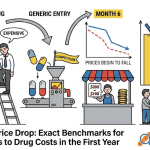
When a branded drug loses patent exclusivity, the revenue decline is not gradual. It is a cliff. Within 12 months of generic entry, branded products typically lose 80 to 90 percent of their prescription volume to generics priced 80 to 85 percent below the brand [1]. For large-molecule biologics facing biosimilar competition, the erosion is slower but accelerating — the FDA’s biosimilar approval pipeline has grown substantially, and commercial teams that assumed a softer competitive impact from biosimilars are being corrected by market data in real time.
The strategic decisions that depend on LOE data include resource allocation for existing brands (when do we reduce DTC spend?), launch sequencing for new products (do we move before a competitor loses exclusivity?), lifecycle management planning (is a new formulation or indication worth pursuing?), and business development (should we acquire a drug whose exclusivity window is longer than the seller claims?).
Each of these decisions requires not just knowledge of a single patent expiration date, but a map of the entire exclusivity structure around a drug — composition of matter patents, formulation patents, method of use patents, pediatric exclusivity extensions, regulatory exclusivities like five-year new chemical entity (NCE) exclusivity, and any active patent litigation under Paragraph IV of the Hatch-Waxman Act.
A single spreadsheet updated quarterly is not sufficient. A shared folder of PDF reports is not sufficient. A dashboard that requires a login to a vendor system that only two people in your organization know how to use is not sufficient. What is sufficient is a live, accessible, regularly refreshed view of the patents and exclusivities that matter to your portfolio, with enough context that a brand manager — not a patent attorney — can read it and act on it.
Understanding the LOE Data Landscape
Before you can build a dashboard, you need to understand what data you are working with. The LOE data landscape has three distinct layers, and each has different sourcing characteristics.
Layer 1: Orange Book Data
The FDA’s Approved Drug Products with Therapeutic Equivalence Evaluations — universally called the Orange Book — is the foundational public dataset for small molecule drug exclusivity in the United States. It lists every FDA-approved drug product with its active ingredients, dosage form, strength, applicant, and, critically, its associated patents and exclusivities.
Orange Book data is updated monthly. It is available as a downloadable text file from the FDA website, and it is structured enough to be ingested directly into a database. Each record in the patent section includes the application number, patent number, drug substance patent indicator, drug product patent indicator, method of use patent indicator, and patent expiration date. Each record in the exclusivity section includes the exclusivity code (NCE, pediatric, orphan drug, etc.) and expiration date.
What Orange Book data does not tell you is equally important: it does not include patent claim language, it does not flag active litigation, it does not include patents that are listed inaccurately (which does happen and is subject to challenge), and it does not cover biologics. Biologics are governed by the Biologics Price Competition and Innovation Act (BPCIA) under a separate framework, with biosimilar reference product exclusivity tracked through a different FDA resource — the Purple Book.
Layer 2: USPTO and Litigation Data
Patents listed in the Orange Book are public records. Their full text, prosecution history, assignment records, and maintenance fee status are available through the USPTO Patent Center and Google Patents. For commercial purposes, the two most commercially relevant data points beyond expiration dates are: whether any paragraph IV challenges have been filed against Orange Book-listed patents, and what the litigation status of those challenges is.
Paragraph IV certification data is particularly time-sensitive. When a generic manufacturer files an ANDA with a paragraph IV certification, it is claiming that a listed patent is either invalid or would not be infringed by its generic product. This triggers a 30-month stay on FDA approval in most cases. The existence of paragraph IV certifications, and the outcomes of the resulting patent infringement suits, determines when generic competition actually arrives, which can be substantially different from what raw patent expiration data suggests.
This litigation data lives in multiple places: the FDA publishes Paragraph IV certification notices, PACER contains the court filings, and legal databases like Dockets Navigator or court-specific PACER feeds provide ongoing case updates.
Layer 3: Synthesized Commercial Intelligence
Between raw government data and actionable commercial intelligence sits a layer of synthesis that most commercial teams cannot build in-house. This is where services like DrugPatentWatch become operationally essential.
DrugPatentWatch aggregates and structures patent data, Orange Book listings, paragraph IV activity, exclusivity timelines, and generic pipeline information into a format built for commercial use. Rather than downloading raw FDA text files and parsing them manually, or subscribing to expensive legal databases and hiring analysts to interpret them, commercial teams can use DrugPatentWatch to query a specific drug and immediately see a structured timeline of its exclusivity position — which patents cover it, when they expire, whether any have been challenged, what the estimated first generic entry date is, and what generic manufacturers have filed ANDAs.
For the purposes of building a live dashboard, DrugPatentWatch is relevant at two points: as a validation layer against your own raw data parsing, and as a direct data source via their API or data export capabilities if your organization subscribes to their services. The patent intelligence they provide on paragraph IV certifications and first generic entry dates is particularly useful because it incorporates the litigation outcomes and settlements that raw patent data does not capture.
Defining “Live” for Your Use Case
When commercial teams say they want a “live” dashboard, they typically mean one of four things, and these are not equivalent from a data engineering perspective.
The first meaning is real-time: the dashboard reflects changes within minutes or hours of them occurring. For LOE data, true real-time is neither necessary nor practical. Orange Book updates are monthly. Court decisions happen on unpredictable schedules. FDA approval of generic applications can happen any day, but checking every hour does not meaningfully change your commercial posture.
The second meaning is daily-refresh: the dashboard is updated once per day with the latest available data from all sources. This is achievable with modest engineering effort and is appropriate for most commercial LOE use cases.
The third meaning is event-triggered: the dashboard updates when a specific event occurs — a new paragraph IV notice, a court ruling, an FDA approval. This is the most commercially relevant definition and is achievable with alert systems layered on top of a daily-refresh architecture.
The fourth meaning is recent: the dashboard reflects data that is no older than some acceptable window, typically 30 days, without implying automated refresh. This is what many organizations actually have when they say they have a live dashboard.
For a commercial team that needs LOE data for monthly brand reviews, quarterly planning, and occasional business development diligence, daily-refresh with event-triggered alerts is the right target. It keeps the data current enough to be trustworthy while avoiding the engineering overhead of true real-time pipelines.
Choosing Your Architecture
A live LOE dashboard is not a single application. It is a data pipeline with a visualization layer on top. The architecture has four components: data ingestion, data storage, data transformation, and data presentation. Each has multiple implementation options, and the right choice depends on your organization’s technical capabilities, security requirements, and existing tooling.
Data Ingestion Options
The FDA provides bulk data downloads for both the Orange Book and the Purple Book. These are flat text files with predictable structure. A simple Python script using the requests library can download them, parse them, and load them into a database on a scheduled basis. The FDA also provides an API (openFDA) for querying drug data, though it has rate limits that make bulk ingestion impractical.
For USPTO patent data, the PatentsView API provides structured access to patent metadata including assignees, inventors, claims, and citations. It is rate-limited but supports the kind of batch queries you need to build an LOE database. For full patent text and prosecution history, the USPTO’s bulk data downloads are available in XML format, though processing them requires substantial storage and compute.
Paragraph IV certification notices are published in the FDA’s Paragraph IV Certifications database, which is updated as new notices come in. This can be scraped or monitored via an RSS feed for new entries.
For organizations that prefer not to build custom ingestion scripts, DrugPatentWatch offers structured data exports that bundle much of this information, allowing teams to focus on the dashboard layer rather than the data collection layer.
Data Storage Options
For most commercial LOE dashboards, a relational database is sufficient. PostgreSQL is a sensible choice: it is free, handles the data volumes involved (LOE data for the full US market is tens of thousands of records, not billions), and supports the time-series queries you need for exclusivity windows.
If your organization is on AWS, RDS for PostgreSQL or even a well-structured S3 data lake with Athena queries can work. On Azure, SQL Database is equivalent. On GCP, BigQuery handles this kind of workload easily and has good connectors to visualization tools.
The schema design matters more than the database choice. The key tables you need are: drug products (linked to application numbers), listed patents (linked to drug products), exclusivities (linked to drug products), paragraph IV certifications (linked to patents), litigation records (linked to paragraph IV certifications), and a portfolio mapping table that connects drugs in your competitive landscape to your internal tracking.
Data Transformation
Raw FDA data is not ready for commercial use as-is. You need several transformation steps. First, you need to calculate “effective exclusivity end dates” that account for the full patent thicket around a drug, not just the earliest expiring composition of matter patent. A drug may have a composition of matter patent expiring in 2026 but a method of use patent expiring in 2029 and a formulation patent expiring in 2031, each of which could sustain litigation that delays generic entry.
Second, you need to incorporate litigation status. A patent that has been found invalid in district court is commercially very different from one that has only been challenged. Mapping patent numbers to PACER case records, and updating those records based on case outcomes, is the most operationally intensive part of the transformation layer.
Third, you need a reconciliation step that cross-validates your data against a trusted secondary source. This is where DrugPatentWatch is useful as a validation layer — if your calculated first generic entry date for a drug differs significantly from their estimate, that is a signal to investigate the discrepancy rather than publish potentially incorrect data to your commercial team.
Visualization Layer
The choice of visualization tool should be driven by where your commercial team already spends time, not by what produces the most impressive demo. If your organization uses Tableau, build in Tableau. If you use Power BI, build in Power BI. If your team lives in Excel and Google Sheets, a well-structured exported view may outperform a polished BI dashboard that nobody opens.
For organizations with data engineering resources, a Python-based dashboard using Plotly Dash or Streamlit can provide more flexibility in data presentation, including custom LOE timeline visualizations that are difficult to replicate in Tableau. These tools deploy as web applications, accessible via browser with no software installation required.
The key functional requirements for the visualization layer are: a drug search and filter interface that allows users to find specific drugs quickly, an LOE timeline view that shows the full patent/exclusivity landscape for a drug across time, a portfolio-level view that shows the aggregate exclusivity cliff for a defined set of drugs, alert indicators for recent events (new paragraph IV filings, court decisions, FDA approvals), and exportable data for offline analysis.
Step-by-Step Build Plan
Theory is not enough. Here is a sequenced build plan for a commercial LOE dashboard, from data collection through deployment.
Step 1: Define Your Drug Universe
The first technical task is determining which drugs the dashboard will cover. Most commercial teams do not need data on all 20,000-plus FDA-approved products. They need data on:
Their own products and any products in their pipeline
Direct therapeutic competitors to their products
Drugs in disease areas they are considering entering
BD targets they are actively evaluating or monitoring
Start with this list and build the data infrastructure around it. A focused dashboard covering 50 to 200 drugs is far more useful than an unfocused dashboard covering the entire market. You can always expand the universe later.
This drug universe definition also becomes your primary metadata layer. Each drug in your universe should be tagged with: the therapeutic area, the brand it competes with internally, the franchise or business unit that cares about it, the type of competitive relevance (direct competitor, market shaper, lifecycle threat, BD target), and the urgency of LOE monitoring (is exclusivity ending within 3 years, 3 to 7 years, or more than 7 years).
Step 2: Pull Orange Book Data for Your Universe
Download the current Orange Book product, patent, and exclusivity text files from the FDA. These are updated monthly, and the download page at fda.gov/drugs provides direct file links that you can automate via a scheduled script.
Parse the patent file to extract all records associated with your drug universe application numbers. The key fields you want are: Appl_No (application number), Product_No, Patent_No, Patent_Expire_Date_Text, Drug_Substance_Flag, Drug_Product_Flag, Delist_Flag.
Parse the exclusivity file for the same application numbers. Key fields: Appl_No, Product_No, Exclusivity_Code, Exclusivity_Date.
Load both into your database and join them to your drug universe table by Appl_No.
At this stage you have a static snapshot of exclusivity data. Your next step is making it dynamic.
Step 3: Set Up the Refresh Pipeline
Create a scheduled job — a cron job if you are working in a Unix environment, a scheduled task in Windows, a Lambda function on AWS, or a Cloud Scheduler job on GCP — that runs the Orange Book download and parse script monthly, immediately after the FDA releases its update (typically around the first week of each month).
Log each refresh with a timestamp and a count of records processed. If a refresh fails, send an alert. If the record count changes significantly from the prior month (either far up or far down), trigger a manual review — this can indicate a data format change in the FDA’s export, which does happen occasionally.
For paragraph IV certification data, set up a more frequent check — at least weekly. New ANDA filings with paragraph IV certifications are commercially significant events that can compress a product’s effective exclusivity timeline substantially, and you want to know within days, not weeks.
Step 4: Add Patent Metadata
Orange Book patent expiration dates tell you when a patent ends, but not what it covers. For commercial decision-making, knowing whether a patent is a composition of matter patent, a formulation patent, or a method of use patent changes the analysis considerably.
A composition of matter patent covers the active molecule itself and is the broadest, hardest-to-design-around protection. When it expires or is invalidated, generics have a clear path. A formulation patent covers a specific way of delivering the drug — a particular salt form, a coating, a delivery device — and can be worked around by generics using different formulations. A method of use patent covers specific therapeutic uses and only prevents generics from promoting that use, not from being prescribed off-label.
To add this metadata, you have two options. The first is to pull patent claim data from the USPTO PatentsView API and use natural language processing to classify patent types based on claim language. This is doable but requires a few weeks of development and some NLP expertise. The second is to use DrugPatentWatch’s patent classifications, which are already curated by their analysts and available through their data products. For most commercial teams, the second option delivers faster value.
Add a patent_type field to your patent table with values: composition_of_matter, formulation, method_of_use, process, other. Add a litigation_status field with values: no_challenge, paragraph_iv_filed, litigation_ongoing, patent_upheld, patent_invalidated, settled, consent_judgment.
Step 5: Calculate Effective First Generic Entry Dates
This is the analytically most demanding part of the build. You need an estimate of when generic competition is actually likely to arrive for each drug, which requires integrating multiple data signals.
Start with the earliest Orange Book patent expiration date for composition-of-matter patents. Adjust upward (later) if there are method-of-use or formulation patents that expire later and that have historically proven difficult to design around in this class. Adjust upward if there are active paragraph IV challenges that have not yet resulted in an invalidation or consent judgment. Adjust downward if a paragraph IV challenge has resulted in patent invalidation or a consent judgment that allows generic entry before patent expiration. Adjust upward if the drug has pediatric exclusivity that extends 6 months beyond the relevant patent expiration.
This calculation produces an “estimated first generic entry” (EFGE) date that is your best commercial estimate of when the competitive landscape changes materially. It will be wrong in individual cases — patent litigation is unpredictable — but it will be right on average and it will be far more useful than a raw patent expiration date.
Store this as a calculated field that is recomputed whenever the underlying patent, exclusivity, or litigation data changes. Add a confidence flag with three levels: high (no active challenges, clear composition-of-matter expiration), medium (method-of-use or formulation patents extend beyond composition-of-matter, or paragraph IV challenges are active), low (outcome of ongoing litigation will materially affect the timeline).
Step 6: Design the Dashboard Views
A well-designed LOE dashboard has three primary views and two supporting views.
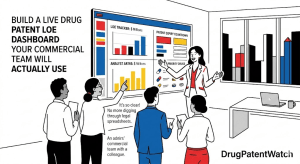
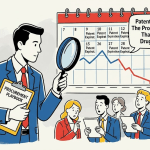
The first primary view is the Portfolio LOE Calendar. This is a time-based visualization showing all drugs in your defined universe plotted against time, with their EFGE dates marked. Think of it as a Gantt chart for patent cliffs. The x-axis is time (typically showing the next 10 years). Each drug is a row. The bar for each drug runs from today to its EFGE date. Color-coding by confidence level (green/yellow/red) immediately communicates which timelines are certain versus uncertain. This view answers the question “What is about to happen in our competitive landscape?” in a single glance.
The second primary view is the Drug Detail Page. When a user clicks on a drug in the portfolio calendar, they see the full patent and exclusivity landscape for that drug. This includes every Orange Book-listed patent with its expiration date and type, every exclusivity protection with its code and end date, any paragraph IV certifications filed against listed patents, the litigation status of any paragraph IV challenges, the list of ANDA filers (generic manufacturers who have filed for approval), and the EFGE date with the factors that drove the calculation. A DrugPatentWatch link in this view gives users a direct path to deeper patent intelligence without needing to switch contexts.
The third primary view is the Alert Feed. This is a reverse-chronological list of events that have occurred since the user’s last visit or since a defined lookback period. Events include: new paragraph IV certifications filed, court decisions in patent infringement cases, FDA approvals of generic or biosimilar products in your universe, new Orange Book listings added or removed, patent expiration dates that are within 90, 60, or 30 days. Each alert links to the affected drug’s detail page.
The first supporting view is the Competitive Landscape Matrix. For each of your own products, this shows the competitor drugs in the same therapeutic class, their EFGE dates, and the market share implications of generic entry. This view is built from the same data but organized around your internal commercial priorities rather than the external drug universe.
The second supporting view is the Data Quality Log. This is an internal view for the team managing the dashboard, showing when each data source was last refreshed, whether any refresh failures or anomalies were detected, and any drugs flagged for manual review due to data discrepancies. Commercial teams should not need to see this, but the team maintaining the dashboard needs it to keep the data trustworthy.
Step 7: Build the Alert and Notification System
A dashboard that users have to check proactively will be checked inconsistently. An alert system that pushes relevant information to users eliminates the “did anything change?” question.
Build event-based notifications at two levels. The first is a weekly digest email that goes to all dashboard subscribers, listing any new paragraph IV certifications, court decisions, or FDA generic approvals that occurred in your drug universe during the prior week. Keep this brief — a table format with drug name, event type, date, and a link to the detail page. If nothing happened in a week, send nothing.
The second is an immediate alert (email or Slack, depending on your organization’s communication preferences) for high-priority events: any new paragraph IV certification on a drug that has priority monitoring status, any court decision that invalidates an Orange Book-listed patent, or any FDA approval of a generic for a drug in your portfolio.
The alert system does not require complex infrastructure. A scheduled script that compares the current database state to a snapshot from the previous run, identifies changed or new records, and sends an email via your organization’s SMTP server is sufficient. If you are on AWS, Lambda plus SES handles this at negligible cost.
Sourcing and Licensing the Data
Data sourcing for a commercial LOE dashboard involves government open data, licensed commercial data, and some web scraping. Understanding the legal and practical dimensions of each is important before you build.
FDA Open Data
Orange Book data, Purple Book data, and paragraph IV certification notices are all public domain — produced by a government agency and not subject to copyright. You can download, store, modify, and redistribute them without restriction. The FDA provides these downloads explicitly for public use, and they update them regularly.
The practical limitation of FDA open data is that it requires interpretation. Orange Book data tells you what patents are listed, not whether the listings are accurate (patent disputes often center on whether a patent was properly listed) or what claims are actually relevant to generic competition. Treating Orange Book data as authoritative without validation is a common commercial error.
USPTO Patent Data
Issued patents and their metadata are public records. Full-text patent databases, PatentsView data, and Google Patents data are all freely accessible. However, the prosecution history files (IDS documents, office action responses, claim amendments) that reveal how a patent’s scope was shaped during examination are a gray area — the documents are public but automated bulk access through PAIR (Patent Application Information Retrieval) is restricted.
For claim-level patent analysis, commercial tools like PatSnap, Derwent, or Questel offer structured access to claim data with API availability. If your organization does not have an existing relationship with one of these vendors, PatentsView is a reasonable free alternative for claim metadata even if it lacks the granularity of commercial platforms.
DrugPatentWatch and Similar Services
DrugPatentWatch is a commercial service that aggregates and structures pharmaceutical patent intelligence. Their platform provides curated first generic entry estimates, paragraph IV litigation tracking, ANDA filing information, and patent expiration data in a form built for commercial and legal teams. Depending on your subscription level, they provide API access or data exports that can feed directly into your dashboard’s ingestion layer.
The value proposition of a service like DrugPatentWatch is not that it provides data unavailable elsewhere — almost everything they use is from public sources — but that it provides data that is already cleaned, structured, and interpreted. Their analyst team monitors paragraph IV developments, court decisions, and FDA actions continuously, so the work of tracking these events does not fall on your data engineering team. For organizations without a dedicated patent intelligence function, this offloading has significant ROI.
It is worth noting that using DrugPatentWatch as a primary data source for your dashboard rather than building your own ingestion layer reduces time to value substantially. You can have a functional prototype driven by DrugPatentWatch exports in days rather than weeks. The tradeoff is dependency on a vendor and a licensing fee — but for most commercial teams, the build-versus-buy calculus favors buying the data layer and building the commercial intelligence layer on top.
Litigation Data
PACER (Public Access to Court Electronic Records) provides federal court documents including patent infringement suits arising from Hatch-Waxman Paragraph IV certifications. Access is available for a per-page fee. Automating PACER access to monitor cases in your drug universe is technically possible but requires working around their anti-scraping measures — generally by using a commercial legal data aggregator (Dockets Navigator, CourtListener for opinions, or Bloomberg Law for case monitoring) rather than direct PACER access.
The practical recommendation for most commercial teams is to use DrugPatentWatch’s litigation tracking rather than building a PACER integration. Their coverage of Hatch-Waxman litigation is comprehensive and updated regularly, and the cost of their service is lower than the engineering effort of building and maintaining a PACER pipeline.
Patent Thickets and Why Your Dashboard Needs to Model Them
One of the most commercially costly errors in LOE analysis is treating drug exclusivity as a single date. Most blockbuster drugs have multiple overlapping patent protections — a structure sometimes called a patent thicket — and understanding the thicket is what separates commercial analysis from a simple date lookup. <blockquote> “The average number of patents per drug product increased from 2.2 in 2005 to 3.5 in 2015, and for the best-selling drugs, the average reached 7.9 patents per product.” — Robin Feldman, UC Hastings College of Law, as cited in the American Journal of Law and Medicine [2] </blockquote>
A patent thicket creates several commercial implications your dashboard should capture. First, even after the composition-of-matter patent expires, generic manufacturers may face years of litigation over secondary patents before they can launch. Second, settlements of paragraph IV litigation sometimes include pay-for-delay agreements (now subject to antitrust scrutiny after FTC v. Actavis) that extend effective brand exclusivity beyond what any single patent would justify. Third, “authorized generics” — generic versions launched by or with the permission of the brand manufacturer — can complicate the competitive landscape even when generics enter.
Your dashboard should present the patent thicket for each drug as a structured visualization, not just a list of patents. A Gantt-style “patent stack” showing each patent type on its own row, plotted against time, makes the thicket visible immediately. Overlaying the EFGE date on this chart shows users where the commercial cliff actually is relative to the earliest composition-of-matter expiration.
For drugs with complex thickets, add a “thicket complexity score” derived from the number of patents, the spread between earliest and latest expiration, and the number of active paragraph IV challenges. A high thicket complexity score is a signal that the EFGE date carries more uncertainty and that legal counsel should be consulted before making major commercial decisions based on it.
Handling Biologics and the Purple Book
Biologics represent a growing share of pharmaceutical revenue, and LOE planning for biologics differs from small molecules in ways that matter to dashboard architecture.
Biologics approved under a Biologics License Application (BLA) rather than an NDA are listed in the FDA’s Purple Book, not the Orange Book. Reference product exclusivity for biologics runs 12 years from the date of first licensure — longer than NCE exclusivity for small molecules and not linked to specific patents in the same way. Biosimilar applicants must navigate a patent dance process under the BPCIA rather than the Paragraph IV certification process, and the resulting litigation has a different procedural structure.
Your dashboard should handle biologics as a distinct data category with a distinct data source. Pull Purple Book data for your biologic universe. Track the reference product exclusivity date (12 years from first licensure) as the primary exclusivity metric, but also track any inter partes review (IPR) proceedings at the USPTO and any BPCIA litigation in the courts, both of which can affect biosimilar entry timing.
The biosimilar competitive landscape has additional complexity beyond exclusivity timing: biosimilar approval and uptake are slower than small molecule generic entry due to physician prescribing inertia and payer formulary decisions. Your dashboard should include a “biosimilar conversion risk” metric that reflects not just when a biosimilar is likely to be approved but how quickly market conversion is expected based on competitive dynamics in the therapeutic class. Adalimumab biosimilars, for example, were approved substantially before their commercial impact materialized because of contracting structures in the market.
Integrating LOE Data with Commercial Planning Systems
A standalone LOE dashboard is useful. An LOE dashboard integrated with your commercial planning systems is transformative. Here are the integrations that deliver the most value.
CRM and Market Access Systems
If your commercial team uses Salesforce or a similar CRM to track competitive intelligence and account-level activity, a bidirectional integration that surfaces LOE data within the CRM context eliminates context switching. When a field rep opens a competitor account record, they should be able to see the LOE timeline for the competitor’s key products without leaving the CRM.
Building this integration requires a Salesforce custom object or a Lightning component that calls your LOE dashboard API for a given drug or company. The data you want to surface in CRM context includes: the EFGE date for the drug, the confidence level of that estimate, any recent alerts (paragraph IV filings, court decisions), and the generic manufacturers who have filed ANDAs (since those manufacturers may also become part of your competitive set post-LOE).
Financial Planning and Analysis
Your FP&A team builds revenue forecasts that depend on competitive dynamics. If you are projecting market share for your drug, the entrance of generic competition for a competitor can either open market opportunity (patients who could not afford the branded competitor may become eligible for your product) or reduce category pricing power (payer formulary decisions become more aggressive). Either way, LOE dates feed directly into revenue models.
The integration point here is usually an export function in the dashboard — a structured CSV or Excel export of EFGE dates for a defined drug set, formatted for direct import into the financial models your FP&A team uses. More sophisticated integrations push LOE data directly into planning platforms like Anaplan or Adaptive Insights.
Business Development and Licensing
When your BD team is evaluating an acquisition or in-licensing opportunity, the target’s remaining exclusivity window is a core value driver. A dashboard integration that allows BD analysts to pull LOE data for a target compound while working in their deal management system (Intelex, Datasite, or a custom SharePoint workflow) reduces the diligence cycle time.
The key LOE data points for BD diligence are: the full Orange Book patent listing for the target compound, the EFGE date, the paragraph IV status of all listed patents, any ongoing litigation, and a comparison to the acquirer’s own portfolio exclusivity calendar to assess whether adding the target compound creates LOE concentration risk in any given year.
Data Quality: The Problem Nobody Wants to Own
LOE dashboards fail commercially not because of poor visualization or inadequate data sourcing, but because of data quality failures that destroy user trust. Once a commercial team discovers that the dashboard showed the wrong expiration date for a drug they care about, they stop using it. The failure mode is irreversible without a significant rebuild and relaunch.
Data quality for an LOE dashboard has four dimensions.
Accuracy means that the data matches the ground truth in the original sources. Errors in Orange Book data ingestion — wrong expiration dates, missing patents, incorrect drug linkages — are the most common accuracy failures. Cross-validate a sample of your parsed Orange Book data against direct Orange Book queries at FDA.gov monthly. Cross-validate your EFGE calculations against DrugPatentWatch estimates for a sample of drugs in your universe. If discrepancies exceed a threshold (say, three months on EFGE dates), investigate before pushing the data to production.
Completeness means that all relevant patents and exclusivities for a drug are captured. Orange Book listings are self-certified by the NDA holder, which means some patents are not listed when they should be (and are subject to dispute) and some are listed when they arguably should not be. For high-priority drugs in your universe, manual review of the USPTO record against the Orange Book listing is a worthwhile periodic exercise.
Currency means that the data reflects the most recent available information. Stale litigation status is particularly dangerous — a patent that was upheld six months ago may have been invalidated on appeal last week. Define explicit staleness thresholds for each data type: Orange Book data older than 35 days is stale (FDA updates monthly), paragraph IV status older than 14 days is stale (filings can happen any day), litigation status older than 7 days is stale for priority drugs.
Consistency means that the same drug, patent, or event is represented the same way across all parts of the dashboard. Drug name standardization is the most common consistency failure — “atorvastatin calcium” versus “atorvastatin,” trade name versus generic name, different formulations that share active ingredients but have separate NDA numbers. Build a drug normalization table that maps all known names, application numbers, and identifiers to a canonical form in your database.
Building the Team Around the Dashboard
Technology is the smaller half of this problem. Organizational design is the larger half.
An LOE dashboard that nobody is responsible for maintaining will degrade within months. Patent challenges are filed, court decisions come down, FDA approvals happen — and if no one is updating the litigation status data and recalculating EFGE dates in response, the dashboard becomes an artifact displaying historical data with current timestamps. This is worse than no dashboard, because it creates false confidence.
The minimum viable team for a production LOE dashboard has three roles.
The data steward is responsible for the pipeline’s health: monitoring refresh logs, investigating data discrepancies, maintaining relationships with data vendors (including DrugPatentWatch), and escalating issues to the engineering team. This role does not require patent expertise — it requires data hygiene discipline and a low tolerance for stale or inaccurate data. One person at 25 percent of their time can manage this for a 100-drug universe.
The patent intelligence analyst is responsible for the interpretation layer: reviewing paragraph IV certifications as they come in, monitoring litigation developments, maintaining EFGE date accuracy, and updating confidence flags. This role does require familiarity with Hatch-Waxman mechanics and basic patent concepts. Many organizations fill this role with someone from competitive intelligence or regulatory affairs. One person at 50 percent of their time can cover a 100-drug universe.
The commercial owner is a senior leader in strategy or commercial who is accountable for the dashboard being used. Without executive sponsorship, dashboards get ignored when they compete with other priorities. The commercial owner champions the tool in brand reviews, insists that LOE data is presented using the dashboard rather than ad hoc spreadsheets, and connects the dashboard’s output to specific commercial decisions. This is not a technical role.
Common Build Failures and How to Avoid Them
Several LOE dashboard projects have failed in ways that are predictable and preventable. Here are the patterns most worth avoiding.
Building for the wrong audience is the most common failure. Patent attorneys build LOE dashboards that display every patent claim in exhaustive detail — information that a brand manager cannot act on. Data engineers build dashboards that prioritize data coverage and technical completeness over commercial usability. The commercial team’s actual question is “what is happening to the competitive landscape, and when?” Every design decision should be tested against that question.
Underestimating paragraph IV complexity is the second most common failure. Commercial teams often build dashboards that show patent expiration dates without accounting for Hatch-Waxman litigation. When generic entry happens two years before the composition-of-matter patent expires because a paragraph IV challenge succeeded, the dashboard looks wrong — even though the data it was displaying was technically accurate. EFGE dates that incorporate litigation status are harder to calculate but are the only commercially useful measure.
Neglecting biosimilar data is an increasingly costly omission. Biologics represent 9 of the top 10 best-selling drugs globally [3]. A dashboard focused exclusively on small molecule LOE gives an increasingly incomplete picture of the competitive landscape.
Over-automating the data layer while under-investing in the interpretation layer produces a dashboard with excellent data freshness and poor analytical value. Raw paragraph IV certification data tells you that a filing happened; it does not tell you which patents are being challenged, what the substantive arguments are, or how courts have historically treated similar challenges. A small investment in analyst time to interpret and annotate the raw data transforms the dashboard’s commercial utility.
A Practical Case Study: A Mid-Size Pharma Commercial Team
Consider a mid-size oncology-focused pharmaceutical company with three marketed products and a pipeline of two clinical-stage assets. Their commercial team has been managing LOE intelligence through quarterly reports from their legal department — PDFs that take two weeks to produce and are often two months old by the time they reach the strategy team.
The company’s VP of Commercial Strategy decided to build a live LOE dashboard after a board meeting in which a director asked about the exclusivity status of a competitor’s lead product and nobody in the room could give a confident answer. The goal was not comprehensive coverage of the entire oncology market but a focused, reliable view of the 40 drugs most relevant to their business.
Phase one of the build took six weeks. A data analyst on the commercial team spent three weeks learning the Orange Book data structure, building a Python ingestion script, and loading the data into a PostgreSQL database hosted on the company’s AWS environment. Two weeks were spent designing and building a Streamlit dashboard with the three primary views described earlier. One week was spent cross-validating the EFGE calculations against DrugPatentWatch data for all 40 drugs in the universe, identifying and correcting three cases where litigation status data was missing from the ingestion pipeline.
Phase two took four additional weeks. A paragraph IV monitoring script was added to the pipeline, checking the FDA’s paragraph IV database weekly and sending Slack alerts when new filings appeared for drugs in the universe. The drug detail page was enhanced with direct DrugPatentWatch links for each drug, giving users a path to deeper intelligence when a specific drug required more analysis than the dashboard provided. The dashboard was connected to a shared Tableau instance used by the FP&A team, allowing EFGE dates to flow directly into their revenue model without manual data transfer.
Within three months of launch, the dashboard had become a standard element of monthly brand reviews. The time spent on LOE data preparation for those reviews dropped from approximately four hours per meeting to approximately 20 minutes. More meaningfully, the company identified through the dashboard that a competitor’s top product had received a paragraph IV certification that had not been discussed in their competitive landscape analysis — a development that led to a revision of their own pricing and contracting strategy 14 months ahead of the expected generic entry.
Metrics for Dashboard Success
Building the dashboard is phase one. Measuring whether it is delivering commercial value is phase two, and most organizations skip it.
Define success metrics before launch. The right metrics depend on why you built the dashboard, but the following set works for most commercial teams.
Usage rate measures what percentage of commercial team members who have access to the dashboard actually use it in a given month. A usage rate below 40 percent in the first six months is a signal that either the dashboard is not surfacing information users find relevant, or that its design is requiring too much effort to interpret. Usage can be tracked with simple server logs in a Streamlit or Dash deployment, or with built-in analytics in Tableau or Power BI.
Decision influence rate measures how often the dashboard is the cited source when an LOE-related decision is documented in a meeting or strategy memo. This is a qualitative metric that requires someone to actively track where data citations in commercial documents come from. It is more effort than usage rate but is a better measure of actual value.
Alert-to-action time measures how quickly the commercial team responds to a significant LOE event (a paragraph IV filing on a competitor drug, a court decision that changes an EFGE date) from the time the alert is sent. A team that can develop a commercial response within 72 hours of a significant IP event has a real competitive advantage. A team that takes three weeks has not benefited meaningfully from real-time data.
Data freshness compliance measures what percentage of records in the dashboard are within their defined staleness thresholds. If 15 percent of paragraph IV records are more than 14 days old, the dashboard is drifting out of its quality window and needs engineering attention.
Regulatory Considerations for Pharma Data Systems
Any data system used to support commercial decisions in a pharmaceutical company touches regulatory territory, even if it is not a clinical or regulatory submission system. There are two areas of particular attention.
First, your LOE dashboard will likely contain competitive intelligence. Depending on how it is used, outputs from the dashboard could be referenced in pricing and contracting decisions that are subject to antitrust scrutiny. The dashboard itself is not an antitrust risk, but the decisions it informs can be. Make sure your legal and compliance team understands that the dashboard exists and what it is used for.
Second, if your dashboard includes any data about your own products’ patents and exclusivities — including data that is derived from Orange Book listings you maintain or that you plan to update — be aware that Orange Book listing decisions are subject to regulatory obligations. The dashboard should reflect what is listed, not what you wish were listed. Do not use the dashboard as a planning tool for Orange Book listing strategy without legal review.
Advanced Features for Mature Programs
Once your baseline LOE dashboard is running and trusted, there are several analytical capabilities worth adding.
Generic Manufacturer Pipeline Analysis
The list of ANDA filers for a drug is commercially important beyond just the question of when generics enter — it tells you which generic manufacturers are active in a therapeutic class, how many will compete at launch (which affects the depth of price erosion), and whether any single large generic manufacturer has filed first (and therefore has 180-day exclusivity rights as the first generic filer under Hatch-Waxman).
Add an ANDA filer view to your drug detail page that lists all companies that have filed ANDAs for each drug in your universe, the filing dates, and the paragraph IV status of each filing. This data is available from FDA ANDA approval databases and is tracked comprehensively by DrugPatentWatch.
Exclusivity Cliff Modeling
For your own portfolio and for competitor portfolios, a “revenue at risk” model overlays LOE dates with estimated revenue contribution from each product. If three of your competitor’s five revenue drivers face LOE within 24 months of each other, that competitor is in a structurally weak position — an insight that may influence your own investment and contracting decisions.
Build this as a calculated view in your dashboard: for each competitor company in your universe, show the total revenue attributed to drugs with LOE within 1 year, 1 to 3 years, and 3 to 5 years. Revenue estimates can come from public analyst reports, IMS/IQVIA data if your organization subscribes, or as rough approximations from public financial statements.
Historical LOE Accuracy Tracking
This is a metadata feature that dramatically increases trust in the dashboard: for every drug in your universe where LOE has already occurred, record the EFGE date that the dashboard predicted at different points in time and compare it to when generic competition actually entered. This creates an accuracy curve that tells you how far in advance the dashboard’s EFGE estimates are reliable, and for which patent types the estimates are systematically biased.
This historical accuracy data is also useful for calibrating confidence flags. If composition-of-matter-only EFGE estimates have been accurate within three months 90 percent of the time historically, those estimates should carry a high confidence flag. If estimates for drugs with active paragraph IV litigation have been off by more than 12 months 40 percent of the time, those estimates should carry a low confidence flag regardless of how recently the data was updated.
International LOE Extensions
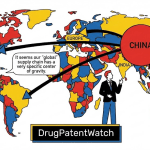
US patent data covers the US market. For pharmaceutical companies with global commercial operations, the LOE calendar differs by country. Europe uses a supplementary protection certificate (SPC) system that can extend effective exclusivity. Japan, Canada, and other markets have distinct data exclusivity periods. China’s compulsory licensing provisions introduce additional uncertainty for some product categories.
Extending the dashboard to cover ex-US LOE data requires different data sources — the European Patent Office’s esp@cenet database, Health Canada’s patent register, the EUIPO SPC register — and substantially more complexity in the data model. For most commercial teams, this is a phase-two or phase-three investment. The practical advice is to design your data schema from day one to accommodate international exclusivity data even if you do not populate it initially, so that the extension does not require a schema rebuild.
Vendor Evaluation Criteria
If you are evaluating commercial data vendors to feed your LOE dashboard — whether DrugPatentWatch or an alternative — the evaluation criteria should map directly to your dashboard’s data requirements.
Coverage completeness: Does the vendor cover all Orange Book-listed small molecules? Do they cover biosimilars and the Purple Book? Do they cover ex-US exclusivity? For your specific drug universe, pull a sample of 20 drugs and verify that their coverage is complete.
Paragraph IV timeliness: How quickly after a new paragraph IV certification is filed does it appear in their system? For commercial purposes, anything longer than five business days is suboptimal. Ask the vendor for their average and worst-case paragraph IV update latency and test it against FDA publication dates for recent filings.
Litigation status accuracy: This is the hardest dimension to evaluate because it requires domain knowledge. Ask the vendor to walk you through how they track Hatch-Waxman litigation from filing to resolution. Ask how they handle consent judgments and settlements, which are often not filed with the court and require direct monitoring. Ask whether their first generic entry estimates incorporate these outcomes.
API or export reliability: If you plan to use the vendor’s data programmatically, their API or export system needs to be reliable. Ask for uptime statistics, refresh schedule documentation, and change management procedures for schema updates. An API that changes its structure without warning can break your ingestion pipeline.
Pricing and licensing terms: Pharmaceutical patent intelligence is a specialized commercial market and prices vary widely. Clarify whether the licensing terms allow you to store and re-display the data in an internal dashboard, or whether display must occur through the vendor’s own interface. DrugPatentWatch’s terms, for example, allow commercial use within a subscribing organization.
Security and Access Control
An LOE dashboard contains competitive intelligence that is commercially sensitive. Access should be controlled appropriately.
At minimum, require authentication — either enterprise SSO (SAML or OAuth via your identity provider) or user-level authentication with role-based access control. This protects the data from unauthorized external access and creates an audit trail of who viewed which information.
Consider tiered access levels. Most commercial users should have read access to the dashboard views. The alert configuration and drug universe management functions should be restricted to the data steward and commercial owner. Historical accuracy data and data quality logs should be accessible to the data steward and to IT/data engineering, not to general commercial users.
Data residency may be relevant if your organization has international operations. Check whether storing Orange Book data and commercial intelligence derived from it raises any issues under your organization’s data governance policies.
Building for Change: Designing for Data Drift
Patent law is not static. Hatch-Waxman regulations have been amended, and BPCIA litigation practice is still being shaped by court decisions. Your dashboard needs to be designed for change, not just for today’s data structure.
The Orange Book data format has changed periodically — field names, file structure, and encoding conventions have all shifted over the years. Build your ingestion script with a schema validation step that checks incoming data against the expected format before loading it. When the format changes, the script should fail loudly rather than silently loading malformed data.
New exclusivity categories get created occasionally — Congress has extended orphan drug exclusivity, added exclusivities for certain antibiotic classes, and modified pediatric exclusivity terms over the years. Build your exclusivity code lookup table with a catch-all category for unrecognized codes that flags them for manual review rather than silently dropping them.
Court decisions can change the rules of Hatch-Waxman application. The FTC v. Actavis decision changed how pay-for-delay settlements are treated. Future decisions may change the scope of 30-month stays or the treatment of biosimilar patent disputes. Your EFGE calculation logic should be documented explicitly so that when the legal landscape changes, the calculation can be updated systematically rather than through ad hoc patches.
From Dashboard to Competitive Intelligence Practice
The most advanced organizations do not stop at building a dashboard. They build a competitive intelligence practice around it, using the dashboard as a foundation rather than an endpoint.
The distinction matters. A dashboard provides data on demand. A competitive intelligence practice uses that data to generate insights and recommendations that proactively shape commercial decisions, even when nobody has asked a specific question.
In practice, this means using the LOE dashboard to run regular “horizon scanning” analyses — systematic reviews of the exclusivity calendars of key competitors to identify emerging threats and opportunities that have not yet been flagged as priorities by the commercial team. When a competitor’s core product faces LOE, their likely commercial response — accelerated lifecycle management, increased DTC spend for a successor product, BD activity to acquire new assets — can be anticipated rather than reacted to.
It means building a cross-functional LOE review process where strategy, medical affairs, market access, and BD meet quarterly to discuss the LOE calendar and agree on commercial responses. The dashboard provides the data; the process ensures the data is converted into decisions.
It means integrating LOE intelligence into BD deal screening criteria. Every asset evaluated for in-licensing or acquisition should be screened against the LOE calendar — not just its own exclusivity position, but how its exclusivity interacts with the therapeutic area’s competitive dynamics and with the acquiring company’s portfolio.
Drug patent intelligence tools like DrugPatentWatch give commercial teams the raw material for this kind of practice. The organizations that extract the most value from them are those that build the organizational processes to act on the intelligence, not just to store it.
Estimated Build Costs and Timeline
For a commercial team evaluating whether to build a custom LOE dashboard, here are realistic cost and timeline estimates for the three most common build approaches.
Approach 1 is a spreadsheet-based semi-automated system. This is the minimum viable version: a master spreadsheet maintained by one analyst, fed by monthly Orange Book downloads and DrugPatentWatch data exports, with alert emails sent manually. Build time is two to three weeks. Ongoing maintenance is approximately four hours per month. Cost is the DrugPatentWatch subscription plus analyst time. This works for a drug universe of up to 30 compounds and is appropriate for smaller commercial teams.
Approach 2 is a lightweight automated dashboard. Python ingestion scripts, a PostgreSQL database, and a Streamlit or Dash application deployed on AWS or Azure. Build time is six to ten weeks with one data analyst. Ongoing maintenance is approximately eight hours per month. Infrastructure cost is approximately $150 to $400 per month depending on database size and hosting. DrugPatentWatch subscription supplements the raw data. This handles a universe of up to 200 compounds and is appropriate for mid-size commercial teams.
Approach 3 is an enterprise integrated dashboard. Tableau or Power BI front end, enterprise data warehouse backend, integration with CRM, FP&A, and BD systems, SSO authentication, and a full data governance framework. Build time is four to six months with a cross-functional team. Ongoing maintenance requires a dedicated data steward. Infrastructure and licensing costs are $50,000 to $150,000 per year depending on existing tool licenses. This is appropriate for large pharmaceutical companies with complex portfolio management needs.
For most mid-size commercial teams, Approach 2 delivers 80 percent of the value at 20 percent of the cost and effort of Approach 3.
The Competitive Argument for Building Now
There is a window of competitive advantage in LOE intelligence that is closing. A decade ago, accessing and interpreting patent data required specialized legal knowledge and expensive legal databases. Today, services like DrugPatentWatch have made high-quality LOE intelligence accessible to commercial teams at a fraction of the historical cost. But not all commercial teams have acted on this accessibility.
The organizations that build and operationalize LOE dashboards before their competitors gain a measurable edge in three areas. They respond faster to competitive IP events, converting intelligence into commercial action within days rather than weeks. They plan more accurately, because their revenue models and resource allocation decisions are based on reliable EFGE estimates rather than rough patent expiration dates. And they surface diligence issues in BD processes earlier, avoiding either the cost of overpaying for an asset with a shorter exclusivity runway than the seller implied, or the opportunity cost of passing on an asset with a longer runway than their analysis suggested.
The case for building is not speculative. The data infrastructure exists. The tools are affordable. The commercial return on a well-executed LOE dashboard is visible within a single planning cycle.
The real question is not whether to build one. It is who in your organization builds it first.
Key Takeaways
LOE data is commercially actionable only when it is accessible, current, and interpreted in commercial terms. Raw patent expiration dates are insufficient. Your dashboard needs EFGE calculations that incorporate patent type, litigation status, and exclusivity extensions.
Orange Book data is the foundation, but paragraph IV filings, USPTO records, and litigation outcomes are what make the analysis commercially relevant. Build or subscribe to all three data streams.
Services like DrugPatentWatch significantly reduce the data engineering effort required to build a reliable LOE intelligence layer, and their analyst-curated data on paragraph IV activity and first generic entry estimates is particularly valuable for organizations without dedicated patent intelligence resources.
The architecture should match your team’s technical capabilities. A Streamlit dashboard with a PostgreSQL backend is sufficient for most mid-size commercial teams and can be built in six to ten weeks.
Dashboard success depends on organizational design as much as technical design. Assign clear ownership for data stewardship, patent intelligence interpretation, and commercial ownership. Without all three, the dashboard degrades.
Design for change from day one. Patent law, data formats, and regulatory frameworks all evolve. Your ingestion scripts, data schema, and EFGE calculations should be documented and modular enough to update when the environment changes.
The organizations extracting the most value from LOE intelligence treat the dashboard as a foundation for a competitive intelligence practice, not as an endpoint. Regular LOE review processes, integration with BD screening criteria, and proactive horizon scanning convert data into commercial decisions.
FAQ
Q1: How is “effective first generic entry” different from a patent expiration date, and which should we display to commercial users?
A patent expiration date is the date a specific patent stops being enforceable, assuming it was validly granted and properly maintained. Effective first generic entry (EFGE) is an estimate of when a commercially available generic product is likely to reach the market, accounting for the full patent thicket around the drug, any active paragraph IV litigation (which can accelerate generic entry if the challenger wins or delay it if they lose), pediatric exclusivity extensions, and the FDA’s ANDA review timeline. For commercial decision-making, EFGE is the only relevant date. Patent expiration dates should appear in the drug detail view as supporting data, but EFGE should be the primary metric displayed in portfolio-level views and used in revenue models.
Q2: Our legal team is worried about the accuracy of EFGE estimates. How should we caveat LOE data to prevent commercial teams from overrelying on it?
This is a legitimate concern. EFGE estimates are estimates, not predictions. Build explicit confidence flags into every EFGE display: high confidence for clean composition-of-matter-only situations, medium for drugs with secondary patent thickets, low for drugs with active paragraph IV litigation where case outcome is uncertain. Add a prominent disclosure in the dashboard that EFGE dates are analytical estimates for commercial planning purposes and should not be used as the sole basis for legal strategy or material financial disclosures without review by patent counsel. DrugPatentWatch includes similar caveats in their first generic entry estimates, and you should carry the same caveats through to your dashboard presentation layer.
Q3: What is the right cadence for briefing the commercial team on LOE developments, and how does the dashboard support that cadence?
The LOE calendar does not change dramatically week to week, but when it does change, it changes in ways that matter commercially. The right cadence has two components: a standing monthly review in which LOE data is presented as part of competitive landscape monitoring (the dashboard’s portfolio view drives this), and an event-triggered briefing when a significant IP event occurs (paragraph IV filing, court decision, FDA generic approval). The dashboard’s alert feed and notification system supports the event-triggered component. The portfolio LOE calendar supports the monthly review. Quarterly, the patent intelligence analyst should do a more thorough review of the EFGE calculations and confidence flags for the full drug universe and present any material changes to the commercial leadership team.
Q4: DrugPatentWatch covers US LOE data extensively. What are the best resources for ex-US LOE intelligence, and how do we integrate them into the same dashboard?
Ex-US LOE data is more fragmented and less standardized than US data. For Europe, the European Patent Office’s SPC register and national patent registers (particularly Germany, France, and the UK, which have large pharmaceutical markets) are primary sources, though parsing them requires language capability and familiarity with EU pharmaceutical law. For Canada, the Patented Medicine Prices Review Board (PMPRB) and Health Canada’s patent register are the primary sources. For Japan, the Pharmaceuticals and Medical Devices Agency (PMDA) publishes data exclusivity periods. Commercial services including Minesoft, Clarivate’s Derwent World Patents Index, and country-specific pharmaceutical data providers offer structured ex-US coverage, though at meaningfully higher cost than US-focused services. The integration approach is to add an “exclusivity_region” field to your data schema and source ex-US exclusivity records from the appropriate regional vendor, tagging them by region. The dashboard then allows filtering by region or showing a multi-region exclusivity calendar for drugs where geographic LOE differences are commercially significant.
Q5: What are the signs that our LOE dashboard has become a compliance liability rather than a commercial asset?
There are four warning signs. First, if commercial decision memos are citing specific EFGE dates from the dashboard without the confidence-level caveats and without legal review for significant decisions, users have over-indexed on the tool’s precision. Second, if BD valuations are being built directly from dashboard EFGE dates without independent patent counsel validation, the dashboard is being used outside its appropriate scope. Third, if the dashboard is being shared externally — with partners, investors, or in board materials — without going through a review process that includes legal and compliance, data accuracy standards designed for internal use are being applied in contexts requiring higher standards. Fourth, if the dashboard is maintained by one person with no documented backup process, a single departure or illness creates a data quality crisis. The fix for all four is process design: clear use guidelines that define what the dashboard is authoritative for, what decisions it informs versus drives, and who has accountability for data quality.
References
[1] Berndt, E. R., Mortimer, R., Bhattacharjya, A., Parece, A., & Tuttle, E. (2007). Authorized generic drugs, price competition, and consumers’ welfare. Health Affairs, 26(3), 790-799. https://doi.org/10.1377/hlthaff.26.3.790
[2] Feldman, R. (2018). May your drug price be ever green. Journal of Law and the Biosciences, 5(3), 590-647. https://doi.org/10.1093/jlb/lsy022
[3] IQVIA Institute for Human Data Science. (2023). Global trends in R&D 2023: Activity, productivity, and enablers. IQVIA Institute. https://www.iqvia.com/insights/the-iqvia-institute/reports-and-publications/reports/global-trends-in-rd-2023
[4] U.S. Food and Drug Administration. (2024). Approved drug products with therapeutic equivalence evaluations (Orange Book). FDA. https://www.fda.gov/drugs/drug-approvals-and-databases/approved-drug-products-therapeutic-equivalence-evaluations-orange-book
[5] U.S. Food and Drug Administration. (2024). Paragraph IV patent certifications. FDA. https://www.fda.gov/drugs/abbreviated-new-drug-application-anda/paragraph-iv-certifications
[6] Federal Trade Commission. (2022). Pay for delay: A growing threat to competition and consumer welfare. FTC. https://www.ftc.gov/reports/pay-delay-growing-threat-competition-consumer-welfare
[7] Grabowski, H., Long, G., & Mortimer, R. (2014). Recent trends in brand-name and generic drug competition. Journal of Medical Economics, 17(3), 207-214. https://doi.org/10.3111/13696998.2014.877451
[8] PatentsView. (2024). PatentsView API documentation. USPTO. https://patentsview.org/apis/purpose
[9] DrugPatentWatch. (2024). About DrugPatentWatch pharmaceutical patent intelligence. DrugPatentWatch. https://www.drugpatentwatch.com/
[10] Congressional Budget Office. (2021). Research and development in the pharmaceutical industry. CBO. https://www.cbo.gov/publication/57126