I. Why Patent Strategy Is Really Business Strategy
Here is a number worth sitting with: the U.S. pharmaceutical industry spent $83 billion on R&D in a single year, and virtually none of that investment makes economic sense without patent protection [4]. That figure is not a testament to corporate generosity. It is a hard-nosed calculation that patents make viable.
The gap between how pharmaceutical executives talk about patents in annual reports and how they actually use them in practice is wider than most outside observers appreciate. The public narrative centers on innovation incentives, which is accurate but incomplete. The private reality is that patents function as business infrastructure, just as much as manufacturing capacity or a sales force. They determine when competitors can enter your market, how long your pricing power lasts, what your company is worth to an acquirer, and whether a venture capital term sheet materializes at all.
This article breaks down the full architecture of pharmaceutical patent strategy. It covers the mechanics of protection, the layering of exclusivity periods, the tactics used to extend market monopolies, the legal battles that follow patent expiration, and the tools, including platforms like DrugPatentWatch, that convert patent data into actionable intelligence. Executives in business development, R&D leadership, IP law, and investment analysis will find the operational specifics here that most primers omit.
The word ‘primer’ undersells what follows. This is a working manual.
II. What a Drug Patent Actually Is (and What It Isn’t)
A. The Core Mechanics
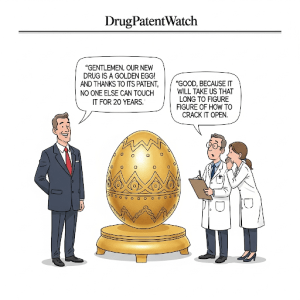
A drug patent is a government grant of the right to exclude others from making, using, or selling an invention within a defined jurisdiction for a fixed term [1]. That last phrase, ‘the right to exclude,’ is the operative one. Patents do not grant the holder the right to manufacture or sell anything. They grant the right to stop others from doing so.
This distinction matters practically. A patent covering a new molecular entity might be issued years before the FDA approves the drug for sale. The patent exists; the commercial right does not yet. Meanwhile, the 20-year clock runs from the date the patent application is filed, not from the date the drug reaches pharmacy shelves [1].
The implication is stark. A company filing a patent on a promising compound during Phase I clinical trials may have consumed eight to ten years of that 20-year term before a single dose is sold to a paying patient. On average, drugs enjoy only about 12-14 years of effective market exclusivity, and in some cases considerably less. The patent’s nominal life and its commercial life are two different things.
B. The Economic Logic That Makes the System Run
Drug development costs are not uniformly distributed. Some candidates fail in animal models. Others advance through Phase I before showing toxicity. A significant fraction wash out in Phase II or III trials after consuming hundreds of millions in investment. The costs that survive into an approved drug include not just that drug’s direct R&D but an implicit share of all the failures that preceded it.
Studies indicate R&D costs can range from $161 million to $4.5 billion per drug, with the U.S. pharmaceutical industry alone investing $83 billion in R&D in 2019. Without the ability to price above marginal cost during a protected period, no rational capital allocation process would direct resources toward drug development. The patent is not a subsidy; it is the mechanism that makes the entire investment cycle function.
That said, the mechanism creates consequences. Monopoly pricing during patent life means that patients and payers absorb costs that fund future research. The economic logic is coherent in the aggregate and often brutal at the individual level, particularly for expensive specialty drugs.
C. Three Things Patents Are That Most People Don’t Realize
Beyond the legal protection, patents function as:
Disclosure instruments. To obtain a patent, an applicant must describe the invention in sufficient detail that a person skilled in the relevant field could reproduce it. This disclosure requirement pushes technical knowledge into the public domain, often decades before generic manufacturers use it. The pharmaceutical literature is, in part, built from patent disclosures.
Investment signals. For early-stage biotech companies without approved products, a strong patent portfolio is frequently the primary determinant of valuation. Investors evaluating a Series B round are assessing defensibility of future cash flows. A patent covering a novel mechanism of action tells investors that no competitor can immediately replicate the molecule. A strong patent portfolio is crucial for attracting investment, providing assurance to investors regarding potential market exclusivity and profitability.
Licensing currency. Patents denominate deals. In pharmaceutical licensing, the scope and remaining life of the IP being transferred largely determine the economics of the transaction. A company that out-licenses a drug candidate retains royalty rights tied, in most cases, to the life of the licensed patents.
III. The Patent Lifecycle: Clock Management as Competitive Skill
A. From Filing to First Sale: Where the Time Goes
The 20-year patent clock starts ticking at the filing date, not the priority date and not the grant date [1]. For a novel small molecule moving through development, the sequence looks roughly like this:
Patent application filed during or just before IND submission. Preclinical safety package takes one to two years before the IND goes live. Phase I runs one to two years. Phase II, two to three. Phase III, three to five. FDA review, one to two years. By the time the NDA is approved and the commercial team launches, eight to twelve years of the 20-year term have elapsed.
The arithmetic explains why some drugs have less than five years of patent life remaining by the time they reach the market. It also explains why Patent Term Extension was designed into the U.S. system from the beginning.
B. Patent Term Extension: Reclaiming Lost Time
The Drug Price Competition and Patent Term Restoration Act of 1984, the Hatch-Waxman Act, created the mechanism for Patent Term Extension (PTE) [13]. The extension compensates for time spent in the regulatory review process, specifically the period between the IND effective date and NDA approval, divided into the testing phase and the approval phase.
The maximum PTE is five years. The extension cannot push the remaining patent life beyond 14 years from the date of FDA approval [1]. Only one patent per approved product can receive a PTE, and it must be a patent that would not have expired before regulatory approval was granted.
In practice, most PTEs are claimed for the primary compound patent, the one covering the active pharmaceutical ingredient, because that patent provides the broadest protection. Formulation patents and method-of-use patents are less commonly extended, because a company that fails to extend its compound patent often faces generic entry anyway.
The five-year cap is not always achievable. The regulatory review period is divided into a ‘testing phase’ from the IND effective date to NDA submission and an ‘approval phase’ from NDA submission to FDA approval, with clinical trials alone often requiring six to seven years or more. The calculation is complex, and errors in PTE applications are common enough that pharmaceutical IP counsel treat them as a specialty sub-practice.
C. Regulatory Exclusivity: Separate Protection, Different Rules
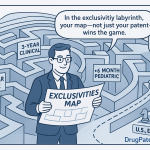
Patent protection and regulatory exclusivity operate as parallel systems. They can overlap, stack, or run sequentially, but they do not add together mechanically. Each exclusivity type has its own eligibility criteria and duration [2].
New Chemical Entity (NCE) Exclusivity gives the FDA five years during which it cannot accept or approve an Abbreviated New Drug Application (ANDA) for a drug containing the same new chemical entity. This matters most when patents are weak or narrow, because NCE exclusivity blocks generic applications regardless of patent status [2].
Orphan Drug Exclusivity (ODE) runs seven years from approval for drugs designated to treat diseases affecting fewer than 200,000 patients in the U.S. This creates an incentive to develop treatments for conditions where the patient population would otherwise make commercial development marginal [2].
‘Other’ Exclusivity provides three years of market protection for changes to an already-approved drug, such as a new dosage form or formulation, when the change required new clinical investigations to support approval [2]. This is the primary exclusivity that supports formulation lifecycle strategies.
Pediatric Exclusivity (PED) adds six months to existing patent terms and exclusivity periods when a sponsor conducts pediatric studies in response to an FDA Written Request. Six months sounds modest. On a drug generating $3 billion annually, it is worth $1.5 billion. This exclusivity encourages research into drug use in children.
The strategic implication: a sophisticated lifecycle management program does not treat these exclusivities as incidental. It builds the R&D program, regulatory submissions, and pediatric study timeline around them deliberately.
IV. The Patent Thicket: Building Walls Around a Molecule
A. Why One Patent Is Almost Never Enough
The compound patent on a new molecular entity is the foundation, not the structure. In practice, the pharmaceutical companies that generate sustained revenue from major products do not rely on a single patent. They build portfolios of overlapping protections that force any potential generic entrant to navigate multiple legal risks simultaneously.
A significant majority (72%) of patent applications for top-grossing drugs are filed after FDA approval, with two-thirds covering aspects other than the active ingredient. Read that again: nearly three-quarters of the patent applications on major drugs are filed after the drug is already on the market. These are not protecting the original innovation. They are protecting the commercial asset.
Pfizer’s Lipitor illustrates the scale possible. Pfizer’s Lipitor was protected by over 20 patents covering various aspects, allowing exclusivity for over 14 years after the initial compound patent expired. Atorvastatin, the active ingredient, was a well-characterized molecule. What Pfizer protected was not just the molecule but the particular crystalline form used in tablets, the manufacturing process, the specific dosage regime, and the method of treating elevated LDL. Each patent required a separate challenge from any generic manufacturer seeking to enter the market.
B. The Four Layers of a Complete Patent Stack
Composition of matter patents cover the active ingredient itself. These are the broadest and most valuable, because anyone making the compound infringes regardless of their intended use or formulation [1]. The eligibility requirements are exacting: the compound must be novel, non-obvious, and useful. Meeting all three in chemistry is harder than it sounds, because the prior art in pharmaceutical chemistry is enormous and growing.
Formulation patents cover specific drug compositions: the combination of active ingredient, excipients, and preparation method [1]. They protect how the drug is delivered, not what the drug is. A controlled-release formulation that allows once-daily dosing of a drug previously requiring three daily doses is protectable even if the active ingredient’s composition patent has expired. AstraZeneca’s Seroquel XR and Bristol-Myers Squibb’s Glucophage XR are textbook examples of extended-release formulations that generated meaningful additional exclusivity [17].
Method-of-use patents cover specific therapeutic applications of a drug [1]. A compound originally patented as an antihypertensive might later receive separate patent protection when clinical data shows it effective against heart failure. The original composition patent and the method-of-use patent are legally distinct. A generic company can design around a method-of-use patent by seeking an indication-specific carve-out in its label, but physicians prescribing off-label creates litigation risk even then.
Manufacturing process patents cover production methods. These matter most for complex biologics and small molecules where the synthesis pathway itself is a trade secret elevated to patent protection. A competitor who discovers a more efficient synthesis route may infringe a process patent even if they reach the same molecule by a nominally different path [1].
C. Polymorph Patents and Chiral Switches
Two additional tactics deserve specific attention because they are frequently misunderstood.
Polymorph patents cover different crystalline forms of the same compound [1]. A single molecule can crystallize in multiple forms, each with distinct melting points, solubility characteristics, and stability profiles. If a company’s approved drug uses a specific polymorph with superior bioavailability, patenting that form creates an obstacle for generic manufacturers who must use a bioequivalent route. Since the most stable or soluble form is often the preferred one, and if that form is patented, a generic company may be forced toward a less desirable crystalline structure.
Chiral switches refer to the strategy of patenting a single enantiomer from a racemic mixture for which a patent already exists [1]. When a drug is sold as a racemic mixture (equal parts of two mirror-image molecules), and one enantiomer is therapeutically active while the other is inert or harmful, isolating and patenting the active enantiomer allows the company to re-commercialize the drug. AstraZeneca’s Nexium (esomeprazole) from Prilosec (omeprazole) is the canonical example. Critics called it evergreening; AstraZeneca called it clinical improvement. Both characterizations are partially correct.
V. The Hatch-Waxman Framework: America’s Patent War Game
A. The Grand Bargain of 1984
The Drug Price Competition and Patent Term Restoration Act of 1984 is the legislative framework that structures competitive interaction between branded and generic pharmaceutical companies in the United States [13]. Understanding it is not optional for anyone working in pharmaceutical business strategy.
The law made two things simultaneously easier. First, it streamlined generic drug approval by creating the Abbreviated New Drug Application, which lets generic manufacturers demonstrate bioequivalence to an approved reference listed drug rather than repeating full clinical trials. Second, it created the Patent Term Extension mechanism to partially compensate innovators for regulatory review time consumed before market launch.
The political genius of Hatch-Waxman was making both sides feel they won. Generics got a faster path to market. Innovators got restored patent time. What neither side fully anticipated was how thoroughly the law would structure the subsequent four decades of pharmaceutical competition.
B. Paragraph IV: The Loaded Gun
When a generic manufacturer files an ANDA seeking approval for a drug that is still under patent protection, it must include a certification regarding the listed patents [14]. Paragraph IV certification states that the patent is invalid, unenforceable, or will not be infringed by the generic product. Filing a Paragraph IV certification is, legally, an act of patent infringement, which triggers the innovator’s right to sue within 45 days.
If the innovator sues within that window, the FDA is automatically stayed from approving the ANDA for 30 months [14]. This is the 30-month stay, and it is one of the most tactically significant provisions in all of pharmaceutical law. Brands use it to buy time. Generics use the threat of it to negotiate settlements. Both parties’ litigation calendars are built around it. <blockquote> ‘The 180-day exclusivity period is often the most profitable phase of a generic product’s lifecycle, accounting for a substantial portion of the generic manufacturer’s return on investment.’ – DrugPatentWatch [16] </blockquote>
The first generic filer who successfully certifies under Paragraph IV earns 180 days of market exclusivity. During that period, the FDA will not approve any other ANDA for the same product [2]. This creates a temporary duopoly: the brand and the first generic. The first generic can price at a meaningful discount to the brand while still generating very high margins, because it faces no generic competition for six months.
The economic stakes of being first to file a Paragraph IV certification are substantial enough that generic companies structure entire business development functions around identifying and pursuing these opportunities.
C. The 30-Month Stay as a Litigation Tool
Brand pharmaceutical companies have learned to use the 30-month stay strategically. If an innovator lists multiple patents in the FDA Orange Book for a single product, a Paragraph IV certification against any of those patents can trigger a separate 30-month stay. In practice, courts have found that listing certain types of patents (notably, manufacturing patents that do not claim the drug product itself) in the Orange Book constitutes improper listing subject to challenge [10].
The Patent Trial and Appeal Board (PTAB) created an additional avenue for challenging patents. Inter Partes Review (IPR) proceedings before PTAB are faster and cheaper than district court litigation, and they come with a high success rate for petitioners: 60-70% of claims are invalidated at PTAB. A generic manufacturer can pursue parallel IPR and district court challenges simultaneously, creating pressure on the patent holder from two directions while the 30-month stay is running.
D. Reverse Payments: The Settlement That Defies Intuition
The most counterintuitive feature of pharmaceutical patent litigation is the ‘reverse payment’ settlement, also called pay-for-delay. In a standard lawsuit, the defendant who loses pays the plaintiff. In a reverse payment settlement, the brand pharmaceutical company (the putative plaintiff/patent holder) pays the generic manufacturer (the putative defendant/challenger) to delay market entry.
The economic logic is coherent from the brand’s perspective. If a Paragraph IV challenge succeeds and generic competition enters, the brand loses the majority of its revenue. If it can pay the generic challenger enough to delay entry by three or four years, that payment may be substantially less than the preserved monopoly profit. The generic company receives a certain payment in exchange for an uncertain litigation outcome.
The Supreme Court addressed reverse payments in FTC v. Actavis (2013), holding that such settlements can violate antitrust law and must be evaluated under a rule-of-reason analysis [10]. The FTC has continued to pursue these agreements, but they remain a settlement option that both parties weigh in litigation.
VI. The Patent Cliff: Quantifying the Revenue Shock
A. What the Numbers Say
The patent cliff is not a metaphor. It is a revenue event with predictable timing, quantifiable magnitude, and documented competitive response patterns.
Industry analysts project an estimated $200 billion in revenue is at risk from upcoming patent expirations. That figure is not evenly distributed across the industry. It is concentrated in specific companies with specific molecules whose protection is ending.
Projections from industry analysts show that nearly 50 products will lose patent protections from 2023 through the end of 2025, eroding aggregate sales from $162.8 billion in 2025 to $67 billion in 2029. A $95 billion revenue erosion across four years is not a minor market adjustment. It restructures industry finances and forces strategic responses at the board level.
Among the specific casualties in 2025: Stelara (ustekinumab, Johnson & Johnson), Eylea (aflibercept, Regeneron), Prolia and Xgeva (denosumab, Amgen) [42].
B. How Prices Move After Patent Expiration
The price trajectory following generic entry is well-documented and consistently steep. Post-patent expiration, drug prices typically decrease by 38% to 48% for physician-administered medications and approximately 25% for oral formulations, with prices declining further as more generic competitors enter the market, sometimes reaching as little as 10-20% of the original branded price.
The mechanism is straightforward. The first generic enters at a discount to the brand, typically 15-30%. Pharmacy benefit managers and payers begin routing prescriptions to the generic. Volume follows. As additional generic manufacturers receive ANDA approval, competition intensifies and prices compress further. Within two to three years of first generic entry, a drug with multiple generics available can be priced at 10-15% of its original branded price.
In the U.S., generics account for 90% of prescriptions but only 22% of drug costs, saving the healthcare system an estimated $1.67 trillion. The math works: 90% of volume at 10-20% of the price generates modest total expenditure even at very high unit counts.
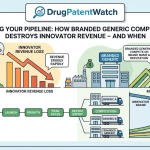
For innovator companies, the revenue cliff is not gradual. Market share can drop 80-90% within 12-18 months of first generic entry. Companies with large patent cliffs either offset them through new product approvals, acquire marketed assets, or shrink.
C. Biosimilar Entry: Why It’s Slower and More Litigated
Biologics face a different patent cliff dynamic. The manufacturing complexity of large-molecule biologics means that a biosimilar is not identical to the reference product in the way a small-molecule generic is identical to its brand. Demonstrating biosimilarity requires additional data compared to bioequivalence studies for small molecules.
The Biologics Price Competition and Innovation Act (BPCIA) created the U.S. pathway for biosimilar approval, including a ‘patent dance’ process for exchanging information about relevant patents and manufacturing processes. This dance is slower and more contentious than the Hatch-Waxman framework for small molecules.
The complexity of biologic manufacturing allows originator developers to build extensive patent portfolios, leading to litigation and settlement outcomes that contribute to longer market launch delays for biosimilar developers. Data shows that a higher proportion of composition, API, and treatment patents correlated with longer market launch delays for biosimilars.
AbbVie’s Humira is the defining case. AbbVie assembled a portfolio of over 130 U.S. patents covering adalimumab, its formulations, manufacturing processes, and methods of use. Biosimilar manufacturers reached settlement agreements with AbbVie that delayed U.S. biosimilar entry until 2023, even though the core compound patent had expired years earlier. European biosimilar entry had already occurred by 2018. The same molecule, two patent strategies, five years of differential market access.
VII. Evergreening: The Strategy That Keeps Lawyers Employed
A. What It Is and How It Works
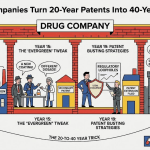
Evergreening is the practice of obtaining additional patents on secondary features of a pharmaceutical product as earlier patents approach expiration, thereby extending the overall period of market exclusivity [11]. The term is used pejoratively by generic manufacturers and health economists, and defensively by innovator companies as ‘lifecycle management.’
The strategic imperative is clear. A pharmaceutical company facing patent expiration on a $3 billion drug has strong incentive to develop and patent any aspect of that drug that might support additional protection. Extended-release formulations reduce dosing frequency. Combination tablets add a second active ingredient. New indications open method-of-use patent opportunities.
Evergreening involves filing for new patents on secondary features of a pharmaceutical as earlier patents expire, such as new formulations, delivery methods, or methods of use, allowing companies to effectively ‘reset the patent clock’ and maintain market exclusivity.
The examples from practice are numerous. Eli Lilly extended Prozac’s market life with a once-weekly formulation patent after the daily formulation’s protection expired. AstraZeneca’s Prilosec to Nexium chiral switch is the most cited case, though the economics were less favorable than anticipated because generic omeprazole undercut esomeprazole’s pricing advantage. GSK obtained intranasal delivery patents for Imitrex (sumatriptan) after its oral form’s compound patent expired [17].
B. Where the Line Is Between Innovation and Obstruction
The legal system distinguishes between genuine incremental innovation (patentable) and trivial modifications filed solely to extend exclusivity (challenged in invalidity proceedings). Courts evaluate whether a formulation change produces a clinically meaningful benefit. Regulatory agencies have begun applying similar scrutiny.
The FDA’s therapeutic equivalence ratings influence whether a pharmacist can substitute a generic for a brand without physician approval. If a brand switches its primary market to an extended-release formulation and the original formulation becomes less commercially relevant, the strategy of substituting to the new formulation to avoid generic competition depends partly on how quickly payers and prescribers adopt the reformulation.
The more aggressive the reformulation strategy, the more likely it draws antitrust scrutiny and PTAB challenges. Generics routinely file IPR petitions against evergreening patents as part of their ANDA strategies. The success rate of those IPR petitions has been high enough that many secondary patents are eventually invalidated, though the litigation delay they purchase in the meantime has value.
C. The Orange Book Listing Decision
Patents must be listed in the FDA Orange Book to trigger the 30-month stay mechanism [14]. The decision about which patents to list is therefore strategic, not just administrative. Only patents that claim the drug product or an approved method of using the drug can properly be listed. Manufacturing patents, patents on intermediates, and patents on drug substances used in manufacturing do not qualify.
Improper Orange Book listings have become a litigation target. The FTC has argued that listing patents ineligible for Orange Book inclusion unfairly extends the stay mechanism and delays generic competition. Courts have ordered patents removed from the Orange Book when challengers demonstrate they do not meet the listing criteria.
For brand companies, the calculus involves weighing the litigation protection benefits of a listed patent against the antitrust and invalidation risks that come with listing a patent the company cannot ultimately defend.
VIII. Patent Intelligence as a Business Function
A. What Patent Data Actually Contains
A patent application contains more information than most business analysts realize. The specification describes the invention in technical detail. The claims define the legal boundaries of protection. The file history (prosecution history) records every exchange between the applicant and the patent examiner during the application process. Prior art cited during examination reveals what the examiner found relevant.
For a pharmaceutical company’s competitive intelligence function, patent data provides:
What compounds competitors are working on, including chemical structures and mechanisms of action
Where competitors are focusing R&D resources, inferred from the volume and technical content of filings in specific disease areas
When exclusivity protection will expire on specific drugs, which opens commercial windows for generic or biosimilar development
How broadly a competitor’s claims are drafted, which determines freedom-to-operate for related programs
Patent data reveals a company’s R&D priorities, technological strengths, and even their future direction. By leveraging patent data strategically, businesses can gain critical perspectives into the broader competitive landscape, identify emerging technological trends, and anticipate potential industry disruptions.
DrugPatentWatch is a widely used resource that aggregates, structures, and analyzes pharmaceutical patent data alongside FDA regulatory data. Practitioners use it to track patent expirations for specific drugs, identify which patents are listed in the Orange Book for a given reference listed drug, monitor Paragraph IV certification activity, and conduct patent landscape analysis for therapeutic areas under development consideration. For a business development executive assessing whether to in-license an asset, the platform provides expiration dates and exclusivity status in a format that feeds directly into valuation models.
B. Patent Landscape Analysis: Finding the White Space
Patent landscape analysis maps the existing IP coverage in a technological area to identify what is protected, what is not, and where opportunities exist [6]. For pharmaceutical companies, this analysis drives decisions at multiple stages:
Before initiating a research program, a landscape analysis answers whether the target space is too crowded with third-party IP to generate freedom to operate. Entering a field where dozens of foundational patents are held by competitors creates both litigation risk and licensing obligations.
During formulation development, landscape analysis identifies formulation patents that might constrain the development of a competing product. If a competitor holds a patent on the only stable extended-release formulation of a given compound class, a generic manufacturer needs either to design around it, challenge it, or license it.
Before pursuing a biosimilar program, landscape analysis identifies the scope of the reference product’s patent portfolio. This determines the litigation risk the biosimilar developer is accepting and informs settlement negotiation strategy.
Competitive intelligence programs track industry failures, preventing companies from making the same errors in drug development and saving precious resources. This is an underrated application. Pharmaceutical companies fail to develop drugs that looked promising but turned out to be unsafe or ineffective. The patents and publications from those failed programs are public records. Mining them before committing to a similar program can avoid expensive repetition of known dead ends.
C. M&A Patent Due Diligence: Where IP Meets Valuation
In pharmaceutical M&A, patents are not just one factor in valuation; they are frequently the primary one. An acquirer paying $5 billion for a specialty pharma company is mostly paying for the remaining exclusivity life of the company’s key products, weighted by the probability that each patent survives challenge.
Thorough patent due diligence involves a systematic review of a target company’s patent portfolio, is critical to accurately assess risks, validate ownership, and maximize the strategic value of acquired intellectual property. This process verifies ownership, assesses patent validity and enforceability, identifies infringement risks, and ensures alignment with the buyer’s strategic goals.
A patent that appears to extend market exclusivity until 2032 might be far more fragile than it appears. If the patent was filed with a specification that does not adequately support the breadth of its claims, it is vulnerable to invalidity challenge. If the prosecution history contains statements that narrow the claims’ scope (prosecution history estoppel), a competitor might design around the patent without infringing. If the patent covers only the U.S. market and not Europe, Asia, or Latin America, the effective commercial protection is narrower than the nominal protection.
For biotech acquisitions, due diligence includes scrutinizing licenses and agreements for restrictive clauses, assessing pending applications, evaluating trade secret protection, and conducting freedom-to-operate analyses to avoid infringing third-party IP rights.
Acquirers who skip or compress patent due diligence routinely discover problems after closing. A drug acquired in a deal at a price reflecting ten years of exclusivity turns out to have a weak patent that fails in the first IPR petition filed by a generic company. The acquirer then owns an asset worth a fraction of what was paid.
IX. The Commercial Patent Database Ecosystem
A. Public Resources
Several public databases provide free access to pharmaceutical patent data:
USPTO Patent Center covers all U.S. patents and published applications. The search tools allow keyword, inventor, assignee, and classification-based queries. The file histories (prosecution histories) for all applications are publicly available and searchable [30].
EPO Espacenet indexes more than 140 million patent documents across multiple jurisdictions, with machine translation for foreign-language patents. For companies filing internationally, Espacenet is essential for understanding the global scope of competitors’ protection [30].
WIPO PATENTSCOPE covers Patent Cooperation Treaty (PCT) applications, which represent the international filing pipeline. Monitoring PCT applications gives advance notice of patent applications seeking international protection, typically 18 months before national phase entries [30].
The FDA Orange Book is the definitive source for patents listed on approved U.S. drugs and the regulatory exclusivity attached to each approved product [2]. Any analyst monitoring pharmaceutical competitive dynamics needs to check the Orange Book regularly.
Pat-INFORMED, a WIPO initiative developed in partnership with pharmaceutical companies, provides patent information specifically organized by International Nonproprietary Name (INN). It facilitates inquiries directly with participating companies for procurement purposes and is particularly useful for access-to-medicines analysis in lower-income markets [63].
MedsPaL complements Pat-INFORMED by drawing from public records and offers geographic patent status information useful for assessing whether a drug is under patent protection in specific developing country markets [63].
B. Commercial Platforms: What They Add
Public databases provide data. Commercial platforms provide analysis.
Derwent Innovation from Clarivate adds descriptive invention summaries, enhanced keywords, and correlated litigation data from over 140 jurisdictions. It helps patent professionals make faster, more confident patentability, freedom-to-operate, and validity decisions. For a pharmaceutical IP attorney preparing a freedom-to-operate opinion, the litigation correlation data reduces the research time required to assess whether a patent has been challenged and what courts have decided [64].
PatSnap Synapse integrates patent data with clinical trial records, regulatory filings, and scientific literature. The platform integrates data from over 98K+ drugs, 46K+ targets, 16M+ scientific patents, and 1.1M+ clinical trials. That integration is operationally significant: a business development team evaluating a drug target can simultaneously see who holds IP in the space, what stage competitors are at in clinical development, and what regulatory history exists for related compounds [34].
LexisNexis TotalPatent One draws from over 115 million documents with full-text search across multiple languages. It provides full-text patent data in multiple languages, searchable bibliographic information, legal status, and patent families. For companies with global IP operations, multilingual full-text search significantly improves the completeness of prior art searches and freedom-to-operate analyses [66].
DrugPatentWatch, which occupies a specific niche in this ecosystem, focuses specifically on pharmaceutical patent and regulatory data, cross-referenced to FDA approval records and exclusivity status. For commercial teams, business development analysts, and portfolio managers who need patent expiration information in a business-decision-ready format, it provides that without requiring the user to build their own database infrastructure from public sources.
X. AI in Drug Discovery: The Patent System Hasn’t Caught Up
A. The Inventorship Problem
Artificial intelligence is now routinely used in pharmaceutical drug discovery. Machine learning models identify lead compounds. Generative AI proposes novel molecular structures. Predictive models rank drug candidates by likely efficacy and toxicity before any laboratory synthesis occurs. The development cycle is genuinely accelerating.
The patent system’s response to this has been conservative. U.S. law currently requires an ‘individual’ (a natural person) to make a ‘significant contribution to the conception of the claimed invention.’ The Thaler v. Vidal case affirmed that only natural persons can be inventors under U.S. law. An AI system cannot be listed as an inventor. The human beings who designed the AI system, trained it on specific datasets, formulated the problem it solved, and evaluated its output must be the named inventors [46].
This creates a record-keeping obligation. Companies using AI in discovery must document, with specificity, which human researchers made which contributions to the conception of the claimed invention. Without that documentation, inventorship challenges become a serious patent vulnerability.
B. Non-Obviousness in the Age of AI
Perhaps the more consequential issue for pharmaceutical patent practice is how AI access changes the non-obviousness analysis. Patent claims must demonstrate an inventive step: the claimed invention cannot be obvious to a person having ordinary skill in the art (PHOSITA).
AI access has raised the standard for what is considered ‘obvious’ in patent law. With AI, the ‘level of skill in the art’ has increased, making it potentially harder to prove innovations are non-obvious and therefore patentable.
If a PHOSITA is now assumed to have access to machine learning tools capable of generating thousands of molecular candidates from a training dataset, then a human researcher who selects a compound from a small set of obvious candidates may not have made an inventive step. Courts and patent offices are working through how to apply the non-obviousness standard in an AI-assisted research environment. The answers are not settled.
C. What AI Changes About Patent Application Strategy
The changes are not all adverse to patent applicants.
AI can generate thousands of examples or ‘species’ to include in patent applications, supporting broader claims and significantly enhancing the application’s strength. Traditional pharmaceutical patent applications might disclose a handful of specific compounds within a broader genus claim. An AI-assisted application can disclose thousands of specific compounds, supporting a broader genus claim with more robust written description and enabling a stronger defense against claims that the specification does not support the breadth of protection sought [46].
AI tools also assist in prior art searching, claim drafting, and prosecution strategy. Patent offices worldwide have started using AI tools for examination. The result is that both applicants and examiners are using more powerful tools, which may compress the processing time for straightforward applications while making the sophisticated back-and-forth of complex prosecution more technically demanding.
The FDA Modernization Act 2.0 eliminated the requirement for animal testing prior to clinical trials, authorizing validated alternatives, and the FDA’s draft guidance introduces a risk-based approach for evaluating AI tools in regulatory submissions, requiring disclosure of model architecture, training data, and governance protocols. This regulatory shift supports AI platform adoption and creates new IP opportunities around the AI methods themselves [49].
D. Protecting the AI Platform, Not Just the Molecule
Companies whose competitive advantage rests partly in their AI discovery platform face a distinct IP challenge. The platform may be more valuable than any single molecule it generates. Yet AI algorithms risk being classified as abstract ideas, ineligible for patent protection, under the U.S. framework established in Alice Corp. v. CLS Bank (2014) [47].
USPTO guidance emphasizes that claims must integrate these ideas into practical applications or demonstrate technical improvements to be patent-eligible. For AI-based drug discovery platforms, this means drafting claims that describe the practical technical improvement the AI system achieves, rather than claiming the algorithm in the abstract. Insilico Medicine’s approach to its fibrosis drug program, which achieved an 18-month timeline, a significant reduction from the traditional decade-plus process, illustrates the acceleration possible but also the novelty of the methods that should be protected [47].
XI. Global Patent Strategy: Where Markets and Laws Diverge
A. Why Jurisdiction Matters More Than People Think
A U.S. patent does not protect a drug in Germany. A German patent does not block a generic in India. Each jurisdiction has its own patent law, its own examination standards, its own data exclusivity rules, and its own enforcement mechanisms. A global pharmaceutical company managing a product with $2 billion in annual sales across 60 countries is simultaneously managing 60 different patent and exclusivity situations.
Significant differences persist between patent systems in regions like the U.S., Europe, and Japan. Therapeutic methods are patentable in the U.S. but not in Japan or Europe. This single difference has major implications for method-of-use patent strategy. A company that relies heavily on method-of-use patents in the U.S. to extend market exclusivity needs different strategies for European and Japanese markets [53].
Japan offers no data or marketing exclusivity legislation equivalent to the U.S. NCE exclusivity or EU data protection periods [55]. Japan also does not allow the patent of human treatment methods. Companies operating across these three markets build fundamentally different portfolio compositions for each.
B. The PCT System: Filing Globally Without Filing Everywhere
The Patent Cooperation Treaty (PCT), administered by WIPO, allows an applicant to file a single international patent application and defer the decision about which countries to enter for up to 30 months from the priority date [50]. During the international phase, a preliminary examination provides the applicant with an assessment of patentability before spending the money on national phase entries.
PCT filings are the first visible signal of a company’s geographic IP strategy. Monitoring PCT applications in a therapeutic area of interest, available through PATENTSCOPE, reveals where companies intend to seek protection before they have made final country-by-country decisions. For a competitive intelligence function, this advance notice is operationally valuable.
The Patent Prosecution Highway (PPH) allows applicants whose claims have been found allowable by one patent office to request accelerated examination in another, using the first office’s search results. This mechanism reduces examination time and cost when the same application is prosecuted in multiple jurisdictions [50].
C. TRIPS and the Access-to-Medicines Tension
The Agreement on Trade-Related Aspects of Intellectual Property Rights (TRIPS) established minimum standards for intellectual property protection that all World Trade Organization members must meet, including a minimum 20-year patent term [56]. TRIPS was initially criticized for requiring developing countries to adopt pharmaceutical patent protection that could limit their access to affordable medicines.
The 2001 Doha Declaration on TRIPS and Public Health addressed this directly, affirming that TRIPS should be interpreted to support public health and that member governments have the right to use flexibilities including compulsory licensing. Compulsory licensing allows governments to authorize third parties to produce patented drugs without the patent holder’s consent, particularly in national emergencies, provided appropriate remuneration is guaranteed.
In practice, compulsory licensing has been used in a small number of cases, most prominently for antiretroviral drugs in sub-Saharan Africa during the HIV/AIDS crisis. The availability of the mechanism as a policy option affects pharmaceutical companies’ pricing and access strategies in middle-income countries, where governments can plausibly threaten compulsory licensing as a negotiating tool.
D. EU Regulatory Exclusivity: The Coming Reduction
The European Union has recently proposed changes to its regulatory exclusivity framework that could meaningfully alter the calculus for drug development investment [59].
The current ‘8+2+1’ regime provides eight years of data protection after marketing authorization, followed by two years of market exclusivity during which generic applications can be filed but not approved, with an additional one year of exclusivity available for new therapeutic indications.
New EU proposals may reduce market exclusivity to one year, with incentives for extensions if certain criteria are met, such as addressing unmet medical needs or achieving broad distribution across member states. For Orphan Medicinal Products (OMPs), the standard 10-year market exclusivity remains, but separate 10-year exclusivity periods for new indications are being scaled back.
These changes could increase the risk of earlier generic/biosimilar entry onto the European market. For pharmaceutical companies whose EU revenue is significant, this regulatory shift increases the relative importance of patent protection, because regulatory exclusivity will provide less of the total protection period [59]. Companies filing patent applications for European markets should plan for a regulatory exclusivity backstop that is shorter than the current system provides.
XII. Personalized Medicine and Gene Therapy: The New Frontier
A. Why Genetic-Based Treatments Are Hard to Patent
Personalized medicine presents patent challenges that do not arise in conventional small-molecule or even biologic drug development. A treatment tailored to a patient’s specific genetic variant may be novel and effective, but establishing that it meets the patent requirements of novelty, non-obviousness, and utility requires navigating substantial prior art in human genomics [61].
The prior art problem is acute. The human genome has been sequenced, annotated, and published. Vast databases of genetic variant associations are publicly accessible. Any method of treatment that relies on a known genetic variant as the basis for patient selection must demonstrate an inventive step beyond what is already known from that public data [61].
The legal landscape regarding patentability of genetic material itself shifted significantly with the U.S. Supreme Court’s decision in Association for Molecular Pathology v. Myriad Genetics (2013). The Court held that naturally occurring DNA sequences cannot be patented, but that complementary DNA (cDNA) not found in nature remains patentable. This landmark case significantly impacted what is considered patentable in genetics.
B. Gene Therapy Patent Strategy in Practice
For gene therapy products, the patentable aspects are more specific and require careful identification [62]. The viral vector carrying the therapeutic gene is often a modified version of a naturally occurring virus; the modifications are patentable while the natural sequence is not. The promoter elements, the expression cassette design, the manufacturing process for the vector, and the method of administration may all be independently patentable.
Companies in the gene therapy space, such as Spark Therapeutics and Bluebird Bio, have built IP portfolios that cover the delivery vehicle, the manufacturing process, and the clinical method, creating protection even where the gene sequence itself cannot be owned. The practical challenge is that the manufacturing process for gene therapies is difficult, expensive, and still evolving, which creates risk that a patented process becomes obsolete as manufacturing technology improves.
The fast-paced evolution of gene therapy technology necessitates staying informed about the latest scientific advancements and adjusting patent strategy accordingly to maintain the relevance and strength of patents. This is an understatement. A gene therapy patent portfolio written to today’s manufacturing and delivery capabilities may need supplementation as technologies like base editing and prime editing alter what is technically feasible and scientifically optimal [62].
XIII. Building a Patent Strategy That Actually Works
A. The Filing Timing Problem
Filing too early can mean a significant portion of the 20-year patent lifespan expires before market entry due to lengthy approval processes. Conversely, filing too late risks being preempted by a competitor.
This timing tension has a practical resolution: provisional patent applications. A provisional application establishes a priority date without starting the 20-year clock (a full non-provisional application starts the clock when filed). The provisional buys 12 months to continue development and refine the claims before committing to the non-provisional application. This 12-month window, combined with PCT filing at the provisional’s priority date, is the standard approach for pharmaceutical compound patents at early development stages [17].
B. Freedom to Operate: The Question Before the Question
Before a company invests in a development program, it needs to know whether commercializing the resulting product would infringe a third party’s patents. This freedom-to-operate (FTO) analysis is not the same as a novelty search for the company’s own IP. FTO analysis looks at third-party patents that claim the product or method being developed.
An FTO clearance that identifies a blocking patent early allows a company to design around it, license it, challenge its validity, or decide not to pursue the program before spending significant development resources. An FTO analysis done after Phase III clinical trials reveals a problem at the worst possible moment.
Commercial platforms like Derwent Innovation and DrugPatentWatch can streamline the initial identification phase of an FTO analysis by surfacing relevant patents quickly. The legal analysis of whether those patents’ claims cover the intended product or method still requires experienced patent counsel, but the data identification step is substantially faster with appropriate tools.
C. Portfolio Management Over Time
A pharmaceutical patent portfolio is not static. It requires active management across multiple dimensions:
Prosecution management tracks the status of pending applications and responds to office actions within deadlines. Missing a response deadline can result in abandonment of an otherwise valid application.
Maintenance fee management ensures that issued patents remain in force by paying required maintenance fees at scheduled intervals. A missed maintenance fee results in patent expiration, which cannot be reversed after a grace period.
Annuity management in international jurisdictions involves paying annual renewal fees in each country where the patent is maintained. For a large portfolio of international patents, these fees can amount to millions annually. Portfolio pruning, dropping patents on products or in jurisdictions that no longer have commercial relevance, reduces cost without sacrificing strategically important protection.
Analyzing patent claims, which define the legal boundaries of an invention, is crucial for determining potential infringement or freedom to operate. Claim scope analysis should be ongoing, not just at filing, because claim scope can be affected by prosecution statements, post-grant proceedings, and court decisions [30].
D. Integrating Patent Strategy With Business Development
The most sophisticated pharmaceutical companies treat patent strategy as a business development function, not purely a legal one. Patent expiration calendars drive licensing search activities. Freedom-to-operate analyses precede major R&D investments. Patent landscape analysis informs therapeutic area selection.
Licensing agreements, enabled by patents, can generate additional revenue streams, particularly valuable for smaller pharmaceutical companies that may lack the resources for full commercialization. For a small biotech that has discovered a promising compound but lacks the capital to run Phase III trials, an out-licensing deal that monetizes the IP while allowing a larger partner to complete development can generate returns from a patent without requiring full commercial execution [6].
In M&A, patent expiration timing affects deal structure. An acquisition completed three years before a key patent expires requires different integration planning than one completed two years after generic entry, when the asset’s value has already been compressed.
XIV. The Enforcement Reality: Patent Litigation Statistics
A. What the Big Cases Tell You
Patent infringement litigation in pharmaceuticals generates some of the largest damages awards in any field of law.
The Idenix Pharmaceuticals case against Gilead Sciences resulted in a jury award of $2.54 billion for infringement related to Hepatitis C drugs, one of the largest patent damages awards in history [38]. Centocor v. Abbott Laboratories produced a $1.67 billion award related to Humira [38]. Eli Lilly’s victory against Teva Parenteral Medicines upheld Lilly’s method-of-use patent for administering a chemotherapy drug, establishing that generic manufacturers can induce infringement through labeling even when they do not directly administer the drug [37].
These cases share a pattern: the patents at issue are not always the foundational compound patents. They are often secondary patents covering methods of administration, formulation, or dosing. The commercial significance of those secondary patents, when they work, is equal to or greater than the compound patents they supplement.
B. Litigation Costs and Their Strategic Implications
Pharmaceutical patent litigation is expensive. A full district court trial costs tens of millions of dollars in legal fees. Expert witnesses, document production, claim construction hearings, and trial itself generate costs that many generic manufacturers cannot sustain indefinitely.
This cost asymmetry is part of what makes the patent thicket strategy effective. If a brand company can list ten patents in the Orange Book and each requires separate litigation to challenge, the cumulative litigation cost for a generic manufacturer may approach or exceed the expected profit from the generic product. Settlement economics favor the brand company in many cases, even when the underlying patents are weak.
PTAB IPR proceedings reduce this asymmetry somewhat. The cost of an IPR petition is lower than district court litigation, and the success rate for petitioners is high [10]. Generic manufacturers have used IPR proceedings to invalidate formulation and secondary patents before or during district court proceedings, removing them as Orange Book listings and eliminating the litigation pressure associated with them.
XV. A Look Ahead: What Changes in the Next Five Years
A. The IRA and Its Patent Implications
The Inflation Reduction Act of 2022 introduced Medicare drug price negotiation for a small number of high-expenditure drugs annually. The law’s structure creates an implicit incentive to launch new drugs after a product has been on the market long enough to be selected for negotiation. The interplay between IRA negotiation timelines and patent expiration timing will shape launch and lifecycle management strategies for the next decade.
The law also created a ‘small molecule penalty’: small molecules become eligible for negotiation after 9 years on the market, while biologics face a 13-year threshold. This differential creates an explicit financial incentive to develop biologics over small molecules for diseases where both approaches are scientifically feasible. The patent portfolio strategies for biologics and small molecules already differ significantly; the IRA intensifies those differences.
B. USPTO Guidance on AI and Emerging Technology
The USPTO has been issuing guidance on AI-related patent applications, including inventorship guidance that specifically addresses AI-assisted inventions. The direction is consistent: human contribution must be documented and must be meaningful. Companies building AI-assisted discovery programs should be investing in laboratory information management systems (LIMS) that record researcher decisions and contributions at each stage of the discovery process, because those records will support inventorship claims in patent applications and litigation.
C. Harmonization Progress and Its Limits
Despite harmonization efforts, significant differences persist between patent systems in regions like the U.S., Europe, and Japan. The PCT system provides procedural harmonization around filing, but substantive patent law, what is and is not patentable, remains jurisdiction-specific.
The practical implication is that global IP strategy requires jurisdiction-specific analysis, not a single global position. A compound patent strategy that works in the U.S. must be adapted for Europe (where therapeutic methods are not patentable), Japan (same limitation), and emerging markets (where compulsory licensing is a realistic regulatory tool). Companies that treat U.S. patent strategy as the template for global strategy consistently discover gaps that competitors exploit.
Key Takeaways
The following eight points capture the operational substance of this analysis for practitioners:
The 20-year patent clock starts at filing, not at approval. Effective market exclusivity averages 12-14 years, and in some cases far less. Every year of development is a year of patent life spent.
Patent Term Extension and regulatory exclusivities are separate tools. NCE, ODE, and Pediatric Exclusivity operate independently of PTE. A complete lifecycle management strategy layers all available protection, not just the most obvious.
Secondary patents and the Orange Book are where brand companies extend market power. 72% of patent applications on top-grossing drugs are filed after FDA approval. The compound patent is the starting point, not the endpoint.
The Hatch-Waxman 180-day exclusivity is the most valuable single regulatory asset in generic pharmaceuticals. First-to-file Paragraph IV certifications determine who earns it. The business development function of generic companies exists largely to identify and pursue these opportunities.
PTAB IPR proceedings have changed the cost-benefit of challenging secondary patents. The 60-70% claim invalidation rate at PTAB gives generic manufacturers a viable, lower-cost alternative to district court patent challenges.
AI in drug discovery creates two urgent IP needs: documented human inventorship records and claims drafted to the ‘practical application’ standard. Companies without these systems are building IP that may be undefendable.
Patent data is competitive intelligence, not just legal protection. The companies that use DrugPatentWatch, Derwent Innovation, PatSnap, and equivalent platforms to monitor competitor pipelines and expiration calendars have a measurable information advantage.
EU regulatory exclusivity reform and IRA pricing policy are reshaping the risk-return calculation for drug development. Patent strategy must be updated to reflect these changes; strategies built before 2022 may be based on rules that no longer apply.
Frequently Asked Questions
Q1: If a drug’s compound patent expires, can a generic company immediately launch?
Not necessarily. The compound patent is one of potentially dozens of listed Orange Book patents. Formulation, method-of-use, and polymorph patents may still be active. A generic company must either successfully challenge all relevant listed patents through Paragraph IV certifications, obtain licenses, or wait for each to expire. Additionally, regulatory exclusivity periods like NCE or Orphan Drug Exclusivity may independently block generic approval regardless of patent status. The compound patent expiration is the beginning of the generic entry analysis, not the conclusion.
Q2: What does ‘freedom to operate’ mean, and why does it matter before a Phase I trial?
Freedom to operate (FTO) is the determination that developing, manufacturing, and commercializing a specific product will not infringe a valid, enforceable patent held by a third party. It matters before Phase I because the cost of discovering a blocking patent grows at every development stage. Identifying a blocking patent before clinical investment allows a company to design around it, negotiate a license at a stage when its bargaining position is stronger, or make a rational decision not to pursue the program. Discovering the same blocking patent after Phase III clinical data has been generated forecloses most of those options.
Q3: How has the Inflation Reduction Act changed pharmaceutical patent strategy?
The IRA introduced Medicare price negotiation and created different negotiation eligibility timelines for small molecules (9 years from approval) and biologics (13 years). This means a small molecule generating primarily Medicare revenue faces negotiated pricing sooner than a biologic in the same position. The differential creates a financial incentive to develop biologics over small molecules in disease areas where both are scientifically feasible, and it changes the value of post-approval patents that extend exclusivity beyond the negotiation trigger. Companies are recalculating launch sequencing, geographic pricing strategies, and lifecycle management investments in response to these new timelines.
Q4: Can a company lose its 180-day exclusivity after earning it?
Yes. The 180-day exclusivity can be forfeited under several circumstances, including if the first-filing generic applicant fails to market the product within specified timeframes, if the ANDA is withdrawn or delisted, or under certain antitrust findings. The forfeiture provisions were added to the Hatch-Waxman framework to prevent the 180-day exclusivity from being used as a parking strategy, where a first filer delays both its own commercial launch and all subsequent generic entries. The FDA monitors exclusivity status and can trigger forfeiture events. For generic companies, protecting the 180-day exclusivity through the period between ANDA filing and commercial launch is a significant operational and legal management challenge.
Q5: What is the practical difference between a biosimilar’s market entry dynamic and a small-molecule generic’s?
The differences are structural. For small molecules, bioequivalence to the reference listed drug is the standard: same active ingredient, same route of administration, same dosage form, same strength. For biologics, biosimilarity requires extensive comparative analytical, nonclinical, and clinical data demonstrating no clinically meaningful differences from the reference product, but not identity. This higher standard slows biosimilar development and increases its cost. The patent landscape for biologics is also more complex: originator biologics typically have larger patent portfolios with more manufacturing process patents, and the BPCIA ‘patent dance’ mechanism is more cumbersome than Hatch-Waxman’s Paragraph IV process. The result is that biosimilar market entry is slower, more expensive, and more litigated than small-molecule generic entry, which is why price reductions from biosimilar competition have been more modest and slower to materialize than price reductions following small-molecule generic entry.
References
[1] DrugPatentWatch. (2025). How long does a patent last for drugs? A comprehensive guide to pharmaceutical patent duration. https://www.drugpatentwatch.com/blog/how-long-does-a-patent-last-for-drugs/
[2] U.S. Food and Drug Administration. (n.d.). Patents and exclusivity. https://www.fda.gov/media/92548/download
[3] PatentPC. (n.d.). Managing patent portfolios in the pharmaceutical industry. https://patentpc.com/blog/managing-patent-portfolios-in-the-pharmaceutical-industry
[4] R Street Institute. (n.d.). The economics of drug discovery and the impact of patents. https://www.rstreet.org/commentary/the-economics-of-drug-discovery-and-the-impact-of-patents/
[6] DrugPatentWatch. (n.d.). Best practices for drug patent portfolio management: Leveraging data for competitive advantage. https://www.drugpatentwatch.com/blog/best-practices-for-drug-patent-portfolio-management-2/
[10] DrugPatentWatch. (n.d.). Key strategies for successfully challenging a drug patent. https://www.drugpatentwatch.com/blog/key-strategies-for-successfully-challenging-a-drug-patent/
[13] Yale Law & Policy Review. (n.d.). Patent term extensions and the last man standing. https://yalelawandpolicy.org/patent-term-extensions-and-last-man-standing
[15] Association for Accessible Medicines. (n.d.). The Hatch-Waxman 180-day exclusivity incentive accelerates patient access to first generics. https://accessiblemeds.org/resources/fact-sheets/the-hatch-waxman-180-day-exclusivity-incentive-accelerates-patient-access-to-first-generics/
[16] DrugPatentWatch. (n.d.). What every pharma executive needs to know about Paragraph IV challenges. https://www.drugpatentwatch.com/blog/what-every-pharma-executive-needs-to-know-about-paragraph-iv-challenges/
[17] DrugPatentWatch. (n.d.). Filing strategies for maximizing pharma patents: A comprehensive guide for business professionals. https://www.drugpatentwatch.com/blog/filing-strategies-for-maximizing-pharma-patents/
[30] DrugPatentWatch. (n.d.). The basics of drug patent searching. https://www.drugpatentwatch.com/blog/the-basics-of-drug-patent-searching/
[34] PatSnap. (n.d.). Global pharma intelligence for elevated R&D. https://www.patsnap.com/products/synapse/
[37] Verna Law. (n.d.). What are some patent infringement examples? https://vernalaw.com/what-are-some-patent-infringement-examples/
[38] PatentRenewal.com. (n.d.). The top 5 biggest cases of patent infringement globally. https://www.patentrenewal.com/post/the-top-5-biggest-cases-of-patent-infringement-globally
[40] DrugPatentWatch. (n.d.). The impact of drug patent expiration: Financial implications, lifecycle strategies, and market transformations. https://www.drugpatentwatch.com/blog/the-impact-of-drug-patent-expiration-financial-implications-lifecycle-strategies-and-market-transformations/
[41] BioSpace. (n.d.). 5 pharma powerhouses facing massive patent cliffs—and what they’re doing about it. https://www.biospace.com/business/5-pharma-powerhouses-facing-massive-patent-cliffs-and-what-they-re-doing-about-it
[42] Fierce Pharma. (n.d.). The top 10 drugs losing US exclusivity in 2025. https://www.fiercepharma.com/special-reports/top-10-drugs-losing-us-exclusivity-2025
[44] PubMed Central. (n.d.). Effects of generic entry on market shares and prices of originator drugs. https://pmc.ncbi.nlm.nih.gov/articles/PMC12209137/
[45] Center for Biosimilars. (n.d.). What types of patents are to blame for biosimilar market delays? https://www.centerforbiosimilars.com/view/what-types-of-patents-are-to-blame-for-biosimilar-market-delays-
[46] Citeline. (n.d.). AI in drug discovery: The patent implications. https://insights.citeline.com/in-vivo/new-science/ai-in-drug-discovery-the-patent-implications-W5UIZKA5Z5F2FAV3LWL2L4WPWQ/
[47] DrugPatentWatch. (n.d.). Patenting drugs developed with artificial intelligence: Navigating the legal landscape. https://www.drugpatentwatch.com/blog/patenting-drugs-developed-with-artificial-intelligence-navigating-the-legal-landscape/
[49] JD Supra / Rothwell Figg. (n.d.). Beyond Guinea Pigs: Patent risks and opportunities in AI-enabled drug development. https://www.jdsupra.com/legalnews/beyond-guinea-pigs-patent-risks-and-2039672/
[53] Japan Patent Office. (n.d.). Comparative research on the patent systems of Japan, the United States and Europe. https://www.jpo.go.jp/e/news/kokusai/developing/training/textbook/document/index/04_Comparative_Research.pdf
[56] PubMed Central. (n.d.). Scrutinized: The TRIPS Agreement and public health. https://pmc.ncbi.nlm.nih.gov/articles/PMC2323529/
[59] Kilburn & Strode. (n.d.). EU regulatory exclusivity changes: The increasing importance of patent monopolies for pharma. https://www.kilburnstrode.com/Knowledge/European-IP/EU-regulatory-exclusivity-changes
[61] PatentPC. (n.d.). Biopharmaceuticals: The challenge of patenting personalized medicine. https://patentpc.com/blog/challenge-of-patenting-personalized-medicine
[62] PatentPC. (n.d.). Strategies for patenting gene therapy innovations. https://patentpc.com/blog/strategies-for-patenting-gene-therapy-innovations
[63] WIPO. (n.d.). Pat-INFORMED: The gateway to medicine patent information. https://www.wipo.int/pat-informed/en/
[66] LexisNexis IP. (n.d.). Power your patent search with confidence. https://www.lexisnexisip.com/wp-content/uploads/2022/04/LexisNexis-IP-TotalPatent-One-Product-Flyer.pdf