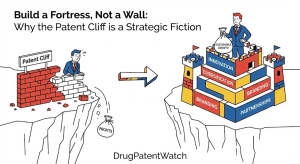
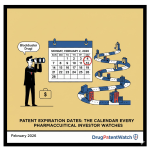
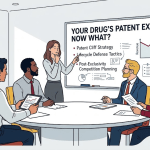
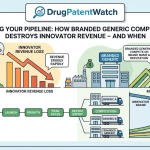
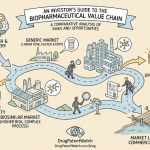
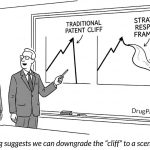
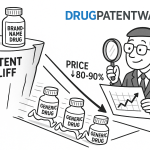
The term “patent cliff” suggests a sudden, vertical drop from the heights of monopoly pricing into a dark abyss of generic competition. For years, this metaphor has dominated boardrooms and investor calls, serving as a shorthand for the financial ruin that supposedly awaits a pharmaceutical company when its core patent expires. If we look at the headlines, the numbers seem to support this panic. Between 2025 and 2030, the industry faces a concentrated wave of expirations putting an estimated $200 billion to $400 billion in annual revenue at risk.1
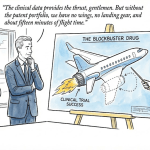
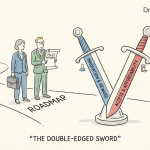
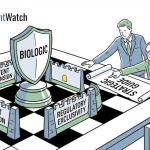
But we must recognize a fundamental truth: the cliff is an optical illusion. For the sophisticated intellectual property (IP) strategist, the end of a primary patent term is not an expiration of value but a transition into a more complex, multi-layered phase of exclusivity. By constructing what we call a “patent fortress”—a dense, overlapping web of secondary patents—manufacturers have effectively converted the sheer cliff into a manageable slope. This transition allows companies to preserve billions in revenue for years, and sometimes decades, after the “official” loss of exclusivity date.3
Dismantling the 20-Year Monopoly Fallacy
We often hear the simplistic claim that a new drug receives a 20-year monopoly. While a United States patent does have a statutory term of 20 years from its filing date, this number is commercially misleading.4 The clock starts ticking the moment a patent is filed, which usually happens in the early discovery phase—long before the molecule enters human trials. By the time a drug survives the “Phase II graveyard” and moves through regulatory review, a massive portion of its patent life has already vanished.4
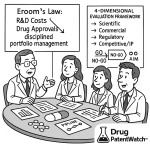
The actual window of market exclusivity—the effective patent life—is typically only seven to twelve years.4 This compressed timeline acts as a crucible for the industry. It creates an intense, front-loaded pressure to recoup an average research and development (R&D) cost that now exceeds $2.23 billion per approved medicine.11 To survive, firms can no longer rely on a single defensive wall; they must build an “exclusivity stack”.8
Terminology
Definition
Commercial Reality
Statutory Patent Term
20 years from the date of filing.
Largely consumed by R&D and clinical trials.
Effective Patent Life
The actual years on the market without competition.
Typically 7–12 years for small molecules.
Patent Cliff
A sudden revenue drop upon primary patent expiry.
Often a myth for well-defended biologic assets.
Patent Slope
A gradual revenue erosion due to secondary protections.
The modern reality for biologics and thicketed assets.
The Mechanics of the Exclusivity Stack
The modern pharmaceutical business model is built on a foundational pact: in exchange for the immense risk and capital invested in a new medicine, society grants a finite period of exclusivity.7 To maximize this period, we view a drug’s defense not as a single document but as a multi-layered bastion. The “exclusivity stack” combines different forms of legal and regulatory protection that may run concurrently or separately.4
The foundation of this stack is the Composition of Matter (CoM) patent. These are the crown jewels of pharmaceutical IP, covering the active drug molecule itself.7 Their power lies in their breadth; if the molecule is present in a product, the patent applies regardless of the manufacturing method or the disease being treated.8 However, as soon as the CoM patent is secured, the strategic focus shifts to building layers of secondary protection.11
Protection Layer
Source
Strategic Purpose
Primary (CoM)
USPTO
Prevents any competitor from making or selling the molecule.
Secondary (Polymorphs)
USPTO
Blocks bioequivalent versions of specific crystalline forms.
Secondary (Formulation)
USPTO
Protects the “recipe” or delivery system (e.g., once-daily dosing).
Secondary (Method of Use)
USPTO
Protects specific indications or treatment regimens.
Regulatory (NCE)
FDA
5 years of data exclusivity for new chemical entities.
Regulatory (Orphan)
FDA
7 years of exclusivity for rare disease treatments.
Regulatory (Pediatric)
FDA
An additional 6 months added to existing protections.
Secondary Patents: The Real Engine of ROI
If the primary patent is the heart of the drug, secondary patents are its armor. These patents cover alternative forms of molecules (polymorphs, isomers, salts), specific formulations, dosages, and new medical uses.16 While critics often label this practice “evergreening,” for business development teams, it is a necessary strategy to extract value from a diminishing asset.11
Empirical data show that secondary patents add an average of 6.3 to 7.4 years of additional life beyond the core compound patent.17 For a blockbuster generating $3 billion in annual sales, even a three-year extension is worth $9 billion in top-line revenue. This is why secondary patents are concentrated on the most lucrative drugs; as sales distributions grow, the firm’s propensity to obtain these post-approval protections increases proportionally.21
Polymorphs and the Art of Crystalline Defense
A polymorph is a three-dimensional crystalline structure of a chemical compound. Because variations in crystal structure can change a drug’s solubility, bioavailability, and stability, patenting specific polymorphs provides a high-stakes layer of defense.24 If we can characterize and claim the specific crystalline form used in the approved product, we can effectively block generic entrants who cannot replicate that form without infringing—even if the base molecule patent has lapsed.11
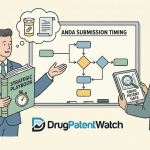
The timing of these filings requires precision. We recommend a lifecycle-centric approach where the IP management function is integrated into the drug development process from the beginning.11 If we file a polymorph application too early, it adds no extra time. If we wait too long, third parties might identify and patent the forms themselves. The goal is to delay the filing of secondary polymorph applications past the prior art date of the compound patent to maximize the effective term.24
Feature
Primary (CoM) Patent
Polymorph (Secondary) Patent
Scope
Broad (covers the molecule)
Narrow (covers a specific crystal form)
Filing Date
Early (Discovery/Preclinical)
Later (Development/Formulation)
Defensibility
High (Robust)
Moderate (Higher chance of challenge)
Strategic Goal
Secure the asset
Extend the commercial window
Formulation Patents: Turning Stability into Strategy
A well-crafted formulation patent protects the “recipe” of the final drug product, including excipient ratios, specific coatings, and delivery systems.25 We often see these used to transition from a twice-daily tablet to a once-daily extended-release version. This is not just a marketing gimmick; it is a substantial R&D effort that solves technical problems like drug absorption or patient adherence.6
A classic example is AstraZeneca’s Seroquel XR. By launching this extended-release formulation in 2008, the company established a $1 billion franchise that provided five additional years of exclusivity after the basic quetiapine patent expired.27 These patents are vital because they can be listed in the FDA’s Orange Book, forcing any generic challenger to trigger a Paragraph IV certification—which typically results in a 30-month stay on generic approval and significant legal costs for the competitor.3
Method-of-Use Patents: Expanding the Indication Perimeter
Method-of-use (MoU) patents protect the application of a drug to treat a specific disease. This is the legal foundation for drug repurposing.25 For instance, if we discover that a heart failure medication also treats a rare form of kidney disease, a new MoU patent can create a fresh period of exclusivity for that oncology or rare-disease market.29
In valuation models, these patents create “stepped” revenue projections. While the original indication’s revenue might “fall off a cliff,” the revenue from a later, patent-protected indication can continue.30 This forces generic challengers to “carve out” certain indications from their labels. However, because physicians can often prescribe drugs for off-label uses, these patents are primarily effective in blocking the generic’s marketing efforts rather than all sales, making them a “soft” but necessary layer of the fortress.30
Case Study: Humira and the $20 Billion Patent Wall
The defense of Humira (adalimumab) by AbbVie is the definitive archetype of the patent thicket. Humira became the world’s best-selling drug, generating peak annual revenue of over $21 billion.4 Although its primary patent expired in 2016, biosimilar competition did not enter the U.S. market until 2023.3
How did AbbVie achieve this seven-year extension? They didn’t rely on one wall; they built a thicket of 132 issued patents.1 These patents covered manufacturing methods, formulations, and dosage regimens, many of which were filed after the drug was already on the market.1
Humira Patent Thicket Metrics
Data Point
Total Patent Applications
Over 300 5
Total Patents Issued
~160 5
Patents Issued Post-2014
90% 32
Estimated Cost of Delayed Entry
$167 Billion for U.S. Payers 5
Primary Patent Expiry
2016
Actual Biosimilar Entry
2023
This strategy provided immense settlement leverage. Faced with the prospect of litigating 132 patents—where challenging just one can cost $1 million—virtually every major competitor chose to settle.5 The U.S. Court of Appeals eventually affirmed that “lots of patents” is not an antitrust violation, setting a high bar for future challenges to large biopharma portfolios.25
Revlimid: Volume Restrictions and the REMS Barrier
The case of Revlimid (lenalidomide) illustrates how manufacturers can use regulatory safety programs as an IP defensive tool. Celgene and Bristol Myers Squibb utilized an FDA-mandated Risk Evaluation and Mitigation Strategy (REMS) called RevAssist to delay competition.35
By filing 22 patents on the RevAssist program itself, the manufacturer prevented generic competitors from obtaining the samples required for bioequivalence testing.35 Furthermore, Celgene created a thicket of 27 secondary patents and secured orphan drug indications that extended protection to 2028—nearly a decade after the original API patent expired in 2019.35
Even when generics finally launched in 2022, they were subject to confidential settlement agreements that limited them to selling no more than 7% of the total market initially.34 These “volume restrictions” are a sophisticated way to allow nominal competition while maintaining supracompetitive prices until the final patents lapse in 2026.34
Why Biologics Face Slopes, Not Cliffs
We must distinguish between small-molecule and biologic kinetics. A generic version of a small-molecule drug like Lipitor is a perfect chemical copy. When its patent expires, revenue typically collapses by 90% within months because generic entry is swift and interchangeability is automatic.5
Biologics, such as Keytruda or Humira, are complex proteins derived from living cells. They Tip the scales at 150,000 Daltons—compared to a small molecule’s 300 Daltons.37 Biosimilars are not identical; they are “highly similar.” This scientific reality means they are not always automatically interchangeable at the pharmacy, and their manufacturing is vastly more expensive.2
Attribute
Small Molecules
Biologics
Erosion Pattern
Sheer Cliff (90% drop)
Gradual Slope (30-70% drop) 1
Interchangeability
Automatic/Perfect
Challenging/High Barrier
Manufacturing Moat
Low (Chemical)
High (Living cell systems)
Regulatory Framework
Hatch-Waxman
BPCIA
Exclusivity Period
5 Years (NCE)
12 Years 37
This manufacturing moat allows for a “defense-optimized” revenue trajectory. For a biologic like Keytruda, which generated $29 billion in 2024, the approaching 2028 expiry will not be a sudden plunge if Merck successfully transitions patients to subcutaneous formulations or combination regimens.38
Product Hopping: The Logic of Coerced Migration
Product hopping is a strategic migration from an old product to a new one with a longer patent life.41 We see two primary forms: the “soft switch” and the “hard switch.”
In a soft switch, the company introduces a new formulation (e.g., Namenda XR) and uses aggressive marketing and rebates to encourage doctors to switch patients before the old formulation (Namenda IR) loses protection.41 A hard switch occurs when the company discontinues the old product entirely, forcing the patient to move to the new version.41
While hard switches have faced antitrust scrutiny—as in the Namenda case where the court forced Actavis to keep the IR version on the market—the strategy remains effective because pharmacists cannot automatically substitute a generic IR tablet for a branded XR capsule under many state laws.41
The Prilosec-to-Nexium Chiral Switch
AstraZeneca’s switch from Prilosec to Nexium is a masterclass in this arena. As Prilosec (omeprazole) neared its 2001 expiry, the company launched Nexium, which is the S-enantiomer of the same molecule.46 By using different legal and commercial strategies, including aggressive publicity, the company transferred consumer loyalty to the new, more expensive patent-protected product.46
Nexium became a $5.6 billion bestseller by 2010, successfully compensating for the revenue loss from Prilosec.46 This “chiral switch” illustrates that even when a molecule becomes a commodity, its enantiomer—essentially a mirror image—can start a whole new clock if it offers even a slight pharmacokinetic advantage that can be marketed as superiority.46
The Inflation Reduction Act: A New Statutory Ceiling
The business environment changed fundamentally with the passage of the Inflation Reduction Act (IRA) in 2022. The IRA grants the government authority to negotiate a “maximum fair price” (MFP) for top-selling drugs that have been on the market for several years.3
This creates a new kind of cliff—one that is statutory rather than patent-driven. The IRA allows small molecules to be sold at market price for only seven years post-approval before becoming eligible for negotiation, while biologics receive eleven years.48
Policy Variable
Small Molecule
Biologic
Selection Eligibility
7 Years post-FDA approval
11 Years post-FDA licensure
Price Ceiling (12-16 yrs)
65% of nFAMP
65% of nFAMP
Price Ceiling (>16 yrs)
40% of nFAMP
40% of nFAMP
This 9-year vs. 13-year distinction creates a powerful incentive to prioritize biologics. If your small molecule is a massive success, the government will now select it for price setting regardless of how strong your secondary patent fortress is.49 This limits the potential upside of an extended lifecycle, forcing teams to reconsider their R&D priorities.48
Quantifying the Fortress: rNPV and Valuation Modeling
To an analyst, a company’s value is the sum of its patent-protected cash flows, discounted for risk.9 We use the Risk-Adjusted Net Present Value (rNPV) framework to decouple technical risk from financial risk.10
Where $CF_t$ is the net cash flow, $P(Success_t)$ is the cumulative probability of success at that phase, and $r$ is the discount rate.10
When we value a fortress, we don’t apply a 100% revenue drop. If a drug has a strong secondary formulation patent, we model a “tail” or a more gradual decline. For instance, instead of a 90% drop, a strong next-generation formulation might allow the branded product to retain 30-40% of peak sales for several additional years, significantly increasing the asset’s NPV.30
Turning Patent Data into Competitive Advantage
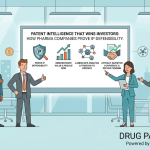
Good instincts are helpful, but data is better. We see a fundamental shift toward using sophisticated intelligence to drive clinical decisions. This is where a platform like DrugPatentWatch becomes indispensable for business development and R&D teams.52
By tracking patent expirations across 134 countries, DrugPatentWatch allows you to identify “white spaces”—areas with limited patent activity but high therapeutic potential—where you can innovate with reduced competitive pressure.12
Moreover, monitoring the “patent dance” or Paragraph IV challenges gives you an early warning system. If a competitor’s patent is being challenged at the PTAB, it might signal an early revenue event for you if you are the generic challenger, or a need for an urgent M&A move if you are the innovator.52 Accurate patent intelligence allows you to detect emerging competitive products years before they enter clinical trials, enabling you to redirect your R&D resources to less crowded therapeutic areas.12
The PTAB: A Death Squad for Secondary Patents?
The Patent Trial and Appeal Board (PTAB) has become a primary arena for challenging the fortress. Critics from patent-intensive industries concern that the PTAB is biased against patent holders because it uses a lower standard of proof for invalidation than federal courts.56
For biologics, the statistics are stark. While 50% of challenged small-molecule patents survive at the PTAB, a staggering 70% of biologic patents reach a final written decision where all challenged claims are invalidated.56
Outcome Category
Orange Book (Small Molecule)
Biologic Patents
All Claims Upheld
50%
21%
All Claims Invalidated
45%
70%
Mixed Results
5%
9%
This suggests that while “lots of patents” may deter competitors, the individual layers of the biologic fortress are often more vulnerable than those of small molecules when subjected to technical review.56 Strategists must therefore focus on patent quality, not just quantity, ensuring that secondary patents demonstrate “unexpected results” to survive an obviousness challenge.57
Conclusion: Mastering the Engineered Erosion
The patent cliff is not a natural disaster; it is a management challenge. If you rely on a single molecule and a single patent, you are indeed standing on a cliff edge. If you integrate IP strategy into your R&D pipeline from day one—layering polymorphs, formulations, and method-of-use claims—you are building a fortress.9
Between now and 2030, the industry faces the most severe wave of expirations in history.59 This forces a shift from a “winner-take-all” mentality centered on a few mega-drugs to a resilient, diversified portfolio of niche winners.59 In this new cycle, the winner is not the company with the strongest single patent, but the one with the most sophisticated, data-driven strategy to manage the transition from exclusivity to competition.4 By using tools like DrugPatentWatch and mastering the mechanics of the exclusivity stack, you can turn a looming threat into a decisive competitive advantage.
Key Takeaways
The Cliff is a Myth: For well-defended assets, the transition to generic competition is a “slope” of engineered erosion, not a sudden plunge.
Secondary Patents Drive Value: Independent formulation and method-of-use patents add an average of 6–7 years of commercial life to high-revenue drugs.
Biologics are Inherently Defensive: Their structural complexity and manufacturing hurdles create a “moat” that small-molecule generics cannot match.
The IRA is the New Ceiling: Government price negotiations start at year 9 for small molecules and year 13 for biologics, effectively capping the value of extended patent thickets for blockbuster products.
Intelligence is an Offensive Weapon: Platforms like DrugPatentWatch provide the raw data needed to identify “white space” opportunities and forecast generic entry with precision.
Quality Over Quantity: While thickets deter by volume, individual secondary patents face a 70% invalidation rate for biologics at the PTAB, necessitating a focus on truly inventive improvements.
FAQ
Q1: Is “evergreening” legal? Yes. While the term is often used pejoratively by critics, “evergreening” refers to the legitimate practice of patenting genuine improvements to a drug, such as safer formulations or new uses. The U.S. court system has repeatedly affirmed that there is no limit to the number of patents a company can hold on a single product, provided each meets the requirements of novelty and non-obviousness.25
Q2: How does a polymorph patent differ from a composition of matter patent? The composition of matter (CoM) patent covers the molecule itself regardless of its shape. A polymorph patent covers a specific three-dimensional crystalline arrangement of that molecule. Because different arrangements can change how fast a drug dissolves, a polymorph patent is a powerful way to block generic competitors who try to use that specific form to achieve bioequivalence.11
Q3: Why does the Inflation Reduction Act give biologics more time than small molecules? The distinction was based on the premise that biologics require more resources and time to develop and were historically thought to have weaker patent protection. However, empirical studies show that development times are nearly identical (12.6 vs. 12.7 years) and biologics actually have more patents on average, suggesting they may be “overly rewarded” by the current law.11
Q4: What is a “Paragraph IV” certification? Under the Hatch-Waxman Act, a generic company must “certify” against each patent listed for a drug in the FDA’s Orange Book. A Paragraph IV certification states that the patent is either invalid or will not be infringed by the generic product. This typically triggers an immediate lawsuit by the brand-name company, resulting in an automatic 30-month stay on the generic’s approval.3
Q5: How can investors use patent data to predict stock movements? Analysts look at the “exclusivity stack.” If a company’s revenue is heavily concentrated in a drug with an expiring CoM patent and no secondary “thicket,” it’s a red flag. Conversely, if a company is proactively filing formulation and method-of-use patents five years before a cliff, it signals an aggressive defense and a “softer” landing post-expiry, which can justify a higher valuation than the consensus view.9
Congressional Investigation of RevAssist-Linked and General Pricing Strategies for Lenalidomide | JCO Oncology Practice – ASCO Publications, accessed January 31, 2026, https://ascopubs.org/doi/10.1200/OP.23.00579