Introduction: Two Systems Built for Different Problems, Forced to Coexist
In pharmaceutical patent law, the rules changed permanently on September 16, 2012. That was the date the Patent Trial and Appeal Board (PTAB) opened for business under the America Invents Act (AIA), offering any person on earth a new and cheaper way to challenge a U.S. patent’s validity. For the technology sector, which had lobbied hard for the reform, it was the answer to a decade of “patent troll” litigation. For the pharmaceutical industry, it was something nobody had asked for and few had anticipated: a second front in every patent war.
The pre-existing Hatch-Waxman framework was already a precisely calibrated system. Congress built it in 1984 to balance two competing interests simultaneously — innovator companies needed enough patent exclusivity to justify multi-billion-dollar R&D bets, and patients needed access to affordable generics once those bets had been monetized. The result was a highly specific, litigation-heavy ecosystem with defined timelines, automatic 30-month stays, and 180-day exclusivity prizes designed to make the whole machine run predictably [1].
The PTAB disrupted that predictability. It introduced an administrative tribunal with a lower burden of proof, expert technical judges, a compressed timeline, and no standing requirement whatsoever. The interaction between these two systems was not planned; it emerged organically as generic manufacturers discovered they could use PTAB proceedings to apply parallel pressure on innovator patents while district court litigation was still running. Innovators discovered, in turn, that their strategic choice of lawsuit venue could effectively neutralize a PTAB challenge before the petition was even filed.
This article dissects every layer of that interaction. The audience is not the casual observer. It is the director of IP strategy deciding whether to file an inter partes review (IPR) petition this quarter, the general counsel modeling litigation risk for a portfolio review, the biosimilar developer weighing post-grant review timelines against market entry projections, and the innovator’s patent counsel trying to draft a new formulation patent that survives a PTAB trial ten years from now. Each section provides the strategic framework, the data, and the procedural detail required to make high-quality decisions in this environment.
Understanding how the PTAB and Hatch-Waxman interact is no longer optional for anyone competing in pharmaceutical markets. It is the minimum requirement for playing the game.
Part I: The Economic Architecture of Pharmaceutical Patents
The 20-Year Illusion and the Race Against the Clock
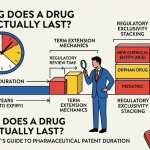
The statutory basis for pharmaceutical patents is the same as for any other technology: a 20-year term from the date of filing, enshrined in the TRIPS Agreement and codified in 35 U.S.C. § 154 [2]. The number sounds generous until you account for where pharmaceutical research actually starts and how long it takes to reach a patient.
Patent applications in pharmaceuticals are typically filed when a promising molecule is identified, often during early-stage preclinical work. At that point, the drug is years away from any clinical trial, let alone a commercial launch. What follows is a development process that consumes, on average, 10 to 15 years of the patent term before a product ever reaches the market [3]. Preclinical studies come first, then three sequential phases of human trials, then an FDA review that itself can take 12 to 24 months. By the time the FDA grants approval, the core patent protecting the active pharmaceutical ingredient (API) may have only 7 to 10 years of remaining life [4].
That 7-to-10-year window carries an enormous financial burden. The cost of bringing a single drug to market has been estimated at anywhere between $1.3 billion and $4.5 billion, depending on the methodology, and that figure includes only the capitalized cost of failures — because for every drug that reaches approval, roughly 9 others fail somewhere in the development pipeline [5]. Every dollar of that combined cost has to be recouped in those compressed years of exclusivity. The pressure this creates is not abstract. It is the central economic force that drives every strategic decision that pharmaceutical companies make about patents.
Why Patent Thickets Exist and Why They Matter for PTAB Strategy
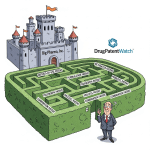
Given that the core API patent erodes quickly, innovators have developed a systematic response: layer additional patents around the drug to extend the period of effective exclusivity. The resulting portfolio of secondary patents — covering formulations, dosage regimens, polymorphic forms, methods of use, delivery mechanisms, and manufacturing processes — is what practitioners call a “patent thicket” [6].
The strategic logic is straightforward. A core composition-of-matter patent expiring in 2028 can be supplemented by a formulation patent expiring in 2033 and a method-of-use patent expiring in 2035. If those secondary patents hold, a competitor cannot launch a generic that is therapeutically equivalent and commercially viable even after the core patent falls. The competitor either has to invent around all three layers or wait until they all expire.
This strategy works for innovators and frustrates everyone else, which is precisely why it has become one of the primary targets of PTAB challenges. Core API patents, protected by deep experimental data and usually supported by composition-of-matter claims with enormous breadth, are difficult to invalidate in any forum. Secondary patents — covering what critics call “incremental” innovations — are frequently easier to attack on obviousness grounds, particularly when the prior art landscape is dense and technical judges are doing the evaluation [7].
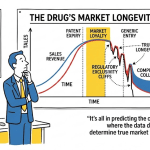
The economic stakes of dismantling a secondary patent thicket are enormous. <blockquote>”Between 2025 and 2030, an estimated $236 billion in global pharmaceutical revenue is at risk due to patent expirations, and upon generic or biosimilar entry, brand-name drug revenues can fall by 80 to 90 percent almost overnight.” [8]</blockquote>
That revenue cliff is what makes PTAB strategy a financial, not merely a legal, discipline. When a generic challenger files an IPR petition against a key formulation patent, it is not engaging in an academic dispute about patent quality. It is attempting to accelerate, by potentially years, a multi-billion-dollar transfer of market share.
Regulatory Exclusivity vs. Patent Exclusivity: Two Overlapping Shields
Before engaging with PTAB strategy, it helps to understand that patent protection and regulatory exclusivity are distinct instruments, and PTAB decisions affect only one of them.
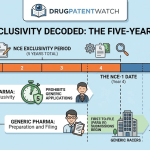
The FDA grants several forms of market exclusivity independently of the patent system. New chemical entities get five years of exclusivity during which no generic ANDA can even be filed. Drugs that obtain new clinical investigation exclusivity for a new indication get three years. Orphan drugs get seven years. Biologic reference products get 12 years of exclusivity under the Biologics Price Competition and Innovation Act, plus a four-year data exclusivity period during which abbreviated applications cannot be submitted [9].
A PTAB decision that invalidates a patent does not touch any of these regulatory exclusivities. A generic or biosimilar challenger who wins at the PTAB still cannot receive FDA approval before those statutory periods expire. This intersection is frequently misunderstood in portfolio modeling. An IPR victory may eliminate a patent obstacle while a regulatory exclusivity clock still has years to run, meaning the commercial benefit of the PTAB win is deferred. Strategists on both sides need to map patent expiry and regulatory exclusivity dates together before deciding whether an IPR is even the right move at a given moment.
DrugPatentWatch tracks both patent and regulatory exclusivity data for over 130 countries, which makes it a practical starting point for this kind of multi-variable analysis. Rather than reconciling patent databases with FDA exclusivity files manually, practitioners can use the platform’s consolidated view to understand exactly what layers of protection remain after a specific patent is removed from the board — and what the commercial impact of that removal actually is.
Part II: The PTAB Decoded
What the PTAB Is, What It Does, and Why the “Death Squad” Label Is Analytically Incomplete
The PTAB is an administrative tribunal housed within the USPTO. It is staffed by over 100 Administrative Patent Judges (APJs), each of whom is required by statute to have a technical or scientific background in addition to legal credentials [10]. Three APJs hear each case. They are not generalist jurists interpreting evidence from a distance; they are typically former scientists and engineers who can read a biochemistry paper or a manufacturing process patent with the same fluency as the experts presenting it.
The tribunal conducts three types of post-grant proceedings: Inter Partes Review (IPR), Post-Grant Review (PGR), and Covered Business Method Review (CBM, which is now sunset). For pharmaceutical companies, the two that matter are IPR and PGR.
An IPR can be filed by any person who is not the patent owner, beginning nine months after the patent’s grant. The grounds for challenge are narrow: only anticipation under 35 U.S.C. § 102 and obviousness under 35 U.S.C. § 103, and only based on prior art consisting of patents or printed publications [11]. The standard for institution is “reasonable likelihood” that the petitioner will prevail on at least one challenged claim.
A PGR must be filed within nine months of a patent’s grant. The grounds are broader: any condition of patentability, including subject matter eligibility under § 101 and enablement and written description under § 112. This makes PGR particularly powerful for challenging broad biologic and functional claims. Post-Amgen v. Sanofi [12], § 112 has become a formidable weapon.
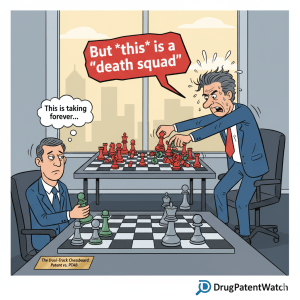
The “death squad” label — coined by late Federal Circuit Chief Judge Randall Rader — captures a real phenomenon but applies unevenly across drug types. Across all technologies, the rate at which PTAB final written decisions (FWDs) found all challenged claims unpatentable rose from 55% in 2019 to 70% in 2024, with per-claim invalidation exceeding 78% when disclaimed claims are included [13]. These numbers are alarming from a patent-owner perspective.
But pharmaceutical patents are not “all technologies.” The PTAB’s own Orange Book/Biologic Patent Study, updated through March 2024, reveals a far more nuanced picture. For Orange Book-listed patents (small-molecule drugs), the institution rate has been 62%, and of those that proceed to a final written decision, roughly 50% result in all claims upheld — a much more balanced outcome than the all-technology averages suggest [14]. For biologic patents, the outcome is harsher: 70% of final written decisions find all challenged claims unpatentable, and only 21% result in all claims surviving [15].
This divergence has direct strategic implications. A generic challenger targeting a small-molecule drug’s formulation patent faces a genuine coin-flip once trial is instituted. A biosimilar challenger targeting a biologic’s manufacturing process patent enters with substantially better odds. These are not the same fight, and treating them as such wastes resources.
The Constitutional Foundation: Oil States, Arthrex, and the Director’s Rising Power
The PTAB’s authority has been challenged twice at the Supreme Court, with significant implications for how the proceedings work today.
In Oil States Energy Services, LLC v. Greene’s Energy Group, LLC (2018), the Court held that patent grants are “public franchises” — grants of a public right — rather than private property rights that can only be revoked by an Article III court [16]. Congress therefore had constitutional authority to create an administrative mechanism for reconsidering the patent grant, and the PTAB was upheld.
Three years later, in United States v. Arthrex, Inc. (2021), the Court found that the way APJs were appointed violated the Appointments Clause [17]. APJ decisions were, as structured, unreviewable by any presidentially appointed officer — which made APJs “principal officers” who should have been confirmed by the Senate. The Court’s remedy was to authorize the USPTO Director to review and reverse PTAB decisions unilaterally, without referring them back to a panel. This created a powerful executive oversight mechanism that has since become one of the most strategically significant features of the PTAB landscape.
The practical effect is that the PTAB is no longer purely adjudicative in the traditional sense. The Director can intervene in individual cases, establish precedential decisions, and set policy on discretionary denial through “Director Review.” This has made PTAB outcomes increasingly sensitive to the policy priorities of whichever administration currently occupies the USPTO Director’s chair — a political risk that did not exist before Arthrex.
Part III: Two Venues, Two Sets of Rules
The Burden of Proof: Why This Single Difference Changes Everything
The most consequential difference between the PTAB and a U.S. district court is not the technology expertise of the judges or the speed of the proceedings, though both matter. It is the standard of proof required to invalidate a patent.
In district court, an issued patent carries a statutory presumption of validity under 35 U.S.C. § 282. To overcome that presumption, a challenger must prove invalidity by “clear and convincing evidence” — a demanding standard that requires something approaching firm belief or conviction. Courts have described it as substantially more than a preponderance. It is the same standard used in civil fraud cases [18].
At the PTAB, there is no presumption of validity. The proceeding is styled as the USPTO taking a second look at its own grant, so the patent receives no deference from the issuing authority. The challenger needs only to establish unpatentability by a “preponderance of the evidence” — meaning it is more likely than not, i.e., greater than 50% probability, that the claims are invalid [19].
This single procedural difference explains a substantial portion of the outcome gap between the two venues. An invalidity argument that cannot clear the “clear and convincing” bar in district court — perhaps because the prior art combination is plausible but not overwhelmingly compelling — may easily clear the preponderance bar at the PTAB. The same underlying technical argument can succeed in one venue and fail in the other, solely because of the evidentiary standard.
For challengers, this creates a strategic arbitrage opportunity of the first order. For patent owners, it means the patent they thought was solid — and that may have survived prior art challenges in examination — is suddenly vulnerable in a forum where doubt functions as a win rather than a loss.
Claim Construction: Convergence That Didn’t Eliminate the Advantage
Until 2018, the PTAB used the “Broadest Reasonable Interpretation” (BRI) standard to construe claim language, which gave claims the widest reading their text could support. District courts used the narrower Phillips v. AWH Corp. standard, under which claims receive their “ordinary and customary meaning” as understood by a person of ordinary skill in the art at the time of invention.
This gap created an absurd situation: a claim could be held valid under the narrower Phillips standard in district court but invalid under BRI at the PTAB. Congress had built a dual-track system; litigants were now operating under two different legal realities about what the claims actually covered.
The USPTO fixed this in 2018 by adopting Phillips for IPR proceedings, aligning the two venues [20]. Many patent owners expected this to materially reduce PTAB invalidation rates. It did not, or at least not substantially. The reason is that the claim construction standard is only one variable in a system where the burden of proof, the expertise of the decision-makers, the limited discovery, and the compressed timeline all still favor challengers.
What the Phillips adoption did do was create a new, more subtle strategic advantage for petitioners: the ability to get an early, authoritative, technically expert reading on claim scope. APJs with scientific backgrounds may construe a complex biotechnology term differently than a generalist district court judge who relies primarily on expert testimony from attorneys. Filing an IPR thus functions as a form of intelligence gathering — forcing the patent owner to commit to claim construction positions early, in a forum where those positions will be parsed by people with the technical background to probe them rigorously.
Speed and Cost: The Practical Calculus
By statute, the PTAB must decide whether to institute an IPR within six months of the petition filing, and it must issue a final written decision within one year of institution, with a six-month extension available for good cause [21]. This means a petitioner can obtain a binding final decision on patent validity in approximately 18 months from filing.
Hatch-Waxman litigation in district court follows a different rhythm entirely. The 30-month stay that automatically triggers when an innovator sues a Paragraph IV ANDA filer sets the baseline, and many cases extend well beyond that. Time-to-trial in major patent venues ranges from 24 months to over 36 months, depending on the district and judge assignment [22].
The cost differential is equally stark. An IPR from filing through a final written decision typically costs between $300,000 and $600,000 in legal fees, plus USPTO fees [23]. A fully litigated Hatch-Waxman case, including fact discovery, expert preparation, claim construction briefing, summary judgment motions, and trial, routinely costs $3 million to $5 million per side, and complex cases with multiple patents and expert witnesses can run significantly higher [24].
This cost difference has a compounding effect. When a drug is protected by eight or ten patents — which is common for major biologics, where one study found a median of 14 patents per biologic compared to three for small-molecule drugs [25] — a challenger cannot afford to litigate each patent to a full district court trial. The IPR makes it economically feasible to challenge multiple patents simultaneously, applying pressure across the entire thicket rather than attacking it one patent at a time.
What the PTAB Cannot Do: The Limits That Define Its Value
The strategic utility of an IPR must be understood against its hard boundaries. An IPR can only address novelty and obviousness arguments based on patents and printed publications. It cannot address:
Subject matter eligibility under 35 U.S.C. § 101
Enablement or written description under 35 U.S.C. § 112
Prior public use or on-sale activity under 35 U.S.C. § 102(b)
Inequitable conduct (fraud on the USPTO during prosecution)
These exclusions define what the IPR cannot accomplish and, critically, what argument types a petitioner must preserve for district court. They also explain why PGR — available only during the nine-month window after a patent issues, and only for AIA first-inventor-to-file patents — has become more important in the biologics space. PGR can use the full arsenal of invalidity grounds, including § 112 enablement challenges that the Amgen v. Sanofi decision made newly potent.
Table 1: Strategic Comparison of PTAB Inter Partes Review vs. District Court Hatch-Waxman Litigation
Feature
IPR at the PTAB
Hatch-Waxman in District Court
Decision-makers
3 APJs with technical backgrounds
Single generalist judge; sometimes a jury
Standard for invalidity
Preponderance of the evidence
Clear and convincing evidence
Presumption of validity
None
Yes, statutory (35 U.S.C. § 282)
Claim construction
Phillips standard
Phillips standard
Time to final decision
~18 months
30+ months typical
Typical all-in legal cost
$300K — $600K+
$2M — $5M+ per side
Discovery scope
Very limited; cross-examination of declarants only
Full Federal Rules discovery
Available invalidity grounds
§ 102 and § 103 based on patents/publications only
All invalidity grounds
Estoppel on petitioner
Grounds raised or reasonably could have been raised
Standard litigation preclusion
Appealable to
Federal Circuit
Federal Circuit
Part IV: Hatch-Waxman Meets IPR — The Dual-Track Trap
How Paragraph IV Works and Why IPR Complicates It
The Paragraph IV certification system is the engine of generic drug competition in the United States. When a generic manufacturer files an Abbreviated New Drug Application (ANDA) with the FDA, it must certify with respect to each Orange Book-listed patent on the reference drug. A Paragraph IV certification states that the listed patent is invalid, unenforceable, or will not be infringed by the generic product [26]. The filing is deemed an act of artificial infringement, giving the patent owner 45 days to sue. If suit is filed within that window, an automatic 30-month stay goes into effect, preventing the FDA from approving the ANDA until either the stay expires or the court resolves the dispute [27].
The first generic company to file a substantially complete ANDA with a Paragraph IV certification earns 180 days of market exclusivity — during which the FDA cannot approve any other ANDA for the same drug [28]. This exclusivity is the primary financial incentive that drives early patent challenges. For a blockbuster drug generating $4 billion annually in U.S. revenues, a six-month head start ahead of all other generics can be worth hundreds of millions of dollars.
The PTAB introduces a game-theory problem into this system. Imagine a first-filer generic with a strong IPR position on a key patent. Filing the IPR and winning would invalidate the patent for everyone, immediately clearing the path for all other generics to enter the market as soon as the FDA approves their ANDAs. The first-filer’s 180-day exclusivity — the prize that justified the years of expensive development and litigation preparation — could be worthless. A second- or third-to-file generic, with nothing to lose from eliminating the patent entirely, faces the opposite incentive: use the IPR to destroy the patent and launch simultaneously with the first-filer.
This creates divergent strategic calculations based on filing position. First-filers often have reason to avoid IPRs on the patents most closely tied to their exclusivity advantage and focus their PTAB activity on patents that are peripheral to the core market exclusivity analysis. Later filers have every reason to be aggressive at the PTAB. Competitive intelligence on who else has filed ANDAs against the same drug — available through FDA databases and aggregated by platforms like DrugPatentWatch — is essential input for modeling these dynamics before committing to an IPR strategy.
The One-Year Bar: The Forcing Function That Front-Loads Everything
35 U.S.C. § 315(b) contains what may be the most consequential deadline in modern pharmaceutical patent law: an IPR petition may not be instituted if it is filed more than one year after the petitioner is served with a complaint alleging infringement of the patent [29].
The one-year clock starts the moment the complaint is served, not when it is answered, not when a discovery schedule is set, not when claim construction briefing begins. From that date, a generic defendant has 12 months to conduct a thorough prior art search, retain and prepare a technical expert, draft a petition of up to 14,000 words that meticulously maps claim limitations to prior art references, and file the complete package with the USPTO. All of this happens simultaneously with the initial phases of district court litigation, including filing an answer, negotiating a discovery schedule, and beginning the collection of documents for production.
The strategic implications are severe. The one-year bar forces a “dual-track sprint” from the moment the complaint lands. Companies that do not immediately mobilize IP litigation infrastructure — retaining PTAB-specialized counsel and technical declarants in parallel with district court counsel — forfeit the PTAB option permanently. There are no extensions and no exceptions for strategic delay.
The bar also applies to real parties in interest and privies, which means coordination among related entities requires careful analysis. A parent company served with a complaint can start the clock for its subsidiaries if they qualify as real parties in interest. Corporate structuring decisions that seem routine can inadvertently affect PTAB access.
One important nuance: a complaint must be served (not merely filed) to start the clock. A complaint filed but not served does not trigger § 315(b). This has led to cases where defendants have carefully managed service logistics, but it is a fragile strategy that courts scrutinize closely.
Fintiv and Venue as a Strategic Weapon
Even a petitioner who meets the one-year bar and presents a compelling invalidity case faces a third obstacle: the PTAB’s discretionary authority to deny institution.
The governing framework comes from the precedential decision Apple Inc. v. Fintiv, Inc., which directs the Board to consider six factors when a parallel district court proceeding is pending [30]. Those factors are:
Whether the district court has granted or is likely to grant a stay pending the IPR outcome
The proximity of the court’s trial date to the PTAB’s statutory deadline for a final written decision
The level of investment by both the parties and the court in the parallel proceeding
The degree of overlap between IPR issues and court issues
Whether the petitioner and the district court defendant are the same party
Other circumstances, including the merits of the petition
Factor 2 is the most litigated. If an innovator files suit in a district with a reputation for fast scheduling — the Western District of Texas, the Eastern District of Virginia, the District of Delaware under certain judges — the trial date can be close enough to the PTAB’s one-year statutory deadline that the Board finds the proceedings duplicative. The PTAB may deny institution on efficiency grounds even when the petition presents a strong invalidity case.
This transforms venue selection into an offensive weapon for innovators. Filing in a “rocket docket” is not merely a preference for a favorable jury pool or judge; it is a preemptive maneuver designed to foreclose the PTAB option before the generic even files its petition. The innovator essentially races to create a scheduling environment where Fintiv factors weigh against institution before the one-year clock even runs out.
Under recent USPTO leadership, this concern has intensified. The current USPTO administration has formalized a bifurcated briefing process for discretionary denial issues, requiring them to be argued and decided by the Director’s office before any panel of APJs considers the merits [31]. Discretionary denial is now a first-line defense, not an afterthought — which means challengers must analyze the Fintiv risk profile of every potential case before filing, not after.
Practitioners use DrugPatentWatch to monitor the litigation docket for a target drug, including where suits have been filed, which judges are assigned, and what scheduling orders have been entered. This data, combined with published statistics on median time-to-trial by district, allows a challenger to calculate Fintiv risk before committing to an IPR filing strategy.
Part V: The Challenger’s Playbook
Timing the Attack: Early, Late, or Staggered
Within the one-year window set by § 315(b), a petitioner has meaningful discretion about when to pull the trigger. Each timing option carries a distinct risk-reward profile.
Filing early — within the first few months of service — gives the challenger the initiative. It puts the patent owner in a defensive posture before discovery has fully developed, forces early commitment to claim construction positions, and maximizes the chances of getting the IPR fully resolved (or at least decided on institution) before the district court trial date is far enough advanced to trigger Fintiv denial. The risk is that early filing must be done with less discovery from the litigation, potentially missing the patent owner’s specific infringement theories. An early petition may challenge claims that the patent owner ultimately decides not to assert.
Filing late — near the one-year deadline — allows the challenger to use interrogatory responses, document productions, and preliminary infringement contentions from the litigation to sharpen the petition’s focus. If the patent owner has already identified which specific claims it will assert and how it maps them to the accused product, the petitioner can craft a precisely targeted petition with no wasted challenge coverage. The risk is the Fintiv problem: by the time a late-filed petition goes through the institution process (which can take up to six months), the trial date may be uncomfortably close.
The most sophisticated approach is a staggered strategy: file IPRs against the weakest patents — those most susceptible to prior art attack — early, creating immediate leverage and forcing multi-front litigation. Reserve the more difficult challenges for district court arguments, including § 112 or prior-use grounds that the IPR cannot address. This surgical approach, informed by competitive intelligence about which patents in the thicket are most vulnerable, concentrates the PTAB resources on the highest-probability targets rather than spreading them thin across the entire portfolio.
DrugPatentWatch enables this kind of portfolio triage. By mapping every Orange Book or Purple Book listing for a target drug against the litigation history and PTAB activity of similar patents, a challenger can rank the patent thicket by vulnerability before making any filing decision. Prior PTAB decisions involving the same assignee, the same technology center, or the same prior art references provide a data set from which practitioners can learn what arguments have and have not worked — significantly more efficient than starting each case from scratch.
Crafting the Petition: What Separates Winners from Dismissed Cases
The IPR petition is the single most important document the challenger will produce. If the petition fails to persuade the PTAB that there is a “reasonable likelihood” the petitioner will prevail on at least one challenged claim, the Board denies institution and that decision is non-appealable [32]. There is no second chance.
A petition that merely identifies prior art and asserts it anticipates or renders the claims obvious will not survive. The APJs are technical experts who read prior art critically, understand the state of the relevant field at the time of invention, and require a fully articulated argument that leaves nothing to inference.
Four practices distinguish petitions that get instituted and win at trial from those that do not.
The first is comprehensive claim mapping. Every limitation of every challenged claim must be explicitly identified in the prior art references. If a single limitation of a single claim is left unaddressed — even if its presence in the prior art seems obvious to any scientist in the field — the petition is fatally deficient on that claim. The APJs will not fill in the gap.
The second is a fully developed motivation-to-combine analysis. For obviousness challenges, which are the most common IPR ground, identifying claim elements in multiple references is necessary but not sufficient. The petition must explain, with specificity, why a person of ordinary skill in the art (POSA) would have been motivated to combine those specific references, and why they would have had a reasonable expectation of success. “It would have been an obvious design choice” is a conclusion, not an argument. The APJs want the mechanism: what problem the POSA was trying to solve, what each reference taught about potential solutions, and why combining them was a predictable path forward [33].
The third is a credible, substantive expert declaration. The declarant must be a qualified technical expert whose credentials match the relevant field of science. The declaration should not mirror the petition’s legal arguments in technical language; it should independently explain the scientific and technical context that makes the prior art relevant, using diagrams, data tables, and analytical frameworks that translate complex science into a form that even technically trained judges can follow efficiently [34].
The fourth is a counter-narrative to the patent’s story of invention. Patents are written to tell a compelling story: there was a long-felt problem, many tried and failed to solve it, and the inventor found an unexpected and nonobvious solution. A winning IPR petition must systematically dismantle that narrative before it can take hold. It must show that the “problem” was already understood by the field, that the “solution” was well within the routine toolkit of any POSA, and that the results claimed as unexpected were in fact predictable from the prior art. This narrative work is as important as the formal claim mapping.
Post-Grant Review: The Nine-Month Window That Post-Amgen Made More Important
PGR is available only for the nine months after a patent issues, and only for AIA first-inventor-to-file patents. This constraint makes it relevant primarily for newly issued biologic patents and for the latest generation of small-molecule secondary patents.
What makes PGR valuable — particularly post-Amgen — is the § 112 enablement ground. In Amgen Inc. v. Sanofi (2023), a unanimous Supreme Court invalidated Amgen’s broad functional antibody claims because the patent specification disclosed only 26 specific antibodies but claimed the entire genus of antibodies capable of performing two defined functions [35]. Justice Gorsuch’s formulation was precise: “the more one claims, the more one must enable.” A specification that provides a general roadmap and a handful of examples, requiring the scientific community to do substantially more work to identify additional working embodiments, fails the enablement requirement.
Biologic companies frequently draft broad functional claims to capture the full scope of a therapeutic approach, not merely the specific antibody sequence they are commercializing. The Amgen decision gives biosimilar challengers a Supreme Court-backed theory for attacking those claims in PGR within the nine-month window. This window of maximum vulnerability for newly issued biologic patents has become a focal point for biosimilar competitive strategy. Companies with biosimilar programs in development should be monitoring new biologic patent issuances and evaluating PGR eligibility as part of routine portfolio surveillance.
Part VI: The Innovator’s Defense
The Patent Owner Preliminary Response: When to Fight Hard Early
The PTAB gives a patent owner three months after petition filing to submit a Patent Owner Preliminary Response (POPR). The POPR is optional, but almost always advisable. It is the only opportunity to stop the proceeding before institution, and a successful POPR ends the threat at minimum cost.
Two schools of thought govern POPR strategy. The procedural school focuses primarily on arguments that do not engage the technical merits: time-bar challenges under § 315(b), Fintiv arguments for discretionary denial, and challenges under § 325(d) arguing that the petition relies on prior art already considered during examination [36]. This approach conserves the patent owner’s full technical defense for the post-institution Patent Owner Response (POR), avoiding the risk of revealing the strongest arguments to the petitioner before they need to present their reply.
The merits school argues that a targeted, technically compelling rebuttal at the POPR stage — supported by a pre-institution expert declaration — can be dispositive. Data supports this view: institution rates are measurably lower in cases where patent owners filed pre-institution expert testimony than in cases where they did not [37]. If a “silver bullet” argument exists — a prior art element the petitioner misread, a technical error in the motivation-to-combine analysis, a critical factual error in the declarant’s assessment of what a POSA would have known — presenting it at the POPR stage can end the case before it begins.
The decision between these approaches requires a frank assessment of two questions. First, how strong are the procedural arguments? If the petition is clearly filed outside the one-year bar, or if the district court trial is scheduled early enough to make Fintiv denial near-certain, the POPR should lead with procedure. Second, if institution is likely despite procedural arguments, does a knock-out technical argument exist that is both persuasive at the institution stage and best deployed before the petitioner can respond to it? If so, deploy it.
Venue Selection: The Preemptive Strike Against PTAB
The most effective PTAB defense for a patent owner is one that prevents the PTAB proceeding from happening at all. Venue selection is now the primary mechanism for that outcome.
An innovator who files suit in a district with short median time-to-trial — and who obtains a scheduling order with an early trial date — substantially increases the probability that a Fintiv analysis will favor discretionary denial. The Western District of Texas and the District of Delaware have historically set trial dates that fall within 24 months of complaint filing. The Eastern District of Virginia can move even faster [38].
The calculation requires modeling the interaction between the trial date and the PTAB’s institution timeline. If a generic defendant files an IPR nine months after service of the complaint (the typical timing for a late-filed petition), the PTAB will make its institution decision approximately six months later — 15 months after service. If the court’s trial is scheduled within nine or ten months of that institution decision, factor 2 of the Fintiv analysis weighs heavily against institution.
This is not merely theoretical. It has become a standard part of innovator litigation planning. The decision of where to file is analyzed for Fintiv implications before the complaint is drafted. For a patent owner with a major commercial product at stake, an investment of legal resources in understanding the scheduling practices of available venues is paid back many times over if it results in a discretionary denial.
Prosecuting for Resilience: Building the Defense Before the Attack Arrives
The most cost-effective PTAB defense strategy is implemented during patent prosecution — years before any petition is filed.
A patent written with the expectation of PTAB challenge looks different from one written simply to secure an allowance. The specification is denser. It includes multiple working examples rather than a minimal number sufficient to support the claims. It presents quantitative data demonstrating unexpected results. It explicitly defines key claim terms to foreclose broad interpretations that could be mapped to prior art. It describes the state of the art at the time of filing, identifying specific unsolved problems and why prior attempts at solutions failed [39].
The claim architecture is also different. A PTAB-resilient application includes a cascade of claims at varying levels of scope: broad independent claims to capture the full invention, medium-scope dependent claims that add specific technical limitations, and narrow claims that specifically cover the commercial embodiment. This cascade matters because an IPR can invalidate the broad independent claims while narrower dependent claims survive. If the commercial product falls within the scope of a surviving dependent claim, the patent remains enforceable even after a partial PTAB loss. A patent with only one broad independent claim and thin dependent claims offers no such fallback.
Secondary considerations of non-obviousness — objective evidence that supports the non-obvious nature of the invention — should be embedded in the specification rather than reserved as a surprise for trial. Commercial success data, evidence of long-felt but unmet need, documented failures of others to solve the same problem, and results that were genuinely unexpected given the state of the prior art: all of these can be argued from the patent record when they appear in the specification, making them harder to dismiss at the PTAB than litigation-generated evidence that did not exist when the patent was prosecuted [40].
This “prosecute for litigation” mindset requires integrating patent prosecution and litigation strategy into a single function — or at minimum, ensuring that prosecution counsel receives regular input from litigation counsel about what arguments are being used to attack similar patents in the same therapeutic area. The up-front investment in a richer, more carefully drafted specification is a fraction of the cost of defending an inadequately drafted patent in an 18-month IPR.
Part VII: Estoppel — The Long Shadow of Every IPR
What ‘Raised or Reasonably Could Have Been Raised’ Actually Means
The statutory basis for IPR estoppel is 35 U.S.C. § 315(e)(2). After the PTAB issues a final written decision, the petitioner is barred from asserting in any court that a patent claim is invalid “on any ground that the petitioner raised or reasonably could have raised” in the IPR [41].
The phrase “reasonably could have raised” is where the doctrine gets contested. Courts have not interpreted it as “any prior art that existed anywhere in the world at the time of filing.” The Federal Circuit has applied a standard closer to what a skilled searcher conducting a diligent search would reasonably have been expected to discover [42]. This distinction matters enormously.
A patent owner seeking to invoke estoppel must now do more than point to a prior art reference and say “you could have found this.” They may need to present evidence — potentially expert testimony from a search professional — that the reference was reasonably discoverable through a competent, methodical prior art search. This has transformed pre-IPR prior art searching from a litigation-support activity into a strategic necessity for both sides.
For the petitioner, a well-documented search methodology serves a dual purpose: it builds a stronger petition by ensuring no important prior art is missed, and it defines and limits the universe of references for which estoppel could be argued later. For the patent owner, conducting an independent search to identify art the petitioner missed has become an affirmative tactic — a way to identify references that might be weaponized if the PTAB proceeding fails and the fight moves back to district court.
The Supreme Court’s SAS Institute, Inc. v. Iancu (2018) decision expanded the scope of estoppel by requiring the PTAB to issue a final written decision addressing every challenged claim, not just those on which it decided to institute [43]. This means a petitioner who challenges ten claims in an IPR petition and loses receives a final written decision on all ten, creating estoppel across the full range of challenged claims rather than just the ones the Board selected.
The Product Art Loophole: Why an IPR Loss Is Not a District Court Loss
The most significant recent development in IPR estoppel law is the emergence of a durable loophole that substantially changes the strategic calculus of the IPR decision.
IPRs can only challenge patents on grounds of prior art “consisting of patents or printed publications.” They cannot, by statute, be based on prior public use, on-sale activity, or prior art embodied in a physical device or system. The Federal Circuit, in cases including IOENGINE, LLC v. Ingenico Inc. (2025), has held that § 315(e)(2) estoppel does not apply to invalidity grounds that could not have been raised in the IPR [44]. This means a petitioner who loses on an obviousness argument based on a printed publication is not estopped from arguing, in district court, that the same invention was anticipated by a prior-art device that was publicly used or on sale before the patent’s priority date.
The strategic implication is striking: a physical product or system can serve as the basis for a district court invalidity argument even if a printed publication describing that very product was used (unsuccessfully) in the IPR. The estoppel attaches to the publication as a documentary ground. It does not attach to the physical product as a “prior use” ground, even when the physical product and the publication are functionally describing the same prior art.
This creates a bifurcated attack strategy that many generic challengers now employ deliberately. Use the IPR to advance all publication-based arguments, accepting the estoppel risk as the price of the PTAB’s favorable burden of proof. Hold in reserve any prior-use or prior-sale arguments tied to physical products, preserving them for district court where they operate entirely free of IPR estoppel — and where the presence of a physical prior-art device may be more visually compelling to a fact-finder than a printed document.
For patent owners, this development means an IPR victory may not deliver the finality they expected. Winning at the PTAB on the prior art arguments presented in the petition does not necessarily end the validity dispute. The same core technical theory can come back in district court dressed in different statutory clothing. This reality has pushed patent owners to conduct more comprehensive invalidity analysis — not just responding to the arguments raised in the IPR, but proactively identifying product-based prior art that a challenger might hold in reserve.
Part VIII: The Data — PTAB Outcomes by Drug Type
Orange Book vs. Purple Book: A Statistical Portrait of Two Battlefields
The USPTO’s Orange Book/Biologic Patent Study, updated through March 2024 and building on studies dating back to 2018, provides the most authoritative public data set on pharmaceutical patent outcomes at the PTAB [45]. The findings reveal two fundamentally different environments.
Since FY2013, the cumulative institution rate for petitions challenging Orange Book-listed patents has been approximately 62%, compared to 61% for biologic patents [46]. At the institution stage, the two drug types look similar. Both require challengers to present a credible case for invalidity that meets the “reasonable likelihood” standard, and petitioners in both areas have been roughly equally successful at crossing that threshold.
The post-institution story diverges sharply. Of the biologic patent petitions that resulted in a final written decision, 70% found all claims unpatentable, while only 21% found all claims to be patentable. For Orange Book patents, only 45% of final written decisions resulted in all claims unpatentable, and 50% resulted in all claims being held patentable.
In FY2024, 73% of bio/pharma petitions that reached the institution decision were instituted, which was higher than the rates for electrical/computer (69%), mechanical (66%), and chemical (46%) technologies.
When overall petition outcomes are considered — including denials, settlements, and dismissals as well as final written decisions — the picture for each type shows further nuance:
Table 2: PTAB Petition Outcomes for Pharmaceutical Patents (Cumulative FY2013 — March 2024)
Outcome Category
Orange Book (Small Molecule)
Biologic
All Technologies (FY2024)
Institution rate (by petition)
~62%
~61%
~68%
Institution denied
~38-41%
~39%
~32%
Settled (pre- or post-institution)
~24%
~20%
~32%
All claims upheld in FWD
~15% of total petitions
~6% of total petitions
Varies
All claims invalidated in FWD
~15% of total petitions
~22% of total petitions
Varies
All claims invalidated (of FWDs only)
~45-50%
~70%
~70-78%
All claims upheld (of FWDs only)
~50%
~21%
~20-30%
Sources: USPTO PTAB Orange Book/Biologic Patent Study (updated June 2024) [45]; Finnegan PTAB Blog [46]; PTAB Law Blog FY2024 roundup [47]
The biologic invalidation rate post-institution is not accidental. Biologic patents frequently cover manufacturing processes, cell culture conditions, purification protocols, and analytical methods — all areas where combining known techniques is easier for a petitioner to argue than for a patent owner to rebut. The “obvious to try” theory is particularly potent when each technique in a combination was already in routine use in the field. Small-molecule core patents, by contrast, are usually based on the discovery of a novel chemical entity, which is harder to challenge with prior art combinations.
The number of IPR petitions filed against Orange Book patents has fallen significantly since its peak in 2015 and 2016, with petitions declining from peaks of over 100 per year to just 6 to 20 per year since FY2020, and now representing only about 1% of all AIA petitions filed. This migration reflects rational market behavior: challengers have learned where the PTAB returns are higher and are concentrating their resources accordingly.
The $10 Billion NPV Problem: Why Data Drives PTAB Strategy
A composition-of-matter patent on a $5 billion drug that survives until its 2029 expiry date represents a very different NPV than the same patent invalidated at the PTAB in 2026. The delta between those two scenarios can exceed $10 billion in revenue for the patent holder.
This framing recenters the analysis. The PTAB is not primarily a legal institution; it is a mechanism for financial asset transfer between pharmaceutical companies. The APJs’ decisions about patent validity determine, in practical terms, which company collects the revenues from a drug over a multi-year period. Treating PTAB strategy as a legal subspecialty, siloed from commercial strategy, portfolio valuation, and investor relations, is a systematic error that many pharmaceutical companies still make.
The companies that manage this integration effectively — tracking PTAB petition filings as financial events, adjusting revenue forecasts when institution decisions are issued, and modeling estoppel scenarios as part of portfolio risk analysis — operate with a materially more accurate picture of their competitive environment than those that do not. For biosimilar developers, where the post-institution invalidation rate exceeds 70%, the PTAB is not a supplemental tool. It is a primary route to market.
Part IX: Lessons from the Battlefield
The Kyle Bass Campaign: Proof of Concept for Non-Competitor Attacks
In 2015, Kyle Bass — the hedge fund manager who had made his name betting against the U.S. housing market — announced a new strategy through an entity called the Coalition for Affordable Drugs. Over the following two years, he filed approximately 35 IPR petitions against patents on blockbuster drugs from Celgene, Biogen, Shire, and other major pharmaceutical companies [48].
Bass’s method was financial, not pharmaceutical. He would take short positions in a company’s stock and then file an IPR against a key patent, publicizing the filing. The announcement of a patent challenge against a major drug’s IP had a reliable short-term effect on share prices, creating profit on the short position without requiring the actual invalidation of the patent. The patent challenge was the mechanism; the stock movement was the product.
The pharmaceutical industry’s response was immediate and outraged. Celgene filed a motion for sanctions with the PTAB, arguing the process was being abused for market manipulation rather than its intended purpose. The PTAB’s ruling on that motion has since become one of the most-cited passages in the history of IPR proceedings.
The Board denied the motion, stating that “profit is at the heart of nearly every patent and nearly every inter partes review” and finding nothing in the AIA statute that limited IPR filings to competitors or parties with a commercial stake in the underlying technology [49]. Congress, the Board reasoned, had deliberately opened the doors of the PTAB to any person who is not the patent owner — a standing requirement that is notably absent, and the absence was intentional.
This ruling established a precedent that pharmaceutical companies have never been able to reverse through legislation or further litigation: the PTAB is available to any actor, regardless of their relationship to the patent or the drug market. A sovereign wealth fund, an activist investor, a patient advocacy organization, or a hedge fund can file an IPR with exactly the same procedural standing as a generic manufacturer who has spent years developing a competing product.
Bass achieved a 57% institution rate across his petitions, broadly in line with general PTAB institution rates at the time, but his final written decision success rate was significantly lower [50]. He eventually wound down the campaign without achieving the mass invalidation of drug patents he had promoted. The lasting impact was not in the outcomes but in the proof of concept: the PTAB vulnerability of a publicly traded company’s patent portfolio is now a factor in financial markets, not merely in litigation strategy.
Companies with commercially significant patents should be monitoring IPR petition filings against their patents through the USPTO’s PTAB docket system — or through aggregated services that track these filings — as a matter of investor relations risk management, not just legal defense. The first 45 days after a petition is filed are often when institutional investors react most strongly to the perceived threat.
Amgen v. Sanofi: When the Supreme Court Rewrote Enablement
Amgen Inc. v. Sanofi (2023) is the most consequential pharmaceutical patent decision since the Supreme Court’s eBay ruling on patent injunctions in 2006. Its impact on PTAB and district court strategy for biologic patents will be felt for decades.
The case involved Amgen’s patents for Repatha (evolocumab), a PCSK9 inhibitor used to lower LDL cholesterol. Rather than claiming a specific antibody by its amino acid sequence, Amgen’s patents used functional language to claim the entire genus of antibodies that (1) bind to a defined region of the PCSK9 protein and (2) block PCSK9 from destroying LDL receptors. The specification disclosed the structures of 26 such antibodies — the result of years of painstaking research — but the claims were drafted broadly enough to encompass potentially millions of undiscovered antibodies that could perform the same two functions [51].
Justice Gorsuch, writing for a unanimous Court, articulated the limiting principle with unusual directness: the more one claims, the more one must enable. A patent specification that provides working examples of 26 antibodies and a general “roadmap” for finding more, but requires practitioners to conduct the same extensive research that Amgen’s own scientists performed to identify new embodiments, fails the enablement requirement. The patent was not a disclosure of an invention; it was a research assignment [52].
The decision arrived as a district court opinion, but its effect on the PTAB was immediate and multidirectional.
For PGR proceedings, it created a powerful new weapon. Any biologic patent that uses broad functional claiming — which describes a large class of molecules by what they do rather than what they are — is now exposed to an enablement challenge that the Supreme Court has specifically blessed. Biosimilar developers filing PGRs within nine months of a biologic patent’s issuance can now build their § 112 arguments on a framework the Court has endorsed unanimously.
For prosecution strategy, it forced a fundamental rethink. Innovators who draft broad functional claims now face the obligation to provide a much more extensive and representative set of working examples in the specification. A specification with deep experimental data supporting the full claimed scope is not just good prosecution practice — it is the minimum required to avoid a post-Amgen enablement challenge. The cost of that experimental work in development dollars and pre-filing time is real, but it is substantially less than the cost of losing a critical patent at the PGR stage.
For claim interpretation at the PTAB, even in IPRs where § 112 is not a formal ground, APJs aware of the Amgen holding may approach broad functional claims with greater skepticism about their scope, potentially narrowing their interpretation in ways that affect the obviousness analysis.
Part X: The Political Variable — A PTAB That Changes with Administrations
Director Review: How Policy Now Shapes Outcomes
The post-Arthrex PTAB is a different institution from the one that operated from 2012 to 2021. The Director’s authority to review and reverse panel decisions created a feedback loop between USPTO leadership policy and adjudicative outcomes that has no direct precedent in the prior system.
Under Director Andrei Iancu (2018-2021), the PTAB adopted the Fintiv framework and used discretionary denial as an active policy tool to protect patent owners from duplicative proceedings. The approach was explicit: the USPTO Director communicated through precedential decisions, rulemaking, and public statements that the PTAB should exercise its discretion to preserve patent rights in cases where district court litigation was already well underway [53].
Director Kathi Vidal (2022-2025) initially signaled a loosening of Fintiv restrictions, with guidance suggesting that strong merits would generally outweigh procedural efficiency concerns in discretionary denial analyses. Her tenure also produced significant guidance on the § 325(d) analysis — the determination of whether the same prior art was already considered during examination — and on the handling of parallel proceedings in general.
The current USPTO administration has moved in a different direction again, formalizing a bifurcated briefing process that makes discretionary denial the first issue considered rather than one factor among many [54]. A new doctrine of “settled expectations” has begun to appear in discretionary denial analyses: the argument that a patent owner who has held a patent for a substantial period (the operative threshold appears to be developing around six to eight years) has reliance interests that the PTAB should protect against new validity challenges, particularly when the petitioner had a reasonable opportunity to challenge the patent earlier [55].
This “settled expectations” doctrine, if it solidifies into precedent, would effectively create a time-limited window for PTAB challenges beyond the existing § 315(b) one-year bar. A challenger who waits six or more years after a patent issues to file an IPR might face discretionary denial even if the petition is technically timely and presents compelling invalidity arguments.
What Practitioners Must Do About Political Risk
The volatility of PTAB policy introduces a category of risk that did not exist in traditional patent litigation: political risk at the administrative agency level. A company building a multi-year generic or biosimilar development program that depends on clearing specific patents through PTAB challenges must now factor in the possibility that the rules of the PTAB will change between when the drug is identified as a target and when the patent challenge is filed.
The practical response involves several disciplines operating in parallel. Legal teams should monitor USPTO Director guidance, precedential PTAB decisions, and proposed rulemaking with the same attention they give to Federal Circuit decisions. Business development teams should model PTAB strategy with scenario analysis that accounts for directional shifts in discretionary denial policy, not just a single set of current rules. Executive teams should understand that a patent challenge strategy that was optimal under one administration’s USPTO may need revision after a personnel change.
Long-term, this policy volatility may gradually push some disputes back toward district court, where the rules are set by statute and Federal Circuit precedent rather than administrative agency policy. The district court is slower and more expensive, but its procedures are more stable and its decisions are subject to appellate review through a more predictable channel.
Part XI: Competitive Intelligence as Strategic Infrastructure
From Reactive Legal Function to Proactive Market Intelligence
The dual-track environment of Hatch-Waxman and PTAB has transformed IP management from a reactive legal function into a continuous market intelligence operation. Companies that treat patent strategy as something that springs to life when a complaint arrives are already behind.
Proactive intelligence means tracking four categories of information continuously: patent portfolio status (yours and competitors’), litigation activity (complaints filed, scheduling orders, claim construction rulings, settlements), PTAB activity (petitions filed, institution decisions, final written decisions), and regulatory exclusivity dates (FDA Orange Book and Purple Book listings, biologic exclusivity expirations). None of these can be analyzed in isolation. A patent that expires in 2031 has a very different commercial profile if there is an active IPR petition against it than if it has never been challenged.
DrugPatentWatch aggregates all four categories into a platform designed specifically for pharmaceutical competitive intelligence. Its patent expiration tracking covers over 130 countries, giving multinational companies visibility across the jurisdictions that matter for launch sequencing. Its litigation monitoring tracks both Hatch-Waxman suits and PTAB petitions, with data on institution decisions and final written decision outcomes that allows practitioners to benchmark their own strategic position against the universe of comparable disputes [56].
The platform’s historical outcome data enables the kind of base-rate analysis that distinguishes sophisticated IPR strategy from guesswork. Before committing to a petition, a challenger can examine every prior IPR against patents in the same technology class — same CPC codes, same assignee, same prior art landscape — and build a statistically informed probability estimate of institution and success. This is the analytical approach that financial analysts would bring to any other billion-dollar investment decision. There is no principled reason not to apply it to patent strategy.
Using PTAB Outcome Data to Build Better Petitions
The most direct application of competitive intelligence in IPR practice is studying the record of failed petitions to understand what does not work, then engineering the petition to avoid the same errors.
The PTAB publishes full records of its decisions, including institution denials and final written decisions in which the patent was upheld. Analyzing these records for a specific technology reveals patterns: which specific claim limitations were hardest to map to prior art, which obviousness arguments the Board found unpersuasive, which combinations of references failed to establish a motivation to combine, which expert declarations were found conclusory rather than technically substantive.
These patterns are replicable. If three prior petitions against formulation patents covering extended-release oral solid dosage forms all failed because petitioners inadequately addressed a specific dissolution-rate limitation, a new petitioner targeting the same type of claim should treat that limitation as a primary focus rather than an afterthought. If prior decisions in a specific technology area consistently required petitioners to address a particular secondary consideration — such as evidence that others had tried and failed to achieve the claimed result — a new petitioner should front-load its analysis of that consideration rather than leaving it for the patent owner to raise.
This data-driven approach to petition design is what DrugPatentWatch describes as learning from “failed patent challenges to develop a better strategy” [57]. It is the difference between treating each IPR as a standalone legal exercise and treating the entire body of PTAB pharmaceutical precedent as a training set.
Part XII: The Road Ahead
Trends Reshaping the Dual-Track Landscape
Several forces are actively reshaping the PTAB environment in ways that will define pharmaceutical patent strategy over the next decade.
The first is the maturation of the biosimilar market. As the biologics that launched in the early 2000s move through their patent thickets and biosimilar programs proliferate, the volume of PTAB activity in the biologic space will increase. The global biosimilar market was valued at $26.5 billion in 2024 and is projected to reach $185.1 billion by 2033, a trajectory that ensures the financial incentives for patent challenges will only grow. The statistical reality — 70% all-claims invalidation after institution for biologic patents — will continue to attract sophisticated challengers who understand the probabilities.
The second is the continued development of enablement doctrine post-Amgen. The USPTO published new examination guidelines following the Amgen decision, and the PTAB has begun applying these guidelines in PGR proceedings. The full implications will become clearer as first-wave cases reach final written decisions in 2025 and 2026. Biologic innovators with broad functional claims in their portfolios need to be conducting enablement vulnerability assessments now, before a PGR petition lands.
The third is artificial intelligence’s growing role in prior art discovery. AI-powered prior art search tools are making it faster and cheaper to identify obscure references from technical literature in any language. This changes the prior art landscape for IPR petitions: references that a skilled human searcher might have missed in a conventional search are increasingly discoverable by AI-augmented search methodologies. For patent owners, this means the prior art risk profile of older patents is increasing over time as search capabilities improve. For challengers, it means the cost of building a comprehensive IPR foundation is falling.
The fourth is the potential for legislative reform. Congress has periodically revisited the PTAB’s design, and the political coalition favoring IPR reform — which includes both innovation-oriented innovator companies and patient advocacy groups frustrated with high drug prices — remains active. Proposals have ranged from introducing a standing requirement (limiting IPRs to those with a genuine commercial stake) to creating a specific pharmaceutical PTAB exemption. None have passed to date, but the landscape is not static.
What Sophistication Looks Like in 2026
The companies executing pharmaceutical IP strategy most effectively in 2026 share a common set of characteristics. Their patent prosecution teams receive regular briefings from litigation counsel on the invalidity arguments being used against competitor patents in the same therapeutic area. Their portfolio reviews include PTAB risk scores alongside standard patent quality metrics. Their business development due diligence processes include IPR vulnerability assessments for target companies’ key patents. Their investor relations teams are prepared to respond to IPR petition filings as financial events, not just legal procedural updates.
On the challenger side, the most effective biosimilar and generic programs treat PTAB strategy as an integrated component of market entry planning from the earliest stages of development, not an add-on when a Paragraph IV ANDA is filed. They identify their targets three to five years before anticipated launch, monitor the patent portfolio and prosecution activity in real time, and maintain ready-state prior art files that can be converted to IPR petitions quickly when the one-year clock starts.
This level of integration requires cross-functional discipline that most pharmaceutical companies have not fully achieved. Legal, regulatory, business development, and commercial teams operate on different timelines and with different information bases. Building the bridges that allow patent strategy to inform commercial planning — and commercial planning to inform patent strategy — is an organizational challenge as much as a legal or analytical one.
Key Takeaways
The following points represent the core strategic conclusions that follow from the analysis above.
The PTAB and Hatch-Waxman were not designed to interact. The AIA was built to address patent abuse in the technology sector, not to reform pharmaceutical patent law. The collision of these two systems created procedural complexity that practitioners must navigate actively, not reactively.
Effective pharmaceutical patent life is 7 to 10 years, not 20. The compressed actual exclusivity period is the root cause of patent thicket construction, generic IPR campaigns, and every other strategic behavior examined in this article. Understanding the economics of that window is the foundation of all sound patent strategy.
The PTAB is not uniformly hostile to pharmaceutical patents. Orange Book patents survive PTAB final written decisions approximately half the time. Biologic patents do not — 70% are invalidated after institution. These are different risk environments requiring different strategies, both for challengers and for defenders.
The burden-of-proof gap drives the strategic value of IPRs. Preponderance of the evidence at the PTAB versus clear and convincing in district court is the single most consequential procedural difference. Arguments too weak for district court may succeed at the PTAB, creating arbitrage that challengers exploit systematically.
Timing is mechanically constrained and strategically decisive. The one-year § 315(b) bar, the six-month institution decision timeline, and the Fintiv factors governing discretionary denial all interact to create a specific window during which an IPR filing is both feasible and strategically optimal. Missing that window — or misjudging the Fintiv risk — forecloses the PTAB option permanently.
IPR estoppel is real but has a significant loophole. Losing an IPR on publication-based grounds does not prevent a challenger from asserting invalidity based on prior-use or prior-sale activity in district court. This bifurcated attack strategy — publications at the PTAB, product art in district court — has become a deliberate planning approach for sophisticated challengers.
Competitive intelligence platforms are operational infrastructure, not optional enrichment. In a dual-track environment where outcomes depend on understanding the full patent landscape, litigation history, regulatory exclusivity, and PTAB precedent simultaneously, manual analysis is no longer feasible. DrugPatentWatch and comparable platforms provide the consolidated, continuously updated data that makes proactive strategy possible.
The PTAB’s policy environment changes with administrations. Discretionary denial practices, the Fintiv framework’s application, and emerging doctrines like “settled expectations” are subject to administrative policy that shifts with USPTO leadership. Long-term patent strategy must account for political risk at the agency level as a distinct variable from legal doctrine risk.
FAQ
Q1: As a first-filer generic, I have a strong prior art argument for an IPR on a core Orange Book patent. Should I file, given the 180-day exclusivity dynamics?
The tension here is real. Filing an IPR and winning publicly eliminates the patent for every generic competitor simultaneously, potentially destroying the exclusivity premium. The decision turns on three variables: how confident you are in the IPR outcome (the 50% post-institution survival rate for Orange Book patents means the risk of estoppel without a win is material), whether other ANDA filers are already positioned to file their own IPRs (if they are, the first-mover calculus changes — you may lose the exclusivity benefit whether or not you file), and how large the exclusivity prize is relative to the value of the IPR win. If other ANDAs are pending and the patent appears genuinely weak, a coordinated industry challenge may be more effective than a unilateral decision. If you are truly the only significant ANDA filer and the patent is borderline, the traditional Paragraph IV litigation path preserves your exclusivity while still creating the possibility of a favorable validity ruling.
Q2: My company is preparing to file a biologic patent that will cover our lead asset. What are the two most important things to do to make it PTAB-resilient?
First, invest in experimental depth rather than breadth of claims. Post-Amgen, a specification that provides extensive working examples — not just 26, but a representative population across the functional space covered by the claims — is the primary enablement defense. If you are claiming a functional genus, the specification must demonstrate enablement across that genus or limit the claims to what the specification can genuinely support. Narrow claims supported by rich data are more durable than broad claims supported by thin examples. Second, draft a claim cascade. A single broad independent claim is a single point of failure at the PTAB. A set of independent and dependent claims at varying scopes, with at least some narrowly scoped claims that specifically cover the commercial molecule, ensures that a PTAB win for a challenger does not automatically mean market entry. Even if broad claims fall, the narrow claims protecting the commercial product should survive.
Q3: An innovator filed suit against us in the Western District of Texas immediately after our ANDA was accepted. Given the scheduling practices there, is an IPR still viable?
It may be, but the Fintiv risk is real and requires quantitative analysis before the petition is filed. The Western District of Texas is one of the primary venues used by innovators precisely to foreclose PTAB proceedings via Fintiv. The analysis requires mapping the court’s actual scheduling order (not just historical averages) against the institution timeline for your planned petition. If the trial date falls more than 12 months before the PTAB’s statutory deadline for a final written decision, institution denial becomes substantially more likely. Grounds for reducing Fintiv risk include demonstrating that the IPR raises issues not addressed in the district court (reducing overlap), arguing that the court is likely to grant a stay pending IPR (factor 1), and presenting a petition with sufficiently strong merits that the Board finds the substantive quality outweighs the efficiency concerns (factor 6). The current bifurcated briefing process means these arguments must be polished and ready before any panel even looks at the merits. If Fintiv risk appears prohibitive, evaluate whether a PGR is available (for recently issued patents) and whether district court invalidity defenses — including § 112 grounds and prior-use arguments — can carry the load without PTAB support.
Q4: I won an IPR last year on two formulation patents. The innovator’s district court case is still pending. What validity arguments can I still make in court?
The IPR win generates estoppel on publication-based grounds that were raised or reasonably could have been raised. You cannot re-raise those prior art combinations in district court as § 102 or § 103 arguments. However, under the Federal Circuit’s current interpretation following IOENGINE, you are not estopped from invalidity arguments based on prior public use, prior sales, or prior art embodied in physical devices or systems — even if the printed publications you used in the IPR described those same devices. If you have identified any prior-art product or system that was publicly used or on sale before the patent’s priority date, that argument is available in district court, and the publications from the IPR can be used as evidence to explain how that product worked without themselves serving as the primary basis for the invalidity argument. Additionally, § 112 enablement and written description arguments, § 101 subject matter eligibility arguments, and inequitable conduct claims were all beyond the IPR’s scope and are fully available. Build your district court invalidity defense from these remaining grounds, incorporating the technical record developed during the IPR where useful.
Q5: How do we use data to decide which patents in a biosimilar target’s portfolio to challenge first, and in which order?
Start with the commercial impact analysis, not the legal vulnerability analysis. Map every patent in the portfolio against the commercial embodiment you intend to launch. Patents that cover the specific formulation, route of administration, and manufacturing process of the reference biologic are the ones whose survival would actually block your launch. Secondary patents covering irrelevant indications, dosage forms you do not plan to market, or manufacturing variants you do not use may be irrelevant to your market entry even if they are technically part of the thicket. Once you have identified the commercially relevant patents, rank them by vulnerability using the following criteria: patent age and prosecution history (long prosecution with significant argument-based estoppel is harder to challenge), claim scope (narrow claims covering specific process steps are often more vulnerable to obvious-to-combine arguments than broad composition claims), and available prior art density (use database searches to assess how much relevant prior art exists in the specific technical area). DrugPatentWatch can surface prior PTAB petitions and outcomes against the same assignee’s patents in the same technology area, which is the most direct predictor of how a new petition is likely to fare. File against the highest-impact, highest-vulnerability patents first to create maximum commercial leverage — if those patents fall early, the remaining portfolio may become irrelevant to your launch timeline, or the innovator may be motivated to settle on commercially favorable terms.
References
[1] Congressional Research Service. (2016). The Hatch-Waxman Act: A Primer (Report No. R44643). Congressional Research Service.
[2] World Trade Organization. (1994). Agreement on Trade-Related Aspects of Intellectual Property Rights (TRIPS). Annex 1C, Article 33.
[3] Rathore, S. S. (2011). The new drug discovery research: The past, the present, and the future. Indian Journal of Pharmacology, 43(3), 236-240. https://doi.org/10.4103/0253-7613.81501
[4] Hemphill, S. D., & Sampat, B. (2012). Evergreening, patent challenges, and effective market life in pharmaceuticals. Journal of Health Economics, 31(2), 327-339. https://doi.org/10.1016/j.jhealeco.2012.01.004
[5] DiMasi, J. A., Grabowski, H. G., & Hansen, R. W. (2016). Innovation in the pharmaceutical industry: New estimates of R&D costs. Journal of Health Economics, 47, 20-33. https://doi.org/10.1016/j.jhealeco.2016.01.012
[6] Hemphill, S. D., & Sampat, B. (2012). Evergreening, patent challenges, and effective market life in pharmaceuticals. Journal of Health Economics, 31(2), 327-339.
[7] Hegde, C. T. (2015). Post-approval R&D and marketing strategies for pharmaceutical products. Journal of Postgraduate Medicine, 61(3), 157-160. https://doi.org/10.4103/0022-3859.159413
[8] DrugPatentWatch. (2025, November 19). How safe is your drug patent from PTAB challenges? A strategic guide for pharma leaders. https://www.drugpatentwatch.com/blog/how-safe-is-your-drug-patent-from-ptab-challenges-a-strategic-guide-for-pharma-leaders/
[9] U.S. Food and Drug Administration. (n.d.). Orange Book: Approved drug products with therapeutic equivalence evaluations. https://www.accessdata.fda.gov/scripts/cder/ob/
[10] Fish & Richardson. (n.d.). What is the PTAB and who are the judges? https://www.fr.com/insights/ip-law-essentials/what-is-the-ptab-and-who-are-the-judges/
[11] 35 U.S.C. § 311(b). America Invents Act (2011).
[12] Amgen Inc. v. Sanofi, 143 S. Ct. 1243 (2023).
[13] IPWatchdog. (2025, January 12). The PTAB’s 70% all-claims invalidation rate continues to be a source of concern. https://ipwatchdog.com/2025/01/12/ptab-70-claims-invalidation-rate-continues-source-concern/id=184956/
[14] U.S. Patent and Trademark Office. (2024, June). Orange Book/biologics study update through March 2024. https://www.uspto.gov/patents/ptab/statistics
[15] Mintz. (2021, August 24). PTAB statistics show interesting trends for Orange Book and biologic patents. https://www.mintz.com/insights-center/viewpoints/2231/2021-08-24-ptab-statistics-show-interesting-trends-orange-book-and
[16] Oil States Energy Services, LLC v. Greene’s Energy Group, LLC, 138 S. Ct. 1365 (2018).
[17] United States v. Arthrex, Inc., 141 S. Ct. 1970 (2021).
[18] Microsoft Corp. v. i4i Ltd. Partnership, 564 U.S. 91 (2011).
[19] 35 U.S.C. § 316(e). America Invents Act (2011).
[20] U.S. Patent and Trademark Office. (2018). Changes to the claim construction standard for interpreting claims in trial proceedings before the Patent Trial and Appeal Board (Final Rule, 83 Fed. Reg. 51340).
[21] 35 U.S.C. § 316(a)(11). America Invents Act (2011).
[23] UpCounsel. (n.d.). Cost of inter partes review: Everything you need to know. https://www.upcounsel.com/cost-of-inter-partes-review
[24] American Intellectual Property Law Association. (2023). Report of the economic survey. AIPLA.
[25] Feldstein, M. (2024). Trends in PTAB trials involving drug and biologic patents. Finnegan at the PTAB Blog. https://www.finnegan.com/en/insights/blogs/at-the-ptab-blog/trends-in-ptab-trials-involving-drug-and-biologic-patents.html
[26] 21 U.S.C. § 355(j)(2)(A)(vii)(IV). Drug Price Competition and Patent Term Restoration Act of 1984 (Hatch-Waxman Act).
[29] 35 U.S.C. § 315(b). America Invents Act (2011).
[30] Apple Inc. v. Fintiv, Inc., IPR2020-00019, Paper 11 (PTAB Mar. 20, 2020) (precedential).
[31] Pearl Cohen. (2025). A review of the USPTO’s new bifurcated discretionary denial briefing for inter partes review and post-grant review proceedings. https://www.pearlcohen.com/a-review-of-the-usptos-new-bifurcated-discretionary-denial-briefing-for-inter-partes-review-and-post-grant-review-proceedings/
[32] 35 U.S.C. § 314(a). America Invents Act (2011).
[33] IPWatchdog. (2023, October 25). Patent basics: Practice tips for achieving success in inter partes reviews. https://ipwatchdog.com/2023/10/25/patent-basics-practice-tips-achieving-success-inter-partes-reviews/id=168632/
[34] Sterne Kessler. (n.d.). Top 5 PTAB tips for big pharma. https://www.sternekessler.com/app/uploads/2022/10/Top_5_PTAB_Tips_For_Big_Pharma_0.pdf
[35] Amgen Inc. v. Sanofi, 143 S. Ct. 1243, 1254 (2023).
[36] 35 U.S.C. § 325(d). America Invents Act (2011).
[37] Finnegan. (n.d.). Preparing pharma for generics’ IPR attacks. https://www.finnegan.com/en/insights/articles/preparing-pharma-for-generics-ipr-attacks.html
[39] The National Law Review. (n.d.). Three tips for drafting patent applications to withstand IPR challenges. https://natlawreview.com/article/three-tips-drafting-patent-applications-to-withstand-ipr-challenges-video
[40] DrugPatentWatch. (n.d.). Drafting detailed drug patent claims: The art and science of pharmaceutical IP protection. https://www.drugpatentwatch.com/blog/drafting-detailed-drug-patent-claims-the-art-and-science-of-pharmaceutical-ip-protection/
[41] 35 U.S.C. § 315(e)(2). America Invents Act (2011).
[45] U.S. Patent and Trademark Office. (2024, June). Orange Book/biologics study update through March 2024. https://www.uspto.gov/patents/ptab/statistics
[46] Feldstein, M. (2024). Trends in PTAB trials involving drug and biologic patents. Finnegan at the PTAB Blog. https://www.finnegan.com/en/insights/blogs/at-the-ptab-blog/trends-in-ptab-trials-involving-drug-and-biologic-patents.html
[47] PTAB Law Blog. (2025, January 6). Trial statistics trends at the PTAB: 2024 edition. https://www.ptablaw.com/2025/01/06/trial-statistics-trends-at-the-ptab-2024-edition/
[48] Juristat. (n.d.). Who is Kyle Bass and why is he filing so many IPR petitions? https://blog.juristat.com/who-is-kyle-bass-and-why-is-he-filing-so-many-ipr-petitions
[49] Coalition for Affordable Drugs V LLC v. Celgene Corp., IPR2015-01092, Paper 19 (PTAB Sept. 25, 2015).
[50] Managing Intellectual Property. (n.d.). Kyle Bass IPRs end up with 57% institution success rate. https://www.managingip.com/article/2a5bqo2drurt0bwsoqzw0/kyle-bass-iprs-end-up-with-57-institution-success-rate
[51] Amgen Inc. v. Sanofi, 143 S. Ct. 1243, 1249-51 (2023).
[52] Amgen Inc. v. Sanofi, 143 S. Ct. 1243, 1254-55 (2023).
[53] Baker Botts. (2025, July). Discretionary denials at the PTAB. https://www.bakerbotts.com/thought-leadership/publications/2025/july/discretionary-denials-at-the-ptab
[54] Pearl Cohen. (2025). A review of the USPTO’s new bifurcated discretionary denial briefing for inter partes review and post-grant review proceedings. https://www.pearlcohen.com/a-review-of-the-usptos-new-bifurcated-discretionary-denial-briefing-for-inter-partes-review-and-post-grant-review-proceedings/
[55] IPWatchdog. (2025, August 4). Settled expectations: When is a patent ‘safe’ from challenge at the PTAB? https://ipwatchdog.com/2025/08/04/settled-expectations-when-is-a-patent-safe-from-challenge-at-the-ptab/id=190883/
[57] DrugPatentWatch. (2025, September 23). Drug patents vs. PTAB: Timing, risk, and strategy. https://www.drugpatentwatch.com/blog/drug-patents-vs-ptab-timing-risk-and-strategy/