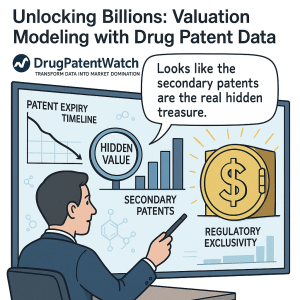
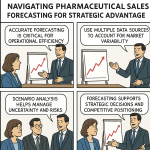
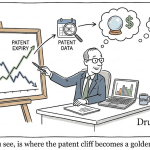
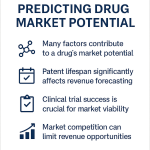
The most expensive mistake in pharmaceutical finance is not a bad clinical trial bet or a blown launch forecast. It is misreading a patent expiration date. Get that number wrong by two years on a $4 billion-per-year drug, and you have just mispriced an asset by $5 billion or more before you have even touched any other assumption in your model.
That is a sobering fact, and yet it happens repeatedly — in due diligence rooms, in banking pitch decks, and in analyst notes distributed to institutional clients. The pharmaceutical industry is one where a single legal document, the patent, controls the timing and magnitude of the largest cash flow events in the asset’s commercial life. And most financial professionals are underprepared to read that document correctly, let alone use it as a precision instrument in a Discounted Cash Flow (DCF) model.
This guide fixes that. It is written for the investment analyst who already knows how to build a model but needs to understand exactly how patent data maps to each input. It is for the business development director who wants to walk into a licensing negotiation with a number they can defend. It is for the M&A associate who needs to stress-test a deal valuation under a dozen patent scenarios before a board presentation. And it is for the portfolio manager at a healthcare fund who is tired of being surprised by patent cliffs that were visible months in advance to those who knew where to look.
We will move from the composition of matter patent all the way through Monte Carlo simulations of litigation outcomes. The framework is methodical. The case examples are real. The errors are common enough that you have probably already made one of them.
Why Patent Data Is the Real Alpha in Pharmaceutical Finance
The Separation That Keeps Analysts in the Dark
Pharmaceutical companies are organized, as most large enterprises are, around functional silos. The legal team manages the patent portfolio. The clinical team manages the pipeline. The finance team manages the models. The problem is that the output of the legal team — a structured view of patent expiration dates, litigation risk, and exclusivity calendars — rarely makes it into financial models with the accuracy or granularity those models require.
The result is a systematic mispricing of pharmaceutical assets across the market. This happens in private biotech valuations, in public company sell-side research, and in the internal NPV models that large pharma companies use to make portfolio prioritization decisions.
The companies and analysts who solve this information gap — who build a systematic, repeatable process for translating patent data into financial model inputs — operate with a structural edge. They see risks and opportunities that others either miss or undercount.
The good news is that the data is not hidden. It is in public records: the United States Patent and Trademark Office (USPTO) database, the FDA’s Orange Book and Purple Book, court dockets via PACER, and international patent office registries. The challenge is aggregation, interpretation, and connection. Linking a patent to a drug, calculating its adjusted expiration, identifying active litigation, and mapping all of this across six major geographies is not a one-afternoon task when done from scratch.
This is why platforms like DrugPatentWatch exist and why they have become standard infrastructure for IP-aware financial analysis. They have already done the aggregation and connection work. What the analyst needs to bring is the framework for using that data correctly once they have it.
What Lipitor’s 2011 Expiry Taught the Industry
Pfizer’s Lipitor (atorvastatin calcium), the best-selling drug in pharmaceutical history, generated over $9.5 billion in U.S. revenue in the twelve months before its core composition of matter patent (U.S. Patent No. 5,273,995) expired in November 2011 [1]. In the twelve months that followed, U.S. sales collapsed by nearly 60%. The total revenue destruction from this single patent event reached tens of billions of dollars over the subsequent years.
Analysts who understood the patent timeline had years to prepare for this. Those who modeled a gradual competitive decline instead of a sharp IP-driven cliff — or who failed to account for exactly when and how completely generics would flood the market — were caught off guard.
The Lipitor cliff was not the only one. Plavix, Singulair, Seroquel, and Zyprexa all experienced similar steep declines within a concentrated three-year window between 2011 and 2013, a period the industry called the ‘patent cliff supercycle.’ The companies and investors who had built precise patent-expiry timelines into their models navigated those years with far greater confidence than those who had not.
The lesson from that period has not expired, even as the drugs did. Patent data is not supporting information for a financial model. It is the scaffolding on which the model’s most sensitive assumptions hang.
The Anatomy of a Drug Patent Portfolio
Before any financial modeling can begin, the analyst needs to understand what they are examining. A drug’s patent portfolio is not a single document. It is a structured set of different types of protection, each with different legal scope, different expiration timelines, and different implications for the shape and duration of the revenue curve.
Composition of Matter Patents: The Crown Jewels
A composition of matter patent covers the active pharmaceutical ingredient (API) itself — the molecule. It is the broadest and most powerful form of pharmaceutical IP because it prevents any party from making, using, or selling that specific molecular structure for any purpose, through any manufacturing process. It does not matter whether a competitor uses a different synthesis route or targets a different disease. If the molecule is covered, they cannot touch it.
For the financial analyst, the expiration of the core composition of matter patent represents the primary Loss of Exclusivity (LOE) event. This is the date around which the most consequential modeling decisions cluster: the onset of generic competition, the speed and depth of revenue erosion, and the effective end of the high-margin commercial period.
Identifying and Weighting the Core Patent in a Model
When building a model, the first task is to identify which patent in the portfolio is the composition of matter patent for the key API. This sounds straightforward, but in practice it requires looking at the patent claims, not just the title or abstract. The claim structure is what defines the scope of protection.
Once identified, the adjusted expiration date of this patent — after accounting for Patent Term Extensions (PTE) and pediatric exclusivity bonuses — becomes the primary revenue cliff date in the model. Every other assumption about peak sales, market share, and pricing exists in service of forecasting what happens before and after that date.
The strength of the composition of matter claim also matters. A broad, well-drafted claim covering a wide class of molecular structures is harder to design around and harder to challenge as invalid than a narrow claim covering a single salt form of the molecule. This qualitative assessment of claim breadth translates directly into the probability of litigation success in a risk-adjusted NPV model, which we cover in detail later.
Method-of-Use Patents: The Revenue Tier Architecture
Once the molecule is protected, pharmaceutical companies secure method-of-use patents covering specific medical applications. These patents do not cover the molecule itself — a competitor could theoretically make a generic version of the molecule — but they do cover its use for specific, claimed therapeutic purposes.
The strategic and financial significance of method-of-use patents is that they create a stacked, multi-timeline revenue structure. A drug approved for three indications might have three separate sets of method-of-use patents expiring at different times. The analyst cannot model this as a single cliff. Each indication’s revenue stream has its own LOE date, its own generic entry risk, and its own erosion curve.
Building Staggered Cash Flow Forecasts Around Indication-Specific Patents
In practice, this requires the analyst to decompose total revenue into indication-specific segments. For each segment, a separate patent expiry date applies. The model then sums these segmented forecasts to produce a total revenue projection that, instead of a single vertical drop, shows a stepped or terraced decline.
AbbVie’s Humira (adalimumab) is the defining case study here. When the core TNF-inhibitor patents began expiring, AbbVie had constructed a portfolio of over 130 patents covering specific uses of adalimumab across indications including rheumatoid arthritis, Crohn’s disease, plaque psoriasis, and ankylosing spondylitis [2]. U.S. biosimilar competitors could not freely enter all of these indication markets simultaneously. AbbVie instead negotiated a series of settlement agreements with biosimilar manufacturers, dictating controlled entry timelines that effectively monetized years of additional exclusivity.
An analyst building a Humira valuation in 2015 who looked only at the primary patent would have produced a valuation that was wildly and materially understated. The method-of-use portfolio was worth billions in additional protected cash flow. This is not an edge case — it is standard life-cycle management practice for any blockbuster drug.
Formulation and Dosage Patents: Cliff Softeners
Formulation patents cover a specific physical form of a drug: an extended-release tablet, a transdermal patch, a subcutaneous injection pen, a nanoparticle suspension. Dosage regimen patents cover a specific schedule or quantity of administration. Neither type prevents a competitor from making the underlying molecule, but both can prevent them from making an identical product to the branded version.
How Delivery Mechanism IP Changes the Erosion Curve
This is where formulation patents show up most clearly in the model: they change the shape of the post-LOE revenue curve. Without strong formulation protection, the analyst should model a steep, fast erosion — 80% to 90% revenue decline within the first two years of generic entry, consistent with FDA substitution rules that push pharmacists toward the lowest-cost equivalent.
With strong formulation protection on a delivery mechanism that offers genuine clinical differentiation — easier dosing, better tolerability, more stable drug levels — the analyst can justifiably model a softer decline. The branded product retains users who specifically need or prefer the proprietary delivery mechanism. Generic manufacturers cannot replicate the exact formulation without infringing those patents, so they sell a different (and in the eyes of prescribers, clinically distinct) product.
Johnson & Johnson’s Concerta (methylphenidate) illustrates this precisely. When base methylphenidate patents expired, Concerta’s OROS (Osmotic Controlled-Release Oral Delivery System) formulation patent made it genuinely difficult for generics to replicate the exact pharmacokinetic profile. Several generic versions were initially rated AB-equivalent by the FDA, but clinical complaints from patients and physicians prompted the FDA to revise those equivalence ratings. The brand retained a significant share of prescriptions for years beyond what a standard generic erosion model would have predicted [3].
In a model, this difference could translate to maintaining 25-40% of peak revenues rather than 10-15% in the two years following the composition of matter cliff. On a $1 billion drug, that is $150 to $300 million in additional annual cash flows that a simplistic model would have discarded entirely.
Manufacturing Process Patents: The Biologic Wild Card
Process patents cover how a drug is synthesized or manufactured. For small-molecule drugs, they are generally the weakest form of protection — a competitor who invents a different synthesis route can legally manufacture the same molecule without infringing the process patent. Process patents can raise the cost and complexity of competitor entry, but they rarely determine the fundamental exclusivity period.
For biologics, the calculus is entirely different. The manufacturing process for a biologic — the cell lines, fermentation conditions, purification sequences, formulation steps — is so tightly intertwined with the final product’s structure and activity that ‘the process is the product’ is a genuine phrase used by regulators and courts. A biologic manufactured through a different process may be a different product at the molecular level, even if it is nominally the same protein.
Why Process Equals Product in Large-Molecule Valuation
This means that for biologics, process patents carry significant weight in the valuation. A biosimilar manufacturer must not only produce a molecule that is similar to the reference biologic, but must do so through a process that does not infringe existing process patents, while also achieving the clinical similarity thresholds required for regulatory approval.
The practical result is that the effective barrier to biosimilar entry is substantially higher than the barrier to small-molecule generic entry. The analyst modeling a biologic asset should weight process patents more heavily in their IP risk assessment, model a slower post-exclusivity erosion curve, and apply a lower probability of early competitive entry than they would for a comparable small-molecule drug.
The Patent Timeline: Dates That Move Money
The anatomy of the portfolio tells you what is protected. The timeline tells you for how long. Every date in a patent’s lifecycle has financial meaning. Misreading any one of them can corrupt an entire valuation.
Filing vs. Grant vs. Expiration: The Three Dates Most Analysts Confuse
The priority date is the date a patent application was first filed anywhere in the world for a given invention. It establishes novelty against prior art and is the reference point for international patent family tracking. The filing date is the date the specific national or regional application was filed. The grant date is when the patent office issued the patent. The expiration date is calculated from the filing date, not the grant date.
This last point matters more than it might seem. A patent with a filing date in 2003 but a grant date in 2008 expires in 2023, not 2028. Analysts who conflate the grant date with the start of the 20-year term will overestimate the exclusivity period by exactly the examination lag — which can be three to six years for complex pharmaceutical patents.
The 20-Year Baseline and Why It’s Just a Starting Point
Under the laws of most major jurisdictions — including the U.S., the European Patent Convention countries, Japan, and China — a standard patent term is 20 years from the earliest non-provisional filing date. This gives you a raw expiration date.
That raw date is almost never the date that governs a pharmaceutical valuation. The drug development and regulatory review process consumes years of that 20-year window before the drug even reaches the market. By the time a drug is approved, it might have only 10 to 12 years of patent life remaining, despite theoretical 20-year protection. Congress and regulators have created a series of mechanisms to compensate for this erosion of effective commercial patent life.
Patent Term Extensions: Every Extra Month Has a Dollar Value
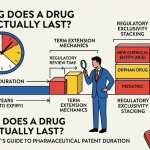
The Drug Price Competition and Patent Term Restoration Act of 1984 — commonly called the Hatch-Waxman Act — allows for a Patent Term Extension (PTE) that adds back a portion of the time lost to regulatory review. The calculation has two components: half the time spent in clinical trials, plus the full time spent in regulatory review at the FDA, subject to caps.
The maximum extension is five years, and the total patent life post-approval cannot exceed 14 years. Only one patent per drug can receive a PTE in the U.S., and that patent is almost always the composition of matter patent.
The financial significance is direct and unambiguous. A PTE of three years on a drug generating $3 billion per year in protected revenue is worth approximately $7 to $9 billion in net present value at a 10% discount rate, after accounting for the time value of money. Missing this extension in a model is not a minor error — it is a valuation miss that would be considered professionally negligent in a due diligence context.
Analysts who build their own PTE calculations from raw data need the filing dates, the IND date, and the FDA approval date, and must correctly apply the statutory caps. The easier and more reliable approach is to use a curated service like DrugPatentWatch, which tracks and displays PTE-adjusted expiration dates for U.S. drugs directly alongside the underlying patent data. This removes both the calculation burden and the risk of arithmetic error.
Regulatory Exclusivities: The FDA’s Separate System
Patent term and regulatory exclusivity are parallel systems granted by different agencies for different purposes. The USPTO grants patents. The FDA grants exclusivities. A drug can have both simultaneously, either concurrently or sequentially running. A drug can also lose all of its patents and still be protected by FDA exclusivity. These systems must be understood and tracked separately, and the analyst must determine which provides the later protection — that later date is the true LOE.
NCE, ODE, Pediatric, and Biologics Exclusivities Explained and Applied
New Chemical Entity (NCE) Exclusivity gives a new small-molecule drug five years of market exclusivity from the approval date, during which the FDA will not accept an Abbreviated New Drug Application (ANDA) from a generic challenger. In practice, a Paragraph IV challenge can be filed after four years, so the effective protection against a successful early generic launch is closer to seven and a half years from approval if all legal timelines play out. For a drug whose composition of matter patent provides 12 years of remaining term at launch, NCE exclusivity runs concurrently and is not the binding constraint. For a drug with a weak patent portfolio and only 8 years of patent term remaining at approval, NCE exclusivity could become the governing constraint for the first five years.
Orphan Drug Exclusivity (ODE) grants seven years of marketing exclusivity for drugs treating rare diseases — defined in the U.S. as conditions affecting fewer than 200,000 patients. This exclusivity is per indication: if a drug is approved for multiple rare diseases, each approval can generate its own ODE period. For valuation purposes, ODE is a powerful backstop, particularly for drugs in rare oncology, genetic disorders, or neurodegenerative diseases where the patent portfolio may be thin or early-expiring. The seven-year period is robust; unlike patents, it cannot be challenged in the same way, though it can be narrowed if another sponsor obtains approval for the same drug in the same disease.
Pediatric Exclusivity adds six months to the expiration of any existing patents and exclusivities if the drug sponsor completes FDA-requested pediatric studies. Six months sounds modest, but the financial arithmetic is compelling for any drug with significant sales. A drug generating $5 billion annually in protected revenue earns an additional $2.5 billion in gross revenue from this six-month extension. After taxes and discounting, the pediatric exclusivity extension on a large drug can add $1.5 to $2 billion in present value to an asset’s valuation. It is not optional information for a model — it is a required data point.
Biologics Exclusivity under the Biologics Price Competition and Innovation Act (BPCIA) grants 12 years of reference product exclusivity from the date of licensure for innovative biologics. This is a substantially longer protection period than the five-year NCE exclusivity for small molecules, and it reflects the greater investment required to develop and validate a biologic. For valuation purposes, this 12-year period is highly material. A biologic approved in 2020 has regulatory data exclusivity through at least 2032, regardless of its patent status.
Finding the True LOE Date by Stacking All Sources of Protection
The correct approach is to create a matrix for each drug: list every applicable patent (with PTE-adjusted dates) and every applicable exclusivity, sorted by expiration date. The governing LOE date — the one that belongs in the revenue model — is the latest expiring protection, whether it comes from a patent or from regulatory exclusivity.
This matrix must be constructed by indication, by geography, and by protection type. For a drug with two indications, each with their own patents and exclusivities, across three major geographies, you can have a dozen or more data points to track. The payoff for doing this work is a revenue forecast that actually reflects the asset’s commercial reality, rather than a simplified version that misstates the LOE by one to four years.
Building the Bridge: Patent Data as Financial Model Inputs
With the portfolio anatomy and timeline framework established, the task shifts to connecting each piece of patent data to a specific cell or assumption in the financial model. This translation is where analysis becomes actionable.
The Loss of Exclusivity Date as the Model’s Gravitational Center
Every revenue forecast for a pharmaceutical asset has a shape. In the protected period, that shape is determined by market penetration dynamics, competitive positioning, and pricing power. Those variables matter. But the date on which the protected period ends — the LOE date — is what determines when the shape changes decisively.
The LOE date is not one input among many. It is the input around which all others orient. Change the LOE date by two years in either direction and your entire NPV changes by an amount that dwarfs the sensitivity of almost any other assumption except perhaps pricing. This is not an exaggeration. In a standard pharma DCF at a 10% discount rate, a two-year LOE extension on a $2 billion peak-sales drug is worth approximately $2.5 to $3.5 billion in NPV terms, depending on the shape of the post-cliff erosion.
Build this date with the same care you would apply to any other high-sensitivity model input. Verify it against multiple sources. Cross-check it against what DrugPatentWatch reports, what the company’s own 10-K disclosures state, and what third-party sell-side research reflects. Where those sources diverge, investigate until you understand why.
The Pre-Flight Checklist: Five Patent Data Points Every Analyst Needs
Before populating a pharma valuation model, every analyst needs five specific categories of patent data. Missing any one of them materially increases the risk that the model reflects a fictional asset rather than the actual drug.
Adjusted Expiration Dates
This is the non-negotiable starting point. You need the final, PTE-adjusted, pediatric exclusivity-inclusive expiration date for every material patent in the portfolio. You also need the FDA exclusivity expiration dates for each approved indication.
The adjusted expiration date goes directly into the model as the LOE date for each revenue segment. DrugPatentWatch provides these adjusted dates in a structured, searchable format, eliminating the need to manually calculate PTE adjustments from raw USPTO data, which is where most calculation errors originate.
Patent Type and Strength Scoring
You need to know whether each key patent is a composition of matter, method-of-use, formulation, or process patent — and you need a qualitative assessment of its strength. Strength here means: how vulnerable is this patent to an invalidity or non-infringement argument? How broad are the claims? Has the patent been subject to Inter Partes Review (IPR) at the USPTO? Has it been litigated before, and if so, with what result?
This qualitative assessment translates directly into two model inputs: the probability of litigation success in your risk-adjusted scenarios, and the shape of your post-LOE erosion curve. A strong, broad composition of matter patent justifies assuming a sharp 85-90% revenue erosion in year one post-LOE. A formulation patent of moderate strength might justify only a 40-50% erosion curve, with the brand retaining a significant share of prescriptions.
Geographic Coverage Mapping
Every major geography needs its own LOE date. The U.S. LOE date is typically the primary input, but the European markets (particularly Germany, France, the UK, Italy, and Spain — the ‘EU5’) can represent 25-35% of a global brand’s revenue, and Japan another 8-12%. In each of these markets, the patent landscape may look entirely different.
A drug could be losing its composition of matter protection in Germany in 2029 while retaining it in the U.S. until 2032. European revenue should be modeled against the European expiry dates. Japanese revenue against Japanese expiry dates. Running a single global revenue line against a single U.S. LOE date is a common analytical shortcut with material consequences.
Litigation Status and Probability Weighting
The Hatch-Waxman Act structure in the U.S. creates a system where generic manufacturers are financially incentivized to challenge branded drug patents before those patents expire. When a generic company files an Abbreviated New Drug Application (ANDA) with a Paragraph IV certification, it is asserting that the brand’s patent is invalid, unenforceable, or will not be infringed. That filing typically triggers a 30-month stay of FDA approval and begins patent litigation.
This litigation is not a rare complication — it is a standard feature of any blockbuster drug’s commercial life. Any drug with peak sales above $250 million per year can expect Paragraph IV filings from multiple generic challengers. The analyst who does not account for this in their model is valuing the drug in an idealized world that does not exist.
The litigation data enters the model through scenario analysis. You build two to three alternative futures: a ‘brand wins’ scenario where the patent is upheld and the original LOE date stands; a ‘generic wins’ scenario where the patent is invalidated and LOE is pulled forward, typically by two to five years; and potentially a ‘settlement’ scenario where the brand and generic negotiate an agreed entry date.
Each scenario receives a probability. Those probabilities should not be arbitrary. They should be calibrated against the historical win-rate for brands in Paragraph IV litigation (which has averaged roughly 55-65% in favor of brands in recent decades, though this varies by patent type and judge) [4], adjusted for case-specific factors: the quality of the patent claims, the arguments being made, the track record of the law firm defending the patent, and the stage of litigation.
DrugPatentWatch monitors patent litigation across all U.S. district courts in real time, alerting users to Paragraph IV filings, Markman hearing dates, court rulings, and settlement agreements. This allows financial modelers to update their scenario probabilities continuously as the case evolves, rather than locking in a probability at the beginning of a case and ignoring new information for three to five years.
Patent Thicket Density
The number of patents protecting a drug, and how comprehensively they cover the drug’s commercial space, determines the practical cost and complexity of competition. A thicket of 80 patents covering every formulation, indication, manufacturing variant, and combination therapy does not necessarily extend the core LOE date — but it raises the cost and legal risk for a competitor seeking to enter the market.
In a model, a dense and well-constructed thicket justifies two adjustments. First, it lowers the probability of a successful early generic challenge, because the challenger must navigate a more complex legal landscape. Second, it supports a modestly delayed generic entry timeline even after the core patent expires, because generic firms must conduct freedom-to-operate analyses across the full thicket and may choose to wait for additional thicket patents to clear before launching.
Neither adjustment is large in isolation, but combined, they can add hundreds of millions to an NPV for a major brand. The analyst who dismisses the thicket because the composition of matter patent has already expired is leaving value on the table.
The rNPV Model: How Patent Data Drives Every Key Assumption
The risk-adjusted Net Present Value (rNPV) model is the pharmaceutical industry’s standard tool for asset valuation, used by sell-side analysts, investment banks, venture funds, and big pharma business development teams alike. Its structure is straightforward: forecast cash flows, risk-adjust them for clinical and regulatory uncertainty, and discount them to present value. The patent data does not appear in just one place in this model. It influences nearly every major assumption.
Revenue Timeline Construction: Three Phases, One Patent Cliff
A pharmaceutical drug’s commercial revenue follows a predictable three-phase structure:
The growth phase begins at launch and extends to peak sales. It is driven by physician adoption, label expansions, payer coverage negotiations, and competitive dynamics. The slope of this curve depends on commercial inputs — salesforce size, pricing, clinical differentiation — more than on patent inputs.
The protected peak phase is the period of stable, near-peak revenue while the drug remains under strong IP protection. The duration of this phase is entirely determined by the patent data. This is where the composition of matter patent term, the PTE, the pediatric exclusivity, and any overlapping regulatory exclusivities combine to establish the ceiling on the protected period.
The post-exclusivity phase begins at the LOE date and is characterized by the onset of generic or biosimilar competition. The speed and depth of the revenue decline in this phase is determined by the type and strength of the remaining IP — formulation and method-of-use patents that survive past the core composition of matter cliff can significantly slow the erosion — and by the competitive dynamics of the generic market itself.
The patent data maps directly to the transition between phases two and three. Everything else in the model depends on having this transition date right.
Generic Erosion Curves: How Patent Type Determines the Slope
The standard assumption in pharmaceutical modeling is that small-molecule drugs lose 80-90% of branded revenue within two years of generic entry, driven by mandatory generic substitution at the pharmacy level [5]. This is correct as a baseline for drugs protected only by a composition of matter patent with no surviving secondary IP.
When secondary patents survive the core cliff, the erosion curve changes. The analyst must model the revenue from the portion of the market not subject to generic substitution separately, applying a slower and less complete erosion curve to that segment.
For biologics, the baseline assumption is fundamentally different. Biosimilars are not automatically substituted at the pharmacy in the way small-molecule generics are. Prescribers must actively choose a biosimilar or switch a patient, and many do not. Interchangeability designations from the FDA — which enable pharmacy-level substitution — are granted slowly and on a product-by-product basis. As a result, innovator biologics typically retain 40-60% of their revenue in the first two years after biosimilar entry, compared to 10-20% for small-molecule brands [6].
This distinction, rooted entirely in the type of drug and its regulatory framework rather than any financial assumption, can change the post-LOE NPV of a biologic asset by 30-50% relative to a small-molecule equivalent. Applying a small-molecule erosion curve to a biologic asset is a category error that produces a materially undervalued result.
Discount Rates and Risk Adjustment in a Patent Context
The discount rate in a pharmaceutical rNPV model reflects two things: the time value of money (captured in the risk-free rate) and the systematic risk of the asset (captured in the equity risk premium and asset-specific risk premium). Patent risk feeds directly into the latter.
An asset with a strong, broad composition of matter patent, a dense secondary IP thicket, and no active litigation has lower systematic risk than a comparable asset with a narrowly drafted, frequently challenged patent and active Paragraph IV proceedings. This lower risk should be reflected in a lower discount rate, which increases NPV. Conversely, a drug with weak IP commanding a higher discount rate will produce a lower NPV for the same cash flow forecast.
In practice, most pharmaceutical models use a fixed WACC (typically 8-12% for large pharma, 12-18% for clinical-stage biotech) rather than adjusting the discount rate for IP-specific risk. The IP risk is instead captured through scenario analysis and probability-weighted NPV. This is functionally equivalent but requires the analyst to be more explicit about their assumptions — which is a feature, not a flaw.
Scenario Architecture: Running Parallel Forecasts
A sophisticated pharmaceutical valuation does not produce a single NPV. It produces a set of probability-weighted NPVs that together represent the expected value of the asset and the distribution of possible outcomes around that expected value.
The minimum scenario set for any drug facing Paragraph IV litigation includes:
Scenario A — Full Exclusivity Maintained: The brand’s patents survive all challenges. LOE occurs at the latest adjusted expiration date across the portfolio. Generic erosion begins at that date. This scenario carries the probability weight reflecting the brand’s likelihood of winning or settling favorably.
Scenario B — Early Generic Entry: A Paragraph IV challenge succeeds, and generics enter two to five years before the original LOE date. Revenue from those early years is replaced with a post-cliff erosion profile. This scenario carries the probability weight reflecting the generic’s likelihood of winning.
Scenario C — Settlement with Agreed Entry Date: The brand and generic settle the litigation, with the generic allowed to enter at a negotiated date that is typically earlier than the original LOE but later than the generic would have entered under an immediate win. Royalties may be paid to the brand as part of the settlement. This scenario often carries a probability weight of 30-50%, as settlements are the most common resolution of Paragraph IV cases.
The probability-weighted average of these three NPVs is the expected value of the asset. The range between the highest and lowest NPV represents the value at risk — the amount the asset could lose if the most adverse scenario materializes.
Running these scenarios correctly and updating them as litigation proceeds is one of the highest-value activities a pharmaceutical analyst can perform. The market often moves on court decisions with a lag. An analyst who reads a Markman claim construction ruling and immediately understands its implications for patent validity — and then updates their scenario probabilities before the broader market does — has a genuine information advantage.
Case Studies: Four Drugs That Illustrate the Full Framework
Lipitor (2011): The Textbook Cliff and Why Everyone Knew It Was Coming
Pfizer’s Lipitor is the cleanest example of patent-driven revenue forecasting that the industry has produced. The composition of matter patent expiration was known years in advance. The pediatric exclusivity tack-on date was calculable. The LOE date was not ambiguous.
What varied between analysts was the precision of the erosion curve modeling and the speed of generic uptake. The U.S. Lipitor loss-of-exclusivity was accompanied by a single generic manufacturer — Watson (now Allergan) — receiving 180 days of first-filer exclusivity under Hatch-Waxman. During those 180 days, only Watson’s generic competed with Lipitor. After the 180-day period, multiple generic manufacturers entered simultaneously, and the erosion accelerated.
Analysts who understood this two-phase post-LOE structure — a moderate decline during the first-filer’s exclusivity period, followed by a much sharper drop when the market opened completely — modeled Pfizer’s Lipitor revenue far more accurately than those who applied a linear decline from the LOE date. The patent and regulatory data that generated this two-phase structure was entirely knowable in advance [1].
Humira: The 100-Patent Thicket as a Financial Engineering Tool
AbbVie’s strategy with Humira (adalimumab) is the most-studied example of life-cycle management in the pharmaceutical industry. The core Humira patents, covering the antibody itself, were always going to expire. What AbbVie did was layer on 130-plus patents covering formulations, dosing devices, manufacturing processes, concentration levels, and specific therapeutic indications [2].
The financial result was extraordinary. U.S. biosimilar manufacturers — despite having regulatory approval for several years — could not launch commercially until AbbVie’s settlement agreements with them permitted it. The first U.S. biosimilar launched in January 2023. By that point, Humira had been generating over $20 billion in annual global sales. The patent thicket and subsequent settlement strategies had bought AbbVie roughly seven additional years of U.S. exclusivity beyond what the core patents would have provided.
For financial modelers, the takeaway is not that 130 patents is always better than 30. The takeaway is that the density and strategic coherence of the secondary patent portfolio can add years — and tens of billions of dollars — to an asset’s effective exclusivity period. This value is invisible to an analyst who only tracks the core patent.
Concerta and the OROS Patent: Quantifying Formulation Value
Concerta (methylphenidate, extended-release) protected by the OROS formulation patent is the clearest example of how a delivery mechanism patent changes the post-LOE erosion curve. When base methylphenidate patents expired, several generic manufacturers received ANDA approvals and began selling their versions. The FDA initially rated some of these as therapeutically equivalent (AB-rated) to Concerta.
Clinical experience told a different story. Parents and physicians reported that some generics did not produce the same consistent, 12-hour coverage that Concerta’s OROS system provided. The FDA ultimately revised its AB equivalence rating for several manufacturers, requiring them to withdraw their equivalence claims [3]. Concerta maintained a significant branded market presence for years beyond the base patent cliff — a market position directly enabled by the patent protection on, and demonstrated clinical distinctiveness of, the OROS delivery mechanism.
In the model, this means that a formulation patent backed by genuine clinical differentiation is worth substantially more than its nominal expiration date would suggest. The analyst who modeled Concerta with an 80% first-year revenue drop was more wrong than the one who modeled a 40% drop — and the difference traced entirely to an informed assessment of the formulation patent’s commercial value.
A Paragraph IV Scenario in Numbers: The Cost of Litigation Risk
Consider a hypothetical drug — call it Cardiomab — with peak sales of $4 billion per year, a WACC of 10%, and a composition of matter patent expiring (after PTE) in 2033. A generic company files a Paragraph IV challenge in 2027, arguing the patent is invalid, and seeks approval for a generic version that could launch in 2028 if litigation succeeds.
Base Case (No Litigation): LOE date: 2033. Revenue grows to $4B peak, held through 2033, then 85% erosion in year one post-LOE. Resulting NPV: $12.5 billion (illustrative).
After Litigation Filing — Three-Scenario Model:
Scenario A (Brand Wins, 60% probability): LOE remains 2033. NPV = $12.5 billion. Scenario B (Generic Wins, 25% probability): LOE pulled to 2028. Loss of five peak-revenue years. NPV = $7.2 billion. Scenario C (Settlement at 2031, 15% probability): LOE moves to 2031. Loss of two peak-revenue years. NPV = $10.8 billion.
The Paragraph IV filing has reduced the asset’s expected value by approximately $1.6 billion — not because anything about the drug’s commercial profile changed, but because IP risk has been introduced and must be priced. This is the precise, quantifiable financial consequence of a litigation filing, and it is exactly the calculation that a real-time litigation alert from a service like DrugPatentWatch should trigger in any analyst’s workflow.
Sourcing the Data: Where Professional Analysts Get Their Inputs
Why Manual Patent Research Creates Systematic Error
The data needed for this analysis exists in public records. But ‘public’ does not mean ‘structured,’ ‘aggregated,’ or ‘easy to use.’ The USPTO database contains raw patent text with no direct mapping to specific drugs or FDA approval statuses. The Orange Book links patents to approved drugs but only for patents that the brand company has chosen to list — and only in the U.S., for small molecules. The Purple Book covers biologics but with different information. Court dockets on PACER contain litigation filings but require manual tracking across multiple district courts and appellate jurisdictions.
Building a complete picture of a single drug’s patent landscape from these raw sources requires:
Identifying the correct patent numbers from the Orange Book or Purple Book
Looking up each patent in USPTO records and locating its filing date and claim structure
Calculating the PTE from the IND date, Phase I-III clinical trial timeline, and FDA review timeline
Checking for any pediatric exclusivity requests or grants from the FDA
Checking whether any of the listed patents have been subject to IPR or PTAB proceedings at the USPTO
Searching PACER for any Paragraph IV litigation filings in any federal district court
Replicating this process for the EPO, UKIPO, DPMA (Germany), JPO, and other relevant jurisdictions
For a large-cap brand with 40 listed patents across six jurisdictions, this is a minimum of two to three weeks of analytical work per drug. For a fund managing a portfolio of 20 pharmaceutical holdings, this is not a scalable manual process.
DrugPatentWatch: Curated Patent Intelligence for Financial Analysts
DrugPatentWatch was built specifically to solve this aggregation and structuring problem for pharmaceutical business intelligence professionals. It consolidates data from the USPTO, the FDA Orange Book and Purple Book, court records, and international patent authorities into a single, searchable platform.
The platform’s value for financial analysts runs across several dimensions:
Adjusted expiration dates are provided directly, with PTE calculations already applied. This eliminates the highest-risk step in the data-gathering process — the manual PTE calculation — and replaces it with a reliable, curated figure that analysts can verify against the primary source when needed.
Integrated litigation monitoring is the feature that turns DrugPatentWatch from a data repository into a real-time intelligence tool. The platform tracks Paragraph IV filings, Markman hearing outcomes, district court decisions, and Federal Circuit appeals for every major drug in its database. An alert from this system is a trigger to open the scenario analysis module in your valuation model and update the probability weights.
API access allows quantitative teams to programmatically pull patent expiration dates, litigation status, and exclusivity data into internal models and dashboards. For a fund running a systematic healthcare strategy, this integration means patent data is no longer a periodic manual update — it is a live data feed that refreshes the models automatically.
Global coverage across major jurisdictions enables the segmented global revenue models that sophisticated pharmaceutical valuations require. The platform tracks patent status in the U.S., EU, Japan, Canada, and other major markets, making it possible to build LOE dates by geography without conducting separate manual searches in each jurisdiction’s patent office database.
For a team doing two to three pharmaceutical valuations per month, the time savings alone justify the cost. The reduction in data error risk — which directly translates to reduced probability of material valuation mistakes — provides additional ROI that is harder to quantify but potentially far more valuable.
Cross-Referencing Primary Sources in High-Stakes Analysis
For high-value due diligence — the kind preceding a multi-billion dollar acquisition or a major fund position — curated databases are the starting point, not the ending point. The analyst should cross-reference key dates and litigation data against primary sources:
SEC filings (10-K and 10-Q) typically include management’s own description of their key patents and exclusivities in the ‘Business’ section and their assessment of litigation risk in the ‘Legal Proceedings’ section and ‘Risk Factors.’ Where management’s stated expiration dates diverge from what the curated database shows, the analyst needs to understand why.
Court filings via PACER provide the actual legal arguments in ongoing Paragraph IV cases. Reading the brand’s opening brief and the generic’s invalidity contentions gives you qualitatively richer information for assigning scenario probabilities than any algorithmic estimate can provide.
USPTO Patent Center allows the analyst to pull the complete prosecution history (file wrapper) for a patent — the full exchange between the applicant and the patent examiner. This shows exactly what claims were accepted, which were rejected, and on what grounds. It can reveal whether the patent’s scope was significantly narrowed during prosecution, a fact that is not visible from the patent’s face but can dramatically affect its vulnerability to an invalidity challenge.
The Valuation Toolkit Beyond Standard DCF
The rNPV model is the workhorse. But two additional methods belong in the toolkit of any analyst working on complex pharmaceutical assets.
Real Options Analysis: Valuing Pipeline Flexibility
Real Options Analysis (ROA) applies option pricing theory to strategic investment decisions. The core insight is that the decision to invest in a clinical trial, a new indication study, or a new formulation development program is not a now-or-never choice — it is an option that management can exercise or abandon based on evolving information. Options have value, even if they are never exercised.
For a drug with a strong composition of matter patent, the possibility of pursuing additional method-of-use patents for new indications creates a set of real options. Each potential new indication is a call option: the ‘strike price’ is the cost of the Phase II and Phase III clinical trials, and the ‘payoff’ is the rNPV of that indication if trials succeed and a new method-of-use patent is secured. The probability of clinical success determines whether the option is in-the-money, and the remaining patent life determines the option’s time to expiration.
ROA is particularly useful when evaluating platform technologies or early-stage discovery assets where the value lies primarily in future optionality rather than current cash flows. A discovery platform that generates patentable molecules across multiple therapeutic areas is best valued as a portfolio of real options, not as a single DCF with extremely uncertain long-term forecasts.
Monte Carlo Simulation: Building a Distribution of Outcomes
A single probability-weighted NPV tells you the expected value of an asset. It does not tell you the distribution of possible values — how wide the range is, whether the downside is catastrophic or merely painful, whether the upside is capped or open-ended. Monte Carlo simulation fills this gap.
The Monte Carlo approach runs the valuation model thousands of times, each time drawing inputs from probability distributions rather than point estimates. Patent expiration date, for example, becomes a distribution reflecting the range of possible litigation outcomes, with the base case date at the center and early entry dates (from adverse litigation) and extended dates (from successful PTE appeals) in the tails.
The output is not a single NPV but a histogram of NPVs. From this distribution, the analyst can read the 10th percentile NPV (the value the asset will be worth or above 90% of the time), the 90th percentile NPV (the value it will reach only in favorable scenarios), and the median and mean.
<blockquote>’For large pharmaceutical assets, a shift of just one year in the loss-of-exclusivity date can swing the rNPV by 8 to 15 percent, depending on peak sales magnitude, the discount rate applied, and the steepness of the post-cliff erosion curve. This sensitivity makes patent timeline accuracy the single most consequential analytical variable in pharmaceutical valuation.’ — IQVIA Institute for Human Data Science, *The Global Use of Medicines 2023* [7]</blockquote>
This kind of sensitivity analysis, formalized into a Monte Carlo framework, is what allows analysts to make robust statements about valuation range to investment committees and boards — not just a single number that carries false precision, but an honest representation of the range of outcomes and the key drivers of that range.
Comparables Analysis: Using Patent Life as the Primary Stratification Variable
Comparables analysis (comps) values an asset based on the multiples at which similar assets have been acquired or at which similar companies trade. The standard multiples in pharma — EV/Revenue, EV/EBITDA, or deal value per projected peak sales — are rough tools unless they are carefully contextualized.
The most important contextualizing variable for a pharmaceutical comparable is remaining patent life. A drug generating $1 billion in annual revenue with 12 years of remaining patent protection is fundamentally different from a drug generating $1 billion with 3 years of protection, even though both appear identical in a simple EV/Revenue multiple.
Analysts building comps for a pharmaceutical M&A transaction should stratify their comparable set by remaining weighted-average patent life across the portfolio. Deals involving assets with 10-plus years of strong remaining IP should be compared to other deals with similar IP duration, not to the universe of all pharmaceutical transactions. This adjustment alone can narrow the comp range significantly and improve the quality of the resulting valuation benchmark.
M&A and Licensing: How Patent Data Drives Deal Structure
Due Diligence Frameworks for Biotech Acquisitions
When a large pharmaceutical company evaluates a biotech acquisition, the patent due diligence process is not just a legal review. It is a financial analysis exercise that directly determines the offer price and deal structure. Every component of the patent portfolio gets an LOE date, a strength assessment, and a probability weight, which feed into the acquirer’s rNPV model.
The due diligence team needs to answer four specific questions with quantitative rigor:
What is the true LOE date for each indication in each major geography, after all extensions and exclusivities are applied? This is the foundational question, and it must be answered before any offer is developed.
What is the probability and potential timing of Paragraph IV challenges? For any drug with significant peak sales potential, this is a near-certainty. The due diligence must assess the patent’s vulnerability, not just note that challenges might occur.
Does the target have a coherent life-cycle management strategy, and are there additional patentable innovations in development? LCM pipeline value can represent 20-30% of total asset NPV for a drug with strong formulation or combination opportunities.
Are there any freedom-to-operate issues — cases where the target’s drug might infringe a third party’s patents? This is distinct from validity risk and must be separately assessed.
The answers to these four questions, translated into financial model inputs, determine the acquirer’s NPV for the asset and, by extension, the maximum rational offer price.
Structuring Royalties and Milestones Around Patent Life
In licensing transactions, the patent timeline directly determines the appropriate structure of the financial terms. Royalty agreements that do not account for the patent cliff will either overpay the licensor (if royalties continue after LOE) or underpay them (if the royalty base incorrectly assumes a shorter exclusivity period than actually exists).
Standard licensing practice links royalty rates to protected revenue, with rates declining after LOE when generic competition reduces the branded product’s pricing power. The royalty rate during the protected period should reflect the full value of the IP being licensed. The structure of milestone payments — upfront, at approval, at specific sales thresholds — should be calibrated against the forecasted cash flow profile, which in turn is governed by the patent timeline.
For a licensing transaction with a ten-year remaining patent life, the net present value of the royalty stream at a given royalty rate is straightforward to calculate. For a drug with three years of remaining patent life and a contested Paragraph IV challenge, the same calculation requires scenario-weighted royalty NPVs. The licensor who builds this model has the information to negotiate the structure that best captures the expected value of their IP.
How a Small Biotech Uses a Patent-Driven rNPV in Negotiations
The information asymmetry between a large pharmaceutical company and a small biotech seeking a licensing partner or acquirer is significant. The large company has financial modelers, M&A teams, and established data infrastructure. The small biotech often has strong science but limited financial modeling sophistication.
The patent-driven rNPV model is the small biotech’s equalizer. A company that arrives at a negotiation with a rigorous, transparent rNPV model — clearly showing the LOE date, the PTE calculation, the scenario analysis for litigation risk, and the probability of each indication reaching market — is negotiating from a position of analytical parity.
They can demonstrate that their IP is worth $X under conservative assumptions and $Y under base assumptions, and they can explain precisely which patent data supports those figures. They can push back when a large pharma partner tries to apply an overly aggressive LOE date or an unrealistically steep erosion curve. The model is both a valuation tool and a negotiating document.
Common Pitfalls and How to Avoid Them
The Single-Date Error
The most common and expensive mistake in pharmaceutical patent valuation is using a single, unverified expiration date — typically pulled from a quick database search — without checking for PTE, pediatric exclusivity, or regulatory exclusivity stacking. An analyst who finds a patent with a 20-year term from a 2003 filing date and enters 2023 into their model without checking for a PTE will potentially miss two to three years of protected revenue. On a billion-dollar drug, that is a $2 to $3 billion NPV error.
The fix is a systematic verification process that treats the adjusted LOE date as a calculated output to be cross-checked, not a searched field to be copied. Use DrugPatentWatch as your primary source for adjusted dates, and cross-reference against the FDA’s Orange Book, the company’s 10-K disclosures, and, for any high-value transaction, the original PTE grant documents from the USPTO.
The Geographic Blind Spot
Running a global pharmaceutical valuation against a single U.S. patent expiration date assumes that all the world’s drug markets follow the same IP timeline. They do not. European patents may expire earlier or later. Supplementary Protection Certificates (SPCs) in the EU function similarly to PTE in the U.S. but with different calculation methods and caps. Japan has its own patent term restoration system. China’s pharmaceutical IP landscape is evolving rapidly and cannot be mapped directly from U.S. data.
The analyst who builds a segmented global revenue model — separate revenue lines for the U.S., EU5, Japan, and rest of world — and applies geography-specific LOE dates to each segment will produce a materially more accurate valuation than one who models a single global revenue line against a single U.S. expiry date.
Treating the Patent Cliff as Binary
A patent cliff is not an event that happens once. It can be a multi-step process spanning several years. The first step occurs when the core composition of matter patent expires. The second occurs when a strong formulation patent expires. The third occurs when method-of-use patents for individual indications expire. The full transition from maximum protection to generic parity can take five to seven years.
Model each step separately. Each surviving secondary patent delays and softens the revenue decline for the portion of the market it covers. Summing these partial cliffs produces a total revenue trajectory that is far more accurate — and often far more valuable — than a single, vertical drop applied to total revenue on a single date.
Ignoring Non-Patent Competitive Risk
Patents protect against copies of your drug. They do not protect against better versions of a competing company’s drug. A drug can have 12 years of composition of matter protection remaining and still face catastrophic revenue erosion if a competitor brings a superior product to market.
The analyst must layer competitive landscape analysis on top of the patent analysis. What are the competing drugs in the same class? What clinical data exists for each competitor’s pipeline? Are there new mechanism-of-action drugs in development that could displace the entire class? These questions cannot be answered by patent data alone. They require therapeutic area expertise and careful reading of clinical literature and conference presentations.
The patent analysis establishes the protection ceiling — the maximum potential revenue if the competitive landscape remains static. The competitive analysis determines what percentage of that ceiling is actually achievable in the real market.
The Biologics Valuation Special Case
The growth of the biologics market has fundamentally changed the pharmaceutical valuation landscape. As of 2023, biologics represented approximately 42% of global pharmaceutical spending and a growing share of R&D investment [8]. Valuing these assets requires modifications to every part of the standard framework.
The BPCIA vs. Hatch-Waxman: Two Different Games
Small-molecule generics operate under the Hatch-Waxman framework, with its Paragraph IV challenge mechanism, its 30-month automatic stay, and its first-filer 180-day exclusivity reward. Analysts who have spent their careers valuing small-molecule drugs know this framework intuitively.
Biologics operate under the Biologics Price Competition and Innovation Act (BPCIA), enacted in 2010, with a fundamentally different structure. The BPCIA’s ‘patent dance’ — a formal exchange of manufacturing information and patent lists between the biosimilar applicant and the reference product sponsor — governs how patent disputes are initiated and structured. The process is more complex, the litigation is more expensive, and the legal standards for interchangeability are more demanding.
For the financial modeler, the key practical difference is that biosimilar entry timelines are generally longer and less predictable than generic entry timelines for comparable small-molecule drugs. The 12-year data exclusivity period provides a hard floor. The patent dance adds additional time. The interchangeability determination adds further delay before pharmacy-level substitution can occur. Biosimilar market share capture is slower and less complete than generic market share capture.
All of these factors should produce materially different model assumptions for a biologic than for a small-molecule drug with similar sales, even if the raw patent expiration dates are similar.
The 12-Year Exclusivity Buffer and Its DCF Implications
The 12-year regulatory data exclusivity for U.S. biologics approved under the BPCIA means that no biosimilar can be approved before 12 years from the reference biologic’s approval date, regardless of patent status. This is a regulatory floor that patent analysis alone would not capture.
For a biologic approved in 2018, this floor runs through 2030. If the company’s composition of matter patents expire in 2027, the regulatory exclusivity provides three additional years of protected revenue beyond what the patent analysis alone would indicate. The analyst using only patent data without checking the BPCIA exclusivity timeline would underestimate the protected period by three years — a potentially $5 to $10 billion NPV error on a major biologic.
Biosimilar Erosion Curves vs. Generic Erosion: A Different Shape
The post-LOE revenue erosion for biologics follows a materially different curve than for small molecules. Analysts should not import small-molecule erosion assumptions into biologic models without adjustment.
In the U.S., the first biosimilar competitor typically captures 5-15% of the reference biologic’s unit volume in the first year. By year three, with multiple biosimilars and growing interchangeability designations, the reference biologic might have lost 30-40% of its volume. This compares to a small-molecule brand that might lose 80-90% of volume in year one.
The reasons are structural: physician inertia, payer formulary decisions, the complexity of biosimilar procurement in the hospital setting, and the absence of automatic substitution for non-interchangeable biosimilars. These factors should be explicitly modeled rather than assumed away.
The practical modeling approach is to build a biosimilar erosion curve calibrated to the observed experience of reference biologics that have already faced biosimilar competition: adalimumab (Humira), etanercept (Enbrel), infliximab (Remicade), and trastuzumab (Herceptin) all provide real-world data on how reference biologic revenue evolves in a biosimilar market.
The Future of Patent-Driven Pharma Valuation
AI-Powered Litigation Prediction and Automated Landscape Analysis
Artificial intelligence is beginning to reshape patent analysis in ways that will change the data available to financial modelers over the next five years. Several companies are training machine learning models on historical patent litigation outcomes — court decisions, settlement terms, claim construction rulings — to generate predictive probabilities for new litigation cases.
Early results suggest these models can outperform simple historical base rates by incorporating variables that human analysts assess qualitatively but inconsistently: the specific judge’s historical ruling patterns, the law firm’s win rate in pharmaceutical patent cases, the specific claim language at issue, and the technical similarity to prior art. As these tools mature, litigation probability estimates — currently one of the most subjective inputs in the rNPV model — will become more data-driven and consistent across analysts.
Separately, AI tools are being applied to automated patent landscape mapping: scanning tens of thousands of patent documents to identify the boundaries of existing IP protection in a therapeutic area, locate potential whitespace for new patent applications, and flag third-party patents that might constitute freedom-to-operate risks for a drug in development. For business development teams and R&D portfolio managers, this kind of automated landscape analysis can compress months of manual research into hours.
The IRA and Drug Pricing Pressure on DCF Assumptions
The Inflation Reduction Act (IRA) of 2022 gave the U.S. government, through Medicare, the authority to negotiate drug prices directly with pharmaceutical manufacturers for a defined set of high-expenditure drugs. This represents the most significant change to the U.S. drug pricing landscape in decades, and its implications for pharmaceutical valuation are ongoing and complex.
For financial models, the IRA introduces a new category of price risk for drugs that are Medicare’s largest expenditures and have been on the market for nine or more years (for small molecules) or thirteen or more years (for biologics). Once a drug enters the Medicare negotiation program, its effective price for Medicare patients can decline by 25-60%, depending on the drug’s sales volume and how long it has been on the market.
This has two implications for patent-driven valuation. First, the revenue forecasts for late-cycle drugs — those in the final years before LOE — must now incorporate IRA price negotiation risk. The standard assumption that pricing is stable through the LOE date is no longer tenable for drugs that will be subject to negotiation. Second, the IRA has effectively created a new form of ‘price cliff’ that is independent of and potentially coincident with the patent cliff, compressing the value of the final years of exclusivity for high-revenue drugs.
Any pharmaceutical valuation model built today for a small-molecule drug with over $500 million in annual Medicare spending should include an IRA negotiation scenario, quantifying the expected price reduction and its NPV impact. This is not speculative — it is a policy reality that the market has been pricing into large-cap pharma valuations since 2022.
Patentability Standards in Flux
The boundaries of what can be patented in the pharmaceutical and biotechnology space are not static. Court decisions and USPTO guidance continuously refine the standards for patent eligibility, novelty, and non-obviousness.
Two areas are particularly relevant for pharmaceutical analysts. First, the patentability of diagnostic methods and biomarkers — methods of using a natural biological phenomenon to predict disease or drug response — has been substantially restricted by U.S. Supreme Court decisions in the Mayo and Alice cases. Drugs whose commercial moat relies primarily on proprietary diagnostic methods may be more vulnerable to IP challenge than their apparent patent coverage suggests.
Second, the standards for obviousness — whether a new compound or formulation was obvious to a skilled chemist based on prior art — continue to evolve through Federal Circuit decisions. Patent portfolio assessments should account for the current legal standards for obviousness, not the standards that existed when the patent was granted.
Staying current on these developments is part of the ongoing maintenance of any pharmaceutical IP analysis framework. It is not sufficient to assess a patent’s validity once at the time of acquisition and then treat it as settled. The legal landscape that determines validity evolves, and a patent that was considered robust under older legal standards may be more vulnerable under current ones.
Key Takeaways
The patent is not a background document in pharmaceutical finance. It is the primary determinant of the duration and character of the most valuable cash flows an asset will ever generate. Every other variable in the model — peak sales, market share, pricing, competitive dynamics — matters less than knowing precisely when the protected period ends and how complete the protection is during that period.
These are the principles that separate rigorous pharmaceutical valuation from guesswork:
Treat the LOE date as a calculated output, not a looked-up input. The adjusted expiration date — after PTE, pediatric exclusivity, and all applicable regulatory exclusivities — requires systematic calculation and multi-source verification. Use DrugPatentWatch as your primary aggregated source, but cross-check against the Orange Book, the company’s SEC filings, and, for high-value transactions, primary USPTO records.
Match the erosion curve to the patent type. A composition-of-matter cliff looks different from a cliff where only formulation patents survive. A biologic’s erosion profile looks fundamentally different from a small molecule’s. Apply the right curve to the right situation, calibrated against real-world comparables.
Model litigation as a scenario set, not a footnote. Any drug with over $250 million in annual revenue will face Paragraph IV challenges. Build the scenarios before they are filed. Update the probability weights when litigation events occur. The market is often slow to reprice on court decisions; an analyst with a real-time litigation alert workflow and a pre-built scenario model can act before consensus catches up.
Map every major geography separately. The U.S. LOE date governs U.S. revenue projections. European SPCs govern European revenue. Japanese patent restoration rules govern Japanese revenue. These dates are not the same.
Build the biologic model from scratch. Do not import small-molecule erosion assumptions into a biologic model. The 12-year BPCIA exclusivity, the slower biosimilar uptake, the absence of automatic substitution, and the complexity of the patent dance all require purpose-built modeling assumptions.
Use patent data strategically, not just analytically. The same data that builds a rigorous valuation model also informs life-cycle management strategy, R&D portfolio prioritization, licensing deal structures, and M&A due diligence frameworks. The organizations that integrate patent intelligence into their decision-making processes across these functions operate with a systematic advantage that compounds over time.
Account for the IRA. U.S. drug pricing is no longer fully insulated from government intervention for the duration of patent exclusivity. Medicare negotiation risk is now a standard input for high-expenditure small-molecule drugs beyond their ninth year of market exclusivity. Model it explicitly.
The analyst who masters this framework — who can move from a patent database to a defensible rNPV model without losing data fidelity at any step — has access to insights that the majority of their peers are systematically missing. In an asset class where correct information translates directly into billions of dollars in correct capital allocation, that skill is among the most valuable in the profession.
FAQ
1. When two patents protecting the same drug expire in the same year, do I use the later date or the earlier date as my LOE?
Use the later date, but only after verifying that the later-expiring patent actually prevents generic or biosimilar entry for the indication you are modeling. A method-of-use patent expiring in 2034 while the composition of matter patent expired in 2031 only extends protection if the later patent covers the specific indication driving your revenue forecast. A generic manufacturer can sell the molecule for off-label use once the composition of matter patent expires, even if a method-of-use patent for a specific indication remains in force. Your erosion model should reflect this nuance: total volume erosion may begin in 2031, but erosion for the on-label, protected indication may not begin until 2034. Model these as separate revenue segments with separate erosion curves.
2. How do analysts quantify the value of a six-month pediatric exclusivity extension in practice?
The calculation is mechanical once you have the revenue forecast. Take the brand’s projected annual revenue in the year the pediatric exclusivity extension covers (the six months immediately following what would otherwise have been the LOE date). The extension generates approximately half a year of protected revenues at the prevailing pre-cliff pricing. Discount that half-year cash flow back to the present at the model’s WACC. For a drug earning $3 billion annually, the undiscounted gross revenue from this extension is approximately $1.5 billion. After taxes (assuming a 25% effective rate) and discounting by 10% per year over whatever period remains until the extension, the NPV contribution typically falls in the $700 million to $1.1 billion range depending on timing. This is why pharmaceutical companies almost universally pursue pediatric studies when the FDA requests them for any significant commercial asset.
3. How does a First-to-File Paragraph IV certification affect the modeling of generic competition timing?
The first company to file a Paragraph IV certification for a specific drug’s ANDA earns a statutory reward: 180 days of generic market exclusivity during which no other generic manufacturer can receive final FDA approval for the same drug. This creates a two-phase post-LOE erosion structure. In the first 180 days, typically only the first-filer’s generic competes with the brand, producing a less severe erosion (often 30-50% revenue decline) as the market has limited generic supply. After the 180-day period expires, multiple generic manufacturers typically enter simultaneously, triggering the full-scale erosion (70-90% decline). The analyst building a small-molecule LOE model should incorporate this two-phase structure, using historical data on first-filer market share capture as calibration. Missing the two-phase structure can meaningfully overestimate revenue destruction in the first six months and slightly underestimate it in subsequent quarters.
4. How do analysts handle a drug that faces both patent expiry and IRA price negotiation in the same year?
This is an increasingly common scenario as the IRA’s negotiation program matures. The two risks compound rather than offset each other. The IRA price reduction typically applies only to Medicare Part D patients (for oral drugs) or Part B patients (for infused biologics), not to commercial payers. So the price reduction hits a subset of the total revenue base. The analyst must segment revenue by payer (Medicare vs. commercial vs. Medicaid vs. other government programs), apply the IRA-negotiated price only to the Medicare segment beginning in the negotiation effective year, and then model the LOE erosion across the entire revenue base once the patent cliff arrives. Where the IRA negotiation and LOE coincide, the combined impact can be severe: Medicare revenue has already been partially reset to a lower price base, so the absolute revenue from generic erosion of that segment starts from a lower point than a pre-IRA model would assume. Build both the IRA price scenario and the LOE scenario separately, then combine them to see the interaction effect.
5. Is there a practical shortcut for assessing patent thicket density without reading every patent in the portfolio?
Yes, and it is a two-step process. The first step is to run the drug through a platform like DrugPatentWatch and count the number of Orange Book-listed patents, along with their types and expiration dates. This gives you the raw volume and timeline spread of the thicket. A drug with 40 listed patents spanning 15 years of expiration dates has a materially different risk profile than one with 3 patents all expiring in the same year.
The second step is to look at how many Paragraph IV certifications have been filed against the drug’s patents to date, and with what results. If generic challengers have repeatedly filed and repeatedly settled or lost on the stronger thicket patents, that is empirical evidence that the thicket is effective. If every Paragraph IV filer that has challenged the key patents has succeeded, the thicket is decorative, not functional. This two-step screen takes 20-30 minutes per drug using a good pharmaceutical intelligence database and gives you a reliable qualitative assessment of thicket strength without requiring you to read the claims of 40 individual patents.
References
[1] Pfizer Inc. (2011, 2012). Annual Reports and 10-K Filings. United States Securities and Exchange Commission.
[2] Feldman, R., & Frondorf, E. (2017). Drug Wars: How Big Pharma Raises Prices and Keeps Generics Off the Market. William & Mary Law Review, 59(1), 1–67.
[3] United States Food and Drug Administration. (2014). FDA Drug Safety Communication: Methylphenidate (Concerta): Labeling and Guidance Update on Generic Drug Products. FDA.gov.
[4] Grabowski, H., & Kyle, M. (2007). Generic competition and market exclusivity periods in pharmaceuticals. Managerial and Decision Economics, 28(4–5), 491–502.
[5] IMS Health / IQVIA. (2015). Declining medicine use and costs: For better or worse? IMS Institute for Healthcare Informatics.
[6] Dranitsaris, G., Amir, E., & Dorward, K. (2011). Biosimilars of biological drug therapies: Regulatory, clinical and commercial considerations. Drugs, 71(12), 1527–1536.
[7] IQVIA Institute for Human Data Science. (2023). The Global Use of Medicines 2023: Outlook to 2027. IQVIA Institute.
[8] IQVIA Institute for Human Data Science. (2023). Global Trends in R&D 2023: Activity, Productivity, and Enablers. IQVIA Institute.
[9] Drug Price Competition and Patent Term Restoration Act of 1984, Pub. L. No. 98-417, 98 Stat. 1585 (1984). [The Hatch-Waxman Act].
[10] Biologics Price Competition and Innovation Act of 2009, Pub. L. No. 111-148, §§ 7001–7003, 124 Stat. 119 (2010). [Part of the Affordable Care Act].
[11] United States Patent and Trademark Office. (2023). Manual of Patent Examining Procedure (MPEP), 9th ed. USPTO.
[12] U.S. Food and Drug Administration. (2023). Approved Drug Products with Therapeutic Equivalence Evaluations (The Orange Book), 43rd ed. FDA.
[13] Inflation Reduction Act of 2022, Pub. L. No. 117-169, 136 Stat. 1818 (2022). [Medicare drug price negotiation provisions].
[14] U.S. Supreme Court. (2012). Mayo Collaborative Services v. Prometheus Laboratories, Inc., 566 U.S. 66.
[15] DrugPatentWatch. (2025). Unlocking Billions: A Masterclass on Using Drug Patent Data for Valuation Modeling. DrugPatentWatch Blog. https://www.drugpatentwatch.com/blog/unlocking-billions-a-masterclass-on-using-drug-patent-data-for-valuation-modeling/
Copyright notice: All examples in this article are used for analytical and educational purposes. Patent data cited from DrugPatentWatch and public records. This article does not constitute investment advice.