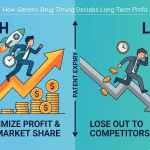
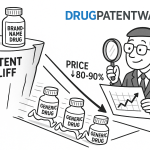
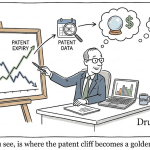
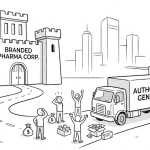
The pharmaceutical industry operates on a singular, brutal economic premise: the finite nature of exclusivity. Unlike other sectors where brand equity or trade secrets provide indefinite competitive moats, a pharmaceutical asset is a melting ice cube.1 The moment a drug receives regulatory approval, a clock begins to tick toward patent expiration. When that clock strikes zero, revenues for a small-molecule blockbuster typically collapse by 80% to 90% within months of generic entry.1 For a drug generating $10 billion in annual sales, this represents a loss of nearly $25 million every single day.1
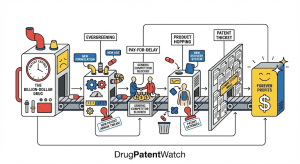
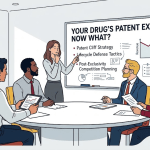
To mitigate this catastrophic financial drop, manufacturers have developed a sophisticated playbook known as evergreening or life cycle management. These strategies are not accidental; they are a calculated, multi-layered defense system built from both patent law and regulatory provisions.3 By obtaining multiple patents that cover different aspects of the same product—often through minor, incremental modifications—companies effectively extend the term of exclusivity far beyond the 20 years intended by the original patent grant.4
Between 2025 and 2030, the global pharmaceutical industry is bracing for a wave of expirations that will put an estimated $200 billion to $400 billion in branded drug revenue at risk.2 This looming revenue erosion has accelerated the adoption of offensive intellectual property tactics. The following analysis dissects the five most common maneuvers used to preserve these monopolies, the economic incentives driving them, and the shifting regulatory environment attempting to dismantle them.
The Brutal Economics of the Patent Cliff
The return on investment for evergreening is astronomical. The cost of developing a new drug frequently exceeds $2 billion, creating a rational incentive for a company to spend whatever it takes to defend an existing monopoly.1 Extending exclusivity by even a single quarter for a drug like Humira (adalimumab) or Revlimid (lenalidomide) can yield hundreds of millions of dollars in free cash flow, dwarfing the legal fees required to litigate a patent infringement suit.1
In the current market, loss of exclusivity is no longer viewed as a single calendar date but as a distribution of probabilities.7 Strategic managers use tools like DrugPatentWatch to monitor these probabilities and identify opportunities for defense or entry.8 The objective of the incumbent is to convert the patent cliff into a patent slope, ensuring a managed, staggered erosion of market share rather than a sudden collapse.1
Table 1: Blockbuster Revenue at Risk (2025–2030)
Drug Name
Manufacturer
Primary Indication
Approx. Annual Sales
Estimated LOE Year
Keytruda
Merck
Oncology
~$29.5 Billion
2028
Eliquis
BMS / Pfizer
Anticoagulant
>$10 Billion
2027-2029
Stelara
J&J
Immunology
~$10.8 Billion
2025
Ozempic
Novo Nordisk
Diabetes
~$17.4 Billion
2032+
Biktarvy
Gilead
HIV
~$13.4 Billion
2033
2
Tactic One: The Micro-Innovation Gambit via Secondary Patents
The cornerstone of nearly all evergreening strategies is the secondary patent. While the primary patent covers the active pharmaceutical ingredient, secondary patents target the peripheral features of the drug.11 This includes new formulations, specific crystalline structures, salts, esters, and methods of use.13
The strategic value of secondary patents lies in their timing. They are typically filed and issued much later in the product life cycle than the primary compound patent.15 Research indicates that while nearly all chemical compound patents are filed before FDA approval, approximately 21% to 24% of independent secondary patents are filed after the drug is already on the market.16
The PIPES Framework: Polymorphs, Isomers, Prodrugs, Esters, and Salts
In the pharmaceutical chemistry sector, the PIPES framework defines the most common molecular modifications used to secure secondary protection. Each of these tweaks can add significant time to a drug’s nominal patent life.16
Polymorphs are alternative crystalline structures of the same molecule. Different polymorphs can offer improved stability or solubility, making them patentable as new inventions even if the therapeutic effect is identical.14 A company might patent a specific crystalline structure of the active ingredient that offers better shelf life in tropical climates, effectively extending protection on the final product.11
Isomers, and the specific strategy known as the chiral switch, involve isolating and patenting a single enantiomer of a drug previously sold as a mixture.11 Nexium (esomeprazole) is the classic example. By isolating the (S)-enantiomer of omeprazole, AstraZeneca created a “new” product with its own patent life, despite the molecule being fundamentally similar to its predecessor, Prilosec.18
Changing the salt or ester form of an active ingredient can alter its bioavailability or dosage profile. Companies like Servier have famously attempted to use salt form changes to block generic entry, as seen with perindopril.14 These molecular modifications allow the patent holder to file for secondary patents that protect incremental innovations, even when critics argue they lack significant therapeutic advantages.14
Table 2: Average Patent Life Extension by Secondary Category
Patent Category
Average Years Added to Monopoly
95% Confidence Interval
Method of Use
7.4 Years
6.4 – 8.4 Years
Formulations
6.5 Years
5.9 – 7.3 Years
PIPES (Polymorphs, Isomers, etc.)
6.3 Years
5.3 – 7.3 Years
15
These secondary protections are particularly common for best-selling drugs. The propensity for firms to obtain late-filed secondary patents increases in direct relation to the drug’s sales volume, confirming that these are deliberate business strategies rather than mere scientific serendipity.15
Tactic Two: Constructing the Impenetrable Patent Thicket
A patent thicket is not just a collection of patents; it is a strategic architecture designed to make market entry prohibitively expensive and risky for competitors.7 By filing hundreds of patent applications on a single drug—covering everything from manufacturing processes to dosing regimens—an innovator creates a wall that a generic manufacturer must dismantle brick by brick.19
Case Study: Humira and the $200 Billion Wall
AbbVie’s defense of Humira (adalimumab) stands as the definitive example of the thicket strategy. Humira became the world’s best-selling drug, generating over $200 billion in lifetime revenue.17 Although its primary composition of matter patent expired in 2016, biosimilar competition did not enter the U.S. market until 2023.1
This seven-year extension was secured through a thicket of more than 130 granted patents derived from over 250 applications.7 Approximately 90% of these applications were filed after the drug had already received FDA approval.21 These patents covered specific dosing regimens for different indications, such as Crohn’s disease versus rheumatoid arthritis, and new formulations with lower injection volumes to reduce pain.9
The strategic value of the thicket lies in the cost of litigation. A biosimilar challenger must certify against every unexpired patent. If an innovator lists dozens of patents, the legal costs multiply, creating a volume-based barrier to entry.17 Faced with this wall, major competitors like Amgen and Sandoz chose to settle, agreeing to delay their launches until 2023 in exchange for a licensed entry date.1
Table 3: Patent Counts for Top U.S. Drugs (2024 Data)
Drug Brand
Manufacturer
Patent Applications Filed
Patents Granted
Years of Protection Sought
Humira
AbbVie
311
165
43.3
Enbrel
Amgen
154
74
49.7
Keytruda
Merck
180
78
37.3
Ozempic
Novo Nordisk
320
154
49.4
Biktarvy
Gilead
73
44
49.0
10
Tactic Three: The Forced Migration via Product Hopping
Product hopping involves introducing a modified version of a drug shortly before the original version loses protection and then migrating the patient base to the new product.17 The goal is to circumvent state substitution laws, which allow or require pharmacists to automatically substitute a generic version only if it is therapeutically equivalent to the brand name prescribed.17
Hard versus Soft Switches
There are two primary methods for executing a product hop. A soft switch occurs when the innovator continues to sell the old product but focuses all marketing and rebates on the new version, such as moving from an immediate-release tablet to an extended-release capsule.7 A hard switch is more aggressive. The manufacturer discontinues the original product entirely just before generic entry. This forces patients and physicians to switch to the new, patent-protected version because the old one is no longer available. When the generic version of the original drug finally launches, there is no longer a market to capture because the reference product has changed.17
A classic example of this occurred with Namenda (memantine), a treatment for Alzheimer’s disease. Allergan attempted to discontinue the immediate-release tablet in favor of a new extended-release capsule prior to the original patent expiration.17 By removing the older version from the market, they intended to hop the entire patient population to a version for which no generic competitor existed.17
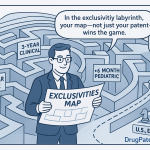
Tactic Four: Regulatory Clock Management and Data Exclusivity
Beyond the patent office, pharmaceutical companies leverage specific provisions of the Food, Drug, and Cosmetic Act to gain regulatory exclusivities that run independently of patents.17
The pediatric exclusivity provision is a particularly potent tool. Under the Best Pharmaceuticals for Children Act, manufacturers can receive an additional six months of market exclusivity in exchange for conducting clinical trials on the drug’s effects in pediatric populations.1 This is not a patent extension but a blanket extension of all existing patents and exclusivities listed in the Orange Book for that drug.1 For a blockbuster drug with $10 billion in annual revenue, this six-month window is worth $5 billion in protected sales. Because the extension applies to all patents, it is one of the most cost-effective evergreening maneuvers available.
Orphan Drug Exclusivity provides seven years of market exclusivity for drugs treating rare diseases. While intended to incentivize research for neglected conditions, companies often seek orphan designations for specific sub-indications of a blockbuster drug.17 If a drug secures orphan exclusivity for a new indication, a generic competitor may be barred from launching a version for that specific use, even if the primary molecule patent has expired.7
Tactic Five: Administrative Obstruction and Citizen Petitions
The citizen petition process allows any individual to voice concerns about the safety or efficacy of a drug application pending at the FDA. However, in the pharmaceutical sector, these petitions are frequently used as tactical filings by brand-name manufacturers to delay the approval of generic competitors.1
A brand manufacturer may file a petition raising minor technical questions about the generic’s bioequivalence or manufacturing process. Although the FDA eventually denies the vast majority of these 11th-hour petitions, the agency is legally required to review them. This review process can delay generic approval by several months or even years.1 In response, the Stop STALLING Act was introduced in the U.S. Senate to fine manufacturers for filing baseless petitions intended purely to delay competition.12 This legislative shift reflects a growing recognition that administrative procedures are being weaponized for commercial gain.
Turning Defense into Offense: Using Patent Data for Competitive Advantage
For business development and R&D teams, evergreening is not just an obstacle to overcome but a source of intelligence to exploit. Success requires a hybrid intelligence model that combines patent analytics with regulatory forecasting.25
White Space Analysis and Early Risk Mitigation
Companies use platforms like DrugPatentWatch to perform white space analysis, identifying therapeutic areas where patent activity is low but medical need is high.6 These white spaces often represent the most attractive opportunities for pharmaceutical innovation, offering the possibility of substantial returns with reduced competitive pressure.6
Systematic patent monitoring also allows companies to identify freedom-to-operate issues years before they become critical. This early intelligence enables strategic workarounds, avoiding costly litigation and potential market exclusion. In some cases, identifying a patent barrier early can save an estimated $100 million in wasted development costs by allowing a company to kill an internal program that is unlikely to reach the market.6
The Paragraph IV Playbook
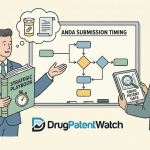
Filing an Abbreviated New Drug Application with a Paragraph IV certification is the first shot fired in a high-stakes commercial conflict.27 This certification states that the listed patent is invalid, unenforceable, or will not be infringed by the proposed generic.27 To encourage generics to challenge potentially weak patents, the Hatch-Waxman Act created a powerful financial incentive: a 180-day period of market exclusivity for the first generic applicant to successfully file a Paragraph IV certification.27
If the brand company sues within a 45-day window, an automatic 30-month stay of the generic’s FDA approval is triggered.27 This stay gives the brand time to litigate the dispute while maintaining its monopoly. For a blockbuster drug, this period can translate directly into billions of dollars in protected revenue. Consequently, the 30-month stay is a formidable strategic asset that brand companies use to execute multi-pronged defensive strategies, including developing next-generation products or negotiating settlements from a position of strength.28
The Regulatory Backlash: The 2025 FTC Campaign
The golden age of evergreening is facing its most significant challenge in decades. In 2024 and 2025, the Federal Trade Commission launched a coordinated enforcement campaign against improper patent listings in the FDA’s Orange Book.1
Junk Patents and the Orange Book Cleanup
The FTC has specifically targeted device patents—which cover the mechanical components of delivery systems like inhaler dose counters or autoinjector buttons—arguing they do not belong in the Orange Book because they do not claim the drug substance or a method of use.1 In December 2025, following sustained pressure from the FTC, Teva Pharmaceuticals requested the removal of more than 200 patent listings from the Orange Book.1 These patents covered asthma, diabetes, and COPD treatments.
By removing these listings, the FTC dismantled the mechanism that triggered automatic 30-month stays, clearing the path for generic competitors to enter years earlier than expected.1 This enforcement trend signals that business development teams must now discount the value of device patents as a barrier to entry.
Table 4: Key Legislative Proposals (2024–2025)
Bill Name
Primary Target
Proposed Action
Affordable Prescriptions for Patients Act
Product Hopping
Authorizes FTC to prosecute “hops” occurring within 3 years of generic entry.
Stop STALLING Act
Citizen Petitions
Fines manufacturers up to $50,000/day for frivolous petitions.
Interagency Patent Coordination Act
Patent Quality
Creates a task force between USPTO and FDA to improve patent examination.
Preserve Access to Affordable Generics Act
Pay-for-Delay
Limits “reverse payment” settlements that delay generic launch.
12
Financial Modeling of the Post-Exclusivity Sector
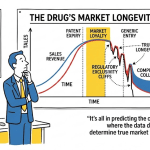
Predicting pharma stock performance in the face of patent expiration requires deconstructing the monopoly into its constituent layers. Effective patent life is often significantly shorter than the statutory 20 years because of the time required for clinical trials and regulatory review.3
Discounted Cash Flow and Terminal Value
When modeling the impact of a patent cliff, analysts use Discounted Cash Flow analysis to project revenue streams and the subsequent cliff event. However, terminal value in a post-exclusivity world is often overestimated. For small-molecule blockbusters, it is not uncommon to see sales plummet by 90% within the first year of generic entry.2
Advanced models now incorporate risk-adjusted Net Present Value as a measure of strategic resilience. This involves evaluating the patent quality and impact metrics of the thicket rather than just counting the number of patents. A portfolio concentrated on a single vulnerable patent is a far greater risk than one protected by a layered defense of secondary filings and regulatory exclusivities.3
Scientific Outcomes and ROI
The integration of artificial intelligence into R&D promises to move ROI calculations beyond simple cost savings toward scientific outcomes. Metrics such as chemical novelty, pipeline productivity, and clinical trial efficacy are now used to capture the value of generating defensible assets.30 If AI can reduce phase cycle times or improve the success rate of in vitro predictions, the effective period of exclusivity is extended by accelerating market entry.30
For instance, companies leveraging AI for competitive intelligence report 73% faster decision-making and 45% more accurate competitive assessments.31 By embedding AI-powered analysis early in the R&D pipeline, IP intelligence is evolving from a late-stage legal checkpoint into a primary driver of competitive advantage.32
Key Takeaways
The Patent Cliff is a Myth: For high-value assets, revenue erosion is a managed decline governed by thickets, settlements, and regulatory structures, not a binary drop.7
Secondary Patents Provide the Majority of Protection: Independent secondary patents for formulations or methods of use add an average of 6.3 to 7.4 years of nominal patent life.15
The FTC is Dismantling the Orange Book Stay: The recent crackdown on improper device patents has removed hundreds of barriers to entry, signaling a major shift in how companies must value delivery system patents.1
Product Hopping is Facing Legislative Resistance: New bipartisan bills target the forced migration of patients to new formulations, potentially shortening the effective life of these maneuvers.12
Intelligence Informs ROI: Systematic monitoring of patent data via platforms like DrugPatentWatch allows companies to avoid $100 million in wasted development costs by identifying freedom-to-operate issues early.6
FAQ
1. What is the difference between a primary and a secondary patent? A primary patent covers the active pharmaceutical ingredient itself. A secondary patent covers peripheral aspects such as the formulation, the method of manufacturing, the dosage regimen, or the specific medical use of the drug. Secondary patents are often filed much later in the product’s life to extend exclusivity.11
2. How does a patent thicket force competitors to settle? A patent thicket creates such a high volume of patents that a generic manufacturer must challenge each one individually. The legal costs and the risk of a permanent injunction on any single patent often make litigation economically unfeasible, forcing the generic firm to agree to a delayed entry date in exchange for a license.7
3. Is product hopping illegal under antitrust laws? Product hopping is increasingly under antitrust scrutiny. While not inherently illegal, courts and regulators look for evidence of anticompetitive intent, such as when a manufacturer removes a popular version of a drug from the market specifically to prevent generic substitution.17
4. What is the 30-month stay? The 30-month stay is an automatic postponement of FDA approval for a generic drug. It is triggered when a brand-name company sues a generic applicant within 45 days of receiving a Paragraph IV certification. It gives the patent holder time to resolve the dispute in court before the generic launches.29
5. How can a generic drug launch for some uses but not others? This is known as a skinny label or a Section viii carve-out. It allows a generic to launch for indications that are no longer patent-protected while omitting indications that still have active method-of-use patents. However, recent court rulings have made this strategy risky if the generic company’s marketing still encourages the patented use.34