Section 1: Why the Orange Book Is the Most Underused Sales Tool in Pharma
Every pharmaceutical vendor, from API suppliers to contract manufacturers to packaging companies, faces the same chronic challenge: identifying which drug companies need what they sell, and precisely when that need will peak. Most vendors rely on sales reps hunting referrals, attending trade shows, and cold-calling procurement departments. That approach produces incremental results on a long, expensive cycle.
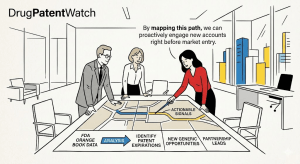
The FDA’s Approved Drug Products with Therapeutic Equivalence Evaluations, universally called the Orange Book, contains a publicly available, continuously updated dataset that tells you exactly when drug manufacturers are approaching windows of maximum commercial vulnerability and maximum investment activity. It is a forward-looking competitive calendar disguised as a regulatory compliance document.
The problem is that most people outside of regulatory affairs and generic drug legal teams treat the Orange Book as background reference material rather than a business development database. That perception leaves enormous commercial intelligence untapped.
This article shows you how to convert Orange Book patent expiration dates, exclusivity codes, and ANDA filing data into a structured, time-indexed pipeline of sales opportunities. The methodology applies whether you manufacture active pharmaceutical ingredients, provide fill-finish services, supply excipients, offer analytical testing, or run a contract research organization.
1.1 What the Orange Book Actually Contains
The Orange Book lists every drug product approved under a New Drug Application (NDA) or Abbreviated New Drug Application (ANDA) that the FDA has determined is safe and effective. Within each product listing, the FDA publishes two distinct categories of time-sensitive data: patent information submitted by the brand manufacturer, and exclusivity protections granted by statute.
Patent data in the Orange Book includes the patent number, the patent expiration date, and the type of patent claim: drug substance (DS), drug product (DP), or method of use (MU). These distinctions matter for vendor strategy because they tell you whether generic competition will arrive around a single date or whether it will be staggered as different patent claims expire over time.
Exclusivity data is separate from patents and, in practice, controls the actual competitive timeline more reliably than patent expiration dates. The FDA grants exclusivity protections as regulatory incentives; they run independently of any patent and can extend or accelerate the window before generic competition is legally possible.
The Orange Book is updated monthly in print and daily in its electronic version at the FDA website. For vendors building business development systems, the electronic version is the relevant one. Tools like DrugPatentWatch aggregate and structure this data, making it searchable by expiration date, drug class, company, and exclusivity type, which dramatically reduces the manual work of tracking thousands of active listings.
1.2 The Three Layers of Data That Matter to Vendors
Reading the Orange Book for commercial intelligence requires treating its data in three distinct layers, each of which generates a different category of business development signal.
The first layer is the patent expiration schedule. When a patent protecting a brand drug expires, the legal barrier to generic entry drops. Generic manufacturers who have filed ANDAs can begin market entry, and brand manufacturers know their revenue will compress. Both events create vendor opportunities: brand companies accelerate life-cycle management projects, and generic entrants begin manufacturing scale-up and supplier qualification.
The second layer is exclusivity expiration. Exclusivities often expire before or after relevant patents, and their expiration is the more reliable trigger for actual generic market entry. When the FDA’s New Chemical Entity (NCE) exclusivity expires, it unlocks the ability to file ANDAs even if patents still protect the product. When pediatric exclusivity expires, it removes the last six-month barrier blocking a waiting generic applicant from launching.
The third layer is the ANDA filing count and status. When multiple generic companies have filed ANDAs against the same brand drug, it signals high commercial interest in that molecule. The number of filed ANDAs predicts the pace of generic market entry after patent expiration and tells you how competitive the generic manufacturing environment will be, which has direct implications for API pricing pressure and contract manufacturing capacity requirements.
1.3 Why Most Vendors Miss These Signals
The commercial intelligence embedded in Orange Book data is not hidden; it is simply organized around regulatory logic rather than sales logic. Regulatory teams use it to track compliance timelines. IP lawyers use it to plan litigation strategy. Vendor sales teams, who lack regulatory training, look at the same database and see an impenetrable wall of patent numbers and statutory codes.
The translation problem is real. A listing that reads “NCE exclusivity expiration: 03/15/2026; patent US8,765,432 expiration: 09/12/2027; three ANDA filers, first-to-file status pending” looks like regulatory boilerplate unless you understand that it means: the earliest generic can file for approval now, the brand company’s revenue will start compressing on a predictable schedule, and three competitors are already preparing to manufacture the generic version. That is a rich sales intelligence brief, not a regulatory footnote.
The second reason vendors miss these signals is the sheer volume of the database. The Orange Book lists thousands of drug products, and manually sorting through them to find the five or ten that are commercially relevant to your specific product or service category is not practical without a systematic approach or a structured data tool.
Section 2: Patent Cliffs as a Sales Calendar
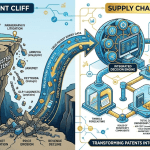
The term “patent cliff” entered common business vocabulary after Lipitor’s basic patent expired in November 2011, allowing Ranbaxy, Watson, and other generic manufacturers to flood the market with atorvastatin and drop Pfizer’s annual revenue from that single product by roughly $9 billion in a single year [1]. That event was not a surprise to anyone watching the Orange Book. The patent expiration date was publicly available years in advance.
What was underappreciated then, and still is today among non-pharmaceutical vendors, is that the patent cliff is not just a revenue event for brand manufacturers. It is a trigger for an entire cascade of procurement, manufacturing, and supply chain activity that creates direct business opportunities for vendors at multiple points along the timeline.
2.1 Reading Patent Expiration Dates as Forward Revenue Windows
A drug product with $3 billion in annual U.S. sales and a patent expiring in 30 months represents a near-certain revenue compression event for the brand company and a near-certain manufacturing scale-up event for approved generic applicants. Vendors should treat this not as a curiosity but as a scheduled opportunity.
The timeline of vendor opportunity around a patent cliff runs roughly as follows. Thirty-six to forty-eight months before expiration, the brand company begins evaluating lifecycle management strategies: authorized generics, reformulations, new delivery systems, or combination products that can extend commercial viability beyond the patent cliff. Each of these strategies requires vendors: new formulation development partners, modified-release technology suppliers, analytical testing labs, and regulatory consulting firms.
Eighteen to twenty-four months before expiration, ANDA filers who have been waiting for clearance accelerate their manufacturing readiness. They need scale-up batches, stability testing, supplier qualification audits, and packaging validation. Contract manufacturers, API suppliers, and analytical testing organizations see rising inquiry volume from generic companies in this window.
In the six to twelve months immediately following expiration, market volume often spikes as generic penetration accelerates. This is when API and excipient demand from generic manufacturers peaks, packaging line utilization at contract facilities runs high, and logistics and serialization vendors see increased activity as new generic SKUs enter distribution channels.
“In 2023, drugs with combined U.S. sales exceeding $35 billion faced patent expirations or exclusivity losses, representing the largest single-year patent cliff in pharmaceutical history.” – IQVIA Institute, Global Use of Medicines 2024 Report [2]
2.2 Compound Patent Structures and Staggered Opportunity Windows
Many high-revenue drugs are not protected by a single patent. They carry compound patent structures where a base patent on the drug substance expires first, followed by formulation or method-of-use patents that expire later. The Orange Book lists all of them separately.
For vendors, compound patent structures create staggered opportunity windows rather than a single cliff. Consider a product where the drug substance patent expires in 2026 but a drug product patent on a specific extended-release formulation expires in 2029. Generic versions of the immediate-release form can enter in 2026, creating one wave of manufacturing activity. Generic versions of the extended-release form cannot enter legally until 2029, creating a second, distinct wave.
A contract manufacturer that maps both expiration dates knows exactly when to begin outreach for each formulation type. An excipient supplier that provides the polymer matrix for extended-release tablets knows the 2029 window is more commercially valuable to pursue because the extended-release form is typically the higher-volume brand product.
2.3 The 30-Month Stay and What It Tells You About Competitive Timing
When a generic manufacturer files an ANDA containing a Paragraph IV certification, alleging that a listed patent is invalid or will not be infringed by the generic product, and the brand manufacturer sues for patent infringement within 45 days of receiving notice, the FDA is automatically barred from approving the ANDA for 30 months or until the litigation resolves, whichever comes first. This is the 30-month stay.
The 30-month stay is commercially significant for vendors for two reasons. First, it tells you that generic entry on a particular product is subject to litigation risk, which means manufacturing scale-up plans for generic applicants may be delayed or accelerated depending on litigation outcomes. Vendors selling to generic manufacturers need to monitor litigation dockets, not just patent expiration dates, to get accurate entry timing.
Second, the filing of a Paragraph IV certification is itself a public event that signals aggressive commercial intent by a generic manufacturer. A company that files a Paragraph IV certification is prepared to fight legally for market access. They will invest in manufacturing readiness regardless of whether the litigation goes their way, because if they win the lawsuit or if the brand company settles, they need to be ready to launch quickly. That readiness investment creates vendor opportunities.
Data on Paragraph IV certifications and litigation outcomes is accessible through FDA dockets and through aggregators like DrugPatentWatch, which indexes certification filings, lawsuit records, and settlement dates in a searchable format tied to the underlying Orange Book patent listings.
2.4 Paragraph IV Filings as the Earliest Competitive Signal
Standard patent expiration dates give you a fixed point on the calendar. Paragraph IV filings give you an earlier signal that a generic manufacturer has specifically targeted a product and is willing to invest in litigation to access it sooner than the patent expiration date would allow.
From a vendor perspective, a Paragraph IV filing is a declaration of manufacturing intent. The filing company has already invested in developing a generic formulation, conducted analytical testing to establish bioequivalence, and assembled a regulatory submission. They are not filing speculatively; they are filed because they believe the product is commercially viable and the patent is vulnerable.
Tracking Paragraph IV filings, which are listed in FDA’s notification database and indexed in commercial databases, gives vendors a list of pharmaceutical companies that are actively planning to enter specific drug markets. If you sell a service or material that this company will need to manufacture the product, the time to initiate a business development conversation is shortly after the filing is confirmed, not after the patent expires.
Section 3: Exclusivity Codes and What Each One Means for Your Pipeline
Patent expiration dates are the most visible signal in Orange Book data, but exclusivity codes are often more commercially precise. Unlike patents, which are granted by the USPTO and can be challenged, exclusivities are FDA-granted regulatory protections that are statutory rights. They run on predictable schedules and are nearly impossible to circumvent through litigation.
The FDA uses a set of letter codes to identify exclusivity types in the Orange Book. Understanding what each code means, and when each expires, translates directly into commercial timing intelligence.
3.1 New Chemical Entity Exclusivity (NCE-1)
NCE exclusivity, coded as NCE-1 in the Orange Book, grants five years of protection from the date of NDA approval for drugs containing an active ingredient that has never before been approved. During this five-year window, the FDA cannot accept an ANDA application for a generic version at all.
For vendors, NCE expiration is the earliest possible trigger for generic market entry. A brand drug approved in 2021 with NCE exclusivity becomes eligible for generic ANDA filing in 2026. The 30 months before that date, roughly 2023 to 2025, is when pharmaceutical companies scouting the generic opportunity typically begin market research and early formulation work. If you supply API for a molecule currently under NCE protection, you should know the exclusivity expiration date because it predicts when your potential customer base for that molecule expands.
3.2 Pediatric Exclusivity (PED) and the Six-Month Extension
Pediatric exclusivity adds six months to all existing patents and exclusivities for a drug when the brand manufacturer completes FDA-requested pediatric studies. It attaches to the end of whatever protection already exists, whether that is an NCE exclusivity, an orphan drug exclusivity, or a patent.
This six-month extension sounds minor but is commercially significant. For a drug with $4 billion in annual U.S. sales, six months of additional exclusivity represents roughly $2 billion in protected revenue. The brand manufacturer fights hard to preserve it, and generic applicants fight equally hard to establish that pediatric studies were not conducted in compliance with the written request, which would negate the exclusivity.
For vendors selling to brand manufacturers, the period immediately before and after a pediatric exclusivity grant is a window for activity. Brand companies often engage contract research organizations and clinical testing services to conduct the pediatric studies required to earn this exclusivity. The timeline for completing these studies and submitting the written request creates a demand window for clinical research vendors that can be predicted from public FDA correspondence.
3.3 Orphan Drug Exclusivity (ODE) and the Specialty Market Signal
Orphan drug designation applies to drugs treating conditions affecting fewer than 200,000 patients in the United States. Upon approval, orphan drugs receive seven years of market exclusivity under the Orphan Drug Act. During this period, the FDA cannot approve an ANDA or NDA for the same drug for the same indication.
The commercial significance for vendors is twofold. First, orphan drugs tend to have high per-unit prices and complex formulations, which means the manufacturing processes, specialized excipients, and analytical methods required are more technically demanding and command higher margins for suppliers. Second, because the patient population is small, manufacturing volumes are typically low but the precision requirements are high, which suits certain contract manufacturing organizations and specialty testing labs that do not compete effectively on volume.
The FDA’s Orphan Drug database, cross-referenced with Orange Book listings, gives vendors a list of approved orphan products with their ODE expiration dates. Products where ODE expiration is within 24 to 36 months represent near-term generic market entry opportunities where the generic applicants will need suppliers who understand the specialized manufacturing challenges of low-volume, high-potency, or complex delivery orphan products.
3.4 New Formulation Exclusivity (NF) and the Lifecycle Management Signal
New formulation exclusivity, coded as NF in the Orange Book, grants three years of exclusivity when a brand manufacturer gets approval for a new formulation of a previously approved drug, provided clinical studies were required for that approval. It does not block generic versions of the original formulation, only the new one.
NF exclusivity is a specific signal for vendors serving brand manufacturers. When a brand company lists a new NF exclusivity for an existing product, it tells you they have completed a life-cycle management project: a new extended-release version, a new concentration, or a new combination. That project required a range of vendor services, and the work is already done. But the approval of that new formulation also signals that the brand company has a systematic lifecycle management capability, which means they are likely planning additional projects.
Competitors facing a patent cliff will often queue multiple lifecycle management projects. If a brand drug with a primary formulation losing protection in 2027 just received NF exclusivity for a new dosage form in 2025, you can reasonably infer that additional formulation projects are in development. That inference tells you when to intensify sales engagement with that manufacturer.
3.5 Exclusivity Stacking and Complex Timeline Analysis
The most commercially significant Orange Book situations involve multiple exclusivities and patents that overlap or sequence in complex ways. A single drug product might carry an NCE exclusivity that expires in 2025, pediatric exclusivity that extends it to early 2026, a base drug substance patent expiring in 2028, a drug product patent expiring in 2030, and a method-of-use patent expiring in 2032.
This stacking creates multiple distinct vendor opportunity windows, each associated with a different type of generic product or a different formulation. Understanding the full exclusivity and patent stack, rather than just the earliest or the latest date, is what separates a sophisticated vendor BD team from one that is simply watching for patent expiration news.
Tools like DrugPatentWatch present this stacked exclusivity and patent data in a consolidated view, allowing BD teams to see the full timeline for a product without manually cross-referencing multiple FDA sources. The practical value of this aggregated view compounds when you are tracking dozens of products simultaneously as part of a portfolio-level prospecting strategy.
Exclusivity Code
Duration
Vendor Signal
NCE-1
5 years from NDA approval
Predicts earliest ANDA filing window; API demand will expand after expiry
PED
6 months added to existing protections
Clinical research demand during study period; precision timeline for generic entry
Brand lifecycle management activity; formulation development vendor demand
NCE-2 (ODE combo)
5 years (orphan NCE)
Highest-protection window; plan early to be qualified supplier when ODE expires
Section 4: The ANDA Pipeline as a Leading Indicator
Patent and exclusivity data tells you when competition becomes legally possible. ANDA filing data tells you when specific companies have committed to competing. The distinction between legal possibility and commercial commitment is the difference between a calendar reminder and an actual customer.
4.1 How to Read ANDA Filing Counts
The FDA publishes its ANDA approval and tentative approval records on its website, and these records are indexed and searchable through third-party databases. When you look at a brand drug and count the number of ANDAs that have been filed and are pending, you get a number that directly predicts the competitive intensity of the generic market after patent expiration.
A drug with one or two ANDA filers is likely to see a relatively orderly generic launch with limited price erosion initially. A drug with twelve ANDA filers will see rapid and deep price erosion within weeks of patent expiration as manufacturers compete aggressively for market share. For vendors, high ANDA counts on a specific molecule mean high aggregate demand for manufacturing services and materials, but also mean that individual generic manufacturers will face intense margin pressure, which affects their ability to pay premium prices for vendor services.
The practical implication is that vendor pricing strategy should differ between high-count and low-count ANDA situations. In a low-count ANDA environment, generic manufacturers may accept higher service costs because their gross margins are protected by limited competition. In a high-count environment, vendors should lead with cost efficiency and throughput rather than premium positioning.
4.2 First-to-File Status and the 180-Day Exclusivity Premium
The Hatch-Waxman Act grants the first generic applicant to file a substantially complete ANDA with a Paragraph IV certification 180 days of generic market exclusivity before other generic competitors can enter. This 180-day exclusivity is commercially extraordinary: the first filer captures the entire generic market for six months at prices typically 20 to 30 percent below brand price, before the second wave of generics arrives and drives prices down to 80 to 90 percent off brand.
For vendors, identifying first-to-file applicants is a high-priority BD task. A company with first-to-file exclusivity on a major drug has, in effect, a guaranteed high-margin revenue window opening on a known date. They are motivated to be fully manufacturing-ready before that date, which means procurement and vendor qualification activity accelerates in the months before their exclusivity window opens.
First-to-file status is determinable from FDA ANDA databases and from litigation records. When a brand company receives a Paragraph IV notification, it must file suit within 45 days to trigger the 30-month stay. The timing and parties of those lawsuits reveal which generic applicants filed first and are in line for 180-day exclusivity. DrugPatentWatch tracks these first-to-file determinations and links them to the underlying drug products, giving vendors a ranked list of generic companies who have the most commercially valuable pending approvals.
4.3 Tentative Approvals as a Readiness Signal
The FDA issues tentative approvals to ANDAs that have met all scientific and regulatory requirements for approval but cannot receive final approval because a patent or exclusivity is still in force. A tentatively approved ANDA is a product that is scientifically ready to launch and is waiting only for the patent or exclusivity clock to expire.
For vendors, tentative approvals are among the most precise commercial signals available. A company with a tentative approval knows with certainty that they will be manufacturing and selling this product as soon as the remaining barrier clears. They have already passed the hard regulatory hurdle. What they need in the period between tentative approval and the exclusivity expiration date is supply chain readiness: qualified API suppliers, validated packaging materials, analytical method transfer, and manufacturing scale confirmation.
Monitoring the FDA’s tentative approval database, cross-referenced with exclusivity expiration dates, gives vendors a prioritized call list of pharmaceutical companies that need services and materials within a knowable window. The procurement conversations are not speculative; they are about preparing for an event with a fixed date.
Section 5: Vendor-Specific Applications by Category
The Orange Book signals described so far apply broadly to pharmaceutical vendors, but the specific operational application differs significantly by vendor type. This section maps the signals to specific vendor categories with concrete examples.
5.1 API Suppliers: The Molecule-Level Pipeline
For companies that supply active pharmaceutical ingredients, the Orange Book provides a forward-looking demand forecast at the molecule level. When a brand drug’s patent or exclusivity expires and ANDA filers move toward launch, they all need API. The number of ANDA filers multiplied by their projected production volumes represents the total API demand that will emerge from that molecule in the post-exclusivity period.
API suppliers should build a molecule tracking system that identifies drugs with all of the following characteristics: first, peak annual sales above a threshold that justifies manufacturing investment; second, patent or exclusivity expiration within 18 to 36 months; third, at least two ANDA filers indicating genuine commercial competition; and fourth, no substantial manufacturing complexity that would exclude the supplier based on capability gaps.
The strategic priority is supplier qualification lead time. Generic manufacturers typically begin API supplier qualification 18 to 24 months before their target launch date. If an API supplier waits until a patent expires to initiate customer conversations, they are typically too late to be on the approved supplier list for Day One launch. The Orange Book-based molecule tracking system provides the early warning needed to begin customer engagement at the right point in the qualification cycle.
An example of this played out clearly in the years before adalimumab biosimilar entry. Manufacturers seeking to produce biosimilar Humira needed to secure cell culture media, purification resins, single-use bioprocess components, and analytical reference standards well before their FDA approval dates. Vendors who tracked the biosimilar pathway timelines and engaged potential customers in 2020 and 2021 had established supply agreements before the major biosimilar launch wave in 2023.
5.2 Contract Development and Manufacturing Organizations (CDMOs): Capacity Timing
CDMOs sell capacity, and capacity is time-sensitive. The most commercially valuable application of Orange Book data for a CDMO is building a 24-to-36-month forward view of which products will be entering manufacturing scale-up and which companies will need additional capacity.
CDMO business development teams should run an analysis that combines patent expiration dates, ANDA filing counts, and tentative approval status to produce a ranked list of products entering their active manufacturing window. Products with high ANDA counts signal high aggregate capacity demand. Products with first-to-file applicants signal a single customer with urgent, time-bounded capacity needs. Both are valuable, but they require different BD approaches.
For a product with high ANDA counts, the CDMO should approach the market broadly and offer technology transfer capabilities to multiple generic applicants simultaneously. For a first-to-file product where the applicant is known, the CDMO should approach that specific company directly with a proposal that emphasizes launch readiness and regulatory track record.
The 30-month stay dynamic also affects CDMO capacity planning. When litigation is ongoing, manufacturing scale-up may be deferred until closer to a litigation resolution. CDMOs that monitor litigation outcomes alongside patent expiration dates can avoid over-committing capacity to products where launch timing remains uncertain due to active lawsuits.
Excipient suppliers have an additional layer of signal available in the Orange Book: the formulation type of the listed product. Different dosage forms use different excipient profiles, and different delivery system categories use specialized excipients that are not commodity materials.
An extended-release tablet uses polymer matrix materials such as hydroxypropyl methylcellulose or poly(ethylene oxide) that are not required in immediate-release formulations. An injectable product requires parenteral-grade excipients with endotoxin controls that differ from oral dosage form requirements. A transdermal patch uses pressure-sensitive adhesive polymers and rate-controlling membranes that are irrelevant to solid oral dosage forms.
By filtering Orange Book listings for specific formulation codes, such as extended-release, modified-release, injectable, or transdermal, and combining that filter with patent expiration timelines, excipient suppliers can identify precisely which drug products entering the generic window require their specific materials. This precision targeting eliminates the noise of irrelevant listings and concentrates outreach on products where the excipient supplier has a genuine chance of being included in the formulation.
5.4 Analytical Testing and CRO Services: The Validation Cascade
When a drug product approaches patent expiration and generic manufacturers begin ANDA preparation, a cascade of analytical testing activity follows. Bioequivalence studies must be conducted. Dissolution method development and validation is required. Reference standard qualification, method transfer documentation, and ICH stability testing all create demand for analytical testing and CRO services.
This testing cascade is highly predictable from Orange Book timelines. For a drug with a patent expiring in October 2027, the bioequivalence studies required for ANDA submission would typically need to begin no later than mid-2025 to allow time for study completion, data analysis, and submission preparation. Generic companies that have not yet filed their ANDAs but are known to be active in adjacent therapeutic categories are likely to initiate development work at this point.
CROs and analytical testing organizations should track Orange Book data not just for filed ANDA applicants but also for prospective applicants. If you know Company X has a strong history of filing ANDAs against cardiovascular drugs and a major cardiovascular drug has an NCE exclusivity expiring in 18 months, Company X is a probable near-term customer even if they have not yet publicly disclosed a development program.
5.5 Packaging and Serialization Vendors: The SKU Expansion Signal
Generic market entry creates packaging demand in ways that are specifically predictable from ANDA data. When multiple generic versions of the same drug product launch simultaneously, each requires its own labeling, packaging configuration, and serialization setup. A drug entering the market with eight approved generic versions represents eight distinct SKUs requiring packaging line changeover, labeling artwork approval, and serialization enrollment.
For packaging vendors, the ANDA count for a product is a direct proxy for the number of new customer engagements and packaging projects that will emerge around patent expiration. A product with ten ANDA approvals represents ten packaging projects, each with a similar artwork scope, similar bottle or blister configuration requirements, and similar serialization data management needs.
The timing of packaging demand is concentrated in the period six to twelve months before the anticipated launch date. Packaging vendors who track ANDA approval timelines and litigation outcomes can build a forward project calendar and allocate sales and project management resources accordingly, rather than responding reactively to customer inquiries.
Section 6: Building a Systematic Orange Book Monitoring Program
Reading the Orange Book once and identifying a list of opportunities is useful but insufficient. Patent expirations occur on rolling schedules, new ANDAs are filed continuously, litigation outcomes change competitive timelines, and exclusivity expirations arrive every month. A one-time analysis produces a static snapshot of a dynamic system.
Effective use of Orange Book data for business development requires a systematic monitoring program with defined triggers, structured output formats, and a clear handoff process from intelligence gathering to sales action.
6.1 Defining Your Opportunity Filter Criteria
The first step in building a monitoring program is defining the criteria that make a drug product commercially relevant to your business. Every vendor category has a different set of relevant filters.
For an API supplier, the relevant filters likely include: minimum peak annual sales for the brand product, therapeutic category alignment with existing synthesis capabilities, presence of at least two ANDA filers indicating commercial viability, and patent or exclusivity expiration within a defined forward window such as 12 to 36 months.
For a CDMO, the filters might include: formulation type alignment with available manufacturing technology, minimum batch size requirements within operational range, regulatory complexity appropriate to the organization’s quality system, and customer concentration considerations to avoid over-reliance on a single generic applicant.
The output of this filter definition exercise is a scoring matrix that can be applied to any Orange Book listing to produce a commercial relevance score. Products above a threshold score enter the active monitoring queue. Products below threshold are logged for periodic review in case their commercial profile changes.
6.2 Establishing a Data Refresh Cadence
The FDA updates the electronic Orange Book monthly, with patent information added as manufacturers submit it and exclusivity data updated as new grants or expirations occur. For vendors, a monthly review of the updated Orange Book is the minimum acceptable cadence for tracking changes to known products.
For high-priority products, meaning those that have passed the commercial relevance threshold and are in the active monitoring queue, a more granular tracking approach is appropriate. This includes monitoring the FDA’s drug approvals database for ANDA approvals and tentative approvals, the FDA’s Paragraph IV notification database for new certification filings, and PACER, the federal court filing database, for litigation filings and outcomes related to patents listed for priority products.
Commercial database services like DrugPatentWatch provide automated alerts for changes to specific drugs, patents, or exclusivities. These alerts can be configured to trigger when a new ANDA is filed for a tracked product, when a patent challenge is initiated, when a tentative approval is granted, or when an exclusivity expiration date changes. Building alert subscriptions around your defined priority products substantially reduces the manual monitoring workload and ensures that commercially significant events are captured promptly.
6.3 From Signal to Sales Action: The Intelligence Handoff
The intelligence value of Orange Book monitoring is only realized when it drives specific sales actions. Many BD programs collect good intelligence and then fail to translate it systematically into outreach and pipeline entries. The handoff from intelligence to action requires a defined protocol that specifies who receives each type of signal and what action they should take.
A workable protocol for most pharmaceutical vendor organizations looks like this. When a product in the active monitoring queue reaches a defined trigger, such as exclusivity expiration within 18 months with at least two tentative ANDA approvals, the monitoring function produces a one-page intelligence brief. This brief identifies the specific companies holding the relevant ANDAs, summarizes their known manufacturing capabilities and partner preferences, notes any publicly available information about their supply chain strategies, and recommends a specific outreach approach and timeline.
The intelligence brief goes to the account manager or business development representative responsible for the relevant customer segment. It is not a research report to be filed; it is a call-to-action document with a deadline. The account manager is expected to initiate contact with the identified companies within a defined period, typically two to three weeks of receiving the brief.
6.4 CRM Integration and Pipeline Tagging
The Orange Book monitoring program generates time-indexed intelligence. To extract full commercial value from it, the intelligence needs to be recorded in the CRM system with appropriate tags that allow reporting and forecasting.
Each opportunity identified through Orange Book monitoring should be entered into the CRM with the following data fields: the drug product name and NDA number, the relevant patent and exclusivity expiration dates, the ANDA filer names and their FDA approval status, the estimated revenue opportunity based on product sales data and your typical customer engagement size, and the expiration date of the relevant competitive window.
The last field, the window expiration date, is the most important for pipeline management. An opportunity with an exclusivity expiring in eight months has a concrete urgency that a standard CRM opportunity stage does not capture. With window expiration dates in the CRM, sales management can run reports showing the aggregate revenue at risk if specific opportunities are not closed before their windows close, which focuses attention and resource allocation.
Section 7: Case Studies in Orange Book-Driven Business Development
Abstract frameworks are only as useful as the concrete examples that validate them. The following case studies illustrate how specific Orange Book signals translated into commercial outcomes for vendors who recognized and acted on them.
7.1 The Lipitor Patent Expiration and API Supplier Positioning
Atorvastatin calcium, the active ingredient in Pfizer’s Lipitor, held a basic patent that expired on November 30, 2011. In the years preceding that expiration, the Orange Book listed numerous ANDAs filed against the brand product. By early 2010, it was publicly known that Ranbaxy had secured first-to-file 180-day exclusivity for atorvastatin.
API manufacturers who tracked the Orange Book in 2009 and 2010 knew several things with high confidence: atorvastatin generic launch would begin November 30, 2011 if no litigation extended the timeline; Ranbaxy would have 180-day exclusivity and would need large API volumes to supply the market during that window; and a larger wave of additional generic manufacturers would enter after the 180 days, requiring ongoing API supply.
Indian API manufacturers including Dr. Reddy’s Laboratories and Aurobindo Pharma had invested in atorvastatin synthesis capacity well before the patent expiration. Their ability to supply validated atorvastatin API at scale was a direct result of watching the patent timeline and preparing supply chain infrastructure in advance. Companies that waited until after patent expiration to begin customer qualification were locked out of the initial launch window and competed for the lower-margin commodity supply phase that followed [3].
7.2 Humira and the Biosimilar Wave: A CDMO Positioning Case
AbbVie’s adalimumab (Humira) remained protected by an extraordinarily complex patent portfolio that the company maintained aggressively through the Orange Book. By 2021, AbbVie had reached settlement agreements with most major biosimilar developers allowing them to enter the U.S. market starting January 1, 2023. These settlement dates were determinable from court records and industry reporting well before the entry dates arrived.
CDMOs and biologic manufacturing service organizations that tracked biosimilar development timelines saw the 2023 entry wave coming with at least 18 months of advance notice. Organizations like Lonza and Samsung Biologics positioned themselves to support multiple biosimilar applicants simultaneously, investing in their facility expansions and process development capabilities in 2021 and 2022 to be ready for the 2023 launch wave.
Vendors who were not watching the biosimilar patent landscape missed the advance signal entirely and found themselves receiving inbound inquiries in mid-2022 with project timelines that were technically impossible to accommodate within the available window. The commercial cost of that missed signal was measured in contracts that went to competitors who had prepared [4].
7.3 Specialty Opioid Formulations and Packaging Vendor Intelligence
Extended-release abuse-deterrent opioid formulations provide an instructive case for packaging vendors. Several abuse-deterrent formulations developed by brand manufacturers in the 2013 to 2015 period received new formulation (NF) exclusivities that have since expired or are approaching expiration. The generic versions of these formulations present unique packaging challenges: child-resistant compliance, unit-dose configurations for controlled substances, and serialization requirements under DSCSA.
Packaging vendors who tracked the NF exclusivity expirations for extended-release oxycodone and hydrocodone products were able to approach generic ANDA applicants with specialized abuse-deterrent packaging proposals well before the exclusivities expired. Because the formulation characteristics were publicly listed in FDA Orange Book and NDA records, packaging engineers could develop technically appropriate proposals without waiting for customer briefings.
The vendors who identified these packaging opportunities through Orange Book research and reached out proactively differentiated themselves from competitors who waited for RFPs. In several documented cases, proactive packaging vendors were sole-sourced for the initial generic launch packaging because they had completed packaging development and validation before competing vendors had even been contacted.
7.4 Analytical CRO Positioning for a Complex Oncology Patent Cliff
The oncology segment contains several drugs with complex formulation and testing requirements that are listed in the Orange Book with drug substance and drug product patents in the 2026 to 2029 expiration window. Imatinib (Gleevec), while its generic entry has already occurred, established a template that applies to successor oncology drugs: complex crystalline forms, polymorphic challenges in API synthesis, and bioequivalence study designs that differ from standard pharmacokinetic assessments.
Analytical CROs that developed and published validated methods for oncology ANDA bioequivalence testing in the mid-2010s positioned themselves as preferred partners for the generics that entered that market. Their investment in developing the testing infrastructure created a competitive moat that translated directly into ANDA contract wins. The same logic applies today to the oncology compounds in the 2026 to 2029 window: CROs that begin method development work now will have validated analytical packages ready to offer customers when the ANDA development race begins in earnest.
This type of anticipatory investment in analytical capability, funded by Orange Book-based market intelligence, is the kind of strategic positioning that generic market research from more standard sources would not generate. The Orange Book provides the specific molecule, the specific timing, and the specific regulatory pathway requirements that make the investment case precise.
Section 8: Integrating Orange Book Data with Complementary Sources
Orange Book data is powerful on its own but becomes substantially more actionable when integrated with a small number of complementary data sources. The combination allows vendors to move from understanding what is happening to understanding who is making it happen and what resources they are committing to it.
8.1 FDA Drug Approval Databases
The FDA maintains several databases adjacent to the Orange Book that provide complementary intelligence. The Paragraph IV certifications database lists all Hatch-Waxman patent challenges with their filing dates and the specific patents being challenged. The ANDA approval database tracks the status of pending applications from submission through tentative approval to final approval. The Drug Shortage database sometimes signals manufacturing capacity constraints at specific companies that affect their ability to serve as reliable customers.
The integration of Paragraph IV certification data with Orange Book patent listings is particularly valuable. When you cross-reference a certified patent against the Orange Book listing, you get the exact market window being targeted by the generic applicant and can trace the specific legal claims being made. This level of detail tells you not just that a company is targeting a product, but which aspect of the product they believe is vulnerable, which in turn tells you something about their likely formulation strategy and technical approach.
8.2 SEC Filings and Earnings Call Transcripts
Publicly traded pharmaceutical companies, both brand and generic, are required to disclose material information about their patent positions, ANDA portfolios, and litigation outcomes in SEC filings. 10-K annual reports contain detailed descriptions of patent expirations and their expected financial impact. 10-Q quarterly reports update these disclosures. 8-K current reports disclose material litigation outcomes, patent settlements, and regulatory approvals.
Earnings call transcripts, available through financial data services and directly from company investor relations pages, often contain specific forward-looking statements about launch timelines, exclusivity strategies, and ANDA filing plans. When a generic manufacturer’s CEO says on an earnings call that they plan to launch a product in the second half of 2026 pending patent resolution, that statement, combined with the Orange Book data showing which patents are being litigated, gives a vendor a precise customer engagement window.
The combination of Orange Book data and SEC disclosure data eliminates most of the uncertainty about timing and commercial intent. You know from the Orange Book when the legal window opens. You know from the SEC filing that the company is planning to enter. You have a well-defined customer engagement timeline.
8.3 ClinicalTrials.gov and the Life-Cycle Management Signal
For vendors selling to brand manufacturers engaged in life-cycle management, ClinicalTrials.gov provides the earliest publicly available signal of development activity. Brand manufacturers pursuing new formulations, new indications, or new delivery systems to extend product life beyond patent expiration must typically register their clinical trials.
A brand drug with an NCE exclusivity expiring in 2027 and multiple clinical trials registered on ClinicalTrials.gov for new formulations or new indications tells you that the company is actively investing in life-cycle management. The trial types and phases tell you how far along those projects are. A Phase 3 trial is 18 to 36 months from potential NDA submission; a Phase 1 trial is 3 to 5 years away. This forward calendar tells formulation development CDMOs, specialty excipient suppliers, and clinical packaging vendors when their services will be needed.
8.4 Using DrugPatentWatch to Aggregate and Structure the Data
DrugPatentWatch is a commercial service that aggregates, structures, and makes searchable the patent, exclusivity, ANDA, and litigation data from the Orange Book and related FDA sources. Its primary value for business development professionals is that it eliminates the manual work of cross-referencing multiple FDA databases and presents integrated views of the competitive timeline for any drug product.
For vendors building the systematic monitoring program described in Section 6, DrugPatentWatch provides several specific functional capabilities. Its patent expiration alerts can be configured to notify users when any product meeting defined criteria approaches its exclusivity or patent expiration. Its ANDA tracking identifies new filings, first-to-file status changes, and approval events. Its litigation database links Paragraph IV certification filings to the corresponding Orange Book patents and tracks case outcomes.
The ROI case for a commercial tool subscription is straightforward. If a BD professional spends 15 hours per month manually searching FDA databases and cross-referencing Orange Book listings, and a structured data tool reduces that to three hours per month while providing higher-quality, more complete signal coverage, the productivity gain alone justifies the cost for any organization with meaningful pharmaceutical vendor revenue.
8.5 Competitive Intelligence From Generic Manufacturer Pipeline Disclosures
Major generic pharmaceutical companies including Teva, Viatris, Sandoz, Dr. Reddy’s, and Sun Pharma regularly publish their ANDA pipeline summaries in investor presentations and annual reports. These disclosures list the products for which they have filed ANDAs, their first-to-file status where applicable, and their anticipated launch timelines.
Cross-referencing these pipeline disclosures against Orange Book data gives vendors a named customer list with specific product commitments and launch timelines. If Teva’s investor presentation lists a specific product as a priority launch in 2026, and the Orange Book shows the relevant exclusivity expiring in early 2026, and Teva’s existing supplier base does not include your organization, you have a specific, time-bounded reason to initiate a business development conversation.
Section 9: Quantifying the Opportunity: Building the Revenue Forecast
Business development intelligence is most persuasive when it comes with a revenue forecast. Senior leadership at pharmaceutical vendor organizations needs to understand not just that opportunities exist in the patent expiration pipeline, but how large those opportunities are and when the revenue will materialize.
Building a revenue forecast from Orange Book data requires three inputs: the peak annual sales of the brand product, a market model for post-patent generic penetration, and the vendor’s typical revenue capture rate in similar market situations.
9.1 Sizing the Underlying Drug Market
Peak annual sales data for brand drugs is available from IQVIA National Sales Perspectives data, from company annual reports, and from published analyst estimates. For drugs approaching patent expiration, sales figures are typically well-covered in financial media and analyst research.
For the revenue forecast model, peak annual brand sales serves as the denominator. A drug generating $2 billion annually in U.S. sales will generate, over the first three years post-patent expiration, a cumulative generic market approximately equal to or exceeding that brand figure as price declines are offset by volume increases from formulary inclusion and step therapy requirements. The total market size the vendor can address is derived from the size of the manufacturing activity that the generic market requires.
9.2 Generic Penetration Models and Revenue Timing
Generic market penetration follows a relatively predictable pattern for oral solid dosage forms with multiple ANDA filers. In the first month following generic entry, generic market share typically reaches 20 to 30 percent. Within six months, it is often above 70 percent. Within 12 months, it frequently exceeds 85 percent, and brand product revenue has declined by a corresponding amount [5].
This penetration curve, applied to a drug’s peak annual sales, produces a forward revenue curve for the generic market. The vendor’s addressable opportunity within that curve depends on their service category. An API supplier typically captures a percentage of cost of goods for the API component. A CDMO captures a percentage of contract manufacturing cost. An analytical testing lab captures a fixed fee per study, which scales with the number of ANDA submissions requiring bioequivalence testing.
9.3 The ROI Case for Orange Book Intelligence Investment
Building and maintaining an Orange Book-based BD intelligence program requires investment in data tools, analyst time, and sales resource allocation. The return on that investment is measurable if the program generates documented opportunities with attributable revenue.
A vendor organization with $50 million in annual revenue from pharmaceutical customers that identifies three major patent expiration opportunities per year through systematic Orange Book monitoring, converts two of those into active customer engagements, and closes one resulting in $3 million in new annual contract revenue has generated a 6 percent revenue increase attributable to the intelligence program. Against a data subscription and analyst cost of $150,000 to $250,000 annually, the ROI is 1,200 to 2,000 percent.
The comparison point is the traditional trade show and networking approach to pharmaceutical business development, which typically requires $300,000 to $500,000 in annual conference attendance, travel, and entertainment costs to generate the same level of new opportunity identification, and does so without the timing precision that Orange Book data provides.
Section 10: Practical Targeting Frameworks for Vendor BD Teams
Having established the data sources, the signal types, and the revenue forecast methodology, this section presents practical frameworks for organizing the intelligence into actionable targeting matrices.
10.1 The Patent Expiration Horizon Matrix
The most straightforward organizing framework for Orange Book-based targeting is a matrix that plots drug products on two axes: time to patent or exclusivity expiration on the horizontal axis, and commercial opportunity size on the vertical axis.
Products that fall in the upper-left quadrant of this matrix, large opportunity size with near-term expiration, are the immediate priority. These represent time-sensitive, high-value targets where delay in engagement directly reduces the probability of winning business. Products in the upper-right quadrant, large opportunity but farther out, are strategic investments where early engagement builds relationships before competitors recognize the opportunity.
Lower-quadrant products, smaller commercial opportunity regardless of timing, enter a watch list rather than an active pursuit list. They receive periodic monitoring but not active BD resource allocation.
Relationship building; early supplier qualification initiation
III (Monitor)
< 18 months
Moderate ($100-500M)
Assess pipeline fit; initiate if capacity available
IV (Watch)
> 36 months
Any size
Quarterly review; flag for matrix update at 36 months
10.2 Customer Profile Matching
The Orange Book tells you which companies are pursuing which products, but not all of those companies are equally good customers for a given vendor. Matching the identified ANDA applicants against your existing customer profiles, preferred customer size, regulatory quality system capability, and geographic procurement patterns, improves the quality of your target list.
For a CDMO with specialized capabilities in complex oral dosage forms, a generic applicant with a tentative approval for a standard immediate-release tablet may be less valuable than one with a pending ANDA for a modified-release formulation requiring specialized manufacturing technology. The Orange Book formulation codes allow this distinction to be made systematically rather than case-by-case.
10.3 Competitive Timing Windows: When to Engage
Knowing that an opportunity exists is different from knowing when to engage it. Engaging too early, before the customer is in active procurement mode, wastes sales resources and risks being forgotten by the time the customer is ready to buy. Engaging too late means the customer has already selected a supplier.
The optimal engagement timing varies by vendor category. The guidelines below are derived from typical pharmaceutical manufacturing procurement cycles, not from rigid formulas. Actual engagement timing should be adjusted based on knowledge of specific customer procurement cycles.
API suppliers should initiate supplier qualification conversations 18 to 24 months before the target launch date, as qualification audits, sample testing, and regulatory submission of DMF information require 6 to 12 months minimum. CDMOs should initiate technology transfer and capacity reservation conversations 12 to 18 months before launch, as process validation and regulatory CMC documentation preparation require 9 to 12 months. Analytical testing organizations should engage 12 to 18 months before target ANDA submission, as method development and transfer take 3 to 6 months before studies can begin. Packaging vendors should engage 9 to 12 months before target launch, as artwork development, packaging validation, and serialization enrollment typically require 6 to 9 months.
These engagement timing guidelines, combined with Orange Book patent and exclusivity expiration dates and known ANDA tentative approval timelines, produce a specific calendar of when each opportunity should receive active BD investment.
Section 11: The Biosimilar Extension: Orange Book Logic Applied to Biologics
The Orange Book covers small-molecule drugs approved under the Federal Food, Drug, and Cosmetic Act. Biologics approved under the Public Health Service Act, including monoclonal antibodies, recombinant proteins, and vaccines, are listed in a separate publication: the Purple Book, formally titled the FDA’s List of Licensed Biological Products with Reference Product Exclusivity and Biosimilarity or Interchangeability Evaluations.
The commercial logic described throughout this article for Orange Book data applies equally to Purple Book data for biologic vendors. The core patent and exclusivity framework is structurally similar, though the details differ.
11.1 Purple Book Structure and the 12-Year Biological Exclusivity
Under the Biologics Price Competition and Innovation Act (BPCIA), a biologic reference product receives 12 years of exclusivity from its approval date during which no biosimilar can be approved, and four years of data exclusivity during which no biosimilar application can even be submitted. These exclusivity windows are listed in the Purple Book alongside patent information submitted by the reference product manufacturer.
For biologic vendors, the 12-year exclusivity window means that Purple Book tracking provides an even longer forward planning horizon than Orange Book patent data. A biologic approved in 2015 has its exclusivity window expiring in 2027, giving vendors a 12-year advance notice period in which to build manufacturing capabilities, qualify as suppliers, and develop relationships with biosimilar developers.
11.2 The Patent Dance and Its Vendor Implications
The BPCIA created a unique patent dispute resolution process known informally as the patent dance, in which the biosimilar applicant and reference product manufacturer exchange information about patents and manufacturing processes in a structured series of disclosures and negotiations. The timing of this patent dance, and the litigation that may follow, determines the actual entry date for biosimilar products.
For vendors supporting biosimilar manufacturers, the patent dance timeline is commercially relevant because it directly affects the launch date certainty for their customers. A biosimilar applicant that has completed the patent dance and entered litigation has a clearer timeline than one that has not yet initiated the process. Monitoring BPCIA litigation, combined with Purple Book exclusivity data, gives biologic vendors the same timing intelligence that Orange Book and Paragraph IV data provides in the small-molecule space.
Section 12: Common Mistakes and How to Avoid Them
The analytical framework for turning Orange Book data into business development signals is straightforward in principle. The implementation mistakes that derail this work in practice are worth cataloging explicitly, because they are systematic errors that recur across vendor organizations.
12.1 Confusing Patent Expiration with Generic Entry
The most common error is treating the Orange Book patent expiration date as the date generic competition begins. Patent expiration is the necessary condition for generic entry, but not the sufficient one. The ANDA must also be approved or tentatively approved. Any active 30-month stay litigation must be resolved. Any remaining exclusivity protections must have expired. Any first-to-file 180-day exclusivity period must run its course before other generic competitors can enter.
A vendor who targets an opportunity based on patent expiration date without checking the exclusivity status, the ANDA approval status, and the litigation status will misjudge the timing of customer procurement activity. The engagement timeline should be built from the expected generic entry date, not the patent expiration date, and those two dates can differ by months or years.
12.2 Ignoring Method-of-Use Patents
Method-of-use patents listed in the Orange Book do not prevent generic manufacturers from selling their product for non-patented uses. A generic label can include an approved indication that does not infringe the method-of-use patent while excluding the patented indication. This practice, called carve-out labeling or skinny labeling, allows generic entry to proceed on a schedule driven by the drug substance and drug product patents, even if a method-of-use patent has not yet expired.
For vendors, this matters because a product with what appears to be a long remaining method-of-use patent may actually have substantial generic competition already underway based on carve-out labeling. Checking the ANDA approval database for products with apparently long patent lives can reveal that generic entry has already occurred under carved-out labeling, which changes the market analysis entirely.
12.3 Underestimating the Speed of Price Erosion
Revenue forecasts for the post-patent generic market often underestimate how rapidly price erosion occurs once multiple generic manufacturers enter. For established oral solid dosage forms with high ANDA counts, average selling prices can decline 70 to 90 percent within the first 12 months of multi-competitor generic entry [6]. This erosion affects vendor economics because it compresses the gross margins of generic manufacturers, which in turn increases price sensitivity in their procurement decisions.
Vendors who build their revenue forecasts on post-expiration brand prices as a proxy for the generic market value will systematically overestimate the customer’s ability and willingness to pay for premium-priced services. A more accurate model uses post-generic price benchmarks from comparable products that have already gone through patent expiration to calibrate pricing expectations for products approaching expiration.
12.4 Missing the Brand Side Lifecycle Opportunity
Orange Book monitoring programs often focus exclusively on the generic entry opportunity and miss the corresponding brand side activity. When a brand drug faces patent expiration, the brand manufacturer does not simply wait for revenue to decline. They invest heavily in lifecycle management activities, and those activities create vendor opportunities that are often larger and higher-margin than the generic manufacturing support business.
A brand manufacturer investing in a next-generation formulation to protect revenue post-patent expiration needs CDMO support for the reformulation, analytical testing for the new product, clinical research for the comparative studies, and regulatory writing for the NDA supplement. These projects often run 36 to 60 months before the patent expiration date, well before the generic ANDA preparation cycle begins.
Vendors who track brand manufacturer lifecycle management activity alongside ANDA filing data capture both sides of the patent expiration market, which effectively doubles the addressable opportunity from a single drug product event.
Section 13: Building Internal Buy-In for an Intelligence-Driven BD Program
A systematic Orange Book-based business development program requires organizational commitment: budget for data tools, analyst time, coordination between intelligence gathering and sales functions, and CRM discipline. Building internal buy-in for this investment requires framing the proposal in terms of ROI, competitive differentiation, and risk reduction.
13.1 The Competitive Intelligence Argument
The pharmaceutical vendor market is not populated exclusively by companies with sophisticated business intelligence programs. Most mid-market pharmaceutical vendors rely on reactive approaches: responding to RFPs, following up on referrals, and attending industry conferences. The vendor that builds a systematic Orange Book monitoring program gains a significant head start on competitor identification and customer engagement for every product approaching patent expiration.
The competitive argument is straightforward to quantify. If a product with $1 billion in brand sales and 15 ANDA filers approaches patent expiration and your company initiates supplier engagement 18 months before the patent expires while competitors wait for public announcement of the generic launch, you will complete supplier qualification audits, DMF registrations, and technical capability demonstrations before those competitors have even identified the opportunity. First-mover advantage in pharmaceutical procurement is durable because qualification and approval processes are time-consuming and customers do not routinely re-qualify suppliers who are performing adequately.
13.2 Presenting the Program to Senior Leadership
Senior leadership at vendor organizations typically evaluates new BD investments on three criteria: the size of the potential revenue opportunity, the probability of capture, and the time to revenue realization. Orange Book-based intelligence programs score well on all three when presented with the right framework.
For opportunity size, the aggregate annual value of drugs facing patent expiration in a two-to-three-year forward window is publicly quantifiable from IQVIA data and analyst reports. Presenting this number in the context of the vendor’s current pharmaceutical revenue and market share creates a clear picture of the addressable opportunity relative to the company’s current position.
For capture probability, the systematic, evidence-based nature of the Orange Book approach, targeting specific companies with documented needs at specific times, produces higher conversion rates than reactive approaches. The probability argument is supported by the case studies in Section 7, which demonstrate documented instances of vendors capturing market share through forward-looking intelligence rather than reactive selling.
For time to revenue, the 18-to-36-month window between intelligence identification and opportunity conversion is actually shorter than many new pharmaceutical customer acquisition cycles, which can run four to six years from initial contact to commercial supply agreement through the traditional trade show and referral approach.
Section 14: The Forward 2025-2028 Patent Cliff Landscape
Based on publicly available Orange Book data and industry analyst reports, the period from 2025 through 2028 contains one of the largest aggregations of major drug patent expirations in pharmaceutical history. Understanding the broad contours of this cliff, even without naming specific product strategies, gives vendors a sense of the opportunity landscape they are entering.
14.1 Major Therapeutic Categories in the 2025-2028 Window
The 2025-2028 period contains significant patent expiration activity across oncology, immunology, diabetes, cardiovascular, and central nervous system therapeutic categories. Oncology continues to dominate in terms of per-product revenue at risk, with multiple targeted kinase inhibitors and monoclonal antibodies approaching the end of their primary patent protection.
The immunology segment contains several products that built enormous commercial scale during their exclusivity periods and now face biosimilar and generic competition. These products require specialized manufacturing capabilities, including biologic formulation expertise for monoclonal antibody follow-on biologics, and create opportunities for CDMOs, biologic consumables suppliers, and analytical testing organizations with relevant expertise.
Diabetes and GLP-1 receptor agonists present a forward opportunity that intersects Orange Book and Purple Book monitoring. Some small-molecule diabetes agents are approaching patent expiration, while the injectable GLP-1 biologics that have generated extraordinary commercial traction have their own exclusivity timelines visible in the Purple Book.
14.2 The Oncology Opportunity Concentration
Oncology drugs as a category represent the highest per-product revenue at stake in the 2025-2028 window. Several branded oral oncology agents with annual sales in the multi-billion dollar range have primary patents expiring in this period. Generic versions of targeted therapies require specialized manufacturing capabilities: handling of potent APIs, exposure control systems, dedicated manufacturing lines, and specialized packaging with safety features.
Vendors with capabilities relevant to potent compound handling, including CDMOs with containment systems, packaging companies with HPAPI packaging experience, and analytical labs with validated methods for oncology APIs, face a concentrated opportunity wave in this period. The technical barriers to entry in potent compound manufacturing are high, which means the competitive field is smaller and customer switching costs are higher once a qualified supplier relationship is established.
14.3 Preparing Your Organization for the Wave
The 2025-2028 patent cliff is not a future abstraction. For vendors whose qualification and capacity investment cycles run 18 to 36 months, the decisions that will determine whether they capture this opportunity need to be made now, in 2025 and 2026. The vendors who will be positioned to win business from the generic manufacturers launching in 2027 and 2028 are those who began supplier qualification, facility investment, and customer relationship building in 2025.
The Orange Book provides the roadmap. The investment decision is a business judgment. But the intelligence needed to make that judgment with confidence, knowing which products are approaching expiration, which companies are positioned to launch generics, and what manufacturing and analytical capabilities will be in demand, is entirely available in public regulatory data.
Key Takeaways
The FDA Orange Book is a forward-looking competitive calendar for pharmaceutical vendors, not just a regulatory reference document. Patent expiration dates, exclusivity codes, and ANDA filing status each generate distinct categories of business development signal that correspond to specific vendor opportunity types and timing windows.
Exclusivity expiration is more reliable than patent expiration as a timing signal for generic market entry. The expiration of NCE, PED, ODE, or NF exclusivity is not subject to litigation risk and runs on a fixed statutory schedule. Build your customer engagement timeline from exclusivity expiration dates first, then adjust for patent complexity.
Paragraph IV certifications are the earliest public signal of aggressive generic market entry intent. A company that files a Paragraph IV is committed to the product regardless of litigation outcome. Initiate vendor engagement conversations shortly after a Paragraph IV certification is confirmed for a product in your target category.
Tentative ANDA approvals are the most precise near-term procurement signal available. A company with a tentative approval has cleared the scientific regulatory hurdle and needs supply chain readiness for a known date. These customers should receive the highest priority in your outreach schedule.
Vendor engagement timing should precede patient expiration, not follow it. API supplier qualification must begin 18 to 24 months before launch. CDMO technology transfer must begin 12 to 18 months before launch. Missing these windows means competing for residual business after Day One launch windows close.
Tools like DrugPatentWatch aggregate and structure Orange Book, Paragraph IV, and ANDA approval data in searchable formats that eliminate most of the manual cross-referencing burden. The productivity gain and signal coverage improvement typically justify subscription costs for any vendor organization with meaningful pharmaceutical revenue.
The brand manufacturer lifecycle management opportunity is equally large and often overlooked. Tracking NF exclusivity filings and ClinicalTrials.gov registrations for brand drugs approaching patent expiration reveals a parallel wave of formulation development, clinical research, and regulatory preparation activity that creates vendor demand 36 to 60 months before generic entry.
The 2025-2028 period contains one of the largest aggregate patent expiration waves in pharmaceutical history. Vendors who begin qualification and relationship-building work now, using Orange Book and Purple Book data to identify targets, will be positioned ahead of competitors who wait for generic launch announcements.
FAQ
Q1: The Orange Book lists thousands of products. How do I filter it down to a manageable number of actionable targets without spending weeks on manual analysis?
Start with a three-filter screen. First, filter by minimum peak annual U.S. sales, typically $200 million or above, which eliminates the long tail of low-revenue products that do not justify BD investment. Second, filter by patent or exclusivity expiration within your target forward window, typically 12 to 36 months. Third, filter by presence of at least one filed ANDA, which confirms commercial interest in the product beyond your own analysis. Applied in sequence, these three filters will typically reduce the universe from thousands to dozens of products. From that shortlist, apply your vendor-specific capability and fit criteria to produce a final target list of five to fifteen products per quarter. Commercial aggregators like DrugPatentWatch allow you to run these filters as saved searches with automated alerts, which effectively eliminates the manual screening workload after initial setup.
Q2: How should a smaller pharmaceutical vendor with limited BD staff resources prioritize between the brand lifecycle management opportunity and the generic entry opportunity for the same drug product?
The answer depends on your sales cycle length and relationship depth with each customer type. Brand manufacturer lifecycle management projects typically have longer and more relationship-dependent sales cycles, but they are also higher-margin and involve more complex work. Generic entry opportunities have more predictable timelines but more competitive dynamics as multiple ANDA applicants simultaneously approach the market. If you already have relationships with either the brand manufacturer or any of the ANDA applicants, prioritize deepening the existing relationship. If you have no existing relationship, the generic opportunity is generally faster to close because the procurement need is more concrete and time-bounded. A staff-constrained BD team should choose one and pursue it with full resource commitment rather than spreading effort across both.
Q3: Patent litigation is unpredictable. How do I build a BD timeline around a product where the patent expiration date could shift significantly based on litigation outcome?
Build scenario timelines rather than single-point timelines for any product where Paragraph IV litigation is active. The two primary scenarios are: litigation resolves in favor of the generic applicant, in which case market entry is likely within 12 to 18 months of the favorable ruling; or litigation resolves in favor of the brand manufacturer, in which case entry timing reverts to the statutory patent expiration date. Running two parallel customer engagement scenarios, one for early entry and one for on-schedule entry, keeps your BD activity relevant regardless of litigation outcome. Track PACER filings for the specific case at least monthly. Court scheduling orders, summary judgment filings, and trial date settings all provide progressively more reliable timing signals. Most significantly, watch for settlement filings, which are the most common resolution and which typically contain an agreed-upon entry date that you can use to finalize your customer engagement timeline.
Q4: I work for a non-US vendor. How applicable is Orange Book data to my BD work if I am primarily serving European or Asian pharmaceutical manufacturers?
Orange Book data is directly applicable even for non-US vendors because it tracks U.S. market exclusivity for products that are globally manufactured. A European or Indian API supplier or CDMO supplying a generic manufacturer targeting U.S. market entry must qualify under U.S. FDA Drug Master File and GMP standards regardless of where the manufacturing occurs. The U.S. market represents the largest single-country pharmaceutical market and typically accounts for 40 to 60 percent of global pharmaceutical revenue, so U.S. exclusivity timelines drive manufacturing investment decisions globally. Additionally, generic manufacturers filing ANDAs for U.S. launch often need API from certified suppliers who are already on the FDA’s approved supplier list, which creates demand for non-US suppliers who have completed FDA facility inspections. The Orange Book signal is U.S.-centric in its regulatory structure but global in its manufacturing implications.
Q5: How do I handle the situation where a drug I am tracking has a very complex patent portfolio with dozens of listed patents, some expiring as late as 2040? Does this make the entire product unattractive until the last patent expires?
Absolutely not. The existence of many listed patents does not mean generic entry is blocked until the last patent expires. Generic manufacturers filing Paragraph IV certifications challenge specific patents they believe are invalid, unenforceable, or non-infringed. In many complex portfolios, the base drug substance patent is the only one that meaningfully blocks market entry; the remaining patents are formulation-specific or method-of-use patents that can be avoided through carve-out labeling or by formulating in a way that does not infringe the specific claim. The key analytical step is distinguishing between blocking patents, those on the drug substance itself that cannot be designed around, and non-blocking patents, those on specific formulations or uses that may be avoidable. DrugPatentWatch and similar tools allow you to filter Orange Book patent listings by patent claim type, making this distinction practical at scale. When a drug substance patent expires even if other patents remain, that is typically sufficient for generic ANDA filing and entry, and the BD opportunity timeline should be based on the drug substance patent expiration, not the last-expiring patent in the portfolio.
References
[1] IMS Health. (2012). Impact of generic drug competition on brand drug revenue: Atorvastatin market analysis 2011-2012. IMS Health Market Research.
[2] IQVIA Institute for Human Data Science. (2024). Global use of medicines 2024: Outlook to 2028. IQVIA Institute. https://www.iqvia.com/insights/the-iqvia-institute/reports-and-publications/reports/the-global-use-of-medicines-2024
[3] Generics and Biosimilars Initiative. (2012). Atorvastatin calcium: Market entry analysis and API supplier dynamics. GaBI Journal, 1(2), 44-47.
[5] Food and Drug Administration. (2023). Generic competition and drug prices: Economic analysis of the Hatch-Waxman Act market effects. U.S. Department of Health and Human Services. https://www.fda.gov/media/genetics-drug-pricing
[6] Grabowski, H., Long, G., & Mortimer, R. (2014). Recent trends in brand-name and generic drug competition. Journal of Medical Economics, 17(3), 207-214. https://doi.org/10.3111/13696998.2014.887426