Valuing a biotechnology or pharmaceutical company differs from evaluating a standard cash-flow-positive business. In most industries, value is a function of historical performance and predictable growth. In drug development, value is driven by the binary resolution of scientific uncertainty.1 A company may spend a decade consuming capital without generating a single dollar in revenue, only to see its valuation double overnight upon a successful Phase II readout. Conversely, it can vanish entirely if a primary endpoint is missed.2
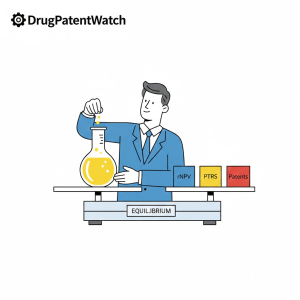
The industry operates where massive financial investment meets groundbreaking scientific discovery.4 Traditional Discounted Cash Flow (DCF) models often fail in this environment. They attempt to capture risk through the discount rate alone, often using “hurdle rates” of 40% to 60% for early-stage startups to reflect the high probability of failure.5 This approach is mathematically flawed. It conflates the continuous risk of holding an asset—the time value of money and market correlation—with the discrete, binary risk of clinical trial failure.5 To reach an accurate valuation, the industry utilizes the Risk-Adjusted Net Present Value (rNPV) framework. This method decouples technical risk from financial risk by adjusting each year’s cash flow by the cumulative probability of success.6
The Mechanics of Risk-Adjusted Net Present Value
The rNPV model is the industry standard because it acknowledges that costs are incurred sequentially and revenue is contingent on passing specific regulatory gates.5 In a standard rNPV calculation, the probability of technical and regulatory success (PTRS) is applied directly to the projected cash flows. This allows for a more reasonable discount rate—typically between 10% and 13%—which reflects the company’s weighted average cost of capital (WACC) rather than a speculative risk premium.6
Decoupling Technical Failure from Financial Discounting
The choice of discount rate acts as the gravity in the valuation model. The higher the rate, the harder it pulls down the value of distant cash flows.5 In biotech, where profits may be 10 years away, sensitivity to this input is extreme. If a drug is at the start of Phase I, the costs of that phase are weighted at 100% because they are near-term and certain. However, the projected revenue in year ten is weighted by the cumulative probability that the drug survives Phase I, Phase II, Phase III, and the New Drug Application (NDA) review.6
The rNPV equation integrates the probability of reaching each milestone into the standard present value calculation. The general representation is:
Where $CF_t$ is the net cash flow in period $t$, $P(Success_t)$ is the cumulative probability that the project remains active in period $t$, and $r$ is the discount rate.5 This structure ensures that distant, high-value cash flows are heavily penalized not just by time, but by the compounding risk of failure at each preceding trial phase.10
Setting the Base Case: PTRS and Attrition Rates
The investment phase of the model must account for the actual costs of clinical trials. These are not static. For a drug starting Phase I, the rNPV of R&D costs is the sum of the present value of each phase’s cost, weighted by the probability that the program actually reaches that phase.9
Development Phase
Success Probability
Probability of Occurrence
Inflation-Adjusted Cost (2023)
Time to Next Phase (Years)
Phase I
59.52%
100.0%
$38 Million
2
Phase II
35.52%
59.5%
$99 Million
3
Phase III
61.95%
21.1%
$440 Million
3
NDA Submission
90.35%
13.1%
$2 Million
2
Overall Approval
11.83%
—
—
~10 Years Total
9
The Phase II Graveyard and Signaling
Phase II is the most critical value inflection point in the drug development lifecycle.3 It is often referred to as the “graveyard” because it is where a drug must first demonstrate efficacy in humans. A successful Phase II readout removes the largest block of uncertainty, leading to an average valuation uplift of 12%.3 Conversely, negative news in Phase II is catastrophic, destroying an average of 16% of company value, as it signals that the underlying biology may be flawed.3
Mastering the Probability Benchmarks
The integrity of an rNPV model rests on the accuracy of its Probability of Success (PoS) assumptions.5 These cannot be arbitrary. They must be grounded in empirical data stratified by therapeutic area, as risks vary wildly between indications. Success rates are an “information quality score” rather than a measure of team talent.12
Therapeutic Area Variance in Likelihood of Approval
According to 2025 analysis, the overall likelihood of approval (LOA) for a drug entering Phase I is approximately 11% to 14%.3 However, this aggregate figure masks severe disparities. Oncology remains the most competitive yet one of the riskiest sectors, with success rates as low as 3.4% to 5.3% for certain solid tumors.13 Conversely, vaccines and infectious disease treatments often see higher LOA due to clearer immune correlates and direct virologic endpoints.12
Therapeutic Area
Typical Overall LOA
Primary Bottleneck Phase
Key 2025 Success Driver
Oncology (Solid Tumors)
5.3%
Phase II
Biomarker-enriched cohorts
Oncology (Hematologic)
Higher (8-10%)
Phase II/III
MRD strategy alignment
CNS (Alzheimer’s)
Low (<5%)
Phase II and III
Biomarker-confirmed populations
Cardiovascular
Moderate (8-9%)
Phase III
Hard endpoint adjudication
Rare Disease
Above Average
Phase III
Natural history integration
Cell & Gene Therapy
High Upside
Phase I/II
CMC and manufacturing readiness
12
Oncology: High Competition, Low LOA
Oncology drug development encounters considerable challenges due to positive Phase I trials rarely leading to regulatory approvals and the extremely competitive market.13 Failure often stems from Phase II signal inflation, shifting standards of care, and biomarker drift.12 If a drug shows a 20% response rate in a small study, but the standard of care suddenly improves with a new combination therapy, that 20% becomes a failure rather than a success.
Rare Disease and Orphan Status Advantages
Assets with orphan status command better pricing power, regulatory assistance, and extended exclusivity, which significantly impacts the valuation.8 Rare disease programs often have higher success rates because they target well-defined genetic drivers. The FDA’s commitment to these areas is evident; therapies with orphan drug designations accounted for over 50% of novel drug approvals in 2024.16
The Strategic Role of Intellectual Property
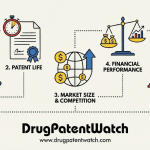
A pharmaceutical product is essentially a bundle of legal rights. Without patent protection, a drug’s value drops to the marginal cost of manufacturing, as generic competitors enter the market and capture 80% to 90% of the volume within months.17 Therefore, understanding the patent portfolio is not just a legal task; it is the cornerstone of competitive advantage.17
“The patent isn’t just a legal shield; it’s a financial instrument that defines the duration, magnitude, and probability of future cash flows. And in the world of finance, cash flow is king.” 17
Turning Patent Data into Revenue Projections with DrugPatentWatch
Business leaders use DrugPatentWatch to decipher and translate drug patent data into rigorous financial valuation.17DrugPatentWatch provides curated and calculated patent expiry dates that already account for extensions such as Patent Term Extension (PTE).17 For a blockbuster drug generating $2 billion annually, a one-year extension on its core patent is a $2 billion value driver. Calculating the correct PTE is a non-negotiable step in any pharma valuation.17
The Layered Defense: Primary vs. Secondary Patents
A sophisticated company does not rely on a single patent. It builds a layered defense designed to protect an invention from every conceivable angle throughout its commercial life.19
Composition of Matter (CoM) Patents: These are the “crown jewels,” covering the active pharmaceutical ingredient (API) itself.4 They grant exclusive rights to the chemical compound and are the hardest for competitors to challenge.20
Formulation Patents: These protect unique combinations of ingredients, delivery mechanisms, or packaging.4 If a drug can be delivered via a once-a-week patch instead of a daily pill, the formulation patent can extend the period of high-margin revenue.4
Method-of-Use Patents: These safeguard a new therapeutic use for an existing drug.19 For valuation, these create “stepped” revenue projections. While the original indication’s revenue might fall off a cliff, revenue from a later, protected indication can continue.17
Method-of-Use and Formulation Extension Strategies
These “evergreening” techniques are fundamental to strategic lifecycle management. They enable prolonged market exclusivity beyond the initial 20-year term, which is significantly eroded by the lengthy drug development process.4 The “effective patent life” for market exclusivity typically averages 12 to 14 years due to the extensive time consumed by clinical trials.4
Valuation of Platform-Based Companies
A major debate in biotech valuation is the “Platform vs. Product” model. A platform company possesses a core technology—such as an mRNA delivery system or a novel antibody discovery engine—designed to generate multiple assets.21 Platform technologies are fundamentally reshaping the industry, offering potential for innovation across multiple therapeutic areas.22
The VISTA Framework: Strategic, Technical, Adaptive
Traditional valuation methods, which rely on linear, single-asset evaluations, struggle to recognize the strategic advantages platforms offer.22 The VISTA framework defines key value drivers across three domains:
Strategic: Platform companies secured significantly more deals and higher total potential deal value. They generated an average of $748 million in potential deal value, more than five times the average for non-platform firms.21
Technical: The ability to reuse data and processes across various products improves efficiency.22
Adaptive: The flexibility to pivot following a lead asset failure.22
Survival Rates and Multiple Shots on Goal
Data from 2025 shows a stark contrast in resilience. When a non-platform company’s lead program fails, 95% of those firms become defunct.21 In contrast, platform companies demonstrate significantly higher resilience, with only 65% becoming defunct after a lead asset failure.21 Platform firms can shift focus to a backup asset using the same core technology. For example, Kite Pharma transitioned from its original therapeutic vaccine platform to an cell therapy platform after a Phase I failure, eventually yielding the approved therapies Yescarta and Tecartus.21
Licensing and Deal Structures in 2024-2025
While intrinsic valuation provides a theoretical floor, market multiples and precedent transactions provide the reality check. In 2024, biopharma companies invested 33% more in licensing deals than in 2023.23
Upfronts, Milestones, and Royalty Medians
Licensing deal structures have evolved into complex risk-sharing arrangements. Upfront payments for Phase II assets saw an explosive increase between 2022 and 2024, reflecting fierce competition for assets that have cleared the graveyard phase.23
Metric
2024-2025 Benchmark
Trend/Observation
Upfront as % of Total Deal
~7%
Stabilized after years of downward pressure 24
Median EV/Revenue Multiple
6.2x
Typically between 5.5x and 7x for biotech 26
Average Upfront for Phase II
Hundreds of Millions
Jumped over 460% in two years 23
University Royalty Rate
~3%
Median for pharma-pharma deals is ~8% 23
23
The Move Toward Option-Based Partnerships
Rather than full acquisitions, companies are increasingly using option-based deals. For example, AbbVie secured an option to license Simcere Pharmaceutical’s blood-cancer candidate for up to $1.06 billion.23 Such staged payments help bridge valuation gaps; the licensee pays more only as regulatory risk declines.23 Milestone payments are divided into development milestones (e.g., Phase III start) and commercial milestones (e.g., blockbuster thresholds of $1 billion in sales).23
Regulatory Velocity and FDA Expedited Pathways
The FDA has introduced several programs to facilitate the development and review of therapeutic agents for serious conditions.28 For an investor, these pathways are significant value drivers because they shorten the time to market, thereby increasing the present value of future cash flows.29
ROI Analysis of Breakthrough and Fast Track Designations
Receiving an expedited designation is not just a badge of honor; it has a measurable impact on the rNPV. Priority Review, for instance, reduces the application review time from 10 months to 6 months.30
While expedited pathways speed up the launch, they can complicate market access. Payers are increasingly cautious about drugs approved via the “Accelerated Approval” pathway, which allows for approval based on surrogate endpoints rather than clinical outcomes.31 If a company enters the market with a high price tag but “thin” data, insurers may restrict coverage until confirmatory trials are completed.32 This can lead to slow uptake and coverage restrictions that have lasting consequences for the drug’s success.32
The Psychology of the Valuer: Behavioral Hazards
Even the most rigorous rNPV model is susceptible to the mindset of the person creating it. Estimates are created in the mind, with all the beliefs and expectations of the valuer.33 In biotech, where data is often ambiguous, analysts frequently fall into psychological traps.
Anchoring, Narrative Bias, and Herding Behavior
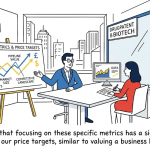
Valuation is often a combination of technique and humanity.33 Analysts frequently anchor their valuation on a specific “reference” number—such as a competitor’s target price—and then model the rest around that value.33 This is compounded by the “narrative bias,” where a compelling story about a scientific breakthrough guides the choice of parameters and the interpretation of data.33
Furthermore, “herding behavior” can lead to initial mispricing and subsequent market corrections as investors follow sentiment rather than hard data.34 The “pro-innovation bias” often leads to excessive optimism and value placed on a particular innovation without considering its weaknesses.35
Refined Cash Flow Estimation
To turn patent data into a competitive advantage, the financial model must be built on fundamentals, not proxies. Many professional valuations fail due to basic accounting errors that overlook the idiosyncratic nature of pharma cash flows.
Gross-to-Net Attrition and PBM Rebates
A common mistake is assuming that “Peak Sales” translates directly into company revenue. In the U.S. market, the difference between Gross Sales and Net Sales is massive. Valuations must incorporate “attrition in the top line”—provisions for rebates and discounts to Pharmacy Benefit Managers (PBMs).8 Not all estimated revenue goes to the company; valuations must account for these discounts to reach an accurate “accruable top-line”.8
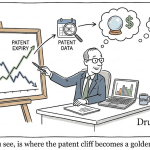
Terminal Value and the Patent Cliff Reality
The terminal value often represents 60% to 80% of a company’s total enterprise value.5 In most industries, this is calculated using a perpetuity growth formula. In pharma, the terminal value must be adjusted to reflect the business reality of the patent cliff.8 Unlike traditional small molecules, modern complex biopharma assets may not experience a steep 90% revenue decline upon loss of exclusivity (LOE) if biosimilar competition is limited.8 However, the terminal value must still be adjusted downward to reflect the entry of generic competitors.17
Conclusions: Turning Data into Advantage
Valuing a pharmaceutical or biotech company requires a synthesis of clinical risk, legal strategy, and financial discipline. The transition from a reactive posture to a proactive one involves three key actions. First, moving beyond the standard DCF to a risk-adjusted rNPV model is non-negotiable. This allows for the proper separation of technical failure from the time value of money, providing a defensible valuation during licensing negotiations.
Second, intellectual property must be treated as a dynamic asset. Using tools like DrugPatentWatch to monitor patent term extensions and competitive white space allows companies to optimize their lifecycle management and protect their revenue streams. Finally, stakeholders must account for the platform advantage and the regulatory velocity provided by expedited pathways. Platform companies offer higher survival rates and better licensing prospects, while expedited FDA pathways can significantly improve ROI by accelerating market entry. By combining these hard data points with an awareness of cognitive biases, professionals can navigate this sector with precision and authority.
Key Takeaways
rNPV is the gold standard for development-stage assets because it decouples binary technical risk (trial failure) from financial risk (discount rate).5
Oncology is the riskiest sector, with overall success rates as low as 5.3%, while rare disease programs often enjoy higher approval rates due to orphan drug advantages.12
Phase II is the graveyard phase; success here leads to a 12% valuation uplift, while failure destroys an average of 16% of enterprise value.3
Intellectual property defines the revenue timeline; tools like DrugPatentWatch are essential for calculating Patent Term Extensions and identifying competitive white space.17
Platform companies have a 35% survival rate after lead asset failure, compared to only 5% for single-asset companies, providing “multiple shots on goal”.21
Expedited FDA pathways save time and money, with Priority Review saving an average of 9.2 months in the regulatory review cycle.30
Cognitive biases like anchoring and narrative bias frequently lead to biotech mispricing, requiring analysts to verify assumptions against market data.33
FAQ
What is the difference between NPV and rNPV in pharma valuation?
NPV accounts for risk primarily through a significantly higher discount rate (often 40% or more). rNPV uses a smaller discount rate (10-13%) to cover the time value of money and multiplies each cash flow by the probability of the project reaching that specific stage of development.6
How does DrugPatentWatch assist in business development?
DrugPatentWatch provides curated patent expiry dates that account for complex extensions. This allows business development teams to identify “patent cliffs” for competitors and model the exact revenue timeline for their own assets.17
Why are platform companies more resilient than single-asset biotechs?
Platform companies possess a core technology that can be reused for multiple assets. If their lead program fails, 35% of platform firms survive to develop a backup asset, whereas 95% of single-asset companies become defunct.21
How much does an expedited FDA designation increase a company’s value?
It increases value by shortening the time to market. For example, Priority Review saves a mean of 9.2 months of review time. This brings revenue forward, significantly increasing the present value of the asset.30
What are “gross-to-net” adjustments in revenue modeling?
Gross-to-net adjustments account for the difference between the list price of a drug and the actual revenue a company collects after paying rebates to PBMs and mandatory government discounts. Failing to include these leads to significant overvaluation.8