In the high-stakes world of pharmaceutical finance and healthcare planning, the ability to accurately forecast future drug spending is not merely a competitive advantage; it is the bedrock of strategic survival. For payers and pharmacy benefit managers (PBMs), an accurate forecast dictates formulary design, premium calculations, and budgetary allocations that run into the tens of billions of dollars. For generic and biosimilar manufacturers, it illuminates market entry opportunities and informs multi-million-dollar portfolio decisions. For innovator companies, it is the lens through which they assess their own vulnerabilities and anticipate the competitive onslaught. Yet, for all its importance, traditional drug spend forecasting remains a notoriously imprecise science, often plagued by a critical, multi-billion-dollar blind spot.
For years, the industry has relied on a familiar toolkit of forecasting methodologies. There are the “top-down” approaches, which extrapolate from historical sales data and broad market trends, essentially assuming the future will look like a slightly modified version of the past.1 Then there are the “bottom-up” or epidemiology-based models, which attempt to build a forecast from the ground up by quantifying the patient population, disease prevalence, diagnosis rates, and treatment patterns.1 While intellectually rigorous, these models are often labyrinthine in their complexity, with each new layer of assumption potentially introducing another vector for error.1 More advanced techniques like Monte Carlo simulations can model a range of outcomes but are still fundamentally dependent on the quality of their input assumptions.6
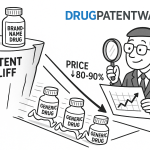
The core failing of these conventional methods is not in their mathematical execution, but in their conceptual foundation. They are overwhelmingly retrospective, analyzing what has already happened to predict what will happen next. This approach works reasonably well in stable, linear environments. But the pharmaceutical market is anything but stable. Its value is not governed by smooth trend lines but by a series of legally mandated, date-certain market shocks. The most significant of these shocks—the event that can erase 80-90% of a blockbuster drug’s revenue in a matter of months—is the Loss of Exclusivity (LOE).7
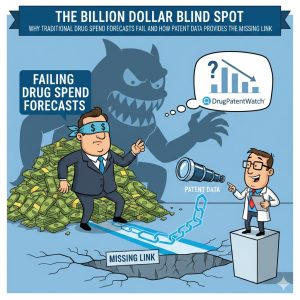
Traditional models often treat this cataclysmic event as a simple, single-date input, a switch to be flipped in a spreadsheet. This gross oversimplification is the billion-dollar blind spot. The LOE is not a single event but the culmination of a complex, multi-year chess match involving an intricate web of patents, regulatory exclusivities, and high-stakes litigation. To ignore this complexity is to navigate a minefield with a map that simply says, “Danger Ahead.”
This report will argue and demonstrate that drug patent expiry data—and the broader ecosystem of intellectual property intelligence that surrounds it—is not just another variable to be plugged into a forecast. It is the single most critical, forward-looking indicator available. It is the architectural blueprint of the future competitive landscape. By learning to read this blueprint, stakeholders can move beyond the flawed art of extrapolation and into the rigorous science of strategic foresight, building three-year drug spend forecasts with a level of accuracy and confidence that was previously unattainable. We will deconstruct the engines of market exclusivity, analyze the anatomy of the “patent cliff” through real-world case studies, and provide a step-by-step framework for transforming raw patent data into a powerful, predictive, and profitable forecasting model.
The Flawed Logic of Looking Backward
The fundamental reason traditional forecasting models so often miss the mark is that they are built on a logical fallacy: using the past to predict a future that is legally structured to be discontinuous from it. The revenue trajectory of a branded drug during its period of market exclusivity is governed by one set of rules—monopoly pricing, marketing muscle, and clinical differentiation. The moment that exclusivity is lost, an entirely new set of rules takes over—intense price competition, commoditization, and rapid market share erosion.
Consider the reliance on historical sales trends, a common “top-down” method.2 An analyst might look at the last five years of a blockbuster drug’s sales, see a steady 8% annual growth, and project that trend forward. This model works perfectly until the day it catastrophically fails. The patent cliff is not a gradual slowdown; it is a structural break in the data series that renders all prior trends irrelevant. It’s akin to forecasting the flow of a river by meticulously measuring its currents for years, all while ignoring the public announcement that a massive dam is scheduled for completion three years downstream. On the day the dam’s gates close, your historical data becomes worthless. Patent expiry dates are the publicly announced completion dates for these market-altering dams.
Similarly, “bottom-up” patient-based models, for all their detail, often fail to adequately capture the dynamics of this transition.1 An epidemiologist can perfectly model the number of patients who will need a certain therapy, but that model says nothing about whether they will receive a $3,000-a-month branded product or a $300-a-month generic equivalent. The variable that determines this tenfold difference in spend is not the disease, but the status of the drug’s intellectual property.
This problem has been magnified as the pharmaceutical market itself has grown more complex. The forecasting challenges of the early 2000s, dominated by small-molecule drugs with relatively straightforward patent estates, are dwarfed by today’s environment.5 We now contend with large-molecule biologics that face a different kind of competition from biosimilars 10; innovator strategies that involve building “patent thickets” with hundreds of interlocking patents to deliberately obscure the true LOE date 10; and sweeping regulatory changes like the Inflation Reduction Act (IRA), which fundamentally alters the value and duration of a drug’s peak earning years.10
The simplistic, often Excel-based, models of the past are simply not equipped to handle this multi-variable complexity.5 They lack the inputs to model the different price erosion curves of a generic versus a biosimilar. They cannot risk-weight the potential outcomes of a patent lawsuit. They cannot adjust the terminal value of a drug’s revenue stream based on the threat of government price negotiations. As the strategic and regulatory landscape has become more sophisticated, the need for a more intelligent, patent-centric forecasting model has evolved from a “nice-to-have” analytical tool into a core strategic necessity.
Section 1: Deconstructing Monopoly – The Twin Engines of Market Exclusivity
To build an accurate forecast, one must first understand the architecture of the market itself. In the pharmaceutical universe, a branded drug’s commercial value is a direct function of its monopoly. This monopoly, however, is not a single, monolithic entity. It is a powerful hybrid, created by two distinct but overlapping legal frameworks that work in concert to protect a drug from competition. Think of them as the twin engines of market exclusivity: the first is Patent Protection, a property right granted by the U.S. Patent and Trademark Office (USPTO), and the second is Regulatory Exclusivity, a marketing right granted by the Food and Drug Administration (FDA). Confusing the two—or worse, assuming they are the same—is the single most common and costly error in pharmaceutical forecasting.
The First Engine: Patent Protection – The Right to Exclude
At its most fundamental level, a patent is a property right.14 It is a grant from the government to an inventor “to exclude others from making, using, offering for sale, or selling the invention” for a limited time.14 In exchange for this temporary monopoly, the inventor must publicly disclose the invention, adding to the collective knowledge of society. For pharmaceuticals, this system provides the essential incentive for companies to risk the billions of dollars and decade-plus timelines required for drug development.15 The statutory term for a new U.S. patent is 20 years from the date the application was filed.14 This 20-year period, however, is just the beginning of the story.
Composition of Matter Patents: The Crown Jewels
The most valuable and formidable patent in a pharmaceutical company’s arsenal is the “composition of matter” patent. This patent covers the active pharmaceutical ingredient (API) itself—the core molecule that produces the therapeutic effect.15 It is the crown jewel of the patent portfolio because it is the most difficult for a competitor to design around. To create a non-infringing alternative would essentially require inventing a completely new drug. The expiration date of this core patent is often the most-watched date on the calendar, as it typically signals the first major opportunity for generic competition.
Method of Use, Formulation, and Process Patents: The Defensive Moat
Savvy innovator companies know that relying on a single patent is a fragile strategy. Instead, they construct a multi-layered defense around their blockbuster products using a variety of secondary patents. This strategy, often called “lifecycle management” or “evergreening,” is designed to extend the drug’s monopoly far beyond the expiration of the original composition of matter patent.15 The key tools in this playbook include:
Method of Use Patents: These patents don’t cover the drug itself, but a specific way of using it to treat a particular disease or condition.15 For example, a drug initially approved for rheumatoid arthritis might later be found effective for psoriasis. The company can then obtain a new patent covering the use of that drug for treating psoriasis, creating a new barrier to entry for a generic that wants to be labeled for that specific use.
Formulation Patents: These protect unique formulations of the drug, such as an extended-release tablet, a new injectable suspension, or a specific combination with another active ingredient.16 A generic company might be free to copy the original API after the composition patent expires, but they could still be blocked from marketing a more convenient once-daily version protected by a later-expiring formulation patent.
Process Patents: These cover novel methods of manufacturing the drug.18 While the FDA generally does not list these in its Orange Book, they can still be asserted in court to block a generic competitor who uses the same proprietary manufacturing technique.
When deployed together, these secondary patents create what is known as a “patent thicket”—a dense, overlapping web of intellectual property so complex and formidable that it becomes economically and logistically prohibitive for a competitor to challenge.10 For a forecaster, this means that simply tracking the expiry of the primary patent is wholly insufficient. One must analyze the entire portfolio to understand the true timeline of protection.
The Critical Distinction: Statutory Term vs. Effective Patent Life
Here we arrive at a crucial concept that trips up many analysts: the 20-year statutory patent term is a mirage. A pharmaceutical company must file for patent protection very early in the development process, often long before the drug has even been tested in humans, in order to secure investment and establish a priority date.15 What follows is a long and arduous journey of preclinical and clinical trials, followed by a rigorous regulatory review by the FDA. This entire process can easily consume 10 to 15 years of the 20-year patent term before the drug generates a single dollar of revenue.15
The result is that the effective patent life—the actual period a drug is on the market with patent protection and no generic competition—is consistently and significantly shorter than the nominal 20 years. The average effective exclusivity period is typically cited as being between 7 and 12 years.8
Recognizing this imbalance, the 1984 Hatch-Waxman Act created a mechanism called Patent Term Extension (PTE) to restore some of this lost time.22 Innovator companies can apply to have the term of one patent extended to compensate for delays during the FDA’s regulatory review. However, this extension is subject to strict limits: it cannot exceed five years, and the total remaining patent term after the extension cannot be more than 14 years from the drug’s approval date.24 PTE is a vital component of the forecasting equation, as it can add up to five high-value years to a drug’s monopoly period.
The Second Engine: Regulatory Exclusivity – The Right to Be Unchallenged
While patents are granted by the USPTO, regulatory exclusivity is a completely separate form of protection granted by the FDA upon a drug’s approval.17 Exclusivity does not prevent a competitor from getting a patent on their own similar drug; rather, it prevents the FDA from approving a competing generic or biosimilar application for a specified period,
regardless of the patent status.27 This is a critical distinction. A drug’s core patent could be invalidated in court, but if it still has a period of regulatory exclusivity remaining, the market remains sealed.
These exclusivities were designed by Congress to promote a balance between innovation and competition, providing incentives for companies to pursue challenging R&D projects.17 For forecasting purposes, several types are paramount:
New Chemical Entity (NCE) Exclusivity: This is one of the most common and important exclusivities. It provides a 5-year period of market protection for a drug containing an active ingredient (moiety) that has never been approved by the FDA before.14 Critically, a generic company can submit its application after 4 years (a provision that often triggers patent litigation), but the FDA cannot grant final approval until the 5 years are up.
Orphan Drug Exclusivity (ODE): To incentivize the development of treatments for rare diseases (affecting fewer than 200,000 people in the U.S.), Congress created a powerful 7-year period of market exclusivity for designated “orphan” drugs.14
New Clinical Investigation Exclusivity: This 3-year exclusivity is granted for significant “changes” to a previously approved drug, such as a new indication, a new dosage form, or a switch from prescription to over-the-counter status, provided that new clinical studies were essential for the approval.12 This is a key tool for evergreening.
Pediatric Exclusivity (PED): To encourage drug testing in children, the FDA offers a 6-month extension of exclusivity. This is uniquely powerful because it attaches to all existing patents and regulatory exclusivities for that drug’s active ingredient.14 A 6-month extension on a multi-billion-dollar drug is an enormous financial incentive.
Biologics Exclusivity: Under the Biologics Price Competition and Innovation Act (BPCIA), new biologic drugs are granted a robust 12 years of data exclusivity from the date of their first licensure, during which the FDA cannot approve a biosimilar application.15
180-Day Generic Drug Exclusivity: As an incentive for generics to challenge weak patents, the Hatch-Waxman Act grants a 180-day period of market exclusivity to the “first-to-file” generic applicant that successfully challenges a brand’s patent.14 During this six-month period, they are the only generic on the market, creating a highly profitable duopoly with the brand.
The true Loss of Exclusivity (LOE) date, the single most important variable in any drug spend forecast, is therefore not simply a patent expiration date. It is the final expiration date of the last relevant patent or the last relevant regulatory exclusivity, whichever comes later. An analyst who sees a drug’s main patent expiring in June 2026 and models generic entry on that date may be completely wrong. If that same drug has Orphan Drug Exclusivity running until December 2027, the FDA is legally barred from approving a generic until that later date. If the company also earned pediatric exclusivity, that date gets pushed out another six months to June 2028. The initial forecast, based only on the patent, would be off by two full years—a catastrophic error for a blockbuster drug. The regulatory framework can, and often does, create a final barrier that supersedes the patent system. Any credible model must solve for this final, controlling date.
Furthermore, it is a mistake to view secondary patents and minor exclusivities as mere legal footnotes. They are strategic financial instruments. A 3-year exclusivity for a new indication, or a new formulation patent that extends monopoly by two years, might seem insignificant compared to the drug’s entire lifecycle. However, these extensions occur at the tail end of the lifecycle, when the drug is often at its peak annual sales. A three-year extension on a drug generating $5 billion a year is not a minor detail; it is a $15 billion strategic victory. These “minor” extensions are the primary drivers of revenue variance in the outer years of a forecast, and a model that ignores them is a model destined for failure. The legal strategy is the financial strategy.
Feature
Patent Protection
Regulatory Exclusivity
Granting Body
U.S. Patent and Trademark Office (USPTO)
Food and Drug Administration (FDA)
Basis for Grant
A novel, non-obvious, and useful invention
Meeting specific statutory criteria upon drug approval
Duration
20 years from application filing date (can be extended by PTE)
Fixed term from date of FDA approval (e.g., 5, 7, 12 years)
Scope of Protection
Right to exclude all others from making, using, or selling the invention
Prohibits the FDA from approving a competing generic/biosimilar application
Strategic Implication
Forms the foundational, long-term basis of the monopoly
Acts as a separate, often overlapping, barrier that can extend the monopoly period even if patents expire or are invalidated
Section 2: The Patent Cliff – Anatomy of a Market Disruption
If patents and exclusivities are the engines that power a drug’s revenue growth, the “patent cliff” is the sudden, catastrophic engine failure that sends it into a nosedive. The term, now firmly embedded in the industry lexicon, vividly describes the phenomenon of an abrupt, steep, and often permanent decline in a drug’s sales that occurs upon its Loss of Exclusivity.7 This is not a gentle, managed decline; it is a market-shattering event where a blockbuster drug can see its revenues plummet by as much as 80-90% within the first year of generic competition.7
The scale of this recurring disruption is immense. Analysts project that the period between now and 2030 will witness one of the most significant patent cliffs in history, putting an estimated $200 billion to $300 billion in annual pharmaceutical revenue at risk globally.8 This wave will impact approximately 190 drugs, including nearly 70 blockbusters, fundamentally reshaping therapeutic landscapes and the balance sheets of the world’s largest pharmaceutical companies.33 To understand how to forecast this phenomenon, we must first dissect its anatomy through the lens of two landmark case studies that define its past and its present.
“The major patent cliff pharma companies have been dreading is looming – threatening to put over $200 billion in annual revenue at risk through 2030. Seen as a seismic shift in pharma revenue streams, the impact of patent cliff transitions is a recurring challenge and an industry concern.” 10
Case Study 1 – The Archetype: Pfizer’s Lipitor
No drug better exemplifies the classic patent cliff than Pfizer’s Lipitor (atorvastatin). For years, it was the undisputed king of the pharmaceutical world, the best-selling drug in history, prescribed to lower cholesterol in millions of patients. At its zenith in 2006, Lipitor generated a staggering $13 billion in annual sales for Pfizer, accounting for a massive portion of the company’s total revenue.35 But this golden era had a firm expiration date.
The moment of truth arrived on November 30, 2011, when Lipitor’s core patent protection expired in the United States.36 The impact was immediate and brutal. The first generic competitor, Ranbaxy Laboratories, launched its version of atorvastatin, followed shortly by others. The market dynamics shifted with breathtaking speed. According to one analysis, generic versions captured an astounding 88% of Lipitor’s massive market within just 120 days of its patent expiry.36
The financial fallout for Pfizer was severe. The loss of exclusivity for Lipitor, combined with two other major products, contributed to a 42% drop in the company’s revenue between 2010 and 2012.36 The Lipitor case became the archetypal story of the patent cliff, a cautionary tale whispered in boardrooms across the industry. It demonstrated the sheer velocity and totality of value destruction that can occur when a small-molecule drug with a simple patent estate goes off-patent.
However, Pfizer did not simply watch its flagship product fall. The company employed a number of defensive strategies, most notably launching its own “authorized generic” through a partnership with Watson Pharmaceuticals.36 This allowed Pfizer to compete directly with the other generics and retain a portion of the now-commoditized atorvastatin market, albeit at much lower margins. This move, while not stopping the revenue collapse, helped to manage the descent and capture some value that would have otherwise been lost.
Case Study 2 – The Modern Battlefield: AbbVie’s Humira
If Lipitor represents the classic patent cliff, AbbVie’s Humira (adalimumab) represents the modern, more complex evolution of this battle. Humira, a biologic drug used to treat a range of autoimmune diseases, succeeded Lipitor as the world’s best-selling drug, peaking at over $21 billion in global sales in 2022.13 But the story of its LOE is vastly different and far more instructive for today’s forecasters.
Humira’s primary U.S. patent, covering the antibody itself, expired in 2016.37 According to the Lipitor playbook, this should have triggered an immediate and devastating cliff. Yet, the first biosimilar competitors did not enter the U.S. market until January 2023, nearly seven years later.37 How did AbbVie achieve this remarkable extension of its monopoly? The answer lies in the strategic mastery of the “patent thicket.”
Instead of relying on a single patent, AbbVie constructed a nearly impenetrable fortress of intellectual property around Humira. The company filed a staggering 247 patent applications in the U.S. alone, with an incredible 89% of them being filed after Humira was already approved and on the market.38 By 2018, more than a decade after the drug’s launch, AbbVie was still filing new patent applications at a furious pace.38 This thicket covered not just the molecule, but dozens of secondary aspects: specific formulations, methods of manufacturing, and various methods of use for different indications.
This legal minefield made it exceedingly difficult and risky for biosimilar manufacturers to launch. Any potential entrant faced the prospect of fighting dozens of patent infringement lawsuits simultaneously, a financially daunting proposition. Through a series of settlements, AbbVie was able to orchestrate a staggered and delayed entry for its competitors, preserving its U.S. monopoly for years after its core patent fell.
When competition finally did arrive in 2023, the impact was still severe. Humira’s U.S. sales, which were $18.6 billion in 2022, began a steady decline.10 However, the erosion has been more gradual than the freefall experienced by Lipitor. This reflects a fundamental difference in market dynamics. The competition comes from biosimilars, not generics, which are more complex and costly to produce and do not benefit from automatic substitution at the pharmacy level, leading to slower market uptake.10
Scheduled Wealth Transfer, Not a Random Event
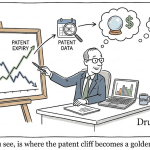
The very term “patent cliff” is, for the prepared organization, a misnomer. A cliff implies a sudden, unforeseen drop. But patent expiration dates are public information, often known years, if not decades, in advance.21 They are not unexpected crises but scheduled, recurring milestones in a product’s lifecycle. The “cliff” metaphor accurately describes the financial outcome for companies that fail to plan, but it misrepresents the strategic reality. A company that “falls” off the cliff has not been the victim of a sudden accident; it has been the victim of a failure in its own long-range strategic foresight.34
This reframes the entire forecasting problem. The challenge is not to predict an unknown risk but to strategically position for a known future event. For a generic manufacturer, a patent expiration is a scheduled business opportunity. For a healthcare payer, it is a scheduled cost-saving event. For the innovator, it is a scheduled revenue loss that must be actively managed. The event itself is predictable; the outcome is a function of preparation. It is a scheduled transfer of wealth from the innovator company to generic/biosimilar manufacturers, payers, and ultimately, patients.
The Evolving Cliff: From a Sheer Drop to a Treacherous Slope
The contrast between the Lipitor and Humira case studies reveals a critical evolution in the character of the patent cliff. This evolution is essential to understand for accurate forecasting, as applying the wrong model to a drug can lead to massive errors.
The small-molecule “cliff”, exemplified by Lipitor, is a rapid and near-total revenue collapse. This is driven by two key factors. First, the relative simplicity of manufacturing small-molecule drugs allows for many competitors to enter the market quickly, driving prices down aggressively.11 Second, and most importantly, generic small molecules are deemed bioequivalent and are subject to automatic substitution at the pharmacy level.39 A patient goes to refill their Lipitor prescription and the pharmacist can, and often must, dispense a generic atorvastatin instead. This dynamic allows generics to capture 90% or more of the market volume in a matter of months.36
The biologics “slope”, exemplified by Humira, represents a slower, more complex, and more treacherous erosion of revenue. The competitive products are biosimilars, which are “highly similar” but not identical copies of the original biologic.11 This creates several key differences:
Higher Barriers to Entry: Manufacturing biologics is an order of magnitude more complex and expensive than for small molecules. Developing a biosimilar can cost $100 million to $250 million, compared to just $1 million to $4 million for a typical generic, which limits the number of competitors.11
Lack of Automatic Substitution: Biosimilars are not always deemed “interchangeable” with the reference biologic, meaning a pharmacist cannot automatically substitute them without a new prescription from the doctor.11 This creates a significant barrier to uptake.
Physician and Payer Adoption: Convincing physicians to switch patients to a biosimilar requires a dedicated marketing and education effort, slowing the conversion process.11
As a result, the revenue decline for a biologic is more of a steep slope than a vertical cliff.10 While still substantial, the erosion is more gradual. A forecasting model must therefore be built on two distinct sets of assumptions. Applying a Lipitor-style erosion curve to a future biologic blockbuster like Merck’s Keytruda would dramatically overestimate the speed of its revenue loss and lead to flawed strategic decisions for Merck, its competitors, and the payers who cover it.
Section 3: The Patent-Informed Forecast – A Step-by-Step Framework
Having established the foundational concepts of market exclusivity and the patent cliff, we can now construct a practical, step-by-step framework for building a more accurate, patent-informed drug spend forecast. This process transforms forecasting from a speculative exercise into a form of competitive intelligence, grounded in the legal and regulatory realities that truly shape the market. It involves four key stages: data aggregation, forensic analysis of the patent estate, modeling the post-LOE financial shock, and quantifying the uncertainty introduced by litigation.
Step 1: Foundational Data Aggregation – Building Your Intelligence Base
The quality of any forecast is dictated by the quality of its inputs. In this new paradigm, the primary inputs are no longer just historical sales figures but a rich dataset of intellectual property and regulatory information.
Mastering the FDA Orange Book
The starting point for any analysis of a small-molecule drug in the U.S. is the FDA’s publication, “Approved Drug Products with Therapeutic Equivalence Evaluations,” universally known as the Orange Book.14 This public database is a treasure trove of information, containing listings for all approved brand-name and generic drugs, along with the patents and regulatory exclusivities that the innovator company has asserted cover its product.16
A skilled analyst can use the Orange Book’s electronic search function to query by proprietary (brand) name, active ingredient, or application number to pull up a drug’s complete profile.41 The key is to look beyond the drug’s approval date and delve into the “Patent and Exclusivity Information” section. Here, you will find a list of every relevant patent number, its expiration date (including any PTE), and a “patent use code” that provides a concise description of what the patent covers (e.g., the drug substance, a specific formulation, or a method of use).43 Similarly, all applicable regulatory exclusivities and their expiration dates are listed.43
However, the Orange Book has critical limitations. The FDA’s role in listing patents is largely ministerial; it relies on the information provided by the innovator company.45 Furthermore, by regulation, certain types of patents—such as those covering manufacturing processes, metabolites, or packaging—are not listed.42 A comprehensive analysis requires looking beyond this single source.
Leveraging Integrated Intelligence Platforms
Manually collecting data from the Orange Book and then cross-referencing it with documents from the USPTO, federal court dockets for litigation, and international patent offices is a tremendously laborious and time-consuming task. This is where integrated patent intelligence platforms become indispensable tools for modern forecasting.
Services like DrugPatentWatch are designed to solve this exact problem. They aggregate these disparate, complex datasets into a single, unified, and easily searchable platform.46 With a few clicks, an analyst can access a comprehensive profile of a drug that includes not only its Orange Book-listed patents and exclusivities but also international patent filings, details of ongoing patent litigation, information on tentative generic approvals, and even data from clinical trials for new indications.47 These platforms transform the analyst’s role from that of a data-miner to a data-strategist, freeing up valuable time to focus on analysis rather than collection. They provide the holistic view necessary to see the entire “patent thicket,” not just the trees listed in the Orange Book.
Step 2: Pinpointing the True LOE – A Forensic Analysis of the Patent Thicket
With a comprehensive dataset in hand, the next step is a forensic analysis to determine the true Loss of Exclusivity date. This is not a simple matter of finding the latest date on a list. It is an investigative process aimed at identifying the final, controlling barrier to competition.
The process involves mapping every piece of intellectual property and regulatory protection onto a single timeline. This includes:
The expiration date of the core composition of matter patent.
The expiration dates of all secondary patents (formulation, method of use, etc.).
The expiration dates of all applicable regulatory exclusivities (NCE, ODE, Pediatric, etc.).
The calculated end date of any Patent Term Extensions (PTEs).
By visualizing these overlapping protections, the analyst can identify the date on which the last relevant barrier falls. As demonstrated with the Humira case, it is crucial to pay close attention to the filing and issue dates of secondary patents. A flurry of patent filings a decade after a drug’s launch is a clear strategic signal that the innovator is actively building a patent thicket to delay competition.38 The expiry dates of these late-stage patents, not the original one, will likely dictate the true LOE. This analytical step alone can often correct a forecast by several years, potentially adding or subtracting billions of dollars in projected revenue.
Step 3: Modeling the Post-LOE Shock – Price and Volume Erosion Curves
Once the most likely LOE date is established, the focus shifts to quantifying the financial impact. As discussed, this requires applying different erosion models based on whether the drug is a small molecule facing generic competition or a large-molecule biologic facing biosimilar competition.
The Generic Tsunami (Small Molecules)
The market entry of generics triggers a rapid and severe price collapse. Empirical data provides a clear and consistent picture of this erosion:
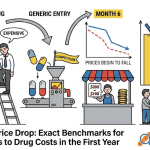
Price Erosion: The number of competitors is the key driver. With just three generic competitors, prices typically decline by about 20% relative to the brand price. In highly competitive markets with 10 or more players, prices can fall by a staggering 70-80% within three years of the first generic entry.49 More recent data for oral medicines shows an even faster decline, with prices dropping by an average of 79% within the first 12 months.51
Volume Erosion: The impact on the brand’s market share is equally dramatic. Due to automatic substitution and payer incentives, generic penetration can reach 90% or more of the total prescription volume, effectively wiping out the brand’s market share.39
A forecaster modeling a small-molecule LOE should therefore build in assumptions for a rapid price drop and a near-total loss of market volume for the brand within 12-18 months of the LOE date.
The Biosimilar Battle (Large Molecules)
The dynamics for biologics are fundamentally different, leading to a more gradual erosion curve. The model must account for the factors that slow biosimilar uptake:
Slower Price Decline: While still significant, the price reduction is less severe. The average biosimilar price is roughly 50% less than the brand biologic’s price at the time of launch.52 This less aggressive initial discount reflects the higher development costs and limited number of competitors.11
Slower Volume Erosion: Without automatic substitution, market share shifts more slowly. The brand company has more time to compete, often by offering substantial rebates to PBMs and payers to maintain formulary preference for their product.39 This can lead to a situation where the brand’s list price remains high, but its net price (after rebates) falls to compete with the biosimilar.
The forecasting model for a biologic should therefore assume a more gradual decline in the brand’s net revenue and a slower loss of market share over a multi-year period, rather than the sudden collapse seen with small molecules.
Metric
Small-Molecule Generics
Biologics/Biosimilars
Development Cost
$1 – $4 million 11
$100 – $250 million 11
Development Time
2-3 years
7-8 years 11
Interchangeability
Typically automatic at the pharmacy level
Rare; requires specific FDA designation, slowing uptake 11
Price Discount at Launch
Can be very steep, often >80% in competitive markets 33
More moderate, averaging ~50% less than brand price 52
Price at Market Maturity
Can fall to <10% of original brand price 20
Tends to stabilize at a higher price point due to fewer competitors
Speed of Brand Market Share Loss
Extremely rapid; can lose >90% within months 13
More gradual; erosion occurs over several years 10
Step 4: Quantifying Uncertainty – The Role of Patent Litigation
The LOE date identified in Step 2 is not always set in stone. It represents the baseline scenario where all patents are respected until their natural expiration. However, the system is designed to be challenged. Aggressive generic and biosimilar companies can and do sue to invalidate patents, potentially moving the LOE date forward by years. A sophisticated forecast must account for this uncertainty.
The Hatch-Waxman Dance: Paragraph IV and the 30-Month Stay
The primary legal mechanism for these challenges is the Paragraph IV certification under the Hatch-Waxman Act.23 When a generic company files its Abbreviated New Drug Application (ANDA) with the FDA, it must make a certification for each patent listed in the Orange Book for the brand drug. A Paragraph IV certification is a bold declaration: the generic company asserts that the brand’s patent is invalid, unenforceable, or will not be infringed by their proposed generic product.54
This filing is effectively the first shot in a legal war. The generic company must notify the brand manufacturer, who then has 45 days to file a patent infringement lawsuit.56 If they do, it triggers one of the most critical strategic elements in the entire process: an
automatic 30-month stay on the FDA’s ability to approve the generic drug.54 This stay provides a breathing room of two and a half years for the patent litigation to proceed. For the innovator, it’s a powerful defensive tool that guarantees a delay in competition.
Assessing Litigation Risk and the Probability of “At-Risk” Launch
This is where forecasting elevates to its most advanced level. Instead of treating the LOE date as a fixed point, the analyst must treat it as a variable with a probability distribution. This requires assessing the likely outcome of the patent litigation. While predicting a court case with certainty is impossible, an informed assessment can be made by analyzing several factors:
Patent Strength: How strong are the challenged patents? An analysis of the patent’s “prosecution history” (the back-and-forth with the USPTO during its examination) can reveal potential weaknesses. The core pillars of patentability—novelty, non-obviousness, and enablement—can be scrutinized to identify vulnerabilities.48 For example, a secondary patent on a new crystalline form might be vulnerable to an argument that it was “obvious” to a skilled chemist.
Litigation History: What is the track record of the innovator and the generic challenger in court? Some companies are known for aggressively defending their patents, while others are more prone to settle. Some generic firms have a reputation for winning complex cases. This data can be found in legal databases and integrated platforms like DrugPatentWatch.47
Venue: Litigation outcomes can vary by judicial district. Certain courts are perceived as being more favorable to patent holders than others.
By synthesizing this intelligence, the analyst can move beyond a single LOE date and create a set of weighted scenarios, much like in a Monte Carlo simulation.6 For example:
Scenario A (60% Probability): The brand company wins the lawsuit, and the patents are upheld. The LOE occurs at the natural patent expiration date.
Scenario B (30% Probability): The generic company wins. The LOE occurs at the end of the 30-month stay.
Scenario C (10% Probability): The parties settle on a negotiated entry date that falls somewhere in between.
This probabilistic approach transforms the forecast from a single, brittle number into a sophisticated risk management tool. It provides not just a single projection but a range of likely outcomes and their associated probabilities, giving decision-makers a much clearer and more realistic view of the future. The forecast is no longer a simple prediction; it is a probability distribution of potential futures, driven by the key variables of LOE timing, erosion curve profile, and litigation success.
This level of analysis also reveals how intelligence platforms are themselves a causal driver of market dynamics. In the past, the high cost and complexity of gathering patent and litigation data created an information asymmetry that heavily favored the innovator. Today, platforms like DrugPatentWatch democratize this intelligence, making it easier and faster for generic firms, payers, and investors to identify vulnerabilities and map the competitive landscape.47 This increased transparency leads to more patent challenges and more efficient market entry, which in turn can intensify competition and accelerate the very price erosion patterns we seek to model. The tools we use to observe the market are, in fact, helping to shape it.
A truly robust three-year forecast cannot be static. It must be a dynamic model that anticipates the strategic moves of market players and adapts to shifts in the external environment. The most sophisticated forecasting moves beyond simply reacting to known patent expiries and begins to “wargame” the likely defensive maneuvers of innovator companies and the impact of major regulatory changes. This proactive approach adds a final layer of realism and strategic value to the model.
Modeling “Evergreening” as a Delay Tactic
As we saw with Humira, innovator companies do not passively accept the expiration of their core patents. They actively engage in “evergreening” or “product lifecycle management” strategies designed to extend their monopoly.15 This often involves obtaining new, secondary patents on incremental innovations. Common tactics include:
New Formulations: Developing a new extended-release version, a more stable liquid formulation, or a less painful subcutaneous injection.
New Indications: Conducting clinical trials to get the drug approved for a new disease, then patenting that new method of use.
Drug-Device Combinations: Pairing an existing drug with a new, proprietary delivery device like an auto-injector or an inhaler.
From a forecasting perspective, this means that the currently known LOE date may not be the final word. For any high-value blockbuster drug, the forecast model should incorporate the potential for these lifecycle extensions. An analyst shouldn’t just ask, “When do the current patents expire?” but also, “What is the probability that the innovator will successfully file and list a new patent that pushes the LOE date out by another 2-3 years?”
This can be modeled probabilistically. Based on the company’s R&D pipeline, its history of lifecycle management, and the technical feasibility of creating improved versions, an analyst might assign, for example, a 50% probability of a 2-year exclusivity extension via a new formulation patent. This would create another branch in the scenario analysis, adding a potential “extended monopoly” outcome to the model. This accounts for the innovator’s agency in shaping their own destiny and prevents the forecast from being blindsided by a predictable strategic move.
Factoring in External Shocks: The Inflation Reduction Act (IRA)
A forecast built in a vacuum is useless. The model must also be sensitive to major external shocks, particularly sweeping policy changes. The most significant such change in recent U.S. history is the 2022 Inflation Reduction Act (IRA), which for the first time grants the federal government, through Medicare, the power to “negotiate” the prices of certain high-spend drugs.10
The key provisions for forecasters are the timelines. The IRA establishes a window of market exclusivity before a drug becomes eligible for price negotiation:
9 years from approval for small-molecule drugs.10
13 years from approval for large-molecule biologics.10
This has profound implications for forecasting drug spend. The IRA effectively creates a new, government-mandated price erosion curve that is completely independent of patent status. For a small-molecule drug, the revenue potential in years 10, 11, and 12 of its market life is now significantly lower than it was before the IRA, as it will be subject to a negotiated (i.e., lower) price from its largest customer, Medicare.
Therefore, a modern forecast model must have a new input layer. After projecting revenue based on market dynamics and patent life, it must then apply an “IRA adjustment” that reduces the projected net price in the years following negotiation eligibility. A patent that expires in year 12 is now substantially less valuable than it was pre-IRA, because the last few years of its term are no longer at a full monopoly price. Ignoring this regulatory overlay will lead to a significant overestimation of drug spend for any product likely to be targeted for negotiation.
The IRA also introduces a powerful new strategic incentive that will reshape the long-term forecasting landscape. By granting biologics a four-year longer period of protection from price negotiation (13 years vs. 9), the law creates a multi-billion-dollar financial incentive for companies to prioritize R&D investment in their biologics pipeline over their small-molecule pipeline.13 Those four extra years of peak, un-negotiated pricing are immensely valuable. The long-term consequence for forecasters is that the mix of drugs approaching LOE in the 2030s and beyond will likely be even more heavily skewed toward biologics than it is today. This means the “biosimilar slope” erosion model will become the dominant forecasting paradigm, requiring a permanent shift in baseline assumptions away from the classic “generic cliff” model.
Ultimately, both evergreening strategies and patent litigation defenses can be viewed through a single financial lens: they are tools to maximize the total area under the revenue curve before the inevitable LOE-driven collapse. Evergreening is a strategy to push the final cliff date further to the right on the time axis, widening the high-revenue plateau.15 Defensive litigation, particularly leveraging the 30-month stay, is also a tactic to push that date to the right, even if only temporarily.56 From a modeling perspective, both should be treated as “delay variables.” A sophisticated forecaster must monitor not only patent expiry dates but also the innovator’s clinical trial pipeline for next-generation products and the court dockets for litigation filings. These are the leading indicators of an innovator’s intent to actively manage and extend their revenue curve, and they must be factored into any realistic forward-looking model.
Section 5: Putting Theory into Practice – A 3-Year Forecast Case Study
To demonstrate how this patent-informed framework translates from theory into a tangible and superior forecasting tool, let’s walk through a practical case study. We will apply the four-step process to a hypothetical blockbuster drug to illustrate how each stage of analysis refines the forecast and corrects for the blind spots of traditional methods.
Selecting a Target Asset
Our target asset is “Exemplar,” a fictional but realistic small-molecule drug used to treat a chronic cardiovascular condition. Its key characteristics are:
Current Annual U.S. Sales: $4 billion
Projected Annual Growth (pre-LOE): 5%
Core Composition of Matter Patent Expiry: 3.5 years from today (e.g., June 30, 2028)
A traditional, trend-based forecast would simply project sales growing at 5% annually for the next three years, completely missing the looming LOE event that falls just outside the three-year window but whose competitive lead-up will absolutely impact it. A slightly more informed but still naive forecast would peg generic entry at June 30, 2028, and assume no impact within our 3-year horizon. Let’s see how our framework produces a much more nuanced and accurate result.
Applying the 4-Step Framework
Step 1: Foundational Data Aggregation
We begin by consulting the FDA Orange Book and an integrated intelligence platform like DrugPatentWatch for Exemplar. Our search reveals the following critical data points beyond the core patent:
Secondary Patent: A patent for an extended-release (ER) formulation of Exemplar, expiring 4.5 years from today (June 30, 2029).
Regulatory Exclusivity: A 6-month Pediatric Exclusivity (PED) was granted, which attaches to all existing patents.
Litigation Status: A major generic manufacturer filed a Paragraph IV certification against the ER formulation patent six months ago, and Exemplar’s parent company filed an infringement suit within the 45-day window, triggering the 30-month stay.
Step 2: Pinpointing the True LOE
Now, we conduct our forensic analysis to determine the baseline LOE date, assuming the innovator’s patents are upheld.
The core composition of matter patent expires in 3.5 years.
However, the later-expiring ER formulation patent provides an additional year of protection, pushing the patent barrier out to 4.5 years from now.
The 6-month pediatric exclusivity attaches to this last-to-expire patent, adding another six months.
Calculation: 4.5 years (ER Patent) + 0.5 years (PED) = 5 years.
Our analysis immediately reveals that the baseline LOE date is 5 years from today (December 31, 2029), not the 3.5 years suggested by the core patent. This single step has already corrected a 1.5-year, $6 billion forecasting error (1.5 years x $4B+ in sales).
Step 3: Modeling Erosion
Since Exemplar is a small-molecule drug, we will apply the “generic tsunami” erosion model. Upon the LOE date, we will assume a rapid erosion of the brand’s sales, projecting a 90% loss of market share within 12 months as multiple generic competitors enter the market and drive prices down aggressively.13
Step 4: Quantifying Litigation Risk
This is the most critical step for our 3-year forecast. The LOE date is not fixed at 5 years; it is now a variable subject to the outcome of the ongoing patent litigation. We must create probabilistic scenarios. Based on an analysis of the ER patent’s strength and the litigation track records of the companies involved, our legal and IP experts have assessed a 40% probability that the generic challenger will succeed in invalidating the ER patent.
This creates two primary scenarios for the LOE date:
Scenario A (60% Probability): The Innovator Wins. The ER formulation patent is upheld. The LOE date remains at our baseline of 5 years from today.
Scenario B (40% Probability): The Generic Challenger Wins. The ER patent is invalidated. The controlling intellectual property now becomes the core patent. The LOE date moves up to the expiration of that patent (3.5 years) plus the 6-month pediatric exclusivity. The new LOE date is 4 years from today (December 31, 2028).
Building the Final Forecast Model
We can now construct our 3-year drug spend forecast, moving beyond a single-point estimate to a risk-adjusted projection. The model will calculate the spend under both scenarios and then create a final forecast based on their weighted probabilities.
The table below illustrates this process. “Baseline Sales” shows the naive projection of 5% annual growth. The scenario columns calculate the spend based on the two potential LOE dates. Note that even though both LOE dates fall outside the 3-year window, the anticipation of these events affects behavior. For example, wholesalers will begin reducing their inventory of the branded product (“destocking”) in the quarters leading up to a potential generic launch, causing a dip in the innovator’s sales even before the LOE date. For simplicity in this model, we will show the impact beginning in the year of LOE.
Metric
Year 1
Year 2
Year 3
Year 4
Baseline Sales (No LOE)
$4.20B
$4.41B
$4.63B
$4.86B
—
—
—
—
—
Scenario A Spend (60% Prob – LOE at Year 5)
$4.20B
$4.41B
$4.63B
$4.86B
Scenario B Spend (40% Prob – LOE at Year 4)
$4.20B
$4.41B
$4.63B
$1.46B*
—
—
—
—
—
Final Risk-Adjusted Forecast
$4.20B
$4.41B
$4.63B
$3.50B
*Calculation for Scenario B, Year 4: Assumes LOE at the start of Year 4. Brand retains ~30% of its market value in the first year of generic competition due to some remaining brand loyalty and slower initial generic uptake before full market erosion. ($4.86B * 30% = $1.46B). This is a simplified erosion model for illustrative purposes.
Analysis of the Result:
For the immediate 3-year window, the forecast remains stable because both potential LOE dates fall outside this period. However, the true power of this model is its ability to look beyond that horizon and provide a much more realistic picture for strategic planning.
A traditional model would have told management to expect $4.86 billion in revenue in Year 4. Our patent-informed, risk-adjusted model provides a far more sobering and accurate forecast of $3.50 billion. This is calculated as: (Scenario A Spend * 60%) + (Scenario B Spend * 40%) or ($4.86B * 0.60) + ($1.46B * 0.40) = $2.92B + $0.58B = $3.50B.
This $1.36 billion difference in the Year 4 forecast is not a rounding error; it is a material event that would drastically alter financial planning, R&D investment decisions, and shareholder expectations. By quantifying the risk of patent litigation, we have transformed a misleadingly optimistic projection into a defensible, realistic financial plan. This case study demonstrates how the patent-informed framework provides not just a number, but a strategic understanding of the forces that will shape future revenue.
Conclusion: From Reactive Analysis to Proactive Advantage
The New Paradigm of Pharmaceutical Forecasting
The journey through the intricate world of patents, exclusivities, and litigation reveals a fundamental truth: accurate pharmaceutical forecasting is not about having a better crystal ball to predict the past. It is about having a better blueprint to read the future. That blueprint is written in the language of intellectual property. The expiration dates of patents and regulatory exclusivities are not merely data points; they are the scheduled, legally mandated events that define the future structure of the market.
The paradigm shift we have outlined is a move away from static, retrospective, and often misleading single-point estimates. It is a move toward a dynamic, forward-looking, and probabilistic model that recognizes market exclusivity as the central variable around which all other assumptions must revolve. By embracing this complexity—by deconstructing the patent thicket, modeling distinct erosion curves for generics and biosimilars, and quantifying the uncertainty of litigation—we replace guesswork with a rigorous, evidence-based methodology. The goal is no longer to be “less wrong” but to be strategically right by understanding the range of possible outcomes and their likelihood.
Turning Intelligence into Action
This patent-informed forecasting framework is more than an academic exercise; it is a powerful tool for creating tangible competitive advantage. When wielded effectively, it allows key stakeholders across the healthcare ecosystem to move from a reactive to a proactive stance:
For Payers and PBMs: This framework provides a high-confidence timeline for when major blockbuster drugs will face competition. This allows for more accurate budgeting, more aggressive formulary negotiations in the years leading up to LOE, and the ability to proactively design benefit plans that steer members toward lower-cost alternatives the moment they become available.
For Generic and Biosimilar Firms: It is a strategic roadmap for portfolio selection. By identifying innovator drugs with weak secondary patents or a high probability of litigation success, they can pinpoint the most lucrative targets for patent challenges. It allows them to optimize their R&D and manufacturing timelines to be first-to-market and capture the valuable 180-day exclusivity period.
For Innovator Firms: This methodology is a critical tool for self-assessment and competitive wargaming. By applying this framework to their own products, they can identify their vulnerabilities and pressure-test their lifecycle management strategies. By applying it to competitors, they can anticipate market shifts and identify opportunities for their own pipeline assets to fill the gaps left by expiring blockbusters.
For Investors and Financial Analysts: It is the key to more accurate company valuations and due diligence. An investor who understands the true, risk-adjusted LOE date for a company’s lead product has a profound informational advantage. It allows for the correct modeling of future cash flows, preventing the overvaluation of companies whose key revenue streams are more fragile than they appear.
In the end, the patent cliff is only a cliff for those who fail to see it coming. For those who use the rich, predictive power of patent data to map the terrain ahead, it is not an obstacle but a known feature of the landscape—one that can be navigated with strategy, foresight, and confidence.
Key Takeaways
Traditional Forecasts Are Flawed: Relying on historical sales trends or simple patient models is inadequate because they fail to account for the market’s most significant event: the Loss of Exclusivity (LOE), a future, date-certain structural shock.
Monopoly Has Two Engines: Market exclusivity is a combination of Patent Protection (from the USPTO) and Regulatory Exclusivity (from the FDA). The true LOE date is the later of the last-expiring patent or the last-expiring exclusivity.
The Patent Cliff Has Evolved: The market reaction to LOE differs significantly between drug types. Small molecules face a rapid “cliff” (80-90% revenue loss in ~1 year) due to generic competition, while biologics face a slower “slope” of erosion from biosimilars due to higher manufacturing complexity and lack of automatic substitution.
A 4-Step Framework is Essential: A robust forecast requires:
Data Aggregation: Using sources like the FDA Orange Book and integrated platforms like DrugPatentWatch to gather all IP data.
Pinpointing True LOE: Forensically analyzing the “patent thicket” to find the final barrier to competition.
Modeling Erosion: Applying the correct “cliff” or “slope” erosion curve based on the drug’s molecular type.
Quantifying Litigation Risk: Using Paragraph IV challenges and other litigation data to create probability-weighted scenarios for the LOE date.
Forecasts Should Be Probabilistic, Not Deterministic: The final output should not be a single number but a risk-adjusted forecast that reflects the range of possible outcomes from patent litigation and other uncertainties.
External Factors Matter: Regulatory changes like the Inflation Reduction Act (IRA) must be modeled as they create new, mandatory price erosion curves that can fundamentally alter a drug’s long-term value.
Frequently Asked Questions (FAQ)
1. How does this forecasting process differ for markets outside the U.S., such as the European Union?
The fundamental principle of using patent and exclusivity data remains the same, but the specific inputs change significantly. The EU has a different system of regulatory exclusivities, typically an “8+2+1” formula: 8 years of data exclusivity, followed by 2 years of market exclusivity, with a potential 1-year extension for a new therapeutic indication.28 Patent enforcement also differs, as patents must be litigated on a country-by-country basis or through the new Unified Patent Court (UPC). Therefore, a forecast for the EU would require mapping these different exclusivity timelines and assessing litigation risk across key national markets (like Germany, France) or within the UPC system, which has its own unique procedures and precedents.
2. What is the role of “authorized generics” and how should they be modeled in a forecast?
An authorized generic (AG) is a generic version of a drug that is marketed by or with the permission of the brand-name company itself. It is the exact same product as the brand, just sold under a generic label. Innovators, like Pfizer did with Lipitor, often launch an AG on the day of their own LOE.36 This is a defensive strategy to retain a portion of the market volume that would otherwise go to independent generic competitors. When modeling, the launch of an AG means the brand company’s revenue doesn’t fall to zero. Instead, a portion of the brand’s sales is converted into AG sales. The forecast should split the post-LOE market between the brand (which will decline rapidly), the AG (which will capture a significant share of the generic market), and independent generics. The AG’s revenue will be at a much lower generic price, but it allows the innovator to mitigate the “cliff” effect by competing in the generic space they created.
3. How can this framework be adapted to forecast the impact of new market entrants before they lose exclusivity?
This framework can be inverted to model competitive launches. Instead of forecasting a revenue decline, you forecast a revenue uptake. The process involves identifying a competitor’s drug in late-stage clinical trials and analyzing its potential patent estate and the patents of the existing drugs in that therapeutic class. By mapping the competitor’s likely patent protection and the “freedom to operate” (i.e., not infringing existing patents), you can forecast their launch date and the duration of their market exclusivity. You would then use epidemiology data and clinical trial results to model their potential market penetration and uptake curve, creating a forecast for a new revenue stream rather than the erosion of an old one.
4. What are the most common mistakes analysts make when using the FDA Orange Book for forecasting?
The most common mistakes are:
Equating the First Patent Expiry with LOE: Ignoring later-expiring secondary patents in the “patent thicket.”
Ignoring Regulatory Exclusivities: Failing to check for NCE, Orphan Drug, or Pediatric exclusivities that can extend monopoly protection beyond the patent expiration date.
Taking Dates at Face Value: Not accounting for the potential of Patent Term Extensions (PTEs) to add up to five years to a patent’s life.
Misinterpreting Patent Use Codes: Assuming a patent for a minor, rarely used indication will block a generic for the drug’s primary, high-volume indication. A generic can often launch by “carving out” the patented indication from its label.
Forgetting it’s for Small Molecules Only: Trying to find information on biologics like Humira or Keytruda in the Orange Book; that information resides in the FDA’s “Purple Book.”
5. Beyond the IRA, what other potential regulatory changes should be on a forecaster’s radar?
Forecasters should closely monitor legislative and judicial developments related to “patent thicketing” and “product hopping.” There is growing bipartisan pressure to curb perceived abuses of the patent system. Potential reforms could include limiting the number of patents an innovator can assert after a certain point, or making it easier for the FTC to challenge “product hopping,” where a company makes a minor change to a product (e.g., switching from a tablet to a capsule) to move patients off the old version just before it faces generic competition. Any such legislation could weaken evergreening strategies and lead to earlier-than-expected LOE dates for some drugs, requiring models to be updated accordingly.
Methodology to Forecast Volume and Cost of Cancer Drugs in Low- and Middle-Income Countries | JCO Global Oncology – ASCO Publications, accessed August 16, 2025, https://ascopubs.org/doi/10.1200/JGO.17.00114