Introduction: Beyond the 20-Year Myth – The New Reality of Pharma Exclusivity
For decades, the conventional wisdom in pharmaceutical investing has been anchored to a simple number: 20. A 20-year patent term, granted by the U.S. Patent and Trademark Office (USPTO), was seen as the sacrosanct period of market exclusivity, the golden window during which a company could recoup its monumental research and development (R&D) investments. But let me be clear: in today’s high-stakes biopharma landscape, this 20-year myth is not just an oversimplification; it’s a dangerously outdated model for valuation and risk assessment.
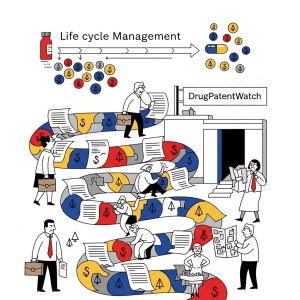
The true driver of value for a modern pharmaceutical asset is not a single patent, but a complex, multi-layered, and strategically managed period of market monopoly. This period is meticulously constructed, fiercely defended, and artfully extended through a sophisticated interplay of legal, regulatory, and commercial strategies. At the heart of this new reality are two interconnected concepts that every serious investor, executive, and legal counsel must master: Life-Cycle Management (LCM) and the controversial tool it often employs, the drug patent thicket.
This is not merely an academic debate. The financial stakes are staggering. Between now and 2030, analysts project that more than $200 billion in annual pharmaceutical revenue is at risk from expiring patents on blockbuster drugs.1 This impending “patent cliff” is the recurring seismic event that shapes corporate strategy, drives mergers and acquisitions, and determines the long-term viability of even the largest players in the industry. How a company prepares for this cliff—how it manages the lifecycle of its key assets—is the ultimate test of its strategic acumen and a primary indicator of its future performance.
This report will serve as your guide through this complex and often opaque world. We will move beyond the headlines and legal jargon to deconstruct the architecture of modern pharmaceutical monopolies. We will argue that patent thickets, often decried as an abuse of the system, are not some unforeseen anomaly. They are a predictable, and from a corporate perspective, entirely rational response to a unique set of economic and regulatory pressures.4 The entire business model of the pharmaceutical industry is built on a high-risk, high-reward paradigm. The journey from lab bench to pharmacy shelf is long, arduous, and punishingly expensive. Estimates for developing a single new drug range from $314 million to over $2.8 billion when accounting for the cost of capital and, crucially, the cost of the countless failures that never see the light of day.5 For every successful “blockbuster” drug, there are thousands of compounds that fail in preclinical or clinical trials.8 The revenue from that one success must pay for all of them.9
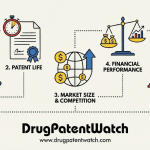
Compounding this pressure is the fact that the statutory 20-year patent term is a mirage. The clock starts ticking from the patent’s filing date, often early in the discovery process. The subsequent journey through preclinical studies, three phases of human clinical trials, and rigorous regulatory review by the Food and Drug Administration (FDA) can consume an average of 10 to 15 years.10 This means a drug may finally reach the market with only 7 to 10 years of its primary patent life remaining. This “lost” time creates an intense, existential pressure on companies to maximize every single day of market exclusivity post-approval. It is this economic engine that drives the aggressive pursuit of Life-Cycle Management and the construction of formidable patent thickets.
Welcome to the real battleground of pharmaceutical value creation. Understanding its rules, its strategies, and its shifting landscape is no longer optional—it is the price of entry for any investor seeking to turn patent data into a true competitive advantage.
Part I: The Architecture of Monopoly – Deconstructing Patent Thickets and Life-Cycle Management
To build a robust investment thesis, we must first become architects of understanding. We need to dissect the structures that pharmaceutical companies build to protect their most valuable assets. This means moving beyond a simple patent count and appreciating the strategic design behind a modern drug’s intellectual property fortress. This fortress is built on two core principles: the tactical construction of a patent thicket and its integration into the grand strategy of Life-Cycle Management.
What is a Drug Patent Thicket? The Anatomy of a Legal Fortress
At its core, a patent thicket is a dense, overlapping web of intellectual property rights filed on a single product.12 From an investor’s standpoint, it’s best understood not as a simple wall, but as a legal minefield. It is strategically designed to deter and delay competition by making the process of challenging the patents so complex, so time-consuming, and so prohibitively expensive that would-be generic or biosimilar competitors are discouraged from even attempting to enter the market.4
This legal fortress is constructed using two distinct categories of patents, and understanding the difference is critical to assessing the portfolio’s strength and a company’s strategic intent.
Primary Patents: The Crown Jewels
The primary patent is the foundational asset, the “crown jewel” of a drug’s IP portfolio.10 It typically covers the core innovation—the active pharmaceutical ingredient (API) itself, also known as the composition of matter. This is the patent that grants the initial 20-year monopoly and is generally the strongest and most difficult to invalidate.14 It protects the very essence of the new medicine.
Secondary Patents: The Layers of the Fortress
If the primary patent is the keep at the center of the castle, secondary patents are the successive curtain walls, moats, and ramparts built around it. These are patents filed later in a drug’s lifecycle, often years after it has been approved by the FDA, that claim peripheral or incremental innovations related to the original drug.4 Their purpose is not to protect the initial breakthrough, but to extend the total period of market exclusivity by creating new and overlapping barriers to competition.
The data on this practice is revealing. A May 2024 study in the JAMA Network examining the top 10 best-selling drugs in the U.S. found a staggering 1,429 associated patents or pending applications. Of these, nearly three-quarters (72%) were filed after the FDA had already approved the drugs.16 This timing is a clear signal of a defensive, lifecycle-extending strategy. The study further broke down the nature of these post-approval patents, finding that claims for new methods of use (41%) and new formulations (27%) were the most common tactics.16
To properly analyze a company’s portfolio, an investor must be able to disaggregate these components and understand their specific strategic roles.
Table 1: Anatomy of a Modern Patent Thicket
Patent Type
Strategic Purpose
Real-World Example
Relative Strength/Vulnerability
Primary Patent
Composition of Matter (API)
Protects the core active molecule. The foundational monopoly.
The original patent on adalimumab (Humira’s active ingredient).
Very Strong. Highest bar to invalidate.
Secondary Patents
Formulation
Protects a new version of the drug (e.g., extended-release, new combination of ingredients) to improve compliance or efficacy.
Bristol-Myers Squibb’s extended-release formulation of metformin, Glucophage XR.17
Moderate. Vulnerable to “obviousness” challenges if the formulation technique is standard practice.
Method of Use / New Indication
Protects the use of an existing drug to treat a new disease.
Allergan’s patents for using Botox (originally for eye spasms) to treat migraines and wrinkles.18
Moderate to Strong. Strength depends on how surprising the new use is to scientists.
Delivery Device
Protects the device used to administer the drug (e.g., an auto-injector, inhaler, dispenser cap).
AbbVie’s patents on the Humira injector pen’s firing button.12
Weak to Moderate. Increasingly targeted by FTC as “improperly listed” patents.19
Manufacturing Process
Protects a novel and more efficient way of making the drug.
A patent on a new, higher-yield method for synthesizing a complex biologic.
Moderate. Can be difficult for a competitor to prove infringement without access to the manufacturing facility.
Polymorphs, Salts, Metabolites
Protects different crystalline forms, salt versions, or byproducts of the active ingredient.
AstraZeneca’s esomeprazole (Nexium), the single-enantiomer version of omeprazole (Prilosec).21
Weak to Moderate. Often face novelty and obviousness challenges.
The true strategic power of the thicket emerges from the synthesis of these parts. The goal is not necessarily to win a lawsuit on the merits of any single secondary patent. Instead, the objective is to create a litigation landscape so daunting that it constitutes an insurmountable economic barrier. A generic or biosimilar challenger must invalidate every single patent in the thicket to enter the market without risk of a catastrophic infringement verdict.12 With the average cost of litigating a single patent through trial running around $3 million, the prospect of challenging dozens, or in Humira’s case, over a hundred patents becomes economically irrational for all but the largest and most determined competitors.22 As AbbVie itself has stated, any company seeking to challenge Humira’s patents would face a total litigation time of 4 to 5 years.12 This transforms patent litigation from a legal tool into a war of attrition, where the sheer volume of patents becomes the primary weapon.
Life-Cycle Management (LCM): The Grand Strategy Behind the Thicket
A patent thicket, however formidable, is not a strategy unto itself. It is a tactic, a crucial component of a much broader corporate imperative: Life-Cycle Management (LCM). LCM is the holistic, proactive process of managing a drug’s entire journey—from its initial conception in the lab, through design, manufacture, commercialization, and even post-exclusivity—to maximize its total commercial value and sustain its market presence for as long as possible.23
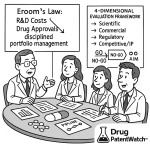
For an investor, viewing patent strategy through the lens of LCM is essential. It reframes the question from “How many patents does this drug have?” to “How is this company actively managing its asset to create durable, long-term value?” Modern pharmaceutical LCM is built on three fundamental and synergistic pillars 26:
Developmental Strategies: These initiatives focus on enhancing the product’s clinical profile and expanding its utility. This is the R&D engine of LCM, involving activities like conducting new clinical trials to expand a drug’s approved uses into new diseases (indication expansion), creating improved versions with better dosing or fewer side effects (reformulation), or combining the drug with another therapy to boost efficacy (combination products).26
Commercial Strategies: This pillar involves optimizing the drug’s market position through sophisticated pricing, marketing, and market access strategies. It includes activities like value-based pricing contracts with payers, targeted marketing to specific physician and patient groups, and expanding into new geographic markets.26
Regulatory/Legal Strategies: This is where the patent thicket resides. This pillar focuses on leveraging the full force of patent law and FDA regulatory exclusivities to build and defend the period of market protection. It involves not just filing patents, but also strategically listing them in the FDA’s Orange Book, engaging in litigation, and navigating the complex web of regulatory exclusivities (e.g., for orphan drugs or pediatric studies) that can add years of monopoly protection independent of patents.10
These pillars do not operate in isolation; they are deeply interconnected. A successful developmental strategy directly enables a powerful legal strategy. For example, when a company invests in R&D to create a new extended-release version of a pill (a developmental strategy), it simultaneously creates a new, patentable invention. The filing of that new formulation patent (a legal strategy) adds another layer to the drug’s patent thicket, pushing the “patent cliff” further into the future.10
Crucially, the most effective LCM is not a reactive measure deployed as a primary patent nears expiration. It is a proactive, long-term vision that is integrated into a drug’s development plan from the very beginning, often during Phase II or III clinical trials.26 A company that only begins to formulate its LCM plan 3-5 years before its expected Loss of Exclusivity (LOE) is already dangerously behind the curve. The clinical trials and regulatory submissions required to execute developmental LCM strategies can take years to complete.27 To have these new patents granted and new indications approved
before the primary patent expires, the work must commence much earlier in the product’s commercial life.
This provides a powerful analytical tool for investors. By scrutinizing a company’s clinical trial pipeline on registries like ClinicalTrials.gov and analyzing the filing dates of patents for its key assets using tools like DrugPatentWatch, an investor can gauge the maturity and proactiveness of its LCM strategy. A steady stream of post-approval patent filings, coupled with ongoing Phase III or IV trials for new formulations or indications of a key drug, is a strong positive signal. It demonstrates a sophisticated, forward-looking approach to value preservation that is likely to soften the blow of the eventual patent cliff and create a more durable revenue stream.
Part II: The Thicket in Action – Landmark Case Studies for the Investor
Theory and frameworks are essential, but for an investor, the real lessons are learned on the battlefield. To truly grasp the power and nuance of patent thickets and LCM, we must perform a forensic analysis of the landmark cases that have defined the modern era of pharmaceutical IP strategy. The strategies employed for AbbVie’s Humira and Amgen’s Enbrel represent two distinct but equally potent models of monopoly preservation. Understanding their mechanics, their vulnerabilities, and their staggering financial consequences is akin to studying the master strategists of a high-stakes corporate war.
The Humira Playbook: A Masterclass in “Shock and Awe” Patenting
If there is a single product that embodies the modern patent thicket, it is AbbVie’s Humira (adalimumab). The strategy deployed for this blockbuster anti-inflammatory drug was not one of subtle defense but of overwhelming force—a “shock and awe” campaign of patent filings designed to exhaust and intimidate any potential competitor. It is the undisputed “poster child for patent thickets,” and its story is a masterclass in legal fortification.18
Let’s start with the hard numbers, which are breathtaking in their scale. In the United States, AbbVie and its predecessors filed a total of 247 patent applications related to Humira, with the explicit goal of extending its market exclusivity for a total of 39 years.14 This is nearly double the standard 20-year patent term.
An investor’s first question should be: what were they patenting, and when? The timeline of these filings is the most damning evidence of the strategy’s defensive nature. Humira was first approved by the FDA in December 2002. A staggering 89% of AbbVie’s U.S. patent applications were filed after this approval date.29 The activity was not front-loaded to protect the initial invention; it was back-loaded to build a defensive wall. The most intense period of filing occurred more than a decade after the drug was on the market, with nearly half of all applications (122 of 247) filed from 2014 onwards.29 This flurry of late-stage patenting, covering everything from manufacturing processes to the specific formulation for a condition it was already known to treat, to the injector’s firing button, was a clear and deliberate act of life-cycle management.12
The most critical insight for a global investor comes from comparing AbbVie’s U.S. strategy to its approach in other major markets. The density of the Humira thicket is a uniquely American phenomenon, a direct result of the U.S. legal and regulatory system. AbbVie filed over three times as many patent applications in the U.S. (247) as it did at the European Patent Office (76).29 A broader academic study confirmed this disparity, finding that on average, nine times more patents are asserted against biosimilars in the U.S. than in Canada, and twelve times more than in the UK.30
This divergence in patent strategy had a direct and profound impact on market outcomes. With a less dense thicket to navigate, biosimilar competitors successfully launched in Europe in October 2018. In the U.S., however, the legal minefield created by AbbVie’s hundreds of patents delayed the first biosimilar entry until January 2023—a full five years later.29
The financial consequences of this five-year delay were astronomical. In 2019, with biosimilars competing in Europe, Humira’s sales there were $4.3 billion. In the U.S., with its monopoly intact, sales were $14.9 billion.31 The extended exclusivity in the U.S. market is estimated to have cost the American healthcare system tens of billions of dollars, with one analysis pegging the excess cost at $7.6 billion in a single year.16 For AbbVie, it was a gusher of revenue, with the drug generating nearly $200 billion over its lifetime and accounting for two-thirds of the company’s total revenue at its peak.16
Despite numerous legal challenges, the strategy ultimately worked. In a landmark case, the 7th U.S. Circuit Court of Appeals affirmed a lower court’s decision that AbbVie’s patent thicket did not violate antitrust laws.32 The court applied the
Noerr-Pennington doctrine, which protects the act of petitioning the government (including filing patents and lawsuits) from antitrust liability unless the conduct is “objectively baseless.” Because AbbVie had a success rate of over 53% in getting its patent applications granted by the USPTO, the court found its actions could not be considered a baseless sham.31 This ruling set a high bar for future antitrust challenges and provided a degree of legal validation for the “shock and awe” approach, a critical precedent for investors to understand when assessing the legal risks associated with these strategies.
The Enbrel Fortress: A Three-Decade Monopoly Built on Strategic Patents
While Humira’s strategy was defined by sheer volume, Amgen’s defense of its own blockbuster anti-inflammatory, Enbrel (etanercept), offers a contrasting lesson in strategic precision. Amgen constructed a legal fortress that is set to provide an incredible 37 years of market exclusivity in the U.S., with the final key patents not expiring until 2029.34 This was achieved not with hundreds of minor patents, but with a “keystone” strategy centered on a few powerful, legally resilient patents that became the linchpin of its defense.
The story of Enbrel’s extended life hinges on a combination of savvy acquisition, high-stakes litigation, and a fortuitous quirk of international patent law. While Amgen held numerous patents on Enbrel, its monopoly into the late 2020s was secured by two critical patents—U.S. Patent Nos. 8,063,182 and 8,163,522—which it acquired as part of a deal with Roche.34
Here’s the crucial detail: Roche had filed the applications for these patents before a World Trade Organization agreement known as TRIPS went into full effect. Under the old rules, the patent term was calculated as 17 years from the date the patent was issued, not 20 years from its filing date. Because of lengthy delays in the patent office, these patents were not issued until 2011 and 2012, respectively. This pushed their expiration dates all the way out to 2028 and 2029, creating an incredibly long tail of protection long after Enbrel’s original patents had expired.34
This extended protection did not go unchallenged. Novartis’s generics division, Sandoz, won FDA approval for its Enbrel biosimilar, Erelzi, back in 2016. However, Amgen immediately sued for infringement of its two keystone Roche patents, blocking Erelzi’s launch.34 The ensuing legal battle was a high-stakes affair that went all the way through the court system. Amgen prevailed at the district court and the Federal Circuit. In 2021, the U.S. Supreme Court declined to hear Sandoz’s final appeal, cementing Amgen’s victory and ensuring its monopoly would remain intact until 2029.34
The financial impact of this successful defense is immense. Amgen has earned more than $70 billion from Enbrel sales over its lifetime.34 The ability to block the launch of an approved biosimilar like Erelzi for more than a decade has been a massive financial windfall, demonstrating the incredible ROI of a successful, litigation-centric LCM strategy.
These two cases provide a powerful comparative framework for investors. Humira and Enbrel represent the two dominant models of patent thicket strategy. One is a “brute force” approach that relies on the prohibitive cost and complexity of the litigation process itself to deter challengers. The other is a “keystone” approach that relies on the substantive legal strength of a few critical patents to win in court.
An investor analyzing a company’s portfolio cannot simply count patents. They must dig deeper to understand which strategy is being deployed. A company employing a Humira-style strategy is highly vulnerable to legislative or regulatory changes that limit the number of patents that can be asserted in a lawsuit. In contrast, a company with an Enbrel-style strategy is more vulnerable to a single, decisive court loss that invalidates its keystone patents. Recognizing these distinct risk profiles is fundamental to a sophisticated analysis of a pharmaceutical company’s long-term value.
Table 2: Humira vs. Enbrel – Two Models of Thicket Strategy
Metric
Humira (AbbVie)
Enbrel (Amgen)
U.S. Patent Filings
247 patent applications 29
~57 granted patents 36
Primary Strategic Tactic
Brute Force / Volume: Overwhelm challengers with a massive number of overlapping patents, making litigation prohibitively expensive and complex.
Keystone / Precision: Rely on a few strategically acquired, legally robust patents with unusually long terms to defend the monopoly in court.
Key Vulnerability
Legislative/Regulatory Risk: Vulnerable to new laws that limit the number of patents assertable in litigation (e.g., the ETHIC Act).
Litigation Risk: Vulnerable to a single, decisive court ruling invalidating its few key “keystone” patents.
Years of U.S. Market Exclusivity
~20 years (2002-2023)
~31 years (1998-2029)
Estimated Revenue Protected
Generated nearly $200 billion in its lifetime, with U.S. sales of $18.6B in 2022 alone.2
Has earned over $70 billion in sales, with U.S. sales of ~$4B annually protected until 2029.34
Part III: Hacking Through the Thicket – The Challenger’s Playbook
The construction of these patent fortresses, while formidable, has not gone unanswered. A sophisticated and aggressive ecosystem of generic and biosimilar challengers has emerged, armed with its own playbook of legal and strategic tools. For investors, understanding the dynamics of this conflict is just as important as analyzing the defenses of the brand-name companies. The success or failure of these challenges can move markets, erase billions in projected revenue, and create significant investment opportunities.
The Art of the Challenge: Paragraph IV Litigation and the “Patent Dance”
The legal pathways for challenging a brand-name drug’s patents are highly structured and governed by two landmark pieces of legislation: the Drug Price Competition and Patent Term Restoration Act of 1984, commonly known as the Hatch-Waxman Act, for small-molecule generic drugs, and the Biologics Price Competition and Innovation Act of 2009 (BPCIA) for biosimilars.37
The Hatch-Waxman Gauntlet and the Paragraph IV Certification
For a generic drug manufacturer, the journey to market begins with filing an Abbreviated New Drug Application (ANDA) with the FDA. Instead of conducting its own costly clinical trials, the generic firm simply needs to prove its product is bioequivalent to the brand-name drug.37 As part of this filing, the generic company must address every patent listed for the brand drug in the FDA’s Orange Book. They do this by making one of four certifications. The most consequential of these is the
Paragraph IV certification.
A Paragraph IV certification is a bold declaration: the generic applicant asserts that the brand’s patent is invalid, unenforceable, or will not be infringed by the generic product.39 Under U.S. law, this filing is considered an “artificial act of infringement,” a legal trigger that allows the brand manufacturer to sue the generic company before its product ever hits the market.40
This triggers a critical and powerful defensive mechanism for the brand company. Upon receiving the Paragraph IV notice letter, the brand has a 45-day window to file a patent infringement lawsuit. If it does so, an automatic 30-month stay is placed on the FDA’s ability to grant final approval to the generic’s ANDA.39 This 30-month period is intended to provide time for the courts to resolve the patent dispute, but in practice, it gives the brand manufacturer a significant, risk-free extension of its monopoly revenue.
So, why would a generic company invite such a lawsuit? The incentive is enormous: the 180-day exclusivity period. The first generic manufacturer to file a substantially complete ANDA with a Paragraph IV certification and successfully challenge the patents is granted a 180-day period of market exclusivity against all other generic competitors.37 During these six months, the first generic typically captures a massive portion of the brand’s market share while facing no other generic competition, allowing it to price its product only moderately below the brand’s price. This “grand prize” can be worth hundreds of millions, or even billions, of dollars, making the high cost of litigation a worthwhile investment.42
The “Patent Dance” for Biosimilars
The pathway for biosimilars under the BPCIA is even more complex. It includes a highly choreographed, multi-step process of information exchange known colloquially as the “patent dance”.43 This process is designed to identify and narrow down the patents that will be the subject of litigation
before a lawsuit is even filed. The dance involves a series of strict deadlines for the biosimilar applicant and the brand manufacturer to exchange lists of patents they believe could be infringed and to provide detailed legal arguments for their positions on infringement and validity.15 While intended to streamline litigation, the complexity of the patent dance itself can be a strategic battleground, adding another layer of cost and delay for biosimilar challengers.
Weapons of Choice: Comparing District Court, IPR, and PGR
Once a challenge is initiated, the battle can be fought in several different venues. An investor’s ability to handicap the likely outcome of a patent dispute depends on understanding the unique characteristics of each of these legal arenas.
U.S. District Court Litigation: This is the traditional forum for Hatch-Waxman cases. It is a full-blown lawsuit before a federal judge and, potentially, a jury. However, it is notoriously slow and expensive. The median time to trial for a patent case is approximately 24.5 months, and the average cost to see a case through trial is $3 million.22 Crucially, in district court, a patent is presumed valid, and the challenger must prove it is invalid by “clear and convincing evidence”—a very high legal standard.45
Inter Partes Review (IPR): Enacted as part of the 2011 America Invents Act (AIA), the IPR process has been a game-changer for patent challengers. It is an administrative proceeding conducted at the USPTO’s Patent Trial and Appeal Board (PTAB) before a panel of three technically-expert Administrative Patent Judges. The advantages for challengers are significant:
Speed and Cost: An IPR is designed to be completed within 18 months of filing and typically costs a fraction of district court litigation, around $300,000 to $600,000.45
Lower Burden of Proof: In an IPR, the challenger only needs to prove a patent is invalid by a “preponderance of the evidence,” a much lower and easier-to-meet standard than in district court.45
High Success Rate: The PTAB has gained a reputation for being a “death squad” for patents, with a high rate of invalidating challenged patent claims, making it a powerful weapon against patent thickets.45
Post-Grant Review (PGR): Also created by the AIA, a PGR is similar to an IPR but with two key differences. First, it must be filed within nine months of a patent’s issuance, making it a tool for challenging newly granted patents. Second, it allows for a much broader range of challenges, including on grounds like lack of written description or enablement (§ 112), which are not available in an IPR. This makes PGR a particularly potent weapon against weak, hastily filed secondary patents that are often used to build up a thicket.45
Table 3: The Challenger’s Toolkit – Litigation Pathways Compared
Pathway
Venue
Average Cost
Average Timeline
Burden of Proof
Key Strategic Use Case
District Court Litigation
U.S. Federal Court
~$3 Million (through trial) 22
~24.5 Months (to trial) 22
Clear and Convincing Evidence
The required pathway for Hatch-Waxman cases; necessary to trigger the 30-month stay and be eligible for 180-day exclusivity.
Inter Partes Review (IPR)
USPTO Patent Trial and Appeal Board (PTAB)
~$300k – $600k 45
12-18 Months 45
Preponderance of the Evidence
A fast, cost-effective tool to invalidate patents on novelty/obviousness grounds. Ideal for “sniping” individual weak patents within a thicket.
Post-Grant Review (PGR)
USPTO Patent Trial and Appeal Board (PTAB)
Similar to IPR
12-18 Months 45
More Likely Than Not (to institute)
A powerful weapon against newly issued patents (within 9 months of grant) on any ground of invalidity, including enablement or written description.
The “At-Risk” Launch: A High-Stakes Gamble with Market-Moving Signals
Perhaps the most aggressive and telling strategy in the challenger’s playbook is the “at-risk” launch. This is when a generic or biosimilar manufacturer decides to begin selling its product after receiving FDA approval but before all patent litigation has been fully resolved.47 It is one of the highest-stakes gambles in the corporate world.
The potential upside is enormous: the company can start generating revenue immediately and, if it’s the first generic, capture the incredibly lucrative 180-day exclusivity period.47 The potential downside, however, is catastrophic. If the courts ultimately rule that the brand’s patents are valid and infringed, the at-risk launcher can be on the hook for massive damages, including the brand’s lost profits and potentially treble damages for willful infringement, which could easily run into the billions of dollars.48
For an investor, the decision by a company to launch at-risk is one of the most powerful predictive signals imaginable. No rational management team would expose its company to such existential risk unless it had an extremely high degree of confidence in its legal position and the fatal weakness of the brand’s patents.49 The decision is based on years of deep legal and technical analysis, often uncovering flaws in the brand’s patents that the broader market has not yet priced in.
Therefore, when a generic company announces an at-risk launch, investors in the brand-name company should view it as a major red flag. It is a public declaration by a highly informed adversary that the brand’s patent fortress is likely to crumble. This event should trigger an immediate and profound re-evaluation of the brand’s patent portfolio and a significant downward revision of its future revenue projections. The market often reacts swiftly, but the full impact may not be priced in, creating opportunities for savvy investors who understand the gravity of this signal.
Part IV: The Investor’s Edge – Analysis, Valuation, and Forecasting
Understanding the strategic chess match between brand manufacturers and their challengers is the foundation. The next step—and the one that separates successful investors from the rest—is translating that qualitative understanding into quantitative financial analysis. This involves developing a rigorous framework for evaluating a company’s patent portfolio, building robust revenue forecasts that accurately model the “patent cliff,” and quantifying the return on investment (ROI) of various Life-Cycle Management strategies.
Analyzing the Arsenal: A Framework for Evaluating a Pharma Patent Portfolio
Conducting thorough due diligence on a pharmaceutical company’s intellectual property is not a simple box-checking exercise. It requires a multi-faceted approach that goes far beyond counting patents or noting expiration dates. Here is a practical framework for investors to follow:
Portfolio Health Check: Start with the basics. How many patents and patent families does the portfolio contain? What is its geographic scope? A company with patent protection in key global markets (U.S., EU, Japan, China) has a much stronger position than one with only U.S. patents.50 What is the average remaining life of the patents? A portfolio with staggered expiration dates is less vulnerable to a single, catastrophic patent cliff.52
Strength and Scope of Protection: This is a qualitative assessment of the patents’ quality. Are the patent claims broad enough to prevent competitors from easily “designing around” them with minor modifications? Or are they so narrow that they offer little real-world protection? A portfolio of a few broad, defensible patents can be far more valuable than a thicket of hundreds of weak, narrow ones.51
Freedom to Operate (FTO) Analysis: Owning patents doesn’t guarantee the right to sell a product. An FTO analysis assesses whether a company’s product might infringe on a competitor’s existing patents. A company that has not conducted a thorough FTO assessment is carrying a hidden risk of future litigation that could delay or even block its product launch.53
Competitive Landscape Assessment: A patent portfolio’s value is relative. How does it stack up against the IP of key competitors? A powerful technique is to analyze which competitors’ patent applications have been blocked or challenged based on the company’s portfolio. This provides direct evidence of the portfolio’s ability to control the competitive landscape and create a dominant market position.50
Alignment with Commercial and Regulatory Timelines: A patent’s life is finite. It is critical to assess whether the patent term aligns with the lengthy timelines for clinical trials and FDA approval. A patent that expires before a drug receives regulatory approval is effectively worthless. A well-managed strategy will involve filing continuation applications and seeking patent term extensions to ensure protection remains in place throughout the drug’s peak commercial years.53
Executing this level of analysis requires access to vast and complex datasets. This is where specialized patent intelligence platforms become indispensable. Services like DrugPatentWatch are designed for this exact purpose. They aggregate, clean, and structure data from the USPTO, FDA (including the Orange Book), international patent offices, court dockets, and clinical trial registries. These platforms transform raw data into actionable intelligence, allowing investors to systematically track competitor portfolios, monitor litigation outcomes, identify late-listed patents that signal a thicket-building strategy, and ultimately assess the true strength and durability of a company’s competitive moat.18
From Patents to Profits: Forecasting Revenue and the “Patent Cliff”
The ultimate goal of patent analysis is to inform financial models and produce more accurate valuations. The single most dramatic event in a drug’s financial life is the “patent cliff”—the colloquial term for the sharp, precipitous decline in revenue that occurs upon Loss of Exclusivity (LOE).55 The moment generic or biosimilar competition enters the market, the brand’s pricing power evaporates. It is not uncommon for a blockbuster drug to lose
80-90% of its market share within the first one to two years of generic entry, as payers rapidly switch to cheaper alternatives that can be priced 80-85% lower than the brand.49
For a financial analyst building a Discounted Cash Flow (DCF) model, the LOE date is the single most critical variable.59 It determines the length of the high-revenue monopoly period and the precise timing of the revenue cliff. A simple model might just plug in the statutory expiration date of the primary composition of matter patent. This is a rookie mistake.
A sophisticated forecast requires a much more nuanced approach. The revenue model must be built on a foundation of deep patent analysis, incorporating key inputs such as 59:
Target Patient Population: The total addressable market for the drug’s approved indications.
Market Penetration: The projected percentage of that population that will be treated with the drug.
Pricing Assumptions: The expected net price of the drug after rebates and discounts.
The LOE Date: This should be the latest possible date, determined by the final expiration of all relevant patents (including secondary patents) and any applicable regulatory exclusivities (like pediatric or orphan drug exclusivity).
The Post-LOE Revenue Curve: This models the steep decline in sales and price erosion following generic/biosimilar entry.
The true expert, however, takes it one step further. Instead of a single LOE date, the most accurate models use a risk-adjusted, probability-weighted LOE date. This approach transforms the qualitative assessment of the patent portfolio into a quantitative input. For example, an analyst might construct several scenarios:
Scenario A (30% probability): The brand company successfully defends its entire patent thicket in court. The LOE date is the expiration of the last secondary patent in 2032.
Scenario B (60% probability): A challenger successfully invalidates a key formulation patent via an IPR proceeding, but other patents hold. The LOE date is brought forward to 2028.
Scenario C (10% probability): A competitor launches at-risk in 2026 and ultimately prevails in court. The LOE date is 2026.
The final valuation is then based on a weighted average of the cash flows from these different scenarios. This methodology, powered by the kind of deep patent and litigation analysis discussed in this report, provides a far more realistic and defensible valuation than a simple, single-point estimate.
Quantifying the ROI of Life-Cycle Management Strategies
Beyond defending the core monopoly, a key question for investors is whether a company’s LCM spending is generating a positive return. Not all LCM strategies are created equal. It’s crucial to differentiate between strategies that create genuine clinical and commercial value and those that are purely defensive legal maneuvers.
Indication Expansion: This is often one of the highest-ROI strategies. By finding new diseases that an existing drug can treat, a company leverages its massive initial investment in safety and manufacturing data to enter new markets with relatively lower incremental R&D costs.21 The expansion of Merck’s Keytruda from melanoma to dozens of other cancer types is a textbook example, transforming it into one of the best-selling drugs in history and generating tens of billions in new revenue.16
Reformulation and “Product Hopping”: Creating a new version of a drug, such as a once-daily extended-release tablet or a new delivery device like an auto-injector, can be highly effective. These new formulations can be patented, extending exclusivity. A study found that new formulations granted manufacturers, on average, more than two additional years of market exclusivity beyond the original product.62 The most aggressive version of this is “product hopping,” where a company actively switches the market to the new, patent-protected version just before the old version faces generic competition.63 While historically profitable, this practice is facing increasing scrutiny from payers and regulators if the new formulation offers little to no real clinical benefit.
Combination Products: Combining two or more active ingredients into a single pill or device is a powerful LCM strategy. It can improve efficacy, simplify treatment regimens for patients, and, critically, create a new, distinct, and strongly patentable product.18 These are often viewed favorably by both clinicians and payers, making them a durable source of extended revenue.
Rx-to-OTC Switch: For certain drugs, moving from prescription (Rx) to over-the-counter (OTC) status can be a smart late-stage strategy. While it means lower prices and margins, it opens up a vast new consumer market and can extend the life of a well-known brand for many years. The classic example is AstraZeneca’s heartburn medication Prilosec, which became a dominant OTC brand after its prescription patent expired.18
An investor’s task is to critically evaluate a company’s LCM pipeline. Is the company investing in new indications that address a high unmet medical need? Or is it spending money on minor reformulations that offer little patient benefit and are likely to be challenged by payers and scrutinized by regulators? The former represents sustainable, value-creating innovation. The latter represents a short-term tactic with a growing risk profile.
Part V: The Future of Pharmaceutical Patents – Navigating Disruption and Reform
The playbook that has governed pharmaceutical patent strategy for the past two decades is being rewritten. A powerful convergence of regulatory pressure, legislative reform, and technological disruption is challenging the very foundations of the patent thicket model. For investors, relying on historical precedents without accounting for these paradigm shifts is a recipe for disaster. The future of pharmaceutical value creation will belong to those who can anticipate and adapt to this new and uncertain landscape.
The Regulators Strike Back: FTC Scrutiny and Legislative Reform
For years, the construction of patent thickets operated in a relatively permissive legal environment. That era is definitively over. The political and regulatory winds have shifted, and there is now a multi-front assault on what are increasingly perceived as anticompetitive abuses of the patent system.
The Federal Trade Commission (FTC) Awakens
Under new leadership, the FTC has become dramatically more aggressive in policing pharmaceutical patent practices. Its recent actions signal a fundamental change in the enforcement landscape:
Challenging “Improper” Orange Book Listings: In late 2023 and 2024, the FTC took the unprecedented step of formally challenging hundreds of patents listed in the FDA’s Orange Book as “improperly or inaccurately listed”.20 The agency has specifically targeted patents on drug delivery devices, such as asthma inhalers and auto-injectors, arguing that these device patents do not claim the drug itself and are being used to improperly trigger the 30-month stay and block generic competition.19 This directly attacks a key component of many modern patent thickets.
Supporting USPTO Rule Changes: The FTC has publicly thrown its weight behind a proposed rule change at the USPTO that would dramatically weaken a key tool for building thickets: the terminal disclaimer.67 Currently, companies can overcome a “double patenting” rejection for an obvious variation of an invention by filing a terminal disclaimer, which links the new patent’s expiration date to the original. However, each patent must still be challenged individually. The proposed rule would make it so that if the original “parent” patent is invalidated, all patents linked to it via a terminal disclaimer would automatically become unenforceable.67 This “domino effect” would allow a challenger to topple an entire family of patents by invalidating just one, drastically reducing the cost and complexity of hacking through a thicket.
A Bipartisan Push for Legislative Reform
This regulatory pressure is being matched by a rare wave of bipartisan legislative action in Congress, aimed at codifying new limits on patent litigation. Several key bills are advancing:
The Affordable Prescriptions for Patients Act (S. 150): This bill, which has already passed the Senate unanimously, would specifically target biologic drugs. It would limit the number of patents a brand manufacturer can assert in a biosimilar infringement lawsuit to a maximum of 20 patents, though a court could grant an exception for “good cause”.68 The nonpartisan Congressional Budget Office (CBO) estimates this bill alone would save the federal government $1.5 billion over 10 years by accelerating biosimilar entry.68
The Eliminating Thickets to Increase Competition (ETHIC) Act (S. 2276): This bill takes a different but equally powerful approach. It would codify the “domino effect” proposed by the USPTO, limiting a company to asserting only one patent per “Patent Group” (defined as a family of patents linked by terminal disclaimers) in litigation.70 This would directly prevent the “shock and awe” strategy of burying a competitor in lawsuits over dozens of duplicative patents.
Table 4: The Shifting Legal Landscape – Key Reforms and Actions
Action/Bill
Mechanism
Potential Impact on Thicket Strategy
Investor Takeaway
FTC Orange Book Challenges
Publicly disputes the listing of device and other secondary patents, creating legal and reputational risk for brand companies.
Weakens the ability to use device patents to trigger the 30-month stay, a key delaying tactic.
Companies with heavy reliance on device patents for exclusivity (e.g., in respiratory, diabetes) face increased risk of earlier generic entry.
USPTO Terminal Disclaimer Rule
If one patent in a terminally disclaimed family is invalidated, all linked patents become unenforceable.
Creates a “domino effect” that makes it vastly cheaper and faster to invalidate large portions of a patent thicket.
Dramatically increases the vulnerability of portfolios built with many obvious-variant patents. The value of patent quantity is diminished.
Affordable Prescriptions for Patients Act
Caps the number of patents that can be asserted in biosimilar litigation at 20.
Directly limits the “brute force” litigation strategy for biologics, forcing companies to rely on their strongest patents.
Reduces the defensive value of large, low-quality patent portfolios for biologic drugs. Favors companies with high-quality, innovative patents.
ETHIC Act
Limits litigation to one patent per terminally disclaimed patent family.
A legislative version of the USPTO’s proposed rule, making the “domino effect” the law of the land.
Fundamentally alters the risk/reward calculus of building thickets with duplicative patents. This is a potential game-changer.
The message for investors is clear and unavoidable: the ground is shifting. The convergence of aggressive regulatory enforcement and bipartisan legislative reform creates a powerful headwind against the traditional patent thicket model. The historical profitability and legal defensibility of these strategies are no longer reliable predictors of future success. The risk premium for companies whose blockbuster drugs are protected primarily by a dense web of secondary, follow-on patents has increased dramatically.
The AI Revolution: Innovation, Inventorship, and the New IP Frontier
As if the regulatory and legislative assault were not disruptive enough, a technological revolution is poised to reshape the very nature of pharmaceutical innovation and the intellectual property that protects it. The rise of Artificial Intelligence (AI) in drug discovery is not an incremental improvement; it is a paradigm shift that will create unprecedented opportunities and profound new risks for investors.
AI’s Impact on the R&D Equation
AI is already demonstrating the ability to dramatically accelerate the drug discovery and development process. By analyzing vast biological datasets, predicting protein structures, and designing novel molecules, AI platforms can slash preclinical development timelines by 25-50%.72 Insilico Medicine, for example, moved a drug for pulmonary fibrosis from target identification to a preclinical candidate in just 18 months, a process that traditionally takes 5-6 years.74 This acceleration could fundamentally alter the economic calculus that has driven aggressive LCM for decades. If the “lost” patent years during development are significantly reduced, the pressure to extend patent life through secondary patents may diminish.
The Inventorship Crisis: Can a Machine Invent?
This technological leap forward has created a legal crisis at the heart of patent law. The central question is: who is the “inventor” when an AI system, with minimal human guidance, identifies a novel drug candidate? The answer has massive implications for a drug’s patentability.
Current U.S. patent law is unequivocal: an inventor must be a human being. This was firmly established in the landmark case Thaler v. Vidal, where the courts rejected patent applications that listed an AI system named DABUS as the sole inventor.74 However, the USPTO issued guidance in 2024 clarifying that inventions made
with the assistance of AI are still patentable, provided a human being made a “significant contribution” to the invention’s conception.74
This creates a new and complex set of risks for investors in the burgeoning field of AI-native drug discovery:
Patent Invalidity Risk: The very patents that underpin the value of an AI-driven biotech company could be challenged and invalidated in the future if a court determines that the human involvement did not meet the “significant contribution” threshold. This is an entirely new vector of legal risk that does not exist for traditionally discovered drugs.
The Disclosure Dilemma: To defend the patentability of an AI-assisted invention and prove human contribution, a company may be forced to disclose its proprietary AI algorithms, training data, and methodologies in its patent application. This puts them in a difficult position: patent the drug and risk revealing the “secret sauce” of their AI platform, or protect the AI as a trade secret and risk being unable to patent the drugs it discovers.74
The Redefinition of “Obviousness”: A core requirement for patentability is that an invention must not be “obvious” to a “person having ordinary skill in the art.” As sophisticated AI systems become the standard tool used by every chemist and biologist, the capabilities of this hypothetical “person” will skyrocket. It will become increasingly difficult to argue that a molecule identified by an AI is non-obvious, potentially rendering vast areas of chemical space unpatentable and stifling innovation.74
AI is a double-edged sword. It holds the promise of supercharging R&D productivity and solving the industry’s innovation problem. At the same time, it introduces a profound level of legal and existential uncertainty into the patent system that has been the bedrock of the industry’s business model for a century. For investors, particularly those betting on the next generation of AI-native biotech firms, the need for deep due diligence has never been greater. It is no longer enough to evaluate the science; one must now evaluate the company’s strategy for documenting human inventorship and navigating a legal frontier that is still very much in the process of being mapped.
Conclusion: A New Playbook for Pharma Investing
The world of pharmaceutical patents is in the midst of a tectonic shift. The old playbook—relying on a single, foundational patent for a blockbuster drug, followed by the construction of a dense, defensive patent thicket to prolong a lucrative monopoly—is facing an existential threat. The strategies that created immense wealth over the past two decades are now being challenged on all fronts: by aggressive regulators, by bipartisan legislative reformers, and by the disruptive force of artificial intelligence.
For the savvy investor, this period of disruption is not a threat, but an opportunity. It necessitates a fundamental evolution in how we analyze, value, and invest in the pharmaceutical and biotech sectors. The simple metrics of the past are no longer sufficient. A new, more nuanced playbook is required.
The key findings of this report point toward a new reality. The value of a drug’s intellectual property can no longer be measured by the sheer quantity of its patents. The “shock and awe” strategy, exemplified by Humira, is becoming increasingly vulnerable. The focus must shift from patent quantity to patent quality. Investors must develop the capability to dissect a patent portfolio, to distinguish between genuinely innovative secondary patents that add real clinical value and those that are merely legal gamesmanship designed to block competition.
Similarly, Life-Cycle Management must be evaluated not just on its ability to extend revenue, but on the quality of the innovation it produces. An LCM strategy that delivers a new formulation with a tangible patient benefit or expands a drug’s use to a new disease with high unmet need is creating durable, defensible value. A strategy that relies on a “product hop” to a nearly identical product is building its foundation on sand, inviting scrutiny from payers, regulators, and the courts.
Navigating this new environment is impossible without the right tools. The complexity of the global patent and regulatory landscape demands the use of sophisticated competitive intelligence platforms. Services like DrugPatentWatch are no longer a luxury but a necessity, providing the structured, real-time data on patents, litigation, and regulatory exclusivities that is essential for conducting deep due diligence and building accurate financial models.
Ultimately, the future of pharmaceutical investing will require a more dynamic and forward-looking approach to risk assessment. The legal and regulatory risks that were once considered background noise are now primary drivers of value. The potential impact of the ETHIC Act or a new FTC enforcement action must be priced into valuation models. The unresolved legal questions surrounding AI and inventorship must be considered when evaluating the long-term viability of AI-native biotechs.
The era of the simple 20-year monopoly is over. We are now in an age of dynamic, contested, and constantly evolving market exclusivity. Success in this new era will not be defined by who has the most patents, but by who has the smartest strategy—one built on a foundation of high-quality innovation, proactive and value-creating life-cycle management, and a clear-eyed understanding of the new risks and opportunities that are reshaping the industry.
“Big Pharma is exploiting loopholes in our courts and patent system to block generic and biosimilar pharmaceuticals from the market, leading to higher out-of-pocket costs for everyone. Enough is enough.”
— Senator Amy Klobuchar, commenting on the need for legislative reform to address patent thickets.78
Key Takeaways
Patent Thickets are a Core Part of Life-Cycle Management (LCM): Drug patent thickets are not an anomaly but a deliberate strategy within the broader framework of LCM, designed to maximize a drug’s commercial value in response to high R&D costs and the erosion of the 20-year patent term by lengthy development timelines.
Two Dominant Thicket Strategies Exist: Investors must differentiate between the “brute force” volume-based strategy (e.g., AbbVie’s Humira), which overwhelms challengers with litigation costs, and the “keystone” precision-based strategy (e.g., Amgen’s Enbrel), which relies on a few powerful, legally defensible patents. Each has distinct risk profiles.
The Challenger’s Playbook is Sophisticated: Generic and biosimilar firms use a variety of tools to challenge patents, including Paragraph IV litigation, the “patent dance,” and cost-effective administrative challenges like Inter Partes Reviews (IPRs) at the USPTO. An “at-risk” launch is a powerful signal of a brand’s patent weakness.
Valuation Hinges on a Risk-Adjusted LOE Date: Accurate financial forecasting requires moving beyond a patent’s statutory expiration date. The Loss of Exclusivity (LOE) date, the key input for any DCF model, must be a probability-weighted figure that accounts for the strength of the patent thicket and the likelihood of successful legal challenges.
The Regulatory and Legislative Landscape is Shifting: A multi-front assault from the FTC, the USPTO, and bipartisan legislation in Congress is actively targeting the legal mechanisms that enable patent thickets. This has significantly increased the risk profile for companies heavily reliant on these strategies.
AI is a Paradigm-Shifting Disruptor: Artificial intelligence is accelerating R&D but also introducing profound legal uncertainty around patent inventorship and obviousness. This creates both immense opportunity and a new category of IP risk that investors must carefully diligence.
Focus Must Shift from Quantity to Quality: In this new era, the most durable competitive advantages will come not from the sheer number of patents, but from the quality of the underlying innovation, the demonstrable clinical value of LCM strategies, and the strategic foresight to navigate a rapidly evolving legal and technological environment.
Frequently Asked Questions (FAQ)
1. As an investor, what is the single most important red flag to look for when analyzing a company’s patent portfolio for a blockbuster drug?
The single most telling red flag is a heavy concentration of patent filings that occur very late in the drug’s lifecycle, particularly more than 10-12 years after its initial FDA approval. While some late-stage patenting is a normal part of LCM, a massive surge of filings for minor variations (e.g., new dosages for existing indications, slight tweaks to a delivery device) as the primary composition of matter patent nears expiration is a strong indicator of a defensive, “brute force” thicket strategy. This pattern, exemplified by Humira, suggests the company may be lacking a pipeline of true innovation and is instead relying on legal maneuvering to protect its revenue. In the current regulatory climate, this strategy carries a significantly higher risk of facing legislative, regulatory, or antitrust challenges.
2. How should I factor the “patent dance” for biosimilars into my analysis differently than Paragraph IV litigation for small-molecule generics?
While both are pre-market litigation pathways, the “patent dance” under the BPCIA is a more complex, protracted, and uncertain process. For an investor, this means the timeline to biosimilar competition is often longer and harder to predict than for generics. The multi-step information exchange can itself become a source of delay and strategic gamesmanship. Furthermore, because biologics are complex molecules, manufacturing process patents play a much larger and more potent role in their thickets. These patents are harder for a challenger to assess and invalidate. Therefore, you should generally assign a longer and more variable time-to-market and a lower probability of litigation success for a biosimilar challenger compared to a generic challenger for a similarly-valued small-molecule drug.
3. With the rise of AI in drug discovery, are traditional pharmaceutical companies with legacy R&D models now at a disadvantage compared to newer, “AI-native” biotechs?
Not necessarily, but the nature of the risk is different. Traditional pharma companies have vast repositories of proprietary clinical and biological data, which is a massive competitive advantage for training effective AI models. They also have the deep pockets to acquire AI technology and the expertise to navigate clinical development and regulatory affairs. Their primary risk is being too slow to adapt. Conversely, “AI-native” biotechs are agile and technologically advanced, but they face a profound and unresolved legal risk around inventorship. Their core value proposition—that their AI can invent new drugs—is in direct tension with current patent law. An investor in an AI-native firm is betting not just on its technology, but on its ability to prove “significant human contribution” to satisfy the USPTO, a legal standard that is still being defined. The risk is less about technology and more about the fundamental patentability of their output.
4. The proposed ETHIC Act, which limits litigation to one patent per terminally-disclaimed family, seems like a major threat. Are there any strategies a brand company can use to mitigate its impact if it becomes law?
Yes, but it would require a fundamental shift in patent prosecution strategy. The ETHIC Act specifically targets patents linked by terminal disclaimers, which are used to overcome “obviousness-type double patenting” rejections. To mitigate this, a company’s patent attorneys would need to shift from the common practice of quickly filing a terminal disclaimer to save time and money. Instead, they would have to “fight it out” with the patent examiner, investing more resources to argue that each follow-on invention is genuinely non-obvious and patentably distinct from the parent patent. This would lead to fewer, but potentially stronger and more defensible, secondary patents that are not linked by terminal disclaimers and thus would not fall under the ETHIC Act’s “one-and-done” rule. It essentially forces companies to prioritize patent quality over quantity from the very beginning of the prosecution process.
5. Given the high costs and risks, why do so many patent litigation cases end in a settlement rather than a court verdict, and what does a settlement tell me as an investor?
The vast majority of cases settle because litigation is inherently unpredictable, and both sides have immense incentives to seek certainty. For the brand company, a court loss could mean the instantaneous evaporation of billions in revenue and the invalidation of a key patent. For the generic challenger, a loss could mean being barred from the market and having wasted millions on R&D and legal fees. A settlement allows both parties to mitigate this risk.
As an investor, the timing and terms of a settlement are critical data points. A settlement that allows a generic to enter the market several years before the final patent expires is a clear win for the challenger and a strong signal that the brand company perceived a high risk of losing in court. It allows you to bring forward your modeled LOE date and adjust revenue forecasts downward. Conversely, a settlement that only allows entry a few months before patent expiry is a victory for the brand, indicating its patent portfolio was strong enough to force the challenger to accept minimal concessions. Analyzing these outcomes, which are often tracked by services like DrugPatentWatch, provides a real-world assessment of a portfolio’s strength.