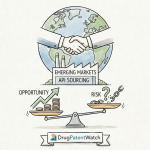
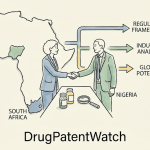
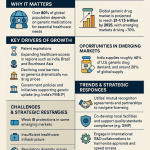
The global pharmaceutical landscape is undergoing a seismic shift, with emerging markets serving as the primary engines of growth and the epicenters of policy innovation in drug price control. For generic and specialty pharmaceutical companies, investors, and legal strategists, navigating this complex and fragmented terrain is no longer a matter of simple market entry; it is a high-stakes exercise in mastering diverse, rapidly evolving regulatory frameworks. This report provides an exhaustive, country-by-country analysis of the price control mechanisms for generic drugs in seven key emerging markets: Brazil, Russia, India, China, South Africa (the BRICS nations), Mexico, and Turkey.
Our analysis reveals a world of divergent policy philosophies. There is no monolithic “emerging market” strategy. Instead, we find a spectrum of approaches, from China’s state-driven, radically disruptive Volume-Based Procurement (VBP) system, which has fundamentally rewritten the rules of market access and profitability, to India’s more market-oriented formulaic price caps under the Drugs (Prices Control) Order (DPCO). Brazil employs a hybrid model combining internal reference pricing for generics with external reference pricing for innovators, while Turkey’s market is heavily distorted by a similar ERP system compounded by a government-fixed currency exchange rate that creates chronic profitability and supply challenges.
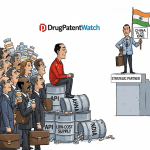
A powerful undercurrent shaping these policies is the rise of “pharmaceutical nationalism.” Governments in Russia, Turkey, and, to a lesser extent, India and Brazil, are strategically leveraging their purchasing power and regulatory authority to compel local manufacturing, foster domestic champions, and reduce reliance on imported medicines and Active Pharmaceutical Ingredients (APIs). This trend transforms procurement policies into potent non-tariff barriers, forcing multinational corporations to adopt localized production strategies to maintain market access.
This report dissects the intricate mechanics of each country’s system, from the specific formulas used to calculate price ceilings to the institutional roles of regulatory bodies like Brazil’s CMED, India’s NPPA, and China’s NHSA. It examines the real-world market impact of these policies on price erosion, market share dynamics, patient access, and manufacturer strategy. Crucially, it provides a forward-looking analysis of the 2025 policy horizon, detailing upcoming reforms such as Brazil’s proposed expansion of its ERP basket, the continuing evolution of China’s VBP, and the long-term implications of South Africa’s National Health Insurance (NHI) scheme.
For strategic decision-makers, the message is clear: success in these critical growth markets hinges on a granular, data-driven understanding of local regulatory landscapes. A “Regulatory Intelligence First” approach is paramount. The ability to anticipate policy shifts, navigate complex hurdles like Mexico’s patent linkage system, and manage perceptions of quality in markets like India will separate the market leaders from the rest. This report serves as a definitive playbook for that purpose, offering the detailed analysis and nuanced understanding required to turn regulatory complexity into a competitive advantage.
Key Takeaways
Bespoke Strategies Are Non-Negotiable: The concept of a single “emerging market” strategy is obsolete. Each nation, from Brazil to Turkey, possesses a unique regulatory architecture and market dynamic that demands a highly tailored approach to pricing, market access, and portfolio management.
Volume-Based Procurement is a Global Disruptor: China’s VBP model represents the most aggressive and impactful price control mechanism in the world. Its “winner-takes-most” approach has triggered unprecedented price erosion and forced a complete strategic rethink for both domestic and multinational players, a model other nations may seek to emulate in part.
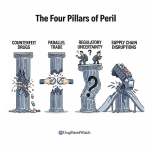
Reference Pricing is a Double-Edged Sword: External and Internal Reference Pricing remain foundational tools in markets like Brazil and Turkey. However, their effectiveness is often compromised by strategic launch sequencing by manufacturers and extreme vulnerability to macroeconomic factors, most notably the currency volatility that plagues the Turkish market, leading to significant supply chain instability.1
“Pharmaceutical Nationalism” is Reshaping Supply Chains: A dominant trend, particularly in Russia and Turkey, is the use of procurement and pricing policies to force localization. For multinational firms, a local manufacturing presence is rapidly shifting from a strategic option to a prerequisite for accessing lucrative public sector markets.4
Market Access is More Than Price: Generic market entry is frequently impeded by non-price barriers. These include formidable legal hurdles like Mexico’s patent linkage system, persistent physician and patient concerns over drug quality in India, and the operational chaos of fragmented or transitioning healthcare systems.7
The Future is Hybrid and Transparent: The coming years will likely see a convergence of policies, with governments adopting hybrid models that blend tendering for high-volume generics with value-based assessments for more complex drugs. Across all systems, the demand for greater price transparency is a constant and growing pressure, compelling companies to justify their pricing more rigorously.10
The Global Context: Navigating the Tensions in Generic Drug Pricing
The global generic drug market is built upon a fundamental, and often contentious, tension: the need to balance the societal goal of providing affordable and accessible medicines against the commercial imperative of maintaining a profitable and sustainable industry for manufacturers.12 In developed economies, this balance is often managed through a combination of market competition and negotiations with large private and public payers. In emerging markets, however, where healthcare systems are still developing and out-of-pocket expenditures can be cripplingly high for large segments of the population, governments intervene far more directly and forcefully.14 This intervention has given rise to a diverse and complex array of price control mechanisms, each with its own logic, methodology, and market-altering consequences.
An Overview of Primary Price Control Mechanisms
To understand the country-specific strategies detailed later in this report, it is essential to first establish a foundational knowledge of the primary tools governments use to regulate generic drug prices. While each nation applies these mechanisms with unique variations, they generally fall into three broad categories: reference pricing, volume-based procurement, and direct price controls.
Reference Pricing: Benchmarking for Control
Reference pricing is a widely used strategy that sets the price of a drug by comparing it to other products, either within the same country (internal) or across a basket of other countries (external).
External Reference Pricing (ERP): Also known as International Reference Pricing (IRP), this is the practice of using the price of a pharmaceutical product in a “basket” of other countries to derive a benchmark or reference price for the domestic market.10 It is a dominant policy in many European nations and is the cornerstone of the pricing systems in Turkey and, for innovative drugs, Brazil.15 The logic is straightforward: a country should not pay significantly more for a drug than its economic peers. However, its application is fraught with complexity. The choice of countries in the reference basket, the formula used (e.g., lowest price, average price), and the management of currency fluctuations can dramatically alter the outcome.1 ERP is also known to trigger strategic behavior from manufacturers, who may delay or avoid launching a new drug in a low-price country to prevent that low price from “contaminating” the price they can achieve in larger, more profitable markets.2
Internal Reference Pricing (IRP): This mechanism compares and links the prices of therapeutically similar and substitutable products within a single country.15 Typically, a payer (like a national health insurance fund) will establish a reimbursement level, or “reference price,” for a group of drugs with the same active ingredient (e.g., all 20mg omeprazole capsules). If a patient chooses a brand priced above this reference level, they must pay the difference out-of-pocket.20 This creates a powerful incentive for patients and pharmacists to choose the lowest-cost generic alternative, fostering intense price competition among manufacturers. IRP is a key component of policies designed to promote generic substitution and is used in various forms in Brazil and Turkey to set the price of generics relative to the originator product.22
Volume-Based Procurement and Tendering: The Power of Bulk Buying
Volume-Based Procurement (VBP), often implemented through a formal tendering process, operates on a simple but powerful principle: exchanging guaranteed purchase volume for steep price discounts.24 In this model, a large purchaser—typically a national or regional government health authority—consolidates the demand from numerous hospitals and clinics and invites manufacturers to bid for a contract to supply a specific drug for a set period.26
The most aggressive and globally significant example of this is China’s national VBP program. By pooling the immense purchasing power of its public hospital system, the Chinese government has been able to secure price reductions often exceeding 90% from winning bidders.27 The winner (or small group of winners) is awarded a substantial, guaranteed share of the market, while non-winning products are effectively locked out of the public system.30 This “winner-takes-most” dynamic fundamentally alters the competitive landscape. While tendering is a common practice for public sector procurement in many countries, including
South Africa, China’s model is unique in its national scale, its transparency, and its explicit linkage to quality standards through the Generic Quality Consistency Evaluation (GQCE) prerequisite.31 The primary risk of such systems, if not managed carefully, is the potential for a “race to the bottom” on price that could compromise quality or lead to supply instability if the winning bid proves to be economically unsustainable for the manufacturer.24
Price Ceilings, Mark-up Controls, and Profit Controls
This category encompasses the most direct forms of government price intervention, where authorities set an absolute maximum price for a product.
Price Ceilings (Price Caps): This is the defining feature of India’s regulatory system. The National Pharmaceutical Pricing Authority (NPPA) establishes a “ceiling price” for all drugs on the National List of Essential Medicines (NLEM). This price is the maximum at which any manufacturer can sell that specific formulation.33 Unlike reference pricing, which is a comparative benchmark, a price ceiling is an absolute limit.
Mark-up Controls: Many regulatory systems, even those using other primary mechanisms, also control the mark-ups that can be added by wholesalers and retailers along the supply chain. This is done to ensure that the price reductions achieved at the manufacturer level are passed through to the end consumer. Russia, for example, sets maximum regional mark-ups for drugs on its Essential Drugs List 35, and South Africa has a highly regulated, tiered dispensing fee for pharmacists.36
The “Patent Cliff” as a Catalyst: The Strategic Role of Patent Intelligence
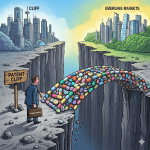
The entire ecosystem of generic drug pricing is predicated on a single, recurring event: the loss of market exclusivity for a brand-name drug. This “patent cliff” is the moment a blockbuster drug’s revenue stream is exposed to competition from lower-cost generic alternatives. The period between 2025 and 2030 is projected to be one of the most significant patent cliffs in pharmaceutical history, putting an estimated $200 billion to $300 billion in annual global revenue at risk.37 This cliff is not a threat to the generic industry; it is its foundational opportunity.
For this reason, the starting point for any generic drug strategy is not in the laboratory, but in the analysis of patent data. Patent expiration dates are not sudden events; they are known years, often decades, in advance.37 A sophisticated understanding of the patent landscape is therefore the most critical element of strategic planning. This goes far beyond simply noting the expiry date of a drug’s primary composition-of-matter patent. The reality is a complex “layer cake” of intellectual property, including secondary patents on formulations, methods of use, and manufacturing processes, as well as various regulatory exclusivities (e.g., for new clinical investigations or orphan drug status) that can extend a brand’s monopoly.37
This is where specialized business intelligence platforms like DrugPatentWatch become indispensable strategic assets. By providing comprehensive, forward-looking data on patent expirations, potential extensions, ongoing litigation, and regulatory exclusivities, these services allow generic manufacturers to build a robust pipeline of future opportunities. This intelligence enables companies to:
Prioritize R&D Investment: Focus resources on products with the clearest and nearest-term path to market entry.
Conduct IP Due Diligence: Assess the strength and complexity of a brand’s patent portfolio to anticipate potential legal challenges.
Optimize Filing Strategy: Time the submission of regulatory filings (like the Abbreviated New Drug Application, or ANDA, in the U.S.) to maximize the chances of being a first-to-market generic, which often comes with a lucrative period of market exclusivity.14
In the modern generic market, competition is not merely a scientific race to prove bioequivalence; it is a strategic game played on a regulatory chessboard. The rules of this game are defined by patent law and pricing policies. Companies that leverage superior regulatory intelligence to understand this game board, anticipate their competitors’ moves, and precisely time their own market entry are those that will achieve a sustainable competitive advantage. This transforms regulatory knowledge from a simple compliance requirement into a powerful driver of commercial success.
Country-by-Country Deep Dive: The Regulatory and Market Landscape
While global trends and foundational mechanisms provide a useful framework, the reality of generic drug pricing is intensely local. Each emerging market has forged its own path, creating a unique ecosystem of regulatory bodies, pricing formulas, and market pressures. A successful strategy demands a granular understanding of these individual landscapes. This section provides a detailed analysis of seven key markets, dissecting their price control systems and assessing the strategic implications for manufacturers and investors.
Brazil: The Hybrid Model of Reference Pricing and Price Caps
Brazil, Latin America’s largest pharmaceutical market, employs a sophisticated and multifaceted price control system. It is a hybrid model that combines elements of internal and external reference pricing with direct price caps, all overseen by a powerful dual-gatekeeper regulatory structure. The system has been successful in fostering a robust domestic generics industry but is now at a critical juncture, with major reforms proposed for 2025 that could significantly alter the market dynamics.
Regulatory Gatekeepers: Navigating ANVISA and CMED
Market access in Brazil requires navigating two distinct and powerful federal bodies, each with a specific mandate:
ANVISA (Agência Nacional de Vigilância Sanitária): The Brazilian Health Regulatory Agency is the scientific and technical gatekeeper. Analogous to the U.S. FDA, ANVISA is responsible for granting marketing authorizations for all pharmaceutical products. Its review focuses on ensuring the quality, safety, and efficacy of drugs, including the verification of bioequivalence for generics.42 ANVISA’s approval is the mandatory first step before any pricing considerations can begin.
CMED (Câmara de Regulação do Mercado de Medicamentos): The Drug Market Regulation Chamber is the economic gatekeeper. As an inter-ministerial body, CMED holds the exclusive authority to set and regulate drug prices across the country.22 No drug, whether innovative or generic, can be commercialized in Brazil without a maximum price being approved and published by CMED. This centralized price-setting power makes CMED the most critical stakeholder in determining the commercial viability of a product in the Brazilian market.
The Pricing Formula: Deconstructing the Generic Discount and Public Procurement
CMED’s pricing methodology is formulaic and depends on the category of the drug. For generics, the system is designed to ensure immediate and predictable cost savings relative to the originator product.
Internal Reference Pricing (IRP) for Generics: The foundational rule for generic pricing in Brazil is a direct link to the originator, or “reference,” medicine. Upon market entry, the maximum ex-factory price (PF, Preço de Fábrica) of a generic drug must be set at least 35% below the PF of its corresponding reference product.22 This mandatory discount establishes a clear and immediate price ceiling, creating a predictable pricing environment for new generic entrants.
External Reference Pricing (ERP) for Innovators: The price of the reference product itself is determined by a different mechanism. For new, innovative drugs, CMED employs an ERP system. It compares the manufacturer’s proposed price against the prices in a basket of reference countries. The approved price in Brazil cannot exceed the lowest price found in this basket.22 This initial, ERP-derived price for the innovator then becomes the benchmark against which all future generics will be discounted by 35%.
The PMVG and Mandatory Public Discount: Brazil operates a distinct two-tiered pricing system for the public and private markets. For sales to public sector entities (federal, state, and municipal governments), a mandatory discount known as the Price Adequacy Ratio (CAP, Coeficiente de Adequação de Preços) is applied to the approved ex-factory price (PF). The resulting price is the Maximum Government Sales Price (PMVG, Preço Máximo de Venda ao Governo).22 The CAP is updated annually and ensures that the government, as the country’s largest single purchaser of medicines, pays significantly less than the private retail market. This creates a critical strategic consideration for manufacturers, who must model profitability based on a blended price across both the private (PF) and public (PMVG) channels.
Market Impact: Competition, Access, and Strategic Challenges
The implementation of the Generic Drug Act in 1999, which established the regulatory framework for bioequivalent generics, has had a profound impact on the Brazilian market. It successfully stimulated competition, leading to significant price reductions and a substantial increase in the population’s access to essential medicines.57 The generic drug market in Brazil was valued at USD 22.4 billion in 2024 and is forecast to grow at a robust compound annual growth rate (CAGR) of 6.43% to reach USD 39.3 billion by 2033.58
Despite these successes, challenges persist. Out-of-pocket expenditure on medicines remains high for a large portion of the population, indicating that affordability is still a major concern.57 The market is intensely competitive, featuring strong domestic players like EMS Pharma, Eurofarma, and Ache Laboratórios, which fiercely contest market share with multinational corporations.60 Furthermore, the rigidity of the CMED pricing system can create commercial viability challenges, particularly for products with complex manufacturing or niche indications, and companies have sometimes faced difficulties in getting extraordinary price adjustments approved.49
The 2025 Horizon: Analyzing Proposed Pricing Policy Reforms
After two decades with the same core framework, Brazil’s pricing system is on the cusp of a major overhaul. In 2025, CMED initiated Public Consultation No. 1/2025, proposing significant revisions to the foundational Resolution No. 2/2004.63 These changes aim to modernize the system, increase transparency, and better accommodate new technologies like biosimilars and products of incremental innovation.
Key proposed changes include:
Expanded ERP Basket: The list of reference countries for setting the price of innovative drugs is set to expand significantly, from the current 10 to 15. New countries proposed for inclusion are Germany, Japan, Mexico, Norway, South Africa, and the United Kingdom, while New Zealand would be removed.63
Stricter Comparison Rules: The proposal increases the minimum number of reference countries in which a drug must be marketed to establish a final price, raising the threshold from three to five.65
New Categories and an “Innovation Bonus”: The reform introduces new, specific pricing categories for biosimilars (whose price may not exceed 80% of the reference biologic’s price) and for products resulting from ownership transfers.54 Critically, it also proposes an “innovation bonus” of up to 35% above the ERP-derived price for products that can demonstrate a proven added clinical benefit, a move designed to reward incremental innovation.54
While these reforms aim to bring clarity and reward innovation, they also introduce a significant strategic paradox. The government’s effort to modernize the pricing framework appears to be working at cross-purposes. On one hand, the introduction of an “innovation bonus” signals a willingness to pay a premium for drugs that offer tangible clinical advantages, a positive development for R&D-focused companies.54 However, this incentive is potentially undermined by the simultaneous expansion of the ERP basket. The core principle of Brazil’s ERP system is that the domestic price cannot exceed the
lowest price found in the reference basket.65 By adding more countries to this basket—especially diverse markets like Japan, South Africa, and the UK—and by requiring a comparison against a larger number of them, the reform dramatically increases the statistical probability of finding a lower reference price. This will exert strong downward pressure on the initial price ceiling for all new drugs. Consequently, a manufacturer might find itself eligible for a 35% innovation bonus, but this bonus would be applied to a base price that is already substantially lower than what would have been achievable under the old, smaller basket. This creates a complex strategic calculation for companies, forcing them to weigh the uncertain potential of an innovation premium against the near certainty of a lower base price, which could impact launch decisions for high-value therapies.
India: The Market-Based Formula of the “Pharmacy of the World”
India’s position as the “pharmacy of the world” is built on its massive capacity for producing high-quality, low-cost generic medicines. It is the largest global provider of generics by volume, supplying approximately 20% of the world’s demand.66 The country’s domestic price control system reflects this market reality, employing a unique market-based formula to regulate the prices of essential medicines while allowing for more flexibility in the broader, non-essential drug market. The system is overseen by a powerful regulator, but its effectiveness is continually challenged by issues of quality perception and the complex dynamics between branded and unbranded generics.
Regulatory Oversight: The NPPA and the DPCO Framework
The central authority for drug pricing in India is the National Pharmaceutical Pricing Authority (NPPA). Established in 1997, the NPPA is an independent body under the Department of Pharmaceuticals tasked with fixing and revising the prices of controlled drugs, enforcing these prices, and monitoring the prices of decontrolled drugs.33
The NPPA’s power derives from the Drugs (Prices Control) Order (DPCO), which is issued by the central government under the authority of the Essential Commodities Act of 1955. This Act grants the government sweeping powers to control the production, supply, and distribution of commodities deemed essential, including pharmaceuticals.34 The DPCO has been revised several times over the decades, with the current framework established by the DPCO, 2013.33
The Pricing Formula: A Tale of Two Tiers
India’s pricing system creates a clear distinction between drugs deemed “essential” and all other formulations, resulting in a two-tiered control mechanism.
Scheduled Drugs (Price Controlled): The core of the price control regime applies to “scheduled formulations”—drugs whose active ingredients are listed in Schedule I of the DPCO. This schedule is directly based on the National List of Essential Medicines (NLEM), which is periodically updated by the Ministry of Health and Family Welfare to reflect the country’s priority healthcare needs.72 For these essential medicines, the NPPA sets a “ceiling price,” which is the maximum price any manufacturer can charge. The calculation is based on a market-based formula rather than the manufacturer’s cost of production. The process is as follows:
The NPPA gathers market data for all brands and generic versions of the drug that have a market share of at least 1%.
It calculates the simple average of the Price to Retailer (PTR) for all these versions.
A 16% margin for the retailer is added to this average PTR to arrive at the final ceiling price.33
Non-Scheduled Drugs (Price Monitored): The vast majority of drugs sold in India are not on the NLEM and are thus classified as “non-scheduled.” For these products, manufacturers are free to set their launch prices without prior approval from the NPPA.33 However, this freedom is not absolute. Paragraph 20 of the DPCO, 2013, empowers the government to monitor the prices of these drugs. Crucially, it prohibits manufacturers from increasing the Maximum Retail Price (MRP) of any non-scheduled drug by more than 10% in any given 12-month period.79 The NPPA actively monitors market data, and if it detects price increases beyond this 10% cap or identifies cases of “unreasonable” pricing, it has the authority to intervene and fix a ceiling price for that non-scheduled drug in the public interest.33
Market Impact: Generics, Quality, and Public Schemes
The Indian pharmaceutical market is characterized by a unique and complex set of dynamics that directly influence the effectiveness of its pricing policies.
Branded vs. Unbranded Generics: Unlike in many Western markets where “generic” implies an unbranded product sold under its chemical name, the Indian market is dominated by “branded generics.” These are off-patent drugs sold under a distinct brand name and actively promoted to physicians.83 They compete with both the original innovator brand and with lower-priced “unbranded” generics. This creates a multi-tiered market where price is not the only competitive factor; brand recognition, physician trust, and perceived quality play enormous roles.85
The Quality Conundrum: The single greatest challenge facing the Indian generics market is the issue of quality control. Numerous incidents of substandard or contaminated drugs, particularly in export markets, have damaged the reputation of some Indian manufacturers and created a “trust deficit” among both patients and prescribers.86 While India is home to many world-class, FDA-approved manufacturing facilities, a fragmented regulatory system, lack of resources for inspections, and instances of corruption have allowed lower-quality products to persist in the domestic market.7 This perception of variable quality is a primary reason why physicians and patients often prefer more expensive, well-known branded generics over their cheaper, unbranded counterparts.
The Jan Aushadhi Scheme: To counter high out-of-pocket spending and promote the use of affordable unbranded generics, the government launched the Pradhan Mantri Bhartiya Janaushadhi Pariyojana (PMBJP). This scheme establishes dedicated retail outlets, known as Jan Aushadhi Kendras, that sell a basket of high-quality, unbranded generic medicines at prices significantly lower than branded alternatives—often by 50-90%.91 The network of these stores has expanded rapidly, reaching over 10,000 by early 2025. While the scheme has generated substantial savings for consumers, it continues to face challenges related to ensuring consistent supply and overcoming the public’s lingering skepticism about the quality of low-priced medicines.91
The Indian pricing system, therefore, creates a paradox. While the government aims for affordability through price controls and public schemes, the unresolved issue of quality assurance sustains a large market for higher-priced branded generics. Physicians and patients, seeking a reliable indicator of quality in a market with perceived inconsistencies, often use a familiar brand name as a proxy for trust. This allows manufacturers to command a price premium for branded generics over their unbranded equivalents, even though they are therapeutically identical. This dynamic means that price controls alone are insufficient to achieve maximum cost efficiency. True market optimization in India requires a parallel, credible, and transparent effort to enforce uniform quality standards across all generic products, thereby building the trust necessary for the market to compete primarily on price.
The 2025 Horizon: New DPCO Amendments and Policy Shifts
The regulatory landscape in India continues to evolve, with recent amendments and policy clarifications aimed at closing loopholes and ensuring affordability.
Off-Patent Pricing Rule (May 2023 Amendment): A significant amendment to the DPCO, 2013, introduced a specific formula for drugs coming off patent. For a patented drug that is on the NLEM, its ceiling price must be reduced by 50% upon patent expiry. This price will be effective for one year, after which the standard market-based formula will be applied for subsequent revisions.95 This move is designed to prevent originator companies from maintaining high prices long after their monopoly has ended and to accelerate the cost-saving benefits of generic entry.
Annual WPI Adjustment and Stricter Monitoring: The annual adjustment of ceiling prices for scheduled drugs based on the Wholesale Price Index (WPI) remains a key feature. However, the adjustment for 2024-2025 was a mere 0.00551%, a stark contrast to the double-digit increases of previous years, which has squeezed manufacturer margins.97 Concurrently, the NPPA has signaled a much stricter enforcement of the 10% annual price increase cap for non-scheduled drugs, issuing an office memorandum in July 2025 to remind manufacturers of their obligations and the penalties for non-compliance.79
Pharma Pricing Policy Amendment 2025: The government is advancing a new policy amendment that aims to broaden the scope of price caps to include a wider range of essential drugs, with a particular focus on life-saving generics, cancer treatments, and critical antibiotics. This will be coupled with enhanced real-time monitoring through the Integrated Pharmaceutical Database Management System (IPDMS 2.0), which requires companies to submit regular price and sales data.98 These moves indicate a clear trajectory towards greater price regulation and more rigorous enforcement across the Indian pharmaceutical market.
China: The Disruptive Force of Centralized Procurement
No country has reformed its pharmaceutical pricing system more radically or with greater global impact in recent years than China. Moving away from a fragmented and opaque system, the Chinese government has implemented a highly centralized, data-driven, and aggressive procurement model that has fundamentally reshaped the market for off-patent drugs. This system, known as Volume-Based Procurement (VBP), has become the dominant price-setting mechanism, leading to unprecedented price erosion and forcing a strategic reckoning for both domestic and multinational pharmaceutical companies.
Regulatory Powerhouses: The Roles of the NHSA and NMPA
The transformation of China’s pharmaceutical landscape is driven by two key government bodies:
NHSA (National Healthcare Security Administration): Established in 2018, the NHSA has rapidly become the most powerful player in the Chinese healthcare ecosystem. It acts as the country’s single national payer, managing the basic medical insurance fund. Its primary levers of power are the two main pricing and access programs: the National Reimbursement Drug List (NRDL) and the national Volume-Based Procurement (VBP) initiative.99 By controlling both the purse strings and the access rules, the NHSA wields immense negotiating power.
NMPA (National Medical Products Administration): The NMPA is China’s national drug regulatory agency, responsible for marketing authorization, setting quality standards, and post-market surveillance.102 A critical function of the NMPA in the context of generic pricing is its oversight of the Generic Quality Consistency Evaluation (GQCE), a mandatory process that has become a crucial gatekeeper for market access.
The Pricing Revolution: VBP and NRDL Negotiations
China’s approach to drug pricing is a two-pronged strategy that separates mature, multi-source generics from newer, innovative drugs.
Volume-Based Procurement (VBP): VBP is the primary price control mechanism for off-patent generic drugs. The core concept is “exchanging volume for price”.25 The process works as follows:
Drug Selection: The NHSA selects a list of high-volume, high-expenditure drugs that have multiple generic manufacturers.
Volume Consolidation: Public medical institutions across the country report their anticipated annual demand for these drugs. The NHSA then consolidates this demand, guaranteeing a massive purchase volume (typically 60-80% of the total market) for the winning bidders.30
Quality Prerequisite (GQCE): Only manufacturers whose products have passed the Generic Quality Consistency Evaluation (GQCE) are eligible to bid. The GQCE requires a generic drug to prove it is bioequivalent in quality and efficacy to the originator product, effectively raising the quality bar for the entire domestic industry.31
Competitive Bidding: Eligible companies submit sealed bids. The process is intensely competitive, with the lowest price being the primary determinant of success. Winning bids frequently involve price cuts of 50% to over 90% compared to the pre-VBP prices.27
Market Allocation: A limited number of winners are awarded contracts to supply the guaranteed volume for a one- to three-year period. Non-winning companies, including the originator brand, lose access to the vast majority of the public hospital market for that drug.
National Reimbursement Drug List (NRDL) Negotiations: For innovative drugs, patented drugs, and some high-value specialty generics not yet suitable for VBP, market access is achieved through inclusion on the NRDL. This process involves direct, face-to-face price negotiations between the manufacturer and the NHSA. To gain reimbursement coverage, companies must agree to substantial price reductions, which have averaged over 60% in recent years.99
Market Impact: Unprecedented Price Erosion and Shifting Market Shares
The impact of VBP has been swift and profound, fundamentally altering the commercial model for pharmaceuticals in China.
Dramatic Price Collapse: VBP has triggered a rapid and severe collapse in the prices of targeted generic drugs. For example, the first national VBP for coronary stents resulted in an average price reduction of 93%.112 This extreme price erosion has compressed margins to razor-thin levels.
Radical Market Share Realignment: The VBP system creates a binary outcome. Winning the tender guarantees a massive, immediate market share, while losing means an almost complete loss of the public hospital market.29 This has disproportionately benefited large domestic generic manufacturers who have the scale and cost structure to win bids at very low prices, while originator brands and smaller players have seen their market shares decimated.
Strategic Pivot by Multinational Corporations (MNCs): Faced with the unprofitability of competing in VBP tenders, many MNCs have been forced to radically alter their China strategies. The prevailing approach is to deprioritize or divest mature, off-patent product portfolios and focus resources almost exclusively on launching new, innovative drugs that can secure a period of favorable pricing through NRDL negotiation before they become eligible for VBP.112 This has led to an increase in partnerships where MNCs out-license the commercialization rights for their older products to local Chinese companies.
The VBP system is not merely a cost-containment tool; it functions as a powerful industrial policy. By linking market access to stringent quality standards (GQCE) and rewarding only the most cost-efficient producers, the Chinese government is actively engineering the consolidation of its historically fragmented domestic pharmaceutical industry. The “winner-takes-most” dynamic systematically weeds out smaller, lower-quality manufacturers, fostering the emergence of a handful of large, modern, and efficient domestic champions. These companies, having honed their operations on the anvil of VBP, are increasingly positioned to compete not just within China, but on the global stage. The government is using its immense purchasing power to simultaneously lower healthcare costs and build a globally competitive domestic industry.
The 2025 Horizon: The Future of VBP and Strategic Responses for Survival
The VBP policy is now an entrenched and “normalized” feature of the Chinese market, and its scope continues to expand.119 The government’s goal is to have up to 500 drugs included in national or provincial VBP by the end of 2024.120
The 11th round of national VBP, announced in July 2025, signals an evolution and maturation of the policy.121 The process now includes a more nuanced shortlisting phase that screens out products with ongoing intellectual property disputes or significant clinical usage risks. There is also a higher bar for generic quality, with more stringent GMP compliance requirements. Importantly, the rules are becoming more flexible; the lowest price does not automatically guarantee winning the bid, and losing bidders may be allowed to retain a larger share of the post-tender market, reflecting a more balanced consideration of factors beyond pure price.121
Looking ahead, the VBP model is expanding beyond simple oral tablets to encompass more complex formulations like injectables, biologics (with insulin serving as the first major test case), and medical devices.121 This continuous expansion means that virtually no high-volume, off-patent product category will remain untouched. For all pharmaceutical companies operating in China, adapting to the VBP reality is not a choice but a necessity for survival.
Table 3: Strategic Responses of Pharmaceutical Companies to China’s VBP
Challenge Posed by VBP
Strategic Response
Rationale / Goal
Real-World Example / Tactic
Extreme Price Erosion & Margin Collapse
Portfolio Rationalization & Focus on Innovation
Shift resources from low-margin, commoditized assets to high-margin, innovative drugs not yet subject to VBP.
Divesting or out-licensing mature, off-patent product lines to local Chinese partners who can manage them more cost-effectively.117
Loss of Public Hospital Access for Non-Winners
Channel Diversification
Capture the out-of-pocket, private insurance, and retail pharmacy markets that are not directly controlled by VBP.
Building partnerships with major retail pharmacy chains and investing in digital health platforms and e-commerce channels to reach patients directly.116
Achieve the lowest possible cost of goods sold (COGS) to be able to submit competitive bids and maintain a viable margin.
Investing in advanced manufacturing technologies (Manufacturing 4.0) and, for some domestic players, backward integration into API production to control costs.115
Need for Local Market Expertise & Scale
Strategic Partnerships & Joint Ventures
Leverage a local partner’s manufacturing scale, distribution network, and understanding of the government procurement system.
MNCs forming joint ventures or licensing agreements with large Chinese pharmaceutical companies to manage VBP-affected products and navigate the local landscape.125
Russia: The State-Driven Push for Pharmaceutical Sovereignty
The Russian pharmaceutical market operates under a framework heavily influenced by state industrial policy and a strategic imperative for national security and self-sufficiency. Pricing controls are targeted, focusing on a specific list of essential medicines, but the government’s broader “Pharma 2030” strategy uses procurement and regulatory levers to fundamentally reshape the competitive landscape in favor of domestic production. For foreign generic manufacturers, this creates a market where price is only one part of the access equation; localization is increasingly the key.
Regulatory Framework: A Triumvirate of Control
The regulation of pharmaceuticals in Russia is managed by a trio of government bodies with overlapping and distinct responsibilities:
Ministry of Health (Minzdrav): As the primary federal executive body for healthcare, the Ministry of Health is responsible for drafting and implementing national health policy, including the crucial task of maintaining and updating the list of essential drugs subject to price controls.127
Roszdravnadzor (Federal Service for Surveillance in Healthcare): This agency acts as the primary watchdog for the sector. Its responsibilities include monitoring the quality of medicines, overseeing clinical trials, and, critically, monitoring the prices of controlled drugs in the market to ensure compliance with registered limits.129
FAS (Federal Antimonopoly Service): While its broader mandate is to ensure fair competition across the economy, the FAS plays a direct and powerful role in pharmaceutical pricing. It is involved in the economic analysis and approval of maximum selling prices for essential drugs and actively investigates anticompetitive practices in state tenders.132
The Pricing Levers: The Essential Drugs List (EDL) and Price Reassessment
Russia’s system of direct price control is not universal; it is targeted specifically at medicines deemed vital for the nation’s health.
The Essential Drugs List (EDL): The cornerstone of Russian price regulation is the List of Vital and Essential Drugs (VED, or EDL). For any drug included on this list, the manufacturer must register a maximum ex-factory selling price with the Ministry of Health.35 This registered price serves as a national ceiling. Regional governments are then permitted to add regulated wholesale and retail mark-ups to this price, creating the final price for the consumer.35 Drugs that are not on the EDL are not subject to these direct price controls, and their prices are determined by market forces, though they are still monitored by Roszdravnadzor for excessive increases.130
Price Setting Methodology: Inclusion on the EDL is a prerequisite for a drug to be considered for reimbursement in state-funded healthcare programs.139 The price-setting process for generics is linked to the originator. The price for the first generic must not exceed 80% of the registered price for the “referral” (originator) drug.140 The approval process involves a comparative analysis of international drug prices (a form of ERP) and an economic evaluation conducted by the FAS to ensure the price is justified.134
Mandatory Price Reassessment: The government maintains constant downward pressure on the prices of EDL drugs through a mandatory reassessment process. Periodically, manufacturers must re-register their prices. Crucially, this process does not allow for any price increases; if the calculated price based on new data is higher than the currently registered price, the existing lower price remains in effect.136
Market Impact: The “Pharma 2030” Strategy and the Localization Imperative
The most significant force shaping the Russian pharmaceutical market is the government’s industrial policy, “Pharma 2030.” This strategy, an evolution of the earlier “Pharma 2020” plan, has the explicit goal of achieving pharmaceutical sovereignty by drastically reducing the country’s dependence on imported drugs and, critically, imported Active Pharmaceutical Ingredients (APIs).5 The ambitious target is to have 80-90% of all strategically important medicines produced domestically, from API synthesis to finished dosage form.144
To achieve this, the government uses its public procurement system as a powerful strategic lever:
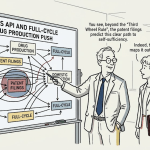
Procurement Preferences (The “Third Wheel” Rule): In state tenders for medicines, a rule often referred to as the “third wheel” or “three is a crowd” rule is applied. This regulation disqualifies foreign-made products from a tender if at least two bids are submitted by manufacturers from within the Eurasian Economic Union (EAEU).4 This effectively reserves a large portion of the lucrative state procurement market for local producers.
This policy has created a challenging environment for foreign companies, making a purely import-based business model increasingly unsustainable. The clear incentive is to “localize” production, either by building manufacturing facilities in Russia or by entering into partnerships or technology transfer agreements with Russian companies.147 As a result, the market for generic drugs continues to grow, driven by both government promotion of local production and a strong consumer preference for more affordable alternatives.143
The “Pharma 2030” strategy, particularly through its procurement preferences, functions as a highly effective non-tariff barrier to trade. Rather than imposing import duties, which are transparent and subject to international trade rules, Russia leverages its substantial state purchasing power to achieve its industrial policy goals. The “third wheel” rule presents multinational firms with a stark choice: either forfeit access to the vast public procurement market or make significant capital investments in local manufacturing. This dynamic compels the transfer of technology, capital, and expertise into the Russian economy. For any generic pharmaceutical company, this means that a long-term strategy for the Russian market must include a plan for localization.
The 2025 Horizon: Evolving Price Controls and Market Access
Looking ahead, the Russian government is doubling down on its strategy of localization and domestic development. The FAS continues to actively approve lower prices for new domestic generics, often highlighting the significant discount compared to the foreign originator product as a public policy success.135
There is also a push towards greater efficiency and transparency in the price control system. A new initiative aims to fully automate price monitoring by integrating pricing data directly into the Federal System for Monitoring the Movement of Medicines. This will allow for real-time tracking of both wholesale and retail prices, enhancing the government’s ability to detect and penalize overcharging.150 The overarching trends for 2025 and beyond are clear: continued pressure on the prices of essential medicines, an increasingly challenging market for imported products, and a growing strategic necessity for all players to align with the government’s localization agenda.
South Africa: A Tale of Two Sectors and a System in Transition
South Africa’s pharmaceutical market is a study in contrasts, a deeply fragmented system defined by a stark divide between its public and private healthcare sectors. This duality has given rise to two entirely separate pricing and procurement systems, resulting in vast disparities in access and cost. The private sector is governed by a unique and transparent price control mechanism, while the public sector relies on competitive tendering. The market is further complicated by the strategic behavior of originator companies and the looming, system-wide transformation promised by the new National Health Insurance (NHI) scheme.
Regulatory Authority: SAHPRA and the Pricing Committee
The regulatory landscape in South Africa is split between quality control and price control:
SAHPRA (South African Health Products Regulatory Authority): Established in 2018 to replace the former Medicines Control Council, SAHPRA is the national regulatory body responsible for registering all health products, including medicines and medical devices. Its mandate is to ensure the safety, efficacy, and quality of these products.151 SAHPRA does not have a direct role in setting medicine prices.
National Department of Health (NDoH) and the Pricing Committee: Price regulation falls under the purview of the NDoH, guided by recommendations from a statutory Pricing Committee. These bodies are responsible for implementing and overseeing the pricing regulations stipulated in the Medicines and Related Substances Act.160
The Pricing Divide: Public Tenders vs. Private Sector SEP
South Africa’s two-tiered healthcare system has led to two fundamentally different pricing mechanisms for generic drugs:
Public Sector (Tender System): The public sector, which serves the majority of the population, procures medicines through a centralized, competitive national tendering system. The government consolidates demand from public hospitals and clinics and awards large-volume contracts to the lowest bidders. This pooled procurement model gives the state significant purchasing power, resulting in very low medicine prices, in some cases less than 10% of the price for the same product in the private sector.11
Private Sector (Single Exit Price – SEP): The private sector, which serves the minority of the population covered by private medical insurance or able to pay out-of-pocket, is governed by the Single Exit Price (SEP) mechanism. The SEP is the maximum price at which a manufacturer or importer can sell a specific medicine to any customer in the private supply chain.11
Calculation: The SEP is composed of the ex-manufacturer price, a logistics fee (negotiated between the manufacturer and distributor), and a standard Value Added Tax (VAT).166
Transparency: A key feature of the SEP system is its transparency. Manufacturers must sell at this single price to all private sector buyers, and discounts, rebates, or other incentives are prohibited.11 This was designed to eliminate the opaque and often inflationary pricing practices that existed before the regulation.
Annual Adjustment: The SEP can be increased only once a year, by a percentage determined by the Minister of Health based on economic factors like the consumer price index.160
Dispensing Fees: At the final point of sale, pharmacists and dispensing doctors add a regulated, tiered dispensing fee to the SEP to arrive at the final price for the patient.36
Market Impact: Pseudo-Generics and Price Disparities
The dual-system has created significant market distortions and challenges to achieving widespread affordability.
Vast Price Differentials: The most obvious impact is the enormous gap between public and private sector prices for the same medicines, highlighting the power of centralized tendering versus the SEP system.11
The “Pseudo-Generic” Problem: A major challenge in the private market is the prevalence of “pseudo-generics,” also known as authorized generics. These are products identical to the originator drug, launched by the originator company itself (or a subsidiary) under a different brand name, often strategically released just before the patent on the original drug expires.160 This practice allows the originator company to capture a first-mover advantage in the generics market, establish brand loyalty with prescribers, and deter or delay the entry of “true” independent generics. Crucially, pseudo-generics are often priced only slightly below the originator and significantly higher than true generics, thereby limiting the potential cost savings from competition.176
Delayed ERP Implementation: Although South Africa has had regulations on the books for years to implement an External Reference Pricing (ERP) system to benchmark innovator launch prices against a basket of other countries, this policy has never been fully implemented.11 This regulatory gap leaves the initial launch price of new medicines largely at the discretion of the manufacturer, which sets a high baseline for future generic competition in the private sector.
The 2025 Horizon: The Looming Impact of National Health Insurance (NHI)
The future of pharmaceutical pricing in South Africa is set to be completely redefined by the National Health Insurance (NHI) Act, which was signed into law in May 2024.180 The NHI aims to create a single-payer universal health coverage system for the entire country.
A Unified Procurement System: The NHI Fund will become the single, dominant purchaser of healthcare services, medicines, and medical products for all South Africans.182 This will effectively eliminate the current public/private divide and consolidate the entire country’s purchasing power into one entity.
The Future of Pricing: The NHI will leverage this massive monopsony power to negotiate prices. It is widely expected that the procurement model will resemble the current public sector’s highly effective tendering system, leading to significant downward pressure on prices across the board and the erosion of the high-margin private market that exists today.182
A Long Transition: The implementation of the NHI will be a long and complex process, phased in over a period of up to 15 years. Phase 1 is slated to run from 2023 to 2026.180 During this extended transition, the existing dual system will likely remain in place, but the strategic direction is clear.
The NHI represents the ultimate price control mechanism for South Africa. It will fundamentally transform the market by collapsing the profitable private sector into a government-controlled, tender-based procurement system. The current public tender system, which achieves prices up to 90% lower than the private SEP system, offers a clear preview of the pricing environment to come.162 For any pharmaceutical company, the long-term strategic outlook for South Africa must account for this shift. The future will demand a commercial model focused on high-volume, low-margin production and exceptional supply chain efficiency to remain viable in a single-payer landscape. The NHI is not just a financing reform; it is a market-wide price reset.
Mexico: Navigating Fragmentation and High Barriers to Entry
Mexico presents a unique and challenging landscape for generic drug manufacturers. Unlike many of its emerging market peers, it lacks a comprehensive, centralized price control system for generics in the private sector. Instead, the market is shaped by a highly fragmented public healthcare system, a history of chaotic procurement reforms, and, most critically, a powerful legal barrier in the form of a strict patent linkage system. This combination of factors makes market access in Mexico less about navigating price formulas and more about overcoming significant legal and bureaucratic hurdles.
Regulatory Labyrinth: COFEPRIS and a Shifting Procurement Landscape
The Mexican regulatory and procurement environment has been marked by instability and complexity.
COFEPRIS (Federal Commission for the Protection against Sanitary Risks): As the national regulatory authority, COFEPRIS is responsible for all drug approvals, ensuring products meet quality, safety, and efficacy standards.184 However, the agency has been historically plagued by significant backlogs and lengthy approval timelines, which in themselves act as a substantial barrier to market entry for new generics.184
A History of Procurement Upheaval: The public procurement system, which represents a massive portion of the pharmaceutical market, has undergone several disruptive reforms. The system has shifted from a decentralized model to the creation and subsequent dissolution of the Institute of Health for Welfare (INSABI), a period that included a controversial and largely unsuccessful outsourcing of procurement to the United Nations Office for Project Services (UNOPS).184 As of 2025, the system is again being centralized under the authority of IMSS-Bienestar, with the state-owned company Birmex managing the consolidated purchasing process.192 This constant churn has created profound instability, leading to severe supply chain disruptions and chronic medicine shortages across the public sector.195
Pricing Mechanisms: A Fragmented System
Mexico’s approach to pricing is notably different from the other markets in this analysis, characterized by a lack of direct controls on generics and a reliance on negotiation for patented drugs in the public sphere.
No Direct Generic Price Controls: In the private retail market, there are no direct government-imposed price controls or ceilings on generic drugs. Prices are determined by market competition, wholesaler and pharmacy mark-ups, and the purchasing power of consumers.199
Voluntary MRP for Patented Drugs: For patented products, a voluntary Maximum Retail Price (MRP) scheme exists, overseen by the Ministry of Economy. This scheme uses external reference pricing as a guide, but participation by pharmaceutical companies is optional, and there are no penalties for non-compliance, making it a relatively weak price control mechanism.201
Negotiated Public Sector Prices: To control costs in the public sector, the government established the Coordinating Commission for Negotiating the Price of Medicines (CCPNM) in 2008. This body centralizes price negotiations for patented, single-source drugs purchased by public institutions like the Mexican Social Security Institute (IMSS) and the Institute for Social Security and Services for State Workers (ISSSTE), leveraging the government’s collective bargaining power to achieve significant discounts.206
Market Impact: The Dominant Hurdle of Patent Linkage
The single most defining feature of the Mexican generic drug market, and the greatest barrier to entry, is its robust patent linkage system.
The Linkage System: This system legally connects the drug registration process at COFEPRIS with the patent system managed by the Mexican Institute of Industrial Property (IMPI). COFEPRIS is legally prohibited from granting a marketing authorization for a generic drug if a patent covering the originator product is listed in the official “Linkage Gazette”.9
A Barrier to Competition: While intended to protect valid patents, this system is frequently criticized for being used by originator companies to delay generic competition. By listing secondary patents on new formulations, uses, or manufacturing processes—a strategy known as “evergreening”—innovator companies can often block generic entry for years after the core composition-of-matter patent has expired.9
Litigation as a Prerequisite: This forces generic manufacturers to engage in lengthy and expensive patent litigation to challenge the validity or listing of these secondary patents as a prerequisite to gaining market access. The primary cost of entry into the Mexican market is often legal fees, not R&D.9
Delayed Generic Entry and High Prices: The direct consequence of this system is a significant delay in the market entry of generics. On average, it takes more than two years for the first generic to launch in Mexico after a patent expires, compared to near-immediate entry in markets like the United States.198 This extended monopoly period allows originator drugs to maintain high prices for longer, effectively limiting access to more affordable alternatives for the Mexican population.
In Mexico, the most potent “price control” mechanism is not a direct regulation but rather the indirect market-distorting power of the patent linkage system. By systematically delaying the arrival of low-cost competitors, the system artificially prolongs the monopoly pricing period for originator drugs. It effectively controls the price of a molecule by preventing the very existence of lower-priced alternatives. This makes a robust intellectual property and legal strategy the most critical component for any generic manufacturer planning to enter the Mexican market.
The 2025 Horizon: The Shift to IMSS-Bienestar and the Quest for Stability
The outlook for the Mexican market is focused on attempts to bring stability and efficiency to its beleaguered public health system.
Procurement Centralization: The transition to a centralized procurement model under IMSS-Bienestar and Birmex for 2025-2026 is the government’s latest attempt to resolve the persistent problems of drug shortages and supply chain inefficiencies.192 The success of this new model will be a key determinant of market stability in the coming years.
Regulatory Streamlining: COFEPRIS is actively working to reduce its significant application backlog and is increasingly using reliance pathways, which expedite the approval of drugs that have already been authorized by trusted international regulatory agencies like the U.S. FDA or the EMA.185
The Unchanged Hurdle: Despite these administrative improvements, the fundamental challenge of the patent linkage system remains firmly in place. It will continue to be the primary strategic battleground for generic companies seeking to compete in Mexico.
Turkey: The Dominance of ERP and the Currency Conundrum
The Turkish pharmaceutical market is one of the most rigorously price-controlled environments among emerging economies. Its system is defined by an unwavering reliance on External Reference Pricing (ERP), compounded by the unique and highly impactful policy of using a government-fixed currency exchange rate. This combination, along with mandatory discounts and a strong push for localization, creates a market characterized by extremely low prices, but also by significant challenges to manufacturer profitability and chronic issues with drug availability.
Regulatory Control: The Turkish Medicines and Medical Devices Agency (TITCK)
The Turkish Medicines and Medical Devices Agency (TITCK) is the central regulatory authority in Turkey. It is a comprehensive body responsible for the entire lifecycle of pharmaceutical products, including licensing and marketing authorization, price setting, and reimbursement decisions.216 This consolidation of power gives TITCK significant control over market access and commercial viability.
The Pricing Formula: A Multi-Layered System of Price Suppression
Turkey’s pricing mechanism is a multi-stage process designed to achieve some of the lowest drug prices in Europe.
External Reference Pricing (ERP): This is the foundation of the entire system. To set the price of any drug (innovator or generic), TITCK looks at the ex-factory price in a basket of five reference countries: France, Spain, Italy, Portugal, and Greece. The Turkish reference price is set at the lowest price found among these countries.15
The Fixed Euro Exchange Rate: This is the most contentious and market-distorting element of the Turkish system. The reference price, which is determined in Euros, is not converted into Turkish Lira at the current market exchange rate. Instead, it is converted using a fixed exchange rate that is set annually by the government’s Price Evaluation Commission. This official “pharma-Euro” rate is deliberately set at a significant discount to the real exchange rate—historically at 60% of the previous year’s average, though recent ad-hoc adjustments have been made due to extreme currency volatility.3 In late 2022, for example, the official rate was equivalent to only 54% of the real market rate.216 This policy artificially and dramatically suppresses the final price of medicines in Turkish Lira.
Generic Pricing Rules: The system has a specific rule for the entry of the first generic. Once a generic competitor launches, the maximum price for both the originator drug and all subsequent generics is immediately reduced to 60% of the originator’s pre-generic reference price.231
Mandatory Reimbursement Discounts: After the ex-factory price is calculated through the ERP and fixed exchange rate, a further layer of mandatory discounts is applied for the drug to be reimbursed by the Social Security Institution (SGK). These statutory discounts are significant, ranging up to 41% for originator drugs and 28% for generics.23
Market Impact: Profitability Squeeze, Drug Shortages, and Localization
The cumulative effect of these policies creates a uniquely challenging market environment.
Extreme Profitability Pressure: The combination of lowest-price ERP, a heavily discounted exchange rate, a 40% price cut upon generic entry, and substantial mandatory reimbursement discounts results in one of the lowest-price environments in the world. This places immense pressure on the profitability of all manufacturers, but particularly on generic companies that already operate on thinner margins.234
Chronic Drug Shortages and Access Issues: The artificially low prices make Turkey an economically unattractive market for many pharmaceutical products. This has led to a chronic problem of drug shortages, as global companies may choose not to launch new products in Turkey or may deprioritize the market when global supply is constrained.3 This directly impacts patient access to both innovative and essential medicines.
Localization Policy: In a strategy similar to Russia’s, the Turkish government has implemented a strong localization policy. This policy requires foreign companies to manufacture certain imported products locally or risk having them delisted from the national reimbursement system. This has been a powerful driver for investment and has spurred numerous partnerships between multinational firms and Turkish contract manufacturers.6
The Turkish government’s use of the fixed Euro exchange rate is a cost-containment policy that has created a damaging, self-defeating cycle. The primary goal is to control public drug spending by making medicines appear cheap in the local currency.3 However, this makes it unprofitable for many global manufacturers to supply the market, which in turn leads directly to chronic drug shortages.216 To address these shortages of critical medicines, the government is then forced to use exceptional, and often more expensive, alternative procurement channels, such as the “Medicines Brought From Abroad” (MBFA) program.241 This program, which accounted for a significant 7.5% of public drug expenditure in 2017, partially negates the savings achieved through the exchange rate policy.241 Thus, a policy designed for fiscal control ends up creating severe market instability and access problems, which generate their own significant costs.
The 2025 Horizon: Adjusting to Economic Reality
The Turkish pharmaceutical market’s future will be defined by its attempts to manage the consequences of its own pricing policies amidst ongoing economic volatility.
Ad-Hoc Exchange Rate Adjustments: The extreme depreciation of the Turkish Lira has made the annual exchange rate setting untenable. The government has been forced to make more frequent, ad-hoc adjustments to the “pharma-Euro” rate to prevent a complete collapse of the drug supply chain. However, the official rate remains substantially below the market rate, meaning the underlying pressure on supply will persist.3
Alternative Reimbursement Models: Recognizing the rigidity of the standard pricing system, Turkey is increasingly exploring alternative reimbursement models, especially for high-cost, innovative therapies. These models allow for confidential agreements and different pricing structures that can facilitate access to drugs that would otherwise be commercially unviable in the Turkish market.243
The Enduring Tension: The fundamental conflict between the government’s desire for extreme cost containment through the fixed exchange rate and the market’s need for a stable and predictable supply of medicines will continue to be the central challenge. For generic manufacturers, this translates to a high-volume, low-margin environment with persistent risks of supply chain disruption and the strategic necessity of local production to remain competitive.
Comparative Analysis and Strategic Implications
A country-by-country examination reveals a rich tapestry of regulatory philosophies and market outcomes. No single price control mechanism has emerged as a universally superior model; instead, each approach creates a distinct set of incentives, challenges, and strategic imperatives. For pharmaceutical companies operating across these diverse landscapes, success hinges on the ability to move beyond a one-size-fits-all strategy and develop a nuanced, comparative understanding of these systems. This section synthesizes the key differences between the dominant pricing models, identifies overarching trends, and provides a strategic framework for navigating this complex environment.
Table 1: Overview of Generic Drug Price Control Mechanisms in Key Emerging Markets
Price for originator and generics is capped at 60% of the original reference price after first generic entry.232
A government-fixed Euro exchange rate artificially suppresses prices, leading to chronic drug shortages.3
Clash of Titans: VBP vs. ERP
The most profound philosophical divergence in price control lies between China’s Volume-Based Procurement and the External Reference Pricing models prevalent in Turkey and Brazil.
Effectiveness and Speed: VBP has proven to be a far more powerful tool for achieving deep and immediate price reductions. By consolidating an entire nation’s demand and creating a high-stakes, winner-takes-most competition, it forces manufacturers to bid close to their marginal cost of production, resulting in price cuts of 50-90% almost overnight.29 ERP, in contrast, tends to produce more moderate and gradual price reductions. Its effectiveness is often diluted over time as prices across reference countries converge, and savings can be eroded by currency fluctuations or strategic delays in product launches by manufacturers.1
Market Disruption and Predictability: The trade-off for VBP’s effectiveness is its immense market disruption. It creates a highly unpredictable, binary outcome for manufacturers and can lead to the near-total collapse of a product’s market value in a single tender round.112 ERP, while less effective at driving down prices, offers a more predictable and stable environment. The rules are generally known in advance, allowing companies to model potential price corridors and make more calculated long-term investment decisions.
Quality and Supply Chain Implications: VBP’s intense focus on the lowest price raises significant concerns about a potential “race to the bottom” on quality and the sustainability of the supply chain.27 China has attempted to mitigate this by making the rigorous GQCE a prerequisite for bidding.31 ERP’s primary risk to the supply chain is different; by making a market economically unattractive, as seen in Turkey, it can lead to market withdrawals and chronic shortages of essential medicines.216
Common Trends Across Divergent Paths
Despite their different approaches, several powerful trends are evident across these emerging markets, signaling a global convergence of priorities and challenges.
The Rise of Pharmaceutical Nationalism: A clear and accelerating trend is the use of health policy to achieve industrial policy goals. The explicit “Pharma 2030” strategy in Russia and the localization requirements in Turkey are the most overt examples, using public procurement as a lever to force local manufacturing and technology transfer.5 This sentiment is also present in India’s “Make in India” initiatives and Brazil’s efforts to support its domestic industry. For multinational firms, this means that a purely import-based model is becoming strategically vulnerable.
The Unstoppable Demand for Transparency: Across all systems, there is a growing demand from governments and the public for greater transparency in how drug prices are set.10 South Africa’s SEP system, which bans all rebates and discounts, was an early example of this.11 India’s requirement for companies to report price changes and its monitoring of non-scheduled drugs, along with China’s public bidding process for VBP, all point towards a future where companies will face increasing pressure to justify their pricing structures.
The Quality-Price Tradeoff: As price controls intensify, the focus inevitably shifts to quality assurance. The concern that extreme price pressure will lead to compromised quality is a major issue. China’s GQCE is a direct policy response to this, creating a quality floor for market participation.32 In India, the persistent “trust deficit” around generic quality continues to distort the market, demonstrating that low prices are meaningless without confidence in the product’s efficacy and safety.7
Table 2: BRICS Generic Drug Market Snapshot (2024-2025)
Country
Generic Market Size (USD, 2024)
Projected CAGR (2025-2033)
Generic Market Share (% of Total Pharma Market by Volume)
Generic Market Share (% of Total Pharma Market by Value)
Brazil
$22.4 Billion 59
6.43% 59
~35% 245
~28-29% 246
Russia
~$15.4 Billion (2023) 248
9.1% (2021-28) 249
~68% (Prescription) 143
~34% 227
India
~$22.8 Billion (2023) 248
9.9% (2018-23) 250
~90% 251
~18-26% 252
China
~$121.0 Billion (2023) 248
5.4% (2018-23) 250
High (Specific % N/A)
~60% (Pre-VBP) 254
South Africa
~$1.5 Billion (Generics, 2018) 239
High (Specific CAGR N/A)
>60% 255
~33% 255
Note: Market data is synthesized from multiple sources with varying methodologies and timeframes; figures represent best estimates based on available research.
Strategic Framework for Market Entry and Lifecycle Management
Navigating this complex global environment requires a sophisticated, multi-faceted strategy that moves beyond traditional commercial approaches. A “Regulatory Intelligence First” mindset is essential. Companies must treat the deep analysis of patent landscapes, pricing regulations, and policy trajectories not as a compliance function, but as the core driver of their business strategy.
Strategic Approaches for Different Market Archetypes:
For VBP Markets (e.g., China): The strategy is binary. Option A: Compete and Win. This requires a relentless focus on optimizing cost of goods sold (COGS), achieving unparalleled supply chain efficiency, and engaging in sophisticated bidding strategy. This path is best suited for large-scale domestic players or MNCs willing to treat a product as a high-volume, low-margin commodity. Option B: Innovate and Evade. This involves rationalizing the mature portfolio (divesting or partnering) and focusing all resources on launching truly innovative products that can secure a favorable price through NRDL negotiation before they become VBP targets. This requires a strong R&D pipeline and a deep understanding of what the NHSA defines as “value”.112
For ERP-Dominant Markets (e.g., Turkey, Brazil): The strategy is one of careful sequencing and risk management. Before launching in any market, a company must conduct a thorough analysis of all potential ERP “contagion” effects. The launch sequence becomes a critical strategic decision, often prioritizing higher-price markets first to establish a favorable benchmark. In markets with high currency volatility like Turkey, financial modeling must include robust hedging strategies, and companies must be prepared for periods of unprofitability or the need to temporarily halt supply.1
For High-Barrier Markets (e.g., Mexico): The primary investment must be in legal and intellectual property strategy. The path to market entry runs through the courtroom, challenging weak secondary patents to break the originator’s extended monopoly via the linkage system. Commercial strategy should also focus on the private insurance market, which is often more receptive to innovative generics and less price-sensitive than the chaotic public sector.9
For Price-Cap Markets (e.g., India): Success requires a dual-track approach. First, companies must master the intricacies of the NPPA’s pricing formulas to ensure compliance and optimize pricing within the regulated framework. Second, and more importantly, they must build a powerful brand narrative centered on quality and reliability. In a market where trust is a major currency, investing in building strong relationships with physicians and demonstrating impeccable quality assurance can justify a price premium for a branded generic over its unbranded competitors.7
The Future of Generic Pricing: A Synthesis of Trends and Predictions
Looking toward 2030, the landscape of generic drug pricing in emerging markets will continue to evolve. We anticipate a move away from monolithic, one-size-fits-all systems toward more hybrid and sophisticated models. Governments will likely adopt a “toolkit” approach, applying aggressive tendering and VBP for high-volume, commoditized generics while using ERP or value-based assessments for more complex products like biosimilars and specialty generics.
The push for pharmaceutical self-sufficiency will intensify, making local manufacturing partnerships and direct investment increasingly crucial for market access. Finally, the potential for regional collaboration, particularly among blocs like BRICS, could grow. While full-scale joint procurement remains a distant prospect, increased harmonization of regulatory standards and information sharing on pricing could create new efficiencies and competitive dynamics.257 For all players in the generic pharmaceutical ecosystem, agility, deep local knowledge, and strategic foresight will be the essential currencies for success.
“The Generic Drug Act contributed significantly to local pharmaceutical industries, as they could effectively improve and develop […] It led firms to operate in another level, a higher level. […] Never in the history of the pharmaceutical sector in Brazil have you ever seen the situation we have today.”
— Finotti, 2009 (as cited in 57)
Frequently Asked Questions (FAQ)
1. Which emerging market currently presents the most significant opportunity for a new generic entrant, and what is the single most critical success factor?
While China offers the largest market by value, its Volume-Based Procurement (VBP) system presents extreme price pressure and market access uncertainty. India arguably presents the most balanced opportunity for a new generic entrant. Its massive volume, growing healthcare expenditure, and established pharmaceutical infrastructure are highly attractive. The single most critical success factor in India is building a trusted brand based on demonstrable quality. In a market where perceptions of inconsistent quality are a major barrier to the adoption of the lowest-priced generics, a company that can successfully build a reputation for reliability and efficacy with physicians and patients can command a price premium and secure a sustainable market share, navigating the space between high-cost originators and commoditized unbranded generics.7
2. How is China’s Volume-Based Procurement (VBP) likely to evolve, and what is the most effective counter-strategy for a multinational generic manufacturer?
China’s VBP is evolving from a blunt instrument of price reduction into a more sophisticated tool for market management. The future direction points towards: 1) Broader Scope, expanding to include more complex dosage forms like injectables and biologics; 2) More Nuanced Rules, where the lowest price is not the only winning criterion, and factors like supply stability and clinical preference gain importance; and 3) Institutionalization, becoming a permanent and predictable feature of the market.119 The most effective counter-strategy for a multinational manufacturer is
portfolio bifurcation. This involves divesting or out-licensing mature, VBP-vulnerable products to local partners who can compete on cost, while focusing internal resources exclusively on launching first-in-class, innovative drugs that can secure a favorable reimbursement price through the NRDL negotiation process before they eventually face VBP eligibility years down the line.112
3. For a company planning a multi-market launch, how should the risk of External Reference Pricing (ERP) “contagion” from countries like Turkey or Brazil be managed?
Managing ERP contagion requires a proactive and strategic launch sequencing plan. The core principle is to avoid launching a product first in a small, low-price country that is known to be in the reference basket of larger, more profitable markets. The strategy involves: 1) Mapping the ERP Network, identifying which countries reference each other; 2) Prioritizing Launch in High-Price/Non-Referenced Markets to establish a favorable initial price benchmark; and 3) Staggering Launches, strategically delaying entry into lower-priced reference countries until pricing in key markets is secure. In markets with extreme downward price pressure like Turkey, companies may even decide to forgo the market entirely to protect their price structure in more critical regions.1
4. Given the rise of “pharmaceutical nationalism” in countries like Russia, is a local manufacturing partnership now a non-negotiable prerequisite for market access?
For accessing the large and lucrative public procurement segments in countries with strong localization policies like Russia and Turkey, a local manufacturing presence is rapidly becoming a de facto non-negotiable prerequisite. Procurement rules like Russia’s “third wheel” policy explicitly exclude imported products from tenders if local alternatives are available.4 While a purely import-based model might still be viable for the smaller private/out-of-pocket market, any company seeking significant volume and long-term stability must have a localization strategy. This can range from establishing a wholly-owned facility to, more commonly, engaging in contract manufacturing or joint venture partnerships with established local players.6
5. With the persistent quality concerns in markets like India, how can a generic company effectively differentiate its products and build trust with physicians and patients to avoid being commoditized solely on price?
Differentiation in a market with quality concerns requires a multi-pronged strategy focused on building and communicating trust. Key tactics include: 1) Securing Accreditations from stringent regulatory authorities like the U.S. FDA or EMA for manufacturing facilities, and prominently marketing these credentials; 2) Generating Local Clinical Data, even if not required for registration, to demonstrate efficacy and safety in the local population; 3) Investing in Medical Education, engaging with Key Opinion Leaders and physician associations to present data and build confidence; and 4) Developing a Strong “Branded Generic” Identity that associates the company’s name with quality, reliability, and consistency. This shifts the conversation from “which molecule?” to “which company’s version of the molecule?”, allowing for a price premium over less-trusted, unbranded competitors.84
Doctors in India raise concerns about new mandate to prescribe generically or risk suspension | The BMJ, accessed August 19, 2025, https://www.bmj.com/content/382/bmj.p1930
Changing Characteristics of Pharmaceutical Prices in China Under Centralized Procurement Policy: A Multi-Intervention Interrupted Time Series, accessed August 19, 2025, https://pmc.ncbi.nlm.nih.gov/articles/PMC9335887/
Shaping Pharmaceutical Tenders for Effectiveness and Sustainability in Countries with Expanding Healthcare Coverage – PMC – PubMed Central, accessed August 19, 2025, https://pmc.ncbi.nlm.nih.gov/articles/PMC6132432/
Impact of the Pilot Volume-Based Drug Purchasing Policy in China: Interrupted Time-Series Analysis with Controls – PubMed Central, accessed August 19, 2025, https://pmc.ncbi.nlm.nih.gov/articles/PMC9262040/
Improving access to medicines and beyond: the national volume-based procurement policy in China | BMJ Global Health, accessed August 19, 2025, https://gh.bmj.com/content/8/7/e011535
Prime Minister Vladimir Putin chairs a meeting of the Government Presidium – Official Website of the Government of the Russian Federation, accessed August 19, 2025, http://archive.government.ru/eng/docs/10195/
Medicines regulation, pricing and reimbursement in Brazil | Journal of Hospital Pharmacy and Health Services, accessed August 19, 2025, https://jhphs.org/sbrafh/article/view/769
A comparative evaluation of price and quality of some branded versus branded–generic medicines of the same manufacturer in India – PMC – PubMed Central, accessed August 19, 2025, https://pmc.ncbi.nlm.nih.gov/articles/PMC3081449/
Perceptions of the quality of generic medicines: implications for trust in public services within the local health system in Tumkur, India – PMC – PubMed Central, accessed August 19, 2025, https://pmc.ncbi.nlm.nih.gov/articles/PMC5844374/
Nishith Desai Associates New Jolt for The Industry: Prices of Drugs and Devices Losing Patent Protection to Be Reduced by 50%, accessed August 19, 2025, https://www.nishithdesai.com/NewsDetails/10621
Effects of Generic Entry on Market Shares and Prices of Originator Drugs: Evidence from Chinese Pharmaceutical Market – PMC – PubMed Central, accessed August 19, 2025, https://pmc.ncbi.nlm.nih.gov/articles/PMC12209137/
A new entity for the negotiation of public procurement prices for patented medicines in Mexico – PubMed, accessed August 19, 2025, https://pubmed.ncbi.nlm.nih.gov/23109747/
The Turkish Medicines and Medical Devices Agency: Comparison of Its Registration Process with Australia, Canada, Saudi Arabia, and Singapore – PMC – PubMed Central, accessed August 19, 2025, https://pmc.ncbi.nlm.nih.gov/articles/PMC5789679/
Evaluation of the Performance of the Turkish Regulatory Agency: Recommendations for Improved Patients’ Access to Medicines – PMC, accessed August 19, 2025, https://pmc.ncbi.nlm.nih.gov/articles/PMC7008400/
Comparison of pharmaceutical pricing and reimbursement systems in Turkey and certain EU countries – PMC – PubMed Central, accessed August 19, 2025, https://pmc.ncbi.nlm.nih.gov/articles/PMC5081695/