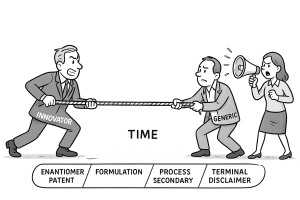
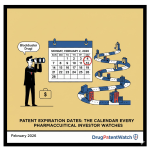
Between 2023 and 2028, an estimated $356 billion in worldwide branded pharmaceutical sales sit exposed to patent expiration. Every dollar of that figure represents a company that once had a plan, or now desperately needs one. This report deconstructs exactly what those plans look like in practice, using three of the highest-revenue drugs ever commercialized as primary evidence.
Pfizer’s atorvastatin (Lipitor) generated more than $130 billion in cumulative sales on the back of a preemptive chiral switch filed before the drug’s first commercial dose was dispensed. AbbVie’s adalimumab (Humira) cleared $20.7 billion in peak annual revenue, shielded by a portfolio of more than 130 U.S. patents derived largely from just 20 root applications via high-volume continuation filing and 436 terminal disclaimers. AstraZeneca converted an expiring Prilosec franchise into a new blockbuster by isolating and separately patenting the S-enantiomer of omeprazole days before generic competition arrived.
These three cases are not outliers. They are the canonical templates from which the rest of the industry derives its own playbook. This report goes beyond summarizing the tactics to quantify the IP valuation at each stage, trace the procedural mechanics that turned ordinary patent law tools into competitive weapons, and identify the specific regulatory and antitrust pressure points that are now reshaping the landscape.
Part I: The Economic and Legal Architecture of Pharmaceutical Exclusivity {#part-i}
1.1 The R&D Cost Equation and Why It Drives Everything Downstream
The average capitalized cost to bring a new molecular entity to market reached approximately $2.2 billion in 2024. That figure accounts for the risk-adjusted cost of failures across a portfolio, not just the out-of-pocket spend on any single successful compound. Individual therapeutic areas skew the number sharply: oncology programs with late-stage attrition can push the risk-adjusted figure above $4 billion per approved drug, while therapeutic areas with clearer biomarker-driven development paths may clear approval for under $500 million.
The timeline compounds the pressure. From initial discovery to FDA approval typically runs 10 to 15 years. The 20-year patent term runs from the filing date of the priority application, not from the first commercial sale. By the time a drug generates its first invoice to a hospital pharmacy, the effective remaining patent life is often 7 to 12 years, before any regulatory review period extensions or data exclusivity provisions. That window is where every dollar of R&D investment must be recovered, and from which margin must fund the next discovery cycle.
This arithmetic is not abstract. It is the single most important fact explaining why pharmaceutical companies deploy the legal and procedural strategies catalogued throughout this report. The behavior is a rational response to the economics, not evidence of bad faith, though the scale and intent of specific tactics remain genuinely contested.
1.1.1 The Patent Cliff: Quantifying the Revenue Discontinuity
The ‘patent cliff’ is the revenue drop that occurs when a branded drug loses market exclusivity and faces generic or biosimilar competition. The magnitude of this drop is severe enough that it functions as an existential business event for many companies.
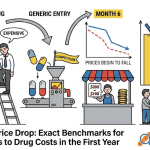
Generic entrants, who rely on the innovator’s original safety and efficacy data filed in the NDA, price their products at a fraction of the branded reference. In competitive generic markets with more than five approved players, the generic price settles at roughly 6% to 20% of the originator’s price. The originator loses not just on price; volume also shifts, because most payers and pharmacy benefit managers mandate generic substitution at point-of-dispensing. Within 12 months of generic entry in a typical small-molecule market, the branded drug loses 80% to 87% of its prior unit volume.
The magnitude of these losses is not uniform across product categories. For large-molecule biologics, the biosimilar market has been structurally slower to erode innovator revenue than the generic market is for small molecules. Biosimilar interchangeability, which allows pharmacists to substitute a biosimilar without a prescriber’s intervention, was a slow-moving regulatory process in the United States prior to 2022. Even with interchangeability designations now becoming more common, the typical biologic loses market share more gradually than a small molecule, often retaining 40% to 60% of volume two years post-biosimilar entry.
1.1.2 The Blockbuster Math: Why the Defense of a Single Drug Can Justify Nine-Figure Legal Budgets
When a single drug clears $10 billion in annual revenue, a one-year extension of exclusivity is worth roughly $8 to $9 billion in net present value terms, after accounting for tax, gross-to-net adjustments, and the share that generic competition would have taken. At that valuation, committing $200 million to $500 million in legal fees, R&D for line extensions, and regulatory activities to secure even a partial exclusivity extension generates a return profile that institutional investors would recognize from leveraged buyout models.
The Humira case makes this arithmetic explicit. AbbVie’s patents on adalimumab at their core expired at the end of 2016. The thicket of secondary patents, combined with settlement agreements that delayed U.S. biosimilar entry until January 2023, extended the effective U.S. monopoly by roughly six years. At peak U.S. revenues approaching $16 billion annually, the NPV of that six-year delay runs to tens of billions of dollars. No investor disputes that the resources AbbVie committed to building and defending the portfolio were justified on those numbers.
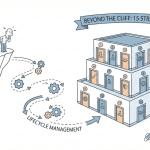
1.2 Lifecycle Management: Scope, Tactics, and the Language of Controversy
Lifecycle management describes the coordinated deployment of R&D, regulatory, clinical, commercial, and legal resources to maximize the revenue-generating period of a pharmaceutical asset. The term is industry-neutral. The tactics it encompasses are not.
The core controversy centers on what critics call ‘evergreening,’ defined operationally as the pursuit of additional patents on peripheral aspects of a drug product — new formulations, new crystalline forms, new routes of administration, new salt forms, enantiomers, metabolites, or minor dosing regimen modifications — timed to extend market exclusivity beyond the expiration of the composition-of-matter patent on the active pharmaceutical ingredient itself.
The semantic dispute is deliberate and consequential. Industry legal teams prefer ‘incremental innovation’ and ‘responsible product stewardship.’ Public health advocates and some academic economists use ‘evergreening’ to connote systematic manipulation of patent law. The choice of term is a stake in the legal and regulatory argument that runs through the cases analyzed in this report.
1.2.1 What the Research Actually Shows
Empirical analyses of secondary patenting across major pharmaceutical markets are consistent on several points. A study examining U.S. Orange Book patents found that for the 100 best-selling small-molecule drugs, an average of 3.5 distinct patents per drug were listed at initial NDA approval, growing to more than 7 patents per drug by the time the primary composition-of-matter patent expired. The increment is driven almost entirely by secondary patents on formulations, polymorphs, and methods of use.
A separate analysis specifically of the Humira portfolio found that 90% of the patents in the thicket were issued after 2014, and approximately 80% covered subject matter the researchers classified as ‘duplicative,’ meaning the claims did not describe materially distinct inventive concepts from claims in earlier-issued patents in the same family. The use of terminal disclaimers — which tie later-issued patents to the expiration date of a parent patent and are required when the USPTO finds the new claims obvious in light of the parent — accounted for a large fraction of the portfolio’s volume.
These findings are descriptive, not dispositive. The question of whether the practice warrants regulatory intervention depends on what normative weight one assigns to the patent system’s primary purposes, a question that different legal systems have resolved differently.
1.2.2 India’s Section 3(d) and the Global Divergence in Patentability Standards
The United States applies a permissive standard for secondary pharmaceutical patents. The core inquiry is novelty and non-obviousness under 35 U.S.C. §§ 102 and 103, without a separate ‘enhanced efficacy’ threshold. India took a categorically different legislative position with Section 3(d) of the Patents Act, 1970, which prohibits patents on new forms of known substances unless the applicant demonstrates ‘significantly enhanced efficacy.’
The provision’s scope was confirmed in Novartis AG v. Union of India (2013), where the Indian Supreme Court rejected Novartis’s patent application for imatinib mesylate (Gleevec’s crystalline beta form), finding that the improved bioavailability data submitted did not meet the enhanced-efficacy standard. The decision created a high-water mark for access-focused patent policy and has been studied, if not emulated, by lawmakers in Brazil, South Africa, and Thailand.
The practical consequence for pharmaceutical companies is jurisdictional fragmentation. A secondary patent that is freely grantable and enforceable in the United States may be unpatentable in India, subject to compulsory licensing in Brazil, or challenged by patent offices in the EU under heightened inventive-step review. Multinational patent strategy now requires managing these divergent standards across simultaneous filing programs.
1.3 The Legal Toolkit: Procedural Instruments and Their Strategic Application
A pharmaceutical patent portfolio is assembled from several distinct legal instruments. The distinction between them matters for IP valuation, litigation risk assessment, and competitive intelligence.
1.3.1 Primary Composition-of-Matter Patents
The composition-of-matter patent, covering a new chemical entity (NCE) or new molecular entity (NME), provides the broadest and strongest protection available. It runs 20 years from the filing date of the priority application and, if the USPTO took more than three years to complete prosecution, may qualify for patent term adjustment (PTA) under 35 U.S.C. § 154(b). Patent Term Extension (PTE) under the Hatch-Waxman Act can restore up to five years of the term consumed by FDA regulatory review, subject to a cap of 14 years of remaining protection post-approval.
The economic value of a composition-of-matter patent exceeds that of any downstream secondary patent because it blocks all competitors from making, using, or selling the claimed compound regardless of their formulation or process choices. Generic manufacturers filing Paragraph IV certifications under the Hatch-Waxman Act target these patents first, because invaliding or designing around a composition-of-matter patent is necessary before any other part of the branded portfolio becomes commercially relevant.
1.3.2 Secondary Patents: The Full Taxonomy
Formulation patents cover the final drug product’s physical composition: the ratio of active ingredient to excipients, the coating type, the release mechanism for extended- or delayed-release systems, the particle size of the API, and the specific combination with other active agents. Their strength against Paragraph IV challenges varies considerably. Formulation patents on genuinely novel delivery systems — a polyelectrolyte-complexed nanoparticle, a subcutaneous auto-injector device, a mucoadhesive biopolymer matrix — tend to survive challenge more often than patents on minor excipient changes.
Method-of-use patents cover specific approved clinical indications. The strategic value of a method-of-use patent differs from a composition-of-matter patent: a generic filer can get around it by carving the patented indication out of its prescribing information (a ‘skinny label’ under Section viii of 21 C.F.R. § 314.94). Whether physicians will prescribe the generic off-label for the excluded indication is a commercial and enforcement question, not a pure patent one.
Polymorph patents cover specific crystalline solid-state forms of the API. Different polymorphs have different solubility, stability, and bioavailability profiles. A patent on the most stable form used in the commercial product can be valuable, but the non-obviousness of a specific polymorph is frequently contested, because there is a recognized expectation in pharmaceutical science that polymorphs of known compounds will routinely be discoverable through standard screening techniques.
Process patents protect novel manufacturing methods. They bind a competitor who uses the exact claimed process but do not protect against a competitor who develops a different, non-infringing synthesis route. In practice, process patents are most valuable in markets where the claimed process is the most economically efficient route and alternative routes carry significant cost or yield disadvantages.
1.3.3 Continuation, CIP, and Divisional Applications: Mechanics and Strategic Use
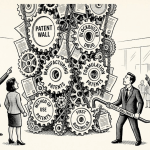
A continuation application claims the benefit of the filing date (the ‘priority date’) of a parent application without adding new matter. It does not extend the expiration date of the patent family beyond the terminal disclaimer adjusted term, but it can pursue new claim sets covering subject matter already disclosed but not originally claimed. High-volume continuation filing — the strategy documented extensively in the Humira portfolio — allows an innovator to file dozens of separately enforceable patents from a single disclosed invention, each representing an independent lawsuit against a competitor.
Filing a continuation involves an implicit concession under USPTO practice. Because the new claims derive from the same disclosure as the parent, any claim that would otherwise be obvious in light of the parent’s claims requires a terminal disclaimer. The terminal disclaimer ties the continuation’s expiration to the parent’s expiration, meaning the additional patents do not extend exclusivity in terms of duration. Their value is purely in litigation economics: each additional patent is another case a generic or biosimilar competitor must litigate or settle.
A continuation-in-part (CIP) differs in one material respect: it can add new matter to the disclosure. Claims that rely on new matter carry the filing date of the CIP, not the parent, which means a CIP patent on a newly developed formulation or therapeutic use can have a later expiration date than the parent portfolio. CIP filings are the primary procedural vehicle for protecting improvements discovered after the initial patent filing.
A divisional application arises from a restriction requirement, which is the USPTO’s finding that a single application claims more than one distinct invention. The applicant can pursue the restricted subject matter in a divisional, which retains the parent’s priority date. Divisionals are procedurally distinct from continuations but serve a similar strategic function in expanding the patent count without new disclosure.
1.3.4 Orange Book Listing and Hatch-Waxman 30-Month Stays
Under the Drug Price Competition and Patent Term Restoration Act of 1984 (commonly, the Hatch-Waxman Act), NDA holders must list patents covering the approved drug product in the FDA’s Orange Book. The listing categories are drug substance (composition-of-matter), drug product (formulation), and method-of-use. Process patents are explicitly excluded from Orange Book listing.
When a generic manufacturer files an ANDA with a Paragraph IV certification alleging that a listed Orange Book patent is invalid, unenforceable, or will not be infringed, the NDA holder has 45 days to file an infringement suit. If it does, the FDA is stayed from granting final ANDA approval for 30 months — automatic, litigation-independent, and immediately effective. This 30-month stay is the most powerful single procedural tool in small-molecule lifecycle management. It converts the act of filing a lawsuit into a 30-month revenue guarantee without requiring any showing on the merits.
The Hatch-Waxman framework also created 180-day generic exclusivity for the first ANDA filer, a provision that incentivizes Paragraph IV challenges by giving the winning generic a temporary duopoly before other generics can enter. This creates complex litigation dynamics: the brand may prefer to settle with the first filer on terms that delay launch, because doing so effectively blocks all subsequent generic entry during the 180-day window.
Key Takeaways: Part I
The economics of drug development create a structural pressure to maximize exclusivity duration. The legal system provides multiple overlapping tools — continuation filings, Orange Book listing, 30-month stays, Paragraph IV litigation — whose individual functions are defensible but whose combined strategic deployment produces outcomes that critics characterize as systematically anticompetitive. The divergence between U.S. and Indian patent standards illustrates that these outcomes are policy choices, not immutable features of intellectual property law.
Investment Strategy Note: Part I
For investors modeling a pharma company’s revenue durability, the composition-of-matter patent expiration date is the floor, not the ceiling, for exclusivity protection. Analysts should examine the secondary patent portfolio depth (patents listed in Orange Book per product), the continuation-to-root-application ratio (a high ratio signals a Humira-style thicket), and any pending Paragraph IV litigation as leading indicators of the effective exclusivity runway. A product with seven Orange Book-listed patents and no pending ANDA challenges has structurally more durable revenue than a product with one listed patent facing five pending Paragraph IV certifications.
Part II: IP Valuation as a Core Corporate Asset {#part-ii}
2.1 Why IP Valuation Belongs in the Financial Model, Not the Legal Annex
Patent portfolios in pharmaceutical companies are not just legal defense mechanisms. They are revenue-producing assets with computable present values, depreciation curves, and risk-adjusted cash flow profiles. Standard drug company financial models that treat intellectual property as a cost center — legal fees as operating expense, patent filings as overhead — misrepresent the economic structure of the business.
A more accurate framework treats each patent or patent cluster protecting a product as a revenue-producing intangible asset with a defined term. The primary composition-of-matter patent, if enforced, produces the full branded revenue stream minus costs. Each secondary patent extending exclusivity beyond the primary term is an option on incremental revenue, with the option’s value determined by the probability that it survives inter partes review (IPR) or Paragraph IV litigation, the revenue at risk during the potential extension period, and the cost to acquire and enforce it.
2.1.1 The Patent Estate Value Model
The value of a pharmaceutical patent estate can be modeled as:
PEV = [Revenue(t) x (1 – ProbabilityOfInvalidation)] x DiscountFactor(t)
…summed across each patent and each year of the claimed protection period. This is simplified; in practice, the model must layer in Paragraph IV litigation timelines, IPR petition rates, biosimilar interchangeability timelines for biologics, the probability of settlement versus full litigation, and the NPV impact of a 30-month stay even in cases ultimately lost.
For Humira at its peak, the NPV of the U.S. patent thicket — the value attributable specifically to the secondary patents delaying biosimilar entry beyond 2016 — can be estimated at $40 to $80 billion, depending on the discount rate and the counterfactual biosimilar penetration curve modeled. That range explains AbbVie’s investment in the continuation filing program and the litigation campaign. The patent estate was, quite literally, the most valuable asset on the balance sheet.
2.1.2 Patent Quality Metrics for Portfolio Assessment
Not all patents carry equal value in litigation or settlement negotiations. The following metrics help analysts and IP teams assess portfolio quality beyond raw patent counts.
The citation forward rate measures how often a patent is cited by subsequent patents in the same technology space. A highly cited patent is broadly foundational; competitors filing around it will accumulate more citations to it. High forward citation rates correlate with patent breadth and presumptive strength.
The independent claim count and claim scope matter more than total claim count. A patent with five narrow independent claims covering minor variations is procedurally less valuable than a patent with two broad independent claims covering a genus of compounds or a broad class of methods.
The IPR institution rate for patents in the same subfield gives a base rate for challenge success. Polymorph patents and method-of-use patents for known compounds have been instituted at higher rates in IPR proceedings before the Patent Trial and Appeal Board (PTAB) than composition-of-matter patents for novel NCEs. An IP team building a lifecycle management portfolio should weight toward patent types that historically survive IPR challenge.
Key Takeaways: Part II
Pharmaceutical IP portfolios are revenue-producing assets amenable to formal financial valuation. The NPV of a patent thicket like Humira’s secondary portfolio runs to tens of billions of dollars, which fully explains the investment in maintaining it. Analysts who model only primary patent expiration in their LOE (loss of exclusivity) forecasts are systematically underestimating exclusivity runway for companies with aggressive secondary patent programs.
Investment Strategy Note: Part II
When conducting due diligence on a pharmaceutical acquisition target, the IP valuation model should run three scenarios: (1) all secondary patents held valid and enforced to term; (2) secondary patent portfolio invalidated at a rate equal to historical IPR grant rates for the relevant patent type; and (3) a settlement scenario in which key challengers receive licenses with staggered entry dates. The spread between scenarios represents the acquirer’s IP-specific risk, which should be reflected in valuation multiples or escrow provisions in deal structure.
Part III: Case Study — Lipitor (Atorvastatin): The Layered Defense of a Super-Blockbuster {#part-iii}
3.1 Lipitor’s IP Estate: Scale, Architecture, and Valuation
Pfizer’s atorvastatin franchise generated cumulative sales exceeding $130 billion across its commercial life, making it the highest-grossing prescription drug in pharmaceutical history at the time of its primary patent expiration in 2011. At peak, Lipitor accounted for roughly $12 billion to $13 billion in Pfizer’s annual revenue, representing approximately 25% of the company’s total top line for several consecutive years.
The IP estate protecting that revenue stream was not large by the standards of modern biologic portfolios, but its architecture was precise and strategically sophisticated. The entire defense rested on two primary composition-of-matter patents, reinforced by five or six targeted secondary patents, one pediatric exclusivity extension, and an aggressive litigation posture against the first Paragraph IV filer.
3.1.1 IP Valuation at Peak
At Lipitor’s peak revenue, the composition-of-matter patent on atorvastatin calcium (U.S. Patent No. 5,273,995) expiring in June 2011 was worth, on an NPV basis at a 10% discount rate, approximately $60 to $80 billion in projected future cash flows from 2004 to 2011. The secondary patents on the crystalline form, formulations, and manufacturing processes were individually worth less than $1 billion each in direct exclusivity terms, because Pfizer’s core protection was the compound patent itself. Their value was largely defensive: each additional patent was another cause of action Pfizer could assert in a Paragraph IV suit, another 30-month stay trigger, and another settlement chip.
The pediatric exclusivity extension, obtained by conducting atorvastatin studies in children under 21 C.F.R. § 505A, delivered six months of additional exclusivity from June 2011 to November 2011. At a revenue run-rate of approximately $10 billion annually, those six months of exclusivity were worth roughly $5 billion in revenue. The cost of the pediatric studies was a fraction of that figure.
3.2 The Preemptive Chiral Switch: From Racemate to Active Enantiomer
The Lipitor strategy’s most technically interesting element was executed before the drug reached pharmacies. Warner-Lambert, Lipitor’s original developer (acquired by Pfizer in 2000 for $90 billion), filed the foundational patent, U.S. Patent No. 4,681,893, in 1986. That patent covered a broad chemical class that included the racemic mixture of atorvastatin — a 50/50 combination of the R- and S-enantiomers.
Two years after the ‘893 patent issued, Warner-Lambert filed a new application that would become U.S. Patent No. 5,273,995. This application specifically claimed the isolated R-enantiomer of atorvastatin in its calcium salt form — the precise substance that would enter the market as Lipitor. The R-enantiomer is the biologically active form; its mirror image is pharmacologically inert at the same target.
The procedural consequence of this filing was a 15-month extension of the effective monopoly window. The ‘893 racemate patent expired March 2010. The ‘995 enantiomer patent expired June 2011. Because Lipitor was the enantiomer, not the racemate, generic manufacturers had to contend with the ‘995 patent regardless of what happened to ‘893. That 15-month gap, at a revenue rate exceeding $10 billion per year, was worth approximately $12 to $13 billion in additional revenue.
3.2.1 The Chiral Switch as a Preemptive Filing Strategy
The pharmaceutical literature uses ‘chiral switch’ to describe the market-level tactic of developing a single-enantiomer drug from a previously approved racemate. The Lipitor case is technically a pre-market chiral switch: the company did not first market the racemate and then switch; it went directly to the active enantiomer while retaining patent coverage on the racemate class through the ‘893 filing.
This sequence — broad class patent first, specific active enantiomer patent second, market entry with only the enantiomer — is more defensible than a post-launch switch because it does not expose the company to regulatory arguments that the enantiomer was an obvious variant of an already-approved drug. At the time Warner-Lambert filed the ‘995 application, atorvastatin had not been approved in any form. The enantiomer patent issued based on its novelty relative to the disclosed racemate, with the prosecution record reflecting arguments about the specific calcium salt form and its improved properties.
3.3 The Secondary Patent Stack: Layer-by-Layer Analysis
Pfizer’s secondary patent strategy for Lipitor covered four analytically distinct categories, each presenting a separate litigation track for a generic filer seeking to enter before the June 2011 expiration of the ‘995 patent.
U.S. Patent No. 5,969,156 covered the specific crystalline form of atorvastatin calcium used in the commercial tablet. Polymorph patents sit in a contested space: the crystalline form of a salt of a known compound is generally considered obvious to screen for in pharmaceutical development. Pfizer’s polymorph patent survived early litigation, which mattered significantly given that it listed in the Orange Book and would trigger a 30-month stay on any ANDA that challenged it. The generic filer’s option was to design around the patent by developing a non-infringing amorphous or alternative crystalline form, which introduced both cost and risk.
U.S. Patent Nos. 6,126,971 and 5,686,104 covered specific formulations of atorvastatin calcium, including excipient combinations that provided the stability and dissolution profile of the commercial tablet. These were, in practical terms, the weakest links in the portfolio. A generic manufacturer seeking to challenge them would argue that combining a known active ingredient with known excipients in standard tablet form is routine pharmaceutical development and lacks non-obvious inventive step.
U.S. Patent Nos. 6,087,511 and 6,274,740 covered manufacturing processes for atorvastatin. Their direct strategic value was limited: a generic could develop a different synthesis route and avoid infringement entirely. Their indirect value was that any ANDA filer using the claimed process faced infringement exposure, and the existence of these patents in the portfolio added to the settlement landscape’s complexity.
3.3.1 Clinical Data as Exclusivity Infrastructure
Beyond the patent estate, Pfizer invested in generating a clinical data package that served three distinct strategic functions. The more than 500 sponsored clinical studies involving over 80,000 patients established Lipitor as the highest-potency statin at standard doses, producing efficacy data that competitors could not match in the prescriber’s mind without running equivalent trials. That superiority claim sustained a premium price above other branded statins throughout Lipitor’s marketed life.
The clinical data supported expansion into new approved indications, each of which generated an additional method-of-use patent that could be listed in the Orange Book. Each listed method-of-use patent gave Pfizer another Paragraph IV target: a generic seeking to include the patented indication in its label had to certify against it or carve it out. The decision to run pediatric studies was the most financially efficient clinical investment Pfizer made in the franchise’s late years: the cost of the studies was roughly $20 million to $50 million, and the reward was six additional months of exclusivity worth approximately $5 billion in revenue.
3.4 The Paragraph IV Battle with Ranbaxy and the ‘Pay-for-Delay’ Controversy
Ranbaxy Laboratories, the Indian generic manufacturer, filed the first ANDA against Lipitor with Paragraph IV certifications challenging the ‘893 and ‘995 patents. As the first filer, Ranbaxy was entitled to 180 days of generic exclusivity once it cleared the patent hurdles — a commercially valuable position that gave Ranbaxy substantial leverage in settlement discussions.
Pfizer filed suit within 45 days, triggering the 30-month stay. The district court ultimately upheld the validity and enforceability of Pfizer’s key patents and found Ranbaxy’s proposed product infringed them. Rather than allow a full appeal process to run its course, the parties settled in 2008 on terms that allowed Ranbaxy to launch its generic on November 30, 2011, coinciding with the expiration of the pediatric exclusivity period. Pfizer received a clean runway through November 2011.
The settlement drew antitrust scrutiny. Plaintiffs in subsequent class actions alleged the agreement was a ‘reverse payment’ or ‘pay-for-delay’ arrangement, in which value flowed from the brand to the generic challenger in exchange for delayed market entry. The Supreme Court’s 2013 decision in FTC v. Actavis established that reverse-payment settlements are subject to rule-of-reason antitrust scrutiny, meaning courts examine the economic substance of the settlement rather than presuming it immune as a resolution of patent litigation.
The Lipitor/Ranbaxy settlement sat in a gray zone. Pfizer did not make a direct cash payment to Ranbaxy. The value to Ranbaxy came from the settlement license itself: certainty of entry in November 2011, combined with the 180-day exclusivity period. Whether that license grant, structured to arrive exactly at the pediatric exclusivity cliff, constituted a payment in the Actavis sense remains a live question in antitrust scholarship.
3.5 Post-LOE Dynamics and Pfizer’s Strategic Response
When atorvastatin lost U.S. exclusivity in November 2011, the revenue drop matched the most pessimistic analyst forecasts. Generic versions, initially from Ranbaxy under its 180-day exclusivity and then from a wave of subsequent ANDA filers, captured roughly 87% of unit volume within 12 months. The branded Lipitor price remained at approximately $4 to $5 per pill while generics settled below $0.10 per pill at retail.
Pfizer’s strategic response to the loss of exclusivity included several elements worth noting for their own lifecycle management lessons. The company moved quickly to develop authorized generic versions of Lipitor, which could compete in the commodity market and preserve some revenue share. Pfizer also leaned into the residual brand equity of the Lipitor name among patients who had been on the drug for years, running patient loyalty programs to slow the switch to generic.
The broader lesson from the Lipitor cliff was that no secondary patent strategy could indefinitely delay the moment of generic entry after the core composition-of-matter patents expired. The secondary patents bought Pfizer months, not years. The chiral switch between ‘893 and ‘995 bought 15 additional months at full revenue. The pediatric exclusivity bought six more. The Ranbaxy settlement structured entry at the exact end of the pediatric period. Total effective extension from these tactics: roughly 24 months of additional monopoly at peak revenue, worth in the range of $20 to $25 billion.
Key Takeaways: Part III — Lipitor
Pfizer’s Lipitor strategy is the canonical first-generation lifecycle management case. Its defining features are a preemptive chiral switch creating a later-expiring compound patent, a focused secondary portfolio covering crystalline form and formulations, aggressive clinical investment that doubled as regulatory and marketing infrastructure, a targeted Paragraph IV litigation campaign, and a settlement structured to maximize the value of the pediatric exclusivity period. The total monetary value of the lifecycle management program above the base composition-of-matter expiration was approximately $20 to $25 billion.
Investment Strategy Note: Part III — Lipitor
Analysts evaluating a pharma company that holds a major statin or similarly mature small-molecule franchise should examine whether the company has filed secondary patents on the specific commercial salt form of the NCE rather than the free acid or racemate. A compound patent on the specific commercial form — as Pfizer had with the atorvastatin calcium enantiomer in ‘995 — is structurally more durable than a compound patent on a chemical class that does not precisely cover the marketed product. This distinction can shift the modeled LOE date by 12 to 24 months.
Part IV: Case Study — Humira (Adalimumab): The Anatomy of a Patent Thicket {#part-iv}
4.1 AbbVie’s IP Estate: Scale, Architecture, and NPV
AbbVie’s adalimumab franchise reached peak annual sales of $20.7 billion in 2021, with U.S. revenues comprising approximately $16 billion of that figure. Humira is the all-time highest-revenue biologic drug and, until Keytruda’s recent ascent, the highest-revenue pharmaceutical product in any category.
The IP estate protecting that revenue stream was built around a single primary antibody patent — U.S. Patent No. 6,090,382, the composition-of-matter patent on the adalimumab antibody itself — which expired in December 2016. What AbbVie built around that core patent constitutes the most extensively documented patent thicket in pharmaceutical history: at least 132 to 136 U.S. patents, derived from 20 root applications through high-volume continuation filing, fortified by 436 terminal disclaimers.
4.1.1 NPV of the Thicket
Estimating the NPV of the thicket requires comparing two counterfactual scenarios: U.S. biosimilar entry in 2017 (immediately following the primary patent expiration) versus actual U.S. biosimilar entry in January 2023.
At a modeled biosimilar penetration of 30% volume erosion in year one and 50% by year three (consistent with observed biosimilar entry patterns in other market categories), the revenue difference between a 2017 entry and a 2023 entry runs to approximately $60 to $90 billion over the period, depending on the biosimilar pricing assumed. Even applying aggressive discounting, the NPV of the exclusivity extension attributable to the U.S. patent thicket and related settlement agreements is plausibly $40 to $80 billion. The investment required to build the thicket — continuation filing fees, prosecution costs, and the litigation campaign — was in the range of several hundred million dollars total. The return-on-IP-investment ratio is extraordinary.
4.2 The Root Applications and the Continuation Engine
The 132+ patent thicket was built from 20 root applications. This ratio, approximately 6.5 granted patents per root application, reflects an industrial-scale continuation filing program. Each root application represented a distinct area of initial disclosure: the antibody composition, specific formulations, manufacturing processes, dosing regimens, treatment methods for various inflammatory indications, and device features of the delivery system.
From each root, AbbVie’s prosecution team filed successive continuations, each asserting new claim sets drawn from the already-disclosed subject matter. The USPTO examiner reviewed each continuation’s claims under the ordinary novelty and non-obviousness standards, without the authority to decline prosecution because the number of patents in the family seemed excessive. Where claims were obvious variants of earlier-issued patents in the family, a terminal disclaimer resolved the obviousness-type double patenting rejection while preserving the patent grant.
4.2.1 The Terminal Disclaimer Arithmetic
The 436 terminal disclaimers filed across the Humira portfolio have a specific legal significance that analysts often underappreciate. A terminal disclaimer does not shorten the effective exclusivity period, because the disclaimed patents expire at the same time as the parent anyway. What it does is preserve additional, separately enforceable patent rights that each require independent litigation or licensing.
The cost economics of patent challenge are the mechanism here. An inter partes review petition at the PTAB costs an average of $774,000 to prosecute through trial. Litigating a single patent in district court is far more expensive. A biosimilar manufacturer seeking FDA approval of a Humira biosimilar through the 351(k) pathway under the BPCIA must navigate the ‘patent dance’ — a structured information exchange that ultimately identifies which patents AbbVie will assert. AbbVie had the strategic option of asserting large subsets of its 132+ patents against each challenger, creating a portfolio of potential lawsuits that no single biosimilar company could economically litigate to conclusion against all asserted patents simultaneously.
4.3 The BPCIA ‘Patent Dance’ and Its Strategic Exploitation
The Biologics Price Competition and Innovation Act of 2010 (BPCIA) established a regulatory framework for biosimilar approval that included a structured patent dispute process with no equivalent in the Hatch-Waxman small-molecule framework. The ‘patent dance’ requires a biosimilar applicant to provide its application and manufacturing information to the reference product sponsor (AbbVie), after which the parties exchange lists of relevant patents and negotiate which patents will be litigated in a first phase.
AbbVie used this process to maximize litigation complexity. By asserting dozens of patents from its thicket against each biosimilar applicant, AbbVie created a process in which the biosimilar manufacturer faced a multi-front litigation campaign with individually manageable but collectively enormous legal costs. The structure of the BPCIA patent dance, designed to promote structured and efficient resolution of biosimilar patent disputes, became in practice a mechanism for extending the uncertainty period beyond the expiration of the primary antibody patent.
4.3.1 The Biosimilar Challengers and Their Litigation Profiles
At least ten distinct biosimilar manufacturers sought FDA approval for adalimumab products, including Amgen (Amjevita), Samsung Bioepis (Hadlima), Sandoz (Hyrimoz), Fresenius Kabi (Idacio), Coherus BioSciences (Yusimry), Boehringer Ingelheim (Cyltezo), and others. Each received FDA approval well before entering the U.S. market, a direct consequence of the settlement agreements that AbbVie secured.
Each settlement followed a structurally similar pattern. The biosimilar manufacturer received a license to sell its product in markets outside the United States beginning in 2018, and a license to sell in the United States beginning on a date in 2023. AbbVie received covenants not to challenge its U.S. patent portfolio in exchange for the license grants.
4.4 The Citrate-Free Formulation Patent: Incremental Science, Major Strategic Value
Among the secondary patents in the Humira thicket, the citrate-free formulation patents deserve particular analysis. The commercial Humira formulation through 2016 contained citrate buffer, which produced a stinging sensation at the injection site in some patients. AbbVie developed and patented a citrate-free formulation that reduced injection-site discomfort.
From a clinical standpoint, the citrate-free formulation is a genuine, if modest, patient-experience improvement. From a patent strategy standpoint, it became enormously valuable. AbbVie launched a high-concentration, citrate-free version of Humira in the United States in 2016, just as the primary patent expired. By converting patients to the new formulation and listing the citrate-free patents in the relevant regulatory filings, AbbVie created a situation in which biosimilar manufacturers had to either match the citrate-free formulation (and potentially infringe those patents) or compete with a product that patients and physicians perceived as clinically inferior on the injection-site discomfort metric.
Several biosimilar manufacturers developed their own citrate-free formulations and challenged AbbVie’s citrate-free patents. The litigation outcomes were mixed. Cyltezo (Boehringer Ingelheim’s biosimilar) was designated as interchangeable with Humira by the FDA in 2023, meaning pharmacists can substitute it without prescriber intervention, citing data showing equivalent clinical performance including on the injection-site endpoint.
4.5 Staggered Global Settlements: Market Allocation or Standard License Agreements?
The structure of AbbVie’s settlement agreements was the primary target of antitrust challenge. The class-action plaintiffs argued that AbbVie had effectively paid biosimilar competitors with European profits to stay out of the more lucrative U.S. market — a reverse payment theory with territorial rather than cash consideration.
The Seventh Circuit’s 2022 decision in Mayor & City Council of Baltimore v. AbbVie Inc. rejected this theory. The court reasoned that AbbVie had not paid anyone anything. It had granted licenses to enter markets before the expiration of its last relevant patents, which is a standard outcome of patent litigation settlement. The different entry dates for Europe and the United States reflected the different strengths of AbbVie’s patent positions in those jurisdictions, not an agreement to allocate markets.
The Noerr-Pennington doctrine formed the second prong of the court’s analysis. Because AbbVie’s actions — filing patent applications, suing for infringement, settling litigation — all constituted petitioning the government, they were presumptively immune from antitrust liability absent evidence of sham conduct. The court found no evidence that AbbVie’s patent applications were filed without a good-faith belief in their validity or that the lawsuits were objectively baseless.
4.5.1 What the Seventh Circuit Ruling Does and Doesn’t Resolve
The ruling confirmed that constructing a large pharmaceutical patent portfolio through the continuation filing program, and enforcing it through litigation and settlement, does not violate the Sherman Act as currently interpreted by the Seventh Circuit. It does not resolve whether this conclusion would hold in every circuit, whether legislative changes to the Hatch-Waxman or BPCIA frameworks could alter the analysis, or whether a different factual record showing more explicit coordination between competitors on entry timing might support a different outcome.
The ruling also did not address emerging reform proposals. The USPTO’s 2024 proposal — subsequently withdrawn after industry opposition — would have rendered terminal disclaimer-linked patents unenforceable if the parent patent was invalidated. That proposal would have structurally dismantled the continuation filing strategy underlying the Humira thicket, and its withdrawal reflected the lobbying power of originator manufacturers rather than any conclusion about its policy merits.
4.6 The Post-2023 Biosimilar Market: Humira’s Revenue After the Settlement Dates
January 2023 marked the effective opening of the U.S. biosimilar adalimumab market. By mid-2023, several biosimilar versions had launched, with prices ranging from 5% below Humira’s net price (Amgevita at parity) to approximately 80% below list price for unbranded versions from Fresenius Kabi and Coherus.
The market share dynamics played out differently than the small-molecule generic template. Pharmacy benefit managers negotiated formulary positions for biosimilars, but manufacturer rebates from AbbVie remained substantial, keeping Humira on formulary at preferred status on many plans through 2024. AbbVie’s revenue from Humira declined from $21.2 billion globally in 2022 to approximately $14.4 billion in 2023 and continued declining in 2024, but the decline was more gradual than observed post-LOE in typical small-molecule markets.
This post-LOE dynamic illustrates a structural feature of the biologics market that distinguishes it from small-molecule generics: biosimilar interchangeability designations are not universal, formulary inertia is higher among specialty drugs, and manufacturers have more tools to preserve patient and prescriber loyalty through patient support programs and copay cards than exist in primary care markets.
Key Takeaways: Part IV — Humira
AbbVie’s Humira strategy is the definitive modern patent thicket case. Its distinguishing features are the scale and structure of the portfolio (132+ patents from 20 root applications, 436 terminal disclaimers), the strategic exploitation of the BPCIA patent dance to create multi-front litigation complexity, and the globally staggered settlement architecture that preserved the U.S. monopoly six years beyond primary patent expiration. The Seventh Circuit ruling validated the strategy under current antitrust doctrine. The USPTO’s withdrawn terminal disclaimer proposal is the clearest signal that regulators view the continuation engine as the mechanism requiring attention.
Investment Strategy Note: Part IV — Humira
AbbVie’s patent strategy should be modeled by analysts evaluating any major biologic franchise approaching primary patent expiration. The key variables are: (1) whether the secondary patent portfolio was built primarily through continuation filing with terminal disclaimers (high volume, legally validated, Humira-type), or through independently filed applications on genuinely novel inventions (harder to replicate in bulk); (2) the interchangeability status of approved biosimilars; and (3) the structure of settlement agreements — specifically whether they are license grants with defined entry dates or include any form of direct payment, which would trigger Actavis scrutiny. For AbbVie itself, the strategic question now is whether Skyrizi and Rinvoq, with their own patent estates currently in the earlier phases of construction, can replicate the revenue platform that Humira occupied.
Part V: Case Study — Nexium (Esomeprazole): The Chiral Switch as Commercial Strategy {#part-v}
5.1 AstraZeneca’s IP Estate: Valuation of the Switch
AstraZeneca’s Prilosec (omeprazole) was the world’s best-selling drug in 2000, with annual revenues approaching $6 billion. Its key patents faced expiration in 2001, at which point generic omeprazole from multiple manufacturers was expected to erode branded revenues by 80% or more within 24 months. AstraZeneca needed either a successor product or a strategy to migrate the Prilosec patient population to something that would remain patented.
The chiral switch to Nexium (esomeprazole) was the company’s answer. By isolating the S-enantiomer of omeprazole and securing new composition-of-matter patents on it, AstraZeneca created a product with a fresh 20-year patent life entirely independent of the expiring Prilosec patents. Nexium launched in 2001 and reached peak annual sales of approximately $5 to $6 billion in the United States before its own exclusivity expired in 2014.
5.1.1 Valuing the Patent Switch
The IP valuation question for the Nexium switch is: what was the NPV of the newly secured composition-of-matter patent on esomeprazole, compared to the alternative of allowing Prilosec to enter generic competition without a successor?
Under the base case without the switch, AstraZeneca would have retained branded Prilosec revenues from 2001 to perhaps 2003, at rapidly declining price and volume. The present value of that revenue tail at the time of switch decision was perhaps $3 to $5 billion.
With the switch, AstraZeneca secured approximately 13 years of Nexium revenues from 2001 to 2014, at peak annual revenues of $5 to $6 billion. The NPV of the switch decision, discounted back to 2000, was in the range of $25 to $40 billion, depending on discount rate and the revenue ramp assumed. The cost of executing the switch — the chemistry to isolate and purify the S-enantiomer, the clinical trials for regulatory approval, and the patent prosecution — was on the order of $200 to $400 million. The return-on-capital calculus was compelling.
5.2 The Science of Chirality: What the Switch Actually Does
The structural basis for a chiral switch is the physical property of chirality. A chiral molecule is one whose structure cannot be superimposed on its mirror image, in the same way that a left hand is the mirror of a right hand but not identical to it. Drug molecules with at least one stereocentre exist as two distinct enantiomers, designated R (rectus, right) and S (sinister, left).
The therapeutic significance of chirality arises because biological systems, particularly enzymes and receptors, are themselves chiral. A receptor binds one enantiomer with high affinity (the eutomer) and the other with low affinity or not at all (the distomer). In a racemic drug, the distomer contributes to the dose load without contributing proportionally to the therapeutic effect, and in some cases contributes to side effects or drug-drug interactions.
Omeprazole is a racemic mixture at the sulphoxide stereocentre. The S-enantiomer (esomeprazole) is metabolized more slowly by hepatic CYP2C19 than the R-enantiomer. Because CYP2C19 clears the R-enantiomer more rapidly, and because CYP2C19 has common genetic polymorphisms that affect its activity level, racemic omeprazole produces more inter-patient variability in plasma exposure than the S-enantiomer alone. At equivalent doses, esomeprazole achieves higher and more predictable plasma concentrations than omeprazole in CYP2C19 extensive metabolizers.
5.2.1 The Clinical Significance Debate
The pharmacokinetic advantage of esomeprazole over omeprazole is scientifically established. The clinical significance of that pharmacokinetic advantage is where the debate lies, and where the Nexium case became an ethical touchstone.
The FDA approved Nexium based on clinical trials showing superiority over placebo in healing erosive oesophagitis, the primary indication. The agency did not require AstraZeneca to demonstrate clinical superiority over racemic omeprazole. When head-to-head studies were eventually conducted, the results showed modest differences: in one major trial, esomeprazole 40 mg healed erosive oesophagitis at eight weeks at rates approximately 5 to 8 percentage points higher than omeprazole 20 mg. The comparison was not dose-matched (40 mg esomeprazole versus 20 mg omeprazole), which critics argued was designed to favour Nexium by testing it at twice the equipotent dose.
Independent meta-analyses conducted after Nexium’s launch generally found that the clinical differences between esomeprazole and racemic omeprazole at equivalent doses were small enough to be clinically insignificant in the majority of patients. The conclusion that followed for critics: the switch was commercially valuable to AstraZeneca primarily because it secured new patents and pricing power, not because it delivered substantially better patient outcomes.
5.3 Patent Architecture for the Chiral Switch
AstraZeneca’s patent strategy for Nexium required constructing a new patent estate from scratch, because the Prilosec omeprazole patents were generic in their claims: they covered omeprazole as a racemate or as both enantiomers. The S-enantiomer, as a chemically distinct and separately isolated compound, required new composition-of-matter claims.
The core Nexium patents claimed the isolated S-enantiomer of omeprazole in specific salt forms, particularly as the magnesium salt. These patents were facially distinct from the expiring Prilosec patents because the S-enantiomer is a distinct chemical entity from the racemate under patent law — a position that had been contested in some jurisdictions but was established in U.S. patent practice. The patents issued with terms extending to approximately 2014 to 2017.
5.3.1 KSR and Non-Obviousness of Isolated Enantiomers
The post-KSR environment materially changed the legal landscape for chiral switch patents. The Supreme Court’s 2007 decision in KSR International Co. v. Teleflex Inc. broadened the obviousness standard, holding that combining known elements using known methods to achieve predictable results is obvious, even without explicit prior art teaching the specific combination.
Applied to chiral switch patents, the post-KSR question is whether isolating the more active enantiomer of a known racemic drug is an obvious step, given that the pharmaceutical sciences community routinely screens for enantiomeric activity. Several post-KSR decisions found isolated enantiomer patents obvious, particularly where the prior art disclosed the racemate and the general technique for enantiomeric resolution. The Nexium patent estate largely predated KSR and was not subjected to that analysis at the time of prosecution, but subsequent chiral switch strategies have had to contend with more rigorous non-obviousness scrutiny.
5.4 Commercial Execution: Marketing, Formulary, and Narrative Control
AstraZeneca’s commercial strategy for Nexium was as sophisticated as its patent strategy. The company launched a direct-to-consumer campaign built around the ‘purple pill’ branding, directly connecting Nexium to the Prilosec identity in patient memory while positioning it as an improvement. The campaign is frequently cited in pharmaceutical marketing literature as one of the most effective DTC campaigns in the industry’s history.
The prescriber-facing message reframed the science in a commercially useful way. The marketing narrative did not present Nexium as slightly better than Prilosec at equivalent doses; it presented Prilosec as a racemic mixture containing 50% inactive isomer, and Nexium as the purified active version. The implicit question posed to prescribers was: why prescribe the ‘impure’ version? This framing bypassed the clinical-significance debate and made the switch feel like an obvious upgrade.
AstraZeneca simultaneously used contract structures and formulary placement agreements to secure preferred formulary status for Nexium over generic omeprazole. By positioning Nexium as a tier-two preferred brand rather than a tier-three non-preferred brand, the company reduced the co-pay differential that patients experienced, making the product affordable enough to stay on despite being more expensive than generic omeprazole.
5.4.1 The Enteric Coating Patent: Delaying Generic Prilosec
An underexamined element of the Nexium strategy is AstraZeneca’s use of a later-expiring patent on an enteric-coated formulation of omeprazole. Omeprazole is acid-labile and must be coated to prevent degradation in the stomach before reaching the small intestine. AstraZeneca held a patent on the specific enteric-coating system used in Prilosec that expired after the core compound patent.
By listing this formulation patent in the Orange Book against Prilosec, AstraZeneca created an additional litigation hurdle for generic omeprazole manufacturers separate from the compound patent. This delayed the commercial launch of affordable generic Prilosec and effectively extended the period during which switching patients from a still-expensive branded Prilosec to a newly available branded Nexium made commercial sense to managed care organizations. The strategy illustrates that chiral switch lifecycle management is not a single-move tactic; it works best as part of a coordinated, multi-instrument program.
Key Takeaways: Part V — Nexium
AstraZeneca’s Nexium chiral switch generated an estimated $25 to $40 billion in NPV above the Prilosec base case. Its technical foundation was the differential CYP2C19 metabolism of the two omeprazole enantiomers, which provided a scientifically defensible but clinically contested rationale for the switch. The patent strategy secured composition-of-matter protection on the S-enantiomer with a fresh 13-year term. The commercial strategy used direct-to-consumer marketing and managed care contracting to migrate the patient population to the new product. The KSR decision in 2007 raised the non-obviousness bar for future chiral switch patents significantly, narrowing the replicability of this strategy.
Investment Strategy Note: Part V — Nexium
Analysts evaluating a pharmaceutical company with a portfolio of chiral drugs approaching primary patent expiration should assess: (1) whether the active enantiomer has already been isolated and is separately protected; (2) whether post-KSR non-obviousness arguments are available for the enantiomer patent, particularly if the prior art broadly discloses the racemate; and (3) whether the company has the commercial infrastructure to execute a branded migration campaign. The Nexium switch worked because AstraZeneca had the marketing budget and the managed care relationships to pull it off. A biotech company without those commercial capabilities may secure the patent but fail to execute the franchise migration.
Part VI: Comparative Analysis and Technology Roadmaps {#part-vi}
6.1 The Evolution of the Patent Fortress: A Structural Comparison
The three case studies represent three distinct generations of pharmaceutical patent strategy, each responding to the structural features of its product class and the competitive environment of its era.
Lipitor’s strategy was precision-focused: a handful of individually strong secondary patents, each covering a distinct aspect of the commercial product, layered on top of a powerful compound patent. The Hatch-Waxman litigation machinery — 30-month stays, Paragraph IV challenges, 180-day first-filer exclusivity — was the primary procedural weapon. The strategy’s weakness was that it offered a finite number of litigation fronts; a well-resourced generic company could, and ultimately did, design around or challenge each secondary patent.
Humira’s strategy was volume-focused: build so many patents through continuation filing that no competitor could afford to challenge the entire portfolio. The BPCIA patent dance replaced the Orange Book/Paragraph IV framework but served the same function. The strategy’s strength was that it created economic attrition rather than relying on any single patent’s survival. Its vulnerability was to regulatory reform targeting the continuation filing mechanism, which the withdrawn 2024 USPTO proposal specifically aimed at.
Nexium’s strategy was product substitution: use the new IP created by the chiral switch to migrate the patient population from the expiring franchise to the new franchise. Its strength was that it did not require litigation at all — the new composition-of-matter patent was clean and broadly protectable. Its vulnerability was the clinical significance debate and, subsequently, the heightened post-KSR obviousness standard.
6.2 Comparative IP Metrics
Feature
Lipitor (Pfizer)
Humira (AbbVie)
Nexium (AstraZeneca)
Drug class
Small molecule (statin)
Biologic antibody (TNF inhibitor)
Small molecule (PPI)
Primary patent type
Composition-of-matter (enantiomer)
Composition-of-matter (antibody)
Composition-of-matter (enantiomer)
Secondary patent count
6 to 7 key patents
132+ granted U.S. patents
Limited (core enantiomer patents)
Continuation-to-root ratio
Low
~6.5 patents per root application
Low
Terminal disclaimers
Minimal
436
Minimal
Primary litigation vehicle
Hatch-Waxman Paragraph IV
BPCIA patent dance
Hatch-Waxman Paragraph IV
Antitrust exposure
Reverse payment (Actavis)
Sherman Act monopolization (dismissed)
Minimal direct exposure
Effective exclusivity extension
~24 months above base compound patent
~72 months above primary antibody patent
~13 years (fresh term via new enantiomer patent)
Estimated extension NPV
$20 to $25 billion
$40 to $80 billion
$25 to $40 billion
Post-LOE revenue erosion pace
Rapid (87% within 12 months)
Gradual (biosimilar interchangeability dynamic)
Moderate (switch to OTC Prilosec, generic entry)
6.3 Technology Roadmap: Biologics Lifecycle Management Beyond the Patent Thicket
The Humira model documented the limits of pure continuation-based thicket building. Regulatory scrutiny is increasing, the USPTO’s terminal disclaimer proposal — even though withdrawn — signals institutional awareness of the strategy’s abuse potential, and PTAB inter partes review has a non-trivial institution rate on secondary patents. The next generation of biologic lifecycle management programs is building in additional technical complexity at the molecular and manufacturing level.
6.3.1 Second-Generation Biologic Formulations: Scientific Differentiation at the Process Level
The most durable secondary patents on biologics cover genuine manufacturing innovations that cannot be easily replicated. Antibody drug conjugates (ADCs) require specialized linker chemistry and conjugation processes; patents on specific linker-to-antibody ratio ranges, conjugation conditions, or payload attachment sites can be both scientifically novel and commercially essential. An ADC biosimilar manufacturer must replicate not only the antibody sequence but the conjugation chemistry with sufficient precision to meet the FDA’s totality-of-evidence standard for biosimilarity.
Subcutaneous delivery formulations present a similar opportunity. High-concentration subcutaneous formulations require excipient systems that maintain protein stability at concentrations of 100 to 200 mg/mL, at which aggregation, viscosity, and injection-site tolerability become significant technical problems. Patents on specific stabiliser combinations, pH ranges, and co-solvent systems that solve these problems are likely to be both non-obvious and technically valuable, unlike the more incremental formulation changes that draw the most criticism in the evergreening literature.
6.3.2 Device and Delivery System IP
For biologics delivered by injection, the autoinjector device and pre-filled syringe system have become a separate IP domain. Patents on spring mechanisms, needle retraction systems, dose confirmation windows, and smartphone-connected dose tracking features can be listed in relevant FDA databases and create additional challenges for biosimilar manufacturers who want to offer a device equivalent to the originator’s commercial presentation.
AbbVie’s citrate-free Humira example fits here: the device and formulation combination created a patient-experience argument that biosimilar manufacturers had to match on both dimensions to compete effectively. Future lifecycle management programs will likely build out device IP earlier in the product’s commercial life, rather than deploying it reactively as the primary patent approaches expiration.
6.3.3 Indication Expansion and Companion Diagnostics
For biologics with broad inflammatory or oncologic mechanisms, indication expansion remains the most clinically defensible form of lifecycle management. A biologic approved for rheumatoid arthritis that subsequently receives approval for psoriatic arthritis, ankylosing spondylitis, Crohn’s disease, ulcerative colitis, and plaque psoriasis generates separate method-of-use patents for each indication. Each new indication patent listed in the Orange Book or its biologic equivalent is a separate litigation basis.
The integration of companion diagnostics (CDx) with indication expansion adds another IP layer: patents covering the use of a specific biomarker test to identify patients likely to respond to the biologic can extend the commercial relevance of the franchise and create a switching cost. Physicians who have come to rely on a CDx-guided treatment algorithm are reluctant to switch to a biosimilar that does not have a co-developed diagnostic validated for the same decision support.
6.4 Technology Roadmap: Small-Molecule Evergreening in the Post-KSR, Post-Actavis Environment
The small-molecule evergreening playbook has faced meaningful headwinds from two directions. KSR raised the obviousness bar for secondary patents on polymorphs, enantiomers, and common formulation types. Actavis made reverse-payment settlements subject to antitrust rule-of-reason scrutiny. The tactics that remain most viable are those that satisfy genuine non-obviousness and do not require payment to generic challengers.
6.4.1 Prodrug Strategies
A prodrug is a pharmacologically inactive compound that is converted to the active drug by metabolic processing in the body. Developing and separately patenting a prodrug of an expiring molecule is structurally similar to a chiral switch: the prodrug is a distinct chemical entity from the active drug, so it can obtain independent composition-of-matter protection. The clinical justification typically rests on improved oral bioavailability, reduced gastrointestinal side effects, or more predictable conversion kinetics.
The non-obviousness challenge for prodrug patents post-KSR is substantial. Standard prodrug chemistry — esterification, phosphorylation, carbamate formation — is well-documented in the medicinal chemistry literature, and the FDA has published guidance on common prodrug types. A prodrug designed using routine methods to achieve predictable improvement in bioavailability faces a strong obviousness argument. Defensible prodrug patents require either non-obvious structural features (an unusual leaving group, a non-standard metabolic pathway) or unexpected and non-predictable pharmacokinetic results.
6.4.2 Fixed-Dose Combinations
Fixed-dose combinations (FDCs) combining two or more active ingredients in a single dosage unit have become a preferred vehicle for lifecycle management because they can deliver genuine patient and prescriber value — improved adherence, simplified dosing regimens, synergistic efficacy — while generating new patent protection and regulatory exclusivity. The FDA grants three-year new clinical investigation (NCI) exclusivity for approved FDCs, and composition-of-matter or formulation patents on the combination can be listed in the Orange Book.
The competitive intelligence risk with FDCs is that a generic manufacturer can often market the individual components separately. A patient or prescriber motivated by cost can take both individual generics rather than the branded FDC, which limits the market protection the FDC can provide. The most successful FDC lifecycle management programs combine the combination patent with a clinical data package demonstrating that adherence, outcomes, or tolerability with the FDC are meaningfully superior to concomitant use of the individual components.
Key Takeaways: Part VI
The three case studies represent three distinct strategic archetypes: layered secondary patent defense (Lipitor), volume-based patent thicket (Humira), and product substitution via molecular switch (Nexium). Each archetype suits different product classes and competitive environments. The next generation of biologic lifecycle management combines device and delivery IP, indication expansion with companion diagnostics, and genuine manufacturing innovation at the molecular level. Small-molecule strategies in the post-KSR environment require stronger non-obviousness arguments, particularly for enantiomers and polymorphs.
Investment Strategy Note: Part VI
For an analyst building a lifecycle management quality score for a pharmaceutical company, the following metrics are the most predictive of effective exclusivity duration: (1) secondary patent count per product at NDA approval and at primary patent expiration; (2) whether secondary patents cover genuinely distinct technical domains (formulation, manufacturing process, device) or are concentrated in a single domain; (3) indication expansion pipeline depth; and (4) whether the company has an active FDC development program for its lead assets. A company with high scores on all four dimensions has structurally more durable revenue per approved product than its peers.
Part VII: The Regulatory Counter-Cycle and the Future of Lifecycle Management {#part-vii}
7.1 The Regulatory Response to Thicket Building: USPTO, FDA, and Congress
The success of the Humira patent thicket did not go unexamined in Washington. The USPTO’s 2024 proposal on terminal disclaimers was the most direct regulatory response. The proposal would have rendered unenforceable all patents in a family that filed a terminal disclaimer linking their expiration to a parent patent, if that parent patent were invalidated by a court or the PTAB. The effect would be to make every patent in a terminal disclaimer chain only as strong as the weakest link, dramatically reducing the incentive to build large continuation portfolios.
The proposal was withdrawn after the pharmaceutical industry, patent bar associations, and technology companies (who also rely heavily on continuation-based patent prosecution) submitted critical comments. The withdrawal reflects the practical reality that the continuation mechanism is used legitimately across all technology sectors, not only in pharma, and that a categorical rule disfavoring terminal disclaimer chains would have unintended consequences beyond pharmaceutical patent thickets.
A more targeted legislative approach is more likely to succeed. The PREVAIL Act, proposed in 2023, would have required petitioners in inter partes review proceedings to prove invalidity by clear and convincing evidence rather than the lower preponderance standard currently applied, which would make it harder to challenge pharmaceutical patents at the PTAB. The proposal has not advanced, but it illustrates the contested direction of patent reform in this space.
7.1.1 The IRA’s Drug Negotiation Provisions and Their Indirect Effect on Lifecycle Management
The Inflation Reduction Act of 2022 introduced Medicare drug price negotiation for a defined set of high-expenditure drugs, beginning with small molecules that have been on the market for more than nine years without generic competition and biologics without biosimilar competition for more than 13 years. The IRA provision does not directly affect patent law, but it materially changes the economics of lifecycle management.
Under the IRA framework, a drug that successfully defends its exclusivity for 12 years becomes subject to government-negotiated pricing caps. The NPV model for a successful lifecycle management program must now discount the post-year-nine or post-year-thirteen revenue at the negotiated price rather than the market price. For drugs with very high list prices and broad Medicare utilization — the exact profile of successful blockbusters like those examined in this report — the NPV impact is significant. Preliminary analyses suggest the IRA negotiation provision reduces the expected NPV of a successful blockbuster’s patent lifecycle by 10% to 25%, depending on product-specific assumptions.
The IRA creates a countervailing pressure on lifecycle management strategy. For drugs likely to qualify for IRA negotiation in years nine through 13, the traditional approach of maximizing exclusivity duration becomes less financially optimal than might otherwise be the case. Strategies that accelerate generic or biosimilar competition in a managed way — authorized generic programs, voluntary biosimilar licensing on terms favourable to the originator — may in some cases deliver better long-term NPV than fighting every competitor to the last patent.
7.2 The Biosimilar Interchangeability Pathway and Its Market Implications
The FDA’s interchangeability designation for biosimilars is the regulatory mechanism most likely to accelerate post-LOE biologic erosion in the United States. An interchangeable biosimilar can be substituted at the pharmacy counter without prescriber intervention, subject to state pharmacy law, exactly as generic drugs are substituted for branded small molecules.
The interchangeability standard requires the biosimilar sponsor to demonstrate that switching patients between the reference product and the biosimilar does not produce greater risk than remaining on the reference product. Through 2023, relatively few biosimilars had obtained interchangeability designation, partly because the FDA had not provided clear guidance on the required switching study designs. As guidance has clarified, the PTAB has issued more interchangeability designations, and the commercial implications for originator biologics are becoming more concrete.
For Humira specifically, Cyltezo (Boehringer Ingelheim) obtained interchangeability designation in 2023. The competitive dynamics in the U.S. adalimumab market from 2023 onward will therefore more closely resemble the small-molecule generic market than the typical biologic post-LOE pattern, with formulary substitution potentially accelerating market share erosion beyond what historical biologic LOE patterns would predict.
7.3 Global Patent Strategy Fragmentation: Managing Divergent National Standards
The jurisdictional fragmentation of pharmaceutical patent standards creates both risk and opportunity for lifecycle management programs. The key divergence points are patent eligibility standards for secondary patents, compulsory licensing provisions, and data exclusivity rules.
In the European Union, the European Patent Office (EPO) applies a technical-effect doctrine requiring that a secondary patent claim must produce a non-obvious technical effect over the prior art. EPO opposition proceedings have a meaningful grant rate, and European courts in Germany, the Netherlands, and the United Kingdom have developed sophisticated jurisprudence on plausibility, sufficiency of disclosure, and the obviousness of formulation modifications. Several Humira-related patents were rejected or opposed in Europe on grounds that would not have applied to their U.S. counterparts.
In the United Kingdom post-Brexit, the Unified Patent Court — which the UK did not join — and the domestic UK courts are now developing independent jurisprudence. The UK Supreme Court’s decisions on pharmaceutical equivalents and non-obviousness have diverged in certain respects from U.S. positions, creating a jurisdiction where some U.S. portfolio strategies require different claim structures to be effective.
The consequence for IP teams is that a single global patent strategy is increasingly inadequate. Lifecycle management programs for major pharmaceutical franchises require jurisdiction-by-jurisdiction analysis of which secondary patents are grantable, which are likely to survive challenge, and which compulsory licensing or local working requirements affect the enforceability of granted patents. This complexity adds cost to the lifecycle management program but also creates competitive intelligence opportunities: a company that maps the global enforceability of its competitors’ patent portfolios can identify markets where early entry is more legally achievable.
7.4 The Artificial Intelligence Inflection Point in IP Strategy
AI-assisted patent analytics are changing the competitive intelligence landscape for pharmaceutical IP in ways that will accelerate over the next five years. Machine learning models trained on patent prosecution histories, litigation outcomes, and PTAB institution decisions can now generate probabilistic estimates of patent validity for a given patent family with meaningful accuracy.
For generic and biosimilar manufacturers, this changes the Paragraph IV filing calculus. Rather than filing challenges against all Orange Book-listed patents and litigating reactively, AI-assisted freedom-to-operate analysis can identify which patents in a thicket are most vulnerable to IPR challenge based on prior art density and historical PTAB institution rates for similar claim types. This allows challengers to concentrate resources on the highest-value, highest-probability-of-success targets rather than spreading legal budgets across an entire portfolio.
For originator manufacturers, AI tools can identify white spaces in competitor patent portfolios — areas where a competitor’s continuation filings have not yet claimed subject matter that the originator’s own R&D is approaching — and inform the timing and scope of defensive continuation filings. The companies that build AI-augmented IP prosecution functions earliest will have an asymmetric information advantage in the next cycle of blockbuster patent defense.
Key Takeaways: Part VII
The regulatory counter-cycle is real but partial. The withdrawn USPTO terminal disclaimer proposal is the most direct structural threat to the Humira-type continuation thicket, but its withdrawal means the mechanism remains available. The IRA drug negotiation provisions materially reduce the NPV of very long exclusivity extensions, which will affect the optimal lifecycle management strategy for drugs with high Medicare exposure. Biosimilar interchangeability designations are accelerating biologic LOE dynamics toward the small-molecule template. AI-assisted patent analytics are shifting the competitive intelligence balance toward challengers who can now cost-effectively identify weak links in large patent portfolios.
Investment Strategy Note: Part VII
The IRA negotiation threshold — nine years for small molecules, 13 years for biologics — creates a new cliff that analysts must model separately from patent LOE. For a drug with high Medicare exposure, the financial model should include a revenue discount starting at year nine or 13 based on estimated negotiated prices, regardless of whether the company’s patent strategy successfully delays generic or biosimilar entry. Companies with diversified revenue across both government-payer and commercial-payer channels are structurally less exposed to this second cliff than those with concentrated Medicare or Medicaid utilization.
Master IP Valuation Framework for Analysts {#master-framework}
The Pharma Patent Estate Valuation Checklist
For institutional investors, BD teams, and IP counsel assessing the exclusivity durability of a pharmaceutical asset, the following framework provides a structured scoring approach.
Step 1: Characterize the Patent Estate
Identify the composition-of-matter patent, its expiration date (with PTA and PTE adjustments), and its listing status in the Orange Book or equivalent. Confirm whether it covers the specific commercial salt and crystalline form or a broader chemical class. Document all secondary patents listed in the Orange Book, their claim types (formulation, method of use, crystalline form, process), and their respective expiration dates.
Step 2: Map the Continuation Portfolio
Extract the continuation-to-root-application ratio from prosecution history. A ratio above 4 indicates a Humira-type thicket strategy. Document terminal disclaimer counts. For biologic assets, map the BPCIA patent dance history and identify which patents have been asserted in existing biosimilar patent disputes.
Step 3: Assess Litigation Exposure
Review all pending Paragraph IV certifications and ANDA filers. Identify whether any 30-month stays are currently operative. Review prior IPR petitions against portfolio patents and their outcomes. Assess whether any pending litigation involves reverse-payment settlement allegations.
Step 4: Quantify the Extension NPV
Model three scenarios as described in Part II: full enforcement to term, partial invalidity at historical IPR rates, and settlement with staggered entry dates. Run each scenario with sensitivity analysis on biosimilar/generic penetration curves. Apply IRA negotiation discounts where applicable.
Step 5: Assess Jurisdictional Coverage
Map the secondary patent estate globally against the jurisdictions that represent more than 5% of forecast revenue. Identify EPO opposition exposure, Section 3(d) risk in India, and compulsory licensing risk in middle-income markets. Flag any mismatch between U.S. patent coverage and non-U.S. patent coverage as a revenue risk.
Step 6: Score the Lifecycle Management Quality
Assign a quality score based on: (1) secondary patent diversity across claim types (higher diversity equals higher score); (2) continuation-to-root ratio calibrated by asset class (biologics tolerate higher ratios than small molecules given BPCIA dynamics); (3) indication expansion pipeline depth; (4) device or delivery system IP; and (5) any pending post-approval studies that could generate regulatory exclusivity extensions (pediatric exclusivity, NCI exclusivity for FDCs, orphan drug extensions).
A total score above 70% on these dimensions characterizes a franchise with durable exclusivity protection comparable to the best-in-class cases described in this report. A score below 40% characterizes a franchise exposed to aggressive LOE erosion within 12 to 24 months of primary patent expiration.
Final Synthesis
The pharmaceutical industry’s lifecycle management strategies for Lipitor, Humira, and Nexium share a common foundation: the recognition that the effective commercial life of a drug is not determined by the expiration of a single patent but by the totality of a company’s legal, regulatory, clinical, and commercial decisions across the entire product lifecycle. Pfizer secured 24 months of additional exclusivity worth $20 to $25 billion through a preemptive chiral filing and a pediatric study. AbbVie secured six years of additional U.S. monopoly worth $40 to $80 billion through a continuation-based thicket and staggered settlement architecture. AstraZeneca created an entirely new 13-year franchise worth $25 to $40 billion by isolating an enantiomer and migrating its patient base.
The legal and regulatory environment is shifting against the most aggressive tactics. The IRA changes the NPV calculus for very long exclusivity extensions in Medicare-exposed markets. The USPTO’s terminal disclaimer proposal, even in withdrawal, signals regulatory intent. PTAB IPR proceedings and improved AI-assisted patent analytics are reducing the asymmetric information advantage that originators have historically held over challengers.
None of these pressures eliminate lifecycle management as a discipline. They reshape it. The strategies that will deliver the most value in the next decade are those that combine genuine clinical differentiation in indication expansion, manufacturing innovation that is technically complex enough to defend at the PTAB and EPO simultaneously, device and diagnostics IP that creates practical switching costs beyond the patent, and financial models sophisticated enough to optimize exclusivity duration against the IRA negotiation cliff rather than maximizing duration as an unconstrained objective.
The patent fortress is not going away. It is under renovation. Companies that understand its current structural vulnerabilities and rebuild accordingly will define the next generation of pharmaceutical asset valuation.
This report has been prepared for informational purposes only and does not constitute legal advice. Patent expiration dates, revenue figures, and portfolio statistics cited reflect publicly available information as of March 2026. Readers should conduct independent verification for transaction-specific decision-making.